Tech
Sunlight Kept This Solar Drone in the Air for Over Five Hours Straight

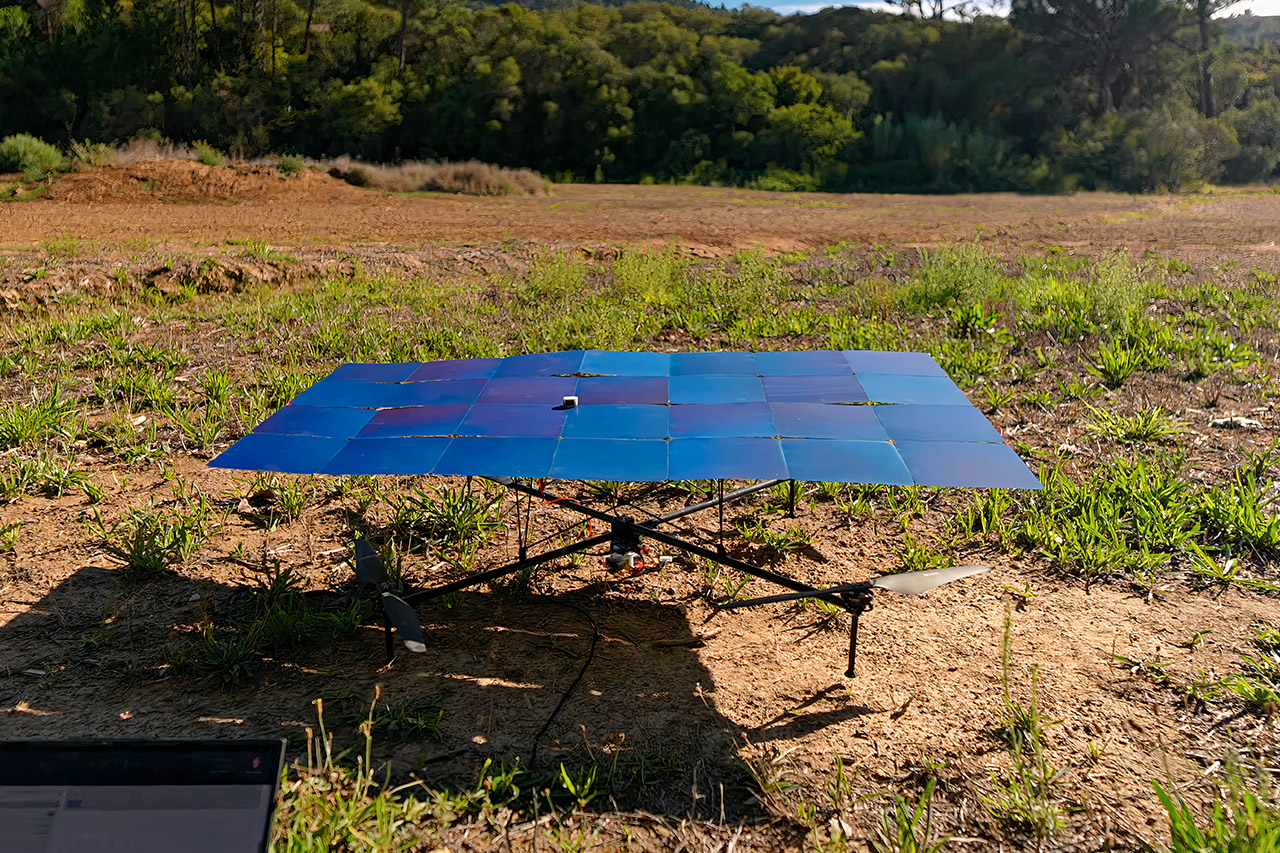
Luke Bell had a nagging worry following his last year’s test flight with the first solar-powered drone. Could a drone truly run solely on solar power and stay aloft for far longer than anyone imagined possible on a clear day? He was previously familiar with how the basic components worked in a lesser scale. The initial version flew for about three minutes before the panels snapped and it crashed to the ground.


This time, he wanted to go even further, so he shortened the arm length on his quadcopter frame by 70 grams, resulting in a loss of around 4 watts of power right away. The solar panels themselves received a significant boost, with new stronger TPU sleeves wrapped around each one to withstand a little of wind without snapping. To further reduce mass, he rerouted the wiring to make it shorter and neater.
Sale


DJI Neo Fly More Combo, Mini Drone with 4K UHD Camera for Adults, 135g Self Flying Drone that Follows…
- Lightweight and Regulation Friendly – At just 135g, this drone with camera for adults 4K may be even lighter than your phone and does not require FAA…
- Palm Takeoff & Landing, Go Controller-Free [1] – Neo takes off from your hand with just a push of a button. The safe and easy operation of this drone…
- Subject Tracking & QuickShots – Effortlessly capture stunning vlogs as DJI Neo smartly follows you. Getting professional footage has never been easier…
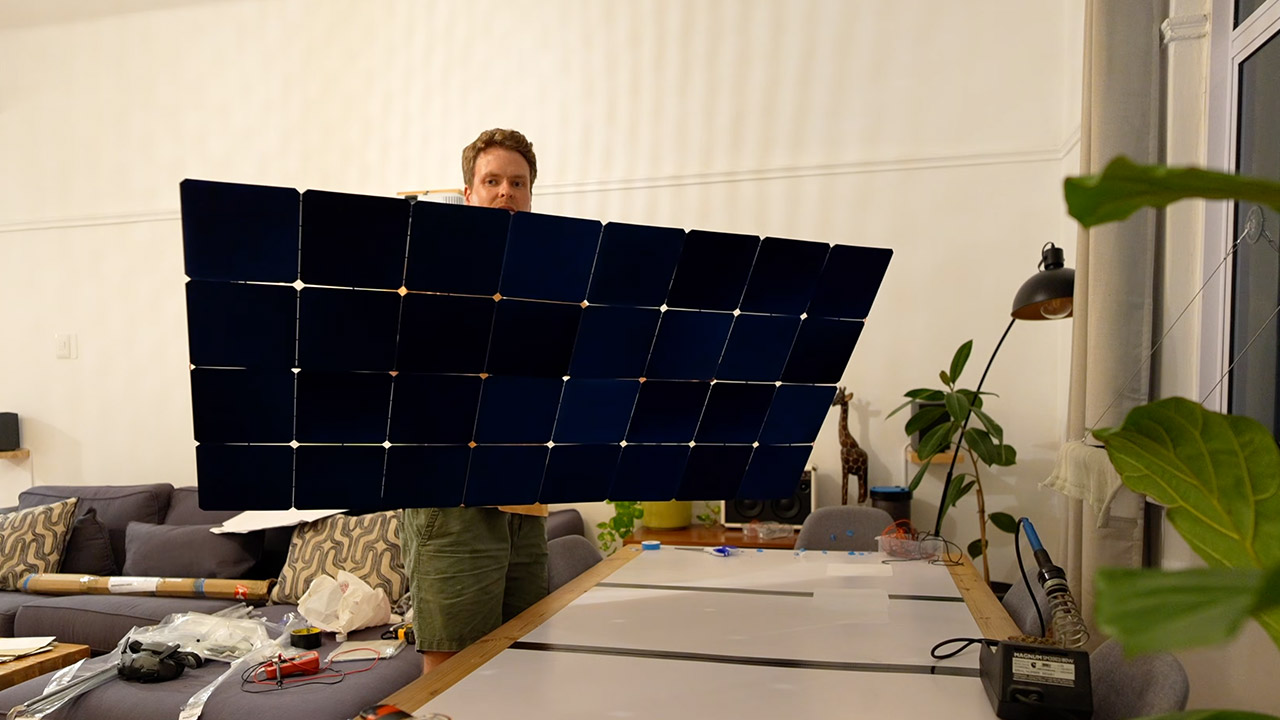
Thirty two small solar panels were arranged in an eight by four grid and soldered together into a single unified array, capable of pushing out 110 watts in full daylight, more than enough to keep the drone airborne. Getting the balance right took some careful thinking. Bell mounted the entire panel platform lower on the carbon fiber frame to bring the center of gravity into the right place, which cleared up the stubborn wobble that had been showing up during early test flights. Computer simulations confirmed that the propellers kept spinning cleanly even with the panels sitting directly above them, which was one of the trickier design questions to answer.

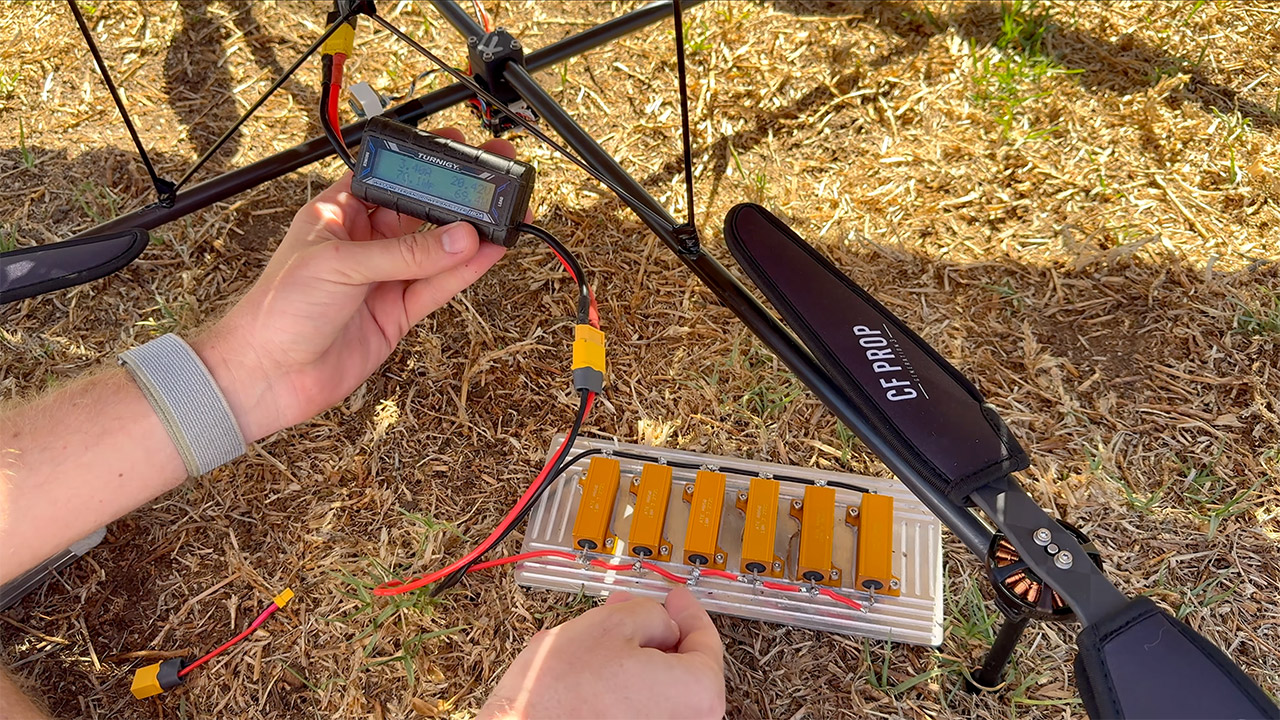
Under the hood, a pair of T-Motor Antigravity MN4004 motors spin compact 18 by 6 inch propellers through a T-Motor F60A Mini speed controller, with a T-Motor H7 Mini flight controller and a GPS unit keeping everything stable once the settings were dialed in. Getting to that point took some patience though. Early flights revealed that the solar panels were interfering with the GPS signal, making it difficult to lock onto satellites reliably. Bell had to reposition the unit and recalibrate the compass several times before it was consistently picking up 20 or more signals and holding its position the way he needed it to.
Cape Town’s unpredictable winds created sudden power spikes that the solar panels couldn’t handle on their own, and passing clouds could cut the output in a matter of seconds. To smooth things out, Bell added a small five cell lithium ion pack connected through a set of diodes. It would only kick in when the solar array needed backup, feeding power to the motors just in time to keep things steady, and whenever the sun was generous enough it would quietly recharge at around 11 watts.
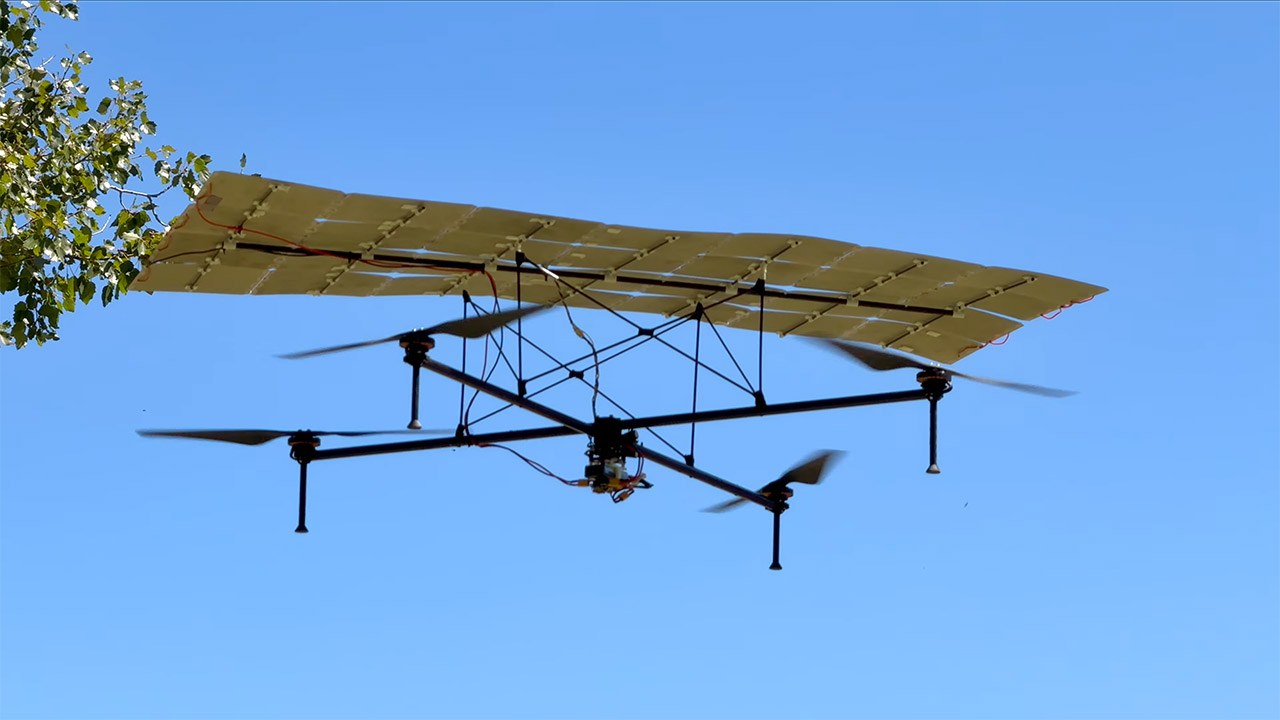
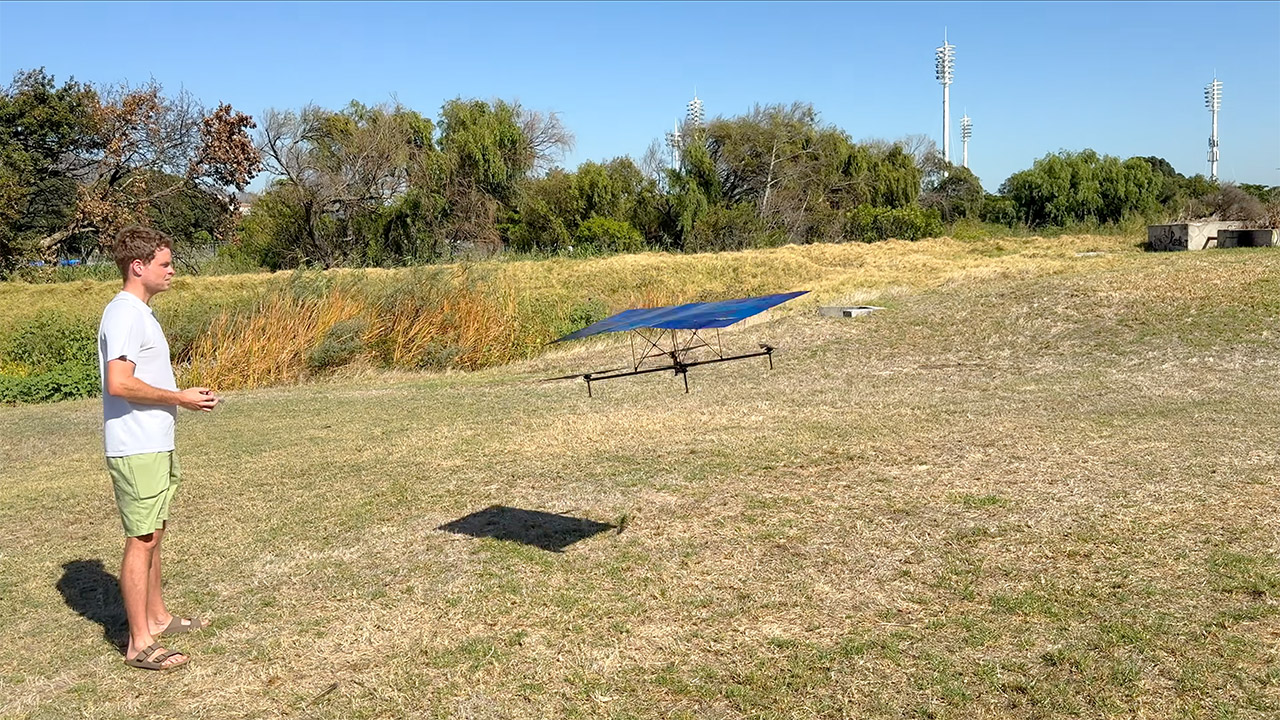
So, with the drone completely completed, he took it to the skies over Stellenbosch for a real test. A sunny morning meant he could start it and watch the voltage rise to 20.66 volts in the bright sunlight. The drone took off effortlessly and locked into position hold. Minutes passed, and with only a little manual correction here and there, he watched it sail along slowly. An hour passed, then two, then three and a half, and the machine kept buzzing away smoothly.
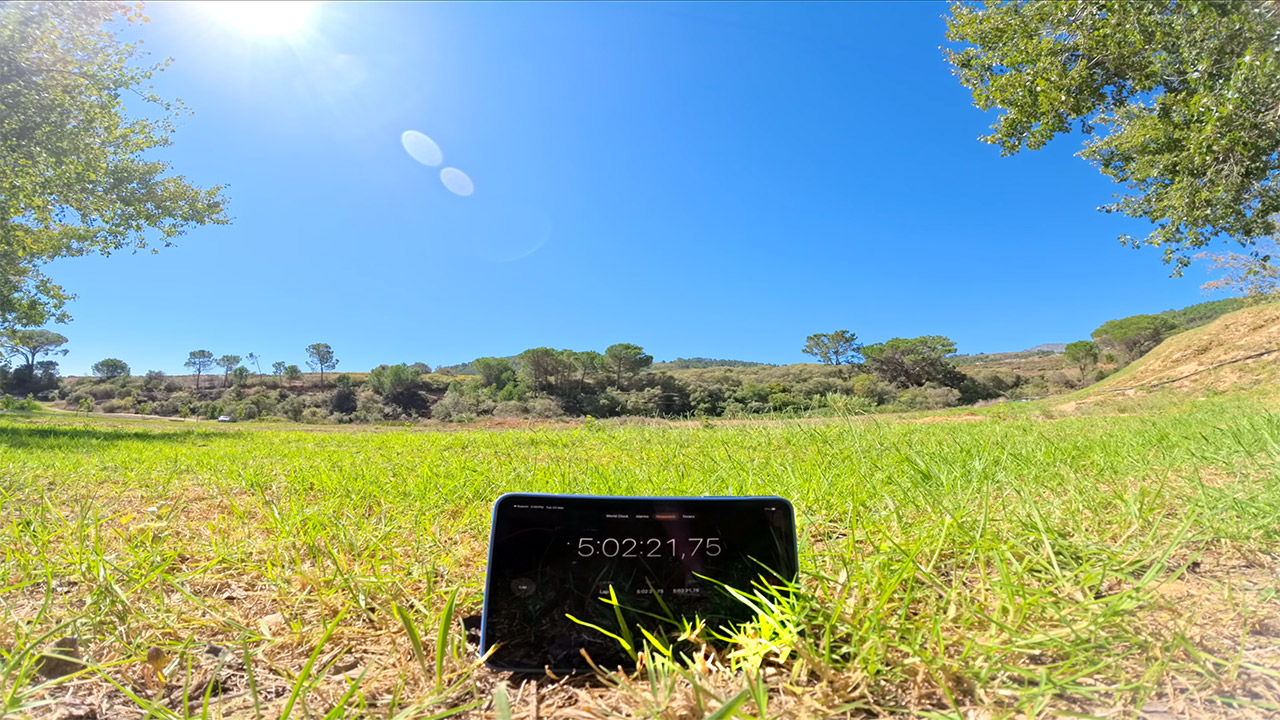
At the five hour mark the numbers told the story, 5 hours, 2 minutes, and 21 seconds in the air before Bell finally brought it in for a gentle landing. The entire flight ran on solar power alone, with a small backup battery there purely as a safety net for moments when the panels weren’t pulling in quite enough sunlight. No fuel, no heavy battery pack, just a handful of solar panels drinking in as much South African sunshine as they could manage.
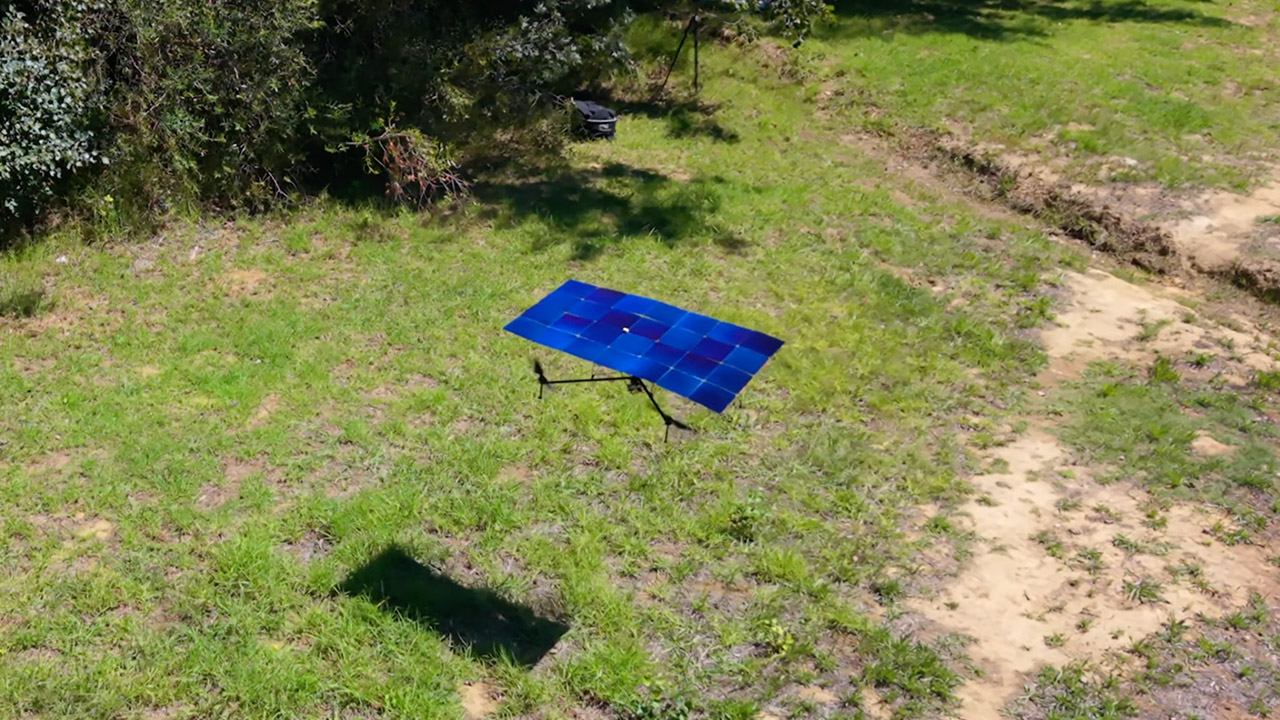
That time shattered the previous flight record for a radio controlled quadcopter, and it will take something special to beat it. Bell is already thinking about what comes next, with plans to ditch the backup battery entirely and squeeze even more efficiency out of the design, likely with a few more tweaks to the frame along the way.
[Source]
You must be logged in to post a comment Login