Tech
Suno Will Press Your AI Songs on “Vinyl” for $45. Who Exactly Asked for This?

Vinyl has survived cassettes, CDs, Napster, the iPod, Spotify and several decades of people confidently predicting its imminent death because records continue to provide something streaming cannot: ownership, permanence, large artwork, ritual and a physical connection to music that someone presumably cared enough to write, perform, record and master. Artificial intelligence has apparently looked at all of that and decided it needed a piece of the action.
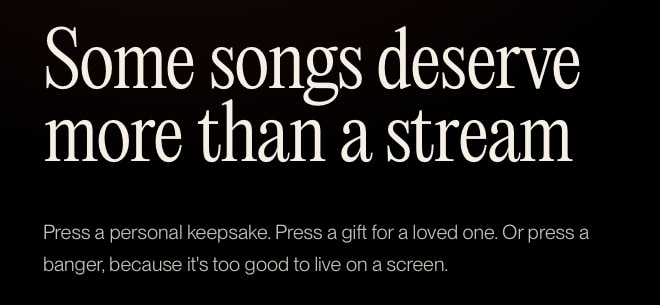
Suno is preparing to launch Suno Vinyl, a service that will turn music generated through its AI platform into personalized 12 inch records. Users will be able to select up to 46 minutes of music, create custom artwork and labels, and have the finished record pressed and shipped to their door for an estimated $45 plus shipping. The service is not yet live, although Suno is accepting users for its waitlist, which raises the fairly obvious question of who exactly has been sitting around waiting for this particular collision between generative AI and physical media.
That does not make Suno Vinyl an irrelevant story. Quite the opposite. Suno has become one of the largest generative music platforms in the world, raised hundreds of millions of dollars and is now operating at a scale where its decisions can influence how AI generated music is created, distributed and monetized. What makes this announcement interesting is not that somebody can turn an AI song into a record; it is that AI generated music is rapidly acquiring the same commercial infrastructure as conventional recorded music, including licensing, distribution, royalty policies, copyright disputes and now physical products.
Whether it deserves all of that is another question.
Calling It “Vinyl” Requires an Asterisk
There is one detail getting somewhat lost in the excitement: Suno calls the service Suno Vinyl, but the actual 12 inch record is manufactured from black PETG rather than conventional PVC vinyl. Suno describes the material as environmentally friendly and says the records are genuinely pressed rather than novelty lathe cuts, with full color printed sleeves, custom labels and audio taken from the user’s final mix.

That is fine as far as it goes, but if you are charging roughly $45 for something intended to spend its life on a turntable, we would like considerably more information. Suno currently says nothing meaningful about the pressing plant, mastering process, record weight, manufacturing tolerances or whether the supplied file receives any additional preparation before being committed to the physical format. The company promises “high quality audio,” but without any technical context that phrase carries about as much useful information as “premium sound” on the side of a Bluetooth speaker box.
Those omissions would be troubling if Suno were positioning this as an audiophile product, although there is little indication that it is. The target customer is not likely to be comparing cutter heads, lacquer sources or different pressings of A Love Supreme before deciding whether a PETG copy of an AI generated ska song about the family Labradoodle deserves shelf space.
$45 Buys a Lot of Actual Music
The pricing becomes more amusing when placed beside what traditional record buyers can purchase for the same money. We recently reviewed Rhino High Fidelity’s new edition of Curtis Mayfield’s Super Fly, an all analog release cut by Kevin Gray and produced specifically for listeners who care about sound quality, and that record sells for $39.98.
Suno estimates about $45 plus shipping for a personalized PETG pressing of whatever its software generated after somebody typed a sufficiently elaborate prompt. The comparison is not entirely fair because Rhino can manufacture an established title in quantity while Suno is offering personalized, low volume production with custom artwork and packaging, but consumers do not make purchasing decisions inside an accounting seminar. They have $45, and that amount buys excellent new releases, several used records, a stack of inexpensive CDs or, depending on your level of restraint inside a record shop, the first twelve minutes of what eventually becomes a $140 purchase.
That is why Suno Vinyl makes almost no sense as a value proposition for conventional music collectors. It is not really competing with Rhino, Blue Note, Craft Recordings, Analogue Productions or any of the labels serving the vinyl enthusiast market. It is competing with personalized gifts, novelty merchandise and the emotional satisfaction of taking something that existed only on a screen and turning it into an object.
What Problem Is Suno Vinyl Solving?
Generative AI has removed almost every traditional obstacle involved in creating something resembling a finished song. You do not necessarily need musicians, a recording studio, microphones, instruments, engineers or enough musical ability to survive “Hot Cross Buns” on a recorder because software can produce something in seconds that has vocals, instrumentation, structure and a finished mix.
If the result is terrible, you generate another one. If that is terrible, you generate ten more. Deezer recently reported receiving tens of thousands of fully AI generated tracks every day, which underscores one of the central contradictions of this entire market: we can now create music much faster than anybody can realistically consume it.
Against that backdrop, Suno’s decision to turn one of those infinitely reproducible digital files into a scarce physical object is almost comically logical. The technology creates abundance, while the record creates the appearance of permanence and scarcity. You have to admire the capitalism involved because Suno has effectively identified a way to assign physical and emotional weight to a product whose defining advantage is that it can be generated endlessly and almost instantly.
That may ultimately be the real appeal.
Vinyl Means Something AI Music Does Not
The resilience of physical music has very little to do with consumers suddenly forgetting how convenient streaming is. Hundreds of millions of people pay for streaming subscriptions precisely because instant access to almost everything is useful, yet vinyl and CDs continue selling because ownership still means something when the rest of our media lives increasingly exist behind subscriptions, licensing agreements and corporate servers.
People stream because it is convenient; they buy records because some music matters enough to own. A copy of Kind of Blue, London Calling, Super Fly or Songs in the Key of Life does not become meaningful because somebody pressed it onto plastic. The record exists because the music already demonstrated enough cultural or personal value that listeners wanted to keep it, display it and return to it.
Suno reverses that relationship. Pressing the music onto a record can become part of the process of convincing ourselves that the thing mattered in the first place, which is a considerably stranger proposition. Someone may create a song about a deceased parent, a wedding, a child’s birth or another deeply personal experience and treasure the resulting object, and there is nothing artificial about that emotional reaction. But Suno also promotes birthday songs, anniversary tracks and inside jokes as likely applications, which tells us far more about the real market than any grand claim about reshaping music creation.
So Who Is This Actually For?
Suno Vinyl is primarily personalized merchandise, and viewed through that lens the concept begins to make considerably more sense. It is for the person who generates a birthday song for Dad and thinks presenting him with an actual record will be funnier and more memorable than texting him a link. It is for couples who want their AI generated anniversary anthem sitting beside the wedding photographs, and for people creating fictional bands, joke albums and personal projects who simply want to hold the finished result in their hands.
There is also a more legitimate creative use case for musicians who employ AI as one tool inside a larger process involving their own lyrics, vocals, instrumentation or production. AI assisted music and fully AI generated music are not the same thing, something we have argued repeatedly in our recent coverage, and a physical pressing of a genuinely collaborative project may have real personal or promotional value.
But none of that turns Suno Vinyl into the next meaningful development in analog playback. For most customers, it is closer to a custom photo mug that happens to spin at 33⅓ rpm, which is not necessarily an insult because personalized products can be fun. It merely means the thing belongs in a very different conversation from an AAA Blue Note reissue, and nobody should expect Kevin Gray to arrive with tasting notes.
The Copyright Mess Now Comes With a Record Sleeve
The physical format also makes the unresolved legal and ethical issues surrounding AI music feel considerably more tangible. Suno says users who create songs while subscribed to its paid plans are considered the owners of those songs and retain commercial usage rights, while material created on its free tier is intended for noncommercial use. The company also acknowledges that ownership of a generated recording does not necessarily mean the work qualifies for copyright protection, particularly when the human contribution is limited.
That distinction becomes harder to ignore when the thing arrives in the mail with your name printed on the jacket.
Suno’s relationship with the traditional music business remains equally complicated. Warner Music Group settled its dispute with Suno and entered into a partnership intended to support future licensed models and new AI experiences involving participating artists, yet litigation involving AI training and copyrighted material continues elsewhere. A Munich court recently ruled against Suno in a case brought by German rights organization GEMA, illustrating just how unsettled the legal framework remains even as companies race ahead with new commercial products.
That is why Suno Vinyl deserves more attention than a goofy product announcement normally would. AI music now has creation platforms, label partnerships, licensing agreements, streaming distribution, royalty policies, chart debates, copyright litigation and physical records. It has managed to recreate almost the entire music industry with remarkable speed, although nobody has yet announced an AI tour manager capable of losing the band’s cash somewhere outside Cleveland.
Physical Media Deserves Better Than More Content
We have spent much of 2026 covering the continued strength of physical music because records and CDs provide something increasingly valuable in an era of rented digital access. They offer ownership, preserve particular masterings and editions, support artists and labels, and encourage listeners to engage with albums rather than allowing an algorithm to pour background audio through the room until everyone goes to bed.
That is what makes Suno Vinyl simultaneously fascinating and faintly ridiculous. The vinyl revival has been driven partly by listeners deciding that certain music deserves more attention, more permanence and more emotional investment than another disposable stream, while Suno’s technology is built around making the creation of additional music almost frictionless. Those ideas are fundamentally at odds, and putting one inside the packaging of the other does not solve the contradiction so much as give it a rather handsome record sleeve.
The Bottom Line
Suno Vinyl is an important story attached to a profoundly unnecessary product. The company plans to let users take up to 46 minutes of music from their Suno libraries, add custom artwork and receive a genuinely pressed 12 inch PETG record for approximately $45 plus shipping, but there is almost no audiophile reason to care. Suno has disclosed very little about the mastering or manufacturing process, the record is PETG rather than conventional PVC vinyl, and the same amount of money can buy exceptionally well produced recordings containing music written, performed and engineered by human beings.
That comparison is ultimately beside the point because audiophiles are not really the customer. Suno Vinyl is a keepsake, novelty item, personalized gift and piece of creator merchandise designed for people who want something generated on a screen to feel more permanent, and that is precisely why the product matters even if most serious record collectors would never consider buying one.
AI companies have become remarkably good at generating limitless quantities of content. Suno is now testing whether putting some of that content into a physical object can make consumers assign it greater emotional and monetary value, and perhaps it can. If the next phase involves AI generated yacht rock pressed onto PETG, numbered 1 of 1 and listed on Discogs for $175, we may finally have reached the runout groove.
For more information: vinyl.suno.com
You must be logged in to post a comment Login