Switzerland has a population of 9,154,242. And its federal government just launched a pilot program to test open source alternatives to Microsoft 365 on 3,000 workstations, reports the blog It’s FOSS. “That’s about 7% of the federal workforce.”
The target is to complete the migration by end of 2027… On September 3, 2026, the Federal Council published results of “PoC BOSS”, a feasibility proof-of-concept involving 172 federal employees who tested the openDesk suite, a German open-source collaboration platform. During the proof-of-concept phase, core office tasks like document processing and email received positive assessments, while large-scale video conferencing still showed technical limitations. Based on the ‘success’ of the PoC phase with 172 employees, the pilot is now launched for 3,000 employees…
According to Matthias Stürmer, professor at the Bern University of Applied Sciences, Microsoft’s supremacy in public institutions poses three problems that are driving this migration. First is the risk of foreign access. US cloud legislation could expose Swiss government data to foreign authorities. Second is the risk to service continuity, as dependency on a single foreign vendor creates operational risk. The third risk is the escalating costs as proprietary licensing fees are rising with no Swiss leverage.
Switzerland’s military cybersecurity unit, Cyber Command, is not waiting for the civilian pilot. It is already poised to replace Microsoft 365 entirely with openDesk by October 2026. It is pretty much the same reason. Military doesn’t want foreign governments accessing sensitive Swiss data.
The article notes that during the pilot phase, the new system runs in parallel with Microsoft 365 rather than replacing it. But the article’s author speculates that “If the pilot is successful, we might expect the migration to continue on all the 54,000 workstations owned by the federal administrations.”
Digital sovereignty has arrived in the boardroom and has immediately been downgraded.
Some 93% of large organisations have now discussed it at the board level, and 59% say full digital sovereignty is not a realistic goal, according to a Capgemini Research Institute survey of 1,300 business and technology executives published on Tuesday.
What has replaced the ambition is a narrower one. Two-thirds now define sovereignty as resilient interdependence, meaning selective control over the technologies that matter most combined with partnerships for everything else, rather than owning the stack.
That definition is markedly more popular in Europe, where 75% take it, than in the United States, where half do.
Advertisement
The gap between the two continents is not only definitional. Asked what sovereignty is for, 56% of UK organisations and 52% in continental Europe describe it as risk mitigation and resilience-building, against 41% in Asia-Pacific.
In the US, the majority answer is different: 52% view it primarily through a compliance lens, with 40% treating it as a resilience tool.
European and Asian firms also report significantly greater concern about keeping critical operations running amid geopolitical disruption than American or British firms.
The most useful findings are the ones about self-knowledge, and they are not flattering. Only 14% of organisations say they have end-to-end visibility into the dependencies across their broader technology ecosystem, which means the overwhelming majority cannot accurately assess the exposure they are now discussing at board level.
Advertisement
Capgemini’s own index, built on an analysis of 866 organisations across five dimensions, puts 86% of them as having significant exposure to foreign or externally controlled supply chains.
Switching is slow where it is possible at all. More than a third of organisations, 36%, say moving away from a critical technology provider would take upwards of twelve months, and one in ten say they have no viable alternative provider whatsoever.
Those two figures describe the actual shape of the problem better than any statement of board-level intent.
Preparedness is patchier still, and inverts the regional pattern. Among organisations that recently suffered operational disruptions, just 42% have contingency plans in place.
Advertisement
That rises to almost two-thirds in the US and falls to a little over a third in Europe and Asia-Pacific, which means the region most worried about disruption is the least ready for it.
Where the money is going is less surprising. Operational resilience against geopolitical volatility is the leading driver of sovereignty programmes, cited by four in five, and AI is the part of the stack organisations are prioritising, named by three quarters.
The concentration is heaviest in aerospace and defence and in transportation, which is to say among the organisations that run infrastructure a government would notice failing. Europe’s own tech sovereignty package is aimed at roughly the same list.
There is a price attached, and executives have named it. Just under half say they are willing to pay a “digital sovereignty premium”, which the survey puts at 23% on average.
Advertisement
That is a substantial figure to concede in writing, and it is the number that will decide how much of the boardroom enthusiasm survives a procurement cycle.
The findings land the same week Mistral raised €3bn at a valuation above €21bn on precisely the argument that customers want control of their own AI infrastructure, with the European Commission’s own Scaleup Europe Fund among the co-leads.
Read alongside each other, the two say something more specific than either alone: the demand is real, it is on the agenda, and the buyers do not believe they can have the whole thing. Europe’s cloud dependency is now a recognised political risk that most of its largest companies cannot map.
Karine Brunet, Capgemini’s chief operations and delivery officer, framed the conclusion as a matter of knowing rather than owning.
Advertisement
Complete independence is rarely achievable in interconnected ecosystems, she said, so the point is a clear understanding of technology dependencies sufficient to regain control and flexibility over risk.
That is a reasonable position, and it is also, conveniently, a description of consultancy work.
Chinese EV maker XPeng wants to shed the cheap, mass-market image that “Made in China” has often carried
10 years after three co-founders registered a small EV startup in Guangzhou—one so cash-strapped it couldn’t even afford a proper brand name, and ended up borrowing chairman He Xiaopeng’s own surname instead—XPeng is trying to pull off something much harder than building a car people want to buy in China.
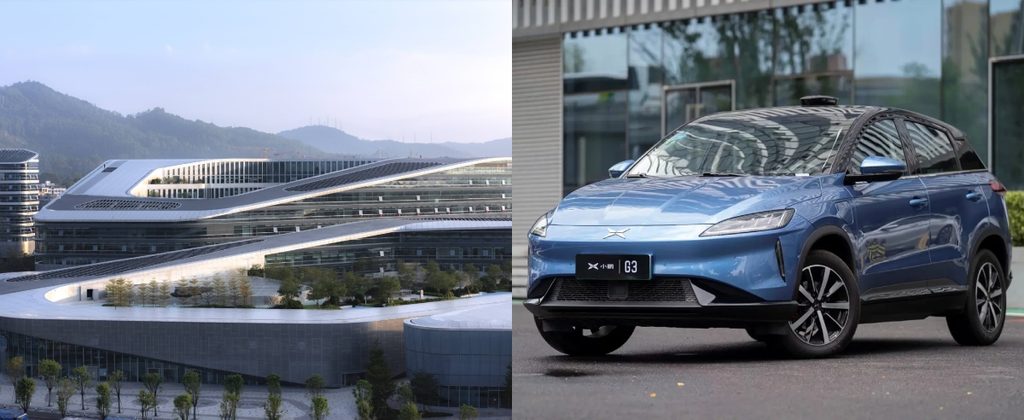
(Left): XPeng headquarters in Guangzhou, China; (Right): XPeng’s first car was the G3, an electric SUV./ Image Credit: ArchDaily, BitAuto
XPeng was founded in Guangzhou in 2014, not by the man who named it after himself, He Xiaopeng, but by two former Guangzhou Automobile Group executives, Xia Heng and He Tao, who were interested in the idea of making “China’s Tesla.”
On the other hand, He Xiaopeng came in from a different industry.
He’d already made his fortune once, co-founding mobile browser company UCWeb and selling it to Alibaba in 2014 for roughly US$4.3 billion (S$5.45 billion). That year, he backed Xia and He Tao’s fledgling car company as an angel investor while still working at Alibaba, and only left to join XPeng full-time as chairman in 2017.
A decade on, the name that began as a fallback is on showroom floors around the world, from Guangzhou to the Nordics—and, since 2024, in Singapore.
Local marketing has leaned into the “not just another cheap Chinese EV” positioning that vice chairman Brian Gu described.
That premium framing isn’t unique to Singapore, either.
Advertisement
When XPeng launched in Indonesia in mid-2025, the company’s marketing lead there was explicit that it was targeting “premium consumers” who would be “more resilient to economic turmoil,” rather than competing in the mass-market EV price band, the same regional playbook showing up market by market.
Playing the slow game
EV cars by Chinese brands BYD, Nio and Li./ Image Credit: BYD, Sgcarmart.com, Guangcai Auto
Set against its Chinese EV rivals, XPeng’s overseas patience has looked almost out of place.
“We have taken a very slow path in the past three years because many people think that you should be able to achieve results quickly as soon as you enter the international market. I never thought so,” he said in an exclusive interview with Channel News Asia.
Advertisement
He has always been consistent with his strategy since XPeng’s early years in China, when the company launched fewer localised products than rivals as it laid groundwork for eventually going abroad, arguing the extra preparation time gets earned back later.
The numbers reflect this “slow start” clearly.
XPeng sold only “a few thousand cars” across several European countries over its first three years there, before crossing roughly 1,000 units sold in a single month by Mar 2024.
Two years on, though, that patience has run headlong into a weakening home market—and XPeng is now expanding abroad more aggressively than before.
Advertisement
Surviving a “knockout tournament”
XPeng’s push is happening while China’s EV industry fights through what He Xiaopeng calls a “knockout tournament” at home, one that’s only intensified since he made that statement. Amid price wars and fierce competition, China’s domestic EV sales fell roughly 21% year-on-year in Q1 2026 alone, as demand weakened alongside the broader economic slowdown.
By 2026, that expansion had matured into dedicated infrastructure: XPeng set up independent supply chain teams for Europe and ASEAN, on top of three overseas production projects, a European R&D centre and a Middle East parts warehouse—what the company calls closing the “localisation loop” of production, R&D, service, data and supply chain all being handled regionally rather than out of Guangzhou.
At the time, he expected overseas sales to make up around 10% of XPeng’s revenue within one to two years, scaling to as much as half of revenue over the long term.
That timeline has advanced at a significant pace. XPeng blew past the 10% mark well ahead of schedule for Q2 2026. Overseas deliveries topped 20,000 units in a single quarter (Q2 2026) for the first time, up 81% year-on-year, at an average selling price above €40,000 (S$58,800)—well above what XPeng typically fetches at home and among the highest of any Chinese automaker expanding globally.
(Left): XPeng’s massive showroom in Singapore; (Right): XPeng at the 2026 Singapore Motorshow./ Image Credit: XPeng
A premium price means XPeng has to keep proving the tech behind it.
The company points to its 800-volt electrical architecture in the G6 and G9, which allows for faster charging than most competitors in their class—as evidence it’s competing on engineering, not just price.
That’s a deliberate contrast to rivals who Gu suggests compete on price and end up looking and feeling all the same. Around 40% of XPeng’s global workforce sits in R&D, spread across centres in Silicon Valley, San Diego, Guangzhou and other Chinese cities—infrastructure the company argues supports that premium positioning rather than a race to the bottom.
It has also poured more than RMB50 billion (S$9.45 billion) cumulatively in R&D to date.
Two years ago, He Xiaopeng framed overseas expansion as a slow project he wasn’t in any hurry to finish.
Advertisement
However, that patience is now colliding with a home market that isn’t giving him the runway to wait it out. Whether XPeng can hold onto profit for more than a single quarter, let alone reach the number-one spot back home by 2030, is still a question yet to be answered.
The acquisition was expected to help Anthropic’s compute infrastructure absorb its growing demand.
Anthropic is backing away from talks to acquire Decart AI, a research start-up building technology that improves chip efficiency, Bloomberg news reported earlier today (8 September).
The deal was expected to be worth around $6bn, significantly higher than Decart’s reported nearly $4bn valuation following a $300m raise earlier this year.
Backed by Nvidia, Benchmark, Adobe, Sequoia and Radical Ventures among others, Decart’s AI infrastructure improves training and inferencing capacities of AI models.
Advertisement
Its foundational model Lucy supposedly edits live video at the speed of stream, while its so-called ‘world model’ Oasis, designed for physical AI, generates realistic simulations to train robots.
The acquisition was expected to help Anthropic’s compute infrastructure absorb some of its growing demand. The AI giant, according to The Information, has signed some $517bn in compute capacity leases in just over the past 11 months, which amounts to some 14.8GW of capacity.
The company also confirmed last month that it would be designing its own chips to circumvent the worldwide shortage in the technology and access a steady supply.
Headquartered in California, Decart was founded in 2023 by former Israeli Defence Forces’ intelligence unit soldiers; brothers Dean and Orian Leitersdorf and Moshe Shalev. Its $300m May raise was led by Radical Ventures and its co-founder Jordan Jacobs, and brought Decart’s total raise to more than $450m.
Advertisement
Reports of the failed Decart acquisition come as Anthropic is expected to delay marketing its initial public offering prospectus to mid-October. The AI giant’s highly anticipated public listing, investors hope, will make the largest debut in history, raising the company $75bn or more at a $2trn valuation.
A Clinton Township, Michigan man was charged $418 for a single EV charging session at Elder Hyundai’s Macomb Township store after finding the charger listed as publicly available on the EVgo app, but didn’t discover the charges until after wrapping up his 40-ish minute charging session. “I was flabbergasted,” explained Stanley Kpenkann, who had been driving a rented Chevy Bolt EV at the time. “Never in my wildest dreams did I think I would be saddled with a bill of $418 for a charging session.”
After calling EVgo to report the error, he found that the exorbitant charge wasn’t a mistake at all – Elder Hyundai was charging customers an eye-gouging $5 per kWh, plus another $5 for every minute connected.
A local news report notes that “After back-and-forth with EVgo, the company processed what it called a goodwill refund of $405.” (And the dealership argued their charger was reserved for its own customers and vehicles, so they set prices high to deter outside use.)
But Electrek argues the story “speaks to much larger problems among the EV charging business in particular and car dealerships in general…”
Advertisement
[In June] Plug & Play EV’s Steve Birkett took to LinkedIn to call out his local Hyundai dealer in Union, NJ for charging a ridiculous $15 per kWh to top off his IONIQ 5 (!)… Even worse, he noted that a number of area dealerships that had listed their ports as “public” were actively discouraging public use with signs and stickers designed to turn people away…
[U]nlike gas stations, EV charge point operators in many states aren’t required to clearly advertise what they’ll charge before a driver plugs in in the same way that gas stations are: with clearly legible signage that’s visible from the street.
Carrying culinary adventures into the unknown comes the Le Creuset x Star Trek: Galileo shuttlecraft casserole dish ($150), which has a roomy 1.6 liters of space inside. Vulcan votaries are well catered for with the $35 Spock ear mug (perfect for Vulcan spice tea), complete with gold detailing along the rim as a nod to the Starfleet uniform; the $55 Spock hand spoon rest; and the whimsical Vulcan salute “live long and prosper” oven mitt, resplendent in signature Star Trek baby blue for $40.
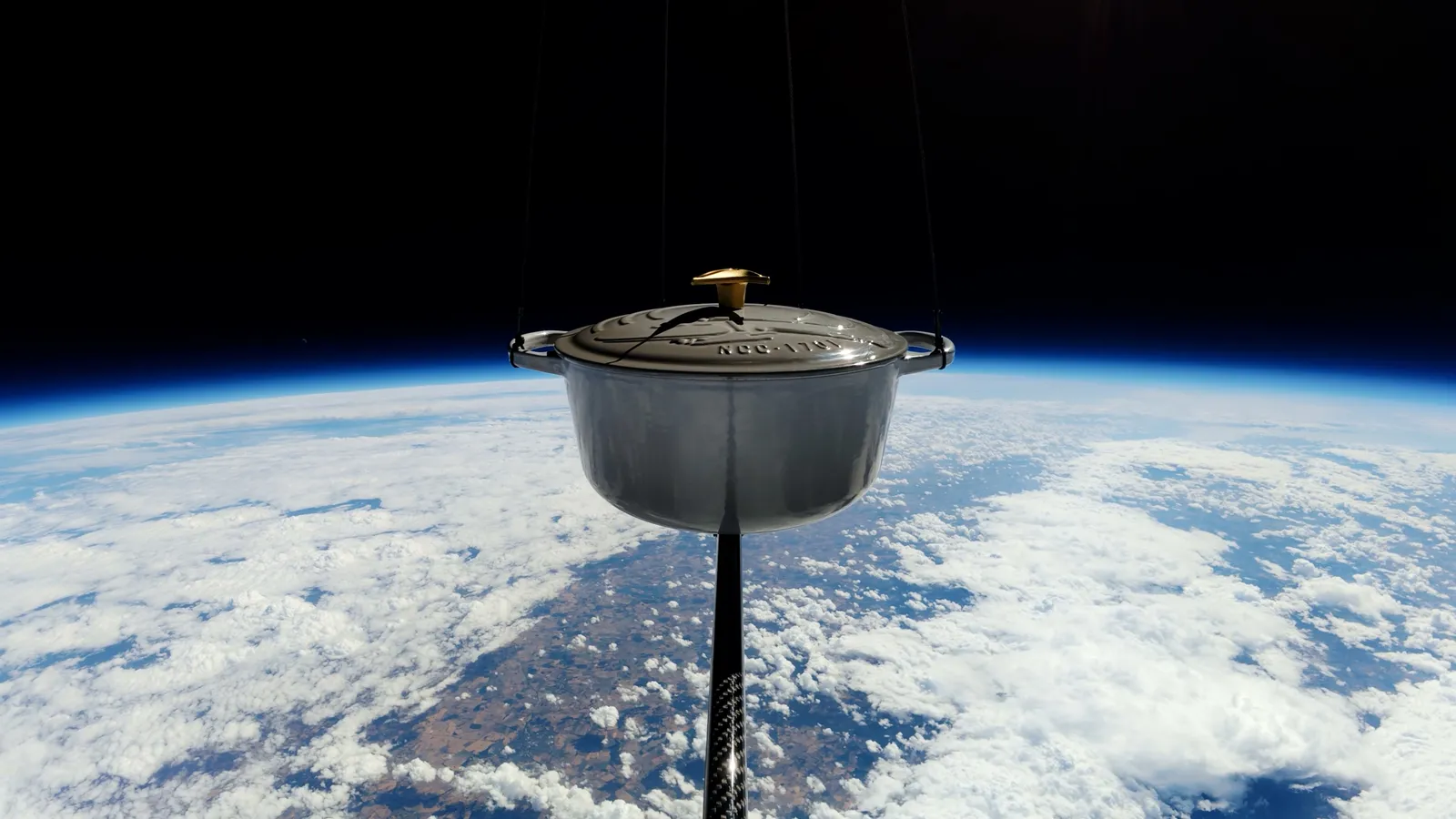
Not merely content with digitally launching the collection online, Le Creuset engaged Sent Into Space to boldly send its Enterprise casserole dish where no pan has gone before—more than 111,000 feet above the Earth, atop 99.5 percent of the planet’s atmosphere. While obviously a blatant (albeit fitting) marketing stunt, there’s actually some considerable logistics to overcome in sending a cast-iron pot to the edge of space.
United Federation of Pan-ets: the Star Trek Enterprise casserole dish at 111,000 feet above the Earth.
Courtesy of Le Creuset
Sent Into Space co-founder Chris Rose had the task of launching the pot in the stratosphere via a space-capable balloon taller than the height of The White House, where it stayed for 1 hour, 19 minutes, and 4 seconds enduring temperatures down to -63.4°C (-82.12°F). “Because of the weight, we had to give some serious consideration to how we were going to hold things, making sure everything was very balanced,” Rose tells WIRED. Rose and his team also have to rely on simulations to take into account considerations such as where will the pot land as it’s parachuted back down to Earth, as well as how to avoid bodies of water and built-up areas, for example.
Advertisement
“The legal authorities within the aviation community need to know. We can’t have a Le Creuset casserole dish floating past the window of an airborne A380 as it makes its way off to some destination,” Rose says. “So we are in constant communication, both from a flight-clearance perspective before this ever leaves leaves the ground, to onboard systems for telemetry and communication.” Indeed, in the early stages of reentry, Rose says the Enterprise casserole dish reached speeds in excess of 300 mph before slowing and landing safely in Lincolnshire, England.
Back on terra firma, the Le Creuset x Star Trek collection should serve cadets and captains alike, provided you can secure your selections before stock vanishes like a cloaked Bird-of-Prey.
The year 2026 marked the arrival of a handful of new acronyms in the TV world, with regular old mini-LED now having to share space with SQD, RGB, Micro RGB, True RGB, and other related terms. While those last three are basically marketing labels for the same RGB-backlit LCD display technology, SQD was coined by TCL and stands for Super Quantum Dots. SQD is something entirely different from RGB tech, though it is mostly an evolution of the Quantum Dot technology long used in mini-LED TVs.
So far in 2026, eCoustics has reviewed two of TCL’s SQD Mini-LED TVs, including their flagship X11L, and their step-down QM8L, along with rivals featuring RGB Mini-LED TV technology from Samsung, Sony, and Hisense. Of these, the TCL QM8L and Hisense UR9, the company’s flagship RGB Mini-LED TV, are often similarly priced, especially at the 65-inch size with both currently selling for under $2,000. How do these two top Mini-LED TVs stack up, and which model is worth your hard-earned money? Let’s compare them side by side.
SQD Mini-LED vs RGB Mini-LED: What’s the Difference?
The Hisense UR9 and TCL QM8L are both Mini-LED-lit LCD TVs. Where they mainly differ is in the design approach of the TV’s backlighting system.
RGB Mini-LED TVs like the Hisense UR9 use micro-sized red, green, and blue LEDs in place of the blue or white LEDs found in mini-LED TV backlights. RGB backlighting can, in theory, at least, provide more accurate color reproduction than standard LED backlights, and it can also deliver enhanced brightness and color saturation, along with extended BT.2020 color space coverage.
Advertisement
Super Quantum Dots are essentially a refined version of standard Quantum Dot technology. In SQD Mini-LED TVs like the TCL QM8L, the SQD layer is paired with an Advanced Color Purity algorithm and an Ultra Color filter that uses 5-nanometer particles instead of the 60-nanometer particles that are standard for Mini-LED TVs. The end result, according to TCL, is more efficient and accurate pixel-level color transmission, along with extended BT.2020 color gamut coverage.
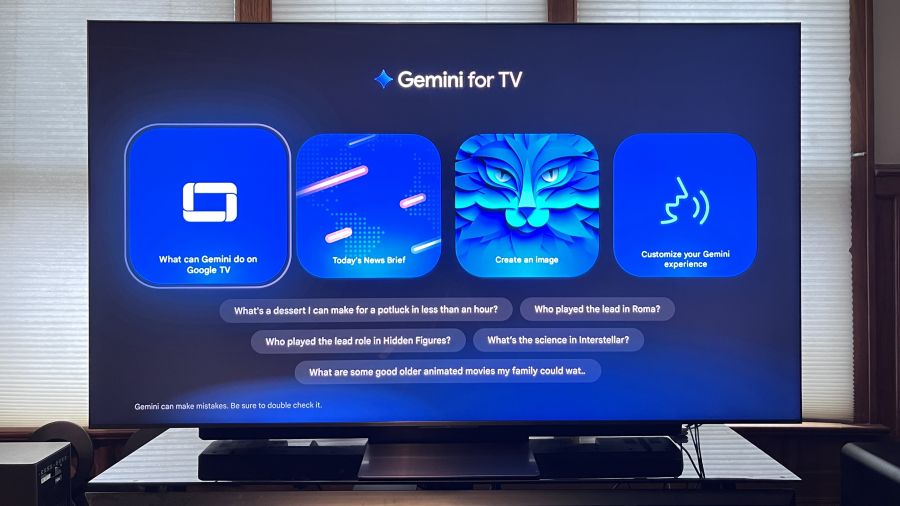
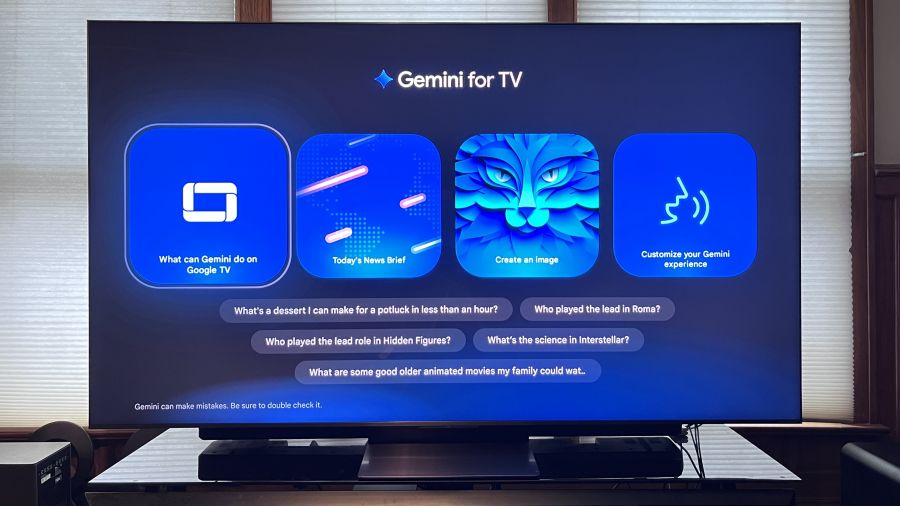
The Hisense UR9 and TCL QM8L both feature the Gemini for TV AI assistant
Hisense UR9 vs TCL QM8L: Features
The Hisense UR9 is available in 65-, 75-, 85-, and 100-inch screen sizes. It uses the company’s Hi-View AI Engine RGB processor, which provides multiple AI-based picture enhancements, including a Personalized Customization feature that guides you through the process of creating your own picture mode. An “Obsidian Panel” advanced low-reflection screen surface helps to reduce screen glare on UR9 series TVs, and they feature Dolby Vision IQ, HDR10+ Adaptive and Filmmaker Mode picture presets. A software upgrade scheduled for late 2026 will add Dolby Vision 2 Max to the UR9’s feature set. As this comparison was going live, we just received the Dolby Vision 2 update on our review sample, so stay tuned for more details on that in an upcoming article.
The TCL QM8L is sold in 65-, 75-, 85-, and 98-inch sizes and uses a high-contrast WHVA 2.0 Ultra Panel with a wide color viewing angle feature and an anti-reflective screen filter. TCL’s TSR AI Pro processor brings AI enhancements for contrast, color, motion handling, and upscaling. HDR format support includes Dolby Vision, HDR10+, HDR10, and HLG, and there are Filmmaker Mode and IMAX Enhanced picture presets. Like the Hisense UR9 series, the QM8L series is slated to receive a Dolby Vision 2 Max upgrade via a software update scheduled for late 2026.
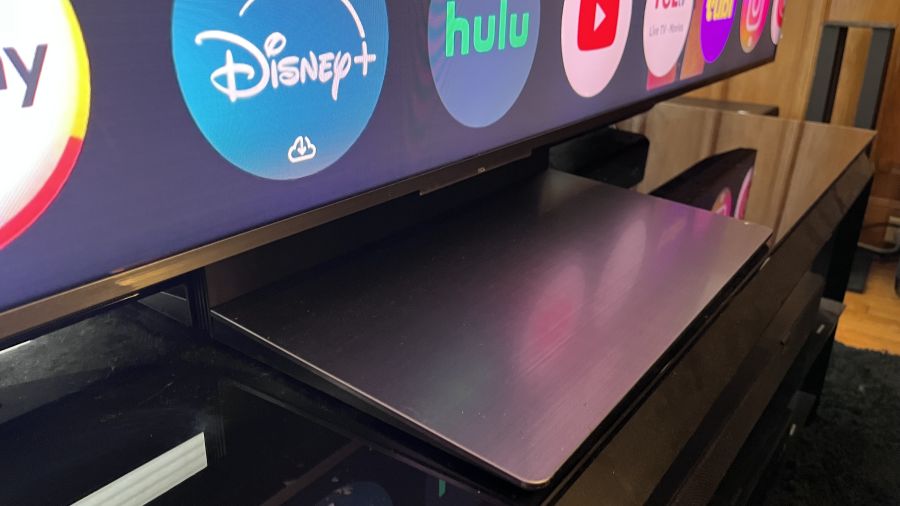
Both TVs come with an adjustable-height pedestal stand (TCL QM8L in photo).
Hisense UR9 vs TCL QM8L: Design
Hisense’s RGB Mini-LED TV has a slim bezel but the panel thickness approaches two inches, giving it a relatively bulky look. One advantage to the TV’s thick panel is it provides ample room for a powerful built-in 80W, 4.1.2-channel speaker system, which has been tuned by French audio manufacturer Devialet and supports both Dolby Atmos and DTS:X. An included aluminum pedestal stand has an adjustable height option to clear space for a soundbar, and Hisense’s full-featured remote control features a backlit keypad.
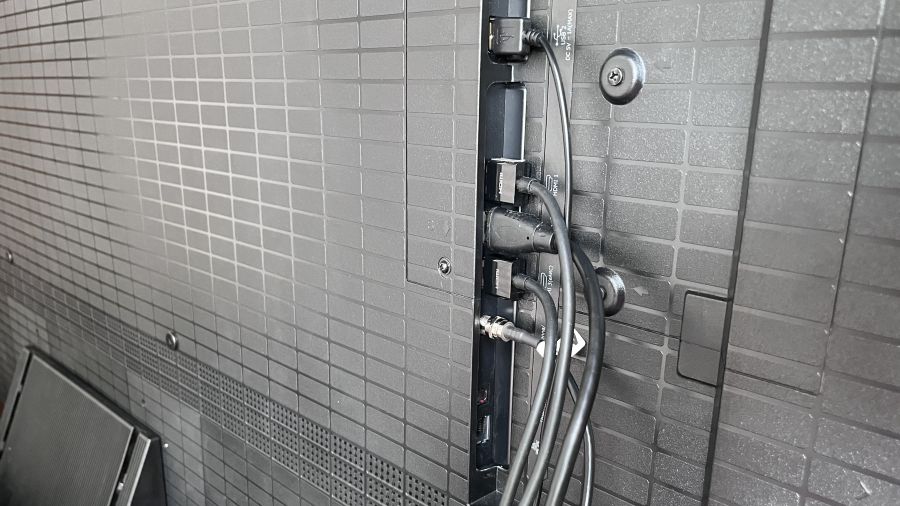
Three HDMI 2.1 ports are located on the UR9’s back panel, along with an antenna input for the TV’s ATSC 3.0 tuner. Curiously, there is also a DisplayPort-over-USB-C input, an unusual feature that lets you connect a computer, tablet, or phone directly to the TV’s bottom-left edge.
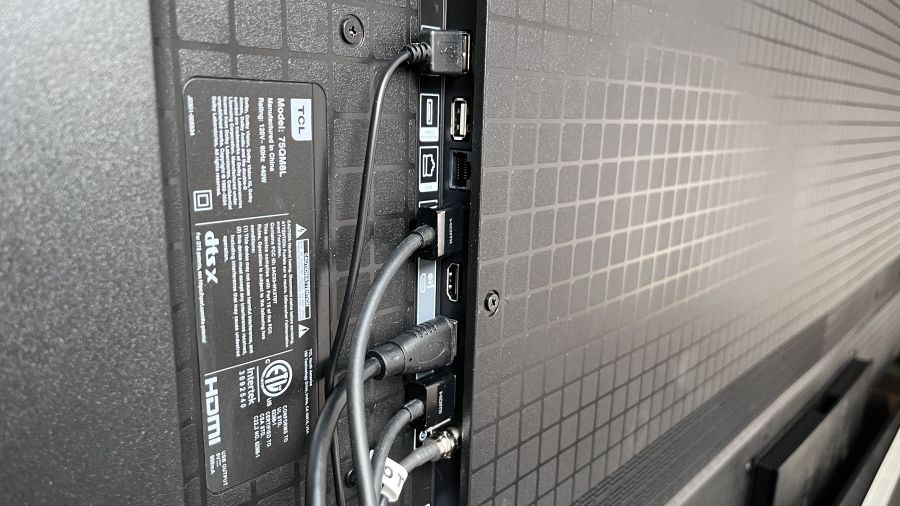
TCL’s SQD Mini-LED TV has a ZeroBorder design that gives it an appealing “all-screen” look, and while panel thickness tops out at two inches, the TV’s sides taper gently to create the illusion of thinness. The adjustable-height aluminum pedestal stand can be elevated or set flush with a TV stand surface, and TCL’s new, full-featured remote control has a backlit keypad. Connections on the QM8L include four HDMI 2.1 ports and an antenna input for the TV’s ATSC 3.0 tuner.
Advertisement
The QM8L has an Audio by Bang & Olufsen speaker array that uses down-firing speakers on the TV’s bottom surface combined with two “subwoofers” located on the back. The quality of the TV’s built-in sound is good overall, but you may want to instead take advantage of its Dolby Atmos FlexConnect support, which lets you pair up to four wireless TCL satellite speakers and a subwoofer for a 4.1.4-channel system.
Advertisement. Scroll to continue reading.
Hisense UR9TCL QM8L
Hisense UR9 vs TCL QM8L: Picture Quality
The Hisense UR9 had excellent brightness results when we tested it using Portrait Display’s Calman Color Calibration software, topping out at 3,345 nits in Filmmaker Mode for HDR and a whopping 1,698 nits for SDR. Color results were also very impressive, with the UR9 managing to cover 91.5% of the BT.2020 color gamut and 99.4% of DCI-P3. The TV’s measured color accuracy in Filmmaker Mode was also very good out of the box.
Numbers don’t always tell the full story, but the Hisense’s bright picture was great for daytime sports viewing, and movies with a rich color palette also came across as punchy and clean-looking. The UR9 performed well with reference “dark” movies, showing strong shadow depth and detail. Our main complaint from a picture quality standpoint was the TV’s off-axis picture uniformity, with both color and contrast fading noticeably when viewed from off-center seats.
The TCL QM8L also had high brightness, peaking at around 4,500 nits on some measurements, though a more realistic expectation would be around 2,000 nits in Filmmaker Mode for HDR. Color measurements slotted in a bit below the Hisense UR9 at 89.3 for the BT.2020 color gamut and 97.7 for DCI-P3. Color accuracy was a bit disappointing at an averaged 4.9 for grayscale and 3.3 for color, but both results could be easily improved through calibration.
Advertisement
Like the Hisense, the TCL’s high brightness makes it great for sports viewing. The QM8L also benefits from a wide viewing angle, with color maintaining saturation even at far off-center seats. Also, its anti-reflective coating is effective at reducing screen glare in bright viewing conditions. Colors in movies look rich, but not exaggerated, and dark movies benefit from the TV’s strong contrast, refined shadow detail and almost non-existent backlight blooming artifacts.
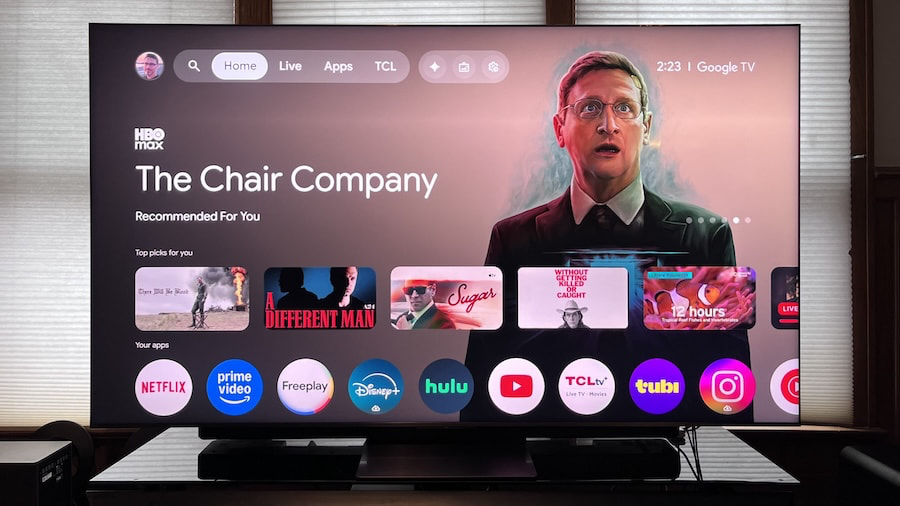
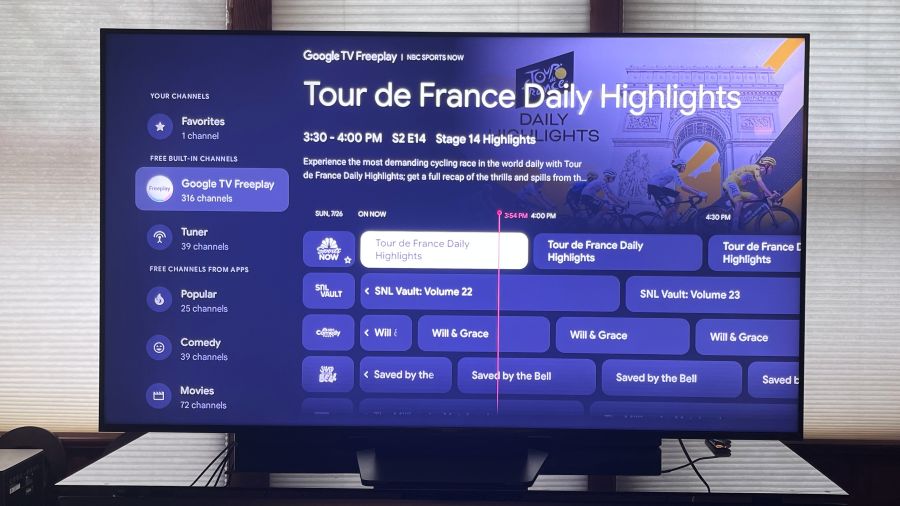
The Google TV Home pageGoogle TV Live TV guide
Hisense UR9 vs TCL QM8L: Smart TV
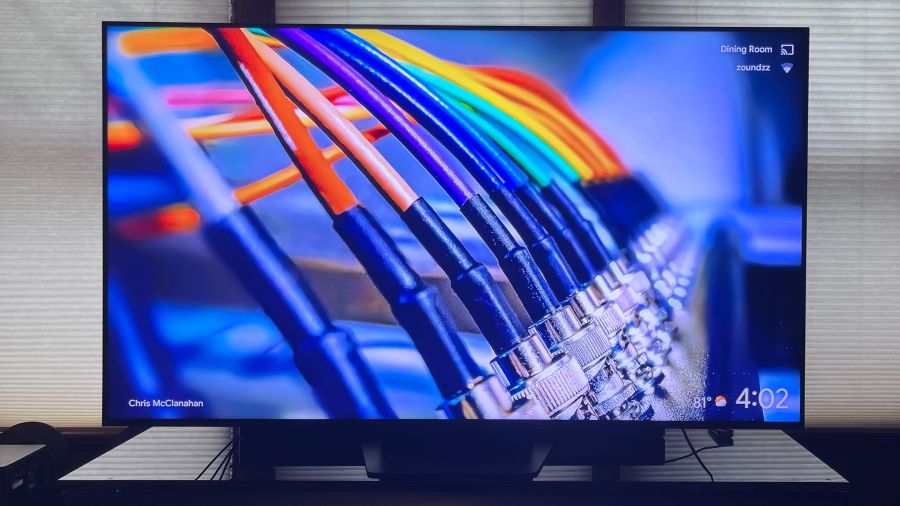
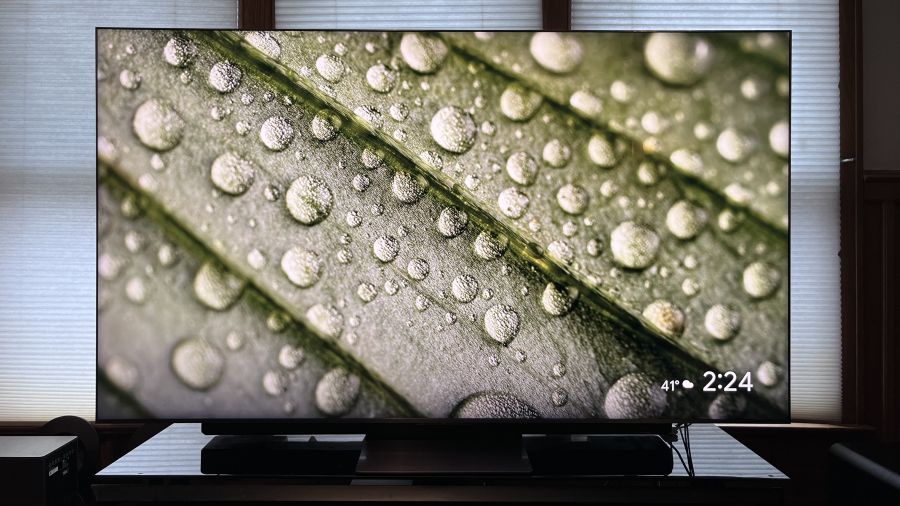
Both the Hisense UR9 and TCL QM8L use the Google TV platform for streaming and smart home control. Google TV has a relatively streamlined interface, and it can present customized program recommendations based on your viewing and web-browsing history when linked to a Google account. The version of Google TV found in both TVs is enhanced with the Gemini AI assistant, which lets you do everything from researching your next vacation to generating custom screensavers using voice commands (the Hisense and TCL feature a far-field mic option along with a built-in mic on the remote control). Both TVs additionally feature a Live TV grid guide for browsing Freeplay free ad-supported streaming channels and broadcast channels pulled in by the set’s ATSC 3.0 tuner.
The Hisense UR9 has three HDMI 2.1 portsFour HDMI 2.1 ports are provided on the TCL QM8L
Hisense UR9 vs TCL QM8L: Gaming
The Hisense UR9’s strong suite of gaming features includes a native 180Hz refresh rate, FreeSync Premium Pro VRR, ALLM and Dolby Vision gaming. HDMI 2.1 ports are limited to three, however, which can be a limiting factor for gamers with multiple consoles. Input lag measured using a Bodnar 4K meter clocked in at 12ms in Game mode on the UR9, a result below the 16ms threshold that serious gamers generally consider acceptable.
The TCL QM8L’s gaming features and performance are both a step above what we’ve found in previous TVs from the company. It supports a 144Hz refresh rate, along with 1080p/288Hz for PC gaming, and there’s also FreeSync Premium Pro, ALLM, and Dolby Vision gaming. Input lag measured 9.8ms for a 4K 60Hz input in our testing, a result that slightly bests the Hisense UR9 and is comparable to the best gaming TVs from LG and Samsung.
Hisense UR9 vs TCL QM8L: Value
At $1,899.99 for the Hisense UR9 and $1,399.99 for the TCL QM8L (both prices for a 65-inch model), each of these next-gen Mini-LED TVs is a strong value. Both offer high brightness, refined local dimming and extended color gamut coverage. And both can be upgraded for Dolby Vision 2 Max via software updates, making them among the few TVs to support that exciting new feature.
Compared to other RGB mini-LED TVs such as the Samsung R95H ($2,999.99 for the 65-inch model), the Hisense offers notably good value. It lacks some of that TV’s key features such as a matte finish Glare Free screen, and Samsung’s Tizen is a superior smart interface compared to Google TV, but it’s still tough to overlook that $1,000-plus price differential.
Advertisement
The TCL QM8L with its Super Quantum Dots tech is a different animal altogether from the Hisense and Samsung, but its measured performance makes it a close match for both, and we found its picture quality to be exceptional when we tested it. At $1,399.99, it’s a steal.
Hisense UR9TCL QM8L
The Bottom Line
Both of these sets count among the best TV values you can find today, offering great overall picture quality with exceptional brightness and cutting-edge features such as Dolby Vision 2 and Gemini AI support. Both are also impressive gaming TVs.
Making a close comparison of the two, the Hisense has better measured performance, besting the TCL when it comes to BT.2020 and DCI-P3 color gamut coverage and out-of-box color accuracy. But in subjective tests, we found the TCL’s picture quality to be equally impressive, and its off-axis uniformity and screen glare rejection in bright rooms were both superior to those of the Hisense.
Advertisement. Scroll to continue reading.
To cut to the chase, the Hisense UR9 is a great value for an RGB Mini-LED TV, but the TCL QM8L is a great TV value, period.
Is Cadillac’s Lyriq EV an exception to the rule, or a sign of things to come?
Car manufacturers are turning away from Android Auto and Apple CarPlay in favor of native infotainment systems. The trend has generated a fair bit of controversy, with critics labeling it as an industry-wide pivot toward subscription models and data-related cash grabs. Executives, meanwhile, have billed the move as providing a more seamless, functional in-car experience.
One of the companies most invested in this move is General Motors. Last year, CEO Mary Barra confirmed that GM would phase out Apple CarPlay and Android Auto from its gas-powered vehicle lineup, doubling down on the controversial decision to drop the popular entertainment systems from its EVs in 2023. In its place, the company is upgrading its in-house infotainment, replacing its built-in Google operating system with Google’s AI assistant, Gemini. In an April press release, the company stated that it hopes to deliver “a custom-built AI assistant, fine-tuned with proprietary vehicle data to help anticipate your every need” by the end of 2026.
Advertisement
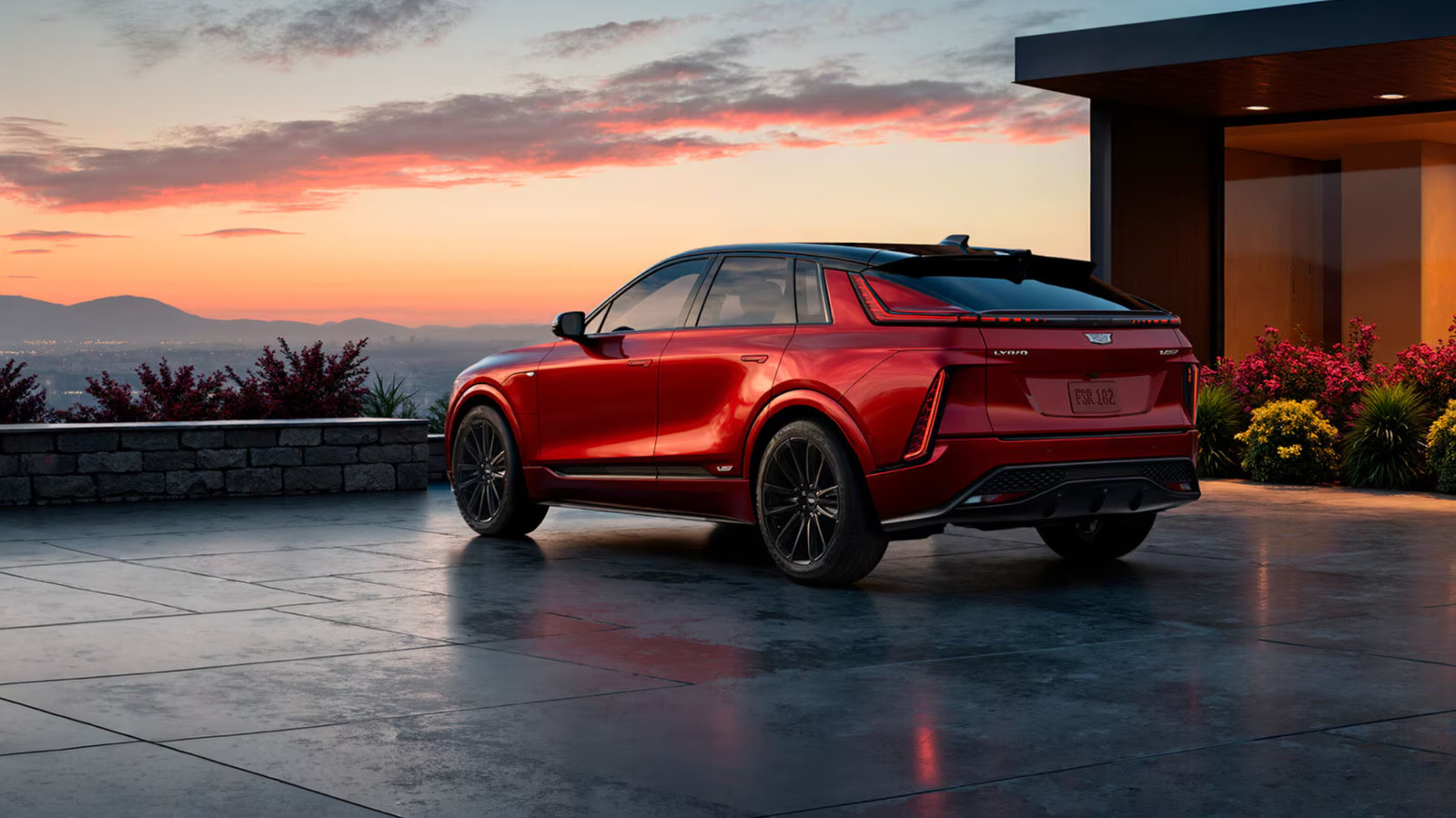
However, not every vehicle in GM’s lineup will be losing access to third-party infotainment systems. Reportedly, the 2027 model of Cadillac’s luxury EV, the Lyriq, will continue to support both Android Auto and Apple CarPlay. The decision to preserve the Lyriq’s access to phone mirroring systems is surprising, given GM’s recent transition toward native applications in EVs like the Chevy Silverado EV Work Truck and GMC Hummer EV, both of which saw their CarPlay and Android Auto functionalities removed earlier this year. As it stands, the electric SUV will be the only GM EV sold in North America compatible with both infotainment systems.
Exception or the rule?
While GM’s transition from Apple CarPlay and Android Auto might be controversial, company executives have stated that it will ultimately lead to a stronger product. In an interview with Nilay Patel on The Verge’s Decoder podcast, Barra stated that the company had received customer feedback that “it was very clunky” moving between GM’s in-house system and third-party applications. Now, GM is banking on customers preferring an AI-driven system with a host of verbal commands and smart features, ranging from smart route planning and curated entertainment systems to hands-free texting and streaming applications.
Advertisement
With this in mind, GM’s logic behind the Lyriq is puzzling. In a CarBuzz report on the luxury EV’s infotainment options, a Cadillac representative explained that the company preserved the Lyriq’s access to phone mirroring applications “based on customer feedback.” However, it’s unclear why this logic has not applied to GM’s other models, or whether it is a signal of moves to come.
In prioritizing its own application, GM has made efforts to grant access to key non-native applications — a commonly cited impetus for consumers hesitant to migrate to their car’s in-house infotainment system. In December of last year, for instance, GM announced that Apple Music would be available on its in-car software platform for all 2025 and 2026 models. Tim Twerdahl, GM’s VP of global product management, touted the addition as “the latest example of how we’re expanding entertainment choices built directly into our vehicles.” With its new Gemini-powered system, GM’s Google compatibility gives you access to Google Maps and other popular applications available on the Google Play Store.
For drivers of non-Lyriq GM EVs who prefer their phone mirroring application, the EV Play LT is a nifty workaround. Capable of providing wired and wireless phone mirroring for Chevy, GMC and Cadillac EVs, the EV Play LT is a third-party product that will deliver Apple CarPlay and Android Auto functionalities in infotainment systems without the popular phone mirroring apps. At $199.99 and with no subscription fees, the product might be just what the infotainment doctor ordered.
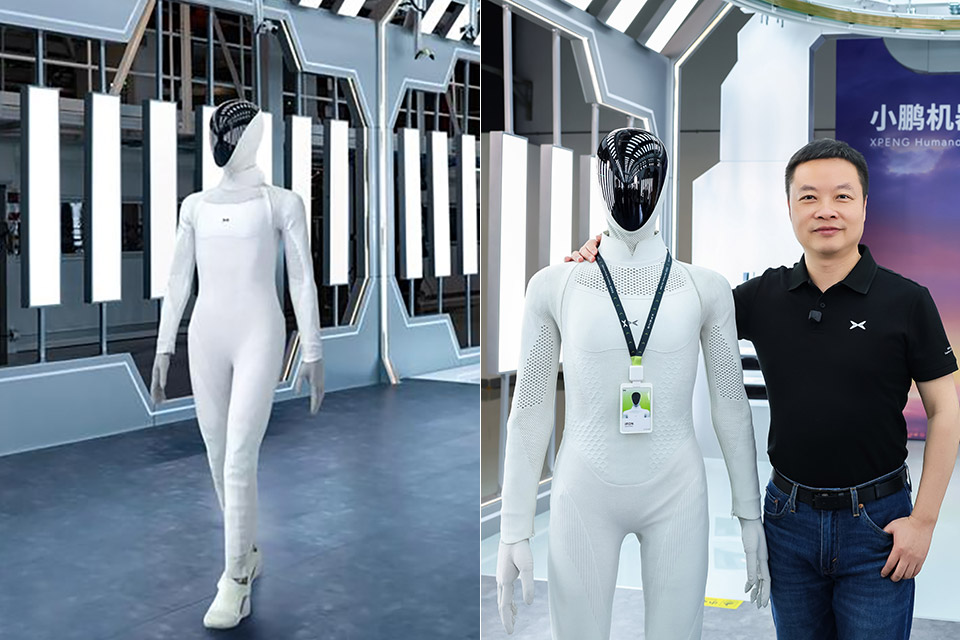
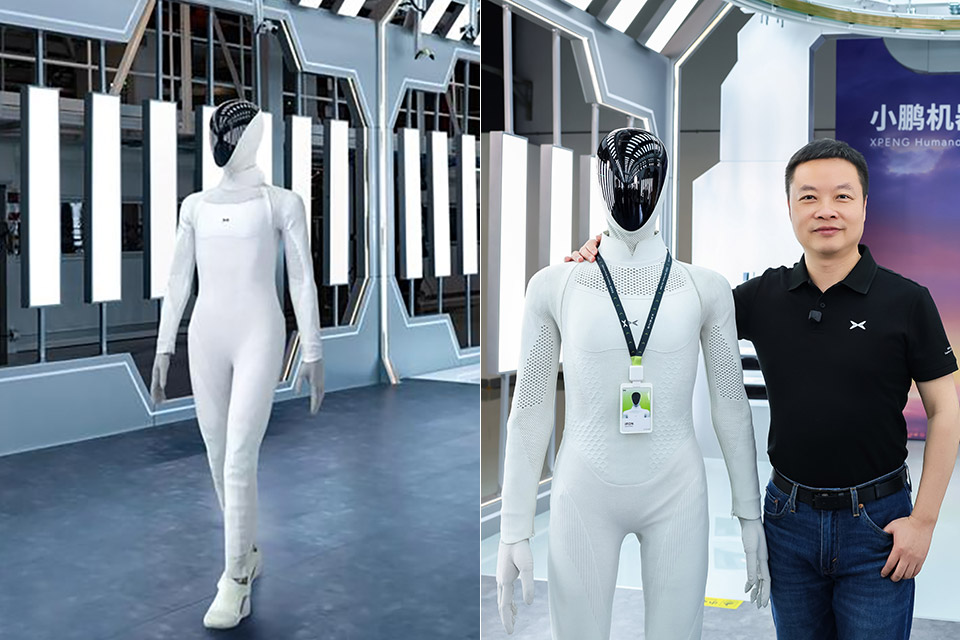
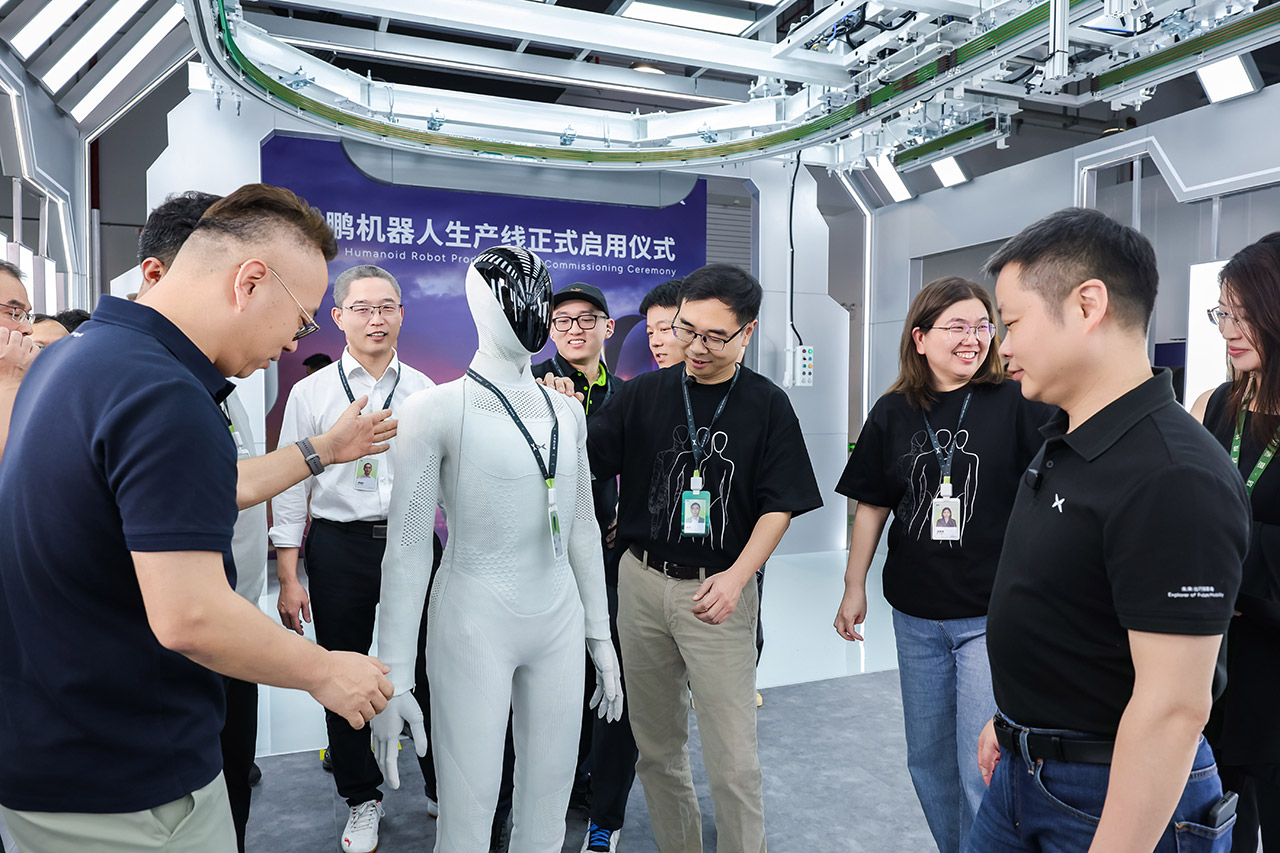
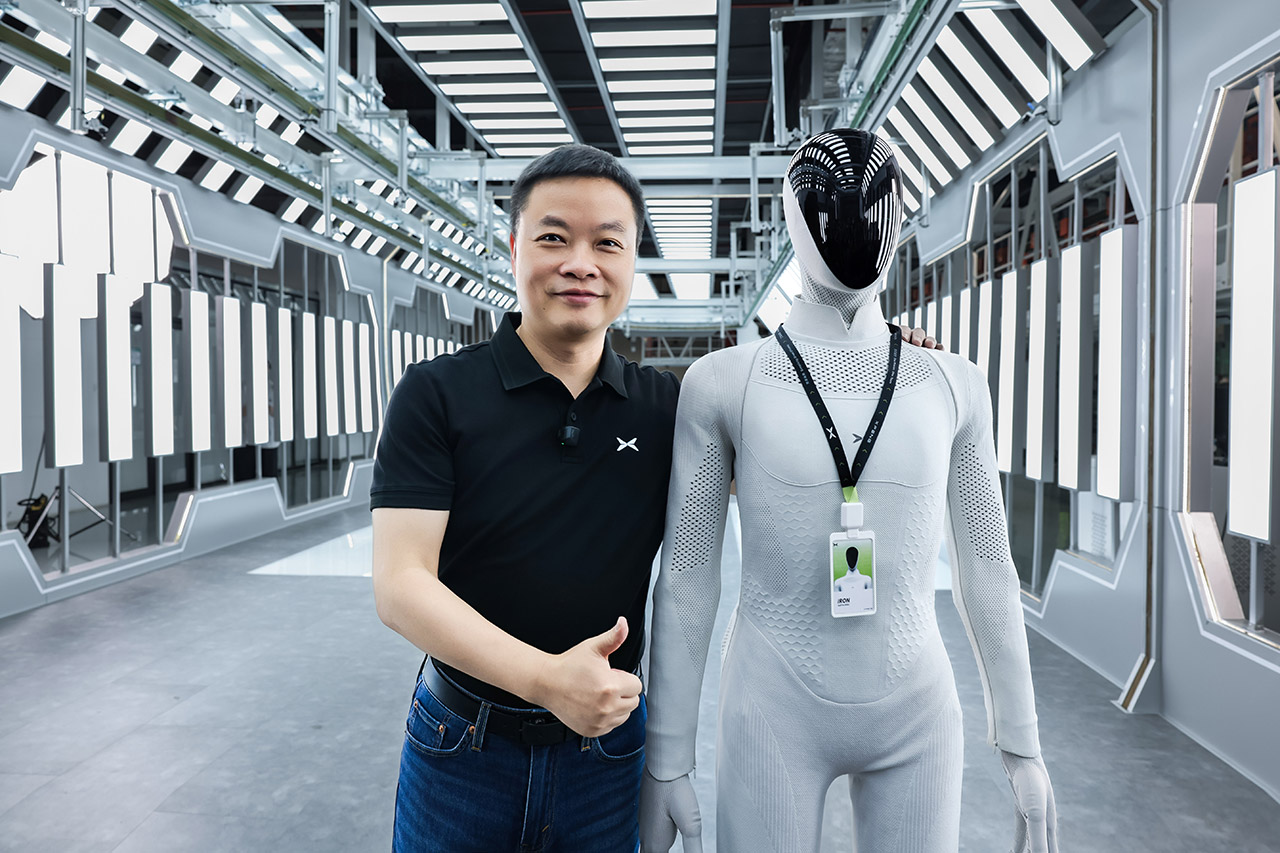
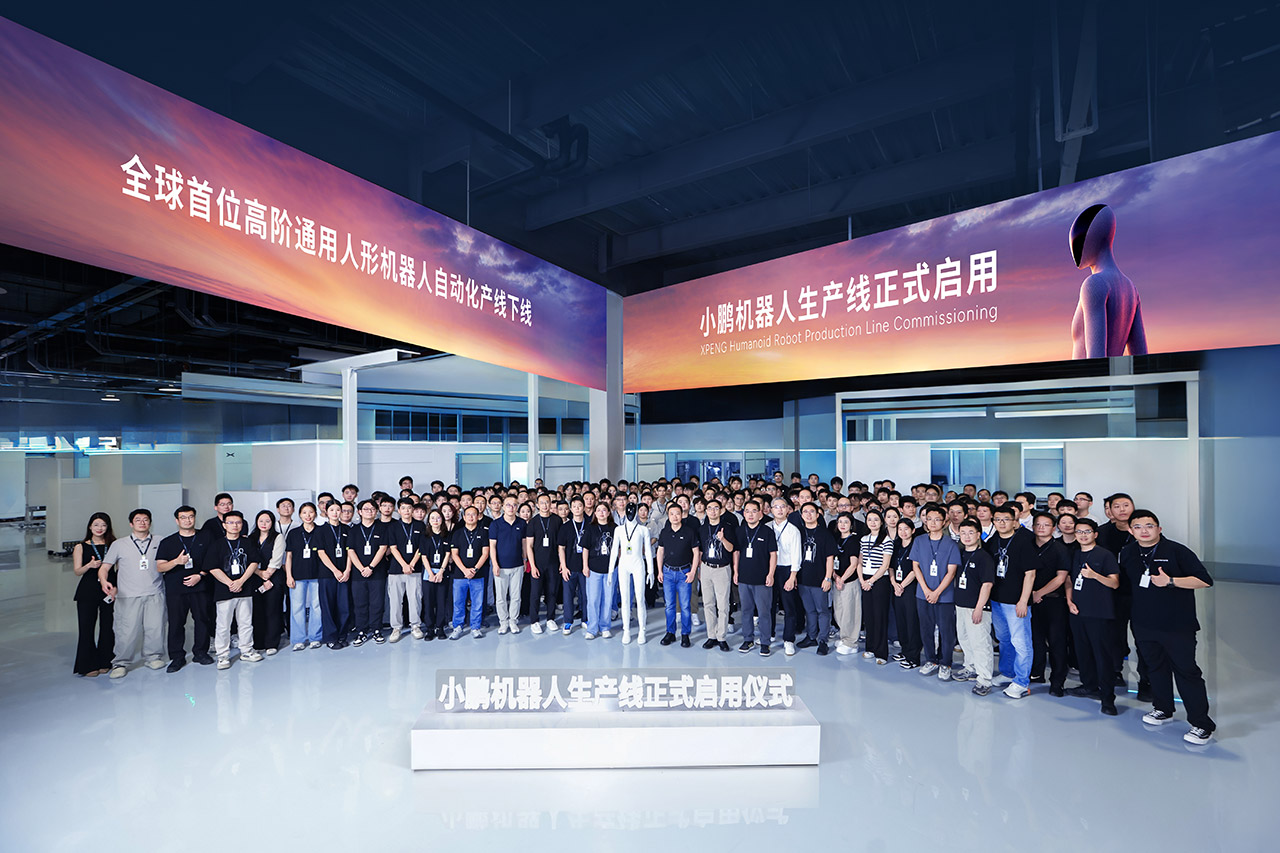
Finished on a new Guangzhou line, XPENG’s Iron stood up and walked away on its own. No remote pilot. No stage crew. Just a completed humanoid leaving the factory floor the way a car leaves a paint booth, only this one used two legs. The company called the September 7 moment the first time an advanced general-purpose humanoid had been built on automated production lines and then departed under its own power.
XPENG claimed the factory as the first fully automated line constructed for humanoid robots of its kind. More than 80% of the production line’s fundamental steps have to be automated. They used their existing quality systems from e-vehicle factories, but said they needed to be altered to suit the tighter tolerances required for humanoid robots. The goal was to build a production line that could consistently produce high-quality products and scale up without tearing down the entire facility. He Xiaopeng, chairman and CEO of XPENG, stated that when they began to develop the lines, they had no prior playbook to follow. He described the success as a little first step toward opening up an entirely new product category.
BUILD, CODE & DRIVE YOUR OWN ROBOT CAR: Turn coding, electronics and engineering into a working programmable robot car you can assemble, program and…
EXPLORE FPV, LINE TRACKING & OBSTACLE AVOIDANCE: Control the robot with the ELEGOO app or IR remote, view live FPV video through the onboard camera…
BEGINNER-FRIENDLY BUILD WITH GUIDED WIRING: Keyed XH2.54 connectors help reduce wiring mistakes, while the illustrated tutorial and example programs…
Iron, the humanoid robot, has a remarkable 76 degrees of flexibility in its body and an additional 21 in each hand. It has a completely enclosed, flexible lattice construction that not only gives it a human-like appearance but also has a sophisticated safety net design. So it can now survive the rigors of manufacturing with greater security. Three custom-designed Turing chips deliver an impressive 2,250 TOPS (tera operations per second), more than enough to operate the company’s Physical AI base model on the robot itself rather on a remote server. On paper, this should reduce latency and allow the device to do complex tasks without requiring human control via a joystick. Officially, it is a platform designed to handle a wide range of tasks, but it can also continue to learn as it moves around the world. It will begin with a low-key distribution of tasks for XPENG in its own stores and campuses later this year. In a few months, it will be on the move in China and over the world by 2027.
Iron is a large machine, standing 178 cm (5.8 ft) tall and weighing 70 kilograms (154 pounds). It has 76 degrees of freedom in its body, with an additional 21 in each hand. A flexible lattice framework wraps around the entire object, giving it a human appearance while yet meeting safety standards. Three unique Turing-type AI chips give the power to operate the company’s Physical AI base model directly on the robot. This should keep things relatively nearby, resulting in reduced latency and eliminating the requirement for a human to be trapped holding a controller someplace in a faraway location.
Battery-wise, they are putting high-energy solid-liquid hybrid batteries into production. By the end of 2026, XPENG will be churning out IRON by the hundreds. Following that, the first batch of robots will begin to work inside business stores and campuses in 2027, followed by a wider rollout in China and other markets that same year. If all goes as planned, they hope to be producing over 1,000 units each month by the end of 2026, with the much longer-term objective of selling a million units by 2030.
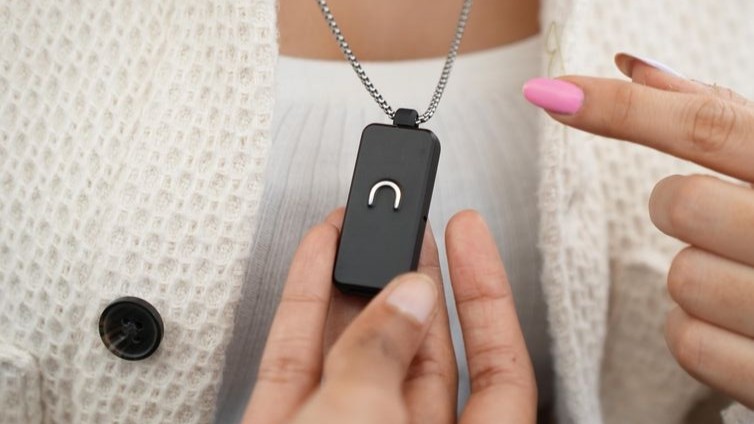
NeoSapien is working to make it easier for people to capture and remember important conversations. The company began this approach with Neo 1, which we have reviewed, a wearable that could listen to, understand, and remember conversations in the background. Now, NeoSapien is expanding its AI memory ecosystem with its Desktop App and NeoSapien MCP. While the Desktop App captures conversations across digital and physical settings, MCP brings that context into AI tools such as ChatGPT, Claude, and Cursor.
NeoSapien Desktop App Captures Conversations
The NeoSapien Desktop App captures meeting audio directly from the computer without relying on bots or platform-specific integrations. It works with Zoom, Microsoft Teams, Google Meet, WhatsApp, and other desktop-based platforms. The app runs in the background, allowing users to continue with their existing workflows. It can also capture in-person conversations through the computer’s microphone. The app automatically creates transcripts, AI-generated summaries, and searchable notes from captured meetings. Its calendar integration shows upcoming meetings and lets users start capturing them with a single click.
The Desktop App also supports multilingual conversations where speakers switch between Telugu, Kannada, English, Spanish, and other languages. NeoSapien’s AI engine understands context across more than 100 languages, including Kannada and Mandarin. This makes the app useful for Indian businesses and global teams working across different regions and languages.
NeoSapien MCP Brings Personal Context to AI Tools
NeoSapien MCP extends the company’s AI memory system beyond the Neo device and Desktop App. It lets users bring captured conversations and memories into AI platforms such as ChatGPT, Claude, and Cursor. This removes the need to copy and paste information or manually switch between apps. For example, sales teams can use client conversations to create structured proposals, while developers can use planning discussions inside Cursor. Teams can also turn meetings into summaries, follow-ups, and action items.
The technology separates the process of memory capture from the location where users decide to use the captured memory. Consequently, crucial contextual information will be able to migrate between various AI applications rather than being limited to a single application. This strategy has been termed the personal memory layer of the AI ecosystem by NeoSapien. NeoSapien refers to this concept as a personal memory layer for the entire AI ecosystem.
Advertisement
NeoSapien’s Vision for Connected AI Memory
The NeoSapien Desktop App and MCP work together to build a broader AI memory ecosystem. The Desktop App captures conversations from both physical and digital environments, while MCP makes that context useful across the AI tools users already rely on. This approach helps users stay focused on their work while keeping important conversations, decisions, and follow-ups accessible when needed. NeoSapien aims to make personal memory portable across platforms, allowing AI tools to retain relevant context and provide more connected and useful assistance in everyday work.
“A team at Google’s research arm used Google Maps to reroute a small portion of drivers in 10 U.S. cities,” reports SFGate — including San Francisco and Los Angeles.
“Through their experiment, which was published in the journal Nature Cities in June, the researchers sought to evenly spread traffic down more corridors as the drivers head to similar destinations, in the hopes of reducing congestion.”
The experiments nudged up vehicle speeds by 2% on average on the congested roads, and shortened travel times by a modest 0.7%. Scientists have long thought that traffic could be eased this way, and this now demonstrates how it could actually work in the real world.
The researchers collected data on weekdays in the 10 cities, which included Seattle, Salt Lake City, Chicago and Atlanta. While they studied a variety of types of roads, from city streets to highways, they found that in cities such as Los Angeles where they targeted highways, their diversions had the biggest effect, with driving speeds in those areas increasing by about 4.6%. Most cities, though, saw a smaller improvement with speeds across them increasing by just 0.5% during peak times. The Google study’s findings confirm what other researchers have long suspected, said Michael Manville, a professor of urban planning at UCLA who was not involved in the study. “This is a pretty nice empirical illustration of a longstanding idea,” he said. If a clogged traffic artery is on the verge of a long delay, he said, rerouting a small number of vehicles away from the bottleneck produces a “not gigantic but noticeable result….”
As with other traffic interventions, there’s a risk that Google’s approach to spreading traffic could backfire. This concept, known as “induced demand,” also applies to efforts like adding a lane to a critical highway, which temporarily relieves congestion, until traffic rises again. “You can do this, but you cannot be too successful, because if you are too successful, then more people will start driving, and essentially you’ll be back to ground zero,” [said Alexandre Bayen, a co-author of the study and director of UC Berkeley’s Center for Information Technology Research in the Interest of Society]. “That’s why when we did the study, we only operated at the margin.” The idea is to make minor improvements, enough to matter in the aggregate but not so significant that people notice and start driving more, canceling those improvements…
The Google Research study also considered the potential environmental benefits of its traffic improvements. The paper highlights the carbon dioxide emission reductions resulting from the slightly smoother traffic flow and shortened travel times, which add up to a savings of about 1,000 metric tons annually. That’s equivalent to the emissions of about 200 vehicles, a drop in the bucket for cities with millions of cars, the majority of which are still gas guzzlers, even in San Francisco and LA. Bayen acknowledges that while emphasizing the cumulative benefit if such efforts were sustained for a longer time. For Manville, the study is a useful proof of concept. “It is a demonstration that if we managed roads better, air would probably be cleaner,” he said.
According to the article, “Google’s study might not just be a one-off, and city officials could decide to make use of the Google research findings, Bayen said, such as by trying to improve traffic congestion on a larger scale…”
Advertisement
“Google declined SFGATE’s requests for comment on whether the company informed city authorities or rerouted drivers about the study,” the article points out.
















































You must be logged in to post a comment Login