


Connect with us

Tech

Tech Moves: Zillow names CPO; AWS leader retires; Microsoft hires AI expert from Apple

Published

on

Zillow Group’s new senior leadership team members, from left: Christopher Roberts, Jon Lim and Marissa Brooks. (Zillow Photos)

Zillow Group announced three promotions to its senior leadership team.

  • After nearly two decades with Zillow, Christopher Roberts is now chief product officer. Roberts helped build Zillow Rentals, which the company touts as the No. 1 platform among renters. His Seattle tech career started at Expedia as a senior vice president of engineering.
  • Jon Lim is moving from VP of product management to SVP of Rentals Product & Business Operations. Prior to Zillow, Lim worked in technical product management roles at Amazon for more than five years.
  • Marissa Brooks is now SVP of corporate affairs, having previously served as VP of communications. Brooks, who works from Scottsdale, Ariz., joined Zillow in 2017.

Earlier this month, Zillow reported its revenue grew 16% last year. Its quarterly revenue, which came in at $654 million, was at the upper end of Zillow’s guidance and slightly higher than investors’ projections.

Jeffrey Kratz. (LinkedIn Photo)

Jeffrey Kratz is retiring from Amazon Web Services after more than 13 years. He’s leaving the role of vice president of Worldwide Public Sector Industry international sales. Throughout his tenure at AWS, Kratz worked with public sector customers, whom he described on LinkedIn as “making the world a better place.”

Kratz previously was employed at crosstown rival Microsoft for two decades where he held a variety of leadership roles in enterprise and public sector sales.

“Now it’s time to recharge, take Luna-the-pup on leisurely walks, spend quality time with Beverly, Andrew, family, and friends,” Kratz wrote, adding that he would work on his golf swing, volunteering and “spending more time with Boards in areas I am passionate about.”

— In another Amazon departure, David Luan, who led the company’s San Francisco-based AGI Lab and oversaw one of its most important agentic AI initiatives, is leaving for an undisclosed new gig. Luan announced his exit on LinkedIn, saying he will leave at the end of the week. He joined Amazon through an acqui-hire deal targeting leaders at the startup Adept. More details are in this GeekWire story.

Manasa Hari. (LinkedIn Photo)

Microsoft nabbed Manasa Hari from Apple to join its California-based AI Super Intelligence program as a partner.

“I’ll be supporting to build the infrastructure for human-centric AI systems that are safe, useful, and aligned with human needs. Inspired by Mustafa Suleyman’s mission to build AI that amplifies human potential, I’m excited about its broad impact on enterprise,” Hari said on LinkedIn.

Advertisement

Hari was previously head of product and program at Apple’s AIML Machine Learning Platform. She also serves on San Francisco State University’s Big Data Advisory Board, which provides input on course curriculum.

Craig Cincotta has moved to chief of staff for Microsoft’s Xbox division. He previously was a general manager of communications for cloud and AI. Cincotta has been with the Redmond, Wash.-tech giant for more than 17 years over two stretches of employment.

The company last week announced that Asha Sharma is taking the helm of Xbox and Microsoft Gaming, succeeding 38-year Microsoft veteran Phil Spencer. Cincotta and Sharma previously worked together at Seattle-based Porch.

Julie Keef. (LinkedIn Photo)

Julie Keef is leaving her role of VP of product at Redfin, the Seattle real estate platform that was acquired nearly a year ago by Rocket Companies. Keef joined Redfin in 2016 as the first hire on what would become the company’s content marketing team. She was promoted seven times to reach her VP position in which she oversaw a team of 50.

“We grew Redfin to the 3rd most visited real estate site, and held on to that spot despite competitors outspending us 5 to 1 on tech and advertising. And we had fun doing it. Even as the housing market turned and investment was hard to come by, the rabid squirrel spirit of Redfin persisted,” Keef said on LinkedIn.

Advertisement

Keef did not disclose her next pursuit.

Ravi Doddivaripall. (BusinessWire Photo)

— Seattle’s DexCare named Ravi Doddivaripall as chief technology officer. Doddivaripall joins the company from XY Retail and has more than 25 years of senior platform and engineering experience. He is based in the San Francisco Bay Area.

DexCare’s software platform helps healthcare providers manage their system’s capacity and schedule appointments. The startup launched at Providence, spinning out from the healthcare network’s digital innovation group in 2021.

“Ravi brings the architectural depth and platform experience to accelerate what we’ve built to help more health systems treat more patients with the resources they already have,” said Matt Blosl, CEO of DexCare, in a statement.

Kelly Brooks. (LinkedIn Photo)

Kelly Brooks is now VP of sales for Read AI, a Seattle startup that sells enterprise productivity software tools using generative AI. Brooks joins from HubSpot where she worked for nearly nine years.

On LinkedIn, Brooks said she was attracted to the company after using its technology.

Advertisement

“I saw immediate value from trialing the product, and got excited by the ways Read improves the transfer and access of information through organizations — perennial challenges I tackled as Chief of Staff at HubSpot,” Brooks wrote. “Inspired, I reached out to [CEO] David Shim to make a connection. The rest is history… or at least a story for another day :)”

— Serial entrepreneur and ShiftAI podcast host Boaz Ashkenazy is now senior director of AI infrastructure for Redapt, a Woodinville, Wash.-based IT company.

Ashkenazy is also co-founder of the legal tech startup Clause and co-founder and CEO of Augmented AI Labs, which builds and tests AI products. Ashkenazy additionally serves on the board of trustees for the Seattle Metropolitan Chamber of Commerce.

Jerome Johnson. (LinkedIn Photo)

Jerome Johnson has a new leadership role at Amazon Web Services, serving as director of its professional services business for U.S. federal, defense and aerospace customers. Johnson, who is based in Arlington, Virginia, has been with AWS for more than 12 years. His previous role was director of solutions architecture for national security and defense customers.

“While my focus expands from architecture leadership to business and delivery leadership, the mission remains the same: Serving customers by helping them solve their hardest problems with AWS,” Johnson wrote on LinkedIn.

Advertisement

Jill Angelo is the new board chair of Special Olympics Washington. Angelo is the founder and past CEO of Gennev, a company billed as the first virtual menopause care provider in the U.S. The business was acquired by Unified Women’s Healthcare, where she served as president until last year.

Angelo is also currently VP of women’s health and commercial partnerships at the wellness startup Oura.

Frieda Chan has left her role as manager of innovation development at the University of Washington’s CoMotion, the institution’s collaborative entrepreneurial hub. Chan is now director business development at Yale Ventures.

Yoodli shared that Tom Craven is now the enterprise sales leader for the Seattle-based AI roleplay startup.

Advertisement

William Bal is now VP of growth for EdgeRunner AI, a Seattle-based defense technology company that raised $12 million last year.

Source link

Continue Reading
Click to comment

Leave a Reply

Your email address will not be published. Required fields are marked *

Tech

Reviving the ‘Mosquito Fleet’: Washington eyes passenger ferries to scale maritime transit and tech

Published

on

A high-speed passenger-only ferry crossing Washington’s Puget Sound. (Kitsap Transit Agency Photo)

Five days a week for more than three decades, Greg Nance‘s dad commuted by ferry from Bainbridge Island to Seattle where he worked as a public defender.

“That’s how he put food on the table. That’s how he was able to send three kids to college,” Nance said. “With all of the delays and cancellations we’re now seeing, that story is not possible anymore.”

Washington’s ferry service has become notoriously unreliable in recent years as aged vessels carrying vehicles and passengers break down and sailings are nixed due to crew shortages. Nance, a Democratic state representative from Kitsap, wants to quickly reboot the region’s maritime transportation system with less expensive passenger-only ferries.

Nance is the sponsor of House Bill 1923, a measure dubbed the “Mosquito Fleet Act” in homage to the fleet of steamships that more than a century ago plied Washington state’s inland sea, carrying goods and passengers across Puget Sound.

While the Washington State Department of Transportation plans to replace its aging fleet with hybrid-electric vessels, the transition has been mired in delays and faces massive funding gaps.

Advertisement

Bill supporters argue that a fast-tracked, passenger-only ferry service would help workers commute, connect residents to medical care, and boost tourism in harder-to-reach areas — while injecting energy into the region’s storied shipbuilding and maritime maintenance industries.

Nance sees the bill as a first step in creating new policies establishing the state as an advanced manufacturing hub in the maritime space.

“For 15 years, policymakers across the country, we’ve been asleep at the wheel,” he said. “China builds about 100 ships for every one American ship. That’s completely unsustainable in this environment. We need to get our edge back.”

A framework for ferry service

Passengers boarding a King County Water Taxi, which sails between Seattle and either West Seattle or Vashon Island. (King County Metro Photo)

HB 1923 targets state laws that restrict new passenger ferry services. Kitsap Transit is authorized to run high-speed, passenger-only ferries between Seattle and three cities — Bremerton, Kingston and Southworth — along with smaller vessels connecting Bremerton to nearby towns. King County offers water taxis from Seattle to West Seattle and Vashon Island.

The new legislation does two main things:

Advertisement
  • Allow port districts as well as city, county, municipal, regional and unincorporated transit systems to create passenger ferry districts and routes throughout Puget Sound and on the Washington coast.
  • With some restrictions, the new ferry system could levy a sales tax of up to 0.3%, implement commercial parking taxes, and collect passenger tolls and advertising fees.

The measure was first introduced last year, but stalled in the Senate. A revised version of HB 1923 cleared the House last week with significant bipartisan support and has a Senate committee hearing Friday. It has tight deadlines for approval with the legislative session scheduled to end March 12.

Rachel Aronson of Washington Maritime Blue, a nonprofit supporting the sustainable maritime industry, said the organization “supports the economic and quality of life benefits that this bill can bring by supporting new passenger-only ferry routes.”

But the group, which oversees the Quiet Sound program protecting the region’s endangered orcas from noise disturbance, wants stronger safeguards for whales and is pushing for low- or zero-emission vessels, saying the shift “further positions Washington as a global leader in clean maritime innovation.”

Routes on the horizon

County leaders last year proposed an electric ferry service between Seattle and Tacoma, with plans for a pilot project this summer to catch the wave of 2026 FIFA World Cup tourists. The timeline appears too tight — and the initiative would still require the permissions granted by the proposed legislation.

Other promising potential routes suggested by HB 1923 supporters include:

Advertisement
  • San Juan Islands to Sidney, B.C.
  • San Juan inter-island service to Bellingham 
  • Port of Everett to South Whidbey 
  • Olympia to Sea-Tac via Des Moines, and other runs  

Peter Philips, a longtime Seattle-area advocate for the local maritime sector, is a proponent of passenger ferries and a supporter of the bill. He believes the vessels could be quickly deployed.

“You can build one of those boats in 18 months in a Puget Sound yard,” he said. “All the expertise is here.”

Source link

Continue Reading

Tech

The Curse Of The Everything Device

Published

on

In theory having a single device that combines the features of multiple dedicated devices is a great idea, saving a lot of space, time and money. However, in reality it mostly means that these features now conflict with each other, force us to deal with more complex devices that don’t last nearly as long, and become veritable vampires for your precious attention.

Whereas in the olden days a phone was just used for phone calls, now it’s also a video and photo camera, multimedia computer, pager, and more, but at any point an incoming phone call can interrupt what you are doing. There’s also always the temptation of doom scrolling on one of the infinite ‘social media’ apps. Even appliances like televisions and refrigerators are like that now, adding ‘smarts’ that also vie for your attention, whether it’s with advertisements, notifications, or worse.

Meanwhile trying to simply do some writing work on your PC is a battle against easy distractions, leading people to flee to the digital equivalent of typewriters out of sheer desperation. Similarly, we increasingly see ‘dumb’ phones, and other single-task devices making a comeback, both as commercial options and as DIY projects by the community.

Are we seeing the end of the ‘everything device’ and the return to a more simple time?

Advertisement

Bored Is Good

WordPerfect 5.1 running on MS-DOS. (Credit: Daniel Pritchard, Wikimedia)

In the before times, when the iPhones hadn’t yet flooded the planet and Facebooks weren’t even a twinkle yet in some bloke’s eye, your attention wasn’t nearly as much preyed upon as it is today. Spending time on the World Wide Web wasn’t that prevalent, people weren’t yet walking around with displays practically glued to their faces, and if you wanted to do any task it took real effort.

Although I learned to touch-type on an electric typewriter and briefly owned a Brother typewriter, I was already using PCs and word processor software most of the time. Of course, this was initially on MS-DOS with WordPerfect 5.1, running first on the family 286 PC and later the IBM PS/2 386SX system that my father’s work had sold off for a pittance. Back in the single-tasking MS-DOS days it meant that once you were running WordPerfect, or games like Stunts 3D or Doom, that was all you did.

Later I’d run Microsoft Office on Windows, but with only dial-up internet available the temptation from distractions were minimal. Not until the arrival of always-online broadband internet would you have to suffer through notifications from IRC, MSN, ICQ and whatever else you had running in the background, but even then you’d not be on the PC all the time.

When it came to entertainment, such as watching TV, playing a movie or music, it would be just that one thing with zero interruptions on the HiFi set, a Walkman or TV. Along with only landline phones that you were usually not within hearing distance of, it was easy to be ‘bored’ and do some quiet reading, drawing or prod at some small wildlife in a puddle outdoors. Even game consoles were still fully offline, so couch-based gaming – optionally with split-screen – was as multiplayer as things got.

Although even during the 1990s many people had email, you weren’t expected to check your mailbox more than once a week, perhaps a few times a day for serious nerds.

Advertisement

The Online Cacophony

Credit: Xinmei Liu

Much of the curse of the ‘everything device’ can be reduced to the fact that everything has to be connected to some remote service or a dozen. Just imagine not having internet on your smartphone, smart TV or PC, and how it almost instantly plummets you into chronic anxiety as only just about everything is connected to some online service, or depends on data stored on remote servers.

Getting away from all this is hard, as signing up for a dozen social media services is part of social pressure, and each of these services make sure to incessantly pull you in with updates and notifications. Then there are advertisements that have become the main financing model for websites and even online services in the 21st century, which ever more intrusively barge into whatever it is that you’re trying to do.

Here the term ‘chronically online‘ along with similar terms has previously been pitched and would seem to be rather apt. Ever more people have to check their smartphone for new notifications and updates, and are constantly occupied with what is happening on social media, rather than in the real world.

Worse, you’re no longer just taking snapshots on your photo camera or recording video on a camcorder, but everything goes straight into the Cloud™, from where you get pushed, harassed, and cajoled into sharing every single bit of content with everyone else, lest someone misses out on your Amazing New Experience.

Out Of Focus

The main problem with all of these chronically online everything devices is that you are never left alone with your thoughts, and thus never get ‘bored’. Everything wants a slice of your attention, with social media platforms being practically engineered to hoover up every last crumb of it, while counting on your inability to control your impulses and relying on your innate fear of missing out (FOMO), courtesy of you being a very social type of monkey.

For example, a 2021 study in Frontiers in Psychology by Christina Koessmeier and Oliver B. Büttner investigated the causes behind the distracting effect from social media in particular. FOMO is a big reason, as we are social monkeys who generally like to be part of the group rather than excluded. Self-regulatory issues are many, such as preferring to pop over to a social media app or site rather than complete an unpleasant or difficult task. It feeds the reward center of your brain, even if you’re not actually accomplishing the task you set out to do.

Advertisement

One could argue here that the demise of the third place alongside the rise of ‘everything devices’ like smartphones has led to a situation where being chronically online is a way to compensate for the lack of real-life connections, albeit in an environment that’s mentally rather toxic due to how social media in particular works. By providing a sense of belonging – whether false or not – these online places become an important part of our identity.

That a lot of unhealthy behavior is associated with such a chronically online existence ought to be self-evident. Meanwhile the push towards ‘everything devices’ like smartphones isn’t due to corporate benevolence, but rather to trap all of us into endless subscription services, accessed via a terminal device explicitly designed to siphon off every last drop of our attention, focus, and money.

Escape The Trap

Rather than hapless insects, caught in the slowly solidifying tree sap that will inevitably doom them, we humans like to brag about our intellect and ability to innovate. Thus, at least some of us are trying to get out of this veritable tar pit of FOMO and social manipulation, even as we try to figure out what exactly went wrong down this path of Future Technology™.

Motorola RAZR V3i mobile phone. (Source: Wikimedia)

The question is: how far exactly should we go back in time? This is a question that’s been on the minds of many, with a wide variety of solutions offered. The most extreme is of course the digital detox approach, whereby a person completely removes all smartphones and similar technology from their lives for a set period of time. Although showing positive effects on people’s mental health, this can of course only ever be a temporary intervention.

For many people the allure of switching away from smartphones and to feature phones (‘dumbphones’) is an appealing one. Personally this is a step that I have also taken, switching from a regular Android smartphone to a KaiOS-based TCL Flip 3 feature phone that’s slightly more full-featured than a Motorola Razr V3, but also equally as user-friendly and devoid of most non-phone functionality. Photos you take also are saved to internal memory, with no cloud storage unless you jump through serious hoops.

Advertisement

When you’re on a PC, it is of course much harder to escape the pull of FOMO and easy ‘rewards’ by doomscrolling or watching funny cat videos on YouTube. Here you can either focus on training your self-control, or by using a zero-distraction typing device that removes all temptation.

On the training side of things, the Pomodoro Technique can be done using a bog-standard kitchen timer to set the intervals, any of a number of online timers, special YouTube videos, or by building your own physical timer, with even just recently a few examples already popping up here on Hackaday.

Back To WordPerfect 5.1

It’s hard to argue with simply installing good ol’ WordPerfect 5.1 or equivalent on some DOS flavor in a system of your choice and typing away there. We have recently seen a SvarDOS-based environment that comes preloaded with a range of word processors and kin to get you started. Since you won’t even have networking, you won’t be distracted by anything. This can of course be replicated in a variety of freely available software, with FreeDOS and any word processor available from Archive.org being fair game.

You can also go down the ‘digital typewriter’ route, with some commercial options even being available here, such as the Zerowriter Ink. Alternatively you can go fully minimalistic with an ESP32-based writer deck, or opt for something vaguely more laptop-like. A lot here depends on how much you require in terms of formatting and editing features. Although sometimes you really just need to hammer out lots of words, in which case the portable equivalent of Notepad is fine, you may want to add at least some formatting.

Advertisement

Personally I’m quite the fan of the calming white-on-blue text with full word processing capabilities alongside the deafening noise of the buckle-spring keyboard of an IBM PS/2, but everyone has their own preferences. And maybe that is another benefit of breaking away from the Everything Device — you get to find out what works best for yourself.

Source link

Advertisement
Continue Reading

Tech

Can Orbital Data Centers Solve AI’s Power Crisis?

Published

on

What’s the difference between a stupid idea and a brilliant one? Sometimes, it just comes down to resources. Practically unlimited funds, like limitless thrust, can get even a mad idea off the ground.

And so it might be for the concept of putting AI data centers in orbit. In a rare moment of unalloyed agreement, some of the richest and most powerful men in technology are staunchly backing the idea. The group includes Elon Musk, Jeff Bezos, Jensen Huang, Sam Altman, and Google CEO Sundar Pichai. In all likelihood, hundreds of people are now working on the concept of space data centers at the firms directly or indirectly controlled by these men—SpaceX, Starlink, Tesla, Amazon, Blue Origin, Nvidia, OpenAI, and Google, among others.

Pie charts compare the costs of orbital solar\u2014$51.1billion\u2014vs. terrestrial data center\u2014$16 billion. Likely costs to design, build, and launch a 1-GW orbital datacenter, based on a network of some 4,400 satellites and including operating costs over a five-year period, would exceed US $50 billion. That’s about three times the cost of a 1-GW data center on Earth, including five years of operation.John MacNeill

So how much would it cost to start training large language models in space? Probably the best accounting is one created by aerospace engineer Andrew McCalip. McCalip’s exhaustive, detailed analysis includes interactive sliders that let you compare costs for space-based and terrestrial data centers in the range of 1 to 100 gigawatts. One-gigawatt data centers are being built now on terra firma, and Meta has announced plans for a 5-GW facility, with anticipated completion some time after 2030.

In an interview, McCalip says his initial rough calculations a few years ago suggested that data centers in space would cost in the range of 7 to 10 times more, per gigawatt of capacity, than their terrestrial counterparts. “It just wasn’t practical,” he says. “Not even close.” But when Elon Musk began publicly backing the idea, McCalip revisited the numbers using publicly available information about Starlink’s and Tesla’s technologies and capabilities.

Advertisement

That changed the picture substantially. The figures in his online analysis assume an orbital network of data-center satellites that borrows heavily from Musk’s tech treasure chest—“essentially…you just start putting some radiation-resistant ASIC chips on the Starlink fleet and you start growing edge capacity organically on the Starlink fleet,” McCalip says. The network would rely on the kind of watt-efficient GPU architecture used in Teslas for self-driving, he adds. “You start dropping those onto the backs of Starlinks. You can slowly grow this out, and this would be approximately the performance that you would get.”

Bottom line, with some solid but not necessarily heroic engineering, the cost of an orbital data center could be as low as three times that of the comparable terrestrial one. That differential, while still high, at least nudges the concept out of the instantly dismissible category. “I have my particular views, but I want the data to speak for itself,” McCalip says.

For this illustration, we picked a configuration with an aggregate 1 GW of capacity. The network would consist of some 4,300 satellites, each of which would be outfitted with a 1-square-kilometer solar array that generates 250 kilowatts. The data center on that satellite, powered by the array, might have at least 175 GPUs; McCalip notes that a popular GPU rack, Nvidia’s NVL72, has 72 GPUs and requires 120 to 140 kW.

The total cost of the satellite network would be around US $51 billion, including launch and five years of operational expenses; a comparable terrestrial system would cost about $16 billion over the same period.

Advertisement

Stupid? Not stupid? You decide.

From Your Site Articles

Related Articles Around the Web

Source link

Advertisement
Continue Reading

Tech

How Bluetooth LE Audio Enhances Listening Experience

Published

on

This is a sponsored article brought to you by Audio Precision.

Bluetooth started as a simple wireless connection between a phone and a headset. Since its inception, it has become the invisible scaffolding for music, calls, gaming, and hearing assistance across consumer and professional devices alike. Bluetooth’s evolution to support more use cases has been driven not by a single breakthrough but by a steady accumulation of radio innovations, codecs, transport schemes, and power management strategies that together enhance the user experience with wireless audio. Today, a new architectural baseline—Bluetooth Low Energy (LE) Audio—promises low-power, high quality, and scalable audio delivery to open up the standard for an even wider range of applications [1][2].

Evolution of Bluetooth Radio Technologies

The original Basic Rate (BR) radio introduced with Bluetooth 1.0 in 1999 used a Gaussian frequency-shift keying (GFSK) at 1 Msym/s, hopping through 79 channels in the 2.4 GHz band with alternating transmission directions in a tight time-division duplex rhythm. The short-range robustness and reliability afforded by this technology helped gain performance at par with traditional cable-based devices.

In 2003, the Advanced Audio Distribution Profile (A2DP) arrived as the enabling standard for stereo audio streaming over Bluetooth Classic, marking the technology’s expansion beyond voice into music playback. A2DP uses the Audio/Video Distribution Transport Protocol (AVDTP) for stream management and mandates the Sub-Band Codec (SBC) as its baseline audio compression format. The SBC codec employs 4- or 8-band analysis/synthesis filter banks with adaptive bit allocation, spanning bitrates from 128 to 345 kbps for stereo content. Embedded DSP work showed how to optimize SBC implementation—Weighted Overlap Add (WOLA) filter banks, fixed-point pipelines, and real-time decoding that is audibly indistinguishable from floating point reference implementations while consuming fewer MIPS and milliwatts [3].

Advertisement

In 2004, Bluetooth 2.0 introduced Enhanced Data Rate (EDR) that moved payloads to π/4 DQPSK or 8 DPSK modulation to boost gross throughput to 2–3 Mb/s, while retaining the GFSK for packet headers. This innovation boosted stereo streaming quality and adoption during the decade.

Around 2010, Bluetooth Low Energy (BLE) 1 M PHY technology was introduced via Bluetooth 4.0. This new radio technology continued to use GFSK but tuned for low duty cycles and intermittent bursts. This fundamental difference with BR/EDR (Basic Rate/Enhanced Data Rate) led to common usage of the term “Bluetooth Classic” for Bluetooth 1.0 to distinguish it from BLE.

Isochronous Transport Architecture

In late 2016, Bluetooth 5.0 introduced the LE 2M PHY, doubling the symbol rate to 2 Msym/s. For a healthy link margin, halving a packet’s airtime was found to reduce collision exposure and lower the energy delivered/bit. By 2020, Bluetooth 5.2 or Bluetooth LE Audio radically shifted the focus from continuous streaming to a transport designed explicitly around deadlines. LE (Low Energy) Audio leverages the existing LE 1M and LE 2M PHYs but carries audio over isochronous channels—slots with timing commitments. The isochronous channel architecture comes in two forms. Connected Isochronous Streams (CIS) are unicast flows whose parameters (intervals, subevents, retransmissions) can be tuned to meet frame deadlines with bounded jitter, enabling the radio to sleep predictably between bursts while the application knows precisely when a frame will arrive. A systematic review of BLE performance corroborates that output and latency in the real world are bounded as much by connection interval, event length, and retransmissions as by the raw symbol rate; under the right parameters, faster PHYs reduce radioactive time and improve energy efficiency, while coded long-range modes trade airtime for robustness in harsher channels [1].

Broadcast Isochronous Streams (BIS)—commercially branded as Auracast—extend that scheduling to one-to-many transmissions, enabling connectionless audio delivery to unlimited receivers [2][7].

Advertisement

This difference in architecture over continuous streams requires careful selection of intervals, packetization, codec forming and appropriate models to determine parameters that meet deadlines without wasting airtime. Markov chain analyses of CIS—validated via simulation—translate developer choices (intervals, subevents, retransmission counts) into quantitative predictions for packet loss rate (PLR), backlog, delay, throughput, and average power consumption. [7]

The LC3 Codec Advantage

LE Audio’s Low Complexity Communication Codec (LC3) fundamentally shifts the bitrate-quality-complexity balance. Peer-reviewed listening tests across speech and music demonstrate that LC3 delivers superior perceived quality compared with SBC and mSBC at roughly half the bitrate; it also provides robust packet loss concealment and flexible frame sizes, including low-latency modes that make the encoding delay a smaller slice of the end‑to-end budget [2]. The benefits are practical: lower bitrate shrinks airtime, which reduces collision risk; shorter frames pair cleanly with CIS scheduling so deadlines are easier to meet; the codec’s computational footprint is modest enough for miniature devices [2].

AP logo with blue swoosh, text reads "An Axiometrics Solutions Brand."Audio Precision provides high-performance audio analyzers, accessories, and applications that have helped engineers worldwide design, validate, characterize, and manufacture audio products for over 40 years.

Hearing Aids: Power-Constrained Wireless Audio

Modern hearing devices are a complex assembly of multiple microphones, digital signal processors, and miniature power sources. Except for Completely-in-Canal (CIC) and Invisible-in-Canal (IIC) designs, which are so small they fit entirely within the ear canal, most hearing aids incorporate two or more microphones to support directional processing, beamforming, and noise reduction. Audio output is provided by a single electro-acoustic transducer. The compact form factor severely limits battery capacity, making energy efficiency critical.

Compared to Bluetooth Classic (A2DP/HFP), LE Audio improves energy efficiency through three broad mechanisms: the LC3 codec achieves equivalent perceived audio quality at significantly lower bitrates than the SBC codec used in Bluetooth Classic; the LE 1M and 2M PHYs reduce on-air time per packet relative to BR/EDR; and Connected Isochronous Streams (CIS) enable precise scheduling, allowing the radio to sleep between transmissions, whereas BR/EDR audio requires longer active radio periods.

Advertisement

BLE‑compliant wake‑up receivers (WuRx) monitor the air with micro/nano-watt sensitivity and trigger the main radio with packet preambles. Reported designs demonstrate sensitivity to extremely weak radio signals (down to −80 dBm), with within‑bit duty cycling that trades latency for power from hundreds of microseconds to seconds [4]. Sleep scheduling techniques primarily apply heuristics for periodic check‑ins, event‑driven wake-ups, clustering, and time division to stretch lifetime while meeting QoS targets [5][6].

From True Wireless Stereo to Coordinated Sets

Bluetooth Classic’s A2DP supports only a single audio stream. In Bluetooth Classic’s True Wireless Stereo (TWS) devices, one earbud acts as the primary, receiving the stereo stream from the phone and relaying audio to the secondary earbud—a forwarding or relay architecture. The additional transmission hop adds latency to the secondary earbud, while increasing power consumption in the primary.

LE Audio eliminates this limitation entirely. The technology’s dual CIS capability lets the phone send synchronized left and right streams directly to both earbuds. This architectural shift enables independent CIS connections from the phone to the left and right earbuds or hearing aids, enabling synchronized stereo delivery without relaying.

Discovery and pairing have evolved to match multi‑device use. The Coordinated Set Identification Service (CSIS) allows two earbuds—or two hearing aids—to be discovered and managed as a coordinated set rather than independently, with resolvable identifiers and set‑level locks. While peer‑reviewed empirical literature on CSIS is thin, timing and carrier synchronization theory is mature: clock‑offset estimation, jitter control, phase‑locked loops, buffer alignment, and recovery strategies hold binaural timing within tens of milliseconds for lip‑sync and spatial imaging [9].

Advertisement

Gaming Headsets: Low Latency With Bidirectional Stereo

Gaming represents a demanding stress test for wireless audio. Bluetooth Classic’s Headset Profile (HSP) and Hands-Free Profile (HFP) support bidirectional audio for voice communication but are fundamentally limited: they transmit only in mono with a maximum sampling rate of 16 kHz, restricting both spatial audio quality and voice fidelity.

LE Audio Unicast Voice transforms this scenario by supporting stereo audio with sampling rates up to 32 kHz, significantly improving spatial audio and speech quality for gaming while maintaining voice communication with other players. End‑to‑end latency often must stay under a few tens of milliseconds for responsive play and coherent spatial sound. LC3’s shorter frames and lower bitrates shrink codec delay; tuned CIS parameters preserve deadlines while limiting retransmissions to useful values; beamforming improves capture quality for bidirectional voice without ballooning computational cost [2][7].

Close-up of smartphone screen showing Bluetooth icon in blue with other icons around it. Audio Precision’s new Bluetooth® 5 module provides an interface to audio devices using the latest version of the Bluetooth specification, including LE Audio devices utilizing Unicast and Auracast™. Adobe Stock
Public Broadcast Audio: Auracast

Bluetooth Classic supports only one active audio connection and typically provides a range of approximately 10 meters, making it fundamentally unsuitable for broadcast scenarios such as lecture halls, churches, gyms, and airports.

LE Audio introduces the Broadcast Isochronous Stream (BIS), commercially branded as Auracast, enabling true one-to-many audio transmission. Multiple hearing aids, headphones, and earbuds can receive the same broadcast, which may be public (e.g., airport announcements) or private (encrypted, non-discoverable, optional password protection). Typical Auracast ranges extend up to 30 meters indoors and 100 meters outdoors, depending on environment and configuration.

Advertisement

BIS’s connectionless nature scales easily to unlimited receivers without pairing overhead; isochronous delivery tolerates packet loss well through forward error correction and interleaving; and the unidirectional transmission eliminates return traffic, reducing radio congestion. Assistive listening studies report that bypassing room acoustics and delivering audio directly can improve signal‑to‑noise ratios by 15–20 dB, making announcements comprehensible and lectures clearer [8].

Ensuring It Sounds Good in, on or Over the Listener’s Ear

LE Audio delivers the music or voice signal more efficiently than its predecessor, Bluetooth Classic. Audio engineers still need to verify their devices’ audio performance as experienced by the end user.

The listener’s pinna, the external part of the ear, and ear canal are a critical part of the playback system. For example, the low-frequency response and the effectiveness of active noise-cancellation are highly dependent on the seal between the device and the listener’s ear canal. Similarly, on-ear and over-ear headphones interact with the listener’s pinnas.

Anthropomorphic test fixtures—most notably GRAS KEMAR (Knowles Electronics Manikin for Acoustic Research) head and torso simulators—incorporate soft, deformable anthropomorphic pinnas that replicate realistic insertion and sealing conditions. These allow accurate replication of insertion depth, sealing, low-frequency response, and ANC performance [10][12].

Advertisement

Gaming headsets both receive and send audio. Just like music headphones, gaming headset testing benefits from fixtures with a human-like pinna to ensure repeatable measurement of ear-pad interaction. The headset’s microphone can be either a traditional boom microphone positioned close to the mouth or an array of microphones located farther away on the ear cups incorporating beamforming to isolate the wearer’s voice from any background noise. Test fixtures use an artificial mouth and a microphone positioned at the Mouth Reference Point (MRP) according to ITU-T standards to evaluate microphone performance under realistic speech and background noise conditions [10].

For testing of devices intended as broadcast receivers, an integrated test system with Auracast broadcast capability—like the Audio Precision Bluetooth 5 module—proves invaluable.

Conclusion

Bluetooth audio is no longer defined by a single radio or a single profile. It is defined by a timed pipeline—a codec that makes better sound with fewer bits, a transport that guarantees when those bits arrive, a radio that can sleep most of the time, and front‑end processing that gives the codec an easier job.

Hearing aids illustrate the payoff: arrays and beamformers improve intelligibility first; LC3 compresses with low delay; CIS schedules delivery; the radio sleeps; batteries last. Enhancements in other applications, such as gaming and public broadcast, further strengthen the case for adoption of this cutting-edge technology.

Advertisement

While Bluetooth audio began as a low-bandwidth, mono voice technology over Basic Rate (BR) radio in 1999, more than 25 years of evolution has produced a fundamental architectural shift. LE Audio replaces continuous point-to-point streams with scheduled, low-power, scalable audio delivery, enabling new classes of devices and use cases. The standards are ready, and audio test systems like Audio Precision’s Bluetooth 5 module are updated to incorporate the new transmission technology; the rest is execution—deploying LE Audio broadly so audio becomes instant, clear, and inclusive [2][7].

References

[1] Tosi, J., Taffoni, F., Santacatterina, M., Sannino, R., & Formica, D. (2017). Performance evaluation of Bluetooth Low Energy: A systematic review. Sensors, 17(12), Article 2898. https://doi.org/10.3390/s17122898

[2] Schnell, M., Riedl, M., Löllmann, H., & Multrus, M. (2021). LC3 and LC3plus: The new audio transmission standards for wireless communication. Proceedings of the AES 150th Convention, Online.

[3] Hermann, D., Herre, J., & Teichmann, R. (2004). Low-power implementation of the Bluetooth subband audio codec. Proceedings of the IEEE International Conference on Acoustics, Speech, and Signal Processing (ICASSP), Montreal, QC, Canada.

Advertisement

[4] Abdelhamid, M. R., Chen, R., Cho, J., Chandrakasan, A. P., & Wentzloff, D. D. (2018). A −80 dBm BLE-compliant, FSK wake-up receiver with system and within-bit duty-cycling for scalable power and latency. Proceedings of the IEEE Custom Integrated Circuits Conference (CICC), San Diego, CA, USA.

[5] Mutar, M. S., Mohammed, A. H., & Abdulkareem, M. B. (2024). A survey of sleep scheduling techniques in wireless sensor networks for maximizing energy efficiency. AIP Conference Proceedings.

[6] Mikhaylov, K., & Karvonen, H. (2020). Wake-up radio enabled BLE wearables: Empirical and analytical evaluation of energy efficiency. Proceedings of the IEEE International Symposium on Medical Information and Communication Technology (ISMICT).

[7] Yan, Z., Xu, H., & Shen, Z. (2024). Modeling and analysis of the performance for CIS-based Bluetooth LE Audio [Preprint].

Advertisement

[8] Kaufmann, T. B., Weller, T., Stiefelhagen, R., & Adiloglu, K. (2023). Requirements for mass adoption of assistive listening technology by the general public. arXiv. https://arxiv.org/abs/2303.02523

[9] Nasir, A. A., Durrani, S., Mehrpouyan, H., Blostein, S. D., & Kennedy, R. A. (2015). Timing and carrier synchronization in wireless communication systems: A survey and classification of research in the last five years. arXiv. https://arxiv.org/abs/1507.02032

[10] Okorn, E., & Wulf-Andersen, P. (2019). Acoustic test fixtures: From KEMAR and beyond! The Journal of the Acoustical Society of America, 146(4), 2815. https://doi.org/10.1121/1.5136656

[11] An analytical model of Bluetooth performance considering physical and link-layer effects. (2021). IEEE Xplore.

Advertisement

[12] IEC/ITU acoustic standards literature for headphone and earbud testing. (n.d.). Indexed in The Journal of the Acoustical Society of America and AIP Conference Proceedings.

Disclosure: AI tools were used by Wiley, which produced this sponsored article, to skim through research literature for technical insights on the evolution and state of the art of Bluetooth technology. AI was also used to polish the text for conciseness and technical accuracy.

Source link

Advertisement
Continue Reading

Tech

App Store gaming revenue bulletproof, as mobile gaming slows overall

Published

on

Mobile gaming downloads are falling worldwide, but higher player spending is making the App Store more profitable anyway.

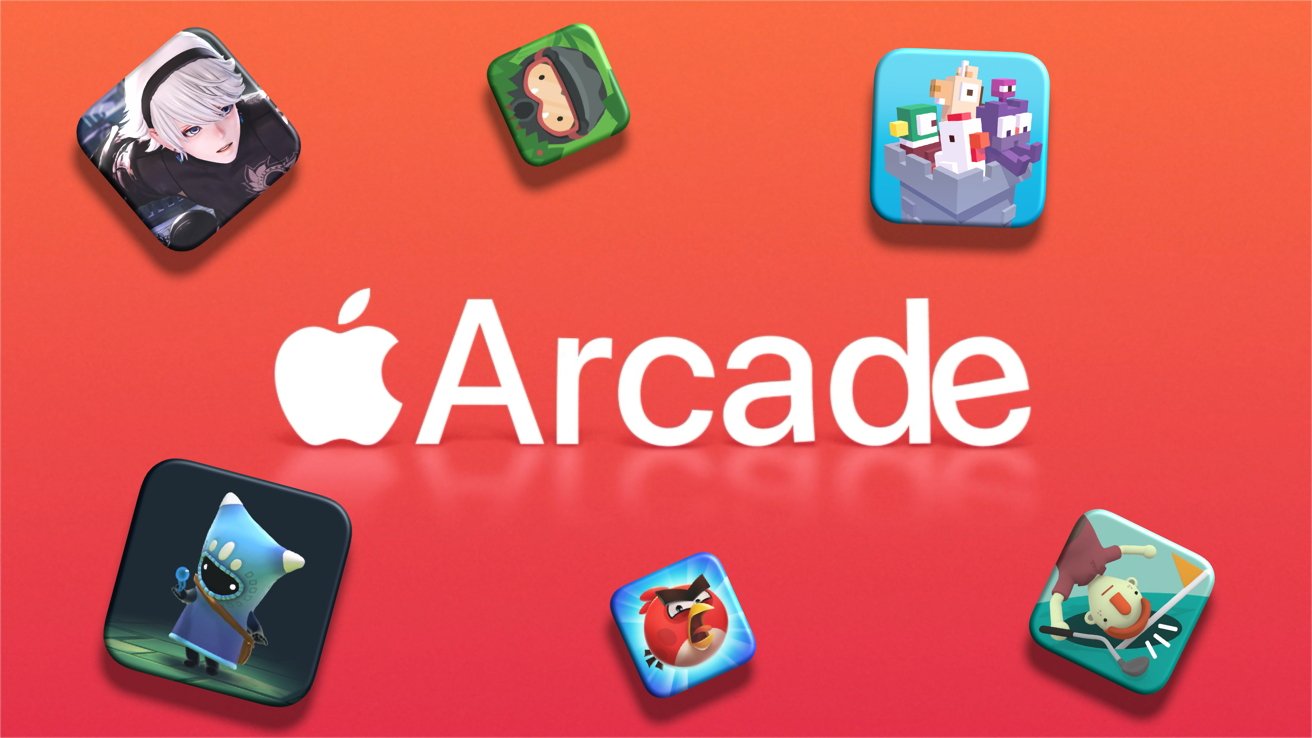
Apple Arcade logo on a red to orange gradient background, surrounded by colorful rounded-square icons representing various video games with cartoon and fantasy characters
Apple Arcade

Mobile game downloads declined worldwide in 2025, but in-app spending remained strong. Rising player spending is reinforcing Apple’s App Store revenue model.
Mobile games raked in $82 billion from in-app purchases in 2025, with an average of $1.62 per download, even though total downloads dropped. Developers are now focusing more on keeping players and boosting subscriptions rather than quickly gaining new ones.
Continue Reading on AppleInsider | Discuss on our Forums

Source link

Continue Reading

Tech

Anthropic acquires Vercept in early exit for one of Seattle’s standout AI startups

Published

on

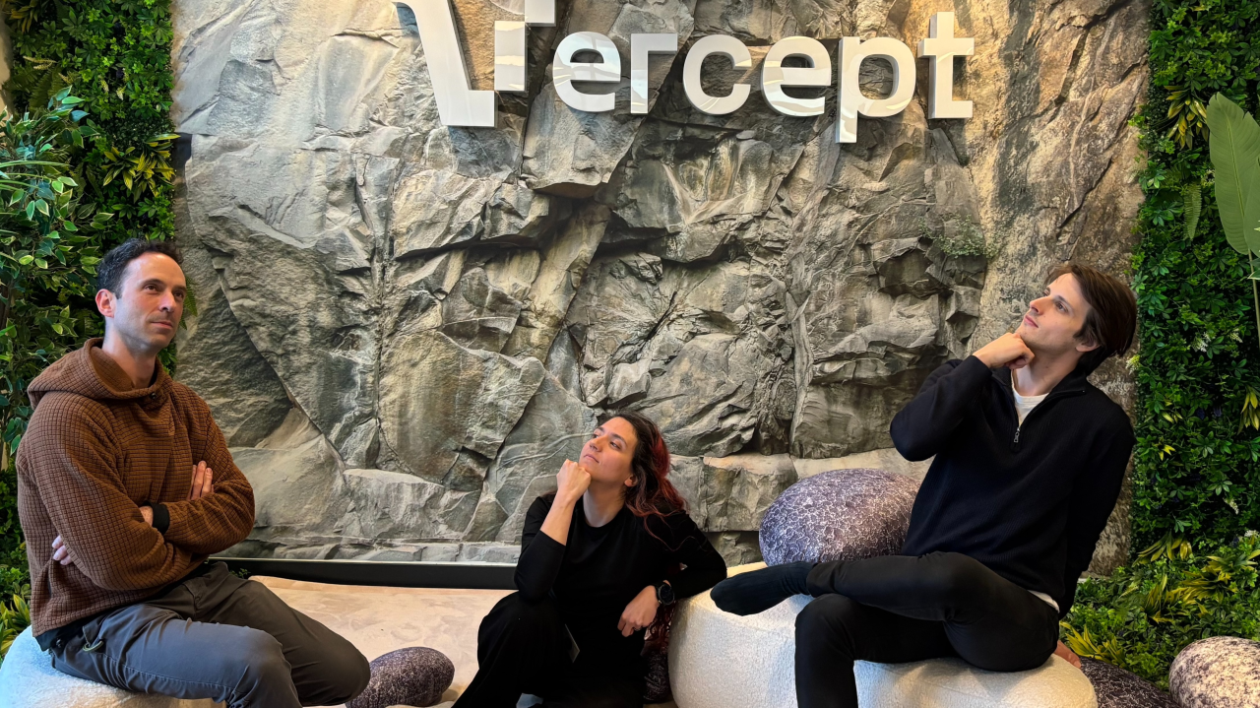
Vercept’s Ross Girshick (left), Kiana Ehsani, and Luca Weihs. Ehsani shared this on LinkedIn with the news that Vercept is joining Anthropic, noting, “Vercept is much bigger than the founders and there are many amazing team members that made this happen, but I love this ‘thinking’ photo of us :D”

Anthropic is acquiring Vercept, a Seattle startup founded by alumni of the Allen Institute for AI, in a move that illustrates the growing competition to build AI agents capable of navigating computers and other devices to complete tasks for users. 

The deal, announced Wednesday, will fold Vercept’s technology and an unspecified number of employees into Anthropic. Vercept’s desktop application, Vy, will shut down in 30 days as part of the transition, according to the startup’s message to users, which encouraged them to try Anthropic’s Claude tools as an alternative while the service winds down.

In a post about the news, San Francisco-based Anthropic said the acquisition will help advance its “computer use” capabilities, enabling Claude to complete multi-step tasks inside live applications, including navigating spreadsheets and managing workflows across multiple tools. 

Vercept’s team has “spent years thinking carefully about how AI systems can see and act within the same software humans use every day,” Anthropic said. “That expertise maps directly onto some of the hardest problems we’re working on at Anthropic.”

In their message to users, Vercept co-founders Kiana Ehsani, Luca Weihs, and Ross Girshick said the startup’s mission had “found a bigger home” at Anthropic, citing the AI lab’s focus on building “safe, steerable AI systems.” They said the deal would allow the team to “push further into what’s possible at the intersection of AI and the personal computing experience.”

Advertisement

Financial terms of the deal were not disclosed. Vercept referred our inquiry to Anthropic.

Vercept closed a $16 million seed round in January 2025, valuing the company at $67 million post-money, according to Pitchbook data. San Francisco-based Fifty Years led the financing, joined by Point Nine Capital and the AI2 Incubator, Vercept’s first institutional backer. 

The angel list was notable: former Google CEO Eric Schmidt, Google DeepMind chief scientist Jeff Dean, Cruise founder Kyle Vogt, and Dropbox co-founder Arash Ferdowsi all participated. Despite the high-profile backing, Vercept stayed lean, with 20 employees, according to LinkedIn.

In a LinkedIn post announcing the deal, Ehsani said Vercept had raised more than $50 million, a figure that appears to include additional capital beyond its previously disclosed seed round. She said Vercept had a “comfortable runway and a successful product” when the opportunity to join Anthropic emerged. 

Advertisement

She described the decision as mission-driven rather than financial, saying the two companies had been working toward the same vision from complementary angles.

Seattle AI and startup veteran Oren Etzioni, a Vercept co-founder and early investor, described the outcome as “sad” in a post on LinkedIn, while praising the team that’s now joining Anthropic.

Contacted via phone this morning, Etzioni elaborated, “I’m pleased to have gotten a positive return but obviously disappointed that after just a little over a year with so much traction, and such a fantastic team, we’re basically throwing in the towel.”

Etzioni, the former CEO of the Allen Institute for AI and a longtime fixture in Seattle tech, said he was disappointed with aspects of how the acquisition process unfolded.

Advertisement

He said he’s proud of the team and grateful for the chance to work with such a highly capable group, adding that he wishes them success in their next chapter at Anthropic.

In the comments on Etzioni’s LinkedIn post, Seth Bannon, founder of venture firm Fifty Years and lead investor in Vercept’s seed round, responded with a version of Theodore Roosevelt’s “Man in the Arena,” a passage often cited in moments of public scrutiny or setback.

Etzioni later elaborated on his concerns, and Bannon disputed Etzioni’s assertions.

As first reported by GeekWire in February 2025, Vercept set out to build the “computer interface of the future,” as an early mover in AI agents that observe computer screens and automate desktop tasks.

Advertisement

Its flagship application, Vy, used artificial intelligence to “see” and understand screen elements much like a human does. Users were able to instruct Vy via natural language or demonstrations to automate repetitive tasks, such as data entry, producing video content, or organizing files. 

Vercept’s founding team read like an all-star roster from the Allen Institute for AI. CEO and co-founder Ehsani was a senior researcher at Ai2, where she led work on robotics and embodied AI, training agents that can see, learn from, and interact with their surroundings. 

Weihs is a former Ai2 research manager who worked on AI agents and reinforcement learning and Girshick is a computer vision pioneer who has also spent time at Meta AI.

Vercept co-founder Matt Deitke, known for leading Ai2 projects including Molmo and Objaverse, left in mid-2025 after Meta reportedly offered him $250 million over four years to join its Superintelligence Lab, as part of a flurry of high-profile talent acquisitions at the time.

Advertisement

Under the hood, the company’s Vy desktop agent was powered by a proprietary model built to understand screen interfaces and map natural language to on-screen actions. The company said VyUI outperformed models from OpenAI, Google, and Anthropic on UI grounding benchmarks.

But Vercept was operating in a crowded and fast-moving field. 

Open-source projects like OpenClaw — the viral AI agent that automates tasks through messaging apps like WhatsApp and Telegram — have exploded in popularity. OpenAI last week hired Peter Steinberger, the creator of OpenClaw.

Other startups and some of the biggest names in tech are building their own agentic tools. In addition to Anthropic’s Claude Cowork, there’s OpenAI’s Operator, Google’s Project Mariner, and Amazon’s Nova Act. Microsoft is also pushing Copilot toward screen-level automation on Windows.

Advertisement

Source link

Continue Reading

Tech

New York sues Valve, arguing loot boxes cross the line into gambling

Published

on


The complaint centers on three of the company’s best-known titles: Counter-Strike 2, Team Fortress 2, and Dota 2. Each game lets players purchase digital loot boxes with real money for the chance to receive randomized items.
Read Entire Article
Source link

Continue Reading

Tech

14 Incredibly Small Gadgets You Didn’t Realize Existed

Published

on


We may receive a commission on purchases made from links.

We live in a world surrounded by gadgets. From smartphones to Bluetooth speakers to smart home devices, it’s difficult to imagine life without the latest tech around us. Over time, most of these gadgets have undergone miniaturization. For instance, CRT TV sets were massive. However, most of the best TVs today are extremely slim, regardless of the screen size. Transistors have gotten smaller inside electronics, allowing data to be transferred at faster speeds. While tech getting smaller over time isn’t new, there are some brands that have taken it extremely seriously, creating miniature gadgets that are also functional. The aim of these gadgets is to show how far technology has come and how tiny components can be crammed into small devices.

Advertisement

While these gadgets aren’t the best of their kind, nor are they meant to replace everyday devices, they provide a fun experience for users. Another way to look at these gadgets is that they’re useful for specific purposes. For example, a mini washing machine can be useful for washing makeup brushes and puffs. A miniature laptop, on the other hand, can be a good tool to get work done on the go. Regardless of whether these devices are useful to you or not, here’s a collection of some of the world’s smallest gadgets you didn’t realize existed. Notably, we’re not endorsing the purchase of any of these gadgets, as they may not be the best in terms of functionality compared to larger alternatives from reputable brands.

Advertisement

Unihertz Jelly Star smartphone

There was a time when smartphones were compact and handy. In the past few years, though, most smartphones have become huge, with screen sizes breaching the 6.9-inch mark on flagship devices. With increasing screen time, it’s natural that most consumers would want a bigger canvas to scroll social media, watch content, and chat with friends. However, as a result of growing screen sizes, holding and using a phone with one hand has become rather unwieldy. While it isn’t a direct solution to the problem, the Unihertz Jelly Star may be one of the few options if you’re tired of massive smartphones that feel like a brick.

With a 3-inch display and a full-fledged Android operating system, the phone is certainly usable for small tasks. That said, the Unihertz Jelly Star is unlikely to serve as a daily driver since the specifications aren’t up to 2026 standards. Moreover, the tiny screen just isn’t practical enough for everyday use. Typing on it is going to be a nightmare, and so is scrolling on social media feeds filled with vertical videos. Nonetheless, it’s a great party trick and can be used to make calls or even as a mobile hotspot when traveling. It’s slightly pricey at over $200, but that’s the price you pay for novelty.

Advertisement

Sonew washing machine

A mini washing machine may not sound all that useful, especially if you plan on using it to wash clothes. However, some users on the internet seem to have found an interesting use case for it. The Sonew mini washing machine is an excellent gadget for washing makeup brushes, puffs, and other such small items that require regular cleaning. For those wondering, this is a legitimate washing machine that works just like a standard one. You add the item that you want to wash inside the cavity, like a beauty blender, pour in some water, and add the required amount of detergent. Then, push the button at the top to start the washing process. Wait for a while, and the item will be washed.

Once done, drain the water via the included pipe. If you’ve used a traditional washing machine, the process might sound extremely familiar. It’s interesting how the brand has managed to fit the circuitry and components required for washing into such a small form factor. It’s prone to breaking, as per some reviews, so proceed with caution if you plan on buying it. Regardless, it’s quite inexpensive and could turn out to be useful if you use a lot of makeup tools.

Advertisement

Tiny Circuits TinyTV with remote

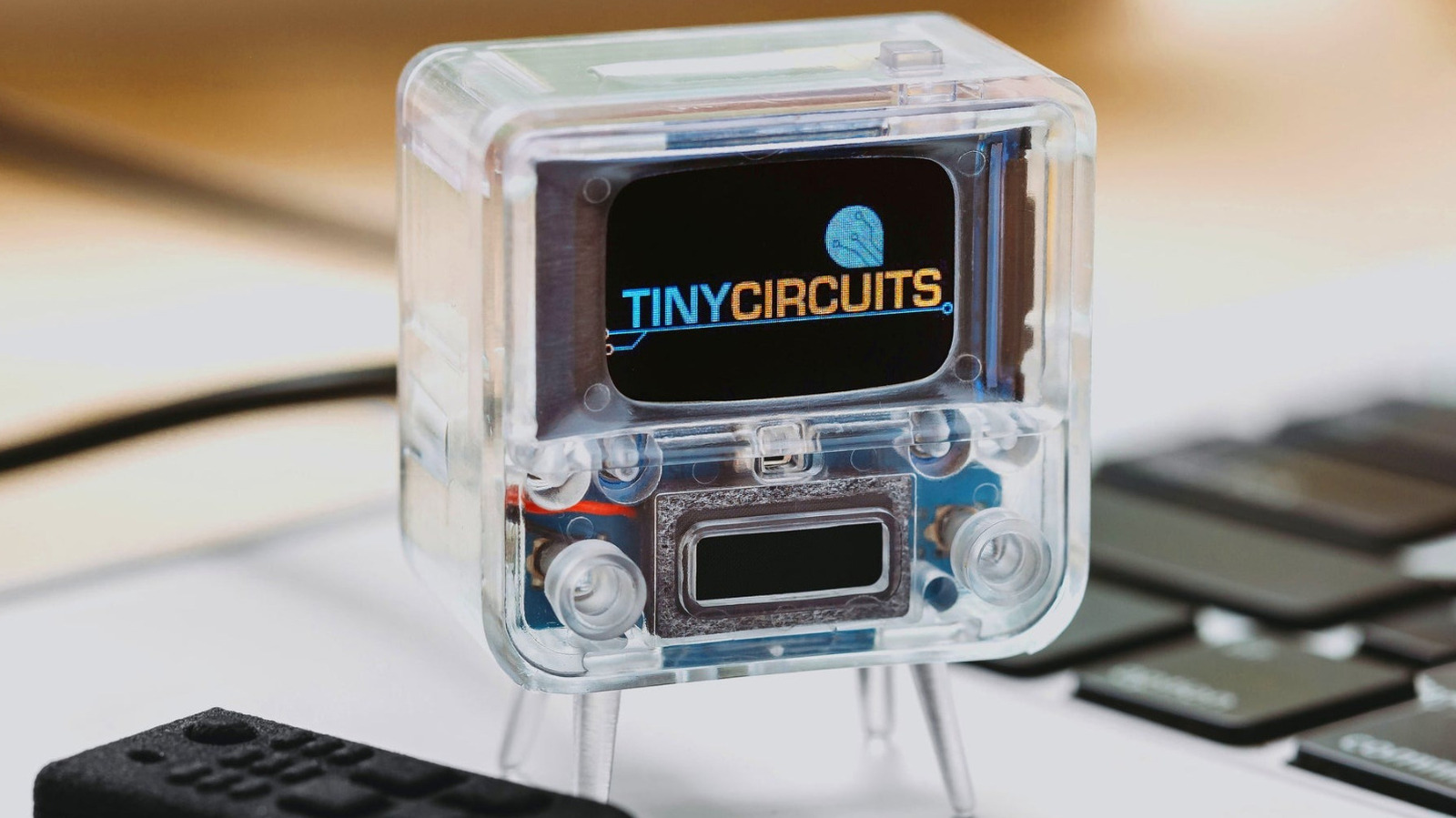
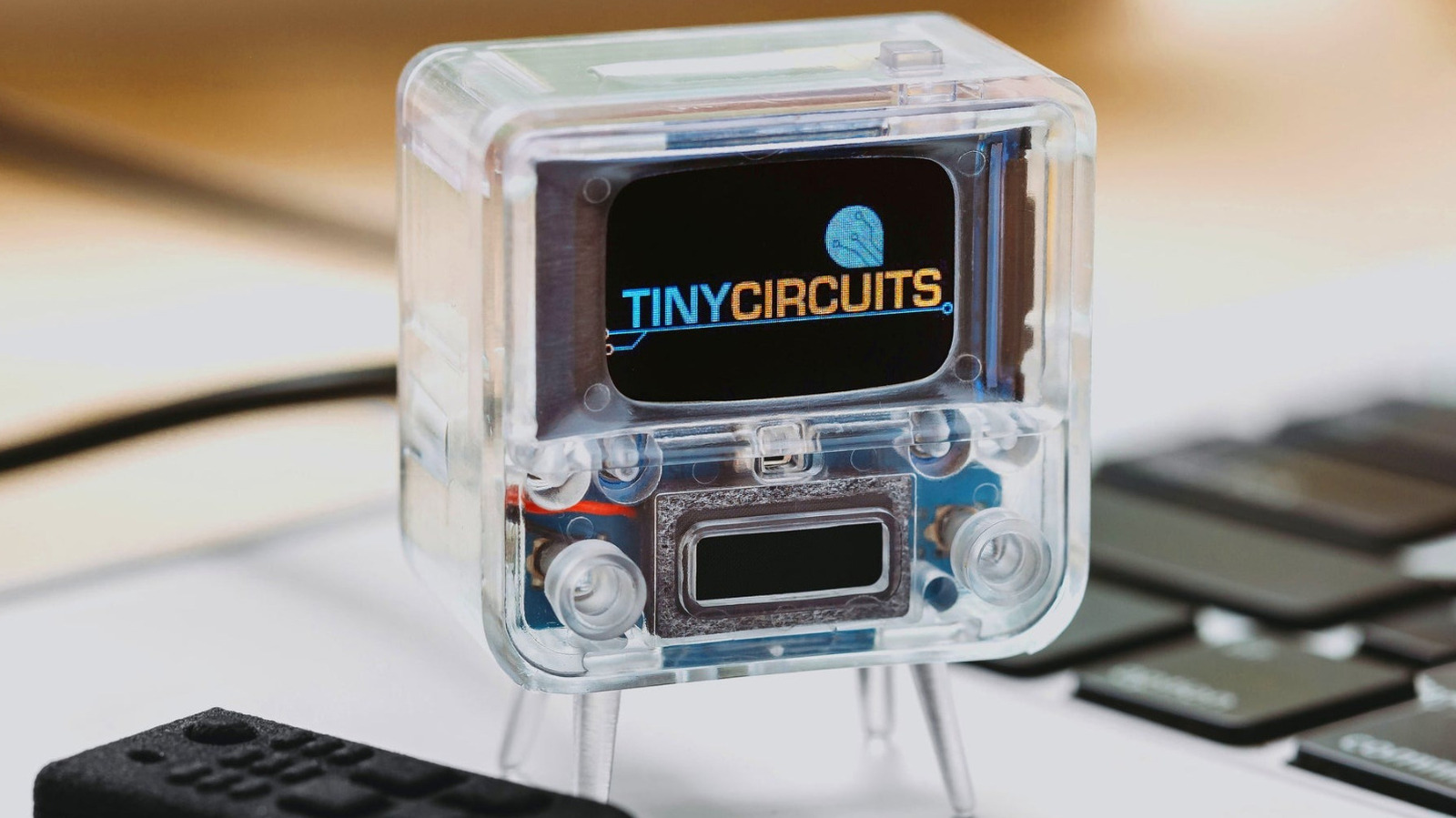
While we could think of potential use cases for the mini smartphone and washing machine, it’s hard to imagine why someone would need a tiny TV. After all, a large TV that’s 55 inches or higher generally offers a more enjoyable experience when watching content. Who would prefer watching a nice sci-fi thriller or the Super Bowl on a small screen? Despite all the questions, Tiny Circuits made the TinyTV with an accompanying remote controller that’s equally tiny. For reference, this particular TV has a 1-inch display. Imagine all the details on that crisp 216×135 display. If you ignore the screen size, though, the design is definitely a head-turner.

It resembles a CRT TV from back in the day, with a boxy exterior and a couple of knobs on the front. There’s a built-in battery that offers up to two hours of video playback. Once it runs out of juice, simply plug a power bank into the USB-C port. There’s also a built-in speaker along with 8 GB of storage to store movies and TV shows. The best use case for the Tiny Circuits TV is as a showpiece on top of a fireplace or on your desk. It’s a surefire conversation starter every time you have guests over.

Advertisement

GPD MicroPC 2 laptop

Thanks to the onset of AI, it’s become more important than ever to have a computer at your fingertips at all times. A smartphone can suffice in most instances, but a full-fledged laptop with a dedicated keyboard, trackpad, and a large display can make all the difference. That’s the problem GPD is trying to solve with the GPD MicroPC 2. It’s certainly not a full-fledged laptop replacement by any means. It runs on Intel’s N250 processor coupled with 16 GB of RAM and 512 GB of SSD storage. The port selection is also quite healthy, with two USB-C ports, two USB-A ports, an HDMI port, an RJ45 connector, and a microSD card slot.

Advertisement

Moreover, the screen can be tilted and rotated to various angles, which means you can use the MicroPC 2 even in tablet mode. It weighs under 500g, which means it’s also extremely portable. Whether you’re looking for a small laptop as a student or a portable workhorse that can whip up documents or presentations on the go, this can be a better alternative to using a smartphone with an on-screen keyboard. That said, don’t expect it to perform like a standard laptop, since the size and thermals are definitely going to be a bottleneck.

Advertisement

Anbernic RG Nano gaming console

Smartphones have undoubtedly replaced portable gaming consoles in recent years. Whether you’re traveling or commuting, all you have to do is download your favorite games on your phone and while away the time. However, playing games on a touchscreen display just doesn’t feel as fun as jamming your fingers on the physical keys of a Game Boy console. So, Anbernic decided to bring back the nostalgia in the form of the RG Nano gaming console. It’s a tiny console that’s around the size of a credit card, so it easily fits into your trouser pocket.

The good part is that despite being tiny, the console is made entirely out of aluminum for a premium build. There’s a 1.54-inch display onboard, which is rather small but should be good enough to enjoy retro games. Speaking of games, you can load over 20 different simulators on the RG Nano console, thanks to support for an SD card up to 512 GB. A 1,050mAh battery runs the show and can keep the console running for up to 2.5 hours. If you enjoy retro titles like Mario, Contra, and Sonic, you will certainly love the RG Nano console, especially at just $40.

Advertisement

Kodak Luma 150 projector

When you think of a projector, the image that usually comes to mind is a big, bulky box. After all, that’s how most projectors are. However, Kodak decided that it wanted to do things differently and made the Kodak Luma 150. It’s a mini projector that’s extremely portable. If you remember a Walkman from back in the day, that’s what the Luma 150 looks like. It’s the perfect companion to throw in your backpack when you’re camping or heading for a family vacation where you want to enjoy a movie or a baseball game with everyone.

As per Kodak, the Luma 150 can project a screen of 120 inches and has a runtime of about 2.5 hours on a single charge, good enough for a full-length movie. It can also be mounted on top of a tripod, thanks to a mounting screw at the bottom. Due to the small form factor, there are going to be compromises, and the most apparent one is the maximum brightness level. It’s capped at 60 ANSI lumens, which is considerably lower than mainstream projectors with a large footprint. As a result, you’ll need a pitch-dark room for proper visibility. If you can get past that, the Kodak Luma 150 is a nifty little gadget that can even be used for office presentations.

Advertisement

8Bitdo Micro Bluetooth gamepad

If you’re an ardent gamer, you know you can play some lightweight titles not just on your phone but even on a tablet or a smart TV. On devices with touchscreen panels, you can use on-screen controls for playing. When playing games on a TV, you can use the supplied remote for controls. However, these take away from the core gaming experience, especially if you’ve been playing on a dedicated controller for a long time. While you can pick up any of the best gaming controllers on Amazon, a large one can be overkill for a simple game. Moreover, it would also be difficult to carry around.

The 8Bitdo Micro Bluetooth gamepad solves this issue with a tiny controller that has all the essential buttons in a form factor that’s super tiny. It’s also rather affordable, so you can use it with a Nintendo Switch, a smartphone, and even a Raspberry Pi project. While it may be small, it doesn’t skimp on essential features. It connects via Bluetooth and even has the ability to remap buttons for specific games. It’s certainly not an everyday controller, but it’s a good backup option when traveling.

Advertisement

Xteink X4 e-reader

Whenever someone mentions an e-reader, the most obvious name that comes to mind is a Kindle. Understandably so, since a Kindle is an excellent device for avid readers. However, a Kindle is the size of a tablet, so while it’s still portable, it doesn’t necessarily fit in your pocket. So if you’re commuting or don’t have a backpack when traveling, it can be a hassle to carry around an extra device. The Xteink X4 might just be the solution you’re looking for in that case. It’s an ultra-slim e-reader that has magnets on the back, which means it can attach to the back of your iPhone via MagSafe.

Advertisement

Load your books onto the reader, snap it onto your phone, and read away without carrying an extra device. This is exactly what convenience looks like. Moreover, the reader costs just $69, which is more affordable than a brand-new Kindle. When not reading, you can also repurpose the e-ink display to show your calendar events or a to-do list for the day, making it a multipurpose gadget. It’s also just 5.9mm thick, so it doesn’t add too much bulk to your phone.

Advertisement

Tau keychain power bank

Power banks come in various capacities, but the most popular ones are usually 10,000mAh or 20,000mAh, since they can be used to charge multiple gadgets or the same phone or laptop more than once. Of course, there are MagSafe battery packs that prioritize convenience over capacity. However, you need to keep all of these power banks charged in the first place, and you need to carry them with you at all times. Both can be inconvenient, which is why it’s a good idea to carry the Tau keychain power bank.

It’s an excellent accessory that’s compact, which means it can fit into your trouser pocket just like any other keychain. One end of the keychain has a USB-C cable, while the other has a Lightning connector. The built-in 1,400mAh battery can power your phone for a few hours in an emergency, which is the whole point of this power bank. The best part, though, is that it comes with a magnetic charger that can be mounted on a wall and also acts as a holder for the keychain. So every time you return home, just hang your keys in the charger, and the power bank remains charged. This way, you don’t have to remember to charge the power bank manually.

Advertisement

Vat19 mini blender

Now this is more of a gag gift than a useful product, since let’s be honest, who wants a mini blender that can probably make a smoothie sufficient for a hamster? Nonetheless, the Vat19 mini blender is a cool item, since it actually replicates a real blender in terms of functionality. You get an actual jar to add the items of your choice, which then sits on top of the blender. Use the different mode buttons on the machine to control the blending speed.

While it may not find a permanent place in your kitchen, it’s a nice showpiece or even a toy that you could give to your kids to experiment with or play around with to understand how a blender works. This way, you can also familiarize them with kitchen appliances from a young age. It’s powered by AAA batteries or via a USB cable. For those interested, the brand claims that the jar can hold up to 1.5 ounces of liquid.

Advertisement

Kodak Charmera keychain camera

If you’ve been around for a while, you’ve certainly used or at least heard of Kodak’s cameras. While the brand may not be as prominent as it once was in this segment, and brands like Sony and Canon have dominated the DSLR and mirrorless camera business, Kodak has recently attempted to make a comeback with the Charmera, a rather interesting product. It’s essentially a keychain with a built-in camera, so think of it as a pocket camera to capture moments throughout the day. Of course, it doesn’t use a film roll like Kodak’s older cameras and instead has a microSD card slot.

You can not only take photos with it but also capture videos via the 1.6MP sensor. Don’t go in expecting stellar image quality, since it is, after all, a keychain that costs $35. Nonetheless, it’s a fun little accessory that adds a touch of retro charm to your photos. The photos have an aesthetic that makes them ready to post on Instagram. Moreover, Kodak is making it more interesting by packing a surprise color of the camera in the box, so you don’t know which variant you’re getting until you unbox it.

Advertisement

Sharge Disk SSD enclosure

External SSDs are often more reliable than mechanical hard drives. Another advantage of SSDs over HDDs is that they’re smaller in size, making them easy to carry around. Despite being smaller, most external SSDs are at least the size of a credit card, albeit thicker. However, Sharge wanted to miniaturize the form factor even more, which led to the Sharge Disk. The Sharge Disk is an SSD enclosure, which means you don’t get an SSD when you purchase the product. All you get is an enclosure attached to a USB-C cable.

Advertisement

When you insert an M.2 NVMe drive into it, the device turns into an external SSD that you can use with your computer, smartphone, or just about any device that accepts a USB-C drive. The end result is a drive that’s way faster than a thumb drive while also offering more storage, all while being the size of a standard USB flash drive. It also has active cooling, which is impressive for an enclosure of this size.

Advertisement

Mogics Super Bagel travel charger

If you travel with a lot of electronic gadgets and devices, you know that charging all of them at once can be a big hassle. While a travel adapter can make your job easier, connecting multiple plugs isn’t always possible with one. Additionally, you cannot carry large extension boards and spike guards since they would take up a lot of space in your backpack. An excellent solution to this problem is the Mogics Super Bagel travel charger.

As the name suggests, it looks exactly like a bagel. The brand has optimized the space in a manner that makes it easy to plug in five physical plugs along with two USB devices. The plugs are spaced out well without occupying too much space, which is exactly what you need if you’re plugging in large adapters like MacBook chargers. You also get different adapters for various regions. 

Advertisement

Veeniix V995 mini drone

Don’t go by the size of the Veeniix V995 mini drone, as we’ve seen in the past how small drones can also be dangerous. That said, if you manage to keep it away from kids, the V995 is a fun little toy that can perform cool stunts like flips and rotations in midair. The total flying time claimed by the brand is 21 minutes, which is quite respectable. While the brand claims you can fly the drone indoors, it’s always recommended to fly it in an open space to reduce the risk of causing damage. 

There are adjustable speed levels along with an auto-hover feature that can keep the drone airborne in the same place. Since it’s tiny, it’s rather easy to lose track of the drone when flying in certain environments, so you may want to keep an eye on its location at all times.

Advertisement


Source link

Advertisement
Continue Reading

Tech

Investigation: over 75% of Android VPNs fail basic transparency tests

Published

on


  • 77% of Android VPNs studied fail basic accountability and transparency tests.
  • These 2,666 apps have amassed over 2 billion downloads combined
  • 43% of the apps lack a usable website for troubleshooting or product research.
  • 63% rely on non-proprietary email addresses (such as Gmail)
  • 54% of apps have a substandard or inaccessible privacy policy

If you’re looking for a VPN for your Android device, it pays to be skeptical. Exclusive research by TechRadar has found that 77% of VPNs on the Google Play Store raise significant transparency and accountability concerns. And given these apps handle your sensitive browsing data, that’s a major red flag.

Of the 3,471 Android applications that claim to protect user privacy, we found that 2,666 have significant flaws.

Source link

Advertisement
Continue Reading

Tech

Bluehost VPS review | TechRadar

Published

on

Why you can trust TechRadar


We spend hours testing every product or service we review, so you can be sure you’re buying the best. Find out more about how we test.

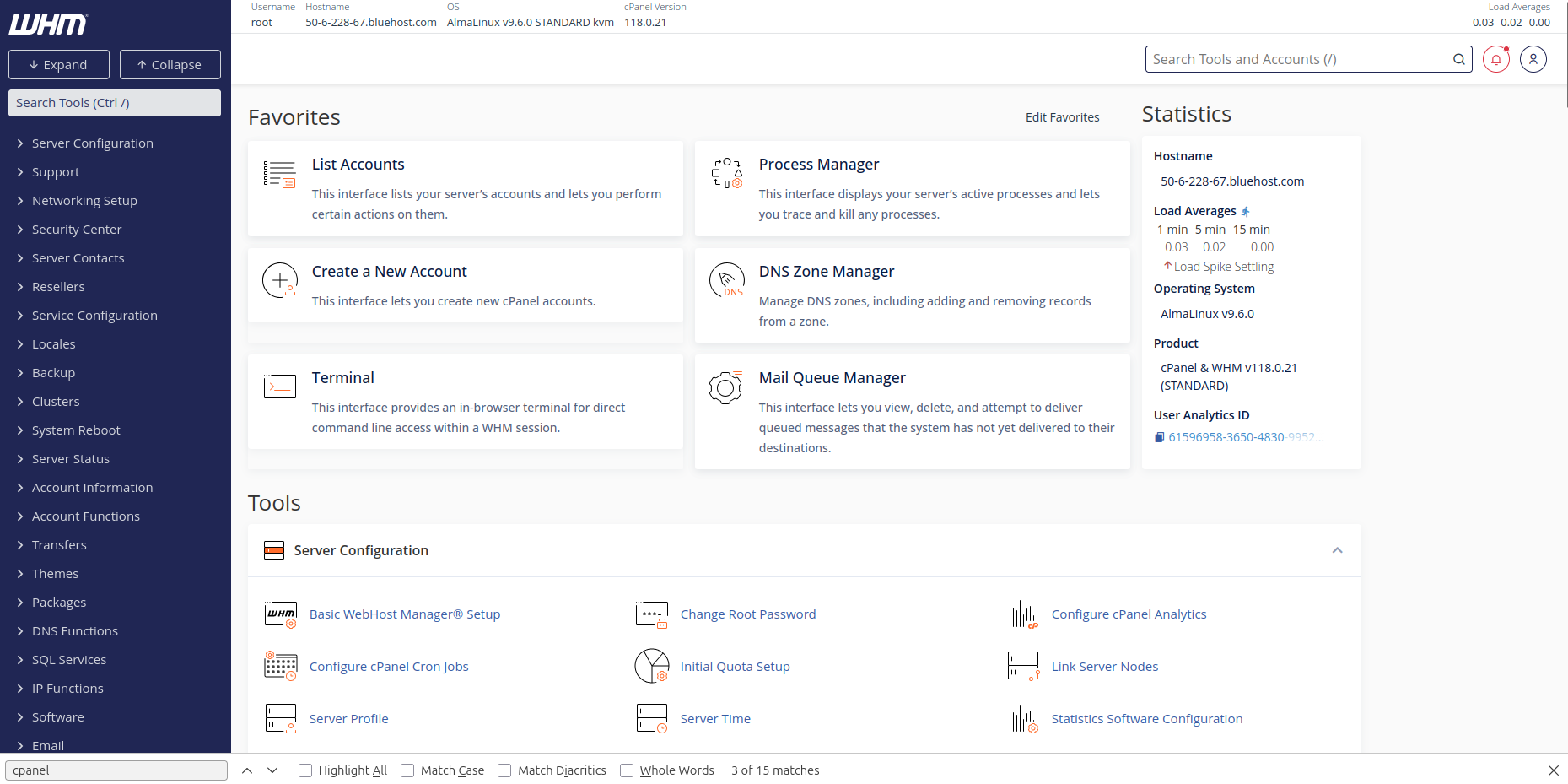
If you feel it is time to upgrade your shared hosting to one of the best VPS providers, Bluehost looks like a good place to start. With its managed VPS offering, you potentially get the benefit of the performance boost that comes with a VPS without the headache of supporting the website software yourself.

To find out if Bluehost’s managed VPS option is as attractive as it looks, we’ve evaluated it, comparing the plans and pricing options, the server infrastructure, and features. We also assessed performance of Bluehost VPS hosting with benchmark tools, and spent some time with its site building tools, which are aimed at anyone launching a small business website.

Advertisement

Source link

Advertisement
Continue Reading

Trending

Copyright © 2025