OPINION Microsoft is making massive progress in quantum computing, says Microsoft. Oh no they’re not, say researchers. Anthropic’s frontier models are too powerful for general use, says the US government. No, it’s just Anthropic being punished for not doing what the US government tells them, say critics. Humans-in-the-loop are a pain-in-the-neck, says Amazon exec. Go do one, says this human.
Three tech news stories from last week, six interpretations. You can probably decide between Microsoft PR and a peer-reviewed paper in Nature. Likewise, whether vindictiveness or virtue is at work with Anthropic. Amazon or a Reg hack? Harder to call.
Advertisement
In all these cases, as in all cases, prior knowledge is the best context in which to judge media reports. Most citizens don’t know much about most news, an eternal truth that is causing the UK government to fret about the future of public service broadcasting – or as it has become, public service media (PSM). With fewer people, especially that dread tribe, Young People, watching the wholesome fare of highly regulated broadcasters but feeding instead on firehoses of algo-spew, public service media risks suffocating on insignificance.
That’s a reasonable fear, if you feel that public service media deserves to be heard. It is a complicated argument where great forces have clashed since the birth of broadcasting, but if you know that the rhetoric of “fake news” has an antecedent in the German slur “Lügenpresse,” you’ll know the answer is yes, and yes, with a side order of yes. Vivat Reith.
Having identified the problem, the brains of Britgov propose exactly the wrong solution. Get the algorithms that drive content consumption on social media to rank the quality PSM product higher. All those lost eyeballs will be brought back into the fold. This won’t work for reasons both obvious and subtle. Forcing a quota of state-mandated media into the stream, even with the best of intentions, is a hostage to fortune. It’s probably unenforceable, will be deeply unpopular with users and companies alike, and will poison PSM across the board.
It also amplifies two falsehoods about PSM: that it’s about news, and that it’s about numbers. Both are important, but neither is anywhere near enough to argue for PSM’s right to life. One of PSM’s primary roles is to provide content that isn’t commercially viable or is otherwise invisible. That reflects culture, art, science, all the human stuff that enriches life. It’s where new ideas and new people come from, and some of those will become box-office hits.
Advertisement
Putting numbers first, as parts of the BBC are moving toward, kills diversity and gives the commercial sector the killer argument that PSM is just unfair competition. PSM has always had the tension between being popular enough to matter to lots of people and broad enough to do the things that only it can do, but it does need both. That has been very expensive, but arguably worth it. High-quality news is one pillar of that, but only one.
The one thing that keeps PSM alive is the editorial process, the decision-making that understands the purpose, constituent parts, and audiences, and applies that equation to the resources available. Those resources have changed, but they haven’t gone away. What’s needed now isn’t a public service tweak to secret commercial algorithms, but a public service algorithm with humans in the loop, amplifying the good stuff on the platforms by driving traffic through exposure. How to design channels that do that and are compatible with the platforms themselves is an interesting challenge begging to be explored.
However realized, it would be entirely compatible with providing natively sourced news, entertainment, sport, and everything else that keeps a brand current. It adapts seamlessly to multiple platforms, all of which have PSM-worthy content in quantity, if you filter out the toxins. It’s a model that scales up and down, provided only that there are sufficient motivated and trained editorial staff who know who they’re serving and why.
There have to be ethical standards, transparency, training and support, and just the right level of management. That would turn the threat of the new media environment into a huge promise, all the techniques of distributed, diverse digital content from adversary to amplification.
Advertisement
Public service broadcasting, at least in the UK, has been moving in this direction for decades, in the name of efficiency, outsourcing more and more programming to independent production companies – usually staffed by ex-BBC employees. You can’t move very far in TV, radio, film, or digital media in the UK without tripping over ex-BBC bodies. That’s another role of PSM, creating a huge pool of talent that irrigates an entire economic sector. A PSM strategy that encourages content creators to align with production and editorial standards would have invigorating effects in the new landscape.
Public service media deserves to survive and thrive in an attention economy driven by so many forces designed to exploit rather than enlighten the public. Done well, it gives voice to the voiceless, describes a nation to itself, and sets standards that inspire trust and quench cynicism. All of this is there to be had, even today, even in the future. We just need to keep the right humans in the loop. Sorry, Amazon. ®
The Stihl RMA 35 is a quiet and refined cordless lawn mower. It’s well balanced, comfortable to use, and has an excellent cutting action. It’s great at what it does but could come with a few extras like a safety key or a better folding handle for storage.
Solidly built from quality materials
Curved blades leaves an excellent cut
Excellent balance makes it comfortable to use
Grass collection box is bulky
No soft grip handlebar
Height adjustment mechanism is clunky
Key Features
Introduction
As expected from the clever minds at Stihl, the RMA 235 cordless lawnmower is built to last and cuts incredibly well. It would be perfect if it had a more comfortable handle though.
Advertisement
Design and Features
Quiet mowing
Superb build quality and materials used
Automatic blade speed adjustment
Advertisement
It’s immediately obvious that this Stihl lawn mower has been built to last. Unlike some low cost cordless lawn mower models that are plagued by bendy plastics and rattling handles, the RMA 235 is built like a tank.
Starting with the handle, it’s bolted to the mower body, so it doesn’t creak or rattle about on uneven ground. Although it doesn’t fold down completely for storage, it does away with fiddly cam locks or annoying butterfly bolts on the bottom half of the handle. It also has two height settings for gardeners of different heights.
Image Credit (Trusted Reviews)
Weighing just under 14 kg, this slight but stout lawn mower with its 33 cm cut width is ideal for small to medium lawn sizes. It’s no lightweight, but it feels really solid and well made to make up for it. It feels like it’s built to last, which is always a relief. If you need to mow a bigger lawn, the excellent Stihl RMA 248.3 has the cut capacity for you.
The top of the handle is a bit basic. It lacks a foam grip, such as the one found on the incredibly comfortable Gtech CLM50, but the RMA 235 feels comfortable because of the balance. I’ve always found Stihl garden tools to be perfectly balanced, which adds to the overall comfort and handling.
Image Credit (Trusted Reviews)
Advertisement
The wheels are large and the big operating handle is oversized to make it easy to operate. The only annoying thing about the RMA 235’s design to me is the bulky grass collection box. Although it features a full level indicator, it doesn’t fold flat for storage, and the best you can do is sit it on top of the folded-over handlebars.
Advertisement
Image Credit (Trusted Reviews)
And it’s all powered by Stihl’s tried and tested AK battery platform. The big blocky battery or charger weren’t included with the version I tested of the RMA 235 but are compatible with loads of great tools in the range. The battery is held in a compartment on the front of the cordless lawnmower body. The clever cutout on the flap serves an extra purpose too- you can check the battery level indicator without having to lift it up.
Older versions of this lawn mower used to have a safety key above the battery, but this has been removed. If you want to make the lawn mower safe for children while not in use, you’ll need to take the battery out while you’re not using it.
Image Credit (Trusted Reviews)
The cutting height from 25 – 65 mm is done in five steps and controlled by a little plastic flap on the side of the cordless lawn mower body. It’s not as slick as the sprung handlebar on the Karcher LMO 18-36, but you can just about adjust it with your foot.
Advertisement
Image Credit (Trusted Reviews)
Performance
Quiet at just 76 dB
Excellent quality of cut
Doesn’t fold down small for storage
Setting up the RMA 235 is slightly different to a low of cordless lawnmowers I have tested out. Instead of attaching a fiddly bottom handle to an adjustable joint, I simply had to bolt it on to the mower body. It’s not ideal for ultra-compact storage later, but it’s great for getting a quick start. The upper handle bolts on with butterfly bolts.
It’s hard to beat a Stihl lawnmower on the grass. The cleverly designed, curved blade underneath is sharp and well-balanced, producing next to no vibration and keeping the noise right down. The big wheels help it to glide across uneven lawns while maintaining an excellent, even cut.
Image Credit (Trusted Reviews)
And the motor is intelligent too: The blade speed goes up and down depending on the resistance felt from the grass. If there’s barely any grass to cut, the rotations per minute are kept low to around 2900rpm to help preserve the battery. However, if you shove it into long or rough grass, the motor kicks the rpm up to 3400rpm. It’s a smart system that gets the most from each charge.
Advertisement
Advertisement
I used the AK 20 battery for testing. It’s rated to cut up to 200m². The larger capacity AK 30 battery will increase that by 100m². Another plus is the grass collection box. Although it doesn’t fold flat, it really packs the grass in.
The curved blade underneath helps to blow the cut grass into the box, so you don’t have to empty it out every two minutes.
Image Credit (Trusted Reviews)
What lets this cordless lawnmower down, is how much storage space it takes up. For a relatively small mower, the handles stick out too far. And the grass box takes up plenty of space, as it’s a hard clamshell-style one. This would be forgivable if the mower stood upright, but unfortunately it doesn’t.
Advertisement
Should you buy it?
You want a quality cut and have plenty of storage space
Advertisement
Excellent build quality and brilliant cutting make this lawn mower stand out from the competition aimed at small gardens.
Advertisement
You don’t have much storage space
The handlebars only fold part way, and stick out quite a bit, and the grass collection box is solid and doesn’t fold, making this lawn mower hard to store.
Advertisement
Final Thoughts
It’s easy to see why the RMA 235 is such a consistent performer on the lawn. Stihl has created a finely balanced and powerful lawn mower that makes short work of small to medium lawns. I just wish it would fold down more for storage. If you’re tight on space, read our guide to the best cordless lawn mowers.
How We Test
We test every lawn mower we review thoroughly over an extended period of time. We use standard tests to compare features properly. We’ll always tell you what we find. We never, ever, accept money to review a product.
Find out more about how we test in our ethics policy.
Used as our main lawn mower for the review period
Used on a variety of grass lengths to see how well the mower cuts
Tested to see how easy the mower is to push, turn and store
FAQs
Does the Stihl RMA 235 fold for storage?
Its handle bars half fold, but the overall lawn mower and solid grass catcher are quite large.
Apple appeared to be finally cooperating with India’s antitrust regulator, but now says it can show that the country’s three-year investigation consisted of simply copying and pasting claims from rivals.
In 2021, the Competition Commission of India (CCI) began investigating Apple after receiving a complaint against its App Store fees. In 2024, it accused Apple of antitrust practices, and the company has been consistently arguing against that ruling ever since. Now ahead of a further closed-door hearing with senior CCI officials, Apple has submitted its own accusations.
According to Reuters, Apple’s submission includes the claim that the CCI’s investigators “blindly replicated” a consumer spending graphic from an EU rule. Apple’s submission reportedly also includes tables comparing the CCI’s report to filings from opponents in the case, such as rival Indian payment firms.
“The DG [Director General] made no effort whatsoever to independently verify or critically assess these statements,” said Apple, “often parroting them verbatim.”
Advertisement
Apple also claims that during the three-year investigation, the CCI did not give it “a single opportunity to record its statements and provide oral evidence.”
Consequently, Apple claims that India failed to properly conduct its own investigation, and therefore its findings should be quashed.
Apple opened its first-ever store in India in 2023 – image credit: Apple
According to Apple, this refusal to allow it to contribute to the investigation, contrasts with how Google was given multiple opportunities to defend itself during a similar case.
Advertisement
During that case, Google also argued that the CCI had copied and pasted parts of a European ruling. The regulator denied this.
Twin Indian cases
This submission from Apple concerns the accusation that it has practiced antitrust behaviors in India. That accusation is at the stage where Indian regulators intend to determine the extent of its fine against Apple.
Those regulators have repeatedly claimed that Apple has been trying to stall the case. Apple had refused to supply global financial documents for the 2022-2024 period in question, although in early June 2026, the company agreed to cooperate.
However, Apple was stalling specifically because this antitrust fine is based on an Indian law that the company is separately contesting. This law is what allowed India to base its fine on Apple’s global turnover, rather than solely local, and this is how Apple estimated it could be fined $38 billion.
Advertisement
The law, though, came into effect during 2024 so Apple has been arguing in a New Delhi court that it should not be applied to the whole 2022-2024 period in question.
Apple had seemingly hoped to delay providing global financial records while this separate case was continuing. India denied this, but appeared to have agreed to Apple only submitting local accounts.
When Apple finally stopped resisting the submission, it asked for a “final extension” to prepare these local Indian turnover details. This extension took the case up to June 25, 2026, which is when Apple then filed this new accusation of the CCI’s copying and pasting reports.
What happens next
Apple’s case in the New Delhi court concerning the application of the new law to the whole period in question appears to be continuing. There are as yet no scheduled further hearings, however.
Advertisement
The CCI and Apple are scheduled to hold a closed-door hearing on July 21, 2026.
It’s not clear why Apple has waited until this point to question the validity of the Indian investigation. But the similar accusation made by Google had no effect on the CCI’s ruling against it in 2023.
This is all now taking place as India is becoming an ever-more significant part of Apple’s business. Health regulators are examining the Tata iPhone plant in the country, and the same firm was recently the victim of a cyberattack.
Yet, iPhone production in the country is rapidly increasing.
Advertisement
Apple only began assembling iPhones in India in 2017, and then it was solely to produce the iPhone SE for sale in the country. As of March 2026, though, one in four iPhones worldwide was made in India.
Donald Trump shuttered the web site Climate.gov in 2025, cutting off public access to climate information from America’s National Oceanic and Atmospheric Administration (NOAA).
But “former members of the site’s team have brought much of it back at a new domain,” reports The Register:
“Trusted climate information should not disappear when politics change,” Climate.us managing director Rebecca Lindsey said of the new platform in a press release. Lindsey, who previously served as the Climate.gov program manager and lead editor, told The Register in an email that she and one of the web developers responsible for the site were the first to be caught up in government purges when DOGE swept through the department in late February 2025… Created in cooperation with sustainability nonprofit accelerator Multiplier, Climate.us aims to be an independent alternative to its old .gov, and many of the former NOAA crew behind the previous website have teamed up for the new initiative to “keep climate information accurate, accessible, scientifically rigorous, and useful for the people who rely on it.”
Climate.gov, which now redirects to a NOAA page about climate but which hosts none of the data the shuttered site used to contain, was taken offline in July 2025 following a Trump executive order prioritizing “gold standard science….” arguing that prior climate science models relied on worst-case scenarios, which somehow meant the public availability of 15 years of climate data and reporting ought to change…
Advertisement
All of the content that was purged from the .gov is now back, along with blogs from experts, climate status reports, maps and data pathways, and national assessments of climate change as well.
Lindsey told us that rapidly changing political winds have led her to believe that the government isn’t the right place for that mission to continue, and that she would have concerns about returning the site to federal management if a future administration changed its position on climate change… Lindsey said that the Climate.us team will continue with the same mission it had before the Trump administration attempted to quash it: Getting climate science in front of the public in a manner that’s understandable so they can make their own decisions about how to respond.
A post about Microsoft Edge has ignited a fierce debate on X
The post asked who runs Edge on Apple’s macOS platform
Users both praised and criticized Edge, but I still prefer Firefox
Apple and Microsoft are known to be arch-rivals in the tech world, so when X user Macfolio asked its followers “what kind of freak uses Microsoft Edge on a Mac?” they might have expected the debate to fall along partisan lines, with rival sets of fans lining up to berate each other’s products.
But while there was indeed a vigorous debate, it wasn’t the pile-on you might have expected. Instead, many users chipped in with reasons why they enjoy using the combination of Microsoft’s web browser and Apple’s macOS operating system.
X user @wiedymi, for example, described Edge as “the best browser for Mac.” User @secretised explained that when they used it, it was “the only browser that didn’t consume 4GB of RAM with four tabs,” while @osxdaily said “It’s actually pretty good!”
Latest Videos From
For others, the reason was more prosaic, with @asikunaa pointing out that “some internal government sites require you to use Edge actually because they don’t distribute the security certificates for Chrome.”
Meanwhile, user @tarekmohmd9 summed up what many people apparently felt, saying Edge on macOS has “the speed boost of Chromium without the horrible RAM management of Chrome, it’s great (faster than Safari, uses less resources than Chrome, supports most Chromium extensions unlike Opera and Firefox).” They finished succinctly by saying “it is excellent.”
Advertisement
Of course, not every response was positive. User @rafalo claimed that “I just downloaded it and uninstalled it after [five seconds].” And @LansorHQ simply asked, “What kind of freak uses Edge in general?”
Why I use Firefox instead
(Image credit: Shutterstock)
I’m a long-time Firefox user and have been rocking Mozilla’s browser for over 20 years. I’ve dabbled with other browsers, from big dogs like Chrome and Safari to more niche offerings like Opera and Vivaldi. And yes, I’ve spent plenty of time with Microsoft Edge, too.
Advertisement
Sign up for breaking news, reviews, opinion, top tech deals, and more.
Yet despite all that, I keep coming back to Firefox. There are a few reasons for that, and I’ve got to admit that a sizable one is inertia. After so many years of usage, Firefox feels comfortable and familiar. I like how it works and switching would be a chore considering how many extensions and tabs I have running.
But there’s a lot more I love about Firefox. I use both a Mac and a PC in my day-to-day life and Firefox runs on both, unlike the Mac-only Safari. I can also send tabs between any of my devices, which is helpful when I find something interesting on my iPhone and want to read it later on my Mac or PC.
As I’ve written about previously, it’s also a genuine privacy-first browser that goes to great lengths to protect your data, which is something that I truly appreciate. It isolates cookies to stop them building a detailed picture of you, and Firefox limits access to my data that could be used to create a digital ‘fingerprint’ of my browsing habits.
Advertisement
So despite the debate on X, I won’t be switching to Microsoft Edge any time soon. But the discussion highlights that just because you use one operating system or another, you don’t have to be exclusively loyal to that developer’s own products — you can even switch to those made by their arch-rival.
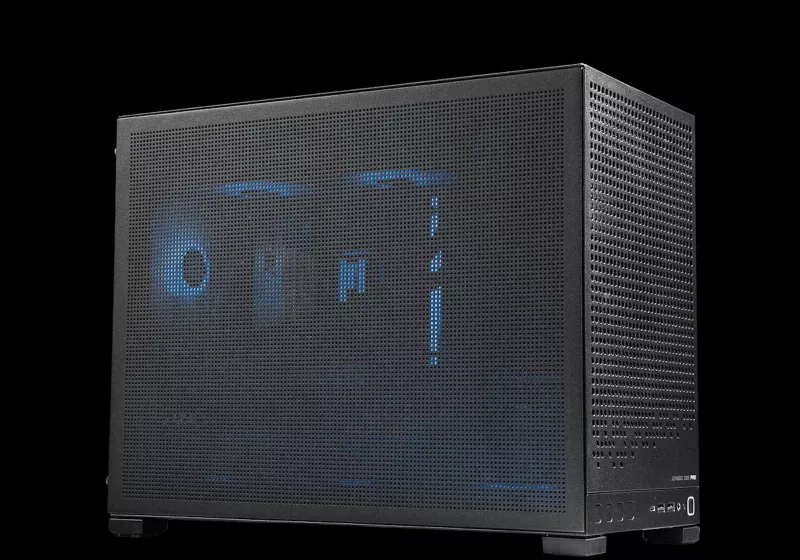
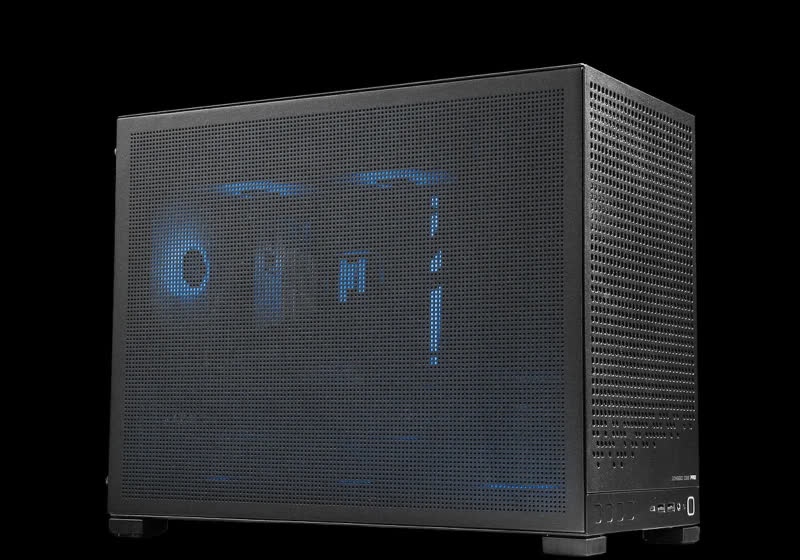
Steamroller is built like a modern mid-range gaming rig. Inside is an AMD Ryzen 5 9600X six-core CPU and a Radeon RX 7600 GPU, targeting high-frame-rate 1080p play in titles like Cyberpunk 2077, Elden Ring, and Baldur’s Gate 3. Read Entire Article Source link
The planets Neptune and Uranus may be better described as “magma-ocean giants” rather than “ice giants,” according to a team of researchers from the University of California. Gizmodo reports:
While the Voyager flyby confirmed the planets’ classification as ice giants… [a]s the least explored planets in the solar system, the two planets have never been thoroughly investigated. Therefore, scientists aren’t sure where the planets originally formed in the early solar system or the reason for their wildly chaotic magnetic fields. A long-standing hypothesis suggests that both worlds have a hydrogen/helium atmosphere that covers a vast mantle of ices, made primarily of water, ammonia, and methane, with a rocky core. The new study, however, notes that the three-layer model of an ice giant’s interior structure is not the only way to explain the properties of the two planets.
The researchers also point out that objects found in the Kuiper Belt, which are thought to preserve evidence of the material in the outer Solar System where Uranus and Neptune formed, are primarily composed of rock rather than ice. For the recent study, the researchers simulated different models for the interior processes and composition of Uranus and Neptune. The model that best fits Uranus’s and Neptune’s different properties suggests the two planets have a well-mixed magma ocean with dissolved hydrogen at the bottom and a hydrogen-dominated envelope at the top. The model suggests that at high pressures, hydrogen gas can dissolve into magma, forming a well-mixed fluid. This mixing might help explain Uranus’s and Neptune’s density, which has traditionally been interpreted as evidence for an ice-rich interior. The article notes that the theory “could also help scientists understand the interior structure of sub-Neptune planets in the Milky Way, which have thus far remained a mystery.”
Apple’s accessibility settings are often overlooked, but many of them double as practical workflow tools that can speed up everyday tasks across iPhone.
iPhone accessibility features that can improve your workflow
When it first launched in 2007, the iPhone became an immediate target for criticism. Its touch-based interface was seen as exclusive of users with no or low vision. However, when 2009 rolled around, Apple was ready to start adding in features that were geared towards low-and no-vision users. This included VoiceOver, Zoom, and color inversion. Continue Reading on AppleInsider | Discuss on our Forums
The first proper holiday stretch of summer is here: Canada Day on July 1, America’s 250th birthday on July 4, and a few glorious days in which flags, fireworks, traffic, and questionable potato salad that took 3 days to assemble will compete for public attention. Before the inflatable eagle goes up and someone declares a gas grill “close enough,” this Editor’s Round-Up begins with Ofra Haza, whose connection to Yemeni musical tradition remains as powerful as ever, and Songs of Our Mothers from Kefaya and Afghan Hazara singer Elaha Soroor.
Released in 2019, the Bella Union album reworks folk songs traditionally performed by Afghan women into something vivid, defiant, and far more essential than another AI-generated summer playlist.
At the multiplex, horror has been having a rather good June while some much costlier studio ideas contemplate their own shallow graves. Toy Story 5 is leading the month, but Obsession, Scary Movie, and Backrooms have all landed near the top of the domestic chart, proving once again that a sharp premise, actual suspense, and an audience willing to be scared can still accomplish what nine-figure franchise maintenance cannot.
With Canada preparing for July 1 and the U.S. marking 250 years of independence on July 4, the soundtrack is ready, the movies are weirdly scary, and there is only one sensible next move: get the backyard braai going before somebody serves a sad burger directly from the package.
Ofra Haza, Elaha Soroor, and Middle Eastern Music That Makes Your Holiday Food Taste Rather Bland
Ofra Haza was one of Israel’s great popular singers: a Tel Aviv-born daughter of Yemeni Jewish immigrants who took the musical language of her family and community to a global audience without sanding off its character. Growing up in the working-class Hatikva neighborhood, she began singing young, became a major Israeli star, and then broke internationally with Yemenite Songs and “Im Nin’alu,” her electrified interpretation of poetry by the 17th-century Yemeni rabbi Shalom Shabazi.
She was not simply a crossover success. Haza helped place Mizrahi and Yemenite Jewish music at the center of the conversation, where it belonged, while proving that ancient melodies and modern pop could meet without either becoming a museum piece.
Advertisement
Haza was already part of my musical world as I began my teen years: elegant, dramatic, spiritually charged, and nothing like the mostly Anglo pop culture surrounding me in Toronto. As an Ashkenazi kid, I did not yet understand how much of that sound would eventually feel like home.
Nearly 21 years in the Sephardic and Syrian Jewish world later, I hear Haza differently: not as an exoticized “world music” detour, but as an artist carrying language, faith, memory, and family across generations. In Deal, NJ, a last name like White does not earn automatic kibbeh, yebra, or lachmagine privileges. White by name, perhaps, but not by musical taste or what ends up on my plate. Haza died far too young in 2000, at 42, from AIDS-related complications; the loss still feels enormous because there was nobody else quite like her.
Elaha Soroor
The move from Ofra Haza to Songs of Our Mothers is not a neat geographical handoff so much as a reminder that women’s voices, tradition, and resistance do not require a marketing department to be powerful. And credit where it is due: John DeVore turned me on to this one. The founder of DeVORE Fidelity builds his exceptional loudspeakers by hand in the Brooklyn Navy Yard, and he has the equally important qualification of having extraordinarily good taste in music. Not every speaker designer’s playlist survives the first side of an LP.
Released by Bella Union in 2019, Songs of Our Mothers pairs London collective Kefaya, founded by guitarist Giuliano Modarelli and keyboardist Al MacSween, with Elaha Soroor, the Afghan Hazara singer who was born in Iran to Afghan refugee parents and later fled Afghanistan after threats connected to her music and public profile. Soroor chose a collection of folk songs traditionally sung by Afghan women; Kefaya surrounds her voice with an adventurous but never cluttered mix of spiritual jazz, dub, Indian classical music, and electronica.
Advertisement
The result is not “world music” wallpaper for people who own one tasteful rug. These are songs of joy, grief, sensuality, survival, and defiance, carried forward by a singer who understands exactly what it costs for a woman’s voice to be heard. Soroor is commanding throughout, while Kefaya gives the material shape and propulsion without turning it into a fusion-food-court mess. Songs of Our Mothers belongs on the shortlist of records that reward serious listening, preferably through great speakers made in a former shipyard by someone who clearly knows the difference between music and noise.
Advertisement. Scroll to continue reading.
When Will Hollywood Learn Its Lesson?
Hollywood keeps insisting that audiences only leave the couch for giant franchises and nine-figure spectacle. Then three comparatively modest horror titles show up with actual hooks, creators who understand their audiences, and budgets that do not require the GDP of a small European nation to recoup. Curry Barker’s Obsession was made for roughly $750,000, though Focus Features reportedly paid $15 million to acquire it, and has reached about $370.1 million worldwide. Kane Parsons’ Backrooms cost around $10 million and has grossed roughly $330.1 million worldwide.
The Wayans brothers’ Scary Movie revival, hardly micro-budget but still a relative bargain at $30 million, has earned about $215.3 million worldwide. Together, those three films represent roughly $40.75 million in production spending and $915.5 million in global ticket sales. That is not a trend. That is a brick through the executive-suite window.
Advertisement
The comparison is especially brutal. Disney’s The Mandalorian and Grogu has taken in about $322 million worldwide against a reported $165 million production budget. Spielberg’s Disclosure Day stands at roughly $193.7 million worldwide from a reported $115 million production budget, with reports also placing its marketing spend near $80 million and its theatrical break-even point around $300 million.
To be exact, Obsession has beaten both films worldwide; Backrooms has also moved past The Mandalorian and Grogu; and Scary Movie has overtaken Disclosure Day but remains behind the Star Wars release.
So no, each film did not individually bury both Disney and Spielberg. Collectively, however, they have made the argument for smaller, audience-savvy genre filmmaking with the subtlety of a knife through a conference-table budget presentation. I am exactly the sort of glutton for punishment who watches all of this stuff, and even I came away from The Mandalorian and Grogu thinking the helmet should have stayed on.
As for Spielberg’s Disclosure Day, audiences appear to have made their own disclosure: enough already. This is the same filmmaker who gave us Jaws, Close Encounters of the Third Kind, Raiders of the Lost Ark, Schindler’s List, and Jurassic Park. Not every swing clears the fence, but this one barely made it out of the dugout.
Advertisement
The reason for this success is not complicated. Obsession and Backrooms arrived with built-in online communities, creators who already knew how younger audiences discover and discuss horror, and concepts that could be understood in a trailer without requiring six prior movies, a Disney+ subscription, and a family tree diagram. Horror also remains one of the few genres that creates a genuine communal reason to go to theaters: people want to jump, laugh, scream, and then argue about the ending with strangers in the lobby.
The lesson is not that every studio should chase liminal yellow hallways, possessed girlfriends, or another masked killer with a reboot clause. It is that original ideas, modest costs, and filmmakers who understand their audience can outperform expensive brand maintenance. Hollywood will almost certainly forget this by Tuesday.
A Braai, Not a Barbecue
A braai is, at its most basic, a South African barbecue. But in practice, it is usually more than throwing meat on a grill: it is a slower social ritual built around wood or coals, family and friends. Think boerewors, lamb chops, sosaties, pap, chakalaka, braaibroodjies, and enough opinion about fire management to make an audiophile cable forum seem emotionally stable.
Yes, Americans barbecue. We own grills, we burn burgers, we argue about brisket, and some of us even deploy propane with the grim confidence of people who think convenience is a personality. But a braai is not primarily about feeding people quickly. It is about the ritual around the coals: the host, the pace, the conversation, the shared labor, and the understanding that nobody should be rushing the fire.
Call it a barbecue if you must, but do not be surprised when a South African regards your gas grill the way I regard cable manufacturers who boast online that their “products” are best appreciated by high-net-worth men chasing a more holographic soundstage: like biltong displayed in a velvet case, something perfectly good made needlessly precious for people who confuse price with taste.
Advertisement
The odd thing is that I grew up around South Africans and nobody ever mentioned braais. Not once. I learned about them much later in life, when I had enough sense to understand that food traditions are rarely just about food. They are geography, family, memory, politics, hospitality, and occasionally a very serious argument over whether somebody has touched the meat before the braaimaster was ready.
Advertisement. Scroll to continue reading.
I had hoped to experience a proper one in Cape Town. That is not happening now, which is a genuine pity. There are worse things to miss, obviously, but few with the same combination of smoke, generosity, and the strong possibility that someone will insist you have another lamb chop.
Before you attempt your first proper braai, buy Sharon Lurie’s A Taste of South Africa with the Kosher Butcher’s Wife. It was a gift, I use it often, and it is magnificent: a smart, generous collection that brings South African classics and Jewish cooking together. There are braai recipes, biltong, ribs, roosterkoek, and proper meat dishes, and enough flavor to expose the limits of most July 4th menus.
Consider it required reading before you appoint yourself braaimaster, start giving orders around an open flame, and discover that Table Mountain is not the only thing in South Africa that will make you look small.
Valve’s new Steam Machine has already caused plenty of sticker shock. So it’s no surprise that a flood of cheaper alternatives is hitting the online market. Valve is currently charging over $1,000 for its tiny-living-room SteamOS PC, and of course, people are trying to offer the same feel for less money,
One listing from China is a great example, but it looks a little too suspicious. According to VideoCardz, a Steam Machine-style mini PC listing shared on Reddit claims to offer a compact SteamOS system with a 2TB SSD, AMD Ryzen 5 5500 processor, Radeon RX 6750 GRE 10GB graphics, 16GB of DDR5 memory, and a price of 4,680 RMB, or roughly $688. This sounds incredible… if it were true.
Why this listing makes no sense
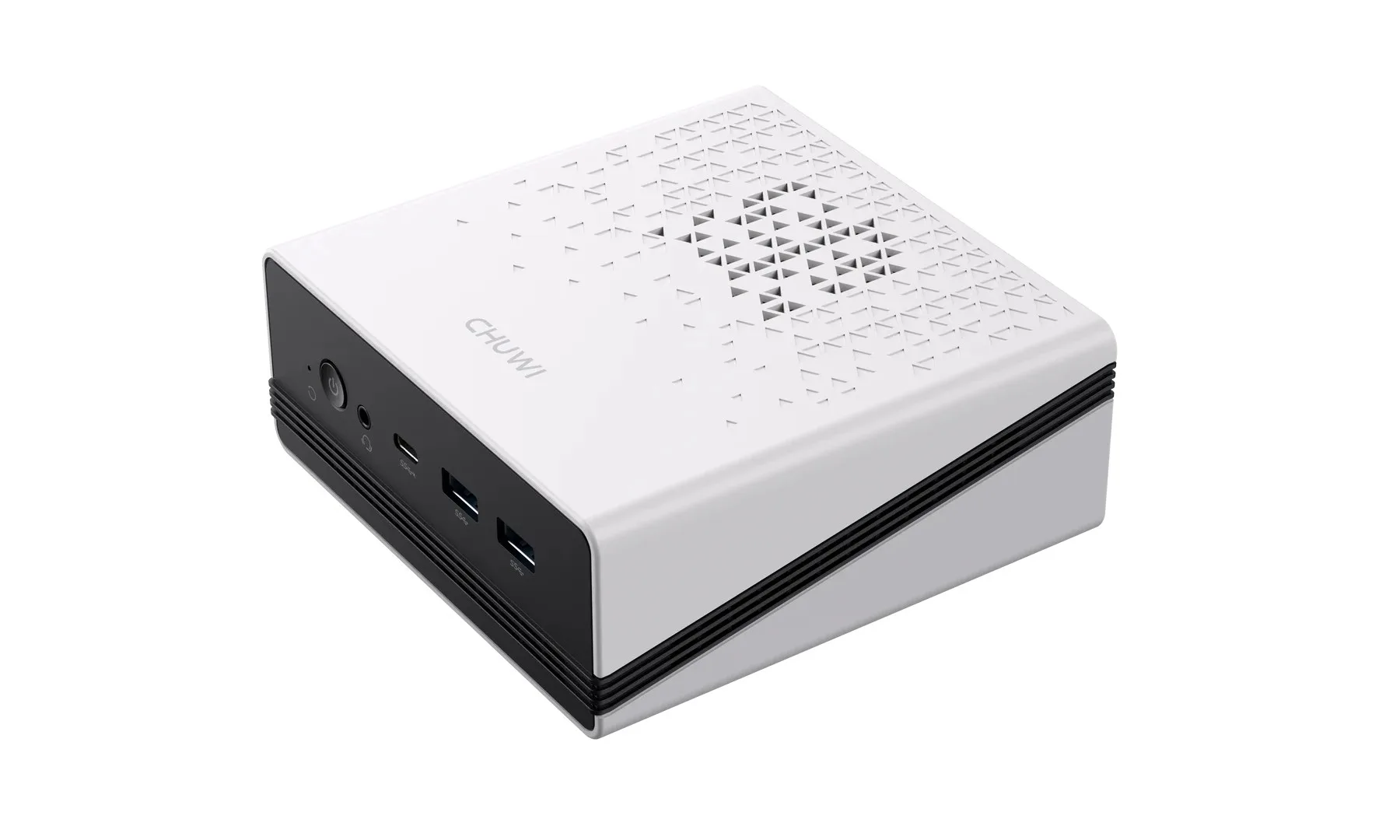
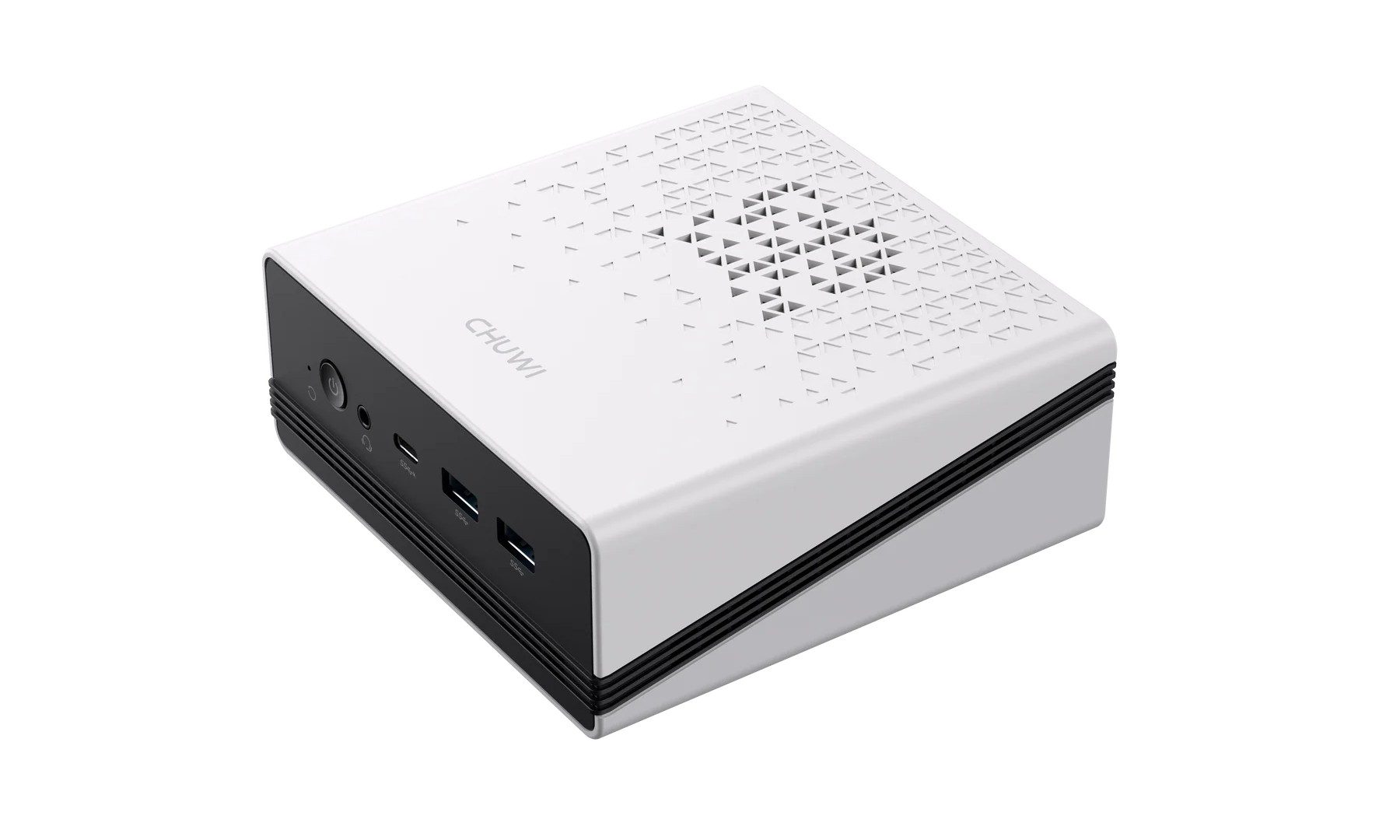
The first red flag is the claimed platform. The Ryzen 5500 is an AM4 desktop, which does not support DDR5 memory. However, the listing shows this processor with DDR5 memory. Then there is the GPU. The Radeon RX 6750 GRE is a desktop-grade discrete GPU, and not a tiny mobile chip that can fit inside a mini PC chassis. VideoCardz also notes that the listing image appears similar to CHUWI’s UBox, which uses mobile APU hardware and does not have room for a desktop graphics card.
How the pricing is suspicious too
Chuwi UBOX (for reference)Chuwi
Even if you believe the specs at face value, a quick check of the Chinese component pricing found that the parts alone get too close to the listed system price. Adding the GPU, SSD, RAM, Ryzen CPU, and motherboard, the pricing came to around 4,375 RMB, which is about $645. This does not even include the case itself, the power supply, the cooling components, or the controller shown in the promotional image.
Keep in mind that not every SteamOS-style mini PC is a scam, and the hardware combination could exist in a normal small form-factor system. The problem is that some of these components don’t add up, and the pricing is too low.
Oasis version 2.2 gives the free soundscape app a more useful place in daily routines. The iPhone update adds ready-made soundscapes, new audio options, and quicker ways to return to a setup when you’re trying to focus, fall asleep, meditate, or cool down.
The biggest change is a new library of 16 presets built around calm, meditation, focus, and energy. Oasis also adds more than 10 sounds, a mini player, session memory, background mixed audio, interface updates, bug fixes, performance improvements, and accessibility tweaks.
It’s still free, and the App Store listing says the developer doesn’t collect data from the app. For a calm app, that privacy detail helps. Nobody wants another account, dashboard, or data trail standing between them and a few quieter minutes.
What makes this update useful
Presets should make Oasis faster to use when you don’t want to tune every layer yourself. You can open the app, pick a mood, and start from a finished soundscape instead of building one sound at a time.
Advertisement
Oasis
The mini player gives the app a lighter feel during longer sessions. You won’t need to keep digging through the full interface just to manage what’s playing, and session memory helps bring back the setup you were already using.
Background mixed audio is the most flexible upgrade. Oasis can sit under music or podcasts, so you don’t have to choose between an ambient layer and something you’re already listening to.
How does Oasis build atmosphere
Oasis is built around spatial sound placement, letting users arrange nature sounds in a 3D audio environment. That gives it a more tactile feel than a standard loop player, especially when you’re stacking different sounds together.
The App Store listing also mentions binaural tones, which gives users another way to shape a focus or meditation bed. A sleep setup can lean heavier and softer, while a work session can stay lighter and less intrusive.
Oasis
Where does Oasis still have limits
Oasis has a focused job. It’s an audio environment builder, not a larger wellness platform with coaching, lessons, or a broad content library, based on the supplied information.
Availability also needs a careful caveat, since the App Store page provided confirms the Austria listing. For now, Oasis version 2.2 looks easiest to recommend as a low-friction first step. Start with the presets, then adjust individual sounds once one feels close.































































You must be logged in to post a comment Login