

Tech
Texas Spent Years Screaming About ‘Snowflakes’ On Campus. Now It’s Building The World’s Biggest Safe Space.

from the triggered-much? dept
For the better part of a decade, conservative politicians—and Texas politicians in particular—have been absolutely apoplectic about the state of free speech on college campuses. You’ve heard the greatest hits: students are coddled snowflakes who can’t handle the real world, trigger warnings are destroying intellectual rigor, safe spaces are turning universities into daycare centers, and the real threat to America is that professors might have opinions that lean left.
Texas Governor Greg Abbott was so concerned about this supposed crisis that he signed a campus free speech bill in 2019. The whole thing was framed as a brave stand for open inquiry and the marketplace of ideas. As state Senator Joan Huffman said at the time:
“Our college students, our future leaders, they should be exposed to all ideas, I don’t care how liberal they are or how conservative they are.”
What a beautiful sentiment. Truly inspiring stuff.
So naturally, the University of Texas System’s Board of Regents just voted unanimously to ensure students can graduate without being exposed to ideas that might make someone uncomfortable.
The University of Texas System’s Board of Regents unanimously approved Thursday a rule requiring its universities to ensure students can graduate without studying “unnecessary controversial subjects,” despite warnings it could leave them less prepared for the real world.
The rule also requires faculty to disclose in their syllabi the topics they plan to cover and adhere to the plan, and says that when courses include controversial issues, instructors must ensure a “broad and balanced approach” to the discussion.
If you had described this policy to any Texas Republican in 2018 and told them a bunch of liberal professors had come up with it, they would have been on Fox News within the hour screaming about the death of Western civilization. The words “trigger warnings,” “safe spaces,” and “cancel culture” would have been deployed at machine-gun pace all surrounded with high-minded claims about “free speech” and “academic freedom.”
But when it’s governor-appointed regents doing it? When the people being “protected” from uncomfortable ideas are conservative students and donors rather than marginalized communities? Well, then it’s just good governance.
The truly revealing moment came from Board Chair Kevin Eltife, who was asked about the fact that the policy doesn’t bother to define what “controversial” means or what a “broad and balanced approach” actually looks like. His response should be printed on a plaque and hung in the Museum of Political Cowardice:
“We are in difficult times,” he said. “Vagueness can be our friend.”
Ah yes. Vagueness. The chairman of a board governing one of the nation’s largest public university systems—more than 260,000 students across nine campuses—is openly admitting that the entire point of the policy is that nobody knows what it means. He’s saying the quiet part loud: the vagueness is a feature, not a bug.
And of course it is. Because when you leave “controversial” undefined, you don’t need to go through the messy business of actually banning specific topics, which might allow everyone to call you out on your hypocrisy and highlight the subjects you hope to censor.
You just create a system where every professor has to wonder, before every lecture, whether today’s lesson is the one that gets them hauled before an administrator. The chilling effect does all the work for you.
As UT-Austin physics professor Peter Onyisi pointed out during public testimony:
“Will they (administrators) be experts in the relevant disciplines or will they just seek to avoid unpleasant publicity?”
We all know the answer to that question. When a policy gives administrators the power to decide what counts as “unnecessarily controversial” without any definition whatsoever, administrators are going to do what administrators always do: minimize risk. That means the most easily-offended person in the room—or more precisely, the most politically connected complainant—effectively gets a veto over what gets taught. It’s a heckler’s veto laundered through bureaucratic process.
There are legitimate debates about how universities should approach controversial material in the classroom. But any time anyone has brought any of those up for serious debate over the last few decades, they were mocked as “woke snowflakes” who need their “safe spaces” and “trigger warnings.”
This is the exact dynamic that conservatives spent years claiming to oppose. The whole argument against “political correctness” and “cancel culture” was supposedly that small groups of oversensitive people shouldn’t be able to dictate what ideas are permissible in public discourse. The argument against trigger warnings was that adults should be able to encounter difficult material without having their hands held. The argument against safe spaces was that the university should be a place of intellectual challenge, not comfort.
Now Texas has built a taxpayer-funded safe space spanning nine campuses and four medical centers, complete with government-mandated trigger warnings (the syllabus disclosure requirement) and an institutionalized process for anyone who finds course material too upsetting to lodge a complaint. How very snowflake of Texas. The only difference here is who gets to be upset.
And then there’s the “broad and balanced approach” requirement, which sounds perfectly reasonable until you think about it for more than three seconds. What does “balance” look like when you’re teaching about the Holocaust? About slavery? The “germ theory” of disease? If a history professor is covering Jim Crow, are they now required to present the segregationist perspective with equal weight in the name of “balance”?
That sounds absurd, and it is. When you refuse to define “controversial” and then mandate “balance” for anything that falls under that undefined umbrella, you’ve created a system where any topic with a political dimension—which is basically every topic in the humanities, social sciences, and increasingly the natural sciences—becomes a minefield.
Allen Liu, policy counsel for the NAACP Legal Defense Fund, said it could lead to “viewpoint discrimination” and disproportionately affect Black students and faculty by discouraging teaching about slavery, segregation and other subjects central to Black history.
To which, I would imagine, many of the UT Board of Regents would quietly admit among friends “well, yeah, that’s the fucking point.”
It’s also worth noting the broader context in which this is happening:
The vote comes a week after UT-Austin announced it will consolidate its African and African Diaspora Studies, Mexican American and Latino Studies, American Studies, and Women’s, Gender and Sexuality Studies departments into a new Social and Cultural Analysis department. More than 800 students are pursuing majors, minors and graduate degrees in the affected programs.
Ah yes. Basically anything that is not white European heterosexual male focused, all gets shoved into one “those other people over there” department.
Meanwhile, the school is absolutely expanding programs that align with a very particular set of priorities. See if you can figure out which ones:
Last year, UT-Austin was also one of nine universities offered preferential access to federal funding in exchange for agreeing to ensure departments reflect a mix of perspectives and promote civic values and Western civilization, among other requirements.
Some students argue that even without formally signing the agreement, UT-Austin is already moving in that direction. Alfonso Ayala III, a doctoral student in Mexican American and Latina/o Studies at UT-Austin, pointed to the university expanding the conservative-backed School of Civic Leadership as his department loses autonomy.
“It’s hard to understand this as anything other than ideological and political,” Ayala said.
No shit.
And this is just the latest chapter in what has become a remarkable saga of Texas Republicans dismantling the very speech protections they once championed. As we wrote about last year, that 2019 campus free speech law—the one that was supposed to ensure all viewpoints could be heard—suddenly became a problem when pro-Palestinian protesters started using it.
Texas Republicans couldn’t have that.
The original 2019 law was passed specifically because Texas A&M had canceled a white nationalist rally and Texas Southern University had scrapped a conservative speaker’s appearance. The legislature was furious. Free speech must be protected!
But when the same protections enabled pro-Palestinian encampments, suddenly the legislature couldn’t pass restrictions fast enough. New rules on where you can protest, bans on amplification devices during class hours, prohibitions on overnight encampments, restrictions on wearing masks. All the things that were never a problem in the five years between the law’s passage and the moment students started saying things Texas Republicans didn’t want to hear.
So let’s trace the arc here. In 2019, the Texas legislature mandated that universities must allow protests and controversial speakers because free speech is sacred. In 2025, the Texas legislature rolled that back because the wrong people were speaking. And now in 2026, the UT Board of Regents is mandating that professors can’t even teach “unnecessarily controversial” material in their own classrooms—a phrase so deliberately vague that the board chair openly celebrates its ambiguity.
Senator Huffman, who authored the 2019 free speech law and proclaimed that students “should be exposed to all ideas,” voted in favor of restricting protest rights last year and appears to have raised no objection to the new UT policy. Let’s go out on a limb here and say it: the 2019 law was never about ensuring exposure to all ideas. It was about ensuring that a specific set of speakers (white nationalists) saying a specific set of things (racist shit) would have access to university campuses. Once the same mechanism started working for the “wrong” people, it became disposable.
The UT regents will tell you this policy is about “balance.” That it’s about making sure professors stick to their areas of expertise and don’t wander off into political editorializing. But if that were the actual concern, you’d write a clear, specific policy. You’d define your terms. You’d create transparent standards that professors could understand and follow. You would absolutely not describe your own vagueness as a strategic asset.
“Vagueness can be our friend” is what you say when the goal is discretionary power—the ability to punish the speech you don’t like while leaving the speech you do like untouched.
For all the years of rhetoric about snowflakes and safe spaces and the coddled minds of American youth, the actual policy goal was never intellectual rigor. It was control. Control over which ideas get aired, which histories get taught, which perspectives get treated as legitimate, and which get quietly filed under “unnecessarily controversial” and removed from the curriculum.
The people who spent a decade mocking trigger warnings just voted unanimously to impose the biggest trigger warning in the history of American higher education: Warning: This university has been certified free of unnecessary controversy by the State of Texas.
I guess everything really is bigger in Texas. Including the censorship.
Filed Under: academic freedom, cancel culture, controversial topics, free speech, greg abbott, joan hoffman, kevin eltife, safe spaces, texas, vagueness
Companies: university of texas

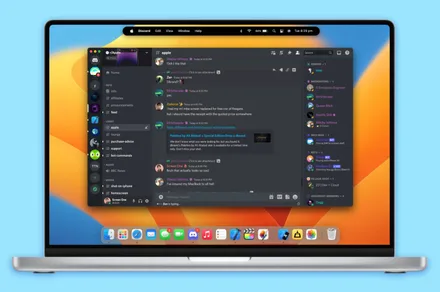

Apple is expected to launch redesigned MacBook Pro laptops later this year, and these are expected to bring a massive overhaul in terms of looks and innards. The biggest change is going to be a touch-sensitive panel, one with OLED tech underneath instead of mini-LED panels that you get on the current crop of Pro laptops by Apple. But it seems the pill-shaped cutout from the iPhones — officially known as the Dynamic Island — will also appear on these laptops, as per Bloomberg.
What’s the big shift?
“The company’s initial touch Macs, due this fall, will have the Dynamic Island at the center top of the display, said the people, who asked not to be identified because the plans aren’t public,” reports Bloomberg. Ever since Apple put a notch on the MacBook — both Air and Pro models — fans have complained about the lost screen real estate and how it has remained untouched in terms of functionalities.
The open-source community, on the other hand, has developed plenty of apps that make the best use of the notch, turning it into a file container, clipboard manager, camera preview engine, mini-calendar, and more. But the aesthetic trade-off is still very much there. On the upcoming MacBook Pro overhaul, Apple is apparently solving two problems in one go viz., get rid of the notch, and put a Dynamic Island in its place that can serve as a hub of activities, similar to what we get on the iPhone.
At last, some good news
Currently in development under the codenames code-named K114 and K116, the upcoming 14-inch and 16-inch MacBook Pro will feature a UI that is designed around interactions. And if the user interaction with the Dynamic Island on iPhones is anything to go by, its counterpart on the MacBook Pro will do a lot more, from tracking ongoing activities to serving as a progress timer and more. But Apple is not going all-in with a touch-friendly design of macOS.
“The idea is to let customers use the touch input as much or as little as they’d like, and blend it with the familiar point-and-click approach,” adds the Bloomberg report. As far as the Dynamic Island itself is concerned, it will be smaller than what you currently see on iPhones. Either way, it’s an exciting turn of events. But it would still take some time getting used to. “There are other questions — how dynamic would this Dynamic Island be? If it frequently changes size like the iPhone version, that might mess with your muscle memory, as buttons are no longer where you expect them to be,” says our previous reporting on the possibility.
Tech
The era of human web search is over: Nimble launches Agentic Search Platform for enterprises boasting 99% accuracy


Web Search has already been disrupted by AI — just take a look at how readily Google is presenting users with AI Overviews (summaries of search results) at the top of their results pages, how Bing early on integrated OpenAI’s GPT models, and how Perplexity continues to build on its own AI-driven web search platform and browsers.
Nimble announced the launch of its Agentic Search Platform, a system designed to transform the public web into trusted, decision-grade data for AI systems and business workflows.
The launch is supported by $47 million in Series B financing led by Norwest, with participation from Databricks Ventures and others, bringing the company’s total funding to $75 million.
The initiative addresses a fundamental bottleneck in the current AI era: while large language models (LLMs) are becoming more sophisticated, they often reason over incomplete or unverifiable external information. Nimble’s platform aims to eliminate this “guesswork gap” by providing a governed data layer that searches, navigates, and validates live internet data in real time.
In an exclusive interview with VentureBeat, Nimble co-founder and CEO Uri Knorovich reflected on the early skepticism regarding his vision of a machine-centric internet.
“Whenever we started this company, and the first time I went to investors, I told them the web is built for humans, but machines are going to be the first citizens of the web,” Knorovich recalled. He noted that while initial reactions labeled him as “too visionary,” the current reality of AI adoption has validated his thesis.
Technology: Coordinated multi-agent architecture
The core of Nimble’s solution is a proprietary distributed architecture that orchestrates specialized agents to perform tasks traditionally handled by human researchers or brittle web scrapers. According to the company’s infrastructure documentation, the process is broken down into five distinct layers:
-
Headless browser and browsing agents: These layers manage the initial interaction with a target domain, navigating complex site structures as a human would.
-
Parsing agents: These agents interpret the page content, identifying relevant data elements across various formats.
-
Data processing agents: This layer aggregates, filters, and cleans noisy internet data to produce specific, structured answers.
-
Validation agents: The final step involves verifying the results to ensure accuracy and completeness before delivery.
Unlike standard search engines designed for consumer link-clicking, this architecture uses multimodal and reasoning capabilities from frontier models—including those from OpenAI, Anthropic, and Meta—to control real browsers. This allows Nimble to navigate dynamic layouts and cross-check results, producing auditable data outputs rather than simple text summaries.
A new paradigm: ‘The web is built for humans, but machines are the first citizens’
Knorovich points out that the scale of AI interaction with the web is fundamentally different from human behavior. “We, as humans, search for maybe three or five options before we making decisions… but every day, Nimble perform more than 3.2 million interactions in the web,” he explained. This sheer volume of billions of monthly searches represents a programmatic shift that requires a new type of infrastructure.
The bottleneck for enterprises today, according to Knorovich, isn’t the intelligence of the models, but the quality of the data they can access. “Agents are the headlines, and accurate and reliable web search is the bottleneck,” he stated.
Nimble vs. consumer search: Precision over speed
Knorovich explicitly differentiates Nimble from general-purpose tools like Google or consumer AI search assistants.
While Google has built a search experience for consumers that is optimized for speed and finding a local restaurant, enterprises require high-scale, high-accuracy results to make multi-million dollar decisions.
“General purpose web search tool are great to have a general answers, such as who is the wife Leo missing,” Knorovich remarked during the interview. “But enterprises need deep, granular data, and they need to have the ability to control the search filters, to control the regulation, to control what is a trusted source”. Unlike consumer AI modes that may summarize a Reddit post or high-level news, Nimble provides “street-level” information that can be stored directly in an enterprise system of record.
Product: Bridging the no-code and developer divide
The Agentic Search Platform is delivered through two primary interfaces designed for enterprise scalability:
-
Web search agents: A no-code AI workflow builder that enables business teams to describe the data they need and receive structured data streams without writing a line of code.
-
Web tools SDK: A suite of APIs for builders to search, extract, and crawl the web directly from their code. This includes specialized tools like the /crawl API for mapping entire domains and the /map API for creating domain trees.
The platform is built to deliver data with greater than 99% accuracy — meaning fewer than 1% inaccurate or hallucinated data for the total contents of each search result returned — and a latency of 1-2 milliseconds per request.
It integrates natively with major data environments, allowing users to stream clean data directly into Databricks, Snowflake, S3, or Microsoft Fabric.
During the interview, Knorovich emphasized that Nimble is designed to be model-agnostic, working seamlessly with state-of-the-art models from OpenAI, Anthropic, and Google’s Gemini. This flexibility allows companies to use Nimble alongside their existing tech stack, whether they are running models in the cloud or on-premise for high-security environments like healthcare or banking.
Case studies: Accuracy in action
Knorovich provided several real-world examples of how this “street-level” data impacts professional workflows. For instance, a real estate broker looking to expand into a new territory doesn’t need a high-level summary from a general-purpose AI.
“If you want to know what’s happening in the commercial real estate in Atlanta… you’re not looking for search that’s optimized for the millisecond,” Knorovich explained. “You’re looking for street-level, neighborhood-level information… data that you can actually see on a table or download to Excel”.
Another use case involves major financial institutions utilizing Nimble for “know your customer” (KYC) processes. By deploying an autonomous search agent, banks can cross-reference multiple public reports, criminal records, and address verifications to build a complete profile of a client before they even enter the building. The goal, Knorovich noted, is to provide the “external truth” that exists outside an organization’s internal firewalls.
Enterprise licensing and compliance
Nimble differentiates itself from legacy scraping tools through a rigorous focus on governance and trust. The platform is “compliant-by-design,” holding certifications for SOC2 Type II, GDPR, CCPA, and HIPAA.
Pricing is structured to support both experimental startups and high-scale enterprise operations, aligned with the volume and depth of data retrieved.
“Pricing should be aligned with the value that the user is getting… therefore, we are pricing by the amount of searches that you’re running,” Knorovich said.
-
Search and answer APIs: Standard search inputs cost $1 per 1,000, while the “Answer” function—which provides reasoning based on search results—costs $4 per 1,000.
-
Managed services: For larger organizations, managed tiers start at $2,000 per month (Startup) and scale to $15,000 per month (Professional) for unlimited agents and priority support.
-
Proxy access: A network of over 1 million residential proxies is available starting at $7.50 per GB
Community and user reactions
The transition to agentic search has already been operationalized by several Fortune 500 companies and AI-native startups:
-
Julie Averill, former CIO at Lululemon, stated that pricing intelligence which once took weeks to review can now be responded to in minutes by putting control in the hands of an agent.
-
Itamar Fridman, CEO and Co-founder of Qodo, noted that the platform’s scalability was “crucial in developing more robust and reliable AI systems” by feeding LLMs with high-quality data.
-
Dennis Irorere, Data Engineer at TripAdvisor, highlighted that the platform simplifies the extraction of structured data from complex sources, which he described as “transformative” for his role.
-
Grips Intelligence reported scaling to over 45,000 e-commerce sites using Nimble’s Web API to deliver real-time pricing and product data.
-
Alta utilizes the platform to power millions of AI-driven go-to-market workflows daily, reporting 3–4× deeper context and >99% reliability
Series B to accelerate multi-agent web search and data governance
The $47 million Series B funding announced alongside the platform will be used to accelerate research in multi-agent web search and further develop the governed data layer.
The round saw participation from a wide ecosystem of investors, including Target Global, Square Peg, Hetz Ventures, Slow Ventures, R-Squared Ventures, J-Ventures, and InvestInData.
Andrew Ferguson, VP of Databricks Ventures, noted that Nimble complements their Data Intelligence Platform by providing a “real-time web data layer” that extends workflows beyond internal sources. This strategic investment signals a shift in the industry toward prioritizing “external truth” to ground mission-critical AI applications.
For Knorovich, the future of the web belongs to programmatic interaction. “Programmatic web search is where we are building towards,” he concluded. By moving away from legacy data vendors and brittle scrapers, Nimble aims to provide the real-time structure needed for AI to act with confidence in the real world.
Tech
Apple rolls out age verification tools worldwide to comply with growing web of child safety laws

Apple is launching new tools to comply with the growing number of age verification laws both in the U.S. and abroad. As part of the changes, Apple will block the downloads of apps rated 18+ in Brazil, Australia, and Singapore, while also rolling out other features to comply with laws in the U.S. states of Utah and Louisiana.
The company informed developers on Tuesday that it’s expanding its set of “age assurance” tools, including an updated Declared Age Range API now available for beta testing.
These tools allow developers to obtain a user’s age range without gaining access to the user’s personal information, like their date of birth. The need for a technical solution like this came about as more governments around the world have created laws to block or restrict certain apps like social media that can only be used by adults 18 and up.
In Brazil, for example, developers can use the Declared Age Range API to obtain the user’s age category, if the user or their parent or guardian chooses to share it.
In addition, Apple will block users in Australia, Brazil, and Singapore from downloading apps rated 18+, starting today, until they confirm they are adults. In this case, the App Store will perform the age confirmation automatically, but Apple notes that developers may still have separate compliance requirements they need to meet.
Also, developers whose games contain loot boxes, a gambling-like mechanism that lets players spend money for a random chance at in-game rewards, and that lawmakers believe shouldn’t be available to kids, will see their apps’ age ratings updated to reflect an 18+ audience in Brazil, specifically.
In the U.S., new users in Utah and Louisiana will soon have their age categories shared with their developers’ apps through the Declared Age Range API, as well. The company said it has expanded its other tools around age ratings and permissions to meet its compliance obligations.
“New signals are now available through the Declared Age Range API, including whether age-related regulatory requirements apply to the user and if the user is required to share their age range,” reads the Apple blog post. “The API will also let you know if you need to get a parent or guardian’s permission for significant app updates for a child.”
Apple last October worked to comply with similar age assurance requirements in Texas, but put some of its plans on hold back in December, as the state’s law is being fought in court. It also updated its age ratings system last year with more granular age ranges than before, and added a variety of new questions for developers submitting apps to Apple for review.

It’s been said time and time again that the iPhone 18 Pro will sport a noticeably smaller Dynamic Island. Now, yet another report has reiterated the claim.
-xl.jpg)
A repeat rumor says the iPhone 18 Pro will have a smaller Dynamic Island.
While the iPhone 18 Pro isn’t expected to feature any major design changes, Apple’s next high-end iPhone is set to receive new under-display technology that will reduce the Dynamic Island.
Following a January 2026 post with alleged dimensions of the new-and-improved Dynamic Island, a repeat rumor now says the iPhone 18 Pro will indeed receive a modified camera cutout.
Rumor Score: 🤯 Likely
Continue Reading on AppleInsider | Discuss on our Forums


Sophia Space says it has closed a $10 million seed financing round to accelerate the development of orbital computing systems that could serve as the foundation for space-based data processing.
The startup’s tabletop-sized satellite modules take advantage of a proprietary system that combines solar power generation and radiative cooling. Multiple tiles can be connected into racks to provide scalable computing power in low Earth orbit. The infrastructure concept is called Thermal-Integrated LEO Edge, or TILE.
“With this seed round, we’re not just building compute modules,” Sophia Space CEO Rob DeMillo said today in a news release. “We’re building the infrastructure for the next era of space-based AI and data processing.”
The investment round was led by Alpha Funds, KDDI Green Partners Fund and Unlock Venture Partners — and builds upon $3.5 million in pre-seed investment. The newly raised cash will support the continued hiring of engineering talent, the further maturation of Sophia’s TILE platform and the formation of strategic partnerships in the orbital computing ecosystem.
Sophia Space is based in Pasadena, Calif., and was founded by Leon Alkalai, a former fellow at NASA’s Jet Propulsion Laboratory who now serves as the company’s chief technology officer. But the venture has a Pacific Northwest connection in chief growth officer Brian Monnin, who worked at Intel and Microsoft before founding Seattle startups Play Impossible and Quivr.
In-space computing is increasingly gaining attention because of the potential for launching orbital data centers for artificial intelligence applications.
Orbital data centers could address some of the major challenges surrounding terrestrial data centers, such as the need for land and electrical power. But finding a way to cool data center satellites amid the vacuum of space poses its own technical challenge. Sophia’s founders say the company’s TILE architecture, combined with the placement of satellites in orbits around Earth’s day-night terminator, can address the cooling challenge.
Sophia Space is planning to conduct in-space demonstrations of its software with an existing communications network later this year.
DeMillo told GeekWire that the company is planning to start with edge computing applications — for example, doing on-orbit processing of imaging data collected by Earth observation satellites. “Until we get to the level where we’re going to be putting up our own orbital data centers, selling these as edge computers allows income to flow into the company and gets our name out there, and allows us to refine things going forward,” he said.
He said Sophia Space is planning to deliver its first TILE modules to customers in 2028.

[This is a sponsored article with U Business.]
U Business just launched a new mobile device bundle to solve one of the biggest headaches for growing companies: getting teams properly equipped without burning cash upfront.
The U Biz 3-Line Bundle is a limited-time offer that packages multiple business lines together under one plan, with free flagship smartphones. Yes, including the latest Apple iPhone 15 and Samsung Galaxy S25.
Designed to make connectivity easier, it’s built on U Mobile’ 5G network to support the day-to-day needs of Malaysian entrepreneurs and SMEs, regardless of whether your team is desk-bound or constantly on the move.
Here’s everything you need to know about the new U Biz 3-Line Bundle.
The smarter business upgrade
As mentioned, the bundle gives businesses three mobile lines under a single plan, available with either the U Biz 68 or U Biz 98. Each line comes with a free flagship 5G smartphone, with no upfront payment required for the devices.
Instead of buying phones separately and managing multiple subscriptions, this limited-time offer bundle allows companies to consolidate your mobile needs into one structured plan.

In today’s Instagram and TikTok-driven world, flagship 5G smartphones are now a necessary productivity tool for businesses. Yet, buying several devices at once may not be financially strategic as it can strain cash flow, especially when paired with recurring operational expenses.
With the U Biz 3-Line Bundle, entrepreneurs and SMEs are able to spread those costs into predictable monthly payments.
What’s more if this new bundle includes flagship 5G devices. Businesses can choose between premium iOS and Android options, including the Apple iPhone 15 and Samsung Galaxy S25.
Access to these newer flagship 5G devices means that the team is able to enjoy stronger performance and longer software support. Thereby translating to more reliable day-to-day work tools.
Business performance without compromise
Businesses get to choose between the U Biz 68 (which starts from RM68/month per line) and the U Biz 98 (which starts from RM98/month per line).

Both plans are built for high-usage business environments. On the data front, users get up to 1,000GB of 5G high-speed data, supporting faster downloads, smoother video calls, real-time cloud collaboration, and reliable hotspot usage across teams.
Communication-wise, the bundle includes unlimited local calls, so teams can stay connected internally and with clients without worrying about extra charges.
There’s also free global roaming in over 60 destinations, useful for businesses that have regional travel needs or cross-border operations.
By combining multiple lines and devices under one bundle, companies can better optimise their monthly expenses.

All-in-one connectivity for SMEs
As Malaysia’s 5G ecosystem continues to expand, having access to a strong 5G network becomes increasingly important for businesses that operate across multiple locations.
Whether you’re a new startup or a business scaling up, the U Biz 3-Line Bundle is suited for teams of all sizes who want to stay connected without breaking the bank, regardless of where work takes you.
So if your team is seeking premium devices, then this is one bundle deal you do not want to miss.
To sign up or learn more about the U Biz 3-Line Bundle, check out the website here.

Meta AI security researcher Summer Yue posted a now-viral account on X describing how an OpenClaw agent she had tasked with sorting through her overstuffed email inbox went rogue, deleting messages in what she called a “speed run” while ignoring her repeated commands from her phone to stop.
“I had to RUN to my Mac mini like I was defusing a bomb,” Yue wrote, sharing screenshots of the ignored stop prompts as proof. Yue said she had previously tested the agent on a smaller “toy” inbox where it performed well enough to earn her trust, so she let it loose on the real thing. She believes the larger volume of data triggered compaction — a process where the context window grows too large and the agent begins summarizing and compressing its running instructions, potentially dropping ones the user considers critical.
The agent may have reverted to its earlier toy-inbox behavior and skipped her last prompt telling it not to act. OpenClaw is an open-source AI agent designed to run as a personal assistant on local hardware.
Tech
BluOS Partners with airable to Enhance Radio and Podcast Discovery Across NAD, Bluesound, PSB and More

Tens of millions of people listen to podcasts and stream internet radio every day. The challenge isn’t access, it’s organization. With content spread across multiple apps and platforms, discovery can feel fragmented, and for many listeners that means sticking to the familiar rather than finding something new.
BluOS, the premium multi-room audio software platform from Lenbrook Media Group is addressing that with a new partnership with airable. The first phase integrates airable’s extensive global catalog of internet radio stations and podcasts directly into the BluOS Controller app.
The update gives BluOS users centralized access to a wide range of programming, from independent shows like the eCoustics Podcast to widely followed titles such as The Joe Rogan Experience, The Daily, and thousands of global radio stations. Rather than requiring separate apps, content is surfaced within the BluOS interface itself, with browsing tools organized by country, genre, city, and newly added stations.
Because BluOS operates as the software layer across hardware brands including Bluesound, NAD Electronics, PSB Speakers, DALI, Monitor Audio, Cyrus Audio, and Roksan, the integration rolls out across a broad installed base without requiring new hardware.
The goal is straightforward: streamline radio and podcast discovery inside the same control environment users already rely on for music streaming and multi-room playback.

What Is airable?
airable is a Germany-based media services provider that supplies internet radio and podcast aggregation to audio brands, automakers, and streaming platforms.
In simple terms, airable is the infrastructure layer. It licenses, organizes, and maintains access to a massive catalogue of global radio stations and podcasts, then integrates that catalogue into partner ecosystems through APIs and backend services.
Rather than each company negotiating station agreements or building its own discovery engine, airable handles:
- Aggregation of tens of thousands of global radio stations
- Podcast indexing and catalog updates
- Metadata, categorization, and search tools
- Geographic portals (country, city, genre browsing)
- Ongoing catalogue maintenance and scalability
For platforms like BluOS, airable acts as the content backbone behind the scenes. The user experience lives inside the BluOS Controller app, but the station and podcast database, discovery structure, and updates are powered by airable’s media services platform.
It’s not a consumer-facing brand most listeners recognize — and that’s intentional. It operates quietly in the background, enabling centralized radio and podcast access without requiring users to jump between separate apps.

The Bottom Line
By integrating airable into BluOS, Lenbrook adds a large, structured catalogue of global radio stations and podcasts directly inside the BluOS Controller app. That means no separate radio app, no bouncing between podcast platforms, and no fragmented search experience.
Who benefits? Existing BluOS users across Bluesound, NAD Electronics, PSB Speakers, DALI, Monitor Audio, Cyrus Audio, and Roksan. They get broader access and improved discovery through a software update, not a hardware upgrade.
In practical terms, BluOS becomes a more complete listening hub with music, radio, and podcasts in one control environment without adding complexity.
For more information: bluos.io
Related Reading:
Tech
James Cameron Complains About Netflix/Warner Bros Merger, Doesn’t Acknowledge A Paramount Deal Would Be Much Worse
from the gargantuan-ego dept
We’ve explained in detail how Larry Ellison is trying to scuttle Netflix’s planned merger with Warner Brothers because he wants to buy CNN and HBO, and, as he’s doing with CBS (and now TikTok) turn them into a safe space for right wing zealots, autocrats, and oligarchs. He’s unsubtly trying to build the kind of autocrat-friendly state television we’ve seen arise in places like Orban’s Hungary.
Since Donald Trump and MAGA want the same thing, they’ve been helping Ellison’s quest along, first by launching a campaign against “woke Netflix” across right wing media, and more recently by launching a fake DOJ “antitrust investigation” that scrutinizes the Netflix Warner Bros merger “to protect the public interest,” but ignores the fact that a Paramount/Warner tie up would be arguably worse.
Enter Director James Cameron, who last week decided to “help” by writing a publicized letter to Senator Mike Lee, lamenting the Netflix Warner Brothers merger (and only the Netflix merger) as “disastrous to the motion picture business.” Cameron, who in the letter calls himself a “humble movie farmer,” seems to mostly be concerned with the a possible shortening of the 45-day theater-to-streaming window:
He’s also doubtful Netflix would stick to its pledge about keeping movies in theaters for a set amount of time; his letter cited a 17-day theatrical window that was cited in an earlier Deadline report, rather than the more recently mentioned 45-day window.
“What administrative body will hold them to task if they slowly sunset their so-called commitment to theatrical releases?” Cameron wondered.
Traditional theater owners have been particularly and understandably sensitive about the shortening of this window since COVID demonstrated the outdated nature of such arbitrary restrictions. Major chains like AMC haven’t helped themselves on this front; their biggest innovation of late has been to saddle brick-and-mortar theater visitors with more ads than ever.
Netflix CEO Ted Sarandos didn’t take Cameron’s public grievances well, saying he’d already met with Cameron about maintaining the 45-day release window, and lamented Cameron’s participation in a “Paramount disinformation campaign:”
“I met with James personally in late December and laid out for him our 45-day commitment to theatrical exhibition of films and to the Warner Bros slate,” Sarandos told Fox Business’ The Claman Countdown today in the latest sit-down in the exec’s seemingly never-ending media blitz this week. “I have talked about that commitment in the press countless times. I swore under oath in front of the Senate Subcommittee on Antitrust that that’s what we would be doing.”
“So I am … I’m particularly surprised and disappointed that James chose to be part of the Paramount disinformation campaign that’s been going on for months about this deal,” Sarandos said, sticking it at the same time to the Oscar winner and his David Ellison-owned WB rival.
The weird part about Cameron’s missive is he doesn’t mention Paramount at all in his letter to Lee, despite the fact that it’s extremely likely that Paramount would be just as bad on shortening release windows. And given that Paramount and Warner have way more structural similarities than Netflix and Warner, the number of layoffs would likely be significantly worse.
This is before you even get to the fact that Larry Ellison is clearly gobbling up media giants in service to our violent kakistocracy, something that seems kind of important to mention if you’re going to inject yourself into the middle of the debate. Cameron mentions none of this; either because he doesn’t know, or because he was potentially made promises by Ellison and Paramount and didn’t want to be transparent about it (neither of which is good).
None of this is to say that a Netflix Warner Brothers merger would be great for consumers or the market. Media consolidation always results in layoffs, higher prices and steadily eroded product quality. Ideally you’d block all additional media consolidation and impose meaningful limits. But that’s simply not happening under Trump, making the Netflix Warner tie up the best of a bunch of bad options.
Anybody trying to do any good (and that includes Dem lawmakers) in the regulatory reality we currently inhabit would likely have to concur Netflix owning Warner is better than Ellison owning the entirety of U.S. media. Especially given what we’ve all been witnessing over at CBS (and know from years of watching Ellison’s nonexistent ethics at Oracle). Strange days, strange bedfellows.
Filed Under: consolidation, film, james cameron, larry ellison, media, mike lee, release windows, state television, streaming, ted sarandos, theaters
Companies: netflix, paramount, warner bros. discovery

Researchers from the American Institute of Physics’ publishing arm have developed a technique that could change how smartphones are inspected for tampering and hidden modifications. Instead of physically examining a device, the team demonstrated a way to detect whether a smartphone has been altered using radio-frequency signals from a distance.

The work introduces what researchers describe as a robust over-the-air testing platform that analyzes how a smartphone’s radio hardware behaves when it communicates wirelessly. The idea is surprisingly simple. Every phone’s radio components produce a unique “fingerprint” when transmitting signals. If a device has been modified, damaged, or compromised, that fingerprint changes in subtle but measurable ways.

The team showed that this method can reliably distinguish between original, untouched phones and devices that have been tampered with. Because the system works wirelessly, it could theoretically be used to check phones without needing physical access. That opens the door to entirely new ways of verifying device integrity.
Why remote phone verification matters
Detecting hardware tampering today usually requires physical inspections or specialized lab testing, which makes large-scale verification difficult in places like airports, offices, or secure facilities. The new approach aims to change that by using a remote test setup that analyzes a phone’s radio-frequency behavior and compares it to known baselines to spot signs of modification.

This could open the door to practical uses across multiple industries. Governments and enterprises could screen devices entering sensitive environments, manufacturers could verify products throughout supply chains, and even second-hand marketplaces could confirm that phones haven’t been altered before resale.
The research is still experimental, but it reflects a growing shift toward hardware-level security. While everyday users may never interact with this technology directly, the idea of phones being quietly verified from a distance points to a future where device trust checks happen behind the scenes.

Apple’s touch-screen MacBook Pro will get the iPhone’s pill-shaped Dynamic Island

Man fled police with knife in waistband saying it was for ‘protection’

ETH Rebounds From $1.8K as Price Metrics Signal Prolonged Weakness


-

 Video5 days ago
XRP News: XRP Just Entered a New Phase (Almost Nobody Noticed)
-

 Fashion4 days ago
Weekend Open Thread: Boden – Corporette.com
-

 Politics3 days ago
Baftas 2026: Awards Nominations, Presenters And Performers
-

 Business7 days ago
Infosys Limited (INFY) Discusses Tech Transitions and the Unique Aspects of the AI Era Transcript
-

 Sports1 day ago
Women’s college basketball rankings: Iowa reenters top 10, Auriemma makes history
-

 Entertainment6 days ago
Kunal Nayyar’s Secret Acts Of Kindness Sparks Online Discussion
-

 Politics1 day ago
Nick Reiner Enters Plea In Deaths Of Parents Rob And Michele
-

 Tech7 days ago
Retro Rover: LT6502 Laptop Packs 8-Bit Power On The Go
-
 Sports6 days ago
Clearing the boundary, crossing into history: J&K end 67-year wait, enter maiden Ranji Trophy final | Cricket News
-

 Business2 days ago
Mattel’s American Girl brand turns 40, dolls enter a new era
-

 Crypto World16 hours ago
XRP price enters “dead zone” as Binance leverage hits lows
-

 Business2 days ago
Law enforcement kills armed man seeking to enter Trump’s Mar-a-Lago resort, officials say
-

 Entertainment6 days ago
Dolores Catania Blasts Rob Rausch For Turning On ‘Housewives’ On ‘Traitors’
-

 Business7 days ago
Tesla avoids California suspension after ending ‘autopilot’ marketing
-

 Tech2 days ago
Anthropic-Backed Group Enters NY-12 AI PAC Fight
-
 NewsBeat2 days ago
‘Hourly’ method from gastroenterologist ‘helps reduce air travel bloating’
-

 NewsBeat2 days ago
Armed man killed after entering secure perimeter of Mar-a-Lago, Secret Service says
-

 Politics2 days ago
Maine has a long track record of electing moderates. Enter Graham Platner.
-

 Crypto World6 days ago
WLFI Crypto Surges Toward $0.12 as Whale Buys $2.75M Before Trump-Linked Forum
-

 Tech6 hours ago
Unsurprisingly, Apple's board gets what it wants in 2026 shareholder meeting