Tech
The Advanced Fighter Jet Replacing The UAE’s Mirage 2000-9

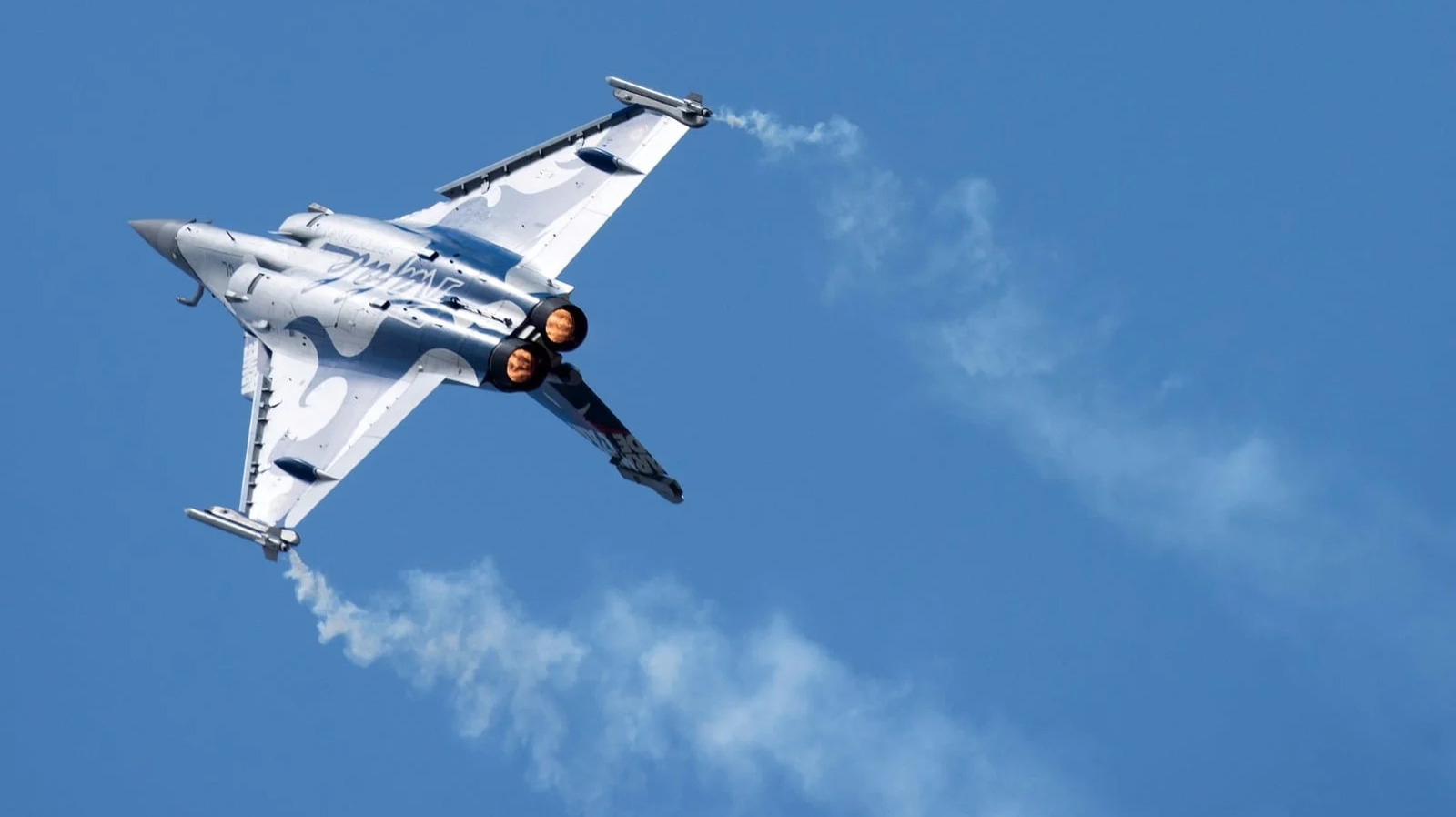

The Dassault Mirage 2000-9 has served as the UAEAF’s interceptor for over two decades, filling a few gaps that the country’s prevailing jet, the F-16, cannot. But it’s on its way out, soon to be replaced with another, more capable model from the same manufacturer.
That replacement is the Rafale F4, the latest production standard of Dassault’s twin-jet fighter aircraft. The Emiratis have gone all in on it too, signing for a whopping 80 units back in December 2021. The contract was worth $18 billion, though that figure also included 12 Caracal helicopters — the French military version of the Airbus Super Puma. It was such a big win for the French that Macron himself reportedly flew over to seal the deal. In fact, it remains the largest international Rafale order ever placed. The first unit was unveiled at the company’s flight test center in January 2025, with deliveries scheduled for late 2026.
Ironically, the UAE had rebuffed an earlier French pitch for 60 Rafales in 2011. At the time, it had its sights on the Lockheed Martin F-35. But they had to circle back to the Rafales, though, when Washington itself stalled the F-35 deal, allegedly over concerns that the UAE was using Huawei 5G gear nationwide.
Whether that’s a loss for the UAE is debatable, though, because the F4 jets being delivered are the most up-to-date version of the Rafale family. They feature upgrades like improved fire protection and avoidance systems, enhanced frontal optronics, and more. Demand for the variant is high, which is why production is being pushed hard to keep up, with Dassault having completed its 300th Rafale fighter jet in October 2025.
Where the Mirages go next
So it’s in with the new and out with the old for the UAE, but what about these older jets? The UAEAF flies roughly 59 of them today, across two main types. 44 are fighter variants for actual combat, while the remaining 15 are two-seat trainers that bring new pilots up to speed. They can’t all simply be scrapped, especially since they remain airworthy. On top of that, Dassault has confirmed industrial support for the platform beyond 2035.
Initially, when the deal was signed in 2021, the plan was to hand over half the fleet to Morocco’s Royal Armed Forces. But getting that across the line has been a slog. The thing is, the original 1998 contract gave France veto power over any re-export of the jets, which it initially used to block the move altogether. Fortunately for Morocco, the veto was eventually lifted in early 2024, helped along by Macron’s formal recognition of Morocco’s sovereignty over Western Sahara that July. But then the next hurdle arrived in the form of the Iran war in February 2026. That’s when the UAE decided to hold onto its Mirages, at least until the Rafales were fully integrated.
How do the two compare?
The Mirage 2000 is one of the most agile jets today, so it’s certainly no slouch, especially with the 2000-9 variant upgrades. In fact, these upgrades are UAE-exclusive, developed specifically for the nation as a derivative of the older 2000-5. Its central computer is actually very similar in capability to the Rafale, too. Size-wise, it measures around 47 feet long with a wingspan just under 30 feet. Speed tops out at Mach 2.2, and the service ceiling sits at roughly 54,000 feet. Its arsenal includes MBDA’s Black Shahine cruise missile alongside Mica NG air-to-air missiles.
But the Rafale F4 plays in a different class. It’s a touch bigger overall, stretching about 50 feet long with a wider 36-foot wingspan. It also runs on two engines rather than the Mirage’s single turbofan, giving it more thrust and a useful bit of redundancy if one of them fails. Notably, the Rafale is slightly slower than its older sibling, topping out at Mach 1.8 with a service ceiling of around 50,000 feet. But it makes up for that with its arsenal, comprising Meteor long-range air-to-air missiles, the Hammer precision strike kit, and Scalp cruise missiles for deep targets. Stealth and survivability are a step up, too.
You must be logged in to post a comment Login