TL;DR
Mrs. Dow Jones says the American dream is dead for young Americans, who are turning to gambling as traditional wealth paths become inaccessible.




Mrs. Dow Jones says the American dream is dead for young Americans, who are turning to gambling as traditional wealth paths become inaccessible.
The American dream is “very dead” for millennials and Gen Z, according to financial influencer Haley Sacks, better known as Mrs. Dow Jones. In an interview with Business Insider, Sacks argued that traditional markers of middle-class success, homeownership, stable careers, retirement savings, have become functionally inaccessible to younger Americans, pushing them toward gambling and side hustles as alternative paths to wealth.
The claim lands against a backdrop of record-breaking numbers in the US gambling industry. The American Gaming Association reported that US commercial gaming revenue hit nearly 79 billion dollars in 2025, an all-time high, with sports betting revenue reaching nearly 17 billion dollars, up roughly 23 percent year over year, and iGaming revenue exceeding ten billion dollars for the first time.
Young Americans are driving a significant share of that growth. A 2026 Northwestern Mutual survey found that 32 percent of Gen Z respondents and 24 percent of millennials either participate in or are considering sports betting, rates far above older age groups.

The 💜 of EU tech
The latest rumblings from the EU tech scene, a story from our wise ol’ founder Boris, and some questionable AI art. It’s free, every week, in your inbox. Sign up now!
Sacks, a Fortune 40 Under 40 honouree and founder of the financial education company Finance is Cool, frames the shift as rational rather than reckless. Her argument is that when a starter home costs multiples of a young worker’s annual salary and student debt averages roughly 33,000 dollars for millennials and 22,000 dollars for Gen Z, gambling starts to look like one of the few available shots at a life-changing sum of money.
The economic data offers some support for the underlying frustration. A Beyond Finance survey from March 2026 found that more than 70 percent of Gen Z and millennial respondents described their spending as “survival mode,” covering essentials with little left for saving or investing. The economic anxiety is showing up in other ways too, with university graduates booing commencement speakers who tell them AI will transform their careers while the entry-level job market contracts around them.
But the leap from economic frustration to gambling as a wealth strategy is where the argument runs into trouble. A joint study by researchers at UCLA, USC, and Harvard found that the introduction of online sports betting in a state was associated with a ten percent increase in the likelihood of bankruptcy among young adults. States that added mobile wagering saw a 25 percent increase.
The researchers found that the convenience of phone-based betting, available around the clock and requiring no trip to a casino, was a key driver of financial distress. The pattern is particularly concentrated among men under 35, the same demographic most aggressively targeted by sportsbook advertising.
Gambling addiction among young Americans is rising alongside the revenue. NPR has reported on a growing number of young adults presenting with gambling-related debt, with counsellors noting that many entered sports betting through free-bet promotions and social media advertising that framed wagering as a skill-based investment rather than a game of chance.
Sacks acknowledged in the Business Insider interview that gambling is not a financial plan, but argued the impulse behind it reveals something real about how disconnected traditional financial advice has become from the economic reality facing people under 40. She pointed to the gap between the advice young people receive, save consistently, invest in index funds, buy a home, and a housing market and labour environment that make following that advice feel impossible.
The tension between those two realities is not new, but its scale is. Tech layoffs framed as AI transformation have eliminated tens of thousands of entry-level and mid-career roles across the industry since 2024, compounding the sense among younger workers that the system is not built for them.
The financial services industry has noticed the shift. Betting platforms and fintech apps increasingly market themselves to younger users with language borrowed from investing, offering “portfolios” of bets and “research tools” that blur the line between trading and wagering. European regulators have started cracking down on prediction markets that straddle that same boundary, with Spain blocking Polymarket and Kalshi for operating without gambling licences.
In the US, the regulatory picture is more permissive. Thirty-eight states and Washington DC now allow some form of legal sports betting, up from just one state in 2018. The expansion has been driven by state governments attracted to tax revenue and by a Supreme Court ruling that struck down the federal ban on sports gambling.
It is worth noting some caveats about the framing. Sacks is a financial influencer and content creator, not an economist, and her conclusions are based on anecdotal observation and her audience’s experience rather than peer-reviewed research. The gambling industry’s record revenue does not by itself prove that young people are gambling instead of saving, it could reflect broader population growth in legal markets, more states coming online, or increased spending by existing bettors across all age groups.
The correlation between economic anxiety and gambling behaviour is well documented in academic literature, but correlation is not causation. Some young adults may gamble because they feel economically hopeless, others may gamble for entertainment, and the two groups likely overlap in ways the available data does not cleanly separate.
What the numbers do show clearly is that a generation facing record housing costs, significant student debt, and a contracting entry-level job market is also gambling at historically high rates, and that the financial consequences of that gambling are falling disproportionately on the youngest and most economically vulnerable bettors. Whether that represents a rational response to an irrational economy, as Sacks argues, or a dangerous coping mechanism being exploited by a rapidly expanding industry, depends on which side of the bankruptcy statistics you are standing on.

The new flagship headphones blend Bose audio and big bass.

RATING : 7.8 / 10
Skullcandy has spent years carving out its own niche in the headphone market. While brands like Sony, Bose and Sennheiser were fighting over which had the best sound quality and noise cancellation, Skullcandy leaned into its reputation on one thing above all else: bass. The Crusher line, with its signature haptic bass system, has always been unapologetically over the top and front and center for the brand.
But times change, and there are hints that the company wants to grow out of that niche. The new flagship Crusher 1080 headphones come with audio credentials borrowed from Bose. Specifically, they carry Bose’s QuietControl active noise cancellation (ANC), TrueSpatial directional audio and WaveForm tuning. This isn’t the first Skullcandy headphone to be part of the Bose Sound program, but it’s the first with such deep integration.
At around $270, though, Skullcandy is entering a fiercely competitive segment where Sony, Bose and Sennheiser already have pricier, well-established favorites. That means the Crusher 1080 has to be more than just fun — it has to be genuinely good. Thankfully, for the most part, it is.
On paper, the Crusher 1080 checks just about every flagship box. There’s the aforementioned ANC along with wear detection, a claimed 60 hours of battery life, fast charging, multipoint Bluetooth, Auracast and an EQ with customizable controls via an app. The over-ear design is reminiscent of older Crusher models, with a reassuring, but hefty build and an understated aesthetic that feels a bit 2010’s in a non-intentional way. There are some nice metal accents in the headband which make it feel premium, but overall it’s a larger, more robust headset compared to the sculpted lines of current Sony or Bose models.
 James Trew for Engadget
Skullcandy hasn’t really ventured into the realm of gesture and touch controls, and they remain absent here. The physical buttons are all quite large which generally makes them easy to locate. The biggest is the dedicated haptic bass dial, which is so large it’s part of the aesthetic. Nestled beside that is a switch for toggling between ANC and transparency mode. This pressable switch also cycles through listening presets (Music, Podcast, Movie and Custom). These two controls are close enough to each other that I often accidentally deactivate ANC when I want to adjust the haptic bass. The right-hand side has a mini joystick style control for volume and media, plus a button for power/pairing. The Crusher 1080 also supports regular 3.5mm and USB-C wired connections.
With 50 hours of battery with ANC active or 60 without, the Crusher 1080 is already pretty longevous. I still appreciate the fast-charging feature as quick top-ups can provide enough juice for a long commute or cafe work session on the occasions you forgot to plug them in.
The standout feature on the Crusher 1080 is no longer the haptic bass, although that, too, has been given a makeover. This focus here is on the Bose-powered audio. Skullcandy already dabbled with Bose Sound on the Method wireless buds, but that was more of a general tuning. With the Crusher 1080, Bose’s fingerprints are all over the audio, from the main WaveForm audio engine to the TrueSpatial dimensional feature and, of course, the Bose-powered ANC.
The result is a clear sonic upgrade. I use a pair of Crusher 540’s as my gym headphones, so I’m familiar with the Skullcandy sound. The Crusher 1080’s are quite a departure, with a much more well-rounded, open/balanced sound stage. The 540’s feel dense and flat by comparison, even with the beefy bass.
I spent an unreasonable amount of time swapping between the Crusher 1080’s and the Sennheiser HDB 630’s, listening to The Streets’ Original Pirate Material hoping that the combinations of sharp snares and gritty basslines would expose the differences between the two headphones. And differences there are, but not nearly as much as I was expecting. In general, the HDB 630 remains more spacious and neutral. The Crusher’s sound feels elevated in the upper mid-ranges.
Without the haptic feature enabled, the low-end on the 1080 almost feels modest — present but controlled. The overall sound is still higher energy than the pricier Sennheiser HDB 630, but it feels much closer to what you’d expect from a premium pair of wireless headphones.
While I would say the Sennheiser still has the superior sound over all, the Bose-tuned Skullcandy two characteristics I prefer. One is the presence of those upper mids: Percussion, hi-hats and other sounds in this range are more forward on the Crusher’s tuning. The other advantage is just that the Skullcandy headphones offer more volume, making them better suited for older music that isn’t mastered so loud.

Perhaps the biggest improvement over previous Skullcandy headphones is the Active Noise Cancellation. This is leagues ahead of earlier Skullcandy efforts and, in my own testing, even outperformed the Sennheiser HDB 630 and Soundcore Space One Pro — two headphones that sit either side of the Crusher in price. Constant background noise is handled impressively well, making commuting or working in busy environments much more pleasant.
It’s still not quite at the level of Bose’s class-leading ANC on its own headphones, and Sony remains one of the benchmarks in the category, but the gap is now much smaller than I expected. For the first time, Skullcandy deserves to be taken seriously in this area. Transparency mode is similarly solid, sounding natural enough for quick conversations without needing to remove the headphones.
What would a pair of Skullcandy headphones be, though, without Crusher Bass? This feature is as iconic as it is divisive. Personally, I enjoy it at the right moments. There’s a reason why I wear Crushers in the gym, and sometimes bangers just slap a little bit more when you can feel them. But older Crusher models got comically over the top when the haptic effect was dialed up too much.
On the 1080, the effect has been rebooted, and it’s for the better. It’s still the same haptic bass, but when used in moderation it genuinely feels like the movement is part of the bass, rather than a mechanical trick. Sure, if you drive it all the way up, things will get rumbly, but it’s still a lot of fun, and you don’t ever have to use it if you don’t want to.
This is where things become more complicated. At $270, the Crusher 1080 is in an awkward spot. Skullcandy has priced them around $100 cheaper than the likes of Sony’s WH-1000XM6, Bose’s own QuietComfort lineup and the Sennheiser Momentum 5. But if you are okay with a Momentum 4, or an XM5, suddenly the Crushers look more expensive. Even Anker’s Soundcore Space One Pro — a similarly-specc’d mid-range favorite — are coppable for $100 less than the Crusher’s asking price if you don’t want the bass feature and ANC is less important.
The question might really be, are these a more affordable entry point to Bose-level audio? Bose still has the edge in ANC and a stronger all-round audio experience in a more premium package. But the Crusher 1080 occupies a category almost entirely by itself: a capable sound, strong ANC and, of course, that unique approach to bass. This makes it far easier to recommend than previous generations.
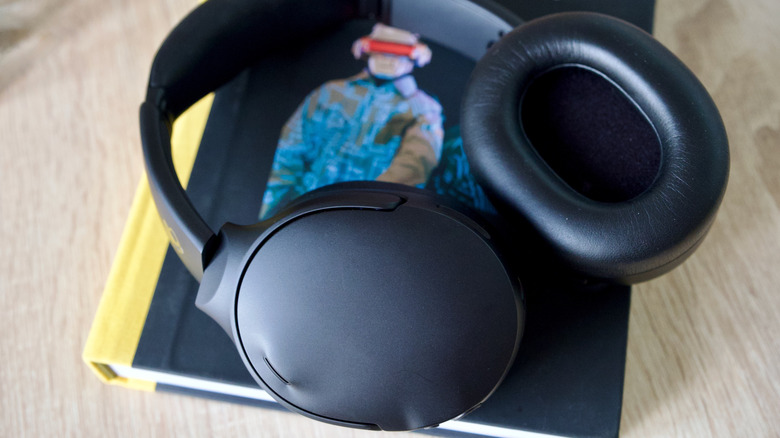
The Crusher 1080 is the most complete and mature pair of Skullcandy headphones I’ve used. Rather than relying solely on its bass credentials, it finally delivers the fundamentals expected from a premium wireless headphone: enjoyable sound, capable ANC, good battery life and a feature set that feels relevant in 2026.
It’s not perfect. The design still lacks some of the polish of its biggest rivals, the controls could be better laid out and the weight becomes noticeable during longer listening sessions. But if you’ve ever been curious about the Crusher concept and dismissed previous models as novelty headphones, this is the one that changes all of that.
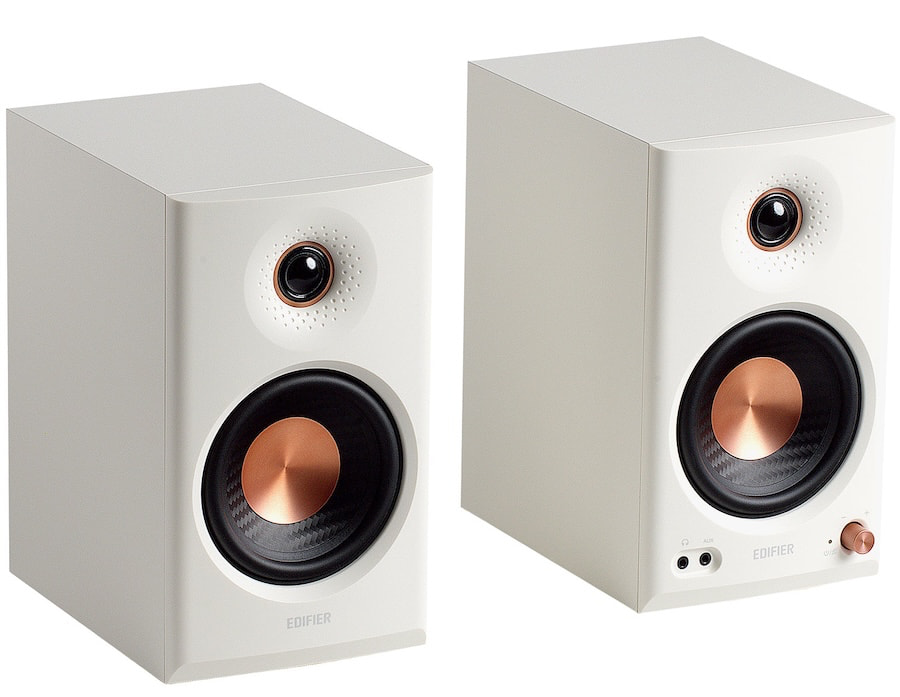
Edifier has expanded its MR Studio Monitor Series for 2026 with the new MR4.5, a near-field active loudspeaker designed for content creators, musicians, producers, and desktop listeners who want greater flexibility without moving into the larger and more expensive MR5.
Positioned between the MR4 and flagship MR5, the Edifier MR4.5 combines studio-focused sound reproduction with wireless connectivity, customizable tuning, and a compact design suitable for home studios, editing suites, gaming systems, and desktop audio setups.
The new model joins the MR3, MR4, and MR5 to complete Edifier’s current studio monitor lineup, offering buyers another option in a category where accuracy increasingly has to share desk space with convenience.
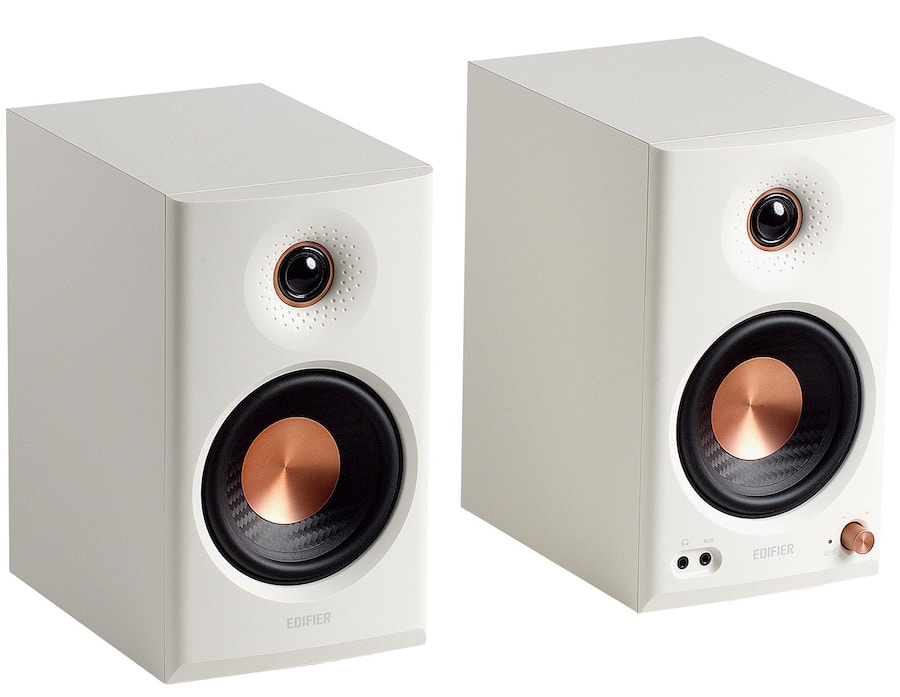
Two Speakers: The Edifier MR4.5 includes two speakers. The active speaker serves as the system hub, handling connectivity, amplification, and signal distribution for both channels. No external amplifier, stereo receiver, or home theater receiver is required. The passive speaker connects to the active speaker using the supplied cable, which carries both power and audio signals.
Adaptable Setup: The MR4.5 includes acoustic tuning and desktop compensation controls that allow users to adjust its performance for different rooms, speaker positions, and listening distances. These controls can be useful when the speakers are placed on a desk, close to a wall, or in a small home studio where placement options may be limited.
Wired and Wireless Connectivity: The MR4.5 supports both wired connections and wireless streaming. Bluetooth 6.0 includes LDAC support for higher-resolution wireless audio, while multipoint connectivity allows the speakers to remain connected to more than one compatible device. This makes it easier to switch between a computer, smartphone, tablet, or other source without repeatedly disconnecting and pairing devices.
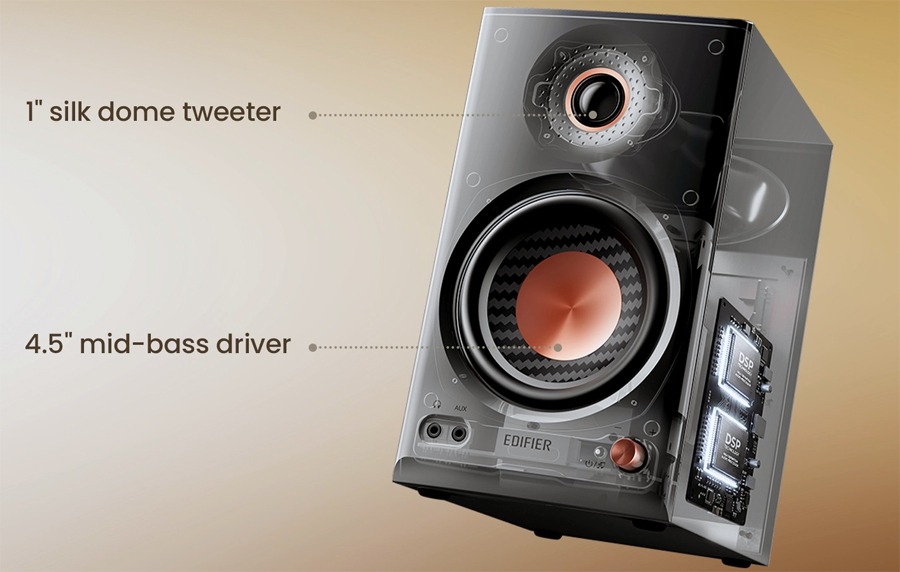
Bi-Amplified Speaker Design: The MR4.5 uses a bi-amplified design with an active crossover that divides the audio signal between the mid-bass driver and tweeter. Edifier designed the system to provide a balanced transition between the drivers and accurate sound reproduction for music production, video editing, gaming, and everyday desktop listening.
Extended Frequency Response: The MR4.5 has a specified frequency response of 50 Hz to 40 kHz. Edifier has tuned the system for a neutral, transparent presentation intended to reproduce recordings without excessive tonal coloration.
Dimpled Tweeter Waveguide: The MR4.5 uses a dimpled tweeter waveguide designed to improve high-frequency extension and clarity while creating a wider listening area. This should provide more consistent performance when the listener moves away from the central listening position.
80 Watts of Total Output: The MR4.5 delivers 80 watts RMS of total system output and a maximum sound pressure level of 98 dB at one meter. Although primarily intended for near-field listening, it should also provide sufficient output for some mid-field setups and medium-sized rooms.
Hi-Res Audio Support: The MR4.5 uses an analog front end and Class D amplifiers and supports digital audio signals up to 24-bit/96 kHz. Wireless playback is available through Bluetooth with LDAC support. Under compatible conditions, LDAC can transmit audio at up to 990 kbps and support signals up to 24-bit/96 kHz.
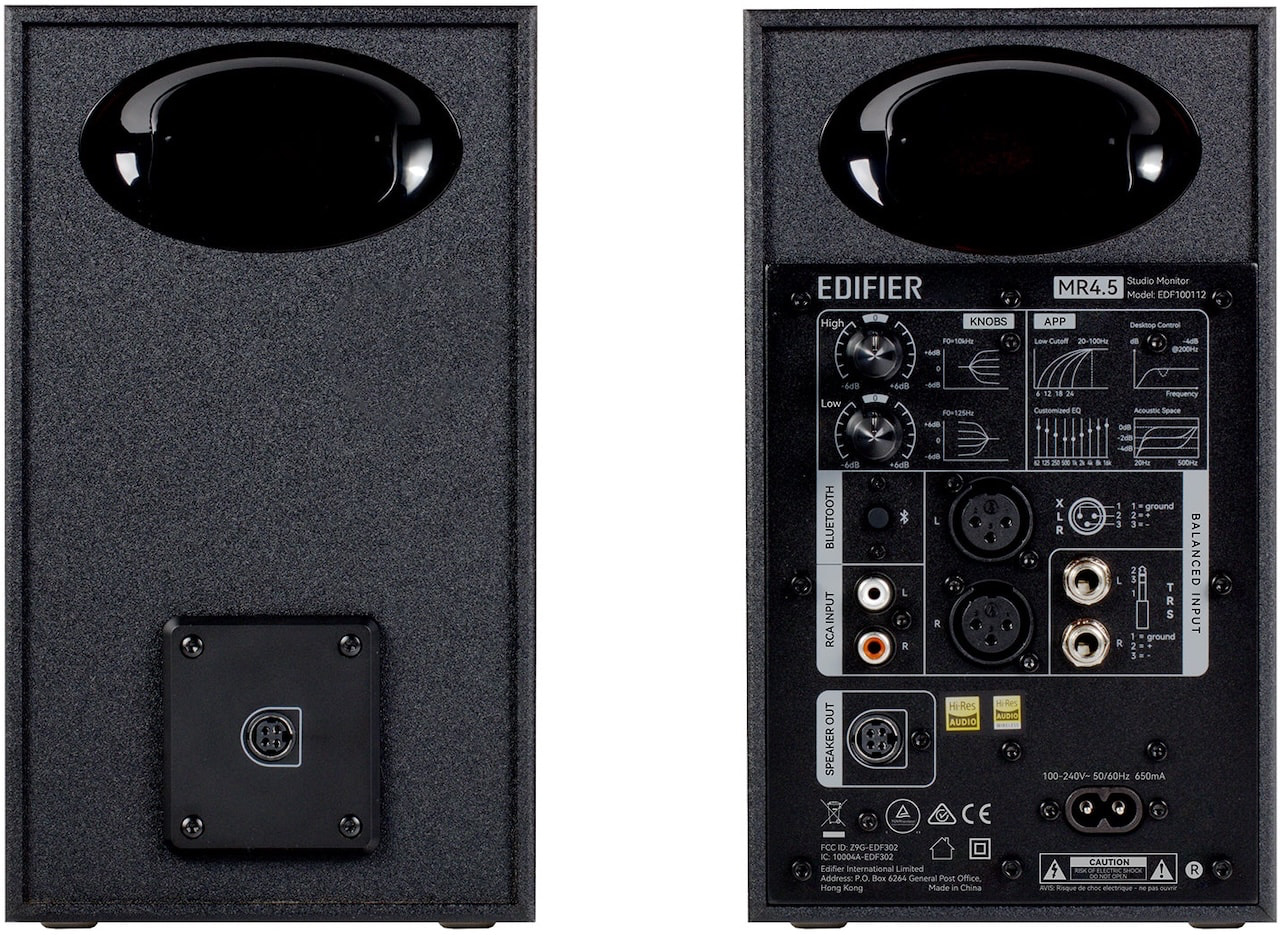
Wired Connection Options: Balanced XLR and TRS inputs allow the MR4.5 to connect to professional audio interfaces, mixers, and other studio equipment. RCA and 3.5 mm auxiliary inputs accommodate common consumer audio sources, while a headphone output supports private listening.
Bluetooth Multipoint: Bluetooth 6.0 provides a stable wireless connection, while Bluetooth Multipoint allows two devices to remain connected simultaneously. Users can switch between sources without disconnecting and re-pairing each time.
Room Acoustic Compensation: Rear knobs and the EDIFIER ConneX app provide multiple settings for room acoustic compensation, allowing you to adapt to different room modes and achieve the optimal listening experience.
| Edifier Model | MR5 | MR4.5 | MR4 | MR3 |
| Product Type | Powered Studio Monitor | Powered Studio Monitor | Powered Studio Monitor | Powered Studio Monitor |
| Price | $299.99 | $249.99 | $169.99 | $149.99 |
| Amplifier Configuration | Tri-Amp | Bi-Amp | Single Amp | Single Amp |
| Total Output Power (RMS): | 10W + 10W (Treble)
15W + 15W (Mid) 30W + 30W (Bass) |
30W + 30W (Mid-bass)
10W + 10W (Tweeters) |
21W+21W | 18W + 18W |
| Drivers | 1″ silk dome tweeters 3.75″ mid drivers 5″ woofers |
1″ silk dome tweeters 4.5″ mid-bass drivers |
1” tweeters 4” woofers |
1″ silk dome tweeters 3.5″ mid-low drivers |
| Frequency Response | 46Hz – 40kHz | 50Hz – 40kHz | 60Hz-20KHz | 52Hz-40kHz |
| Signal-to-Noise Ratio (SNR) | ≥ 85dB (A) | ≥ 89dB (A) in monitor mode | ≥ 85dBA | > 85 dB (A) |
| Audio Inputs | Balanced XLR
Balanced ¼-inch TRS Unbalanced RCA ⅛-inch stereo (3.5mm AUX) Bluetooth |
Balanced XLR
Balanced ¼-inch TRS Unbalanced RCA ⅛-inch stereo (3.5mm AUX) Bluetooth |
TRS balanced input
RCA unbalanced input AUX unbalanced input |
Balanced 1/4-inch TRS
Unbalanced RCA 3.5mm AUX Bluetooth |
| Input Sensitivity | XLR: 1228 ± 50mV
TRS: 1228 ± 50mV RCA: 700 ± 50mV AUX: 600 ± 50mV Bluetooth: 600 ± 50mFFS |
XLR: 1228 ± 100mV
TRS: 1228 ± 100mV RCA: 500 ± 50mV AUX: 400 ± 50mV Bluetooth: 500 ± 50 mVFS |
TRS balanced input: +4dBu
AUX/RCA unbalanced input: -10dBV |
TRS: 1228 ± 100mV (+4dBu)
RCA: 775 ± 50mV AUX: 775 ± 50mV Bluetooth: 800 ± 50mFFS |
| Bluetooth Version | V6.0 | V6.0 | N/A | V5.4 |
| Bluetooth Codecs | LDAC, SBC | LDAC, SBC | N/A | SBC |
| Crossover | Bass/Mid 155 Hz
Mid/Treble 2600 Hz |
2800 Hz | 2800 Hz | Not Indicated |
| Sound Pressure Level (Max.) | 101dB (@1 meter) | 98dB (@1 meter) | 86dB @1 meter | 92.5dB @1 meter |
| Headphone Output | 1/8-inch stereo | 1/8-inch stereo | 1/8-inch stereo | 1/8-inch stereo |
| Dimensions (WHD) | 159 x 264 x 280mm (Active speaker)
159 x 264 x 257mm (Passive speaker) |
140 × 244 × 229mm (Active speaker)
140 × 244 × 208mm (Passive speaker) |
140 x 228 x 197.5 mm (Active Speaker)
140 x 228 x 184 mm (Passive Speaker) |
125.5 x 220 x 185mm (Active speaker)
125.5 x 220 x 176mm (Passive speaker) |
| Net Weight | 10.38kg | 6.63kg | 4.5Kg | 3.85kg |
| In The Box | MR5 Set
Power Cable Speaker Connecting Cable 3.5mm to RCA Audio Cable 3.5mm-to-3.5mm Audio Cable Quick Start Guide Important Safety Instructions |
MR4.5 Set
Power Cable Speaker Connecting Cable 3.5mm to RCA Audio Cable Quick Start Guide Important Safety Instructions |
MR4 Set
Power Cable Speaker Connecting Cable 3.5mm to RCA Audio Cable 3.5mm-to-3.5mm Audio Cable Quick Start Guide Important Safety Instructions |
MR4 Set
Power cable Speaker 3.5mm to RCA audio cable 3.5mm-to-3.5mm audio cable Quick start guide Important safety instructions |

Although Edifier has enjoyed success with its MR Studio Monitor Series, a substantial gap remained between the MR4 and MR5 in both price and features. The MR4.5 fills that space by adding Bluetooth, LDAC, balanced XLR connectivity, room compensation, app-based adjustments, and an active bi-amplified crossover—features not offered by the more basic MR4.
The MR4.5 also provides a logical step down from the MR5, which uses a larger three-way driver configuration, a tri-amplified active crossover, and 110 watts of total output. Those additional capabilities may make the MR5 better suited to larger rooms and more demanding studio applications, but they may be unnecessary for desktop users and smaller production spaces.
The MR4.5 does not include HDMI ARC or eARC, USB audio, optical connectivity, or a phono input. Buyers who require HDMI eARC, USB-C, and optical inputs should consider Edifier’s M90 active speakers. The Onkyo Creator Series GX-30ARC goes further by combining HDMI ARC, USB-C, optical, and a line/phono input for direct connection to a turntable with a moving-magnet cartridge.

For years, musicians have said AI song generators fed on their work without asking. A hacker just opened the black box and showed them exactly how.
Leaked source code from Suno, one of the biggest AI music tools, tells the story. It trained its model by scraping millions of songs and lyrics from across the internet. 404 Media got the data from a hacker who breached the company.
The haul is enormous. One file, labelled “youtube_music,” had logged more than 2 million clips. Others list tens of thousands of hours pulled from Deezer, Genius, and the stock library Pond5. In all, it adds up to decades of recorded music.
The code is specific about what it wanted. To capture clean voices, it hunted for a cappella versions of songs on YouTube. To slip past YouTube’s defences, Suno routed its scraping through a proxy firm called Bright Data. It also trawled 420,000 podcasts, chasing roughly a million hours of speech.
The 💜 of EU tech
The latest rumblings from the EU tech scene, a story from our wise ol’ founder Boris, and some questionable AI art. It’s free, every week, in your inbox. Sign up now!
None of this is entirely new. In court, Suno has already admitted training on “essentially all music files of reasonable quality” on the open web. But the leak shows the machinery behind that line.
The record labels have long alleged as much. Suing Suno, the RIAA said the company copied “decades worth of the world’s most popular sound recordings,” and did it by “stream ripping” from YouTube, dodging the platform’s copy protections.
Suno’s defence, like most AI firms, is fair use. It says it trains on “publicly available music files” and builds its models for “original creation.” It even leaves artist names out of its training data, to discourage copycats.
On the breach, the company played it down. It called the November 2025 incident “limited” and “quickly contained,” said the exposed code was outdated, and insisted no sensitive data leaked. It does not hold customers’ full card numbers, it added, and it decided it did not need to tell users at all.
The hacker, who goes by ellie.191, tells a different story. They said they got in through the Shai-Hulud worm, grabbed an employee’s credentials, and pulled customer emails, phone numbers, and Stripe records. Suno never warned those users, some of them told 404 Media. The motive? “I like to hack anything and everything.”
The timing matters. Some labels have already made peace, striking licensing deals with AI firms rather than fighting on. Sony is still in court, with a pivotal fair-use ruling due this summer.
Meanwhile artists keep saying the deals do little for them. Suno’s chief executive, Mikey Shulman, once said most people “don’t enjoy the majority of the time they spend making music.” The people whose music trained his model might disagree.


A team of ten domino builders spent many days organizing over 30,000 tiles into a gigantic three-dimensional pyramid. Then, on one fateful day and time, all of those tiles came tumbling down in an incredible display. The FALLDOWN Domino Team, led by Steven Price of Sprice Machines, completed the feat on June 20th, 2026, in a gym in Garden City, Michigan. Guinness World Records has now taken a look at the achievement and made it official: the 3D pyramid is the new record holder after 29,193 dominoes came crashing down in one spectacular chain reaction.
The pyramid was the centerpiece of a much larger installation that included no fewer than 123,456 dominoes in total. So how did the team bring this mammoth of an installation to life? They created a variety of incredibly huge ordinary goods, like giant paperclips, enormous friendship bracelets, massive bonsai trees, school supplies, and even a rubber ducky that appears out of nowhere. This all led to a series of chain reactions that snaked through the entire device and fed into the pyramid, giving the record attempt one more push. Because it was so clean and white, a burst of multi-colored dominoes pouring up the side of a building was rather beautiful, while yet meeting all of the criteria for a successful 3D pyramid.
Sale

Building one of these things (a 3D pyramid, as the foundation must be just right or you’ll end up with a pile of dominoes on the floor) needs near-perfectionism. If you get it wrong, you’ll lose everything before you’ve even dropped the last domino. This one’s base was a 35×35 grid of dominoes stacked in layers to form a pointed apex. To get here, they approximately doubled the number of dominoes Andreas Zauner managed in 2020 in a similar challenge. This required a lot more tiles and a lot of rigorous engineering to ensure that everything stayed up during the construction.

Steven Price has set multiple records with his FALLDOWN crew, including the longest domino wall and the largest 2D pyramid, to name a few. So this time, they decided to try with 3D pyramids. Oh, and they were going to use a special mechanism to bring the whole thing down, but Guinness eventually convinced them to just let the dominoes do their thing. That’s right, in order for it to be officially recorded, the entire process must begin with a traditional domino-to-domino touch.
[Source]

What a difference eight days makes.
On July 7, Dynaudio announced that it would cease commercial operations in North America and permanently close its U.S. subsidiary in the fall of 2026. The Danish loudspeaker manufacturer said it was redirecting its market development efforts toward Europe and Asia, despite acknowledging that North American sales had grown in recent years.
The announcement sent shockwaves through the high-end audio industry. Dynaudio had just shown major new products at AXPONA 2026 and HIGH END Vienna, including the $7,000 Legend bookshelf loudspeaker and Symphony Opus One immersive audio system. eCoustics had to cancel multiple forthcoming Dynaudio reviews, including our planned evaluation of the Legend.
Now Dynaudio’s parent company, Goer Dynamics, has announced a strategic partnership with IMAX and IMAX China to create what the companies describe as the world’s first IMAX branded in-vehicle entertainment system.

The system is expected to enter commercial production by the end of 2026 and will initially be marketed to premium automakers in China, although none have been named at this time.
North America may no longer justify the cost of maintaining a traditional high-end loudspeaker business. China’s enormous electric-vehicle market, apparently, is another matter.
The proposed system combines an IMAX certified 4K HDR flip-down display with an IMAX developed multidimensional acoustic architecture.
The large display will use custom image processing and ambient-light adaptation intended to preserve picture quality as conditions inside and outside the vehicle change. That matters in a car, where sunlight can turn an otherwise respectable display into an expensive black mirror before you have reached the end of the driveway.
Goer Dynamics and IMAX also promise high dynamic range audio, substantial low-frequency output and controlled bass distortion. Modular configurations will allow automakers to adapt the system to different vehicle platforms, cabin layouts, speaker counts and trim levels.
The companies are positioning the system primarily for autonomous vehicles, where the cabin can become what the automotive industry insists on calling a “third living space.” That phrase sounds considerably more appealing than “the place where you spend three hours moving six miles on the Garden State Parkway.” As someone who has spent enough time trapped on New Jersey highways to watch the extended edition of Lawrence of Arabia, I understand the opportunity.
The partnership is between IMAX and Goer Dynamics, not directly between IMAX and Dynaudio.
Goer Dynamics was founded in 2020 under China’s Goer Group and owns and operates Dynaudio, XEO and Libratone, and also holds a minority stake in fellow Danish high-end manufacturer Gryphon Audio Designs. Its businesses cover home audio, professional studio monitoring, automotive systems, consumer electronics and audio-visual technology. The company claims to have supplied in-vehicle entertainment systems for nearly three million new-energy vehicles.
Dynaudio became part of the wider Goertek organization when the Chinese electronics manufacturer acquired a majority interest in the Danish company in 2014. Dynaudio said at the time that the acquisition would give it access to additional engineering expertise in electronics, wireless technology and manufacturing.
Automotive audio is not a side project that appeared after someone discovered a large dashboard and an empty licensing agreement. Dynaudio has worked with Volvo, Volkswagen and Bugatti, and more recently developed premium systems for Chinese automaker BYD. The BYD Seal, for example, offers a 12-speaker Dynaudio system rated at 775 watts, while the Yangwang U8 luxury electric SUV uses a 22-speaker Dynaudio Evidence system.
That history gives Goer Dynamics considerable automotive acoustic experience, even though the announcement does not confirm whether Dynaudio engineers, drivers, DSP technology or branding will appear in the finished IMAX system.
China is the logical starting point.
More than 13 million electric cars were sold there in 2025, representing approximately six out of every ten EVs sold worldwide. The International Energy Agency expects electric vehicles to approach 60% of Chinese new-car sales during 2026.
Chinese manufacturers are also competing aggressively over cabin technology. Large displays, premium audio, karaoke, gaming, streaming video, reclining seats and smart-cockpit features have become important differentiators, especially in higher-priced electric vehicles.
Neither company has identified a launch partner, although Goer Dynamics’ existing relationships offer some obvious possibilities. Dynaudio currently supplies systems for BYD vehicles including the Seal and the premium Yangwang U8, while Goer Dynamics has also announced cooperation with Hongqi and Voyah. Those brands would be logical candidates for the first IMAX-equipped vehicles, but there is no confirmation that any has signed on.
For Dynaudio’s parent company, the potential scale is vastly different from selling $7,000 bookshelf loudspeakers through a shrinking network of specialist North American dealers.
That does not make Dynaudio’s withdrawal from North America any less disappointing. It does help explain where the company’s owners believe the larger opportunities now exist.
The claim that this is the first IMAX branded in-vehicle entertainment system requires some qualification.
IMAX Enhanced content has already been offered in select Mercedes-Benz vehicles through Sony Pictures Entertainment’s RIDEVU service. The platform delivers selected films with IMAX’s expanded aspect ratio and remastering process, accompanied by DTS audio. It can distribute content across as many as six built-in or connected screens, although the driver can watch only while the vehicle is parked.

We experienced the Mercedes-Benz demonstration at CES 2025 and gave the IMAX Enhanced DTS system a Best in Show award. The sound was far more convincing than anyone had a right to expect inside an E-Class sitting in a convention center.
The new Goer Dynamics project appears to go further by offering automakers a complete IMAX branded hardware and acoustic platform rather than adding IMAX Enhanced content to an existing infotainment system.
That is a meaningful distinction, but IMAX is not entering the automotive market from a standing start.
The announcement contains a substantial amount of language about immersion, dynamic range and cinematic detail, but very few specifications.
IMAX and Goer Dynamics have not disclosed:
We also do not know what IMAX certification means in this specific environment. A cinema auditorium is built around controlled light, fixed seating positions and carefully placed loudspeakers. A vehicle cabin contains glass, reflective surfaces, road noise, moving passengers and seats that may recline, rotate or slide.
Producing consistent immersive sound inside that environment is not impossible, but it requires far more than placing a logo on a screen and adding enough bass to shake loose the toll receipts.
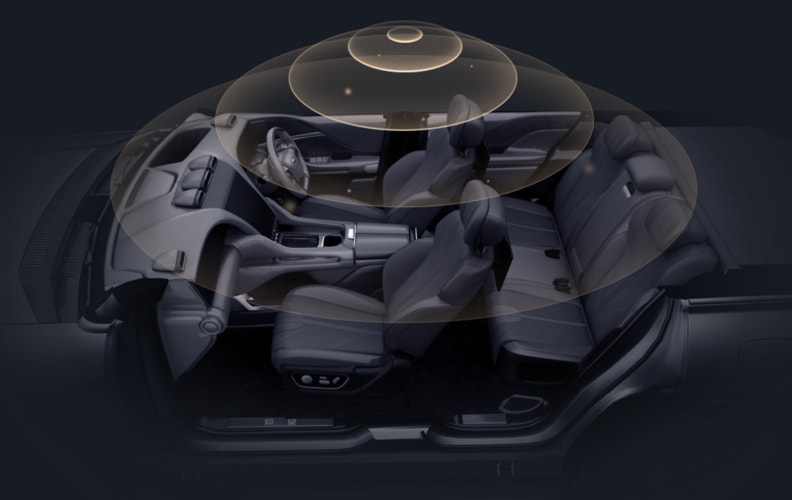
The IMAX and Goer Dynamics partnership is more significant than another oversized rear-seat display. It combines IMAX’s entertainment brand and image technology with a company that has already supplied systems for nearly three million new-energy vehicles and owns one of the most respected names in loudspeaker engineering.
It also arrives at an uncomfortable moment.
Dynaudio is preparing to leave North America, close the subsidiary it built to support dealers and customers, and focus on Europe and Asia. Multiple eCoustics reviews disappeared from our schedule almost overnight. One week later, its parent company unveiled a potentially large automotive partnership aimed squarely at China.
The message is difficult to miss. Traditional high-end audio remains culturally important, but automotive entertainment may offer the scale, recurring technology partnerships and overseas growth that selling passive loudspeakers through North American dealers no longer provides.
Whether any recognizable Dynaudio technology reaches the finished IMAX system remains unknown. So do the screen size, speaker arrangement, audio format, content services, automakers and price.
Watching Oppenheimer on the New Jersey Turnpike may soon be technically possible. Missing your exit near Secaucus because the Trinity test sequence was getting interesting will remain entirely your fault.
[Source: businesswire.com]

Well, it was fun while it lasted. And even while it still (theoretically) lasts, it’s really nothing more than the Fifth Circuit saying rights can violated, but only for 90 days at a time.
Earlier this month, the Fifth Circuit managed to deliver a very un-Fifth Circuit decision, finding in favor of rights and against the Trump administration’s war on migrants. As almost every court has recognized for decades, people residing in the United States — even illegally — have constitutional rights. The Fifth Circuit has long been one of the exceptions to this rule.
The administration chose to ignore this because doing would slow its horrific roll towards an eventual evacuation of everyone who wasn’t white enough for this administration to recognize as Americans. To justify ignoring long-held constitutional rights, the administration first invoked the Alien Enemies Act (best known for our atrocities against Japanese migrants and residents during World War II). Then it pretended that anyone who had been in the country for weeks, years, or decades should be treated the same as anyone apprehended while illegally crossing the border.
The Fifth Circuit couldn’t bring itself to rule that migrants arrested long after they’ve crossed the border have access to their due process rights on day one of their apprehension. Instead, it decided (without really explaining why) these rights don’t actually kick in until someone has been in custody for more than 90 days.
That meant nothing would really change. People arrested by ICE and other DHS components all over the nation would be hastily relocated to the Fifth Circuit (Texas, Louisiana, Mississippi) ASAP to prevent them from challenging their detention for 90 days. Presumably, the administration hoped to have most of these detainees deported long before they were allowed to invoke their constitutional rights.
Apparently, 90 days of denying rights isn’t long enough. It looks as though enough judges in the Fifth Circuit think these rights should never be available to migrants. Less than a month after handing down its decision, the Fifth Circuit has declared it will be taking another pass at this.
A majority of the circuit judges in regular active service and not disqualified having voted in favor, on the Court’s own motion, to rehear this case en banc,
IT IS ORDERED that this cause shall be reheard by the court en banc with oral argument on a date hereafter to be fixed. The Clerk will specify a briefing schedule for the filing of supplemental briefs. Pursuant to 5th Circuit Rule 41.3, the panel opinion in this case dated July 02, 2026, is VACATED.
So, we’re now back to the Fifth Circuit status quo. The government can ignore constitutional rights on day one and continue ignoring them until they’ve ejected migrants into whatever war-torn human rights hellhole will have them.
Sure, there’s a very slim (I’d say “nonexistent”) chance the petitioners for rehearing think the Fifth Circuit screwed up by giving the administration a 90-day head start on ignoring constitutional rights. But come on. We’re talking about the Fifth Circuit here.
The most likely reason for this rehearing action is that a lot of Fifth Circuit judges think the Trump administration shouldn’t have to recognize the rights of migrants ever, which is why they want to take another stab at setting precedent that would cover some of the DHS’s largest detention facilities.
The best case scenario would appear to be the circuit upholding its previous ruling, with its (unconstitutional) 90-day 14th Amendment snooze button. The worst case scenario is the entire panel agrees with this hideous, racist administration and says anyone in the country without documentation should be treated like someone caught in the act of crossing the border illegally. I’m not holding my breath for a positive outcome. I need that breath for stuff that’s actually feasible and foreseeable.
Filed Under: 14th amendment, 5th circuit, dhs, due process, ice, mass deportation, trump administration
Xgimi doesn’t seem to tire of launching more projectors and we bring news of of another two to keep track of.
The Flip series is being expanded with the Elfin Flip Laser and Elfin Flip 4K joining the range, as Xgimi looks to widen the range of portable home entertainment experiences its offers, while also upgrading both “optical performance and audio experience”, with RGB Triple Laser tech and Hardon Kardon tuned sound.
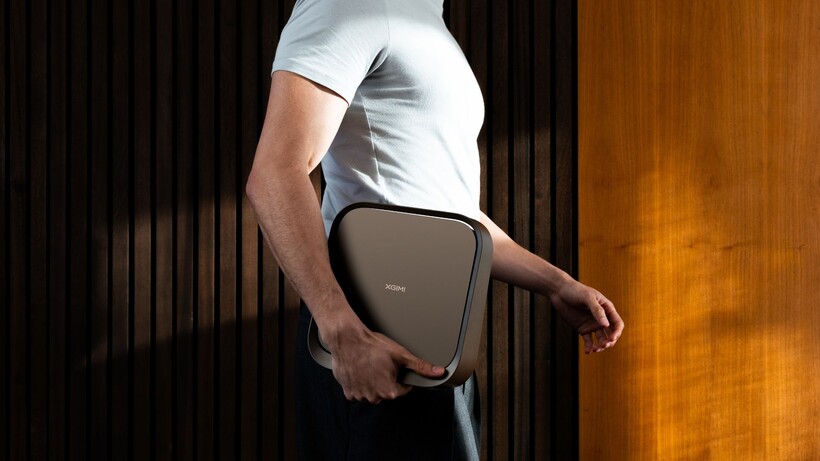
Xgimi states that the Elfin Flip 4K is meant for travel or intended to be a “casual streaming device”, like its MoGo series. It describes it as a “performance-class” home projector, weighing 1.55kg and measures about 25cm wide, ensuring it can be transported between the rooms of your home, producing a “full cinematic” experience wherever you choose to place it.
The Flip 4K is powered by a 4K RGB Triple Laser engine that can deliver 1600 ISO lumens of brightness, 110% of the BT.2020 colour gamut and a Delta E of less than 1 colour accuracy, the kind of specs you don’t often see for home projectors such as this.
For those who want a simple installation, Xgimi’s Intelligent Screen Adapt (ISA) can get the picture ready automatically, with smart features such as Uninterrupted Auto Keystone, Auto Focus, Intelligent Screen Alignment, Intelligent Obstacle Avoidance, Wall Colour Adaptation, and Intelligent Eye Protection ensuring you get the best image for the space the projector is in.

The Flip 4K is also made with gamers in mind, as Xgimi says it can deliver input lag at less than 1ms at 1080p/120Hz, and it packs in VRR and ALLM support. The Elfin Flip Laser doesn’t feature the same level of gaming support, and the resolution takes a hit, dropping down to 1080p.
Both projectors feature a 7W Harman Kardon speaker that Xgimi says can deliver a room-filling sound experience that “eliminates the need for external audio equipment” (that’s a big claim). There’s also Google TV for entertainment, offering nearly all the apps (for the UK, we’ll assume that iPlayer and Channel 4 are still missing).
Availability for both projectors starts July 15th on the Xgimi website, with availability on Amazon starting July 22nd. Prices for the Elfin Flip 4K is $999 / £869, with the Elfin Flip Laser at $799 / £689.

Automation and [SvHCI’s VMware] VM Import Utility were absolutely vital to scaling this migration. Operating in a 24/7/365 retail environment meant that minimizing business disruption was critical. It required meticulous planning and heavy automation to ensure our store operations ran as smoothly as possible throughout the entire transition.
SvHCI product maturity in relation to APIs meant it was a small amount of extra work, and the main challenge of the migration was [finding] the time available to do it, for the scale of the environment. They were having to simultaneously plan, develop, and implement.
For many companies, the idea of moving off VMware is daunting due to the money, time, and staff that it may require. Some also report challenges in finding alternatives with the same capabilities and compatibility as VMware. Total or even partial migrations can seem particularly implausible for organizations that depend on VMware technology.
As a result, there are many VMware customers interested in quitting or reducing their use of VMware products, but have yet to make the move or are still in the planning phases. In September, Gartner estimated that 35 percent of VMware workloads would migrate elsewhere by 2028.
StorMagic has a reputation for serving small-to-medium-sized businesses (SMBs), but today’s announcement highlights its interest in winning over the enterprise-sized firms that Broadcom’s VMware strategy targets, especially enterprises with numerous SMB-sized locations.
“In reality, we have always focused heavily on two distinct markets: SMB/mid-market datacenters and the ‘edge’ environments of large, highly distributed enterprises, like Sheetz. A distributed enterprise with hundreds or thousands of retail, grocery, or branch locations actually faces similar IT challenges at each site as a local SMB,” Scott Mann, StorMagic’s SVP of global sales, told Ars via email, pointing to these organizations having limited physical space, power, on-site technical staff, and budget.
The executive sees further opportunity among VMware’s current enterprise clients.
“Historically, large enterprises tolerated the ‘VMware tax’ at their edge locations because it was the status quo. However, with recent massive industry shifts, specifically Broadcom’s acquisition of VMware, enterprises are facing massive budget increases just to keep their remote sites running,” Mann said.
Other enterprises recently revealed to be migrating off of VMware include Allstate, T-Mobile, and UK grocery chain Tesco.
For its part, Broadcom has argued that changes to VMware’s licensing model are in line with the rest of the industry, and its acquisition of VMware is considered financially successful.


Beta Pictoris d is estimated to be around two times the mass of Jupiter.
NASA scientists have discovered a new planet orbiting a neighbouring star located 63 light years away from us. The new exoplanet, named ‘Beta Pictoris d’, is the third to be found contained within the Beta Pictoris planetary system.
The 23m-year-old star Beta Pictoris offers scientists a rare glimpse into how newborn planetary systems form, and how its young planets interact with the dust and residual material left behind from their formation.
The sun, in comparison, is around 4.5bn years old.
The new discovery makes Beta Pictoris the second planetary system ever known to contain at least three planets that have been imaged, NASA said today (15 July).
According to the team behind the discovery, Beta Pictoris d is estimated to be around two times the mass of Jupiter, while orbiting its star at around 30 astronomical units – which is comparable to the region Neptune occupies in our solar system. It’s the smallest of the three exoplanets orbiting this star, and takes the widest orbit of the known three.
Beta Pictoris d remained hidden under one of the brightest debris disks known to us, concealing it from traditional discovery techniques. It was discovered rather unexpectedly using the James Webb Space Telescope’s (JWST) Near-Infrared Spectrograph.
“There was an unexpected bright source of light within the Integral Field Unit imaging, but we’ve learned not to trust bright blobs in images,” said Jean-Baptiste Ruffio, a research scientist at University of California, San Diego and principal investigator of the first Webb observations where the discovery was made.
“They can be instrumental artifacts or other structures in the debris disk. By obtaining a spectrum at the same time as the image, we were able to quickly confirm our suspicions.”
The new spectroscopy technique also revealed the object’s motion, allowing scientists confirm that the exoplanet is indeed orbiting Beta Pictoris, rather than a behaving like a background star or a brown dwarf with carbon monoxide in its atmosphere.
This is one of the first times researchers have discovered new planets mainly using moderate-resolution spectroscopy.
Scientists say this new discovery could help explain some of the puzzling structures of the Beta Pictoris debris disk.
“This discovery adds another piece to an already fascinating planetary system,” said Aidan Gibbs, the lead author of the new study published in the Astrophysical Journal Letters.
“Beta Pictoris has long served as a laboratory for understanding how planetary systems form and evolve, and now we have another planet helping us tell that story.”
Last year, astronomers witnessed the very early stages of a new solar system being created around a baby star roughly 1,300 light years away, while earlier this year, 25-year-old University of Galway scientist Chloe Lawler discovered a 5m-year-old exoplanet some 437 light years away.
Don’t miss out on the knowledge you need to succeed. Sign up for the Daily Brief, Silicon Republic’s digest of need-to-know sci-tech news.

The FCC plans to vote on repealing local TV ownership limits, including the 39% national audience cap that currently restricts how much of the U.S. market a single broadcast group can reach. Engadget reports: On August 6, commissioners will hold a ballot to repeal Section 303 of the Communications Act, and with it the 39 percent rule. In essence, the rule limits the reach of a local TV network to no more than 39 percent of the U.S.’ total audience market. In its place, the FCC would move to a system whereby it would personally approve or reject TV ownership deals on a case-by-case basis.
It’s not clear if the FCC even has the authority to reject Section 303 without the explicit consent of the legislature. As Lawrence J. Spiwak wrote in the Yale Journal on Regulation back in January, Section 10 of the Communications Act expressly forbids the FCC from bending the rules around Section 303. “Americans no longer trust the legacy national media to report the news fairly or accurately,” wrote FCC Chairman Brendan Carr in an op-ed published on Breitbart. “In fact, only eight percent of Americans have a great deal of trust in mass media. That figure is even lower among Republicans — sitting at a mere three percent.”
“… Many local broadcast TV stations are getting hollowed out as a result and turning into little more than mouthpieces for programming produced in New York and Hollywood,” he alleged. “That is not what Congress or the FCC intended.”





Loro Piana Fall 2026 Enters Houston’s Art Scene


Weekend Open Thread: Nutriplenish Leave-In Conditioner

2026 Genesis Scottish Open Thursday TV coverage: Round 1


Super Eagles star Moses Simon opens up on Liverpool transfer regret


Character.AI enters the microdrama arena with its own productions, but there’s a twist


Young campaigners urge incoming PM to act on outdoor junk food ads


XRP BOMBSHELL… XRP OMBOARDED FOR TRANSACTIONS!!!


Get Your ESP32 Sunny Side Up With This Solar Dev Board


Dark Secrets Emerge When Jailbreaking LLMs

New Cornerback Enters Vikings Trade Rumor Mill

Disney’s Most Ambitious Failed Star Wars Attraction Is Coming to SDCC


Level Infinite Launches Gangstar Mirage City in India with Pre-Registrations

Major update after Huntingdon train attack as man enters plea


how to make coin bank box with cardboard #scienceproject #money #diy #shorts

Cloudflare Precursor Watches Your Mouse and Keyboard To Decide If You Are Human

Vicki Gunvalson Defends Discussing Heather Dubrow’s Money


Watch: Is Donald Trump facing a popular backlash on immigration?
Ripple, Coinbase, Circle Join Linux x402 Foundation to Help Shape AI Payments


Michigan officials not expected to discuss AD Warde Manuel at Thursday meeting

Firefighters issue update on Dovestone moorland blaze as fire enters fourth day

You must be logged in to post a comment Login