Connect with us
DAPA Banner
DAPA Coin
DAPA
COIN PAYMENT ASSET
PRIVACY · BLOCKDAG · HOMOMORPHIC ENCRYPTION · RUST
ElGamal Encrypted MINE DAPA
🚫 GENESIS SOLD OUT
DAPAPAY COMING

Tech

The Best Summer Horror Movies That Will Ruin Your Vacation

Published

on

Summer is supposed to be relaxing. Maybe.

You take a few days off, sit by the water, burn something on the grill, pretend the traffic on the Garden State Parkway is not slowly eroding your will to live, and convince yourself that the kids will remember this trip fondly instead of the backseat coup triggered by weak Wi-Fi, warm snacks, and the shocking discovery that wireless charging does not make anyone less annoying.

Horror movies know better.

In horror, summer is not a season. It is a warning label. The beach has teeth. The lake has a body count. The cabin has mold, blood, and some unshaven landlord with unresolved mommy issues. The road trip ends at a gas station where everyone looks like they have been waiting since 1974 for someone with out-of-state plates to make a poor decision.

Advertisement

And summer camp? Forget it. Once someone says “this place has been closed for years,” it is time to get back in the Subaru and find the nearest Dairy Queen or Wawa.

We already covered the glorious trash-fire charm of cult favorites in our guide to the best B-horror movies to watch on hot summer nights, but summer horror deserves its own list. These are not just cheap monsters and rubber masks, although we fully support both when used responsibly. These are films that weaponize the things people actually do in July and August: beach trips, campfires, cabins, lake houses, road trips, questionable motels, and family vacations that start with sunscreen and end with police tape.

Some are classics. Some are slashers. Some are creature features. A few are smarter than they need to be, which is always suspicious. The common thread is simple: they make staying home with the air conditioning, a proper sound system, and a cold beverage feel like the most rational decision you have made all year.

Jason says hi.

Advertisement

Beaches and Coastal Towns

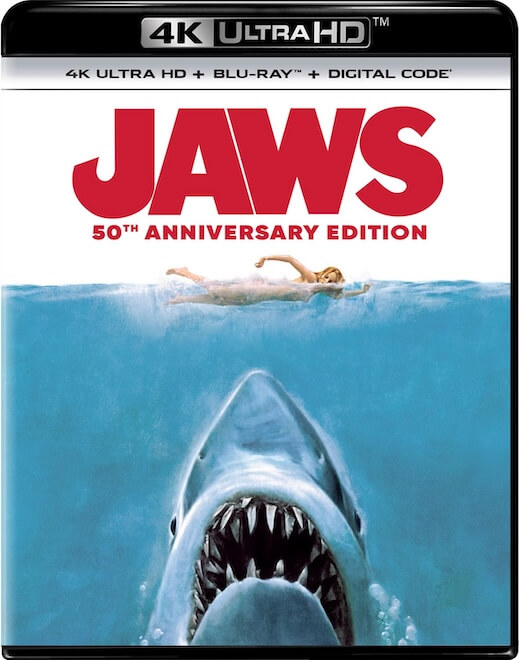
Jaws (1975)

jaws-movie-50th-4k

There is no more obvious place to start, and pretending otherwise would be exactly the kind of film-critic theater that keeps TikTok and Rotten Tomatoes drowning in bad takes.

Steven Spielberg’s Jaws did not just make people afraid of the ocean. It made local officials in beach towns look like the real villains, which feels more accurate every year. The shark is terrifying, but Mayor Vaughn in that ridiculous blazer insisting the beaches stay open because commerce must be protected? That is the kind of horror that comes with a municipal budget meeting and a bad microphone. He’s clearly spent some time in Long Branch.

What makes Jaws work after all these years is restraint. You do not need to see the shark every five minutes. John Williams’ score does most of the psychological damage, Roy Scheider looks like a man who deeply regrets moving to an island, Richard Dreyfuss brings the right amount of academic panic, and Robert Shaw delivers one of the great haunted-man performances in movie history.

Advertisement. Scroll to continue reading.

It is also the perfect summer horror film because it ruins something elemental. People go to the beach to relax. Jaws turns the first step into the water from summer ritual into a wager with teeth.

Advertisement

Where to buy: $29.98 at Amazon

The Lost Boys (1987)

the-lost-boys-movie-4k

Santa Carla may be fictional, but anyone who has spent time near a summer boardwalk knows the feeling. The fried food, arcade lights, bathing suits that clearly do not fit, the bad decisions after dark, and the strong possibility that someone with aggressively styled hair is either in a band or undead.

The Lost Boys remains one of the best vampire films of the 1980s because it understands that vampires are supposed to be seductive, ridiculous, dangerous, and better dressed than everyone else. Kiefer Sutherland’s David does not need to explain the appeal. He has a motorcycle, a trench coat, and the resting expression of someone who has not paid for dinner since the Reagan administration.

But the real reason this belongs on a summer horror list is the setting. The boardwalk is alive at night, but not necessarily in a comforting way. The film turns teenage freedom into a trap. New town, new friends, no curfew, and suddenly your brother is hanging from railroad tracks with a bunch of vampires who look like they just opened for INXS.

Corey Haim and Corey Feldman bring the comic relief, Dianne Wiest gives the film some emotional weight, and the whole thing still feels like a beach-town fever dream with fangs.

Advertisement

Where to buy: $22.52 at Amazon

I Know What You Did Last Summer (1997)

i-know-what-you-did-last-summer-4k

The late 1990s slasher revival produced a lot of glossy nonsense, but I Know What You Did Last Summer remains one of the more durable entries because the premise is simple and mean.

Four attractive young people do something terrible, make a pact, and then discover that guilt has a hook.

It is less clever than Scream, less nasty than the 1980s slashers that inspired it, and much more interested in moody coastal atmosphere than logic. That is not a complaint. Sometimes you want your summer horror to come with rain-slick docks, fishing boats, small-town secrets, and Jennifer Love Hewitt spinning around in the street screaming at the sky like she just found out her Verizon bill has doubled.

The film works because it understands that summer towns become different places after the tourists leave. What looked charming during the day suddenly feels empty, damp, and vaguely threatening. Add a killer in a fisherman’s slicker and the whole thing becomes Cape May after dark if everyone involved had worse judgment and better hair.

Advertisement

Where to buy: $30.99 at Amazon

Advertisement. Scroll to continue reading.

Us (2019)

us-movie-4k

Jordan Peele’s Us is not a traditional summer horror movie, but it absolutely belongs here. It starts with a family vacation, a beach boardwalk, and the false comfort of middle-class routine. Then the red jumpsuits arrive, and suddenly that second home does not feel quite so secure.

The film is messy in the best way. It is part home invasion thriller, part social allegory, part nightmare logic, and part proof that Lupita Nyong’o can scare the oxygen out of a room by changing her voice. The beach setting matters because Us begins in a place associated with childhood fun and family memory. Peele understands that nostalgia can curdle. The boardwalk lights, carnival games, and beach-house comfort all become part of the dread.

It also captures something very specific about vacations: the illusion that you can escape yourself. You can change the scenery, rent the house, pack the cooler, and pretend everything is fine. But if your problems show up in the driveway wearing red and holding scissors, the trip is probably over.

Advertisement

Where to buy: $12.99 at Amazon

Summer Camps

Friday the 13th (1980)

friday-13th-movie-4k

Let us clear something up for the casuals in the back: Jason Voorhees is not the killer in the original Friday the 13th. His mother, Pamela Voorhees, does the heavy lifting. Jason is still there spiritually, mythologically, and eventually very physically, but the first film belongs to Mama Voorhees. Respect the local history, and the very angry Mama Bear with an axe to bury in your forehead.

And yes, Friday the 13th belongs to New Jersey.

Camp Crystal Lake may be fictional, but the original film was shot in Warren County, including Camp No-Be-Bo-Sco in Hardwick, with Blairstown and Hope also part of the film’s geography. So the next time someone treats New Jersey like it is just diners, jughandles, and Springsteen lyrics, remind them that one of horror’s most famous franchises crawled out of the woods near the Pennsylvania border.

Also, be mindful where you get off the Parkway. Technically, by the time you are that far northwest, the Parkway is no longer your problem, but the point stands. Those smaller county roads near the Delaware Water Gap and PA border can get dark fast, and if a local warns you that the camp has a death curse, maybe do not respond with, “Cool, where do we park?”

Advertisement

The original film is rough, cheap, and frequently ridiculous, but it has the right summer-camp ingredients: horny counselors, bad weather, creaky cabins, a lake with unresolved trauma, and the deeply American belief that reopening a cursed business is fine if the insurance paperwork clears.

Jason says hi. Pamela says you should have been watching the children.

Where to buy: $12.53 at Amazon

Sleepaway Camp (1983)

sleepaway-camp-blu-ray

Sleepaway Camp is one of those films that starts as a slightly off-brand summer camp slasher and ends by leaving a dent in your skull.

Advertisement. Scroll to continue reading.
Advertisement

The acting is uneven. The dialogue often sounds like it was translated from English into English by someone having a bad afternoon. The camp itself feels like it should have been shut down by six different inspectors before lunch. And yet the film has an ugly, uncomfortable energy that makes it hard to dismiss.

Part of the appeal is how thoroughly it understands the cruelty of summer camp. Not the brochure version with canoeing and friendship bracelets. The real version where kids can be vicious, adults are useless when they are stoned, and the cafeteria looks like it was designed by a prison architect with a grudge against vegetables. Who hates carrots? Weird.

Felissa Rose’s Angela is quiet, damaged, and surrounded by people who range from annoying to actively vile. The film builds slowly, sometimes clumsily, but the ending remains one of the most infamous in horror history. It is shocking, problematic, unforgettable, and still discussed because subtlety packed its bags and left the camp on day one for some quiet time and drinks with the girls.

Where to buy: $8.99 at Amazon

Advertisement

The Burning (1981)

the-burning-4k

Before Jason became the unofficial patron saint of bad camp decisions, The Burning offered its own summer-camp maniac with garden shears and anger-management issues.

The film was clearly built in the slasher boom after Friday the 13th, but it has enough nasty personality to stand on its own. The setup is basic: a cruel prank leaves a camp caretaker horribly burned, and years later, he returns to punish teenagers because apparently therapy was not covered under the camp’s health plan and Freddie didn’t have enough room for an extra cot on Elm Street.

What elevates The Burning is Tom Savini’s effects work and the film’s grimy early-1980s texture. It feels sweaty. It feels buggy. It feels like every cabin smells like damp socks, cheap beer, and liability. The raft sequence remains the reason people still bring it up, and it has a mean streak that more polished slashers sometimes lack.

It also features early appearances by Jason Alexander, Fisher Stevens, and Holly Hunter, which gives the whole thing a strange “future respectable careers trapped in summer camp hell” quality.

Where to buy: $39.98 at Amazon

Advertisement

Cabins, Rentals, and Trips You Should Have Cancelled

The Evil Dead (1981)

the-evil-dead-4k

A cabin in the woods is never just a cabin in the woods.

Sam Raimi’s The Evil Dead is still one of the great low-budget horror miracles: a bunch of young people, a remote cabin, a cursed book, and a camera that moves like it has been possessed by a caffeinated demon with a Steadicam allergy.

It is nasty, inventive, and much more intense than people who only know the later, funnier Ash Williams persona might expect. Bruce Campbell gets punished like the universe has a personal vendetta against his jawline, and Raimi throws everything at the screen with the confidence of someone who has no money but an alarming amount of energy.

Advertisement. Scroll to continue reading.

As summer horror, it works because it destroys the cabin getaway fantasy completely. There is no cozy fireplace mood here. No rustic charm. No peaceful weekend with friends. Just trees, blood, ancient evil, and the growing realization that the rental agreement probably did not mention demonic dismemberment.

Advertisement

Where to buy: $36.99 at Amazon

Cabin Fever (2002)

cabin-fever-movie

Eli Roth’s Cabin Fever is disgusting, juvenile, uneven, and occasionally very funny. Which is another way of saying it knows exactly what it is.

A group of friends head to a remote cabin, encounter a flesh-eating virus, and proceed to make almost every wrong decision available to them. The film is less about one monster than the horror of contamination, paranoia, selfishness, and discovering that your friends might be terrible under pressure.

The summer setting helps because everything feels exposed. The woods are not romantic. The water is not refreshing. The locals are not charming. The shaving scene remains a full-body cringe event, and the film’s nastiness has aged better than some of its humor.

This is not prestige horror. It is infection horror with a mean grin and a rash you can hear and CVS can’t fix.

Advertisement

Where to buy: $61.99 at Amazon

Midsommar (2019)

midsommar-blu-ray

Ari Aster’s Midsommar is what happens when someone says, “Let’s go to Sweden for a summer festival,” and nobody in the group has the common sense to ask why the locals are smiling like that.

It begins like a very bad relationship drama, wanders into a Scandinavian wellness retreat designed by IKEA’s least stable cousin, and eventually becomes a floral nightmare with ritual screaming, emotional manipulation, and one of cinema’s least relaxing uses of a bear.

The genius of Midsommar is that it refuses the usual horror shadows. Most of it happens in broad daylight. The flowers are bright. The costumes are beautiful. The food looks carefully prepared by people who absolutely have a ceremonial murder schedule laminated somewhere next to the meatballs. It is gorgeous and deeply wrong.

Florence Pugh gives a devastating performance as Dani, a grieving young woman trapped in a bad relationship and then slowly absorbed into a community that offers comfort, ritual, and the kind of emotional support that ends with someone asking, “So…where did the bear go?”

Advertisement

It is not a beach movie, a camp movie, or a cabin movie. It is a vacation horror film for anyone who has ever traveled with the wrong people and realized too late that the itinerary was written by lunatics.

Advertisement. Scroll to continue reading.

Where to buy: $19.99 at Amazon

Road Trips from Hell

The Texas Chain Saw Massacre (1974)

texas-chainsaw-massacre-4k

Few films feel hotter, dirtier, and more punishing than The Texas Chain Saw Massacre.

Tobe Hooper’s masterpiece is not especially graphic by modern standards, but it feels filthy in a way that most gore films can only dream about. The heat is part of the horror. The van. The dust. The empty roads. The gas station. The house. The sound of that saw. Everything feels like it has been baking in the sun long enough to go rancid.

Advertisement

The setup is classic road-trip horror: a group of young people goes somewhere they should not, ignores the increasingly obvious signs that something is very wrong, and ends up in the orbit of a family that makes every motel off the interstate look like the Ritz.

Leatherface is terrifying, but the world around him is just as bad. The film feels like civilization has thinned out, and these poor idiots have driven straight through the tear in the map.

Where to buy: $30 at Amazon

The Hills Have Eyes (1977)

the-hills-have-eyes-4k

Wes Craven understood that the family road trip is already close to horror before you add desert mutants.

A quick warning: The Hills Have Eyes includes sexual violence and can be a very rough watch. This is not breezy summer-camp mayhem or a rubber-monster matinee. It is ugly, abrasive, and intentionally upsetting. It is the kind of film that can make you never want to leave the house on a road trip again, which is inconvenient if you already booked the rental car from Enterprise and forgot to get the extra insurance.

Advertisement

The film strands a suburban family in the desert after a crash, then introduces them to another family that has been living outside every polite rule of society. Craven was not just making a backwoods monster movie. He was poking at American violence, class, survival, and the thin line between civilized behavior and pure animal panic.

The desert setting is essential. There is nowhere to hide, no friendly town around the corner, and no comforting sense that help is coming. It is just heat, rock, hunger, and people who know the terrain better than you do.

Not exactly the AAA TripTik vacation brochure.

Where to buy: $44.98 at Amazon

Advertisement
Advertisement. Scroll to continue reading.

Tourist Trap (1979)

tourist-trap-blu-ray

Tourist Trap feels like it was made by someone who looked at roadside Americana and thought, “Yes, but what if the mannequins were judging us?”

This is one of the stranger late-1970s horror films, and that is not a small claim. A group of young travelers ends up at a remote roadside museum filled with mannequins, psychic weirdness, and Chuck Connors behaving in a manner that suggests the Chamber of Commerce will not be using him in promotional materials.

It is not as famous as the major slashers, but it has a deeply unsettling atmosphere. Mannequins are already creepy because they look human without the burden of actually being human. Tourist Trap leans into that and then adds telekinesis, isolation, and a roadside attraction that makes South of the Border look like the Four Seasons.

Summer road trips are supposed to include dumb stops. Giant balls of twine. Bad coffee. A gift shop with 43 kinds of fudge. This film argues that maybe you should just keep driving all the way to Lancaster for the Amish pretzels.

Advertisement

Where to buy: $39.95 at Amazon

Nature Would Like You to Leave

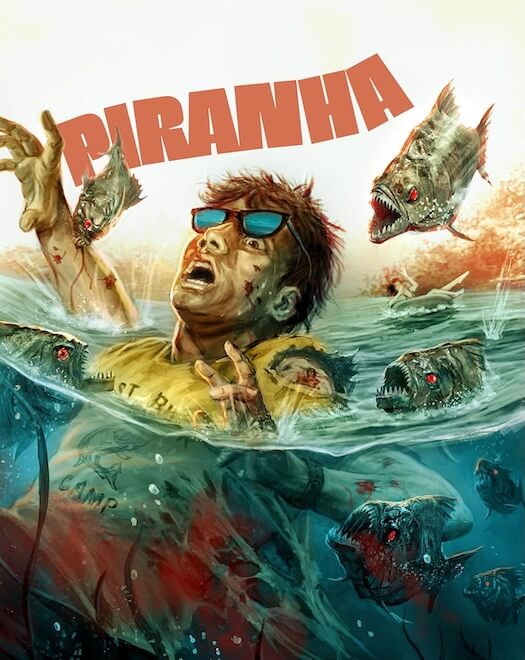
Piranha (1978)

piranha-steelbook

Joe Dante’s Piranha is Jaws with less money, more teeth, and a much stronger sense that everyone involved knew exactly what kind of movie they were making.

That is a compliment.

Produced by Roger Corman, Piranha is a proper B-movie creature feature: genetically altered fish escape into the waterways and head toward summer camps, resort guests, and anyone else foolish enough to get wet. It is funny, fast, and just nasty enough to work as more than a simple spoof.

The film has a satirical bite, but it never forgets to be entertaining. Dante brings energy, Corman keeps the budget tight, and the piranha make excellent villains because there is no reasoning with a school of tiny aquatic buzzsaws.

Advertisement

It is also perfect summer viewing because it attacks the most innocent warm-weather activity imaginable: jumping into the water. At least the shark in Jaws had the decency to be large and cinematic. These little monsters are more like nature’s unpaid parking tickets.

Where to buy: $32.96 at Amazon

Lake Placid (1999)

lake-placid-blu-ray

Not every summer horror movie needs to be grim. Sometimes you just need a giant crocodile, a Maine lake, Oliver Platt, Brendan Gleeson, Bill Pullman, Bridget Fonda, and Betty White stealing the entire movie with a level of profanity and menace that suggests she should have been cast in more creature features.

Advertisement. Scroll to continue reading.

Lake Placid is not scary in the way Jaws is scary. It is more of a creature-feature comedy with a large reptile problem. But it knows how to entertain, and that counts. The cast has actual chemistry, the script has some bite, and the crocodile effects are far better than they had to be.

Advertisement

As summer horror, it works because lakes are supposed to be safe. Lakes are where people go to fish, swim, kayak, and pretend they enjoy sleeping in houses with unreliable screens. A giant crocodile ruins that very quickly. Just ask the people of Central Florida.

Also, if Betty White tells you not to mess with the animal, listen to Betty White. That should have been federal law.

Where to buy: $11.20 at Amazon

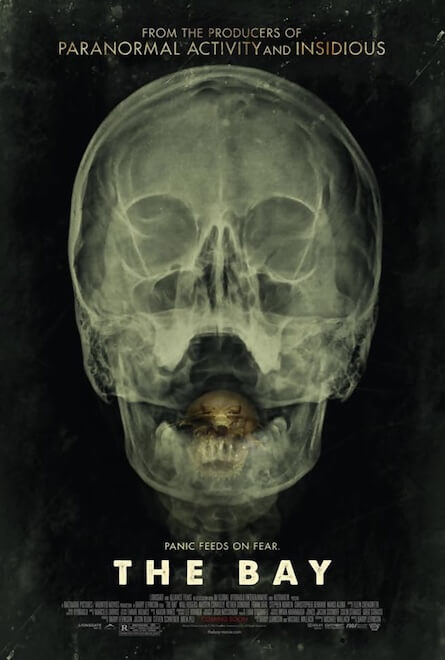
The Bay (2012)

the-bay-dvd

Barry Levinson’s The Bay is one of the more underrated found-footage horror films of the past fifteen years, and it has one of the best summer hooks: a Fourth of July celebration in a small Maryland town becomes the site of an ecological nightmare.

The film uses mockumentary and found-footage techniques to tell the story of a parasitic outbreak connected to contaminated water. That sounds like homework, but the execution is genuinely unsettling. The horror comes from infection, institutional failure, environmental neglect, and the dawning realization that the people in charge may be more interested in avoiding blame than saving lives.

Advertisement

So, yes, cheerful summer material.

What makes The Bay effective is how plausible it feels. Not the exact parasite scenario, necessarily, but the broader idea that a public-health disaster could be ignored, minimized, spun, and mishandled until bodies start piling up. The Fourth of July setting makes it worse. Sunshine, flags, crab feasts, fireworks, and then absolute biological disaster.

It is the rare summer horror film that might make you suspicious of both the water and the press conference.

Where to buy: $10.08 at Amazon

Advertisement

The Bottom Line

Summer horror works because it corrupts comfort.

The beach becomes dangerous. The lake becomes a crime scene. The cabin becomes a trap. The road trip becomes a missing-persons report. The summer camp becomes New Jersey’s least successful youth-development program.

Advertisement. Scroll to continue reading.

That is why these films keep working. They take places associated with freedom, heat, nostalgia, and bad food choices and turn them into something darker. Sometimes the monster is a shark. Sometimes it is a maniac in the woods. Sometimes it is your boyfriend’s terrible friend group in Sweden. Sometimes it is a town official who insists everything is fine while the water is full of death.

Advertisement

So by all means, go on vacation. Swim. Camp. Rent the house. Take the back roads. Just maybe avoid reopening abandoned camps near the PA border, do not read cursed books in cabins, and never ignore the local who says, “You’re doomed.”

They usually know.

Source link

Advertisement
Continue Reading
Click to comment

You must be logged in to post a comment Login

Leave a Reply

Tech

Xiaomi unveils its first range-extender SUV and it looks like a private jet on wheels

Published

on


  • Xiaomi reveals its first extended-range electric vehicle
  • SkyNomad will sit separately from its pure EV Xiaomi Auto company
  • The 1.5-liter engine is manufactured by Changan’s subsidiary Harbin Dongang

Xiaomi is set to enter the hotly contested luxury SUV sector with an all-new business that it has dubbed SkyNomad.

Fresh off the success of both the SU7 and YU7, the former of which has outsold the Tesla Model 3 in the Chinese market, smartphone-maker Xiaomi sees a gap in the market for its first extended-range electric vehicle (EREV), which sees a gasoline engine act as a generator to charge battery packs on the move.

Source link

Advertisement
Continue Reading

Tech

Public Betas For iOS 27, macOS 27 And More Apple Platforms Are Now Available

Published

on

Try the new Siri AI and system-wide performance improvements.

Siri and Apple Intelligence

The headliner of iOS 27 is the long-awaited Siri AI. The new version transforms from a basic voice-command system into a modern AI assistant. It can hold natural conversations, understand follow-ups, answer questions about the content on the screen and perform multi-step actions inside apps. On recent Apple devices, you can even customize the expressiveness of the assistant’s voice. There’s also a dedicated Siri app that stores your history.

Siri AI is available in the public beta for all Apple Intelligence-capable devices. In the early developer betas, there’s been a waitlist to access the new assistant. So, some patience may be required. The new Siri only works in English for now, and it won’t initially be available in the EU.

Not all Apple Intelligence features are Siri-related. Photos now has more robust editing tools, including Spatial Reframing, which adjusts composition after the photo is taken. The Extend feature outcrops images past their original boundaries. There’s also an improved Clean Up tool that’s better at removing unwanted objects. And Image Playground can now generate higher-quality images, including photorealistic styles.

Advertisement

Speed boosts and more features

Even if you don’t care about AI, here’s an iOS 27 update that might interest you: Apple is promising big performance improvements across the board. The company says apps launch up to 30 percent faster, newly captured pictures appear in the Photos app up to 70 percent faster, and AirDrop transfers can be up to 80 percent faster. (Although I can’t vouch for specific numbers, my devices felt noticeably zippier on the early iOS 27 developer betas.)

Elsewhere, Safari can declutter your workflow by automatically organizing your tabs into groups. It also has a new Notify Me feature that monitors webpages for price changes or restocks. The Passwords app can detect weak passwords and automatically update them. And in the Shortcuts app, you can create new automations by describing what you want in natural language.

Advertisement

iOS 27 (and its brethren) also addresses criticism of last year’s big design overhaul: Liquid Glass. The new version has readability improvements, and there’s a slider to customize the effect.

Once you’re on the iOS 27 beta, you can install a public beta for AirPods. The new software adds a custom equalizer, an adaptive audio slider and a new settings menu.

Advertisement

watchOS 27, macOS 27 Golden Gate and iPadOS 27

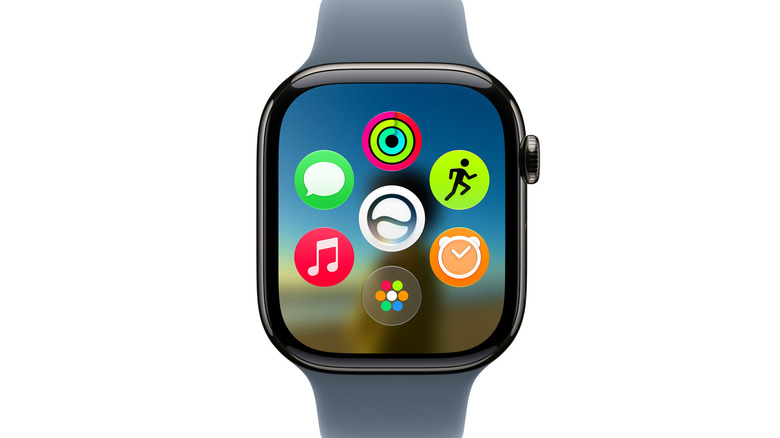
Siri AI will also be coming to the wrist, where it could be handy for answering questions mid-workout or while you’re otherwise on the move. watchOS 27 adds a new Dynamic App Grid that surfaces apps you’re most likely to need. The Apple Watch gets a new single-tap gesture that lets you select a widget in the Smart Stack to see more info. (You can still double-tap to scroll.) Menstrual tracking adds menopause and perimenopause support. And Workout Buddy gets some upgrades: new workout data insights, the ability to work without a nearby iPhone, and Spanish-language support.

Apple is positioning Siri AI as a productivity tool in macOS 27 Golden Gate. Like with other devices, you can summon the assistant directly from Spotlight, use it to analyze what’s on your screen or rely on it for writing help. There are also a few Mac-specific Liquid Glass and other design improvements, including uniform toolbars, edge-to-edge sidebars, and more refined window shapes and menu bar icons.

What about iPad owners? iPadOS 27 includes all the aforementioned iOS 27 features, but there isn’t much that’s unique to the tablet this year. Visual Intelligence, which can analyze anything on your display via screenshots, works with the Apple Pencil: just circle what you want to learn about. And external hard drive support gets a boost: Apple says file transfers between iPad and an SSD are now up to five times faster and “just as fast as Finder on Mac,” according to the company.

Advertisement

How to install

Keep in mind that these are early versions of the software. Bugs, battery drain and other issues will likely pop up. (Apple hopes you’ll use the Feedback app to help it optimize the software before the final release.) If you want a safer balance between cutting-edge features and stability, it couldn’t hurt to wait for at least the second or third public beta.

If you’ve never installed pre-release software before, you’ll need to enroll in the Apple Beta Software Program first. Once you’re in, you can download the beta software by navigating to Settings > General > Software Update. Under the Beta Updates section, choose the “27” public beta for your device.

Advertisement

Source link

Continue Reading

Tech

Already rich, already successful, why the last wave of tech winners is grinding again

Published

on

A pattern is emerging among people who’ve already made it big. They’re rolling up their sleeves again, seemingly out of fear of missing AI’s defining moment and, presumably, the irresistible allure of making even more money — potentially a lot more.

Tom Blomfield, who co-founded GoCardless and Monzo before spending 4.5 years mentoring founders as a Y Combinator Group Partner, announced on Monday that he is taking a leave of absence to join Anthropic’s compute team — not as an executive, but as a member of technical staff.

He’s not alone in making that kind of move. Instagram co-founder Mike Krieger joined Anthropic as Chief Product Officer in 2024, and Andrej Karpathy, a founding member of OpenAI who went on to lead AI at Tesla and start his own company, Eureka Labs, joined Anthropic’s pre-training team in May, framing the decision almost identically to Blomfield’s, writing that “the next few years at the frontier of LLMs will be especially formative.”

Not everyone is joining someone else’s lab. Chamath Palihapitiya, the “SPAC King” who has mostly stuck to boardrooms and all things “All In” since leaving Facebook in 2011, just took his first full-time operating role in over a decade as CEO of 8090 Labs, his enterprise AI coding startup, which he announced a couple of weeks ago along with a $135 million Series A led by Salesforce Ventures. Wrote Palihapitiya on X, “I am convinced that what we are building now is even more important, so there was no decision to make except to be all in.”

Advertisement

Similarly, Eric Wu, who ran Opendoor for a decade before stepping back in 2023, recently launched NavigateAI, an AI “copilot” for construction workers, with $25 million in seed funding. Wu told me directly on a recent call about his decision to dive into an AI startup, “I knew if I looked back in 10 years and didn’t do something related to it, I would probably regret that.”

The clearest sign of how keen people who’ve already “made it” are to work on what they view as the still-early-innings of AI might be the job title itself. “Member of technical staff” is the deliberately flat, non-hierarchical label that Anthropic and OpenAI use for nearly everyone on their technical teams, regardless of seniority. It’s the same title Blomfield is taking.

It’s also the title that Peter Bailis took this March, just months after becoming Workday’s CTO, a role overseeing AI strategy across an $8 billion-revenue business. Bailis lasted less than a year before trading it for a spot at Anthropic.

When you purchase through links in our articles, we may earn a small commission. This doesn’t affect our editorial independence.

Advertisement

Source link

Continue Reading

Tech

Former CDC CMO: RFK Jr. Is Doing ‘Irreparable Harm’

Published

on

from the alarm-bells dept

I’m not sure who out there is in RFK Jr.’s corner anymore, beyond some unfortunately powerful people in seats of federal power at the moment. That Kennedy’s tenure at HHS has lasted even this long is as absurd as it is dangerous, given the mountains of chaos he’s created in a mere year and change thus far. All of this anti-vaxxer nonsense, the seemingly random attacks on Tylenol of all things, an ongoing measles outbreak he’s mismanaging, and an inability to follow proper governmental procedure has produced a sample size of sucking that really should have been enough to get him booted from office at this point. Whatever you might think of Kennedy’s conspiracy theories and policies, there is simply no arguing that he doesn’t completely suck at his job.

The public polling around Kennedy has reflected this reality. Spineless senators who once supported him in the role are turning their backs. And then there are the warning bells being rung from people who were very recently insiders at CDC, such as its former Chief Medical Officer.

Dr. Debra Houry, the former chief medical officer at the Centers for Disease Control and Prevention (CDC), decried the direction of the agency under Department of Health and Human Services (HHS) Secretary Robert F. Kennedy Jr. 

“I think the secretary has caused a lot of irreparable harm, and when you look at many of the polls out there, the trust in public health, specifically CDC, has decreased dramatically, over 20 points in many polls,” Houry told host Margaret Brennan in an interview that aired Sunday on CBS News’s “Face the Nation.”

“That’s really difficult to recover from, and when states are removing links to the CDC website and following other medical organizations, I don’t know how you build back that trust overnight,” she added.

Advertisement

You absolutely don’t and this is a point I’ve been making for many months. It doesn’t take much skill or time to destroy the trust the public has in federal health officials. That part is very fast and very easy, as Kennedy is demonstrating. But to rebuild that trust, to win back the faith of the public, is going to take years, or decades, or perhaps may never really happen at all. The consequences of the idiotic placement and confirmation of RFK Jr. to lead HHS is going to span decades. The nihilists who managed to put this current cadre of clowns into federal office may not understand that, or may simply not care. But that is the reality.

poll conducted by Harvard University’s T.H. Chan School of Public Health and the de Beaumont Foundation’s Public Health Listening Lab from March 19 through April 1 found that 50 percent of 2,205 U.S. adults said they trust health recommendations from the CDC. 

In spring 2025, 77 percent of respondents to a similar survey conducted by the joint pollsters said they trust recommendations from the agency.

Whenever this country moves past the MAGA era, it’s going to have what might be the Sisyphean task of repairing all of this damage. And not just in terms of reestablishing good, sane health policies. That’s just part of the task. The other will be the public messaging that must go along with it. That is equally, if not more important to repairing all of the damage Kennedy has and is doing. It’s not enough to have good policy built on science. Someone has to actually get the public to buy into and trust in those policies.

And the public is going to be in a very reasonable place when they ask why they should trust the next government to not be anymore idiotic than this one.

Advertisement

Filed Under: cdc, debra houry, health, health & human services, rfk jr.

Source link

Advertisement
Continue Reading

Tech

Google Home Speaker (2026) review: Smarter and punchier, with a subscription pinch

Published

on

Google Home Speaker

MSRP $99.99

Advertisement

“A delightful smart speaker that’s easy to love.”

Pros

  • Gemini makes voice control feel genuinely conversational
  • Strong smart home integration
  • Better sound than previous compact Google speakers
  • Modern, compact design
  • Excellent value at $99

Cons

  • Advanced features require a subscription
  • Best experience requires buying into Google’s ecosystem.
  • No display for visual controls or information

Quick Recap

Google just introduced a new Home Speaker powered by Gemini, and it may represent the biggest shift that the company’s smart home lineup has seen in years. This isn’t simply a hardware refresh with improved sound or a new design. Instead, Google is positioning Gemini as the foundation of a smarter home assistant, one that understands natural conversation instead of relying on rigid voice commands. At $99, the new Home Speaker also enters one of the most competitive segments of the smart home market, where it will inevitably be compared with devices like Apple’s HomePod mini.

Having used the speaker for the past couple of weeks, it quickly becomes clear that Gemini is the real upgrade. The hardware itself is a step forward over Google’s previous compact speakers, but the biggest difference comes from how naturally the speaker understands requests and carries on conversations. Rather than forcing you to think about the right command, it adapts to the way you naturally speak.

Google Home Speaker specs: What’s inside the round shell?

Colors Berry, Porcelain, Hazel, Jade
Dimensions Product: 3.4″ height x 4.2″ diameter
Power Cable: 59.1″
Weight 0.9 lbs (speaker + captive cable, excludes power adapter)
Power Adapter & Ports Adapter: 30W Type-C USB-PD PPS
PDO: 5V/3A, 9V/3A 15V/2A, 20V/1.5A
PPS: up to 11V/2.73A, 16V/1.88A, 21V/1.43A
Dimensions: 2.3″ H x 1.1″ W x 2.2″ L
Weight: 0.1 lbs
Memory & Storage Memory: 1 GB LPDDR4
Storage: 4 GB EMMC
Processor Quad Core A55 2.0 GHz with NPU
Speaker & Microphones Omnidirectional sound with 58mm full-range driver
3 far-field microphones
2-stage mic mute switch (hardware mute)
Technology Gemini for Home, Voice match technology
Sensors Capacitive touch controls (3 touch areas)
Materials Made with at least 37% recycled materials based on product weight
100% plastic-free packaging
Smart Home Connectivity Wi-Fi 6 802.11ax (2.4 GHz/5 GHz)
Bluetooth® 5.4
Thread 1.3 border router (2.4 GHz)
Smart Home Compatibility Works with Google Home, Matter
Works as a hub for Matter with Google Home
Supported OS iOS, Android
In the Box Google Home Speaker, Power adapter, 59.1″ captive power cable, Quick start guide, Safety & warranty document

Google Home Speaker design and setup: It’s clean and breezy

Measuring 3.44 inches tall, 4.2 inches in diameter, and weighing just 0.9 pounds, the new Google Home Speaker is compact enough to blend into almost any space while still feeling more premium than Google’s older Nest speakers. Setup is straightforward. Inside the box, Google includes the speaker, a 30W USB-C power adapter, and a 1.5-meter power cable, with everything configured through the Google Home app.

Google is offering the speaker in four colors: Hazel, Porcelain, Jade, and Berry, with Jade and Berry currently exclusive to the U.S. The Porcelain model used for this review has a clean finish that should fit comfortably into most homes without drawing attention to itself. Overall, the design feels minimal, modern, and understated. Rather than becoming the focal point of a room, it blends naturally into a desk, shelf, or living space. Like much of Google’s recent hardware, recycled materials are used throughout the design, including the 3D-knit fabric exterior, which immediately brings Apple’s HomePod to mind.

One of my favorite details is the dynamic light ring around the base. It changes depending on whether the speaker is listening, processing a request, or responding, so instead of wondering what it’s doing, you always have visual feedback. It sounds like a small addition, but it makes the entire experience feel more alive. Omnidirectional microphones round things out, allowing the speaker to hear requests clearly from across the room without constantly asking you to repeat yourself.

Advertisement

Google Home Speaker interactions: Gemini changes how you use a smart speaker

The biggest shift with Google’s new Home Speaker has very little to do with the hardware. Instead, it comes from replacing Google Assistant with Gemini, and that fundamentally changes how you interact with the speaker.

Previous Google smart speakers worked best when you thought in commands. You would ask it to turn off the lights, set the thermostat, or play music, usually one request at a time. Gemini moves away from that approach. Rather than remembering specific phrases, you simply talk to it the way you would another person. Saying something like, “Set the house up for bedtime,” is enough for Gemini to understand the intent behind the request and carry out the necessary actions. It can also handle multiple requests in a single sentence and even adapt if you change your mind halfway through speaking.

Reasoning is where Gemini begins to separate itself from Google’s previous assistants. During testing, asking whether it would rain during a baseball game didn’t just produce the day’s weather forecast. Rather than simply pulling information, Gemini reasons through the request by combining context from multiple sources. Google calls this real reasoning rather than simply retrieving data, and it is one of the biggest differences between Gemini and the Google Assistant experience that came before it.

Gemini is just as useful for everyday tasks. It can help with reminders, calendar events, shopping lists, and planning your day while supporting natural follow-up questions that build on the conversation instead of starting over each time. Users can also choose from 10 different voice options to personalize how the assistant sounds.

Google is making the core Gemini experience available without an additional subscription. Buyers who purchase the Home Speaker before the end of September also receive six months of Google Home Premium, which unlocks Gemini Live. Instead of issuing commands, you can simply say, “Let’s chat,” and have a full back-and-forth conversation with your home assistant. Premium also introduces more advanced smart home features, including camera search history that lets you ask questions like whether someone left the garage open or whether the dog jumped on the couch, along with Home Briefs, which summarize everything that happened while you were away. Google Home Premium is available in two tiers, with the standard version included in Google AI Pro and the advanced tier bundled with Google AI Ultra

Advertisement

Google Home Speaker sound quality: It’s okay for the mission

Audio has received meaningful upgrades alongside Gemini. Google says the new Home Speaker features improved microphone processing for better voice pickup, true 360-degree sound, and 2.5 times stronger bass than the Nest Mini. Compared to Google’s previous compact smart speakers, the difference is immediately noticeable, making this a worthwhile upgrade for anyone coming from an older Nest Mini.

Stereo pairing is available when using two Home Speakers together, while integration with Google TV Streamer, Nest devices, and Cast-enabled products allows it to become part of a whole-home audio setup. Rather than existing as a standalone smart speaker, it slots neatly into Google’s broader ecosystem. As far as the raw audio quality goes, it avoids the expected pitfall of overtly-processed and synethetic tunes. It can fill a small to medium-sized room with punchy audio without any jarring distortion at high volume levels.

The sound profile is pleasant, in general, it’s sufficiently clear for listening to podcasts and audiobooks. Notably, it excels at mids, which means vocal-heavy tracks and classic music will please you ear canals. On the flip side, don’t expect delicate instrumental separation and at high volumes, complex tracks definitely get a tad muddy. If you seek that kind of audio nirvana, you might want to pay up a little bit and get the Sonos Era 100, or the bigger Google Nest Audio.

Google Home Speaker vs. HomePod mini

Comparison with Apple’s HomePod mini is almost unavoidable since both speakers occupy the same $99 price point. Both feature compact, fabric-covered designs that are meant to blend into a room and are available in multiple colors. The difference lies in what each product is trying to be. HomePod mini feels like a music-first accessory for the Apple ecosystem, while Google’s new Home Speaker is designed as a display-less AI hub powered by Gemini.

Gemini is also where Google creates the biggest distinction. Natural conversations, follow-up questions, and multi-step requests all feel more fluid than the command-driven interactions that have traditionally defined smart speakers. Apple has introduced Siri AI, but the current HomePod mini will not support those new capabilities. Anyone looking for Apple’s next-generation AI assistant will likely need to wait for future HomePod hardware.

Advertisement

Buyers already invested in HomeKit will still find plenty to like about the HomePod mini, but Google’s approach feels more flexible today. Gemini supports multi-action commands, context-aware conversations, and AI-driven automation, making interactions feel less reactive and more conversational.

Audio performance is another area where the two speakers differ. HomePod mini delivers clean, balanced sound for its size, while Google’s new Home Speaker focuses on stronger bass, wider 360-degree room-filling audio, and stereo pairing. Neither is intended to replace a dedicated speaker system, but Google places greater emphasis on creating a more immersive listening experience throughout a room.

Should you buy

Stepping back, this is more than a speaker upgrade. Google is rethinking what a smart home assistant should actually feel like. The future is not about commands or repeating yourself. It is about natural interactions, and that is ultimately the biggest selling point of the new Google Home Speaker. For its size, the sound quality is surprisingly punchy, and it performs pretty well if you’re more into listening to podcasts or music without deep audiophile expectations.

It, however, excels with arguably the smartest on-device AI assistant out there. Voice interactions are natural, the cross-device interplay is rewarding, and it can actually get work done across different apps and services, if you have linked the respective accounts with your Google account. The biggest caveat is that some of the smartest capabilities are locked behind a subscription, but if you merely need a no-frills tiny smart speaker, the Google Home Speaker’s latest avatar is as good as it gets.

Why not try

Amazon Echo Dot Max — If audio quality is your top preference, the two-way speaker fitted on the latest Amazon Echo Dot Max is right up your alley. Packing a dedicated woofer and tweeter, it delivers a surprising amount of bass and clarity. The cool Omnisense system brings presence awareness to the table, and it also offers support for multiple smart home protocols, including Matter and Thread. On the audio side, it even adapts to the layout of your room or home space. Plus, the new Alexa+ assistant is a meaningful upgrade.

Apple HomePod mini — The direct rival to Google’s speaker, Apple’s HomePod mini offers a similar design and build profile. It offers a signature audio output that is pleasing, though not hte loudest or room-filling kind. Where it wins is the deep Apple ecosystem integration, and finally, a much smarter Siri AI that is now ready to pull intelligence from — and get work done across — third party apps. But if you have an Android device in your hands, it’s not the best bet because a healthy bunch of features get locked.

Advertisement

Sonos Era 100 SL — In case you’re chasing a true audio pedigree, the Sonos Era 100 SL is arguably the best bet, even though it’s slightly more expensive. It delivers more refined audio, deeper bass, wider soundstage, and stereo separation, thanks to the combination of dual-angled tweeters and a bigger mid-woofer. It seamlessly allows multi-room audio playback and offers meaningful EQ tuning, as well. The assistant situation takes a hit, however, and the Sonos app still needs some work.

How we tested

We tested the Google Home speaker for a couple of weeks. In that span, it was linked to a personal Google account for accessing all the Gemini smart home features and automations. The audio quality was tested standalone, and to get a better perspective, it was also compared against the latest Apple HomePod mini. While testing, we focused on three core areas for qualitative evalauation, and they include raw sound quality, responsiveness and accuracy of the onboard AI assistant, and the wider cross-device weaved around it.

For audio quality evaluation, we played a variety of songs across difference genres to gauge how it handles different frequency ranges. Additionally, the onboard AI assitant was tested by throwing natural language queries its way, ranging from day-to-day smart device controls to knowledge delivery. We focused on accuracy and latency as the key metrics to assess the digital assistant’s efficacy. For the overall setup, we tested it across different positions under varying network and cross-device syncing environments.

Advertisement

Source link

Continue Reading

Tech

Zig creator calls Bun’s Claude Rust rewrite ‘unreviewed slop’

Published

on

An AI rewrite of a popular Anthropic-owned JavaScript runtime and toolchain has sparked praise for the speed of its execution, but also criticism of the coding practices behind the project itself. 

Last week, Bun creator Jarred Sumner announced that he ported Bun from the Zig programming language to Rust in only 11 days, using a fleet of Claude agents running in parallel. The work cost an estimated $165,000 at API pricing, suggesting that software revisions previously considered too large to undertake could actually be feasible now with AI.

Sumner said the port was necessary given the growing number of bugs Bun users were finding, including one implicated in the recent Claude Code source leak.

But the creator of Zig, Andrew Kelley, didn’t want his project to be seen as the culprit behind Bun’s woes, which he blames on Sumner’s bad programming practices. 

Advertisement

For Kelley, the move to Rust was not about the feature differences between the two languages, or even the use of AI, but rather “the diverging value systems of the two projects,” he wrote. 

Bun in the oven

Bun is a JavaScript suite consisting of a runtime, package manager, bundler and test runner. Some developers like it because it is a fast one-stop shop that plays well with Node.js.  

To make Bun speedy, Sumner used Apple’s low-memory fast-start WebKit JavaScriptCore (JSC) engine, rather than Google’s stock V8 engine. He used the up-and-coming Zig because he appreciated its performance and low-level control.

Anthropic acquired Bun in December 2025. The company built its core state machine on Bun. 

Advertisement

By then, Sumner had also grown to appreciate AI’s coding abilities, and was using it heavily in the upkeep of Bun.  By the time of acquisition, a Claude Bot called RoboBun had been doing a lot of the heavy lifting in the Bun repo. It supplied the most merged PRs of any contributor, fixing bugs and remediating test failures. 

But as Bun’s user base grew, more cracks started appearing in the code. Users found issues across the software. Anthropic’s 512,000-line code leak in March? That was Bun’s fault, thanks to a bug in the bundler that generated source maps during builds even when told not to, NodeSource reported

All these bugs weren’t Zig’s fault, Sumner explained in a blog post last week detailing the migration. Bun’s architecture mixed garbage collection and application-driven memory management. Sumner admitted that Zig wasn’t designed for that task. Rust was just better at automating memory management.

The Rustification of Bun

Rewriting 500,000 lines of Zig into another language would be a gargantuan undertaking if done by hand. “A rewrite in another language would take a small team of engineers a full year. It would mean freezing bugfixes, security fixes or feature development for that time,” Sumner wrote.

Advertisement

Instead, Sumner went with Claude. He spun up about 50 dynamic Claude Code workflows, reaching a peak of about 1,300 lines of code per minute and generating over a million lines of Rust code. The job took 11 days and cost about $165,000 at API pricing. Claude Fable did most of the heavy lifting. 

The Rust-based Bun was then subjected to Bun’s exhaustive test suite of more than one million assertions. According to Sumner, it passed 100 percent of those tests across all supported platforms without skipping or deleting any.

“There’s absolutely no way an engineer with that salary would’ve been able to achieve the milestones Claude did in 11 days,” an impressed HashiCorp co-founder Mitchell Hashimoto noted on X

Zig zags

But does Bun’s speed of execution betray the core tenets of good software development? 

Advertisement

One person not impressed has been Zig’s Kelley, who shared his misgivings in an impassioned post entitled “My Thoughts on the Bun Rust Rewrite.”

Even before the Anthropic acquisition, “we became increasingly horrified at the programming practices we saw in Bun’s codebase,” Kelley wrote. Bun was one of the largest and highest profile projects using Zig and, up until the Anthropic acquisition, a regular financial contributor to The Zig Software Foundation. 

In Kelley’s view, the project aggressively released new features, resulting in piled-up bugs, bad error-handling code, and technical debt. 

Sumner “was already writing slop well before he had access to LLMs,” Kelley quipped. He speculated that Sumner may have been under pressure to meet business objectives rather than technical ones, a pressure that increased with Anthropic’s acquisition. 

Advertisement

In fact, Bun’s codebase had grown so suspect in Kelley’s estimation that Bun parting with Zig was good news.  As he put it, no longer would “the publicly presumed poster child for Zig programming language actually [be] the prime example of How Not To Write Zig Code,” he wrote. 

The Bun team also tried to upstream some of its AI-assisted work to Zig, to no avail. Leading up to the Bun rewrite, the team maintained a fork of Zig that it said improved debug compilation speed fourfold, as eagle-eyed Reg reporter Tim Anderson revealed in May. But the Zig project would not accept Bun’s changes, citing a policy of not accepting AI-based contributions. 

Zig had been getting an influx of LLM-generated submissions, most of dubious quality. This lack of engineering oversight around AI-generated code would lead to countless problems down the road, Kelley reasoned.  

Kelley pointed out that if Bun’s tests missed these bugs in Zig, how would they be caught in unsupervised Rust code?

Advertisement

“The argument for shipping all the million lines of unreviewed code is that the test suite is good enough to catch everything,” he wrote. “It’s not sufficient to catch bugs in Zig code but it is sufficient to catch bugs in [a] million lines of unreviewed slop?”  ®

Source link

Continue Reading

Tech

India’s tech services giant HCL is getting into the AI datacenter business

Published

on

off prem

Starting small with $37m and maybe 50MW but reckons full-stack service plan can succeed

Indian tech services giant and retro software house HCL has decided to get into the AI datacenter business.

The company yesterday revealed its plan in an announcement [PDF] released alongside its Q1 results, which included news of three-percent year-over-year revenue growth to $3.65 billion and 20 percent growth in net income which reached $488 million.

Advertisement

CEO C. Vijayakumar also pointed to 62 percent year-over-year revenue growth for a segment HCL calls “Advanced AI” that encompasses building its own AI platforms.

The CEO said HCL’s strategy is to “Benefit disproportionately from the AI-native and AI-amplified opportunities” because they “together represent the fastest growing pool of enterprise spend.”

The company has therefore decided to get into the datacenter business and has found ₹3,500 crore ($36.5 million) to put toward facilities it says have “potential to scale to 50MW of capacity.”

That’s not a vast facility – just one of Meta’s datacenters will host 50GW of kit – but Vijayakumar said HCL can make it relevant by using its existing software to offer “full-stack” infrastructure.

Advertisement

“The biggest opportunity is not to rent AI, but to own the full stack,” the CEO said. “The datacenters that compute the models built to address client-specific needs.”

“This is a business which is shifting from physical infrastructure to higher value AI-ready solutions,” he added. “We will create full-stack offerings by combining our capabilities across AI datacenter design, DevOps, and cloud operations, as well as a software portfolio with our new datacenter business.”

HCL’s focus appears to be on Indian customers, as Vijayakumar said the datacenter investment will “position us as a key enabler of India’s sovereign AI ecosystem, expanding our presence in the fastest-growing market among largest economies with differentiated offerings around sovereign cloud, secure AI, and managed AI infrastructure.”

The CEO said HCL is already “in advanced discussions with clients to ensure we start with certain level of committed consumption from day one.”

Advertisement

The company didn’t say where it will build its bit barns, when they might come online, or how it will secure energy supply – an important consideration given we yesterday reported on an effort to locate a datacenter in renewable-energy-rich Bhutan to serve Indian customers.

Vijayakumar also revealed that HCL booked $2.4 billion of new business in the quarter, a record. The CEO pointed to one of those deals as an exemplar of HCL’s AI smarts, as it will see the services company work with an unnamed Fortune 250 semiconductor equipment OEM “to accelerate AI-driven transformation across its semiconductor engineering and manufacturing value stream.” To make that happen, HCL will deploy SAP, integrate it with existing systems, and establish “an enterprise backbone for a future-ready, scalable, AI-led digital supply chain.”

Another new deal, struck earlier this month and therefore not included in the $2.4 billion of new deals won in the quarter ended June 30, will see HCL work with an unidentified “Europe-headquartered Fortune Global 50 firm as a technology partner to accelerate AI-led transformation and management of their digital workplace and enterprise networks.”

Numerous reports in Indian media identified the new client as Mercedes Benz, and suggest the automotive giant has moved its business to HCL from Infosys, which announces its quarterly results next week. ®

Advertisement

Source link

Continue Reading

Tech

Zuck’s AI ambitions put Meta on course to become America’s next big cloud provider

Published

on

Meta seems to be having a bit of an identity crisis. On Monday, the social networking singularity said it would spend $50 billion to expand its Hyperion datacenter project in Richland Parish, Louisiana, from 2.2 to 5 gigawatts.

The news comes less than a week after a report broke claiming that Meta was actively exploring options to offload its excess compute capacity to other AI labs.

So, which is it, Zuck? Did you invest too much or too little in AI?

The easy answer is that Meta overcommitted. Inspired by the early success of Llama, it made a huge bet on the AI gold rush. Offloading spare compute to the highest bidder is just a hedge in case its Superintelligence team turns out to be another pipe dream, like the Reality Labs Metaverse that utterly failed to spark enthusiasm for immersive environments accessible through Meta’s Quest cybergoggles.

Advertisement

The more pragmatic read is that Zuckerberg has woken up to the fact he’ll never be as cool as OpenAI boss Altman or Anthropic’s Amodei, and renting out spare compute is just the natural progression for any sufficiently large hyperscaler.

Dawn of the Meta cloud?

Meta’s business model is closer to Google’s than those operated by OpenAI and Anthropic.

Both Meta and Google offer various services which generate revenues by connecting users with advertisers. For Google it’s a search and entertainment empire. For Meta it’s enabling an endless feed of content generated by friends, family, influencers, and yes, bots. 

Both are immensely profitable, earning $132.2 billion and $60.5 billion in profits last year, respectively. That’s profit, not revenue.

Advertisement

But both are now plowing over $100 billion a year into AI infrastructure to power large language and image and video generation models. As we learned from Meta’s recent earnings calls, the most commercially potent of those models get the right ads in front of the right eyeballs.

The open secret is Meta was already one of the most successful AI companies long before ChatGPT debuted. Except, it’s not large language models (LLMs) that make Meta money, at least not in the conventional sense. Instead, Meta’s most profitable AI models are the recommender systems that mine profiles for context and use it to infer your needs. Meta’s devs evolved those models considerably over the past few years, and their architectures now look a lot more like an LLM than the now-pedestrian neural networks on which Zuckerberg built his empire.

Google is in a similar situation. It’s investing heavily in AI to feed its fast-growing and profitable cloud business, even as advertising still pays most of the bills. But unlike Google, Meta hasn’t yet made the leap from hyperscaler to cloud provider.

Amazon, Google, Microsoft, even Oracle got there eventually, and it seems AI may be the catalyst that turns Meta into a cloud, too.

Advertisement

Recent reports suggest that Zuckerberg is warming to the idea. 

“I think that’s certainly a thing that we could do and that I think would make sense to consider,” he said in an interview with Bloomberg last week. “As a backstop, even if for whatever reason we don’t need all the compute ourselves or for any number of reasons, there’s a very large amount of demand that I think you could sell it long-term like AWS or Azure or Google Compute.” 

But while the demand may be there, Zuckerberg emphasized the compute capacity is not readily available.

But as Ben Thompson of Stratechery put it, cashing in on this compute may be more than a backup plan. In a post channeling an imaginary Zuckerberg, Thompson suggested that becoming a neocloud would force Meta to stop chasing pipe dreams and pet projects. His logic is that if Meta can’t make money with infrastructure it buys for AI ventures, the social networking giant can lease the orphaned hardware to the highest bidder.

Advertisement

The takeaway for investors — should Meta follow its fellow hyperscalers-turned-cloud-providers down this road — is that the profitability of its hardware investments would no longer be tied to its ability to commercialize them.

Seizing the means of production

If history tells us anything, scale matters. Building a cloud like Amazon Web Services (AWS) is next to impossible unless you’ve already figured out how to profit from those same resources.

Meta’s scale puts it in a position to acquire compute in volumes impossible for smaller players. Its ability to capitalize on infrastructure demand relies entirely on having something others want but can’t get anywhere else.

For what it’s worth, Zuckerberg wouldn’t be the first to come to this conclusion. Earlier this year Musk-owned xAI surprised many when it announced plans to rent out its Colossus supercluster in Memphis to rival model dev Anthropic.

Advertisement

The calculus here is the same. Making a profit off LLMs, like Grok, isn’t easy — just ask OpenAI — but selling the means of AI production to those that haven’t yet figured that out is enormously lucrative.

The logic appears to have gotten Zuck’s attention.

“The SpaceX model I think is quite interesting in terms of just making these short-term deals that are at a big premium,” Zuckerberg told Bloomberg. “So we get offers for all kinds of stuff like this and we’ll evaluate them and see what makes sense.”

Reports suggest Meta is seriously considering two strategies for commoditizing its compute assets. The first would be a usage-based compute platform similar to Amazon Web Services’ Bedrock.

Advertisement

The service would allow customers to run models and serve them through APIs — interfaces that abstract operational complexity. To be clear, Meta already offers API access to its homegrown models, at least the ones it didn’t pull after realizing the way they’d been implemented could be abused. So, from what we gather the difference would be allowing customers to run third party models as well.

The second scheme reportedly being explored would involve selling raw compute resources available to end customers — similar to CoreWeave or Lambda.

All the right ingredients 

Meta’s silicon strategy may help as well. One thing all the major cloud providers have in common is a growing catalogue of custom cloud silicon.

Once they’ve identified a core use case, Amazon, Google, and Microsoft all rolled their own silicon to maximize their margins. AWS Trainium, Microsoft Maia, and Google TPUs are all examples of AI accelerators originally built for internal workloads but later made available to the broader public.

Advertisement

Meta has been building its own AI chips for years. The first few Meta Training and Inference Accelerators (MTIA) were designed to speed up its recommender models. But new designs, developed in collaboration with Broadcom, are far better suited to running LLMs like Llama and Muse Spark, and whatever else its customers are willing to pay for access to.

More importantly, this mix of compute means that Meta can take advantage of the fact GPUs are extremely flexible to bring new products to market quickly. Then once they’ve proven performers, Meta could transition those workloads to its custom chips and offload spare GPU compute to its cloud customers.

Meta has all the ingredients, compute, scale, and capital necessary to become a major cloud provider.  ®

Source link

Advertisement
Continue Reading

Tech

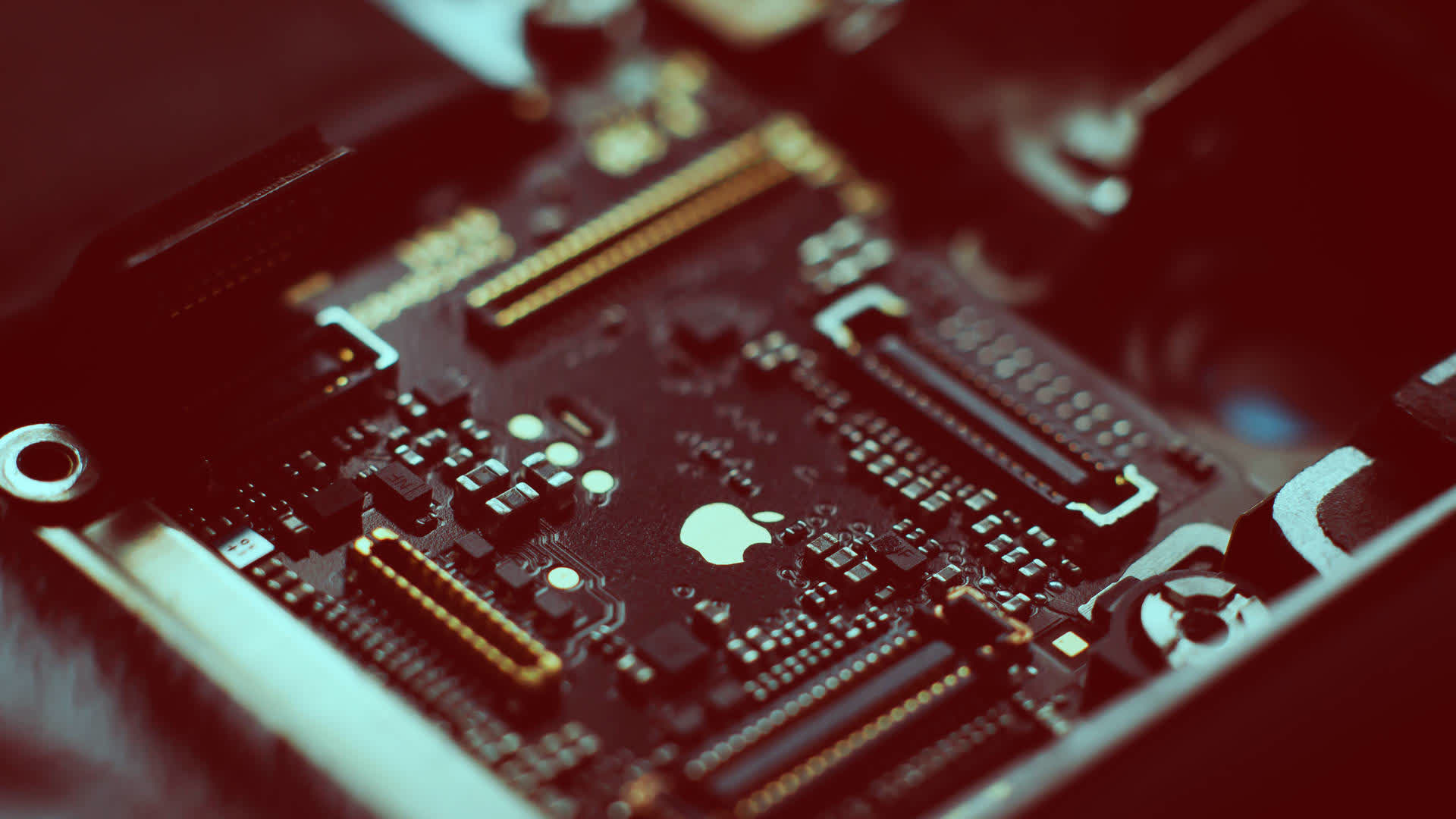
Apple is reportedly skipping M6 Pro, Max, and Ultra chips to fast-track AI-focused M7 Macs

Published

on

Rumor mill: Apple is overhauling its Mac chip roadmap to place artificial intelligence at the center of its hardware strategy. Instead of completing the M6 lineup with the usual Pro, Max, and Ultra variants, the company is reportedly moving directly to the M7 generation and planning significantly larger Neural Engine upgrades, according to people familiar with the plans.

This fall’s Macs are still expected to debut with a base M6 chip. Under Apple’s traditional release pattern, that chip would be followed by M6 Pro and M6 Max variants for higher-end laptops, along with an M6 Ultra for desktop-class machines.

This time, that sequence will reportedly stop after the entry-level chip. The company has already moved on to the M7 design, taping it out only about six months after the M6 reached the same stage. The compressed timeline highlights how urgently Apple wants its Macs to handle increasingly demanding AI workloads.

According to the internal roadmap, the first M7 Macs are scheduled to launch in the first half of 2027. Higher-end M7 Pro and M7 Max systems are expected later that year, while the M7 Ultra is targeted for 2028.

Advertisement

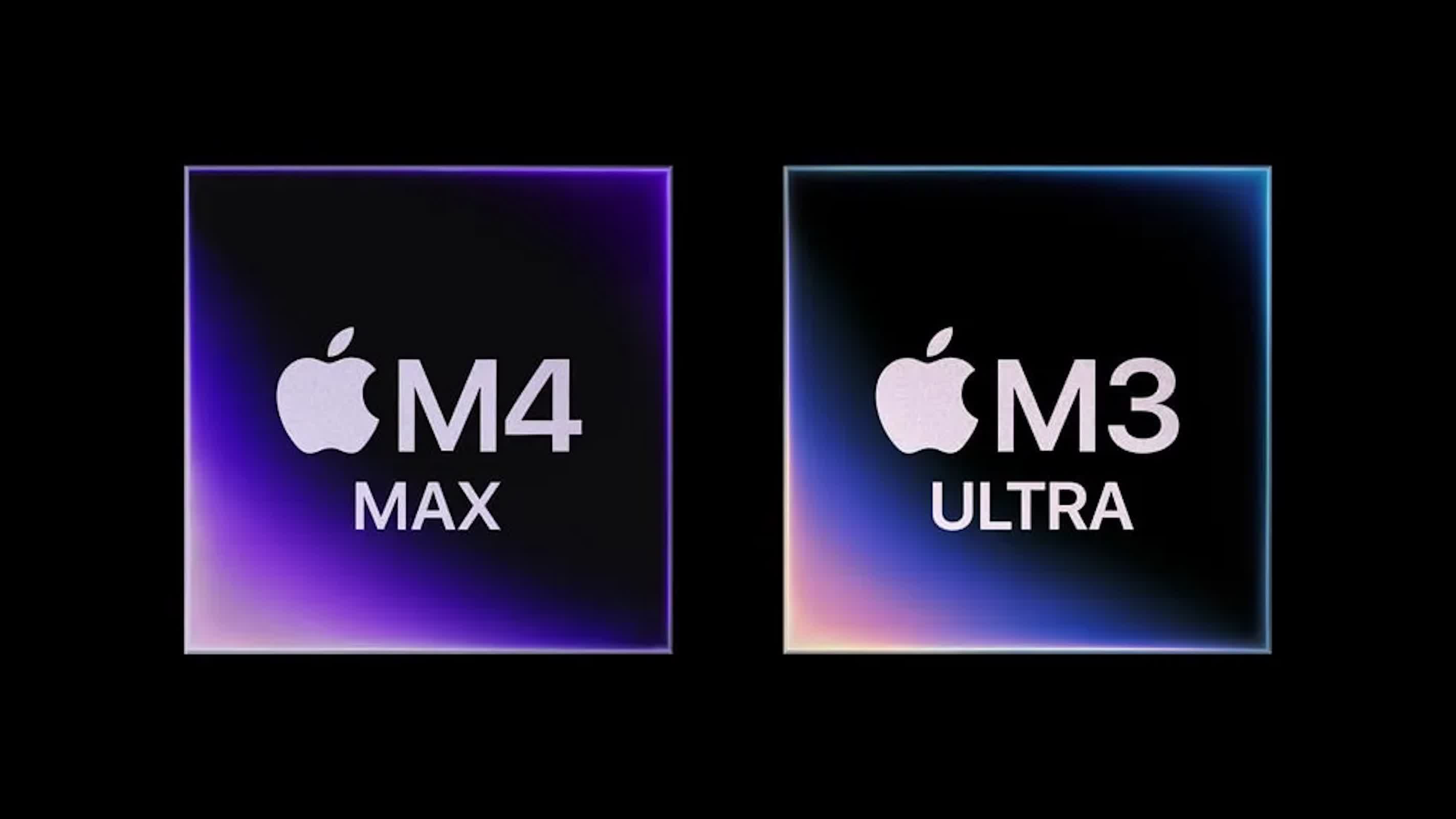
Apple has skipped an Ultra chip before – the M4 family did not include one – but abandoning every high-end M6 variant at once would mark a first. People briefed on the plans say Apple determined that the M7’s AI-focused upgrades were significant enough to justify skipping further M6 development.

At the center of those changes is the Neural Engine, Apple’s dedicated on-chip AI hardware that powers on-device generative models, accelerated inference, and Apple Intelligence features. Apple has refined the Neural Engine with every Mac chip generation since the M1 debuted in 2020, and the M4 represented one of the biggest improvements to date.

The company now wants the M7, particularly the M7 Ultra, to approach the level of performance developers expect from dedicated AI accelerators rather than traditional general-purpose desktop processors.

Memory support is a major part of that effort. The M7 Ultra is being designed to support up to 1.5 terabytes of unified memory. That is roughly double the capacity planned for the upcoming M5 Ultra server chip and matches the maximum RAM configuration available on Apple’s 2019 Intel-based Mac Pro.

Advertisement

With that much memory, significantly larger AI models can remain in memory, reducing bottlenecks and limiting the need to rely on external storage or cloud-based compute. Whether Apple ships Macs with the full 1.5TB configuration will depend on memory availability, as supply constraints and elevated prices remain concerns.

These desktop plans tie directly into Apple’s server strategy. The company is preparing a more powerful AI server based on the M5 Ultra, known internally as J246. Engineers are already working on a successor built around an M7 Ultra-derived server chip, with a launch window targeted for around 2029.

In other words, the same architecture expected to power Apple’s highest-end Macs could also underpin the next generation of servers running Apple Intelligence in the cloud.

Beyond the M7 family, Apple is developing an M8 generation with even more AI-focused silicon. The lineup reportedly includes a processor code-named Soko, targeted for 2028, along with other chips for high-end Macs under the Cardinal name.

The 2028 chips are planned for a 1.4-nanometer process, which should deliver another leap in efficiency. The shift comes as AI chips encounter increasing power and cooling constraints, pushing Apple to prioritize more transistors for neural processing units and memory bandwidth rather than simply expanding CPU and GPU cores.

Advertisement

All of this hardware development comes alongside a more mixed picture on the software side. Apple has struggled to deliver AI-powered services at the pace many expected. Apple Intelligence and the redesigned Siri have rolled out more slowly than planned, forcing the company to adjust expectations along the way.

Still, Apple’s hardware teams have spent more than a decade building the foundation for this moment, often through projects that never reached consumers.

The most notable example is the company’s abandoned self-driving car initiative. From the beginning, Apple targeted full Level 5 autonomy and invested heavily in machine learning and custom silicon capable of processing massive amounts of AI workloads in real time.

The car project never reached the market, but the chip development work directly contributed to the Neural Engine architecture that first appeared in the iPhone X in 2017 before expanding to Macs and other devices. That same hardware foundation now sits at the center of Apple’s AI strategy.

Advertisement

With the M7 and M8 families, Apple is treating AI as the primary driver of its chip designs rather than simply an additional feature. AI workloads are now shaping which chips get developed, when they launch, and how their architectures are built.

Source link

Advertisement
Continue Reading

Tech

Oregon AG Wants Pause On Paramount Merger, Hints At Federal Corruption

Published

on

from the the-last-gasps-of-antitrust-reform dept

I think I’ve extensively explained at this point why the $111 billion merger between Paramount/CBS and Warner Brothers is a gargantuan pile of shit that will indisputably harm labor, consumers, markets, creatives, and potentially even national security. It doesn’t matter the company names; every single major media merger of this type ends badly for everyone but the trust fund brunchlords at the top.

Not only that, every single merger involving this particular company (Time Warner, Warner Brothers) in the last quarter century has resulted in nothing but layoffs, price hikes, shittier product, and a lot of whimpering. And there are ample signs that the Paramount folks are even less competent than past suitors, including the AT&T executives, who quickly got too far out over their skis.

While the Trump DOJ has unsurprisingly rubber stamped Larry Ellison’s clumsy effort to dominate what’s left of U.S. corporate media, states keep hinting at the fact they’ll file a collective antitrust lawsuit.

That’s certainly the case in Oregon, where Attorney General Dan Rayfield is asking for a 60 day pause in deal finalization while his office investigates both the deal — and apparently the Trump cronyism that has helped enable it. Rayfield, for one, accuses Paramount of refusing to adequately respond to state AG requests for information about the deal’s impact:

Advertisement

“We’re not going to let Paramount Skydance play hide the ball so they can rush through their massive merger. Oregonians have a real stake in this deal – in our film industry, in our economy, in the choices they’ll have as consumers. Paramount had every opportunity to hand over records and answer a few basic questions. Instead, it is trying to run out the clock and evade scrutiny. We’re asking the court to make sure Oregonians get the answers they’re owed before this deal closes, not after.”

Rayfield says that Paramount has been particularly cagey when asked for data on its interactions with the Trump administration and Trump DOJ. Including details on a federal government influence campaign Paramount internally calls “project warrior”:

“Paramount has not complied. According to court papers, the company declined to accept service of the request, waited weeks to respond, and ultimately sent objections on the day its documents were due – objections the state dismisses as a baseless tactic to avoid turning over the records. Paramount has told Oregon it does not intend to close the deal before July 16 but has not agreed to hold off any longer while the state’s investigation continues.”

So while the $111 billion deal is abjectly terrible, it’s not quite yet a done deal yet. I’d suspect that a joint antitrust lawsuit featuring the handful of states that still care about such a thing will arrive sometime in the next month or two. While it might not succeed in scuttling the deal, it could extend the timeline in a way that could prove costly for Larry Ellison, David Ellison, and their debt-riddled proposal.

Larry is comically over-leveraged on AI, and should an AI bubble pop coincide in significant regulatory delays for his media domination bid, things could get very interesting. As an aside, I’d like you to notice how when the state lawsuits come, all the Republicans who spent last election season pretending they were suddenly interested in antitrust reform will be absolutely nowhere to be found.

Filed Under: antitrust reform, consolidation, Dan Rayfield, hollywood, larry ellison, media mergers, oregon, regulatory approval

Advertisement

Source link

Continue Reading

Trending

Copyright © 2025