It’s somewhat stunning to realize that the United States has been operating with Surgeon Generals that are merely “acting” in the role or “performing the duties of” since January 20th of 2025. The last Senate-confirmed SG was Dr. Vivek Murthy. The current nominee from the Trump/Kennedy team is Dr. Casey Means. This nomination has been languishing since May of last year. There has been plenty of pushback on her, due largely to her current profession as “wellness influencer” and the fact that she didn’t complete her residency and doesn’t have a license to practice in any of our 50 states.
She recently went before the Senate for her confirmation hearing and it, um, didn’t go all that well. As a result, it appears her nomination is very much in trouble. There are several GOP senators who are publicly expressing doubts about her, perhaps none more important then Bill Cassidy.
Senators Bill Cassidy (R-La.), Susan Collins (R-Maine), Lisa Murkowski (R-Alaska), and Thom Tillis (R-N.C.) all expressed concern in a confirmation hearing last month about her potential role and appear to remain doubtful. Just one of those senators may be enough to block her nomination from advancing beyond the Senate Health Committee.
Afterward, Senators Collins and Murkowski both said they still had questions. Murkowski also said she had “strong reservations” about Means’ nomination and that, as of last week, that opinion hadn’t changed, according to the Post.
So why did the confirmation hearing go so poorly? For some reasons you’d expect, and some you probably didn’t. Means mostly ducked questions about vaccines, giving interested senators no idea where she actually lands on the issue. There were also perfectly reasonable questions about her qualifications, given that she is not currently a practicing doctor of any kind. In her influencer career, she has mirrored much of what RFK Jr. has claimed about diet and exercise being the cure to most health issues, all while hocking your stereotypical supplements and magic potions.
Advertisement
But then there are the drugs and the lunar-worship.
A book that she co-authored with her brother, titled Good Energy, considered by some to be the “MAHA bible,” contains a chapter titled, “Trust Yourself, Not Your Doctor.” She has also drawn criticism for writing about taking magic mushrooms, consulting a “spiritual medium,” and participating in “full moon ceremonies.”
I won’t say I’m against the use of psychedelics generally, but I typically don’t love hearing about how great they are from my doctor.
As we’ve talked about before, it has become very clear that Kennedy simply lied a whole bunch in his own confirmation hearings as to what he would do as Secretary at HHS, particularly when it comes to vaccines. The thing about lying to people like Bill Cassidy, though, is now Kennedy needs him to confirm his hand-picked ally for Surgeon General.
And unless Cassidy is far stupider than I think he is, you have to believe he isn’t going to let Lucy pull the football away at the last moment for a second time.
Sony seems to have moved on from the PlayStation Vita, but its influence clearly hasn’t gone anywhere.
Anbernic has just unveiled the new RG Vita and RG Vite Pro, which are two handheld gaming consoles that feature a design inspired by the PS Vita. From the wide layout to the button placement and overall aesthetic, these pay homage to Sony’s last true portable console.
But these aren’t a one-on-one copy, and rather serve as a modern take on the Vita idea.
Everything you need to know about the Vitas
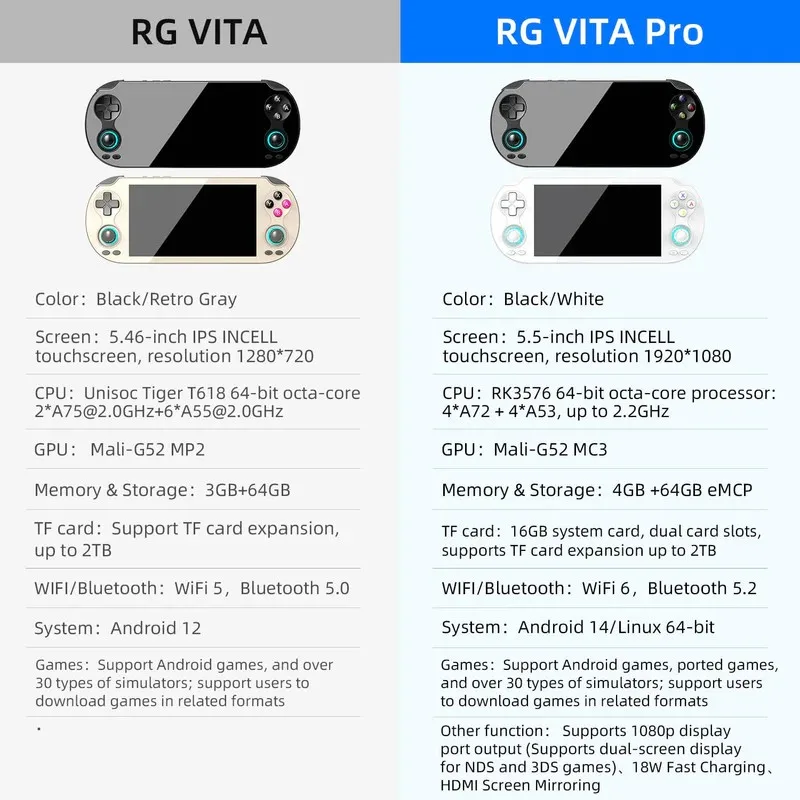
RG Vita and Vita Pro SpecsAnbernic
The lineup consists of two variants, namely the RG Vita and RG Vita Pro.
The standard Vita is a more affordable option that featurse a 5.46-inch IPS display with 720p resolution, powered by a Unisoc T618 chipset, paired with 3GB of RAM and 64GB of storage. On the other hand, the RG Vita Pro steps things with a slightly taller 1080p IPS display, a more capable Rockchip RK3576 processor, 4GB RAM, and the same expandable storage support via microSD.
Advertisement
Both models are powered by a 5,000mAh batteries that promise to offer several hours of gameplay.
Built for retro, but doesn’t stick to the past
Anbernic RG Vita ProAnbernic
Anbernic’s new RG Vita series is a throwback to a great age in game, but it isn’t just about nostalgia.
The consoles supports Android (and Linux on the Pro), which allows it to run Android games and the emulators for consoles like PS2, PSP, GameCube, and more. So it is a lot more versatile than its original inspiration. Anbernic is even adding modern touches like WiFi, Bluetooth, USB-C output, and even AI-based features like real-time translate and in-game assistance tools.
That said, this isn’t aiming to be a true successor to the PS Vita. Performane is aimed more at emulation and casual Android gaming rather than running modern AAA titles.
Anbernic has yet to confirm the official pricing, but the devices are expected to land in the budget to mid-range handheld category.
Sony wants to use your phone as a secondary input for a PlayStation controller, and it might actually change how we play games.
Gaming controllers have come a long way, but let’s be honest, they haven’t changed that much at all. Sure, we got haptic feedback, adaptive triggers, and TMR sensors, but the core design and gameplay have remained the same for decades. Sony might be about to change that, and the solution is your phone.
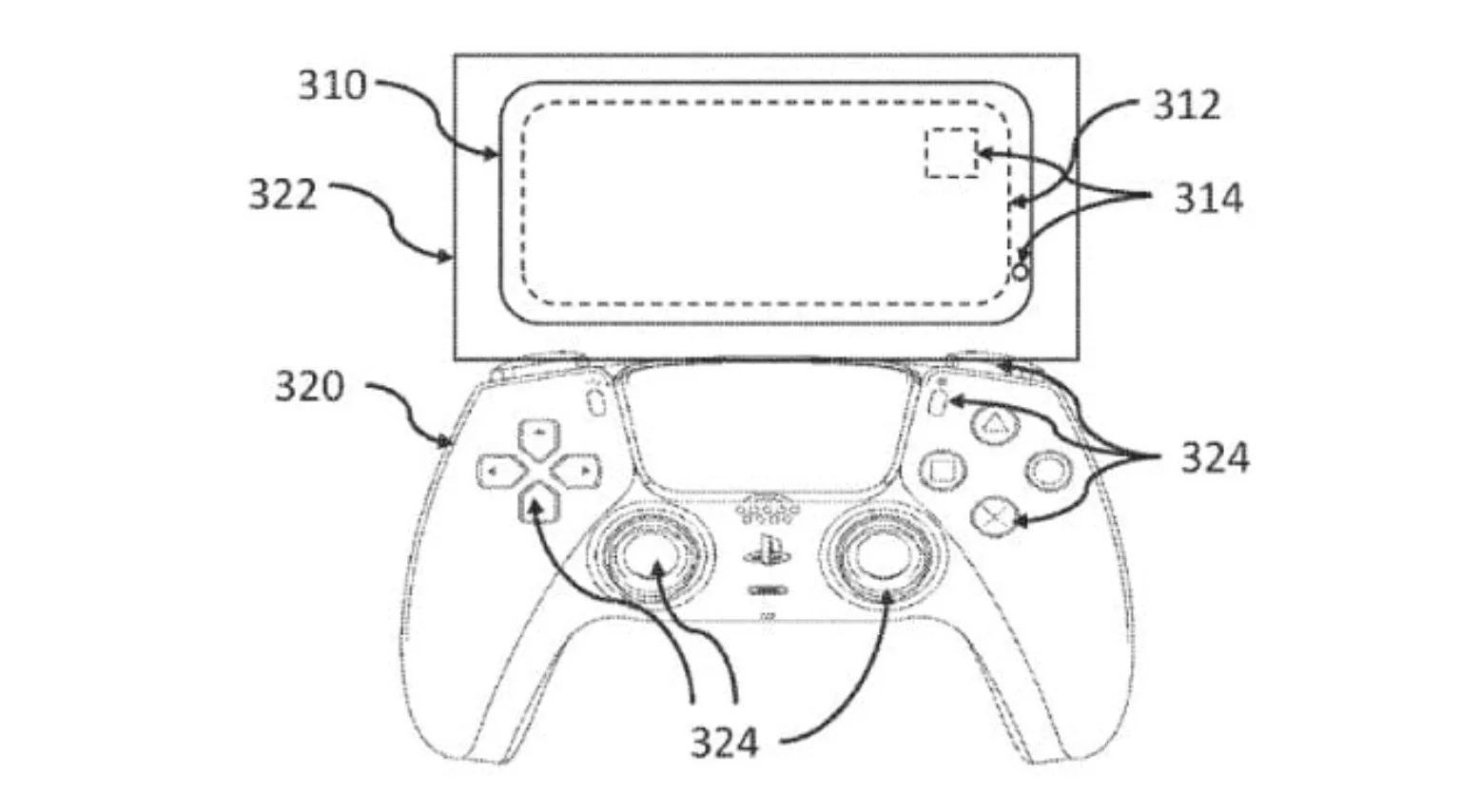
As reported by CheatHappens, a newly discovered Sony patent describes a hybrid input system that attaches your smartphone to a PlayStation controller using a magnetic attachment unit.
CheatHappens
The phone essentially becomes a second controller, giving developers access to its cameras, gyroscope, touchscreen, and other sensors to create entirely new gameplay experiences.
What’s the need for this patent?
The patent makes an interesting argument. Traditional controllers are excellent for certain game genres, such as racing titles, where physical buttons and triggers shine, but they’re not ideal for first-person shooters.
Advertisement
By mounting a phone onto the controller, developers get access to a much wider variety of inputs, making the hybrid system more versatile across all game genres.
CheatHappens
The possibilities are exciting. Developers could use the phone’s camera for in-game avatar customization, leverage motion sensors for spatial awareness, or display extra gameplay data directly on the phone.
Is this just a concept or could it become a reality?
That’s the big question. Sony has filed several unconventional patents in recent years, and most of them haven’t seen the next stage. It’s not just Sony; on average, only 2–5% of patents that are filed actually materialize into a real product, so the probabilities are not in favor.
However, this patent has several advantages that could help it reach the market. It doesn’t require new hardware, the attachment mechanism should be straightforward, and the potential benefits for gamers are real.
If Sony can make this work, it could genuinely add more depth to console gaming without asking players to buy an extra accessory.
One might think that [Da_Rius]’s mostly 3D printed wire stripper would count its insulation-shearing blades among the small number of metal parts required, but that turns out to not be the case. The blades are actually printed in PLA, seem to work just fine for this purpose. (We imagine they need somewhat frequent replacement, but still.)
Proper wire strippers are one of the most useful tools for a budding electronics enthusiast, because stripping hookup wire is a common task and purpose-built strippers make for quick and consistent results.
As far as tools go they are neither particularly expensive nor difficult to source, but making one’s own has a certain appeal to it. The process of assembling the tool is doubtless a rewarding one, and it looks like it results in a pretty good conversation starter if nothing else.
As mentioned, the tool is mostly 3D printed and does require some metal parts: fasteners, heat-set inserts, and a couple springs. Metal nuts and heat-set inserts are easy enough to obtain, but springs of particular size and shape are a bit trickier.
It is perfectly possible to make custom springs, and as it happens [Da_Rius] already has that covered with a separate project for using a hex key and printed jig to make exactly the right shapes and sizes from pre-tempered spring wire.
Mate Rimac, the founder of Croatian electric vehicle maker Rimac Group, started working on electric robotaxis seven years ago. Now, part of his vision is coming to fruition through a strategic partnership between Uber, Chinese autonomous vehicle company Pony.ai, and his own robotaxi startup Verne.
The three companies announced plans Thursday to launch a commercial robotaxi service in Europe, starting in Zagreb, Croatia. Pony.ai will supply the autonomous driving system and a robotaxi called the Arcfox Alpha T5 that was developed with Chinese automaker BAIC. Verne will own and operate the fleet, and Uber will provide its vast ride-hailing network.
The ride-hailing giant also indicated it intends to invest an undisclosed amount into Verne and support future expansion as a strategic partner.
The companies didn’t provide a specific launch date for the commercial service, though on-road testing in Zagreb — where Rimac Group is based — is already underway.
Advertisement
Verne doesn’t have the same name recognition as Waymo or Tesla — at least not in the United States. But it has the same outsized ambitions.
Verne started in 2019 as a project called Project 3 Mobility (or P3) within Rimac Group, a growing ecosystem of companies that includes hypercar maker Rimac Bugatti, Rimac Energy, and Rimac Technology. Mate Rimac holds a 23% stake in the group.
There were occasional updates about the project, but it wasn’t until July 2024 — when Verne launched with 100 million euros in funding — that the public got a more detailed look at its plans.
Techcrunch event
Advertisement
San Francisco, CA | October 13-15, 2026
Rimac’s vision has always been for Verne to operate an urban robotaxi service with purpose-built two-seater electric vehicles. That might sound like an odd mission for the person behind the Nevera, an electric hypercar that starts around $2.2 million. But as he explained to this reporter a couple of years ago, Rimac was never interested in making a high-volume EV that humans would drive — precisely because he believes that autonomous vehicle technology will make that business obsolete.
Advertisement
“It will take a while, but it’s coming; I’m sure about that,” he’d told me at the time.
Verne isn’t developing its own self-driving system. Instead, the company is focused on the urban electric vehicle, the ride-hailing app, and the back-end infrastructure to manage the fleet, including cleaning and maintenance.
Verne plans to produce its robotaxi EVs at a new factory in Lučko, Croatia, expected to begin operations later this year.
Verne hasn’t launched the two seaters yet, nor did it provide an update on the vehicles in its announcement with Uber and Pony.ai. The company said in November that it had produced and tested 60 verification prototypes.
Advertisement
For now, the Verne robotaxi service will use the Pony.ai-BAIC vehicle, the Arcfox Alpha T5. Users will be able to hail one via Uber as well as through Verne’s own app.
Verne is starting small with its commercial launch, but it has plans to scale to a “fleet of thousands of robotaxis over the next few years,” according to Thursday’s announcement. And its aspirations go far beyond the borders of Zagreb, the capital of Croatia and home to Rimac Group.
“Europe needs autonomous mobility that can move from testing to a real service,” said Verne CEO Marko Pejkovic, in a statement. “At Verne, we are bringing together the technology, platform, and operational capabilities required to make this a reality, starting in Zagreb before expanding to new markets.”
The approach of a new school year conjures images of teachers preparing their classrooms and principals greeting students as they walk through the doors on the first day of classes.
But federal data shows that the education jobs that will see the most growth over a decade are supporting roles like substitute teachers, therapists and technologists.
The findings are bracketed by changes in student enrollment and the ending of federal school emergency funds, which are reshaping school districts’ staffing outlooks. School districts across the country continue to grapple with millions in budget deficits, leading to hundreds of job cuts in some cases.
Recent reports show that schools are likely to struggle to fill the most in-demand roles.
Highest-Growth Areas
Looking at 10 education roles that will gain the most net jobs by 2034, short-term substitute teachers top the overall rankings with an increase of more than 10,000.
Advertisement
Malia Hite says that Utah is among the states that will see an increase in jobs for teacher assistants and paraeducators, who will specifically support student behavior and early literacy, thanks to an infusion of state and federal funds. Hite serves as the Utah State Board of Education’s executive coordinator of education licensing.
“However, I will say that those positions, because those positions are typically an entry-level position with a low wage or part-time, they’re hard positions to fill,” Hite says. “Even in the current job market, [where] it’s hard to find positions, we’re still seeing openings in our paraeducator job market statewide. Some of them are making $9 an hour, so why would I do that when I can go somewhere else and make $15 in an entry-level position?”
Hite is cautious when talking about education growth overall because it’s not equal among sectors. Increased demand is expected for non-teacher and non-administrator staff like speech language pathologists, social workers and occupational therapists, she says.
Advertisement
“This is now our second year that we’ve seen a decrease of student enrollment, and so that means we need fewer teachers, there’s less funding, and so we’re seeing a lot of things like schools close,” she explains. “So in that way, there’s no way that education jobs are going to grow.”
A report from the Consortium for School Networking, a professional organization for K-12 tech leaders, found that schools struggle to retain IT staff across all specialities and levels. Among school leaders that it polled, 16 percent said they were in danger of losing IT staff due to the winding down of federal relief money that was allocated to schools during the pandemic.
Health Workers In Demand
The rest of the list, however, is filled by health therapy roles and technology roles. A recent analysis by staffing company ProTherapy predicts physical therapist assistants, speech-language pathologists and physical therapists will be the most in-demand education jobs of 2026 and continue to see double-digit percentage growth.
Schools employ physical therapists and assistants to ensure that students with disabilities can participate in school activities to the fullest extent, while speech language pathologists help students with communication disorders.
Advertisement
Dakota Long, who headed ProTherapy’s 2026 School Workforce Demand Index, says these jobs are growing in demand because schools are aiming to identify students with disabilities and set up interventions as early as possible, as early as age 3 in some schools.
But another factor in the demand for these specialists – physical therapist assistants, in particular – is the job market they are graduating into.
While teacher graduates are overwhelmingly likely to work in the classroom, newly minted health care workers can be wooed by jobs in hospitals, clinics and home health agencies in addition to schools.
“From my perspective in working with schools, they’re wanting to identify those things early on,” Long says, “that way they can provide the best services for these kiddos before it gets to age 7, 8, and then they realize, ‘Oh gosh, we could have been supplying these services earlier.’ So you have early intervention, more kiddos needing these services, but then employees that could be taking on these roles have a lot of different options, as well.”
Advertisement
Hite says that while non-teacher jobs are expected to increase in Utah, though realistically not by as much as ProTherapy’s projections, some nuance is required when looking at what the growth rates mean.
“If I look at the subsector of audiologist, we had two [full-time employees] six years ago, and now we have 11,” she says, an increase of more than five-fold. “We’re talking about 10 people.”
Samsung is expanding its dominance in the premium TV category with the official reveal of its 2026 Neo QLED 4K TV lineup, alongside a broader Mini LED TV range aimed at hitting more price points. The new Neo QLED series builds on Samsung’s Mini LED backlighting platform with updated AI-powered picture processing, refined local dimming, and an expanded smart TV ecosystem designed to compete directly with OLED and high-end LED rivals.
For 2026, Samsung is clearly doubling down on Neo QLED as its flagship 4K TV technology, positioning these models as the sweet spot between performance and price. With confirmed pricing, upgraded AI features, and deeper integration of its smart platform, the new lineup is engineered to appeal to both home theater buyers and mainstream shoppers who want high brightness, strong HDR performance, and a feature set that doesn’t feel stripped down.
What Is Samsung Neo QLED and Mini LED Technology
Samsung’s Neo QLED TVs are LCD-based displays that combine Mini LED full array backlighting with Quantum Dot technology. Quantum Dots enhance color range and accuracy, while Mini LED backlighting enables more precise light control, especially when rendering bright objects against dark backgrounds. When paired with HDR formats like Samsung’s HDR10+, this combination improves both color volume and overall dynamic range.
Samsung 2026 Neo QLED 4K TV Lineup
For 2026, Samsung is offering two Neo QLED series, the QN80H and QN70H. Both feature 4K UHD resolution, the Tizen smart TV platform, expanded gaming support, and Samsung’s Vision AI Companion.
Advertisement
QN80H
Screen sizes for the QN80H series range from 55 to 100 inches, while the QN70H series spans 43 to 85 inches. Between the two, there’s a size that fits just about any room and viewing distance without forcing you into a compromise.
QN70H
Key Features
Both series are built to deliver a cinematic 4K UHD experience, using AI upscaling to enhance everything you watch with scene-by-scene clarity. The QN80H is powered by Samsung’s NQ4 AI Gen2 Processor, while the QN70H uses the NQ4 AI Processor, both designed to refine detail, contrast, and overall image precision.
Features like Real Depth Enhancer help separate foreground elements for a more three-dimensional look, improving focus on the main subject. AI Customization Mode takes things a step further, allowing users to select preferred picture settings by genre during setup, with the TV automatically adjusting image quality in real time based on detected content.
For speech clarity, the Samsung Neo QLED 4K TVs incorporate the Active Voice Amplifier. This boosts dialogue or key sound effects. Also, the QN80H series incorporates Dolby Atmos, which provides more sound immersion.
Also, with Q Symphony, the QN80H and QN70H can be combined with compatible Samsung soundbars and Wi-Fi speakers to operate as a single, coordinated sound system rather than isolated components.
Gaming support is extensive with Samsung’s Gaming Hub, AI Auto Game Mode, Cloud Gaming, and Motion Xceleration on both series.
Advertisement
Samsung’s Vision AI experience, anchored by the Perplexity TV App, takes AI on TVs beyond simple voice commands or video enhancements by combining AI audio/video processing, Bixby voice control, Tizen Smart TV integration, and Knox Security into a single, seamless ecosystem.
Advertisement. Scroll to continue reading.
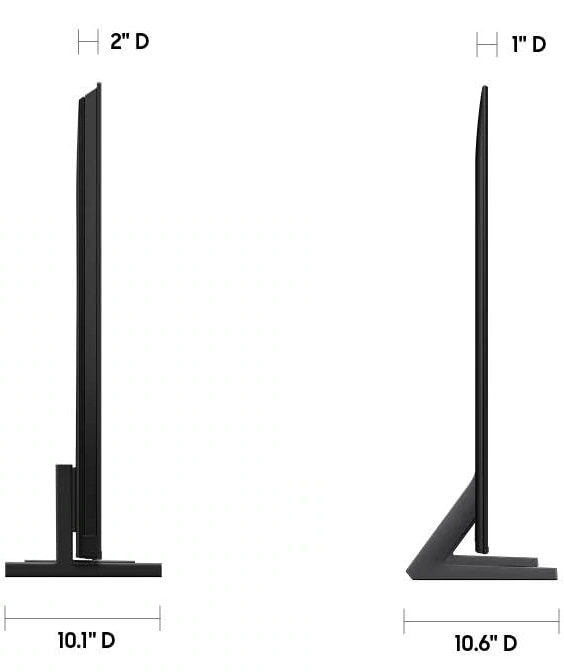
QN80H (left) vs. QN70H (right)
Comparison
Keep in mind that while the QN80H and QN70H share many core features, there are some key differences. We’ve included a detailed comparison chart below to make those distinctions easier to see.
2-channel Speaker System 30 Watts Output Object Tracking Sound Lite (OTS) Q-Symphony Active Voice Amplifier (AVA) Adaptive Sound Pro Karaoke Mic Galaxy Earbuds Auto Switch Dolby Atmos 360 Audio
2-channel Speaker System 20 Watts Output Object Tracking Sound Lite (OTS) Q-Symphony Active Voice Amplifier (AVA) Adaptive Sound Pro Karaoke Mic Galaxy Earbuds Auto Switch
Multi-Control
Yes
Yes
Storage Share
Yes
Yes
TV Design
Solidity
AirSlim
Bezel Type
3 Bezel-less
3 Bezel-less
Front Color
Titan Black
Black
Stand Type
Round Feet
Aero Linear
Stand Color
Black
Titan Gray
Adjustable Stand:
Yes
Yes
Security
Knox Vault: N/A Knox Security: Yes
Knox Vault: N/A Knox Security: Yes
Remote Control
BT Simple Remote TM2280A with batteries
BT Simple Remote TM2280A with batteries
The Bottom Line
Samsung’s 2026 Neo QLED 4K lineup makes a very clear statement: 4K is the priority, not 8K. With improved AI processing, Mini LED backlighting, and Quantum Dot color, these models focus on delivering higher brightness, better contrast control, and more consistent real-world performance across a wide range of screen sizes. Add in strong gaming support and a mature smart platform, and you’re looking at TVs that cover both home theater and everyday streaming without feeling compromised.
What’s missing? No 8K options in this tier, and if you want Samsung’s absolute best display tech, you’ll need to step up to Micro RGB LED or MicroLED—and pay accordingly. On the flip side, if these stretch your budget, Samsung’s Mini LED models offer a more affordable alternative with fewer refinements. The Neo QLED range sits right in the middle: ideal for buyers who want premium performance, large-screen flexibility up to 100 inches, and modern features without venturing into ultra-luxury pricing.
Advertisement
Availability & Pricing
Samsung’s 2026 Neo QLED 4K TVs are available now at the following prices:
The FCC has banned the sale of new foreign-made routers in the US, and this sweeping order applies to virtually every Wi-Fi router currently available in the US market.
My expert advice is to hold off on purchasing a new router if you can.
Under the current rules, banned routers will no longer receive essential security firmware and software updates after March 1, 2027.
The FCC’s action has effectively frozen the entire market while router companies scramble to gain approval.
More specific information on which router companies will be subject to the ban is expected to become clearer within the next month or two.
In my eight years of writing and reviewing broadband and routers, I’ve rarely seen news that I would describe as unprecedented. The FCC’s recent decision to ban foreign-made routers is absolutely unprecedented.
The sweeping order applies to any router in which any stage of “manufacturing, assembly, design and development” occurs outside the US — in other words, just about any router you can buy right now. The FCC order says that foreign-made routers pose “unacceptable risks” to national security.
The ban doesn’t apply to routers that were already authorized by the FCC — that is, every router that’s currently for sale in the US — and will only impact new models that haven’t been approved yet. That means every router that was available before the order is still available today, and router companies can still restock them using their existing manufacturing processes.
Essentially, the FCC is freezing the entire router market. As William Budington, a technologist for the digital rights nonprofit Electronic Frontier Foundation, put it to me, “This is using an extremely blunt instrument.”
Where previous FCC bans have been limited to specific companies, such as last year’s push to ban TP-Link routers, this one affects an entire industry. So where does that leave someone who needs a new Wi-Fi router? Should you buy a model you’ve had your eye on in case it sells out? Or is it better to wait and see which companies the FCC considers foreign-made?
Advertisement
I know what I would do, but I gut-checked my advice with some industry experts. Turns out, we agree.
My advice: Hold off on buying a new router for now
When I first saw the FCC’s announcement, I couldn’t stop thinking about how much chaos this would introduce to the US router market. As I tried to tease out which manufacturers would count as “foreign-made,” it quickly became clear how deeply international the supply chains for routers are.
Understanding the scope of the ban
Take Netgear. While it’s a US-founded and headquartered company, it manufacturers routers in Vietnam, Thailand, Indonesia and Taiwan. With the exception of Starlink — the company says its newer routers are made entirely in Texas, according to the BBC — I couldn’t find a single router brand that’s homegrown.
I don’t have any issues recommending routers that were manufactured abroad. After all, they’d already gone through the FCC’s authorization process, and I haven’t seen convincing evidence that any one router brand has more hardware vulnerabilities than another.
Advertisement
Thomas Pace, CEO of cybersecurity firm NetRise, told me last year during an interview about the potential TP-Link ban: “We’ve analyzed an astonishing amount of TP-Link firmware. We find stuff, but we find stuff in everything.”
I just finished testing, reviewing and rating over 30 routers, and after years of resistance, I finally concluded that Wi-Fi 7 routers are worth the money for the speeds you get. While I stand by my recommendations, with this ban in place, the router you buy today may not be any good in a year.
The future-looking security risk
Then I saw the FCC’s Public Notice on the ban, which specifies that manufacturers can continue providing software and firmware updates “at least until March 1, 2027.” That means if you own a foreign-made router — if you own any router, in other words — it won’t be able to get security patches after that deadline.
That’s why I think the wise move here is to wait on buying one if you can. Keeping your router’s firmware up-to-date is an essential part of securing your home network. If you buy from a router company that doesn’t get an exemption from this ban, you risk having an unsecured device a year from now.
Advertisement
It’s an ironic side effect of an order that is ostensibly designed to keep Americans safer: They may no longer be able to get the latest security fixes.
“If you’re limiting the ability of people to get security updates, then you’re making the problem worse, not better,” Alan Butler, senior counsel at the Electronic Privacy Information Center, told me. “A lot of those routers are going to turn into pumpkins in a year unless they extend this waiver.”
By saying you can update your firmware “at least until March 1, 2027,” the FCC does leave some wiggle room for an extension. But until we know more about which companies the FCC considers foreign-made and which will be exempt, I wouldn’t feel comfortable recommending spending money on a new router right now.
Advice for immediate router needs
If your old router stopped working, I’m not going to tell you to wait for clarity from the FCC to get back on Wi-Fi — the timeline for concern is more in years than months. A good compromise might be to buy an older budget router rather than the latest Wi-Fi 7 model you’ve had your eye on. But if you can afford to wait a month or two, it’s worth exercising some caution.
Advertisement
“I do think this is going to become a mess very quickly,” Butler said.
This is the messiest point in the process we’re likely to see. As the dust settles in the coming weeks, we’ll likely have better information on which routers will still be safe to use a year from now.
TP-Link is one of the most popular router brands in the US, and the subject of several 2025 government investigations.
Advertisement
Gianmarco Chumbe/CNET
Expert opinion: Is your current router still safe to use?
When I polled four cybersecurity experts, I was surprised to find that they were generally in favor of the FCC taking action to protect router security in theory, but critical of the execution.
“It’s going to impact many harmless products in order to stem a real problem,” Budington said. “It’s also not particularly well-targeted, since routers are only one part of the problem, along with IoT devices.”
The concern for national security risk
The FCC says that routers produced abroad were “directly implicated” in the Volt, Flax and Salt Typhoon cyberattacks. These attacks aren’t necessarily targeting an average person’s data, but they can turn your router into a tool to be used in malicious attacks.
“The individual user who owns the router probably doesn’t even know anything about it,” Butler said. “It’s happening in the background without their knowledge, and it’s not necessarily affecting them directly in any way that they can notice.”
Advertisement
In the Salt Typhoon attack, hackers gained access to data from millions of people through their internet providers, aiming to gain access to information from court-authorized wiretaps. It was a particularly bold instance of a tried-and-true hacker approach called “spray and pray”: Find default login credentials and try them on as many connected devices as you can.
“It can be only one router out of 5,000, but that one can be a bingo,” Sergey Shykevich, a threat intelligence manager at Check Point Research, told me about these types of attacks. “It’s mostly just easy. In many cases, you don’t have to be a very sophisticated actor, or even nation-state, in order to be successful.”
How you can secure your router right now
It’s just as easy for hackers to gain access through a router’s default credentials as it is for you to change your own settings. Most routers have an app that lets you update your login credentials from there, but you can also type your router’s IP address into a URL. These are different from your Wi-Fi name and password, which should also be changed every six months or so. It’s also a good idea to keep your firmware updated, which you can do automatically in your router’s settings or by manually downloading updates in your router’s app or web portal.
When will we know more?
I wish I could point to another time when the FCC ordered a blanket ban on an entire category of consumer products, but nothing like this has happened before. Manufacturers can apply for “Conditional Approval,” and they are likely scrambling behind the scenes to make the cut. When I reached out to the FCC for more clarity on the order, I was referred to the commission’s “Covered List” FAQ page.
Advertisement
My best guess is that we’ll learn more specifics on which companies are banned in the next month or so — an estimate that was echoed by two industry observers I spoke with. But the wait could be even longer. Budington told me he thinks router companies might wait until the ban is lifted rather than hustle to try to move their entire supply chains to the US.
No matter how it shakes out, we’ll likely look back on this as the most chaotic chapter of the router ban story. Unless you need a new router immediately, there’s a good chance you’ll be able to make a more informed decision a month from now.
The program is for workers who have lost pay, jobs, or opportunities to AI, writes the Blood in the Machine newsletter. Called the AI Dividend, it is run by nonprofits the AI Commons Project and What We Will, which aim to support humans in an increasingly AI-first world. Read Entire Article Source link
Virtual Private Networks (VPNs) promise to hide your online activities from prying eyes, but still need to gather some information to work properly.
Understanding exactly what data a VPN collects – and why – can help you decide whether a VPN service truly protects your privacy or simply adds another unwanted layer of surveillance.
From activity logs to the different policy types, we’ll walk you through the typical categories of logs a VPN provider might keep. We’ll explain what a “no-logs” VPN really means, highlight when a VPN’s data collection becomes too risky, and provide you with some practical tips for picking a trustworthy VPN provider.
Article continues below
Advertisement
The most trustworthy VPNs will only log what’s absolutely necessary, but what does that include? (Image credit: Getty Images)
What your VPN needs to collect
A VPN’s primary job is to create an encrypted tunnel between your device and a remote server before forwarding your traffic to the internet.
Advertisement
To do this, most VPN providers keep a handful of basic records. These logs are usually short-lived. They’re also typically aggregated and stripped of personally identifying details. Red flags appear when a provider retains identifying logs.
Connection logs
Connection logs capture the technical handshake that takes place each time you start a VPN session.
Typical entries include your device’s original IP address (the IP address assigned by your ISP), the address of the VPN server you connect to, timestamps marking when the session started and ended, and bandwidth usage.
Advertisement
These logs allow the VPN provider to monitor server load and troubleshoot connectivity problems. Connection logs also allow the VPN to manage the maximum number of simultaneous connections per account.
Since connection logs only record that a connection was made and not what you did while connected, they pose relatively little risk to privacy. That said, retaining the original IP address does link you to the session — but a truly privacy-focused VPN will either quickly discard it or never store it at all.
Activity logs
When a VPN advertises itself as a no-logs service, it’s promising that it doesn’t keep any records of what you do while you’re connected.
Advertisement
These activity or traffic logs are the most serious privacy concern. Activity logs can contain the websites you visited and the DNS lookups that translate domain names into IP addresses. They can even include which apps or online services you used.
If a VPN provider stores any of the above activity logs, it can reconstruct a detailed picture of your online life, defeating the purpose of using a private VPN. A true no-logs VPN should explicitly state that it never records activity logs.
Advertisement
Server-level logs
At the server level, providers may keep minimal data, such as the amount of traffic passing through a particular node or generic error messages.
Having this information helps a VPN provider fine-tune performance and balance loads across the network. It can also help identify hardware failures should they arise.
These logs lack any user-specific identifiers, meaning they’re considered the least intrusive form of data collection.
Advertisement
Aggregated logs
Aggregated logs are big-picture statistics that a VPN collects from many users at once.
Nothing collected points back to you personally. Instead, the VPN records things like the URLs or domains visited, the total bandwidth consumed, or generic timestamps. When this data is combined, it never includes your real IP address, the websites you visit, or any account ID that could identify you.
Even VPNs that claim to be “no-logs” need a small amount of information to keep their service running smoothly. Aggregated logs help them know when to add more servers or when there’s an outage or otherwise unusual activity.
The key thing to watch out for here is whether the VPN collects any identifying logs before aggregating data. Provided there’s no raw identifiable data, aggregation is harmless.
Advertisement
Account and payment logs
A VPN has another set of logs that sit outside the VPN tunnel entirely: account and payment logs.
These typically include the email address you signed up with, the payment method you used, when you created the account, and any customer support tickets you may have opened.
Though these logs don’t reveal what you do online, they can tie that activity to a real identity.
Advertisement
If a VPN keeps detailed account or payment information, it creates a link between you and any network logs it might have. If you’re a particularly privacy-conscious user, you might want to consider providers offering anonymous payment and signup, such as Mullvad.
What a no-logs VPN really means
When a VPN advertises itself as a “no-logs” service, the concept seems simple enough: it doesn’t keep any records of what you do online.
In practice, however, most “no-logs” VPNs still store a small amount of data – just enough to keep the network running smoothly. That data is usually non-identifying, such as generic connection timestamps and total bandwidth used, and never includes things like your real IP address or the websites you visit.
While a no-logs VPN may retain these minimal, anonymized logs for operational reasons, a zero-logs VPN keeps no records at all, including non-identifying data.
So when you see a VPN with a “no-logs” label, treat it as a promise that the VPN limits its data collection to the bare essentials and doesn’t store anything that could directly link activity back to you. If you’re after more complete protection, however, look to zero-log VPNs.
Advertisement
When data collection goes too far
Collecting detailed activity logs undermines the whole point of a VPN. That is, to shield your online activities from snoopers.
When a VPN provider records browsing history, DNS queries, or precise timestamps, it can piece together what you accessed, when, and from where. This can be especially dangerous for users living under restrictive regimes where this information may be used against them.
Even in freer societies, detailed logs are vulnerable to data breaches or may otherwise be sold to third parties or requested by authorities.
Free VPNs are the most common culprits of excessive data collection. Lacking subscription revenue, they often make money by selling user data to third parties. For users who rely on a VPN to browse and communicate privately or bypass internet censorship, any retention of original IP addresses or activity logs dramatically increases risk.
Advertisement
If a malicious actor were to obtain these activity or usage logs, they could correlate them with other data sources to identify you. Some of the risks include legal repercussions as well as harassment.
How to choose a trustworthy VPN
Choosing a VPN that respects your privacy starts with looking beyond marketing slogans and focusing on the provider’s real practices. A trustworthy service will prioritize keeping your online activity hidden while offering much-needed security features.
Stick with trusted, vetted names: Look for VPN providers with a solid track record and transparent ownership. The best secure VPNs are less likely to disappear overnight, leaving your data exposed.
Avoid dodgy free VPNs: Free VPNs often fund themselves by logging and selling user data, including identifying information included. If a VPN is free, assume it’s monetizing you in some way and consider a paid alternative.
Check out the VPN’s privacy policy and audit history: Read the VPN’s privacy policy carefully for explicit statements about data retention. To be safe, prioritize VPN services that have undergone independent audits and publicly share the results.
Check out the add-on features/extras available: The best VPNs strengthen security through extras like a kill switch or Double VPN servers. When these add-ons are well implemented, they can provide an extra layer of security without compromising privacy.
This article is crossposted from IEEE Spectrum’s careers newsletter. Sign up now to get insider tips, expert advice, and practical strategies, written in partnership with tech career development company Parsity and delivered to your inbox for free!
Engineers Aren’t Bad at Communication. They’re Just Speaking to the Wrong Audience.
There’s a persistent myth that engineers are bad communicators. In my experience, that’s not true.
Engineers are often excellent communicators—inside their domain. We’re precise. We’re logical. We structure arguments clearly. We define terms. We reason from constraints.
The breakdown happens when the audience changes.
Advertisement
We’re used to speaking in highly technical language, surrounded by people who share our vocabulary. In that environment, shorthand and jargon are efficient. But outside that bubble, when talking to executives, product managers, marketing teams, or customers, that same precision can be confusing.
The problem isn’t that we can’t communicate. It’s that we forget to translate.
If you’ve ever explained a critical issue or error to a non-technical stakeholder, you’ve probably experienced this: You give a technically accurate explanation. They leave either more confused than before, or more alarmed than necessary.
Suddenly you’re spending more time clarifying your explanation than fixing the issue.
Advertisement
Under pressure, we default to what we know best—technical detail. But detail without context creates cognitive overload. The listener can’t tell what matters, what’s normal, and what’s dangerous.
That’s when the “engineers can’t communicate” narrative shows up.
In reality, we just skipped the translation step.
The Writing Shortcut
One of the simplest ways to improve written communication today is surprisingly easy: Run your explanation through an AI model and ask, “would this make sense to a non-technical audience? Where would someone get confused?”
Advertisement
You can also say:
“Rewrite this for an executive audience.”
“What analogy would help explain this?”
“Simplify this without losing accuracy.”
Large language models are particularly good at identifying jargon and offering alternative framings. They’re essentially translation assistants.
Analogies are especially powerful. If you’re explaining system latency, compare it to traffic congestion. If you’re describing technical debt, compare it to skipping maintenance on a house. If you’re explaining distributed systems, try using supply chain examples.
The goal isn’t to “dumb it down.” It’s to map the unfamiliar onto something familiar.
Before sending an email or report, ask yourself:
Advertisement
Does this audience need to understand the mechanism, or just impact?
Does this explanation help them make a decision?
Have I defined terms they might not know?
Translation When Speaking
When speaking—especially in meetings or presentations—most engineers have one predictable habit: We speak too fast.
Nerves speed us up. Speed causes filler words. Filler words dilute authority.
To prevent that, follow a simple rule: Speak 10 to 15 percent slower than feels natural.
Slowing down cuts down the number of times you say “um” and “uh”, gives you time to think, makes you sound more confident, and gives the listener time to process.
Another rule: Say only what the audience needs to move forward.
Advertisement
Explain just enough for the person to make a decision. If you overload someone with implementation details when they only need tradeoffs, you’ve made their job harder.
The Real Skill
The key skill in communication is audience awareness.
The same engineer who can clearly explain a concurrency bug to a peer can absolutely explain system risk to an executive. The difference is framing, vocabulary, and context. Not intelligence.
In the age of AI, where code generation is increasingly commoditized, the ability to translate complexity into clarity is becoming a defining advantage.
Advertisement
Engineers aren’t bad communicators. We just have to remember that outside our bubble, translation is part of the job.
—Brian
Robert Goddard launched the first liquid-fueled rocket 100 years ago, but his legacy still has relevant lessons for today’s engineers. Although Goddard’s headstrong confidence in his ideas helped bring about the breakthrough, it later became an obstacle in what systems engineer Guru Madhavan calls “the alpha trap.” Madhavan writes: “We love to celebrate the lone genius, yet we depend on teams to bring the flame of genius to the people.”
For Communications of the ACM, two Microsoft engineers propose a model for software engineering in the age of AI: Making the growth of early-in-career developers an explicit organizational goal. Without hiring early-career workers, the profession’s talent pipeline will eventually dry up. So, they argue, companies must hire them and develop talent, even if that comes with a short-term dip in productivity.
Looking for a job? Last year, IEEE Industry Engagement hosted its first virtual career fair to connect recruiters and young professionals. Several more career fairs are now planned, including two upcoming regional events and a global career fair in June. At these fairs, you can participate in interactive sessions, chat with recruiters, and experience video interviews.








 Proper wire strippers are one of the most useful tools for a budding electronics enthusiast, because stripping hookup wire is a common task and purpose-built strippers make for quick and consistent results.


















































You must be logged in to post a comment Login