Connect with us

Tech

The Curse Of The Everything Device

Published

on

In theory having a single device that combines the features of multiple dedicated devices is a great idea, saving a lot of space, time and money. However, in reality it mostly means that these features now conflict with each other, force us to deal with more complex devices that don’t last nearly as long, and become veritable vampires for your precious attention.

Whereas in the olden days a phone was just used for phone calls, now it’s also a video and photo camera, multimedia computer, pager, and more, but at any point an incoming phone call can interrupt what you are doing. There’s also always the temptation of doom scrolling on one of the infinite ‘social media’ apps. Even appliances like televisions and refrigerators are like that now, adding ‘smarts’ that also vie for your attention, whether it’s with advertisements, notifications, or worse.

Meanwhile trying to simply do some writing work on your PC is a battle against easy distractions, leading people to flee to the digital equivalent of typewriters out of sheer desperation. Similarly, we increasingly see ‘dumb’ phones, and other single-task devices making a comeback, both as commercial options and as DIY projects by the community.

Are we seeing the end of the ‘everything device’ and the return to a more simple time?

Advertisement

Bored Is Good

WordPerfect 5.1 running on MS-DOS. (Credit: Daniel Pritchard, Wikimedia)

In the before times, when the iPhones hadn’t yet flooded the planet and Facebooks weren’t even a twinkle yet in some bloke’s eye, your attention wasn’t nearly as much preyed upon as it is today. Spending time on the World Wide Web wasn’t that prevalent, people weren’t yet walking around with displays practically glued to their faces, and if you wanted to do any task it took real effort.

Although I learned to touch-type on an electric typewriter and briefly owned a Brother typewriter, I was already using PCs and word processor software most of the time. Of course, this was initially on MS-DOS with WordPerfect 5.1, running first on the family 286 PC and later the IBM PS/2 386SX system that my father’s work had sold off for a pittance. Back in the single-tasking MS-DOS days it meant that once you were running WordPerfect, or games like Stunts 3D or Doom, that was all you did.

Later I’d run Microsoft Office on Windows, but with only dial-up internet available the temptation from distractions were minimal. Not until the arrival of always-online broadband internet would you have to suffer through notifications from IRC, MSN, ICQ and whatever else you had running in the background, but even then you’d not be on the PC all the time.

When it came to entertainment, such as watching TV, playing a movie or music, it would be just that one thing with zero interruptions on the HiFi set, a Walkman or TV. Along with only landline phones that you were usually not within hearing distance of, it was easy to be ‘bored’ and do some quiet reading, drawing or prod at some small wildlife in a puddle outdoors. Even game consoles were still fully offline, so couch-based gaming – optionally with split-screen – was as multiplayer as things got.

Although even during the 1990s many people had email, you weren’t expected to check your mailbox more than once a week, perhaps a few times a day for serious nerds.

Advertisement

The Online Cacophony

Credit: Xinmei Liu

Much of the curse of the ‘everything device’ can be reduced to the fact that everything has to be connected to some remote service or a dozen. Just imagine not having internet on your smartphone, smart TV or PC, and how it almost instantly plummets you into chronic anxiety as only just about everything is connected to some online service, or depends on data stored on remote servers.

Getting away from all this is hard, as signing up for a dozen social media services is part of social pressure, and each of these services make sure to incessantly pull you in with updates and notifications. Then there are advertisements that have become the main financing model for websites and even online services in the 21st century, which ever more intrusively barge into whatever it is that you’re trying to do.

Here the term ‘chronically online‘ along with similar terms has previously been pitched and would seem to be rather apt. Ever more people have to check their smartphone for new notifications and updates, and are constantly occupied with what is happening on social media, rather than in the real world.

Worse, you’re no longer just taking snapshots on your photo camera or recording video on a camcorder, but everything goes straight into the Cloud™, from where you get pushed, harassed, and cajoled into sharing every single bit of content with everyone else, lest someone misses out on your Amazing New Experience.

Out Of Focus

The main problem with all of these chronically online everything devices is that you are never left alone with your thoughts, and thus never get ‘bored’. Everything wants a slice of your attention, with social media platforms being practically engineered to hoover up every last crumb of it, while counting on your inability to control your impulses and relying on your innate fear of missing out (FOMO), courtesy of you being a very social type of monkey.

For example, a 2021 study in Frontiers in Psychology by Christina Koessmeier and Oliver B. Büttner investigated the causes behind the distracting effect from social media in particular. FOMO is a big reason, as we are social monkeys who generally like to be part of the group rather than excluded. Self-regulatory issues are many, such as preferring to pop over to a social media app or site rather than complete an unpleasant or difficult task. It feeds the reward center of your brain, even if you’re not actually accomplishing the task you set out to do.

Advertisement

One could argue here that the demise of the third place alongside the rise of ‘everything devices’ like smartphones has led to a situation where being chronically online is a way to compensate for the lack of real-life connections, albeit in an environment that’s mentally rather toxic due to how social media in particular works. By providing a sense of belonging – whether false or not – these online places become an important part of our identity.

That a lot of unhealthy behavior is associated with such a chronically online existence ought to be self-evident. Meanwhile the push towards ‘everything devices’ like smartphones isn’t due to corporate benevolence, but rather to trap all of us into endless subscription services, accessed via a terminal device explicitly designed to siphon off every last drop of our attention, focus, and money.

Escape The Trap

Rather than hapless insects, caught in the slowly solidifying tree sap that will inevitably doom them, we humans like to brag about our intellect and ability to innovate. Thus, at least some of us are trying to get out of this veritable tar pit of FOMO and social manipulation, even as we try to figure out what exactly went wrong down this path of Future Technology™.

Motorola RAZR V3i mobile phone. (Source: Wikimedia)

The question is: how far exactly should we go back in time? This is a question that’s been on the minds of many, with a wide variety of solutions offered. The most extreme is of course the digital detox approach, whereby a person completely removes all smartphones and similar technology from their lives for a set period of time. Although showing positive effects on people’s mental health, this can of course only ever be a temporary intervention.

For many people the allure of switching away from smartphones and to feature phones (‘dumbphones’) is an appealing one. Personally this is a step that I have also taken, switching from a regular Android smartphone to a KaiOS-based TCL Flip 3 feature phone that’s slightly more full-featured than a Motorola Razr V3, but also equally as user-friendly and devoid of most non-phone functionality. Photos you take also are saved to internal memory, with no cloud storage unless you jump through serious hoops.

Advertisement

When you’re on a PC, it is of course much harder to escape the pull of FOMO and easy ‘rewards’ by doomscrolling or watching funny cat videos on YouTube. Here you can either focus on training your self-control, or by using a zero-distraction typing device that removes all temptation.

On the training side of things, the Pomodoro Technique can be done using a bog-standard kitchen timer to set the intervals, any of a number of online timers, special YouTube videos, or by building your own physical timer, with even just recently a few examples already popping up here on Hackaday.

Back To WordPerfect 5.1

It’s hard to argue with simply installing good ol’ WordPerfect 5.1 or equivalent on some DOS flavor in a system of your choice and typing away there. We have recently seen a SvarDOS-based environment that comes preloaded with a range of word processors and kin to get you started. Since you won’t even have networking, you won’t be distracted by anything. This can of course be replicated in a variety of freely available software, with FreeDOS and any word processor available from Archive.org being fair game.

You can also go down the ‘digital typewriter’ route, with some commercial options even being available here, such as the Zerowriter Ink. Alternatively you can go fully minimalistic with an ESP32-based writer deck, or opt for something vaguely more laptop-like. A lot here depends on how much you require in terms of formatting and editing features. Although sometimes you really just need to hammer out lots of words, in which case the portable equivalent of Notepad is fine, you may want to add at least some formatting.

Advertisement

Personally I’m quite the fan of the calming white-on-blue text with full word processing capabilities alongside the deafening noise of the buckle-spring keyboard of an IBM PS/2, but everyone has their own preferences. And maybe that is another benefit of breaking away from the Everything Device — you get to find out what works best for yourself.


Source link

Advertisement
Continue Reading
Click to comment

Leave a Reply

Your email address will not be published. Required fields are marked *

Tech

Forget Fast Food, This US State Is Opening Its First Drive-Thru Court

Published

on


If you’re in Cobb County, Georgia, you can now hit the state’s first drive-through court service on your next lunch break. The newly opened Clerk’s Office Express lets residents pay certain fines and fees without even needing to get out of their vehicles. Operated by the Cobb County State and Magistrate Court Clerk’s Office, the hope is that it’ll streamline routine court transactions and cut down on congestion inside court buildings.

Time will tell how quick and easy it actually ends up being in the long run. Nevertheless, the Clerk’s Office Express accepts payments for traffic citations, school bus arm violations, and probation fees, as well as court fines and restitution for cases that don’t require a court appearance, like that million-dollar speeding ticket someone got in the state a couple of years back.

Advertisement

The concept was developed by Cobb County State Court Clerk Tahnicia Phillips, who said courts must adapt to changing demands and community needs. “Modern courts must meet people where they are,” Phillips said in a press release. She called the drive-through a practical step toward improving access without needing to add any complicated new technology in the process.

Advertisement

What led to a need for clerk’s office reform in Cobb County

In recent years, Cobb County has seen a significant rise in citations issued. Naturally, that comes with a similar increase in payments needing to be made; part of that increase comes after the county’s rollout of 150 school bus cameras to stop drivers from illegally passing stopped buses. That’s why it’s always a good idea to know what to do if you need to pass a stopped car. The state’s also seeing more tickets from speeding cameras in school zones

By shifting some of those routine transactions to the drive-through, officials expect to reduce the court’s crowded lobbies and improve efficiency for both staff and the public alike. The drive-through even allows attorneys to submit filings, making it more than just a place for people to pay fines.

Online payment options have been available and will remain so, even with the opening of the drive-through. Still, if things go according to plan, this new alternative will be a helpful and time-saving change for those who prefer to pay in-person. 

The office opens at 7:30 in the morning and will remain open until 3 in the afternoon, Monday through Friday. People need to bring their citation or case number, a photo ID, and a debit or credit card to take care of what they owe.

Advertisement


Source link

Advertisement
Continue Reading

Tech

Amazon's wishlist update could expose users' home addresses

Published

on


Amazon recently emailed some of its users to explain that its list feature is about to undergo a significant change. The message, sent to users with a publicly shared list and a delivery address on file, stated that purchases from third-party sellers will no longer be restricted.
Read Entire Article
Source link

Continue Reading

Tech

5 Handy Garage Tools That Help Keep Car Repairs Simple

Published

on


We may receive a commission on purchases made from links.

While the majority of cars produced over the years are built to last, they aren’t bulletproof. If you have the right tools for the job, though, most maintenance and repair work isn’t anything that requires you to go to the mechanic for. Keeping on top of the smaller tasks is sure to help you avoid the massive bill for a major repair in the long run, so investing in a solid set of versatile and reliable tools will prove hugely beneficial no matter your skill level. 

Advertisement

With so many options on the market that have similar purposes, it can sometimes be tricky deciding which tools are best for the specific job at hand. For this list, we’ve selected tools that are easy to use and cover many different bases, all designed to make car repairs as streamlined as possible as well as avoid getting ripped off at the mechanic for a job you could have easily done yourself. Repairs that may feel overwhelming beforehand can be made so much easier with the following five tools, most of which can be picked up for hardly anything.

Advertisement

Propane Torch Kit

The best tools to have at the ready are ones that can be used for a variety of different tasks. And with car repairs, the list always gets longer and longer. Within these jobs are plenty of smaller things to take care of, which is where a propane torch kit can come in super handy. If you need as much heat as possible to weld, cut, or remove the tightest fasteners, going for an oxy-acetylene torch or even an oxy-propane one will be the far more effective choice. But if you just need to touch up a few areas for the best maintenance, a standard propane torch should prove to be incredibly useful.

Pricing for propane torch kits can vary depending on the overall capability, but you can pick up a highly-rated one for around $40. For example, one of Bernzomatic’s tools from Home Depot gets plenty of praise for its versatility and features an overall rating of 4.5 stars. In the garage, you can use this for repairs and maintenance tasks like soldering and brazing smaller metal parts, loosening fasteners that don’t need as much heat to shift, and restoring plastic trim that’s picked up damage over the years. 

Advertisement

Impact Wrench

Keeping on topic with the best tools to make jobs revolving around fasteners far easier, it doesn’t get much more effective than an impact wrench. There are a few different areas where this tool will come in handy, with the most obvious being removing the lug nuts from your wheel. Subsequently, this’ll also make it easier to access to parts such as the brakes and suspension, which are other parts where you may well encounter tough fasteners that you need to take off during repair or maintenance.

A high-quality, cordless impact wrench can also prove massively effective for your engine, once again removing stuck or difficult-to-reach fasteners during individual replacements or complete disassembly. They’re aren’t the best at putting those same fasteners back on, though, with a torque wrench being the optimal tool for that instead. Plenty of the major tool manufacturers have an impact wrench in their lineup, with examples from Milwaukee (SlashGear’s reigning champion for impact drills) ranging from $199 up to $489. They’re certainly one of the more expensive tools that you’ll pick up for your garage, but they provide unrivaled efficiency for the specific task.

Advertisement

Mechanic Stethoscope

The next tool on this list is a little different from the rest, as it’s not one that you’ll use to actually repair something directly. Trying to find the source of that mysterious rattle that seemingly came out of nowhere feels like an entire job by itself, particularly when it sounds like it’s coming from a component-dense part of the car. This is what makes investing in a mechanic stethoscope so valuable, as it could potentially save you a lot of money on something you can resolve yourself.

A mechanic stethoscope works the same way the one you encounter at the doctor’s office, as it enhances your ability to hear faint sounds. Instead of a diaphragm, though, it uses a metal rod that can pick up vibrations clearly and accurately for you to hear. For automotive work, placing the rod on the different components where the noise is coming from can pinpoint what exactly is causing it, giving you a much clearer idea on the next steps. The money-saving aspect of this tool is through indicating low fluid levels, particularly if you find the noise is metal-on-metal contact with components like bearings that are lacking in lubrication.

Advertisement

You can pick a highly-rated mechanic stethoscope for as little as $8.99 from outlets like Harbor Freight, a unit that boasts a highly respectable 4.6-star user rating. It’s easily one of the cheapest yet most practical tools for your garage repairs. Do take extra care when placing the rod while the engine is running, though; the last thing you want to do is to hit any moving parts that could mangle the stethoscope or any other components.

Advertisement

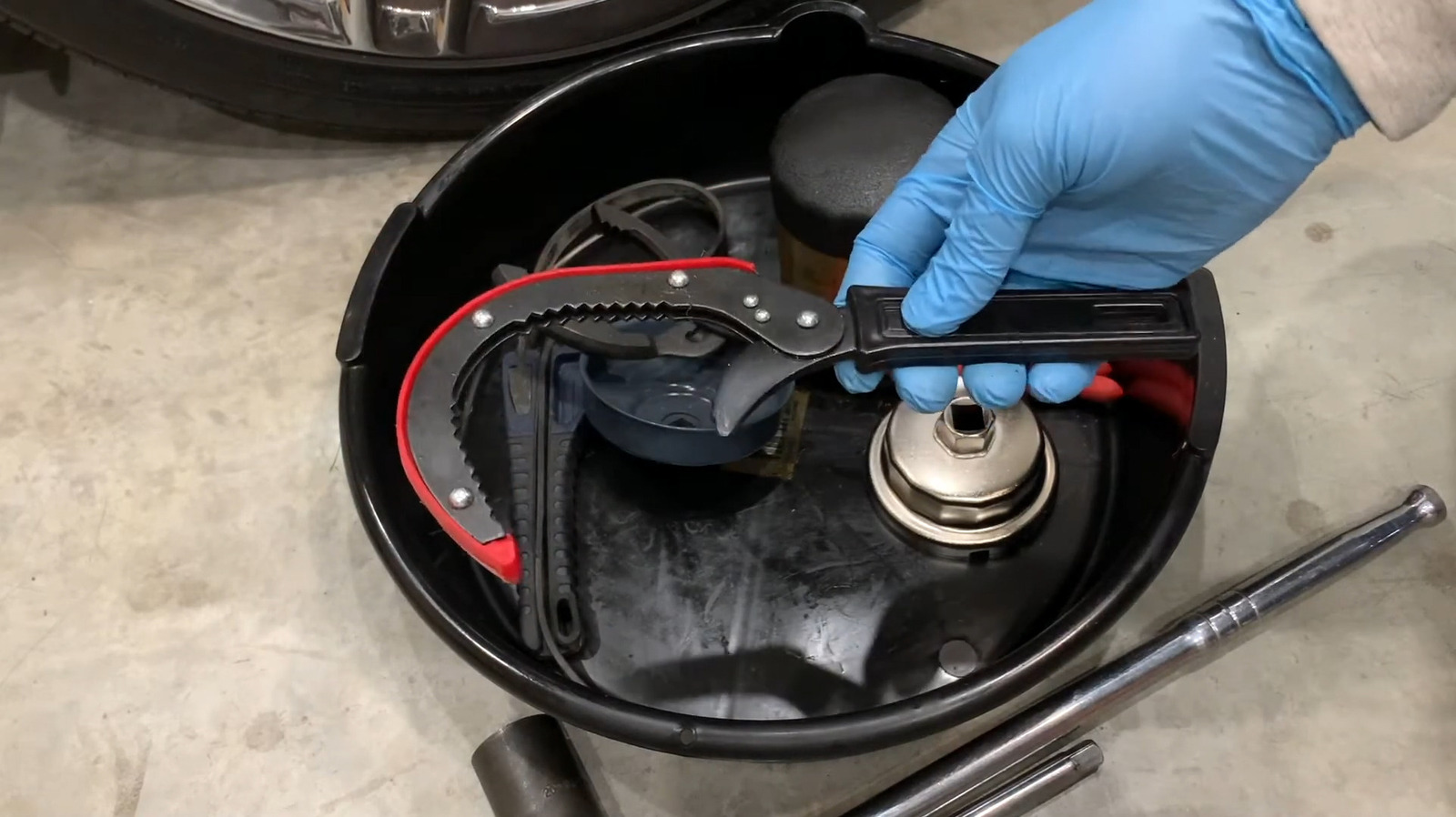
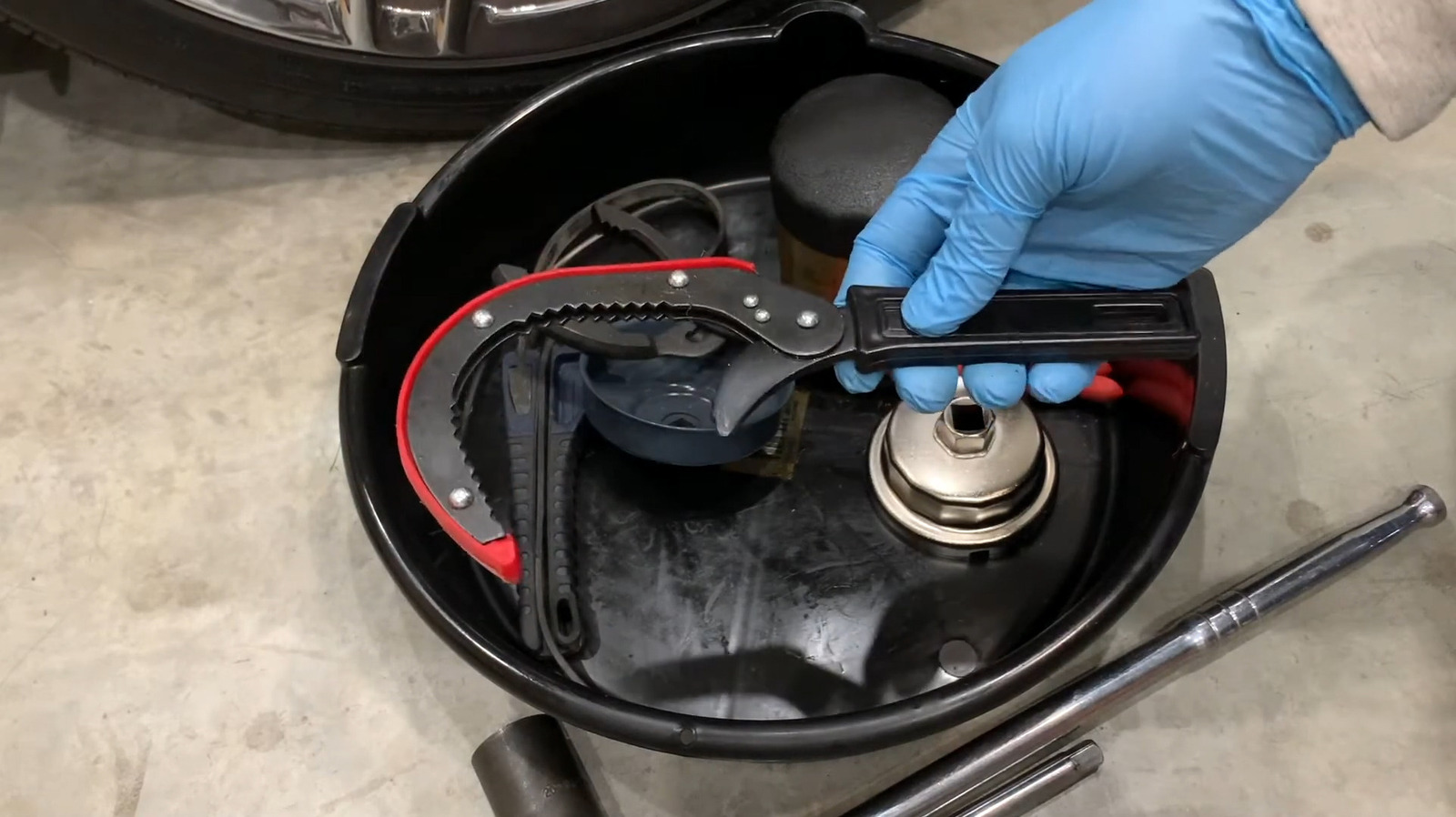
Oil Filter Wrench

If you do find yourself needing an oil change, removing the filter can present yet another challenge that can be easily solved with this next tool. Whether you have a leak or the filter just isn’t on tight enough, oil gathering on and around the filter can sometimes make it next to impossible to tighten or take the current one off barehanded. Purchasing an oil filter wrench can reduce the hassle significantly, providing you with the necessary grip and force to remove filters that otherwise wouldn’t budge.

There are a few different types of oil filter wrenches you can buy. The first is the plier type, which works in the way you’d imagine by gripping either side of the filter. Another popular choices are the adjustable strap and band types, which are best for attaching to the more difficult-to-reach filters. Harbor Freight offers a solid plier wrench with a 4.7-star user rating for just $4.99. Strap wrenches are often more expensive, running closer to $10 or higher.

Advertisement

Digital Caliper

Getting the most precise measurements are essential for most automotive repair jobs. If you’re looking to buy an aftermarket part or you’re fabricating a custom one from scratch, your measurements can’t be even slightly off if you want the right fitment. This is especially the case for newer cars that have even less breathing room for tolerances. To make things as easy as possible while getting accurate measurements, we’d recommend using a digital caliper, which offers all the versatility required for automotive repairs.

The standard vernier type of digital caliper consistently proves to be the most useful, with its opposite jaws capable of proving both interior and exterior measurements with ease. These prove particularly useful for the smallest components that are also hard to reach, especially for parts with rounded edges. Another incredibly useful garage tool you can pick up on a budget, Amazon has plenty of these, like this caliper set for around $20 with standout reviews and a 4.4-star rating. A comparable Harbor Freight in-house product, similarly well-reviewed by buyers with an identical user rating, goes for an even more affordable $9.99.

Advertisement


Source link

Advertisement
Continue Reading

Tech

Trump calls on Big Tech to supply their own electricity for AI data centers

Published

on


During this week’s State of the Union address, Trump said he negotiated with leading artificial intelligence companies to establish a “Ratepayer Protection Pledge” aimed at shielding American households from rising electricity costs. The president did not identify the participating companies by name, but sources close to the administration say that…
Read Entire Article
Source link

Continue Reading

Tech

6 Costco Membership Perks You Might Be Missing Out On

Published

on


When you sign up to be a Costco member, there are a number of obvious benefits you can take advantage of right off the bat. Apart from being able to purchase good quality everyday essentials often at a more reasonable price, you have the option of garnering even more savings by stocking up on items that have a high turnaround in your home by buying them in bulk. Costco also has its own gas pumps that could potentially save you some money, as well as an in-house pharmacy that offers in-person pickup and, in some areas, home delivery of prescriptions for your family and even pets. Perhaps one of the more attractive perks one can avail through a Costco membership is a relaxed return policy on most of its merchandise.

Costco’s cheapest membership offering to date is $65 per year for the Gold Star membership. Should you decide to splurge $130 per year for the higher-tier Executive Costco membership, you can get access to more than the core shopping perks. For instance, you should be able to shop at most Costco warehouses an hour earlier than the usual store hours, which could be a game-changer, especially in populated neighborhoods. 

You also should receive a $10 credit on eligible SameDay.Costco.com or Costco via Instacart orders per month, if you prefer getting your purchases delivered to your door. To ensure that you maximize your current Costco membership — or to help you decide to get one if you’re still on the fence — below are some of the advantages you can enjoy that you may not know about.

Advertisement

Great deals on travels and car rentals

If you enjoy going on trips with your friends or family, it may be worth it to look into a Costco membership to book through CostcoTravel.com. Anyone can browse through the platform to find hotels and cruises available for specific locations, dates, and group size, among other things. You can even build a vacation package by adding flights as well as a car rental, so you get a broader picture of how much money it would take to make your dream getaway a reality.

While a Costco membership isn’t required to participate in a Costco Travel excursion or package, at least one person in your traveling party needs to have an active Costco membership to actually book a hotel, cruise, car rental, or vacation package through the members-only platform. In addition, Executive members may be eligible for package-specific rewards, such as resort or shipboard credit. They should also earn a 2% reward after a trip booked directly through the Costco Travel website is concluded.

Advertisement

Of course, any seasoned traveler and car renter should always do due diligence and check the usual third-party travel aggregators to compare and contrast prices for flights, car rentals, and vacation packages. More often than not, though, and depending on your destination, you may find that Costco travel deals are highly competitive, if not cheaper than direct-to-the-source rates.

Advertisement

Free tech support for electronics and appliances

As previously mentioned, one of the best merits of being a Costco shopper is knowing that you have a wide berth for returning any products you may not be 100% satisfied with. This is especially helpful if the item in question falls under the gadget or appliance category. According to Costco’s electronics return policy, products like refrigerators, microwaves, computers, tablets, projectors, cameras, or TVs, among other things, may be returned or exchanged within a 90-day period that begins upon purchase (or upon delivery, when ordered online).

Another important perk that comes with the helpful 90-day guarantee is having access to Costco’s Technical and Warranty Services. The online portal will likely have the answers you need in terms of warranty coverage or simply getting your product to work as intended. U.S. Costco members may also call Technical and Warranty Services at 1-866-861-0450 for additional assistance. Just provide your Costco membership number as well as the necessary product details, and someone from the tech support team should be able to walk you through the steps to fix a glitch at no added cost.

While Costco usually offers free tech support for most electronics and larger appliance purchases, according to the fine print, your product may have certain limitations that exclude it from the benefit. It’s also worth noting that tech support may assist in product setup and basic troubleshooting, but major repairs may have to be checked against your product’s manufacturer’s warranty. In any case, it’s always a good idea to double-check with Costco’s customer service regarding your item’s coverage.

Advertisement

Discounted insurance via partner providers

Costco directly partners with a specific list of licensed providers so that members essentially have a one-stop shop for any type of insurance benefit or option they may need. This is bolstered by additional discounts and premiums only offered to Costco members. For example, Protective Life offers competitive rates for up to 30 years and a special entry-level price for the first five years through its Member Advantage Life term policy, only available to Costco members. 

Pets are also covered — as long as you’re based in a participating state, you may be able to get discounted insurance for your furbaby through Figo Pet Insurance. Furthermore, Costco also has a partnership with American Family Insurance that offers both car and home insurance at a discounted price, especially if you opt to bundle both insurance types for maximum coverage. The latter also provides members-only pricing for renters’ insurance.

If you happen to have a Costco Executive membership, additional benefits may be available to you when you sign up for a policy with one of Costco’s partner providers. For instance, when you purchase a home or auto insurance policy through Costco’s partnership with American Family Insurance, as an Executive member located in an eligible state, you may have access to emergency roadside assistance, the option to renew every year that you remain an Executive member, glass repair reimbursement, and home lockout assistance, with certain limitations applied.

Advertisement

A marketplace for even more health insurance

All of Costco’s partner-negotiated programs and policies mentioned above are listed on Costco’s Insurance Services page, should you need more clarity on the types of insurance offered by direct partner providers. However, if you want to shop around for other insurance carriers that aren’t in direct partnership with Costco, there’s also the CBC Health Insurance Marketplace, a private, multi-provider insurance platform wherein Costco acts as your insurance broker or agent.

Here’s how it works: You use the portal to shop for a variety of insurance products — medical, dental, vision, and disability, to name a few — from multiple major carriers. Instead of having to go to every provider (like Aetna or Blue Cross Blue Shield) directly and get quotes one by one, you can see several quotes from different providers that fit your requirements on a single portal. Licensed agents from the CBC platform will be on hand to help you compare plans and even walk you through the enrollment process. In some cases, you may not be required to provide a Costco membership number to get a quote. However, you will definitely need one to actually enroll for coverage.

The use of the CBC Health Insurance Marketplace platform is beneficial to those who want comprehensive health coverage options that aren’t necessarily provided by a single carrier. Do note that, much like with the insurance providers Costco is in direct partnership with in the previous section, any plan enrollment you go through via the marketplace will be with the insurance providers you have chosen. Costco will not be underwriting or paying claims.

Advertisement

Other vehicle-related benefits

Considering what you already know about Costco’s exclusive offerings thus far, it would be safe to say that, as a responsible car owner, it would benefit you to at least consider acquiring a membership if you don’t already have one. As a Costco member, you can buy quality tires for a reasonable price and be afforded excellent tire warranty coverage, as well as the convenience of getting a service done, such as a tire replacement, at the same place you shop for groceries.

If you’re shopping around for a new or used vehicle or perhaps need to get your current one serviced but are overwhelmed with the idea of trying to research the best place to address your needs, one thing you should look into is Costco’s Auto Program. This is Costco’s lesser-known car-buying service exclusive to its members. The platform promises to negotiate on your behalf by providing you with a network of trusted and approved dealers nationwide. According to Costco, as a member, you automatically are given low and pre-arranged members-only pricing, with discounts and manufacturer incentives already included. If you’re new to online car buying and are iffy with the whole process, you can get in touch with Costco’s member support team to ensure all your worries are assuaged.

Advertisement

Costco Auto Program also has a partnership with Camping World, a renowned recreational vehicle (RV) retailer in the U.S. You can browse by RV type or brand as well as view what’s available within your zip code. According to the Costco Auto Program’s guarantee, you’ll be offered the lowest advertised price and an additional Costco member discount, among other perks. Other auto-related incentives you can take advantage of by being a Costco member include a 15% or up to $500 discount off select auto parts, accessories, and services at participating service centers, as well as 25% off retail rates when you rent a moving truck with Budget Truck Rental.

Advertisement

Miscellaneous benefits and newer Executive member advantages

If you happen to run a business, you may need to process credit card payments, which can be quite costly in the long run, especially if you have a small enterprise. Through Costco’s partnership with Elavon, a credit-card processing provider, you may be able to reduce some of your operational costs. As a U.S. Costco Gold Star member, you are afforded lower processing rates on both in-person and online credit card transactions, among other perks like round-the-clock support through Elavon’s customer account management team. Executive members who qualify get bonus financial benefits in the form of waived application and monthly statement fees, both of which you typically need to pay for when you have a standard Elavon merchant account.

Costco constantly improves its list of extra privileges that it makes available to those who opt to make the jump to the Executive-level membership. Apart from the benefits already mentioned all throughout this piece, there are some services that have been newly added to the roster. Costco now has a partnership with Pods, a moving and storage company in the U.S. that provides you with a weather-resistant container — either at your home or at a Pods storage center — to use for additional storage, to keep equipment or belongings in while you remodel or declutter, or to pack up and move to a different address, among other uses. 

If you book a Pods container through your Costco Executive membership — provided that you fulfill the requirements (such as a minimum of two months storage rental) — you get free container delivery and pickup to a local address, up to four free local redeliveries, 20% off monthly storage charges, and 20% off long-distance transportation, to name a few. As always, limitations may apply depending on your location, so make sure you get in touch with Pods for a more accurate insight into service availability.

Advertisement


Source link

Continue Reading

Tech

‘Meaningless’ theater? As tech giants pledge ratepayer protections in D.C., others question real-world impact

Published

on

Inside an Amazon data center. (AWS Photo / Noah Berger)

Data center titans Amazon, Google, Meta, Microsoft, xAI, Oracle, and OpenAI are headed to the White House next week to sign a commitment to fund their own energy infrastructure costs, CNBC reported today.

The deal, teased by President Trump during Tuesday’s State of the Union address, arrives as the massive power requirements of generative AI become a flashpoint for voters frustrated by rising utility bills.

“Tonight, I’m pleased to announce that I have negotiated the new ratepayer protection pledge,” Trump said in his address. “We’re telling the major tech companies that they have the obligation to provide for their own power needs. They can build their own power plants as part of their factory, so that no one’s prices will go up…”

Microsoft and OpenAI last month made their own commitments to cover their electricity costs and act as good neighbors in the communities where they’re building data centers that power the internet and artificial intelligence. On Monday Amazon announced a $12 billion data center project in Louisiana in which the company vowed to pay its own way for energy and other infrastructure.

While the pledges aim to quell public anxiety, some industry veterans say they’re solving a problem that doesn’t exist.

Advertisement

“All these announcements about data centers paying their own way for power costs are meaningless,” said Brian Janous, Microsoft’s former vice president of energy and co-founder of Cloverleaf Infrastructure, a startup that helps secure clean power for data centers and other industries.

“They are meaningless because data centers have been paying their own way from day one,” he said in a LinkedIn post Wednesday. “You know who else pays their own way? Supermarkets. And shopping malls. And auto factories. And homeowners. Everyone pays their own way.”

Janous argued that electricity rates are designed to ensure that customers bear their fair costs for power use, and that adding large customers to the grid actually helps lower rates as they can fund system upgrades. “Trying to stop datacenter expansion in the name of limiting rate increases will only make the problem worse,” he added.

Others disagreed, noting that country’s aging grid requires long-deferred, expensive improvements that won’t necessarily be borne by data centers, particularly given the speed at which the massive amounts of new energy need to be deployed.

Advertisement

Another wrinkle is the Trump administration has impeded wind and solar power projects, which are the cheapest sources of new electricity, and is working to weaken federal energy efficiency standards for appliances and equipment. Inflation and higher interest rates are also driving up power costs.

What really needs to happen, Janous said in a GeekWire interview, is the grid needs to be more efficiently to managed to meet spikes in energy demand. That can happen without building a bunch of new power plants, but is technically complex and requires collaboration and coordination between utilities and their customers.

“It’s hard, but it’s doable,” he said.

While the White House has targeted voluntary pledges from Big Tech, Washington state leaders are moving toward a more regulated approach. The state Senate is currently weighing House Bill 2515, which would:

Advertisement
  • Direct utilities to create tariffs or policies that protect ratepayers from short- or long-term financial risks associated with the data centers’ energy use.
  • Require companies to release water, energy and pollution reports on the facilities’ operations.
  • Set rules on using renewable power for data centers.

The measure has its next public committee hearing tomorrow.

Rep. Beth Doglio, D-Olympia, is the bill’s lead sponsor and recently testified in favor of statewide standards to ensure “that we do data centers right in this state.”

Source link

Continue Reading

Tech

This Startup Streamlines Health Care Referrals

Published

on

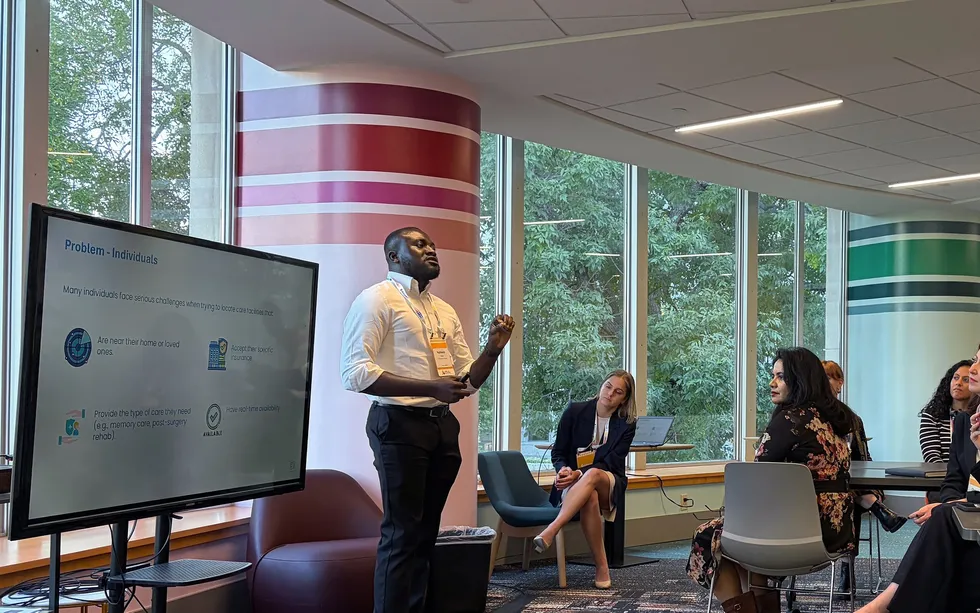
When doctors in the United States refer patients to specialty or post-acute medical care such as physical therapy or long-term nursing care, nearly half never complete the process of finding help. Referrals stall in part because provider directories are outdated, insurance coverage is unclear, and much coordination still relies on phone calls and faxes.

Carenector, a Denver-based startup launched in 2024, is working to improve the process with software that quickly connects patients with appropriate care providers while protecting their personal data. Instead of presenting a long list of providers, many of whom would not be a good match, the company’s referral platform uses AI to eliminate facilities that don’t meet the patient’s rehabilitation needs, don’t accept the patient’s insurance, or are not conveniently located.

Carenector

Cofounder:

Advertisement

Naheem Noah

Founded:

2024

Headquarters:

Advertisement

Denver

Employees:

5

The startup’s platform serves individuals seeking care as well as health care organizations and care coordination teams that manage patient referrals. The company aims to help patients while reducing the administrative burden on clinicians and discharge planners, says cofounder Naheem Noah. As of now, Carenector works with patients and facilities only in Colorado, but it plans to expand coverage nationwide.

Advertisement

Noah, a Ph.D. candidate who joined IEEE in 2022 as a student member, encountered the referral problem firsthand after tearing an anterior cruciate ligament in a knee while playing soccer. Finding a physical therapist who accepted his insurance, specialized in ACL rehabilitation, had appointments available, and was near his home required hours of phone calls and searches through inaccurate provider lists, he says.

That experience helped shape the company’s direction, but Carenector is aimed at a broader, persistent failure in U.S. health care coordination.

A broken referral system

The company took shape when Noah connected with his cofounder, licensed social worker Aminata Diarra, a social director at a nursing facility. Her role included discharge planning: placing patients in post-acute-care facilities that bridge the gap between hospital discharge and the patient’s ability to independently manage life’s daily activities.

For a single patient, Diarra says, that often meant she made 10 to 15 phone calls over the course of a week to find a facility with a bed available, that accepted the patient’s insurance, and that could meet the care requirements.

Advertisement

She and Noah soon realized they were dealing with the same broken system from opposite sides. Existing research on referral lapses supported their experience. Primary care physicians often send referral notes—analogous to prescriptions—that list the patient’s medical history and describe the needed treatment.

Noah discovered that only about one-third of the notes are transmitted in a way that allows providers at nursing homes and rehab facilities to access the information.

Physicians often post their suggestions for ongoing treatment in sections of a patient’s electronic health records, but providers at post-acute facilities don’t have access to those because of medical privacy laws. What gets shared is a pared-down document that omits progress notes and discharge summaries.

Engineering a research-driven startup

Noah is currently a researcher in the University of Denver computer science department, where his academic work focuses on privacy and security in digital systems.

Advertisement

He is Carenector’s chief executive and technical lead, overseeing the system’s design, making technical decisions, and meeting with investors.

Although the startup is separate from his dissertation research, the company reflects his broader interest in building secure systems that work in real-world conditions.

Beginning a company while a student, he has access to university resources that many early-stage startups lack. He has participated in the university’s BaseCamp accelerator and received mentorship and business planning support.

The Carenector team was assembled with the plan to scale up in the future with health care compliance in mind. The group includes professionals from regulatory, legal, and data engineering fields.

Advertisement

Replacing phone calls with digital matching

By using standardized digital information shared among medical facilities, Carenector eliminates the need for staff to make phone calls or send faxes. At the core of the platform is a structured database that links care providers—including post-acute, specialty, and rehabilitation facilities—with insurance plan criteria and facility attributes such as accessibility and service capabilities.

One of the biggest challenges for Noah is getting accurate data on which services facilities offer, which insurance they accept, and whether a patient’s insurance plan covers the treatment proposed by the referring physician.

“Health care information in the United States is not centralized,” he says, “and insurance provider directories are often wrong or out of date.”

To address that, Carenector incorporates publicly available datasets from the U.S. Centers for Medicare & Medicaid Services (CMS), including plan attributes, service areas, quality ratings, and issuer-level transparency data. These public-use files provide plan-level and provider-level information that help standardize coverage criteria, geographic availability, and performance indicators. Carenector integrates this structured public data with facility-supplied information and referral outcome analytics to improve matching accuracy.

Advertisement

“By replacing manual coordination with clear rules, accurate data, and built-in privacy protections, we hope to make accessing care a routine step in recovery—not another obstacle.”

This structured data helps Carenector evaluate plan criteria, provider capabilities, geographic availability, and quality indicators to support referral decision-making. The company standardizes and organizes the information within its own system architecture and uses mapping and geolocation APIs to integrate location-based filtering and workflow functionality for patients, providers, and care coordinators.

Because CMS data is updated periodically, Carenector supplements it with additional structured data sources and referral outcome analytics to better understand plan acceptance patterns. Room availability information comes directly from participating facilities, which are responsible for updating their status within Carenector’s system.

Whether referrals succeed or fail provides critical feedback, Noah says. When referrals to specific facilities repeatedly go uncompleted—meaning the patient does not receive the recommended care from the provider—Carenector’s AI-driven matching algorithm adjusts to that pattern and reduces the likelihood of that facility being considered for similar cases. Facilities that consistently accept and complete referrals are ranked preferentially.

Advertisement

Apps for patients and facilities

The company has poured its data management wizardry and AI smarts into apps for patients and clinicians.

The patient app helps users locate appropriate health care services at no cost. Users can search for care by service type, ZIP code, or insurance company without creating an account. They receive a list of matching facilities that can be shared via clipboard or sent by email to themselves or family members..

In the facility app, clinicians enter the diagnosis, rehabilitation needs, equipment requirements, insurance type, and location without sharing personally identifiable patient information. Organizations can communicate using secure messages that disappear after a set period. Files and images are shown only once and deleted after viewing.

Facilities that use the app pay Carenector a flat fee for each successful referral. The patient app is free.

Advertisement

The startup does not sell or share data with third parties, Noah says.

Privacy is a central design requirement for Carenector’s system, not a last-minute add-on to the finished product,” he says.

The company minimizes the collection of personal data to avoid becoming a data repository. Although its role is limited to coordinating referrals, Carenector is working with independent security auditors to validate that its operational and data-handling practices align with Health Insurance Portability and Accountability Act (HIPAA) requirements. The HIPAA law sets standards meant to protect sensitive patient information from unauthorized disclosure.

Noah says he is confident that Carenector will achieve that rating because the app is designed to reduce the collection and exposure of sensitive information wherever possible.

Advertisement

Business model and measured expansion

Carenector’s growth plan, Noah says, is strategic. Rather than scaling rapidly, he says, he is looking to enter one region at a time, incorporating feedback from each local deployment before expanding the company further.

He envisions that in five years, Carenector will serve as a core piece of health care referral infrastructure—embedded in the workflows of hospitals, post-acute facilities, insurers, employers, and major electronic health record systems such as Epic and Cerner—while also increasing visibility for care facilities in underserved and remote areas. The plan, he says, is to support thousands of facility recommendations per day, compared with the approximately 200 daily facility recommendations it currently generates. Noah also looks forward to the broader adoption of APIs that allow care coordination and facility discovery to occur directly within clinical workflows.

He says he sees his startup as a way to reduce unnecessary stress from moments when patients are vulnerable.

“By replacing manual coordination with clear rules, accurate data, and built-in privacy protections,” he says, “we hope to make accessing care a routine step in recovery—not another obstacle.”

Advertisement

From Your Site Articles

Related Articles Around the Web

Source link

Advertisement
Continue Reading

Tech

How to Watch the February 2026 Pokemon Presents Livestream

Published

on

We are just a day away from the annual celebration of all things Pokemon. The Pokemon Day event starts tomorrow morning and should be chock full of free goodies and exciting game reveals for creature-collecting fans across the world. Considering the juggernaut franchise is celebrating its 30th anniversary, it’s safe to assume there will be juicy information included in the next Pokemon Presents stream.

There’s plenty of excitement leading up to the main event. Pokemon TCG Pocket just released the Paldean Wonders card set expansion, and The Pokemon Company revealed that FireRed and LeafGreen are getting Switch ports with Pokemon Home compatibility. Now the stage is set for The Pokemon Company to reveal new mainline Pokemon games for the Switch and Switch 2.

Here’s when The Pokemon Company goes live with its first Pokemon Presents stream of the year, setting audience expectations for what we can expect to see from the world of pocket monsters in 2026.

Advertisement

What time is the Pokemon Presents stream on Pokemon Day?

The first Pokemon Presents livestream of the year takes place tomorrow, Friday, Feb. 27. The show begins bright and early for American audiences, so you’ll have to avoid sleeping in if you want to keep up with the latest announcements.

Here’s when Friday’s Pokemon Day livestream begins in your time zone:

ET: 9 a.m.

Advertisement

CT: 8 a.m.

MT: 7 a.m.

PT: 6 a.m.

Advertisement
Nintendo Switch 2 placed on wooden table with Pokemon Legends: Z-A game running on it

Expect to see updates for recent games like Pokemon Legends: Z-A through The Pokemon Company’s social media channels.

Aryan Surendranath/CNET

How to watch the February Pokemon Presents livestream

The Pokemon Company is responsible for the Pokemon Presents livestreams, which means you can view the announcement through any of its social media channels.

While I recommend watching the stream on The Pokemon Company’s YouTube or Twitch channels, you can also keep up with the announcements on TikTok. Regular updates will also be posted to the company’s Instagram account throughout the event.

What will be announced on Pokemon Day 2026?

It’s safe to assume that the February Pokemon Presents livestream will feature some long-anticipated reveals, since 2026 is a big year for the Pokemon brand.

Advertisement

The livestream marks the 30th anniversary of Pokemon Red and Pokemon Green (the original Pokemon games for the Game Boy) releasing in Japan. We know the stream will be roughly 25 minutes long, making one of the longest Pokemon Presents showcases ever. 

I suspect the livestream will serve as a victory lap celebrating Pokemon’s cultural impact before pivoting to the future and showing fans what’s coming next.

And what treats are in store for tomorrow’s event? I expect to see updates and freebies for Pokemon mobile games first, since these are some of the big moneymakers. If this Pokemon Day presentation mirrors the one from last year, we’ll be treated to some goodies in Pokemon Go, Pokemon Masters EX, Pokemon Cafe ReMix and Pokemon TCG Pocket. We might also see an announcement for a special Pokemon Scarlet and Violet raid event and Pokemon Legends: Z-A Mega stone distributions.

Advertisement
Mega Dragonite evolves in the middle of a Pokemon Legends: Z-A battle.

Mega stone distributions are likely to be freebies on Pokemon Day.

Nintendo/Screenshot by CNET

After celebrating the currently released games, it’s likely that the presentation will pivot to what’s coming next. We’ll almost certainly get a reminder that Nintendo Switch ports of Pokemon FireRed and Pokemon LeafGreen are available starting on Pokemon Day. I expect the biggest news will be a concrete release date for Pokemon’s big new competitive game, Pokemon Champions, which is slated to come out in time for the Pokemon World Championships 2026.

If we’re really lucky, we might even hear about the 10th generation of mainline Pokemon games. While Game Freak has unmoored itself from a consistent release schedule, we’re certainly due to see the rumored Pokemon Wind and Wave. While the infamous Teraleak hints toward what the development studio might show off next, it’s high time we get a glimpse of what the next big Pokemon games are really all about.

Advertisement

Source link

Continue Reading

Tech

In Seattle protest, workers call on Uber and Lyft to stop adding new drivers to ‘flooded’ market

Published

on

(BigStock Photo)

Uber and Lyft drivers protested in downtown Seattle on Wednesday, calling on the companies to stop adding new drivers to what they call a “flooded” market.

The action comes as a new report shows the majority of miles driven by rideshare drivers are without a passenger. The so-called “empty miles” increase traffic congestion and air pollution, while decreasing driver earnings, according to Drivers Union, which bills itself as the voice for Washington state’s more than 30,000 rideshare drivers.

According to the report, empty miles per passenger trip have increased each of past three years and the number of rideshare drivers is increasing nearly seven times faster than trip growth.

Drivers gathered outside Uber’s engineering offices at 2nd Avenue and Seneca Street during rush hour, chanting through megaphones.

“The information in this report confirmed what we see every day — a flooded market, clogged streets, and lowered earnings,” Takele Gobena, president of Drivers Union, said in a news release. “Given how much this is impacting our whole community, we’re more than ready for fair rules for a balanced market that benefits everyone.”

Advertisement

Uber told GeekWire that the report relies on what the company called “an extremely small, unrepresentative sample of drivers.”

The company said that driver pay regulations in Seattle have caused rider fares to increase 40% on average. Seattle now has the highest rideshare prices in the country, the company said.

“As prices went up, trip demand declined — and with fewer trips overall drivers saw less consistent earnings,” an Uber spokesperson said.

Source link

Advertisement
Continue Reading

Tech

5 prompts for Gemini 3.1 that really show off what it can do

Published

on

Gemini 3.1 Pro is a surprisingly large upgrade from Gemini 3. The decimal point hides what feels more like a generational leap designed to tackle the messy, non-linear logic of the real world. In practice, Gemini 3.1 Pro offers fewer generic answers and more specific help. But to really showcase what it can do takes some creativity. To demonstrate, I came up with some prompts designed to push different aspects of the model, each leaning into a specific capability.

1. Date night debate

Romantic couple holding hearts

(Image credit: Shutterstock)

Gemini 3.1 includes a specialized reasoning layer that allows it to simulate adversarial scenarios. Instead of producing the first sensible answer, it slows down and stress tests ideas from multiple angles. By asking it to find the holes in a plan, you are effectively hiring a world-class strategist to sabotage your own ideas so you can build them back stronger. I decided to weaponize that to make a foolproof date night. I told Gemini:

Source link

Advertisement
Continue Reading

Trending

Copyright © 2025