
President Donald Trump ordered the entire federal government to stop using products from the AI company Anthropic on Friday to stop what he called a “radical left, woke company” from encroaching on the military’s decision-making.
Tech
The fight between Trump and Anthropic is also about nuclear weapons

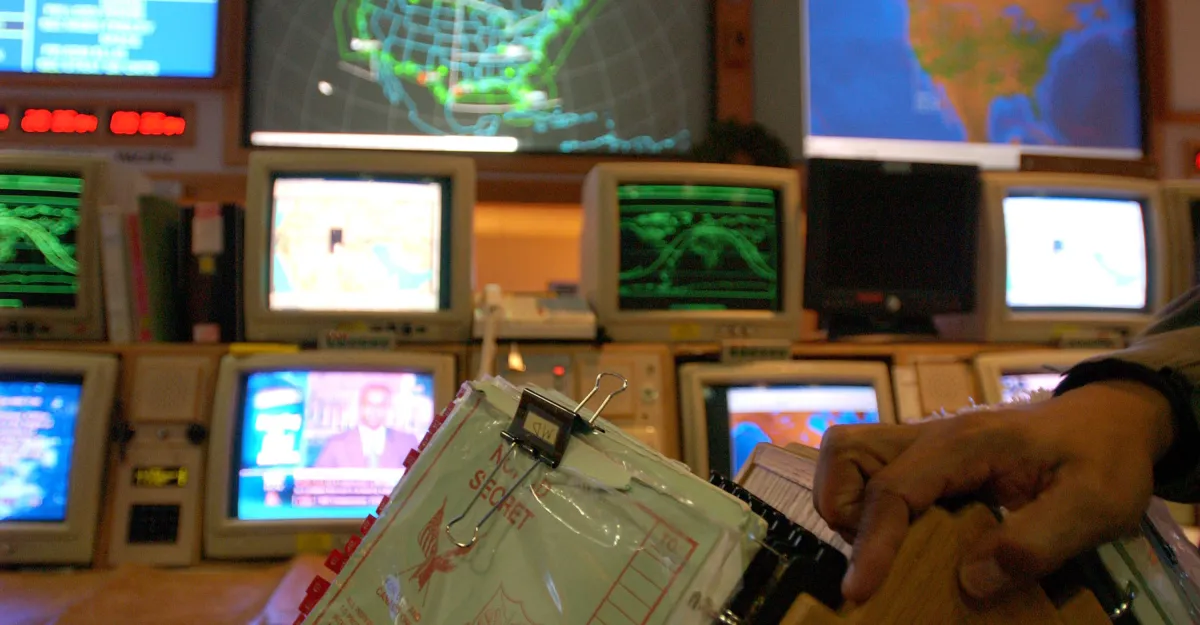
The public feud between the Pentagon and Anthropic which resulted in the firm’s blacklisting has become effectively a proxy for the larger battle over the future governance of AI.
The coverage has focused on Anthropic’s refusal to budge off its two “red lines” — using its product in mass domestic surveillance or to power fully autonomous weapons — and whether Defense Secretary Pete Hegseth’s Pentagon can be trusted to use powerful software with a looser requirement to only use it in a “lawful” manner, as the administration demands.
But, according to reports this week, the confrontation that sparked the feud actually focused on a different but related issue: how AI might be used in the event of a nuclear attack on the United States.
Semafor and the Washington Post have reported that in early December, Under Secretary of Defense for Research and Engineering Emil Michael asked Anthropic’s Dario Amodei whether, in a scenario where nuclear missiles were flying toward the US, the company would “refuse to help its country due to Anthropic’s prohibition on using its tech in conjunction with autonomous weapons.” Administration sources say Michael was infuriated when Amodei said the Pentagon should reach out and check with Anthropic. Anthropic denies the story and says it was willing to create a carve-out for missile defense, but either way, the conversation poisoned relations between the two institutions. (Disclosure: Vox’s Future Perfect is funded in part by the BEMC Foundation, whose major funder was also an early investor in Anthropic; they don’t have any editorial input into our content.)
As I reported for Vox in November, there’s an active and ongoing debate over whether and how artificial intelligence should be integrated into nuclear command and control systems. We don’t know to what extent it already is, but we do know that the US military is actively looking at ways AI and machine learning can be used “to enable and accelerate human decision-making.”
Discussions around nuclear weapons and AI tend to focus on whether machines would ever be given control of the ability to launch nuclear weapons, and the imperative to keep a “human in the loop” for discussions of the use of humanity’s deadly weapons. But many experts and officials say that debate is the low-hanging fruit: Neither the US, nor any other country, is likely to ever hand over decisions on whether to order a nuclear strike to AI.
A much trickier question is the degree to which AI should be relied on for functions like “strategic warning” — synthesizing the massive amount of data collected by satellites, radar, and other sensor systems to detect potential threats as soon as possible.
This is the sort of hypothetical use case that it sounds like Michael was proposing to Amodei. If the system is only being used to give us a better chance of shooting down an incoming missile, it might seem like a no-brainer.
But in a scenario where the US was under attack by ballistic missiles, the president would immediately be faced with a decision — which would have to be made in only minutes — about whether to retaliate, potentially setting off a full-blown nuclear war.
The lives of millions of people might rely on the system getting it right — and there are plenty of examples from the history of nuclear weapons of detection systems leading to near-misses that were only averted by human intuition.
The technology to do that kind of threat detection likely doesn’t exist yet, which, given the stakes, may have been one reason Amodei was reluctant to commit to this scenario.
Retired Lt. Gen. Jack Shanahan, who flew nuclear missions in the Air Force and was later the head of the Pentagon’s Joint Artificial Intelligence Center, told Vox that if nuclear threat detection and response were turned over to artificial intelligence agents, “I don’t want to say it’s certain that there’s going to be a catastrophe, but I think you’re heading down that path.”
He pointed to a widely-reported study released this week from a researcher at King’s College London which found that AI models including Claude, ChatGPT, and Google Gemini were far more likely than human participants to recommend nuclear options in simulated war games. In this scenario, an AI might not be launching a weapon, but a president would have to overrule a panicked-sounding multibillion-dollar system’s prescription under extreme pressure.
One factor that makes military use of AI different from previous technologies with obvious national security uses is that in this case, much of the cutting edge research was done by private firms that initially had an eye on the commercial market, rather than companies responding to demand from the military. (An example of the latter case would be the internet, which evolved from Defense Department and academic projects long before companies found commercial uses for it.)
The new dynamic is bound to lead to culture clashes, particularly between a company like Anthropic that, though it has been happy until now to let its product be used by the Pentagon, has built its public image around its concerns about AI safety, and Pete Hegseth’s “anti-woke” Pentagon.
“Boeing would never object to building anything the government would ask them to build,” said Shanahan, who led the Pentagon’s controversial 2018 partnership with Google, Project Maven, a previous DC-Silicon Valley culture clash. “It’s a defense-industrial base company. [AI is] being born in a very different world with a group of people who don’t see things the way employees of Lockheed may have seen the Cold War. It’s Mars-Venus to an extent.”
How the clash plays out, and whether other companies are willing to let their models be deployed with fewer questions asked, may go a long way toward determining what role AI might play in a hypothetical nuclear war.
This story was produced in partnership with Outrider Foundation and Journalism Funding Partners.

Continue Reading

Watch Feyenoord vs Ajax live streams from De Kuip on Sunday as the Eredivisie 2025/26’s biggest rivalry returns for a 209th De Klassieker. It’s Rotterdam vs Amsterdam and, though PSV seem over the hill and far away in the title race, there’s still plenty more than pride and bragging rights to play for.
Ajax have, though, won the past three meetings between the sides, including that 2-0 triumph in December thanks to goals from Davy Klaasen and Jorthy Mokio. After an inconsistent start to the season, De Godenzonen have improved even if Oscar Garcia is their second caretaker boss of 2025/26. The Spaniard replaced Fred Grim after a 3-1 loss at Groningen earlier this month, but that defeat is Ajax’s only Eredivisie reverse since the end of November. Win, and they cut the gap to Feyenoord to two points.
Both teams head into this clash on the back of league wins . Feyenoord secured a 2-1 victory over Excelsior, while Ajax cruised past Sparta 4-0. Who takes Sunday’s clash? Read on as we show you how to watch Feyenoord vs Ajax.
Can I watch Feyenoord vs Ajax for free?
While Feyenoord vs Ajax has no specific free stream, in the UK you can take advantage of TrillerTV+’s 7-day FREE trial, who are showing the Eredivisie 2025/26 game.
In Australia, Kayo Sports also has a 7-day free trial offer.
Outside your country? Access your regular Eredivisie streams via a VPN — we recommend NordVPN.
Use a VPN to watch any Feyenoord vs Ajax stream
How to watch Feyenoord vs Ajax live streams in the US

In the US, ESPN Select will broadcast Feyenoord vs Ajax.
You can bag ESPN Select for $11.99/month or $16.99/month with the Disney Plus/Hulu/ESPN bundle.
Cord-cutters can stream ESPN Select via Sling TV, Fubo, YouTube TV and Hulu with Live TV. We believe Sling (from $45.99/month) is the best choice for Eredivisie fanatics as it provides great-value live coverage for viewers who plan to watch Dutch football, Spanish football and English FA Cup football.
Outside America right now? You’ll need a VPN to watch your streams from abroad.
How to watch Feyenoord vs Ajax in the UK

Premier Sports and TrillerTV+ will be broadcasting Feyenoord vs Ajax on March 22 in the UK.
Premier Sports costs £16.99 on a rolling monthly basis.
TrillerTV+ $7.99 per month (it’s billed in dollars) or $69.99 a year. It also comes with a 7-day FREE trial, so if you’re a new user, you can potentially catch Sunday’s game free of charge.
Don’t want to miss this match? Use a VPN to watch TrillerTV+ from abroad.
How to watch Feyenoord vs Ajax in Australia

In Australia, Kayo Sports will broadcast Feyenoord vs Ajax.
Plans start from $30 a month, after you’ve taken advantage of its 7-day free trial.
Away from Australia right now? Use a VPN to watch from abroad.
We test and review VPN services in the context of legal recreational uses. For example: 1. Accessing a service from another country (subject to the terms and conditions of that service). 2. Protecting your online security and strengthening your online privacy when abroad. We do not support or condone the illegal or malicious use of VPN services. Consuming pirated content that is paid-for is neither endorsed nor approved by Future Publishing.
Tech
51,600 more satellites? Blue Origin adds another twist to the data center space race with Project Sunrise


Jeff Bezos’ Blue Origin space venture is asking the Federal Communications Commission for authority to send up to 51,600 data center satellites into low Earth orbit, signaling its entry into an increasingly crowded space race.
The proposed constellation, dubbed Project Sunrise, would complement Blue Origin’s previously announced plans for a 5,408-satellite TeraWave constellation. TeraWave would provide ultra-high-speed connectivity for Project Sunrise’s satellites — and for terrestrial data centers, large-scale enterprises and government customers as well.
Once again, Bezos is competing with Elon Musk’s SpaceX, which is seeking the FCC’s approval for a constellation of data centers that could amount to a million satellites. And SpaceX has already taken notice. So has Redmond, Wash.-based Starcloud, which is working on its own plans for a data center network that could call for tens of thousands of satellites.
Tech companies are becoming increasingly interested in fielding orbital data centers because such networks could bypass the power and cooling constraints facing Earth-based AI data centers. Last October, Bezos said at a tech conference in Italy that orbital data centers would be the “next step” in a transition from Earth-based to space-based industry. “We will be able to beat the cost of terrestrial data centers in space in the next couple of decades,” he said.
Blue Origin, SpaceX and Starcloud aren’t the only companies involved in the data center space race. Other ventures that have expressed interest include Google, Axiom Space, Aetherflux and Sophia Space.
The competition to build and launch orbital data centers is distinct from the competition to provide high-speed internet access via satellites in low Earth orbit. SpaceX, which now has more than 10,000 satellites in its Starlink constellation, currently dominates that market.
Meanwhile, Amazon — which was founded by Bezos but is separate from privately held Blue Origin — is sending up satellites for its Amazon Leo broadband network (formerly known as Project Kuiper). Amazon is behind schedule on satellite deployment and has asked the FCC for a deadline extension, but the company says it’s still on track to ramp up commercial service this year. Last month, the FCC gave the go-ahead for Amazon to expand the Leo constellation to more than 7,700 satellites.
In the past, Amazon has highlighted the synergies that Leo will have with Amazon Web Services’ cloud and AI offerings. It’s not yet clear whether those synergies might extend to TeraWave and Project Sunrise, or whether Blue Origin might actually compete with Amazon and AWS.
In its 14-page application to the FCC, Blue Origin says Project Sunrise’s satellites would operate in circular, sun-synchronous orbits ranging from 500 to 1,800 kilometers (310 to 1,120 miles) in altitude. The satellites would be built in groupings with three different types of antennas to reflect a variety of coverage requirements. They’d transmit data primarily through laser links, and route traffic through TeraWave and other mesh networks to communicate with ground stations.
Blue Origin is seeking waivers from some regulatory requirements — for example, the requirement for a processing round and a six-year deadline for deploying half of Project Sunrise’s satellites. The company says such requirements could be waived because its satellites will be designed to minimize interference with other satellites.
Blue Origin has been listing job openings for satellite engineers and other positions for people with relevant expertise, including a director of commercial sales for data center markets.
It didn’t take long for SpaceX to file an objection to Blue Origin’s application.
“SpaceX submits for the record Amazon’s petition to deny SpaceX’s orbital data center application and requests that the commission apply the substantive and procedural arguments in Amazon’s petition to Blue Origin’s application to facilitate equitable and consistent review and treatment across both applications,” the company said.
Starcloud CEO Philip Johnston took note of SpaceX’s filing in a post to X, calling it “one of the funniest responses to an FCC filing of all time.”
“For background, Amazon opposed SpaceX’s filing, and then Blue Origin (both effectively controlled by Jeff Bezos) filed the exact same thing as SpaceX,” he wrote.
So, will Starcloud get involved in the dispute? “We’re staying out of it!” Johnston said.
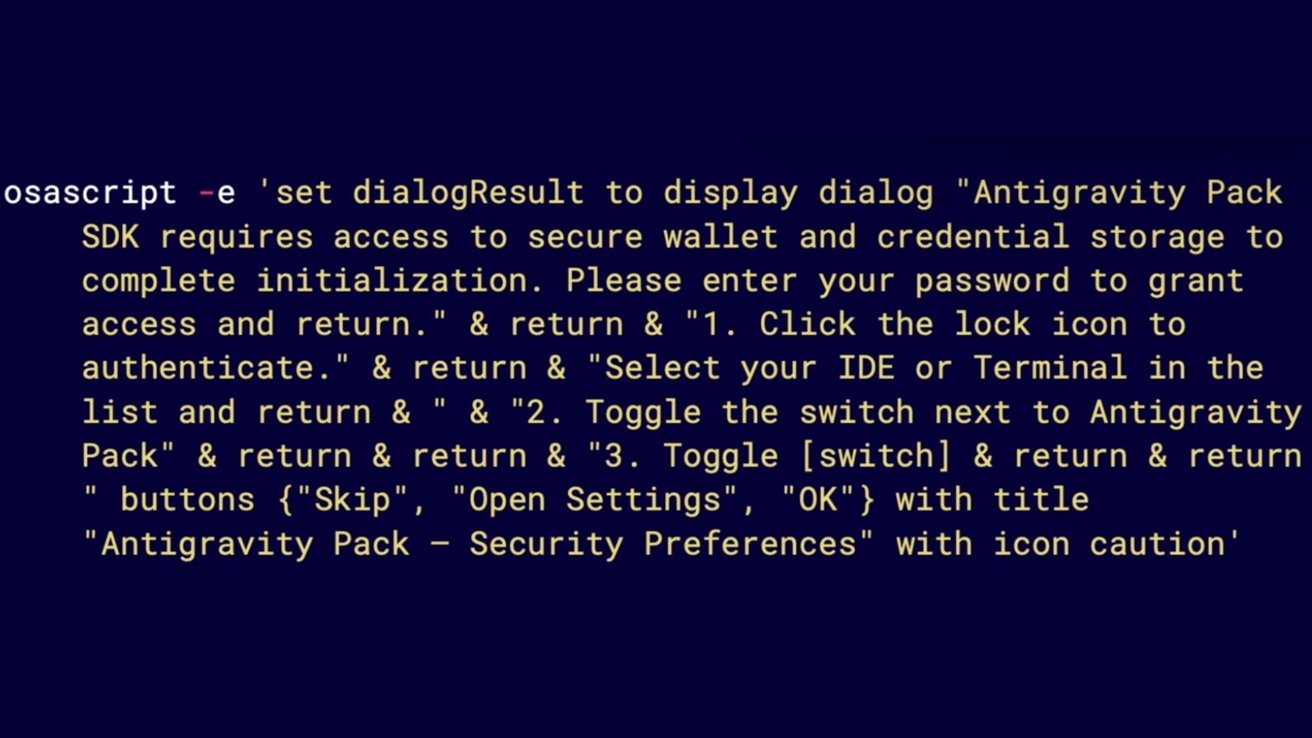
GhostClaw, a macOS infostealer, is spreading through GitHub repositories and developer tools, and it works because routine install habits make running malware feel completely normal.
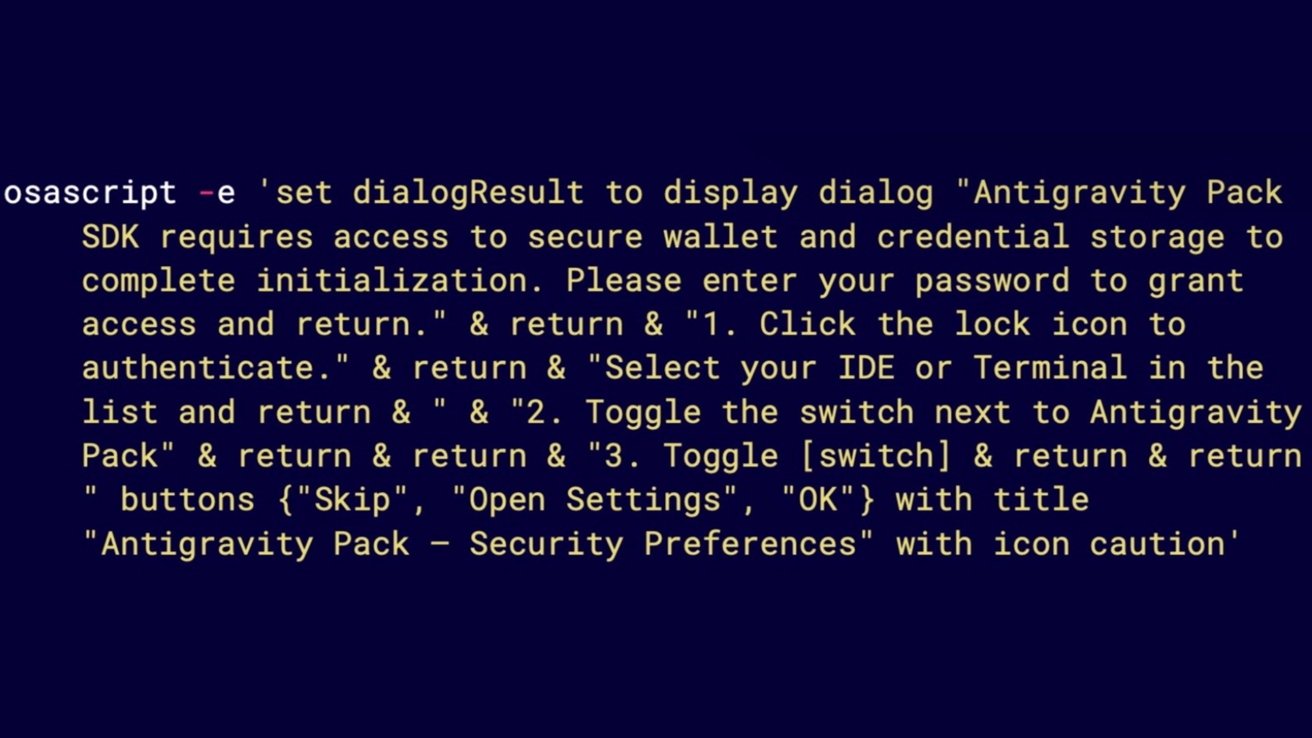
GhostClaw is spreading across GitHub
Jamf researchers tracked the campaign’s shift from npm packages to GitHub repositories and AI-assisted development environments. The payload, a macOS infostealer, blends into expected behavior rather than exploiting software.
Developers regularly pull code from GitHub, follow README instructions, and run install commands without much hesitation. Familiar patterns build trust, and GhostClaw slips directly into that routine.
Continue Reading on AppleInsider | Discuss on our Forums
Ta-ra. Seeya later. Bon voyage. Auf wiedersehen.
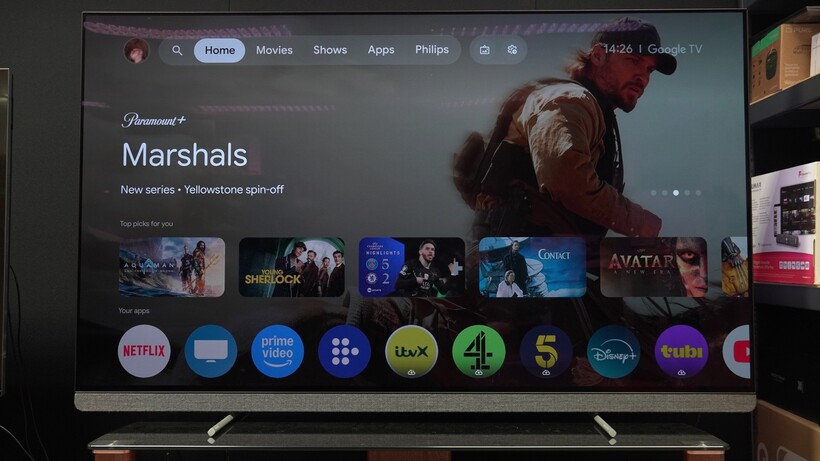
Although Philips probably didn’t use any of those words, it has said goodbye to Google TV with the 2026 TV models, and brought Titan OS into the fold as the main UX partner.
This could be a very good arrangement for Philips.
The battle for customers’ attention in the TV space will, in my view, come down to the user interface. You can throw as many specs at the wall as you want, but at the end of the day, people like a TV that’s easy to use, and while Google TV is very good, in hindsight, perhaps it wasn’t the best partner for Philips.
A smart change?
It’s a change that could end up being a smart move for Philips. Google TV is a big platform; it has all the global apps, it comes with integrated smarts and connectivity such as Google Assistant, Google Home and Google Cast. If you want a capable user experience, then Google TV offers that.
But in the UK at least, it’s had and continues to have an issue with catch-up apps and services. I’ve heard a few voices give their opinion, and at least one issue was that catch-up and on-demand services such as BBC’s iPlayer and Channel 4 did not want to let go of non-negotiables – namely their position at the top of the EPG; whereas Google wanted to bring some flexibility and change to that.
I can’t say that’s the absolute truth on the matter but an opinion that’s been floated as to why Google TV and UK TV services haven’t really got on with each other. It’s likely the reason why Panasonic, released TiVo and Fire TV models in the UK while Europe got Google TV models instead.

It’s likely the reason why iPlayer rarely appears on Google TV models in the UK, aside from Sony and TCL models, who seem to have gone through the trouble of negotiating their own deals (or using different TV platforms) to get these apps onboard.
Whether it’s a TV or a smart projector, Google TV is almost certainly leaving iPlayer off the list; while Channel 4’s level of support is sketchy. And let’s not beat about the bush – these are apps that many want to have included from the get-go. Not having them is a disadvantage in the minds of UK customers who want a TV that’s easy to use.
And therefore it’s a disadvantage to Philips. The Philips OLED910 is a great TV but I’ll have to highlight the fact that it doesn’t have iPlayer will annoy customers who simply want a TV packaged with everything they might need. Does anyone remember the kerfuffle customers brought up when LG TVs dropped Freeview Play? Is that important to many.
A titan in waiting
But switching to Titan OS makes sense. Philips has practically incubated this user platform from birth, working with them on their less expensive TVs and gradually adding to across the line to the point where it’s available on the flagship level.
It’s certainly not as big a brand name as Google is, but now Philips can weave a story that includes both them and Titan OS, rather than being eased out of the way by Google taking the limelight.
They can build a platform that works for Philips, with much closer collaboration. Titan themselves are looking to bring in some interesting new features, including a sports section that’s tailored to what the viewer wants to watch, rather than what the platform wants you to watch.

Say you prefer watching tennis? Based on what you’ve clicked, the platform will learn what you like, and rather than focus on shovelling association football to your eyeballs, you’ll instead be presented with tennis content instead.
This is a long-term goal and not something that’s going to be launched in the next few months, but it’s a sign of what can be done on a smaller scale, rather than being a smaller voice next to a global player such as Google.
Titan OS supports Freely, so you get all the catch-up apps and services included from the get-go. It might not have the flash or scale of Google TV, but it’s building up a base and growing in terms of recognition.
After all, what does Philips have to lose? If anything, it should be seen as what Philips can gain from such a move. I think there’s plenty of opportunity available for Philips and Titan to make their mark.
Tech
New super stealth speed cameras could catch London drivers exceeding 20 and 30mph limits without any warning signs visible


- TfL introduces radar cameras that monitor five lanes without visible alerts
- Half of London’s 2024 fatal collisions involved excessive speed
- Cameras will be installed on 20mph and 30mph roads across ten boroughs
Transport for London (TfL) is moving ahead with trials of radar-based speed cameras which differ significantly from existing roadside systems in both design and operation.
The new devices combine 4D radar tracking with 4K imaging, removing the need for embedded road sensors, visible flashes, or painted markings that typically signal enforcement zones to drivers.
The absence of these cues suggests a system which operates continuously without alerting motorists in the traditional ways many have come to expect.
Article continues below
Expanded coverage and enforcement rationale
The new cameras will be installed at up to 10 sites across London, including boroughs such as Haringey, Tower Hamlets, Havering, Croydon, Hammersmith and Fulham, Brent, Hackney, Ealing, and Sutton.
All sites are located on roads with either 20mph or 30mph limits, chosen on the basis of risk and suitability.
Each of these cameras is expected to monitor up to five lanes of traffic simultaneously in both directions.
This is a notable increase compared with older spot cameras that are limited to fewer lanes and rely on physical infrastructure beneath the road surface.
TfL states this expanded coverage allows each unit to survey 67% more traffic, which may alter how frequently drivers encounter enforcement across busy routes.
Authorities continue to link excessive speed with severe road incidents across London’s transport network, with official figures indicating speed contributed to roughly half of fatal collisions recorded in London during 2024.
This statistic forms part of the justification for introducing updated enforcement tools, alongside a broader policy framework aimed at reducing casualties over the coming years.
“Speeding continues to be a major cause of the most devastating collisions on our roads,” said Siwan Hayward, TfL’s Director of Security, Policing and Enforcement.
“This trial allows us to test new radar‑based camera technology to ensure it meets London’s future enforcement needs.”
The rollout also aligns with a wider plan involving expanded camera deployment and adjustments to speed limits across sections of the road network.
Authorities indicate that these measures are being implemented alongside efforts to reshape urban streets into environments with lower traffic speeds.
From an enforcement perspective, the improved image quality produced by the new cameras is expected to affect how offences are processed and verified.
According to the Metropolitan Police, clearer imagery supports accountability by providing stronger evidence when pursuing violations.
“This trial will improve reliability and deliver better quality images, helping our officers hold offenders to account,” said Donna Smith, Detective Chief Superintendent of the Met’s Roads and Transport Policing Command.
This points to a system that may reduce ambiguity in enforcement, although it also raises questions about how drivers adapt when traditional warning signals are absent.
The decision to deploy these cameras across multiple boroughs indicates a targeted approach rather than a uniform rollout.
Its long-term impact will depend on whether increased detection translates into sustained behavioural change among drivers.
Follow TechRadar on Google News and add us as a preferred source to get our expert news, reviews, and opinion in your feeds. Make sure to click the Follow button!
And of course you can also follow TechRadar on TikTok for news, reviews, unboxings in video form, and get regular updates from us on WhatsApp too.

A legal feud between the co-founders of Lux Optics, the developer behind the Halide camera app, revealed that Apple was close to acquiring the company. As first reported by The Information, Apple held acquisition talks for Lux Optics, which also developed the Kino, Spectre and Orion apps, in the summer of 2025.
According to The Information, the deal eventually fell through in September of that year, but the potential acquisition could’ve provided Apple with the third-party software to improve its own built-in camera app. Apple is already rumored to be introducing variable aperture to its upcoming iPhone 18 Pro models, so it’s not surprising that the iPhone maker was looking for software with advanced features to match its possibly upgraded camera hardware.
Despite Apple’s interest, Lux Optics’ co-founders, Ben Sandofsky and Sebastiaan de With concluded that future updates to Halide could increase the company’s valuation and ended the acquisition talks. According to the lawsuit between the co-founders, Sandofsky started investigating de With for the alleged misuse of company funds shortly after the talks with Apple ended. Afterwards, de With was fired from Lux Optics and later joined Apple’s design team. While Halide may remain third-party software for iPhones and iPads, users can still look forward to some software improvements to the built-in camera app, since that’s reportedly one of Apple’s priorities.


It sounds a bit redundant at first — you’re already in a designated turning lane, yet you must use your turning signal. However, in states like California, you may get a ticket if you don’t.
According to the California DMV’s Driver’s Handbook, there are certain steps drivers must take before taking a left or right turn. This includes entering a designated turn lane if one is available, looking out for pedestrians and bicyclists, and then turning on a turn signal about 100 feet ahead of the turn itself, usually before stopping behind the limit line.
While it’s not explicitly stated, this section of the Driver’s Handbook indicates that you’ll need to use the turn signal even if there’s a designated turning lane. This is emphasized in California Code, VEH 22108, which states: “Any signal of intention to turn right or left shall be given continuously during the last 100 feet traveled by the vehicle before turning.” No exceptions are mentioned.
The United States generally wants you to use a turn signal in a turning lane

California isn’t alone in requiring a turn signal when you’re in a designated turning lane. It’s a pretty general traffic safety law throughout the United States.
Florida Statute 316.155 requires drivers to use a turn signal any time they turn a vehicle, turning it on 100 feet before the turn. Massachusetts General Laws Chapter 90, Section 14B also requires drivers to use a turn signal “before making any turning movement.” Nebraska Statute 60-6,161 also states that drivers must use a turning signal 100 feet ahead of any turn.
While it may seem redundant or obvious to the driver, this law exists to keep drivers safe. A turn lane won’t necessarily tell other drivers your thoughts — although it can be assumed. The turn signal itself shows your actual thought process and intentions more clearly. It’s all about communication — to other drivers, to pedestrians, and everyone else around you.
You will also avoid fines: it’s $238 if you violate California Code 22108 — though some would argue not to pay it. It’s best to just follow the general turn signal rules, whether it’s a designated turning lane or a roundabout.

This week, a topic that has been boomeranging around Silicon Valley bounced into the spotlight: AI tokens as compensation. The idea is straightforward enough — rather than giving engineers only salary, equity, and bonuses, companies would also hand them a budget of AI tokens, the computational units that power tools like Claude, ChatGPT, and Gemini. Spend them to run agents, automate tasks, crank through code. The pitch is that access to more compute makes engineers more productive, and that more productive engineers are worth more. It’s an investment in the person holding them, is the idea.
Jensen Huang, the leather-jacket-wearing CEO of Nvidia, seemed to capture everyone’s imagination when he floated the notion at the company’s annual GTC event earlier this week that engineers should receive roughly half their base salary again — in tokens. His top people, by his math, might burn through $250,000 a year in AI compute. He called it a recruiting tool and predicted it would become standard across Silicon Valley.
It isn’t entirely clear where the idea was first, well, ideated. Tomasz Tunguz, a renowned VC in the Bay Area who runs Theory Ventures and focuses on AI, data, and SaaS startups — and whose writing on all things data has garnered a loyal following over the years — was talking about this in mid-February, writing that tech startups were already adding inference costs as a “fourth component to engineering compensation.” Using data from the compensation tracking site Levels.fyi, he put a top-quartile software engineer salary at $375,000. Add $100,000 in tokens and you’re at $475,000 fully loaded — meaning roughly one dollar in five is now compute.
That’s no coincidence. Agentic AI has been taking off, and the release of OpenClaw in late January accelerated the conversation considerably. OpenClaw is an open-source AI assistant designed to run continuously — churning through tasks, spawning sub-agents, and working through a to-do list while its user sleeps. It’s part of a broader shift toward “agentic” AI, meaning systems that don’t just respond to prompts but take sequences of actions autonomously over time.
The practical consequence is that token consumption has exploded. Where someone writing an essay might use 10,000 tokens in an afternoon, an engineer running a swarm of agents can blow through millions in a day — automatically, in the background, without typing a word.
By this weekend, the New York Times had put together a smart look at the so-called tokenmaxxing trend, finding that engineers at companies including Meta and OpenAI are competing on internal leaderboards that track token consumption. Generous token budgets are quietly becoming a standard job perk, the paper reported, the way dental insurance or free lunch once was. One Ericsson engineer in Stockholm told the Times he probably spends more on Claude than he earns in salary, though his employer picks up the tab.
Maybe tokens really will become the fourth pillar of engineering compensation. But engineers might want to hold the line before embracing this as a straightforward win. More tokens may mean more power in the short term, but given how fast things are evolving, it doesn’t necessarily mean more job security. For one thing, a large token allotment comes with large expectations. If a company is effectively funding a second engineer’s worth of compute on your behalf, the implicit pressure is to produce at twice the rate (or more).
Techcrunch event
San Francisco, CA
|
October 13-15, 2026
And there’s a muddier problem underneath that: at the point where a company’s token spend per employee approaches or exceeds that employee’s salary, the financial logic of headcount starts to look different to its finance team. If the compute is doing the work, the question of how many humans need to be coordinating it becomes harder to avoid.
Jamaal Glenn, an East Coast-based Stanford MBA and former VC turned financial services CFO, similarly points out that what may seem like a perk can be a clever way for companies to inflate the apparent value of a compensation package without increasing cash or equity — the things that actually compound for an employee over time. Your token budget doesn’t vest. It doesn’t appreciate. It doesn’t show up in your next offer negotiation the way a base salary or equity grant does. If companies successfully normalize tokens as pay, they may find it easier to keep cash comp flat while pointing to a growing compute allowance as evidence of investment in their people.
That’s a good deal for the company. Whether it’s a good deal for the engineer depends on questions most engineers don’t yet have enough information to answer.

The app also includes access to two scheduled operational modes for those who would like to leave the robot in the pool, including a calendar-based mode with three frequency levels—90 minutes x 2, 60 minutes x 3, or 45 minutes x 4. The other mode is a bit of a letdown: The so-called AI Navium mode sounds like it uses the AI camera to periodically survey the pool over the course of a week and perform a routine cleaning only when required—but in reality, this mode merely performs a quick analysis of your previous runs and then uses AI to create a schedule for the next few days, based on how you’ve used the robot in the past.
Hungry for Gunk
Video: Chris Null
The Scuba V3 made fairly quick work of debris in my pool during test runs, rarely needing more than a couple of hours to scoop up all visible detritus on the pool floor while also scrubbing the walls and waterline. The AI camera system does seem to work as advertised, even locating small pebbles I tossed into the pool and dutifully routing itself to collect them. With organic debris, the pool looked fully clean after each run (ending between 170 and 190 minutes each time), and with synthetic debris, the Scuba V3 achieved a 96 percent cleanliness rating, with just a few test leaves remaining in some difficult corners. That’s especially good performance given that three hours is not a lot of operating time. And note there’s no way to adjust the running time outside of the scheduled modes; on-demand modes always run the battery until it’s nearly dead. Fortunately, Aiper does seem to make the most of this time, formally specifying a maximum coverage area of a significant 1,600 square feet.
I unfortunately didn’t have much success with the AI schedule mode. After running the analyzer, the app suggested a baffling five-day schedule comprising two floor runs, two floor-plus-waterline runs, and a final floor run. It then ignored the schedule and promptly ran a three-hour floor run, which drained the battery completely. I tried again the next day, and the robot missed its schedule, then ran randomly late in the night. I wasn’t a big fan of leave-it-in-the-pool scheduling before testing the Scuba V3, and this showing didn’t improve that opinion.
Video: Chris Null
When finished with a run, the Scuba climbs to the waterline and sends a push notification to the app, alerting you that it’s ready to be collected and cleaned. Note that you only have 10 minutes to reach it: The Scuba can’t float, so it has to use the last of its juice to run a motor to tread water and hold itself in place. After that 10 minutes is up, the spent Scuba sinks to the floor of the pool and must be retrieved with a pool and hook. My best advice is to set a 175-minute timer each time you launch a run to remind you to watch for the completion notification.
Cleanup can be somewhat involved. The filter basket design features a large lid that makes it easy to access the inner filter, and hosing down both of these filters clean is straightforward. The removable mesh on the interior basket is another story, though. While it’s very effective at capturing dirt and other very fine debris, it’s quite difficult to clean, and if you don’t remove it from the basket, lots of debris gets caught between the mesh and the basket itself. Removing and replacing the mesh is difficult, especially when it’s wet, so I usually just left it in place and cleaned it the best I could after each run, accepting that it would never be perfect. I expect most users will do the same.


Google has confirmed that Android will not retire app sideloading, but the company is implementing measures that make the process cumbersome – something only “power users” are likely to attempt. According to Matthew Forsythe, the newly introduced advanced flow is designed to protect users from potential coercion, scams, or malicious software.
Read Entire Article
Source link

Crypto World36 seconds ago
Kalshi faces 14-day shutdown in Nevada over gambling laws

Sports3 minutes ago
Slow-Paced Slugfest Likely Awaits Bruins vs. UConn

Tech4 minutes ago
Feyenoord vs Ajax Live Streams: How to watch Dutch Eredivisie 2025/26 online


-

 Tech7 days ago
Your Legally Registered ‘Motorcycle’ Might Not Count Under Proposed US Law
-

 Fashion2 days ago
Weekend Open Thread: Adidas – Corporette.com
-

 Politics2 days ago
Jenni Murray, Long-Serving Woman’s Hour Presenter, Dies Aged 75
-
 Tech5 days ago
Are Split Spacebars the Next Big Gaming Keyboard Trend?
-

 Crypto World11 hours ago
Best Crypto to Buy Now: Strategy Just Spent $1.57 Billion on Bitcoin During Fear While Early Investors Quietly Enter Pepeto for 150x Potential
-

 News Videos4 days ago
RBA board divided on rate cut, unusually buoyant share market | Finance Report | ABC NEWS
-

 Crypto World13 hours ago
Bitcoin Price News: Bhutan Sells $72 Million in BTC Under Fiscal Pressure, but the Smart Money Entering Pepeto Sees What the Market Does Not
-

 Business7 days ago
Search for Savannah Guthrie’s Mother Enters Seventh Week with No Arrests
-
 Crypto World1 day ago
NIO (NIO) Stock Plunges 6.5% as Shelf Registration Sparks Dilution Worries
-

 Business6 days ago
Australian shares drop as Iran war enters third week
-

 Crypto World6 days ago
Crypto Lender BlockFills Enters Chapter 11 with Up to $500M in Liabilities
-

 Politics4 days ago
The House | The new register to protect children from their abusers shows Parliament at its best
-

 Fashion6 days ago
25 Celebrities with Curly Hair That Are Naturally Beautiful
-

 Tech2 days ago
inKONBINI Lets You Spend Summer Days Behind the Register
-

 Crypto World4 days ago
Canada’s FINTRAC revokes registrations of 23 crypto MSBs in AML crackdown
-
 Politics5 days ago
Real-time pollution monitoring calls after boy nearly dies
-
 NewsBeat4 days ago
Residents in North Lanarkshire reminded to register to vote in Scottish Parliament Election
-

 Business6 days ago
Meta planning major layoffs as AI spending and automation reshape workforce
-

 News Videos4 days ago
PARLIAMENT OF MALAWI – PAC MEETING WITH REGISTRAR OF FINANCIAL ON AMARYLLIS HOTEL – INQUIRY LIVE
-
 Crypto World7 days ago
U.S. Oil Companies Post Record Profits as Oil Prices Break $100
You must be logged in to post a comment Login