Samsung’s 2025 was filled with new foldables, an ultra-thin new form factor and the launch of Google’s XR platform. After making some announcements at CES 2026, the company has announced its first Galaxy Unpacked of the year will take place on February 25, where it is expected to introduce the Galaxy S26 lineup. Official invites have been shared, but actual information on what devices are arriving then is still not completely confirmed. But as usual, we know a lot about what’s expected at Unpacked.
Engadget will be covering Galaxy Unpacked live from San Francisco next week, and we’ll most likely have hands-on coverage of Samsung’s new smartphones soon after they’re announced. While we wait for the full details, here’s everything we expect Samsung will introduce at the first Galaxy Unpacked event of 2026.
When is Unpacked 2026 taking place?
According to the official invite that Samsung shared on February 10, Unpacked will happen on February 25, 2026 in San Francisco. The keynote will start at 10AM PT (1PM ET) and be livestreamed on Samsung.com, as well as the company’s newsroom and YouTube channel. The announcement on February 10 also said this launch will mark “a new phase in the era of AI as intelligence becomes truly personal and adaptive.” It’s not a lot to go on, since we’ve heard a version of this from various companies over the last few years, but at least we won’t be shocked when we hear more about AI in just about two weeks.
Galaxy S26, S26+ and S26 Ultra
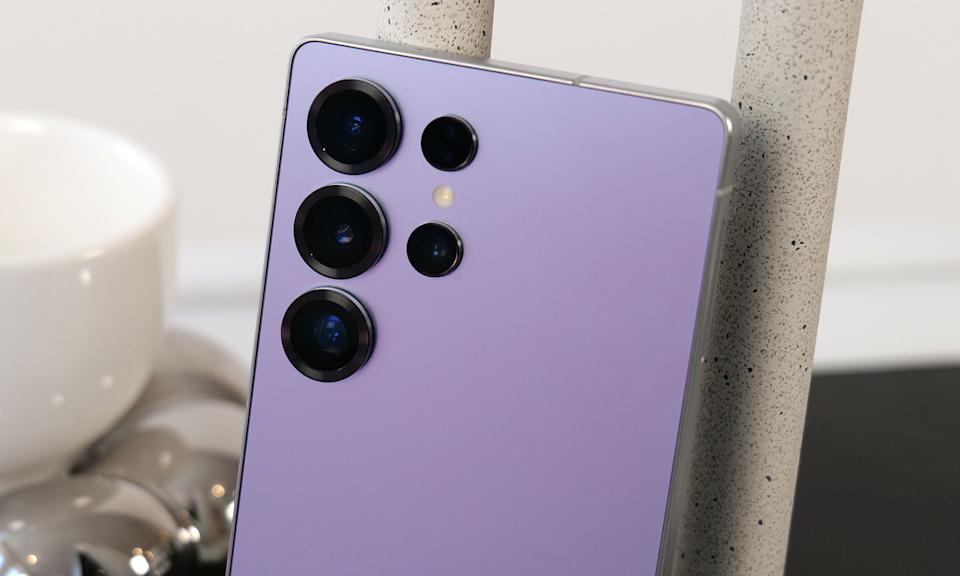
Samsung Galaxy S25 Ultra hands-on photo (Photo by Sam Rutherford/Engadget)
Samsung’s restrained approach to updating its phones will likely continue with the Galaxy S26. Based on leakedimages of the new lineup, the company is not expected to radically reinvent the look of the Galaxy S26, Galaxy S26+ or Galaxy S26 Ultra, and instead will stick with a similar design to what it used on the Galaxy S25. The phones will have a flat front screen and frame, with rounded corners and cameras housed in a vertical pill-shaped plateau on the back. Unlike Apple’s move from the iPhone 16 Pro to the iPhone 17 Pro, the biggest difference here will likely be internal components like the screens, chips and camera sensors Samsung uses.
Advertisement
Qualcomm’s new Snapdragon 8 Elite Gen 5 chip is expected to be in all Samsung Galaxy S26 phones, though Korean news site Yonhap News reports Samsung’s relatively new Exynos 2600 chip could be used in some phones in the lineup depending on the region, a strategy Samsung has deployed in the past. Either way the new phones should be more performant than the previous generation, and in the case of the models with the Snapdragon 8 Elite Gen 5, particularly good at on-device AI processing.
One notable difference between the Galaxy S26 and the Galaxy S25 could be the phone’s screen. The new phone will reportedly feature a 6.3-inch FHD+ display according to specs shared by leaker Ice Universe, which makes it ever so slightly larger than the 6.2-inch display used on the Galaxy S25. The S26 will also allegedly come with 12GB of RAM, either 256GB or 512GB of storage and a slightly larger 4,300mAh battery. Samsung isn’t changing the cameras on the entry-level phone, though: leaks suggest it’ll feature the same 50-megapixel main camera, 12-megapixel ultrawide, 10-megapixel 3x telephoto and 12-megapixel selfie camera as the previous generation. Changes appear to be even more minor on the Galaxy S26+. Other than the new Snapdragon chip, the phone will reportedly feature the same 6.7-inch FHD+ screen, 4,900mAh battery, 12GB of RAM and the same camera array used on the base Galaxy S26.
The difference between the Galaxy S26 Ultra and Galaxy S25 Ultra is reportedly a bit clearer. According to Android Headlines, the new phone’s cameras will be slightly more raised, and stand out thanks to a new metallic finish. Samsung may also switch back to using an aluminum frame on the Galaxy S26 Ultra, after using titanium frames on both the Galaxy S24 and S25 Ultras. Most importantly, to make the phone actually support Qi2 rather than only technically work with the standard when a case is attached, rumors suggest Samsung will remove the S Pen digitizer layer in the phone and adopt a new method for accepting stylus input. It’s not clear what that new method will actually be, but it could let the Galaxy S26 Ultra more easily work with Qi2 accessories without losing its stylus.
Android Headlines also recently shared what appear to be full image renders of the S26 series, and they generally line up with what has already been rumored, leaked and reported so far. If these pictures are accurate, they give us a clearer look at the camera bump and two color variants of the S26 Ultra.
Advertisement
Fans of magnets may continue to be disappointed by Samsung if the latest rumors are accurate. Despite the launch of the Qi 2 wireless charging standard adding support for convenient magnetic alignment years ago, Samsung has yet to bring that feature to its phones. Though the S-series have the higher speed charging rates that the spec enables, Nieuwemobiel.nl is reporting that, due to images it received of cases with magnetic rings, the S26 series likely won’t have built-in magnets. Samsung has made these cases to add the magnetic capability to its S-series in the past, and the existence of the images of these accessories lends weight to the idea that the company will continue this approach.
Galaxy Buds 4
Galaxy Buds 3 Pro in case. (Engadget)
Samsung released the Galaxy Buds 3 and 3 Pro in 2024, with a major redesign that brought them much more in line with Apple’s AirPods. The Galaxy Buds 4 and Buds 4 Pro Samsung is rumored to be announcing soon won’t necessarily change that, though they will feature a more compact case and less angular stems, according to leaked images from the Samsung Tips app.
Support for head gestures to accept and decline calls, a feature Apple includes on the AirPods Pro 3 and AirPods 4, is also rumored to work on both versions of the new Galaxy Buds. SamMobile reports the Galaxy Buds 4 and 4 Pro may also ship with a new Ultra Wideband chip that will make them easier to find with Google’s Find Hub network.
Galaxy Z Trifold
Yes, the TriFold has a crease, two in fact. But they still don’t ruin the experience. (Sam Rutherford for Engadget)
Samsung announced the Galaxy Z TriFold in late 2025 without firm details of when the new smartphone-that-folds-into-a-tablet would be available in North America. That info came on January 27, when the company announced the TriFold would be available in the US on January 30, for a whopping $2,900. Considering we’ve already seen the device in person at CES 2026 and people are most likely to have had a chance to look at, if not buy the foldable for themselves by the time Unpacked rolls around, we don’t expect Samsung to spend too much time dwelling on it, if at all.
Advertisement
Galaxy S26 Edge
At just 5.8mm thick, the Samsung Galaxy S25 Edge is one of the thinnest smartphones ever made. (Sam Rutherford for Engadget)
When the Galaxy S25 Edge was announced in 2025, it seemed possible that Samsung could replace its “Plus” smartphone with a unique form factor, just like Apple has opted to do with the iPhone Air. There have been conflicting reports on the matter, but it seems like Samsung will not be doing that with the Galaxy S26 Edge.
Instead, the smartphone will reportedly remain another option, much like foldables are for customers not swayed by Samsung’s traditional smartphones. The Galaxy S26 Edge is rumored to feature a slightly different design than last year’s model, according to Android Headlines, with a large rectangular camera plateau that’s reminiscent of Google’s Pixel phones, and the raised oval Apple used on the iPhone Air. Beyond that, the phone is also expected to be ever so slightly thinner at 5.5mm than the 5.8mm Galaxy S25 Edge.
Bixby and other AI features
Samsung already acts as a first place Google can show off new AI features for Android, but the company is reportedly exploring other AI partnerships, too. In June 2025, Bloomberg reported that Samsung was nearing a deal with Perplexity to integrate its AI-powered search engine across OneUI and its homegrown mobile browser. Perplexity already has a deal with Motorola on its Razr phones, so the only thing that would make a deal with Samsung unusual is the close relationship the company already has with Google.
The company also accidentally announced a new version of its Bixby AI assistant, which will likely also be integrated with Perplexity and could serve as an alternative to Google Gemini. Both a new Bixby and a deeper integration with Perplexity seem like natural new software features to show off at Galaxy Unpacked.
On February 17, Samsung teased some mobile AI photography features ahead of Unpacked. These expand the S-series’ existing image-editing tools by bringing the ability “to turn a photo from day to night in seconds, restore missing parts of objects in images, capture detailed photos in low light, and seamlessly merge multiple photos into a single, cohesive result.” A lot of these things are already possible in other photo-editing apps or even in the Google Photos app, but we’ll have to wait to see them in action on the S26 phones for more details on whether they’re different or more effective.
Advertisement
Update, January 27 2026, 11:55AM ET: This story has been updated to reflect the latest news around the Galaxy Z TriFold’s price and availability in the US.
Update, January 30 2026, 12:45PM ET: This story has been updated to include the latest leaks on the possible dates for Unpacked 2026.
Update, February 02 2026, 11:30AM ET: This story has been updated to include the latest leaks with full image renders of the S26 trio of devices.
Update, February 03 2026, 11:00AM ET: This story has been updated to include the latest leaks about the possible lack of magnetic support on the S26 series.
Advertisement
Update, February 10 2026, 7:15PM ET: This story has been updated to include the official date of Galaxy Unpacked as Samsung announced it today. The intro was also edited to reflect that detail.
Update, February 17 2026, 4:55PM ET: This story has been updated to add Samsung’s teaser about its upcoming mobile AI photography tools. The intro was also edited for timeliness.
A keychain in the Microsoft company store awaits one of the company’s returning commuters. (GeekWire Photo / Todd Bishop)
Remember that return-to-office mandate Microsoft announced last fall? It’s almost here.
Monday, Feb. 23 — yes, next week! — will mark the start of the company’s new policy requiring Puget Sound (a.k.a. Seattle-area) employees who live within 50 miles of a Microsoft office to show up at least three days a week, the company confirmed in response to GeekWire’s inquiry.
It’s a big shift for one of Big Tech’s last holdouts on flexible work. It’s also a potentially significant development for local traffic, given that there are more than 50,000 Microsoft employees in the Seattle region, at last count.
“Gird your loins and prepare for a potentially longer commute,” the Bellevue Chamber wrote in its newsletter, in an item titled, “Get Your Booty Back to Work: Microsoft’s Turn.”
The good news: Sound Transit’s Crosslake Connection is set to open March 28, finally linking Seattle and the Eastside by light rail across Lake Washington — connecting downtown Seattle to downtown Bellevue and the Redmond Technology station at Microsoft headquarters.
Advertisement
The Seattle-area rollout is the first phase, with other U.S. offices next and international locations later this year. The policy replaces Microsoft’s previous hybrid arrangement, which let most employees work remotely up to half the time without manager approval.
The company isn’t dictating from above which three days people will need to be in the office. Specifics are left to individual teams and managers. Some groups may require more than three days, and certain customer-facing roles like field sales and consultants are exempt.
The mandate brings Microsoft in line with Google and Facebook parent Meta, which have similar three-day requirements. Amazon, the region’s other tech giant, went further last year, requiring employees to be back in the office five days a week.
In her memo to employees last September, Microsoft EVP and Chief People Officer Amy Coleman said the change isn’t about cutting headcount. “It’s about working together in a way that enables us to meet our customers’ needs,” she wrote.
Advertisement
Still, the mandate could impact the workforce through attrition, consistent with what has happened at other companies that have implemented tighter RTO policies. The new policy comes after Microsoft cut more than 15,000 jobs globally last year.
How much time does it take to even begin booting, asks long-time Slashdot reader BrendaEM. Say you want separate Windows and Linux boot processes, and “You have Windows on one SSD/NVMe, and Linux on another. How long do you have to wait for a chance to choose a boot drive?”
And more importantly, why is it all taking so long? In a world of 4-5 GHz CPU’s that are thousands of times faster than they were, has hardware become thousands of times more complicated, to warrant the longer start time? Is this a symptom of a larger UEFI bloat problem? Now with memory characterization on some modern motherboards… how long do you have to wait to find out if your RAM is incompatible, or your system is dead on arrival?
Share your own experiences (and system specs) in the comments. How long is it taking you to choose a boot drive?
Sunday’s men’s ice hockey final live stream at the 2026 Winter Olympics sees the curtain brought down on this year’s games with one of its most-anticipated events – a rematch of the thrilling women’s final between USA vs Canada just a few days ago.
This year’s men’s tournament was already making headlines way before the athletes reached Italy, being the first time for over a decade that NHL players have been passed to compete. That has finally allowed players like Canada’s awesome Connor McDavid to light up the games (he’s leading the scoring with 2 goals and 11 assists), while Team USA’s veteran goaltender Connor Hellebuyck has demonstrated to the world how difficult he is to beat.
Now the pair go head-to-head in a final between two undefeated nations. Having notched up 36 goals between them in the group stage, they haven’t had the playoffs all their own way. It took Canada a third period onslaught and a last minute goal from Colorado Avalanche’s to Nathan MacKinnon down champions Finland in the semifinals. While USA were taken to overtime by Sweden in the quarters, before Minnesota Wild’s Quinn Hughes hit his match-winning shot.
Advertisement
Will Canada get the better of their southern neighbors this time? Here’s where to stream USA vs Canada live in the men’s ice hockey final and watch Winter Olympics 2026 online from anywhere and potentially for FREE.
Watch Winter Olympics men’s Ice Hockey final 2026 for FREE
The men’s ice hockey final at the Winter Olympics will be live streamed for FREE in multiple locations across the globe including Canada, the UK, Australia and Ireland.
How to watch Winter Olympics men’s Ice Hockey final live streams in New Zealand
In New Zealand, Sky Sport NZ is showing the men’s ice hockey final.
Advertisement
You can access Sky Sport through satellite TV or get a live stream with the Sky Sport Now subscription service, starting at $29.99 per day or $54.99 per month.
Missing the ice hockey due to commitments overseas?Norton VPN will give you access to your home streaming service.
Winter Olympics men’s Ice Hockey final FAQs
When does the men’s ice hockey final start at the Winter Olympics 2026?
The men’s ice hockey final between USA vs Canada at the 2026 Winter Olympics takes place on Sunday, February 22.
Advertisement
It’s set to start at 2.10pm local time at the Arena Milano in Italy. That’s 8.10am ET / 5.10am PT in the US and 1.10pm GMT in the UK on Sunday.
Can I watch Winter Olympics Ice Hockey on my mobile?
Of course, most broadcasters have streaming services that you can access through mobile apps or via your phone’s browser – for example, Peacock, BBC iPlayer and CBC Gem all have mobile apps.
You can also stay up-to-date with all things Autumn Nations on the official social media channels on X (@MilanoCortina2026), YouTube (@Olympics) and Instagram (@milanocortina2026).
We test and review VPN services in the context of legal recreational uses. For example: 1. Accessing a service from another country (subject to the terms and conditions of that service). 2. Protecting your online security and strengthening your online privacy when abroad. We do not support or condone the illegal or malicious use of VPN services. Consuming pirated content that is paid-for is neither endorsed nor approved by Future Publishing.
Theoretically a belt drive makes for a great upgrade to a bicycle, as it replaces the heavier, noisy and relatively maintenance-heavy roller chain with a zero-maintenance, whisper-quiet and extremely reliable belt that’s rated at an amazing 20-30,000 km before needing a replacement. Of course, that’s the glossy marketing brochure version of reality, which differed significantly from what [Tristan Ridley] experienced whilst cycling around the globe.
Although initially he was rather happy with his bike, its sealed car-like Pinion gearbox and Gates carbon belt drive system, while out in the wilds of Utah he had a breakdown when the belt snapped. When the spare belt that he had carried with him for the past months also snapped minutes later after fitting it on, it made him decide to switch back to the traditional bush roller chain.
Despite this type of chain drive tracing its roots all the way back to Leonardo da Vinci, they actually offer many advantages over the fancy carbon-fiber-reinforced polyurethane belt. Although with the Pinion gearbox the inability to use a derailleur gearing system is no big deal, [Tristan] found that the ‘zero maintenance’ part of the belt was not true for less hospitable roads
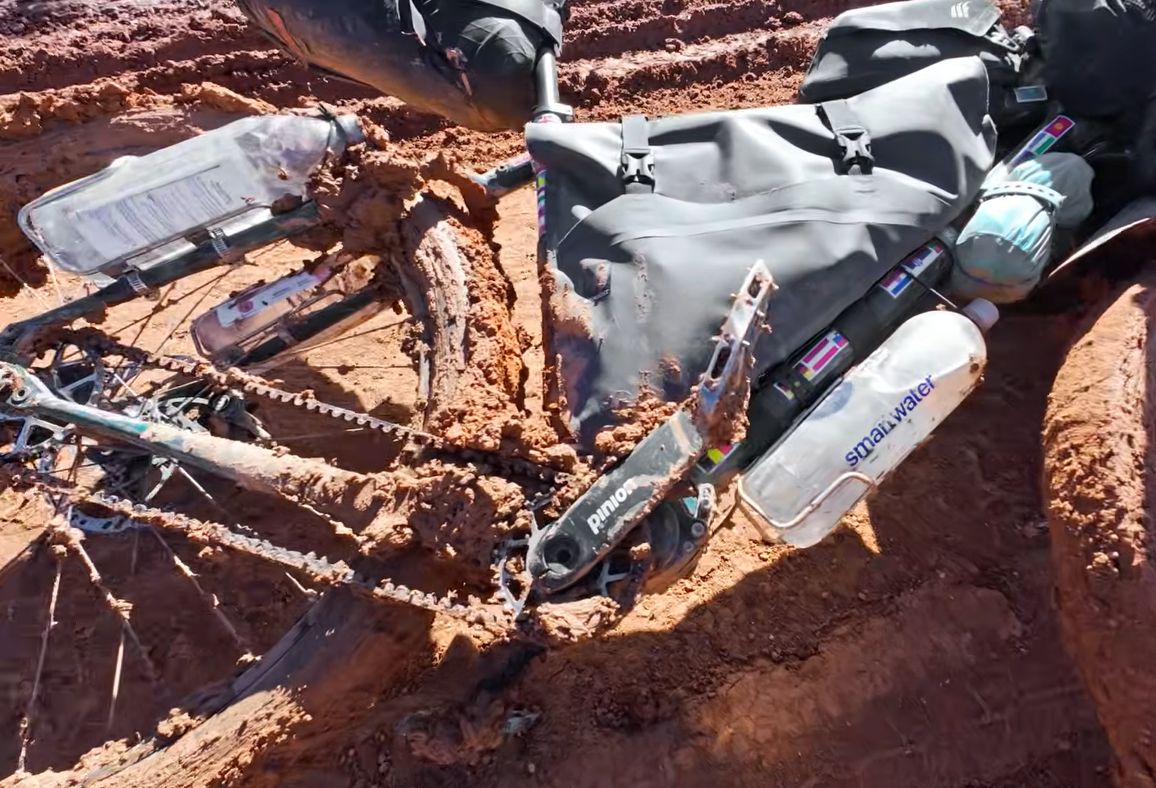
Anyone up for some tasty peanut butter? (Credit: Tristan Ridley, YouTube)
A big issue was that of abrasive dust, which created a very noisy coating on the belt that’d have to be regularly cleaned off with precious water, or by having silicone lubricant sprayed on the belt. Even with all that care he found that the belt would snap after about 8,000 km, well below the rated endurance.
When it came to super-sticky mud, called peanut butter mud for good reasons, he found that chains also cope much better with this, as the mud will just squeeze out of the chain and be forced off the sprocket, whereas the belt will happily keep compacting the mud onto the contact surfaces, increasing belt tension and requiring constant cleaning to not become hopelessly stuck.
Advertisement
The Utah breakdown also showed why these belts are actually very fragile: the replacement belt had been packed away folded-up for a few months at that point in the luggage, and during storage the carbon fibers had become compromised to the point where the belt just snapped after a few minutes of use. A metal chain will happily be stored away for as long as you can keep it away from corrosion, and fold up very compactly.
Another awesome feature of roller chains is that they’re super-modular, allowing you to carry spare links and such with you for in-the-field repairs, while even the most remote bicycle store in any country can help you out with maintenance and repairs, unlike the special and highly custom belts that need to be shipped in by courier.
Of all the bicycle technologies that [Tristan] has used, it seems that only this drive belt has been an outright disappointment. The sealed gearbox would seem to be a massive improvement over finicky derailleurs, and hydraulic brakes are reliable and common enough that they haven’t been an issue so far.
His conclusion is that bicycle drive belts are fine if you do city driving, where they probably will last the rated kilometers, but they rapidly fall apart in even slightly adverse conditions.
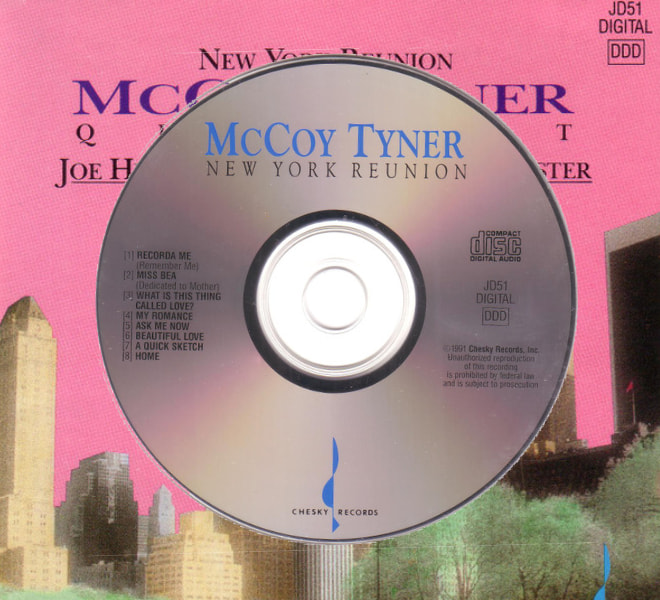
A 180-gram “one step” vinyl reissue of a 1991 release from noted audiophile label Chesky Records featuring jazz legends McCoy Tyner, Joe Henderson, Ron Carter and Al Foster is a good reason to celebrate music and life. It is a reminder of why great recordings and great players still matter.
The performances within New York Reunion are lush, relaxed and overall exemplary, capturing iconic seasoned musicians in an intimate studio setting with then state of the art recording technology. On the album cover, it states that the album was “recorded using a specially modified microphone with all tube Manley Reference electronics by David Manley from Vacuum Tube Logic Of America” It goes on to say that it was “recorded with minimalist techniques and without overdubbing or artificial enhancement to ensure the purest and most natural sound possible.”
Crafted using the increasingly popular “one step” process, which reduces the number of plating stages required to press a record and can improve overall fidelity, this reissue comes with a strong technical pedigree. The opaque pink vinyl pressing is generally quiet, well centered, and free of obvious surface issues.
This is a fine sounding all-digital recording of outstanding musicians playing together effortlessly. Perhaps too effortlessly at times. Feel wise, I’m reminded at points of those later period Oscar Peterson CDs on Telarc which at times sounded somehow too pristine and spotless for my tastes (and I say this as a pretty deep Peterson fan). Yet there are no doubt many lovely performances throughout New York Reunion such as Mr. Henderson’s extended solo sax intro (and outro) on Side 3’s “Ask Me Now” before Mr. Tyner comes in for an extended duet essentially.
Generally, I’ve enjoyed New York Reunion. My only question (not a complaint) is whether this pressing might have benefitted from some more empathetic mastering for vinyl? Don’t get me wrong, it sounds good: clean, crisp, and natural. I just wish it leaned a touch warmer. That said, considering the explicit commitment to avoiding “artificial enhancement” which would include equalization, this feels like one of those “it is what it is” scenarios.
Based on available online information, this new 2LP limited edition of 2,000 copies appears to mark the first time the complete New York Reunion album—all eight tracks originally issued on a single CD in 1992—has been released on vinyl. Earlier vinyl editions from 1992 and 2016 do exist, but those appear to have been single LP versions rather than the full 2LP presentation.
At the time of this review The McCoy Tyner Quartet’s New York Reunion can be found easily on Amazon. I have not seen any indication of whether a standard (and perhaps less pricey) black vinyl edition will be available in the future.
Mark Smotroff is a deep music enthusiast / collector who has also worked in entertainment oriented marketing communications for decades supporting the likes of DTS, Sega and many others. He reviews vinyl for Analog Planet and has written for Audiophile Review, Sound+Vision, Mix, EQ, etc. You can learn more about him at LinkedIn.)
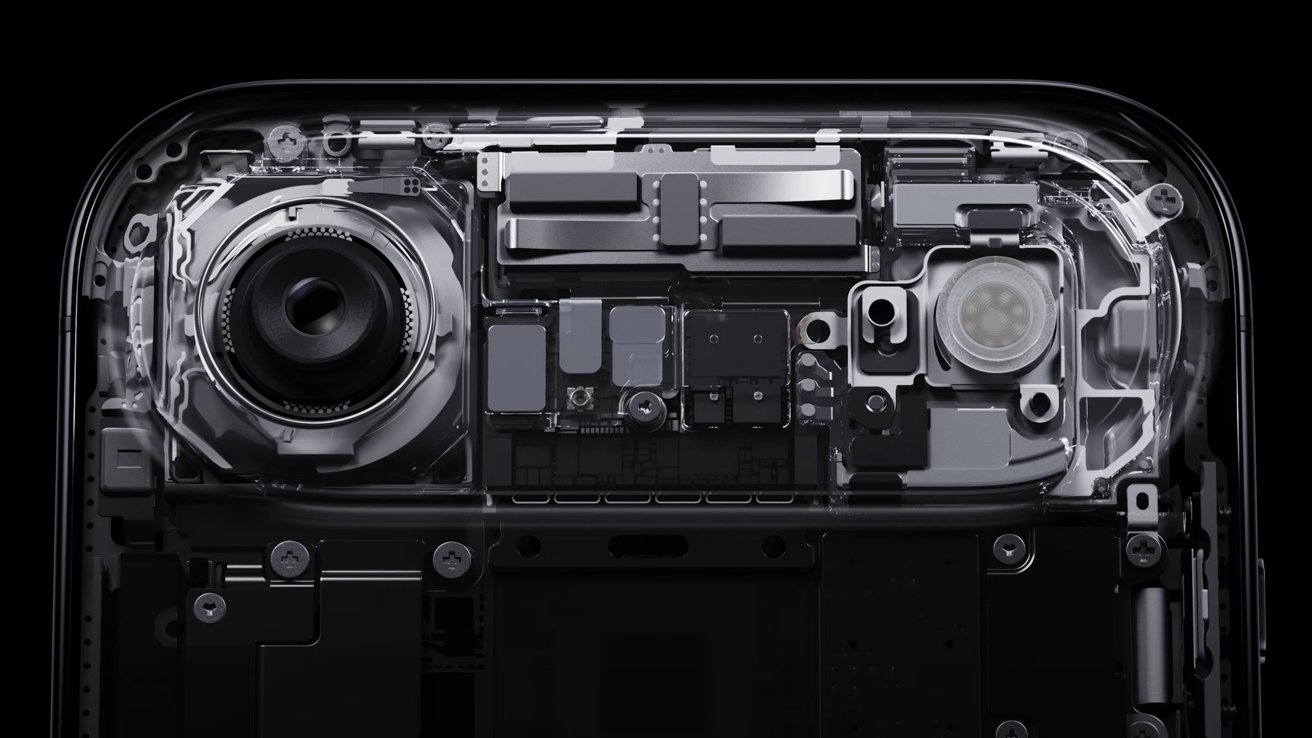
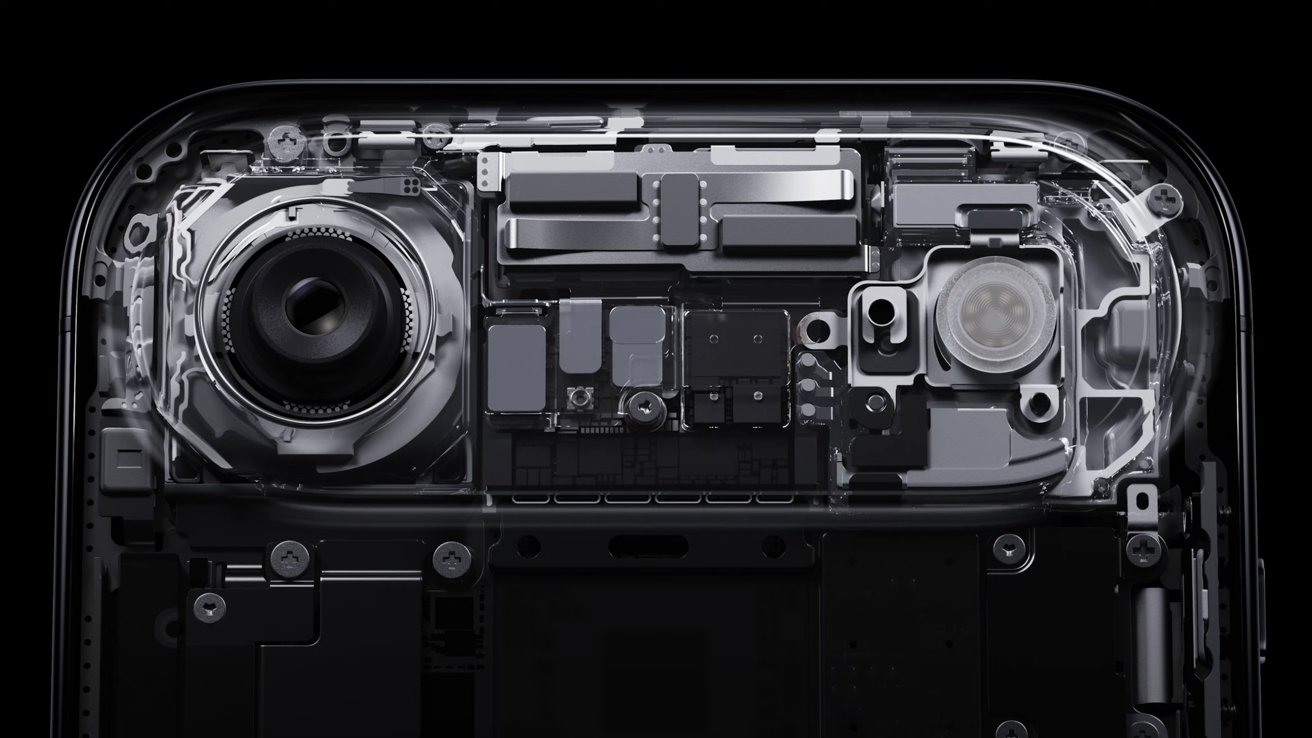
A transparent iPhone Air with a working SIM slot looked like a hardware hack for the ages, but it also showed exactly what got sacrificed when factory design margins disappeared.
iPhone Air
In a new video, YouTuber Linzin took viewers on a 22-minute journey through Huaqiangbei, China’s famous electronics market. There, technicians worked their magic by laser-stripping the rear glass of an iPhone Air for a see-through effect. They didn’t stop there and milled space for a SIM slot directly into the frame. They also handled delicate board-level microsoldering to make the eSIM-only iPhone Air work with a physical SIM card. The modified phone powered on, connected to a carrier, and worked just fine. It did run hotter under load and lost its water resistance. Continue Reading on AppleInsider | Discuss on our Forums
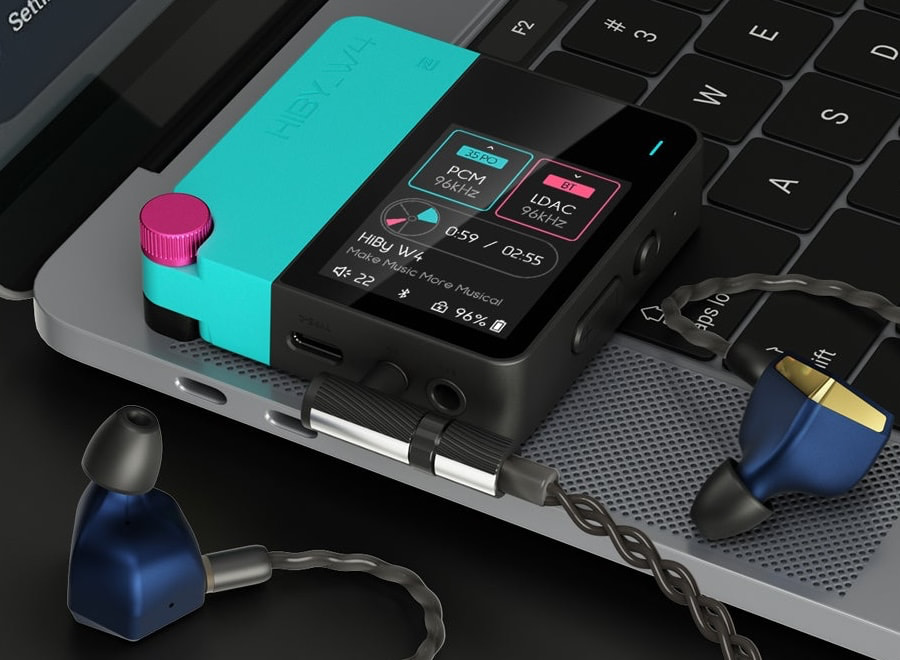
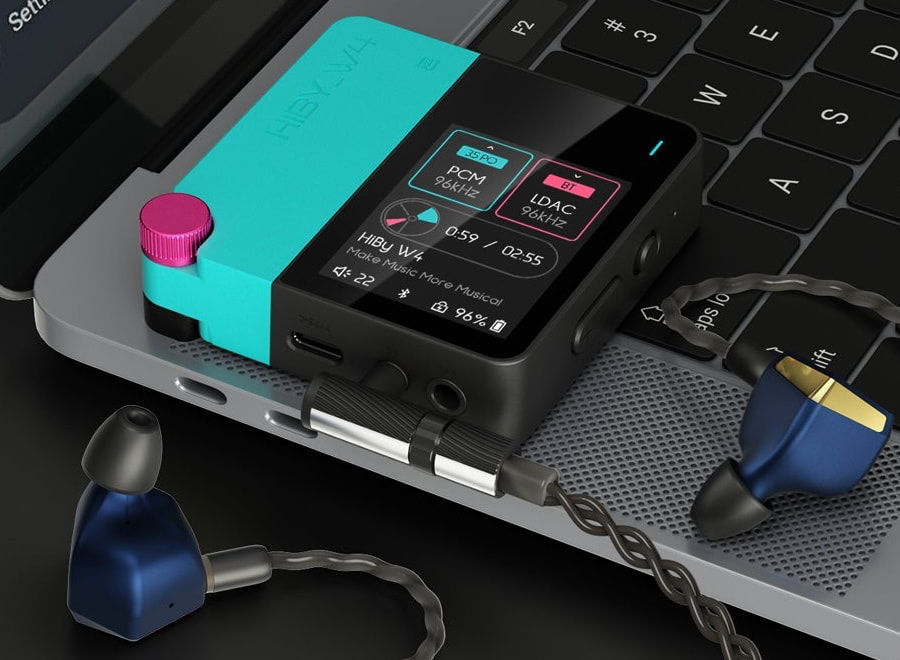
HiBy might not have household recognition in the U.S., but the company isn’t exactly new to this game. With 15 years of experience building digital audio players and portable electronics, and a HiByMusic app ecosystem that spans 100 countries with more than 3 million users on iOS and Android, the brand has quietly built serious infrastructure behind the scenes. Now it’s aiming a little more directly at the portable DAC and headphone amplifier crowd with the release of the HiBy W4.
The W4 is a Bluetooth enabled portable DAC and headphone amplifier designed to handle both wired and wireless hi resolution playback in one compact chassis. That matters because the appetite for Bluetooth capable DAC and headphone amps that can properly decode hi res formats and deliver enough output for modern IEMs and reasonably efficient headphones continues to grow. We saw that firsthand with the iFi GO Blu Air, which impressed us with its balance of sound quality, usable power, and everyday practicality.
HiBy’s pitch with the W4 is similar in concept: fashionable industrial design, dual mode operation, and enough decoding and amplification muscle to make streaming from a smartphone feel less like a compromise and more like a system choice. Whether it can stand out in an increasingly competitive under $250 portable hi-fi segment is the real question.
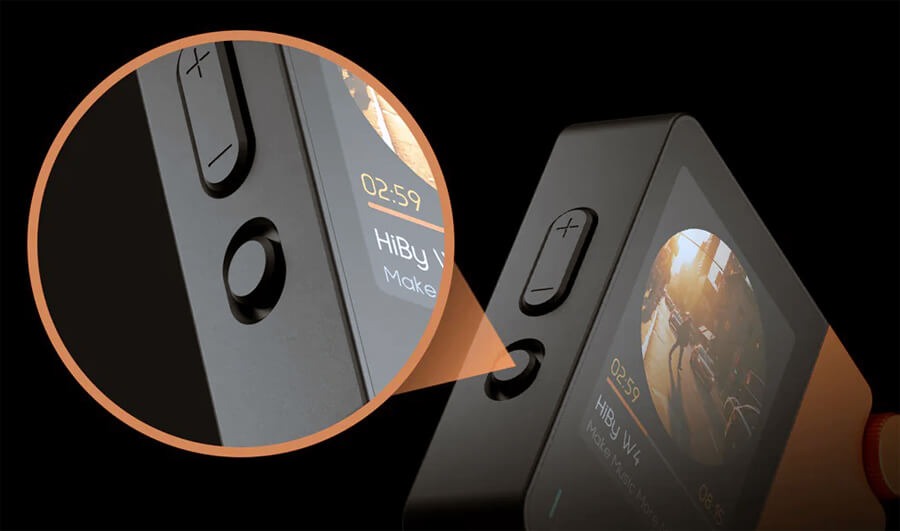
The HiBy W4 features a flexible physical design that supports both clip on use and magnetic attachment for on the go listening. Its integrated magnetic system allows it to attach directly to compatible smartphones or MagSafe style phone cases, functioning much like a MagSafe accessory for a cleaner, cable managed setup.
Advertisement
Uncharge Mode switch
The W4’s Uncharge Mode shifts the power source to USB operation, isolating the unit from the connected smartphone so it does not draw from the phone’s battery. In addition to preserving battery life, this separation can also help reduce electrical interference from the handset.
The W4 includes a built in 1500 mAh battery to support extended playback sessions, and Uncharge Mode is engaged using a dedicated button located on the left side of the chassis.
On the inside, the HiBy W4 has dual Cirrus Logic CS43198 DAC chips, paired with dual headphone amplifiers. The DACs support PCM up to 768kHz/32-bit and native DSD512.
The HiBy W4 employs dual low phase noise active crystal oscillators operating at 45.1584 MHz and 49.152 MHz to support more accurate clocking and stable audio playback across common sampling rates.
Advertisement
Connectivity includes both 3.5 mm single ended and 4.4 mm balanced stereo outputs. In balanced mode, the W4 delivers up to 475 mW of output power, driven by dual SGM8262 amplifier chips. That is a substantial figure for a device in this category and nearly double the balanced 4.4 mm output we measured from the iFi GO Blu Air. It provides enough headroom for a wide range of in ear monitors and many relatively efficient over ear headphones, giving the W4 more flexibility than ultra sensitive IEM duty alone.
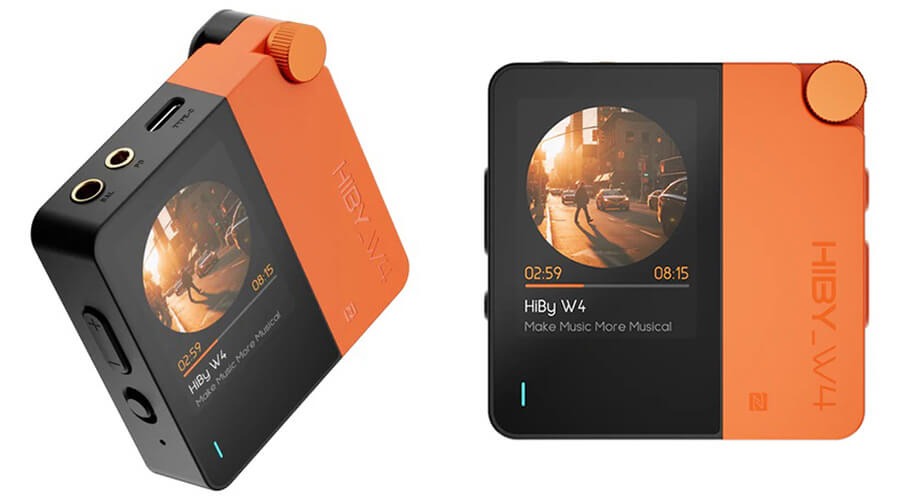
The HiBy W4 is positioned as a stylish everyday carry accessory, pairing a black front display with a contrasting, brightly colored rear module that makes it stand out at a glance.
Advertisement. Scroll to continue reading.
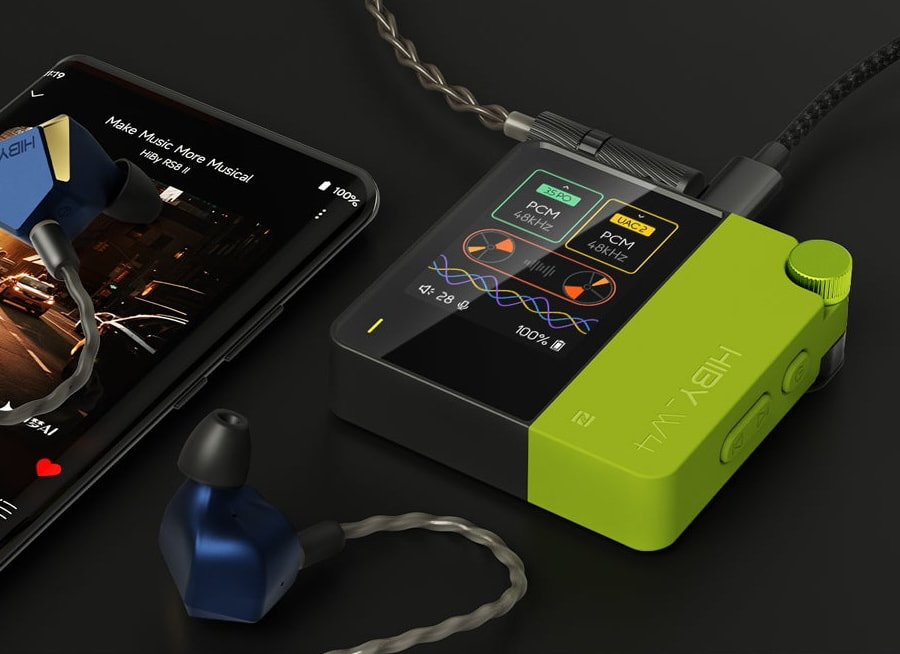
A 2-inch touch screen provides full device control and can display album artwork when operating in Bluetooth mode. Users can manage pairing, playback, and system settings directly from the W4 itself, reducing the need to constantly reach for a smartphone and creating a more self contained, user friendly experience.
There is no shortage of portable Bluetooth-enabled DAC/AMPs, and the category now stretches from basic sub-$100 dongles to feature-heavy models approaching $1,000. At $99, the HiBy W4 lands at the aggressive low end of that spectrum but brings a feature set that is not typical at this price.
Support for aptX Lossless and LDAC gives it legitimate hi-res wireless credibility, while dual oscillators, balanced 4.4mm output rated at up to 475mW, and a built-in 1500mAh battery push it beyond entry-level expectations. The integrated 2-inch touch screen also sets it apart from competitors like the iFi GO Blu Air, which relies entirely on a smartphone for visual feedback and navigation. Some listeners may prefer controlling everything from their phone anyway, especially when switching between streaming platforms, but the W4 at least gives users the option of direct, on-device control without guesswork.
Add in the magnetic MagSafe-style attachment, clip-on portability, and a Car-Optimized Mode accessible through the HiByBlue app, and the W4 starts to look less like a budget experiment and more like a calculated move into the mainstream portable hi-fi space.
Who is this for? Smartphone listeners who want true hi-res Bluetooth support, enough power for serious IEMs and efficient headphones, and a self-contained interface without spending several hundred dollars. At $99, it is positioned squarely for commuters, students, travelers, and anyone building a compact everyday-carry audio setup without sacrificing codec support or balanced output. That is a hard combination to ignore at this price.
Apple’s low-cost MacBook will fill a long-standing gap in its lineup — and bring a new wave of users into the ecosystem.
An AppleInsider rendition of what a multi-colored MacBook ad spot could look like
March 4 marks Apple’s next big announcement day, which it plans to celebrate with three invite-only “experiences” in London, Shanghai, and New York City. If you follow the rumors and speculation, you’ll know that Apple’s allegedly getting ready to add a new, lower-priced MacBook back into its lineup. I, personally, think this is a brilliant move. Apple could really expand its Mac audience, and here’s why. Continue Reading on AppleInsider | Discuss on our Forums
Looking for the most recent Mini Crossword answer? Click here for today’s Mini Crossword hints, as well as our daily answers and hints for The New York Times Wordle, Strands, Connections and Connections: Sports Edition puzzles.
Need some help with today’s Mini Crossword? For me, 4-Down was a puzzler, but the other answers filled it in. Read on for all the answers. And if you could use some hints and guidance for daily solving, check out our Mini Crossword tips.
If you’re looking for today’s Wordle, Connections, Connections: Sports Edition and Strands answers, you can visit CNET’s NYT puzzle hints page.
Meta plans to spend up to $135bn this year to support its Meta Superintelligence Labs efforts as well as its core business.
Meta will reportedly spend billions of dollars on a multi-year partnership with Nvidia to use “millions” of its chips to support Meta’s data centre build-out, the two companies announced yesterday (17 February).
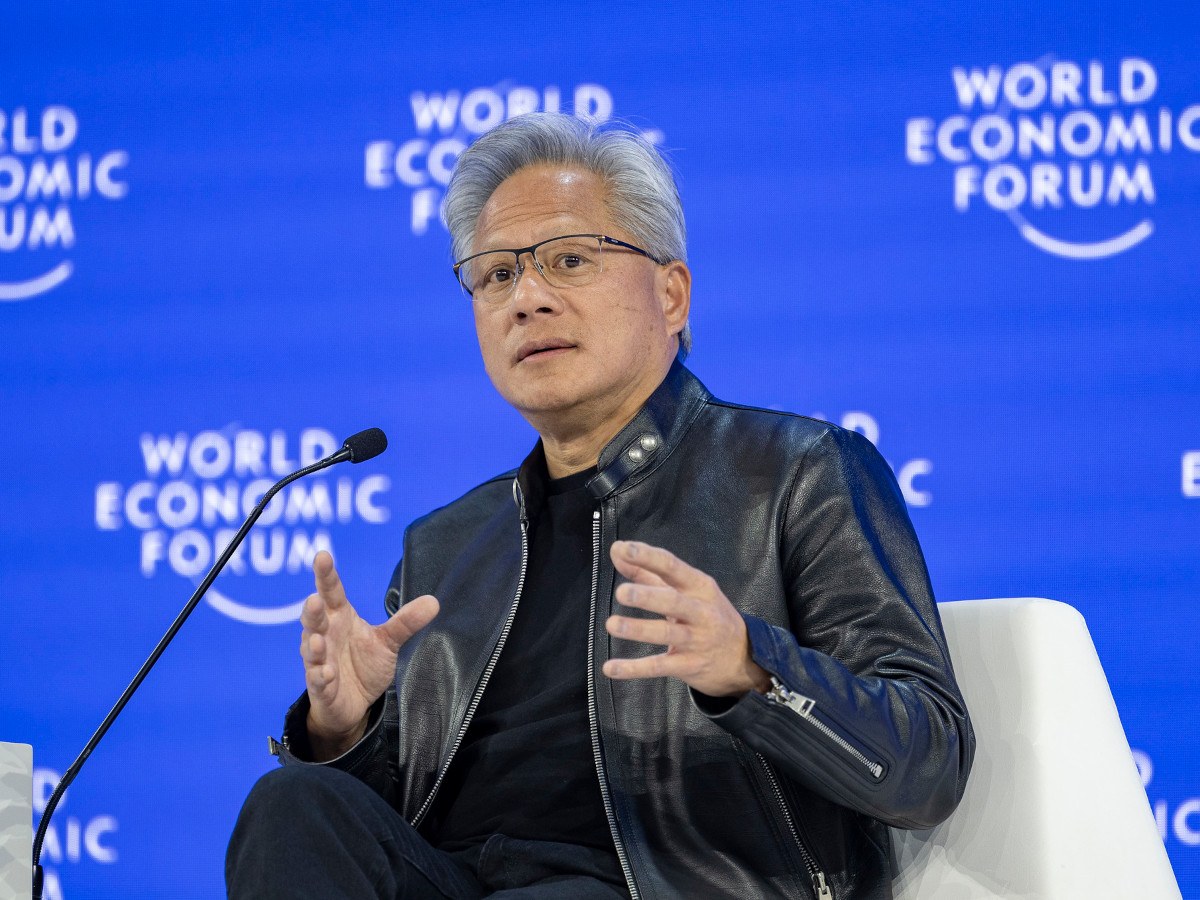
Commenting on the deal, Nvidia founder and CEO Jensen Huang said that no other company deploys AI at Meta’s scale.
Even Nvidia’s Big Tech customers, including Meta and OpenAI, are building their own in-house hardware.
As per the mega deal, Meta will deploy millions of Nvidia Blackwell and new Rubin GPUs to build “hyperscale” data centres optimised for both AI training and inference.
The company will also integrate Nvidia’s recently-announced Spectrum-X ethernet switches for Meta’s Facebook open switching system platform, and expand its usage of Nvidia’s confidential computing services beyond WhatsApp and into other offerings.
The companies said they will continue their partnership to deploy Arm-based Nvidia Grace CPUs for Meta’s data centre production applications, representing the first large-scale Nvidia Grace-only deployment.
Advertisement
They are also collaborating to deploy Nvidia’s Vera CPUs, with the potential for large-scale deployment next year. Meta is also tapping Nvidia’s GB300-based systems to continue developing its data centres.
It was reported yesterday that Nvidia sold off the last of its stake in Arm – a company it once tried to acquire. Last September, Huang announced a “giant” $100bn deal with OpenAI that has apparently not yet transpired.
“No one deploys AI at Meta’s scale – integrating frontier research with industrial-scale infrastructure to power the world’s largest personalisation and recommendation systems for billions of users,” said Huang.
“Through deep co-design across CPUs, GPUs, networking and software, we are bringing the full Nvidia platform to Meta’s researchers and engineers as they build the foundation for the next AI frontier.”
Advertisement
Meta founder and CEO Mark Zuckerberg added: “We’re excited to expand our partnership with Nvidia to build leading-edge clusters using their Vera Rubin platform to deliver personal superintelligence to everyone in the world.”
Don’t miss out on the knowledge you need to succeed. Sign up for the Daily Brief, Silicon Republic’s digest of need-to-know sci-tech news.