Whether you’re planning a party of one or a larger gathering with friends and family, Bluetooth speakers are a great device to have on hand. They’re far more accessible than larger speaker systems, not to mention more affordable, and while there are some great options to choose from, there are plenty of duds that you’ll want to avoid. Thankfully, with the advice of our expert team, you can discover the best Bluetooth speakers to buy.
While there’s no denying that if you want the true audiophile experience then the best surround sound systems are the way to go, but for most people who just want a simple way of playing their favourite tracks and playlists, Bluetooth speakers are the go-to pick, especially as there are now so many options to choose from, each with unique features.
For instance, speakers from Bang & Olufsen are perfect for high quality sound while Ultimate Ears has durability on lock. You can pick and choose based on the features that you prioritise above all, but to make sure that a speaker is truly as good as the box says it is, you can lean on the expertise of our team.
At this point, we’ve lost track of the number of Bluetooth speakers we’ve reviewed, but it means we know right away if a company is on to something special. With each speaker that gets sent to our offices, it is used for both indoor and outdoor playback to analyse the acoustics, all whilst playing a variety of genres to see how versatile the speaker is in providing a detailed soundscape.
All of this information is then funnelled into our reviews so that you know exactly what each speaker is like to use, before you ever get your hands on them. While Bluetooth speakers are easily the better option for gatherings, when it comes to personal playback you’ll be well suited with checking out the best headphones or the best wireless earbuds.
Best Bluetooth speakers at a glance
SQUIRREL_ANCHOR_LIST
How we test
How we test wireless speakers
We play a lot of music, and we play it loud. We play it everywhere – in the house, in the garden, and even in the bath if a speaker is waterproof.
We don’t just listen to the speakers; if there are special features then we make sure we fiddle with them until we’re satisfied. Recently, some Bluetooth speakers have begun to get smart functionality with the integration of Amazon Alexa or Google Assistant, and as a result we’ve started speaking to our speakers as well.
Of course, it always comes back to the music. Speakers are tested by reviewers who have a love of music, a knowledge of sound quality, as well as a context of the market. We’ll listen to Bluetooth speakers alongside similarly priced rivals, so when we recommend a particular model, it’s among the best you can buy for the money.
Obviously, we know not everyone has the same taste in music, so we won’t only test with the same perfectly mastered album, but with a variety of genres and file qualities, from MP3 to Hi-Res FLAC.
-
Impressive sound for its size
-
Waterproof and very portable design
-
Long battery life
-
Great sense of style
-
The most expensive entry in the Beosound A1 series
-
Bass caught out with more demanding tracks
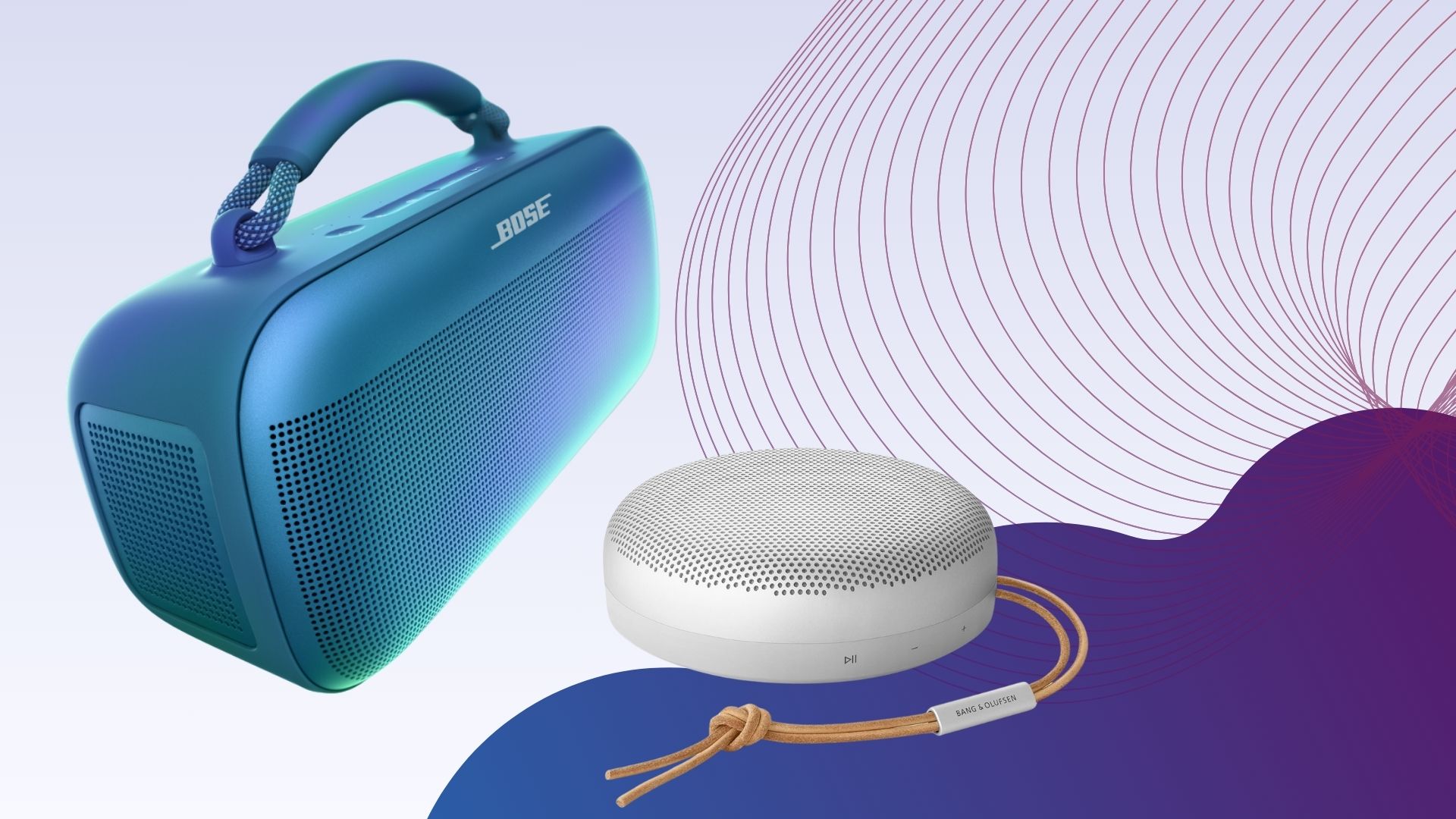
Long time readers of Trusted Reviews will know that the Beosound A1 2nd Gen was our go-to pick as the best Bluetooth speaker for quite a while due to its outstanding sound quality and undeniable sense of style. It only makes sense then that the one speaker that has truly surpassed it is its direct successor. For something truly amazing, the Bang & Olufsen Beosound A1 3rd Gen should be your first pick above all.
There are quite a few juicy upgrades in this successor but the one that arguably means the most is the upgraded bass ability. For context, the previous A1 was no slouch in this department but you can hear the weight involved the moment you turn on the newer model, with the type of room filling richness that can really elevate a party to the next level.
Depending on how long you want the part to go on for, it’s far more likely that you’ll run out of energy before the A1 3rd Gen ever does. You can now get a whopping 24 hours of use between charges which is so much more than what you’ll find from most Bluetooth speakers that it almost doesn’t seem fair, but it is why the A1 carries a more premium price.
Another nice touch that we would love to see adopted by more companies in this sector is that the A1 is Cradle to Cradle certified, ensuring that it’s been developed to the highest possible level of sustainability and as such, it can be repaired and recycled with ease at the end of its lifecycle. Given just how much e-waste is discarded each year, these are the design choices we love to see from big brands.
Although Alexa compatibility has been removed this time around, you do get a far superior Bluetooth 5.1 connection to help maintain a stronger connection with your phone when in use. There’s also multipoint pairing so if it’s more convenient to change your music source to a laptop or tablet then you can do so quickly without any hassle.
-
Punchy, informative and open sound
-
Sturdy and hard-wearing
-
Plays nicely with other Bose speakers
-
Low frequencies are short of discipline
-
Takes forever to charge
-
Volume eats into battery life
The next time you’re headed out to the beach or a large gathering that requires a bit more power than your average speaker to really deliver on the tunes, you’ll want to have the Bose SoundLink Plus to hand. This is a beefy speaker, but within its sizeable frame, Bose is able to deliver a thumping audio experience that very few Bluetooth speakers can match.
From a design front, you won’t have anything to worry about if the Bose SoundLink Plus is placed on the ground or near a body of water. The body itself is constructed from a mix of silicone and steel, which allows it to take plenty of knocks without it ever affecting performance, and there’s IP67 dust and water resistance, so if there is a bit of splashback from a nearby pool, the SoundLink Plus can keep going completely unscathed.
Of course, having that durable build is great but what really matters is the audio quality. Well, with Bluetooth 5.4 and aptX Adaptive codec support, the Bose SoundLink Plus really means business.
Because it’s meant for the outdoors, the SoundLink Plus can project its audio quite a far distance, so even if you’re standing a fair bit away from the speaker itself, you’ll still be able to hear the vocals clearly and dance to the mids as they reach your ears.
If you have a bit more cash to spare and you want to take your next gathering to a whole other level you can easily pair a second SoundLink Plus speaker for stereo sound. Any Bose speaker boasting a shortcut button can be brought into the mix via Party Mode to play the same music in sync.
-
Rich, fun, detailed audio
-
Impressively spacious performance
-
aptX Adaptive support
-
Long battery life for a speaker
-
Robust-feeling build quality
-
Charging the speaker is a faff
The SoundLink Max from Bose is premium priced Bluetooth speaker, but it’s also one of the best we’ve tested in recent years.
The sound quality is rich and detailed, the soundstage is wide and has depth to it, giving tracks plenty of space. It’s a well-balanced speaker too, with strong bass, clear highs and a detailed midrange. We also love the energy it provides to music, which makes for an exciting performance.
Given this is a portable speaker, you’ll be using it outside for the most part and the SoundLink Max is a sturdy unit. At 2kg it’s one of the heavier portable speakers we’v tested, but it comes with a handle that makes it useful to carry around, and with its IP67 rating it can handle dust and water easily enough.
Battery life is up to 20 hours, though we found that it’s a speaker that can lose its charge when not in use. We’re also not big fans of the way this speaker charges. The USB cable provided needs a consistent delivery of power that not every product (say a laptop) can provide. A plu would help but only the US version of this speaker comes with a plug included. We’d suggest buying one otherwise charging this speaker can take a very long time.
The Bluetooth performance is strong with no break ups during testing, and there’s support for higher quality aptX Adaptive Bluetooth. The Bose app offers come EQ customisation as well as changing some of the settings (such as shortcuts). It’s not the most stable at the best of times, often crashing or losing connection with the SoundLink Max when we’re swapping between apps.
-
Excellent sound
-
Portable
-
Alexa support
-
Great style
-
Waterproof design
Although it’s since been supplanted by a newer model, the Beosound A1 2nd Gen is still a great Bluetooth speaker that can now be found at a discount.
At the time of launch, it was the world’s first Bluetooth-only speaker to support Alexa, relying on the Bluetooth connection between it and a smartphone to access the Amazon digital assistant. We found it worked pretty well in a local park, Alexa responding quickly to queries unless the smartphone was busy doing another task. We’d suggest not doing too much multitasking with a phone if she proves to be less responsive than usual.
As you’d expect from a Bang & Olufsen product, it ladles on the style with its aluminium top surface and waterproof leather base. Its IP67 rating protects it from water and dust and the 18-hour battery life exceeds the likes of Sonos Roam and Wonderboom 3, so you can listen to music on this speaker for longer.
What impressed us the most during testing was its audio. For a speaker of its size and shape, it produced a detailed, clear sound, and ample amounts of bass. Compared to the portable speakers that feature on this list, it’s the best-sounding effort, and four years after its release, it still rates as one of our favourite Bluetooth speakers.
-
Balanced, clear sound over Wi-Fi and Bluetooth
-
Tough, rugged design
-
Can be used to charge other devices
-
Solid battery life
-
More expensive than before
-
No PartyBoost feature
-
No fast charging
The Charge 5 sits between the Flip series and Xtreme models as a big portable speaker for those who want a loud, dynamic outdoors performance.
It comes in an array of colours and also looks like an American football, though this isn’t a speaker we’d want to throw at someone. Its big and heavy at nearly 1kg and doesn’t come with a handle or strap for carry. The fabric covering is one we found to be quite grippy in the hand though you’ll want to stow it in away in a bag when not in use. Its tough IP67 rating ensures protection against water and dust like the Wonderboom 3 and Beosound A1 2nd Gen that feature on this list.
Battery is quoted around 20 hours, which should suffice for a few days use and the speaker can be used as a powerbank to charge mobile devices. There is app support in the form of the JBL Portable app, which we found simple to use. There aren’t many features inside, with just the ability to change the speaker’s EQ, update the firmware (which we did found takes a while) and enable the PartyBoost feature. This allows the Charge 5 to be stereo paired to another speaker or connected to as many JBL compatible speakers as you like.
The sound from the Charge 5 is one our reviewer found to be big, loud and powerful. It can generate satisfying amounts of punchy bass but it doesn’t do so at the expense of overall balance or clarity. The midrange is clear and there’s good separation and definition of voices and instruments to make the listener can hear what’s going on in the track. Raise the volume up and while there’s not as much bass as there is at lower volumes, there’s notable distortion with the Charge 5 sounding louder than the bigger Sony SRS-XG300 when playing The Beatles’ Hey Jude.
The JBL is a fun, energetic-sounding speaker with a sound that’s more balanced than you may expect. It’s available at a reasonably tidy price too, around the same price bracket as the Marshall Emberton II and Sonos Roam. There is an upgrade in the Charge 5 Wi-Fi that adds Spotify Connect, AirPlay 2, and Alexa Multi-Room audio support.
-
Improved sound over original
-
Boosted battery life
-
Can charge other devices
-
Affordable price
-
Dust and waterproof design
-
May lack a sense of fun for some
The original Stormbox Micro was a very good portable speaker at an affordable price, and the Stormbox Micro 2 sees Tribit repeating the trick again with an even better performance.
The audio is a step up in virtually all regards. We found that the Micro 2 is louder than the original, the size of the sound was also bigger and projected further away from the speaker’s body and it presented music with much more clarity than the original, too.
Out reviewer felt it achieved a better balance in its sound quality, with bass bigger and better described; treble frequencies sharper and clearer, while more detail is retrieved in the midrange, helping to define instruments with more sharpness and detail.
The design has been altered, the buttons coloured white to contrast better against the fabric covering; the speaker is also bigger and can now serve as a powerbank to change any mobile devices you have on your person via USB-C charging. It keeps the useful tear-resistant strap that allows it to be attached to bicycle handlebars or rucksacks to accompany users on their journeys. It also retains its IP67 rating, so it’s insulated against dust and water for those who want to take their speaker on more adventurous outdoor activities.
Battery life has been improved from 8-hours to 12, which puts it among the likes of the Sonos Roam (11) and Ultimate Ears Wonderboom 3 (14). There’s also support for an app that allows for the speaker’s EQ to be adjusted along with enabling updates, which should allow the speaker to last for longer.
The Stormbox Micro 2 is everything a sequel should be, improving on the weaker aspects and making the good parts even better. It does come at a slight increase to £59.99, which puts in the ballpark of speakers such as the Tronsmart T7. The T7 sounds better when dealing with treble and bass, but the convenience and versality of the Tribit gets our vote over the Tronsmart.
-
Rich, likable sound
-
Solid portability
-
Long battery life
-
Fun audio effects/customisations
-
Not the most detailed presentation
-
A little heavy to carry
Fancy having a party outside? There are plenty of Bluetooth speakers to choose, but our current favourite is Sony’s SRS-XG300.
It comes with retractable handle for carrying the speaker about, which found useful considering this speaker weighs around 3kg. With its IP67 rating it’s good against resisting liquids and particles such as sand and dust when used outside.
It’s not the sharpest or necessarily the clearest-sounding speaker with its warm and rich tone placing an emphasis on bass. However, that does make it a good option for outdoor parties if you like your bass assertively described, and music given plenty of drive and energy then the XG300.
B&O’s Beolit 20 can summon even stronger levels of bass but it does also cost twice as much as the Sony does, and there’s also the Soundcore Boom 2 Plus to consider, though it is currently more expensive than the Sony.
Around the edges of the speaker is a Light feature – Sony calls it Ambient Illumination – that emits a halo of light at either end of the speaker that pulses in sync with the beat, although at its default setting we found it wasn’t particularly noticeable, especially during daylight hours.
Other party features include support for Fiestable app, which offers control over DJ effects, light effects and Motion Control, where playback and volume can be controlled by moving a smartphone, although this is a feature that can be hit and miss in terms of accuracy.
In terms of physical connections, the Sony comes with a USB-C for charging another device, and a stereo mini-jack (cable also included) for plugging in an external source (such as a portable music player). Battery life is 25 hours; Google Fast Pair is provided for instant connection to an Android device and there’s LDAC Bluetooth for those that want to play music from a music streaming service that supports higher quality bitrates.
-
Powerful, engaging sound
-
Versatile feature-set
-
Affordable asking price
-
Could benefit from more definition, dynamic agility
-
Stands add a fair bit to overall cost
In the Q Acoustics M20 HD, you have a Bluetooth speaker that is more fitting for desktop stereo use or even connected to a TV via its other connections.
The M20 HD is an active speaker system, which means there is no need for external amplification/boxes, so you can plug it into the power port and get going with your music. AptX-HD Bluetooth ensures that the system can play files up to 24-bit/48kHz resolution, so you can get some high-fidelity performance from Bluetooth playback.
The Bluetooth support matches Edifier’s S2000MKIII, but at 10.6kg the Q Acoustics are a much lighter and smaller proposition, which makes carrying them around and positioning them on speaker stands less of a hassle. The range of connections is also better than the Edifier, so if you’re not listening to them over Bluetooth, there’s scope to connect the M20 HD to a TV or connect a USB stick to play audio files at resolutions of up to 24-bit/192kHz.
And in terms of their sound, we found the system boasted a fun and engaging performance, with a warm and rich mid-range performance, powerful bass and defined top end of the frequency range. They’re great with music, films and games and their price makes them better value than the similarly specified but more expensive Klipsch The Fives.
-
Immersive surround sound
-
Easy to use
-
Long battery life
-
Smart design
-
Battery life depletes in standby mode
-
Sounds strained at high volumes
-
Less convincing with music
-
No Wi-Fi
The HT-AX7 should be considered as a personal Bluetooth sound system that elevates the audio performance from mobile devices such as smartphones and tablets.
It connects via Bluetooth with no Wi-Fi support, so you can only connect to devices over Bluetooth. It’s made up of three elements: two detachable speakers to place around you and the main speaker unit that sits in front.
It features Sony’s 360 Spatial Sound Mapping technology creates a soundstage around your listening position with both physical speakers and virtual ones. We found the performance with movies and TV shows to be quite impressive. There’s a wider, bigger soundstage to enjoy than if you were listening through a pair of headphones or the mobile device.
Synching between what’s on the screen and the speakers is excellent, the rears fill in the space behind you in a way that keeps up the levels of immersion. Sony claims the speaker can produce overhead sounds, but through testing we found those claims to be wide of the mark.
We wouldn’t necessarily recommend using the speaker with music. At higher volume levels it can sound thin, and you won’t get much bass either.
Battery is caimed to be around 30+ hours, although like the Bose SoundLink Max, the AX7 consumes energy in its standby mode so that’s something to keep a close eye out for if you don’t use the speaker for a week (or two).
-
Clear audio with lots of impact
-
Well-built and reasonably sized
-
Oodles of connectivity options
-
Uninspiring looks
-
Rear dials can be hard to access
The Majority D80 is a pair of desktop speakers for very reasonable price. The speakers don’t have the most exciting design but they’re well-built, offer clear audio and have a wide range of connectivity options.
The speakers have an understated design, their size and 3.48kg weight puts means they’re more accommodating than bigger music systems that require more space such as the Q Acoustics M20 HD.
There’s a vast range of connectivity options to choose from, including HDMI ARC, optical, line-in, Bluetooth and a USB drive. You can switch modes on the remote control, with the remote also handy for skipping through local files on a USB drive.
The remote itself is big and chunky with reasonably tactile buttons, though you can also use the right speaker to adjust the volume, bass and treble.
When it comes to sound quality, we found that the audio remained consistent across wired and wireless connections and via a mix of streamed music and local high-quality MP3/FLAC files.
The speakers present a prominent low end and a great soundstage, as well as generally clear audio. There’s also little to no distortion at higher volumes and the speakers have no trouble filling a small office or bedroom.
If you’re looking for a pair of desktop speakers with an understated design, a clear and impactful audio performance and a varied array of connectivity options, the Majority D80 are a great value pick.
-
Solid build quality
-
Good battery life
-
Generally decent audio
-
Not as detailed as slightly more expensive rivals
-
Design may be a little bland to some
For when you’ve got a weekend camping trip in the diary and you need a tough, portable speaker that can keep up with you for the entire journey, the Tribit Stormbox Lava is by far one of your best options. With a battery life of up to 24-hours, it’s very unlikely that you’ll be left with a dead cell in the middle of one of your favourite camping playlists.
In fact, not only does that battery life mean that you can keep the party going for a lot longer than most of the competition provides, but it also allows the Stormbox Lava to act as a powerbank, with a USB-A port available so you can quickly connect to your smartphone. If you are going to be away from civilisation for a bit but you don’t want to be carrying too much, then this is exactly the type of device that you’ll be glad to have on hand.
The battery life isn’t the only feature that makes the Stormbox Lava suited for a weekend away – there’s also some outstanding durability at play. Just to look at this Bluetooth speaker is to get an understanding of its rough and ready chassis, and that’s backed up by IP67 water resistance so if it does get accidentally dropped into a pool of water, you can fish it out without anticipating the worst.
In spite of its portability however, the Stormbox Lava still manages to get incredibly loud when you want it to, so you won’t have any issues with trying to hear your go-to tracks against any background noise. Vocals in particular sound wonderfully crisp on this speaker – perfect for singing along by the campfire.
As a final point, the controls are excellent. It might seem a bit basic but trust us, having large, easy to recognise physical controls is a huge boon, and it just makes the process of using the Stormbox Lava feel so much more intuitive. It means you’re less likely to fiddle with your phone when you can easily tweak the volume and playback right on the device.
-
Thoughtful ergonomic design
-
Waterproof IP67 rating
-
Speakerphone smarts
-
Sound feels flat
-
Battery life is mid
-
No EQ presets
Take a quick glance at the Sony ULT Field 1 and you can tell pretty much right away that this is a Bluetooth speaker made for the great outdoors. It’s rugged, with IP67 dust and water resistance and there’s a rubberised control panel that can take a knock or two without any issue. If you’ve got a camping trip coming up, then this is exactly the speaker that you’ll want to have with you.
Despite there being smaller Bluetooth speakers on this list, the ULT Field 1 is wonderfully portable, as the multi-way strap not only allows you to carry it on your person, but also hang it up wherever it’s needed. If you want to hang it off a coat hook to give the audio a bit more height and range, then you can do just that.
Still, the ULT Field 1 doesn’t need much in the way of assistance because it’s able to crank up the volume to quite a high level and still retain audio fidelity. Vocals come through clearly, just as the mids are given enough space to make themselves known, and while the bassline has a great weight to it, you can switch on the bass boost for when you really want to get the party going.
The bass boost mode is great for when you’re outdoors and the lows of a song can sometimes be missed against the ambient noise of your surroundings. If you do need to take a quick call, then the Echo Cancelling feature is able to minimise any background noise so that the person on the other end of the line can hear your voice clearly. For when you’re trying to entertain a larger group, you can bring a second ULT Field 1 into the mix for a surround sound experience.
If you are taking the speaker away with you for a weekend then you won’t have to worry about longevity as you can get up to 12 hours of use on a single charge, which is more than enough to get through an afternoon/night of partying.
-
Clearer, more balanced sound
-
Extended battery life
-
Strong water resistance
-
Not the same bass impact
-
Carry strap not included as standard
Marshall has put out no shortage of Bluetooth speakers since the prolific brand hopped into this arena, but the Marshall Emberton III is arguably the company’s best one yet. Even though the Emberton III looks quite similar to its predecessor at first glance, there are actually quite a few meaningful changes that make the speaker much more fun to use on a regular basis.
There’s a new silicone texture to the chassis that makes it far more comfortable to hold, and there’s also a loop for a wrist strap to be added, giving you the freedom to attach the Emberton III to a bag or item of clothing. There’s even a separate power button this time around so you can get straight into your favourite tunes more quickly. All of this sits on top of previous durability stats including an official IP67 rating.
The design isn’t the only thing that’s been changed here as Marshall has also seen fit to give the sound profile a tweak. Admittedly, the bass is slightly less prolific than it was on the Emberton II but what you get instead is a fuller soundscape that not only gives greater room to the mid-range, it also boosts the clarity of the vocals. For classic rock tracks (the ones you’d typically hear blasting out of a Marshall amp) you’re getting a great experience.
What’s sure to be the most impressive upgrade to those who value longevity above all, the Emberton III now carries a battery life of over 32 hours, depending on your usage. That’s an absurd amount of playback and far more than what you’ll find with most of the speakers on this list, but it is such a joy to not have yet another device that regularly needs topping up on a somewhat daily basis.
Because of the inclusion of Auracast, you can wirelessly connect the Emberton III to other Bluetooth speakers that also support the software, giving you the chance to build a stereo set up in no time at all. Marshall has gone above and beyond with the Emberton III, and aside from being outdone by the B&O Beosound A1 3rd Gen where the bass is concerned, it’s an absolute winner across the board.
-
Solid build quality
-
Good battery life
-
Clean and fun audio, especially with app EQ settings
-
Soundstage isn’t the widest
-
Design may be a little bland to some
Although there’s no shortage of high-end Bluetooth speakers on this list, the kind that are likely to come with a triple-digit price tag, the Tribit PocketGo is exactly the type of device that proves you don’t have to invest a small fortune to get a great-sounding experience in return. Forget just being a great budget option, this is a solid Bluetooth speaker that actually beats the competition in some areas.
Right off the bat, with a cost of only £29.99/$34.99, the Tribit PocketGo is the ideal pick for students on a budget or parents who want to buy a low-cost speaker for their kids. In fact, because the speaker is very compact with larger buttons that are easy to use and very tactile, the PocketGo is great for smaller hands. The built-in loop even makes it simple to attach the speaker to a bag or hook.
The lower price tag doesn’t mean that you’re settling for a lesser experience in durability – far from it. Because of its official IP68 rating, the Tribit PocketGo is more than capable of withstanding dust and water, to the point where if it accidentally gets knocked into a swimming pool, you won’t have to worry about it being lost forever – just fish it out and get back to enjoying some tunes.
In terms of sound quality, there’s a surprising amount of bass for such a small speaker, but if you are someone who prefers to sing along with pitch perfect vocals then you can shake things up via the EQ settings in the Tribit app. We actually encourage you to dive into the equaliser as the PocketGo’s sound profile really comes alive once you start changing things away from the default setting.
You’re getting Bluetooth 6.0 on the Tribit PocketGo which is even more advanced than what you’ll find with some pricier options like the Beosound A1 3rd Gen, and it paves the way for a stronger connection to your streaming device. As a final flourish, even though the speaker is compact enough to fit in the palm of your hand, it still boasts a solid 20-hours of battery life so you’ll have more than enough juice to keep a party going through the night.
-
Mega powerful
-
Relatively compact
-
Bassy sound with great vocals
-
Can sync with other Sony speakers
-
Bluetooth Fast Pair and Multipoint
-
Lighting is underwhelming
-
App layout is confusing
-
It’s quite heavy
Although Sony produces some proper hefty speakers that are designed to sit by the side of a stage and not move until they’re taken away at the end of the night, those room-filling devices aren’t exactly ideal when you just have a rucksack to hand in terms of transport. Thankfully, the Sony ULT Field 5 is the perfect middle ground, providing that big sound promise but in a form factor that can actually be carried around with ease.
While the Field 5 could be flung into a reasonably sized bag, there is a helpful shoulder strap included so you can carry it around from one party to another without issue. You’ll be glad to have it with you as well because the moment you pop it down, boot it up and get the tunes going, you’ll sense the party change from something fun to into something epic.
The first thing you’ll notice is just how loud this speaker can be. We were impressed by the Field 5’s scale when the volume was only at 50%, so be prepared to cover your ears if you dare to send it all the way to the max. There are also three presets that are easily accessible in a pinch. ULT 1 really amps up the bass for rap and hip hop, but ULT 2 injects a tangible sense of energy that feels well suited for tracks filled with various instruments.
If you prefer having things set to a very specific sound then you can customise the EQ settings to your liking, but in every mode that we tried there was one consistent element: the Field 5 is a lot of fun to listen to. The built-in LED lighting is also a nice touch, particularly in low light settings, although don’t expect it to illuminate an entire party on its lonesome.
As you might expect from a speaker of this size, it is designed to withstand the elements thanks to an official IP67 rating for dust and water resistance. The massive battery onboard is also able to run for up to 25-hours at a time, although you can use the Field 5 to act as a power bank and charge up your other devices like your phone or headphones, so it has additional use when there isn’t a party to attend.
-
USB-C, finally
-
Rough and ready design
-
Long-lasting battery life
-
No price increase
-
The upgrades are minimal at best
-
Fewer colourways than the Boom 3
There’s a case to be made that even though it makes some of the best speakers on the market that Ultimate Ears has a just few too many options available to consumers. Well, if you’re a little unsure over which one to go for then the Ultimate Ears Boom 4 represents the best middle ground of what the brand has to offer with a striking design, big sound and a competitive price tag to boot.
Just like every other UE speaker, the Boom 4 is immediately recognisable from its large plus and minus buttons which aren’t just for show, they’re a great way of quickly changing the volume without having to fish around, which can be the case with some smaller buttons on other speakers. Speaking of volume, the Boom 4 is capable of filling an entire room so you can easily enjoy a reasonably sized gathering with just this in tow.
If you are looking to have a ton of people over then you can easily sync up the Boom 4 with other UE speakers via the brand’s PartyUp system. This can be done via the UE app in just a minute, and it means you can have songs follow you from one room to the next without ever missing a beat.
What’s impressive though is that because the Boom 4 isn’t as large as the Megaboom 4, it arguably works better for personal playback at lower volumes than its more expensive sibling, so you can sit at a desk and enjoy a podcast or playlist with good detail at a respectable volume. Crank the volume up though and you’ll hear plenty of bass and energy in pretty much any genre.
As you may have already guessed just from looking at it, the Boom 4 has a rough and ready design with an official IP67 rating. If the speaker accidentally takes a dip in the pool then you can just scoop it up and keep the party going without worry. On the battery front you’re looking at up to 15-hours of playback which doesn’t lead the pack compared to some options on this list but it’s still more than enough juice for most situations.
Test Data
| |
Bang & Olufsen Beosound A1 3rd Gen |
Bose SoundLink Plus |
Bose SoundLink Max |
Bang and Olufsen Beosound A1 2nd Gen |
JBL Charge 5 Wi-Fi |
Tribit StormBox Micro 2 |
Sony SRS-XG300 |
Q Acoustics M20 HD |
Sony HT-AX7 |
Majority D80 |
Tribit Stormbox Lava |
Sony ULT Field 1 |
Marshall Emberton III |
Tribit PocketGo |
Sony ULT Field 5 |
Ultimate Ears Boom 4 |
| Power consumption |
– |
– |
– |
5 W |
– |
– |
– |
– |
51 W |
– |
– |
– |
– |
– |
– |
– |
Full Specs
| |
Bang & Olufsen Beosound A1 3rd Gen Review |
Bose SoundLink Plus Review |
Bose SoundLink Max Review |
Bang and Olufsen Beosound A1 2nd Gen Review |
JBL Charge 5 Wi-Fi Review |
Tribit StormBox Micro 2 Review |
Sony SRS-XG300 Review |
Q Acoustics M20 HD Review |
Sony HT-AX7 Review |
Majority D80 Review |
Tribit Stormbox Lava Review |
Sony ULT Field 1 Review |
Marshall Emberton III Review |
Tribit PocketGo Review |
Sony ULT Field 5 Review |
Ultimate Ears Boom 4 Review |
| UK RRP |
£299 |
£249 |
£399 |
£200 |
£229.99 |
£46.99 |
£219 |
£399 |
£449 |
£99.95 |
£127.99 |
£99.99 |
£159 |
£29.99 |
£199 |
£129.99 |
| USA RRP |
$399 |
$269 |
– |
$250 |
– |
$59.99 |
$349.99 |
$599 |
$499 |
– |
$126.99 |
$129.00 |
$179 |
$34.99 |
– |
$147.99 |
| EU RRP |
€349 |
€279 |
– |
€250 |
– |
€59.99 |
€299 |
€499 |
€549 |
– |
– |
€99 |
€169 |
– |
– |
– |
| CA RRP |
– |
CA$349 |
– |
CA$350 |
– |
CA$75.99 |
CA$449 |
– |
Unavailable |
– |
– |
CA$149 |
– |
– |
– |
– |
| AUD RRP |
– |
AU$429 |
– |
– |
– |
AU$76.49 |
AU$398 |
– |
Unavailable |
– |
– |
AU$169 |
– |
– |
– |
– |
| Manufacturer |
Bang & Olufsen |
Bose |
Bose |
Bang & Olufsen |
JBL |
Tribit |
Sony |
Q Acoustics |
Sony |
Majority |
Tribit |
Sony |
Marshall |
Tribit |
Sony |
Ultimate Ears |
| IP rating |
IP67 |
IP67 |
IP67 |
IP67 |
IP67 |
IP67 |
IP67 |
No |
– |
– |
IP67 |
IP67 |
IP67 |
IP68 |
IP67 |
IP67 |
| Battery Hours |
24 |
20 |
20 |
18 |
20 |
12 |
25 |
– |
– |
– |
24 00 |
12 |
32 |
20 00 |
25 |
15 |
| Fast Charging |
– |
– |
– |
– |
– |
– |
Yes |
– |
– |
– |
– |
Yes |
Yes |
– |
– |
– |
| Size (Dimensions) |
133 x 133 x 46 MM |
231 x 86 x 99 MM |
265 x 105 x 120 MM |
133 x 133 x 46 MM |
223 x 94 x 97 MM |
99.8 x 99.8 x 42.9 MM |
318 x 136 x 138 MM |
170 x 296 x 279 MM |
306 x 123 x 97 MM |
155 x 155 x 230 MM |
147 x 310 x 152 MM |
206 x 76 x 77 MM |
160 x 76.9 x 68 MM |
108 x 81 x 42 MM |
320 x 125 x 144 MM |
73 x 73 x 184 MM |
| Weight |
576 G |
1.45 KG |
2.13 KG |
558 G |
1 KG |
315 G |
3 KG |
10.6 KG |
2 KG |
3.48 KG |
2.3 KG |
650 G |
670 G |
220 G |
3.3 KG |
620 G |
| ASIN |
B0F3P3BN88 |
B0F7HZ81YD |
B0D1CQGFDR |
B085R7TSN6 |
B0C3VYT6Q6 |
B09Q59321N |
B0B1JCXRLX |
B0983MW7YN |
B0CC6J8J64 |
B0CD85VQVN |
B0DN5F9BC2 |
B0CX1WXP8M |
B0DDCJMDJC |
– |
B0DY9X655Q |
B0D3WLCJSJ |
| Release Date |
2025 |
2025 |
2024 |
2020 |
2023 |
2022 |
2022 |
2021 |
2023 |
2023 |
2024 |
2024 |
2024 |
2025 |
2025 |
2021 |
| First Reviewed Date |
– |
– |
– |
26/08/2020 |
– |
– |
– |
– |
– |
03/01/2024 |
16/04/2025 |
– |
– |
14/01/2026 |
– |
09/09/2025 |
| Model Number |
– |
– |
– |
1734002 |
JBLCHARGE5PROBLK |
– |
– |
QA7610 |
HTAX7.CEL |
– |
– |
– |
– |
– |
– |
– |
| Audio Resolution |
AAC, aptX Adaptive |
SBC, AAC, aptX Adaptive |
SBC, AAC, aptX Adaptive |
– |
Up to 24-bit/96kHz |
– |
SBC, AAC, LDAC |
24bit/192kHz |
SBC, AAC |
– |
– |
SBC, AAC |
SBC, AAC, LE Audio |
– |
SBC, AAC, LDAC |
– |
| Driver (s) |
3 1/4-inch woofer, 0.6-inch tweeter |
– |
– |
– |
53mm x 93mm woofer, 20mm tweeter |
– |
two 20mm tweeters, two 61 x 68mm woofers |
22mm tweeter, 125mm mid/bass driver |
Two X-balanced, two passive radiators |
Silk dome tweeter |
dual 30W Neodymium Magnet Woofers and dual 10W Silk Dome Tweeters |
16 mm tweeter, 83×42 mm woofer |
2-inch full range, 2 passive radiators |
Single 45mm full-range driver, passive bass radiator |
46mm tweeter, 79 x 107mm woofer |
2x 40mm active drivers |
| Surround Sound Systems |
– |
– |
– |
– |
– |
– |
– |
– |
122 x 39 x 122mm |
– |
– |
– |
– |
– |
– |
– |
| Ports |
USB-C |
USB-C |
USB-C, aux |
USB-C |
USB-C, USB-A |
– |
USB-C, USB-A, stereo mini line |
USB, digital optical, 3.5mm, stereo RCA |
– |
USB-A, Optical, Line-In, HDMI ARC |
USB-C, USB-A, 3.5mm |
USB-C |
USB-C |
USB-C, TF card slot |
USB-C, stereo mini-jack |
USB-C |
| Audio (Power output) |
60 W |
– |
– |
– |
40 W |
10 W |
– |
130 W |
– |
80 W |
80 W |
– |
– |
7 W |
– |
– |
| Connectivity |
Bluetooth 5.1, Made for iPhone (MFI), Google Fast Pair, Microsoft Swift Pair |
Bluetooth 5.4 |
Bluetooth 5.3 |
Bluetooth 5.1 |
Wi-Fi (Spotify Connect, Chromecast, Alexa Multi-Room Audio, AirPlay), Bluetooth 5.3 |
– |
Bluetooth 5.2 |
Bluetooth 5.0 |
Bluetooth 5.2 |
Bluetooth |
Bluetooth 5.4 |
Bluetooth 5.3 |
Bluetooth 5.3 |
Bluetooth 6.0 |
Bluetooth 5.3 |
– |
| Colours |
Natural Aluminium, Honey Tone, Eucalyptus Green, Warm Granite |
Blue, Citrus Yellow, Black |
Blue, Black |
Black Anthracite, Grey Mist, Pink, Green |
Black |
Black |
Black, Gray |
matte black, matte white, walnut veneer |
Grey |
Black |
– |
Black, Off White, Orange, Forest Gray |
Black & Brass, Cream, Sage, Midnight Blue |
Grey |
Black, Off White |
Active Black, Cobalt Blue, Raspberry Red, Enchanting Lilac |
| Frequency Range |
54 20000 – Hz |
– Hz |
– Hz |
55 20000 – Hz |
– Hz |
70 20000 – Hz |
20 20000 – Hz |
55 22000 – Hz |
– Hz |
– Hz |
43 19998 – Hz |
20 20000 – Hz |
65 20000 – Hz |
80 20000 – Hz |
20 20000 – Hz |
– Hz |
| Audio Formats |
– |
– |
– |
AAC, aptX Adaptive |
– |
– |
– |
SBC, AAC, aptX, aptX-HD |
– |
MP3, WMA, FLAC, MAV, APE |
– |
– |
– |
AAC, SBC |
– |
– |
| Power Consumption |
– |
– |
– |
5 W |
– |
– |
– |
– |
51 W |
– |
– |
– |
– |
– |
– |
– |
| Speaker Type |
Portable Speaker |
Portable Speaker |
Portable Speaker |
Portable Speaker |
Portable Speaker |
Portable Speaker |
Portable Speaker |
Active Speaker |
Portable Speaker |
Active Speaker |
Portable Speaker |
Portable Speaker |
Portable Speaker |
Portable Speaker |
Portable Speaker |
Portable Speaker |
| Impedance |
– |
– |
– |
– |
– |
– |
– |
– |
– |
– |
– |
– |
– |
-2 ohms |
– |
– |
| Inputs |
– |
– |
– |
– |
– |
– |
– |
– |
USB-C |
– |
– |
– |
– |
– |
– |
– |
What’s the best Bluetooth speaker on a budget?
We’d point to the Tribit Stormbox Micro 2. Its design allows for it to be used in many different ways, the sound is much improved over the original and it comes with app support as well as the ability to charge other devices.










 The chip projected a roughly 125-micrometer image of the Mona Lisa.














































You must be logged in to post a comment Login