Tech
The iPhone 18 Pro gets Apple’s first 2nm chip, bigger batteries, and a surprisingly restrained price

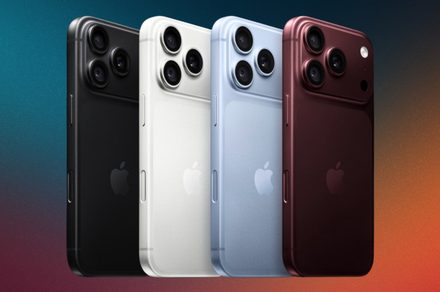

It’s that time of year again. At Apple Park’s “Surprise and Shine” event in Cupertino, John Ternus took the stage to unveil two new flagship iPhones: the iPhone 18 Pro and the iPhone 18 Pro Max.
With the standard iPhone 18 not arriving until spring next year, the iPhone 18 Pro is left to cover the smaller end of Apple’s flagship lineup on its own, at least for now. The iPhone 18 Pro Max, meanwhile, is the larger, more battery-forward sibling, and now the most expensive non-folding iPhone Apple sells, unless you’ve got your eye on the new iPhone Duo, Apple’s first foray into foldables.
A familiar silhouette with a few telling changes
Starting with design, both models carry over the same “candy bar” silhouette introduced with last year’s iPhone 17 Pro. That unmistakable camera plateau on the back, the triangular lens arrangement, and the dual-tone glass-and-metal rear panel all return virtually unchanged.
That said, you can still pick the iPhone 18 Pro out of a lineup by its signature new color, a deep burgundy, joining black, silver, and glacier, and by a noticeably smaller Dynamic Island up front. Speaking of which, the Dynamic Island now supports three simultaneous Live Activities instead of two, while still handling Face ID.
Turn your attention to the front of the iPhone 18 Pro models, and you’ll find the same Super Retina XDR ProMotion displays in two familiar sizes — 6.3 inches on the Pro and 6.9 inches on the Pro Max — with peak brightness climbing higher than before.
Under the hood, Apple’s latest flagships run on the new A20 Pro chip. Beyond the expected generational bump, headlined by 50 percent more memory bandwidth and a 7-core GPU that’s up to 40 percent faster than the A19 Pro, the real story is its 2-nanometer process node, Apple’s first.
Samsung may have technically won that race first with the Exynos 2600 earlier this year, but I’d still bet on Apple squeezing out bigger real-world efficiency gains, largely thanks to how tightly its hardware and software are woven together.
A 2nm Chipset, iOS 27, and new camera tech
Alongside a redesigned vapor chamber with three times the surface area of the iPhone 17 Pro’s, the new phones also debut Apple’s in-house C2 modem, delivering meaningfully faster uploads than the outgoing C1X on 15 percent less power, plus mmWave support in the U.S. Out of the box, the iPhone 18 Pro lineup runs iOS 27, ushering in the next chapter of Apple Intelligence, centered on Siri AI, an entirely new version of Siri that’s noticeably more personal, capable, and conversational.
The 48MP Fusion Main sensor now pairs with a genuine physical variable-aperture mechanism, reportedly ranging from f/1.6 to f/4.0. Like a professional camera, this lets you directly control how much light reaches the sensor and how shallow or deep your depth of field looks in a shot, and it’s standard across both the Pro and Pro Max, not exclusive to the bigger model.
Beyond that, the Camera app itself now offers genuine Pro controls, letting you dial in aperture, shutter speed, and white balance manually, plus a live histogram to check exposure, capabilities Android phones have quietly offered for years. Still, arguably the most consequential upgrade this year shows up somewhere far less glamorous: battery life.
Both the iPhone 18 Pro and iPhone 18 Pro Max pack substantially larger batteries than their predecessors, and paired with the efficiency of that new 2nm chipset, Apple rates the eSIM-only models for up to 36 and 45 hours of video playback, respectively, two hours less on versions with a physical SIM tray (via Apple Newsroom). For context, last year’s iPhone 17 Pro and Pro Max topped out at 33 and 39 hours.
Pricing and Availability
Despite months of rumors warning of a $200 to $300 price hike, Apple actually held the pricing line reasonably well this year. The iPhone 18 Pro (256GB) starts at $1,199, while the iPhone 18 Pro Max (256GB) starts at $1,299.
Even accounting for that $100 bump, both Pro models still launch within striking distance of their closest rivals, the Galaxy S26 Ultra and the Pixel 11 Pro XL. In fact, the iPhone 18 Pro Max lands at the exact same starting price as both flagships: $1,299.
Pre-orders open Saturday, September 12, 2026, with the new iPhones officially hitting shelves the following Friday, September 18, across a first wave of more than 65 countries, including India.
You must be logged in to post a comment Login