
It’s been just over a week since TikTok — in the United States — transferred into the hands of new owners. And it’s been a mess ever since.
Tech
The messy truth about TikTok’s Trump-aligned takeover

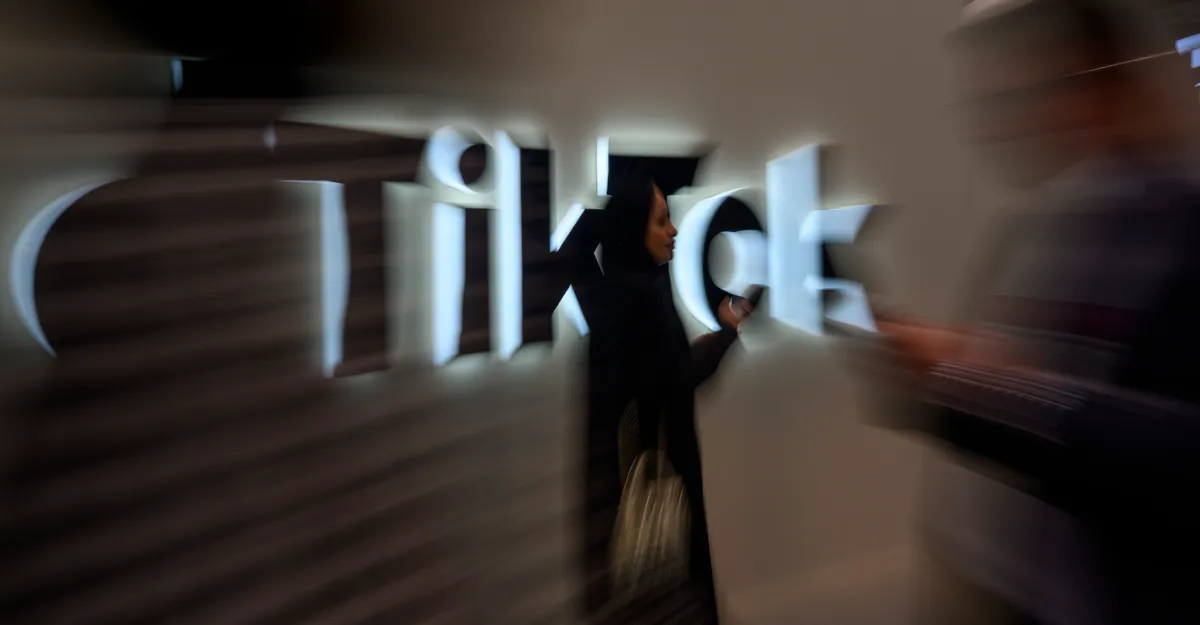
At the government’s urging, TikTok’s parent company ByteDance sold the app to a mostly American group of investors, including the software business giant Oracle (founded by Trump ally Larry Ellison), MGX (an Abu Dhabi-based company also involved in Trump crypto ventures) and the private equity firm Silver Lake.
But since the new owners took control, the app has seen major outages and malfunctions, claims of censorship and uproar over its updated terms of service.
Today, Explained guest host Jonquilyn Hill sat down with David Pierce, editor-at-large at The Verge, to break down people’s concerns about TikTok’s new owners and what this may mean for people’s experiences on the social media app in the future. Below is an excerpt of their conversation, edited for length and clarity. There’s much more in the full podcast, so listen to Today, Explained wherever you get podcasts, including Apple Podcasts, Pandora, and Spotify.
American TikTok has new owners now, and almost immediately after they took over, people started reporting issues with the app. I wanna start with the big one. People said that they were being censored. What’s going on there, and what are the complaints?
That is the big one. It’s also the most complicated one to sort through because fundamentally, it’s about feelings. So a thing to understand is that everybody has always believed they’re being censored on social media. Since time immemorial, this is the story of social media. What’s happening on TikTok is at this particular moment I believe less about censorship and more about normal internet problems.
There were a lot of people reporting that they would upload videos around what was happening in Minneapolis and those videos would get no views or those videos would actually not upload properly. There were people who were saying that if you DM’d the word “Epstein” to somebody else that that wouldn’t go through. All of this is more easily and just as successfully explained by normal corporate ineptitude.
TikTok’s new data center provider, Oracle, had a huge outage. What we think we know is that it was a big data center in Virginia that had what they called a weather-related issue. They’ve had big issues at the data center and that seems to be the actual culprit here.
There are lots of good reasons to be worried about censorship. There are lots of potential censorship problems coming to TikTok, but rationally speaking, the likelihood that this new group would have taken over TikTok and immediately smash a big red “censorship” button is pretty unlikely.
Is there a way for us to actually know? I mean, people are pretty skeptical of TikTok right now.
I think one useful analog here is when Elon Musk bought and took over Twitter. And when Elon Musk took over Twitter, he just said out loud all of the changes he was intending to make, right? And this was after years of conservatives, in particular, saying that they were being censored by Twitter’s existing leadership.
So, Elon Musk comes in and essentially says, I’m going to reverse that. And then does a bunch of very obvious things. So, I think there is a version of this that feels very obvious. It’s just that for right now, there are better, simpler sort of Occam’s Razor-y explanations for what’s going on.
What about the new terms of service that folks had to agree to?
This is a tricky one because one of the very funny things about terms of service on apps like these is that they’re always terrifying, and they’re often terrifying for totally non-terrifying reasons.
What happened in this case is there are some new things in the terms of service. The new TikTok US is going to collect more precise location data if you allow it. It also gives TikTok permission to collect a bunch of data around kind of nebulous AI things that make it clear they’re gonna do a lot of sort of gen AI stuff inside of TikTok, and that’s data they can collect.
But, actually, that has been in TikTok’s terms of service for some time. Still, I think it is reasonable to be alarmed that this data is going to be collected by a new group of people.
All of this is the business side; but will my experience on the app change now?
The one thing that actually no other platform has done a good job of replicating [is TikTok’s algorithm]. But now, one of the stipulations of this deal is that there has to be some meaningful separation of that algorithm from Chinese control. The new owners are going to “retrain, test, and update” the algorithm. That is a very vague phrase, but it means in some way the algorithm is going to change. But that we’re going to not see [how] for a while.

Continue Reading
from the you-are-TERRIBLE-at-this dept
When right wing billionaire Larry Ellison (and his nepobaby kid David) hired trolling blogger Bari Weiss to run CBS News, Weiss arrived with the promise of “balanced, fact-based news,” “independent, principled journalism,” and a unique “entrepreneurial drive and editorial vision” that would completely modernize the network and reach the “everyday Americans” traditionally ignored by mainstream media.
As we noted at the time, that was all bullshit code for turning CBS into yet another outlet that panders to global autocrats, normalizes far right wing extremism, coddles corporate power, and generally shits all over progressive societal reforms.
Weiss wasn’t a journalist, had no serious journalism experience, isn’t good at journalism, and wasn’t hired to do journalism. She was hired specifically to do ratings-grabbing, viral, right wing friendly agitprop which the Ellisons mistakenly seemed to think there was a massive market for. But unfortunately for Weiss, she’s not good at that either.
And it’s just observationally true that nobody actually wants what CBS’ new ownership is selling.
Broadcast TV was already in trouble (just 20% of all TV viewing is now broadcast). The conspiratorial right wing MAGA movement already has countless propaganda outlets to choose from. And the folks who used to find CBS News semi useful aren’t sticking around. “CBS Evening News” ratings keep dipping below 4 million viewers; the kind of ratings that caused CBS to revamp things in the first place.
In fact, CBS News just saw its worst quarter of ratings in 25 years, and it’s not slowing down:
“Demo figures are perhaps even more alarming. “CBS Evening News” lost about 15% of its viewership in the adults 25 to 54 bracket for the first quarter of 2026. ABC is also off by around 4%, while “Nightly” is up 8%.”
Oliver Darcy put it this way over at his newsletter:
“Viewers are smart. They understand that under Ellison’s ownership, and with Weiss at the helm, CBS News has charted a new course … one that is friendlier to Donald Trump and the MAGA movement he leads.”
It’s just not clear who Weiss thinks she’s appealing to. There’s no shortage of weird, timid, corporatist, center-right blandness across journalism. Countless outlets are making such a pivot the under Trump in an industry that’s being increasingly consolidated under the ownership of terrible rich assholes with increasingly extreme, anti-democratic ideals. And fewer and fewer people watch broadcast TV anyway.
It’s clear Larry Ellison and other right wingers envy and want to emulate the control of media Victor Orban enjoys in Hungary. Under most autocratic models, party-loyal oligarchs buy up all the major companies, pummel the country with propaganda, and the government sues, harasses, and strangles real journalism just out of frame. As it progresses and gets worse, journalists often wind up dead.
But America is much bigger and much more diverse than Hungary. People are also increasingly consuming media and news in short form snippets from a massive and expanding assortment of influencers (credible or not), independent outlets, and direct-to-consumer journalists. “Flooding the zone with shit,” (to use a Steve Bannon term) impacts everybody, and makes it hard for any one player to dominate modern media.
The folks who’ll rise above the noise in this fractured, new, badly automated, modern media landscape have to be either extremely clever, inherently gifted at pandering to the lowest common denominator, or undeniably authentic.
Bari Weiss is none of those.
Bari came into her job insisting she had the secret sauce to modernize CBS in the viral social media era, and by every indication there’s no evidence that’s actually true. Much of the stuff she’s introduced is just foundationally boring cack of interest to nobody.
As a result, I suspect Weiss’ tenure won’t last past the end of the summer.
I don’t want to give Larry Ellison any ideas, but you could see a future where he hires someone who actually is the modern hustlebro manfluencer version of Roger Ailes; somebody who can leverage CBS and Ellison’s new co-ownership of TikTok to create a truly modern, even uglier version of Fox News that seeds social media with inflammatory, pseudo-journalistic bullshit peppered with sports betting ads.
The thing is there’s just absolutely no evidence anybody at this new Paramount is remotely competent for good or ill, whether we’re talking about Weiss or Paramount President Jeff Shell (who was fired from Comcast for allegations of sexual harassment, and is now going through weird legal tangles at CBS).
Unfortunately, if all Larry Ellison accomplishes is the destruction of another cornerstone of U.S. journalism, he’s still broadly made the world a worse place in a way that benefits him personally. Though even then, you’d like to think there’s potential for people who actually have something ethical or authentic to say to build something useful from the ashes.
Filed Under: agitprop, bari weiss, billionaires, david ellison, evening news, hungary, journalism, larry ellison, ratings
Companies: cbs, paramount
Judge Jane Boyle of the US District Court for the Northern District of Texas ruled Thursday that X failed to show any “antitrust injury,” such as a measurable benefit to rival social media companies. “The very nature of the alleged conspiracy does not state an antitrust claim, and the court…
Read Entire Article
Source link

BGIS Grand Finals have just started, and it was exhilarating. We expected top performance from teams like Soul and GodLike, and we got them. On top of that, we also got GENS putting on an absolute show of domination in terms of finishes. Here’s everything that happened on the first day of BGIS Grand Finals 2026.
Match 2 & 3: Soul Flip the Script Against Team Tamilas
Team Tamilas looked like the clear favorites for most of the match. They had control, positioning, and momentum going their way until the final circles.
Getting into the playzone turned out to be their biggest problem, and that’s exactly where Team Soul stepped in and completely wiped them out.
Soul went on to take the chicken dinner in dominant fashion. Goblin led the charge with 5 finishes, while Nakul backed him up with 4. RGE tried to keep up and secured second place, but there was just no stopping Soul in this one.
The third match kicked off with a bit of a shocker. Home team Tamilas took an unnecessary fight against LEFP—something that could’ve easily been avoided—and paid the price for it.
This match ended up being one for the underdogs. Nebula showed promise for a while, but their push into Pochinki didn’t go as planned, and things fell apart quickly.
Match 4: Slow Start, Explosive Finish
Match 4 started off slow, almost too quiet, with barely any action in the early zones. But once things picked up, chaos followed.
Ninz were the first to go after getting caught in a bridge camp by Reckoning. Nebula’s rough day continued as they were eliminated soon after. Then came the big surprises—table toppers Soul were knocked out early, followed by WF.
Genesis eSports, however, stole the spotlight. Even without winning, they racked up 17 points purely from finishes, including taking down GodLike. In the end, it came down to VE, WELT, and RGE. VE looked like the strongest team throughout the final moments, and it played out exactly that way as they secured the chicken dinner.
Match 5 & 6: GodLike Enter the Chat
Match 5 saw Xspark being eliminated early, thanks to a quick play from Jonathan. K9 and OG continued their poor run, while even VE, the previous match winners, had a rough start, managing just 2 points.
Genesis eSports once again came in hot with over five early finishes, but this time they had serious competition—GodLike. The final circle featured GodLike, WF, and VS. What followed was an absolute thriller, with GodLike coming out on top and announcing itself as a serious contender.
The last match of the day was nothing short of madness. It started with early eliminations, including Ninz and even Genesis eSports. GodLike found themselves in a tricky position outside the zone and were eventually taken down by Soul, who were on a roll.
Soul also eliminated OG without losing a single player. The final zone was insane—five teams alive in a semi-urban, rocky area. K9 was the first to fall, followed by Soul. It all came down to VS, VE, and WF. In the end, VS held their nerve and secured the final chicken dinner of the day.
Soul ended the day topping the standings, followed closely by Godlike. For the full standings, click here.
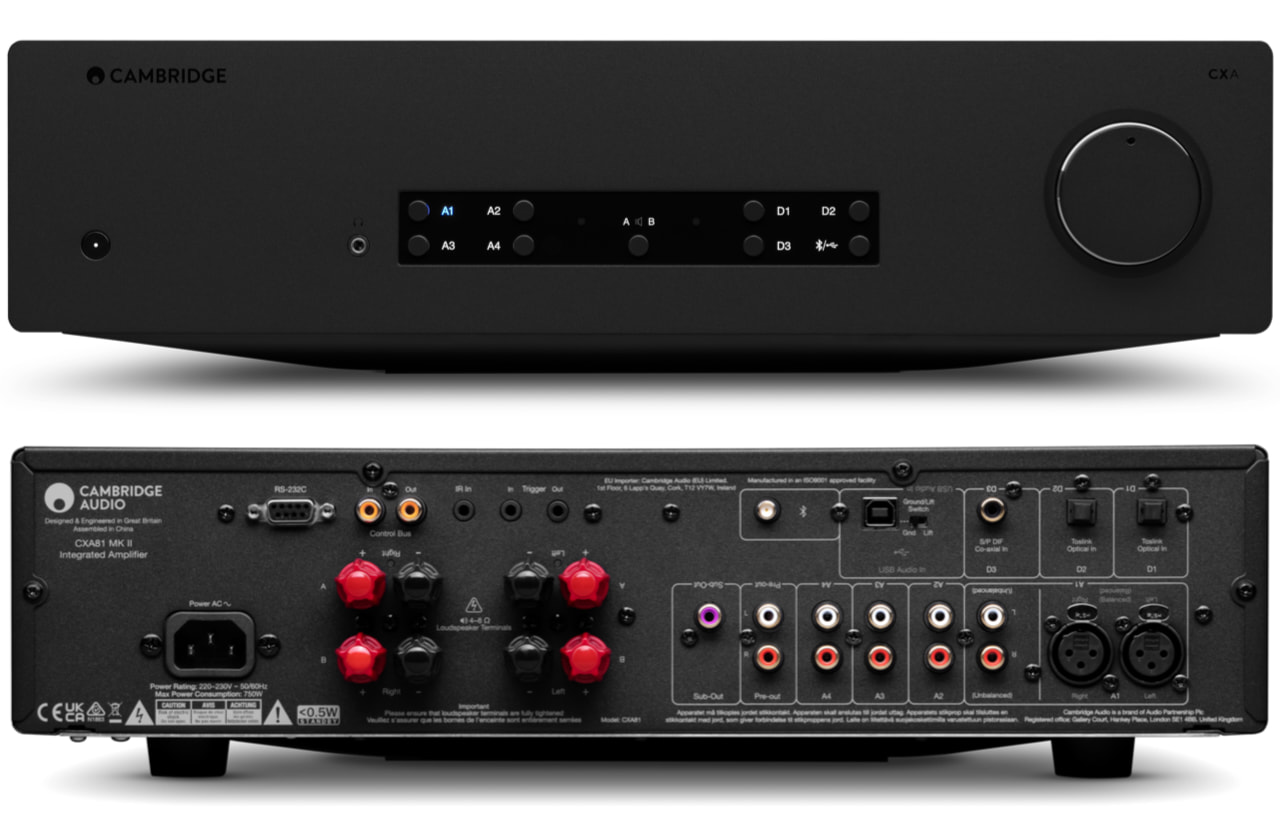
Cambridge Audio is giving its CX Series a darker look, but the bigger story sits behind the rack. The UK-based brand has introduced Black Edition versions of the CXA81 Mk II integrated amplifier and CXC CD transport, alongside the new CXN100 SE network streamer, which is the only actual addition to the lineup. All three arrive in a refined matte black finish, with no changes to the core circuitry or performance compared to the standard Lunar Grey models.
What matters more, however, is where Cambridge Audio is headed in North America. Distribution has shifted to Fidelity Imports in the U.S. and True North Distribution in Canada (a new joint venture with Playback Distribution), a move that could have far greater impact on availability, dealer support, and long-term brand visibility than a fresh coat of paint. The hardware may look different, but the strategy behind it is doing the real work.
CXA81 MKII Integrated Amplifier
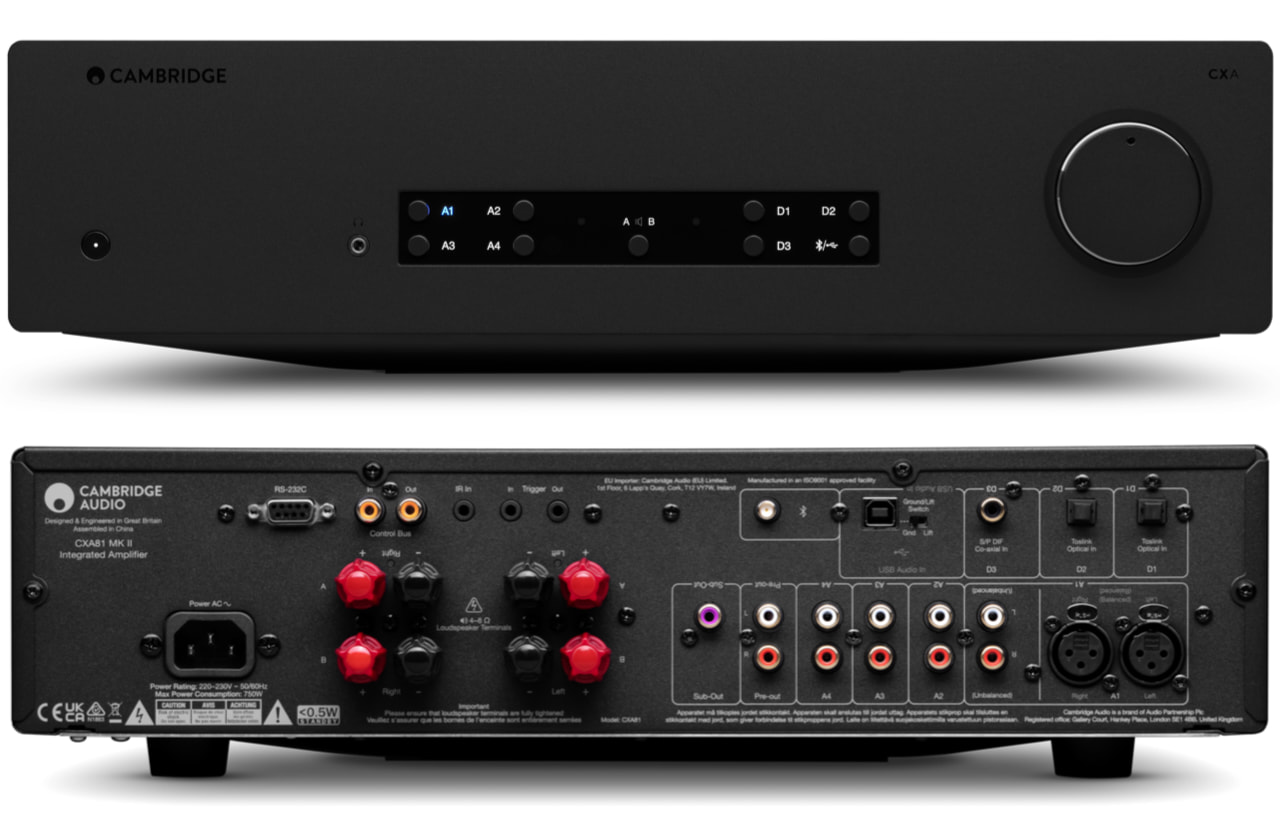
The anchor of Cambridge Audio’s CX range, the CXA81 Mk II, released in 2024, is an integrated amplifier rated at 80 watts per channel. It’s designed to deliver a clean, controlled presentation across both digital and analog sources, whether you’re streaming high resolution audio or spinning vinyl through an external phono stage.
The CXA81 Mk II balances output and refinement with the neutral, open character the CX Series is known for, making it a flexible centerpiece for a wide range of two channel systems without leaning too warm or overly analytical.
CXA81 MK II Feature Highlights
- Amplifier Type: Class A/B design for a balance of efficiency and linear performance
- Power Output: 80 watts per channel, providing sufficient current for a wide range of loudspeakers
- DAC: ESS ES9018K2M SABRE32 for high-resolution digital-to-analog conversion
- Digital Inputs: TOSLINK (optical), coaxial, and USB Audio
- Analog Inputs: Single-ended RCA and balanced XLR connections
- Bluetooth: Version 4.2 with A2DP/AVRCP support, including aptX HD (up to 24-bit/48 kHz)
To dig deeper into the CXA81 MK II refer to our companion article. Cambridge Audio’s CXA81 MKII Integrated Amplifier
CXC CD Transport
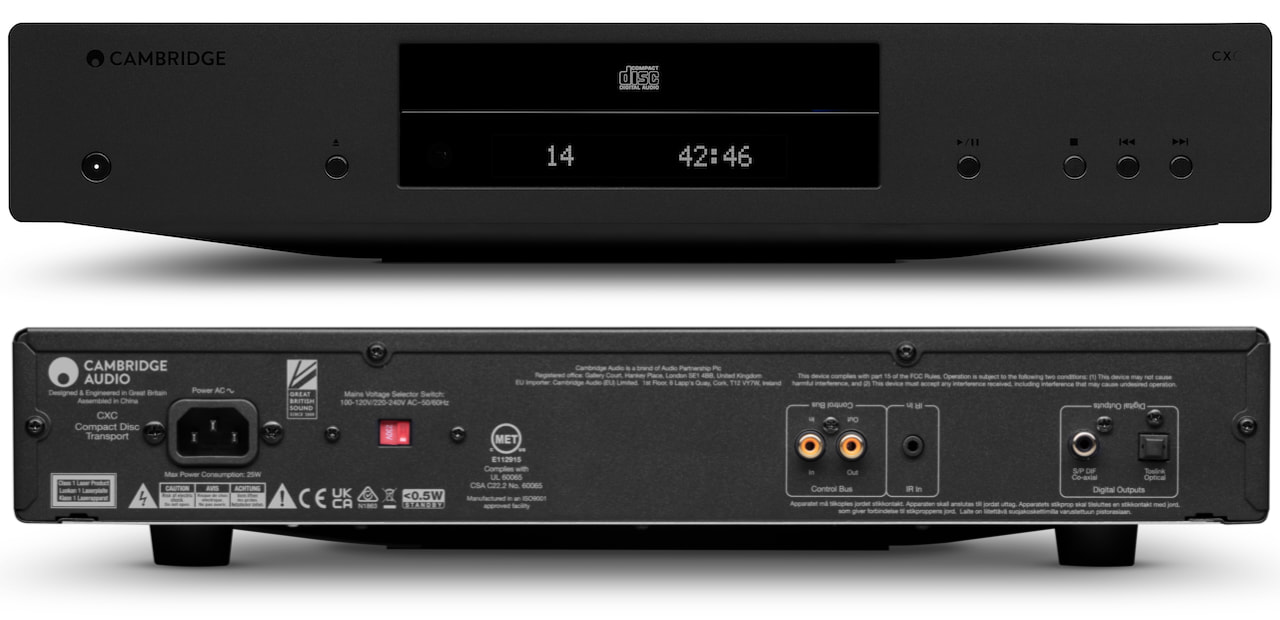
The current version of the CXC was released in 2023. It’s designed for listeners who still value their CD collections and want to extract the best possible performance from those 5-inch discs. By focusing strictly on digital transport duties, Cambridge Audio has stripped away anything that doesn’t serve accurate data retrieval and timing.
The result is a purpose-built CD transport engineered for precise disc reading and low-jitter digital output, delivering a cleaner, more consistent signal to an external DAC without unnecessary processing getting in the way.
CXC Feature Highlights
- Custom S3 Servo Drive: Designed for accurate disc tracking and data retrieval with reduced read errors.
- Disc Compatibility: Supports Red Book CD (CD-DA), CD-R, and CD-RW formats.
- Digital Outputs: Includes both coaxial and optical outputs for connection to an external DAC.
- Gapless Playback: Enables seamless transitions between tracks, ideal for live recordings and continuous mixes without added silence.
- Acoustically Dampened Chassis: Helps reduce vibration and isolate internal components for more consistent performance.
To dig deeper into the CXC CD Transport, refer to the official Cambridge Audio CXC product page.
CXN100 SE Network Streamer

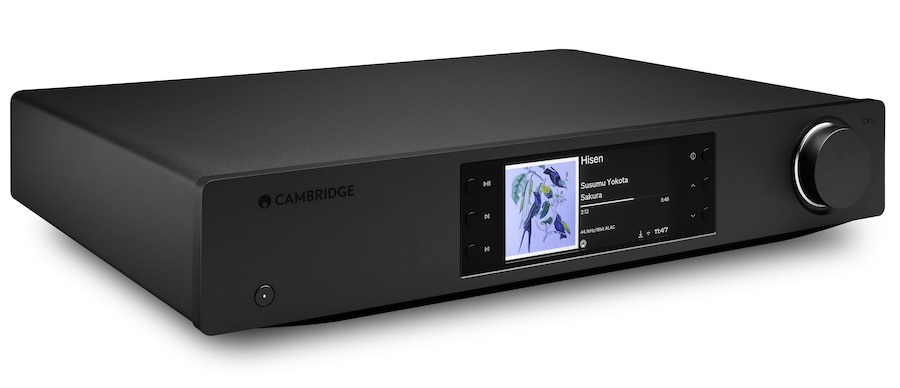
Completing the system is the new CXN100 SE, available in both the matching Limited Edition Black finish and standard Lunar Grey. An evolution of the CXN100, it runs on Cambridge Audio’s StreamMagic Gen 4 platform (iOS and Android) and adds HDMI eARC for direct TV integration.
The CXN100 SE is designed to handle both high resolution music streaming and TV audio within the same system, bringing broader connectivity into the CX ecosystem without changing the core signal path or overall sonic character.
CXN100 SE Feature Highlights
- HDMI eARC (and ARC): Enables the CXN100 SE to receive digital audio directly from a TV, including sound from built-in apps and connected devices. Audio is then routed through the system just like any other source.
- StreamMagic Platform: Uses Cambridge Audio’s 4th generation StreamMagic system for app control, settings, and access to streaming services on iOS and Android.
- Streaming Support: Includes Spotify Connect, TIDAL Connect, Qobuz Connect, Amazon Music, Deezer, and internet radio. Also supports Roon Ready, AirPlay 2, Google Cast, Bluetooth, and MQA playback.
- Wired Connectivity: Offers USB, coaxial, and TOSLINK digital inputs, along with balanced XLR and unbalanced RCA outputs, in addition to HDMI.
- DAC: ESS ES9028Q2M SABRE32 Reference DAC for low distortion, wide dynamic range, and accurate timing.
- Front Panel Display: 4.76-inch high-resolution color display showing album artwork, playback data, and optional VU-style meters for at-a-glance system feedback.
For a more detailed look at the CXN100 SE, check out our companion article.
The Bottom Line
The CXA81 MK II and CXC arrive in a new matte black finish with no changes under the hood, while the CXN100 SE adds HDMI eARC and expands system flexibility for both music and TV audio. That’s the only real hardware development here.
The more meaningful shift is behind the scenes, with new North American distribution that could improve availability and dealer support. As for the hardware, it remains solid and unchanged—still no built-in phono stage, and still aimed at listeners who prefer a clean, modular system over an all-in-one solution. The black finish just makes it easier to justify leaving it out in the open.
Price & Availability
Cambridge Audio CX Black series will be available from April 2026, but can be ordered now at the following prices:
Related Reading:
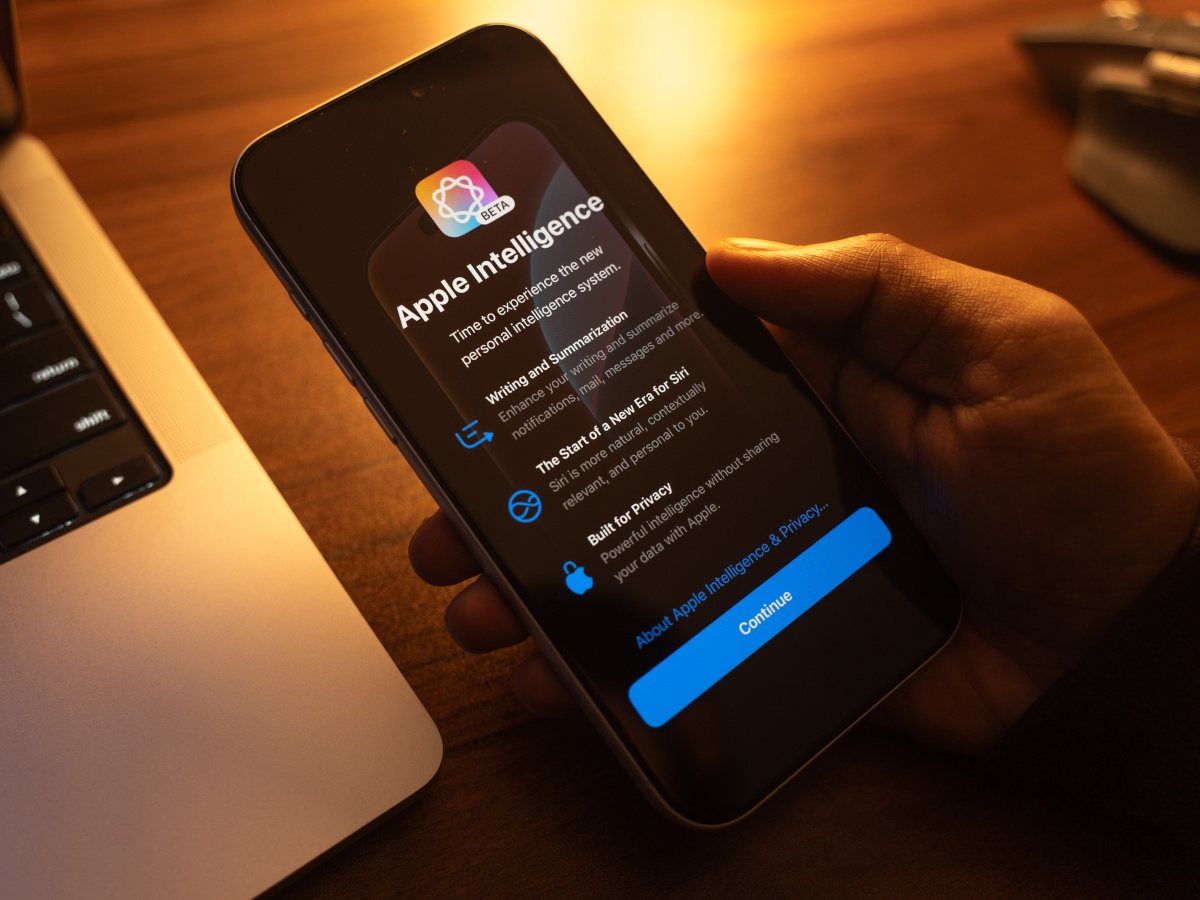

Apple is reportedly developing new tools to help third-party AI apps integrate with Siri.
Apple is moving away from ChatGPT exclusivity for its Siri voice assistant in an attempt to bolster its AI offerings, Bloomberg has reported. Earlier this week, it was reported that Apple is testing a new standalone app for Siri.
According to the publication, the changes are expected as part of a Siri overhaul in Apple’s upcoming iOS 27. A preview version of the new operating system is set to be shown in June, before being released in September alongside the company’s yearly launch of new Apple products.
The tech giant is developing new tools to allow AI chatbots installed via its App Store to integrate with Siri, sources told Bloomberg – potentially enabling Gemini, Claude and other ChatGPT competitors to take its place.
It’s unclear whether Apple will allow any AI assistant to be integrated with Siri, or if there will be an approval process. Apple announced its exclusive partnership with OpenAI’s chatbot back in 2024.
Such an approach would also allow Apple to earn more from third-party AI subscriptions. However, these changes are separate from Apple’s plans to rebuild Siri with Gemini.
Compared to others in the Big Tech league, Apple has been cautious to pick up pace in the AI race. Despite that, the company recently posted “record” earnings, with iPhone quarterly revenue jumping 23pc, driven by “unprecedented demand”.
In January, Apple acquired an Israeli start-up that specialises in AI technology for audio. The acquisition, reportedly costing the company as much as $2bn, is expected to help Apple advance in the AI-powered wearables race to better compete with the likes of Meta and OpenAI.
Meanwhile, last October, it was reported that the company paused work on a cheaper and lighter variant of Vision Pro headset, pivoting development efforts, instead, towards AI-powered smart glasses.
Don’t miss out on the knowledge you need to succeed. Sign up for the Daily Brief, Silicon Republic’s digest of need-to-know sci-tech news.

From principal systems engineer and senior engineer to QA engineer and support engineer, there are plenty of opportunities open to skilled professionals in the engineering space.

Are you a student or professional with qualifications in engineering, who is also looking for a new job or career opportunity? If so, then you are in luck, as SiliconRepublic.com pays particular attention to the subject in March, leading us to compile an up to date list of some of the most interesting engineering job vacancies currently on offer in Ireland.
Aecom
US multinational infrastructure consulting firm Aecom has offices in Dublin, Cork and Galway. For Dublin-based professionals there are opportunities in project engineering, senior civil design engineering, associate director for mechanical engineering and manager for senior rail engineering. The team in Cork is looking to recruit a principal engineer for development infrastructure and a senior civil reservoir engineer. Out west, in Galway there are similar roles.
Amgen
Pharmaceutical company Amgen is looking to hire additional expertise to its Dun Laoghaire facility. Currently there is a role open for an associate tech engineer. The job will be on-site and the successful candidate will report to the utilities supervisor and to project managers. Responsibilities will include the execution and management of planned and unplanned works using the resources available. These responsibilities are primarily focused on the technical support of the site’s capital project portfolio.
There are also vacancies for a senior engineer, system owner in inspection and packaging, a senior engineer for process and equipment and a senior automation engineer in filling.
BearingPoint
Multinational business and tech consulting company BearingPoint is looking for several engineers to join the Dublin-based team. Qualified professionals should consider such roles as senior software development engineer in test, Azure cloud engineer and technical lead in senior platform engineering. There is also a Microsoft 365 consultants role that requires skill in computer engineering.
BMS
Pharmaceutical giant Bristol Myers Squibb (BMS) has two open positions for professionals looking to work in an engineering capacity in the Dublin area. There are vacancies for a senior manager in engineering digital services and a vacancy for a manager in manufacturing support science for engineer and manufacturing projects. If you have a bachelors in engineering you would also be applicable for a senior manager role in EHSS Systems Implementation.
EXL
In August of last year, data analytics company EXL opened its new headquarters for international business in Dublin’s Docklands. The company also established a new AI Innovation Lab and announced plans for future hiring. For professionals with engineering expertise, EXL has availability in lead data engineering, senior engineering in applied AI, senior full-stack engineering and DevOps engineering, all in Dublin and in a hybrid capacity.
Fidelity Investments
Multinational financial services firm Fidelity Investments has multiple opportunities open to engineering professionals. At the Galway location currently available titles include senior full-stack engineer, senior platform engineer, senior software engineer and principal full-stack engineer. For Dublin-based jobseekers there are also opportunities in principal site reliability engineering, senior portfolio engineering and principal systems engineering.
Gong
US artificial intelligence company Gong has its EMEA headquarters in Dublin and is currently looking to recruit an engineering manager to the team. The ideal candidate will have previous experience leading and developing a growing team, experience as a senior software engineer, a strong technical background focusing on large-scale, cloud-based web applications, proficiency in Java and related frameworks, experience with user-facing products and a degree in computer science or a similar field. Most importantly, Gong said they are looking for someone with a passion for motivating, mentoring and cultivating people.
Henkel
German multinational chemical and consumer goods company Henkel currently has two vacancies for engineers in Ireland. The Dublin facility is looking to hire a full-time manufacturing process engineer and there is also room for a full-time project engineer.
Integral Ad Science
Integral Ad Science (IAS), which makes tech for media platforms, advertisers and publishers for tracking and data optimisation, is looking to recruit two senior software engineers to its Dublin-based team. There is also room for a staff software engineer and a staff systems engineer.
Johnson Controls
US and Irish tech and energy company Johnson Controls has several roles open to engineers. In Dublin, experts can apply for titles such as structural design engineer, senior building services engineer, mechanical design engineer, project engineer and senior mechanical design engineer, among others. In Cork there is also space for a QA engineer, as part of a 12 month contract.
Liberty IT
Liberty IT, the technology arm of the insurance company Liberty Mutual Insurance, has offices in Belfast, Dublin and Galway, all of which are looking to add to their engineering teams. There are career opportunities for professionals skilled to work as a senior software engineer, software engineer for python, senior software engineer for MLOPs and senior software engineer for Java and AWS.
MSD
Pharmaceutical multinational MSD is actively looking to recruit for several roles in engineering in Ireland. In Tipperary, there are roles open to people qualified in senior commercialisation engineering and maintenance support engineering. Also, in Meath there is a role in manufacturing shift engineering.
TCS
IT services, consulting and business solutions platform TCS has opportunities open to professionals based around a number of Irish locations. In Dublin, there are roles for a blockchain QA engineer and a Web3 blockchain infrastructure engineer. In Donegal, there are vacancies for an Amazon Connect implementation and support engineer, a mid or senior application support engineer and IT application support engineers with French or German language skills. In Cork, there is a job for a supplier quality engineer.
Rent the Runway
US e-commerce platform Rent the Runway currently has one option suited to a qualified engineer at the Galway facility. The organisation is looking to recruit a software engineer III FS and FE.
Squarespace
Website building tool Squarespace has five opportunities on offer to job hunters with a background in engineering. Based out of the Dublin location, currently advertised roles include engineering team manager for website elements, engineering team manager for website fundamentals, software engineer for Java and CRM data, software engineering team manager for help experience and a backend staff software engineer.
Version 1
Having recently announced a new Dublin headquarters for its ‘state-of-the-art AI Studio’ and 250 local jobs, Version 1 is looking to recruit three engineers to its various teams. Open roles include senior Azure DevOps engineer, senior Microsoft Azure DevOps engineer and test engineer. All the roles are located out of the Dublin premises and are full-time.
Vertiv
Critical digital infrastructure company Vertiv has an opening for a CSA engineer and an electrical design engineer in Letterkenny, Donegal. In Burnfoot, Donegal there are also opportunities for a tech in mechanical engineering, an R&D engineer, a mechanical engineer and graduate opportunities, among others.
Viatris
Healthcare company Viatris has room in its Dublin-based operations for a number of scientists/engineers, for device technical operations, on an 18 month fixed term contract. There are also scientist/engineer device technical operations analytical positions, also on an 18 month contract.
PwC
Professional services platform PwC is looking for five engineers to join its teams. Currently advertised positions include, AI engineer (agentic senior associate), Azure cloud engineer (AI manager, data and AI), DevOps engineer (manager), data and AI power platform engineer and a data bricks engineer (senior manager, data and AI). The roles will be part of PwC’s advisory operations and are available out of the Dublin location.
Workhuman
Irish human capital management firm Workhuman has two opportunities open to professionals looking for a new role in the engineering space. Interested applicants should consider the roles which are, systems engineer III and software engineer III. Both positions are at the Dublin location.
Yahoo
Technology company Yahoo is expanding the Yahoo and Yahoo Mail teams with vacancies for a senior software engineer, principal software apps engineer, senior software apps engineers, principal data engineer, senior backend engineer, a senior Salesforce engineer and a paranoid principles technical security engineer for product security.
Don’t miss out on the knowledge you need to succeed. Sign up for the Daily Brief, Silicon Republic’s digest of need-to-know sci-tech news.
Tech
Opening Day 2026, Eyes Wide Shut, Sennheiser’s Uncertain Future, and Kaleidescape at 25: Editor’s Round-Up

Opening Day doesn’t ask for permission. It just shows up with crisp air, misguided optimism, and 30 teams convincing themselves this is finally the year. Baseball still sells the lie better than anyone, and Hollywood has been riding shotgun on that con for decades; from Bull Durham to Moneyball, reminding us that the game is never just about the game. It’s about belief, failure, and the slow realization by mid-June that your bullpen is a crime scene.

Which brings us to audio, where this week’s more interesting question isn’t whether people are fooled by price tags and polished aluminum. It’s whether we actually hear differently with our eyes open or closed. A recent study raises that very question, and it’s a good one. Does shutting out visual input sharpen focus, improve spatial perception, or change the way we process music in a meaningful way?
Audiophiles have been treating that like gospel for years, but now science is at least poking around the edges instead of leaving the whole thing to late night forum theology. Turns out “close your eyes and listen” may not just be ritual. There might be something real going on there, which is both fascinating and mildly annoying for anyone who thought posture in the chair was the whole game.
Meanwhile, Sennheiser sits in limbo, waiting to see who picks up the tab and what kind of future they’re buying. We’ve seen this movie before; sometimes it ends with innovation, sometimes with accountants slowly draining the life out of something that used to matter. For a brand that helped define personal audio, the next move isn’t just business, it’s legacy. And those don’t always survive the handoff.

And then there’s Kaleidescape, quietly turning 25 while the rest of the industry chases streaming like it’s the only game in town. They’re still selling ownership in a world obsessed with access. Physical media without the fingerprints. No buffering, no licensing roulette, no “sorry, not available in your region.” It’s stubborn. It’s expensive. It also works.
Four stories. Same problem, different crime scenes. Opening Day is all sunshine and bad decisions waiting to happen. Sennheiser is stuck in a back room while someone else counts the money. Kaleidescape keeps selling ownership in a world hooked on rentals. And in audio, we’re finally asking whether something as simple as opening or closing your eyes changes what you actually hear.
Different games, same angle: perception isn’t clean. It’s messy, conditional, and easy to manipulate. Change the setup, change the outcome. And that gap between what you think is happening and what actually is? That’s where the bodies usually end up.
Opening Day Lies, Hollywood Truths, and the Long Season Ahead

Winter didn’t leave quietly; it got shoved out the door with a great deal of relief in 2026. One day you’re scraping ice off the windshield, the next you’re standing in sunlight that actually feels like something. Opening Day has that effect. It resets the mood whether you asked for it or not.
Up in Toronto, the Toronto Blue Jays aren’t pretending this is just another start. They’re carrying October with them; the kind of loss that sticks because it came down to feet, inches, and a stuck baseball against the Los Angeles Dodgers. That doesn’t fade over the winter. It sits there, waiting for the first pitch to give it somewhere to go.
Even if your head is still buried in the NHL standings, counting down to the Stanley Cup Playoffs, you can feel the shift. Fans of the New York Rangers, Toronto Maple Leafs, Florida Panthers, and New Jersey Devils already know how this ends—no parade, no miracle run, just a quiet exit and a long offseason.
Which means it might be time to start pretending you always cared about the New York Yankees, New York Mets, Toronto Blue Jays, Philadelphia Phillies, or Florida Marlins. Baseball doesn’t ask questions. It just hands you a clean slate and lets you pencil in the score and avoid those texts from the boss.
And when it does, it brings the details the other sports can’t fake. The smell of real grass. The way an open-air stadium breathes compared to an arena. I’ve played on astroturf; it’s faster, cleaner, and completely soulless. Give me dirt under my cleats and a bad hop off third any day. New hats are already here, Tigers and Blue Jays, because this is the one sport where you buy in before you know better.
It’s also the only game that Hollywood keeps coming back to. More movies than any other sport, and not by accident. Baseball understands something the others don’t: the season is long, the failure is constant, and the story always feels bigger than the box score.
Five Baseball Movies That Still Get It Right (Even When the Game Doesn’t)
Bull Durham
This one never gets old because it doesn’t pretend baseball is clean or noble. It’s messy, repetitive, and full of people trying to hang on a little longer than they probably should. Crash Davis talking about “the church of baseball” still lands because every fan knows exactly what he means, even if they won’t admit it out loud. And “I believe in long, slow, deep, soft, wet kisses…” is a speech has nothing to do with baseball and somehow everything to do with it. It works because it understands the grind, the failure, and the weird romance of a game that doesn’t love you back sometimes.
The Natural
Total myth. Completely unrealistic. Still works every single time. Roy Hobbs stepping into the light with that bat feels like something bigger than the sport, and when he says, “I just want to say… I’m sorry,” you realize this isn’t about winning. It’s about redemption, or at least the illusion of it. The final swing, the sparks, the music, it’s over the top, but baseball has always had room for legends that don’t quite make sense. Long live the War Memorial and that ball that never came back down.
The Sandlot
https://www.youtube.com/watch?v=D0a3jkcTAe4
This is the one that sneaks up on you. You think it’s a kids’ movie until you realize it’s about memory, time, and everything you don’t get back. “You’re killing me, Smalls” became a joke, but it stuck because everyone knew a Smalls. And “Heroes get remembered, but legends never die” hits differently once you’re not a kid anymore. It works because it reminds you why you fell in love with the game before stats, contracts, and $32 beers got in the way; yes, even in the bleachers at Camden Yards, where nostalgia now comes with a receipt. And not even a decent bratwurst.
42
No nostalgia here. Just pressure and consequences. “I’m looking for a ballplayer with guts enough not to fight back” isn’t just a line—it’s the entire weight of what Jackie Robinson had to carry. The film works because it doesn’t try to make it comfortable. It shows what the game looked like when it actually mattered beyond the scoreboard, and why some players had to be more than just players in order to completely change the sport.
And shame on those of us who haven’t shown the same respect to the Negro Leagues Baseball Museum. We celebrate the story when Hollywood tells it, nod along when 42 reminds us what it cost, and then go right back to ignoring where that history actually lives. If you care about baseball, really care, not just box scores and nostalgia—you owe that place a visit in Kansas City, Missouri.
Moneyball
This one shouldn’t work as well as it does. It’s mostly conversations, spreadsheets, and people arguing in rooms. But “He gets on base” became a punchline for a reason. And when Billy Beane says, “If we win with this team, we’ll have changed the game,” you know it’s not just about baseball. It’s about control, or chasing it, in a system designed to remind you that you don’t have much. It works because it strips the game down to what wins and what doesn’t and then shows you how little that guarantees. Just ask the Blue Jays about that one.
Eyes Open or Closed? Science Just Complicated Your Listening Ritual
A new study reported by the American Institute of Physics and published in the Journal of the Acoustical Society of America takes a flamethrower to one of audio’s oldest habits: closing your eyes to “hear better.”
Turns out, that instinct might be working against you.
Researchers at Shanghai Jiao Tong University tested how people detect faint sounds in noisy environments under different visual conditions—eyes closed, eyes open with nothing to look at, and then with images or video that matched the sound. The result? Closing your eyes didn’t sharpen hearing; it made it worse. Participants actually struggled more to detect faint sounds with their eyes closed, while relevant visual cues made it easier to hear what mattered.
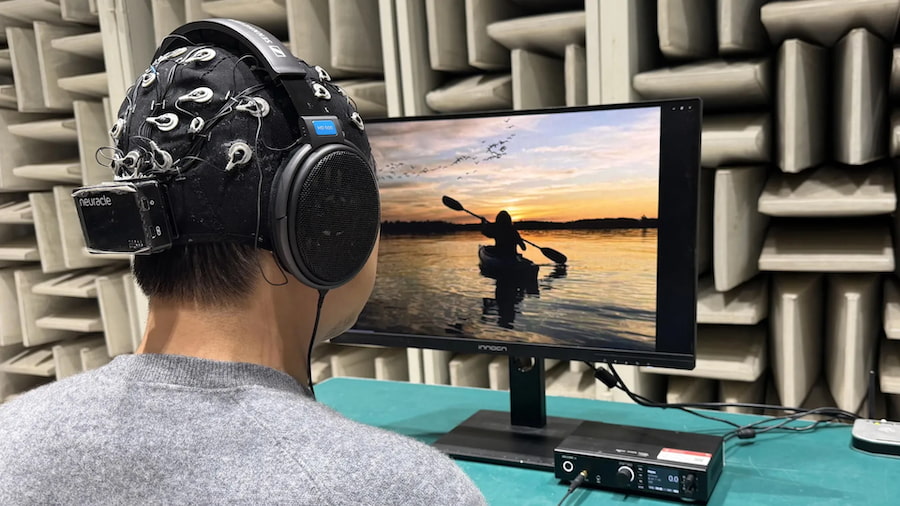
The why is where it gets interesting. Brain scans showed that closing your eyes pushes the brain into a state of aggressive filtering, which might be great for blocking noise, not so great when it also filters out the signal you’re trying to hear. In other words, your brain gets a little too confident and starts throwing out the good stuff with the bad.
Even more telling: the biggest improvement didn’t come from just having your eyes open, it came from seeing something that matched the sound. A video synced to the audio gave the brain a target, anchoring what it should be paying attention to. That’s not just hearing—that’s multisensory teamwork.
There’s a catch, of course. In a quiet room, the old advice still holds; closing your eyes can help you focus on subtle sounds. But in the real world, where HVAC systems hum, traffic never stops, and someone is always talking, keeping your eyes open might actually give you the edge.
So now the uncomfortable part—the questions this raises:
- If visual input improves hearing in noise, what exactly are we doing when we sit in a dark room trying to “critically listen”?
- Are we training ourselves to hear differently…or just removing useful information?
- Does a two channel system without visual cues put us at a disadvantage compared to live music or even video based playback?
- And the big one—how much of what we think we hear is actually shaped by what we see, expect, or believe is happening?
For a hobby built on the idea of control and precision, this is the kind of study that messes with the narrative. Not destroys it—but definitely pokes a few holes in it.
How do you listen?
Kaleidescape at 25: The Long Game Finally Pays Off
I’m not going to pretend this one is neutral. Seeing Kaleidescape hit 25 years actually makes me happy and a little relieved. Because there were plenty of moments where it felt like they weren’t going to make it. Wrong business model, wrong timing, too expensive, too stubborn. Pick your criticism. Meanwhile, the rest of the industry sprinted toward streaming like it was the only exit in a burning building.
And yet…here we are.
What Kaleidescape figured out early and refused to abandon, is something most people are just starting to realize: access isn’t ownership. Streaming is convenient, sure. Until your favorite film disappears. Until the bitrate collapses during the one scene that matters. Until the version you bought quietly changes because someone upstream decided it should. Kaleidescape doesn’t play that game. You get full-bitrate video, lossless audio, and a library that doesn’t vanish overnight because of licensing roulette. It’s not about convenience. It’s about control.

For someone like me with close to 3,800 physical films staring back at me like a second mortgage, that actually matters. The idea of consolidating even a portion of that into a system that actually respects the material? That’s not a luxury, it’s a solution. Yes, I’m fully aware I’ll have to pay again to build out a digital library on their platform. No, I’m not thrilled about it. But also…complaining about curating 1,000 of my favorite films into a system that preserves them properly feels like a first-world problem in the most literal sense. There are bigger things happening in the world than whether my copy of Double Indemnity streams in Dolby Vision at the right bitrate.
Kaleidescape exists for people who care about movies as objects, not just content. People who want the best version, every time, without compromise or excuses. People who understand that “good enough” is usually neither.
People like “Leia” who is the real authority in the room and their logical target customer. My ultimate movie-watching partner from across the galaxy; equal parts film historian and ruthless critic. She doesn’t care about specs, marketing, or what some influencer said last week. She knows what holds up and what doesn’t. Her taste in cinema would embarrass most critics, and frankly, most of you. Also better taste in shoes, food, and furniture. Not even close. Golden hair that would make Michelle Pfeiffer reconsider everything, pack it in, stay in Montana, and quietly dunk her head in the Madison like she just lost an argument she didn’t know she was having with Kurt.
Kaleidescape makes sense for people like that. People who don’t want to hunt for a film across five apps or settle for whatever version happens to be available that night. It’s a system built for commitment—to the medium, to the experience, and to the idea that some things are worth doing right the first time.
Twenty-five years later, that doesn’t look stubborn anymore. It looks like they were right.
Sennheiser’s Future Is for Sale and Nobody Should Feel Comfortable About That
Earlier this week, I wrote that this wasn’t a shutdown, it’s an exit. And that distinction matters. Sennheiser isn’t disappearing tomorrow, but its consumer division is officially back on the market as Sonova refocuses on what it actually understands: hearing aids and medical tech.

This is the second ownership shakeup in just a few years, and that’s not exactly how you build confidence in a brand that’s supposed to represent stability, engineering, and long term thinking. Sonova bought the business in 2022, decided it didn’t fit, and now wants out. That’s not strategy, that’s a reset button with consequences.
And then there was CanJam NYC 2026. I’ve seen Sennheiser booths for decades. They’re usually tight, focused, and intentional. This one felt scattered. Disorganized. Like nobody was fully in charge of the narrative. For a legacy brand that helped define the category, that should never happen, especially not at the one show where personal audio is the entire conversation.
Looking at it now, Axel Grell walking away and launching his own thing feels less like a side project and more like the right move at exactly the right time. If you’ve been paying attention to how fast the headphone and IEM world is moving in 2026, new players, faster cycles, more aggressive pricing, Sennheiser hasn’t exactly been leading that charge. And in this category, standing still is just a slower way of falling behind.

If Sennheiser doesn’t survive this intact, it’s not just another brand disappearing. It’s one of the pillars. The HD 600 series alone carries more weight than entire product lines from other companies. Losing that kind of legacy would hit the industry harder than people want to admit.
But let’s be honest, this wouldn’t be the first time a legacy brand failed to adapt to a market that stopped waiting for it. And it won’t be the last.
So now we wait. Strategic buyer? Tech giant? Private equity with a spreadsheet and a stopwatch?
Or someone who actually understands why this brand mattered in the first place.
Because if this ends with the wrong owner, don’t call it evolution. Call it what it is: ordentlich vermasselt.
Related Reading:
- Paramount Wins Warner Bros Battle, Purim, Qobuz Goes To War On AI, Robert Duvall, And Empire Ears Goes Kaput: Editor’s Round-Up
- Audiophile Excess Runs Wild In Denmark, Qobuz Fixes CarPlay, Wes Montgomery’s Timeless Groove, And The Marantz M1: Editor’s Round-Up
- Jazz Dispensary At 10, Integrators In The Keys, Wireless Headphones On The Road, Catherine O’Hara, And Sinners Leading The Pack: Editor’s Round-Up
- CanJam NYC 2026 & The Rebirth Of Physical Media: Editor’s Round-Up
Netflix has quietly hiked its prices once again. The streaming giant’s most affordable, ad-supported tier now costs $8.99 per month, up from the previous $7.99 monthly subscription fee, Netflix confirmed to TechCrunch in an email.
The standard plan without ads also now costs $19.99 per month, a $2 increase from the previous $17.99 subscription fee, while the premium plan is also going up by $2 and will now cost $26.99 per month.
It’s also getting more expensive to add extra viewers outside of your household. To add a user to an ad-supported plan, it now costs $6.99 instead of $7.99. If you’re adding an extra viewer to an ad-free plan, it now costs $9.99 as opposed to $8.99.
The company told TechCrunch that the changes are designed to reflect improvements to its “wide range of entertainment” and the quality of its service.
The price hikes were first spotted by Android Authority.
Netflix says new members who sign up will see the new plan prices from March 26, while existing subscribers will see the updated prices roll out over the coming months. Existing members will be notified by email a month before the new prices are applied to them.
Netflix last raised prices in January 2025. Since then, the company has updated its platform with a series of new additions, including the rollout of video podcasts as well as more livestreaming content. The company also recently announced plans to revamp its mobile app and expand its short-form video feature.
Techcrunch event
San Francisco, CA
|
October 13-15, 2026
The new increases come as Netflix last month backed out of a bid for Warner Bros. Discovery.
Warner Bros. Discovery had announced that Paramount Skydance’s offer of $31 a share was a “superior proposal” and had given Netflix four business days to counter. Netflix then said it would not raise its $82.7 billion all-cash bid for the studio, ultimately walking away from the deal.

Increasing prices across the board are becoming a plague now, fueled by everything from tariffs to wars to the AI industry’s devouring of hardware components. Sony’s PlayStation hardware is the latest to get an increase, according to a blog post from the company on Friday. It’s the second such hike, in fact, after 2025’s price bumps.
The price increases take effect on Thursday, April 2, so now’s the time to get one of Sony’s consoles before they go up. The increases are pretty significant:
This happened to Microsoft’s Xboxes last fall, and Nintendo’s original Switch hardware last August. And with the current economic climate and political chaos, who knows where things could go next?
My big question is, who would ever pay $900 for a game console? And who will even pay $600 for a console that’s now almost six years old? While the PlayStation 5 has had a lot of wonderful games, sales declined last holiday compared to the year before. Gaming hardware increasingly feels like a luxury now, and I wonder how many people will continue to indulge in it versus just using whatever hardware they already have instead.
Read more: RAM Shortage and Higher Laptop Prices Not Expected to End This Year (or Next)
This sponsored article is brought to you by NYU Tandon School of Engineering.
Within a 6 mile radius of New York University’s (NYU) campus, there are more than 500 tech industry giants, banks, and hospitals. This isn’t just a fact about real estate, it’s the foundation for advancing quantum discovery and application.
While the world races to harness quantum technology, NYU is betting that the ultimate advantage lies not solely in a lab, but in the dense, demanding, and hyper-connected urban ecosystem that surrounds it. With the launch of its NYU Quantum Institute (NYUQI), NYU is positioning itself as the central node in this network; a “full stack” powerhouse built on the conviction that it has found the right place, and the right time, to turn quantum science into tangible reality.
Proximity advantage is essential because quantum science demands it. Globally, the quest for practical quantum solutions — whether for computing, sensing, or secure communications — has been stalled, in part, by fragmentation. Physicists and chemical engineers invent new materials, computer scientists develop new algorithms, and electrical engineers build new devices, but all three often work in isolated academic silos.
 Gregory Gabadadze, NYU’s dean for science, NYU physicist and Quantum Institute Director Javad Shabani, and Juan de Pablo, Anne and Joel Ehrenkranz Executive Vice President for Global Science and Technology and executive dean of the Tandon School of Engineering.Veselin Cuparić/NYU
NYUQI’s premise is that breakthroughs happen “at the interfaces between different domains,” according to Juan de Pablo, Executive Vice President for Global Science and Technology at NYU and Executive Dean of the NYU Tandon School of Engineering. The Institute is built to actively force those necessary collisions — to integrate the physicists, engineers, materials scientists, computer scientists, biologists, and chemists vital to quantum research into one holistic operation. This institutional design ensures that the hardware built by one team can be immediately tested by software developed by another, accelerating progress in a way that isolated departments never could.
NYUQI’s premise is that breakthroughs happen at the interfaces between different domains. —Juan de Pablo, NYU Tandon School of Engineering
NYUQI’s integrated vision is backed by a massive physical commitment to the city. The NYUQI is not just a theoretical concept; its collaborators will be housed in a renovated, million-square-foot facility in the heart of Manhattan’s West Village, backed by a state-of-the-art Nanofabrication Cleanroom in Brooklyn serving as a high-tech foundry. This is where the theoretical meets physical devices, allowing the Institute to test and refine the process from materials science to deployment.
 NYUQI will be housed in a renovated, million-square-foot facility in the heart of Manhattan’s West Village.Tracey Friedman/NYU
Leading this effort is NYUQI Director Javad Shabani, who, along with the other members, is turning the Institute into a hub for collaboration with private and public sector partners with quantum challenges that need solving. As de Pablo explains, “Anybody who wants to work on quantum with NYU, you come in through that door, and we’ll send you to the right place.” For New York’s vast ecosystem of tech giants and financial institutions, the NYUQI offers a resource they can’t build on their own: a cohesive team of experts in quantum phenomena, quantum information theory, communication, computing, materials, and optics, and a structured path to applying theoretical discoveries to advanced quantum technologies.
Solving the Challenge of Quantum Research
The NYUQI’s integrated structure is less about organizational management, and more about scientific requirement. The challenge of quantum is that the hardware, the software, and the programming are inherently interconnected — each must be designed to work with the other. To solve this, the Institute focuses on three applications of quantum science: Quantum Computing, Quantum Sensing, and Quantum Communications.
For Shabani, this means creating an integrated environment that bridges discovery with experimentation, starting with the physical components all the way to quantum algorithm centers. That will include a fabrication facility in the new building in Manhattan, as well as the NYU Nanofab in Brooklyn directed by Davood Shahjerdi. New York Senators Charles Schumer and Kirsten Gillibrand recently secured $1 million in congressionally-directed spending to bring Thermal Laser Epitaxy (TLE) technology — which allows for atomic-level purity, minimal defects, and streamlined application of a diverse range of quantum materials — to NYU, marking the first time the equipment will be used in the U.S.
 NYU Nanofab manager Smiti Bhattacharya and Nanofab Director Davood Shahjerdi at the nanofab ribbon-cutting in 2023. The nanofab is the first academic cleanroom in Brooklyn, and serves as a prototyping facility for the NORDTECH Microelectronics Commons consortium.NYU WIRELESS
Tight control over fabrication, and can allow researchers to pivot quickly when a breakthrough in one area — say, finding a cheaper, more reliable material like silicon carbide — can be explored for use across all three applications, and offers unique access to academics and the private sector alike to sophisticated pieces of specialty equipment whose maintenance knowledge and costs make them all-but-impossible to maintain outside of the right staffing and environment.
 The NYU Nanofab is Brooklyn’s first academic cleanroom, with a strategic focus on superconducting quantum technologies, advanced semiconductor electronics, and devices built from quantum heterostructures and other next-generation materials.NYU Nanofab
That speed and adaptability is the NYUQI’s competitive edge. It turns fragmented challenges into holistic solutions, positioning the Institute to solve real-world problems for its New York neighbors—from highly secure data transmission to next-generation drug discovery.
The integrated approach also makes the NYUQI a testbed for the most critical near-term applications. Take Quantum Communications, which is essential for creating an “unhackable” quantum internet. In an industry first, NYU worked with the quantum start-up Qunnect to send quantum information through standard telecom fiber in New York City between Manhattan and Brooklyn through a 10-mile quantum networking link. Instead of simulating communication challenges in a lab, the NYUQI team is already leveraging NYU’s city-wide campus by utilizing existing infrastructure to test secure quantum transmission between Manhattan and Brooklyn.
The NYUQI team is already leveraging NYU’s city-wide campus by utilizing existing infrastructure to test secure quantum transmission between Manhattan and Brooklyn.
This isn’t just theory; it is building a functioning prototype in the most demanding, dense urban environment in the world. Real-time, real-world deployment is a critical component missing in other isolated institutions. When the NYUQI achieves results, the technology will be that much more readily available to the massive financial, tech, and communications organizations operating right outside their door.
 NYUQI includes a state-of-the-art Nanofabrication Cleanroom in Brooklyn serving as a high-tech foundry.NYU Tandon
While the Institute has built the physical infrastructure and designed the necessary scientific architecture, its enduring contribution will be the specialized workforce it creates for the new quantum economy. This addresses the market’s greatest deficit: a lack of individuals trained not just in physics, but in the integrated, full-stack approach that quantum demands.
By creating a pipeline of 100 to 200 graduate and doctoral students who are encouraged to collaborate across Computing, Sensing, and Communications, the NYUQI is narrowing the skills gap. These will be future leaders who can speak the language of the physicist, the materials scientist, and the engineer simultaneously. This commitment to interdisciplinary talent is also fueled by the launch of the new Master of Science in Quantum Science & Technology program at NYU Tandon, positioning the university among a select group worldwide offering such a specialized degree.
Interdisciplinary education creates the shared language and understanding poised to make graduates coming from collaborations in the NYUQI extremely valuable in the current landscape. Quantum challenges are not just technical; they are managerial and philosophical as well. An engineer working with the NYUQI will understand the requirements of the nanofabrication cleanroom and the foundations of superconducting qubits for quantum computing, just as a physicist will understand the application needs of an industry partner like a large financial institution. In a field where the entire team must be able to communicate seamlessly, these are professionals truly equipped to rapidly translate discovery into deployable technology. Creating a talent pipeline at scale will provide a missing link that converts New York’s vast commercial energy into genuine quantum advantage.
NYUQI: Building Talent, Technology, and Structure
The vision for the NYUQI is an act of strategic geography that plays directly into the sheer volume of opportunity and demand right outside their new facility. By building the talent, the technology, and the structure necessary to capitalize on this dense environment, NYU is not just participating in the quantum race, it is actively steering it.
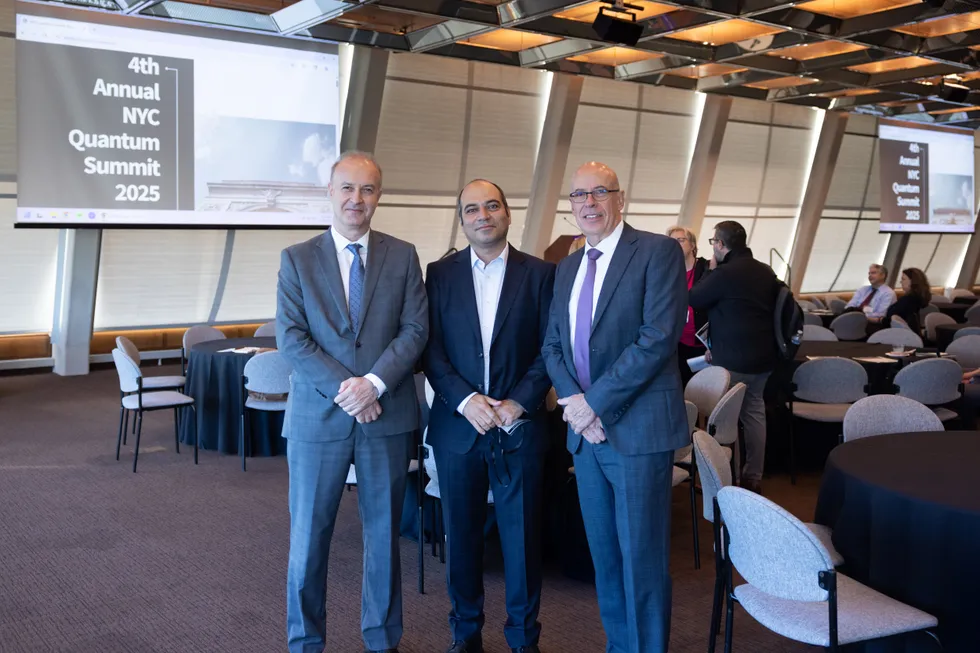
 Attendees of NYU’s 2025 Quantum Summit.Tracey Friedman/NYU
The initial hypothesis for the NYUQI was simple: the ultimate advantage lies in pursuing the science in the right place at the right time. Now, the institute will ensure that the next wave of scientific discovery, capable of solving previously intractable problems in finance, medicine, and security, will be conceived, built, and tested in the heart of New York City.

News Videos2 minutes ago
Nabung #nabung #tabungan #menabung #budgeting #uang #money

NewsBeat4 minutes ago
Person rushed to hospital after car and lorry crash

Business5 minutes ago
Life After Stem Cell Transplant: What Recovery Really Looks Like


-
 Crypto World7 days ago
NIO (NIO) Stock Plunges 6.5% as Shelf Registration Sparks Dilution Worries
-
 NewsBeat2 days ago
Manchester United reach agreement with Casemiro over contract clause amid transfer speculation
-

 Fashion7 days ago
Weekend Open Thread: Adidas – Corporette.com
-

 Politics7 days ago
Jenni Murray, Long-Serving Woman’s Hour Presenter, Dies Aged 75
-

 Crypto World6 days ago
Best Crypto to Buy Now: Strategy Just Spent $1.57 Billion on Bitcoin During Fear While Early Investors Quietly Enter Pepeto for 150x Potential
-

 Crypto World6 days ago
Bitcoin Price News: Bhutan Sells $72 Million in BTC Under Fiscal Pressure, but the Smart Money Entering Pepeto Sees What the Market Does Not
-

 News Videos2 days ago
Parliament publishes latest register of MPs’ financial interests
-

 Sports4 days ago
Remo Stars and Kano Pillars Strengthen Survival Hopes in NPFL
-

 Sports4 days ago
Gary Kirsten Accuses Pakistan Cricket Board Of ‘Interference’, Mohsin Naqvi Responds
-

 Tech5 days ago
Give Your Phone a Huge (and Free) Upgrade by Switching to Another Keyboard
-

 Business5 days ago
No Winner in March 21 Drawing as Prize Rolls to $133 Million for Next
-

 Sports7 days ago
2026 Kentucky Derby horses, odds, futures, preview, date: Expert who nailed 12 Derby-Oaks Doubles enters picks
-

 Tech5 days ago
AI enters the chat: New Seattle dating app relies on tech to facilitate meaningful human connections
-

 News Videos4 days ago
Ch 9 Financial Management Part 1 | Detailed One Shot | Class 12 Business Studies Boards 2026
-
Business7 days ago
Columbia Sportswear enters $500 million credit agreement with JPMorgan Chase
-

 Tech6 days ago
Today’s NYT Connections Hints, Answers for March 22 #1015
-

 Business19 hours ago
Instagram, YouTube Found Responsible for Teen’s Mental Health Struggle in Historic Ruling
-
 Crypto World7 days ago
Small-cap Russell 2000 enters correction territory
-

 Business5 days ago
Will Duke Basketball Win It All? Duke Basketball Enters Second Round as Third Favorite to Claim NCAA Title
-

 Sports4 days ago
2026 Kentucky Derby horses, odds, futures, preview, date: Expert who hit 12 Derby-Oaks Doubles enters picks
You must be logged in to post a comment Login