Through a series of pivots, The Plattering Co. navigated challenges & scaled successfully
For years, catering in Singapore had largely remained functional, focused on trays of food and stainless steel warmers rather than presentation or experience.
Then came The Plattering Co., which bills itself as the city-state’s first artisanal bespoke caterer. Founded by long-time friends Yasmin Sim, Pearl Chan, and Jessica Lim, the trio crafts grazing tables, floral arrangements, and immersive food displays that prioritise presentation as much as taste.
Ironically, catering wasn’t even their original focus—a pivot from their other business led the trio here, and the gamble seems to have paid off: today, they serve over 100,000 people a year.
We spoke to Yasmin and Jessica of The Plattering Co. about how the business came about and how it’s reshaped Singapore’s catering scene.
Advertisement
An unexpected start
The journey to becoming a premium catering brand serving over a hundred thousand people a year began with something far simpler: a home juicer.
In 2014, at the height of the juice cleanse trend, Yasmin and Pearl started experimenting with cold-pressed juices. They first shared them with family and friends, but orders soon started to pick up. Jessica later joined the duo to help manage operations.
Image Credit: The Plattering Co.
As demand grew, they formally established their cold-pressed juice business as Juix Up, quickly outgrowing their home setup and moving into an office space. Within a year, they had outgrown that too, expanding operations from a small unit in Marine Parade to a factory in Mandai.
Beyond direct-to-consumer sales, the trio even secured B2B deals, including a retail stocking at an airport chain.
However, the speed of growth outpaced their financial planning. Overheads ballooned while utilities climbed, and big recurring orders didn’t come in as consistently as they had hoped.
Advertisement
“We didn’t do our numbers properly,” Yasmin admitted, noting they were mentally prepared to cut losses if things didn’t improve.
But a turning point soon came in 2018, when a regular customer asked if they could provide food—specifically, banana walnut muffins—to go along with their breakfast juices. Pearl, who loved experimenting in the kitchen despite having no formal F&B training, said yes.
Image Credit: The Plattering Co.
She carefully plated the muffins and drinks in a crate, paired them with a chalkboard display and sent them along with the juices. “Unexpectedly, the client immediately fell in love with the muffins and the whole presentation,” Yasmin recalled.
The same client soon began requesting more elaborate offerings—salmon platters, cheese boards, and styled grazing spreads. At a time when such curated platters were still relatively novel in Singapore’s catering scene, according to the trio, Yasmin agreed to give it a try.
(Left): One of The Plattering Co.’s charcuterie boards; (Right): The Plattering Co.’s oven-baked salmon platter with miso sauce./ Image Credit: The Plattering Co.
I’m a person who never gives up on a request. If someone asks for something I will never say no, I will just say, ‘okay, let me let me let me try to do it for you.’
Yasmin Sim, co-founder of The Plattering Co.
Advertisement
There was no business plan, no pitch deck, no formal strategy. The founders simply responded to demand, refining their offerings as they went. In Mar 2018, that approach led to the launch of The Plattering Co.
They grew fast, but everything came to a halt almost overnight
For The Plattering Co., Pearl’s eye for aesthetics quickly became the brand’s signature. Wooden boards replaced stainless steel trays, fresh florals softened tablescapes, and colours were intentionally curated—food wasn’t just served, it was styled.
Some of the brand’s now-iconic concepts began in personal moments, like the doughnut wall, inspired by Pearl’s wedding. During the event, she displayed doughnuts on pegs, turning them into both a decorative feature and an interactive treat for guests.
The team has since adapted similar concepts for clients, including the Pretzel Pipe Wall, nasi lemak bar, and taco bar, bringing creativity and interactivity to every event.
Advertisement
(Left): Pearl tending a juice cart for an event; (Right): The Plattering Co.’s Pretzel Pipe Wall, inspired by Pearl’s doughnut wall at her wedding./ Image credit: The Plattering Co.
Meanwhile, Yasmin and Jessica focused on operations and finances. By 2019, the growing brand had moved into a 1,000 sq ft shophouse at Cavan Road, carving out a niche in artisanal catering. They also began gradually building a team to support day-to-day operations.
But everything came to a halt just a year later, when COVID-19 wiped out corporate buffet catering overnight, with orders cancelled en masse. The revenue stream that sustained them vanished almost instantly.
Yasmin even floated the idea of selling toilet paper—anything, just to generate cash flow. The stress was immense, and another glance into the possibility of closing down hit the trio.
Nonetheless, the team decided to push forward for the sake of their employees’ rice bowls. Ideas were thrown around, and the team came together to brainstorm for ideas.
(Left): The Plattering Co’s premium breakfast boxes included Pearl’s house-baked banana walnut bread loaf; (Right): The Plattering Co’s bento box./ Image Credit: The Plattering Co
They pivoted quickly. Some of the new offerings they introduced included premium decorated breakfast boxes and bento boxes. Each came with heartfelt greeting cards to clients as a show of support in the midst of the pandemic.
When dining restrictions capped gatherings at four to five people, they also redesigned menus into smaller six-to-eight-person platters, leaning into B2C aggressively.
Advertisement
In 2021, the trio also launched creatively styled gift hampers under a new brand, Sage and Gifts. Rather than conventional festive baskets, these were curated food experiences packaged with the same bespoke aesthetic as The Plattering Co. “For a period, we became a bespoke gifting business,” Yasmin recalled.
Sage and Gifts’ hampers./ Image Credit: The Plattering Co
The pivots helped the business not just survive but thrive. By 2022, annual revenue had nearly quadrupled compared with pre-COVID levels. That same year, the founders sold off Juix Up and moved into a 2,000 sq ft central kitchen in Bedok to meet growing demand for their catering and gifting businesses.
Since then, The Plattering Co. has served more than 100,000 people annually across catering setups and drop-off orders. The pandemic, which nearly shut them down for a second time, ultimately forced the reinvention that accelerated their growth.
In 2024, the founders made another strategic decision: they divested the hamper brand as well, consolidating resources to focus squarely on their core catering identity.
Scaling the business vertically & building complementary arms
Image Credit: The Plattering Co.
The same year, the founders recognised that they had reached a pivotal stage in their growth journey.
Aware that scaling the business would require deeper operational expertise and structured leadership, they made the strategic decision to bring on board a Managing Director with 13 years of extensive experience in food systems and enterprise-scale business transformation to drive the next phase of expansion.
Advertisement
Today, The Plattering Co. operates across roughly 11,000 sq ft, including halal and non-halal central kitchens, floral operations, and warehouse facilities. The team numbers 35 to 36 people, with around 30% in the kitchen, and their customer base is split roughly three-fifths B2B and two-fifths B2C.
Acknowledging that The Plattering Co. occupies a premium segment, often catering to big occasions, the founders have expanded the business into multiple arms to reach a wider demographic.
Caterwow is a halal catering brand that offers bento boxes and buffets in a similar aesthetic to The Plattering Co. /Image Credit: Caterwow
They launched sister brand Caterwowto serve the halal and the mass market in 2024, alongside Singapore Food Services to provide white-label and OEM food services.
Another arm, Wildflower ArtCo., manages floral styling for weddings and events, while Kaizen Supply Chain oversees the operations of the company’s brands and offers supply chain logistics services to industry peers.
However, scaling a visually driven brand also presents its own challenges. Maintaining consistency in execution, especially replicating Pearl’s intricate handmade setups, grows increasingly difficult with large volumes of orders.
Advertisement
As such, the team has implemented thorough training sessions for staff to make sure that set-ups are in line with The Plattering Co.’s standards, while automating internal operations helps to streamline order flows and delivery planning.
They are also exploring AI-assisted processes to ensure structure and standardisation even when founders are not physically present.
All these free up time for their team to work on set-ups instead.
Image Credit: The Plattering Co.
Every setup involves meticulous planning—from the type of flowers selected to the size of platters and colour of tablecloths.
Catering, Jessica pointed out, is often under-appreciated in its operational intensity. It requires packing cutlery, holders, tables, plants; coordinating delivery; full setup; tear-down; washing—all within tight timelines. The premium pricing reflects not just the food, but the labour choreography behind it.
Advertisement
“The greatest sense of achievement after each setup comes when guests stop to take photos before they eat,” Jessica said.
Operationally, manpower remains one of the biggest challenges. Hiring the right fit and aligning kitchen, logistics, and office teams around shared values is always a work in progress.
Yasmin emphasised that even washers and drivers must understand their importance in delivering the final experience to clients. In this regard, the trio ensures that they maintain a strong work ethic amongst their team members while maintaining a strong sense of meaning in the workplace.
What’s next for The Plattering Co.
The Plattering Co aesthetic./Image Credit: The Plattering Co
Despite suffering losses in 2020, The Plattering Co. had built enough reserves to weather the storm.
Looking back, Yasmin attributes their survival not to perfection but to adaptability and to clarity of the brand’s direction.
Advertisement
The co-founder stressed the importance of humility regardless of success. She believes in continuous growth, emphasising that “If you’re not growing, you’re actually dying.”
That philosophy drove them to expand kitchens even when sales were stable. It also drove difficult decisions—like selling off both the juice and hamper businesses—rather than being sentimental about ventures that no longer aligned.
Above all, she advocates staying authentic. “Trust your beliefs. Trust your values. When you allow external influence to override your conviction, you lose clarity and direction.”
The Plattering Co nearly closed twice. Instead, it evolved from a home juicer in 2014 to a premium artisanal catering brand serving over 100,000 people annually.
Advertisement
Looking ahead, the trio plans to continue being a “trendsetter” and being at the forefront of their craft. They would also be open to expanding to overseas markets if the opportunity arises.
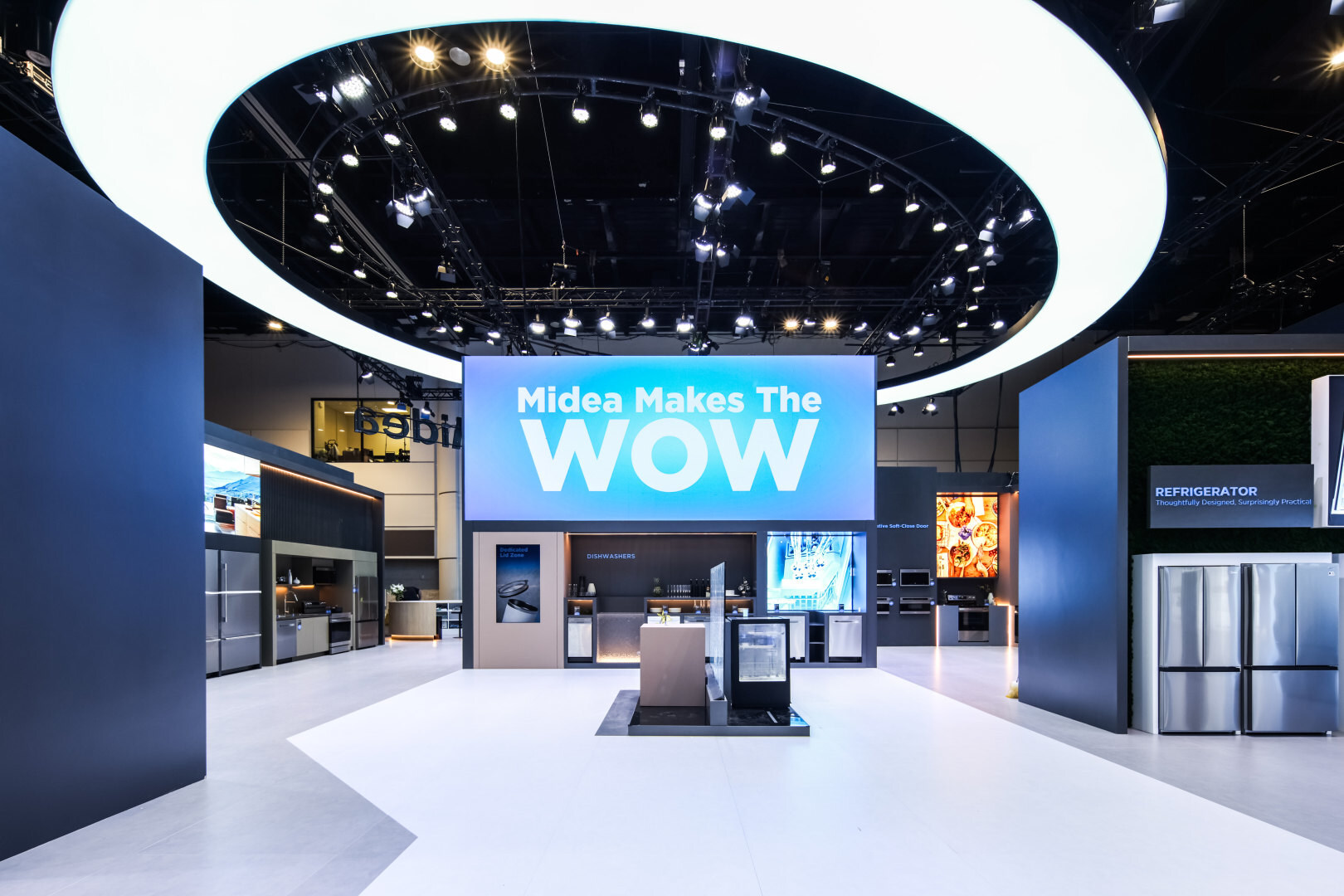
Midea has used KBIS 2026 to show it’s no longer just a budget-friendly appliance maker.
At this year’s Kitchen & Bath Industry Show in Orlando, the brand unveiled one of its broadest line-ups yet — spanning kitchen, laundry and even climate tech. However, it’s the kitchen gear that stands out for 2026.
Leading the charge is an expanded French Door refrigerator range, now available in 30-, 33- and 36-inch sizes in both standard and counter-depth formats. Some models feature OneTouch AutoFill with MaxSpace, designed to optimise storage while cutting down on the usual fridge juggling act. It’s a practical upgrade, but the real headline grabber sits elsewhere in the kitchen.
Midea’s new premium dishwasher introduces STRAWash and SENSOR TruDry, a system built specifically to clean reusable bottles, tall tumblers and even straws using dedicated internal jets. There’s also a one-hour wash-and-dry cycle aimed at households that don’t want to wait overnight for clean dishes. It’s a small tweak on paper, but one that feels tailored to how people actually use kitchens in 2026.
Advertisement
Advertisement
The cooking line-up is expanding too, with new four- and five-burner gas and electric freestanding ranges, plus a forthcoming slide-in platform. Meanwhile, the company’s new over-the-range microwave features Soft Close Technology — eliminating the familiar microwave door slam in favour of a smoother, quieter close.
Beyond major appliances, Midea is also fleshing out its small appliance portfolio, covering everything from air fryers to espresso machines. The goal seems clear: reduce countertop clutter while keeping everything connected within one ecosystem.
While this showcase focuses heavily on kitchens, Midea is also pushing deeper into laundry and HVAC. Redesigned washers and dryers now include PowerMix Spray, Flexi AutoDose, and large TFT displays. In addition, its DIY-friendly EasySplit mini-split system builds on the success of the original Midea U.
Advertisement
Taken together, Midea’s 2026 portfolio signals a shift from individual appliances to full-home solutions. And if the dishwasher that cleans your reusable straw doesn’t sum up modern kitchen design, it’s hard to know what does.
Seattle startup Adronite raised $5 million in a Series A round led by Gatemore Capital Management, as it looks to expand its AI-powered platform designed to give large organizations visibility into sprawling and complex codebases.
The funding comes amid intense competition in the AI developer tools market. Unlike many AI coding tools that operate at the level of individual files or snippets, Adronite ingests complete codebases, including both modern and legacy systems.
The idea is to help organizations understand how their software works as a system, with applications in security analysis, modernization, and active remediation at scale.
Adronite can also build apps from natural language prompts and offers an AI chat feature that provides details on system-wide insights.
The system supports more than 20 programming languages and has been proven on a codebase with 2.5 million lines of code.
Advertisement
The 15-person company expects initial commercial deployments to begin in the first quarter of 2026.
There are various companies that offer code review tools, including CAST and Sonar.
Adronite co-founder and CEO Edward Rothschild is a former software engineer at Facebook and director of engineering at Nayya. He helped launch Adronite in 2023.
As part of the funding round, Liad Meidar, managing partner of Gatemore, was named chair of Adronite’s board. Gatemore has offices in New York and London.
An anonymous reader quotes a report from the Financial Post: In 2024, the Ethiopian government banned the import of fossil fuel-powered vehicles and slashed tariffs on their electric equivalents. It was a policy driven less by the country’s climate ambitions and more by fiscal pressures. For years, subsidizing gasoline for consumers has been a major drag on Ethiopia’s budget, costing the state billions of dollars over the past decade. The country defaulted on its sovereign bonds in 2023 after rising interest rates drove up the costs of servicing its debts, and it received a $3.4 billion bailout from the International Monetary Fund the following year.
In the two years since the ban on internal combustion engine vehicles, EV adoption has grown from less than 1% to nearly 6% of all of the vehicles on the road in the country — according to the government’s own figures — some way above the global average of 4%. “The Ethiopia story is fascinating,” said Colin McKerracher, head of clean transport at BloombergNEF. “What you’re seeing in places that don’t make a lot of vehicles of any type, they’re saying: ‘Well, look, if I’m going to import the cars anyway, then I’d rather import less oil. We may as well import the one that cleans up local air quality and is cheaper to buy.’”
For decades, Ethiopia’s high import tariffs on vehicles put new car ownership out of the reach of most of the country’s population. Per capita gross domestic product is only about $1,000, and even by the standards of low-income countries, it has among the lowest car ownership rates. At 13 vehicles per 1,000 people, it’s a fraction of the African average of 73. With few cars manufactured in the country, the vast majority are imported, and most are bought used. The government’s import policy has upended the market. In parallel, tariffs for EVs were dropped to 15% for completed cars, 5% for parts and semi-assembled vehicles, and zero for “fully knocked down” — vehicles shipped in parts and assembled locally. That has made new EVs cost-competitive with old gasoline cars.
A world that runs on increasingly powerful AI coding tools is one where software creation is cheap — or so the thinking goes — leaving little room for traditional software companies. As one analyst report put it, “vibe coding will allow startups to replicate the features of complex SaaS platforms.”
Cue the hand-wringing and declarations that software companies are doomed.
Open-source software projects that use agents to paper over long-standing resource constraints should logically be among the first to benefit from the era of cheap code. But that equation just doesn’t quite stick. In practice, the impact of AI coding tools on open source software has been far more mixed.
AI coding tools have caused as many problems as they have solved, according to industry experts. The easy-to-use and accessible nature of AI coding tools has enabled a flood of bad code that threatens to overwhelm projects. Building new features is easier than ever, but maintaining them is just as hard and threatens to further fragment software ecosystems.
Advertisement
The result is a more complicated story than simple software abundance. Perhaps, the predicted, imminent death of the software engineer in this new AI era is premature.
Quality vs quantity
Across the board, projects with open codebases are noticing a decline in the average quality of submissions, likely a result of AI tools lowering barriers to entry.
“For people who are junior to the VLC codebase, the quality of the merge requests we see is abysmal,” Jean-Baptiste Kempf, the CEO of the VideoLan Organization that oversees VLC, said in a recent interview.
Techcrunch event
Advertisement
Boston, MA | June 23, 2026
Kempf is still optimistic about AI coding tools overall but says they’re best “for experienced developers.”
Advertisement
There have been similar problems at Blender, a 3D modeling tool that has been maintained as open source since 2002. Blender Foundation CEO Franceso Siddi said LLM-assisted contributions typically “wasted reviewers’ time and affected their motivation.” Blender is still developing an official policy for AI coding tools, but Siddi said they are “neither mandated nor recommended for contributors or core developers.”
The flood of merge requests has gotten so bad that open-source developers are building new tools to manage it.
Earlier this month, developer Mitchell Hashimoto launched a system that would limit GitHub contributions to “vouched” users, effectively closing the open-door policy for open-source software. As Hashimoto put it in the announcement, “AI eliminated the natural barrier to entry that let OSS projects trust by default.”
The same effect has emerged in bug bounty programs, which give outside researchers an open door to report security vulnerabilities. The open-source data transfer program cURL recently halted its bug bounty program after being overwhelmed by what creator Daniel Stenberg described as “AI slop.”
Advertisement
“In the old days, someone actually invested a lot of time [in] the security report,” Stenberg said at a recent conference. “There was a built-in friction, but now there’s no effort at all in doing this. The floodgates are open.”
It’s particularly frustrating because many of open-source projects are also seeing the benefits of AI coding tools. Kempf says it’s made building new modules for VLC far easier, provided there’s an experienced developer at the helm.
“You can give the model the whole codebase of VLC and say, ‘I’m porting this to a new operating system,’” Kempf said. “It is useful for senior people to write new code, but it’s difficult to manage for people who don’t know what they’re doing.”
Competing priorities
The bigger problem for open-source projects is a difference in priorities. Companies like Meta value new code and products, while open-source software work focuses more on stability.
Advertisement
“The problem is different from large companies to open-source projects,” Kempf commented. “They get promoted for writing code, not maintaining it.”
AI coding tools are also arriving at a moment when software, in general, is particularly fragmented.
Open Source Index founder Konstantin Vinogradov, who recently launched an endowment to maintain open-source infrastructure, said AI tools are running into a long-standing trend in open-source engineering.
“On the one hand, we have exponentially growing code base with exponentially growing number of interdependences, And on the other hand, we have number of active maintainers, which is maybe slowly growing, but definitely not keeping up,” Vinogradov said. “With AI, both parts of this equation accelerated.”
Advertisement
It’s a new way of thinking about AI’s impact on software engineering — one with alarming implications for the industry at large.
If you see engineering as the process of producing working software, AI coding makes it easier than ever. But if engineering is really the process of managing software complexity, AI coding tools could make it harder. At the very least, it will take a lot of active planning and work to keep the sprawling complexity in check.
For Vinogradov, the result is a familiar situation for open-source projects: a lot of work to do, and not enough good engineers to do it.
“AI does not increase the number of active, skilled maintainers,” he remarked. “It empowers the good ones, but all the fundamental problems just remain.”
Apple is reportedly developing a trio of AI-powered wearables, including smart glasses, camera-equipped AirPods and a new AI pin device.
According to Bloomberg’s Mark Gurman, the products are designed to give Siri more “contextual awareness” by letting it see and interpret the world around you.
The headline device appears to be a pair of Apple-designed smart glasses aimed squarely at competitors like Meta’s Ray-Ban collaboration. Rather than partnering with an established eyewear brand, Apple is said to be developing its frames in-house.
The company is focusing on premium build quality and multiple size and colour options. Reports suggest the glasses will feature an advanced dual-camera system. One high-resolution camera captures photos and video, while a second sensor feeds environmental data to Siri.
Advertisement
Advertisement
If accurate, the goal is to create what sources describe as an “all-day AI companion,” offering hands-free contextual queries similar to what Meta currently provides. This would come with Apple’s tighter hardware-software integration.
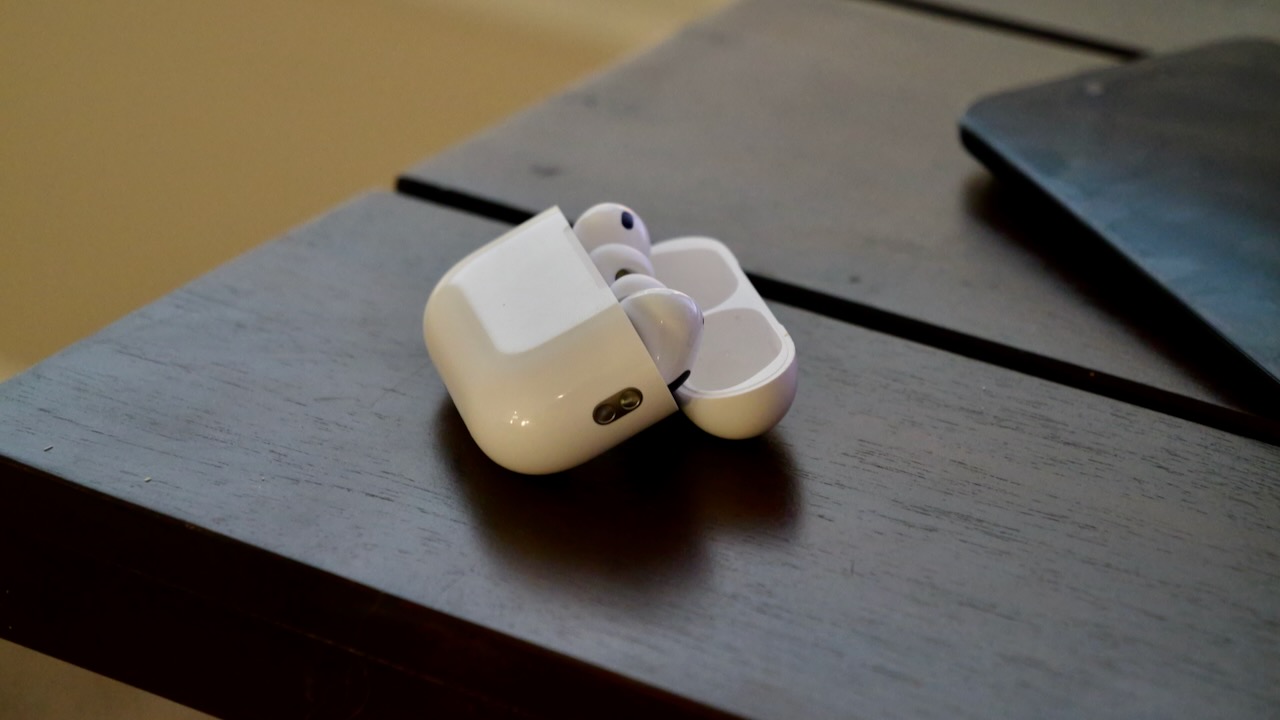
Alongside the glasses, Apple is reportedly exploring AirPods fitted with lower-resolution cameras. These wouldn’t be designed for photography, but instead to gather visual context for Siri while maintaining the familiar earbuds form factor. Microphones would also allow for voice interaction. As a result, the AirPods would become another extension of the iPhone’s AI system.
The third device in development is said to be an AI-powered wearable pin. The concept echoes products like the Humane AI Pin. However, Apple’s version would reportedly rely on the iPhone as its processing hub rather than operating as a standalone replacement. A built-in speaker is being considered, though that detail is not confirmed.
Advertisement
The broader strategy appears clear: rather than replacing the iPhone, Apple wants to surround it with AI-enabled accessories, reducing the need to constantly take it out of your pocket. It’s a different approach to some early AI hardware experiments that attempted to fully supplant smartphones. Those efforts haven’t always landed well.
There’s no official confirmation from Apple, and none of these products are unlikely to arrive before 2027. Still, if the reports hold up, Apple could be preparing its most ambitious wearable push since the Apple Watch. This time, the focus is centred squarely on AI.
Apple Music is rolling out five new features in iOS 24.6, including the new Playlist Playground and Concerts Near You functions
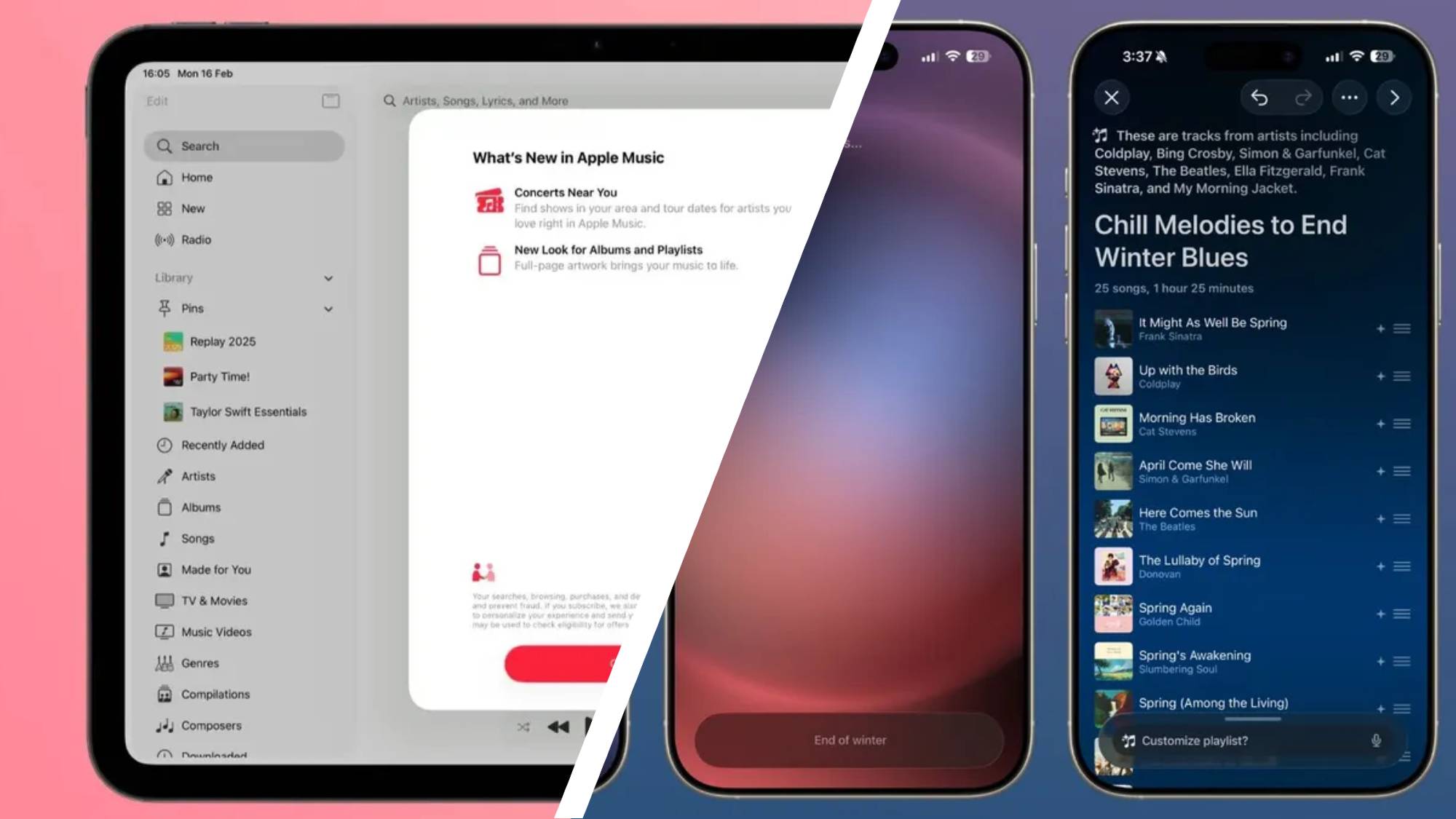
It’s also getting a new UI design for albums and playlists
Despite its new look, it’s divided users who have called out Apple for its lack of accessibility features
Apple will unveil its next slew of new products in a couple of weeks at its March 4 event, but it’s already teasing some of the new upgrades coming to Apple Music in iOS 24.6 — and there’s no doubt they’ll breathe new life into one of the best music streaming services.
If you’re enrolled in the iOS 24.6 beta, there’s a chance you’ve already caught a glimpse of the new Apple Music features that are expected to roll out widely in the coming weeks. Unlike Spotify, it’s not in Apple Music’s character to churn out one new feature after the next, so the fact that it’s bringing five new upgrades at once is big news.
As we’ve recently covered, Playlist Playground is one of the stand-out new features coming to Apple Music — if you’re familiar with Spotify’s AI playlist tool, Playlist Playground isn’t all that different.
It works very similarly, in that you enter a text prompt or select an idea preset, and it will then generate a playlist of songs based on your request. It’s Apple Music’s second AI music-streaming tool, followin g the launch of its clever AutoMix beat-matching feature.
(Image credit: MacWorld / Foundry / MacRumors)
It’s clear that Apple Music has had its eyes on what’s working over at Spotify, and similar to Spotify’s Live Events hub, Apple Music is introducing a ‘Concerts Near You’ feature. While we don’t know how this looks in the app yet, we know that it’s on the way, and it’ll be refreshing to see Apple Music connect its subscribers with live concerts — I’m surprised it didn’t do this sooner.
Additionally, Apple Music is finally lifting a tedious playlist restriction, by letting you add a song to multiple playlists at once — a freedom that subscribers of other platforms have always had. And, building on last year’s Ambient Music feature, Apple is making this available as a new Home Screen widget in different sizes, giving those who frequent the app a new shortcut.
So this Apple Music upgrade is quite significant, but it doesn’t stop there. Its album and playlist interfaces are getting a facelift —and while it puts Spotify’s cluttered app to shame, not everyone is pleased with the result.
Advertisement
Sign up for breaking news, reviews, opinion, top tech deals, and more.
Apple Music’s UI upgrades are polished and striking, but it’s abandoned accessibility
Although Spotify has all the fun features, its messy interface bears attracts constant user backlash, and now that Apple Music has given its albums and playlists a facelift, many Spotify users are calling for the same.
Previously, Apple Music’s playlist and album pages featured a large, and sometimes immersive, graphic with the tracklist against a plain white background underneath. In iOS 24.6, the album/ playlist artwork is now used for the entire page, so now the tracklist will be placed against the artwork’s most prominent color. One user shared a comparison image on Reddit (see below).
During my time trialing Apple Music while taking a break from Spotify, its clean layout was one of my favorite parts of the UX, and it highlighted everything I disliked about Spotify’s design. There’s no doubt that Apple Music is leaps and bounds ahead here; however, users have been quick to point out Apple’s disregard for accessibility and I can see why.
The Liquid Glass redesign is still dividing iPhone users as it is, and while I enjoy some aspects of its glow-up, Apple Music’s new UI is quite difficult to read in places, and I much prefer the clear separation between the colorful artwork and tracklist. And yes, the option to disable Liquid Glass is there along with other accessibility features, but the default could be more accommodating for those with reading issues.
Does this change how I feel about Spotify’s cluttered UI? Not at all — I still think it could take some notes from Apple Music. That said, I have a feeling Apple isn’t quite finished with expanding its new aesthetic throughout every area of its music streaming app — it’s an overkill waiting to happen.
Are you ready to feel old? Lemmings just turned thirty-five. The famous puzzle game first came out in February of 1991 for the Commodore Amiga, before eventually being ported to just about everything else out there, from the ZX Spectrum to the FM Towns, and other systems so obscure they don’t have the class to start with two letters, like Macintosh and DOS. [RobSmithDev] decided he needed to commemorate the anniversary with a real floating lemming.
The umbrella-equipped lemming is certainly an iconic aspect of the game franchise, so it’s a good pick for a diorama. Some people would have just bought a figurine and hung it with some string, but that’s not going to get your project on Hackaday. [Rob] designed and 3D printed the whole tableau himself, and designed magnetic levitation system with some lemmings-themed effects.
The mag-lev is of the top-down type, where a magnet in the top of the umbrella is pulled against gravity by an electromagnetic coil. There are kits for this sort of thing, but they didn’t quite work for [Rob] so he rolled his own with an Arduino Nano. That allowed him to include luxuries you don’t always get from AliExpress like a thermal sensors.
Our favorite part of the build, though, has to be the sound effects. When the hall effect sensor detects the lemming statue — or, rather, the magnet in its umbrella — it plays the iconic “Let’s Go!” followed by the game’s sound track. If the figurine falls, or when you remove it, you get the “splat” sound, and if the lemming hits the magnet, it screams. [Rob] posted a demo video if you just want to see it in action, but there’s also a full build video that we’ve embedded below.
If you’re an iPhone user who likes to keep tabs on where your stuff is, you can’t go far wrong with an AirTag. The second-gen model that Apple just released outpaces the original in every way (aside from the galling lack of a keyring hole, that is). While it’s easy enough to replace the battery in both versions of the AirTag, you might not want to have to worry about the device’s battery life for a very long time. Enter Elevation Lab’s extended battery case for the AirTag, which is currently on sale at Amazon for $16.
The case usually sells for $23, so that’s a 30 percent discount. It’s not the first time we’ve seen this deal, but it’s a pretty decent one all the same.
Elevation Lab
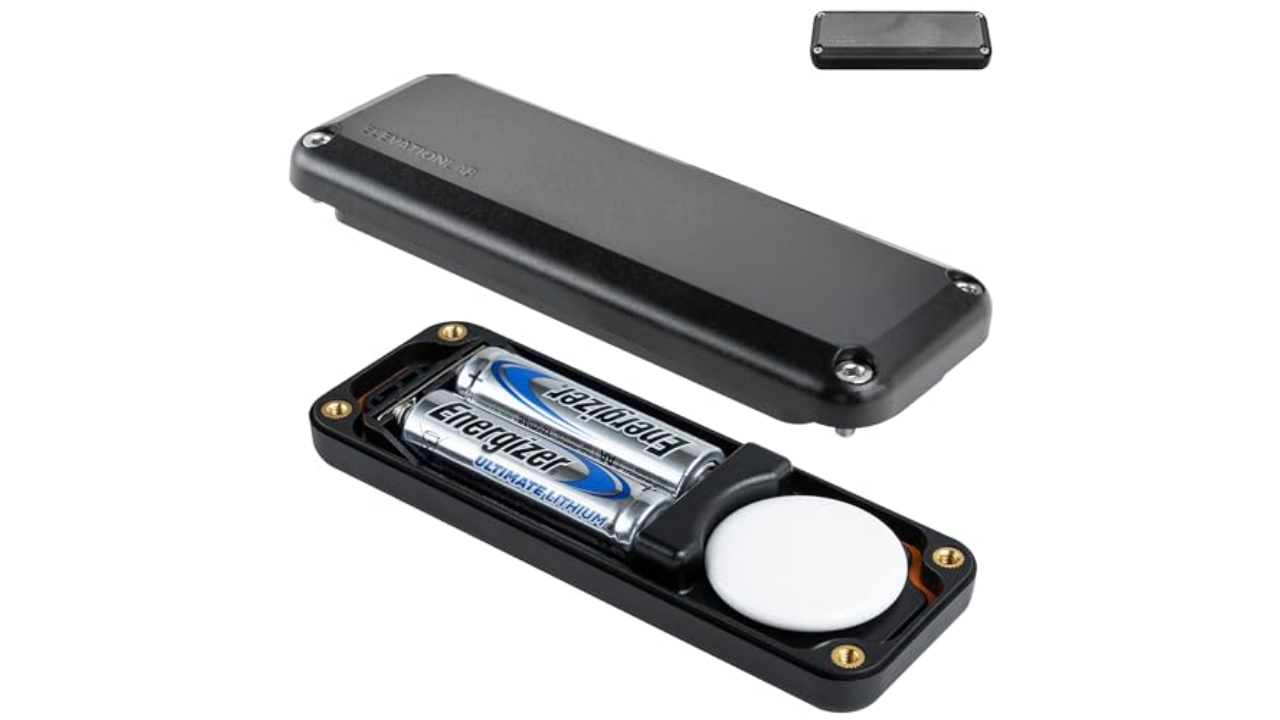
Elevation Lab says its AirTag case can extend the battery life of the tracking device to 10 years, and now it’s on sale.
Advertisement
This is arguably one of the more useful AirTag accessories around for certain use cases. It won’t exactly be helpful for an AirTag that you put in a wallet or attach to your keys, as it’s too bulky for such a purpose — and it doesn’t have a hole for a keyring anyway. Still, if you’re looking for an AirTag case that you can place in a suitcase or backpack and not have to touch for years, this could be the ticket.
Elevation Lab says that, when you place a couple of AA batteries in the case, it can extend the tracker’s battery life to as much as 10 years (the brand recommends using Energizer Ultimate Lithium batteries for best results). The AirTag is slated to run for over a year on its standard CR2032 button cell.
The case gives the AirTag more protection as well. It’s sealed with four screws and it has a IP69 waterproof rating. What’s more, it doesn’t ostensibly look like an AirTag case, so someone who steals an item with one inside is perhaps less likely to realize that the object they pilfered is being tracked.
Advertisement
There are some other downsides, though. Since the AirTag is locked inside a case, the sound it emits will be muffled. Elevation Lab says the device’s volume will be about two-thirds the level of a case-free AirTag. However, the second-gen AirTag is louder than its predecessor, which should mitigate that issue somewhat.
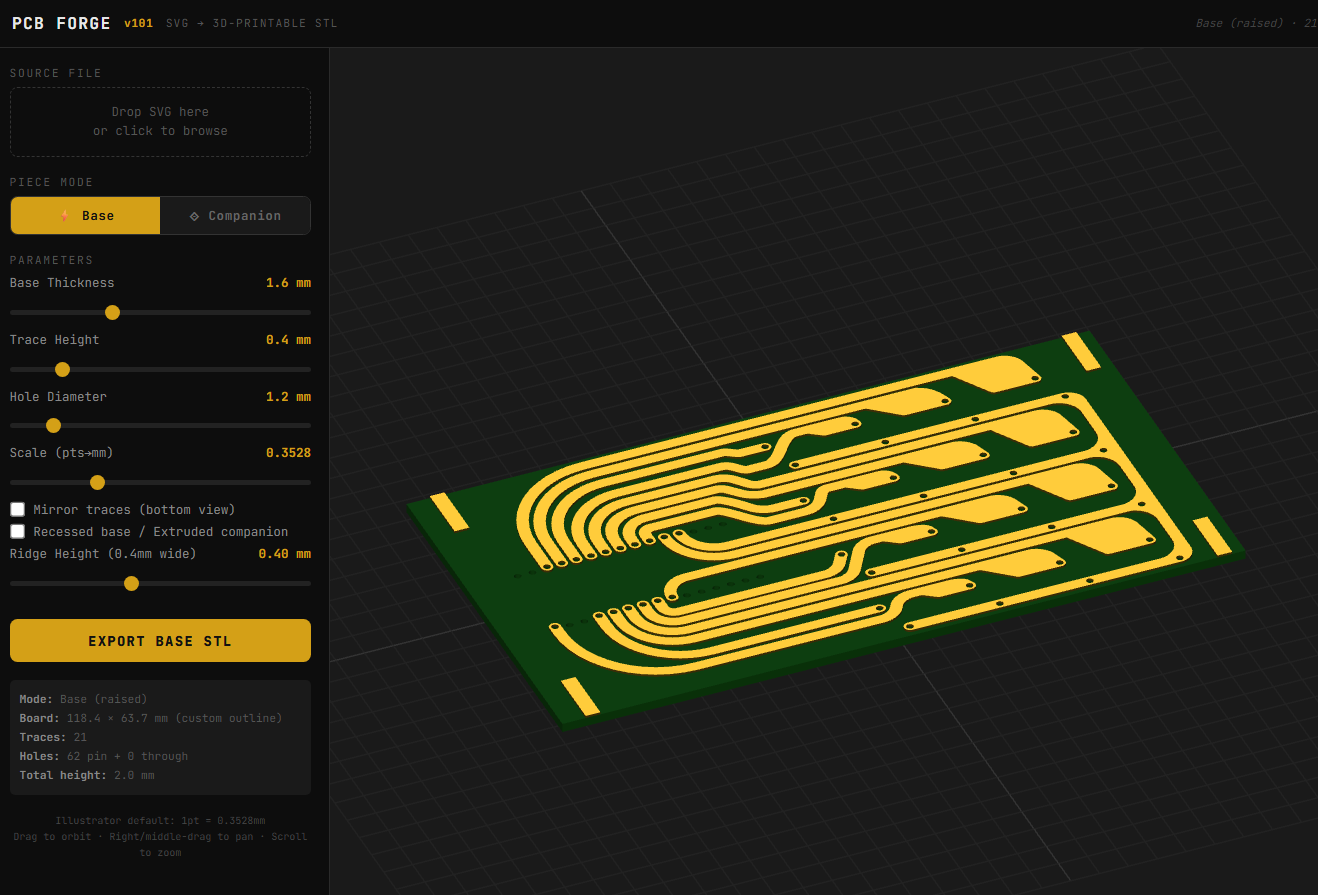
Getting PCBs made is often the key step in taking a dodgy lab experiment and turning it into a functional piece of equipment. However, it can be tedious to wait for PCBs to ship, and that can really slow down the iterative development process. If you’ve got a 3D printer, though, there’s a neat way to make your own custom PCBs. Enter PCB Forge from [castpixel].
The online tool.
The concept involves producing a base and a companion mold on your 3D printer. You then stick copper tape all over the base part, using the type that comes with conductive adhesive. This allows the construction of a fully conductive copper surface across the whole base. The companion mold is then pressed on top, pushing copper tape into all the recessed traces on the base part. You can then remove the companion mold, quickly sand off any exposed copper, and you’re left with a base with conductive traces that are ready for you to start soldering on parts. No etching, no chemicals, no routing—just 3D printed parts and a bit of copper tape. It rarely gets easier than this.
You can design your PCB traces in any vector editor, and then export a SVG. Upload that into the tool, and it will generate the 3D printable PCB for you, automatically including the right clearances and alignment features to make it a simple press-together job to pump out a basic PCB. It bears noting that you’re probably not going to produce a four-layer FPGA board doing advanced high-speed signal processing using this technique. However, for quickly prototyping something or lacing together a few modules and other components, this could really come in handy.
The work was inspired by a recent technique demonstrated by [QZW Labs], which we featured earlier this year. If you’ve got your own hacks to speed up PCB production time, or simply work around it, we’d love to know on the tipsline!
In short, Brendan Carr’s continual threats and unconstitutional distortion of the FCC’s “equal opportunity” rule (also known as the “equal time” rule) resulted in a candidate getting exponentially more attention than they ever would have if Brendan Carr wasn’t such a weird, censorial zealot.
If only there was a name for this sort of phenomenon?
Despite a lot of speculation to the contrary, there’s no evidence the GOP specifically targeted Talarico in any coherent, strategic sense. This entire thing appears to have occurred because CBS lawyers — focused on numerous regulatory issues before the Trump administration, didn’t want to offend the extremist authoritarian censors at Trump’s FCC. It’s always about the money.
CBS tried to do damage control and claim they never directly threatened Colbert, but you can tell by the way they’re being a little dodgy about ownership of those claims (demanding no direct attribution to a specific person “on background”) they likely aren’t true:
Colbert’s response to the claim he wasn’t threatened was… diplomatic:
Advertisement
Amusingly some of the news outlets covering this story (like Variety here) couldn’t be bothered to even mention that CBS has numerous regulatory issues before the Trump FCC, which is why they folded like a pile of rain-soaked street corner cardboard at the slightest pressure from the Trump FCC.
As we’ve noted repeatedly, Brendan Carr has absolutely no legal legs to stand on here. His abuse of the equal opportunity rule is equal parts unconstitutional and incoherent. CBS (and any other network with bottomless legal budgets) could easily win in court (I wager they could even get many lawyers to defend them pro bono), but Ellison (and his nepo baby son) have a much bigger ideological mission in mind.