Tech
The Real Difference Between Pickup Truck And Car Engines


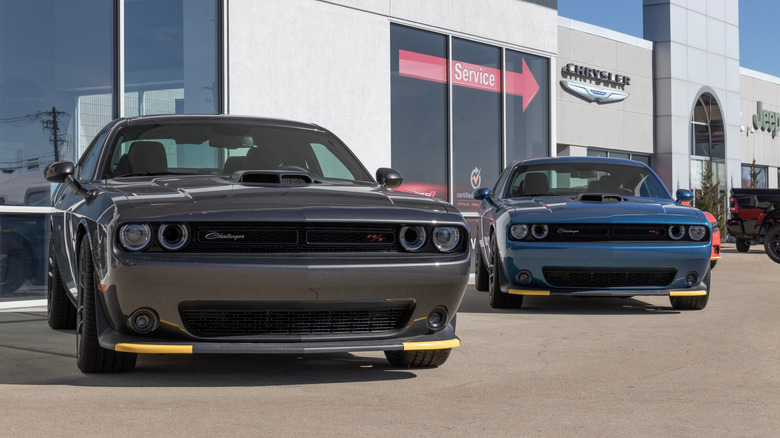
Are pickup truck engines the same as those used in normal passenger or sports cars? The answer is both yes and no. Physically, at least, there’s usually little that separates an engine in a truck’s engine bay from one in a car’s. After all, there have been plenty of times in the industry’s history when automakers have sold cars and trucks with nearly identical engines. Case in point, the legendary Chrysler slant-six engine, which came in everything from compact cars to pickup trucks and vans.
But in the modern era, especially, there can be notable differences between car and truck engines, even if their displacement and general engine architecture are the same. The modern HEMI V8 used in Dodge muscle cars and Ram pickups is a good example of this, with different versions of the same engines used in performance cars and pickups. Most of the differences between truck and car engines involve how and when the engines deliver their horsepower and torque.
A car engine may produce more peak horsepower than an equivalent truck engine, but the truck engine will often provide more torque or deliver the same amount of torque at lower revs. Just how much difference there is between the two will vary by automaker, and some brands, like Ford, offer V8 engines designed from the ground up for trucks that share nothing with their car counterparts.
The different flavors of V8s
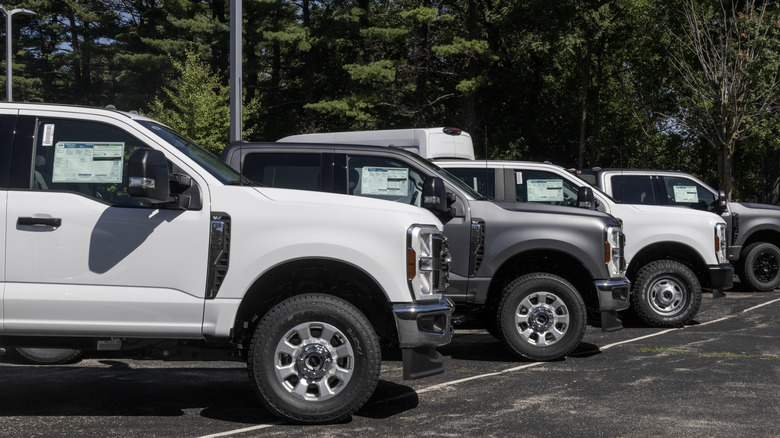
Ultimately, the main difference between car and truck engines is rooted in the difference between horsepower and torque. While horsepower matters in a truck, when it comes to pulling a trailer or carrying a heavy load, it’s the torque that’s important — and the lower in an engine’s powerband that torque comes, the better it is. Thus, the popularity of ultra-torquey, but relatively low-horsepower turbodiesel engines for large pickups. Peak horsepower, meanwhile, takes prominence in a sports car where engine speeds are higher.
Even within the same V8 family, there can be notable differences in car and truck engines. In GM’s V8 lineup, the 401-hp 6.6-liter L8T truck engine is designed for low-speed torque, with 464 lb-ft of torque at 4,000 RPM. The Chevrolet Corvette’s smaller, 495-hp 6.2-liter LT2 V8 is part of the same family and easily bests the L8T in peak horsepower, yet it barely edges the L8T in torque. It also needs to rev much higher to generate its torque, with its 470 lb-ft coming at 5,150 rpm.
Ford’s Super Duty 7.3-liter Godzilla V8 takes this concept even further. Not only is the Godzilla much larger than the 5.0 Coyote V8 in the Mustang GT, but it also uses an entirely different design with an overhead-valve, single-camshaft design compared to the 5.0’s dual overhead cams and 32 valves. At 480 hp, the 5.0 beats out the 430-horsepower Godzilla, but the 7.3 takes the torque crown, with 475 pound-feet to the Mustang’s 415 lb-ft.
The curious case of the Nissan 240SX
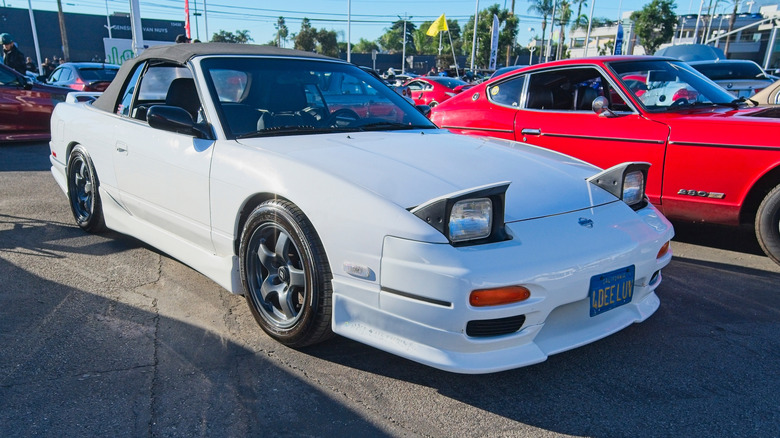
So what happens, then, if you put a pickup truck engine into a sports car? Look no further than the North American-market Nissan 240SX from the 1990s. When the S13 Nissan Silvia and 180SX debuted in the Japanese home market, the cars were available with high-horsepower turbocharged four-cylinder engines — first the 1.8-liter CA18DET and later the legendary SR20DET. This, combined with a great chassis and tons of aftermarket support, helped the S13 become a smash hit among enthusiasts.
However, when it came time to export the car to America, Nissan decided to forgo the turbo engines in favor of the naturally aspirated 2.4-liter KA24 engine used in Nissan pickup trucks. Though the USDM engine was larger than its JDM counterpart and produced a decent amount of torque for its size, the KA24 only made 140 hp and, more importantly, lacked the high-revving sports car feel many expected from the 240SX.
Fortunately, the SR20DET was an easy swap, and Nissan’s decision to go with a truck engine didn’t entirely detract from the many features that helped the 240SX become a legendary drift car in the years and decades that followed. Even then, though, one can’t help but wonder what would’ve happened had Nissan given the U.S. market 240SX the turbocharged performance engine it deserved.
You must be logged in to post a comment Login