

Tech
The running list: major tech layoffs in 2026 where employers cited AI

Oracle disclosed Monday that it has reduced its workforce by 21,000 employees over the past 12 months, a decline of 13%, which means more cuts than was previously known, including jobs eliminated because of AI. “The adoption and deployment of AI technologies across our operations have resulted, and may continue to result, in reductions to our workforce,” the company said in an annual financial regulatory filing.
The revelation puts new numbers to what feels to many in the tech industry like an epidemic: companies reporting record revenues while simultaneously culling their workforces, pointing to AI as both the engine of growth and the reason for the cuts. Tech layoffs hit their highest single month in years in May, and AI was the most-cited reason, according to outplacement firm Challenger, Gray & Christmas.
We recently wrote about why that rationale is something companies may want to rethink, not least because for many of these companies, the headcount they’re now cutting was hired during the pandemic hiring surge, raising questions about what’s really going on. Below, a running look — in reverse chronological order — at the bigger tech companies that have announced significant layoffs this year with AI as a stated factor.
GitLab — June 3, 2026. In one of the most recent cuts on this list, GitLab laid off roughly 350 workers, about 14% of its staff, to fund AI infrastructure investment and handle surging traffic from AI workflows. CEO Bill Staples said agentic workloads are “pushing competitors to the brink” and that the company had begun a “generational rebuild” of its core infrastructure to support what he called 100x growth requirements. GitLab is exiting 22 countries, flattening management layers, and partnering with an unspecified AI lab to rebuild its platform for agent-scale workloads. The company reported first-quarter revenue of $264 million, up 23% year-over-year, and expects to incur $30 to $35 million in restructuring costs.
Google — ongoing through May. Alphabet’s Google has quietly cut employees across its Cloud division, including its Threat Intelligence Group and Mandiant-linked cybersecurity staff, even as Cloud revenue grew 63% to exceed $20 billion for the first time and its backlog nearly doubled to over $460 billion. Over the past year, Google has cut more than a third of the managers overseeing small teams — 35% fewer managers with fewer direct reports. Unlike most companies on this list, Google has never announced a single overall number — the cuts have come through a rolling performance review process, a voluntary buyout program, and structural reorganizations, with outside estimates putting the 2026 total at between 1,500 and 3,000+ engineers.
Intuit — May 20, 2026. Intuit announced plans to eliminate roughly 3,000 jobs — about 17% of its total workforce — in a restructuring centered on reducing complexity and reallocating resources toward AI. CEO Sasan Goodarzi reportedly told staff the company is reducing complexity and simplifying the structure, so it can deliver better products.
Meta — May 20-21, 2026. Meta laid off about 8,000 employees, roughly 10% of its workforce, while moving about 7,000 employees into new AI-focused roles (that they reportedly hate). Zuckerberg told staff the cuts were necessary because “success isn’t a given” in AI.
Cisco — May 14, 2026. Cisco announced it’s cutting nearly 4,000 jobs, about 5% of its workforce, despite reporting better-than-expected profit and revenue. CFO Mark Patterson said: “This was really not a savings-driven restructure… this is more [about] realigning … resources around silicon, optics, security and AI.”
Cloudflare — May 7-8, 2026. Cloudflare cut about 20% of its workforce (1,100 people), reporting quarterly revenue of $639.8 million, up 34% year-over-year and the highest single quarter in company history. CEO Matthew Prince wrote that “the vast majority of those we laid off last week were measurers” — middle management, finance, legal, internal auditing, and revenue recognition.
General Motors — May 12, 2026. GM eliminated 500 to 600 jobs, largely in IT roles in Austin, Texas, and Warren, Michigan, saying it was reevaluating its workforce needs amid uncertain market conditions. A person familiar with the cuts told CNBC that AI played a role in the decision but that it wasn’t the only reason. GM’s statement said it was “transforming its Information Technology organization to better position the company for the future.” Despite the cuts, the company still had roughly 80 open IT positions, including roles in AI, motorsports, and autonomous vehicles.
Coinbase — May 5, 2026. The crypto exchange said it was cutting about 700 employees, or 14% of its staff, as part of a restructuring aimed at addressing market volatility and increasing AI efficiency. The company flattened its organizational structure to five layers below the CEO and COO, and said it would experiment with “one-person teams” combining engineering, design, and product roles. CEO Brian Armstrong wrote that AI had changed the pace of work dramatically — “engineers use AI to ship in days what used to take a team weeks” — and that the company needed to “leverage AI across every facet of our jobs.”
PayPal — May 5, 2026. PayPal announced plans to cut around 20% of its workforce over the next two to three years — north of 4,500 jobs — as part of a turnaround strategy centered on AI adoption and organizational simplification. CEO Enrique Lores told investors the company would “aggressively adopt AI” in its development processes and formed a new “AI transformation and simplification” team reporting directly to him, tasked with redesigning the company’s processes “function by function.” Lores framed the cuts as removing organizational layers, and said AI would extend well beyond coding into customer service, support operations, and risk management.
Microsoft — April-May 2026. Microsoft offered buyouts structured as voluntary separations, without disclosing how many employees these would impact. CFO Amy Hood said total headcount declined year-over-year in fiscal Q3, and is expected to keep declining as the company focuses on “building high-performing teams that operate with pace and agility” amid rising AI investment.
Snap — April 16, 2026. Snap cut roughly 16% of its global workforce — about 1,000 full-time employees — and closed more than 300 open roles, with CEO Evan Spiegel citing AI advancements as a key driver. “Rapid advancements in artificial intelligence enable our teams to reduce repetitive work, increase velocity, and better support our community, partners, and advertisers,” Spiegel wrote in a memo filed with the SEC. The company said it had already seen small squads using AI tools to drive progress across Snapchat+, ad platform performance, and infrastructure efficiency.
IBM — rolling through 2026. Between Q4 2025 cuts and April 2026 Red Hat engineering reductions, estimates range from 3,000 to 9,000 U.S. positions eliminated, bringing IBM’s cumulative total since September 2024 above 15,000. Bloomberg reported IBM plans to triple its U.S. entry-level hiring for AI and hybrid-cloud roles, even as roughly 200 HR positions were replaced by AI agents. An IBM spokesperson described the Q4 2025 round as a routine rebalancing affecting “a low single-digit percentage” of its global workforce.
Atlassian — March 11, 2026. Atlassian cut about 1,600 jobs (10% of its workforce) to “rebalance” toward AI and enterprise sales, even as shares rose nearly 2% on the news. CEO Mike Cannon-Brookes said: “Our approach is not ‘AI replaces people.’ But it would be disingenuous to pretend AI doesn’t change the mix of skills we need or the number of roles required in certain areas. It does.”
Dell — Jan 30 (though disclosed in March 2026). Dell’s total workforce fell about 10% in fiscal 2026 — roughly 11,000 jobs — to about 97,000 employees from 108,000 a year earlier, with $569 million spent on severance. The cuts came as Dell projected its AI-optimized server revenue could double in fiscal 2027.
Oracle — March 5-31, 2026. As noted above, Oracle began telling employees it would be cutting thousands of jobs via terminal emails. The cuts came even as Oracle posted $3.7 billion in quarterly net income, up 27% year-over-year, with remaining performance obligations up 325% to $553 billion — savings redirected toward AI data centers. The cuts that would later total 21,000 over 12 months, as Oracle disclosed in its June 22 annual filing.
Block — February 26-27, 2026. Jack Dorsey’s Block cut 4,000 jobs — nearly half its workforce, down to under 6,000 from over 10,000. Dorsey wrote on X: “We’re already seeing that the intelligence tools we’re creating and using, paired with smaller and flatter teams, are enabling a new way of working which fundamentally changes what it means to build and run a company.” He added: “I think most companies are late. Within the next year, I believe the majority of companies will reach the same conclusion and make similar structural changes.”
Salesforce — February 10, 2026. Salesforce laid off fewer than 1,000 employees across marketing, product management, data analytics, and its Agentforce AI unit. The company told Fortune, “Because of the benefits and efficiencies of Agentforce, we’ve seen the number of support cases we handle decline and we no longer need to actively backfill support engineer roles.” This followed an earlier cut of about 4,000 customer-support roles, shrinking that team from roughly 9,000 to 5,000, with CEO Marc Benioff saying the company needed “less heads” because AI agents handle the work.
Amazon — January 28, 2026. Amazon cut 16,000 corporate jobs, following 14,000 cuts in October 2025 — about 9% of its corporate workforce in three months. The company said it was part of “strengthen[ing] our organization by reducing layers, increasing ownership, and removing bureaucracy.” CEO Andy Jassy had said in June 2025 that, “As we roll out more generative AI and agents, it should change the way our work is done. We will need fewer people doing some of the jobs that are being done today… in the next few years, we expect that this will reduce our total corporate workforce as we get efficiency gains from using AI extensively across the company.”
When you purchase through links in our articles, we may earn a small commission. This doesn’t affect our editorial independence.


The latest Apple Invites update brings some long-requested features, like co-hosting an event. There are also some other great quality-of-life changes to the party planning app.
Back in February 2025, the Apple Invites app made its way to the App Store. With it, iOS users can create party or event invitations, manage RSVPs, share links, and more.
On Tuesday, Apple released version 1.9 of its event invitation app, which includes a new co-hosting capability. This lets two or more Apple Invites users plan and organize an event within the app.
Previously, with version 1.2, Apple Invites gained support for link sharing, letting event hosts send web links to all attendees. Apple is always improving the app even if it isn’t its most popular.
With the new-and-improved Apple Invites, hosts can now also choose to make guest lists visible to all attendees. Bug fixes and quality-of-life improvements are also included with the 1.9 update of the Apple Invites app.
Additionally, the app has received new event backgrounds. Its release notes say these new backgrounds will “help set the mood for your next coffee catch-up, boba run, ice cream social, and more.”
Even so, none of the requirements for Apple Invites have changed. Hosts will still need an iCloud+ subscription to organize events and send invitations via the application. Guests, meanwhile, don’t even need an iPhone or iPad to RSVP to an event.
Apple Invites can come in handy if you already have an iCloud+ subscription and you want to put together a party. The app itself is quite easy to use once you get the hang of it.


The class action claims the defendants, which include BP, Circle K, Marathon Petroleum, 7-Eleven, Walmart, and Albertsons, violated California’s main antitrust law, the Cartwright Act, writes Reuters.
Read Entire Article
Source link
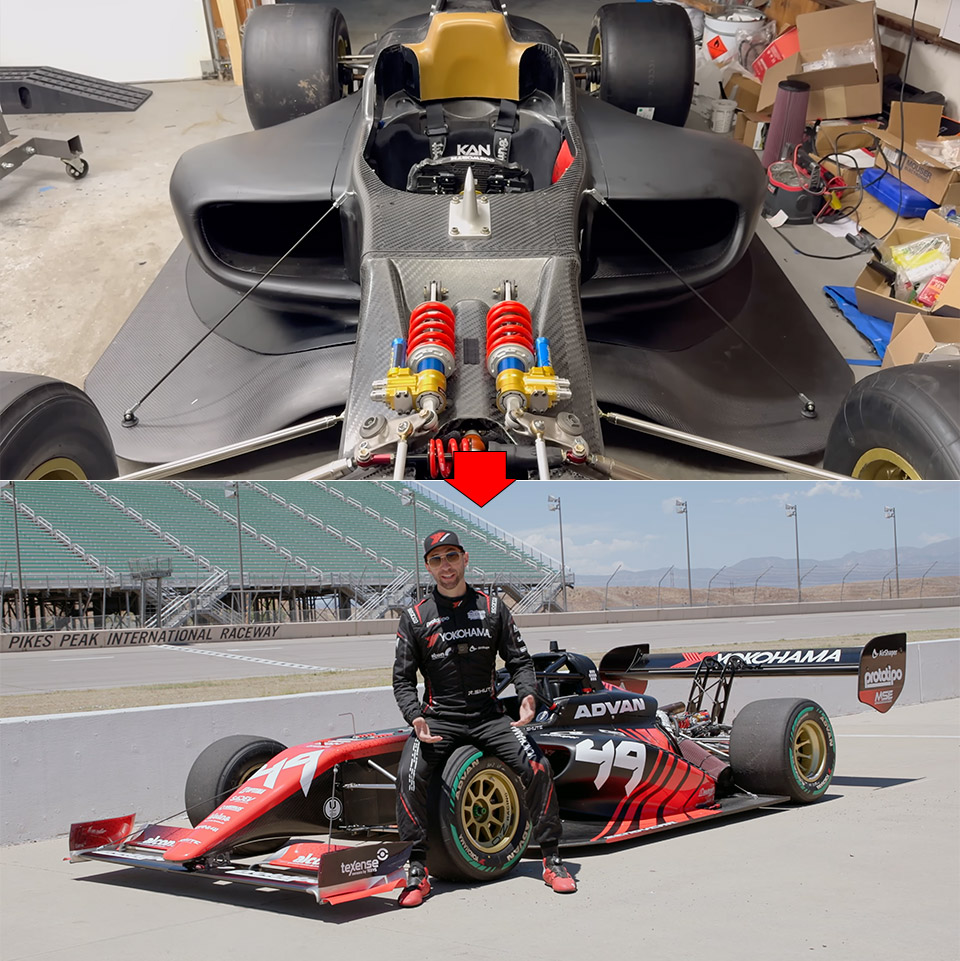
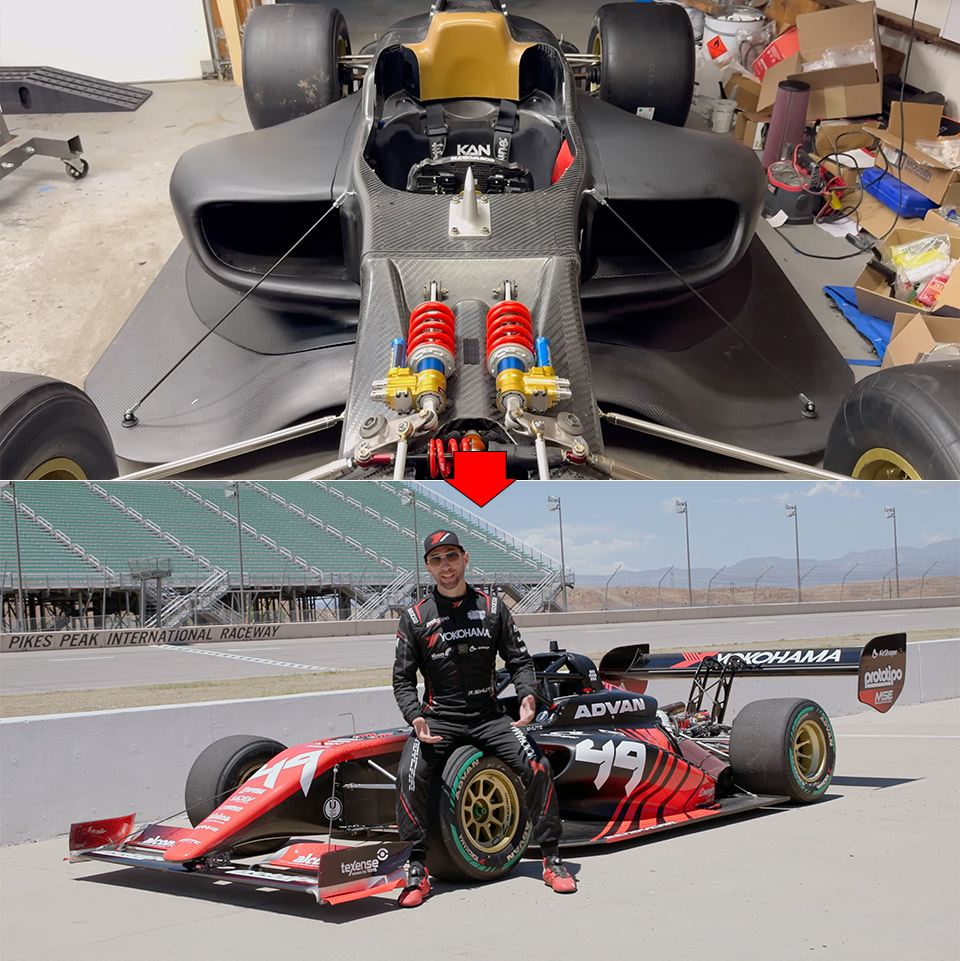
Robin Shute already owns four Pikes Peak International Hill Climb wins. His latest machine, the SendyCar, started life as a ground-up project meant to push even harder. A central tub from a Formula 4 car forms the safety cell. A motorcycle-derived V8 with turbos sits behind the driver and should deliver around 850 horsepower while the whole car stays near 1,300 pounds. The layout mixes exposed front wheels with more enclosed rear sections, a deliberate choice for the unique demands of the mountain course.
Professional shops had offered the crew a rough estimate of roughly $200,000 for a standard composite body…and, honestly, they didn’t have quite that much time to devote to it. So, when two large-format Bambu printers arrived, the solution was already in place: break the entire upper body into 34 individual pieces. They chose high-temperature nylon because it contains carbon fiber, making it heat resistant, which is exactly what we needed near the turbo piping and exhaust, without sacrificing toughness, as it can withstand the rare rock strike. What he really needed was a design that could be broken down into manageable bits and fit into a 12 inch build area. That is why the side pods, engine cover sections, and nose were separated into tiny enough pieces to print without the need for large support systems.
Sale

Bambu Lab A1 mini 3D Printer + LED Lamp Kit, Set Up in 20 Mins, High Speed & Precision, Full-Auto…
- A1 mini + LED Lamp Kit for Creative Light Projects: Bring your ideas to life with the included LED Lamp Kit. Simply print compatible lamp models and…
- The Perfect 3D Printer for Beginners: A1 mini 3D Printer is designed to make 3D printing easy from day one with automatic calibration, simple setup…
- Experience the Bambu Lab Ecosystem: Access MakerWorld’s huge library of ready-to-print models, manage prints through the Bambu Handy app, and enjoy…
The printers were put through their paces, with two machines working nonstop for two weeks. Print time per panel was roughly 12 hours, and they used 10 full rolls of filament, totaling nearly 2 miles of material. The prints were going well, with one or two outliers. The trouble was that the tall, slender portions warped as they cooled, a classic problem. To address this, they went to a true engineering build plate, slapped on some glue for a good first layer grip, and inserted some tiny blocks at the base of those vulnerable sections. The success rate was relatively high, with most parts completed on the first or second try. They had plenty of spares on standby in case anything went wrong.
Once the plastic had cooled, they could try to put the pieces onto the real chassis, which isn’t as simple as slapping them together like a giant 3D jigsaw puzzle. First, they had to align all of the dowel pins correctly. Once they were satisfied with the fit, the team used structural adhesive to secure them all together. Now, nylon is infamous for being difficult to glue, so they had to make sure we sanded the parts down perfectly and used the proper adhesive. That wasn’t the only problem; printing always causes some shrinkage, which created a few headaches, as some of the pins needed some tweaking to get them to sit straight, and one of the portions was left out entirely, necessitating a hasty reprint on the spot. Then there were some holes that required a little glue to cover.


The printed plastic would never leave the garage on its own, that was for sure. So the group went ahead and improved the design with some good old-fashioned carbon fiber wrapping. Before immersing the item in epoxy, they applied a layer of dry fabric to both the inside and the outside. There is no need for pricey vacuforming or tooling; all you need is some elbow grease and common sense.A layer of peel-ply fabric helped to remove the extra resin, leaving them with a lovely usable surface; but, the end result was a reinforced 3D print rather than a properly moulded composite. After applying fairing compound and sanding, she looked fairly decent. The team was under pressure to finish her before the first public presentation, so they applied a final vinyl wrap to add color and graphics.

The Google Home Speaker hasn’t even started shipping yet, but one lucky buyer managed to grab one early and share their first impressions. While most of the news is positive, there’s one detail that won’t sit well with anyone who cares about repairability.
For the unaware, Google announced the speaker back in October 2025, and pre-orders went live last week. Priced at $99, it’s the company’s first new speaker in six years, so people have plenty of questions.
A Reddit user spotted one sitting on the shelves at Walmart and bought it before the official release.
What’s the big catch?
The power cable is permanently attached to the speaker, and it’s pretty short at just under 5 feet. This is a big departure from Google’s older speakers, which let you remove and swap the cable. The buyer called this the biggest downside, and I have to agree. A fixed cable is a nightmare if you ever need to replace it down the line.
To be fair, Google didn’t hide this. As reported by 9to5Google, the Google Store lists a 30W USB-C adapter in the box and even mentions the “captive cable” in the specs. It just slipped under the radar for most of us.
Is the speaker any good?
The Reddit user said the sound quality is good, with decent volume and handling of mid and low frequencies well for a speaker of this size. They even admitted they were judging it fresh off an expensive sound system, so it had a tough act to follow, yet it still came out swinging.

The interface sounds neat, too. It uses hidden lights on the top mesh to display volume controls, and you tap the speaker to control it, much like other Home speakers. Setup was a breeze and took under 10 minutes on a hotspot with an existing Home account.
For $99, this speaker is shaping up to be a solid little package, captive cable aside, and is a welcome HomePod mini alternative for non-Apple users.
If you’ve ever submitted a support ticket to LastPass, that exchange may now be in the hands of hackers. According to TechCrunch, the password manager has confirmed that customer names, contact details, and support case records were exposed in a recent breach at one of its third-party vendors.
What the hackers got, and what they didn’t
LastPass said its own systems were not compromised and that users’ password vaults remain secure. The exposed data was instead accessed through Klue, a market research company LastPass works with.
While no passwords were stolen, the hackers used their access to Klue’s network to pull customer records, including phone numbers, email addresses, physical addresses, and contents of support tickets.
In a blog post about the incident, the company stressed that the breach did not affect encrypted password vaults, master passwords, or any credentials stored within LastPass itself. Even so, the exposed information could still prove useful to attackers, who could leverage it for phishing or social engineering campaigns.
A years-old credential opened the door
The LastPass exposure stems from a wider security breach at Klue, which revealed that attackers gained access using a credential linked to a pilot project dating back to 2022. TechCrunch reports that the credential remained active and provided a way into the company’s systems.
Klue said the attackers were able to access customer data connected to its services, affecting multiple organizations that relied on the platform. Along with LastPass, Gong, Jamf, HackerOne, Insurity, OneTrust, Recorded Future, Snyk, Huntress, Sprout Social, and Tanium were affected.
For LastPass, this marks the second time its users have had data caught up in a breach. A 2022 breach exposed encrypted password vaults that were later linked to cryptocurrency theft. This latest exposure did not involve vault data or passwords, but it highlights how a security lapse at a third-party vendor can still affect customers who never interacted with the vendor directly.

OFFBEAT
A time when Windows 7 was Microsoft’s latest and greatest
BORK!BORK!BORK! A blast from the past greets customers at a coastal McDonald’s, or is it just that the kiosk is seeking a return to the happier and simpler times of 2009?
An eagle-eyed Register reader spotted a very unhappy terminal at a branch of the McDonald’s fast-food chain in Worthing, England. Where a customer might normally smear a finger over suggestions for ways to sate their desire for grease, the display instead reveals the kiosk’s clearly PC origins: a BIOS utility.

It’s not clear what has befallen the kiosk, though something has happened to the hardware that has sent it to the utility screen, which is normally accessible by holding down a key or combination of keys during the boot process. Although the BIOS is dated 2016, the system date is currently set to 2009.
Worthing is a town on the south coast of England, occasionally unfairly and unkindly referred to as “God’s waiting room” due to the large retiree population it once had. While the town has long since shed that sobriquet (although it still lacks the hip and trendy traits of neighboring Brighton), it seems that there is one place that would very much like to turn back the clock.
McDonald’s.
Cast your mind back to 2009. Bitcoin was launched, an Airbus A320 ditched onto the Hudson River with no fatalities, and US President Barack Obama was sworn in.
Best not to think about how much a Bitcoin acquired then might be worth now.
2009 was also the year Microsoft released Windows 7, the successor to Windows Vista and the precursor to the widely derided Windows 8. Microsoft might not have realized it at the time, but this was arguably peak Windows. Sure, Windows 95 was arguably more of a cultural “moment,” and XP was an undeniable milestone, but 7 reached heights Microsoft has not matched since.
2009 was also a few years before McDonald’s began rolling out touchscreen kiosks to replace the experience of peering over the shoulder of the person behind the counter to see which foodstuffs were ready to go.
Today, the person behind the counter is far less visible, obscured by a line of delivery riders collecting app orders. The BIOS utility screen, however, looks back to an earlier time.
Or, possibly, Worthing is simply 17 years behind the rest of the world. ®

Displays for the iPhone Fold and touchscreen MacBook Pro will come from Samsung, while LG will make screens for the Apple Watch Series 12, says a repeat rumor.
Apple’s first foldable iPhone is slated to debut in 2026. While it will mark Apple’s entry into new smartphone territory, its displays will seemingly be produced by a tried-and-true Apple supply chain partner.
On Tuesday, mere days after the claim of Samsung OLED panels on the iPhone Fold was repeated, yet another report said the same thing. As 9to5mac points out, ET News says OLED screens for the iPhone Fold, iPad mini, and touchscreen MacBook Pro will be provided exclusively by Samsung Display.
Supposedly, Samsung Display is set to produce 10 million OLED panels for the iPhone Fold and 2 million for a future iPad mini. The publication claims the production of iPhone 18 Pro, iPhone 18 Pro Max, and iPad mini displays has already begun, with the production of iPhone Fold display hardware expected to follow.
As for the long-rumored OLED MacBook Pro, Tuesday’s report says that panel production will begin in July 2026, once Samsung Display’s 8.6th-generation OLED line becomes operational.
Repeat rumors dating back to 2024
As far back as April 2025, it was reported that the iPhone Fold would feature a Samsung-made OLED panel. In September 2025, the president of Samsung Display said that the company would provide foldable OLED displays to a North American client, presumably Apple.
As with the iPhone Fold, rumors of Samsung-made OLED panels for the MacBook Pro go back to at least September 2025. Claims of Samsung making an OLED iPad mini display for 2026 go back even further, to May 2024.
In that regard, Tuesday’s display-related report is arguably nothing more than a “me too” rumor, with no significant new information.
Even when discussing LG Display’s role in the Apple supply chain, the report only backs up earlier rumors. On June 2, 2026, it was said that LG Display would produce screens for the Apple Watch Series 12. Tuesday’s rumor reiterates that claim, adding that 34 million panels will be made for the device.
Chinese supplier BOE, meanwhile, won’t produce any displays for the iPhone Fold, OLED MacBook Pro, iPhone 18 Pro, or iPhone 18 Pro Max. Again, this is something that was already said in May 2026.
Overall, the display-focused report published on Tuesday doesn’t reveal much of anything. It reiterates claims others have already made and states the obvious.
It’s an odd-seeming move for a company selling an AI writing assistant.
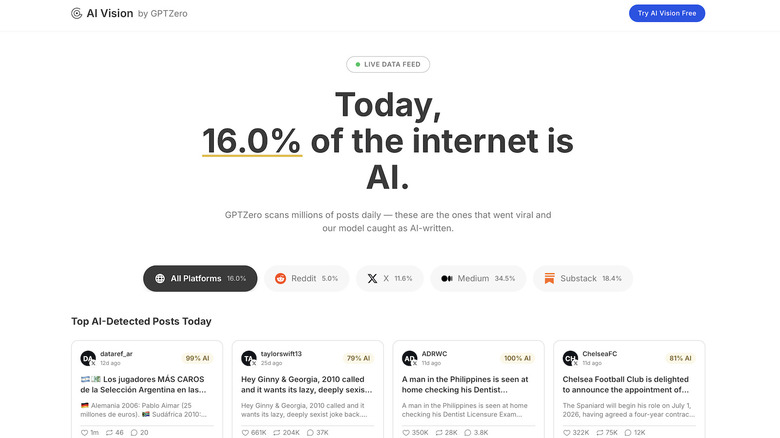
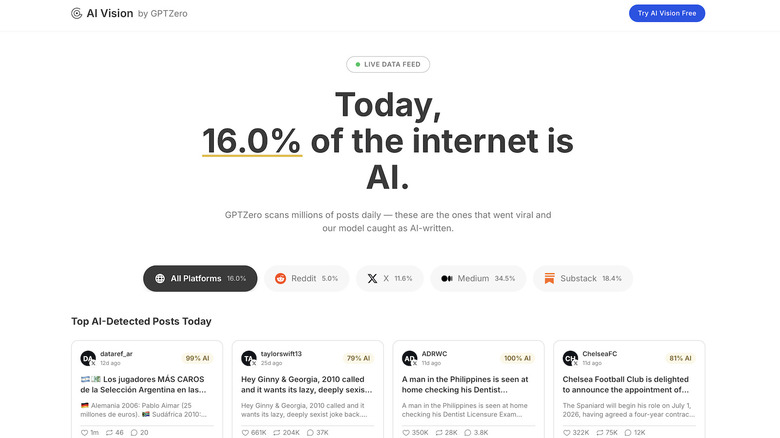
Superhuman announced that it has acquired GPTZero. This AI identification business offers services such as hallucination and plagiarism detection as well as a nifty little tool that displays how much of the internet is artificial intelligence. Superhuman said it plans to integrate GPTZero into its Superhuman Go AI assistant to improve the reach of its existing efforts around AI and authenticity. Teachers and students will still be the priority audience for Superhuman following the acquisition. For its part, GPTZero emphasized that Superhuman would also help put its tools in places where people were already reading and writing. Financial terms of the deal weren’t disclosed.
On the surface, this seems like an odd pairing. The press release announcing the acquisition focuses on concerns about the public being able to identify AI-generated content, but Superhuman is quite literally encouraging people to use AI to generate content. The company’s most popular product is the AI writing assistant Grammarly, which does have its own tools for AI detection. However the push to put AI resources everywhere in Grammarly has also landed Superhuman in some hot water. Notably, the company tried to give its users AI generated feedback that aped the voice and style of other writers; said other writers were none too pleased.

Looking for the most recent Mini Crossword answer? Click here for today’s Mini Crossword hints, as well as our daily answers and hints for The New York Times Wordle, Strands, Connections and Connections: Sports Edition puzzles.
World Cup watchers, you’ll find a few tourney-themed clues in today’s Mini Crossword. Read on for all the answers. And if you could use some hints and guidance for daily solving, check out our Mini Crossword tips.
If you’re looking for today’s Wordle, Connections, Connections: Sports Edition and Strands answers, you can visit CNET’s NYT puzzle hints page.
Read more: Tips and Tricks for Solving The New York Times Mini Crossword
Let’s get to those Mini Crossword clues and answers.
The completed NYT Mini Crossword puzzle for June 24, 2026.
Mini across clues and answers
1A clue: Race starter’s equipment
Answer: GUN
4A clue: 1-1, for one
Answer: SCORE
6A clue: Wedding speech made with a drink in hand
Answer: TOAST
7A clue: Book of maps
Answer: ATLAS
8A clue: Trivia question: Has Brazil appeared at every World Cup? Answer: ___!
Answer: YES
Mini down clues and answers
1D clue: World Cup highlights
Answer: GOALS
2D clue: ___ Major
Answer: URSA
3D clue: Things found at either end of a soccer pitch
Answer: NETS
4D clue: Time at a hotel
Answer: STAY
5D clue: ___ d’Ivoire (African nation in the World Cup)
Answer: COTE


networks
Unexplained GSM-R failure at Deutsche Bahn caused confusion and delay
Train services are resuming across Germany this morning, after rail operator Deutsche Bahn (DB) last night shut down operations after its wireless network failed.
At 10:30 PM local time on Tuesday night, DB advised that its GSM-R network was down, meaning all trains had to be held at stations. We understand that even suburban trains ground to a halt.
GSM-R is a version of the 2G GSM standard tuned to the needs of rail operators, who use it to power private networks that carry information necessary to keep their services rolling. The tech is considered obsolete and DB knows it because the company has already signed with Nokia for a 5G replacement that will use the Future Railway Mobile Communication System (FRMCS) – a move also under consideration in the UK.
For now, however, DB needs its GSM-R to connect drivers with signalling services – so three minutes after midnight on Wednesday morning the carrier promised to issue taxi and hotel vouchers to passengers.
At that time, DB also said it had found the cause of the outage and was working to fix it. The company’s techies moved quickly as the network came back online at 00:50.
As of 6:30 AM, however, DB warned “some isolated disruptions may still occur” and advised passengers they’ll need to check that their connections will run on time.
There’s no indication the incident was the result of a cyberattack and The Register can find no reference to cut cables or other physical layer incidents that could have caused a nationwide outage.
Whatever went wrong isn’t a good look as any network powering critical infrastructure is supposed to have layers of redundancy to ensure resilience.
At least the org made heroes of its tech team.
“Our IT experts worked tirelessly to resolve the issue – successfully,” reads a company statement. ®

Boston local ‘happy’ Tartan Army aren’t getting same reception in Miami for one reason

In Senate visit, Trump to push for voter ID bill that Republicans say can’t pass
Important Ripple (XRP) Deadline Concerning Many Users


-

 Fashion5 days ago
Weekend Open Thread: Miami – Corporette.com
-

 Entertainment4 days ago
Renter of Home in Anne Heche Crash Denies Settlement With Son
-

 Tech2 days ago
Microsoft accidentally kills epic Outlook email threads
-

 Business4 days ago
Soccer-U.S. defends Iran World Cup travel restrictions, says discussions ongoing
-
 Sports15 hours ago
Two goals and an assist by sheer aura: Cristiano Ronaldo just entered the World Cup chat
-
Crypto World7 hours ago
Bitcoin (BTC) Dips Below $62K, Ethereum (ETH) Plunges 6% Daily: Market Watch
-

 Politics6 days ago
BBC Reporter Discusses Cross Party Criticism Of Trumps Iran Deal
-

 Crypto World4 hours ago
Securitize Wraps Roubini's SEC-Registered ETF as Dubai VARA Digital Security
-
Business9 hours ago
Entergy settles forward sale agreements, raises $672 million in cash proceeds
-
 Business4 days ago
Wall Street Week Ahead: Investors see Micron earnings as pulse check of AI rally momentum
-

 Politics4 days ago
Andy Burnham and the meaning of Makerfield
-

 Tech6 days ago
AWS enters the context layer race with a graph that learns from agents, not manual curation
-
 Crypto World4 days ago
Can Charles Hoskinson Really Rescue Cardano?
-

 Crypto World4 days ago
HIVE shares jump as $220M AI deal speeds Bitcoin mining pivot
-

 NewsBeat5 days ago
Keir Starmer Allies Question His Chances For No 10
-

 Crypto World4 days ago
Jake Chervinsky accuses CME of protecting derivatives monopoly
-

 Tech2 days ago
Nearly 7,000 fake Amazon domains registered ahead of Prime Day 2026, researchers warn
-
 Tech3 days ago
Signal’s Meredith Whittaker says AI chatbots ‘are not your friends’ and calls Copilot agents a backdoor
-

 Business5 days ago
Brexit cost 6% of UK economy, Bank of England company data suggests
-

 Sports5 days ago
FIFA World Cup 2026: Canada beat 9-men Qatar 6-0 to register first ever win | FIFA World Cup 2026
You must be logged in to post a comment Login