Tech
The Trump administration suspects an ASML chipmaking machine made it into China. ASML says that’s impossible.

TL;DR: ASML’s most advanced chipmaking tools have become the focus of a renewed dispute in Washington over how far the US should go to keep cutting-edge semiconductor technology out of China. In recent months, the Trump administration has pressed ASML over whether one of its extreme ultraviolet (EUV) lithography machines may have slipped past export controls and ended up in China. According to people familiar with the talks, Commerce Secretary Howard Lutnick raised the issue directly with ASML’s senior leadership, asking whether a machine that has never been approved for export to China could have nonetheless reached the country.
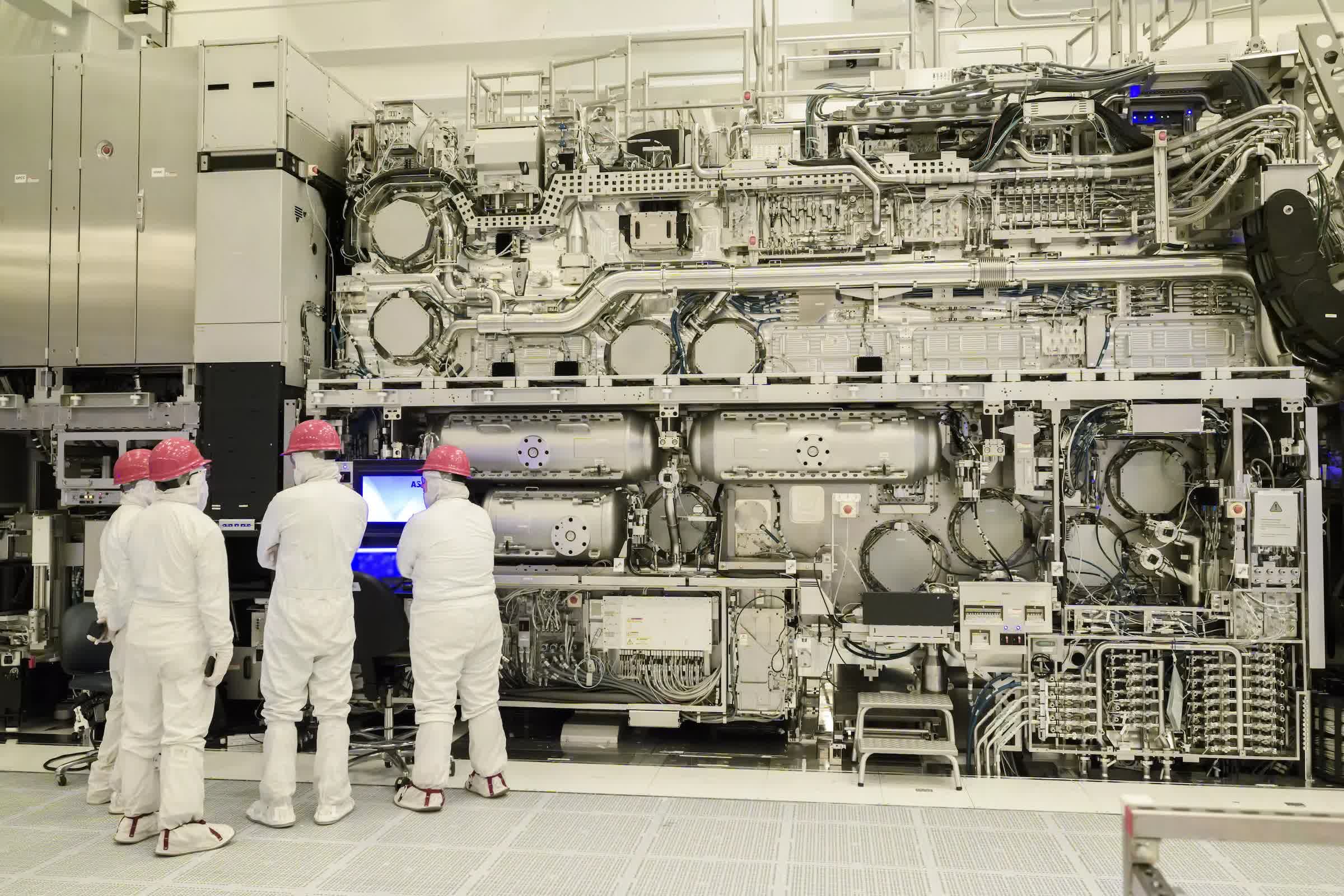
EUV is the technology that underpins today’s most advanced processors. The machines are used by companies such as TSMC to manufacture high-performance chips for Nvidia and Apple. They are roughly the size of a school bus, are produced in limited quantities, and require constant maintenance from ASML engineers.
US export rules have long barred ASML from selling EUV tools to China, and the company says it complies with those restrictions. In its discussions with Lutnick, ASML pushed back on the suggestion that an EUV system could be operating in China, according to people familiar with the talks.
A company spokesperson, responding to questions about those meetings, said ASML has never shipped an EUV machine to China and stressed that it regularly engages with governments worldwide while adhering to export regulations.
The conversation has taken on a sharper edge in Washington. Multiple senior Trump administration officials, speaking on condition of anonymity, said they believe ASML is not acting in good faith, citing exports to China of equipment they say is specifically related to EUV tools.
They declined to provide documentation, citing the sensitivity of the information, and did not say they had proof of an actual EUV machine operating in China. ASML, for its part, denied to Bloomberg that it has shipped any EUV-specific equipment to China.
Behind the scenes, the pressure has triggered an internal scramble at ASML. After Lutnick’s April meeting, the company prepared a document titled “No Indication of Any ASML EUV System in China” and circulated it among officials in Washington, according to people familiar with the situation.
The document, reviewed by Bloomberg, says there are 314 EUV machines in use worldwide and 26 that have been decommissioned, with none located in China. It also states that ASML can automatically detect “any interruption, abnormal behavior, or loss of connectivity” across its EUV fleet, and that customers “cannot remove, transport, or relocate EUV systems without ASML involvement due to specialized handling procedures.”
Those technical constraints are central to ASML’s argument. EUV tools are so complex that they effectively remain under the company’s oversight throughout their operational life. ASML says customers cannot remove, transport, or relocate EUV systems without its involvement because of specialized handling requirements.
Yet skepticism within the Trump administration persists. Senior officials say they have evidence that ASML shipped specialized transport equipment and other components for use with EUV systems to Chinese customers, though they have declined to provide supporting records.
The technology at the heart of the dispute is critical to China’s AI ambitions. Huawei Technologies, which has been cut off from EUV tools, has made progress in producing advanced chips without ASML’s most sophisticated equipment, narrowing the gap with TSMC. That absence of EUV capability is widely seen as one of the most significant constraints on Huawei’s ability to mass-produce cutting-edge AI chips.
If investigators were ever to confirm that a full EUV system had reached China, it would amount to one of the most serious known breaches of the US-led export control regime designed to limit Beijing’s access to high-end AI hardware. For now, officials have declined to explain why, if they suspect such a violation, they have not brought public enforcement actions or further tightened restrictions.
ASML’s broader China business is already constrained. The Netherlands has blocked EUV sales to Chinese chipmakers and, under US pressure, has also restricted certain types of immersion deep ultraviolet tools. Washington has been frustrated that ASML accelerated shipments of some DUV systems before the newer rules took effect.
Senior Trump administration officials say those episodes, along with alleged EUV-related exports, point to a company that is too willing to prioritize short-term revenue over national security.
The dispute over EUV is unfolding as Washington debates how far to extend its export control regime. The US has effectively severed Huawei from most foreign technology and has used extraterritorial measures to draw companies such as ASML into that effort.
At the same time, gaps remain in how allied controls are applied and how far they extend to maintenance, servicing, and support for restricted Chinese firms such as SwaySure Technology, which US officials say has received technological support from ASML. The administration has tools to halt those relationships outright but has not done so, and negotiations with the Netherlands and Japan over tighter rules have yet to produce a decisive outcome.
In Congress, lawmakers are pushing a bill that would bring foreign suppliers, including ASML and Tokyo Electron, under restrictions more closely aligned with those on US firms, and would effectively ban ASML’s shipments of immersion DUV tools to China.
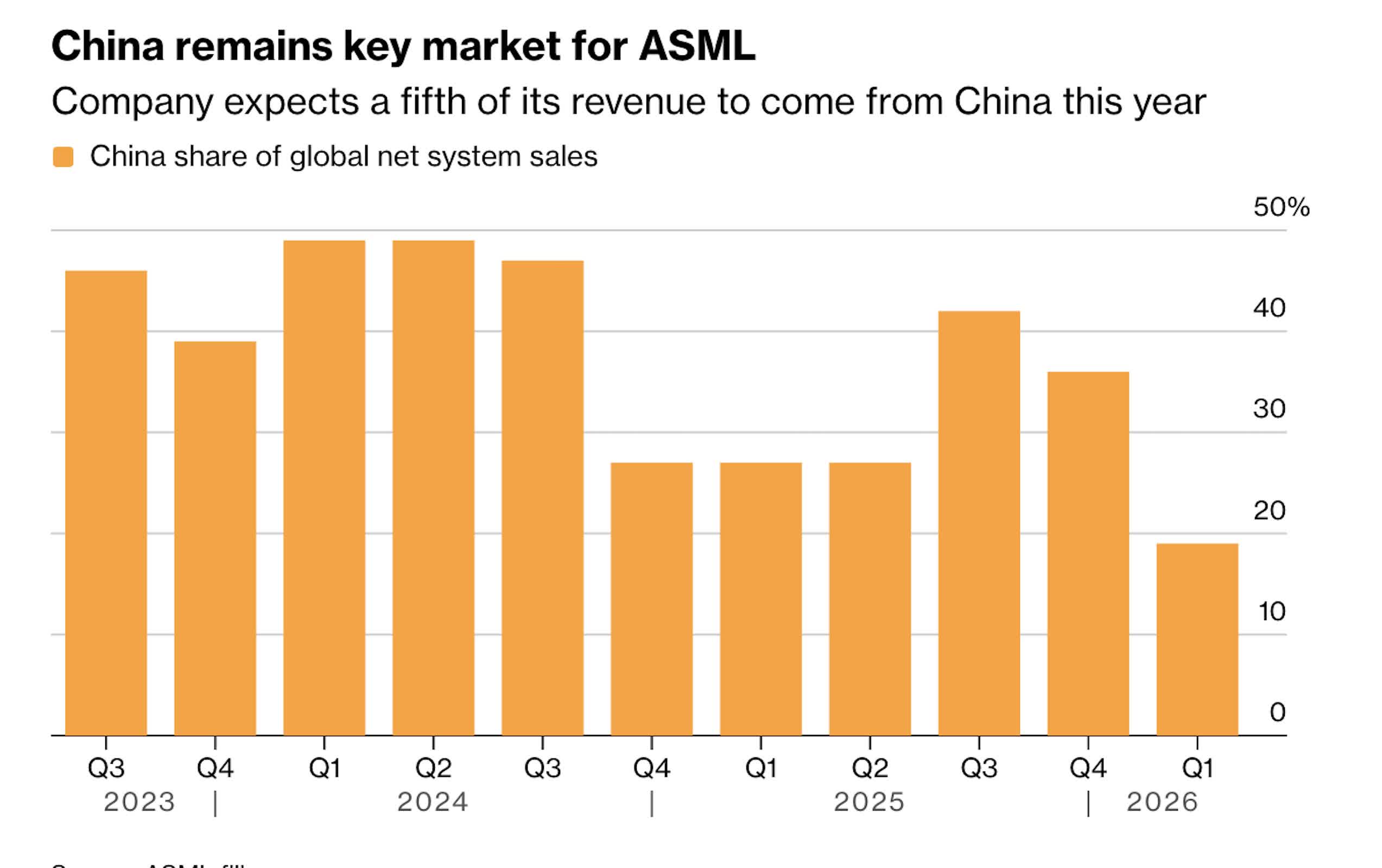
That shift would hit a business ASML expects to generate about one-fifth of its 2026 revenue. The Trump administration has not taken a formal position on the legislation, and US diplomats have suggested that a broader US-EU trade deal could reduce momentum behind the bill, which several European governments oppose.
You must be logged in to post a comment Login