The Luna Band is now shipping worldwide, giving users access to a wearable that promises to personalise its health tracking around their individual goals. The company announced the global availability at IFA 2026, alongside LifeOS, the health intelligence platform that powers the Band.
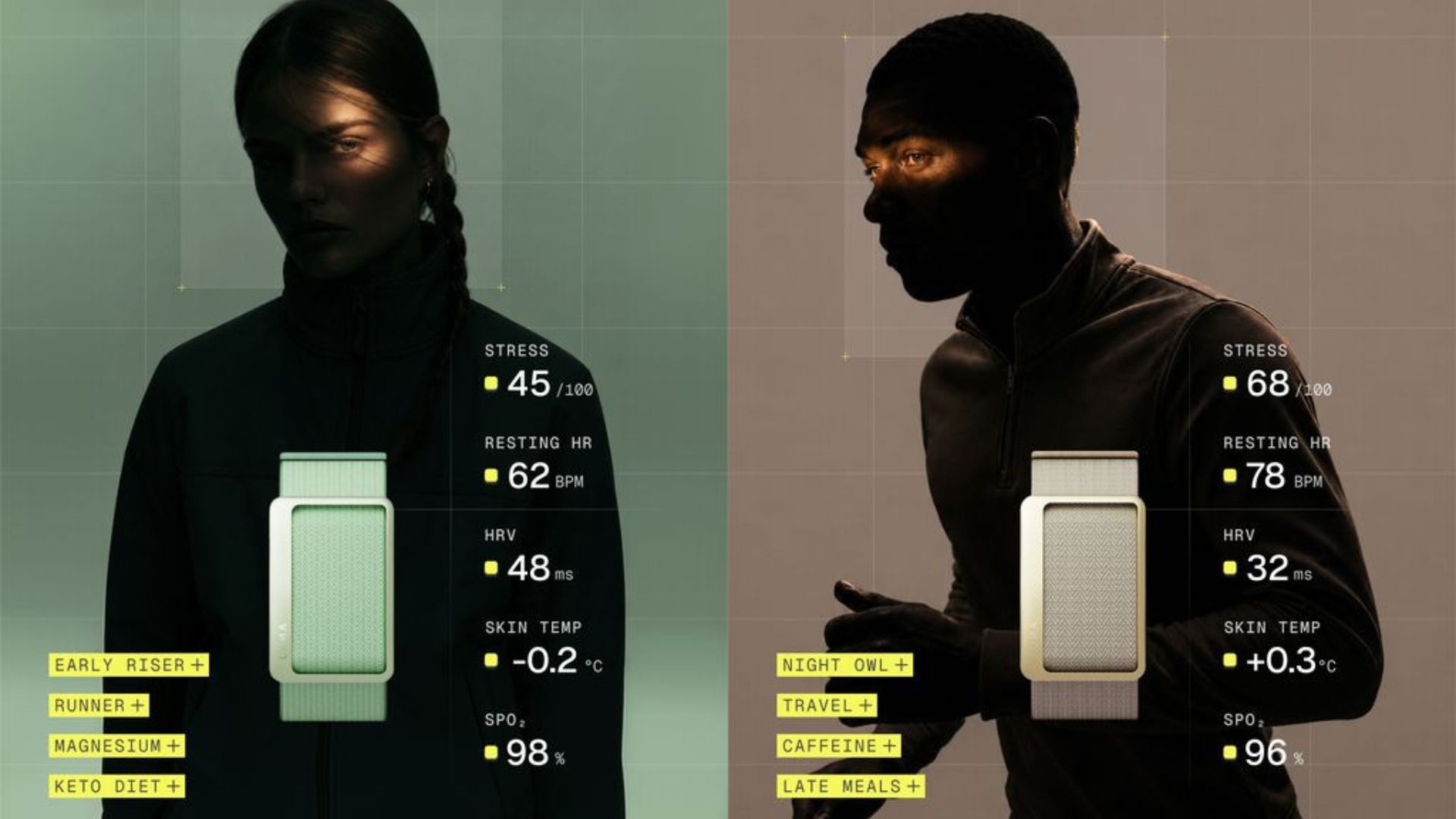
Unlike conventional wearables that use the same tracking approach for everyone, Luna says its Band adapts to what each user wants to achieve. When a new goal is added, the device changes what it measures and how frequently it takes readings, while LifeOS retrains its models around that individual’s body.
That means two Luna Bands can effectively become different products depending on who is wearing them. The hardware itself uses the same set of sensors, but the user’s goals shape how those sensors, the firmware and LifeOS are used. Luna says the system learns each wearer’s personal baselines rather than comparing them with an average user.
The Band also uses what Luna calls Micro Apps and Peak Score to tailor the experience further. Rather than simply presenting biometric data and leaving users to work out what it means, Luna says LifeOS turns those signals into actionable guidance and builds a daily calendar around the user’s goals.
Advertisement
The company says more than 100,000 people joined the Luna Band waitlist ahead of its launch, while the first drop sold out. Early reviews have also described it as a different approach to health tracking, with personalisation and goal-based progress built into the same system.
Advertisement
There is no subscription required, either. Luna says all of the guidance is included with the Band, which could make its €149 price more appealing for users who don’t want another monthly health subscription.
The Luna Band is now available worldwide through Luna’s website for €149. The company is also showcasing the wearable at IFA Berlin.
Up until recently, anyone into fitness probably had a smartwatch. These tiny computers would sit on your wrist, track health metrics, and also show notifications from your phone to help you stay connected. Well, that has changed recently. With Instagram trying to suck all of my time and WhatsApp becoming a home for advertising, I’ve found myself not wanting to wear a smartwatch anymore. It just doesn’t let me stay in the moment, and every time it buzzed, I’d instinctively pick up my phone. Apparently, I’m not the only one dealing with smartphone fatigue, which is exactly why screenless wearables have taken off. These retain all the workout features of a smartwatch, sometimes even more, and remove the annoying parts like the screen.
Surely, you’ve heard about Whoop. It’s been the screenless tracker to get, worn by stars like Ronaldo and LeBron James. The thing is, Whoop costs a minimum of $199 every year. And without a subscription, you can’t even access your data. There is also Google’s Fitbit Air, but it’s not available in India yet. So, when Noise, the guys I bought my first smart band from a decade ago, came up with a screenless fitness tracker, the Rep Band, I was quite excited. It costs ₹9,999, and you don’t have to pay for any subscription. The band tracks many of the same metrics, such as heart rate, blood oxygen saturation, HRV, sleep tracking, and more. And if you’re thinking about ditching your smartwatch, don’t worry. I’ve been testing the Rep Band for almost a month and have taken it to various workout sessions.
Noise REP Band
Hisan Kidwai
Advertisement
Summary
The Noise REP Band is a very competent take on the screenless fitness tracker game, without the predatory feel of Whoop’s subscription model. Everything you need is included in the price, and I’d be keeping it as my primary workout tracker for several reasons. The biggest reason is its accurate workout tracking, backed by genuinely useful insights into recovery and sleep. The app presents all this data in a very digestible form, especially the three scores, which are great.
Advertisement
Design & Comfort
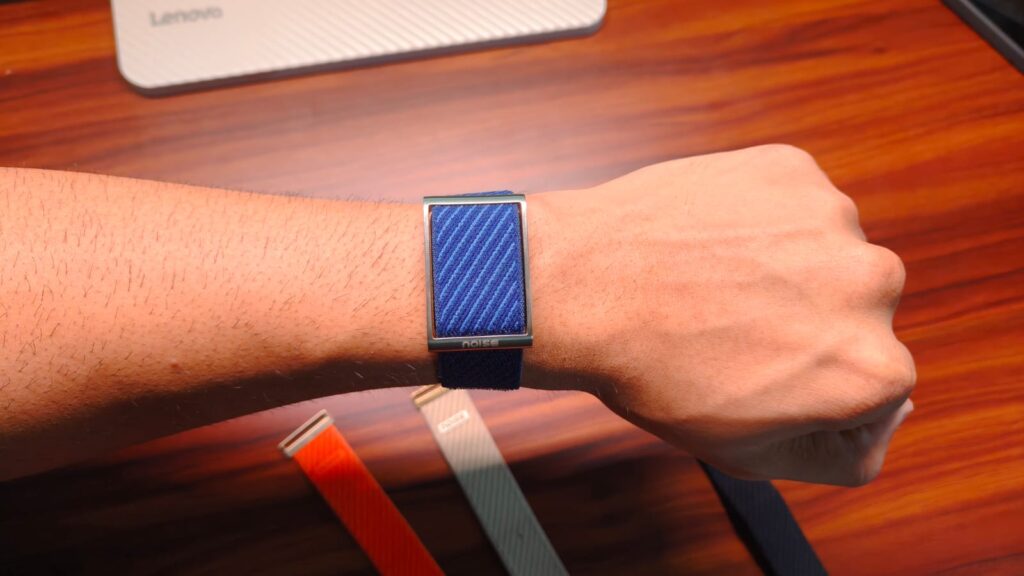
Let’s get one thing straight: the Whoop and Noise Rep are made for different people. The Whoop is for professional athletes, while Noise Rep is for people like me. Someone who goes to the gym pretty regularly, tries to be fit, and wants a general overview of their health. Keeping that in mind, I love the Noise Rep band’s design. It’s similar to a Whoop in that there is a fabric band that wraps around your wrist. Up top, you get a stainless-steel frame that contains the tracking puck and looks surprisingly premium.
You can play with different strap colors, with Orange being the boldest. I used the beige band for the majority of my testing. Yes, it does get dirty after a week of use, but you can just wash it, and it’ll be like new. What is better than the Whoop, though, is the closing mechanism. The Rep band uses a standard Velcro mechanism, which is orders of magnitude better than fiddling with the metal clasp on the Whoop.
The good stuff continues in comfort. The Rep band weighs just 27g. It was a lot more comfortable than wearing a smartwatch, and better at the whole wear-it-and-forget-it idea. It is a little wider than the Fitbit Air, but I’m not complaining. Like the Air, the Rep band has a haptic motor that vibrates when you start or stop a workout. I’d have loved to see a haptic alarm too. On the side, there’s a little LED indicator that lights up when the band is charging or when you put it on.
Features
The Noise Rep tracks almost everything you’d expect from a modern fitness tracker. These include steps, heart rate, heart rate variability (HRV), breathing rate, resting heart rate, body temperature, stress, calories, and workouts. Support for blood oxygen is coming soon. Since there is no screen to distract you, everything is managed by the Noise app. While I do agree it looks a bit like the Whoop app, I’m not complaining. It’s a very slick, modern take that shows all fitness data without feeling cramped and is genuinely intuitive in some ways.
Up top, there are three scores: Sleep, Recovery, and Effort. Sleep tracks how well you slept last night, taking into account stages like REM and deep sleep, as well as whether you were actually asleep or simply lying in bed. This data is presented as a timeline, allowing you to better understand what happened. The app combines that data into a score, then uses AI to explain what went well and what could have been better. The band also measures your skin temperature variability, which can be a good indicator of when you might get ill.
Next to the Sleep score is Recovery. It refers to how ready your body is to take on strain the next day. You can use it to plan the perfect time to hit a bench PR. There is even an Effort score. It measures the load your body takes on during the day with workouts or walking, and gives you the ideal range of how much you should push. Underneath that, you’ll find your vitals and other important metrics. You can also log in water intake, but there is no food logger, so keep that in mind.
Advertisement
Workout Section & Overall App Experience
Workouts have a different section. Here, the headline metric is Stamina, which, as the name suggests, estimates how much energy your body has left for the day. The higher the number, the better. The actual workout options range from essential walking, trekking, and running to sports like Cricket, Football, swimming, Pilates, Yoga, Strength training, and much more. I stuck with Strength Training since that’s pretty much all that I do. The band also measures your overall training load. Lastly, Training Effect summarizes what each workout did for your body. All super helpful stuff.
Where things do take a bit of a downturn is in the overall app experience. Don’t get me wrong, Noise has done a lot of clever work, but the app still lacks polish. For example, workouts and general health data take time to sync, and I often have to pull down to refresh the home screen multiple times before the data syncs. There have been several instances when I clicked on something and a “Please Wait” pop-up appeared. It usually goes away, but sometimes the app gets stuck and requires a force close.
Workout Tracking
All the bickering about the features and bugs aside, workout tracking is the most important aspect of a fitness band. And yes, the Noise Rep band is pretty good at it. For context, I used it alongside my Galaxy Watch for a few different workout sessions. During those sessions, the band stayed within a 5% margin of error for heart rate. Calorie estimations were pretty much on par, and even the steps were counted equally. The Rep band does not have GPS support built in. It can, however, use your phone’s GPS to log that data.
Sleep tracking was another pleasant surprise. I found the Rep band to be slightly more accurate in measuring actual sleep duration, including the few bathroom breaks I took during the night. It knows when I’m actually sleeping or just lying in bed restless. One night, I woke up for a bathroom break, and just couldn’t sleep again. The next day’s sleep score dropped to 67 (my sleep scores are usually around 80), which reflected exactly how I felt. The band suggested I take it easy at the gym that day, which I did. Battery life lasted me a full week of continuous use. You do get an alert in the app when the charge is below 20%, which is when I’d recommend putting the band on the included charger.
Verdict
At ₹9,999, or ₹8,999 if you buy early, the Noise REP Band did surpass my expectations. It’s a very competent take on the screenless fitness tracker game, in a way that doesn’t seem predatory like Whoop’s subscription model. Everything you need is included in the price, and I’d be keeping it as my primary workout tracker for several reasons. The biggest reason is its accurate workout tracking, backed by genuinely useful recovery and sleep insights. The app presents all this data in a very digestible form, especially the three scores, which are great. Is it perfect, though? Nope. The Noise app still needs some work on app sync times and random bugs that are definitely annoying. Blood oxygen monitoring is also coming soon, so we’d have to wait and see how that pans out.
Inverse shares a movie success story from last weekend:
Coyote vs. Acme debuted to $15.9 million at the box office, beating out iconic director Ridley Scott’s latest sci-fi adventure, The Dog Stars. This success has only continued since, and the worldwide box office currently sits above $22 million. Strong reviews and word-of-mouth are sure to keep viewers coming in, especially during the holiday weekend.
What’s impressive is Coyote vs. Acme had a limited marketing campaign that includes viral stunts. They photographed the movie’s world premiere with a vintage Tasmanian Devil polaroid camera, and launched a phone number for the law firm suing Acme. (“If you’ve been injured by an enormous rubber band, press 7. If you’ve been injured by painted train tunnel that suddenly sprang to life, press 8…”)
And Cartoon Brew reports that Wednesday “the famously silent Looney Tunes star participated in an AMA on Reddit’s r/movies, answering questions about his career, his relationship with the Road Runner, and the Warner Bros. executive who nearly prevented audiences from seeing his latest movie.”
Advertisement
In keeping with tradition, Wile E. delivered his responses through images of himself holding signs. The format produced several interesting and occasionally thought-provoking exchanges, but one obvious highlight came when a user asked: “Rumor has it that David Zaslav was paid off by ACME to cancel your film; what is your opinion on this?” Wile E.’s response was an image of the coyote glaring at the camera while holding a sign that read, “It’s a limited number of signs,” pulled from a scene in the film when Mr. Coyote first meets his eventual attorney Kevin Avery, played by Will Forte.
Meanwhile, Boing Boing cites local news reports that a Southern California bird watcher Alexander DeBarros has actually captured a photo of a coyote holding a roadrunner bird in its mouth:
In an incredible coincidence that is a movie publicist’s dream, he snapped the rare, possibly unprecedented, photo on the opening weekend of the movie Acme vs. Coyote… In an even more incredible coincidence, DeBarros’s father, Brian Mainolfi, is an animator whose first job in the field was working for Chuck Jones, the creator and director of the Roadrunner cartoon series.
Cartoon Brew notes a Reddit user specifically asked the Coyote for his reaction to the news.
Advertisement
Wile E. responded with some unexpectedly healthy advice: “We cannot judge our worth on the work of others.”
Aftermath calls the movie “a well made, deeply funny movie that pays a deep respect to the Looney Tunes in a way that Warner Brothers currently seems uninterested in doing.”
Every year around this time, Apple announces new iPhones. The products go on sale soon after, usually ranging from a base model to more premium and more expensive Pro models. But this year will likely be different—not just because the company has a brand-new CEO.
Apple’s iPhone event will be held on September 9 at 10 am Pacific (1 pm Eastern), announced last week with the title “Surprise and Shine!” If you tune into the livestream, expect the announcement of an iPhone 18 Pro, 18 Pro Max, and, if all the rumors and widely held analyst expectations are true, the first look at an Apple foldable device.
Based on leaks and the ongoing tech rumor mill and its decent track record for figuring these things out, Apple is expected to prioritize its more expensive, premium devices this year and hold off on announcing its base model iPhone 18. That cheaper model is rumored to launch in the spring of 2027, potentially alongside an iPhone 18e and maybe a second-generation iPhone Air.
Why the drastic change in strategy? It may be due to the ongoing memory shortage, which has made just about everything more expensive. Apple hasn’t been spared. In June, former Apple CEO Tim Cook acknowledged that Apple would raise product prices to keep up with manufacturing costs.
Advertisement
“Our assumption is that they’re going to be launching three models in the fall, the premium side of the models of the 18 series,” says Nabila Popal, a senior director of data and analytics at IDC. “Then the mid/budget devices will be launched in the spring.”
Popal says it’s a smart strategic move because Apple is aiming to spread out its revenue between a usually very strong fourth quarter and a typically much weaker spring quarter the following year. Apple’s portfolio has also expanded, and the iPhone Pro and Pro Max lineup are more enticing for people already prepared to spend the money on a new iPhone.
When components become more expensive, companies have three real options: Eat the costs, raise prices, or, as Apple seems to be doing, lean into it. By moving its cheaper options to a later date, Apple can drum up excitement for its bigger, better, pricier offerings. When it charges more for those, it is likely to be less off-putting than making a cheap phone even more expensive. It’s part of a “premiumization” of devices, as Popal calls it, that Apple hopes to leverage and build hype for its pricier options.
Shawn DuBravac, chief economist at the Global Electronics Association, tells WIRED he is optimistic about what these kinds of rising prices ultimately mean for customers.
Advertisement
“Throughout the history of time, the deflationary pressures of technology have always flowed to the consumer,” DuBravac says. “I’m confident that will be the case again. It just will take some time for the markets to solidify.” In other words, new technologies launch with a high price, but manufacturing efficiencies and competition inevitably drive costs down for consumers.
That may not be the case anytime soon for folding phones, which are seeing higher prices than ever. Samsung’s entire 2026 Galaxy Z folding smartphone range saw price increases, as did Google’s new Pixel 11 Pro Fold, and Motorola’s Razr 2026 models. Apple’s folding iPhone is rumored to cost around $2,000.
To help mitigate those high costs, Apple is turning to financing options and trade-in programs. In July, the company launched an iPhone leasing program that lets people pay a monthly fee to rent the newest iPhones, then swap them out when a new device releases. The program will undoubtedly help more people afford the newest devices, but ownership advocates have criticized it, saying it keeps you from truly owning and managing your device. It also fits Apple’s broader effort to turn all of its products into a subscription service.
Apple could be preparing a new MacBook tier that would sit between the MacBook Air and MacBook Pro, according to a new product roadmap from research firm Omdia.
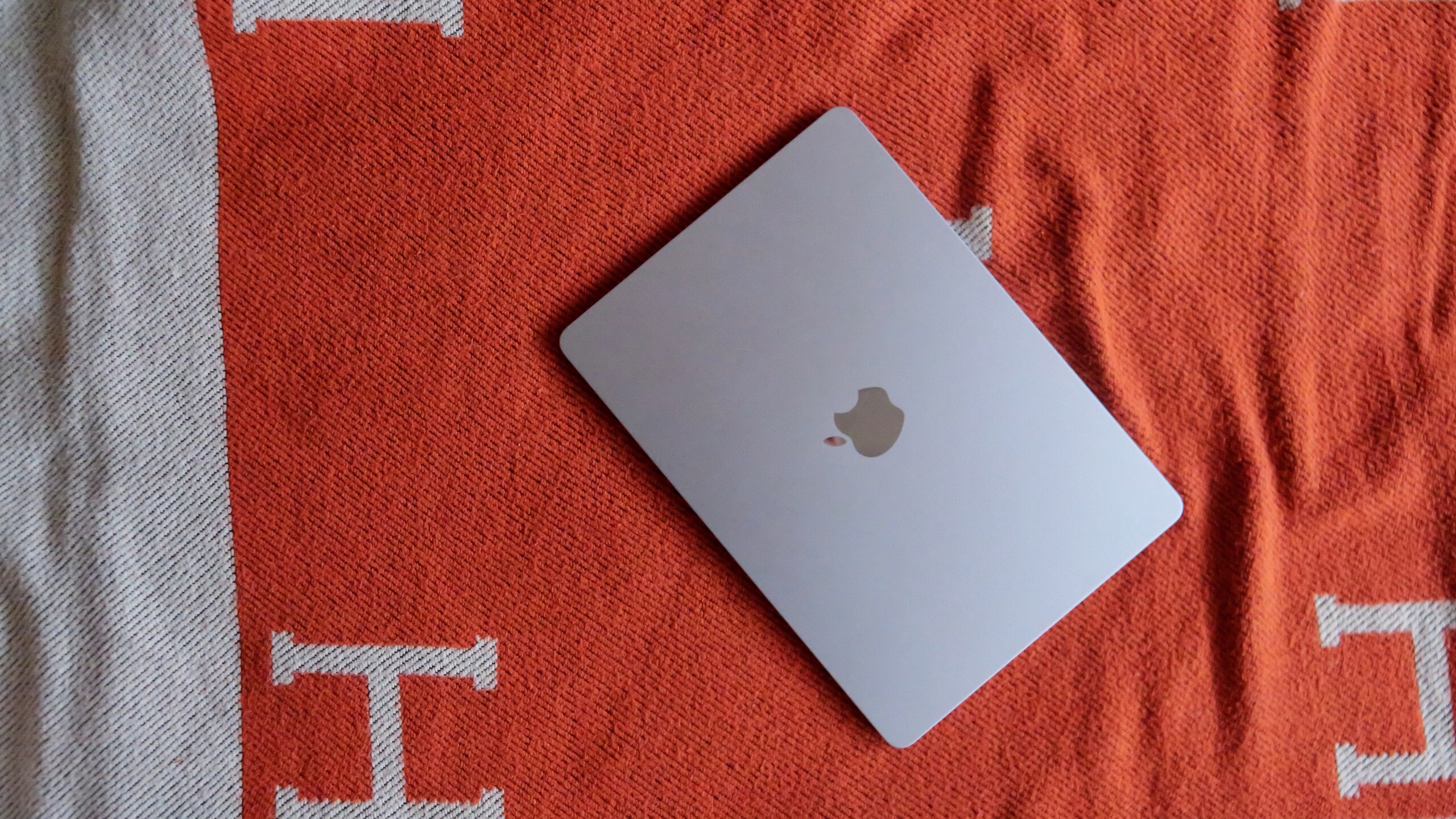
The unannounced model is expected to feature a 13.8-inch OLED display and could arrive in 2029. That would give Apple another option for buyers who want a more advanced display than the current MacBook Air, without stepping up to the higher-end MacBook Pro.
Omdia’s latest roadmap places the 13.8-inch MacBook in a new product category between the Air and Pro lines. The machine is expected to use a single-stack hybrid OLED panel, rather than the more advanced tandem OLED technology reportedly planned for future MacBook Pro models.
The display could also bring several features not currently found on Apple’s laptop lineup, including an LTPO+ backplane, integrated touch sensing and an under-panel camera. Omdia also expects the OLED panel to feature a colour filter integrated into the OLED encapsulation layer.
Advertisement
Interestingly, the roadmap doesn’t show an OLED MacBook Air. Instead, the 13.8-inch OLED model appears as an entirely separate product, while the MacBook Air is expected to continue using LCDs through to 2030.
Advertisement
Some evidence suggests Apple has at least explored a MacBook with this display size. A June report from ZDNet Korea claimed Apple had approached Samsung Display, LG Display and BOE for information about 13.8-inch OLED panels earlier this year. At the time, the assumption was that these panels could be intended for an OLED MacBook Air.
Omdia now appears to have a different view, suggesting the panel could instead be used for a new MacBook tier aimed at the mainstream market.
Advertisement
There’s still plenty of uncertainty here. Omdia’s roadmap is based on current market expectations, while Apple’s plans could change depending on OLED production capacity, component costs and its wider product strategy. The machine is also reportedly three years away, so it’s worth treating this one as a long-term possibility rather than a firm product plan.
Hewlett Packard Enterprise (HPE) has patched a critical vulnerability in the ArubaOS-CX network operating system that could lead to remote code execution.
Tracked as CVE-2026-73749, the security issue is a buffer overflow that allows unauthenticated remote attackers to send specially crafted packets to an affected daemon process, achieving code execution with elevated privileges.
“Multiple vulnerabilities exist in a daemon of ArubaOS-CX that may allow for improper processing of malformed input,” reads HPE’s bulletin.
“An unauthenticated remote attacker could exploit these vulnerabilities by sending specially crafted packets to the affected service.”
Advertisement
Affected release branches and fixes listed in the bulletin are:
10.18.0001 → upgrade to 10.18.1002+
10.17.1021 and earlier → 10.17.1030+
10.16.1051 and earlier → 10.16.1060+
10.13.1180 and earlier → 10.13.1190+
10.10.1180 and earlier → 10.10.1181+
HPE noted that the AOS-CX 10.10.1181 version has reached End of Maintenance (EOM) and only receives fixes for internally discovered, critical issues, a condition that also applies to CVE-2026-73749.
ArubaOS-CX is HPE Aruba Networking’s operating system for its enterprise-grade network switches, typically used by large businesses, government agencies, universities, healthcare organizations, data centers, and service providers.
HPE’s security bulletin also covers a set of 23 other security vulnerabilities, some with high severity ratings, between 8.1 and 8.8:
CVE-2026-73750: A low-privileged authenticated remote attacker can send malformed or truncated input to an AOS-CX management module, potentially causing denial of service or executing code with elevated privileges.
CVE-2026-73751: A low-privileged authenticated user can submit crafted input through the AOS-CX web-based management interface to execute arbitrary commands on the underlying operating system.
CVE-2026-73752: An unauthenticated attacker with adjacent-network access can exploit an AOS-CX API endpoint to write arbitrary files to the underlying operating system, potentially leading to remote code execution.
CVE-2026-73753: A low-privileged authenticated user can exploit affected AOS-CX command-line operations to execute arbitrary commands as a privileged user on the underlying operating system.
CVE-2026-73782: An unauthenticated attacker with adjacent-network access can exploit a format-string vulnerability in the AOS-CX command-line interface to execute arbitrary code as a privileged user on the underlying operating system.
CVE-2026-73781: An authenticated remote attacker can exploit a stored cross-site scripting vulnerability in the AOS-CX web-based management interface to execute arbitrary scripts in an administrator’s browser if the administrator interacts with the affected content.
CVE-2026-73780: An unauthenticated remote attacker can exploit missing CSRF protections in some certificate-authenticated AOS-CX sessions to submit arbitrary input to the web-based management interface by convincing an authenticated user to open a crafted URL.
CVE-2026-73779: An unauthenticated attacker with adjacent-network access can bypass authentication controls on AOS-CX switches, potentially exposing sensitive information, enabling unauthorized modifications, and disrupting services.
CVE-2026-73778: An unauthenticated remote attacker can use a predictable factory-default password to obtain full administrative control of an AOS-CX device that remains in its factory-default or post-ZTP state before an administrator configures credentials.
CVE-2026-73777: An unauthenticated remote attacker can exploit vulnerabilities in an AOS-CX API endpoint to bypass access controls and escalate privileges.
The vendor “strongly encourages” customers to upgrade to one of the fixed releases listed in the bulletin.
HPE mentions that, at the time of the bulletin’s publication, it was not aware of active exploitation or publicly available proof-of-concept exploits targeting the listed flaws.
Advertisement
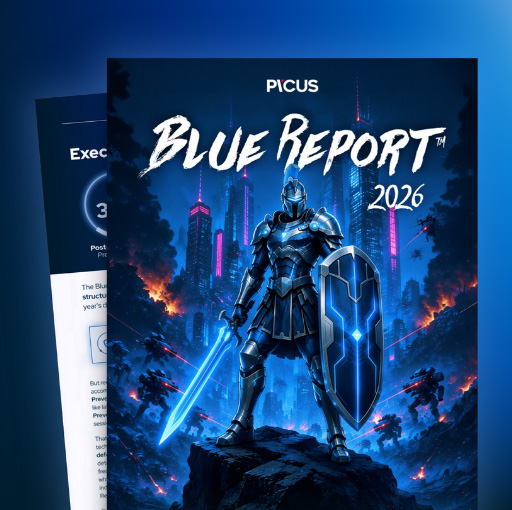
Overall prevention scores can hide what happens after initial access. Once attackers are using valid credentials, prevention drops sharply.
The Blue Report 2026 measures defenses technique by technique across 338 million simulations run in customer production environments.
Apple TV just confirmed that Silo is returning for a fourth season on July 9, 2027, and the teaser that dropped with the announcement gives us glimpses of what happens next. The final chapter will pick up after the dramatic events of Season 3, with Juliette Nichols preparing for a direct confrontation that could determine the fate of every silo.
Juliette taking the fight to Silo 1 in season 4 trailer
Season 3 expanded the story by revealing the truth about Silo 1, where survivors from the past oversee the remaining silos. The teaser shows Juliette returning with a new purpose after uncovering those secrets. Instead of simply trying to survive, she is now determined to challenge the people controlling the underground world.
Apple says the new season follows Juliette as she uncovers even more hidden truths while fighting to protect the future of the silos. The teaser also hints that the conflict between Silo 18 and Silo 1 will become the central focus.
Advertisement
According to showrunner Graham Yost, the season can be summed up in two words: “It’s war.” The story will also spend more time inside Silo 1, giving viewers a closer look at how it operates and the people pulling the strings.
Apple TV
The final season is set to answer long-running questions
Season 4 will expand its focus inside Silo 1, bringing side characters like Senator Rosalind Thurman, her daughter Anna, and aide Henry further into the spotlight. But the bigger payoff might be closure on characters who’ve been missing since the explosion that first sent everyone underground.
Apple TV
Journalist Helen Drew disappeared from the story after that moment, and Yost has confirmed her fate is exactly what season 4 plans to reveal, along with flashbacks connecting her time inside Silo 18 to the present. Whatever happened to trillionaire Per Stensen remains a separate open question the show hasn’t addressed yet, but we see a glimpse in the teaser.
The final season brings back Rebecca Ferguson, Common, Harriet Walter, Chinaza Uche, Avi Nash, Ashley Zukerman, Jessica Brown Findlay, and Steve Zahn. With a release date now locked in, Silo is heading toward its ending with a lot riding on it, and a full cast ready to bring its sprawling mystery to a close next year.
Less than three months after emerging from stealth, XDOF, a startup that collects real-world teleoperation data for training general-purpose robots, is in late-stage talks to raise a Series B at a valuation of about $1.2 billion valuation led by 8VC, several people with knowledge of the deal said.
XDOF was co-founded by UC Berkeley researchers Philipp Wu (CEO) and Fred Shentu (CTO) in 2024. TechCrunch reported on the startup’s $70 million Series A in June, with participation from Thrive Capital, Andreessen Horowitz, Lux, and Spark Capital. XDOF wasn’t planning to raise again so soon after that round. But the company’s rapid growth — with annualized revenue approaching $50 million — prompted VCs to approach it about a new round, the people said.
TechCrunch was unable to learn the total capital being raised or whether the valuation includes the new funding. The terms of the deal are not final and could still change.
XDOF and 8VC didn’t respond to our request for comment.
Advertisement
The startup aims to build the data pipelines, collection tools, and annotation systems that frontier AI labs and robotics companies can’t easily build themselves, essentially acting as an outsourced data-supply chain for the robotics industry.
As a PhD student, Wu was studying how robots learn from large datasets. One big impediment to his research was the lack of “large-scale data to work with,” he told TechCrunch in June.
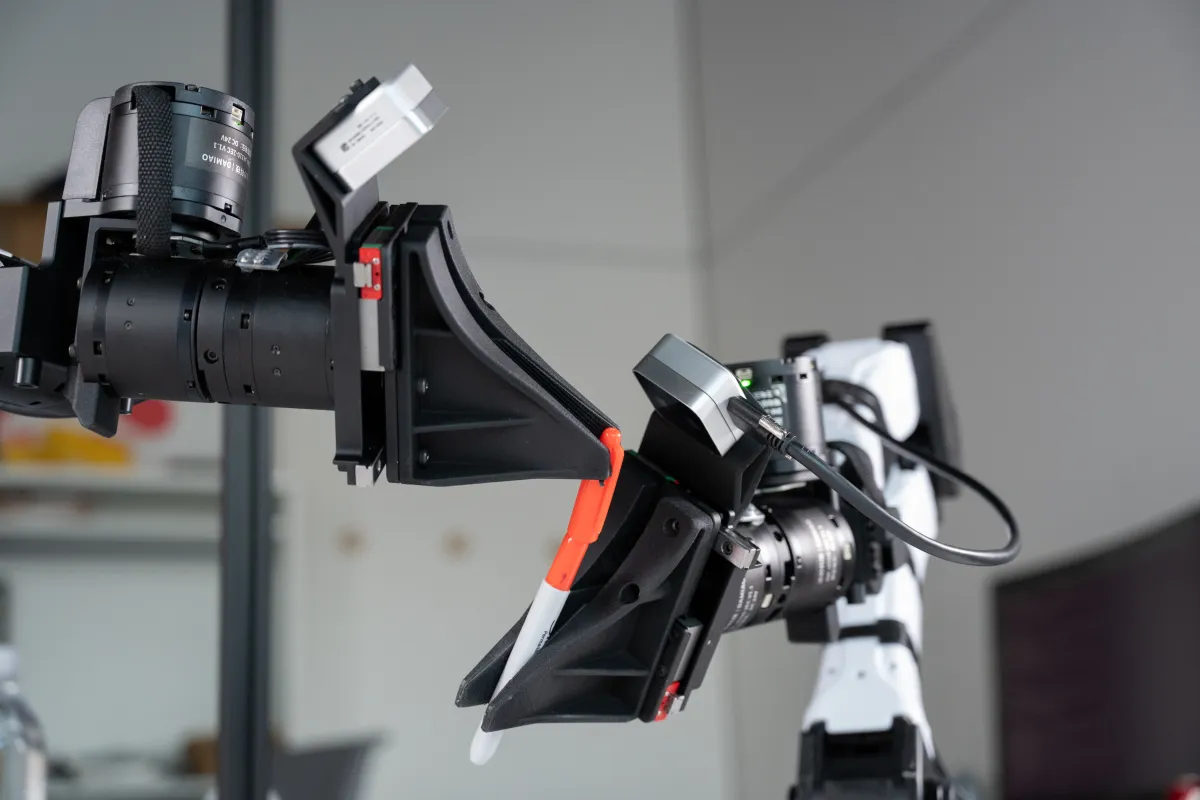
So he teamed up with Shentu on a project called GELLO, a low-cost teleoperation system that allows a human operator to control a robotic arm remotely in order to generate training data. Their work led to an influential paper in robotics.
That research formed the foundation for XDOF, which investors now describe as the Scale AI or Mercor for physical robotics, a reference to the data-labeling giants that helped fuel the AI boom. Unlike LLMs, which initially trained on the entirety of the internet, physical robots don’t have an equivalent real-world dataset to draw from, making data collection a critical bottleneck to building general-purpose machines.
Advertisement
XDOF is partnering with UC Berkeley’s AI Research lab to release what it believes is the largest collection of high-quality robot training data ever assembled, dubbed ABC.
To capture this data, XDOF combines remote robot teleoperation with human collectors who wear sensors to record everyday tasks like folding clothes and flattening boxes.
The startup plans to hire and train teams of data collectors worldwide, including teleoperators who steer robots remotely and egocentric operators who wear body sensors to capture movement data.
XDOF previously told TechCrunch that it is already working with 20 customers, including several frontier AI labs.
Advertisement
Other startups attempting to collect real-world data for robot training include Mecka AI, as well as human-data platforms expanding beyond LLMs, such as Scale AI and Micro1.
When you purchase through links in our articles, we may earn a small commission. This doesn’t affect our editorial independence.
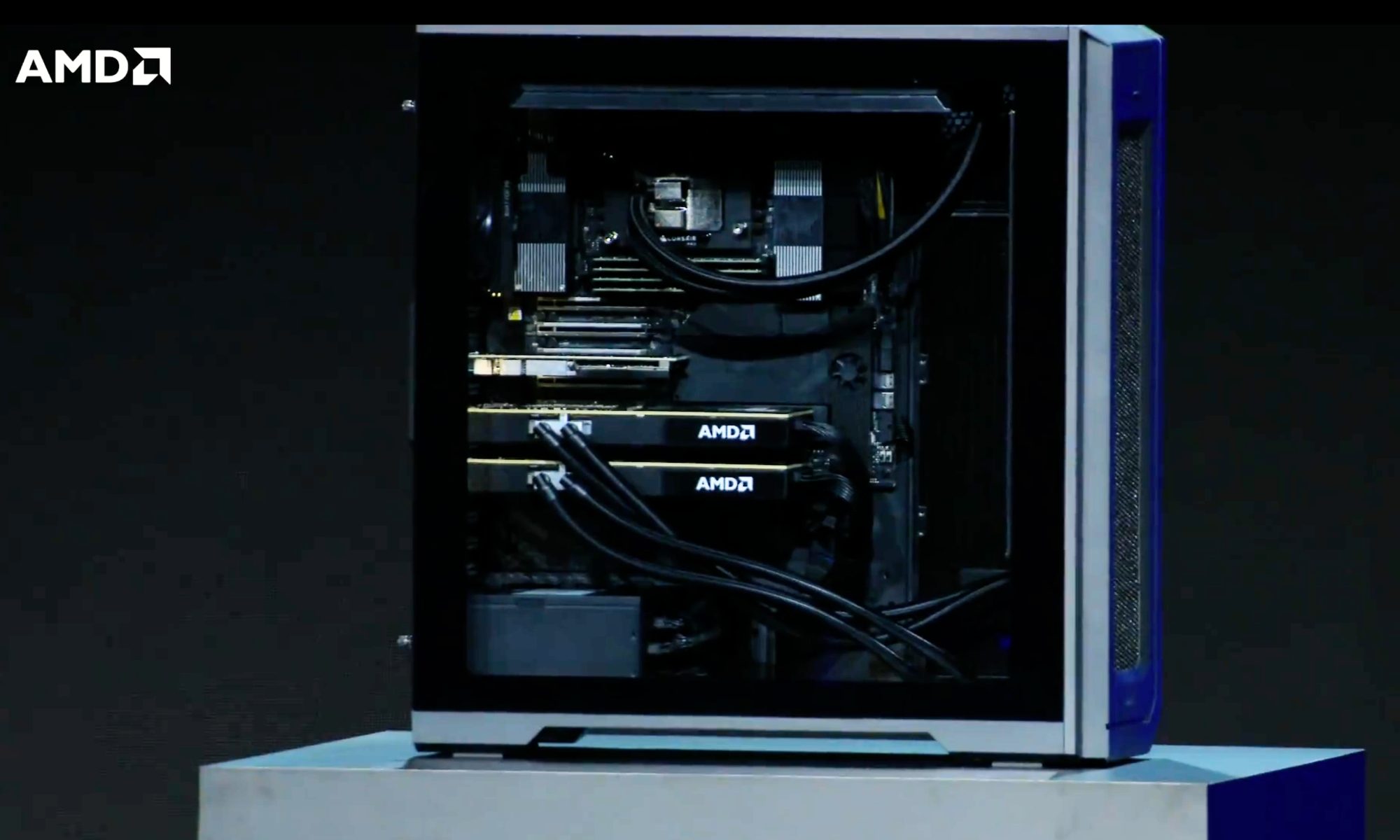
AMD just built a desktop that really has no business sitting on an actual desk. At IFA 2026, the company unveiled the Threadripper Halo Station.
As the name probably already suggests, it is a liquid-cooled machine that can run AI models with more than a trillion parameters without touching the cloud even once. If you don’t already know, those numbers are reserved for server shelves, not someone’s personal desk.
AMD / X
So what exactly is inside the Threadripper Halo Station?
The CPU alone is quite absurd on paper. It uses AMD’s Threadripper Pro 9995WX, built on Zen 5 architecture, with 96 processing cores and 192 threads. The maximum clock speed (with boost) can reach 5.4GHz, helping it tackle demanding tasks faster, and it also has a massive 384MB M3 cache for faster data processing.
Besides, 128 PCIe 5.0 lanes provide plenty of bandwidth for the rest of the hardware. To sustain all that performance, the machine needs a 350W TDP, which is significantly higher than a regular gaming PC.
Alongside it are two liquid-cooled Instinct MI350P accelerators, each with 128 CDNA 4 compute units built on TSMC’s N3 process. Each can draw up to 600 watts and comes with 144GB of HBM3E memory and up to 4TB/s of bandwidth, and the GPU memory is frankly ridiculous: 288GB across the two accelerators.
Advertisement
For context, 288GB is several times more GPU memory than you’ll typically find in higher-end gaming PCs or laptops. AMD says the platform will eventually support up to four accelerators, pushing that figure up to 576GB.
AMD / X
How does this compare to rival systems, and can you actually buy one?
All of that sits on top of 2TB of DDR5 system memory, which, yet again, shows how far beyond a typical PC this machine is. The combination of the CPU cores, GPU horsepower, and sheer memory capacity lets AMD claim this machine can load and run AI models north of a trillion parameters entirely on-device.
This is clearly built for a server room with proper power and cooling infrastructure, not a home office. AMD hasn’t announced pricing or a release date for the Halo Station yet, though. However, estimates about the component costs alone put the machine well past $100,000
I’d still consider this a showcase of sheer computing power in a cabin that looks like a high-end gaming PC, at least at IFA 2026.
Phishers find a new use for invisible Unicode tag characters
Fraudsters have found a new use for ASCII smuggling, typically used to hide malicious prompts intended for AI models, in an old-school attack method: email phishing.
Advertisement
Microsoft uncovered a massive phishing campaign using invisible Unicode tag characters that peaked at more than 2.37 million messages in late February, remained elevated during weekdays over the next three months, and gradually declined by mid-June.
“As AI-era attack methods become better understood, threat actors may adapt them for use in more traditional threats such as phishing and spam,” Redmond’s researchers Noam Kochavi and Sarah Wolstencroft said in a Thursday blog. “This case illustrates how techniques that emerge in AI security research can quickly cross over into established attack ecosystems, reinforcing the need for defenders to view emerging threats through a cross-domain lens.”
ASCII smuggling involves using invisible or non-rendering Unicode characters to hide content inside text that appears normal to humans, and this makes it a popular technique for indirect prompt injection attacks. In these, an attacker hides instructions for an AI assistant in invisible Unicode characters, and embeds those malicious prompts inside a webpage or document. A human can’t see them, but a model can, and it decodes them as text – and may then follow the attacker’s instructions to leak data or take unauthorized actions.
Instead of using ASCII smuggling for prompt injection, however, Microsoft’s security team spotted someone using invisible characters – inserting Unicode tag spaces between letters – to split financial-lure words in phishing emails in an apparent attempt to evade keyword matching and other content filters. So, for example, instead of writing “funding” in the email, the attackers wrote “fun⟨U+E0020⟩ding.”
Advertisement
“When we looked at a sampling of the flagged messages, the surprise was there were no smuggled instructions to an AI assistant,” Kochavi and Wolstencroft wrote. “Instead, the invisible tag characters were inserted inside common financial keywords, splitting them apart so that a literal signature or keyword match would fail.”
Redmond first detected the ASCII-smuggling signature in early February, flagging about 21,000 messages on February 8 before the number skyrocketed to more than 1.3 million the next day. Most of these emails came from about 150 finance-themed sender domains, and they continued for the next three months, dropping sharply after May 15 but continuing with occasional smaller spikes through at least mid-June.
The security researchers pointed out two notable characteristics, including sending massive numbers of emails on weekdays and then going silent over the weekend.
The campaign also had a long, gradual decline. “After an intense first phase, with weekday volumes of 1 to 2.37 million messages, peaking on February 26, the numbers stepped down slowly to roughly 80 percent less per weekday by late March.” It then dropped significantly after May 15, continuing with lower activity through mid-June.
Advertisement
According to Redmond, the most important thing defenders can do to protect against Unicode tag blocks in phishing emails is to verify that normalization and tokenization pipelines handle tag characters consistently.
“Any content that will be evaluated by keyword, signature, or regex logic should first have invisible and non-rendering Unicode code points stripped or folded, so that splicing them into a word no longer defeats the match,” the threat hunters wrote.
This same control can also help reduce the threat of ASCII-smuggling against AI assistants that ingest email content.
Microsoft also suggests scanning for behavioral indicators. “The observed activity had a distinctive shape: bulk volume from churning, finance-themed disposable domains, on a strict weekday-on / weekend-off schedule,” Kochavi and Wolstencroft warned. “A sudden spike of tag-block characters concentrated on finance-themed senders, switching on and off weekly, is a high-confidence campaign indicator.” ®
The Creative Soundblaster AE-X is a compact, well-built PCIe sound card that delivers a genuinely audible step up from on-board audio with a beefed-up DAC to allow for detailed audio and a clean overall presentation. It handles games and music equally well, while the on-board software provides extensive customisation. Against other soundcards, it drops multi-channel surround support entirely, so anyone running a discrete speaker setup rather than headphones won’t find much reason to make the switch.
Hi-fi grade DAC brings real detail retrieval
Drives even 600-ohm headphones with ease
Feature-rich Nexus software with AutoEQ support
Stereo only, no multi-channel surround
Overkill if you’re on more affordable hardware
Key Features
Advertisement
Review Price:
£169.99
ESS ES9039Q2M Sabre DAC inside:
Advertisement
The DAC inside this Creative sound card is a real step-up from previous options, providing more space, clarity and detail.
Single-slot design:
Advertisement
It’s also fully metal, and takes up only a single slot in a PC case so is nice and compact.
Nexus software:
Advertisement
The Soundblaster AE-X has some neat Windows software with lots of customisation potential.
Introduction
Creative has been a name synonymous with PC audio for a very long time, especially its venerable line of Soundblaster sound cards.
The new Soundblaster AE-X is the brand’s first in some time and is a mid-range add-in card for folks wanting to level up their PC audio game from standard on-board audio on your motherboard.
Advertisement
Specs-wise, we’ve got an ESS ES9039Q2M DAC chip inside, a Discrete Xamp Bi-Amplifier for headphones with up to 600 ohms of impedance, plus some far-reaching software and file format support to make this one of the more feature-rich PC sound cards you can buy.
At £169.99 / $179.99, it’s in the mid-range for what PC gamers might consider a viable option if you want to beef up your on-board audio without breaking the bank.
Advertisement
Design
Two-tone white and grey colour scheme
Solid metal finish
Compact and easy to place in a PC
The Soundblaster AE-X works as a PCIe add-in card that you can slot into a vacant PCIe slot in your PC underneath your graphics card. These kinds of devices specifically for audio aren’t as common as they used to be, but it’s pleasant to know they still exist.
The card itself is compact and sits at a single slot wide, so it won’t take up much space in your PC internally. Connectivity is handled by a small PCIe x1 slot, meaning this card will fit in virtually any vacant slot you have on your motherboard.
Advertisement
Image Credit (Trusted Reviews)
The chassis of the Soundblaster AE-X is entirely metal, lending itself to a quality finish. I’m a fan of the two-tone white and black colour scheme, which gives this sound card a more professional aesthetic than something traditionally designed for the gaming crowd.
Advertisement
As well as the card itself, the brand also includes a 3.5mm splitter cable and a convenient quick start guide.
Features
Beefed-up DAC against previous models
Solid port selection for stereo listening
Extensive PC software features
Inside, the Soundblaster AE-X features an ESS ES9039Q2M Sabre DAC, which is one of ESS’s newest DACs, and a big upgrade over the ESS E9016K2M Creative had employed on previous Soundblaster products.
This DAC allows the unit to support PCM playback up to 32-bit/384KHz. It also has native DSD playback, supporting up to DSD256 files, helping to reflect Creative’s positioning of this sound card as closer to dedicated hi-fi DACs rather than a conventional PC sound card.
Image Credit (Trusted Reviews)
It becomes clear Creative is positioning this sound card more towards headphone and stereo listening rather than any form of surround sound, as it has in the past. This is reflected in its selection of ports on the rear side, which totals a Toslink SPDIF input, a Coaxial SPDIF output, RCA line-out for left and right, a headphone out and a mic/line-in port.
Advertisement
Advertisement
The Soundblaster AE-X also has its own dedicated headphone amp inside, delivering up to 350mW at 32 ohms, while this unit is happy to drive headphones with up to 600 ohms of impedance. I know impedance isn’t the only thing that affects how easy a set of headphones is to drive, but it means this Creative unit can drive some seriously beefy cans without breaking a sweat.
Image Credit (Trusted Reviews)
The front of the card is home to something that resembles a USB 2.0 or HD Audio connector, but is instead a front panel audio hookup, so you can run your case’s front panel connector directly to the Creative’s DAC rather than the on-board audio. However, that only gives you access to the 3.5mm jack likely on the front of your PC, so you’re best using the rear ports.
Once installed in your PC, the Soundblaster AE-X works with the brand’s Nexus software that provides the opportunity for a wide array of tinkering. This includes a comprehensive multi-band EQ along with a good selection of presets, plus you can save your own, too. It also includes an AutoEQ that can be set with a range of specific headphone models to apply calibration curves to compensate for any anomalies in a set of cans’ frequency response.
Image Credit (Trusted Reviews)
In the software, you can also choose different sound modes – Direct Mode bypasses most DSP processing to provide the cleanest sound, while Acoustic Engine mode unlocks Creative’s DSP toolkit for this sound card, and Scout Mode is specifically designed for competitive games where you want the most precise audio possible.
Advertisement
Performance
Lower noise floor than on-board audio
Confident drive of hard-to-power headphones
Detailed presentation with good bass extension and solid mids
The real benefit of upgrading to the Soundblaster AE-X over on-board motherboard audio becomes apparent almost immediately. By moving to a proper card with a strong DAC with real hi-fi credentials, the big change is that you move to a lower noise floor.
This essentially means that it lessens any background hiss, plus you get improved dynamic range and audio becomes more detailed. In testing with a set of affordable FiiO SP3 BT speakers, the Soundblaster AE-X provided audio that felt even more spacious and detailed, while the DAC itself didn’t tend to colour the audio too much. It provides a neutral and well-balanced presentation.
Advertisement
Image Credit (Trusted Reviews)
Moving over to a set of hard-to-drive Drop + Sennheiser HD6XX headphones (deliberately chosen for their more neutral, reference-like profile), this Creative sound card afforded audio that provides a tight and controlled low-end when delving into my usual suite of rock testing tracks from Rush and Marillion. Plus, it played completely nicely with an SACD rip of Genesis’ Abacab in DSD64.
As for the mid-range, moving to James Taylor’s September Grass, the Soundblaster AE-X offers some wonderfully detailed results, accentuating elements such as the distant drum shuffle and the intimate combo of Taylor’s voice and lovely fingerpicked guitar.
Advertisement
Image Credit (Trusted Reviews)
The top-end presented by this card isn’t so much particularly harsh, but rather provides more meat on the bone and detail. The competing percussion intro on Steely Dan’s Do It Again provides a formidable test, which this Creative card handles with panache, offering a rich and wide soundscape with plenty of detail retrieval, and without verging on harsh.
This also lends well to the Soundblaster AE-X’s Scout Mode, which is ideal for FPS gaming. When paired with the right set of headphones or a gaming headset, details such as footsteps and enemy movement are much wider and clearer than with on-board audio, with greater precision. While it isn’t going to be a substitute for using a lower-grade headset, it can certainly help you position enemies in a more optimal manner.
Image Credit (Trusted Reviews)
That said, the Scout Mode can tend to accentuate those details a little too much, skewing the overall sound signature somewhat. The default tuning of this Creative soundcard still helps for excellent directional accuracy.
Advertisement
Advertisement
Should you buy it?
You want more from your headphones
The AE-X’s discrete amp and 600-ohm drive capability get genuinely better results out of demanding headphones than on-board audio can manage, with a noticeably lower noise floor and more detailed audio to match.
Advertisement
You run a surround speaker setup
The card is strictly stereo with no 5.1/7.1 or Dolby/DTS support, so anyone relying on multi-channel speakers won’t see any benefit from making the switch to the Soundblaster AE-X.
Advertisement
Final Thoughts
The Creative Soundblaster AE-X is a compact, well-built PCIe sound card that delivers a genuinely audible step up from on-board audio with a beefed-up DAC to allow for detailed audio and a clean overall presentation.
It handles games and music equally well, while the on-board software provides extensive customisation. Against other soundcards, it drops multi-channel surround support entirely, so anyone running a discrete speaker setup rather than headphones won’t find much reason to make the switch.
Advertisement
How We Test
We test every DAC we review thoroughly over an extended period of time. We use industry standard tests to compare features properly. We’ll always tell you what we find.
We never, ever, accept money to review a product.
Find out more about how we test in our ethics policy.
Tested for several days
Tested with real world use
FAQs
What DAC does the Creative Soundblaster AE-X use?
The Creative Soundblaster AE-X uses the ESS ES9039Q2M Sabre DAC, which is a real step-up from previous Soundblaster cards.
Advertisement
Test Data
Full Specs
Creative Soundblaster AE-X Review
Manufacturer
Creative
Size (Dimensions)
126 x 179 x 18 INCHES
Weight
263 G
DAC
ESS ES9039Q2M Sabre DAC
Release Date
2026
First Reviewed Date
21/08/2026
Resolution
x
Audio Formats
Up to 32-bit / 384 kHz, with up to DSD256 support
Outputs
Toslink SPDIF input, a Coaxial SPDIF output, RCA line-out for left and right, a headphone out and a mic/line-in port.






























































You must be logged in to post a comment Login