Connect with us
DAPA Banner
DAPA Coin
DAPA
COIN PAYMENT ASSET
PRIVACY · BLOCKDAG · HOMOMORPHIC ENCRYPTION · RUST
ElGamal Encrypted MINE DAPA
🚫 GENESIS SOLD OUT
DAPAPAY COMING

Tech

The world’s largest privately owned laser just turned on

Published

on

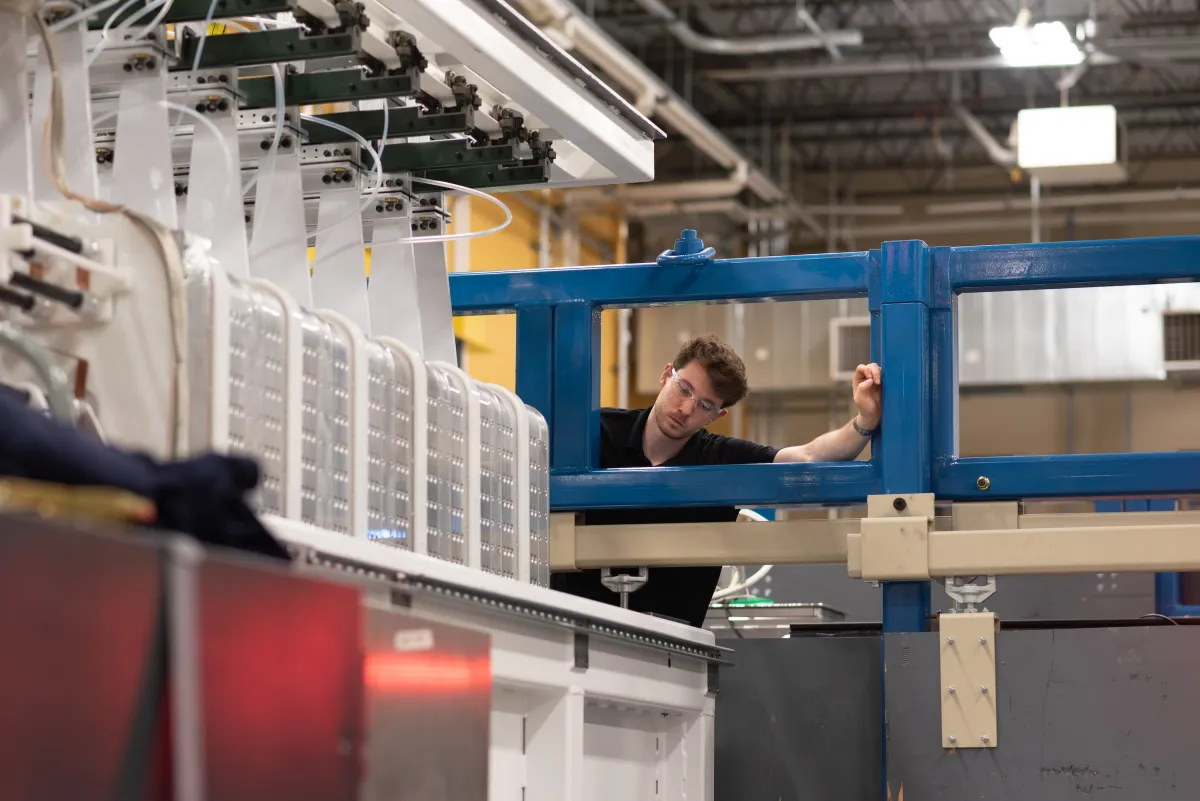
Fusion startup Xcimer Energy on Wednesday flipped the switch on its Phoenix laser system, which the company says is the largest privately owned example in the world.

Xcimer’s approach to fusion power is modeled after the National Ignition Facility (NIF), which proved in December 2022 that a controlled fusion reaction could release more power than required to ignite it.

The NIF trained 192 laser beams on a fuel target smaller than a pencil eraser. The energy from the lasers hit the gold target. As the lasers obliterate the gold target, their energy is converted into X-rays, which are focused on the fuel pellet inside, compressing it until atoms in the fuel fuse and release energy.

The company is betting that more powerful, less complex lasers will help turn NIF’s concept for fusion power into something more profitable.

Advertisement

Xcimer’s plans for a fusion power plant call for two lasers capable of firing in microsecond-long pulses. Light from those pulses will be fed through a compression system, of sorts, which will delivers the lasers’ energy to the fuel target in nanoseconds. The quicker the fuel is compressed, the more likely it is to generate usable fusion reactions.

Phoenix is a step toward an eventual power plant. The system uses excimer amplification, similar to those used in semiconductor manufacturing but significantly more powerful. At full strength, the krypton-fluoride laser generates over 1 kilojoule of energy, Xcimer told TechCrunch, and its core is 38 meters long. 

While that may be the most powerful privately owned laser, it’s still a fraction of what the company says it will need for a commercial power plant, which could exceed 12 megajoules.

Xcimer hopes to complete a prototype in 2028 before working on a larger system that it hopes will produce at least as much power as it consumes. Sometime in the mid-2030s, it is planning to build its first commercial scale power plant. 

Advertisement

When you purchase through links in our articles, we may earn a small commission. This doesn’t affect our editorial independence.

Source link

Continue Reading
Click to comment

You must be logged in to post a comment Login

Leave a Reply

Tech

New Animated Movies on 4K Blu-ray: 5 Must See Releases Reviewed

Published

on

Animation in 4K is its own unique experience. The format’s exceptional clarity and expanded color palette can elevate the beauty and wonder of stories too out-there for live action. Ultra HD can occasionally expose the limitations of the medium, including choppy legacy line art, but it ultimately remains a definitive showcase for the art form. By unlocking explosive HDR highlights and a wider color gamut, 4K discs can breathe new life into both classic hand-drawn animation and state-of-the-art digital work, freeing vintage hues from past technical constraints. Today’s filmmakers, meanwhile, exploit these advances with an impact that was once impossible to achieve at home.

Five recent disc releases remind us exactly what the format can do. All feature native 4K presentations. Four include Dolby Vision, while one relies entirely on standard dynamic range to make its case.

The Super Mario Galaxy Movie (Universal Pictures Home Entertainment)

super-mario-galaxy-collectors-edition-4k-blu-ray

Video game adaptations have come a long way from their misguided baby steps, as evidenced by both live-action entries such as A Minecraft Movie and Illumination’s animated take on the Mario universe. This even glossier follow-up to 2023’s The Super Mario Bros. Movie expands an already impressive core cast of Chris Pratt, Anya Taylor-Joy, and Jack Black with Brie Larson, Benny Safdie, and Glen Powell for a spectacular rescue mission that takes the gang across the cosmos.

Visually, though, Galaxy pushes the envelope by shifting the action from the sunny Mushroom Kingdom to the dark reaches of outer space, requiring a completely different lighting approach. Glowing Lumas and floating Star Bits cast vibrant colors across the characters and environments, while specular highlights on the slick metal spaceships create sharp reflections that give the animation an advanced sheen. Individual threads and weave patterns are visible on costumes, the backgrounds boast a massive jump in rendering complexity, and motion blur remains tightly controlled, like a next-generation game engine running at maximum capacity.

The Dolby Atmos mix uses discrete steering and aggressive height-channel placement to pan spaceships and debris effortlessly around the room. This hyperkinetic soundfield is anchored by authoritative, subwoofer-testing low end and a massive orchestral score that spreads wide into the surrounds, all while keeping dialogue pristine. There are a few basic extras, but skip them and just rewatch the movie in awe.

Advertisement

Movie Details

  • STUDIO: Universal Pictures Home Entertainment
  • FORMAT: Ultra HD 4K Blu-ray (June 16, 2026)
  • THEATRICAL RELEASE YEAR: 2026
  • ASPECT RATIO: 2.39:1
  • HDR FORMATS: Dolby Vision, HDR10
  • AUDIO FORMAT: Dolby Atmos with TrueHD 7.1 core
  • LENGTH: 98 mins.
  • MPAA RATING: PG
  • DIRECTORS: Aaron Horvath, Michael Jelenic
  • STARRING: Chris Pratt, Charlie Day, Anya Taylor-Joy, Jack Black, Donald Glover, Keegan-Michael Key

Our Ratings

★★★★★★★★★★ Movie

★★★★★★★★★★ Picture

★★★★★★★★★★ Sound

★★★★★★★★★★ Extras

Where to buy:


Alice in Wonderland (Disney/Sony)

alice-wonderland-4k-blu-ray

Shifting from the newest to the oldest movie in this batch, Walt Disney’s 1951 adaptation combines elements from both Lewis Carroll’s Alice’s Adventures in Wonderland and its sequel, Through the Looking-Glass, and What Alice Found There. While British purists complained that the sacred texts had been dumbed down, prudish Americans, surprisingly, did not object to the druggish undertones inherent in the eccentric characters and wild scenarios. In fact, they largely ignored Alice. The movie sat in the vault until the psychedelic era brought renewed interest, leading to a full theatrical re-release in 1974. It has been beloved ever since.

Timed to the film’s 75th anniversary, Walt Disney Film Restoration spent nine months restoring Alice, beginning with scans of the original nitrate successive-exposure negatives and preserving the proper 1.37:1 aspect ratio. This work was followed by extensive cleanup to address dust, warping, and other signs of age, with archival production artwork used as a reference to optimize color and luminance in every shot. Walt & Co.’s cheerier tone is reflected in an explosively vibrant palette, with pinks and blues that pop off the screen so intensely that viewers may begin to question what is real.

Advertisement
Advertisement. Scroll to continue reading.

Alongside a lossy two-channel mono track, the disc includes a DTS-HD Master Audio 5.1 remix that feels modern while remaining faithful to the original, with particularly strong fidelity in the songs. All of the extras are housed on the bundled HD Blu-ray, including an excellent picture-in-picture mode and a deep selection of vintage and retrospective programs, along with behind-the-scenes material.

Movie Details

  • STUDIO: Disney/Sony
  • FORMAT: Ultra HD 4K Blu-ray (May 5, 2026)
  • THEATRICAL RELEASE YEAR: 1951
  • ASPECT RATIO: 1.37:1
  • HDR FORMATS: Dolby Vision, HDR10
  • AUDIO FORMAT: DTS-HD Master Audio 5.1
  • LENGTH: 75 mins.
  • MPAA RATING: G
  • DIRECTORS: Clyde Geronimi, Wilfred Jackson, Hamilton Luske
  • STARRING: Kathryn Beaumont, Ed Wynn, Richard Haydn, Sterling Holloway, Jerry Colonna, Verna Felton

Our Ratings

★★★★★★★★★★ Movie

★★★★★★★★★★ Picture

★★★★★★★★★★ Sound

Advertisement

★★★★★★★★★★ Extras

Where to buy:


Fire and Ice (Blue Underground/MVD)

fire-ice-animated-4k-blu-ray-movie

Two titans joined forces for a once-in-a-lifetime collaboration when the singular fantasy artist Frank Frazetta teamed with celebrated animator Ralph Bakshi to create the original screen adventure, Fire and Ice. In a savage prehistoric world, the buff warrior Larn and mysterious masked avenger Darkwolf embark on a perilous quest to rescue Princess Teegra from the evil ice lord Nekron, whose advancing glaciers threaten to consume the world.

To capture the look of a Frazetta painting brought to life while maintaining realistic anatomy, Bakshi relied on rotoscoping, a process pioneered by Max Fleischer decades earlier. Live-action performers were filmed, then each frame was painstakingly traced and painted. The backgrounds, meanwhile, were largely created by a young Thomas Kinkade, whose name was misspelled in the credits. Long before becoming “The Painter of Light” and the head of a multimillion-dollar art empire, Kinkade experimented here with a luministic, chiaroscuro style that draws the eye through small bursts of light and color. His brushstrokes and the texture of the line art are fully preserved in the 4K, 16-bit scan, while the occasional static foreground “fog” adds depth to the main action.

The new Atmos reconfiguration is remarkably strong, with fluid placement of effects across the soundfield: arrows zip past pterodactyls, swords land with heavy clangs, and the mix builds on Blue Underground’s previous 6.1 and 7.1 remixes. The original stereo track is also included, along with 5.1 audio, all in DTS-HD Master Audio. William Kraft’s score adds a visceral, primal pulse and is included here on a 70-minute, 21-track CD.

New featurettes spotlight Frazetta’s granddaughter, Sara Frazetta, and superfan filmmaker Robert Rodriguez, alongside a strong collection of legacy content that includes a Bakshi audio commentary. The SteelBook packaging is especially elegant: a clear plastic slip carries the title and logos on the front, with the usual disc information on the back. Remove it, and Frank Frazetta’s poster art is left unobstructed, with animation art displayed on the reverse.

Advertisement

Movie Details

  • STUDIO: Blue Underground/MVD
  • FORMAT: Ultra HD 4K Blu-ray (June 30, 2026)
  • THEATRICAL RELEASE YEAR: 1983
  • ASPECT RATIO: 1.85:1
  • HDR FORMATS: Dolby Vision, HDR10
  • AUDIO FORMAT: Dolby Atmos with TrueHD 7.1 core
  • LENGTH: 82 mins.
  • MPAA RATING: PG
  • DIRECTOR: Ralph Bakshi
  • STARRING: Randy Norton, Cynthia Leake, Steve Sandor, Sean Hannon, Leo Gordon, William Ostrander

Our Ratings

★★★★★★★★★★ Movie

★★★★★★★★★★ Picture

★★★★★★★★★★ Sound

Advertisement. Scroll to continue reading.

★★★★★★★★★★ Extras

Advertisement

Where to buy:


Perfect Blue (GKIDS/Shout! Factory/Radial Entertainment)

perfect-blue-steelbook-4k-blu-ray

Perfect Blue is smart and sophisticated enough to have worked as a live-action psychological thriller, and in fact it almost was before first-time director Satoshi Kon turned it into one of the most influential anime films ever made. The story follows young Mima’s transition from pop idol to aspiring television actress, a journey filled with unexpected hurdles that soon leads her down a dark path where she begins to question her own sanity. This unrated cut can get rough, with murder, sexual violence, and a stalker all driving the story toward a major twist that I did not see coming.

Although it was originally greenlit as a modest direct-to-video release, the production quality far exceeds the assignment. The hand-drawn, hand-painted artwork delivers nuanced characters and richly detailed backgrounds, particularly in its Tokyo cityscapes. Kon’s masterful camerawork, lingering film grain, and occasional dirt combine to create a genuinely cinematic feel, capturing a twilight moment just before the industry shifted more decisively toward digital cel animation.

The 5.1 track is unlike any other mix in this lineup: punchy, aggressive, and full of discrete left and right cues, with hard surround activity that makes unapologetic use of the rear channels. Dialogue remains consistently crisp, although I cannot claim to understand more than a handful of Japanese phrases.

A more affordable, though still premium, alternative to last year’s collector’s edition, Shout!’s SteelBook arrives across three discs, with much of the bonus material presented in standard definition. The highlight is a series of Satoshi Kon lectures totaling roughly two hours, with English subtitles, in which he digs deeply into possible interpretations of the labyrinthine narrative, along with the film’s themes and techniques.

Movie Details

  • STUDIO: GKIDS/Shout! Factory/Radial Entertainment
  • FORMAT: Ultra HD 4K Blu-ray (June 16, 2026)
  • THEATRICAL RELEASE YEAR: 1997
  • ASPECT RATIO: 1.85:1
  • HDR FORMATS: n/a (SDR)
  • AUDIO FORMAT: DTS-HD Master Audio 5.1 (Japanese and English options)
  • LENGTH: 82 mins.
  • MPAA RATING: NR
  • DIRECTOR: Satoshi Kon
  • STARRING: Junko Iwao, Rika Matsumoto, Shinpachi Tsuji, Masaaki Ôkura, Yôsuke Akimoto, Yoku Shioya

Our Ratings

★★★★★★★★★★ Movie

★★★★★★★★★★ Picture

Advertisement

★★★★★★★★★★ Sound

★★★★★★★★★★ Extras

Where to buy:


Hoppers (Disney/Sony)

hoppers-4k-blu-ray

One of Pixar’s better efforts of late, Hoppers takes audiences into the animal kingdom in a whole new way. Animal-loving college student Mabel uses hush-hush technology to “hop” her consciousness into a lifelike robotic beaver body and live among the creatures of the forest. They can understand her, and she can understand them, though neither side quite knows what to make of the other. But when her passion to protect wildlife at all costs gets the better of her, she is in for a hard lesson about the real laws of nature. It is funny, there is ample cuteness afoot, and the environmental message lands without becoming obnoxious as Mabel learns that complicated problems do not always have simple answers. You know, the usual Pixar existential crisis, but with beavers.

Remember when rendering fur and feathers was a big deal? Hoppers makes it look easy, with an exceptionally clear, detailed image that takes a step beyond realism through a playful visual style that pleases the eye without straining for ultimate photorealism. Woodland colors are lush and lovely, as only Dolby Vision can deliver. Note that the 4K disc is a SteelBook-only release.

There is plenty of 360-degree and overhead audio action from the abundant creatures of air and land, along with no shortage of manmade mayhem, all underscored by serious bass kick. The hopper equipment itself features thoughtful sound design that conveys the transfer into the synthetic body, then reinforces it with subtle mechanical accents. The supplements are wholly adequate, covering the creative team’s character research, a brisk making-of featurette, a study of a key scene, plus bloopers and deleted scenes.

Advertisement
Advertisement. Scroll to continue reading.

Movie Details

  • STUDIO: Disney/Sony
  • FORMAT: Ultra HD 4K Blu-ray (June 2, 2026)
  • THEATRICAL RELEASE YEAR: 2026
  • ASPECT RATIO: 1.85:1
  • HDR FORMATS: Dolby Vision, HDR10
  • AUDIO FORMAT: Dolby Atmos with TrueHD 7.1 core
  • LENGTH: 105 mins.
  • MPAA RATING: PG
  • DIRECTOR: Daniel Chong
  • STARRING: Piper Curda, Bobby Moynihan, Jon Hamm, Kathy Najimy, Dave Franco, Eduardo Franco

Our Ratings

★★★★★★★★★★ Movie

★★★★★★★★★★ Picture

★★★★★★★★★★ Sound

★★★★★★★★★★ Extras

Advertisement

Where to buy:

Source link

Continue Reading

Tech

In 2026, how might you forge a career as a bioprocessing technician?

Published

on

Amgen’s Rachael Harte and Barakat Raji explore the routes towards a career in bioprocessing and how they found themselves in their current roles.

There is no one way to find yourself on the route towards a meaningful career that gives you personal and professional joy, and it is rarely a linear path. For many, it takes time and persistence to uncover the aspects of a role that are most appealing, but also to investigate avenues that perhaps you had been aware of, but had not fully considered. 

This is certainly true for Barakat Raji, a bioprocess technician at Amgen, who explained that initially, as part of her undergraduate degree, she studied subjects outside of where she would eventually end up, as a means of pushing herself and exploring what else was possible. 

She told SiliconRepublic.com, “In college, I did an undergrad in biomedical science and then I did a master’s in microbiology, which has nothing to do with production at all, but I wanted to kind of go out of my comfort zone and it worked out well.”

Advertisement

Upon completing her master’s in microbiology, Raji was intrigued about the potential for a career in the manufacturing space; however, it was not an area that she had extensive knowledge of, so she took the initiative to carry out her own research. 

She said, “I wanted to get to know a little more about the manufacturing world. When I did see the job on LinkedIn, I had a little look. It did pique my interest a little bit and I went in, and that is why I got into the industry.”

Of what it takes to day-to-day, she finds that the requirements change, depending on what is needed. She explained that she may need to come in and complete a handover, be involved in the filling element of manufacturing at Amgen, or prepare for filling.

Raji said, “It’s a lot of computer work as well, and if I can do it, anyone can.”

Advertisement

Who is it for?

Of who might best be suited to a role in manufacturing, Rachael Harte, who started out in community pharmacy and who was recently promoted to a senior associate in manufacturing position at Amgen, noted that the role doesn’t necessarily demand an all-inclusive science background from the get-go. She herself continued her studies in pharmaceutical business operations upon joining the operation. 

She said, “The type of person that this role is suited [to] is somebody who is curious about the biopharmaceutical industry, someone who is ambitious. A science background isn’t essential – somebody who enjoys teamwork and collaboration.”

In terms of what people should expect during the early days of their role at Amgen, Harte urged professionals to take advantage of the company’s robust, welcoming and open ecosystem. 

Advertisement

“The on-the-job training is excellent in Amgen. You have a lot of support from both your peers and management. There’s people with 30 years’ experience here. The expertise and knowledge that they’re willing to pass down to you with over 30 years’ experience, you wouldn’t get it anywhere else.”

Don’t miss out on the knowledge you need to succeed. Sign up for the Daily Brief, Silicon Republic’s digest of need-to-know sci-tech news.

Source link

Advertisement
Continue Reading

Tech

I review tech for a living, and these are the 7 essential tech buys I’d recommend for your summer travels

Published

on

We’re in the midst of (a very hot) summer, and I’m sure many of you out there are raring to go on your travels this season. But if you’re about to jet off on your vacation, then it’s best to be as prepared as possible. And you know what you need to make your travels as seamless and enjoyable as possible? Some top-tier tech.

I’m a Senior Reviews Writer here at TechRadar, and have tested hundreds of gadgets over the years, from premium noise-cancelling headphones through to power banks and misting fans. So, I’ve got the lowdown on all the travel tech essentials you need to make this summer one to remember — for all the right reasons, of course.

Source link

Continue Reading

Tech

FTC Sues Transgender Health Nonprofit One Month After A Federal Court Called Its Investigation An Unconstitutional First Amendment Violation

Published

on

from the the-ftc-hates-trans-rights dept

Last week the FTC decided to file an obviously censorial, legally baseless lawsuit against an educational non-profit in an attempt to punish the organization for its speech in a manner that is clearly way outside the bounds of the FTC’s authority. The case serves no purpose other than to punish an organization for its speech… and we know that because a court just told the FTC that last month.

Some of us still remember the executive order President Trump signed on the first day of his second term supposedly “restoring freedom of speech and ending federal censorship.” In theory, that EO said that no one working for the federal government was allowed to ever engage in or facilitate “any conduct that would unconstitutionally abridge the freedom of speech” of Americans. Of course, we’ve seen many of Trump’s closest allies do exactly that throughout this administration. From FCC Chair Brendan Carr (temporarily) shutting down Jimmy Kimmel to former Attorney General Pam Bondi getting Meta & Apple to remove groups and apps she didn’t like, this administration is the most censorial in history.

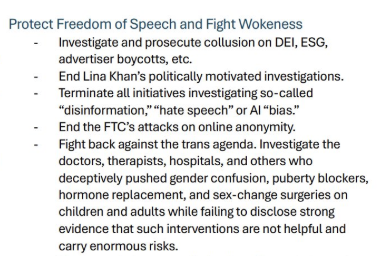
And then there’s FTC Chair Andrew Ferguson. When begging Donald Trump for the job he sent a one-pager in which he promised to end what he called Lina Khan’s “politically motivated” lawsuits, but at the very same time promised his own politically motivated lawsuits: in particular attacking those who provided support and resources for transgender individuals. Hilariously, he put this promise under the heading of “protecting freedom of speech and fighting wokeness.”

Ferguson has already received a few judicial smackdowns for infringing on the First Amendment rights of organizations. Last year, there was one in the case involving Media Matters. And then last month, there was a case involving WPATH, the World Professional Association for Transgender Health. WPATH is a non-profit that has been an important player in helping medical professionals understand transgender health and how to help transgender patients.

But Ferguson is apparently among those transphobes who seem absolutely obsessed about what genitalia other people have (which, I tend to believe is no one’s business but themselves, their consensual sexual partners, and their healthcare providers).

Advertisement

Anyway, Ferguson sent civil investigatory demands (CIDs, the FTC equivalent of a subpoena) to WPATH in January of this year. WPATH, rightly, went to court over this and won. Judge James Boasberg blasted the FTC for violating WPATH’s First Amendment rights with these bogus demands. Indeed, he pointed to the very recent Supreme Court ruling in First Choice Women’s Resource Centers, which our own Cathy Gellis pointed out was a strong ruling that would protect free speech in other cases. And Boasberg proved her right a week later:

WPATH has demonstrated the CID’s chilling effect on its protected speech. Its declarations describe an undercurrent of fear among staff and members following the CID: fear that “statements . . . will be misrepresented and distorted . . . if WPATH is forced to disclose internal discussions and information to the FTC,” fear that specific members will become targets, and fear that academic professionals will not openly discuss their ideas given the possibility of turnover. See ECF No. 3-6 (Scott Leibowitz Declaration), ¶¶ 38, 41; see also Radix Decl., ¶¶ 18–19 (detailing longstanding importance of confidentiality in member communications). That fear is not extrapolation to some future action: the CID demands “all Documents reflecting or constituting Communications with other organizations, institutions, or individuals regarding the development and publication of SOC 8,” and all documents “including tests, reports, studies, scientific literature, and written opinions” that WPATH relied upon to assert that pediatric-gender-dysphoria treatment is safe and effective. See CID at ECF pp. 5–6. Those two items alone encompass a vast swath of academic or research discussion in which WPATH engages. Where an agency “demands” a nonprofit’s “private member” information, it “encourage[s] groups and individuals to cease or modify protected First Amendment [activity] the government disfavors.” First Choice Women’s Res. Ctrs., Inc. v. Davenport, 608 U.S. ___, 2026 WL 1153029, at *8 (2026). The threat is all the greater when the agency seeks the substance of member communications and, in so doing, predictably stifles future speech. What is more, the CID seeks WPATH’s future communications, making the chilling effect readily discernible. See CID at ECF p. 4. WPATH is likely to succeed on this element.

The ruling is chock full of evidence that the FTC has no legitimate reason to go on this fishing expedition. And yet it has.

And, of course, this FTC doesn’t actually give a shit. It just wants to punish any pro-transgender speech. So a month after Boasberg called out how the FTC’s investigation of WPATH is obviously a violation of the First Amendment… Ferguson’s FTC decided to sue WPATH in a totally different court, this time in Fort Worth, Texas, which is where MAGA often files, knowing it’s likely to get a Trump-friendly judge who will ignore the First Amendment issues and perhaps side with the administration in support of general MAGA transphobia.

The fundamental argument is that WPATH is being unfair and deceptive to “consumers” (in this case, doctors). The evidence is that… um… [checks notes]… a number of doctors say that WPATH’s published “standards of care” [SOC] for transgender patients is useful. I only wish I were joking:

Advertisement

Medical professionals have also been duped. One clinician responded to the RFI by stating that “[t]he WPATH standards of care does an excellent job providing recommendations and guidelines for practices that are evidence based and expert reviewed.” Another said, “[a]s a mental health professional . . . affirming and coordinated healthcare, informed by recognized standards of care (including WPATH), provides young people and their families with stability, safety.”

OMG. Medical experts suggesting medical treatments that other doctors say is really helpful. Can’t have that! Make a federal case about it!

The FTC makes a big deal of SOC-8 (the updated standard of care doc WPATH released in 2022) as if it’s some horrible evil document. But you can read the thing yourself and realize that the FTC is lying to you. SOC-8 is quite clear that it does not advocate for specific treatment, but rather that doctors and patients determine what will be best overall for transgender patients. And, contrary to the way that transphobes characterize it, it does not push people to gender-reassignment surgery, but rather encourages doctors to make sure that patients understand their options and are mature enough to make a full decision themselves, rather than being pressured into anything.

In other words, it’s what you’d expect from a document put together over many years using a cross section of actual medical experts.

Even looking past the FTC filing what is clearly a censorial case because of their own weird gender hangups, and the fact that this is clearly a vexatious, censorial attack on WPATH’s free speech rights (as already established by one federal court), there’s another reason this case should be dead on arrival.

Advertisement

The FTC only has the authority to regulate commercial activity. And WPATH is a non-profit that doesn’t engage in commercial activity. TechFreedom’s Berin Szoka has a good thread on how this case should get thrown out before we even have to get to the First Amendment stuff or the merits.

FTC’s suit against WPATH will be dismissed before a court even reaches the obvious First Amendment Qs because the FTC Act applies only to “commerce” and thus applies to non-profits only when they engage in “commerce,” which WPATH does not. 🧵

Berin Szóka (@berinszoka.bsky.social) 2026-06-17T17:53:37.136Z

Still, as with all of these kinds of cases, the process is the punishment. Ferguson doesn’t really give a shit if he wins. He just wants to make it abundantly clear that any organization that actually wants to help transgender individuals may face a vexatious investigation and/or lawsuit by the federal government.

If Donald Trump actually meant what he said in that executive order, he’d send Ferguson (and Carr) packing. But, of course, he never did. And, of course, we won’t hear a peep from any of the people who spent all four years of the Biden administration insisting that the administration was “censoring” people. It turns out none of them actually cared about free speech. They only cared about culture war and furthering their own bigotry.

Advertisement


Filed Under: 1st amendment, andrew ferguson, free speech, ftc, healthcare, trans rights

Companies: wpath

Source link

Advertisement
Continue Reading

Tech

Reviving MSN Messenger’s I-Buddy USB Accessory

Published

on

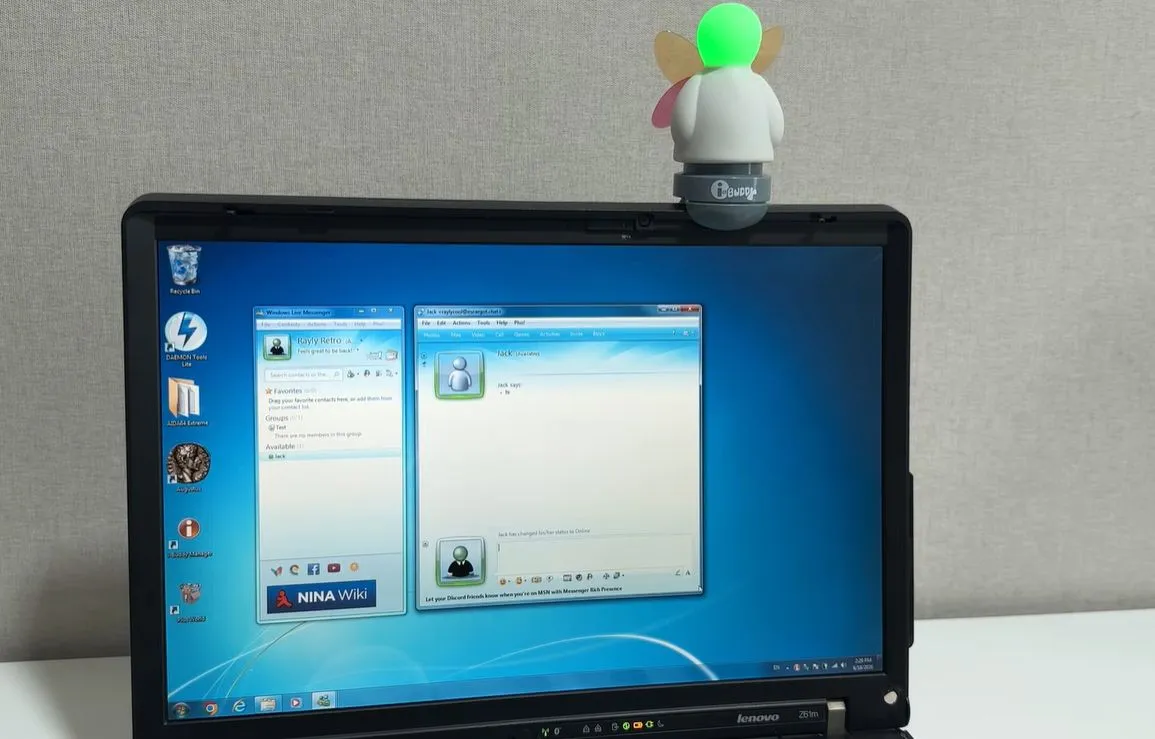
Some of our esteemed readers were not yet out of diapers back in 2013 when Microsoft decided to put MSN Messenger out to pasture, but the memories that this instant messenger’s (IM) interface and notification sounds have left are hard to erase. This also includes some of the weirdest accessories that this IM spawned, such as the USB-connected i-Buddy. Recently [Rayly Retro] got his mittens on a new-in-box one to revive alongside an era-appropriate Windows 7 PC.

What the i-Buddy gets you is the ability to light up the head in seven different colors, twist the torso and flap the butterfly wings, all of which can correspond to certain events in the MSN IM or for more general notifications, as set by software running on the connected PC. Interestingly, this i-Buddy is recognized by Windows as a USB HID, so no special driver is needed. A range of ways to program it exist too, including a .NET-based library from back when it was still being sold for around $20.

Although the MSN Messenger network’s servers have long since been dumped into an e-waste dumpster over at Microsoft HQ, an alternative exists in the form of the Escargot service using which a range of official clients can work again.

Advertisement

In the video it’s demonstrated how to create a user account with the Escargot site and how to patch the messenger – here Window Live Messenger 2009 – before signing in. With that step completed, getting the i-Buddy up and running is next. This took a lot of struggling, since the version of the i-Buddy software that comes with the device didn’t like Windows 7 much. Fortunately an old forum post led to a download of version 2.10, using which the gadget jumped to life, happily lighting up and flapping its wings.

Advertisement

Source link

Continue Reading

Tech

Microsoft is selling new 8GB Surface laptops that don’t qualify as Copilot+ PCs

Published

on

What just happened? A week after launching the new Surface Pro 12 and Surface Laptop 8 powered by the Snapdragon X2 SoC, Microsoft has expanded the lineup with lower-cost configurations built around an older chipset and 8GB of RAM. Neither qualifies as a “Copilot+ PC” as one of the requirements for that is a minimum of 16GB of memory.

The 8GB Surface Pro starts at $849, while the new Surface Laptop variant is priced at $949. Both are powered by the original Snapdragon X Plus SoC, include 256GB of storage, and are otherwise identical to the first-generation 12-inch Surface Pro and 13-inch Surface Laptop. They are available now on the Microsoft Store.

Microsoft confirmed the configurations at last week’s Surface launch event, where the company’s VP of Surface, Brett Ostrum, told PC World that the new variants would ship with an older Snapdragon chip and just 8GB of RAM.

Justifying the lower memory configuration, Ostrum said: “customer needs vary by workload, and 8GB configurations give customers another entry point for everyday productivity, browsing, communication, and entertainment.” He also clarified that the cheaper models are additional options for budget-conscious buyers, and not replacements for the existing 16GB variants.

Advertisement

With the AI boom pushing PC hardware prices to record highs, Microsoft’s new 12th-gen Surface Pro and 7th-gen Surface Laptop are significantly more expensive than their predecessors, starting at $1,499 and $1,599, respectively. By comparison, the Surface Pro 11 and Surface Laptop 7 both launched at $999 in 2024, when memory costs were still relatively manageable.

Windows 11 technically requires a minimum of 4GB of RAM, but most users find that even 8GB can fall short of a smooth, lag-free experience. Microsoft is working to reduce the OS’s default memory footprint as part of its Windows K2 initiative, but machines with less than 16GB remain a red flag for most power users.

That said, these models aren’t aimed at power users. They are largely aimed at everyday consumers with basic requirements, such as web surfing, emails, and video streaming. Microsoft is betting that users who need their PCs for gaming, 3D modeling, AI inferencing, or 4K video editing will still opt for higher-end configurations, even at the steeper price points.

Advertisement

Source link

Continue Reading

Tech

The 16 Best Amazon Prime Day Deals Under $30 We’ve Found

Published

on

Thirty dollars doesn’t get you as much as it used to. In times like these, as the economy worsens, “Buy Now, Pay Later” services boom, daily bills skyrocket, and inflation continues to surge, it’s more important than ever to make that dollar stretch.

We’ve been scouring to find the best discounts and deals on WIRED-tested and -approved gear for less than that for Prime Day. We’ve hand-tested and vetted all the deals on this list, so you can be assured this is the best price you’ll find.

Crazy for deals? For the best of the best of the best deals this Prime Day, check out WIRED’s Absolute Best Prime Day Deals and Best Prime Day Deals Under $100. For lightning deals of the moment, see our Amazon Prime Day live blog for updates in real-time.

Jump to Section

Advertisement

Updated June 23: We’ve added new discounted picks from Liquid IV, Bloom, Smartish, Loop, Spigen, Beats, OneBeat, and Anker.

Home and Beauty Deals Under $30

Image may contain: Electronics, and Person

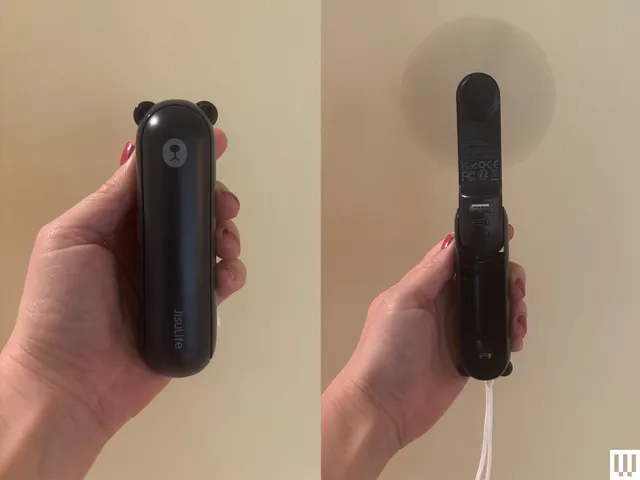
Jisulife

Handheld Mini Fan

This is one of WIRED editor Kat Merck’s top handheld fan picks. It’s small (and cheap) but mighty, with two blades that produce a strong breeze at 472 feet per minute and a quiet noise level (44 dB on low), and it’s lightweight at only 4 ounces. Plus, it’s basically a camping or outdoor adventure Swiss Army knife, doubling as a flashlight and portable power bank. At only $12, you’ll be happy you carried this during your next summer adventure.

Advertisement

Source link

Continue Reading

Tech

Save up to $215 with these Prime Day NAS Deals for Mac

Published

on

If you need more storage but don’t want to add an external drive to your Mac, consider getting a Network Attached Storage device. Gain more capacity with these Prime Day storage deals today.

Storage is an ever-present problem for computer users. While you can add an external drive to a Mac, it doesn’t fix your capacity problems on your iPhone or iPad, or even other computers.

Cloud storage is an option, but one that requires massive amounts of bandwidth. That’s not great when it comes to backing up your Mac.

The best alternative is to get Network Attached Storage, or a NAS. As the name implies, it’s on your network so your local hardware can access it, and you can fill it up with whatever drives you want depending on your needs.

Advertisement

Below is a selection of NAS deals you really should consider buying during Amazon’s Prime Day sales event.

Ugreen NAS DXP4800 GT

In our recent review of the Ugreen NASync DXP4800 GT, we found it to be an excellent mid-range NAS for Apple users. However, it is also one that can do well for content creators, too.

It’s a four-bay NAS that can support up to 128TB of SATA drives, which is healthy on its own. It also has a pair of M.2 NVMe slots, adding another 16TB of potential capacity.

Black four-bay external storage enclosure labeled 01 to 04 on a white desk, with a decorative geometric light and a small blue sphere in the background

Ugreen NASync DXP4800 GT

Advertisement

RAID support includes RAID 0, 1, 5, 6, and 10, as well as JBOD. Dual 10Gig Ethernet connections also help you get that data on and off at high speeds, too.

Save 20% on Ugreen NAS DXP4800

It’s also a very quick device when it comes to services, too. With 8GB of memory that’s expandable to 64GB, it can handle a lot of different software, including Docker apps.

The Ugreen NAS DXP4800 GT is available from Amazon for $527.99, down from $659.99.

Advertisement

Ugreen NAS DH2300

If you don’t need masses of capacity, the Ugreen NAS DH2300 is a good choice for a more basic setup. A two-bay NAS, it is an entry-level option for those dipping their toes into NAS ownership.

That includes a simple setup process and NFC Tap to Connect, so you can get up and running with few issues using your iPhone.

Tall gray UGREEN electronic device with wireless symbol on front, next to a hand holding a smartphone displaying a control app screen for connecting to the device

Ugreen NAS DH2300

While it is small, it can take drives up to 64TB in capacity. That could be enough for small families to use without paying too much.

Advertisement

Save 20% on Ugreen NAS DH2300

It’s also no slouch when it comes to features. Though it does not have Docker support, it can still run apps and services, and even has AI features such as photo library management.

The Ugreen NAS DH2300 is available from Amazon for $175.99, down from $219.99.

Asustor AS5402T

Another two-bay NAS, the Asustor AS5402T is actually quite a powerful option if you need storage. Those two SATA bays are accompanied by four M.2 NVMe SSD slots, which can be used for caching or for outright fast storage.

Advertisement

Save $40 on Asustor AS5402T

There’s also upgradable DDR4 memory, from a starter 4GB with capacity for 16GB. There’s also a pair of 2.5Gig Ethernet connections, so it can easily handle a content creator’s file-access needs.

Black Asustor desktop network storage device with angular design, front status LEDs, power button, and single blue USB port, standing alone against a plain white background

Asustor AS5402T

Other features include HDMI 2.0b, USB 3.2 Gen 2 ports, and it can also be used as a 4K media server with hardware transcoding.

Advertisement

The Asustor AS5402T is available from Amazon for $369.99, down from $406.99.

The Synology DS225+ Private Cloud Media Server is a two-bay model in Synology’s NAS range. It’s a two-bay NAS with a maximum capacity of 40TB, with its 2GB of memory upgradable to 6GB.

Black Synology NAS desktop device with front status LEDs glowing green, USB and power buttons visible on the front panel, shown at a slight angle against a plain background

Synology DS225+ Private Cloud Media Server

It’s a compact and energy-efficient model, but it still includes a selection of apps, as usual for Synology’s models, as well as its own Hybrid RAID system. There’s also a 2.5Gig Ethernet connection, which is overkill for a typical household but opens the door to faster speeds with home network upgrades.

Advertisement

Save 19% on Synology DS225+

The Synology DS225+ Private Cloud Media Server is available from Amazon for $274.99, down from $339.99.

Synology DS925+ DiskStation

If you want Synology but a more beefy option, consider the Synology DS925+ DiskStation. It’s a four-bay NAS with an option for an M.2 NVMe SSD to handle caching of your files for extra speed.

Save 20% on Synology 4-Bay DiskStation DS925+

Advertisement

There’s also upgradable RAM, from 4GB to 32GB with its dual memory card slots. Network communication is handled by a pair of 2.5Gig Ethernet connections, while a dedicated port handles expansion to other units.

Black Synology network storage box with four front drive bays, LED status lights on the right side, a power button and USB port on the lower front panel

Synology DS925+ DiskStation

Docker and virtual machine support is included, as is the ability to connect IP cameras to handle home or office security.

The Synology DS925+ DiskStation is available from Amazon for $511.99, down from $639.99.

Advertisement

TerraMaster F2-425

The two-bay TerraMaster F2-425 is a bit of a sleeper NAS unit. While it is more on the value range than the Synology, it’s a device that hides excellence.

Save 20% on TerraMaster F2-425

In our review, we praised its beefier-than-usual processing capabilities, including AI photo management and compatibility with apps like Plex, Emby, and Jellyfin. There’s even Docker support.

Black TerraMaster two-bay network storage enclosure with two front drive bays, power button, USB 3.0 port, status LEDs, and TerraMaster logo on the side, shown from front angle

TerraMaster F2-425

Advertisement

It may be an entry-level unit, but this is an extremely capable device for the money.

The TerraMaster F2-425 is available from Amazon for $239.99, down from $299.99.

TerraMaster F4-424 Pro

If you’re looking for a powerful NAS option, the TerraMaster F4-424 Pro is a decent one. The Pro in the name is justified, with its Core i3 8-core CPU clocked at 3.8GHz and 32GB of memory making it a high-performance storage device.

Save $215 on TerraMaster F4-424 Pro

Advertisement

One that is capable of handling a variety of servers, both for home and for small business users.

Black TerraMaster network storage box with four vertical front drive bays, rounded corners, side logo, and small LED indicator lights near the bottom front edge

TerraMaster F4-424 Pro

While the four-bay element is for four SATA drives, in RAID 0, 1, 5, 6, 10, TRAID, and JBOD modes, there’s also a pair of M.2 NVMe slots for caching purposes. Networking is handled by a pair of 2.5Gig Ethernet ports with link aggregation support, equalling a 5Gbps connection.

The TerraMaster F4-424 Pro is available from Amazon for $644.99, down from $859.99.

Advertisement

However, AppleInsider has noticed that the deal pricing doesn’t come up for all users for this device. Your mileage may vary here.

Source link

Advertisement
Continue Reading

Tech

Emotion AI Gets Smarter With Layers of Human Context

Published

on

Imagine sitting down at your desk and logging in for a performance review, with an AI system analyzing the conversation. You’ve been working long hours, balancing deadlines, and your manager asks how you’re doing. You say you’re fine, and maybe even smile, but there’s a hint of hesitation and your voice wavers. As you shift your posture, your shoulders slump.

These are subtle cues that to the human eye might hint at underlying stress. But to an AI model that’s been trained only to categorize emotions as “happy” or “sad,” such nuances are likely lost. It logs the words and a smile and moves on—and unless your human manager intervenes, the fact that you’re tired, unfocused, and maybe a couple of days from burnout never enters the equation.

Emotion AI,” which estimates how people feel based on facial expressions, voice tone, and behavior, seems to be suddenly everywhere; it’s being used in employee well-being and recruitment interviews, education platforms, and driver-monitoring systems. Technology call-center platforms such as NiCE and Genesys use AI to detect when a customer sounds frustrated and prompt agents in real time to slow down or respond with more empathy. Giant companies like Meta and startups such as Hume AI are developing more-expressive voice AI systems that can detect emotional cues in the person they’re “talking” to and adjust how they communicate.

Advertisement

What’s more, hundreds of companies already offer virtual AI companionship apps, a fast-growing market that may be worth an estimated US $555 billion by 2035—and robot buddies have also entered the picture. Intuition Robotics’s ElliQ, for example, is a small device vaguely resembling a white desk lamp that’s now being used to engage older adults in conversation in hopes of reducing loneliness.

But while the field of emotion AI is advancing at a rapid clip, most existing systems are focused on detecting a limited number of signals to label one specific emotion at a time—which is insufficient if you’re trying to understand the human condition. In the real world, human signals and emotions are contextual, overlapping, and constantly changing. A laugh can signal joy, nervousness, or both; a raised voice might signal enthusiasm just as easily as frustration. To make the job of emotion detection even more difficult, reactions differ greatly from one individual to the next, depending on demographics, cultural background, and countless other variables.

In other words, there’s a gap between what we’re expecting AI to pick up on and what AI can actually deliver. That’s the gap a new field of research—what we call human-context AI—is working to close. Instead of looking at just one input and labeling it, human-context AI increasingly has the capacity to take stock of an individual’s personality and character, and to track emotions in real time while combining multiple inputs, including facial dynamics, voice, tone, language, and behavior. Crucially, responses are also evaluated in the context of a specific environment, such as a performance review or professional coaching session. The result? Computers are learning to read the scene, rather than just the screen.

The Origins of Emotion AI

The story of emotion-sensing AI began almost three decades ago in the MIT Media Lab, where the American electrical engineer and computer scientist Rosalind Picard coined the term “affective computing.” Her work introduced the radical idea that computers could be taught to recognize and respond to human emotions.

Advertisement

Picard’s early experiments focused on single modalities: facial expressions, tone of voice, and physiological signals, such as skin conductance or heart rate. The goal was to give machines a window into human feeling, helping them become more empathetic. It was an exciting vision, but back then the science and hardware weren’t ready. Computing power was limited, sensors were crude, and datasets were narrow and biased.

Pixel art of three party-hatted figures in a box, each losing a slice of cake. Josie Norton

Over the next decades, researchers and companies got better at measuring the many ways in which humans express themselves. In the 2010s, sentiment analysis—the processing of large volumes of text to suss out emotional undertones—began to reach the mainstream. At the same time, marketing firms, including my company, Neurologyca, began using video and webcams to measure and catalogue customer reactions. Biometric devices and activity trackers, such as Fitbits and Apple watches, also became ubiquitous, generating new streams of data about people’s sleep, step counts, stress levels, and more.

Unsurprisingly, scientists soon confirmed that larger volumes of personalized data led to greater accuracy in reading human emotions. In 2019, researchers at Cornell demonstrated that combining multiple types of signals improves emotion sensing. Their system joined physiological data, such as brain activity measured by electroencephalography (EEG) and heart rate, with visual cues like facial expression, outperforming systems that relied on just one input. Around the same time, Picard and her team at MIT found that humanoid robots trained on data unique to a specific person were substantially better at reading that person’s reactions and feelings than robots acting without personalized data.

More recent studies align with these findings. In 2024, scientists in South Korea showed that fusing physiological, environmental, and personal data to recognize emotion resulted in a 32 percent error reduction. Another paper, published in 2025, demonstrated that user-specific information significantly enhances emotion recognition performance.

Advertisement

Today, our devices know who we are; our habits and tendencies, likes and dislikes. They’ve also gotten smaller and more efficient. Tiny, low-power cameras and microphones embedded in phones, laptops, and virtual-reality and augmented-reality devices can detect dozens of human signals simultaneously, from eye movements and micro-expressions to breathing rhythms, voice modulation, and posture. Advances in computing have also made it possible to integrate audio, video, biometric, and text data, often without even transmitting raw data to the cloud. And researchers at Stanford, Cambridge and MIT, and Kyoto University, in Japan, as well as the Software College of Northeastern University in Shenyang, China, are exploring how fusing such inputs can refine the sensitivity and accuracy of human-machine interactions.

And yet, despite so many breakthroughs, machines still can’t reliably interpret emotion or even physical stress. Just last year, a survey published in the Journal of Psychopathology and Clinical Science revealed that stress scores on smartwatches rarely, if ever, matched the level of stress that users were experiencing. In fact, a quarter of those surveyed reported feeling the direct opposite of what their smartwatches were reporting.

Why the disconnect? We’ve gotten very good at capturing signals, but not at interpreting them. A fitness tracker might infer from your heart rate that you’re stressed and recommend easing off training, but it doesn’t know if your increased heart rate is due to excitement, tiredness, or an extra cup of coffee. Gauging emotions in real-world settings is even more difficult. To solve this complex problem, machines need context.

From Neuromarketing to Emotion-Sensing AI

My company, Neurologyca, was founded in Spain in 2015, and started out in neuromarketing. Working with major European brands and conglomerates, our cofounder, Juan Graña, had realized that companies lacked solid data on consumers. At the time, most customer feedback came through surveys, which posed questions such as, “On a scale of 1 to 10, how joyful does this car advertisement make you feel?” or “Which emoji best describes your mood?” Naturally, these overly simplistic tools led to high levels of self-reporting bias, as people often misjudge or misstate their own reactions.

Advertisement

To get around this problem, Neurologyca set up labs, using neuroscience and cognitive science to more accurately capture human responses to products, logos, advertisements, and experiences. In addition to using biometric tools such as heart monitors, eye trackers, and EEG, we recorded millions of video frames of human reactions, logging each specific context and the resulting facial and bodily movements. To do this, we mapped over 790 points of reference, including corners of the mouth, size of the eyes and pupils, blink rate, and angling of the head. All of this data was collected and stored anonymously under strict European privacy standards.

Next, we paired this information with findings from decades of neuroscience and behavioral science studies on how biometrics, speech patterns, and human movement are related to emotion—research we continue to gather from academic institutions across Europe. We also created a database of situational contexts—for example, “watching a dog food commercial” or “hearing a new song”—and the human feelings they engendered.

In our work with companies, not only did this approach allow us to recognize nuanced emotions, it also let us identify which reactions indicated positive or negative outcomes. Take, for example, the context of horror-film trailers: Our research helped us figure out that the most successful elicit a very specific mix of emotions, namely a little bit of fear, a little bit of anxiety, but also some joy. With this knowledge, we could quickly rate viewer reactions to help a film company figure out how to tweak its trailer for the desired impact.

Colorful 3D blocks explain Neurologyca\u2019s behavioral, situational, and personal context layers Neurologyca

Within a few years, we discovered that a model trained on our database could accurately evaluate emotion using just a webcam. We stopped needing to host focus groups in rooms full of equipment. Instead, we were able to do such things as sending out a new perfume sample to paid participants around the world along with a link. When people opened the link, it turned on their cameras, allowing us to record their faces as they sniffed the perfume for the first time. Suddenly, we had expanded our reach: Rather than using small focus groups in one or two countries, we could quickly assess 1,000 people across the planet, comparing how someone in Japan, India, or Germany might feel about a certain product.

Advertisement

About four years ago, as AI was becoming pervasive, we realized that our models had applications well beyond neuromarketing. Importantly, these models are grounded in directly observed human behavior rather than inferred patterns or loosely labeled open datasets. Looking beyond brands and companies, we established that our model could be integrated into AI systems to help them understand human emotion at a much more granular level. In other words, we could provide a layer of context.

For Empathetic AI, Context Is Key

When we talk about “a layer of context,” we mean three different types of context. The first is situational or environmental context; for example, a performance review, a telemedicine session, or a horror-film viewing. The second is personal context, which includes an individual’s specific history, goals, and baseline state. The third is behavioral context, which covers the individual’s reaction over the course of the event or interaction by evaluating real-time changes in attention, confidence, engagement, and cognitive load.

Most systems today focus on only situational context, although some are starting to include personal context. Very few include behavioral context or combine all three in a meaningful way. What we’ve built at Neurologyca is a logic layer that fuses the three and translates them into structured, machine-readable information that allows AI systems and agents to respond more effectively. Our technology is being used to enhance systems in development, as well as some that have already been deployed, including driver-safety apps like Netradyne, home assistants like Amazon Alexa, and health-care AI platforms like Sully.ai.

It works as follows: Situational context is determined by the platform or application, be it a professional coaching session, a meditation app, or a driver’s safety monitor. Personal context already lives within each respective platform—or if not, it can be created through sharing of personal data or monitoring via camera. (Most wellness and professional-development apps, for example, contain each user’s profile, history, and prior sessions.) Last but not least, behavioral context is collected and analyzed in real time using our models. In the end, our logic layer fuses these three streams of information.

Advertisement

Our system doesn’t assign fixed weights to the three contexts. Instead, it provides a continuous calibration, with the balance shifting depending on the specific situation. For example, a pause in speech might signal uncertainty in a performance review, but something entirely different in a relaxation setting. If signals are ambiguous or overlapping, our system reflects that uncertainty through lower confidence scores rather than forcing a definitive interpretation.

What’s more, our system can work without ever sending raw data to the cloud, thereby easing privacy concerns. In many cases, video, audio, and biometric signals never leave the device. Instead, our lightweight models extract information locally and share only what’s necessary. Cloud systems, meanwhile, are used for training, pattern analysis, and model improvement. The result is a hybrid architecture: edge-based processing for speed and privacy combined with cloud-based learning for continuous improvement.

The result? By incorporating context, AI systems are beginning to interpret aspects of the human state as interactions unfold, dynamically adapting to emotions rather than reacting after the fact. The range of potential applications is broad and still evolving. Picture a professional-development platform that uses a human avatar to perform a mock interview and then provide feedback and tips on how to appear more confident, likeable, and well-informed. Or a meditation app that knows exactly how well you slept and how anxious you’re feeling, and can recommend an appropriate breathing meditation. Or a humanoid robot teacher that can tell when a student is confused or bored and step in to get them back on track.

Avoiding Potential Dangers on the Road Ahead

There have long been debates about the ethics of emotion-sensing AI. Some critics question whether systems should attempt to infer human feelings from external signals at all. They argue that reducing people to measurable outputs risks oversimplifying human experience while opening the door to manipulation, surveillance, and unfair judgments in workplaces, schools, and public spaces.

Advertisement

We take those risks extremely seriously. In fact, our technology aims to reduce the dangers of oversimplifying human emotion. Human-context AI is not based on the assumption that a machine can definitively know what someone is feeling. Rather, it is an attempt to move beyond simplistic labels by incorporating situational, personal, and behavioral context, while explicitly representing uncertainty when signals are ambiguous or incomplete.

That said, ethical concerns regarding implementation are real and have shaped the kinds of projects we pursue. We would never, for example, accept military engagements to help with interrogations. Not only for ethical reasons: Emotion AI cannot reliably detect deception, and claiming otherwise would be overstating what the technology can actually do. And while our technology can be used to gauge crowd behavior and predict things like when a football stadium is at risk of becoming destructively rowdy, we don’t want our technology deployed for surveillance. In short, we believe that using our logic layer on anyone who hasn’t opted in would be intrusive and ethically problematic.

In Europe, our systems are designed to comply with the EU AI Act’s restrictions on emotion recognition in workplaces and schools; as we expand into the United States, we apply jurisdiction-specific guidelines while maintaining the same core ethical commitments.

We also don’t advise companies to become overly reliant on our technology. Hiring and firing decisions should not be based on our outputs alone. Instead, our logic layer is designed to support human understanding and surface emotions that might otherwise go unnoticed.

Advertisement

Let’s return to the scenario of the performance review. Never mind basic AI—all humans, and even great managers, miss things during conversations. There’s a lot happening at once, as people process what’s being said, how to respond, and the greater context of the situation. These days, many exchanges also occur virtually or via video, adding more distractions while shared context is stripped away.

While we would never claim that our models understand humans better than their fellow humans, we believe we can offer an added layer to help managers capture and interpret behavioral signals that might otherwise get lost, providing greater visibility into how a conversation is unfolding.

Our model can track patterns moment to moment, picking up, for example, a shift in engagement, an instance when something didn’t land, or a change in how someone is behaving. The model won’t tell the manager what these moments mean or what to do about them; it simply makes them easier to see and follow up.

Human-context AI is at an early stage. The use cases, the adoption patterns, and the actual impact are all still evolving. At the same time, emotion-sensing systems are quickly being incorporated into real products and platforms. And without context—without knowing why people feel the way they do—AI risks misunderstanding us in critical moments.

Advertisement

From Your Site Articles

Related Articles Around the Web

Source link

Advertisement
Continue Reading

Tech

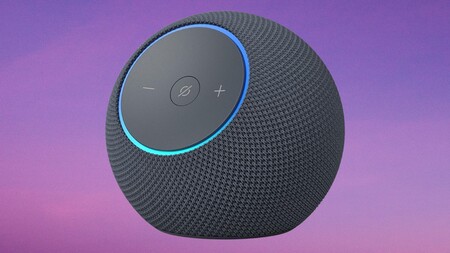
A solid discount on the Echo Dot Max today makes this an easy upgrade

Published

on

Prime Day is a great time to make big savings on Amazon gear, and this is one of the standout deals we’ve found so far.

The Echo Dot Max can now be had for £59.99, down from £99.99. That makes it currently £40 off and 40% cheaper for Prime members.

Deal Amazon Echo Dot Max GraphiteDeal Amazon Echo Dot Max Graphite

A solid discount on the Echo Dot Max today makes boosting your music enjoyment an easy upgrade

With a strong price drop on the Echo Dot Max today, upgrading your everyday listening becomes an effortless win.

Advertisement

View Deal

The Echo Dot Max uses Automatic Room Adaptation to adjust its output to the acoustics of wherever it’s placed, which means it isn’t just playing louder than a standard Echo Dot but responding to the space around it, with lossless high-definition audio processing running across a 0.8-inch tweeter and a 2.5-inch woofer.

Advertisement

That hardware handles audio bandwidth from 53 Hz to 16 kHz, which gives it enough range to reproduce both the low end of a bass-heavy track and the detail of quieter vocal passages without either getting lost in the other.

Streaming connects via Wi-Fi 6E or Bluetooth Low Energy 5.3 to Amazon Music, Apple Music, Spotify, and Audible, and the Omnisense technology built into the Echo Dot Max adds presence detection and temperature sensing so Alexa can trigger routines automatically when someone enters or leaves the room.

Advertisement

The Whatsapp LogoThe Whatsapp Logo

Get Updates Straight to Your WhatsApp

Advertisement

Join Now

The built-in smart home hub covers Zigbee, Matter, and Thread Border Router protocols, which means it can control compatible lights, locks, and thermostats directly without a separate hub, and the eero Built-in feature extends an existing compatible eero Wi-Fi network by up to 93 square metres at speeds up to 100 Mbps.
Advertisement

You can even pair two Echo Dot Max units for stereo sound across a room, or connect one to a compatible Fire TV for a home cinema audio setup, and the AZ3 processor with AI Accelerator handles all of it without any perceptible lag between request and response.

For anyone who already has an Echo Dot and has been curious whether the upgrade is worth it, the £40 saving on the Echo Dot Max makes that question considerably easier to answer before the Prime Day window closes.

SQUIRREL_PLAYLIST_10148964

Advertisement

Advertisement

Source link

Continue Reading

Trending

Copyright © 2025