
Connect with us
DAPA Banner

Tech

There’s a big MacBook Air sale at B&H for our laptop of the year

Published

on

If you’ve been thinking about buying an Apple MacBook Air, B&H is having a fantastic sale right now with savings across several 13-inch M4 models. It runs through May 2, so you’ll need to move quickly.

Topping the list is the Apple 13″ MacBook Air (M4) in Sky Blue with 24GB RAM and a 1TB SSD is currently on sale for $1349 (was $1589) at B&H. That’s a massive saving on a configuration with plenty of memory for heavy workloads. This model handles large projects, creative software, and AI-powered features with ease while staying cool and quiet.

Advertisement


Apple 13″ MacBook Air in Starlight with 16GB RAM and a 1TB SSD, is currently $1,199 instead of $1,399, making it one of the most affordable choices in this lineup.

The 13.6″ Liquid Retina display delivers crisp detail and vibrant color, while the fast SSD gives you plenty of room for files, media, and project assets.

Advertisement

For those needing maximum storage, the Apple 13″ MacBook Air in Starlight with a 2TB SSD is down to $1,549 from $1,799, delivering a huge amount of space that will be ideal for storing large media libraries, video projects, and the like.

The Apple 13″ MacBook Air in Midnight with 24GB RAM and a 1TB SSD is now $1,299, reduced from $1,499, and it’s another great choice for users who want extra memory without blowing the budget.

Rounding things out, the Apple 13″ MacBook Air in Sky Blue with 16GB RAM and a 1TB SSD is down to $1,199 from $1,399, giving buyers another affordable entry point into Apple’s M4 line-up.

With these prices locked at their lowest levels in 180 days, this sale delivers some of the best MacBook Air (M4) deals I’ve seen.

Advertisement

If you’re still not fully sold, our Editor-at-Large Lance said in his glowing review, “The MacBook Air 13-inch (M4) has an excellent build and design, working on it is a pleasure, and the M4 provides all the power I need for the widest range of tasks. I appreciate the long battery life, bright, colorful screen, and clear audio. It has enough ports to support my almost always connected external screen, and I’m glad there’s still a vestigial 3.5mm headphone jack. macOS and the supporting Apple ecosystem are unparalleled.”

For more MacBook options, take a look at our rounds up of the best MacBook Pro and best video editing Mac and MacBook laptops.


Source link

Advertisement
Continue Reading
Click to comment

You must be logged in to post a comment Login

Leave a Reply

Tech

Google Translate now uses Gemini to improve your pronunciation

Published

on

Google is adding another AI-powered trick to Translate — this time focused on how you sound, not just what you say.

A new Pronunciation feature, powered by Gemini, is rolling out to help users practise speaking foreign languages more naturally. In addition, you’ll also receive real-time feedback on delivery.

The update slots neatly into Translate’s existing Practice mode, which launched in late 2025 with tools like Listen and Roleplay. Now, when you translate a phrase and tap Practice, you will see a new “Pronounce” button alongside those options. Tap it, and the app will show a phonetic version of the phrase. Then it will activate your microphone, and ask you to read it aloud.

From there, Gemini steps in. The app evaluates your attempt and offers quick feedback. It will flag unclear sounds or suggesting another try, essentially turning Translate into a lightweight pronunciation coach. It’s not overly detailed, but it’s enough to help you tweak your accent and clarity without needing a full language app.

Advertisement

The feature lands as Google Translate marks its 20th anniversary and suggests the app is evolving into a broader language-learning tool. While services like Duolingo have long focused on speaking practice, Google’s approach leans more casual and, usefully, it’s built into a tool millions already use daily.

Advertisement

There are a few limitations for now. Pronunciation is currently Android-only, and it’s rolling out in the US and India, supporting English, Spanish and Hindi at launch. There’s no word yet on when it’ll expand to iOS or more languages. However, given Google’s track record, a wider rollout seems likely.

Translate has always been great at helping you understand other languages. Now it’s taking a step toward helping you actually speak them better too.

Advertisement

Source link

Continue Reading

Tech

A federal agent said WhatsApp's encryption is a lie. Then the investigation was shut down

Published

on


The case, led by a special agent in the Commerce Department’s Bureau of Industry and Security, focused on claims that some Meta employees and contractors could access WhatsApp messages despite the app’s use of end-to-end encryption.
Read Entire Article
Source link

Continue Reading

Tech

Medical device cyberattacks on the rise

Published

on

A key driver for the rise in medical device cyberattacks, according to RunSafe, is the prominence of legacy tech in healthcare environments.

Cyberattacks on medical devices are becoming more frequent and more disruptive, according to a report released by US cybersecurity company RunSafe Security today (29 April).

The 2026 Medical Device Cybersecurity Index, based on a March 2026 survey of 551 healthcare professionals throughout the US, UK and Germany involved in device purchasing decisions, found that 24pc of surveyed healthcare organisations experienced a cyberattack on a medical device – a rise of 2pc compared to last year.

Of those that experienced an attack, 80pc reported moderate or significant patient care impact as a result, with a quarter of the cohort reporting significant impact.

Advertisement

According to the report, the most commonly affected systems included electronic health record systems (cited by 35pc of affected organisations), patient monitoring devices (23pc), laboratory and diagnostic equipment (18pc), networked surgical equipment (10pc) and imaging systems (8pc).

The most dominant cyberattack methods seen in these incidents were malware infections requiring device quarantine – which were responsible for nearly half of the incidents (48pc) – and network intrusion requiring device isolation (41pc), with both of these incident types maintaining their dominant popularity from 2025.

However, one incident type that RunSafe noted as emerging particularly in 2026 was remote access exploitation, which was seen in 38pc of incidents. RunSafe stated this signalled that attackers are “adapting to the growing remote access footprint of connected devices”.

“Organisations that have not implemented network segmentation, access controls and runtime protections are exposed,” said the company.

Advertisement

For those organisations that experienced a cyberattack on a medical device, recovery was not so simple.

Nearly half (49pc) of reported incidents caused “extended stays or required manual workarounds”, according to the report, with the most common recovery scenario – experienced by 39pc of impacted organisations – involving five to 12 hours of downtime. Meanwhile, 5pc of affected organisations experienced downtime of more than three days.

Legacy issues

A key driver of the growing medical device cyberthreat, according to RunSafe, is the prominence of legacy devices that cannot be patched or easily replaced.

The report found that three in 10 responding organisations operate medical devices that are past the manufacturer’s end-of-support date. A significant proportion of those devices carry known, unpatched vulnerabilities, according to RunSafe.

Advertisement

The reported reasons as to why these healthcare organisations continue to operate at-risk legacy devices spanned clinical, financial and structural constraints.

38pc of respondents said there was no “acceptable” replacement available yet for the legacy device in question, while 36pc said they cannot afford a replacement.

34pc cited regulatory or approval constraints as a barrier, 33pc said replacing the device or system would cause too much disruption and interestingly, 17pc stated that the risk presented by this legacy tech has been formally accepted by leadership.

“The inability to patch, combined with continued clinical reliance on vulnerable devices, creates a structural security gap that cannot be closed solely through procurement alone,” said RunSafe in an analysis of the topic of legacy devices.

Advertisement

“This gap is almost certainly a key driver behind the rise in runtime protection adoption seen in 2026. Runtime protection technologies – which defend devices without requiring a patch – act as a compensating control for a problem that buying new devices cannot solve.”

As recognised by the report, runtime protection technologies are emerging as a critical “compensating control”, with 82pc of respondents stating that they have widely deployed or are piloting runtime exploit protection.

A vulnerable sector

The rise of medical device cyberattacks highlighted by this report comes as the healthcare industry continues to experience breaches and attacks ranging in severity, as noted by RunSafe founder and CEO Joseph M Saunders.

“The findings land against a backdrop of large-scale healthcare cyber incidents that have disrupted care delivery and revenue flows, underscoring how quickly attacks on device-adjacent systems can translate into patient harm,” he said.

Advertisement

“Medical device cybersecurity is increasing in importance to healthcare buyers as they see it as a patient safety and regulatory imperative.”

Last month, medical equipment manufacturing giant Stryker was hit by a cyberattack that caused a global network disruption. Reports at the time suggested that the company’s Cork plant, which employs more than 4,000, was affected by the attack – which pro-Iranian cyber group Handala claimed responsibility for.

Meanwhile, just a few weeks ago, Dublin recruitment platform Healthdaq – which is used by Northern Ireland’s health trusts – reportedly suffered a cyberattack from the relatively new hacker group XP95, which claimed to have accessed hundreds of thousands of files.

Don’t miss out on the knowledge you need to succeed. Sign up for the Daily Brief, Silicon Republic’s digest of need-to-know sci-tech news.

Advertisement

Source link

Continue Reading

Tech

The Galaxy S27 could finally get a new look

Published

on

Samsung might finally be ready to shake up the look of its flagship phones, but don’t get too excited just yet.

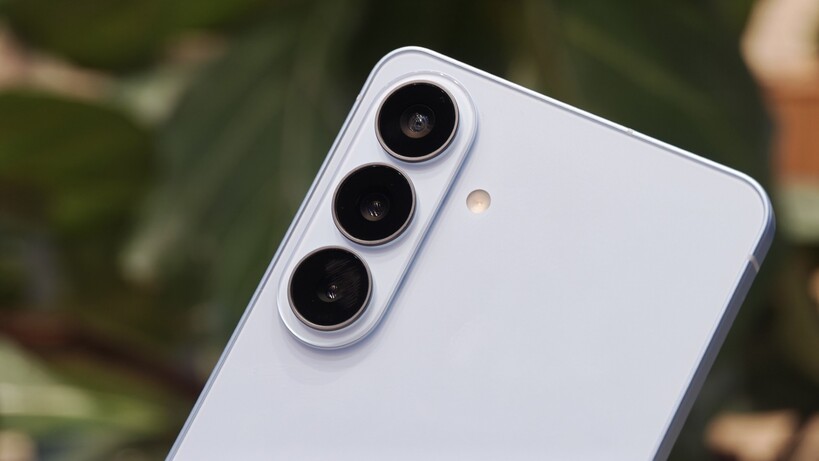
A new leak suggests the Galaxy S27 could bring a redesigned rear camera setup. However, the details are still early and far from locked in.

According to the report, Samsung is supposedly reviewing a potential overhaul of the phone’s camera module, along with broader design changes. This could include tweaks to layout, hardware and overall aesthetics. In fact, these are the areas where the Galaxy S series has felt a little too familiar in recent years.

That said, this isn’t a done deal. The same source notes that progress on the redesign is moving slowly internally. Cost pressures are reportedly playing a role in delaying decisions. In other words, even if Samsung is exploring a new look, it may not make the final cut in time for the S27.

Advertisement

If anything, this sounds more like early-stage planning than a confirmed direction. Samsung has offered users the option of subtle refinements over major visual changes in recent generations. This is particularly true around the camera design. Therefore, a bigger shift would mark a notable change in approach.

Advertisement

Samsung Galaxy S26 rearSamsung Galaxy S26 rear
Samsung Galaxy S26. Image Credit (Trusted Reviews)

There’s also a small but interesting hint buried in the leak. The tipster claims that another upcoming Samsung device has already adopted a redesigned camera layout similar to what’s being considered for the S27. While that’s vague, it could mean Samsung is testing the waters elsewhere. In other words, Samsung might want to do this before committing to its flagship line.

Still, it’s worth keeping expectations in check. The leak comes from a single source with a mixed track record, and even they admit the information isn’t final. Plans like this can evolve quickly or be scrapped entirely, especially when cost and production timelines come into play.

For now, the idea of a fresh Galaxy S design is more of a “wait and see” than anything concrete. But if Samsung does follow through, the S27 could finally break away from the safe, iterative look the series has stuck with for years.

Advertisement

Source link

Continue Reading

Tech

RSD 2026 Review: Joe Henderson’s 3LP Resonance Records Release ‘Consonance’ Recorded In 1978 at Chicago’s Jazz Showcase

Published

on

The Record Store Day (RSD) release of a 3LP set of 1978 archival live recordings by tenor saxophone legend Joe Henderson titled Consonance is yet another excellent discovery from the good folks at Resonance Records (championed by producer Zev Feldman).

As with others in Resonance’s recent Jazz Showcase series which we have reviewed here at eCoustics, the original master tapes seem to have been recorded in mono. However, the sound quality is quite good, capturing a well balanced performance with all the instruments are in enjoyable listening proportion: saxophone and piano appear a little more up front with the bass tucked in neatly below them, locking in with the clear but not overwhelming drums. 

joe-henderson-rsd-back-cover

A recording certainly worthy of its pressing on 180 gram black vinyl — something I can’t always say for many archival releases — the vinyl pressing lacquers for this release were cut by Matthew Lutheran’s at The Mastering Lab and the final discs were manufactured at Quebec’s Le Vinylist. 

Consonance finds Mr. Henderson backed by Johanne Brackeen on piano, Danny Spencer on drums and a young future bass legend in his own right, Steve Rodby. The latter was part of the Chicago jazz scene at the time and effectively was one of the regular house musicians at that club before he joined Pat Metheny’s group in the early 1980s.

In fact, the album features compelling liner notes including recollections from Rodby who offers nuance into why it was special to play with Henderson — as well as from Brackeen and Spencer, co-producer John Koenig plus Wayne Segal (son of Jazz Showcase founder/owner, Joe Segal). 

Advertisement
joe-henderson-rsd-2026-cover

Mr. Henderson was no doubt a very special force on the jazz scene — just check some of your favorite classics by Lee Morgan, Horace Silver, Herbie Hancock, Miroslav Vitouš, Freddie Hubbard, Alice Coltrane and others and you’ll find him on many legendary sessions. However, original pressings of his solo works are elusive and very collectible these days. Fortunately, many of his early albums are being reissued and along with that demand, archival live recordings like Consonance help round out the portrait of this artist’s life work. 

That said, Consonance opens with a side-long version of John Coltrane’s “Mr. P.C.” Henderson also pays homage to the legendary Charlie Parker with an expansive reading of “Relaxin’ at Camarillo.” And a 16-minute journey explores Thelonious Monk’s “‘Round Midnight.” You’ll also hear some of Mr. Henderson’s originals such as “Inner Urge” — which takes up another full album side — and the show closer “Isotope.”

joe-henderson-rsd-2026

Even though Record Store Day is over, I suspect you will be able to find copies of this excellent set online as well as in your favorite stores. In fact, you can get it at Amazon for $75.99 and if you can’t find the LP or simply want a less pricey option, the CD version is available for $23.56.

Where to buy: $75.99 at Amazon (3LP) or $23.56 at Amazon (CD)


Mark Smotroff is a deep music enthusiast / collector who has also worked in entertainment oriented marketing communications for decades supporting the likes of DTS, Sega and many others. He reviews vinyl for Analog Planet and has written for Audiophile Review, Sound+Vision, Mix, EQ, etc.  You can learn more about him at LinkedIn.

Advertisement. Scroll to continue reading.
Advertisement

Source link

Continue Reading

Tech

Should Schools Get Rid of Homework?

Published

on

Tony Isaac shares a report from NPR: Federal survey data shows that the amount of math homework assigned to fourth and eighth grade students, in particular, has been steadily declining for the past decade. Some educators and parents say this is a good thing — students shouldn’t spend six or more hours a day at school and still have additional schoolwork to complete at home. But the research on homework is complicated. Some studies show that students who spend more time on homework perform better than their peers. For example, a longitudinal study released in 2021 of more than 6,000 students in Germany, Uruguay and the Netherlands found that lower-performing students who increased the amount of time they spent on math homework performed better in math, even one year later.

Other studies, however, suggest homework has minimal outcomes on academic performance: A 1998 study of more than 700 U.S. students led by a researcher at Duke University found that more homework assigned in elementary grades had no significant effect on standardized test scores. The researchers did find small positive gains on class grades when they looked at both test scores and the proportion of homework students completed. More homework was also associated with negative attitudes about school for younger children in the study. “The best educators figured out a long time ago that we can control what we can control,” and that’s what happens during the school day, Superintendent Garrett said, not homework. “There has been a shift away from it naturally anyway, and I felt like this made it equitable across our entire school system.” “The best argument for homework is that mathematical procedures require practice, and you don’t want to waste classroom time on practice, so you send that home,” said Tom Loveless, a researcher and former teacher who has studied homework.

Ariel Taylor Smith, senior director of the Center for Policy and Action at the National Parents Union, said: “The thing they point to is that it’s an equity issue, and not all parents have the same availability and ability to support their students. I would make the argument that if a kid is really far behind in school, that’s an equity issue. They need the additional time to practice.” Kids, she said, “need more practice … Sometimes, you do have to practice the boring stuff, like math.”

“The interesting issue for folks to consider is not should there be more homework, but should there be better homework,” said Joyce Epstein, who has studied homework and is the co-director of the Center on School, Family, and Community Partnerships at the Johns Hopkins University School of Education. “Better homework in math might be knowing the fact that kids don’t have to be practicing for hours, 10 to 20 examples,” when they could establish mastery in less time.

Advertisement

Source link

Continue Reading

Tech

Motorola just dropped 5 new products, including the Samsung Galaxy-rivaling Razr Ultra 2026 series and Razr Fold

Published

on


  • Motorola just announced three new clamshell foldables, and confirmed the US availability of the Razr Fold and Moto Buds 2 Plus
  • All of these phones are coming to the US on May 21, with the Moto Buds 2 Plus landing on April 30
  • The Motorola Razr Ultra 2026 is arguably the highlight of these announcements, with a 7-inch foldable screen and three 50MP cameras

Motorola is having a busy day, as the company has just launched five devices, including phones and earbuds.

Leading the charge is the Motorola Razr 2026 family, which includes the base Motorola Razr 2026, the Motorola Razr Plus 2026, and the Motorola Razr Ultra 2026, as well as the previously announced Motorola Razr Fold (you can check out our first impressions of the Ultra in our hands-on Motorola Razr Ultra review).

Advertisement

Source link

Continue Reading

Tech

5 TV Myths It’s Time To Stop Believing Once And For All

Published

on


We may receive a commission on purchases made from links.

The television industry is worth a few hundred billion dollars, and it’s expected to smash past $500 billion by 2030. That sounds all very impressive, but a chunk of that comes not from selling pwople their dream TV, but from selling them things they don’t need. It’s not an accident, either; it’s a business model.

Buying a TV should be simple. You can confidently shop for a one online, or you can walk into a store, check out one that looks good, get the hard sell, and then take it home. But with the salesperson’s technical jargon and overinflated claims, you might get a feeling that you’ve bought more than you needed once you settle down on the couch to watch that first show  — or maybe you didn’t get the features you actually need. The problem is, many of us do not have the time or the technical knowledge to push back. Therefore, we trust the spec sheet and believe the salesperson, which can result in overspending. Manufacturers and retailers may very well count on exactly that to boost their sales figures.

Advertisement

To arm yourself before you go to the store, we’ve listed five of the most persistent myths in the world of TV buying. They’ve been repeated over and over to the point that they now feel like common sense. But are they? After debunking these myths, we hope you can save a little bit of money, whether you’re on the way to the store or contemplating your next purchase. Here are five TV myths it’s time to stop believing once and for all.

Advertisement

Myth: you need 4K on a small TV

Walk into any electronics store with the intention of buying a TV and salespeople will tell you that 4K is the essential viewing experience. They’re not wrong. However, if it’s a small TV you need (we’re talking 44 inches or under), you can save yourself a bit of cash by opting for a 1080p display instead, like that on the Roku Select Series FHD TV. That’s because researchers at the University of Cambridge and Meta Reality Labs say your eyes may not get any of that 4K benefit from a small screen. The explanation for this lies in how the human eye works. “Our brain doesn’t actually have the capacity to sense details in colour very well,” says Professor Rafał Mantiuk, co-author of the study. Our peepers can only process detail up to a certain point. Feed them more resolution than they can handle, and the signals sent to your brain won’t be that different from a lower resolution. 

The researchers measured pixels per degree (PPD), which isn’t how many pixels a screen has, but how a screen looks from your viewing position. For an average-sized living room with 2.5 meters between couch and screen, a 44-inch 4K TV offers little to no noticeable benefit over a lower-resolution QHD set of the same size. Knowing the point when you can tell the difference between 4K and 1080p could save you money — and the research team was so keen to assist people with this that they made an online calculator to help. Just enter the necessary details, and it will tell you exactly what resolution is actually beneficial to your eyes.

Advertisement

Myth: you need premium HDMI cables

Cable manufacturers will try to convince you that expensive 4K cables are a necessity, but the fact is they’re not. If your current cheap cables do fall short, the solution is simply another cheap cable from a different brand. HDMI is just a digital signal; it either carries the data or it doesn’t. Whatever you’ve read, a pricier cable will not enhance your picture because the signal has no way of carrying any alleged extra quality. Even if you dug out a dusty old cable from the back of a drawer, it would almost certainly deliver the same picture quality as a $50 cable you just pulled off the shelf at Best Buy.

It’s also worth noting that HDMI cable “versions” don’t actually exist. Whether it’s HDMI 2.0 or 2.1, these numbers describe your device’s ports. What actually counts when choosing the right HDMI cable is the speed category. If that dusty old cable is a standard cable, it won’t be able to handle 4K. But the good news is, even the cheapest cables on today’s market are almost always high-speed or premium high-speed, the latter of which can handle just about any 4K content.

Gold-plated connectors and signal fidelity are unnecessary, too. In fact, buying high-priced cables means you’re just buying a brand name, gimmicky features, and possibly a fancy box. The one exception is next-gen gaming. If you have the hardware capable of pushing 4K at 120fps, treat yourself to an ultra-high-speed cable — but even then, these are often reasonably priced; you don’t need to fork over a fortune.

Advertisement

Myth: you need an extended warranty

The moment you buy a new TV, just wait for the extended warranty hard sell. But did you know that extended warranties are often far more profitable for retailers than the hardware itself? In many cases, they pocket more than half of what you pay for the plan. With the global extended warranty market projected to reach an incredible $286.4 billion by 2032 according to Allied Market Research, this is not an industry built on goodwill — it’s a serious business. But the reality of a modern flat-screen TV is that they fail at a very low rate; we’re talking single-digit percentage numbers here. And when something does go wrong, the repair cost is usually just marginally higher than what you would have paid for the extended warranty. Consumer Reports put it bluntly when they said, “You shouldn’t have to pay extra to get manufacturers or retailers to stand behind their products.”

The pricing is not arbitrary, either. Companies work out how many TVs in a given model are likely to fail and set their prices accordingly, which ensures they always come out on top. The reality is, you’re not buying protection for your TV; you’re subsidizing their profits. Even if you do make a claim on your extended warranty, the experience is seldom straightforward. Repairs drag on, and a lot of the time they need more than one attempt to fix it. Most major credit cards quietly offer the cardholder a warranty extension as a free perk anyway, as long as you use that card to purchase the TV. The smart move is to keep your money or stash it in a repair fund. On a TV that is statistically very unlikely to need fixing, the odds are firmly in your favor.

Advertisement

Myth: TV contrast ratio specs are accurate

Contrast ratio measures how deep a TV’s blacks are against how bright its whites can get — and it is one of the most important factors in picture quality. However, if you’ve ever compared the contrast ratios of two TVs, you’ve probably been misled. That’s because the numbers are not directly comparable across brands. Manufacturers are not required to follow any single testing procedure when measuring it, so every brand does it differently — and most measure it in whatever way produces the biggest number.

At the heart of this is the difference between native and dynamic contrast ratio. Every TV has a native contrast ratio — what the screen can physically produce. Many also have dynamic contrast, a feature that adjusts brightness in dark and light scenes to deepen blacks and brighten whites. Because the dynamic figure is often much larger than the native figure, manufacturers sometimes highlight it on packaging — and it cannot be trusted as a reliable guide to what you will actually see. The number on the box is not a standardized measurement; it’s a marketing decision. With no standard benchmark, these numbers are essentially meaningless.

Advertisement

Myth: OLED burn-in is still a serious concern

Burn-in — the ghostly remnant of a static image permanently etched on an OLED screen. It has long haunted the OLED and spooked many buyers over the years. It’s probably the main reason many people have opted for LCD TVs instead. But should you be worried about burn-in on OLED TVs? Evidence suggests that fear is largely misplaced. Most people who think their screen has some burn-in symptoms are actually experiencing image retention. This is temporary and clears up on its own. True burn-in is permanent and was a legitimate concern with older OLEDs. But nowadays, it requires extreme conditions to happen. When it occurs, it occurs when the same static element, like a news channel logo, is left on the screen at high brightness for days on end.

RTINGS decided to put this one to bed when they conducted one of the most comprehensive TV longevity studies ever conducted. It was a 3-year accelerated test on over 100 TVs, accumulating more than 10,000 hours of usage. In the end, every single OLED did eventually show burn-in, but the tech experts made it clear that this was the result of deliberately extreme conditions, and they do not represent normal use. In an earlier test, RTINGS ran six OLED TVs for over 9,000 hours, showing a mix of general TV — the same way people actually watch TV. Not one of them developed significant burn-in. Myth debunked.

Advertisement

Methodology

We searched for the most widely discussed myths regarding TVs on the internet. The five we listed are easily the most talked about. We looked into it even deeper and found expert sources that have firmly debunked each of these myths. Our author also leaned on personal experience, having been a long-time nonbeliever in some of these; personal use showed that a small 1080p TV never posed a problem mounted on a bedroom wall for years, and affordable HDMI cables have never given any trouble. Additionally, the writer is too frugal to buy extended warranties, which have never resulted in any issue. However, all this debunking is also backed by reputable sources rather than relying on the author’s intuition alone.


Advertisement

Source link

Continue Reading

Tech

How to watch Giro d’Italia 2026 free from anywhere with this VPN deal

Published

on


How to watch Giro d’Italia 2026 for free from anywhere with a VPN. Jonas Vingegaard, Giulio Pellizzari and Adam Yates are amongst the maglia rosa favourites.

Source link

Continue Reading

Tech

Why a recent supply-chain attack singled out security firms Checkmarx and Bitwarden

Published

on

“Current evidence indicates that this data originated from Checkmarx’s GitHub repositories, and that access to those repositories was facilitated through the initial supply chain attack of March 23, 2023,” Checkmarx said Monday. The company didn’t say what kinds of data were leaked.

Checkmarx isn’t the only security company to suffer the aftereffects of the Trivy breach. Socket said that another security firm, Bitwarden, was also hit in the same supply-chain attack. Socket tied the Bitwarden breach to the Trivy campaign because the payload used the same C2 endpoint and core infrastructure as the Checkmarx malware.

The Trivy attack was carried out by a group calling itself TeamPCP. The group is among the most successful access-broker operations, a class of hackers that smashes and grabs credentials from victims and then sells them to other hackers. The key to its ascendency is its targeting of tools that already have privileged access.

In the case of Checkmarx, it appears TeamPCP sold access credentials to Lapsu$, a ransomware group made up mostly of teenagers known as much for its skill in breaching large companies as it is for its taunts and braggadocio once it succeeds.

Advertisement

The incidents demonstrate the cascading effects a single breach can have. With both Checkmarx and Bitwarden affected, it’s possible that there will be new attacks on their customers or partners and that even more downstream compromises could result from those. Socket CEO Feross Aboukhadijeh said in an email that security organizations are particular targets because of their products’ close proximity to sensitive data and their wide distribution across the Internet.

“You will see this same thread throughout these compromises,” Aboukhadijeh said. “Attackers are treating security tools as both a target and a delivery mechanism. They are attacking the products that are supposed to protect the supply chain, then using those same products to steal credentials and move to the next victim.”

Source link

Advertisement
Continue Reading

Trending

Copyright © 2025