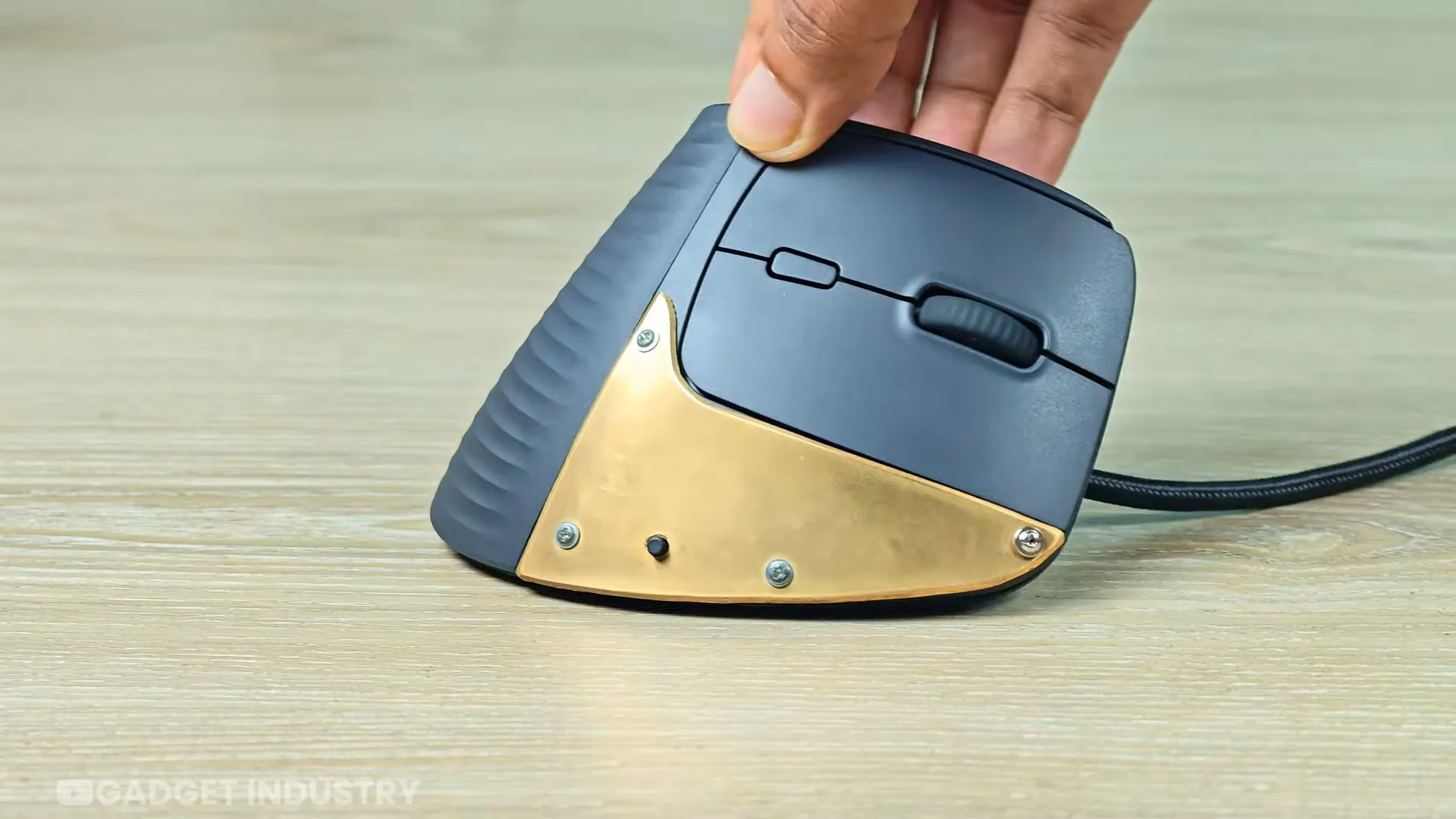
[Gadget Industry] bills it as “a PC inside a Mouse“, but that depends on your definition of a “PC”. This is a Personal Computer inside a mouse, yes, but there’s nothing IBM-compatible about the tiny ARM board he squeezes inside what’s normally a peripheral — it actually started life as a smartphone, which only takes this build up a notch compared to starting with a single-board computer like a Pi.
Specifically, he starts with a Galaxy S21 5G. Starting with a Samsung means he can leave the stock Android alone and just take advantage of Samsung’s DeX desktop mode, rather than layer a Linux environment on top or replace the operating system entirely with something like Postmarket OS, which are both viable options.
With the battery compartment removed, the phone guts fit with shocking ease in the once-wireless mouse. Of course that’s not a great thermal environment, but that’s what the brass is for. It acts as a heat spreader, which is about as much thermal management as the phone had from the get-go, so it should work well enough. It seems to in the video, certainly. If thermal throttling is a concern, while it’d be hard to fit in a mouse, there’s no beating liquid cooling.
Gone are the days when Dyson, one of the biggest names in home and beauty tech, let new products trickle out to the masses.
It was a slow burn at first, and for years, the brand made only vacuums, fans and air purifiers. In 2016, beauty tech, including cult-favorite hair care tools like the Supersonic hair dryer and Airwrap, was folded into the lineup. Still, we’d be lucky to see a handful of new stuff released each year.
Those days are over.
This year during IFA, the massive Euro tech showcase, Dyson has gone off, as the kids say, and released a whopping 10 new products at its counterprogramming event in Berlin, dubbed “Dyson Unveiled.” From floor care and air purifiers to health and beauty tech, including its first-ever toothbrush, Dyson’s eye-popping launch is matched only by last year when the brand introduced 11 new products.
Advertisement
Dyson is tackling oral care with the release of a camera-equipped toothbrush and a water flosser.Dyson
Dyson isn’t just churning out products at a faster rate, as Dyson’s Chief Engineer Jake Dyson explained.
“The latest innovations combine Dyson’s decades of mechanical engineering with AI, vision systems and machine learning to create products that can see, understand and respond to the environments around them,” he said.
Our team on the ground got a close-up look at everything the brand has coming to market, and the list is long. Here’s what’s new from Dyson in 2026.
CameraJet toothbrush
At IFA 2026, we’re seeing all the upgraded, AI-powered, repairable, camera-equipped tech. And then some.Tara Brown/CNET
This is Dyson’s first toothbrush, and it houses a tiny camera for the most detailed possible cleaning. According to the brand, it’s the first oral care tool to use AI-powered vision to detect and target gaps between teeth. It brushes, liquid flosses and even dispenses mouthwash.
The toothbrush costs $499 and is available now.
Dyson Airsmooth dryer brush
Dyson has unveiled its first-ever dryer brush.Tara Brown/CNET
Dyson’s releases aren’t limited to air care and cleaning. The brand released its first-ever dedicated dryer brush, which uses smart heat control and novel dual-bristle technology to dry, smooth and lift hair all in one motion.
The Airsmooth will retail for $249 and will be available to order starting on Sept. 8.
Advertisement
Dyson Corrale CoolShine straightener
Tara Brown/CNET
The success of Dyson’s cult-favorite Airwrap inspired this next-generation straightening tool, featuring flexing plates with active cooling that dries hair without exposing it to as much heat, as heat can damage hair.
The Corrale CoolShine costs $329 and hits shelves on Sept. 15.
HushJet Pure Cool Plus Formaldehyde air purifier
Dyson’s new HushJet air purifiers are a total redesign.Tara Brown/CNET
This new compact high-performance purifier and fan is designed for large spaces. The brand says it delivers three times the power of its predecessors. You can grab this model in the fall for $599.
HushJet Big Plus Quiet Cool Pure Plus Formaldehyde air purifier
Dyson’s new HushJet Big Cool has an angled pipe design and a rotating mouth. Dyson
Dyson’s most powerful purifier is engineered for long-range air projection and multiroom purification. It has a three-stage filtration system that captures particulates and gases, and it destroys formaldehyde.
This model will cost a whopping $1,099 and hits retailers in the fall.
HushJet Hot Cool Pure Plus air purifier
Dyson’s most powerful three-in-one purifier was on display in Berlin.Tara Brown/CNET
Dyson’s most powerful three-in-one purifier combines purification, heating and personal cooling in one machine for year-round home comfort.
This also launches in the fall and retails for $599.
Read our full coverage of Dyson’s new HushJet lineup here.
Advertisement
R3 Nurovi Spot Plus Scrub UV
Dyson is calling the R3 Nurovi Spot Plus Scrub UV its most advanced robot vacuum to date.Dyson
The brand is calling this its most advanced wet-and-dry robot vacuum to date. It features UV enhancement and, you guessed it, AI elements to help identify up to 200 types of stains and substances. The self-cleaning wet roller uses a 12-point system that continuously applies water heated to 158 degrees Fahrenheit to simultaneously lift and remove stubborn stains.
The robot vac costs $1,199 and is available starting Sept. 15.
R1 Nurovi Dry
Dyson R1 Nurovi Dry robot vacuum cleaner.
The Dyson R1 Nurovi Dry is engineered for deep cleaning on hard floors and carpets. It uses Dyson’s Twin-capture technology and intelligent floor and dust sensing.
This simpler robot vac will be available sometime in September for $549.
R2 Nurovi Wash Plus Dry
Dyson’s R2 Nurovi Wash Plus Dry robot vacuum.
Another robot vac is joining the lineup. This one has triangular cleaning pads to clean those pesky room corners.
The Wash Plus Dry is now available exclusively at Costco for $699.
W1 PencilWash Plus Dok
The PencilWash weighs less than 5 pounds and is just as thin as the PencilVac.
Dyson
The new handheld cleaner is slimmer and lighter than the older model, includes a more absorbent roller and a hygienic waste system. It also has self-cleaning features built into the dock.
Advertisement
It will cost $349 and will be available in the fall.
David Watsky
Managing Editor / Home and Kitchen
David lives in Brooklyn where he’s spent more than a decade covering all things edible, including meal kit services, food subscriptions, kitchen tools and cooking tips.
David earned his BA from Northeastern and has toiled in nearly every aspect of the food business, including as a line cook in Rhode Island where he once made a steak sandwich for Lamar Odom.
Right now he’s likely somewhere stress-testing a blender or tinkering with a toaster. Anything with sesame is his all-time favorite food this week.
See full bio
Welcome to my August 2026 Blu-ray Bounty, where I’ll be testing some of the latest 4K releases of the month. If you’re new to the Blu-ray Bounty, you can check out previous editions of these roundups by clicking the link above.
This series is where I test the picture and audio quality of select new 4K discs from each month. I personally use 4K Blu-ray all the time when I’m testing the best TVs and best soundbars, and have become somewhat of a collector myself.
In last month’s July 2026 Blu-ray Bounty, I looked at four discs: The Super Mario Galaxy Movie (which has now entered my testing rotation), To Live and Die in L.A., Alice in Wonderland (1951) and Hairspray (1988).
Advertisement
Latest Videos FromTechRadar
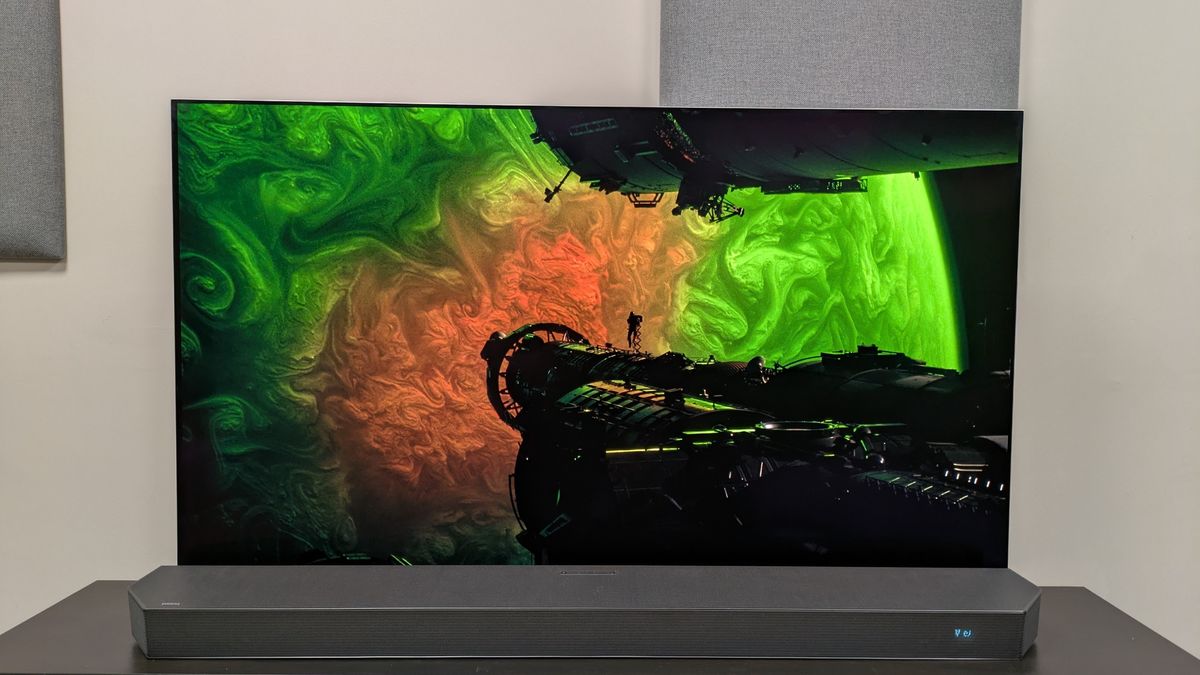
I’ll be using our usual setup to test this month’s seven discs, which includes one of 2026’s best OLED TVs the LG G6, the Panasonic DP-UB820, the best 4K Blu-ray player on the market and the Samsung HW-Q990C, an older-but-excellent 11.1.4 soundbar system. As always, I won’t be reviewing any of the movies here: just the picture and audio.
Project Hail Mary (Amazon MGM)
Image 1 of 3
Advertisement
(Image credit: Amazon MGM / Future)
(Image credit: Amazon MGM / Future)
(Image credit: Future)
Based on the Andy Weir (author of The Martian) novel of the same name, Project Hail Mary follows schoolteacher Ryland Grace (Ryan Gosling), who awakens on a spaceship with no memory of how he got there. He soon discovers he must stop a substance from killing the Earth’s Sun.
From the offset, this is a breathtaking disc. As grace awakens and explores the ship, black tones are rich and deep, and there’s plenty of strong contrast between the dark recesses of the various hallways and the lights around the ship. It’s the same with scenes of space, as the disc renders the blackness of space with real accuracy, while still showing every individual star. There are scenes with plenty of strong shadows as well, and within these scenes there is excellent shadow detail, with details maintained in the dark areas on screen.
With Dolby Vision supported, colors are both punchy and accurate. Grace’s yellow coat is vibrant and true-to-life. There are even more spectacular colors later on in the film, such as ‘Adrian’ (a planet Grace studies), which really pops on screen but keeps that nice, realistic look that is present with colors throughout the movie. Any brighter colors really dazzle on screen, aided by Dolby Vision.
Sign up for breaking news, reviews, opinion, top tech deals, and more.
Advertisement
This disc’s Dolby Atmos soundtrack is fantastic. The sound is accurate with a fantastic balance, demonstrated in scenes where Grace frantically explores the ship. As he grips onto surfaces and moves through space, the sound of his rubber suit is clear and detailed, mapped to the rear speakers. This balances nicely with the ethereal score during the movie’s more curious moments, such as the first meeting with Rocky. There’s plenty of thumping bass too, with any impacts during the movie’s tense moments generating some solid punch from the subwoofer.
Advertisement
Michael (Universal Pictures)
Image 1 of 3
(Image credit: Universal Pictures / Future)
(Image credit: Universal Pictures / Future)
(Image credit: Future)
A biopic of the legendary ‘King of Pop’ Michael Jackson, Michael covers the singer’s life from his early days in the Jackson 5, culminating in the late 1980s during the Bad World Tour. Jackson’s real-life nephew Jaafar Jackson takes the role of his uncle.
Obviously, we’ll start with audio. The disc has a Dolby Atmos soundtrack and the most impressive sequences are the live concerts and recording sessions. There’s a terrific balance between instruments and the crowd, which utilizes all the space within a surround system, such as the Samsung soundbar I used. When Jackson first records ‘Don’t Stop Til You Get Enough’ , the Atmox mix is superb, with Jackson’s vocals crystal clear at the front, a tightly controlled drum and bass line, as well as detailed strings and guitars, all given room to breathe.
Picture-wise, this is a crisp, polished presentation as you’d expect from a modern, high-budget movie. Colors have plenty of punch and vibrancy, but also look true-to-life, and the clothing looks accurate and detailed for the time. The peacocks on the lawn of the Encino mansion in particular show what Dolby Vision’s color reproduction is capable of. There’s also good contrast throughout during night time sequences and when Jackson is on stage, particularly during his live performance of Billie Jean.
Advertisement
Troy (Arrow Video)
Image 1 of 3
Advertisement
(Image credit: Arrow Video / Future)
(Image credit: Arrow Video / Future)
(Image credit: Future)
Troy follows the story of Paris, Prince of Troy (Orlando Bloom), who falls in love with Helen (Diane Kruger) and convinces her to leave her husband King Menelaus (Brendan Gleeson). Menelaus declares war on Troy and sends an army led by Achilles (Brad Pitt) to take the city. The movie is loosely based on Homer’s Iliad, focusing on the Trojan War.
This 4K restoration presented by Arrow Video is brilliant. Textures such as skin look lifelike with a 3D-level of detail, and the detail within objects such as armor and weapons is intricate and clean. Colors are bold and vibrant, such as the lush greens of the trees in the opening fight scene, as well as the blues of the sky above. Landscapes look superb thanks to fantastic cinematography, and again really demonstrate the excellent quality of this restoration.
Gold detail within the armor shines and is a showcase for TVs with good HDR highlights, like the G6 I used. There’s also plenty of strong contrast, with dark tones balancing the light, such as the dark walls of the palaces balancing with the fire torches on the walls. There’s some good film grain still present too, despite how clean textures look now.
There’s no Dolby Atmos soundtrack supported here, but there is a DTS-HD 5.1 MA soundtrack that more than lives up to the task. During battle scenes, the sounds of arrows and spears whipping through the air is clear through the rear channels, creating a sense of height despite the lack of channels, while the front channels handle the clanging swords and more visceral sounds as people are slain. There’s plenty of strong bass too, as horses and chariots take part in battle.
Advertisement
West Side Story (1961) (Capelight Pictures)
Image 1 of 3
(Image credit: Capelight Pictures / Future)
(Image credit: Capelight Pictures / Future)
(Image credit: Future)
Inspired by Shakespeare’s Romeo and Juliet, West Side Story follows Tony, a former member of the Jets gang, who falls for Maria, a girl whose brother is a lead figure in the rival Sharks’ gang. Set in 1950s Manhattan, New York, it is one of the most well-known musicals in cinematic history.
Starting with audio, the 4K disc has a DTS-HD 5.1 MA soundtrack, restored from 70mm 6-channel master, and its quality shows. There’s a lovely balance between the backing score and vocals, all of which have been made into a natural-sounding, clean surround mix that makes use of all the space it’s granted.
Vocals are consistently clear and instruments sound detailed throughout. Even more subtle effects, such as the shuffling of feet during dances, sound refined and well-defined within the mix.
Advertisement
Visually, this is an impressive restoration. The colorful clothes and locales around the New York neighbourhoods really pop on screen. During the opening sequences, the reds of the walls and various gang member’s clothing are both vivid and true-to-life, and this carries on throughout the movie, with the vibrant 1950s clothing looking bright and vivid.
Textures have been given a nice uplift, with skin in particular benefitting from the 4K restoration, giving people a 3D-like appearance that makes the movie feel much more contemporary than its 1961 release date. There’s also some demonstrations of strong contrast during the movie’s night sequences, with stage spotlights overhead creating strong shadows, while still maintaining rich black tones.
Bill & Ted’s Bogus Journey (Arrow Video)
Image 1 of 3
(Image credit: Arrow Video / Future)
(Image credit: Arrow Video / Future)
(Image credit: Future)
A sequel to the beloved Bill & Ted’s Excellent Adventure, Bill & Ted’s Bogus Journey sees the duo Bill (Alex Winter) and Ted (Keanu Reeves) end up in the afterlife, after a pair of evil doppelganger robots is sent back in time to stop them from ever becoming famous musicians and creating a utopia.
This is another excellent (pun intended) 4K restoration from Arrow. From the get-go, colors are bold, vibrant and engaging. The neon clothing of the people in the future explodes on screen, but in the 1980s, people’s clothes really shine too, particularly Ted’s red jacket. Colors still look true-to-life at the same time.
Black tones are rich and deep as well, including the deep black during the tunnels in hell and of Death’s cloak. Textures have been upscaled nicely too, cleaning up skin and objects throughout the movie, while maintaining a good amount of grain.
The disc comes with a DTS-HD 5.1 MA soundtrack that delivers a surprising amount of detail. Various effects throughout really use every channel, such as the crackle of the time-travelling phone booth coming through clear in the rear channels, while speech is clear in the front channels. More subtle effects are also clear, such as the creaking of the Colonel’s leather boots as he tells Bill and Ted to do infinity pushups. Musical scenes also sound great as well, with punchy drums and bass and detailed guitars.
Advertisement
Hunt For The Wilderpeople (Visions Home Video)
Image 1 of 3
Advertisement
(Image credit: Vision Home Media / Future)
(Image credit: Vision Home Media / Future)
(Image credit: Future)
Hunt For The Wilderpeople tells the story of Ricky (Julain Dennison), a young orphan who ends up running from his foster home with his foster uncle Hector (Sam Neill) into the New Zealand wilderness. As a manhunt ensues, the two must work together to avoid the law. This was one of Taika Waititi’s first movies.
The showcase visual aspect of this disc is of course the gorgeous New Zealand wilderness. The greens of the fields and trees are beautiful, looking both vibrant and accurate in equal measure. Any bolder colors, such as Ricky’s bright red jacket and yellow hoodie, also pop on screen whilst also looking true-to-life. Textures are crisp and realistic, with the detail in nature, such as leaves and roots, adding some nice depth to the image.
The DTS-HD 5.1 MA soundtrack sounds great here. As Hector and Ricky move through the wilderness, the sound of birds tweeting and the crackle of twigs and leaves underfoot is nicely detailed, with the birdsong demonstrating some accurate mapping as it quietly comes through the rear channels. Speech is clear throughout the movie, balancing well with the other aspects of the soundtrack. There’s even some nice directionality as well, with the sound of a travelling bullet moving around the rear channels behind me.
Mars Attacks! (Warner Bros.)
Image 1 of 3
(Image credit: Warner Bros. / Future)
(Image credit: Warner Bros. / Future)
(Image credit: Future)
From Tim Burton, Mars Attacks! follows a group of aliens who land on Earth, and after meeting with US President Dale (Jack Nicholson) under peaceful circumstances, begin to attack cities across the globe. The movie has an ensemble cast including Annette Benning, Glenn Close, Jack Black and Michael J Fox.
Colors are the 4K disc’s real highlight here, with the gaudy aesthetic of Las Vegas, both the casinos and the people’s outfits, really popping on screen. The silk shirts a lot of the characters wear are extremely vivid, but never look oversaturated. Textures have been cleaned up well, giving the overall picture a refresh, particularly in people’s skin. During darker scenes, black tones are deep and there’s strong contrast on show, particularly during any night scenes on the Vegas strip.
The 4K disc’s Dolby Atmos soundtrack is engaging and detailed throughout. Explosions deliver plenty of meaty bass that’s also well controlled through the right subwoofer. The sound of the alien’s ray guns is accurately mapped to the action on screen, demonstrating some brilliant, refined detail. As spacecraft fly overhead, Atmos is in full effect, demonstrating an effective use of height channels.
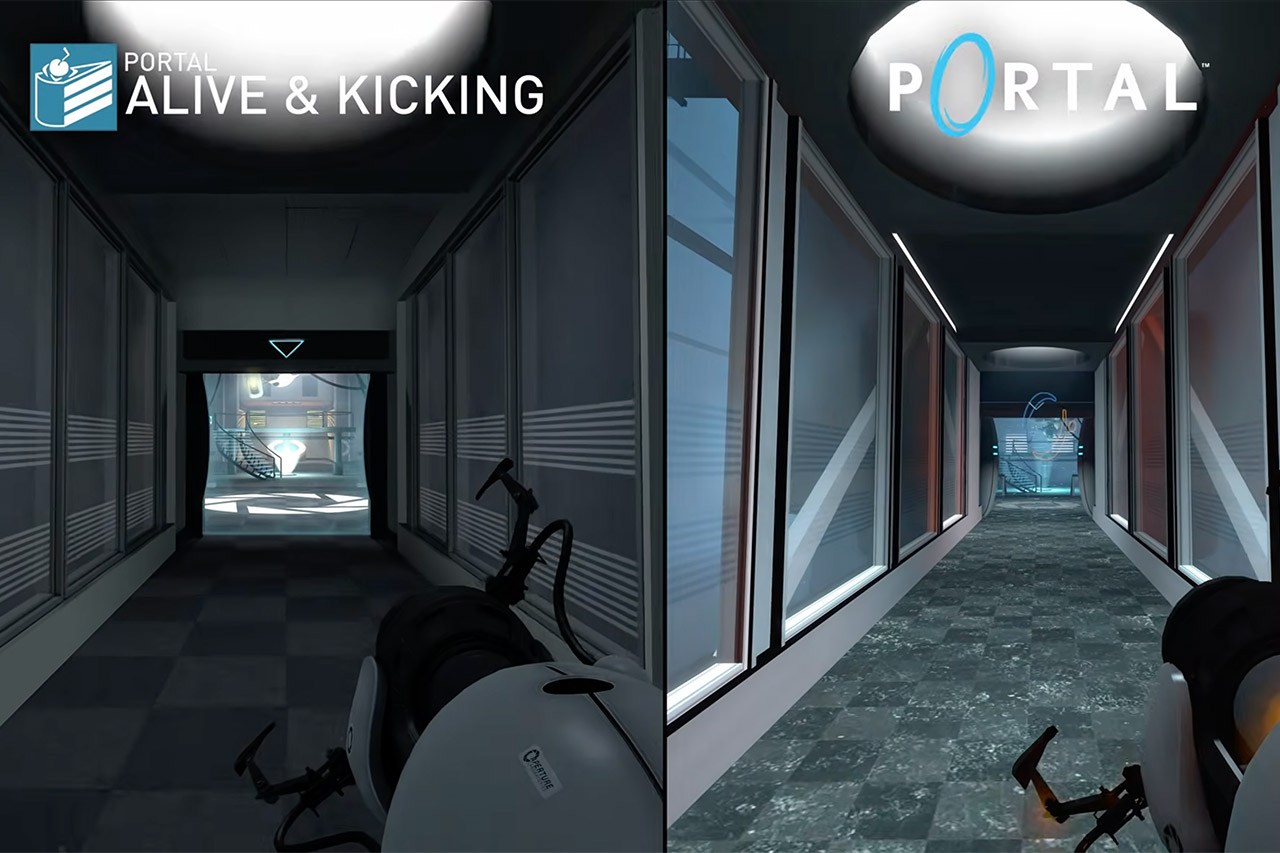
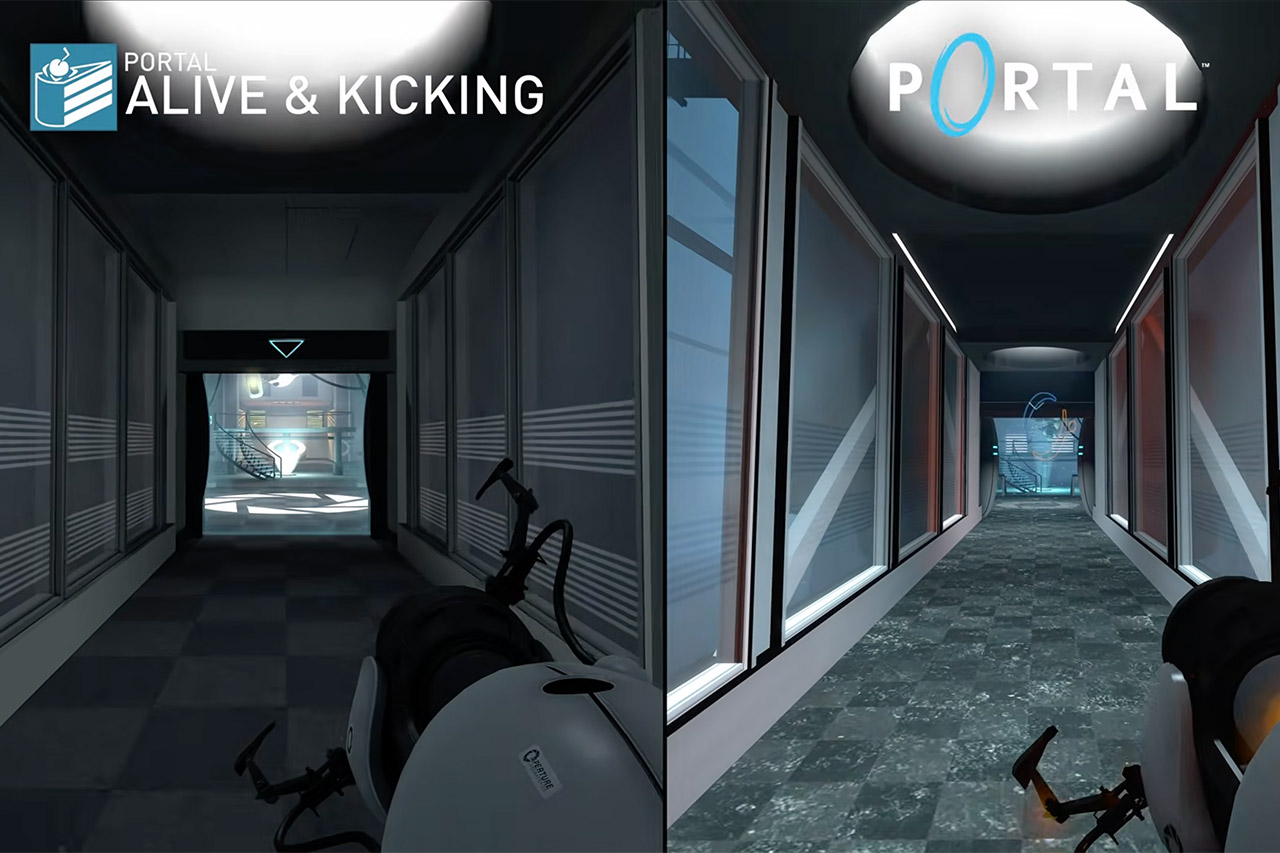
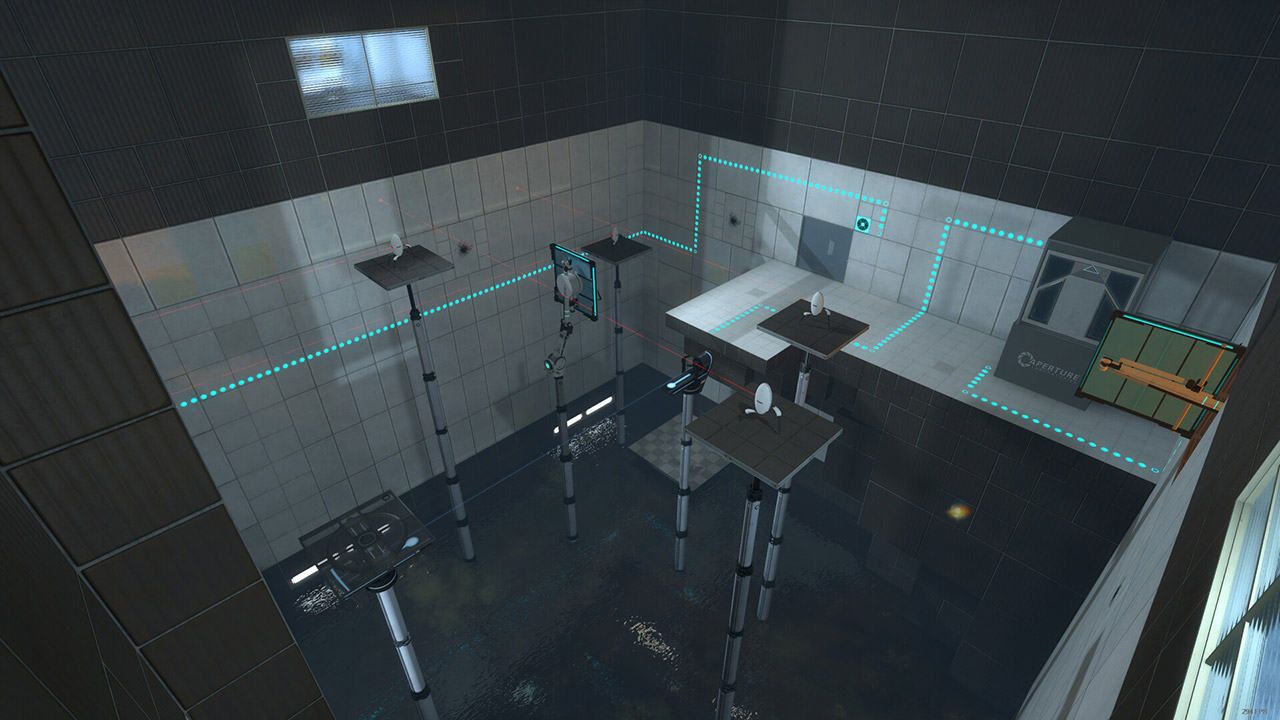
Fifteen years after a small fan team started rebuilding Valve’s 2007 puzzle game inside its sequel’s engine, Portal: Alive & Kicking is on Steam. Rhubarb & Rhubarb shipped the project on August 28, 2026 as a free download that only works if you already own Portal 2 and keep both titles in the same Steam library folder.
Chell is still waking up at Aperture Science’s test chambers, where she must endure and outsmart GLaDOS. Rhubarb went back to the drawing board and rebuilt the original chambers using Portal 2’s Source engine, allowing the original campaign to share the sequel’s lighting, textures, and general vibe. According to the official blurb on the store page, this is a complete remake and re-imagining, updated to reflect the retcons and fancy visual effects introduced four years after the first game.
ALL GAMES, ALL PLACES, ALL YOURS – Get ready to game on the 8″ 120Hz Lenovo PureSight display and launch any title using Legion Space. The AMD Ryzen…
SEE EVERY DETAIL – Make every scene pop with 500 nits of stunning brightness and 100% sRGB color accuracy. And with 10-point touch support, your…
PLAY YOUR WAY – Play hundreds of high-quality PC games with your complimentary 3 months of PC Game Pass and EA Play. With new games added all the…
The majority of the puzzles will still feel recognizable, but several of the chambers have been tweaked to feel a little less rough around the edges than they did back then. One example described during production was Chamber 17, a space where the Companion Cube was just sort of… there, despite the fact that it didn’t accomplish much. A Valve employee basically pestered the team to figure it out. Aside from that, the puzzle clues have been improved, making surfaces, buttons, and pellet pathways much easier to follow than they were previously.
Advertisement
They went back to the drawing board with the visuals, tile by tile. Jeep Barnett, one person who helped get the portal gun operating in the first place, said that everything looks incredibly sharp and that every single tile has been examined. He also remarked that the original game’s ambiguous directional hints have been cleaned up a bit. As a result, the game’s appearance is much closer to that of Portal 2, with a clean and minimalist design, as opposed to the older, more fragile approach. In a patch released a few days after debut, they improved the illumination in the escape locations and added some additional navigation signs.
The music is entirely new, rather than simply a carry over from the original. It’s a dynamic score that combines the first game’s slow, lonely drones with some of the more reactive cues found in Portal 2, as well as “Still Alive.” Everything else was written specifically for this remake, though. If you want to listen to the entire soundtrack, you can purchase it from Steam for $4.49 or for free on Bandcamp.
Valve’s involvement explains why we were left in the dark for several months, wondering what was going on. Apparently, the company offered the team access to Portal 2’s source code after they signed an NDA, but then required them to obtain a non-commercial license before they could release the game on Steam. That’s when all contact came to a halt, and everything just sort of… hung there until the paperwork was completed and everything was resolved. Dot Operator stated that the game had been completed a long time ago, but they had not received permission to publish it until now.
The remake includes all of the original content, as well as the entire Advanced chamber run. Rhubarb also says that they may offer some extra maps for free in the future, as long as they are ready. Like the original, this version includes Steam achievements, captions, full controller support, and the Source SDK. The game is technically for Windows, but Linux gamers have been enjoying it through Proton. However, there was some confusion on launch day because some store issues obscured the ‘play now’ option for some users, but a little playing with your wishlist and/or a SteamDB link should have resolved that. [Source]
Rockstar Games and the mayor of Miami-Dade county are discussing a joint marketing campaign transforming parts of the county to look like areas from Grand Theft Auto 6, reports the blog Rock Paper Shotgun:
The proposed publicity event would include “an immersive arrival experience” at Miami International Airport. with signs for Vice City and planes coated in GTA 6 livery, together with branded Metromover skytrains and specially designed manhole covers… [I]t proposes a dockyard visual installation inspired by GTA 6’s Port Gellhorn, incorporating cargo containers, cranes, and cruise ships. There’s also talk of a “Vice City Motor Fest”, which might feature “classic cars, customized vehicles, lowriders, motorcycles, tropical graphics, and local entertainment within a controlled, family-appropriate setting.” Attendees would presumably be discouraged from nicking the cars…
As it happens, Rockstar have embedded a team in Miami to sponge up the ambience, research Miami culture, and study the habits of residents — including “ex-criminals”, in the careful phrasing of senior vice president of narrative Rupert Humphries.
The pitch suggested murals, “wrapping” buses (with special signs at transit stops), and even a Vice City-inspired baggage-claim installation at the airport. The pitch also suggested the library offer recording equipment for “Vice City Radio” to capture music (as well as podcasting, oral histories, neighborhood storytelling) — along with ” limited-edition GTA VI-inspired library cards, collectible bookmarks, Miami-themed reading and music lists, and demonstrations of the new recording and production equipment.”
Advertisement
Though nothing has been formally agreed to or approved, the mayor’s office confirmed the discussions, reports Axios.
The sheriff of Miami-Dade county “has publicly opposed plans to transform the city into a real version of Grand Theft Auto 6’s “Vice City”, reports Kotaku. The sheriff’s reason? The videogame city “includes murder, robbery, drug trafficking, carjacking, violence against law enforcement,” as well as “other conduct” that the police department works “every single day to prevent.”
Labor Day savings across Apple’s product lines are in full swing this weekend, with savings of up to $500 off current MacBook Pros and even the brand-new Mac mini.
Save up to $500 on Apple products for the Labor Day weekend at Amazon. Highlights include preorder discounts on the 2026 Mac mini, along with steep markdowns on Apple’s latest MacBook Pros. You can also save on AirTags and even the Apple Studio Display.
Current M5, M5 Pro, and M5 Max MacBook Pros are also marked down for Labor Day, with deals delivering up to $500 off.
14-inch MacBook Pro discounts
14″ MacBook Pro M5 (10C CPU, 10C GPU, 16GB, 1TB, Standard Display): $1,849 ($150 off)
14″ MacBook Pro M5 Pro (15C CPU, 16C GPU, 24GB, 1TB, Standard Display): $2,299.99 ($200 off)
14″ MacBook Pro M5 Pro (15C CPU, 16C GPU, 24GB, 2TB, Standard Display): $2,699 ($300 off)
14″ MacBook Pro M5 Pro (18C CPU, 20C GPU, 24GB, 2TB, Standard Display): $2,899 ($300 off)
14″ MacBook Pro M5 Max (18C CPU, 32C GPU, 36GB, 2TB, Standard Display): $3,699 ($400 off)
16-inch MacBook Pro deals
16″ MacBook Pro M5 Pro (18C CPU, 20C GPU, 24GB, 1TB, Standard Display, Space Black): $2,759.99 ($240 off)
16″ MacBook Pro M5 Pro (18C CPU, 20C GPU, 48GB, 1TB, Standard Display, Space Black): $3,299 ($300 off)
16″ MacBook Pro M5 Max (18C CPU, 32C GPU, 36GB, 2TB, Standard Display): $3,899 ($500 off)
16″ MacBook Pro M5 Max (18C CPU, 40C GPU, 48GB, 2TB, Standard Display): $4,499 ($500 off)
AirPods from $99
The entire AirPods lineup is on sale this weekend too, with prices as low as $99. AirPods Pro 3 in particular are back down to $199 after a $50 discount.
Today’s best AirPods deals
AirTags are down to the lowest prices of the season, with deals starting at just $24.
Apple Studio Display up to $100 off
Apple’s 27-inch Studio Display is discounted at both Amazon and B&H for the Labor Day weekend.
Apple Studio Display sale
Apple Studio Display: Standard Glass, Tilt-Adjustable Stand: $1,499 ($100 off) at B&H
Apple Studio Display: Standard Glass, Tilt- and Height-Adjustable Stand: $1,926.35 ($74 off) at Amazon
Apple Studio Display: Nano-Texture Glass, Tilt-Adjustable Stand: $1,849 ($50 off)
You can find even more Apple deals across the Mac, iPad, Apple Watch, and AirPods categories in our Apple Price Guides.
Harbor Freight’s outdoor power tool section is filled with a mix of brands, some of which offer a broader range of tools than others. Bauer has one of the most expansive selections of outdoor tools of any of these brands, with a mix of corded and cordless options available.
That abundance of choice shouldn’t come as a surprise to any buyers who are already well acquainted with Bauer’s DIY power tools. Though, just like the brand’s DIY tools, not every Bauer outdoor power tool is worth buying. Thankfully, there’s a reliable way to check which tools are well-liked by Harbor Freight customers and which don’t make the grade.
Advertisement
Thousands of customers have already left their feedback about Bauer’s most popular tools on Harbor Freight’s website, and those reviews are a great way to gauge overall customer sentiment on any tool. These top 12 picks are some of the safest choices if you’re on the hunt for new outdoor power tools for your collection.
Advertisement
Bauer 20V Hedge Trimmer
Some outdoor power tools are essentials that the vast majority of home landscapers will find useful, while others are niche tools that fewer people will be able to justify investing in. Hedge trimmers sit firmly in the former camp, and as a result, most power tool brands offer their own cordless trimmer.
Buyers looking for a cheaper alternative to those big-name brands would do well to consider Bauer’s 20V hedge trimmer, which retails for $55. It gets consistently high ratings from buyers at Harbor Freight, and it runs using the same 20V battery packs that fans of Bauer’s cordless tools will already have in their toolkit.
Bauer recommends using a 3Ah battery for optimal performance, but any one of the brand’s interchangeable 20V battery packs will be able to run the tool. The trimmer can tackle branches up to 9/16 inch in diameter, and it reaches a peak of 2200 SPM (strokes per minute), so it can cut through foliage quickly. It’s lightweight too, coming in at less than five pounds (battery pack not included).
Advertisement
Bauer 20V 10 Inch Chainsaw
A chainsaw is another essential home landscaping tool, and Bauer offers both a cordless and corded version. The cordless version is the Bauer 20V 10-inch chainsaw, which promises high capability and low maintenance. According to its maker, it takes less than a second to reach full throttle, and can cut through wood up to nine inches thick.
Tools like chainsaws need to be durable, but even the most durable examples might need some replacement parts eventually. If your Bauer chainsaw ever needs repairs, Harbor Freight will sell you replacement parts, and there’s no shipping fee to pay on any of them.
Advertisement
The chainsaw is available at Harbor Freight for $85 as a standalone tool, and it’s not available as part of a kit. Newcomers to the brand who do not already have a Bauer 20V battery and charger will need to purchase both items separately at an additional cost. It’s worth keeping in mind that battery packs designed for other Harbor Freight brands, such as Hercules, are not interchangeable with Bauer tools.
Advertisement
Bauer 20V 338 CFM Blower Kit
Bauer offers the majority of power tools in its outdoor range as standalone products only, but the 20V 338 CFM Blower can be bought as a kit. That makes it a good entry point into the brand for anyone who doesn’t already have a toolkit full of Bauer products. In most cases, buying a kit with a tool, a battery, and a charger is cheaper than buying all three items individually. That remains true here, with the blower kit retailing for $99.99.
In contrast, the standalone version of the blower retails for $54.99. That means buyers get a 5Ah battery and 1.7 amp charger for an additional $45. Buying both the battery and charger separately would be more expensive, since the battery costs $69.99 and the charger is on clearance for $14.97, at the time of writing. As a result, buyers save roughly $40 by buying the kit.
As well as being a money-saving option for Bauer newbies, the blower is also an appealing yard tool in its own right. It reaches a peak speed of 96 mph and an output of 338 CFM, weighs just over five pounds, and features a dual-speed dial to prioritize either runtime or debris clearing power.
Advertisement
Bauer 20V Pole Saw
Harbor Freight shoppers have several options when it comes to picking a pole saw. The cheapest option is a wired tool sold by the Portland brand, which features a shaft that can extend to over eight feet. At the other end of the price spectrum, Atlas’ 80V cordless pole saw extends up to nine feet for a total maximum reach of 15 feet. In the middle of those options, in terms of both price and reach, is the Bauer 20V pole saw.
This tool retails for $89.99 and its shaft extends up to nine feet, giving the tool a total maximum reach of 14 feet. It’s able to make cuts of up to 7.4 inches using an eight-inch bar, and it weighs 10.65 pounds. Of course, the numbers only tell half the story; The key thing is whether users actually think the pole saw is any good.
Advertisement
The answer is that they do, although both the Portland pole saw and Atlas pole saw get marginally higher average ratings. Still, the Bauer saw remains one of the brand’s top-rated outdoor power tools.
Advertisement
Bauer 12 Amp 805 CFM Corded Jet Blower
Buyers who are interested in Bauer’s cordless tool range are well served, but anyone who prefers to stick with corded tools certainly isn’t missing out. That’s because Bauer’s Corded 115 MPH/805 CFM Jet Blower is not only cheaper than the brand’s cordless blower kit, but the tool is also far more powerful.
The 20V 338 CFM Cordless Blower kit retails for $99.99. Meanwhile, this corded blower costs $76.99, and it generates a far superior peak airflow of 805 CFM. Its peak air speed is also slightly higher, at 115 mph versus the cordless blower’s 95 mph.
The corded blower has received fewer reviews than its cordless counterpart, but buyers that have left their feedback have been consistently impressed. At the time of writing, it has racked up an average review rating of 4.8 out of five stars, making it the joint highest rated tool in Bauer’s entire outdoor power tool lineup.
Advertisement
Bauer 1800 PSI 1.2 GPM Portable Pressure Washer
Browse through Harbor Freight’s range of electric pressure washers and you’ll find six different products to choose from, with five of those being sold under the Bauer brand. Out of those Bauer tools, the one with the highest average user rating is the 1,800 PSI 1.2 GPM portable pressure washer.
It’s available for $99.99 and can be carried around the yard thanks to its top-mounted handle. That makes it more portable than most other pressure washers, although it still relies on a traditional wall outlet for its power rather than using batteries. At least the power cord is 35 feet long, which means you’re unlikely to need an extension cord if you have a small or medium-sized yard.
Advertisement
The tool comes with a trio of nozzles which can be stored onboard when they’re not in use. Also included is a 20-foot hose, a spray gun, and a quick-connect coupler, alongside a soap siphon hose. It has plenty of in-house competition, since many different Harbor Freight pressure washers get good reviews from buyers, but its compact proportions and comprehensive equipment list make the Bauer portable pressure washer a particularly safe bet.
Advertisement
Bauer 20V String Trimmer
Although Atlas’ 80V cordless weed eater is the highest rated model at Harbor Freight, it’s also the priciest, at $80 for the tool only. Bauer’s 20V string trimmer isn’t far behind in terms of ratings, and most users are still very happy with it too. Plus, assuming you already have a Bauer cordless tool in your tool kit, you’ll be able to buy it as a standalone tool without needing to factor in the cost of batteries.
The trimmer runs on the same 20V batteries that power the brand’s other outdoor cordless power tools, as well as its highly-regarded cordless DIY tool range. Atlas requires users to purchase battery packs specific to the brand, which unlike Bauer only produces outdoor tools. The Bauer trimmer retails for $54.99, and it’s designed to be easy to use for all kinds of home landscapers. Its adjustable shaft lets users adjust the tool to better suit their height, and the handle pivots into six different positions for better control. The tool is multi-talented too, and can convert into an edger or mini-mower in just a few seconds, thanks to the 7-position adjustable head.
Although most users are happy with the trimmer overall, it does get more mixed feedback than the majority of the other tools here. Many of the less satisfied reviewers say that it’s not tough or powerful enough to tackle longer grass or thicker overgrowth, and some say that the automatic line feed doesn’t work. For tougher jobs, the Atlas trimmer might be a better bet, despite the additional cost.
Advertisement
Bauer 20V 5 Inch Pruning Saw
Using a regular chainsaw to cut through smaller tree branches is overkill. Instead, a pruning saw will do just fine: It’s smaller, lighter, and generally less unwieldy, but it still packs enough power to get the job done. Bauer sells a 20V 5-inch pruning saw that gets good reviews, and it retails for $65 in tool-only form. According to its maker, it will cut branches up to 4-¾ inches thick, yet it only weighs 2.5 pounds without its battery.
The number of cuts that buyers can expect to achieve on a full charge will vary based on the capacity of the battery pack they’re using, but Bauer says that a 3Ah battery should achieve over 160 cuts before it needs to be recharged. Like all of Bauer’s power tools, the pruning saw is covered by a 90-day standard warranty, although Harbor Freight does offer extended warranties for buyers seeking extra peace of mind.
Advertisement
Bauer 20V 220 Lumen Work Light
Sometimes, the only time you can get a job done is after the sun goes down, and for that, you’ll need the right lighting setup. Bauer can help, since it has multiple affordable jobsite lights in its current range, including the 20V 220 Lumen Work Light. It ranks among the top-rated flashlights at Harbor Freight, and it uses the same battery packs as other Bauer outdoor tools.
Advertisement
The light is claimed to deliver a beam of up to 426 feet, and it can either be stood upright using its battery as a base or held in your hand. In both instances, the pivoting head helps position the beam exactly where you need it. Bauer says it can rotate up to 110°. There is also a hook built into the top of the work light, so it can be hung from a higher position for even more versatility. Bauer offers the tool for $14.99, which is cheaper than many similar-looking work lights from big-name brands, just like you’d expect from any Harbor Freight staple.
Advertisement
Bauer 20V 160 PSI Inflator
Arguably one of the more under-the-radar tools that Bauer sells is an inflator that can be used for everything from car tires to sports balls. The 20V 0-to-160 PSI inflator is available for $29.99 as a standalone tool, and the vast majority of reviewers think it’s worth its purchase price.
The tool comes with ball, air bed, and tire adapters, so it’s more versatile than you might think given its low asking price. When those accessories aren’t needed they can be stored on the tool. Unlike some pricier inflators, there’s no auto-stop feature, but there is a straightforward pressure gauge so you’ll know when you hit the target pressure. Air is sent through a 19-inch hose, which should be long enough to reach even the most awkwardly placed stems on tires.
This isn’t the only cordless inflator that Bauer sells, since the brand also offers an inflator and deflator that can be run using either a 20V battery pack or 12V DC power. However, that dual-power inflator has a slightly lower average review rating, and it’s also $20 more expensive, making the $29.99 inflator arguably a more worthy addition to your tool kit.
Advertisement
Bauer 2000 PSI 1.3 GPM Max Performance Pressure Washer
Given its name, you’d think that the Bauer 2,000 PSI 1.3 GPM Max Performance pressure washer would be the highest performance pressure washer that the brand offers. That’s not actually true, since Bauer also uses the “Max Performance” moniker for a pair of even pricier pressure washers that offer higher maximum pressures. In fact, compared to the full range of five different electric pressure washers, this washer is right in the middle in terms of max pressure.
So, why have we selected it above the other, more powerful options? There are several reasons: Firstly, it’s considerably cheaper than its more powerful siblings, with a retail price of $189.99. Secondly, it has accumulated the highest number of reviews by a significant margin, most of which are very positive. Thirdly, it’s likely to be the best bet for the broadest range of buyers, and there’s no point in paying more for additional capability you mostly won’t need.
Advertisement
Bauer claims that a pressure of 2,000 PSI is enough to remove tree sap and rust stains from vehicles, and even strip a wooden deck. Even most of the dissatisfied reviewers have no significant complaints about its power — instead, most complaints revolve around reported reliability issues. However, it’s worth reiterating that these complaints form only a small part of the overall feedback, and when asked, 90% of reviewers still said they’d be happy to recommend the item.
Advertisement
Bauer 14.5 Amp 16 Inch Corded Chainsaw
Cordless electric chainsaws are more convenient for their portability, but corded chainsaws are usually a cheaper option if you’re not already invested in a cordless tool ecosystem. As an example, take the Bauer 14.5 Amp 16-inch Chainsaw, which retails for $75. It’s the same price as the brand’s cordless electric 10-inch chainsaw, but it doesn’t require costly batteries and a charger to run. That makes it equally appealing to both longtime Bauer fans and buyers who are entirely new to the brand.
The other big difference is the size of the chainsaw’s bar. Buyers of the cordless tool receive a saw with a bar that’s 6 inches shorter than its corded counterpart. Plenty of things remain the same between the two tools, their short 90-day warranty being one of them. That hasn’t been enough to put off buyers, who have left more than 1,600 reviews of the tool to date, most of which give it a full five-star rating.
Advertisement
How we picked these Bauer outdoor power tools
Brett_hondow/Getty Images
Although the brand has a generally good reputation among Harbor Freight customers, not every Bauer outdoor power tool is worth buying. When making this list, we only selected Bauer outdoor power tools that were still on sale at the time of writing. To whittle the list down into these 12 top picks, we relied on feedback from reviewers on Harbor Freight’s website. Each pick has a minimum rating of at least 4.4 out of five stars from at least 200 reviews at the time of writing, putting them among the best-rated Bauer outdoor power tools overall.
When people talk about performance cars built around driver engagement, a few things usually come up — strong power-to-weight ratios, confidence-inspiring handling, and an overall purist driving experience. Some cars chase that feeling with brute force; others get there through compact packaging and low weight. One segment where that feeling is getting harder to find is compact performance cars and hot hatches.
The Ford Focus RS is gone. The underdog Honda CR-Z is also gone, so is the Mercedes-AMG A45, and the Mazdaspeed3. Nissan is keeping the flame alive with the new Z – the last sports car of its kind in the U.S. — but just barely, and Mazda has killed the MX-5’s larger 2.0-liter engine in Europe. The Porsche Cayman and Boxster are set to become electric, the Audi A5 Coupe no longer exists, and even the Toyota GR Supra and its BMW Z4 cousin are on their way out.
All of which is reason enough to celebrate the compact sports cars that still deliver what made this segment worth loving in the first place. The market is shifting in strange directions, and cars like these may not stick around much longer — something I’ve gotten to appreciate firsthand, having driven every car on this list. Here are five compact cars that are genuinely fun to drive.
Advertisement
Mazda MX-5 Miata
Heritage Images/Getty Images
For many enthusiasts around the world, the words “fun” and “compact car” are almost synonymous with the MX-5. The Fiat 124 Spider, the Honda S2000, the Audi TT, and many other similar cars are relics of the past, but the MX-5 isn’t. When we reviewed the 2025 Mazda MX-5, we gave it a near-perfect nine out of ten and included it on our Editor’s Choice list for 2025’s best cars.
Thanks to a short wheelbase, a manual gearbox, a relatively lightweight body, and a clear emphasis on driving feel, the MX-5 has defined the segment it lives in. I used an ND3 as a daily for a while, and one thing that stood out to me is how easy the car is to work on — a refreshing change from a lot of the German cars I’ve spent time with.
Advertisement
With a manual transmission, the MX-5 appeals to the purist driver the same way it did decades ago when it had far more competition. Many modern iterations of long-lasting performance cars have changed a lot, but the MX-5 did not, and you can feel that the moment you step behind the wheel. It is agile, the chassis is very communicative, and thanks to its RWD setup, it is playful in the corners.
Prices can range from just a few thousand dollars for an older high-mileage example, all the way to $40,000 plus for brand-spanking new models. The MX-5 is also a relatively reliable car, meaning that after spending that kind of money, you are more likely to enjoy it trouble-free compared to most cars.
Advertisement
Volkswagen Golf GTI
Although the hot-hatch segment is dying, one of the O.G. hot hatches, the Volkswagen Golf GTI still manages to endure. Not only that, but it actually manages to impress. Car and Driver recently reviewed the brand-new 2027 Volkswagen GTI, and the verdict was: “Forget the spec sheet and the price creep—the GTI still has that intrinsic goodness to put a big smile on your face every time you get behind the wheel.”
This is exactly what you’d expect from a hot hatch, and VW has kept the same basic formula of the GTI since inception. I daily drove a Mk7.5 GTI with a manual gearbox, and I’ve also test driven the DSG-equipped Mk8. The EA888 engine is torquey at the low end, the DSG is rapid, and considering just how quick the GTI can go, there is a remarkable lack of twitchiness that can often be experienced with FWD cars.
Even at full tilt, the chassis remains composed, the car shifts balance nicely, and you can truly push the GTI hard before it breaks traction. This means that you can actually explore any GTI on a normal road without landing in jail. This is what stood out to me, especially compared to more powerful cars, the ones you can only explore on a track.
Advertisement
Volkswagen also finally listened to its customer base and ditched the frustrating touch-sensitive steering wheel buttons — one of the features we were most hoping to see in the Mk8 GTI facelift. Ultimately, one of the GTI’s best aspects is how it can serve multiple purposes at the same time, without being compromised. Whether it’s daily driving or canyon carving, you can do it both.
Advertisement
Toyota GR86 / Subaru BRZ
The Toyota GR86 and Subaru BRZ are still very much around in 2026, and they are truly among the last of their kind. Car and Driver named the pair to its 2026 10Best”Cars list, pointing out that “these two are some of the last remaining sub-2900-pound cars” still on sale.
Mechanically, the twins carry over unchanged for 2026: a 2.4-liter naturally aspirated flat-four making 228 horsepower and 184 lb-ft of torque, sent to the rear wheels through a standard six-speed manual or an optional six-speed automatic. Where the two cars diverge is price. Subaru dropped the base BRZ Premium trim for 2026, pushing the BRZ’s starting price to $37,055.
The Toyota GR86 and Subaru BRZ are mechanically identical, but they’re still not the same car when it comes to tuning. I’ve test driven both but spent a lot more time with a manual BRZ. Behind the wheel, both feel small, nimble, quick to change direction, and they appeal to drivers the same way every other car on this list does. On a tight and technical mountain pass, these can effectively shrink around you and give you an amazing experience for the price.
On a more open road, you can feel the lack of weight in sweeping corners, plus I loved the firm brake pedal and the way the weight transfers once you are on it. With the manual BRZ, the experience was rather amazing. Best of all, when letting go of the brakes mid corner, you will be reminded that these are RWD cars after all, meaning that all kinds of fun is guaranteed with these.
Advertisement
Honda Civic Type R
Jonathan Weiss/Shutterstock
The 2026 Civic Type R starts at $47,395, up from $47,090 the year before, with none of the car’s hardware touched in the process. The powertrain is single and non-negotiable: a 2.0-liter turbocharged four-cylinder rated at 315 hp and 310 lb-ft, feeding the front wheels through a six-speed manual and nothing else.
There’s also just one trim, loaded with the equipment most rivals charge extra for — Honda backs off nothing on the options sheet, an approach reflected in items like the Type R’s standard limited-slip differential. MotorTrend’s own testing put the Type R’s 0-60 time at 5.3 seconds — matching the number the outlet recorded for the previous-generation Limited Edition.
Advertisement
What makes the Honda Type-R so special is the purity we mentioned at the outset of this article. It gets rid of noise and clutter and gives you boatloads of fun. In my experience with a 2025 model, the Type R felt very racey and stiff, but never unlivable. The brakes felt firm and the engine felt fairly linear for a turbocharged unit. It is a much sharper and more special performance car compared to something like a Golf GTI.
On the other hand, this also means the GTI felt like a better daily. Like the rest of this list, the Type R makes the same case — moderate horsepower and a manual gearbox, applied to a car this light and this focused, will beat raw numbers every time when it comes to actually having fun behind the wheel.
Advertisement
Fiat 500 Abarth
Brunocoelhopt/Getty Images
The gas-powered Fiat 500 Abarth left the U.S. market in 2019, and the new Abarth 500e replaced it. Still, used gas-powered 500s stuck around as some of the cheapest ways into a proper Italian hot hatch on the used market.
Under the hood, a 1.4-liter turbocharged MultiAir four-cylinder made 157 horsepower and 170 lb-ft, sent to the front wheels through a five-speed manual, in a car weighing barely over 2,500 lbs. Interior space might not be as generous as some other cars on this list, but once you settle inside, you feel cocooned.
I used a 500 Abarth as my city car for three months, and it felt mad and angry — like it had the spirit of something a lot more powerful than its numbers suggest. It leans hard into that raw, unfiltered character, and the numbers don’t really tell the whole story. It was amazing at getting me from point A to point B around town, though it felt a bit weird at highway speeds. The overly upright driving position isn’t great either, and at 6’5″, I often felt like I was driving a shopping cart.
The car’s skittish braking manners and its unusually high center of gravity for something so small are flaws, but they are also charming. Clean manual examples routinely turn up for well under $15,000, putting genuine turbocharged fun within reach of buyers who’d otherwise be priced out of this list entirely.
To quote the opening line from the court opinion that this post is based upon, “Millions of American teenagers have sex.” This post is has nothing to do with whether that sort of thing is good or bad, natural or otherwise, nor the moral implications of it all. Whatever you think about that opening line, I think we can at least agree that teenagers engaging in sexual activity that results in unwanted pregnancies is something we collectively would want to avoid. The government, and HHS specifically, has offered up grants for programs that seek to reduce unwanted pregnancies in teenagers and, as the court notes, those programs appear to have worked.
Alarmed by the country’s rising teenage birth rate, Congress funded grants through the Teen Pregnancy Prevention (“TPP”) Program to support local initiatives proven to reduce teen pregnancy, as well as promising approaches that might also prove effective after further observation and study. Congress intended for these programs to employ a range of strategies, from encouragement of abstinence and delayed sexual activity to education about contraceptives. The effort seems to be working: The teen pregnancy rate has plummeted since Congress began funding the grants in 2010.
Good news all around, it would seem. But since the Trump administration never seems to miss an opportunity to snatch defeat from the jaws of victory, HHS has decided to reinterpret, or you could say simply make up, what Congress intended to do with the money appropriated for these grants. Specifically, HHS has decided that this money will only be used for grants to fund programs that focus solely on abstinence and whatever the fuck “body literacy” is. The general idea is that any education or proliferation of tried and true forms of contraception are now verboten.
Several state counties, a nonprofit focusing on sex education, and Planned Parenthood of the Heartland filed suit to get the grant solicitation paperwork restored to its original state. As the lawsuit notes, neither HHS nor the Executive Branch are allowed to simply rewrite the mandates given alongside money appropriated by Congress. That is law-making by the Executive Branch by any plain reading.
And, to make matters worse, it appears that HHS wrote the grant criteria citing some studies that flatly don’t exist and citing others that don’t say what HHS says they say. The court agreed and issued a preliminary injunction putting a hold on the grant changes for now.
Advertisement
In his opinion granting a preliminary injunction as the lawsuit continues, U.S. District Judge Christopher Cooper called the changes “likely arbitrary and capricious” and said the government had failed to provide sufficient evidence for its policy. He wrote that grant solicitations for the program“(remarkably) reference public health studies that appear either not to exist or not to support the propositions for which they are cited — a hallmark of AI-generated citations.” In seven cited articles, two appeared to be entirely made up and three others did not exist in the journals they were attributed to, according to Cooper, a judge who was appointed to the federal court in Washington, D.C., in 2014.
This has become a pattern for HHS under RFK Jr. In June of last year, Kennedy issued a report to Congress to support the changes his hand-picked CDC team made to COVID vaccine recommendations. That report included several studies that were unpublished, or that indicated within the study itself that it shouldn’t be cited because more research needed to be done, or which said something completely different than what HHS claimed they said. In May of last year, HHS released a “MAHA Report” on American health that once again claimed certain studies said something other than what they actually said, but which also included cited studies that could not be found upon inspection. The wide speculation was that the report was generated in part using AI that was going through one of its hallucination episodes. One wonders if the AI was doing drugs off a toilet seat with Kennedy himself.
In a real, functioning government, this sort of embarrassment would result in action by somebody, somewhere, somehow. Sadly, we don’t have that. We have a bunch of con-artists cosplaying as government officials instead. But as Kennedy stacks up the losses when it comes to his work and credibility, the calls for his resignation or firing are only getting louder.
You have to know you’re fucking up when your largest and best-paying customer base is increasingly noping out of contract renewals. That more than anything is probably what provoked ALPR maker Flock Safety to start implementing a few guardrails for use.
It seemingly had no problem with being the target of negative press for most of the past couple of years. Every time the press (or politicians) came gunning for it, it would either claim the reporting was misleading or suggest those criticizing it were opposed to public safety.
For the first time ever, Flock has finally added some stuff to its products that’s meant to address months of reporting on abusive use by cops and abusive actions by the company itself. Flock’s tech has aided and abetted acts of stalking by police officers all over the nation, with new incidents seemingly reported daily. To that end, Flock has added some new default settings that limit retention periods, demand more info from officers performing searches, and flag potential misuse for review by police departments using its tech.
But it’s too little and far too late. “Too little” because while these new restrictions are on by default, they don’t seem to affect any systems already in use and can easily be switched off by law enforcement agencies. While you’d think more cops shops would welcome additional reporting that might flag misuse of ALPR databases, most seem perfectly content to allow local journalists to operate as unofficial, unpaid interns who will do the work Internal Affairs doesn’t seem interested in doing itself.
Advertisement
And it really doesn’t matter whether or not Flock’s CEO believes the company is the “first” to do anything about police misconduct. The rest of the country doesn’t believe him. Nor does it trust Flock. Flock is getting kicked to the curb with escalating frequency, as Cyrus Farivar reports for Ars Technica.
Communities from Lansing, Michigan, to Pflugerville, Texas, are ending their relationship with Flock, largely over concerns regarding out-of-control surveillance, unwanted data sharing, high expenses, and reports of police abusing the tool.
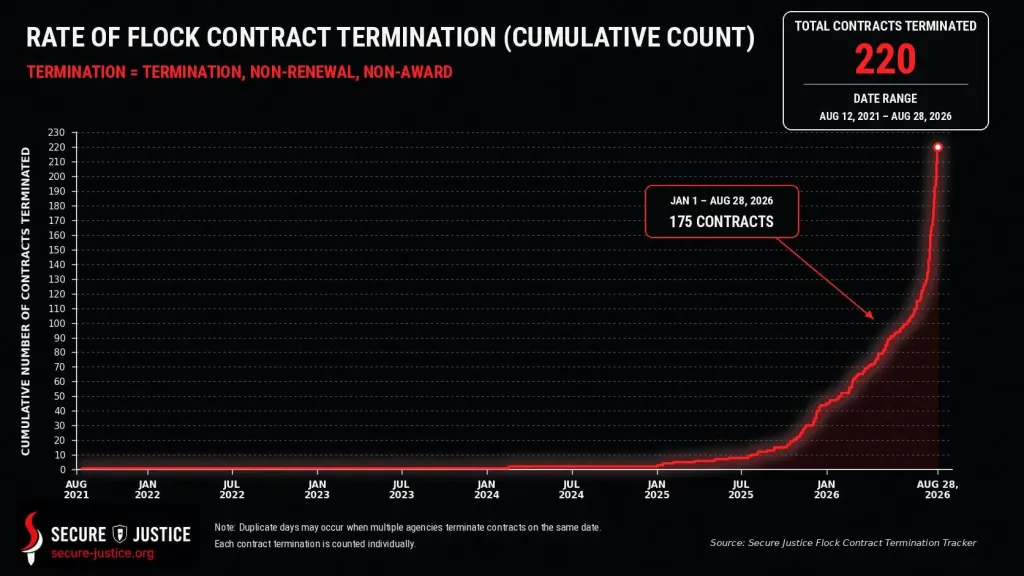
If you like your charts with hockey sticks, Secure Justice has one for you — one that has already been updated twice since Ars Technica first published its piece on August 28:
Advertisement
Here’s a closer look at the updated chart, which tallies another 10 Flock drops since August 26, bringing the new total to 96 in August alone.
This trend will continue. Flock doesn’t seem capable — much less willing — to provide ALPR tech that can be trusted by the public or even the law enforcement agencies utilizing it.
If you want more anecdotal evidence of Flock’s apparent desire to engage in self-destructive actions, just ask a cop.
In a public letter, Bellingham (MA) Police Chief Kenneth Fitzgerald stated that last year, Flock “tried to modify some of the terms of our service and access, while the contract was still in place.” He said this “raised concerns for me about our relationship with the company.”
Then, during a recent criminal investigation, Fitzgerald was further incensed when the department learned a feature called Flock “Free Form” was available through the cameras used by the department — an “Al-powered tool that can search video information using plain-language searches,” the chief said.
He said he was unaware of the AI features on the cameras and does not believe Flock “clearly explained or identified” them to the department.
Advertisement
“Those features go beyond what most people would think of as a traditional license plate reader,” Fitzgerald said. “That concerned me because I had previously told the public, based on our understanding of the system, that our Flock technology was a license plate reader only.”
Looks like hubris to me — the thing that seems to plague nearly every tech company that secures a dominant position in the market. Flock assumes all cops will want their surveillance tech to be increasingly pervasive and invasive. So, it implements new features without giving anyone a head’s up and then plays the victim when legislators, the general public, and even cops themselves decide they no longer want Flock in their cities.
And that makes Belligham only one of four PDs in Massachusetts that have chosen to terminate Flock contracts since the beginning of this month. Flock is losing ground everywhere in the nation and due to its willingness to ignore everything up to this point, it’s not going to be able to prevent the bleeding from continuing indefinitely.
And while this is certainly good news for Americans’ privacy, rest assured there are plenty of smaller companies that aren’t nearly as nationally infamous waiting to fill the void Flock leaves behind.
The SUV champions over the sedan in the U.S., now accounting for 52% of new vehicle sales in 2025, up from 46% in 2021 and 38% in 2016, according to GCBC. This makes sense in certain aspects because an SUV can be superior compared to sedans and other types of vehicles. For one, it is higher off the ground, it typically has more space, and it can go on terrains that most passenger cars can not.
People also love SUVs because they give you a more commanding position over the road, you see better, and can often place the car more easily into parking spots. Even though they can be quite big, they are also often boxy, which can also help you position them correctly. All in all, the sedan has a hard time competing with an SUV it the eye of the modern buyer, and as the trend is continuing, the gap is likely to widen.
This has also led many automakers to discontinue their sedans entirely. In 2025, we lost the Chevrolet Malibu, the Nissan Altima, Volvo’s S60/S90, the Subaru Legacy, and the Acura TLX. Still, plenty of the reasons people flock to SUVs don’t hold up, and a lot of common SUV myths are actually pretty exaggerated once you look closer, which is why we need to talk about the four ways sedans beat SUVs where it really matters.
Advertisement
Performance and handling
Where the sedan typically loses to the SUV in terms of utility, it makes up for it in the performance department. Granted, the market is now filled with super SUVs that can do 0-60 mph in around the three-second mark, but when the road gets technical, twisty, and tight, they are still no match for a dedicated performance sedan.
Advertisement
Take the 543-horsepower BMW M3 CS, for example. Compare it to the much more powerful, much more expensive, and much more compromised 640-horsepower Audi RS Q8 Performance. Around the Nürburgring Nordschleife, the M3 CS completed the lap in 7 minutes 28 seconds. The Audi RS Q8 performance was lapped at 7 minutes and 36 seconds — almost eight seconds behind the M3, despite having 100 horsepower more.
That gap comes down to physics. An SUV’s higher body sits further from the road, so more weight shifts side to side under cornering load, forcing the suspension and tires to work harder just to keep the car flat. That same height and mass also means bigger brakes doing more work to shed speed, and they fade sooner under repeated hard stops than a sedan’s.
The RS Q8 performance is still the fastest SUV ever officially tested on the Nürburgring, and the number it posted is genuinely absurd for something this tall and heavy. Still, the fastest sedan on the Nürburgring, the Porsche Taycan Turbo GT with the Manthey Kit, managed 6 minutes and 55 seconds. No matter how hard automakers try, you are never going to make a racing horse out of a bull, unless it’s a Lamborghini, of course.
Advertisement
Fuel economy
Lajst/Getty Images
Gas prices are at record highs, and as things stand, it is unclear whether that will become a bit worse, or a lot worse in the future. For someone who owns a gas-guzzler SUV, this is particularly important because SUVs, on average, use 20% to 30% more fuel compared to a smaller passenger car.
If the SUV in question is a more performance-oriented SUV, like the previously mentioned Audi RS Q8, those numbers can become ludicrous. For example, the RS Q8 performance carries an EPA-estimated 16 MPG combined rating — 14 MPG in the city and 20 MPG on the highway. Edmunds‘ own testing loop returned even less, with the outlet recording just 13.3 MPG.
Compare that to a proper performance sedan like the BMW M340i, EPA-rated at 29 MPG combined — 27 MPG in the city and 33 MPG on the highway — despite packing a 382-horsepower turbocharged inline-six and hitting 60 mph in about four seconds. That’s nearly double the RS Q8’s combined figure from a car that isn’t a hybrid and isn’t sacrificing much in a straight line either.
Advertisement
That difference comes down to good old physics, not engineering wizardry. A sedan’s smaller footprint and lower ride height cut through the air more efficiently, making it more slippery and more efficient. A sedan also has lighter overall weight, which means the engine works less to move it. Even smaller hybrid SUVs with exceptional gas mileage can get into the 40s, while the most efficient sedans out there can even get close to 60s.
Advertisement
Price and value
Brandon Woyshnis/Getty Images
A pretty major and immediately noticeable difference between SUVs and normal cars is pricing. This one you can notice directly on the window sticker. Even within the same automaker’s lineup, badge-for-badge, the SUV will typically cost more to buy. Take Toyota, the best-selling brand in the world, for example. The 2026 Camry starts at $29,600, and the 2026 RAV4 opens nearly $2,500 higher at $31,900, despite the RAV4 sharing the Camry’s platform underneath. That gap holds at the top too. So, no matter where in the lineup you look, the RAV4 is always comparably more expensive. At least part of that premium comes down to simple physics again.
The RAV4 is heavier. That means more material, more structure, and a bigger bill to build it. That extra weight and height also tend to mean pricier tires, larger brakes. In general, SUVs are simply priced higher. KBB rounded up the numbers for Cox Automotive’s assessment of mid-size SUV vs mid-size sedan pricing for June 2025, and the difference listed was that SUVs are, on average, 46% more expensive.
The BMW 3-Series starts at $48,000, the X3 starts at $51,300. The new Mercedes C-Class starts at $49,650, the GLC starts at $52,400. No matter how you look at it, chances are that buying an SUV is going to require more money.
Advertisement
Rollover protection and pedestrian safety
Gorodenkoff/Shutterstock
In many people’s eyes, an SUV seems safer than a sedan. That holds merit, but not always. For example, an SUV is higher off the ground and taller, and pure physics dictates that it is a lot easier to experience a rollover in an SUV compared to a sedan. This comes down to the center of gravity relative to the track width of an SUV, a ratio NHTSA calls the Static Stability Factor.
A taller vehicle with a higher center of gravity scores worse on this measurement, and the ratings reflect it. Among different vehicles rated by the NHTSA, SUVs typically landed at two or three stars for rollover resistance. On the other hand, most regular passenger cars scored four or five. According to IIHS’s 2024 fatality data, rollover crashes accounted for 20% of all car occupant deaths that year, compared with 33% of SUV occupant deaths.
Electronic stability control has narrowed that gap significantly since 1999 when these numbers were comparably a lot worse, but the physics haven’t changed. This also extends to pedestrian safety, where SUVs are consistently more dangerous to the people outside the car. In 2023, the IIHS ran the largest study of its kind, examining nearly 18,000 pedestrian crashes, and found that vehicles with a hood height above 40 inches were about 45% more likely to cause a pedestrian fatality compared to one with its hood under 30 inches.
Add a bit of speed into the mix, and the numbers are even worse. A separate IIHS study of Michigan crashes found that, at 20 to 39 mph, 30% of pedestrians struck by SUVs died, compared with 25% of those hit by cars, and above 40 mph, virtually every SUV-pedestrian collision in that sample proved fatal.































































You must be logged in to post a comment Login