Though heart disease is common, it’s also preventable with healthy habits. Eating healthy foods, exercising and avoiding bad habits like smoking can keep your heart healthy. If heart disease runs in your family and you’re looking for other ways to support your heart health, there are some vitamins and minerals that can help. As always, we recommend discussing it with your general practitioner first before taking supplements.
Best vitamins and nutrients for heart health supplements
Advertisement
Francesco Carta/Moment/Getty Images
There are several supplements you can choose if you think your diet doesn’t already contain enough heart-healthy vitamins and minerals.
Omega-3s
Studies have shown that omega-3 fatty acids can help prevent heart disease and strokes. The National Center for Complementary and Integrative Health states that people who eat diets rich in seafood — a prime source of omega-3s — are less likely to die of heart disease. These studies compared people who ate seafood at least once a week and those who rarely or never ate it.
You can buy supplements that contain omega-3 fats, such as those containing fish oil or cod liver oil. However, several studies of these supplements couldn’t find conclusive evidence that they significantly reduced heart disease. The best way to take omega-3 fats, then, is to obtain them naturally in your diet. Look for fatty fish such as wild salmon, sardines, mussels, rainbow trout and Atlantic mackerel.
If you are taking medicine that affects blood clotting, you should consult with your doctor before taking any omega-3 supplements.
Consuming a diet rich in fiber might help lower your blood cholesterol levels, according to the Mayo Clinic. It says studies have shown that high-fiber foods might also reduce blood pressure and inflammation, both of which can boost your heart’s health.
The Mayo Clinic also states that those who don’t get enough fiber, particularly soluble fiber, from their diet can benefit from taking fiber supplements such as Metamucil, Konsyl and Citrucel.
While there is no evidence that the daily use of fiber supplements causes any harm, they may cause some side effects, such as bloating and gas. The Mayo Clinic also recommends that if you have a history of Crohn’s disease or a bowel blockage, you should talk to your doctor before taking fiber supplements.
Magnesium
If you’re not getting enough magesnium, you might suffer from heart palpitations. That’s because magnesium helps your body maintain a steady heartbeat and lower blood pressure. A lack of this mineral can also cause fatigue, a loss of appetite, muscle spasms, nausea and a general feeling of weakness, according to the Cleveland Clinic.
If you want to boost your magnesium levels naturally, eat whole grains and dark green, leafy vegetables. You can also get magnesium from low-fat milk, yogurt, soybeans, baked beans, peanuts, almonds and cashews.
Advertisement
You can obtain daily magnesium from supplements, though medical professionals recommend eating magnesium-rich foods as a better option. If you have end-stage liver or kidney disease, then you should be careful about consuming too much magnesium, particularly through dietary supplements, because too much of this mineral could prove toxic. It is very rare to consume excess magnesium from food. It is more likely due to over-supplementation.
Coenzyme Q10
Coenzyme Q10 — or CoQ10 — is an antioxidant that your body produces on its own. But the levels of CoQ10 that you produce drop as you get older. The Mayo Clinic says that people who suffer from heart disease often have lower levels of CoQ10.
You can take dietary supplements, though, to increase your levels of this antioxidant. As the Mayo Clinic says, you can take CoQ10 supplements in the form of capsules, chewable tablets, liquid and powders.
CoQ10 has been shown to improve the conditions that reduce the risk of congestive heart failure, according to the Mayo Clinic. It might also help to lower your blood pressure. It might even help people, when combined with other nutrients, who have had heart valve and bypass surgeries.
Advertisement
The Mayo Clinic says that CoQ10 supplements come with few, and usually mild, symptoms, including loss of appetite, nausea, diarrhea and upper abdominal pain. If you are taking warfarin (Coumadin) or clopidogrel (Plavix), consult your doctor before taking CoQ10 (which you should do with any supplement).
Folic acid
Folic acid, also known as vitamin B9, can help maintain the right level of homocysteine in your blood when used in conjunction with vitamins B6 and B12. This is important since high levels of homocysteine, an amino acid, are associated with an increased risk of heart disease.
Folic acid supplementation does not decrease the risk of heart disease, but helps to protect you from heart disease symptoms, such as stroke. The CDC also advises people who might get pregnant to take 400 micrograms of folic acid every day. That’s because this B vitamin helps prevent birth defects.
The Mayo Clinic says the best source of folic acid is a diet rich in dark green leafy vegetables, beans, peas and nuts. You’ll also get plenty of folic acid in fruits such as oranges, lemons, bananas, melons and strawberries.
Advertisement
You can also get folic acid in its synthetic form in vitamins and in foods fortified with the vitamin, such as cereals and pasta. The Mayo Clinic recommends folic acid supplements for people with poor diets or conditions that interfere with their body’s ability to absorb folate. Make sure to consult your doctor first.
Folic acid supplements have mild side effects such as nausea, loss of appetite, confusion and irritability. You might also experience sleep interruptions after taking folic acid supplements.
Heart health supplement risks
The most common form of heart-healthy supplements, such as folic acid, magnesium and fiber, come with mild side effects. If you have certain health issues, such as kidney disease, Crohn’s disease or issues with blood clotting, you should discuss supplements with your doctor before taking them.
It’s also important to note that the best way to get minerals and vitamins is through a healthy diet. Medical professionals recommend diets high in seafood, leafy green vegetables, beans, fruit and lean meats. If you eat the proper diet, you usually won’t need to take any supplements. If you think a supplement may be right for you, talk to your doctor before taking one.
Contrary to earlier predictions that artificial intelligence would reduce reliance on mobile apps, new data suggests the opposite is happening. The app ecosystem is seeing a sharp rise in activity, with AI playing a key role in driving a new wave of app development.
According to a Tom’s Guide report quoting market intelligence firm Appfigures, global app releases grew by 60 percent year-over-year in the first quarter of 2026 across both Apple’s App Store and Google Play. The growth is even more pronounced on iOS, where app launches increased by 80 percent during the same period. Early data for April shows an even steeper rise, with total app releases up 104 percent across both platforms and 89 percent on iOS alone.
AI Is Powering A New App Gold Rush
The surge in app creation comes amid earlier concerns that AI chatbots and agents would replace traditional apps altogether. Industry leaders had speculated that users might shift toward conversational interfaces, reducing the need for standalone applications.
Unsplash
However, a different trend is emerging. AI tools are making it easier for individuals to build apps, even without formal coding skills. Platforms such as AI-assisted development tools are lowering the barrier to entry, enabling creators to quickly turn ideas into functional software.
This shift is reflected in the types of apps being launched. While mobile games continue to dominate in terms of volume, categories like productivity, utilities, and lifestyle apps are seeing increased activity. Health and fitness apps are also among the top segments experiencing growth.
Advertisement
Why This Matters For The App Ecosystem
The resurgence of app development signals a broader transformation in how software is created. Instead of replacing apps, AI appears to be accelerating their production, potentially ushering in a new “app gold rush.”
For companies like Apple and Google, this translates into renewed platform relevance and increased opportunities for revenue through app distribution and in-app purchases. For developers and creators, it opens the door to experimentation and innovation at a scale that was previously difficult to achieve.
However, this growth also introduces challenges. A rapid influx of new apps increases the risk of low-quality, misleading, or malicious software entering the marketplace.
What It Means For Users
For users, the growing number of apps means more choices and potentially more innovative tools. AI-powered applications are expanding capabilities across productivity, communication, and entertainment.
Advertisement
Unsplash
At the same time, the surge makes it harder to distinguish between reliable apps and those that may be spammy or harmful. Recent incidents involving fraudulent or malicious apps slipping through review processes highlight the need for stronger oversight.
What Comes Next
As AI-driven development continues to gain traction, the volume of app releases is expected to grow further. This could push platforms like Apple to enhance their review systems and introduce stricter monitoring mechanisms.
The next phase of the app economy will likely depend on balancing rapid innovation with quality control. While AI is clearly enabling a new wave of creation, ensuring trust and safety will be critical as the ecosystem expands.
There was a car created by Carroll Shelby that didn’t have a Ford engine under its hood. In fact, it wasn’t even based on a Ford. We are talking about the Shelby Series 1 Roadster, the only car ever built by Shelby from a clean-sheet design. Instead of a big engine from the Blue Oval providing the motive power for this Shelby, there was an Oldsmobile V8 under the hood generating the necessary horsepower. Overall, it was an underappreciated Shelby car.
The Shelby Series 1 Roadster was Carroll Shelby’s final attempt to create a modern version of the automotive icon that was the Shelby Cobra. Just 249 examples of the Series 1 were produced, all 1999 models, conforming to that year’s Federal Motor Vehicle Safety Standards. The Shelby’s chassis was state-of-the-art, featuring 6061 T4 aluminum elements that were formed and extruded before being welded together and heat treated. Honeycomb aluminum panels formed the floor and rocker panels for extra rigidity, producing a chassis that weighed only 265 pounds. The body that was draped over this chassis was made of fiberglass composite and carbon fiber, keeping the curb weight down to just 2,650 pounds. This was much less than that of the car seen as the Shelby’s main competitor at the time, the Chevrolet Corvette C5.
The Shelby Series 1 Roadster’s suspension used a double wishbone setup connected to cantilevered coil-overs in the center of the vehicle. The brakes were discs all around, with forged aluminum 18-inch Speedline wheels measuring 10 inches wide in the front and 12 inches wide in the rear, mounted with Goodyear Eagle F1 tires.
Advertisement
The Shelby Series 1 Roadster had its share of problems
Kevin Tichenor/Shutterstock
The Shelby Series 1 Roadster experienced a large number of problems during its gestation, primarily due to both production-related issues and roadblocks stemming from corporate politics. Production problems included chassis jigs that permitted warping during cooling, plus delays due to an overworked team at Shelby that pushed production out to 1999. This further led to cost overruns when a new set of safety standards had to then be met. Then there were handling issues, the lack of ABS (which led to braking problems), whining gears from the ZF manual transmission, and repeatedly cracking aluminum castings in the rear suspension. Moreover, the side windows and convertible tops did not fit correctly and some of the transaxles needed replacement, all issues that increased costs further. Also, the car’s carbon fiber body panels turned out to be not properly sealed, requiring body filler that added hundreds of pounds of weight to the Series 1 Roadster.
Political problems were largely the result of the forced 1996 departure of John Rock, the Oldsmobile general manager who had championed GM’s hookup with Shelby to produce the Series 1 Roadster. Once Rock was gone, Oldsmobile would not supply the computer tuning codes for the L47 engine Shelby was using, ultimately reducing the stock engine’s output from 350 horses to 320. Making things worse, GM refused to share any current Corvette parts with the Shelby Series 1 Roadster, so Shelby was unable to use the ‘Vette’s transaxle or any C5 suspension pieces. The price also increased, starting at a sub-$100k target when it was first announced up to $181,824 in 2000.
Advertisement
How well did the Shelby Series 1 Roadster perform?
Nikonysta/Shutterstock
For motive power, the Shelby Series 1 Roadster was supposed to use an Oldsmobile racing engine, but emissions-compliance issues resulted in the car using the civilian version, the 4.0-liter DOHC V8 from the Oldsmobile Aurora, mounted behind the front axle in a front mid-engine position. The engine was mated to a six-speed manual ZF transmission driving the rear wheels. Weight distribution was an ideal 51:49. The engine made 250 horsepower in the Aurora, but the Shelby ended up with 320, while an optional supercharger, which works differently than a turbocharger, would literally boost that to 450 horsepower.
According to the Museum of American Speed, the stock Shelby Series 1 Roadster can do 0-60 mph in 4.4 seconds, with a quarter-mile time of 12.8 seconds at 112 mph and a top speed of 170 mph. Car and Driver managed, after many difficulties related to the car’s reliability, to get a 0-60 mph time of 4.1 seconds and a quarter-mile time of 13.0 seconds at 112 mph. The publication famously called the Series 1 “a work in progress.”
Advertisement
The Shelby Series 1 Roadster should have been a modern reincarnation of the Shelby Cobra, with all the performance and charisma of the original version. Instead, it is seen as a project that came up against all of the typical obstacles that befall low-volume vehicle producers. From the eternal struggle to make money on a few hundred cars and corporate infighting with formerly helpful partners to the realities of making a vehicle that conforms to the Federal Motor Vehicle Safety Standards, the Series 1 had the deck stacked against it; regardless, it remains Carrol Shelby’s flawed but striking swansong.
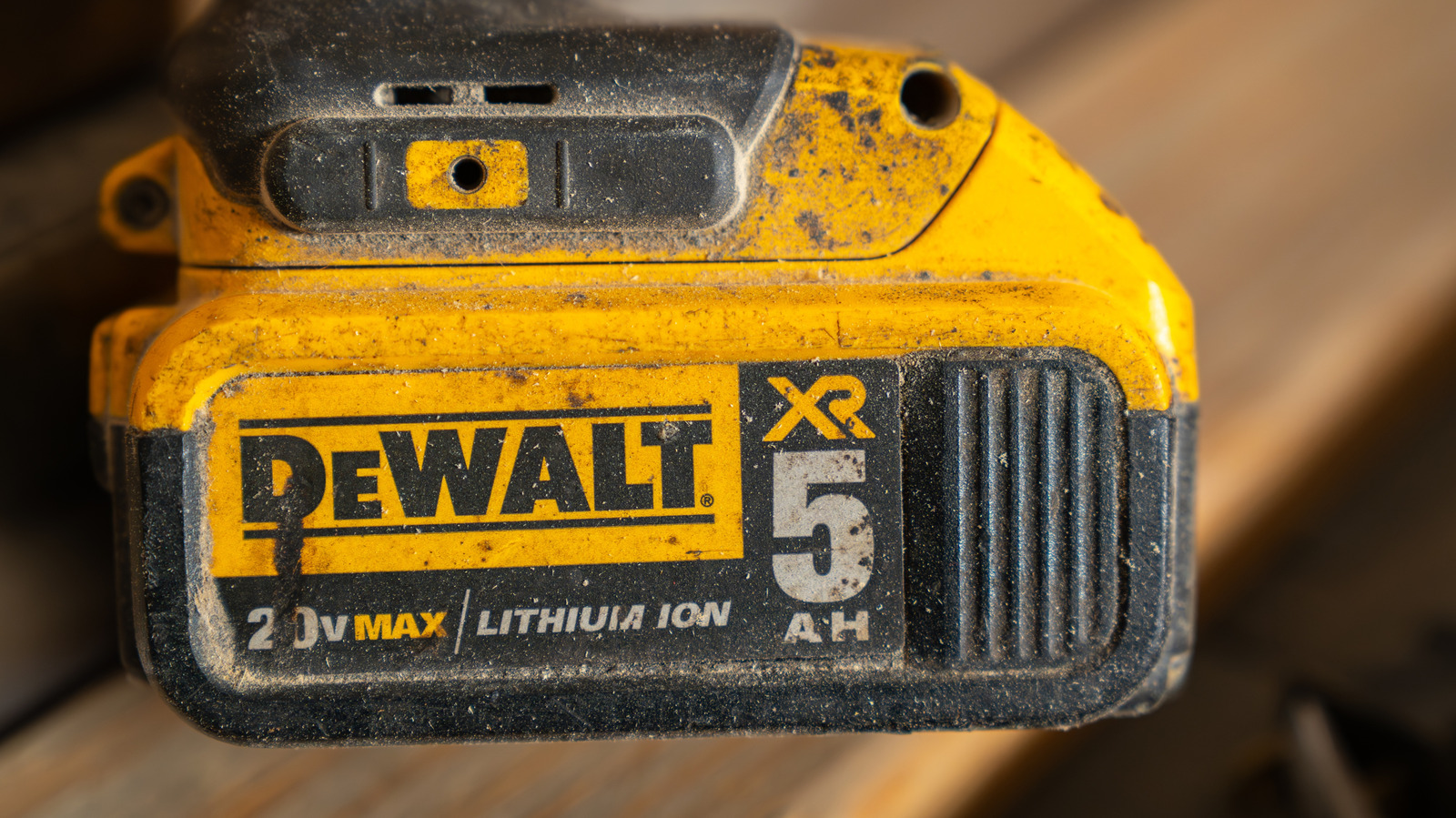
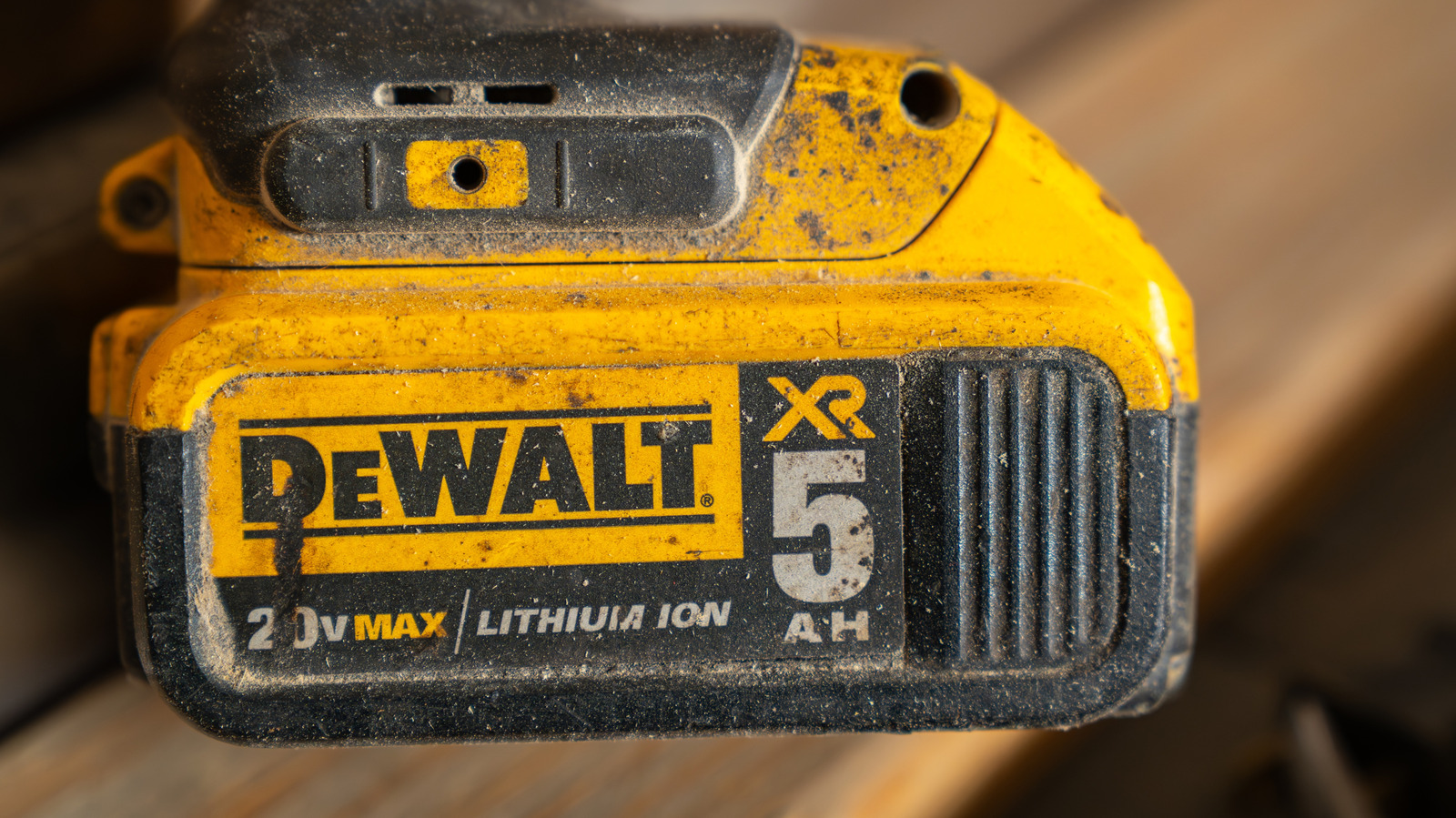
In the power tool game, having your branding down is everything, and DeWalt has remained pretty consistent with its products over the past few decades — when customers see black and yellow in a tool context, their mind automatically goes to DeWalt. With that said, the company isn’t afraid to make minor, yet noticeable tweaks here in there. One of the most recent is a change to one of DeWalt’s many battery types, specifically the 20V XR battery offerings. Looking closely at the labels on the sides of these batteries and at their online descriptions, there is a noticeable change to how these batteries are categorized and advertised.
For example, the 20V Max XR compact battery has only recently taken on this naming. Not long ago, it was known as the 20V Max XR PowerStack compact battery, with the PowerStack branding removed from the online DeWalt listing, and this change is reflected on the battery itself. This change is observed through the 20V Max XR compact battery kit listing on the DeWalt website, which features images of previous designs with the large and small PowerStack logos. On top of this, PowerStack and PowerPack logos have been removed from many other 20V DeWalt batteries.
Advertisement
All in all, this isn’t too massive of a change, especially for those who aren’t all that picky about their DeWalt batteries so long as they get the job done. The question is, though, does this slight rebrand mean anything for the batteries’ performance level? Thankfully, based on the image changes, DeWalt’s battery system hasn’t changed outside of these missing PowerStack and PowerPack logos.
Advertisement
Has DeWalt made functional changes to its batteries?
At the end of the day, a missing logo and some description changes doesn’t make too much of a difference. However, if DeWalt altered how its batteries work, that would be cause for customers to be disgruntled. As mentioned before, they’re still the same shape and size across the board, and for those worried they’ll have to delve into the pros and cons of power tool battery adapters, the manner in which they connect to DeWalt power tools hasn’t changed.
With that said, there is the question of the fate of the PowerStack and PowerPack lines. PowerStack batteries were introduced as a more powerful and efficient series of batteries, notable for their flat pouch cells over standard cylindrical ones. PowerPack batteries offer similar benefits utilizing multi-tab battery cells as opposed to traditional single-tab cells. Nothing has come to light that confirms the demise of these sublines or the technology behind them, so we’ll just have to wait and see if DeWalt sheds any light on the disappearance of these labels down the line.
While the fate of the PowerPack and PowerStack labels remains something of a mystery for the time being, there don’t seem to be many significant battery changes in DeWalt’s lineup. Based on the revised images, the impacted battery models are likely to connect and get the job done as they always have, just with a little less paint and branding on their sides.
Looking for the most recent Wordle answer? Click here for today’s Wordle hints, as well as our daily answers and hints for The New York Times Mini Crossword, Connections, Connections: Sports Edition and Strands puzzles.
The New Glenn mission, scheduled for Sunday morning, will reuse the same first-stage booster that flew and landed during its second mission last November. That reuse milestone is the focus of the flight, not just the payload. Reusability now sits at the center of launch economics, enabling SpaceX to fly… Read Entire Article Source link
Betteridge’s law applies, but with help and guidance by a human who knows his stuff, [Ready Z80] was able to get a functioning game of Wordle out of the French-named LLM, which is more than we expected. It’s not like the folks at Anthropic spent much time making sure 40-year-old opcodes were well represented in their training data, after all.
For hardware, [Ready Z80] is working with the TEC-1G single-board-computer, which is a retrocomputer inspired by the TEC-1 whose design was published by Australian hobbyist magazine “Talking Electronics” back in the 1980s. Claude actually seemed to know what that was, and that it only had a hex keypad — though when [Ready Z80] was quick to correct it and let the LLM know he’s using a QWERTY keyboard add-on, Claude declared it was confident in its ability to write the code.
As usual for a LLM, Claude was overconfident and tossed out some nonexistent instructions. Though admittedly, it didn’t persist in that after being corrected. It’s notable that [Ready Z80] doesn’t prompt it with “Give me an implementation of Wordle in Z80 assembly for the TEC-1G” but goes through step-by-step, explaining exactly what he wants each section of the code to do. As [Dan Maloney] reported three years ago, it’s a bit like working with a summer intern.
Advertisement
In the end, they get a working game, but that was never in question. [Ready Z80] reveals over the course of the video he has the chops to have written it himself. Did using Claude make that go faster? Based on studies we’ve seen, it probably felt like it, even if it may have actually slowed him down.
Matrix Recruitment’s Breda Dooley finds that in a competitive space, candidates can’t fall foul to common faux pas.
Looking for a new job can be stressful, as you aim to progress your career and find a role that suits both your lifestyle and your ambitions. With that in mind, it is critical that you put your best foot forward, as even the smallest mistake during the interview and hiring process could be the deciding factor on whether or not that dream job becomes yours.
Candidates are making avoidable errors, finds Breda Dooley, the head of recruitment at Matrix Recruitment Group. With mistakes ranging from generic CVs to costly blunders during virtual interviews, she noted that hiring managers often cite small errors as the reason a candidate missed out on an opportunity in an increasingly competitive job market.
Explaining that candidates should always be prepared, professional and show genuine interest in the role, Dooley highlighted the areas in which mistakes are often made and offered advice as to how applicants can avoid an unnecessary blunder.
Advertisement
Virtual interview blunders
We are firmly in the post-Covid era, with many of the rules and regulations brought in during the pandemic having long been disregarded. One element that has stuck around, however, is the virtual interview, as many roles exist now in a hybrid or remote capacity.
Yet despite the prevalence of online workplace engagement, Dooley finds that job applicants in 2026 are continuing to make avoidable mistakes: for example, poor camera positioning, a failure to test internet connection prior to the interview and taking the call in an environment with distracting background noise. Body language, too, should be controlled, in much the same way that you would regulate your face and emotions in an in-person setting.
Dooley said, “Virtual interviews require the same level of preparation as face-to-face meetings. Your setup, body language and focus all influence the impression you leave.”
Down the garden path
The manner in which you choose to deliver your answers is also of importance, as too little or too much information could result in a negative interviewing experience for the employer and the loss of an opportunity for the applicant.
Advertisement
That is to say, you should make a concerted effort not to overly rehearse your answers – generic, overly memorised responses can sound stilted and unnatural. Answers should be pre-prepared to a degree, but not so well crafted that they come across as being scripted or lacking authenticity.
Dooley said, “Interviews should still feel like a conversation. Candidates should focus on sharing genuine examples that show how they approach challenges or delivered results. It’s really important to give real-life examples and scenarios with clear facts; this will stick out in an interview and showcase your skills.”
The opposite is true as well, finds Dooley, as unfocused or excessively detailed answers can show an inability to structure a coherent response to a question.
“Don’t ramble. Clear and concise answers that focus on relevant examples tend to leave a stronger impression on interview panels.”
Advertisement
Finish strong
First impressions can last – however, it is possible that a recruiter will ignore a poor start if you pick yourself up and finish strong. A failure to connect with the place offering the job, or asking anything about the work at hand, though, can certainly leave the employer feeling as though you wouldn’t be a good fit.
In asking additional questions once the conversation has come to a natural halt, you can show that you are genuinely curious about the organisation, that you want to engage further and that you understand the importance of communicating queries or concerns.
“Candidates should use the opportunity to learn more about the role, the team and the company culture. The fundamentals haven’t changed – preparation, clarity and professionalism remain the factors that set strong candidates apart,” said Dooley.
In addition to showcasing your suitability for the role, asking questions also enables the applicant to fully assess whether or not the working environment is one in which they would be happy to work. Just make sure that the questions are in line with your current status as an applicant, and don’t unintentionally cross a professional boundary.
Advertisement
So there you have it – the common mistakes many job applicants in 2026 are still making. Make sure you aren’t among them.
Don’t miss out on the knowledge you need to succeed. Sign up for the Daily Brief, Silicon Republic’s digest of need-to-know sci-tech news.
Fully electric vehicles are becoming more and more prevalent, but some people still prefer hybrids over EVs. Hybrids combine the best aspects of both full-electric motors and gasoline-fueled engines, and as such, they offer decent power output, reduced emissions, and impressive fuel efficiency. They’re also generally quieter, and they remove the charging hassle and fear of running out of power that comes with a full EV.
Hybrids depend on a battery pack to power the electric motor. These batteries often come with generous warranties, with major automotive brands like Ford and BMW offering eight-year warranties. However, even though there are measures you can take to ensure your hybrid’s battery lasts as long as it’s supposed to, it will still degrade and fail over time. When this happens, you’ll probably experience some of the most common problems that affect lithium-ion or nickel-metal hydride batteries, like overheating and reduced battery capacity.
Given that most hybrid battery repairs or replacements can cost thousands of dollars, understanding these problems is vital for current owners and potential buyers alike. As an owner, it can help you detect and troubleshoot small issues that might worsen into something serious, and if you’re a buyer, you’ll be able to decide if the hybrid car is worth investing in. With that said, here’s a look at common problems you’ll find with hybrid batteries and how you can avoid them.
Advertisement
Your battery drains too fast
Scharfsinn/Shutterstock
One thing to keep in mind about all types of batteries is that they are susceptible to battery drain, especially as they age. Your high-voltage hybrid battery pack is no different. In an ideal scenario, a hybrid battery should last about eight to ten years, and you should not experience persistent battery drain during this period. However, if your pack is relatively new, and you notice telltale signs of a dying battery, such as a noticeable drop in your average MPG or reduced performance, that’s cause for concern. Your aging battery cells are probably losing efficiency, and it’s best that you visit a pro for inspection and repair.
Apart from age, there are many reasons why your car’s battery is draining so fast. Factors such as exposure to extreme temperatures and frequent deep discharges can all lead to premature battery drain. The battery will also start to lose capacity if you leave your vehicle untouched for months or engage in bad driving habits, say, pushing the engine too hard for too long. To avoid putting your hybrid battery at risk of premature draining, experts recommend parking your car in a shaded area. You’ll also want to drive your car regularly — not short drives, as they can also shorten the lifespan of both the 12-volt and high-voltage batteries. Don’t forget to commit to proactive maintenance as it’s key to a long hybrid life.
Advertisement
Your battery overheats
happycreator/Shutterstock
Another common and dangerous problem you may encounter with hybrid batteries is overheating. It’s quite normal for batteries to generate a little heat when in use due to chemical reactions. When it starts to heat up excessively, however, you’ll want to take caution; an overheating hybrid battery can present some serious issues. It can reduce your battery’s lifespan by increasing wear and damaging battery cells and also impact your car’s performance and fuel efficiency.
Overheating is one of the warning signs that your hybrid battery needs to be replaced. You can always tell your battery is dangerously overheated if it’s hot to the touch or if a battery warning light pops up on the dashboard. There are several reasons why your hybrid battery will overheat. Think of being exposed to direct sunlight for extended periods, pushing your car too hard to gain speed instantaneously, and faulty electronic connections.
Advertisement
You can keep all these from happening by avoiding common mistakes that ruin car batteries. Mechanics also warn against depleting or deep-discharging your high-voltage battery pack. It’s also wise that you practice proper maintenance. Blocked air intakes, dirty filters, and faulty fans are known culprits for overheating hybrid batteries. Aside from this, be on the lookout for software updates that could entail battery management improvements.
Advertisement
Dead cells or faulty battery modules
Scharfsinn/Shutterstock
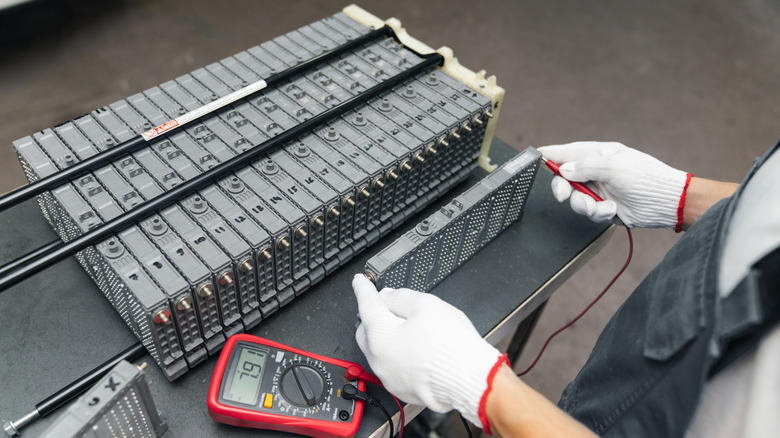
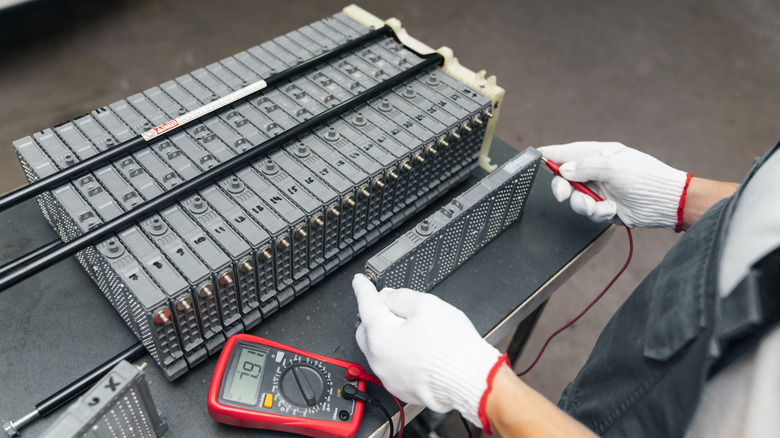
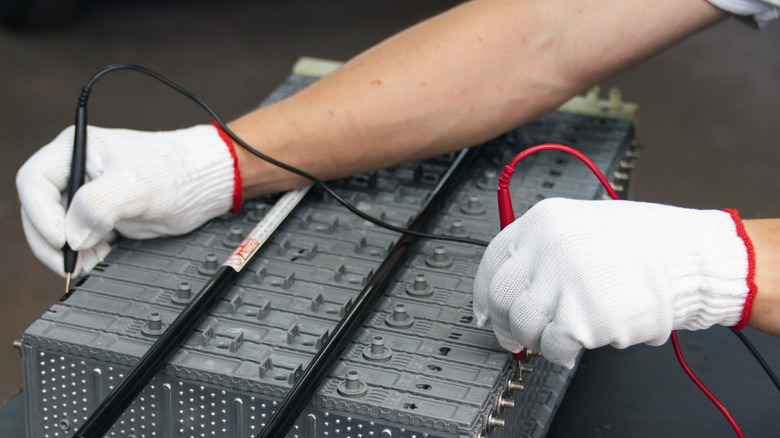
A hybrid battery is not just one big battery. It’s a pack composed of multiple individual modules with low-voltage battery cells, organized to deliver a given voltage level required for efficient operation. Considering that they’re connected to work together, if one module fails, either due to manufacturing defects or physical damage, the whole system will be affected, too.
When this happens, you’ll probably miss everything that makes your hybrid SUV or truck worth driving — think of tremendous fuel savings and impressive driving range. In addition to a decline in fuel efficiency and performance, error codes may appear on your dashboard, your car may feel sluggish during acceleration, and strange noises may appear. To avoid this, keep up with routine battery checks, avoid deep discharges, and minimize how you use your hybrid battery.
If you notice any of these signs, experts recommend you visit your garage for diagnostic scans immediately. Left unchecked, the issue can spread to other cells, leading to total battery failure, which, as we mentioned, is quite expensive to replace. Also, if you’re a DIY enthusiast, you might be tempted to swap faulty modules with new ones. Before you go ahead with your plan, you’ll want to think twice. If done incorrectly, it may result in repeated battery failures and, worse still, a short circuit that could lead to a “thermal event.”
There is a currently ongoing debate in the neuropsychology world about how we relate to the tools that we use. The theory of “tool embodiment” says that when we use some tools frequently enough, our brain recognizes them similarly to how it recognizes our own hands, for instance. There is evidence and counter-evidence from experiments with prosthetics, trash-grabber arms, and rubber dummy arms, just to name a few. It’s fair to say the jury is still out.
All I know is that today my trackball broke, and using a normal gaming mouse to edit the podcast was torture. It would be an exaggeration to say that I felt like I’d lost a hand, but I have so much motor memory apparently built up in my use of the trackball that switching over to another tool to undertake the exact same series of hundreds of small audio edits – mostly compensating for the audio delay across continents, but also silencing coughs and background noises – took an extra hour.
Anyone who has switched from one keyboard to another, or heck even from emacs to vim, knows what I experienced. My body just knows how to flick my wrist to make the cursor on the screen move over to the beginning of that “umm”. It’s not like I don’t conceptually know how to use a mouse either, and it does exactly the same job. But the mouse wasn’t my tool for this application. And saying that out loud makes it almost sound like I’m bordering on embodying my trackball.
Advertisement
I probably should have taken the trackball apart and replaced the bad tact switch on the left-click – that would have taken maybe twenty minutes – but I completely underestimated how integral the tool had become to the work. Anyway, as I write this, tomorrow is Saturday and I’ll have time to fix it. But today, I learned something pretty neat about myself in the process, even if I don’t think my single datapoint is going to rock the academic psych world.

























































You must be logged in to post a comment Login