Tech
These Legged Robots Can Rearrange Their Parts to Sprint Outdoors and Keep Going After Every Break


Modules snap into position and leap forward with a bounce over gravel or mud. Each robot is a stand-alone entity, a half-meter chunk made up of two stiff links connected by a central ball. Everything this machine needs to run on its own is inside that ball, including a small circuit board for decision-making, a battery for electricity, and a motor for movement. On its own, one of these little modules can just roll along, perform a sharp turn, or leap into the air, but when three or five are combined, you create bodies with legs that can switch positions at any time. Some of them serve as supports, while others push or strive to balance things out.


Northwestern University researchers got things started by running evolutionary software on a computer. They supplied it these basic modules as raw material and then let it run wild, mixing and matching connections thousands of times to explore how different body shapes would travel through a simulated environment. Who moved the fastest and had the best balance? They went with that shape. They repeatedly made minor changes and chose new victors, none of whom they had come up with themselves. Once they got the best virtual competitors lined up, they assembled the real modules in the same way and conducted some real-world testing.


Unitree G1 Humanoid Robot(No Secondary Development)
- Sleek & Durable Design: Standing at 132cm tall and weighing only approx. 35kg, the G1 is constructed with aerospace-grade aluminum alloy and carbon…
- High Flexibility & Safe Movement: Boasting 23 joint degrees of freedom (6 per leg, 5 per arm), it offers an extensive range of motion. For safety, it…
- Smart Interaction & Connectivity: Powered by an 8-core high-performance CPU and equipped with a depth camera and 3D LiDAR. It supports Wi-Fi 6 and…
These modules can link up almost anywhere, so a leg on one body can transform into a spine or tail on another; they can basically reorganize themselves on the fly. This indicates that these items can work together and solve problems on their own without the need for outside assistance. When they are first released in an open area, they begin moving immediately and can easily navigate uneven terrain such as tree roots or sand patches. One of them will wriggle barely above the ground, another will take small leaps, and a third will spring up with each stride. All of this is accomplished only via the use of sensors within their own joints and bodies to steer and maintain stability.

Once trained, they can perform gymnastics with ease, such as flipping one of the modules onto its back and rolling or twisting until it is upright again. When they jump, they can even spin around in the air before landing and continuing their journey. And when put to the test in real-world outdoor settings, they perform admirably, outperforming fixed robots that typically stall or flip over.
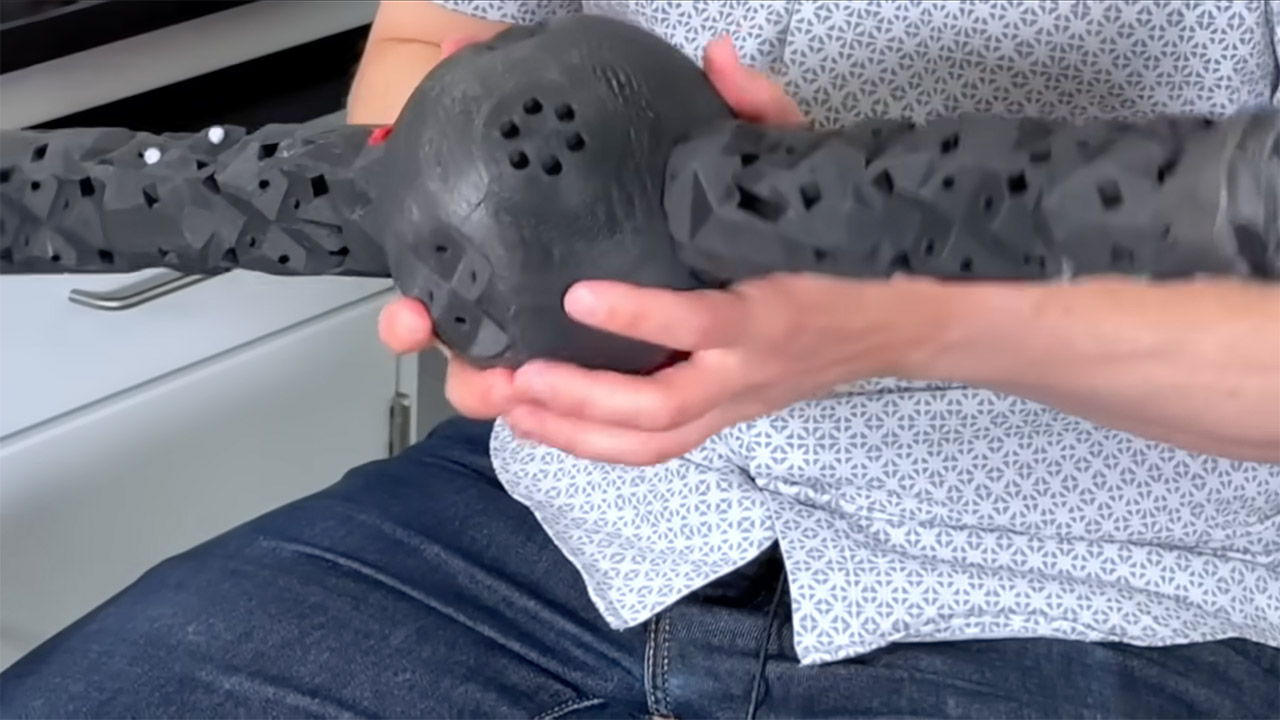
Damage them slightly and they just keep going; you can even cut off a leg (or however many) and the beast will simply redistribute the effort and keep trucking. The severed piece will just roll away by itself, rejoin the group, and snap back into place. If you break the whole thing into separate pieces, each of those little modules can continue to function on its own, rolling or hopping around as if it was never a part of anything larger in the first place.
