Why Singaporean travellers are choosing intentional travel, and paying more for it
For years, travel was about efficiency: tick off as many sights as you can, squeeze as much value as possible into a fixed number of days, and move on quickly to the next destination. But for a growing group of travellers, especially post-pandemic, that formula no longer satisfies.
Instead, more people are turning towards intentional travel, a term that refers to curated journeys designed beyond the typical packaged tours. Such tours place importance on meaning, depth, and mindfulness at their core. These travellers are willing to slow down, return to the same place multiple times, and even pay a premium—not for luxury, but for care, context, and connection.
Companies like V Folks, Kitabi Travel, and SoulTrips by Druk Asia are meeting this demand, offering plant-based culinary immersion, hands-on cultural craft, and spiritually mindful journeys. We spoke to the founders to uncover why Singaporeans are increasingly drawn to travel that moves beyond ticking boxes — and how small, curated trips are reshaping what it means to explore the world.
V Folks: Plant-Based Travel with purpose
(L to R) V Folks co-founder Jay and his co-founder; V Folks at Senai’s SuperFruits farm
One company leaning firmly into values-led travel is V Folks, a curated travel company founded in September 2023 by 39-year-old Jay Yeo. Specialising in premium vegetarian and vegan travel, V Folks builds itineraries around cultural immersion, hands-on experiences, and slower-paced journeys. While plant-based travellers form the core audience, 25% of its guests are non-vegetarians, drawn by the quality of food and the depth of experiences offered.
Before starting V Folks, Jay worked across finance, project coordination, and volunteering, including with Youth Corps Singapore National Council. A post-COVID period of soul-searching and backpacking – combined with his own plant-based lifestyle – led a close friend to suggest he channel his talent for planning meaningful trips into a full-fledged travel company catered to people with plant-based diets.
Advertisement
“At its core, V Folks was started to breathe a fresh air of life into people worn down by the daily grind,” Jay shared.
V Folks’ Kulai 1D trip includes visiting a gac fruit farm, vegetarian food served in restaurant./ Image Credit: V Folks
Jay believes V Folks is Singapore’s first travel company dedicated entirely to plant-based itineraries. Previously, the co-founder shared that vegetarian/vegan travellers often relied on Malaysia-based operators or mainstream agencies that struggled to deliver on dietary and experiential needs. While initial scepticism about V Folks existed, word-of-mouth quickly grew, with many customers returning alongside family and friends.
Today, V Folks runs two to four Malaysia trips monthly, ranging from day tours to a spanning a few days, apart from regular overseas departures to Thailand, Vietnam, and China. Guests range from their 30s to 70s, with more than half being over their 50s, plus a growing number of families and younger travellers drawn to hiking and nature-based experiences. Marketing is produced in both English and Chinese to reach a diverse clientele, including members of churches and temples, reflecting broader shifts towards health-conscious, plant-based travel.
Even V Folks’ short trips carry depth: a one-day Kulai trip under $90 includes a visit to the Hakka association to learn local history, while overseas itineraries feature tea-plucking in Hangzhou or family-style cooking classes in Guangzhou to revive hands-on bonding often lost in urban life.
(L to R) Travellers learning to write ancient Dongba script and tie-dying their own cloth with the Bai tribe./ Image Credit: V Folks
What sets V Folks apart is its unhurried pace and immersive approach, Jay shared. In Yunnan, for example, guests visit the Naxi tribe, entering the home of a former village chief—a space rarely accessible to typical tour buses. Travellers can choose to dress in traditional attire, learn Dongba scripts, and participate in ancient food-making practices. Tie-dyeing with the Bai ethnic tribe allows guests to leave with a tangible, handmade memory rather than a mere souvenir.
“Being younger than mainstream travel planners, we are more adventurous in exploring deeper corners and experiences that most tourists miss,” Jay explained.
Advertisement
Every itinerary is personally scouted by Jay and his co-founder, from restaurants that cater to strict dietary requirements to immersive cultural activities that foster connection. Local partners and guides play a crucial role; their energy and vitality shape the guest experience, making even routine moments meaningful.
Private trips are a growing segment, ranging from family getaways during school holidays to spiritual groups or corporate bonding trips, all aligned with the plant-based philosophy. Across all journeys, mindfulness and conscious intention guide planning, ensuring that participants return refreshed, invigorated, and shifted in perspective.
Jay shared that although his tours are typically 10–15% pricier than typical vegetarian tours, V Folks emphasises transparency and value through its specially selected vegetarian restaurants. Jay shared that there are no hidden charges or coerced spending stops, with all costs included upfront. For example, a standard eight-day trip starts at S$1,899.
Looking ahead, V Folks plans to expand short getaways and hiking-focused itineraries, reflecting Jay’s view that modern society’s lethargy and burnout create a growing need for travel that reconnects people with nature, community, and themselves.
Advertisement
SoulTrips by Druk Asia: Travel for the soul
(L to R) Joni Herison, founder of Druk Asia and SoulTrips; Bhutan’s Tiger Nest./ Image Credit: Druk Asia
If V Folks reflects values-led living, SoulTripsby Druk Asia embodies the emotional and spiritual dimension of travel — what its founder calls “travel for the soul.”
Founded in 2010 by Joni Herison, Druk Asia began by promoting Bhutan, a country that resists checklist tourism and encourages travellers to slow down, reflect, and reconnect. According to Joni, back then, only around 200 Singaporeans visited Bhutan annually; today, that number has grown to 7,000–8,000, helped by direct flights and Druk Asia’s role as General Sales Agent for Drukair since 2012. About 95% of Druk Asia’s journeys to Bhutan are private tours, while its public tour groups are capped at 10–12 guests.
For Joni, success is measured not in numbers but in transformation. According to Joni, many travellers often return with a slower perception of time, renewed priorities, and a lighter emotional state. Bhutan’s old-school depth and authenticity – from centuries-old suspension bridges to passionate local guides – are central to this shift.
(L to R) Punakha Dzong ; Ogyen Choling Palace Museum./ Image Credit: Druk Asia
Since 2010, Druk Asia has brought 21,000–22,000 travellers to Bhutan, ranging from young adults to retirees, often travelling as families. Many describe profoundly moving moments, from quiet reflection to tears at Tiger’s Nest, overwhelmed by Bhutan’s unfiltered energy. Some experiences have even been life-changing, such as a traveller leaving her consultancy job to work with Mountain Hazelnuts and later co-creating hands-on agricultural tours. An 11-day trip to Bhutan starts at S$4,890 per person, excluding flights.
“I think that is the travel that we prefer: to bring people surprises that they didn’t even expect on a trip… sometimes you may even bump into the King of Bhutan and have a short conversation with him,” founder Joni said.
By 2023, in response to demand for transformative journeys beyond Bhutan, the company launched SoulTrips, offering curated experiences in Asia, Central Asia, and Europe. Each itinerary takes six months to a year to plan, with moments of surprise deliberately built in to preserve the joy of discovery.
Advertisement
SoulTrips works closely within local ecosystems, collaborating with tourism boards, guide associations, and communities. Apart from their own curated tours, SoulTrips also partners with international travel agency Europamundo, allowing travellers to explore Europe with guided flexibility rather than ticking off sights on a checklist.
(L to R) Chew Jetty; Penang’s famous Cheong Fatt Tze Museum./ Image Credit: Druk Asia
Closer to home, SoulTrips’ S$870 Penang: Community & Wellbeing Tour (4D3N) blends heritage, tradition, and wellbeing in Malaysia’s multicultural island state. Organised with the Ningpo Guild Singapore, the itinerary frames Penang’s social fabric as a living system of care—from clan houses and temples to philanthropic institutions and Chinese associations. Travellers explore historic sites such as Cheong Fatt Tze Mansion (aka Blue Mansion) and Penang Buddhist Association, participate in traditional Chinese medicine sessions, and experience ancestral clan heritage — all in a deliberately slower, reflective way.
“People ask why Singaporeans would want to go to Penang with us when they can just eat Penang food,” added Florence Ang, Marketing Director. The answer is the difference: understanding why places matter, not just what they offer.
Mental wellness, for SoulTrips, isn’t a retreat added on but cultivated naturally through mindful presence in each trip, Joni said. Each journey sparks curiosity, joy, and awareness of the moment, helping travellers reconnect with themselves, others, and the world around them.
Looking ahead, SoulTrips is expanding thoughtfully, with philanthropy-driven journeys to Bhutan and a holistic wellness partnership with Oriental Remedies launching in 2026. Travellers will receive pre- and post-trip wellness assessments, framing wellness as a journey rather than a destination. Across all initiatives, the ethos remains the same: to move travellers away from ticking boxes and towards journeys that leave them lighter, more curious, and quietly transformed.
Advertisement
“That’s the work of human being, right? We should just be being in the moment but we end up becoming human doing, so that our 24 hours a day is doing things because that’s what we are trained to do,” said Florence.
Kitabi Travel: Curating Japan beyond the guidebook
(L to R) Heidi Tan, founder of Kitabi Travel; 2023 Kobe Sweets Tour includes making Japanese sweets./ Image Credit: Kitabi Travel
Another agency embracing intentional, deeply curated travel is Kitabi Travel, founded in 2023 by Heidi Tan, the former founder of FLOR Patisserie. A trained pastry chef, Heidi ran FLOR for 15 years, crafting Japanese-inspired pastries that celebrated seasonal fruits and building close relationships with Japanese farms and artisans — informal connections that now form the backbone of Kitabi Travel’s unique itineraries.
Kitabi Travel grew organically from a 2019 baking class in collaboration with Japanese pastry chefs in FLOR, organised in partnership with the Kobe prefectural government that wanted to share Japanese fruits in Singapore. Guests were fascinated by the artistry behind the Japanese seasonal pastry, and in order to have access to fresher ingredients, suggested food trips to Japan be held instead.
Even when the collaboration paused during COVID-19, demand for more collaborations persisted after the pandemic.
Then, in the spring of 2023, Kitabi Travel was officially born, with Heidi hosting the first overseas tour to Kobe, where travellers made and sampled a range of traditional Japanese sweets.
Advertisement
In sweets tours, participants immersed themselves in making sweets such as cookies, cakes and other daifuku (sweet rice cakes). Other tours that Kitabi Travel offers include Sake & Food, Food & Crafts, Fermented Food across Japan.
Rather than relying on traditional travel agents, Kitabi partners with a Japan-based PR specialist embedded in the local F&B scene, granting clients access to experiences most tourists never see: learning directly from professional chefs inside their kitchens, reserving entire small restaurants, or visiting rural pottery studios where artisans teach personally. Heidi personally scouts venues, liaises with artisans, and with her fluency in both Japanese and English, ensures language and cultural barriers are bridged.
(L to R) Travellers will explore a Kagoshima vinegar brewery, and harvest tea leaves in Shirakawa./ Image Credit: Kitabi Travel
The philosophy at Kitabi Travel is simple: immersive, out-of-the-ordinary experiences. Tours travel in small groups, keeping interactions intimate and flexible. Guests might make miso in Kobe and take it home to ferment, harvest tea leaves in Nagoya under a farmer’s guidance, or craft pottery in countryside studios. Each activity is tactile, memory-rich, and designed to engage all the senses, leaving participants with lasting personal connections to both craft and culture.
“We will be drinking tea, living tea, breathing tea… it’s about the whole process, not just the end product,” Heidi explains.
Since its inaugural spring tour in 2023, Kitabi has expanded to seasonal offerings such as early summer tea harvest and autumn pottery tours. By 2025, Kitabi had hosted 152 guests across nine tours, with nearly half returning for a second experience. The agency attracts higher-income travellers seeking depth, culture, and authenticity over standard sightseeing. For example, the five-day Kagoshima tour, priced at $4,600, typically attracts older travellers in their 30s to 50s seeking a more luxurious, refined experience.
Advertisement
Heidi also noted that Japanese prefectural governments have increasingly shown strong interest in Kitabi’s tours, which they perceive attract mindful travellers who demonstrate respect for local culture — a contrast to mass, low-cost tourism.
Running intimate tours requires careful planning: Japan’s punctuality culture, inaccessible rural locations, and traditional ryokan accommodations demand pre-trip guidance and flexible arrangements, such as private onsen windows to balance comfort with authenticity.
Each itinerary is designed to encourage curiosity, reflection, and personal engagement, Heidi shared. Guests aren’t just visiting Japan — they’re meeting people, sharing stories, and understanding local traditions in ways that foster deeper appreciation.
(L to R) Kagoshima kids’ camp also includes interacting with animals on a far and spending time at a local elementary school with Japanese kids for cultural immersion./ Image Credit: Kitabi Travel
Looking ahead, Kitabi is launching a Kids Camp in rural Kagoshima in September, bringing parents and primary school children together for bamboo harvesting, cooking bamboo rice, and rice planting. The program reflects the brand’s ethos: travel as education, connection, and shared growth.
“I want to see more mindful Singaporeans living intentionally and appreciating nature, starting young,” said Heidi.
Advertisement
Reflecting on her entrepreneurial journey, Heidi shares that passion accounts for only 10% of success; the rest comes from hard work, perseverance, and knowing when to walk away from what isn’t working.
More meaning, less mileage
Across these three agencies, the message is clear: intentional travel isn’t just about doing less — it’s about doing things differently. Whether it’s tasting, crafting, hiking, or meditating, travellers are seeking experiences that leave a lasting emotional and intellectual impact rather than a collection of photos or stamps on a passport.
As travellers grow more discerning, they are choosing depth over density, meaning over mileage, and journeys that linger long after they return home. And for a growing number of them, that difference is worth paying for, in a cozier, curated group setting that prioritises connection, discovery, and mindful presence.
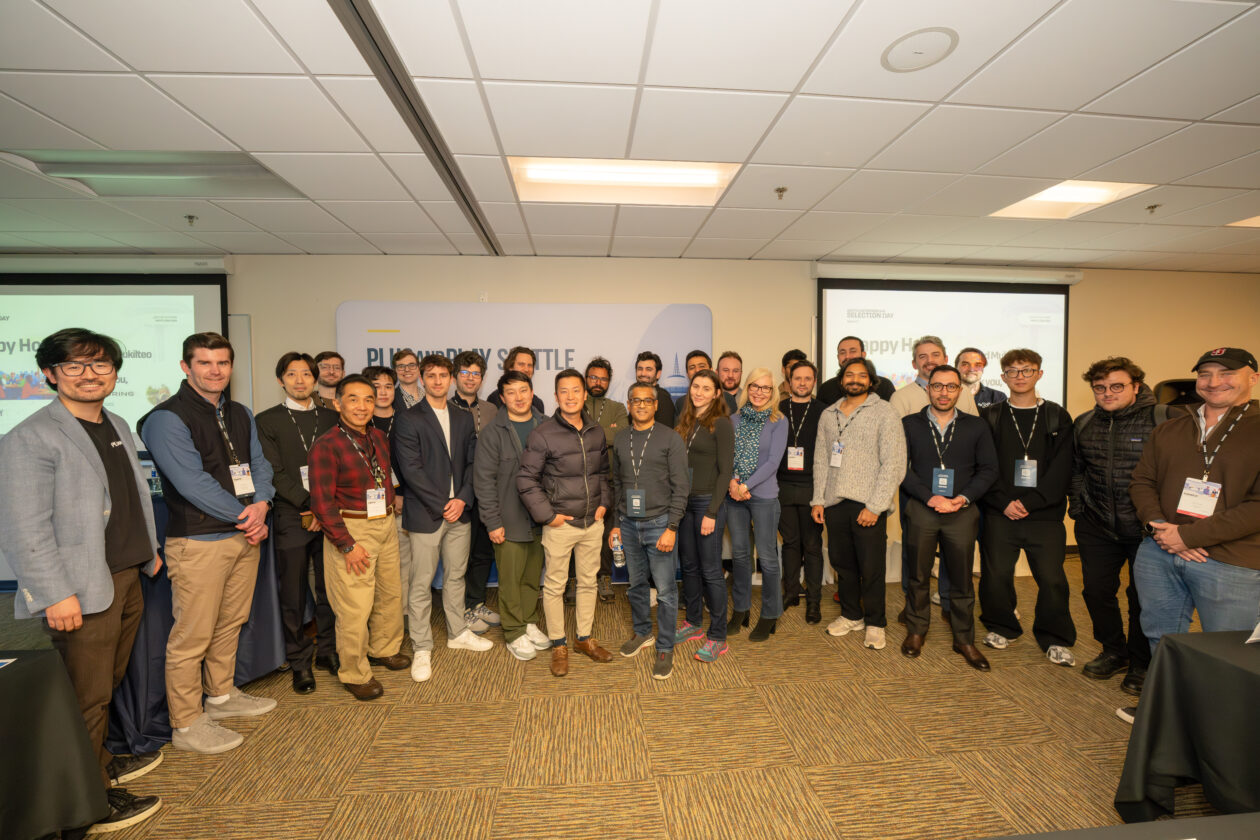
Startup founders who pitched for a chance to join the latest Plug and Play Cohort. (Photo courtesy of Plug and Play)
Plug and Play has selected the 10 startups that will take part in its third Seattle-area accelerator cohort as the program marks its one-year anniversary in the region.
The companies — nine of which are Seattle based — are participating in a 12-week program running through mid-June. Cohort participants are innovating across enterprise software, biotech, physical AI, robotics, and health tech.
“Seattle has one of the deepest pools of technical talent in the world, and this cohort reflects that,” said Jack Callaghan, director of Plug and Play Seattle, in a news release Monday.
Each startup receives one-on-one guidance to refine business models, strengthen go-to-market strategies, and build strategic partnerships. The program also supports the development of proof-of-concepts, pilot projects, and commercial relationships.
Here are the 10 startups, with descriptions of their work provided by Plug and Play:
Advertisement
Ally AI, Seattle. An AI-powered customer engagement platform built specifically for auto dealerships, offering 24/7 intelligent virtual agents across multiple communication channels.
Clockwork Bio, Seattle. Developing the data engine to power the AI revolution in drug discovery by leveraging AI at every step of the Experimental Biology Loop.
ElastixAI, Seattle. Developing a novel AI inference infrastructure that co-designs machine learning optimizations, the inference software stack, and the compute backend together in real time.
Glacis, Seattle. Building the trust infrastructure for production AI by providing a cryptographically verifiable layer that independently attests every AI decision in real time.
ImYoo Health, Sunnyvale, Calif. A direct-to-consumer single-cell transcriptomics company aiming to deliver personalized, biology-driven health insights by connecting people with similar immune profiles.
Reflection Robotics, Seattle. Building robot foundation models that make it dramatically faster and cheaper to automate physical tasks in manufacturing without requiring custom hardware or bespoke machines.
Sigma Genetics, Seattle. Building a non-invasive device that can deliver charged molecules, such as DNA, RNA, and proteins into patient cells to treat the most challenging diseases.
Strum AI, Seattle. Building an AI-first platform designed to lower the barrier for any enterprise to adopt algorithm-driven decision-making for supply chain excellence.
Tibbling Technologies, Seattle. A research-driven AI and scientific discovery company focused on developing advanced multimodal AI systems to solve complex problems in health tech and neuroscience.
Vicino AI, Seattle. A multi-agent GenAI platform for text/image-to-3D generation, enabling stepwise, personalized, and accurate asset generation for gaming, AR/VR product prototyping, and e-commerce.
A majority of the programming will take place virtually, but startups will have access to Plug and Play’s Seattle office inside the University of Washington’s CoMotion Labs. Plug and Play also has space at SNBL Global Gateway in Everett, Wash.
Plug and Play Seattle will host its Expo on June 5 at UW’s Kane Hall, where the cohort will showcase its progress.
Silicon Valley-based Plug and Play first announced it was coming to Seattle in November 2024, adding to its more than 60 locations worldwide.
In addition to startup accelerators, Plug and Play runs corporate innovation programs and has an in-house venture capital fund that has backed companies such as Dropbox, Gurdant Health, Honey, Lending Club, and PayPal.
The effort is being led by Windows chief Pavan Davuluri, who has publicly acknowledged the extent of user frustration with Windows 11. In a recent company blog post, he said the Windows team had spent months analyzing user feedback to identify what he described as “the voice of people who… Read Entire Article Source link
GrapheneOS, the privacy-focused Android fork, said in a post on X on Friday that it will not comply with emerging laws requiring operating systems to collect user age data at setup. “GrapheneOS will remain usable by anyone around the world without requiring personal information, identification or an account,” the project stated. “If GrapheneOS devices can’t be sold in a region due to their regulations, so be it.”
The statement came after Brazil’s Digital ECA (Law 15.211) took effect on March 17, imposing fines of up to R$50 million (roughly $9.5 million) per violation on operating system providers that fail to implement age verification…
Motorola and GrapheneOS announced a long-term partnership at MWC on March 2, to bring to bring the hardened OS to future Motorola hardware, ending GrapheneOS’s long-standing exclusivity to Google Pixel devices. A GrapheneOS-powered Motorola phone is expected in 2027. If Motorola sells devices with GrapheneOS pre-installed, those devices would need to comply with local regulations in every market where they ship, or Motorola may need to restrict sales geographically. Or, “People can buy the devices without GrapheneOS and install it themselves in any region where that’s an issue,” according to a post on the GrapheneOS BlueSky account. “Motorola devices with GrapheneOS preinstalled is something we want but it doesn’t have to happen right away and doesn’t need to happen everywhere for the partnership to be highly successful. Pixels are sold in 33 countries which doesn’t include many countries outside North America and Europe.”
Advertisement
Tom’s Hardwarealso notes that GrapheneOS “isn’t the first and won’t be the last company to outright refuse compliance with incoming age verification laws.”
“The developers of open-source calculator firmware DB48X issued a legal notice recently, stating that their software ‘does not, cannot and will not implement age verification,’ while MidnightBSD updated its license to ban users in Brazil.”
Samsung’s Music Studio 5 speaker supports a range of streaming services through Spotify Connect and similar platforms, but it does not include support for Spotify’s lossless audio tier, which affects its overall playback quality range.
The Music Studio 5 forms part of Samsung’s recent push into standalone wireless speakers, positioning it against competitors such as Sonos that already support higher-quality streaming options across multiple services and devices.
Reports from user discussions show that the lossless setting does not appear when adjusting Spotify streaming quality through Spotify Connect, meaning playback is limited to lower tiers even when higher-quality audio is available.
This absence stands out as Spotify continues expanding its lossless tier across supported hardware, with the feature delivering audio at up to 24-bit/44.1kHz for listeners seeking playback closer to original studio recordings.
Advertisement
Spotify’s lossless streaming option represents a shift toward higher-fidelity audio in mainstream services, as platforms move beyond compressed formats to appeal to users with more capable audio hardware and higher expectations.
Advertisement
The Music Studio 5 supports Spotify Connect, which allows direct streaming from Spotify servers rather than routing audio through a mobile device, a feature typically associated with improved stability and convenience in wireless listening setups.
However, the absence of a selectable lossless option suggests either a limitation in the speaker’s current software implementation or a restriction within its hardware processing capabilities, although Samsung has not confirmed the cause.
Advertisement
This places the device behind some competing speakers in the same price category, where support for higher-resolution formats has become a more common expectation rather than a niche feature.
The Music Studio 5 and Music Studio 7 mark Samsung’s move deeper into premium wireless audio, competing with the best Sonos speakers as the company expands beyond its traditional soundbar and TV-focused lineup.
As streaming services continue to prioritise audio quality improvements, compatibility with features such as lossless playback increasingly influences buying decisions, particularly for users investing in dedicated listening setups.
The current limitation may affect how the Music Studio 5 competes within the broader ecosystem, especially among users who prioritise audio fidelity alongside convenience and multi-platform streaming support.
Advertisement
Advertisement
Samsung has not provided further clarification on whether lossless support could arrive through a future update or remains unsupported on the device, leaving its long-term compatibility with Spotify’s highest-quality tier uncertain.
Spinder Dhaliwal of the Westminster Business School at the University of Westminster explores how graduates can get ahead in a tough landscape.
For entrepreneurs, something that starts out as a simple idea can transform into a thriving business that brings financial rewards, confidence and personal growth. These days, graduates may look at forecasts for a tightening jobs market and decide their future is as an entrepreneur rather than an employee.
The business world is brimming with opportunity. I have researched entrepreneurship for years, and have found that rapid technological evolution, shifting consumer preferences and a growing focus on sustainability are creating an exciting landscape for bold graduates.
However, success is never guaranteed – like anyone else they’ll need to understand their market, and know their competitors, target audience and growth potential. This is where graduates should put the research skills they honed as a student to good use. This can help them to avoid costly mistakes – things like overestimating demand for their business idea or underestimating the level of competition, for example.
Advertisement
My book, The Millennial Millionaire, demonstrates that successful young entrepreneurs tend to share certain traits: resilience, calculated risk-taking and a willingness to learn from failure. These characteristics remain essential in 2026, particularly as markets become more volatile with persistent inflation, shifting interest rate expectations and growing geopolitical tensions.
Graduate entrepreneurship has evolved over the years, and the traditional linear career where someone stayed with one employer, moving up through the ranks through their working life, is a thing of the past. My book highlights how younger entrepreneurs increasingly pursue business ownership not only for financial independence but also for autonomy, creativity and social impact.
However, it can still be tricky for graduates to make a mark. And entrepreneurship is not a level playing field, either. Rising costs for utilities and essential overheads, competitive markets and unequal access to capital disproportionately affect certain groups. Women generally have less access to capital compared to men, and this is more pronounced for some ethnic minority women. Young people may not have enough personal savings.
Entrepreneurship cannot be separated from questions of diversity and inclusion. Graduate entrepreneurs can face both opportunity and inequality when starting a venture. In this context, migrant communities often have a wealth of valuable “rags to riches” stories that they can share.
Advertisement
According to some of my other research, many Asian entrepreneurs in the UK started with virtually no money but used determination and family resources to build multimillion-pound businesses.
For example, the billionaire owner of a string of airport hotels Surinder Arora came from the Punjab as a child. He worked for British Airways and dreamed of being a pilot – but instead invested in a B&B to serve airline crews.
These lessons remain highly relevant: entrepreneurship does not occur in isolation – it is shaped by relationships, identity and experience.
A unique time to go it alone
AI is clearly a game-changer, making this a unique time to launch a business that can be built with AI in mind rather than struggling to keep up. Today’s market is more connected, tech-driven and socially conscious than ever, and tech-savvy graduates are well-positioned to seize these opportunities. Sustainability is no longer optional – consumers expect brands to align with their values and demonstrate social responsibility.
Advertisement
Budding entrepreneurs should use technology to their advantage. This could be for crowdfunding, market research or accessing support networks. My research suggests that entrepreneurs who want to give back to the community and who care about how their business affects the environment are more likely to build long-term trust with their customers.
For graduates, this means aligning business goals with broader societal needs such as poverty reduction or environmental challenges. The resulting venture could take the form of a social enterprise, ethical startup or inclusive business. But these enterprises will still need to generate money and be profitable – you can only give if you have.
Networking is a secret weapon. A strong network is essential, and graduates already have a foundation – they just need to build on it. They should attend industry events, stay informed about economic trends and learn from professionals. A supportive community can help to overcome challenges and accelerate growth.
Securing funding is often the biggest hurdle for new entrepreneurs. What’s key is the ability to start lean – “bootstrapping” (that is, having to start with the bare minimum of capital) is a challenge entrepreneurs are often forced to overcome. Many businesses begin with personal savings or family support. But graduates can also explore competitions and grants. Then eventually, a compelling pitch may attract investors.
Advertisement
Starting a business offers graduates unparalleled opportunities, from harnessing technology to tackling global challenges such as climate change. Success lies in identifying a passion, using resources well and building a strong support network. The future belongs to those who innovate, adapt and take calculated risks. With determination and the right mindset, graduates can turn a vision into a thriving venture.
Spinder Dhaliwal is a reader in entrepreneurship and the director of PhDs for the Westminster Business School at the University of Westminster. Her main area of interest is in ethnic minority businesses, women in business and young entrepreneurs. She has written about entrepreneurship and the business community, compiled information on Britain’s Richest Asians reflecting a long held interest in the field and her previous book, Making a Fortune, Learning from the Asian Phenomenon, explored the journey of Asian entrepreneurs in the UK, the challenges they faced, and how they were overcome.
Don’t miss out on the knowledge you need to succeed. Sign up for the Daily Brief, Silicon Republic’s digest of need-to-know sci-tech news.
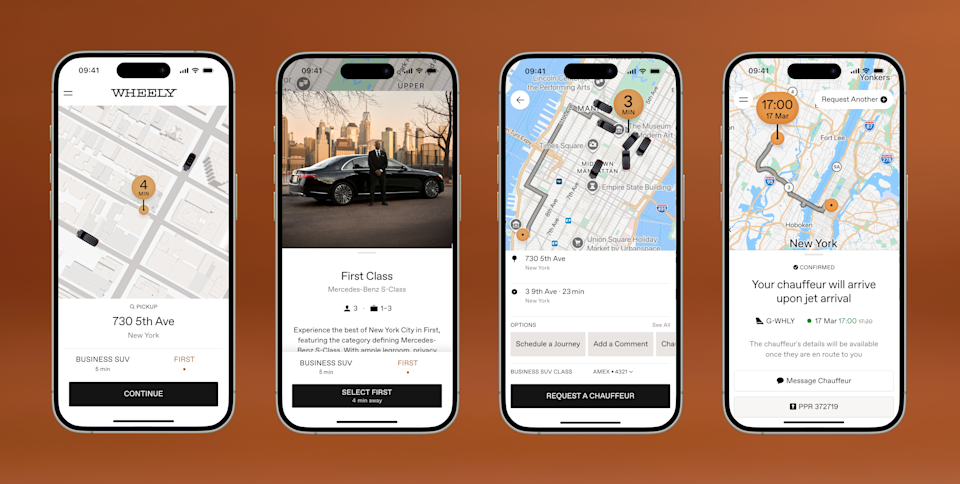
When the Uber Black isn’t premium enough, New Yorkers now have the option to call for a Wheely instead. Whimsical name aside, the London-based company is breaking into the US market by offering its chauffeur-hailing services to residents of New York City first, as first reported by Bloomberg. Think of it like Uber, but for business executives and VIPs who prefer better service and riding in Cadillacs and Mercedes.
“New York has long been requested by our customers, whether that be New Yorkers who have traveled with us in Europe and the Middle East, or our international clients who regularly visit the city,” Anton Chirkunov, founder and CEO of Wheely, said in a press release.
Wheely
Besides its black car Business SUV service, New Yorkers can opt for Wheely First that offers a Mercedes-Benz S-Class W223 filled with amenities like Fiji water and towels. For a more dedicated service, Wheely has its Perfect Airport Pickup where drivers will track flights to line up a pickup, and the Chauffeur for a Day option that lets users reserve a chauffeur that will also pick up friends and family or run errands for you. For interested drivers in New York City, Wheely will port over its in-house “Chauffeur Academy,” which is expected to grow to a network of 5,000 qualified drivers over the next five years.
While Wheely currently operates in London, Paris and Dubai, the company plans to expand to five major US cities within the next three years. According to Bloomberg, Wheely is considering markets in Texas, Miami and Palm Beach, Fla. as well as Washington, D.C. Wheely’s entry into the US market comes about a week after the announcement of the Uber Elite program, which targets a similar demographic. However, Uber Elite is only available in Los Angeles and San Francisco currently, with plans to expand to New York soon. However, Uber may have Wheely beat when it comes to hailing a helicopter, thanks to its upcoming Uber Air option.
In the early days of aviation, pilots or their navigators used a plethora of tools to solve common navigation and piloting problems. There was definitely a need for some kind of computing aid that could replace slide rules, tables, and tedious dead-reckoning computations. This would become even more important during World War II, when there was a massive push to quickly train young men to be pilots.
The same, but different. A Pickett slide rule (top) and an E6B slide rule (bottom). (Own Work).
Today, we’d whip up some sort of computer device, but in the 1930s, computers weren’t anything you’d cram on a plane, even if they’d had any. For example, the Mark 1 Fire Control Computer during WW2 was 3,000 pounds of gears and motors.
The computer is made to answer flight questions like “how many pounds of fuel do I need for another hour of flying time?” or “How do I adjust my course if I have a particular crosswind?”
History
There were a rash of flight computers starting in the 1920s that were essentially specialized slide rules. The most popular one appeared in the late 1930s. Philip Dalton’s circular slide rule was cheap to produce and easy to use. As you’ll see, it is more than just an ordinary slide rule. Keep in mind, these were not computers in the sense we think of today. They were simple slide rules that easily did specialized math useful to pilots.
Dalton actually developed a number of computers. The popular Model B appeared in 1933, and there were refinements leading to additional models. The Mark VII was very popular. Even Fred Noonan, Amelia Earhart’s navigator, used a Mark VII.
Advertisement
A metal E6B (public domain).
Dalton thought the Mark VII was clunky and developed a way to do vector calculations using an endless belt inside the computer. This proved to expensive to make, so he created a flat wind computer and put, essentially, the Model B on the other side. While he called this the Model H, the Army called it the E6A.
In 1938, the Army Air Corps asked for a few minor changes and adopted the computer as the E6B, although pilots often call it the “whiz wheel” or the “Dalton Dead Reckoning Computer.” Oddly enough, some pilots still swear by the E6B, and flight schools sometimes make you learn them because they help you develop a feel for the math you don’t get with a calculator.
Sadly, Dalton died in a plane crash with a student pilot in 1941. P.V.H. Weems, a well-known navigator and Fred Noonan’s mentor, carried on the work of improving the E6B.
Besides, they are almost a perfect backup computer. Small, light, cheap, not prone to breaking, and they need no power. Some are made of cardboard, some of metal, and others of plastic. Wartime E6Bs were on a plastic that glowed under cockpit illumination. Later, there would be electronic or software E6Bs (see the video below), but a real whiz wheel is something you can hold in your hand, and you never have to change the battery.
Advertisement
Not Just a Slide Rule
The front of the E6B is, essentially, a circular slide rule. What makes it unique, though, is that it has special scales and markings to deal with conversions of things like nautical miles or knots. Even the arrangement of the scales work to make a pilot’s life easier.
For example, the top of the wheel is a big mark that represents 60. Why? Because there are 60 minutes in an hour, and this makes it easy to compute things like pounds of fuel per hour.
It also lets you convert things like knots to nautical miles easily because the conversion factors are marked already.
Advertisement
If you know how to use a slide rule, you are almost immediately proficient on the front side of an E6B. Note that the sliding part of the computer is all about the wind computer (see below). All the calculation parts are just on the wheel, like a traditional circular slide rule.
The Back Side
The back side is a graphical vector solver for wind problems. You essentially use it to plot a wind triangle. You set the wind vector, the aircraft velocity vector, and you can read off the ground track. By moving things around, you can find your groundspeed, your wind correction angle, or your heading.On some E6Bs, you have to flip the slide to do low-speed or high-speed wind problems.
For an example wind problem, consider if you have wind at 200 degrees at 10 knots. Your true course is 150 degrees, and your true air speed is 130 knots. You would like to compute your ground speed, your true heading, and the wind correction angle.
One reason that the E6B remains useful for training is that it helps you develop intuition that is hard to get from a bunch of numbers on a calculator’s LEDs. You get a feel for how much wind will deflect your track 10 degrees, for example.
Advertisement
You can also use the E6B in reverse. If your groundspeed isn’t what you expect, you might set up the problem to put in your true parameters and solve for what the wind must be to make that result correct.
Sure, with GPS, you probably don’t need to figure out whether you have enough fuel to make it to another airport. But without GPS and a real computer, the E6B can do those things just fine.
Learning the E6B
If you actually want to learn how to use the E6B, we suggest watching a YouTube video. There are some short videos, and at least one that has 14 different videos. The good news is that the E6B hasn’t changed in many years, so any video you find should be just fine.
We like [Aviation Theory’s] two videos, which are worth watching (see part 1, below).
Advertisement
If you want to follow along and don’t have an E6B, you can try one virtually in your browser. Or, pick one up. The cardboard ones are fairly inexpensive and widely available.
The Legacy of the E6B
While the E6B isn’t the essential kit it once was, it is still a valuable aid for pilots. It is also a great example of how to turn an ordinary slide rule into something specialized.
We have a feeling Gene Roddenberry, an avid pilot, was very familiar with the E6B. He even thought they’d still use them in the 23rd century, as you can see in the video clip below.
Advertisement
You can also catch a glimpse of these in old US Army Air Corps films like the one below (about the 14-minute mark), although we couldn’t find any training specifically for the E6-B that survived.
Will there be an AI-optimized programming language at the expense of human readability? There’s now been experiments with minimizing tokens for “LLM efficiency, without any concern for how it would serve human developers.”
Cass acknowledged the obvious downsides. (“True, this would turn programs into inscrutable black boxes, but they could still be divided into modular testable units for sanity and quality checks.”) But “instead of trying to read or maintain source code, programmers would just tweak their prompts and generate software afresh.” This leads to some mind-boggling hypotheticals, like “What’s the role of the programmer in a future without source code?” Cass asked the question and announced “an emergency interactive session” in October to discuss whether AI is signaling the end of distinct programming languages as we know them.
In that webinar, Cass said he believes programmers in this future would still suggest interfaces, select algorithms, and make other architecture design choices. And obviously the resulting code would need to pass tests, Cass said, and “has to be able to explain what it’s doing.” But what kind of abstractions could go away? And then “What happens when we really let AIs off the hook on this?” Cass asked — when we “stop bothering” to have them code in high-level languages. (Since, after all, high-level languages “are a tool for human beings.”) “What if we let the machines go directly into creating intermediate code?” (Cass thinks the machine-language level would be too far down the stack, “because you do want a compile layer too for different architecture….”)
Advertisement
In this future, the question might become ‘What if you make fewer mistakes, but they’re different mistakes?’” Cass said he’s keeping an eye out for research papers on designing languages for AI, although he agreed that it’s not a “tomorrow” thing — since, after all, we’re still digesting “vibe coding” right now. But “I can see this becoming an area of active research.” The article also quotes Andrea Griffiths, a senior developer advocate at GitHub and a writer for the newsletter Main Branch, who’s seen the attempts at an “AI-first” languages, but nothing yet with meaningful adoption. So maybe AI coding agents will just make it easier to use our existing languages — especially typed languages with built-in safety advantages.
And Scott Hanselman’s podcast recently dubbed Chris Lattner’s Mojo “a programming language for an AI world,” just in the way it’s designed to harness the computing power of today’s multi-core chips.
This story was originally published by Grist and is reproduced here as part of the Climate Desk collaboration.
Gasoline prices continue ticking higher as the United States and Israel’s war with Iran continues. As of March 23, the national average stands at $3.96 per gallon, nearly a dollar higher than at the start of the conflict. It’s also just shy of a tipping point that could push consumers toward electric vehicles.
When gas prices top $4 per gallon, BloombergNEF estimates that the total cost of ownership for EVs becomes lower than for gas-powered vehicles. The exact crossover point depends on local prices for both gasoline and electricity. “[But] even when I run the model using the more expensive electricity cost, we are still seeing this very similar pattern,” said Huiling Zhou, an electric vehicle analyst at BloombergNEF. In California, for example, where electricity costs are high, gas is also expensive. At more than $5 a gallon, the state has already passed the point at which EVs are the cheaper option.
According to a AAA survey from 2022 — when Russia’s invasion of Ukraine drove a monthslong price spike — $4 a gallon is also the threshold at which a majority of Americans will make changes to their driving habits or lifestyles. Stephanie Valdez Streaty, director of industry insights at Cox Automotive, agrees that “the high gas prices definitely start the conversation with a consumer.”
Advertisement
“There is no meaningful policy tool to mitigate this.”
— Robbie Orvis, Energy Innovations
Edmunds.com has reported an uptick in search traffic for EVs since the war started on February 28. It’s too soon to tell whether that interest will convert to more purchases, said Valdez Streaty. But when prices surged at the outset of the war in Ukraine, sales of electrified vehicles rose as well. From January through March 2022, EVs’ share of car sales in the US climbed 69 percent, with hybrids jumping 32 percent. Robbie Orvis, who directs modeling and analysis for the think tank Energy Innovations, said the general trend pre-dates electric powertrains.
“In the past, when prices have gone up, people would start choosing more fuel-efficient cars,” he said. The oil shocks of the 1970s and 1980s, for example, led to a focus on fuel efficiency and helped make relatively efficient Japanese cars more popular. Avoiding gas guzzlers could become trendy this time, too.
“If you drive an EV, you’re nicely insulated,” Orvis said. “Your retail electricity rate isn’t going to double from one month to the next, like it can with gasoline.”
Advertisement
Still, Orvis highlighted some factors that might mitigate a rush toward EVs. For one, it’s unclear how long high fuel prices will last. Limited availability of chargers for electric vehicles is another barrier to adoption. People also tend to put more weight on upfront costs than long-term financial gains. Then there’s the fact that higher oil prices can put a damper on consumer confidence more broadly.
“The current situation is very likely going to lead to higher prices all around,” Orvis said. That pressure could mean people are more hesitant to make a big purchase like a car. As Valdez Streaty put it, “if they can delay it, they’ll delay it.”
A customer is shown a 2022 Toyota Prius hybrid in El Monte, California.Paul Bersebach/MediaNews Group/Orange County Register/Getty Images
At the same time, EVs are in many ways more attractive than ever. Cox Automotive reported that, last month, the price premium for EVs compared to new gas-powered cars was the lowest on record, at $6,532. The pre-owned market had an even narrower $1,334 gap, with 18 of 26 brands now having an average used EV price below their used gas equivalents.
“If you can have access to charging, now is the perfect time to get an EV,” said Jenny Carter, a professor at Vermont Law School who has researched consumer EV adoption. But higher gas prices, she continued, also put a spotlight on equity issues.
Advertisement
“Low-income people have the most to gain by owning and driving an EV, but they’re the hardest market to reach,” she said. Those households often spend the highest portion of their incomes on gasoline, she explained, but are the least likely to be able to afford alternative vehicles or have access to charging. “It’s a real paradox.”
Orvis thinks that part of the problem is the dearth of information available to prospective buyers. Because dealers generate much of their revenue providing maintenance that EVs don’t need, he said, they may not fully explore the financial benefits of going electric with customers. He suggested that shoppers use one of the many onlinecalculators that can show how, even when the upfront cost of a gasoline car might be lower, the monthly costs of ownership could be higher when you consider fuel and maintenance costs.
“There’s a real issue with how EVs are marketed,” he said. “It’s very hard for a new buyer, especially if you’re not really versed in this stuff, to get a real sense of what the trade-offs are.”
For those who either can’t afford electric cars or don’t have access to charging, Valdez Streaty points to hybrid vehicles, which can be 25 to 45 percent more fuel efficient than their standard counterparts. A HondaCR-V, for example, gets around 29 mpg while the hybrid version gets 37.
Advertisement
Even if soaring oil prices don’t last long, electrified cars can help soften the blow the next time they spike. A report released Wednesday by the energy think tank Ember found that EVs already displace around 1.7 million barrels of oil per day. While a far cry from the roughly 20 million that normally flow through the embattled Strait of Hormuz daily, it represents about 70 percent of Iran’s oil output.
“The main thing to watch is national plans of how to respond to this,” said Daan Walter, a principal at Ember. He is optimistic that many countries will use moments like this to start turning to climate-friendly policies that help reduce their dependence on fossil fuels, including gasoline.
So far, President Donald Trump doesn’t appear poised to lead the United States in that direction. Last summer, a Republican-led Congress gutted the Inflation Reduction Act, which included tax rebates for electric vehicles. But, particularly in the short term, American policymakers also lack levers for keeping rising gas prices in check, so people may very well start to shift on their own.
“There is no meaningful policy tool to mitigate this,” Orvis said. “The only way to do that is to just get off the roller coaster, and EVs allow you to do that.”
In today’s data-driven world, data scientists face mounting challenges in preparing, scaling, and processing massive datasets. Traditional CPU-based systems are no longer sufficient to meet the demands of modern AI and analytics workflows. NVIDIA RTX PROTM 6000 Blackwell Workstation Edition offers a transformative solution, delivering accelerated computing performance and seamless integration into enterprise environments.
Data Preparation: Data preparation is a complex, time-consuming process that takes most of a data scientist’s time.
Scaling: Volume of data is growing at a rapid pace. Data scientists may resort to downsampling datasets to make large datasets more manageable, leading to suboptimal results.
Hardware: Demand for accelerated AI hardware for data centers and cloud service providers (CSPs) is exceeding supply. Current desktop computing resources may not be suitable for data science workflows.
Benefits of RTX PRO-Powered AI Workstations
NVIDIA RTX PRO 6000 Blackwell Workstation Edition delivers ultimate acceleration for data science and AI workflows. These powerful and robust workstations enable real-time rendering, rapid prototyping, and seamless collaboration. With support for up to four NVIDIA RTX PRO 6000 Blackwell Max-Q Workstation Edition GPUs, users can achieve data center-level performance right at their desk, making even the most demanding tasks manageable.
PNY is redefining professional computing with the @NVIDIA RTX PRO 6000 Blackwell Workstation Edition, the most powerful desktop GPU ever built. Engineered for unmatched compute power, massive memory capacity, and breakthrough performance, this cutting-edge solution delivers a quantum leap forward in workflow efficiency, enabling professionals to tackle the most demanding applications with ease.PNY
NVIDIA RTX PRO 6000 Blackwell Workstation Edition empowers data scientists to handle massive datasets, perform advanced visualizations, and support multi-user environments without compromise. It’s ideal for organizations scaling up their analytics or running complex models. NVIDIA RTX PRO 6000 Blackwell Workstation Edition is optimized for AI workflows, leveraging the NVIDIA AI software stack, including CUDA-X, and NVIDIA Enterprise software. These platforms enable zero-code-change acceleration for Python-based workflows and support over 100 AI-powered applications, streamlining everything from data preparation to model deployment.
Advertisement
Finally, NVIDIA RTX PRO 6000 Blackwell Workstation Edition offers significant advantages in security and cost control. By offloading compute from the data center and reducing reliance on cloud resources, organizations can lower expenses and keep sensitive data on-premises for enhanced protection.
Accelerate Every Step of Your Workflow
NVIDIA RTX PRO 6000 Blackwell Workstation Edition is designed to transform the entire data science pipeline, delivering end-to-end acceleration from data preparation to model deployment. With NVIDIA CUDA-X open-source data science cuDF library and other GPU-accelerated libraries, data scientists can process massive datasets at lightning speed, often achieving up to 50X faster performance compared to traditional CPU-based tools. This means tasks like cleaning data, managing missing values, and engineering features can be completed in seconds, not hours, allowing teams to focus on extracting insights and building better models.
NVIDIA RTX PRO 6000 Blackwell Workstation Edition is designed to transform the entire data science pipeline, delivering end-to-end acceleration from data preparation to model deployment
Exploratory data analysis is elevated with advanced analytics and interactive visualizations, powered by NVIDIA CUDA-X and PyData libraries. These tools enable users to create expansive, responsive visualizations that enhance understanding and support critical decision-making. When it comes to model training, GPU-accelerated XGBoost slashes training times from weeks to minutes, enabling rapid iteration and faster time-to-market AI solutions.
Advertisement
NVIDIA RTX PRO 6000 Blackwell Workstation Edition streamlines collaboration and scalability. With NVIDIA AI Workbench, teams can set up projects, develop, and collaborate seamlessly across desktops, cloud platforms, and data centers. The unified software stack ensures compatibility and robustness, while enterprise-grade hardware maximizes uptime and reliability for demanding workflows.
By integrating these advanced capabilities, NVIDIA RTX PRO 6000 Blackwell Workstation Edition empowers data scientists to overcome bottlenecks, boost productivity, and drive innovation, making them an essential foundation for modern, enterprise-ready AI development.
Performance Benchmarks
NVIDIA’s cuDF library offers zero-code change acceleration for pandas, delivering up to 50X performance gains. For example, a join operation that takes nearly 5 minutes on CPU completes in just 14 seconds on GPU. Advanced group by operations drop from almost 4 minutes to just 4 seconds.
Enterprise-Ready Solutions from PNY
Available from leading OEM manufacturers, NVIDIA RTX PRO 6000 Blackwell Workstation Edition Series GPUs are specifically engineered to meet the rigorous demands of enterprise environments. These systems incorporate NVIDIA Connect-X networking, now available at PNY and a comprehensive suite of deployment and support tools, ensuring seamless integration with existing IT infrastructure.
Advertisement
Designed for scalability, the latest generation of workstations can tackle complex AI development workflows at scale for training, development, or inferencing. Enterprise-grade hardware maximizes uptime and reliability.





























































You must be logged in to post a comment Login