Most family bizs don’t last this long, but Yong Seng Coffee is still roasting after 5 decades
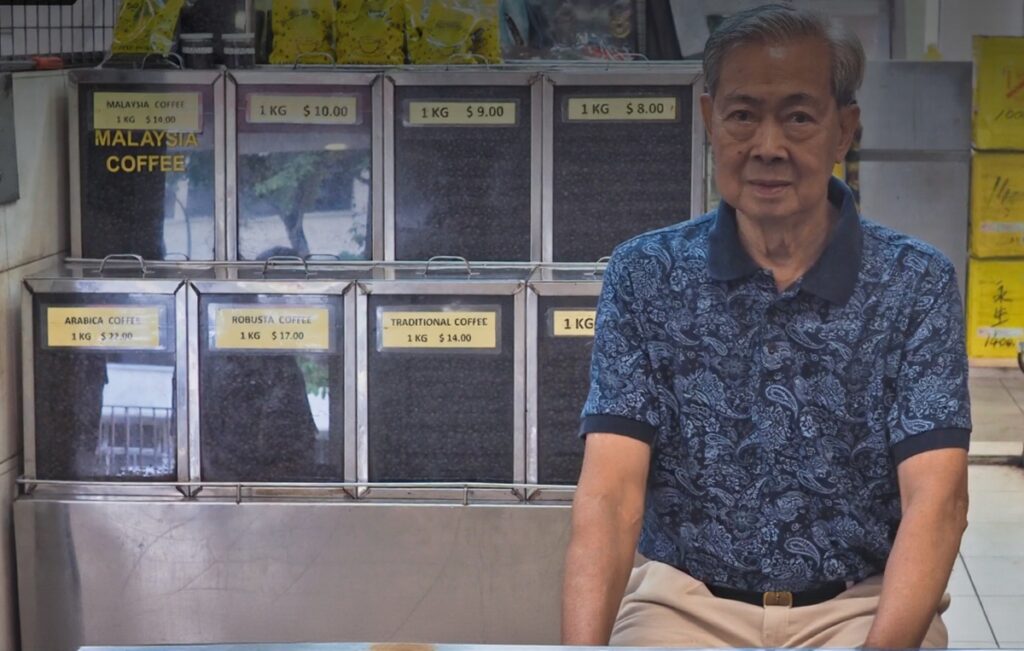
For more than five decades, Yong Seng Coffee has been a fixture at Tiong Bahru Market.
It has weathered the rise of instant coffee, the café boom that’s transformed the neighbourhood in the 2010s, and, more recently, the emergence of a specialty coffee scene that has made Singaporeans increasingly discerning about what goes into their cup.
Through it all, the Tay family has continued roasting the same honest Nanyang-style kopi that they first sold door-to-door in the 1960s.
Vulcan Post spoke with Marcus Tay, 34, the third-generation owner of Yong Seng Coffee, about how a family business built on trust and tradition has remained relevant across generations—and how he is carefully introducing the brand to a new generation of coffee drinkers without losing the values that have sustained it for decades.
Advertisement
Going from door-to-door to sell coffee
Founder of Yong Seng Coffee, Tay Yiong Theng./ Image Credit: Yong Seng Coffee
The story begins with Marcus’s grandfather, Tay Yiong Theng, who started his career in the coffee industry at just 13 years old, taking orders and delivering drinks at a coffee stall. The stall owner noticed his interest and eventually taught him the art of Nanyang coffee roasting.
Armed with that knowledge, Tay struck out on his own in 1960, roasting coffee in the mornings and selling it in the evenings. Back then, roasting was done in a wok over wood fire, requiring constant attention and careful control of the heat.
To get customers, he did what any resourceful hawker of that era did. He knocked on doors in the neighbourhoods around Tiong Bahru and Jalan Kukoh, moving through the streets on foot with his hawker cart while he roasted coffee beans on the go.
Eventually, the hustle paid off. Tay earned enough to formally incorporate Yong Seng Coffee in 1974, opening a stall at Tiong Bahru Market and pooling resources with partners to operate a shared roastery—giving him the capacity to supply not just walk-in customers but also businesses at coffee shops, school canteens, and other businesses, too.
Marcus’s father joined the fold in the late 1970s and early 1980s, helping with deliveries and working the factory floor. By the time Marcus was old enough for primary school, he was already spending his school holidays following his grandfather around on his coffee deliveries.
Advertisement
A business built on trust
Marcus, the third-generation owner, mainly runs the stall at Tiong Bahru Market./ Image Credit: Yong Seng Coffee
What has kept Yong Seng Coffee going across three generations? Marcus’s answer centred on ethics.
“My grandfather had a very strong principle of being honest and transparent with his customers,” he said. “Because of that, he built a lot of trust, and a lot of our long-term customers have been with us since they were kids.”
Over the years, the trust between customers and Yong Seng Coffee has been tested by rising costs.
According to Marcus, coffee bean prices have climbed two to three times since before COVID-19, driven by adverse weather conditions in the Indonesian archipelago—where most of their beans are sourced—reduced supply, and surging global demand, including from large international coffee chains buying up Indonesian beans in bulk.
Rising energy costs have also followed, making each roasting batch more expensive as gas prices rise.
Advertisement
Faced with that pressure, the family made a difficult choice. Rather than quietly reduce the quality of their coffee while holding prices steady, they raised prices and told their customers why.
“Surprisingly, they understood,” Marcus said. “A lot of them gave feedback that they would rather pay a bit more and have the same quality, than maintain the same price and experience a drop in quality.”
That personal relationship with customers, especially with regulars, has become a defining feature of how Yong Seng Coffee operates.
Keeping the roasting process traditional
Yong Seng Coffee’s former roastery, which the business operated out of until 2021 before shifting production to a facility run by its long-time roasting partners. / Image Credit: Yong Seng Coffee
Yong Seng’s roastery operation runs through a partner facility today, but the Tay family controls every step of the process and craft detail. The original shared roastery wound down around 2021 when the older partners retired.
The setup involves a 60kg roaster for the core kopi blends and a 15kg roaster for specialty coffees. Each month, the team processes just over 1,000kg of beans, roasted in weekly batches and stored in an 800 sqft processing facility where blending and online orders are also handled.
Advertisement
For traditional kopi specifically, the roasting process runs in two stages: first roasting the beans, then coating them with sugar and margarine, before cooking them, taking roughly 40 minutes per batch.
On the other hand, the specialty coffees undergo a cleaner, shorter process at around 20 minutes.
For every new coffee bean that comes in, Marcus first runs a small-batch test roast on a 1kg machine to develop its ideal roast profile before scaling it up on the main roaster.
The challenge, he said, is that consistency still relies heavily on human skill and intuition. Roasters need to read the beans, account for changes in humidity, and spot subtle differences before the machines can.
Advertisement
Yong Seng’s coffees start at S$7.60 per 300g.
Making the online shift
Yong Seng Coffee’s coffee is offered in drip bags, apart from being freshly ground on the spot./ Image Credit: Yong Seng Coffee
When Marcus joined the family business in 2019, Yong Seng was entirely a physical operation. He was in his late 20s, coming from a career in internal audit, and the gap between how the business operated and how his generation shopped was immediately obvious.
As such, Marcus went on to modernise Yong Seng Coffee’s packaging and launched a website to open the store to online orders.
The timing turned out to be fortuitous. Not long after, COVID-19 hit, and the wet market was no longer easily accessible. Customers who couldn’t get to Tiong Bahru Market found them online instead, and that period helped establish a digital customer base that has stayed.
Going online also opened the door to expanding the product range in ways that the physical stall—with its early morning hours and limited space—couldn’t accommodate. Yong Seng now offers multiple grind sizes (fine, medium, and coarse), a range of online-exclusive formats including single-serve sachets, batch brew sachets, and drip bags, bringing in new customer profiles by providing convenience.
Advertisement
Expanding Yong Seng’s range of grind sizes was a meaningful shift, particularly for customers buying its specialty coffee beans. For years, offering only a medium grind kept operations simple and order fulfilment efficient.
Introducing more grind options meant processing orders individually rather than in batches, inevitably slowing things down. But for home brewers using equipment such as moka pots, pour-overs, or French presses, the right grind size can make a significant difference to the final cup.
It’s a trade-off Marcus is happy to make—one that reflects the care and craftsmanship he believes good coffee deserves.
We figured we should do it. It allows the coffee to be better presented to the customer, and they’re able to brew it better.
Bridging Asian kopi and specialty coffee
Yong Seng Coffee offers both kopi (Nanyang coffee) and specialty coffee./ Image Credit: Yong Seng Coffee
Perhaps the most personal addition Marcus has made to the business is the #dYScover collection—a rotating lineup of single-origin specialty coffees that changes every two months, chosen by Marcus himself, from beans sourced through a trusted trader.
The idea came from his own relationship with coffee. He used to prefer specialty coffee over kopi, and when he first joined the business, he half-wondered whether the future was in moving entirely toward specialty. Moreover, with many café concepts popping up in Singapore over the years, Marcus realised the demand for specialty coffee was becoming on par with local kopi.
Advertisement
What the #dYScover range does is give customers a reason to come back regularly and explore beans from all over the world, from South America to the Caribbean.
Marcus selects each offering with an eye toward variety, avoiding repeated origins and flavour profiles where possible. The current offering for Jun and Jul includes beans from Guatemala, alongside the core collection blends that have been there since the beginning.
The collection has also helped shift some customers’ perceptions of kopi itself. Many older customers, accustomed to the earthier, more bitter profile of traditional Nanyang coffee, initially resist anything that tastes acidic, a quality that’s natural in Arabica beans and which Marcus finds adds sweetness and complexity to a cup.
However, with the #dYScover collection, getting customers to try something new besides kopi, and to understand why it tastes the way it does, has become a norm for Yong Seng Coffee.
Advertisement
“I get to educate my customers, and they get to enjoy good coffee,” he said. “I think that’s a win-win.”
Staying deliberately small
Yong Seng Coffee typically roasts about 1,000kg of coffee a month./ Image Credit: Yong Seng Coffee
One thing Yong Seng has not done is expand aggressively.
There are no plans for multiple outlets, no wholesale push into supermarkets, and no ambition to see their beans sitting on shelves in chain stores—not because the opportunity hasn’t arisen, but because Marcus is wary of what that would mean for quality.
“We can’t control how quickly it moves,” he said of wholesale retail. “It could sit on the shelf for two or three weeks, and by the time the customer gets it, it’s not the experience we want them to have.”
The business, as Marcus’s grandfather always ran it, has avoided taking on significant debt and prioritised keeping cash flow healthy. Growth has come slowly and deliberately.
Advertisement
The online store expanded its reach without requiring new physical space. “We evolve very slowly, but consistently,” Marcus said.
For now, Marcus is focused on deepening what Yong Seng already does well—roasting honest kopi, introducing customers to good coffee from around the world, and being transparent with the people who keep coming back.
His advice to anyone looking to enter the coffee business in Singapore distils the same philosophy his grandfather started with: offer something consistent, improve openly, and don’t rely on marketing spend to do the work that product quality should.
“Consumers in Singapore are smart enough to see that,” he said. “If you’re consistently improving and transparent about it, I think the local consumers appreciate that and will support the business.”
Microsoft opened a new front in the AI security wars on Monday, unveiling its first custom-built cybersecurity model and a sweeping agentic defense platform — and making an argument that could reshape how enterprises buy AI: the future belongs not to the biggest model, but to the cheapest one that’s good enough, routed intelligently.
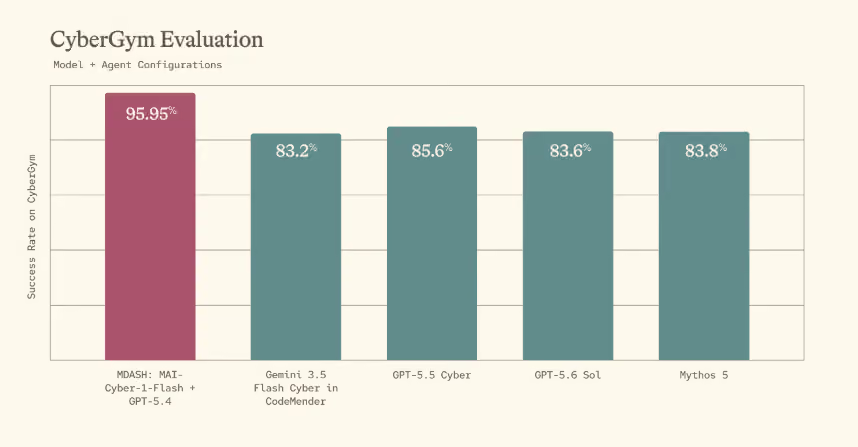
The company announced MAI-Cyber-1-Flash, a compact security model developed in-house by its Microsoft AI (MAI) division, embedded inside MDASH, Microsoft’s multi-agent harness for finding and fixing software vulnerabilities. Together, the company says, the system scores 96% on CyberGym — a benchmark measuring how well AI systems reason over large codebases to find real vulnerabilities — beating frontier models including Mythos, Gemini, and GPT, while cutting costs roughly in half compared to Microsoft’s own current production configuration.
Alongside the model, Microsoft introduced Project Perception, an agentic security system that coordinates “red team” agents that hunt for paths to compromise, “blue team” agents that investigate and triage risk, and “green team” agents that remediate and harden defenses. Project Perception enters public preview on August 3.
In a wide-ranging interview with VentureBeat, Microsoft AI CEO Mustafa Suleyman made clear the company sees Monday’s announcement as the opening move in a much longer campaign.
Advertisement
“We really do have a pretty significant data and harness and expertise moat, and that is enabling us to train models which are faster, better, cheaper, and I think this is genuinely the tip of the iceberg,” Suleyman said. “We haven’t been working on this for long. The next model is going to be pretty phenomenal.”
Microsoft’s MDASH system, which pairs its new MAI-Cyber-1-Flash model with OpenAI’s GPT-5.4, scored 95.95 percent on the CyberGym benchmark, outperforming rival configurations from Google, OpenAI and others by more than 10 percentage points. (Source: Microsoft)
Inside the 90/10 architecture that still depends on OpenAI’s GPT-5.4
The most technically revealing detail in the announcement is not the model itself but how Microsoft deploys it. MAI-Cyber-1-Flash was designed to handle up to 90% of security tasks efficiently, while MDASH escalates the remaining 10% of exceptionally difficult problems to a larger frontier model — which, notably, is OpenAI’s GPT-5.4. In other words, Microsoft’s flagship security AI still leans on its longtime partner-turned-rival for the hardest work.
Asked to explain that relationship, Suleyman pointed to the harness, the orchestration layer that routes each incoming problem to the right model. “The harness is like a router,” he told VentureBeat. “It’s kind of like guardrails and a rule set of an organizing logic, which matches queries to… incoming problems to a model that suits the problem.” The system has three components, he explained: the harness, the small and fast MAI-Cyber-1-Flash handling the bulk of queries, and GPT-5.4 sitting alongside as “just a generalist coding model.”
Advertisement
Pressed on how a system reliant on OpenAI’s model can outperform frontier competitors, Suleyman argued the performance comes from the whole system, not any single model. “These are very complicated, long, agentic loops which require storing state, drawing on another database, consulting best practice… handing back to a small model, writing a bunch of code, validating that that was correct,” he said. “There’s like hundreds of steps to solve that, and that’s why it’s really the system together that delivers the better performance.”
And why GPT-5.4 specifically for the escalation tier? Cost, again. “GPT-5.6 is expensive. GPT-5.4 is incredibly good relative to its cost,” Suleyman said. “The whole game here is to reduce the costs. Mythos and so on are extremely expensive models… we want to be able to deliver better performance for cheaper. That’s what customers want.” The arrangement captures Microsoft’s evolving posture toward OpenAI: still a customer of the partnership that drew regulatory scrutiny in Brussels and Washington in 2024, but increasingly determined to own the layers of the stack where it believes it holds durable advantages.
Why token costs — not model quality — are becoming the real barrier to enterprise AI adoption
The economics may matter more than the benchmark. Microsoft says the new configuration delivers roughly 50% cost savings against the current MDASH setup, which runs a blend of GPT-5.4, 5.4 mini, and 5.3 codex. In security — an always-on workload processing enormous volumes of signals — token costs compound relentlessly, and Microsoft argues they have become the binding constraint for defenders.
Suleyman frames the cost issue as downstream of a harder physical limit. “The key barrier to adoption is access to chips, and cost is a function of chips,” he said. “No matter how much money you’ve got, there’s actually a limited supply of chips. Then trying to squeeze more model output on fewer chips is clearly super valuable.”
Advertisement
He also described a broader enterprise backlash against frontier-model pricing. Companies initially maxed out on the best available models, he said, but “then they realize they’re sort of paying… a phenomenal amount of money, and people are absolutely token maxing everywhere across their business. So there’s a massive pushback to reduce cost everywhere.”
That positions Microsoft to ride a market trend rather than fight it. Cost-efficient, near-frontier models have proliferated over the past year — from xAI’s recent Grok release to a wave of Chinese models built on the same premise — and Microsoft is betting that as a platform company it can align itself with enterprise cost pressure. “The top model providers want you to use the most expensive model continuously, whereas because we are a platform, we’re on the side of the enterprise,” Suleyman said. “There’s no point asking… Mythos what the capital of France is.”
The 100-trillion-signal data moat Microsoft says no competitor can replicate
Every AI lab claims differentiation. Microsoft’s claim in security rests on something genuinely hard to copy: telemetry. The company processes more than 100 trillion security signals daily — a figure consistent with its 2025 Digital Defense Report, which also cited 4.5 million new malware files blocked and 5 billion emails screened per day — and draws operational insight from 1.6 million customers.
“We have trillions and trillions of data points going back decades,” Suleyman said. “It is, I think, the largest longitudinal cybersecurity dataset around,” in part because Microsoft’s customer base includes governments “who have been consistently attacked for years, and we have been consistently attacked.” Asked directly whether this constitutes an advantage no competitor can match, Suleyman didn’t hedge: “That is definitely a moat for us. Both the data and the expertise, and just the experience in the institution of going through that process.”
Advertisement
The strategic logic is that cybersecurity functions as a live reinforcement-learning loop: defenders act, outcomes are observed, models improve. Microsoft argues that connecting actions to outcomes — what was exploited, what was contained, what was blocked — yields training signal that pure model labs simply cannot buy or manufacture.
There is real substance here, but the usual caveats apply. The CyberGym results come from Microsoft’s own evaluation, the fine print shows the headline “96%” is actually 95.95%, and vendor-run benchmarks that pit an entire tuned agentic system against competitors’ base models are not apples-to-apples comparisons. What Microsoft has measured is a full harness-plus-models configuration against what customers might otherwise assemble — arguably the commercially relevant comparison, but not a controlled model-versus-model test.
The dual-use dilemma: how Microsoft plans to keep a vulnerability-hunting AI out of the wrong hands
A model built to find challenging vulnerabilities in complex codebases is, by definition, a model that could find vulnerabilities for attackers. This is not a theoretical concern. Microsoft’s own threat intelligence team, in joint research with OpenAI published in February 2024, documented nation-state actors from Russia, North Korea, Iran, and China probing large language models for reconnaissance, scripting, and vulnerability research. Its 2025 Digital Defense Report went further, warning that AI agents could eventually automate the entire attack lifecycle.
Suleyman said Microsoft is gating access accordingly. “We’re very strict about who gets access to the model, and we’re very careful about that,” he said. “We constantly monitor the API and usage.” An approved user, he added, “has to be seen to be having good intent, but also have technical competence.” The rollout will be deliberately staged: “It’s not going to be thousands next week. There will be tens, and then hundreds, and then thousands.”
Advertisement
Microsoft says the model was evaluated by its AI Red Team, subjected to automated and expert-led adversarial exercises, and independently assessed by a third party, with deployment wrapped in tenant isolation, auditing, and sandboxed execution environments with no internet access.
Suleyman also offered a candid acknowledgment of Microsoft’s positioning relative to the bleeding edge — one that doubles as a pitch to risk-averse buyers. “Even though we might be a few months behind the absolute cutting edge at any given moment… it matters that we’re doing it very carefully and thoughtfully, and we have a track record of doing that,” he said. For a company that spent 2024 absorbing hard security lessons — from delaying its Recall feature over privacy concerns to convening an industry summit after the CrowdStrike outage disabled some 8.5 million Windows devices — that trust-first framing is both strategy and necessity.
What Microsoft’s superintelligence roadmap signals about the future of enterprise AI
Suleyman described a rapidly accelerating MAI roadmap, roughly nine months after Microsoft stood up its superintelligence team. “We have the compute that we need. We certainly have the data we need. We have the talent,” he said. “Our momentum is accelerating rapidly.” The top enterprise demand he’s hearing is for “agents that can produce arbitrary code to solve whatever problem they direct them at,” as vibe-coded internal tools graduate from experiments into production. The next phase, he said, pulls voice, transcription, image, and coding models “all integrated into the same harness.”
Notably, Suleyman expressed skepticism about the industry’s default assumption that everything eventually converges into one giant unified model. “It remains to be seen whether one giant model that is fully multimodal is actually able to deliver additional transfer learning benefit because of the integration,” he said, “or whether it’s just a big lumbering expensive giant.”
Advertisement
That skepticism is the through line of the entire announcement. Microsoft is wagering that the unit of competition in enterprise AI is no longer the model at all — it’s the system: the router, the specialized small models, the frontier fallback, and the proprietary data feeding the loop. In security, where Microsoft controls both the telemetry flowing in and the products that act on it, that wager is at its strongest. Whether it holds in domains where the company’s data advantage is thinner remains the open question hanging over the MAI roadmap.
For now, though, Microsoft has offered the industry a preview of how it intends to fight the next phase of the AI race: not by building the biggest brain, but by building the best machine around it. As Suleyman put it, this is the tip of the iceberg — and Microsoft is betting everything on what sits below the waterline.
Microsoft has a new AI cybersecurity model called MAI-Cyber-1-Flash, and when it’s combined with agentic security system MDASH and OpenAI’s GPT-5.4 model, it outscores Anthropic’s Claude Mythos 5 by 12 points on a key benchmark. The security product is designed for “using AI to defend against AI,” Microsoft says.
The combination of MAI-Cyber-1-Flash with MDASH — which launched in May — is called Project Perception, and it enters public preview on Aug. 3, built directly into Microsoft Defender. It will slowly roll out to all Microsoft Security products.
According to benchmarks posted by Microsoft on Monday, the combination scored 96% on CyberGym, compared with Mythos 5 at 84%.
Microsoft
Pricing is consumption-based, measured by the number of security compute units you use. As AI agents run scenarios, they consume SCUs, so the more work performed, the more you pay — but Microsoft says cost savings are almost 50% of the current MDASH configuration on the market now.
Speaking at a Microsoft briefing on Monday morning, Mustafa Suleyman, CEO of Microsoft AI, explained the handover process between MAI-Cyber-1-Flash and GPT-5.4.
Advertisement
“MAI-Cyber-1-Flash handles about 90% of the queries. It detects the vulnerabilities, it patches them, ships them and then proves that it was actually a valid and correct solve. And then it basically defers about 10% of the queries to GPT-5.4, which is obviously a larger model, about 10x larger, and it solves those,” Suleyman said. “In conjunction, as the models hand off between each other, they’re actually not just able to deliver better performance than all of the other models combined — they do so at 50% of the cost.”
Suleyman called the CyberGym benchmark result “quite a remarkable result.”
It follows the launch of Anthropic’s Claude Fable 5 last month, the first publicly available model from the Mythos family. At the time, Anthropic said Mythos was so good at finding cybersecurity flaws that it could break the internet if used unchecked — and Anthropic was forced to walk back the Fable 5 and Mythos 5 launches within days because the US government said it was aware of a way to “jailbreak” the model and bypass limits. When Mythos was first announced, it was released only to select government agencies and tech professionals.
“Microsoft has long been the trusted steward of some of the most valuable, important government and enterprise data in the world over many decades. We’ve accrued a phenomenal amount of data in that time,” Suleyman said Monday. “It’s that data combined with the expertise that we have from the world-class cybersecurity experts in the company that we’ve been able to really drive this combined model.”
Advertisement
Corinne Reichert
Senior Editor
Corinne Reichert (she/her) grew up in Sydney, Australia and moved to California in 2019. She holds degrees in law and communications, and currently writes news, analysis and features for CNET across the topics of electric vehicles, broadband networks, mobile devices, big tech, artificial intelligence, home technology and entertainment. In her spare time, she watches soccer games and F1 races, and goes to Disneyland as often as possible.
See full bio
AMD’s MI400 press release publishes exactly one performance figure
288 TFLOPS of hardware FP64 on the MI430X, a GPU it positions as its go-to for sovereign AI and HPC
Unlike the MI455X, which it launched alongside, the MI430X will have researchers and sovereign AI clients waiting longer, with AMD targeting early 2027 for its first shipments
AMD has launched its latest Instinct MI400 series, unveiling two new chips which bring performance gains, larger, faster HBM4 memory, and a continued promise to support its open-source ROCm stack.
While both chips come with 432GB of HBM4 memory, they both have very different use cases: the MI455X is AMD’s attempt to dominate AI data centers and run training and inference for frontier models, while the MI430 is positioned as a high-performance compute (HPC) alternative that offers superior precision thanks to it being tuned for superior FP64 performance at a hardware level.
Both GPUs are based on AMD’s CNDA 5 architecture, but the MI430X offers FP64 performance that dwarfs both the MI455X and Nvidia‘s Rubin-based offerings.
Latest Videos FromTechRadar
Advertisement
Frontier AI demand comes first
The launch, which was effectively on paper, still showcased where AMD’s focus lies: the Instinct MI455X. There is a simple reason for that: AI data centers prioritize faster FP4 and FP8 performance for most tasks, such as inference, and the MI455X delivers on that front.
AMD is simply responding to market demand by aiming to ship the MI455X first, even as it has sovereign AI buyers lining up, both directly and indirectly, including the U.S. Department of Energy, Oracle, and even the UK government, to name a few.
AMD stated that the MI455X delivers up to 34 times the token throughput of the MI355X at 18 times lower cost, showcasing a significant performance and efficiency upgrade. It is also arguably AMD’s most heavily drummed-up release to date, even as it continues to play catch-up to Nvidia’s market dominance in the AI data center space.
The MI455X ships with the recently announced Helios, AMD’s first rack-scale AI system that launched alongside the new Instinct chips. One of these has 72 MI455X GPUs and 18 sixth-gen EPYC server CPUs, configured in a 1:6 ratio per compute node.
Sign up to the TechRadar Pro newsletter to get all the top news, opinion, features and guidance your business needs to succeed!
The MI430X, on the other hand, seems to be competing specifically to score buyers who require higher precision, such as science researchers or even government departments where correctness is required at the edges, and memory limitations apply even with the MI series accelerator’s 432GB of HMB4 in play.
Advertisement
“The next generation of AI will span frontier AI, sovereign AI and scientific computing, and each requires infrastructure optimized for its unique demands,” said Vamsi Boppana, SVP AI at AMD.
“The AMD Instinct MI400 Series extends our AI portfolio with purpose-built solutions optimized for the full spectrum of AI and HPC deployments, built on an open software foundation that gives customers the flexibility to innovate at every scale.”
AMD also has an important buyer for the MI455X in its Helios rack-scale form that will also grant it further exposure to it pre-IPO: Anthropic. The company has agreed to invest $5 billion in the AI giant, with the latter agreeing to deploy 2 GW of AMD’s MI450 accelerators, even though its AI head wasn’t exactly enthused recently by a perceived drop in performance on Claude Code in early 2026.
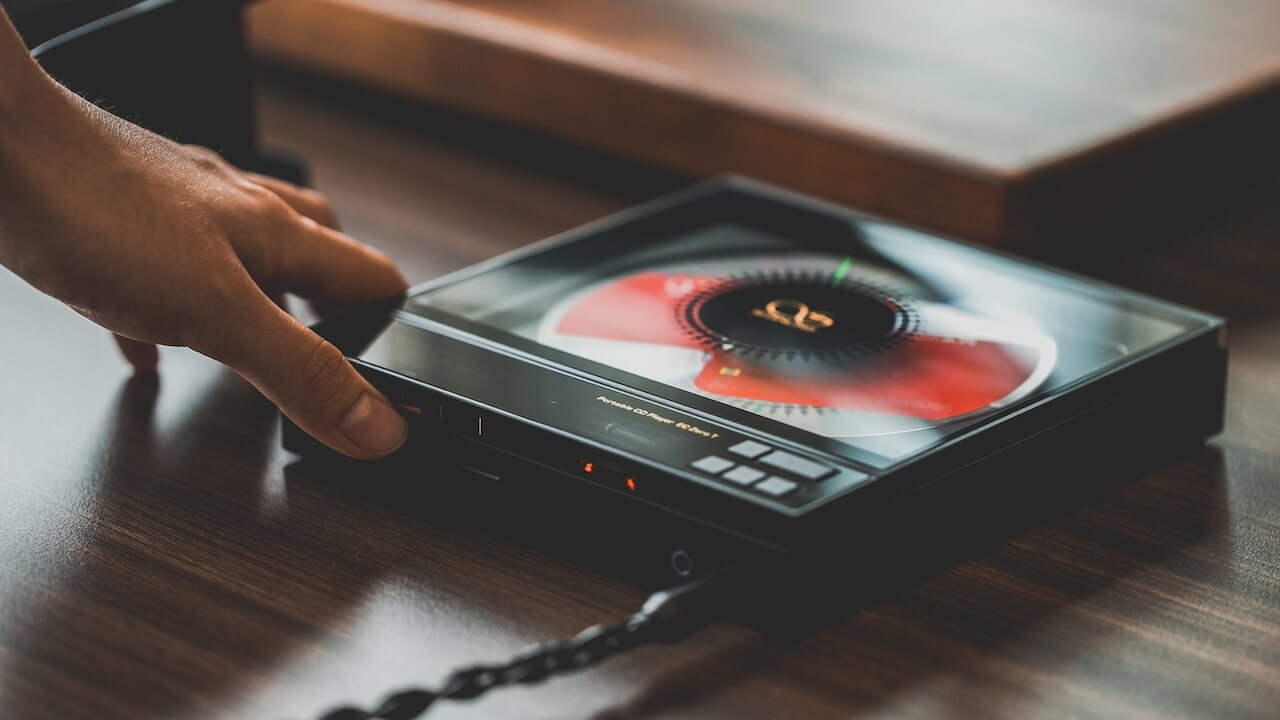
Portable CD players are suddenly everywhere again, which is what happens when streaming fatigue collides with a physical format that costs less than vinyl and does not arrive warped. US CD sales jumped 16% to 16.3 million units during the first half of 2026, but many of the new portable players still force buyers to choose between mobility and enough power to drive demanding headphones.
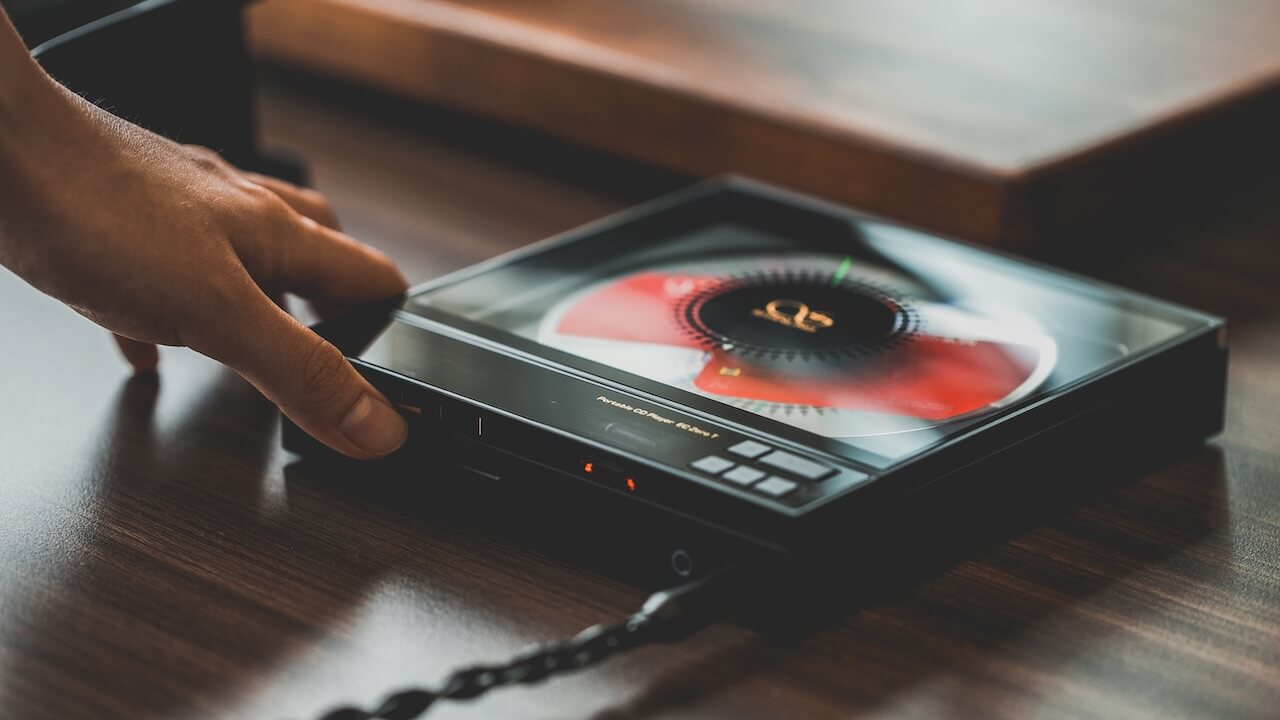
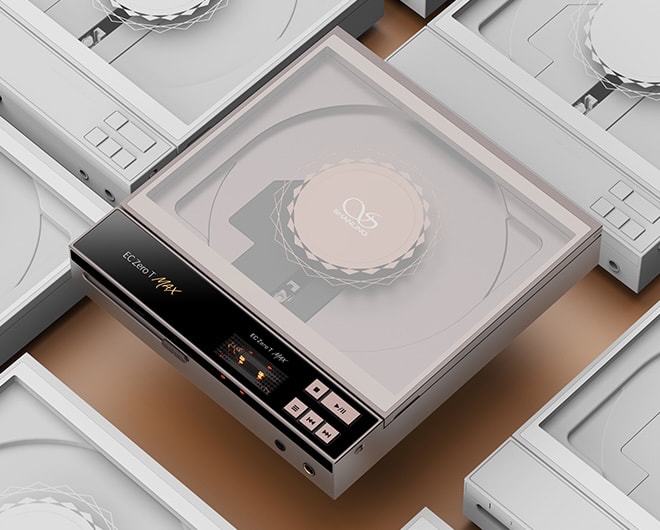
The $629 Shanling EC Zero T Max addresses that problem with a revised battery-powered amplifier delivering up to 1,300mW into 32 ohms, while retaining the original model’s 24-bit R2R DAC, dual JAN6418 tubes, USB DAC, Bluetooth transmission and CD-ripping capabilities.
The CD revival has officially reached the stage where a Discman now requires resistor ladders, vacuum tubes and more output than some desktop amplifiers.
What Changed From the EC Zero T?
Shanling EC Zero T Portable CD Player
The Max is not a different finish wrapped around last year’s electronics.
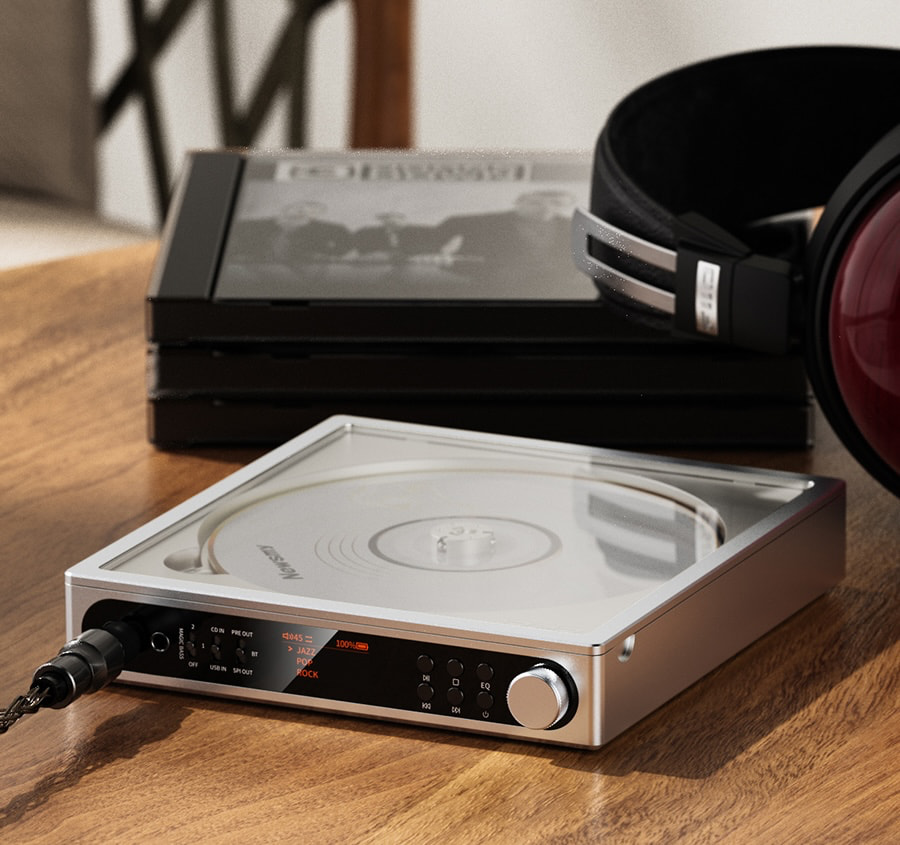
Shanling replaced the original TPA6120-based headphone section with a revised amplifier built around the Analog Devices AD8397. The balanced 4.4mm output now produces as much as 1,300mW into 32 ohms in transistor mode and 1,162mW in tube mode while operating from the internal battery. The 3.5mm output reaches 361mW into the same load.
Advertisement
The original EC Zero T delivered 551mW into 32 ohms from its balanced output on battery power and required external DC power to reach its maximum 1,220mW specification. Its single-ended output was limited to 158mW on battery. The Max therefore supplies more power away from the wall than the previous model could produce even when plugged into one.
That matters because a supposedly portable player that requires an external power supply to unlock its best amplifier performance is portable in much the same way that a countertop microwave is technically movable.
Shanling has also reduced output impedance from 4.7 ohms on the original 3.5mm output and 6.6 ohms on the balanced output to approximately 0.4 and 0.7 ohms, respectively. That change may be even more useful than the additional power for owners of sensitive multi-driver IEMs, which can react unpredictably when connected to a source with high output impedance.
Shanling EC Zero T Max
The R2R DAC Gets Revised Power and Signal Circuits
The EC Zero T Max retains Shanling’s in-house 24-bit R2R DAC module, built around 192 precision resistors with 0.1% tolerance. Users can choose between oversampling and non-oversampling modes, depending on whether they prefer conventional digital filtering or a more direct NOS presentation.
Shanling says it revised the DAC’s power supply and portions of the analog signal path using experience gained during the development of its newer PRO R2R platform. The company claims the changes produce a wider and deeper soundstage with greater midrange and treble transparency. Those claims will require listening rather than obediently copying the brochure, but this appears to be circuit-level work rather than a new firmware filter wearing a party hat.
Advertisement
The dual JAN6418 miniature vacuum tubes also return, with selectable tube and transistor output modes. Shanling isolates the tubes inside a damped mounting structure to reduce microphonic noise, which becomes especially important when two vacuum tubes are sharing a chassis with a spinning optical mechanism.
Advertisement. Scroll to continue reading.
Still a CD Player and Quite a Bit More
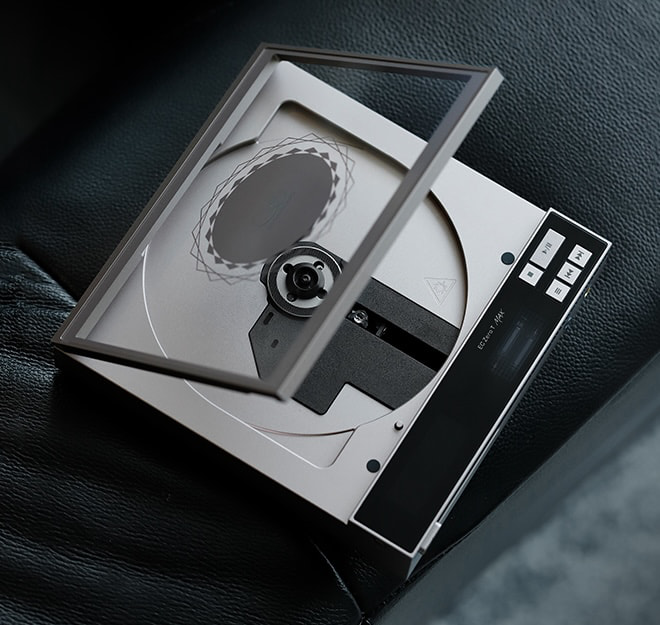
The EC Zero T Max uses a custom CD mechanism with an active magnetic clamp and anti-skip system. It supports gapless CD playback and can rip discs in real time to an attached USB storage device as uncompressed WAV files.
It can also operate as a USB DAC, supporting PCM up to 32-bit/768kHz and DSD512. Analog connectivity includes separate 3.5mm and balanced 4.4mm headphone and line outputs, while coaxial and optical connections allow the Shanling to feed an external DAC or full-size audio system.
Advertisement
Bluetooth 5.3 transmission supports aptX Adaptive, aptX and SBC. The important word is transmission: the Shanling can send CD audio to compatible wireless headphones or speakers, but it is not advertised as a Bluetooth receiver for streaming music from a phone. LDAC is also absent.
The internal 5,500mAh battery is rated for up to eight hours through the single-ended output, approximately 7.5 hours through the balanced output and as much as 20 hours when the player is used as a Bluetooth transmitter.
Shanling EC Zero T Max
Shanling EC Zero T Max Specifications
Type: Portable CD player, USB DAC and headphone amplifier
DAC: Shanling 24-bit R2R module
Resistor network: 192 resistors with 0.1% tolerance
Digital modes: Oversampling and non-oversampling
Tube stage: Two JAN6418 miniature vacuum tubes
Amplifier: AD8397-based revised headphone stage
Output modes: Tube or transistor
Balanced output: Up to 1,300mW into 32 ohms in transistor mode
Balanced tube output: Up to 1,162mW into 32 ohms
Single-ended output: Up to 361mW into 32 ohms
Headphone outputs: 3.5mm and 4.4mm balanced
Line outputs: 3.5mm and 4.4mm balanced
Digital outputs: Coaxial and optical
USB DAC support: PCM up to 32-bit/768kHz and DSD512
Bluetooth: Version 5.3 transmitter
Bluetooth codecs: aptX Adaptive, aptX and SBC
CD ripping: Real-time WAV ripping to USB storage
Battery: 5,500mAh
Battery life: Up to 8 hours wired or 20 hours over Bluetooth
Display: 1.68-inch color LCD
Construction: Aluminum chassis with tempered-glass panels
Dimensions: 6.2 x 5.9 x 1.1 inches
Weight: 1.47 pounds
Finish: Titanium gray
What Makes the EC Zero T Max Unique?
Portable CD players with balanced headphone outputs are no longer especially unusual. The Max separates itself by combining a custom R2R DAC, selectable physical tube stage, CD ripping, high-resolution USB DAC support and a genuinely powerful battery-operated amplifier in one component.
The critical improvement is not that it reaches 1.3 watts. The original model could approach that figure when connected to external power. The difference is that the Max provides its full amplifier output from the internal battery while also lowering output impedance enough to work more predictably with sensitive IEMs.
That gives it a broader range than most portable disc players. It can drive efficient earphones, more demanding over-ear headphones, powered speakers or an external DAC without requiring the owner to construct a small equipment shrine beside the CD case.
Advertisement
Three Alternatives
FiiO DM15 R2R
FiiO DM15 R2R
The $269.99 FiiO DM15 R2R is substantially less expensive and uses FiiO’s own 24-bit resistor-ladder DAC. It provides 3.5mm and balanced 4.4mm outputs, Bluetooth 5.4 transmission, USB DAC operation and digital outputs. Output reaches 812mW into 32 ohms on battery or 1,150mW in desktop mode.
The DM15 is lighter, cheaper and offers newer Bluetooth connectivity. The Shanling counters with substantially more battery-driven power, selectable tube and transistor stages, lower output impedance and a more elaborate analog section.
Cayin CP6
The $699 Cayin CP6 is the closest conceptual rival. It uses two JAN6418 tubes, offers classic tube, modern tube and solid-state sound modes, supports bidirectional Bluetooth 5.4 and includes USB DAC and CD-ripping functions. Its amplifier can produce as much as 1,300mW into 32 ohms when operating in DC power mode.
The Cayin offers more Bluetooth flexibility and three distinct output modes, but uses dual Cirrus Logic DACs rather than an R2R network. The Shanling also reaches its maximum balanced output on battery power rather than requiring external DC power.
Moondrop DiscDream 2 Ultra
The $349 Moondrop DiscDream 2 Ultra provides balanced and single-ended headphone outputs, an optical output, USB DAC operation and approximately eight hours of battery life. It is a simpler and much less expensive route into transportable CD playback.
Advertisement
Advertisement. Scroll to continue reading.
It does not offer Bluetooth, CD ripping, an R2R DAC or a tube stage. The Moondrop makes sense for listeners who primarily want a well-built portable CD transport and headphone source rather than an entire personal-audio laboratory.
Who Is It For?
The EC Zero T Max makes the most sense for CD collectors who use a mixture of sensitive IEMs and full-size headphones and want one component that can travel between portable and desktop systems.
It also suits listeners who prefer R2R conversion or want the option of switching between a tube and solid-state presentation without purchasing two separate headphone amplifiers.
Advertisement
Who Should Avoid It?
Anyone who only wants to play CDs through efficient earbuds can spend substantially less on the FiiO DM15 R2R, Shanling EC Play or Moondrop DiscDream 2 Ultra.
The Max also lacks LDAC and Bluetooth reception, while its 1.47-pound weight stretches the meaning of “portable.” You can carry it, but nobody is clipping it to a tracksuit and running the Jersey Shore boardwalk unless their chiropractor has fallen behind on the boat payments.
The Bottom Line
The Shanling EC Zero T Max is the version the original EC Zero T probably should have been from the beginning.
It preserves the unusual combination of physical CD playback, R2R conversion and real vacuum tubes while addressing the original model’s most obvious weaknesses: limited battery-powered output and relatively high output impedance.
The result is not merely a louder EC Zero T. It is better suited to both demanding over-ear headphones and sensitive IEMs, while still functioning as a USB DAC, CD ripper, Bluetooth transmitter and digital transport.
Advertisement
Portable CD playback in 2026 has become remarkably sophisticated. It has also become remarkably expensive, but at least Shanling remembered to improve the parts that matter.
Price & Availability
The Shanling EC Zero T Max is priced at $629 and is now shipping to distributors. Shanling lists European pricing at €689 and says the player will be offered in titanium gray. Final US dealer pricing and local availability may vary as inventory reaches regional distributors.
A second gremlin is rolling through Spotify this evening.
Spotify
It’s not just you. Spotify has been inoperable or bugged out for many users today, and while the original batch of issues appears to have been fixed, there’s currently another outage affecting the company’s web page and apps. At just past 3PM ET on Monday, July 27, the Spotify Status account shared on X, “We’re aware of some issues right now with our web page and are checking them out!”
The website problems followed an outage in the early morning of July 27. The Spotify Status account said that glitch was cleared up about an hour after reports started rolling in. Spotify hasn’t yet given the all-clear for the second round of problems today, and users are still reporting issues with the service on Downdetector. I can confirm that I am currently unable to listen to “Pookie’s Requiem” on Spotify, and this is a tragedy.
The initial outage was resolved quickly, so for the sake of your commute home, cooking tunes or evening chill time, let’s hope this one is, too.
The Department of Homeland Security’s top numbers-cruncher has resigned, citing the Trump administration’s “war on immigrants” on his way out.
DHS has been a hub of controversy during the second Trump term: the ICE raids in American cities, the wild spending, the growing archipelago of detention centers, the attempts to hide data about it all. But vanishingly few officials have left the department and been openly critical of the direction it has taken. Marc Rosenblum, who served as executive director of the Office of Homeland Security Statistics and a deputy assistant secretary at the department, is one of the first.
“I’m thrilled to end my relationship with the current administration,” Rosenblum said in a LinkedIn post over the weekend. “Between the war on immigrants, the war on feds, and the war on facts (not to mention the crazy war in Iran and the brazen corruption), I just need a change.”
Rosenblum also served in the first Trump and Biden administrations, initially running DHS’s office of immigration statistics, and then overseeing stats for the entire department—collating numbers on everything from cybersecurity intrusions to trafficking investigations to deportations. His office peaked at 45 people in the Biden years, and started to shrink since.
Advertisement
“He had one of the most interesting charges at DHS,” a former colleague tells WIRED of Rosenblum. “There’s 22 component agencies, and so there are 22 different ways of aggregating data that were just completely siloed.”
“So Marc’s charge was to consolidate all the data and put it in a way that internally, I at headquarters could know exactly how many Coast Guard interdictions happened off the Coast Guard station in Miami, and how many of those were Cuban, Haitian, Nicaragua, Venezuelan. And then kind of conceptualize that with the same population of people that were crossing the Southwest border,” the former colleague adds.
A domestic security agency like DHS is never going to be a model of transparency. But Rosenblum, a long-time immigration policy wonk and an immigration specialist for the Congressional Research Service, promised as much openness as possible when he took on his department-wide role in 2023. “We’ll begin releasing data more quickly, with greater granularity and covering a broader scope of DHS activities,” he told Federal News Network that November.
That data itself became controversial in Trump 2.0. The Office of Homeland Security Statistics’ website on ICE detentions, Border Patrol encounters, and DHS repatriations hasn’t been updated since February 11, 2025, just weeks into the second Trump term. What information has been pried from DHS since then, often through Freedom of Information Act lawsuits, has been at times spotty and unreliable, analysts say.
Advertisement
“There’s no accountability, no way to assess, no public understanding about what’s really going on that is not curated by a press release from the agency,” David Bier, the Cato Institute’s director of immigration studies, told NOTUS in November.
DHS didn’t immediately respond to a request to comment for this story. Neither did Rosenblum. But he did allude to the difficulty of publishing quality data under this administration in his LinkedIn post. “My OHSS co-workers are outstanding career federal civil servants. They are smart, mission-focused experts who produce high quality results in a challenging and often hostile work environment,” he wrote.
“Marc was exactly what every American should want in a career public servant,” Luis Miranda, a top DHS spokesman during the Biden years, tells WIRED. “The Trump administration has governed by silencing or ignoring facts and information they believe doesn’t line up with their extreme rhetoric, and that has damaging implications, so it’s no surprise career officials whose job is transparency are unable to do those jobs.”
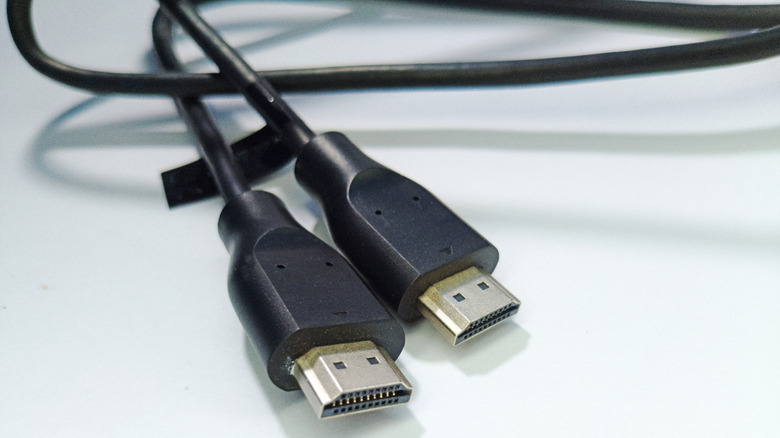
Since its introduction over two decades ago, HDMI has slowly but surely replaced the old video cables such as VGA. Eventually, it became an industry standard, and basically any TV, monitor, gaming console, and media player now uses HDMI as its primary connection port. Even if you don’t know what HDMI stands for, you likely know its use — to send high-definition video signals to a screen. However, last year, a new challenger arrived that could give HDMI a run for its money.
Bearing a similar name, GPMI (General Purpose Media Interface) was introduced by Shenzhen 8K UHD Video Industry Cooperation Alliance. The group is a consortium of over 50 Chinese companies, including well-known TV manufacturers like Hisense and TCL. The most impressive thing about GPMI is probably the fact that it’s designed to handle everything at once, meaning you get video, audio, data, control signals, and power with just one cable. And, as you likely know, eliminating cable clutter and management is always a good thing.
Fewer cables isn’t the only notable feature, since GPMI has some pretty good specs. For starters, it has noticeably more bandwidth than HDMI 2.0 and can offer higher bandwidth than HDMI 2.2. GPMI comes in two different formats: one uses the familiar USB-C standard (which delivers 96 Gbps and 240 watts of power), and the other uses a special Type-B cable designed just for this system. The Type-B cable steps things up, as it provides 192 Gbps and 480 watts. For comparison, HDMI 2.2 can deliver up to a maximum of 96 Gbps of bandwidth, which only matches GPMI’s USB-C connector.
Advertisement
Can GPMI replace HDMI?
Adi Sunandar/Shutterstock
Similarly to GPMI, HDMI 2.2 was released last year as the latest and best HDMI to date. From a technical viewpoint, the GPMI obviously has better specs, with the all-in-one cable being a big quality-of-life improvement. But HDMI is a better-known technology that numerous companies use. Due to this, new TVs in the coming years, maybe even 2027, will have an HDMI 2.2 port, which is a luxury GPMI doesn’t have.
Naturally, we’re talking about GPMI use outside of China. Considering the massive number of Chinese companies behind the new standard, it’s reasonable to expect it becoming prevalent throughout the country in the near future. Elsewhere, though, it would take massive support from other companies and manufacturers to adopt it across the industry. This isn’t just for TVs either, since other items (like graphics cards and gaming consoles) would need to support GPMI inclusion. While Chinese companies might be in favor of adoption, it’s hard to say whether Western ones will follow suit.
Advertisement
Still, GPMI did put China on the map when it comes to connectivity standards, since that part of the industry has long been dominated by the West. It will be interesting to see how things will go from here, now that there’s one more contender. As it stands now, we’ll likely continue to use HDMI (despite several reasons why you might want to stop) for quite some time in our households.
Apple is being sued for alleged negligence regarding its App Store security measures. In a lawsuit filed on Friday in the U.S. District Court of Northern California, three plaintiffs claim they were tricked into downloading and installing a fraudulent crypto wallet app, leading them to collectively lose more than $1.8 million.
The lawsuit centers on Apple’s claim that it secures its App Store by reviewing apps before they go live to protect users from fraudulent and malicious apps. In this case, the plaintiffs downloaded an app called Sparrow Wallet, even though the official Sparrow Bitcoin wallet is not available on iOS.
The plaintiffs transferred their Bitcoin to the fraudulent app, losing large amounts of the virtual currency, according to the complaint. Plaintiff James Ramirez lost about $875,000; plaintiff Christopher Ellis lost around $840,000, and plaintiff Jalen Delgado lost roughly $120,000.
The complaint targets one of Apple’s longtime competitive arguments: that its tight control over its App Store makes its platform safer than those offered by its rivals. The company has used this claim to push back against deregulation of the app ecosystem, including third-party app stores and sideloading.
Advertisement
“As part of a sustained marketing campaign, Apple has positioned itself, its products and services, as offering a level of security and trustworthiness superior to any competing technology company,” the new filing states. “This includes assurances about the safety of applications distributed through its App Store. By retaining exclusive control over which apps are permitted on Apple devices, Apple has structured its platform to ensure that consumers depend entirely on its promise of safety and reliability,” it reads.
The complaint also accuses Apple of knowingly hosting fraudulent apps, pointing to public criticism by Sparrow Bitcoin Wallet’s creator, Craig Raw, who said Apple had allowed fake Sparrow Wallet apps to remain on the App Store.
The three are asking for a trial by jury and seek to recoup their lost money and other damages. They also want Apple to provide warnings and disclosures about the App Store’s risks.
Apple declined to comment on the lawsuit. The company did stand behind its security measures, telling TechCrunch that apps impersonating others are a violation of its guidelines and it takes swift action to remove them. Apple added that there are currently no Sparrow Wallet copycats on the App Store.
Advertisement
The company also pointed to its latest analysis of its ecosystem, which found that in 2025 it rejected more than 371,000 submissions that copied other apps, were spam, or otherwise misled users.
When you purchase through links in our articles, we may earn a small commission. This doesn’t affect our editorial independence.
Your GPU dashboard says 70% utilization. On paper, the cluster is busy. In practice, a large chunk of that time is spent with your $40,000 accelerators sitting idle, waiting on a file that lives three network hops away on a NAS box. The compute queue is empty, and the pipeline is fine. The problem is that data is just somewhere else.
This is the awkward truth underneath most stalled AI projects. The constraint in modern AI infrastructure stopped being storage capacity years ago. Now, it’s more about data placement and access. What matters is where files live and how they get to GPUs, along with how much copying happens in between. In that sense, AI infrastructure has become less of a storage capacity problem and more of an operational data problem. The Hammerspace Data Platform takes that as its starting point. It sits between your compute and the storage you already own, from NAS to object stores and even the NVMe drives bolted into your GPU servers. It makes all of that data addressable through a single global namespace. Instead of moving data to wherever the GPUs are, the architecture makes the compute aware of where the data already lives.
As a result, rather than treating each storage system as its own operational silo, Hammerspace separates the data layer from the underlying infrastructure, allowing heterogeneous storage, sites, and clouds to operate as part of the same coordinated data environment. Applications and AI pipelines access that data through standard protocols such as NFS, SMB, and S3, without proprietary clients or application rewrites.
Fragmentation is the bottleneck, not bandwidth
Data fragmentation is a big problem for enterprises embarking on an AI journey. Training sets are scattered across departments, sites and clouds.
Advertisement
“The data is in disparate groups and disparate orgs and disparate silos within a company,” says Jonathan Flynn, director of applied systems at Hammerspace. “Having the data in a curated data set for you just to go train is rare. It has to be collected. It has to be moved around from system to system, and then the curation needs to happen in order to actually do the training on it.”
The fragmentation often leaves pipelines copying and staging files between systems that were never designed to talk to each other. None of this shows up on a storage IOPS chart, but it will visibly affect training velocity.
According to Gartner, 57% of organizations believe that their data isn’t AI ready. Alarmingly, two thirds of executives believe that no one in their organization understands all of the data they’ve collected and how to access it. That seems hard to swallow, until you recall that Facebook’s engineers have admitted the same thing. You can’t orchestrate what you can’t see.
Mike Bloom, who covers AR architecture at Hammerspace, says the default vendor response makes the problem worse. “They’ll go to a vendor that will promise them that if they sweep the floor and throw out all of their legacy storage arrays, their brand will solve the problem,” he says, adding that’s like throwing the baby out with the bath water. “Those data sets that are all over the place? They’re not sitting in a corner. They’re sitting on legacy storage arrays.”
Advertisement
The NVMe you already paid for
There is also a less obvious idle resource in most AI environments: the NVMe inside the GPU servers themselves. A modern HGX or DGX box ships with eight to sixteen NVMe drives, each hanging off four lanes of PCIe. Almost every orchestration layer treats that capacity as local scratch space, used by one server and invisible to the rest of the cluster.
Hammerspace calls this “stranded” capacity, and it is now meaningful. It amounts to hundreds of terabytes per server, with two-petabyte GPU servers on the roadmap. Pull all of it into a shared namespace and you have a new layer that Hammerspace calls Tier 0. It uses storage you already paid for, attached to a network you already deployed.
Flynn argues this layer is structurally faster than anything sold as a separate appliance.
“Tier one is typically oriented around storage capacity. A 2U box, 24 NVMe, or 40 NVMe with some of the Dell systems in there,” he calculates. “That’s 96 lanes or 192 lanes of PCI Express, with maybe one or two 400 gigabit NICs, which gives you 16 or 32 lanes. So the over subscription just in the one box is massive.”
Advertisement
His more provocative claim is that it is also the cheapest tier in the rack. The compute and the network are already there. The drives (at least in the case of customers buying GPU servers) are already in the bill of materials. Compared with racking and stacking a dedicated all-flash array, adding metadata servers and a few data movers to existing GPU nodes barely registers as a procurement event.
Assimilating what you already own
Ripping and replacing infrastructure takes time most teams don’t have. The Hammerspace approach is assimilation, which the company describes as a metadata-only operation: scan the existing NAS, ingest the directory tree into the global namespace, and redirect mounts. The bytes never move.
Hammerspace says that fast deployment is a key benefit of this approach. Data access is restored almost immediately, even while assimilation continues in the background.
Underneath this, the source-of-truth NetApp, Qumulo or VAST array keeps serving the bytes, while Hammerspace presents a unified view on top. That has practical consequences.
Advertisement
If something tagged as a training input changes from being a tier-two archive file to a hot input, a policy (Hammerspace calls this an “objective”) can trigger an instance copy onto tier 0 without users having to do anything. “Nobody’s running a copy. Nobody’s running an rsync command,” Flynn says. “It’s all orchestrated based in the file system.”
That same orchestration layer can also support retrieval-augmented generation (RAG), inference, and agentic AI workflows, where distributed enterprise data needs to be continuously curated, governed, and made accessible without relying on large-scale data copying.
Once the training job finishes, that tier 0 copy is automatically vacated. The clean-up matters because the alternative (letting a hot tier fill up) creates a quality-of-service problem for everything else trying to land there.
“Other architectures that have a hot tier and a cold tier often have an issue where the hot tier becomes congested and that endangers the quality of service for the pipeline,” Bloom says. “Rather than requiring organizations to rebuild infrastructure around AI, the Hammerspace approach is designed to operationalize the storage, cloud, and compute environments enterprises already have in place.
Advertisement
Standards-based, with some asterisks
Hammerspace’s positioning leans heavily on the word “standard”. The Samsung-Hammerspace submission that landed inside the top 10 of the IO500 10-Node Production benchmark in November 2025 used standard Linux, the upstream NFSv4.2 client, standard NVMe SSDs and IP-over-InfiniBand. There was no proprietary client, and no custom kernel modules. The company submitted its own results to MLPerf Storage v2.0 showing linear scaling out to 420.8 GB/s across 140 GPUs on five nodes with GPU utilisation above 96%.
That kind of performance is not achievable with traditional NFS architectures, which struggle with the parallel access patterns common in large-scale AI environments. Instead, Hammerspace runs on parallel NFS (pNFS). Instead of letting a single server handle file metadata transfer alongside data transfer, it creates a layout map that the client can then use to transfer data from multiple servers in parallel. That became the RFC 5661 standard in 2010. Hammerspace was also instrumental in extending pNFS in NFSv4.2 in 2018, introducing the Flex Files extension. This is what lets pNFS work with real-world hetergeneous storage across cloud tiers, legacy files, and multi-site deployments.
The larger implication is that open, standards-based infrastructure is no longer inherently at odds with AI-scale performance, challenging the assumption that enterprises must adopt proprietary storage stacks to support large-scale AI workloads.
“With the performance improvements that we contribute into the upstream, we’re actually seeing a decades-old file system transmute into a parallel access system that can rival WEKA, Lustre, and GPFS,” Flynn says.
Advertisement
Multi-site and sovereign by default
Once a single global namespace spans on-prem arrays, cloud object stores and the NVMe inside GPU boxes, the next questions are jurisdictional. Where can a given file legally live? Who is allowed to copy it? The platform handles this through the same objectives mechanism used for performance tiering. Tag a dataset as EU-only and the orchestration layer will exclude it from North American volumes. Tag it as HIPAA-bound and write-once-read-many rules apply.
Because those policies operate at the data layer rather than within individual storage silos, governance persists even as data moves across clouds, sites, and performance tiers. That is becoming increasingly important as AI pipelines, inference workflows, and agentic systems operate across distributed infrastructure rather than within a single environment.
That matters more in 2026 than it did two years ago, since such operational flexibility also changes the economics of AI infrastructure expansion. The SSD supply situation has tightened. NAND and DRAM prices climbed through 2024 and into 2025, driven by AI build-out and hyperscaler hoarding. Buying your way out of a data-movement problem by adding another all-flash array is harder when the flash is harder to get. A control plane that understands workload, location and policy together is now a valuable procurement workaround.
Real-world usage
The most useful data point about whether any of this matters at scale is Meta. The company runs two 24,576-GPU clusters used to train Llama 3 and deploys Hammerspace specifically to enable live job debugging and real-time code propagation across the training pipelines.
Advertisement
If a company with effectively unlimited engineering resources still hits a data-movement ceiling at that scale, the enterprises running a fraction of the workload are almost certainly hitting it too, and the standard answer of “buy more GPU” does not address a problem one layer below the compute plane.
Flynn put the underlying joke about NFS politely. “The joke I always heard was, NFS is not for speed.” That used to be true. The newer claim, that an open, standards-based file system can sit underneath an AI factory and feed it, casts the venerable file protocol in a new light.
ICustomers will likely want to see an independent benchmark of this system’s performance against the likes of VAST, WekaIO and NetApp in heterogeneous customer environments, using test systems not designed by the vendor. Nevertheless, it looks promising. In the meantime, the data placement architecture conversation is certainly the right one to be having.
Is there a simulator for the wail when you realize your precious one-off bootleg has just been chewed up?
If you have wistful longings for the days when your songs carried the subtle hiss of the cassettes you listened to, we have some reel good news. A new project takes modern music back to the analog era.
The project, available on GitHub, is called “Audio Cassette Simulation” and uses FFmpeg to transcode audio files to get that “wish I’d bought some decent tapes instead of the superstore’s own-brand” sound.
Advertisement
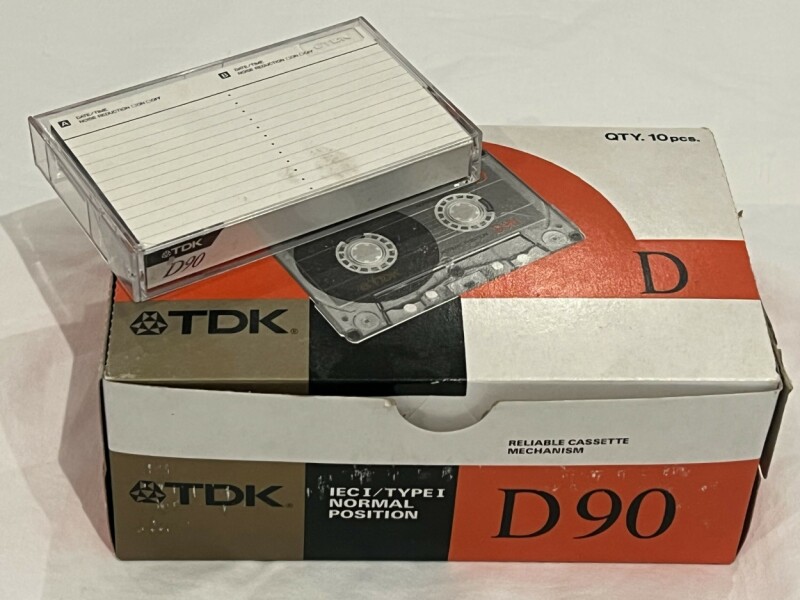
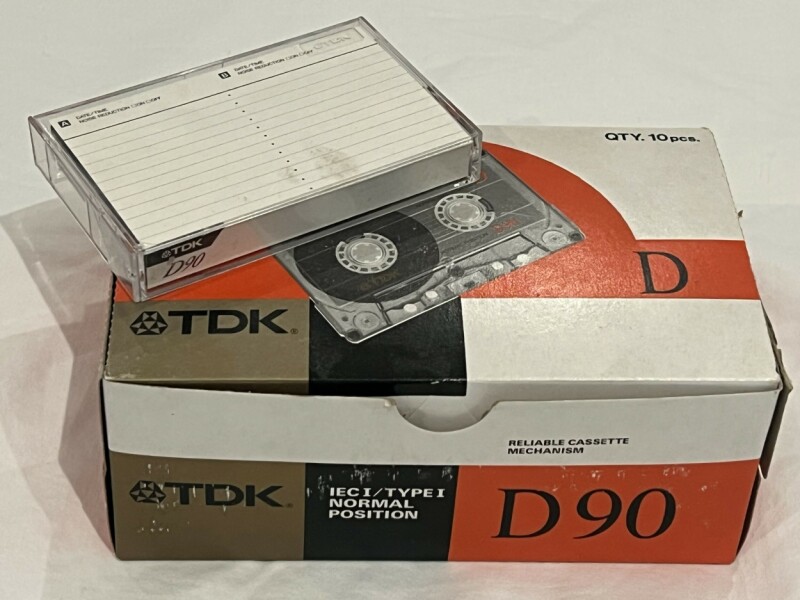
The repository includes simulations of BASF LH Extra C90, Maxell UD C90, Sony CHF60 Type I Normal, Sony CHF90, TDK D90, and even Soviet MK-60 tape. Navigate to the appropriate cassette folder using bash, then run the conversion code (or use it to convert a live stream).
The output is dumped into a ./out folder for a bit of retro enjoyment.
According to the README, “This project simulates cassette tape audio profiles using ffmpeg.
“It applies tape noise, wow and flutter pitch modulation, bandwidth limits, and equalizer adjustments.”
Advertisement
There’s no special magic going on behind the scenes – a glance at the .sh files shows that the real effort has gone into working out the FFmpeg filters to recreate the effect of the required tape. Audiophiles might be horrified to see the output being saved as .mp3 files, but let’s face it: if you’re after that compact cassette sound, the potential audiophile downsides of .mp3 probably won’t be too high on the list of worries.
Compact cassettes first appeared in the 1960s and stored magnetic tape wound between two reels inside a plastic shell. The tape would be unwound from the first reel and wound onto a second reel during use, with the whole thing enclosed in a case (hence “cassette”). Data could be stored on it (indeed, we’re sure plenty of readers have fond memories of home computers that used the media for software) as well as audio, which brings us to the simulator.
Different brands of cassettes (and hardware) could impart differing levels of distortion and hiss to the audio, giving it a unique sound. As with vinyl, cassette sales dropped as customers turned to digital formats decades ago but, also like vinyl, the medium has enjoyed a resurgence in recent years.
The simulator is therefore a bit of a quarter-way house. It can’t recreate the feel of a cassette in the user’s hands. Nor can it replicate the heart-stopping noise of tape being chewed up in a misbehaving mechanism.
Advertisement
But it can take some tediously pristine modern audio and make it sound like it’s the 1980s all over again. ®

























































You must be logged in to post a comment Login