








There comes a point with an ageing television where the picture is still perfectly watchable, but the smart platform it shipped with has become too slow, too limited, or simply too frustrating to use every day.
Everything you watch across your streaming services lives on a single home screen with the Google TV Streamer 4K, with tailored recommendations pulling from your viewing habits rather than pushing whatever a platform wants you to watch next.
Advertisement
The picture itself is delivered in 4K HDR with Dolby Vision support, and Dolby Atmos compatibility means that if your speaker setup can handle it, the audio keeps pace with what the display is doing rather than falling behind.
Under the hood, the processor is 22% faster than Chromecast with Google TV (its previous generation) and comes with twice the memory, which in practice means menus respond immediately and switching between apps does not involve the kind of lag that makes a streamer feel like more trouble than it is worth.
32GB of onboard storage gives you enough room to install a broad range of apps without having to make difficult choices about what to keep, and the Google TV Streamer 4K also pulls in over 800 free live channels through services like Pluto TV and Tubi at no extra cost.
Advertisement
The redesigned remote includes a customisable shortcut button, voice control for search and smart home commands, and a find-my-remote function that makes it ring when it inevitably disappears between the sofa cushions.
If your living space runs on Google Nest products, the home panel on the Google TV Streamer 4K lets you check camera feeds, adjust lighting, and manage connected devices directly from your television without switching inputs or picking up your phone.
The $20 saving brings a genuinely capable streaming box down to $79.99, and for anyone whose current setup is either too slow or simply absent, this is a tidy way to fix that without spending much at all.
A new Quordle puzzle appears at midnight each day for your time zone – which means that some people are always playing ‘today’s game’ while others are playing ‘yesterday’s’. If you’re looking for Saturday’s puzzle instead then click here: Quordle hints and answers for Saturday, June 6 (game #1594).
Quordle was one of the original Wordle alternatives and is still going strong now more than 1,400 games later. It offers a genuine challenge, though, so read on if you need some Quordle hints today – or scroll down further for the answers.
Enjoy playing word games? You can also check out my NYT Connections today and NYT Strands today pages for hints and answers for those puzzles, while Marc’s Wordle today column covers the original viral word game.
Advertisement
SPOILER WARNING: Information about Quordle today is below, so don’t read on if you don’t want to know the answers.
Latest Videos From
Quordle today (game #1595) – hint #1 – Vowels
How many different vowels are in Quordle today?
• The number of different vowels in Quordle today is 5*.
* Note that by vowel we mean the five standard vowels (A, E, I, O, U), not Y (which is sometimes counted as a vowel too).
Advertisement
Quordle today (game #1595) – hint #2 – repeated letters
Do any of today’s Quordle answers contain repeated letters?
• The number of Quordle answers containing a repeated letter today is 1.
Quordle today (game #1595) – hint #3 – uncommon letters
Do the letters Q, Z, X or J appear in Quordle today?
• Yes. Two of Q, Z, X or J appear among today’s Quordle answers.
A new NYT Strands puzzle appears at midnight each day for your time zone – which means that some people are always playing ‘today’s game’ while others are playing ‘yesterday’s’. If you’re looking for Saturday’s puzzle instead then click here: NYT Strands hints and answers for Saturday, June 6 (game #825).
Strands is the NYT’s latest word game after the likes of Wordle, Spelling Bee and Connections – and it’s great fun. It can be difficult, though, so read on for my Strands hints.
Want more word-based fun? Then check out my NYT Connections today and Quordle today pages for hints and answers for those games, and Marc’s Wordle today page for the original viral word game.
Advertisement
SPOILER WARNING: Information about NYT Strands today is below, so don’t read on if you don’t want to know the answers.
Latest Videos From
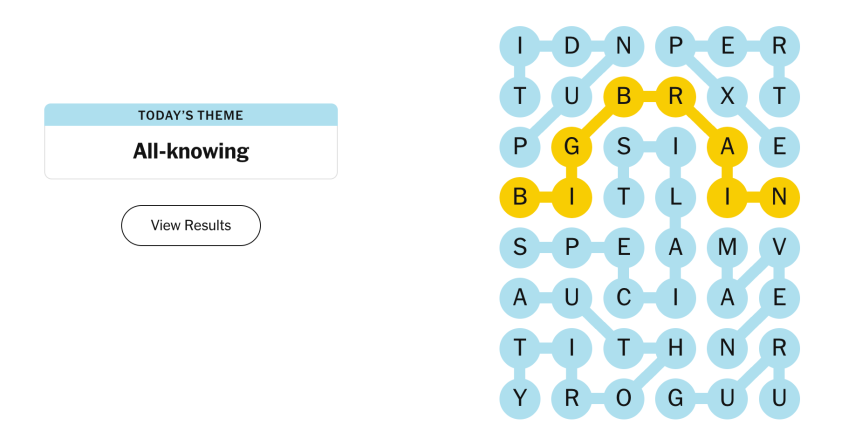
NYT Strands today (game #826) – hint #1 – today’s theme
What is the theme of today’s NYT Strands?
• Today’s NYT Strands theme is… Herpetology 101
Advertisement
NYT Strands today (game #826) – hint #2 – clue words
Play any of these words to unlock the in-game hints system.
SNACK
BLAME
CLEAN
ROLE
BONE
CAKE
NYT Strands today (game #826) – hint #3 – spangram letters
How many letters are in today’s spangram?
• Spangram has 11 letters
NYT Strands today (game #826) – hint #4 – spangram position
What are two sides of the board that today’s spangram touches?
First side: top, 3rd column
Advertisement
Last side: bottom, 2nd column
Right, the answers are below, so DO NOT SCROLL ANY FURTHER IF YOU DON’T WANT TO SEE THEM.
Advertisement
NYT Strands today (game #826) – the answers
(Image credit: New York Times)
The answers to today’s Strands, game #826, are…
BULLFROG
SNAKE
TURTLE
CHAMELEON
CROCODILE
SPANGRAM: COLDBLOODED
My rating: Hard
My score: Perfect
I do not quite know how I knew that herpetology was related to amphibians and reptiles, but it popped into my head somehow.
Sign up for breaking news, reviews, opinion, top tech deals, and more.
Advertisement
Most likely it was something to do with my recent David Attenborough documentary binge, but either way it was a huge help in cracking today’s game. The fact that I spied BULLFROG almost instantly helped too.
Despite my confidence about the theme, this game was still challenging, much like the beasts themselves; every word was well camouflaged and we had a spangram that zig-zagged across the board.
Advertisement
Yesterday’s NYT Strands answers (Saturday, June 6, game #825)
MARRIAGE
NUPTIALS
WEDLOCK
VOWS
MATRIMONY
SPANGRAM: TYINGTHEKNOT
What is NYT Strands?
Strands is the NYT’s not-so-new-any-more word game, following Wordle and Connections. It’s now a fully fledged member of the NYT’s games stable that has been running for a year and which can be played on the NYT Games site on desktop or mobile.
I’ve got a full guide to how to play NYT Strands, complete with tips for solving it, so check that out if you’re struggling to beat it each day.
The Financial Times reports that Anthropic has installed half a dozen engineers inside the NSA as forward-deployed staff. Their job is said to involve guiding the agency’s use of Claude Mythos and customizing the model for specific applications. Read Entire Article Source link
Watch Argentina vs Honduras live streams to see how the defending champions shape up before the 2026 World Cup. Can they become only the third team in history to retain the title? Early signs suggest that Lionel Messi’s men are indeed capable of doing that.
After their March friendly against Spain was cancelled, Argentina went on to decimate Mauritania and Zambia and have now won five successive friendlies. They will look to extend that run against Honduras.
Lionel Scalon’s side also lost just four of their 18 World Cup qualifying matches, finishing nine points clear of second-placed Ecuador in the CONMEBOL standings. Superstar Lionel Messi continues to be the team’s driving force. He finished as the top scorer for his team in qualifying (8) and also registered the most assists (3).
Advertisement
However, Messi will not feature against Honduras due to muscle fatigue, along with Emiliano Martínez, who’s still nursing a finger injury.
Argentina will face what many would consider an emotionally depleted Honduras side, having missed out on World Cup qualification by the narrowest of margins. All they needed was a victory over Costa Rica, but they could only manage a draw.
Following that disappointment, Rianaldo Rueda stepped down as head coach. Can José Francisco Molina lift the squad as they take on the defending champions, a team they have lost to in each of their last three meetings?
Read on for our guide on where to watch Argentina vs Honduras live streams online, on TV and potentially for free wherever you are.
Advertisement
Can I watch Argentina vs Honduras for free?
Yes, you can stream Argentina vs Honduras for free, in a few select countries:
Traveling abroad right now? You can use a VPN to watch the World Cup 2026 warm-up match for free as if you were right at home. NordVPN is our top pick of the options.
How to watch Argentina vs Honduras using a VPN
A VPN is handy piece of software that can make your device appear as if it’s back in your home country, so you can unlock your usual service. The best VPN right now? We recommend NordVPN – it does everything and comes with a 75% discount today.
Advertisement
How to watch Argentina vs Honduras live streams in the US
In the US, Argentina vs Honduras is being shown on ESPN Deportes, which is available via the FuboTV and Sling.
On both cord-cutters you will need the Lation Plans.
Alternatively, you can stream the match live with an ESPN Unlimited plan, which costs $29.99/month or $299.99/year.
Advertisement
Outside the US during the match? Use NordVPN to watch Argentina vs Honduras’s full live coverage from anywhere.
How to watch Argentina vs Honduras live streams around the world
Can I watch Argentina vs Honduras online in the UK, Canada, and Australia?
Unfortunately, it doesn’t look as though any broadcasters in the UK, Canada, or Australia have selected the Argentina vs Honduras game.
Advertisement
However, if you’re on holiday in any of these countries from the US, Argentina, France, or elsewhere, then you can use NordVPN to access your home coverage of the game.
We test and review VPN services in the context of legal recreational uses. For example: 1. Accessing a service from another country (subject to the terms and conditions of that service). 2. Protecting your online security and strengthening your online privacy when abroad. We do not support or condone the illegal or malicious use of VPN services. Consuming pirated content that is paid-for is neither endorsed nor approved by Future Publishing.
Audi revealed the Nuvolari, a 1,001 PS hybrid supercar with a 10,000-rpm V8 and three electric motors. Only 499 will be built. Deliveries start in 2027.
Audi has revealed the Nuvolari, the fastest and most powerful production vehicle in its history. The hybrid supercar produces 1,001 PS (736 kW) from a 4.0-litre V8 biturbo paired with three axial flux electric motors. Only 499 will be built, starting at €600,000.
The V8 alone delivers 800 PS and revs to 10,000 rpm, territory previously reserved for motorsport. Each of the three electric motors adds 110 kW. Combined, the powertrain launches the car from 0 to 100 km/h in 2.6 seconds and 0 to 200 km/h in 6.8 seconds, with a top speed above 350 km/h.
The Nuvolari shares its platform with the Lamborghini Temerario, which produces 920 PS. But Audi pushed the output higher and added its own tech, including a system called quattro predictive ride. It processes steering angle, acceleration, yaw rate, and grip level in real time, coordinating the electric motors, brakes, and aerodynamic surfaces as a unified network.
The body is almost entirely carbon fibre reinforced polymer, built on an Audi Space Frame. Active aerodynamic surfaces, inspired by Formula 1, adjust position to generate downforce on demand. A vertical frame made of 64 individually angled tiles channels air through a concealed S-duct.
Advertisement
It is a plug-in hybrid, not a pure EV, at a time when Europe’s cumulative EV investment has passed €200 billion. Weighted fuel consumption sits at 11.3 l/100 km combined with 7.8 kWh/100 km of electric use. CO2 emissions land at 270 g/km. Those are preliminary figures, but they make clear this car is built for performance, not efficiency.
The timing is notable. Audi had signalled a push toward full electrification, but the Nuvolari is a combustion-led halo car arriving as the brand enters Formula 1 in 2026 and works to rebuild its performance credentials. It also comes as foreign automakers struggle to compete in China, where domestic brands now control 70% of the market. CEO Gernot Döllner said the car shows how Audi is “taking ‘Vorsprung durch Technik’ into a new era.”
The name honours Tazio Nuvolari, one of the most celebrated racing drivers to represent the four rings. Ferdinand Porsche once called him “the greatest driver of the past, the present and the future.” Order books open in late 2026, with deliveries beginning in the first half of 2027.
Meta has been quietly stashing dormant face recognition code on more than 50 million phones, WIRED reported this week, tucked inside the companion app that pairs with its Ray-Ban and Oakley smart glasses. If activated, the feature—known internally as NameTag—would let wearers identify people in front of them by matching captured faces against a biometric gallery sitting on the user’s device. It’s the same kind of technology Meta said it walked away from in 2021, after paying out billions of dollars to settle biometric privacy lawsuits in Texas and Illinois.
Meanwhile, xAI is asking a federal judge to force four people suing the company over Grok-generated deepfake nudes to drop their pseudonyms and litigate under their real names—including one plaintiff who alleges the chatbot was used to fabricate sexual images of her as a child. The plaintiffs say they’d sooner drop the suit than submit to harassment and doxing from Musk’s online supporters. xAI’s lawyers, however, claim that since the deepfakes will remain under seal, there’s “nothing inherently stigmatizing” about naming the people in them.
Google rolled out a new Android feature this week aimed at the wave of AI-powered impersonation scams that help fraudsters spoof a familiar number and clone a person’s voice. Packaged with Google Dialer and shipping to phones running Android 12 or later, it pings the caller’s device for a silent cryptographic handshake. If the call is fake, Android will flag it and strip the contact photo from the screen, but only if both ends are on Google Dialer, which leaves iPhones out of the picture.
WIRED also reported this week that the Manhattan Institute—the same right-wing think tank that engineered the 1990s broken-windows policing and the Trump administration’s anti-DEI push—is now shopping model legislation to turn minor protest-related offenses into felonies under a novel theory it calls “civil terrorism.”
Advertisement
Researchers have detailed a clever new browser side-channel attack called FROST that fingerprints other tabs—and sometimes the apps on your device—by measuring how long it takes to read from a sandboxed file on your SSD. The attack runs entirely in JavaScript and feeds the timing traces through a neural network trained on the I/O signatures of common software. No evidence so far anyone is using it in the wild.
And that’s not all. Each week, we round up the security and privacy news we didn’t cover in-depth ourselves. Click the headlines to read the full stories, and stay safe out there.
The supplements known as peptides—chains of amino acids that promise to help those who smear, ingest, or inject them achieve everything from weight loss to skin rejuvenation—have become their own largely unregulated pharmaceutical subindustry. So it figures that their growth is being fueled by cryptocurrency, often sent directly to the Chinese labs that sell these mysterious panaceas.
Crypto-tracing firm Chainalysis this week published an analysis of crypto flows to peptide sellers, a gray market that the company now measures at more than $100 million a year and growing. Chainalysis specifically found that some of the same Chinese labs that were previously selling fentanyl precursors have now switched to manufacturing and selling peptides. The transition, Chainalysis believes, is designed to cash in on the wave of “looksmaxing” hype across social media that has pushed peptide sales—and to avoid the risk of a law enforcement crackdown on opioid manufacturers.
Advertisement
AI can do all kinds of things if you just ask it: Code an app, touch up your photos, or even hack President Barack Obama’s Instagram account. Since Meta announced in March that its account support will be increasingly automated with AI, including for functions like updating your password, hackers found that they could exploit the tool to reset the password and take over accounts of even high-profile users and celebrities. Among the victims, as reported by 404 Media, are Obama, the chief master sergeant of the US Space Force, and makeup chain Sephora. Meta says the issue is now fixed and affected accounts have been secured. But the wave of takeovers illustrates the risks of off-loading security functions to AI—particularly at companies like Meta, which has very publicly touted its all-in approach to adopting AI across the company.
When AI firm Anthropic rolled out its powerful Mythos tool to a select group of organizations for testing, it raised eyebrows by including the US National Security Agency on that initial access list. Mythos, after all, is reportedly capable of finding previously hidden, hackable vulnerabilities in software with alarming speed, raising fears that it could be used for automated mass surveillance and cyberattacks. But the NSA also has a defensive mission, and initial reporting suggested the agency might just be using Anthropic’s tool to find bugs in popular software used by Americans—such as Microsoft’s—with the goal of better securing it. Yet the Financial Times now reports that Anthropic is helping the NSA take its use of Mythos a step further, deploying Anthropic’s own engineers to the agency to help it learn to use the AI tool—including for offensive hacking. The FT couldn’t confirm that Mythos is being used in active hacking operations. But given the growing use of AI for state-sponsored hacking, it would be a surprise if the US is not joining the field of modern-day automated cyberintrusions.
US president Donald Trump has picked Bill Pulte to temporarily act as director of national intelligence. Pulte replaces Tulsi Gabbard, who recently stepped down from the role citing her husband’s health issues. Trump has said he is considering other people for the permanent job, but that confirmation process can take months.
As acting director, Pulte would be responsible for the entire US intelligence community, coordinating 18 different agencies including the Central Intelligence Agency and NSA.
The Ladybird browser isn’t opposed to AI coding tools, but it’s just brought a new change to their code-contributing policies.
February 23: “Ladybird adopts Rust, with help from AI.” I used Claude Code and Codex for the translation. This was human-directed, not autonomous code generation. I decided what to port, in what order, and what the Rust code should look like. It was hundreds of small prompts, steering the agents where things needed to go… The requirement from the start was byte-for-byte identical output from both pipelines. The result was about 25,000 lines of Rust, and the entire port took about two weeks. The same work would have taken me multiple months to do by hand. June 5 (Friday):
We will no longer accept public pull requests… A pull request no longer tells us as much as it used to about the person submitting it. A substantial patch used to imply substantial effort, and that effort was a reasonable proxy for good faith. That assumption no longer holds….
We have already seen patient, well-resourced campaigns in open source to earn maintainer trust and abuse it. What has changed is how much faster and cheaper it has become to produce work that looks like a serious contribution… Whether code was typed by hand is beside the point. What matters is who is responsible for it once it enters the browser. Ladybird is becoming a browser for real users. The people introducing changes to it must be the people who decide those changes belong in the project, and who will answer for the consequences.
As part of this change, we will close all currently open public pull requests. We are grateful for the work people put into them, but keeping the existing queue open would keep that contribution path open in practice. There is no perfect time to make this change, so we are making it now. Going forward, pull requests will only be available to project maintainers. There will not be a separate process for submitting patches by other means. We do not want to create a shadow contribution system through issues, comments, email, or forks…
Advertisement
Outside involvement still matters: clear bug reports, reductions, website testing, standards discussion, design discussion, security reports, and technical feedback all help move the project forward. This is the right change for Ladybird now. We are preparing to ship a browser to real users, and our development process has to match that responsibility.
Netflix may be willing to send Greta Gerwig’s upcoming Narnia movie into theaters, but if anyone in Hollywood was hoping that decision signaled a broader change of heart, the company just slammed that door shut.
In a candid interview with The New York Times, Netflix film chairman Dan Lin made it clear that the streamer’s relationship with movie theaters remains largely unchanged. While Gerwig’s Narnia is expected to receive a full theatrical release before arriving on Netflix, Lin described the project as an exception rather than the start of a new strategy. More notably, he suggested Netflix has little interest in accommodating filmmakers who continue to prioritize traditional theatrical runs.
“There is a group of filmmakers who still want theatrical,” Lin said. “Those are filmmakers that we’ve accepted we just won’t work with.” It’s a remarkably direct statement, but it also reflects the confidence of a company that no longer feels the need to play by Hollywood’s old rules.
Netflix no longer needs theaters to prove itself
A few years ago, Netflix spent considerable energy convincing filmmakers that it could be both a streaming giant and a legitimate movie studio. Under former film chief Scott Stuber, the company aggressively pursued acclaimed directors, handed out sizable budgets, and occasionally fought for theatrical releases to attract awards attention.
Advertisement
The environment today looks very different. Netflix won the streaming wars, at least by most conventional measures. It has hundreds of millions of subscribers, dominates the viewing charts, and operates from a position of strength while traditional studios continue to search for sustainable business models. As Lin sees it, the company no longer needs movie theaters to validate its films or its reputation.
Narnia
Instead, the focus has shifted toward making movies specifically for Netflix audiences. Lin has spent the past two years pushing a strategy centered on producing fewer films, spending more carefully, and concentrating on projects that can attract viewers directly to the platform.
That approach has already generated successes such as Apex, which crossed 100 million views during its first month on the service, and People We Meet on Vacation, a romantic comedy that drew millions of viewers while turning relatively unknown actors into recognizable Netflix stars.
The great theatre divide isn’t going away
The tension between streaming and theatrical exhibition has never really disappeared. Many filmmakers still argue that movies are designed to be experienced on giant screens with packed audiences. For directors, theatrical runs can also create cultural momentum, awards consideration, and a level of prestige that streaming premieres often struggle to replicate.
Netflix, however, continues to view the equation differently. Lin’s comments suggest the company is comfortable walking away from creators whose demands don’t align with its business model. That’s a notable shift from earlier years, when Netflix often seemed eager to win over skeptical Hollywood talent at almost any cost.
Advertisement
Narnia
The Narnia release demonstrates that exceptions can still occur when a project is large enough or a filmmaker has sufficient leverage. But Netflix appears determined to keep those exceptions rare. The company sees its future inside its app, not at the multiplex.
For movie lovers, that may be disappointing. There’s something undeniably magical about watching a major fantasy epic unfold on a giant screen surrounded by strangers. Yet Netflix’s position is increasingly difficult to argue against from a business perspective. If a movie can reach tens of millions of viewers worldwide without relying on ticket sales, the streamer sees little reason to share the spotlight with theaters.
So while Narnia may get its moment under the cinema marquee, don’t mistake it for a revival of Netflix’s theatrical ambitions. According to the executive overseeing the company’s movie division, that chapter was never meant to be reopened.
Anybotics’ Kateryna Portmann discusses growing up in the shadow of a major global disaster and how this impacted her view of security in the robotics sector.
“I was born in 1986 in Ukraine, 100km from Pripyat, the year of Chernobyl,” explained Kateryna Portmann, a senior product manager at Anybotics and a co-lead at the Swiss chapter of Women in Robotics.
“That matters to me. Chernobyl represents a cascade of technical design flaws, human misjudgement and governance failure. It shaped how I think about complex systems,” she said, speaking to SiliconRepublic.com.
“When I walk into an industrial site and see how much still depends on manual inspection, I think about risk accumulation. Robotics, done properly, reduces dependency on perfect human behaviour in imperfect environments. What excites me most is not the robot itself, it’s prevention. Early anomaly detection. Reducing exposure. Building systems that act before failure escalates.”
Advertisement
For Portmann, regarding the wider landscape, “we are past the ‘wow phase’ of robotics”, wherein it was enough to show that a robot could walk, scan and autonomously navigate. Amid a global shift, now consumers want evidence, such as uptime numbers, integration roadmaps and cybersecurity documentation.
She said, “That shift changes everything. I believe 2026 will be a filtering year. Many robotics companies ran pilots in 2024 and 2025. This year, those pilots must convert into scaled deployments. If they don’t, funding tightens and consolidation follows. Not everyone will survive. That’s not pessimistic, it’s how industrial markets mature.”
Having spent years working across Asia, Portmann has witnessed what she refers to as hyper-speed scaling, where deployment decisions happen incredibly quickly. However, she warned of the potential dangers when safety frameworks and compliance processes struggle to keep pace with innovation.
“That’s why I’m genuinely happy to now be building robotics in Switzerland, where engineering rigour, certification and risk management are taken seriously from day one.”
Advertisement
She added, “I’ve been inside an aluminium plant where the heat radiates through protective clothing within minutes. I’ve stood in a cement facility where dust fills the air constantly; you feel it in your throat hours later. These are not environments designed for long-term human exposure.
“When I hear fears about robots ‘taking jobs’, I think about those places. The better question is, should people be physically exposed to that risk every day? Our robots inspect and pick up thermal deviations, gas concentrations and unusual acoustic signatures.
“In one facility, early anomaly detection prevented a shutdown that would have cost millions. But equally important, the plant created new internal roles to manage robotics fleets and interpret inspection data. Humans moved up the value chain.”
Robotics transforming STEM
And it isn’t just safety and compliance that is being transformed by advancements in robotics; the entire STEM space is undergoing a reinvention of sorts. Portmann explained that “robotics removes abstraction”.
Advertisement
“In a lab, an AI model performs beautifully. In a power plant, the lens gets dusty. Wi-Fi drops. The floor vibrates. Lighting changes. That’s where theory meets reality.
“This is why robotics forces true interdisciplinary collaboration. Mechanical engineers must understand AI constraints. AI engineers must understand sensor noise and hardware limits. Cybersecurity teams must design for industrial networks, not office environments.”
As a result, education has to evolve to reflect the new reality, Portmann said. She has seen first-hand how unprepared senior leaders can be when making physical AI decisions. She recommended going that little bit further, with structured educational programmes not just for executives, but also for teachers and children.
“We need to teach systems thinking, ethics and human-machine collaboration early, not as an afterthought.”
Advertisement
She finds that “robotics is entering a serious phase” and 2026 is the marker that will test durability. She is of the opinion that many organisations will consolidate and even disappear, with 2027 set to reshape the landscape structurally.
“But despite the competitive pressure, this is one of the most exciting industries to work in, because the stakes are real,” Portmann said.
“I’ve felt the heat of aluminium production. I’ve breathed the dust of cement plants. I was born in the shadow of a nuclear disaster. For me, robotics is not about replacing people. It is about protecting them and building systems responsible enough that we can trust them in environments where human error is simply too expensive.”
Don’t miss out on the knowledge you need to succeed. Sign up for the Daily Brief, Silicon Republic’s digest of need-to-know sci-tech news.
High End Vienna 2026 just turned into a very expensive cartridge fight.
Audio-Technica arrived with the $11,000 AT-MCD1, a new flagship moving-coil cartridge built around an integrated diamond cantilever, Shibata stylus, titanium body, and the kind of engineering brief that makes vinyl diehards start checking credit limits they should absolutely not be checking. Ortofon’s response? The MC Vertex is a $16,999 moving-coil cartridge billed as the most advanced cartridge the Danish company has ever produced. Subtle, it is not. Cheap, it is not. Accidental, it is definitely not.
For everyone not shopping in the $17,000 cartridge aisle, Ortofon also introduced the new MC X series as well. That one will matter to a much larger group of vinyl listeners, and we will get to it shortly.
For 99% of vinyl listeners, spending $11,000 to $17,000 on a cartridge is not an upgrade path. It is a cry for help wrapped in titanium, diamond, and a very small box. But for owners of reference-level turntables, tonearms, phono stages, and systems capable of exposing what happens at the groove wall, Ortofon has earned the right to make a statement like this.
Advertisement
After more than a century in phono cartridge design, the company is not wandering into the ultra-high-end cartridge category looking for attention. It already has the résumé. The MC Vertex is Ortofon reminding Audio-Technica, and everyone else in Vienna, that analog credibility is not built overnight or with a press release and a nice hotel demo. Although a nice breakfast with some herring and coffee never hurt.
The MC Vertex is built around Ortofon’s new Vertex diamond. The stylus has a 4 μm scanning radius and a 110 μm contact radius, giving it an extended contact area along the groove wall.
The goal is more stable tracking, more even pressure distribution, and reduced localized wear compared with more conventional stylus profiles. That geometry should also help the cartridge maintain more consistent contact with the groove during complex passages.
At this level, the diamond profile is not a minor detail. It directly affects tracing accuracy, groove wear, and how much information the cartridge can retrieve before the signal ever reaches the phono stage.
Solid Diamond Cantilever
The Vertex diamond is mounted to a laser-polished solid diamond cantilever, which is one of the more important details here. Diamond is extremely rigid and very low in mass, so the goal is to transfer mechanical energy from the stylus tip to the generator system with less flex, delay, or stored energy than more conventional cantilever materials.
That matters because a cartridge is a mechanical-to-electrical converter. Before anything reaches the phono stage, the stylus and cantilever have to trace the groove accurately and move the coil system without adding their own problems. Ortofon is trying to keep that mechanical chain as short, stiff, and controlled as possible.
Advertisement
The body and internal core are made from SLM titanium with a DLC coating. Selective Laser Melting allows Ortofon to control the body geometry, mass distribution, and internal structure with greater precision than conventional machining.
Advertisement. Scroll to continue reading.
The goal is a rigid, mechanically stable cartridge body that helps reduce unwanted resonance before it can affect signal generation.
Inside the MC Vertex, Ortofon uses a refined magnetic system with a non-magnetic armature. The purpose is to reduce moving mass and avoid unwanted magnetic interaction inside the generator. That is paired with high-purity silver coils, with Ortofon claiming more stable and linear signal generation, improved transient behavior, and more precise tracking across the audible range.
Ortofon’s Wide Range Damping system is also part of the design. It uses a platinum disc positioned between two dampers made from proprietary Ortofon rubber compounds. The intent is to control resonance across the audible frequency range without overdamping the cartridge or restricting dynamic response.

The published numbers suggest a very serious low-output moving-coil design: 0.3 mV output at 1 kHz, 5 cm/sec; 30 dB channel separation at 1 kHz; 0.1 dB channel balance; 20 Hz to 20 kHz frequency response within ±1 dB; 19 ohms internal impedance; 9 μm/mN lateral compliance; recommended 2.5 gram tracking force; and a recommended load above 100 ohms.

Compared with Audio-Technica’s new AT-MCD1, the Ortofon MC Vertex appears to be taking a slightly different engineering path to the same ultra-high-end destination. The AT-MCD1 also uses an integrated diamond cantilever/stylus concept and is clearly aimed at the same small group of listeners with reference-level turntables, tonearms, phono stages, and systems capable of exposing microscopic differences at the groove wall.
The Audio-Technica offers higher output at 0.55 mV, 28 dB channel separation, 12 ohms coil impedance, 20 Hz to 50 kHz frequency response, and a recommended tracking force of 1.8 grams. The Ortofon counters with a lower 0.3 mV output, tighter 0.1 dB channel balance, 30 dB separation, the Vertex 4/110 μm stylus geometry, SLM titanium/DLC bodywork, Wide Range Damping, and a 2.5 gram tracking force.
Neither cartridge is for casual vinyl listeners, and pretending otherwise would be silly. These are statement cartridges for systems where the turntable, arm, phono stage, setup, and record collection are already at a level where the cartridge is not being asked to rescue the rest of the chain.
Ortofon MC X50: The MC for the Rest of Us
The MC Vertex is the statement product, but the MC X50 is the new Ortofon cartridge more listeners are likely to consider for a serious high-end vinyl system.
Priced at $1,699, the MC X50 sits at the top of the MC X Series. It uses a Nude Micro Ridge diamond stylus with a 2.5/75 μm stylus tip radius, mounted to a boron cantilever. That combination is intended to provide accurate groove tracing, low moving mass, and consistent tracking behavior.
Advertisement
Ortofon has also developed a rubber suspension compound specifically for the MC X50. The suspension works with the Micro Ridge stylus and boron cantilever to help maintain stable contact with the groove and control mechanical movement during playback.
The MC X50 uses high-purity silver coil wire and a newly developed magnet system for the MC X platform, with a one-piece pole cylinder integrated into a rear magnet yoke. The design goal is stable signal generation and improved magnetic efficiency.
The cartridge body is made from MIM stainless steel with a honeycomb core structure. Metal Injection Molding allows Ortofon to control the body geometry, while the internal structure is intended to balance rigidity, mass, and mechanical stability.
Advertisement. Scroll to continue reading.
Advertisement
The published specifications include 0.4 mV output at 1 kHz, 5 cm/sec; 28 dB channel separation at 1 kHz; 0.5 dB channel balance; 20 Hz to 20 kHz frequency response within ±1 dB; 14 μm/mN dynamic lateral compliance; 6-ohm internal impedance; 2.0 gram recommended tracking force; half-inch mounting; black finish; and 8.6 gram cartridge weight.
The Bottom Line
The Ortofon MC Vertex is the statement cartridge. It uses the new Vertex diamond profile, a solid diamond cantilever, SLM titanium body with DLC coating, non magnetic armature, high purity silver coils, and Wide Range Damping. What makes it unique is the amount of mechanical control Ortofon is applying from the groove contact point through the generator system. At $16,999, it is for reference turntables, tonearms, phono stages, and systems where setup quality is already at a very high level.
The Ortofon MC X50 ($1,699) is the more attainable high end model. It uses a Nude Micro Ridge stylus, boron cantilever, dedicated rubber suspension, high purity silver coils, new MC X magnetic system, and MIM stainless steel body with honeycomb core. What makes it important is that it brings Ortofon’s current focus on low moving mass, stable tracking, controlled resonance, and precise signal generation to a cartridge that more vinyl listeners can realistically consider.
You must be logged in to post a comment Login