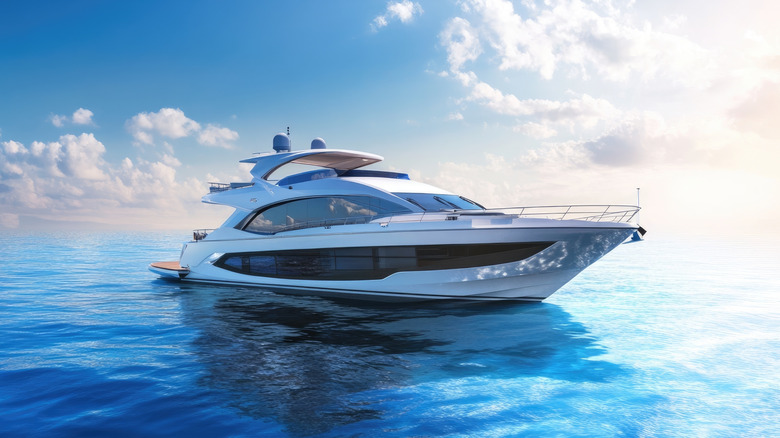
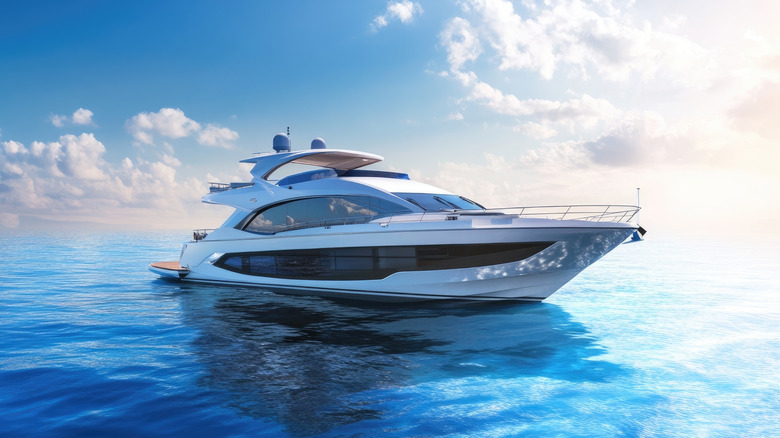
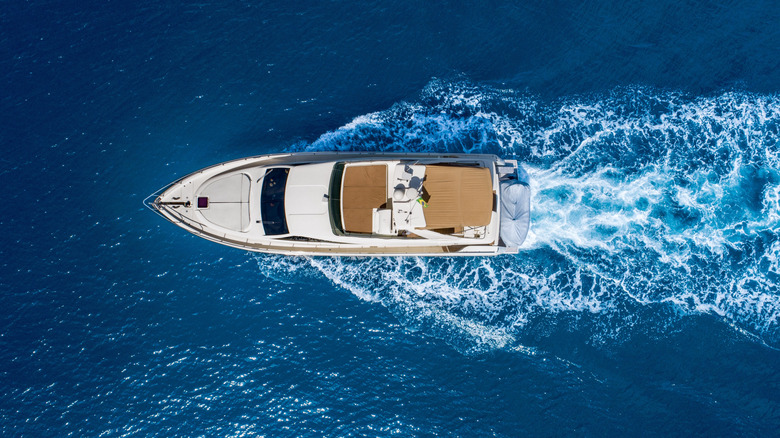
Most Americans spend much of their income on necessities: housing is typically their biggest monthly expenditure, followed by transportation, and then food. On average, a roof over our heads, a way to get to work or school, and groceries take up almost half of our income. We spend what’s left on a variety of things, from insurance to entertainment, and hopefully have enough left over for a vacation. Those that are lucky enough to have a budget for luxury items typically focus on small items like footwear or watches, not high-end cars or yachts. While many Americans own a boat, about 95% of those are considered small craft at less than 26 feet long. Larger, luxurious yachts are out of reach for most of us, but a Chinese company hopes to change that, at least in China.
Richard Liu, the founder of online Chinese retailer JD.com, recently launched a new brand called Sea Expandary in the hopes of opening up the country’s leisure vehicle industry to consumers that many not otherwise be able to afford luxury boats, planning to sell yachts for what Americans may pay for a used car. He will invest about $723 million in the venture and is strategizing with two coastal cities in the province of Guangdong for research and development, manufacturing, sales, and after-sales services. At a signing event for the new company, Liu told reporters, “Yachts should be affordable for ordinary salaried workers and everyday consumers.”
Advertisement
Are accessible yachts a reality?
Fabioc25/Shutterstock
The word yacht brings to mind wealth and a lavish lifestyle most of us can only dream about. In fact, according to U.S. News & World Report, the average cost of a yacht in 2023 ranged from $500,000 to $10 million or more, with super yachts like those owned by billionaires ranging in the hundreds of millions. It’s hard to imagine the words “yacht” and “affordable” existing in the same sentence, but Liu hopes to build yachts that will sell in the same price point as inexpensive cars, for about $14,500 in U.S. dollars.
The yacht industry is booming in China, increasing from around 4,500 to nearly 10,000 over the past three years, and is expected to continue growing for the foreseeable future. That number may sound small, but the middle class is a rapidly growing sector in China, and is a demographic that Liu clearly hopes to tap into.
The manufacturing of pleasure vehicles lags behind commercial shipbuilding, however — more than half of global shipbuilding is done in China. The country hopes to see growth in tourist industry beyond making yachts more affordable for the average joe, with plans to expand yacht tourism routes and programs. What does this mean for Americans? Not much for now, especially with the Trump administration’s sky-high tariffs on Chinese imports, but if affordable yachting takes off in China, it has the potential to boost industry growth elsewhere.
We may receive a commission on purchases made from links.
Many DIY projects at home involve a lot of physical effort. Although this might not be an issue if you’re younger, you might start having some second thoughts about working on more complicated projects as you get older. Because we’re often not as spry and nimble when we get older, it’s wise to adjust our tools and workflow to take our age into consideration.
In fact, I found out about this the hard way when I had to carry a heavy load in an emergency. Since I’m much closer to 40 now than 30, that incident resulted in lower back pain that saw me getting a doctor’s appointment. This resulted in several tests and eight weeks of therapy, which, thankfully, my insurance covered fully. And while I no longer have pain in my lower back, I still feel pressure at the affected area at times, especially when I’m sitting or standing for long periods.
Advertisement
That’s why it’s important that you protect your back, especially when doing some heavy DIY work. To help you do that, we’re listing some back-saving tools and accessories to keep your back in good condition. Whether you’re an older DIYer or a young adult just getting into the hobby, you should consider these items to help prevent life-altering injuries.
Advertisement
Platform hand truck
Baloncici/Shutterstock
A cart is often quite convenient if you need to move heavy articles around your property, especially if you’re moving them across paved surfaces. But if you want something flexible with a good, solid base that can carry a ton of different items, consider getting a platform hand truck.
The large, solid base on this equipment makes it quite versatile, as you can put a lot of different items on it without worrying that they will fall through the gaps, like on this convertible hand truck from Harbor Freight that’s useful for moving. Aside from that, it usually has a high carrying capacity for transporting heavy items one at a time, or you can pile in several smaller items, allowing you to take several items simultaneously instead of making multiple trips.
For example, this MaxWorks foldable platform truck push dolly has a maximum weight capacity of 660 pounds and features a textured platform to prevent your cargo from sliding around unnecessarily. It comes with a padded handle for easy handling and padded edges to avoid damage when you bump into walls. You’ll also get four heavy-duty wheels, with the rear two capable of rotating 360 degrees for better maneuverability. Most importantly, it costs less than $68 on Amazon, meaning it’s a small but durable investment that will make it easy to move heavy items around without risking your back.
Advertisement
Furniture moving straps
If you need to move a heavy piece of furniture or appliance, you should consider using furniture moving straps, such as this one from Shoulder Dolly. Note that using this tool is a two-person job, as two people must wear the harness across their shoulders. They slip the strap under the item that they want to carry, adjust it accordingly, and lift with their legs simultaneously.
What it does is carry most of the weight of the item on the strap, which is then spread across the torsos and legs of the users. That does not mean that you can use the device hands-free, though — you still need to support it by pushing against the object you’re lifting as you both stand up to give it stability. You also need to know your limitations, as you still have to exert effort to lift and move the objects. The Shoulder Dolly doesn’t carry the weight for you; it just safely distributes the load across your bodies. But with proper use, this gadget helps two people safely carry up to 800 pounds.
This item was first developed for professional movers, but is now widely available to just about anyone who needs to do heavy lifting. It’s also quite affordable, as you can get the Shoulder Dolly for under $50 on Amazon. So, if you like to frequently do DIY renovations and rearrange your furniture and appliances, this is the perfect solution to help you avoid back injuries.
Advertisement
Height-adjustable work bench
You’ve probably heard of standing desks and the benefits that they deliver to remote workers, but did you know that DIYers could also take advantage of the same adjustable-height technology when it comes to their workbenches? Since you’re most probably exerting effort when you’re using your workbench, it’s good to have it placed at the ideal waist-level height. That way, you’ll find yourself in a comfortable posture as you work on your project, reducing the chances that you’ll get a repetitive strain injury, back pain, or joint issues.
Advertisement
If you’re buying a workbench for yourself, you may think that you don’t need a height-adjustable model as you won’t share it with others. But it’s still nice to have the option to adjust its height, as the height you’re comfortable with may vary depending on the task at hand. For example, you might want to lower your workbench and use it as a table when you’re planning your next woodworking project, but raise it to waist level when you’re screwing together the pieces that you’re working on while you’re standing up.
However, you shouldn’t just get any height-adjustable workbench when you’re out shopping. Look for something that’s sturdy enough to withstand the projects that you intend to do and has useful features like tool holders and wheels for easy movement. These extra features can cost you, though, with one example, the Vevor Work Bench for Garage demanding more than $360 on Amazon. You can also pick one from Lowe’s workbench and table offerings at around the same price range. But considering you can use this for several years and avoid health issues, it could be well worth the investment.
Advertisement
Impact driver
VADZIM SHUBICH/Shutterstock
A power drill is a quite versatile tool to have in your DIY kit, as you can use it for both drilling holes and driving screws. However, if you encounter a particularly stubborn screw or bolt that has been torqued down way too much, you’d need to put a lot of pressure on it by physically pushing your drill into the screw head while holding it steady to counteract the reactionary torque.
This means you’re probably exerting a lot of effort using your entire body, and if you make one wrong move, you could end up with a bad back. To prevent this, consider adding an impact driver to your power drill collection. While you’d still use the latter for making holes on surfaces, the former is far more useful for driving screws and bolts.
What makes an impact driver different from a power drill is its driving mechanism. Instead of just using a powerful motor, this tool uses a hammer-and-anvil mechanism, wherein the hammer is pulled by a spring around an axis. This allows the tool to build up potential energy, which is then released in one go. The hammer then hits the anvil, which drives the collet and bit with much greater force than if driven directly by a motor. Because of this, you do not need to exert as much effort when you’re using it, saving muscle strain and reducing the potential for injury.
Advertisement
Ergonomic tool belt
Tool belts are quite handy accessories that help keep all your tools within reach. Tools tend to be quite heavy items, and the usual belt design concentrates all that weight on your hips and lower back. This can lead to body aches, pains, and fatigue, especially with prolonged use and uneven tool distribution.
Because of this, we suggest getting an ergonomic tool belt to help save your back. This accessory still puts a belt around you, where you hang all your tools. However, it also comes with thick, padded shoulder suspenders to distribute the weight across your shoulders and reduce the pressure on your hips and lower back.
Advertisement
One example of an ergonomic tool belt is the Milwaukee Contractor Work Belt with Suspension Rig, just one of Milwaukee’s products that will save your back. Some DIYers might balk at its $139.99 price at Ace Hardware, but having this may prove priceless as it can ease your workload and contribute to preventing injury.
Perplexity’s Comet browser, which includes an AI assistant that can shop on behalf of users, is the subject of a suit by Amazon. (Perplexity Image)
A federal judge in San Francisco granted Amazon a preliminary injunction Monday blocking Perplexity from using its Comet browser’s AI agent to access password-protected sections of the Amazon website to shop on behalf of customers.
It’s an early legal milestone in the fast-moving field of agentic commerce, in which AI assistants browse, compare and buy products on behalf of consumers. The case highlights a fundamental question: who controls access when an AI agent shows up at a retailer’s digital front door?
In the ruling granting the preliminary injunction, Senior U.S. District Judge Maxine Chesney found that Amazon is likely to succeed on its claims that Perplexity violated the federal Computer Fraud and Abuse Act and a California computer fraud statute.
The judge drew a key distinction, finding that Comet accesses Amazon accounts “with the Amazon user’s permission, but without authorization by Amazon.”
In its own legal filings, Perplexity had argued that Amazon was less concerned about cybersecurity than about eliminating a competitor to its own AI shopping tools. The San Francisco-based startup contended that AI agents bypass the advertising Amazon shows to human shoppers, and that protecting ad revenue was the real motivation for the lawsuit.
Advertisement
In its suit, Amazon argued that Perplexity deliberately disguised Comet’s AI agent as a regular Google Chrome browser session, evading detection rather than transparently identifying itself.
The company said it warned Perplexity at least five times starting in November 2024 to stop the practice, implemented a technical barrier to block Comet’s access in August 2025, and watched Perplexity release a software update within 24 hours to circumvent it.
“The preliminary injunction will prevent Perplexity’s unauthorized access to the Amazon store and is an important step in maintaining a trusted shopping experience for Amazon customers. We look forward to continuing to make our case in court,” an Amazon spokesperson said Tuesday.
Perplexity has not yet issued a public comment on the preliminary injunction.
Advertisement
In previous statements, the company called the lawsuit “a bully tactic” and argued that consumers should be free to use any AI assistant they choose to shop online. In a November blog post, the company said Amazon should welcome agentic shopping because it means more transactions and happier customers.
Amazon CEO Andy Jassy has acknowledged that agentic commerce “has a chance to be really good for e-commerce” but said agents aren’t good enough yet at personalization and pricing accuracy. Amazon has its own AI shopping tools, including Rufus and Buy For Me.
Under the ruling Monday, the injunction is stayed for seven days to give Perplexity time to ask the Ninth Circuit Court of Appeals to put it on hold while the company appeals the ruling.
The judge denied Perplexity’s request for a $1 billion bond, which it had sought based on its market valuation and investment in Comet. The judge found the injunction doesn’t threaten the entirety of Perplexity’s business since Comet can still be used on every other website.
S’porean resellers are cashing in on old laptops, thanks to AI
Most people think the hottest trades today are obvious ones: gold, Nvidia stocks, or anything related to artificial intelligence (AI).
But inside Singapore’s electronics markets, another unlikely asset is quietly surging in value: used laptops.
Yes—old, second-hand laptops that many people would normally sell for a few hundred dollars or throw into a drawer are now becoming unexpectedly valuable.
In the tech world, we’re seeing a new kind of price distortion—and it’s being driven by the AI boom.
Artificial intelligence is rapidly reshaping the global semiconductor industry. Training and running AI models requires enormous computing power, which in turn depends on vast amounts of high-performance memory and storage inside data centres.
Image Credit: LKH Projects Distribution
To meet this demand, major memory manufacturers such as Samsung, SK Hynix and Micron have increasingly shifted production capacity toward high-bandwidth memory (HBM) and other specialised chips used in AI servers.
As manufacturers focus on AI servers, fewer chips are being made for everyday devices.
That means older, lower-end components, such as the random access memory (RAM) chips found in consumer laptops, are suddenly in short supply, triggering what some industry observers call the “RAMpocalypse.”
Advertisement
Image Credit: Remus Rigo/ Shutterstock.com
Prices have surged dramatically.
In some cases, RAM chips have jumped 300-400% in recent months, creating a supply squeeze that is rippling across the electronics ecosystem. For consumers, this means many devices are becoming harder to access, putting purchases of laptops and desktops out of reach for some.
In an interview with The Straits Times, T. K. Lee, a technical manager at Bizgram Asia, which sells new PCs and electronic devices, shared that prices for new laptops and desktops have risen 50-100% on average. Even Apple has recently increased the prices of its MacBook Air and MacBook Pro models by about S$100 to S$450 in light of the global memory chip shortage.
Lim expects prices to climb further as PC manufacturers deplete existing stocks and negotiate new supply contracts.
A “very profitable” business
Amid the global memory shortage, used-laptop resellers in Singapore are cashing in.
Advertisement
At shops in Sim Lim Square, some of them have pivoted their business model, focusing on dismantling laptops to extract RAM chips and other components in high demand.
Sim Lim Square stores./ Image Credit: TK Kurikawa/ Shutterstock.com
“This business is better than gold or the stock market. Gold prices and the stock market have dipped, but the prices of computer chips have not,” a seller told The Straits Times. He added that the business has been “very profitable,” though he declined to reveal margins.
Extracted components are often shipped overseas, where buyers pay premiums for high-demand parts. Even the remaining parts of the laptops rarely go to waste. Motherboards, cases, and other hardware are typically sold to repair shops or business customers—these components are often used to refurbish other laptops, replace broken parts, or extend the lifespan of older devices.
“It’s not cheap to break down a laptop and extract a chip, so this suggests these items are in high demand and fetching good prices,” he said. “It pays to do these strip-down operations at scale.”
Advertisement
Some sellers have even found that selling these components can be more lucrative than dealing in new devices.
Another laptop dealer, who spoke to The Straits Times but requested anonymity, said profit margins on new devices have shrunk as prices rise due to the tight supply of essential components like RAM chips.
“There’s more volume now to turn a profit in the market for used devices,” he added, noting that his main clients are in Indonesia and India.
The rise in used-laptop trading and component exports in Singapore is also reflected in electronic non-oil re-exports (NORX). NORX measures the nominal value of goods which were manufactured overseas, imported into Singapore, and exported in the same form without transformation. PCs and PC parts were among the top drivers in 2025.
Advertisement
With AI-related demand expected to grow, particularly for high-performance PCs and servers, this secondary market for used electronics is likely to remain strong.
Read other articles we’ve written on Singaporean businesses here.
Featured Image Credit: Stenko Vlad via Shutterstock.com
An events company whose associates helped stage the January 6, 2021 rally has signed contracts worth over $26 million with the United States government, according to documents reviewed by WIRED. Since President Donald Trump’s return to the White House, Event Strategies, a Virginia-based firm with deep ties to Trumpworld, has negotiated a contract with the General Services Administration that could be worth up to $100 million over the next 15 years.
It’s a remarkable rise for the 26-year-old firm, which until the recent windfall had received what appeared to be around $50,000 dollars in government contracts over the past decade. It also appears that Event Strategies won these new contracts with very little competition. According to HigherGov, a tool used by contractors to track federal and state contracts, Event Strategies was the only company to bid on eight of the 11 contracts tracked by the site.
Many of the recent contracts are related to America 250, an 18-month-long commemoration of the 250th anniversary of the signing of the Declaration of Independence.
In early 2025, the US Semiquincentennial Commission, a bipartisan group established in 2016 to coordinate the celebrations, cut ties with Precision Strategies, an event planning group founded by Obama-era staffers. Soon after, the commission hired Event Strategies to replace them.
Advertisement
Contracts reviewed by WIRED in the System for Award Management database show that by September 2025, the company had signed its first contract related to the celebrations: a $5 million contract for work related to Titans of the Sea, an event designed to celebrate the Navy’s 250th anniversary. Weeks later, the company signed another contract for a $2.1 million deal for “AMERICA 250 – EVENTS.”
More recently, Event Strategies signed a contract valued at $333,084 with the General Services Administration at the beginning of February for “FREEDOM 250 DESIGN AND CONTENT SUPPORT SERVICES.” Freedom 250 is, according to the White House, a “public-private partnership” related to America 250.
The tenor of the America 250 celebrations have already proven controversial. Over the last few months, large banners ostensibly tied to the project were seen hanging from federal buildings all over Washington, DC. One banner, which was hung outside the Department of Justice, features the tagline: “Make America Safe Again” alongside a massive image of Trump’s face. The DOJ said the banner was hung to “celebrate 250 years of our great country.” To many, the tagline was an indication that the Justice Department has failed to maintain its independence during Trump’s second term. California Governor Gavin Newsom said the banner was “beyond parody,” writing on Facebook: “How many dictatorship-style monuments, building name changes, and fake awards do Americans have to endure?”
In early March, banners featuring Charlie Kirk, Booker T. Washington, and Catharine Beecher were hung outside the Department of Education near Capitol Hill, alongside two large banners featuring the America 250 logo. Critics were alarmed to see Kirk’s likeness on the banner, as the deceased Turning Point USA cofounder and conservative commentator had previously called to “abolish” the Department of Education and was known for numerous racist and homophobic comments.
Advertisement
WIRED could not confirm whether these specific banners, or the banners hanging at the DOJ, were designed and implemented by Event Strategies. The DOJ and the Education Department did not respond to a request for comment about the company responsible for the banners.
“There is a proper federal competitive bidding process, and the White House expects all agencies to comply with it,” White House spokesman Davis Ingle tells WIRED. When asked for further comment about Event Strategies, Ingle referred WIRED to the General Service Administration. GSA did not respond to a request for comment.
The Contracts
When Trump lost the 2020 election, Event Strategies was on hand: Cofounder Tim Unes was listed as a stage manager for the January 6 rally at the Ellipse in 2021, according to the paperwork submitted to secure a permit. Megan Powers Small, who is now the chief of staff at Event Strategies, was tagged on rally permit paperwork as the event’s “Operations Manager for Scheduling and Guidance.” Justin Caporale was listed as a project manager of the event. Though Caporale was later described as the Event Strategies CEO and the company’s managing partner, he had previously worked as director of operations for Melania Trump in 2018 and on the Trump campaign in 2020.
While out of office, Trump continued working with Event Strategies. The company produced many of Trump’s campaign rallies during the 2024 presidential campaign; filings from that year show Event Strategies received $31 million from the Trump 47 Committee PAC over a seven-month period. Caporale’s Instagram account also shows him associating with Trump and administration officials, including at some of those same rallies.
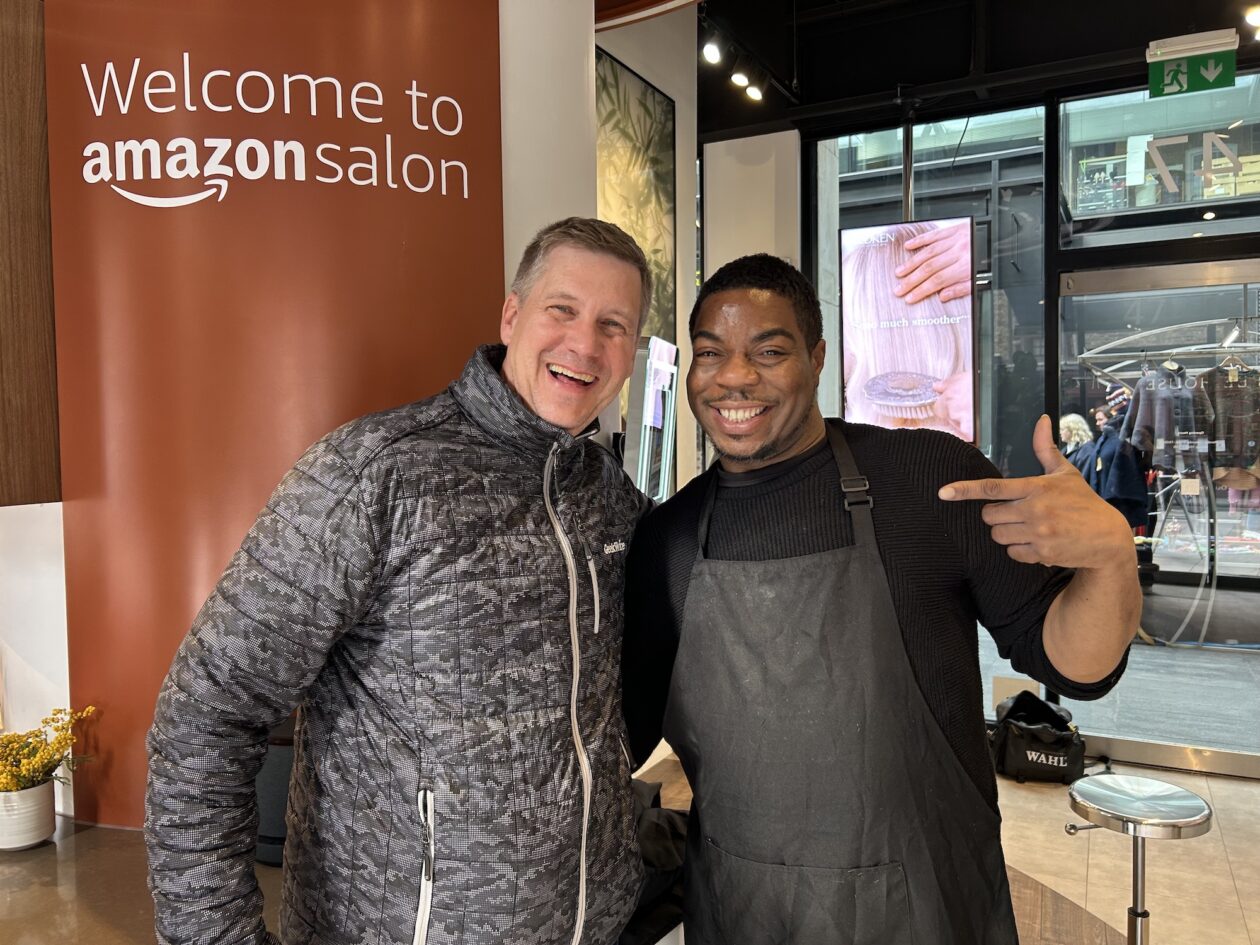
GeekWire co-founder John Cook, left, with Korell, his hair stylist at Amazon Salon in London. (GeekWire Photo)
Strolling among the food vendors and independent pop-up shops of London’s historic Spitalfields Market, I stumbled upon a modern slice of American retail.
There, just a stone’s throw from merchants selling Mick Jagger portraits and piping hot dumplings, was a curiosity I did not expect: Amazon’s iconic curved arrow logo attached to a retail storefront called Amazon Salon.
Really? Amazon was in the hair coloring and neck massage industry?
We all know Amazon as a master of book sales, cloud computing and Prime Video — but I certainly had to determine how a Seattle-based tech juggernaut fared at cutting hair.
Amazon opened its first-ever — and to this day only — hair salon in the east London neighborhood five years ago. At the time, an Amazon executive said it would “bring us one step closer to customers, and it will be a place where we can collaborate with industry and test new technologies.”
Advertisement
Frankly, I had completely forgotten about GeekWire’s coverage of Amazon Salon — after all, it was one of many experiments that the so-called “everything store” was rolling out at the time.
I wasn’t really in need of a haircut. But I couldn’t resist this once-in-a-lifetime opportunity to get my locks trimmed by Amazon.
Stepping into a salon operated by a $2.3 trillion company didn’t look or feel much different than a slightly upscale Great Clips. It was clean, well-organized and the staff were overly pleasant — even with a curious American tourist asking a lot of questions.
Amazon Salon stylist Korell goes to work on GeekWire co-founder John Cook’s hair in London. (GeekWire Photo / John Cook)
Luckily, it was a slow Monday afternoon, so the staff were able to accommodate me as a walk-in. I was introduced to Korell, a gregarious stylist with a big laugh who has worked at the shop since its opening.
I informed Korell of the “experiment” I was undertaking, and he was happy to play along with a nice “tidy-up.”
Advertisement
“I kind of get your vibe,” he told me.
Beyond the “Amazon Salon”-branded barber’s gown and the logo on the wall, there was nothing particularly Amazon-y about the experience.
No robotic scissor cuts, frictionless check-out or AI-generated imagery showing what I’d look like with purple hair.
You are able to purchase beauty products on the wall with ease and have those shipped directly to your residence via Amazon, of course.
Advertisement
One thing Amazon Salon absolutely nails, however, is the haircut itself. Korell spent more than an hour sculpting, crafting, washing and styling my hair in a way I’ve never experienced.
(GeekWire staffers know I am not really a salon kind of guy. I previously took advantage of a promotion at Great Clips that allowed for free haircuts if the Seattle Sounders scored three goals in a game. Frustratingly, this promotion no longer exists.)
GeekWire’s John Cook before his haircut, left, and after at Amazon Salon in London. (GeekWire Photos)
You can judge for yourself, but I’ve never had a better trim (or salon experience). I joked with Korell that I’d look pretty darn good for that night’s football match at London Stadium. (West Ham United knocked off Brentford in penalties to advance in the FA Cup.) No wonder Korell told me that they’ve experienced a steady stream of business over the years, with a number of repeat customers.
Upon check-out, I wondered if I’d be able to somehow link to an Amazon account for payment or perhaps “just walk out” — but neither service was available. I was told that the salon discontinued the Amazon account tie-in functionality, in part because they were drawing a number of out-of-country customers (like me) and they needed an Amazon UK account. It was just easier to pay, like any other salon.
A few hours after the $60 haircut I received an auto-generated email: “It was great to see you at Amazon Salon today, we hope you love your new hair!”
Apple’s MacBook lines will not be badly affected by the extreme memory, processor, and SSD price increases, that are forcing the rest of the industry to hike retail prices more than 40%.
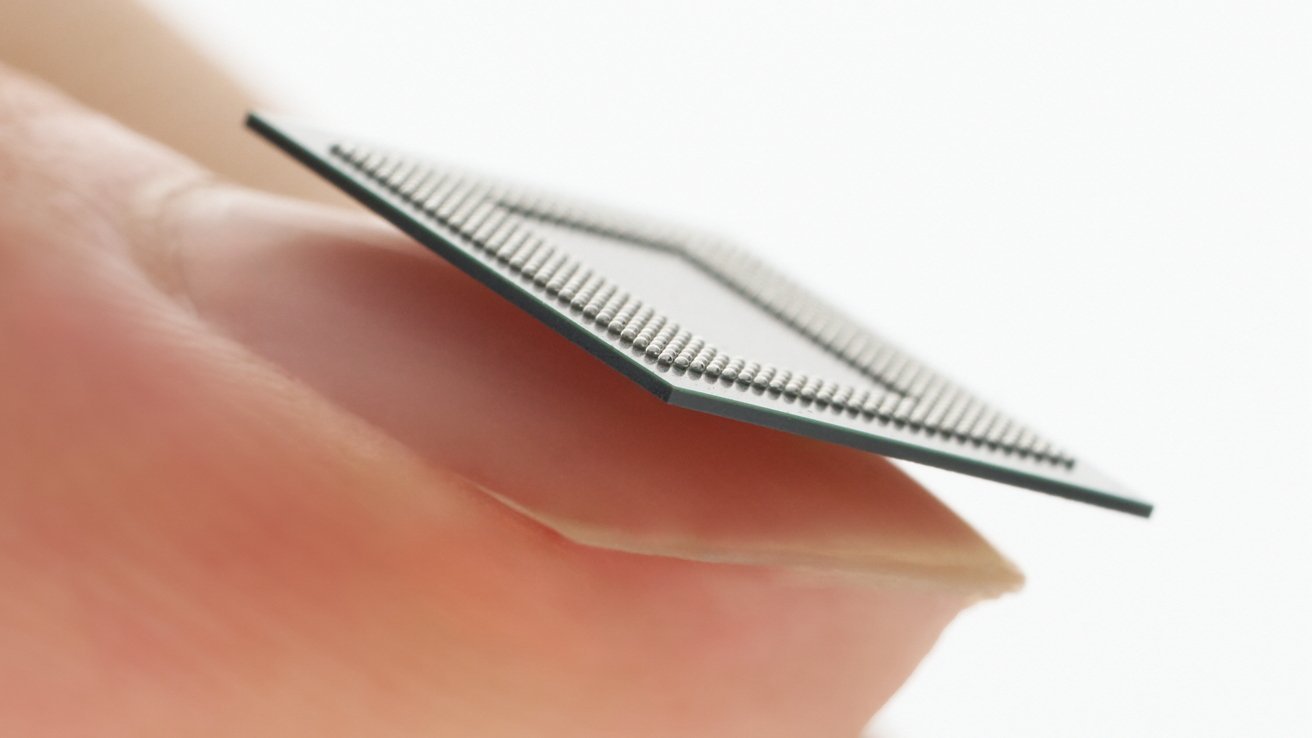
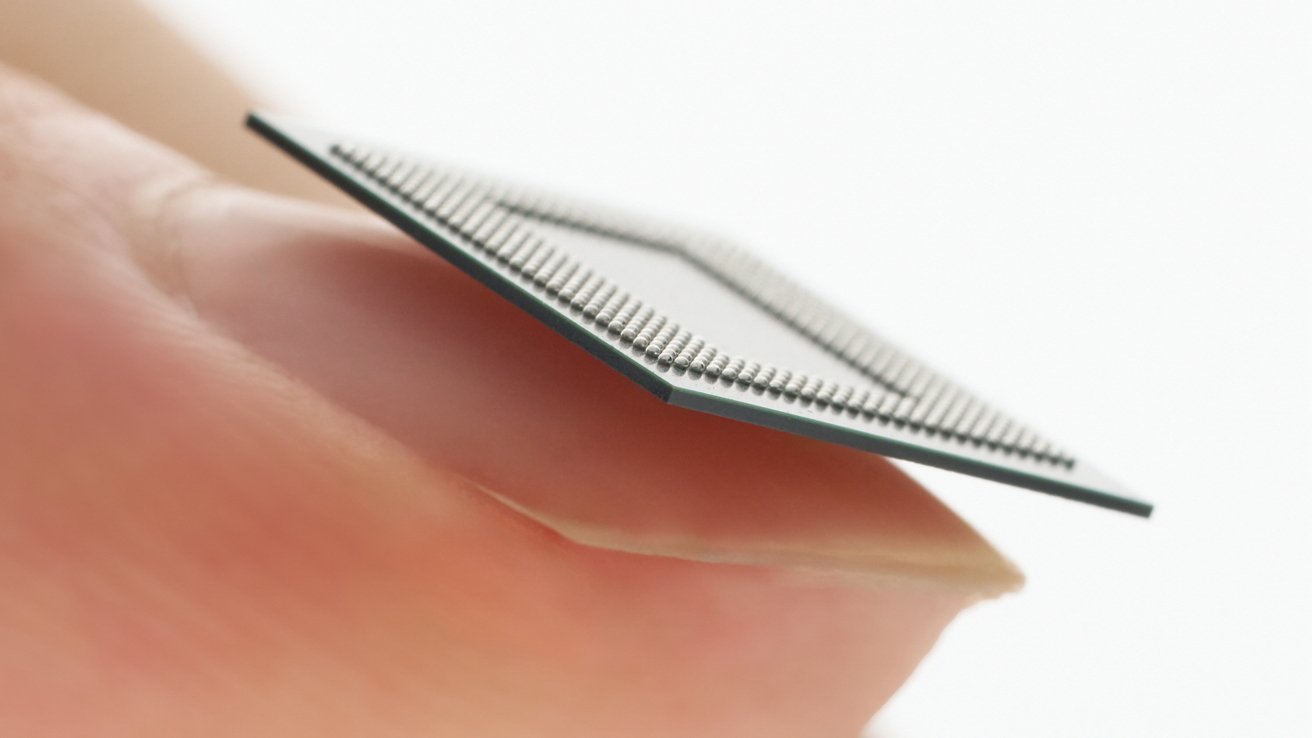
A Samsung LPDDR5X memory chip – Image Credit: Samsung
The tech industry is currently being squeezed by demand for chips used for memory and SSD storage. It’s a situation worsened by shortages in CPU supplies, which will only apply more pressure on manufacturers to charge consumers more. While most of the computer manufacturing industry will be affected, Apple’s supply chain has insulated itself enough that it won’t be an issue. Continue Reading on AppleInsider | Discuss on our Forums
Ford’s 7.3-liter “Godzilla” V8 earned a lot of attention when it debuted under the hood of F-Series Super Duty trucks for the 2020 model year. It wasn’t just from heavy-duty pickup truck buyers, either, but also from fans of the American V8 engine in general — and rightfully so. The Godzilla’s 430 hp and 485 lb-ft of torque are impressive figures, but that was just part of the story. What really makes the Godzilla special is the way it stands out from other modern V8s on the market.
Despite being an all-new engine design from Ford, the Godzilla forgoes modern tech like overhead cams and forced induction. Instead, it’s a classic pushrod V8 that delivers its power with old-school, big-displacement simplicity. But how does this brute of an engine stack up against other modern V8s in terms of output? We’ve rounded up five different V8s that outdo that mighty Godzilla when it comes to horsepower — albeit with some significant asterisks when it comes to both price and purpose.
Advertisement
For this grouping, we’ve limited our selections to naturally aspirated gasoline V8s currently available in new vehicles, excluding V8s with superchargers or turbochargers, as well as turbodiesel engines. While all of these V8s indeed outdo the Godzilla in peak horsepower, many of them are built for entirely different types of vehicles, and comparing their specs truly helps bolster the Godzilla’s reputation as one of the more unique V8 engines of the modern era.
Advertisement
Ford 5.0 Coyote V8 – 500 hp
One smaller V8 engine that outpowers the Godzilla comes from right within the Ford family. That engine would be the tried-and-true Ford 5.0 V8, often known as the Coyote. Ford currently offers a few different variants of its DOHC 5.0, with the more yeoman F-150 pickup version already making 400 hp. It’s in the modern Mustang, though, where the Coyote leaps ahead of the Godzilla in peak horsepower.
In the standard Mustang GT, the 5.0 makes 480 hp, and that number jumps to 500 hp in the fast and highly-entertaining Mustang Dark Horse. However, being a big-displacement truck motor, the Godzilla’s 485 lb-ft of torque easily outpulls the 418 lb-ft of the smaller, higher-revving 5.0. And as you’d expect from a truck engine, the larger 7.3 makes its peak torque and power at significantly lower revs than the Coyote — 5,000 and 4,400 rpm, respectively, versus the Dark Horse’s 7,250 and 4,900 rpm.
Comparing these two engines is very fascinating. Both are modern, naturally aspirated, mass-produced V8 engines from Ford, but that’s about where their similarities end. In that sense, it’s a lot like the old days when American carmakers offered both high-winding small-block V8s for performance cars and larger, more utilitarian big-block V8s for their heavy-duty trucks.
Advertisement
Chevrolet Corvette 6.2 V8 – 490 hp
JustPhotos22/Shutterstock
When Ford released the Godzilla engine, the most notable thing about it wasn’t just it’s size, it was the fact that it used the old school, overhead-valve pushrod design, which Ford had moved away from when it began introducing its modular, overhead cam V8s in the 1990s. Chevrolet, on the other hand, has stuck with pushrods and has plenty of V8-powered models in its lineup.
In terms of truck engines, Chevy currently does not have any naturally-aspirated V8s that outpower the Godzilla, though its 6.6-liter V8 HD truck engine puts up a decent fight in both horsepower and torque. And with the Camaro now out of the picture, you need to move over to the Corvette lineup to find a naturally aspirated Chevy V8 that outpowers the Ford 7.3.
The entry-level C8 Corvette Stingray, which is not “entry-level” at all when it comes to performance, is powered by the LT2, a naturally-aspirated 6.2-liter pushrod V8 that makes 490 hp as standard or 495 hp with the performance exhaust option. What about torque? At 470 lb-ft, the Corvette comes close to the Godzilla’s torque output. Since it’s a smaller performance car engine, though, the LT2 only hits that number at 5,150 rpm, a few hundred more revs than the Godzilla.
Advertisement
Toyota 5.0 V8 – 471 hp
With naturally aspirated V8s going out of favor around the global industry, Toyota is one of the only non-American manufacturers to offer a naturally aspirated V8 of any type, let alone one that outpowers the Ford Godzilla. That engine is the 5.0-liter DOHC 2UR-GSE V8, which ranks among the most powerful engines that Toyota has ever built, V8 or otherwise.
Advertisement
Offered in the Lexus LC 500 Coupe as well as the IS 500 sedan, which it discontinued in 2025, the 2UR-GSE makes 471 naturally aspirated horsepower. As you’d imagine from a significantly smaller, DOHC engine used in a luxury performance car, the 2UR’s advantage over the Godzilla does not carry over to the torque department. Rated at 398 lb-ft of torque, the Lexus engine is down nearly 100 lb-ft from the workhorse Ford 7.3 — totally expected considering the very different types of vehicles these engines power.
A closer Toyota V8 to the Godzilla, at least in terms of vehicle, would have to be the now-discontinued 5.7-liter from the second-generation Tundra and Sequoia. While Toyota has never offered a true heavy-duty pickup that would need an engine as large as the 7.3-liter Godzilla, the 5.7’s 381 hp and 401 lb-ft were — and still are — impressive numbers for a naturally aspirated V8 of its size.
Advertisement
Ram/Jeep 6.4 HEMI V8 – 470 hp
Of all the naturally aspirated V8 engines currently on the market, the one that comes closest to the Ford Godzilla in displacement, design, and output might be the 6.4-liter HEMI engine. Although this version of the HEMI isn’t currently available in as many vehicles as it once was, you can still find it under the hood of the Jeep Wrangler 392 and the Ram HD pickup.
In the Ram HD, which competes directly against the Ford Super Duty, the more utilitarian version of the 6.4 HEMI makes 405 hp and 429 lb-ft of torque, both lower than the Godzilla. In the Jeep Wrangler 392, though, the 6.4 HEMI makes a more potent 470 hp and 470 lb of torque, outdoing the Godzilla by 40 horsepower but with 15 lb-ft less torque.
Of course, you can find HEMI V8s that significantly outgun the Godzilla and both horsepower and torque — you’ll just need to add a supercharger and some Hellcat badges to do it. We shouldn’t bring Hellcats into this conversation, though, as Ford has its own supercharged V8s in offerings like the Raptor R and Mustang Dark Horse SC that go head-to-head with the Hellcat. That’s a comparison for a different time.
Advertisement
Chevy Corvette Z06 5.5 V8 – 670 hp
Dragos Asaftei/Shutterstock
The Chevrolet LT6 V8 from the C8 Corvette Z06 is an engine that, beyond being a naturally aspirated American V8, could not be more different from the Ford Super Duty’s Godzilla 7.3. The Godzilla is a huge, pushrod V8 designed for pickup trucks, while the LT6 is a race-bred DOHC V8 with an exotic flat plate crankshaft designed to take on some of the world’s fastest supercars.
So in the real world, the groundbreaking LT6 powering a mid-engined American supercar should have no business being compared to a workhorse Ford pickup V8. And in terms of power, the LT6 absolutely destroys the Godzilla with its 670 hp, about 240 hp more than the Godzilla. But while the LT6’s 460 lb-ft of torque is absolutely incredible for a naturally aspirated, 5.5-liter engine, the Godzilla’s 485 pound-feet still gives it the win there.
Advertisement
In fact, the DOHC V8 in the Z06 actually has slightly less torque than the pushrod V8 in the base Corvette C8. Such is the nature of small-displacement, overhead cam V8s compared to larger pushrod engines. And as for comparing the exotic Chevy LT6 to the more blue-collar Ford 7.3, the fact that one can even mention these two engines in the same sentence shows just how strong and varied America’s current V8 offerings are. While there was a time when it seemed widespread engine downsizing could spell the end of the naturally aspirated V8, both the throwback Godzilla and all of these other options show that the V8 is alive and well.
In one case, an AI checker pre-installed on a school-issued Chromebook flagged a student’s essay on Harrison Bergeron by Kurt Vonnegut as “18% AI-written” simply because it contained the word “devoid.” Read Entire Article Source link
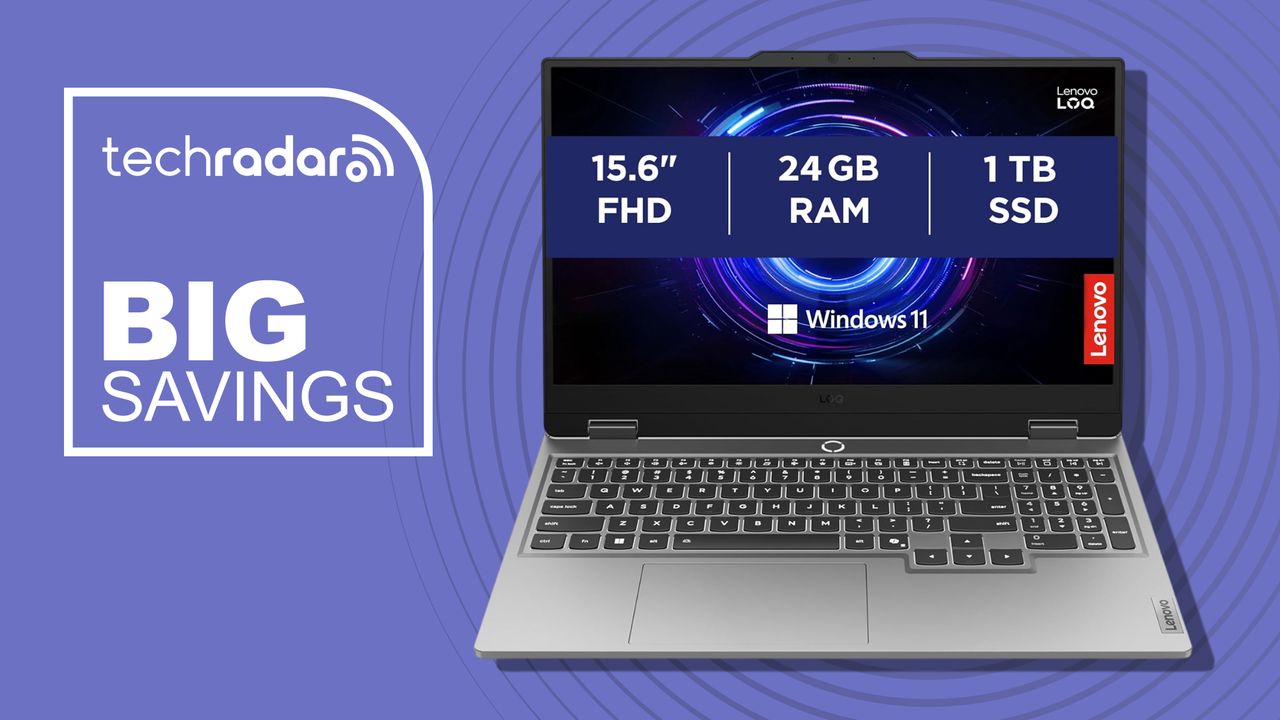
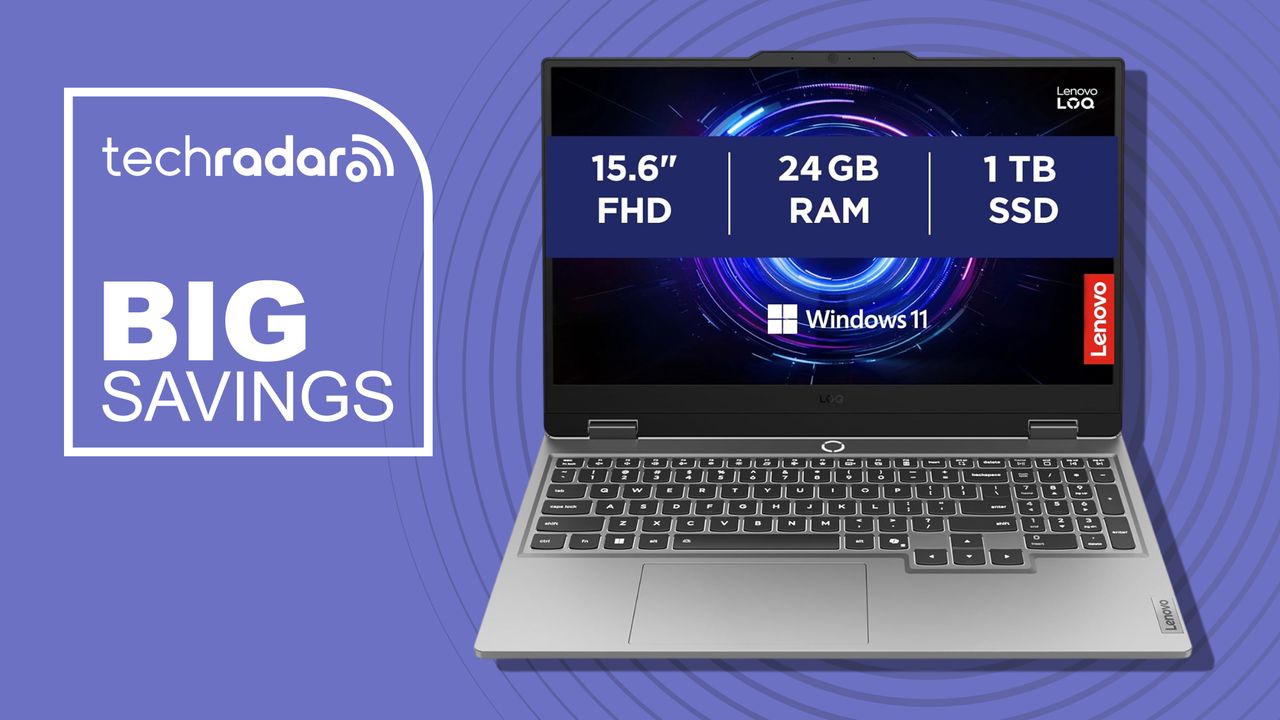
At the centre of the system is Intel’s Core i5-13450HX processor, a 13th Gen chip built on the Raptor Lake architecture. It’s paired with 24GB DDR5 memory, which gives the laptop plenty of breathing room when running multiple applications or heavier projects.
Storage comes in the form of a 1TB PCIe SSD, providing fast load times and plenty of space for files, software, and media.
Advertisement
Today’s top laptop deal
Graphics are handled by Nvidia’s GeForce RTX 5050 with 8GB GDDR7 memory. That hardware supports modern features like ray tracing and DLSS, helping deliver smoother performance in graphics-heavy applications.
The laptop has a 15.6in IPS display with a Full HD resolution of 1920 x 1080 and a 144Hz refresh rate. The panel also covers 100% of the sRGB colour space. Nvidia G-Sync support helps keep frame pacing consistent.
Advertisement
Lenovo also includes its AI Engine+ system, which automatically adjusts performance settings by balancing CPU, GPU, and thermal behaviour depending on what you’re doing.
The chassis comes in a Luna Grey finish and weighs around 2.4kg. The build uses aerospace-grade materials, while a white backlit keyboard and full numeric keypad make it practical for both work and play.
There’s also a 5MP webcam with an eShutter privacy switch, so you can physically disable the camera when not in use.
Connectivity includes Wi-Fi 6, Bluetooth 5.1, HDMI, Ethernet, and multiple USB ports for connecting external displays, storage, and accessories.
It takes around 30 hours to experience everything Resident Evil Requiem has to offer. If you’ve already enjoyed all the thrills and spills and you’re itching for more, there’s some positive news. Capcom has some updates on the way. The biggest of those is a story expansion, which is now in development. Just don’t expect it to arrive imminently.
“In this story, we will delve deeper into the world of Requiem,” game director Koshi Nakanishi said in a short video message. “We’re hard at work on it now. It will take some time, so we ask for your patience and hope you’ll look forward to it.”
Nakanishi noted that on top of the story expansion and fixing bugs and performance issues, the development team is cooking up some other features. A photo mode is on the way to help you capture all the horrors that Grace and Leon encounter. There’s also a “surprise coming around May,” Nakanishi said. “We’re planning to add a mini-game.”