Connect with us
DAPA Banner

Tech

This Heartwarming Family Photo Has Lived On The Moon For Over 50 Years

Published

on


Even though China has gotten very close to its first-ever manned moon landing, NASA remains the only space agency to land people on the moon as of mid-2026. One of those NASA astronauts, Charles M. Duke Jr., left a very special memento behind to mark his landing: A photograph of his beloved family.

Along with Thomas K. Mattingly II and John W. Young, Duke Jr. was part of the Apollo 16 mission, which departed Earth on April 16, 1972. Apollo 16’s goal was the region of Descartes, a crater in the moon’s highlands that previous missions had not visited. Their objectives were to collect rock samples, which would allow scientists to learn more about the moon’s composition, as well as to place instruments and conduct experiments to obtain more detailed readings of solar winds and other forces on the moon’s surface. 

Before leaving the moon, Duke Jr. left a small scrap of cloth on its surface marked “64-C,” the name of the class with which he’d passed as a test pilot, and a commemorative coin marking the 25th anniversary of the United States Air Force’s founding. He didn’t just honor his military family, though; he also left something to commemorate the family waiting for him at home, placing a photograph of himself with his two young sons, Charles and Tom, and his wife Dotty. On the back, according to Air & Space Forces Magazine, was a simple message: “This is the family of Astronaut Duke from Planet Earth. Landed on the Moon, April 1972.”

Advertisement

How Astronaut Duke’s family joined him on the perilous mission

Charles M. Duke Jr’s photograph of himself with his family was taken to the moon, it seems, largely for the same reason why dads do most things: to score cool points with his children. Speaking to Business Insider in 2015, Duke Jr recalled asking his kids, “Would y’all like to go to the Moon with me?” to get them interested in the mission. Taking the photograph was his way of allowing them to do just that. 

Advertisement

It was for the best, perhaps, that his sons didn’t physically join him and John Young on the Moon’s surface. This is the sort of perilous journey on which so much hinges on luck and timing. Indeed, Apollo 16 came within a hair’s breadth of having to cancel the landing entirely. Speaking to Fox Carolina News in April 2026, Duke Jr explained: “[A] serious problem happened about an hour before we landed on the Moon. [Thomas K] Mattingly reports a problem with the main engine … in the Command Module, which was your ride home.” 

This happened on the far side of the moon and could have aborted the landing. Thankfully, Mission Control found a workaround that brought the engine back to life and saved the mission. As for the photograph, it remains there, over half a century later. Though Duke wrapped the photo in plastic, it’s unclear how well it held up to solar radiation in the decades between the Apollo 16 landing and NASA’s Artemis II lunar mission, which took place in early April 2026.

Advertisement


Source link

Continue Reading
Click to comment

You must be logged in to post a comment Login

Leave a Reply

Tech

Pinterest crosses $1 billion quarterly revenue as AI-powered visual search drives advertising growth that social platforms cannot match

Published

on

TL;DR

Pinterest reported its first billion-dollar quarter with $1.008 billion in Q1 2026 revenue, up 18 per cent year on year, driven not by social media engagement but by 80 billion monthly visual searches that generate commercial intent data no other platform can match. Its AI-powered Performance+ advertising suite delivered 24 per cent higher conversion lift and 80 per cent A/B test win rates, proving that advertising attached to search intent outperforms advertising attached to content browsing. The question is whether Pinterest’s visual search advantage endures as Google, Amazon, and OpenAI build their own AI commerce layers.

Pinterest reported its first billion-dollar quarter last week. Revenue hit $1.008 billion in the first three months of 2026, up 18 per cent year on year, with monthly active users reaching 631 million for the tenth consecutive quarter of double-digit user growth.

Advertisement

The stock jumped on guidance that projects second-quarter revenue of $1.133 billion to $1.153 billion, a further 14 to 16 per cent increase. Wall Street treated the results as confirmation that Pinterest has finally become the advertising platform it always promised to be. But the interesting part of the earnings is not that Pinterest grew. It is why.

Pinterest did not cross a billion dollars in quarterly revenue by becoming a better social media platform. It crossed a billion dollars by becoming a search engine that happens to show pictures.

The engine

Pinterest processes more than 80 billion searches per month. That number is not a vanity metric. It is the foundation of an advertising model that works differently from every other social platform. When someone opens Instagram or TikTok, they are browsing. When someone opens Pinterest, they are looking for something: a kitchen renovation, a wedding dress, a pair of boots, a recipe for Thursday dinner.

The distinction matters because advertising attached to intent converts at rates that advertising attached to browsing cannot match. Pinterest’s Performance+ suite, its AI-powered campaign automation tool, delivered 24 per cent higher conversion lift in advertiser tests and won 80 per cent of A/B comparisons against manual campaigns. Its return-on-ad-spend bidding system now accounts for 22 per cent of lower-funnel retail revenue on the platform.

These are not engagement metrics. They are commerce metrics, and they explain why advertisers are spending more on Pinterest while scrutinising every dollar they put into platforms that sell attention rather than action.

Advertisement

The AI layer is what changed. Pinterest has spent the past two years rebuilding its advertising stack around machine learning models that match advertiser objectives to user intent signals extracted from visual searches.

When a user photographs a lamp and searches for similar products, or saves a series of pins showing mid-century modern furniture, Pinterest’s models construct an intent profile that is qualitatively different from the interest graphs that Facebook and Instagram build from likes and follows.

The arrival of advertising inside AI platforms like ChatGPT has reframed the conversation about where ad dollars flow, but Pinterest’s results suggest that the most valuable advertising real estate is not inside a chatbot or alongside a social feed. It is at the moment someone is actively searching for something they intend to buy.

The geography

The revenue breakdown tells a story about where the growth is coming from and where it is going. United States and Canada revenue grew 13 per cent. Europe grew 27 per cent. Rest of World revenue surged 59 per cent.

Advertisement

The US and Canada business is mature, generating the majority of Pinterest’s revenue from a user base that has been on the platform for years. The international growth is the early stage of a monetisation curve that Pinterest’s management believes will follow the same trajectory: users arrive for visual discovery, build intent-rich search histories, and become increasingly valuable to advertisers as Pinterest’s AI models learn to match their searches to commercial outcomes.

The 59 per cent Rest of World growth is particularly notable because it is happening on a platform that does not rely on the creator economy, influencer partnerships, or viral content loops that drive growth on TikTok and Instagram.

Pinterest’s international expansion is powered by the same behaviour that drives its domestic business: people searching for things they want. The cultural specificity of those searches, whether it is wedding fashion in India, home décor in Brazil, or street style in Japan, provides the kind of intent data that advertisers in those markets have not had access to on any other platform at this scale.

The contrast

Pinterest’s brand safety advantage has become a competitive moat. Meta faces lawsuits alleging that its platforms have profited from billions of dollars in fraudulent advertising, with internal documents suggesting that a significant share of ad revenue comes from scam accounts. TikTok’s advertising model depends on algorithmic content distribution that periodically surfaces material advertisers do not want their brands associated with. X’s advertising business has contracted since Elon Musk’s acquisition.

Advertisement

Pinterest, by contrast, operates a platform where the content is overwhelmingly aspirational, commercial, and brand-safe by design. People pin products they want to buy, rooms they want to build, meals they want to cook. The content moderation challenge on Pinterest is trivial compared to platforms built around user-generated video and text, and that structural advantage translates directly into advertiser willingness to spend.

OpenAI has shifted ChatGPT’s advertising from impression-based pricing to cost-per-click after its initial $60 CPM launch pricing eroded within weeks, a sign that even the most hyped new advertising platform struggles to prove that its ads drive purchases rather than just visibility. Pinterest does not have that problem. Its advertising model was built from the ground up around commercial intent, and the Performance+ results demonstrate that the AI layer is making the match between intent and advertiser spend more efficient, not less.

The question for advertisers is not whether Pinterest’s ads work. It is whether Pinterest can scale the model fast enough to capture a meaningful share of the $295 billion US digital advertising market before the AI commerce platforms catch up.

The investors

Elliott Investment Management’s $1 billion convertible note investment in Pinterest, disclosed in March, was the activist firm’s bet that the visual search commerce thesis would translate into sustained revenue growth. The Q1 results validated that bet. Pinterest also announced approximately $2 billion in share repurchases, a capital return programme that signals management confidence in the durability of the revenue trajectory.

Advertisement

Elliott’s involvement typically accelerates operational discipline: cost management, margin expansion, and strategic focus on the highest-return initiatives. For Pinterest, that means doubling down on the AI-powered advertising infrastructure that produced the Q1 results rather than diversifying into social features, creator tools, or other distractions that would make Pinterest look more like the platforms it is outperforming precisely because it is not like them.

Alphabet’s Q1 earnings pushed its market capitalisation toward $5 trillion, driven by search advertising revenue that remains the single most profitable business model in technology. Pinterest’s billion-dollar quarter is a fraction of Google’s scale, but the underlying logic is the same: advertising attached to search intent is more valuable than advertising attached to content consumption. Google proved that model with text.

Pinterest is proving it with images. The difference is that Pinterest’s visual search captures intent that text queries often cannot express, the shape of a chair, the colour of a wall, the silhouette of a dress, and converts that visual intent into advertising revenue through an AI pipeline that improves with every search.

The question

Pinterest’s risk is that the same AI capabilities powering its advertising engine are being deployed by competitors who have more users, more data, and more capital. Google’s AI Mode shopping experience combines Gemini with its Shopping Graph to handle product discovery, fit uncertainty, and price timing. Amazon’s Rufus AI assistant now includes an auto-buy function. OpenAI is building conversational ad formats inside ChatGPT that turn advertisements into interactive dialogues. Shopify has launched Agentic Storefronts that make merchant catalogues available inside AI platforms. The commerce layer of AI is being built by companies with resources Pinterest cannot match, and the question is whether Pinterest’s head start in visual search intent data is a durable advantage or a temporary one.

Advertisement

The answer depends on whether visual search remains a distinct category or gets absorbed into the broader AI commerce infrastructure. If consumers continue to use Pinterest as the place where they search for things they want to buy by looking at pictures of things they like, then Pinterest’s intent data is irreplaceable, because no other platform has 80 billion monthly visual searches generating the same density of commercial signals. If AI assistants from Google, Amazon, and OpenAI learn to interpret visual intent as well as Pinterest does, the moat narrows.

Pinterest crossed a billion dollars in quarterly revenue not by winning the social media competition but by refusing to play it. The company built a search engine for visual intent, wrapped it in an AI-powered advertising model that converts searches into sales, and proved that the model scales across geographies and advertiser categories.

Whether that is the beginning of Pinterest becoming a major advertising platform or the high-water mark before AI commerce platforms subsume the category depends on a question Pinterest cannot answer alone: in a world where every platform is adding AI-powered shopping, does the platform that understood visual search first retain the advantage, or does the advantage migrate to whoever has the most compute, the most merchants, and the most aggressive AI deployment?

Pinterest’s billion-dollar quarter is the best argument the company has ever made that the answer is the former. The next four quarters will determine whether the market agrees.

Advertisement

Source link

Continue Reading

Tech

Kids are using fake mustaches, VPNs, and their parents' accounts to get around age verification

Published

on


A recent survey from Internet Matters reveals that the UK’s Online Safety Act has had limited effectiveness in stopping minors from accessing social media and adult content.
Read Entire Article
Source link

Continue Reading

Tech

Wholesome Direct Returns June 6 With A Slew Of Joyful Games

Published

on


The hype is steadily building around Summer Game Fest 2026 and the show’s June calendar is starting to fill out. The fine folks at Wholesome Games will host their seventh annual digital showcase on Saturday, June 6 at 12PM ET on YouTube and Twitch, featuring more than 50 joyful and just plain adorable games from new and established studios alike. Wholesome Direct 2026 promises to feature world premieres, demo reveals and a handful of fun surprises.

The list of confirmed participants includes Planet Coaster series creator Frontier Developments, Fields of Mistria team NPC Studio, The Wandering Village dev Stray Fawn Studio, and Cozy Grove maker Spry Fox. The Spry Fox update is of particular note, considering some recent upheaval at the studio: Netflix bought Spry Fox in 2022, published its Cozy Grove sequel in 2024, and then sold Spry Fox back to its original founders in December 2025. Netflix had already greenlit Spry Fox’s next game, a cozy life-simulation MMO called Spirit Crossing, and the streamer is still on tap to publish it on mobile, with Spry Fox self-publishing on Steam. It’ll be nice to get a peek at Spirit Crossing now that the corporate dust has settled.

Advertisement

The Wholesome Games Presents publishing arm will also provide updates on Usagi Shima (a bunny atsume-style game coming to Steam in 2026), Is This Seat Taken? (Poti Poti Studio’s beloved little puzzler that came out in mid-2025), and Milki Delivery (a sweet-looking community-building game from Minami Lane creators Blibloop and Doot).

Merch sales tied to this year’s Wholesome Direct showcase will benefit the Transgender Law Center. Wholesome Direct fundraising efforts have raised more than $300,000 since 2020 for charities including the American Heart Association, Point of Pride, Save the Children, AbleGamers, Palestine Children’s Relief Fund and the International Rescue Committee.

Summer Game Fest 2026 kicks off on Friday, June 5 at 5PM ET with its big live show, and the surrounding days will be packed with additional streams and news dumps. We’ll go hands-on with fresh games at iam8bit’s Play Days event in downtown Los Angeles and we can all watch another Day of the Devs: SGF Edition together, plus whatever else is announced in the coming weeks. If you want to keep up with Wholesome Games news specifically, check out the Discord.

Advertisement


Source link

Advertisement
Continue Reading

Tech

Microsoft’s OpenClaw team takes on the personal assistant challenge

Published

on

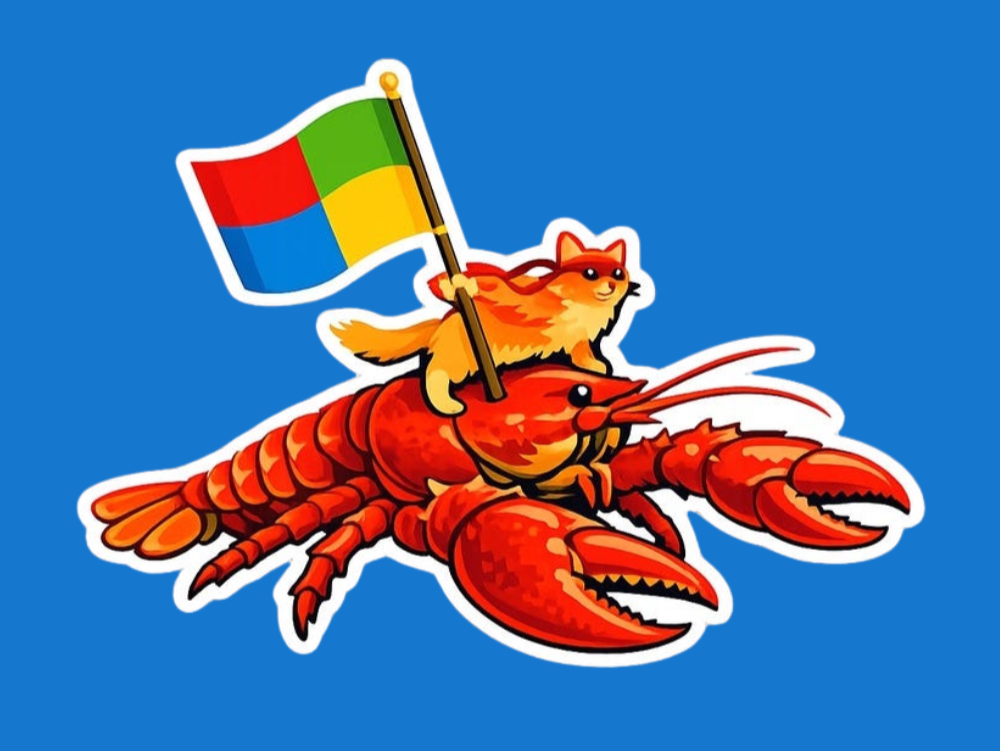
Microsoft’s unofficial Ninja Cat mascot rides the OpenClaw lobster. (Image via Omar Shahine’s blog)

Bob. Clippy. Cortana. Copilot. Microsoft has been trying to unlock the personal-assistant puzzle for decades. Now a fledgling team inside the company that’s been experimenting with OpenClaw — an open-source framework that acts both a virtual assistant and platform for building and managing proactive agents — is taking a stab at the problem.

That team, headed by Corporate Vice President Omar Shahine, already has a working agent prototype and, as of May 1, more than 3,000 daily users inside Microsoft testing “Project Lobster,” the team’s OpenClaw-based desktop environment, up from 100 the previous week.

Not bad for a technology that CEO Satya Nadella dismissed as a security risk akin to “a virus” just a few months ago. A number of other companies, including OpenAI and NVIDIA, are also rushing to integrate the technology with their own.

Omar Shahine. (LinkedIn Photo)

The vision of Shahine’s team is to create “an always-on agent team (a Chief of Staff agent, an Executive Assistant agent, and a roster of specialist agents) that works 24/7 on your behalf within the Microsoft 365 ecosystem,” as he described it in a blog post.

It’s a “persistent runtime that monitors your signals continuously, prepares your day before you wake up, triages your inbox while you’re in meetings, and follows up on action items without being asked,” he explained.

OpenClaw, developed by Peter Steinberger (who, as of Feb. 2026, works for OpenAI) has only been publicly available since Nov. 2025, originally under the name Clawdbot.

Advertisement

Shahine had been dabbling with OpenClaw since earlier this year to automate tasks at home, such as drafting an email or investigating concert-ticket prices. He demonstrated how Lobster works during a presentation to Microsoft’s AI Accelerator group on Feb. 26. And by March 31, he had a new role at Microsoft: To bring OpenClaw and personal agents to Microsoft 365.

Microsoft recently has made forays into the autonomous-agent space with Copilot Tasks, an agent in preview for consumers that is designed to help with chores like triaging email and booking travel. On the business side, Microsoft is integrating Anthropic’s Cowork technology with Microsoft 365 Copilot in the form of “Claude Cowork,” which takes action inside the various Microsoft Office apps.

But neither of these approaches provides a virtual assistant working on users’ behalf 24/7 with access to people’s full, real lives, Shahine maintains. They can’t do things like order from DoorDash if a user is in back-to-back meetings or reschedule a call if it interferes with a family dinner. That gap is why he decided to target knowledge workers, he says.

Shahine’s team, known as Ocean 11, includes a handful of people, each running his/her own Lobster agent. The team is building out the runtime and supporting infrastructure needed to make Lobster work in an enterprise environment.

Advertisement

As Lobster is currently envisioned, it will work across all kinds of apps and Microsoft 365 and other data sources. It won’t need constant prompting, but instead, will suggest courses of action it can take, pending user approval.

And this is why Nadella and other security-minded professionals have qualms about OpenClaw: It works autonomously, can ingest untested inputs, maintains persistent credentials, and could turn things like prompt-injection attacks into action-injected ones.

Microsoft’s own Defender security team’s current guidance states: “OpenClaw should be treated as untrusted code execution with persistent credentials. It is not appropriate to run on a standard personal or enterprise workstation.”

In an interview, Shahine acknowledged that enterprise-hardening Microsoft’s OpenClaw-based offerings needs to be job No. 1. His team is designing prototype agents to have their own Microsoft 365 identities, meaning their own Entra IDs for governance, their own Exchange mailbox, their own Teams presence, and integration with the Microsoft Graph.

Advertisement

“My goal is to contribute to make OpenClaw better but also consume it and run it so that it’s also a reference design, reference pattern that people can look to and say, ‘Well, you know, it’s great. Microsoft figured out how to make this thing enterprise great,” he said.

Shahine wasn’t ready to talk timetables or deliverables, beyond the Teams plug-in available for OpenClaw. But the team already has developed a Mac and Windows desktop environment called ClawPilot (no relation to clawpilot.ai) that it’s using internally to work with “claw-like agentic workflows.” Shahine said ClawPilot is acting as his personal assistant and goes by “Sebastien” (a nod to “The Little Mermaid”).

Microsoft Vice President Scott Hanselman has built a Windows node for OpenClaw which could get some airtime at Microsoft’s upcoming Build developer conference in San Francisco in June. Shahine said “there will be some concrete information about how we’re working to make Windows a fantastic environment for OpenClaw and other agentic systems to operate.”

Source link

Advertisement
Continue Reading

Tech

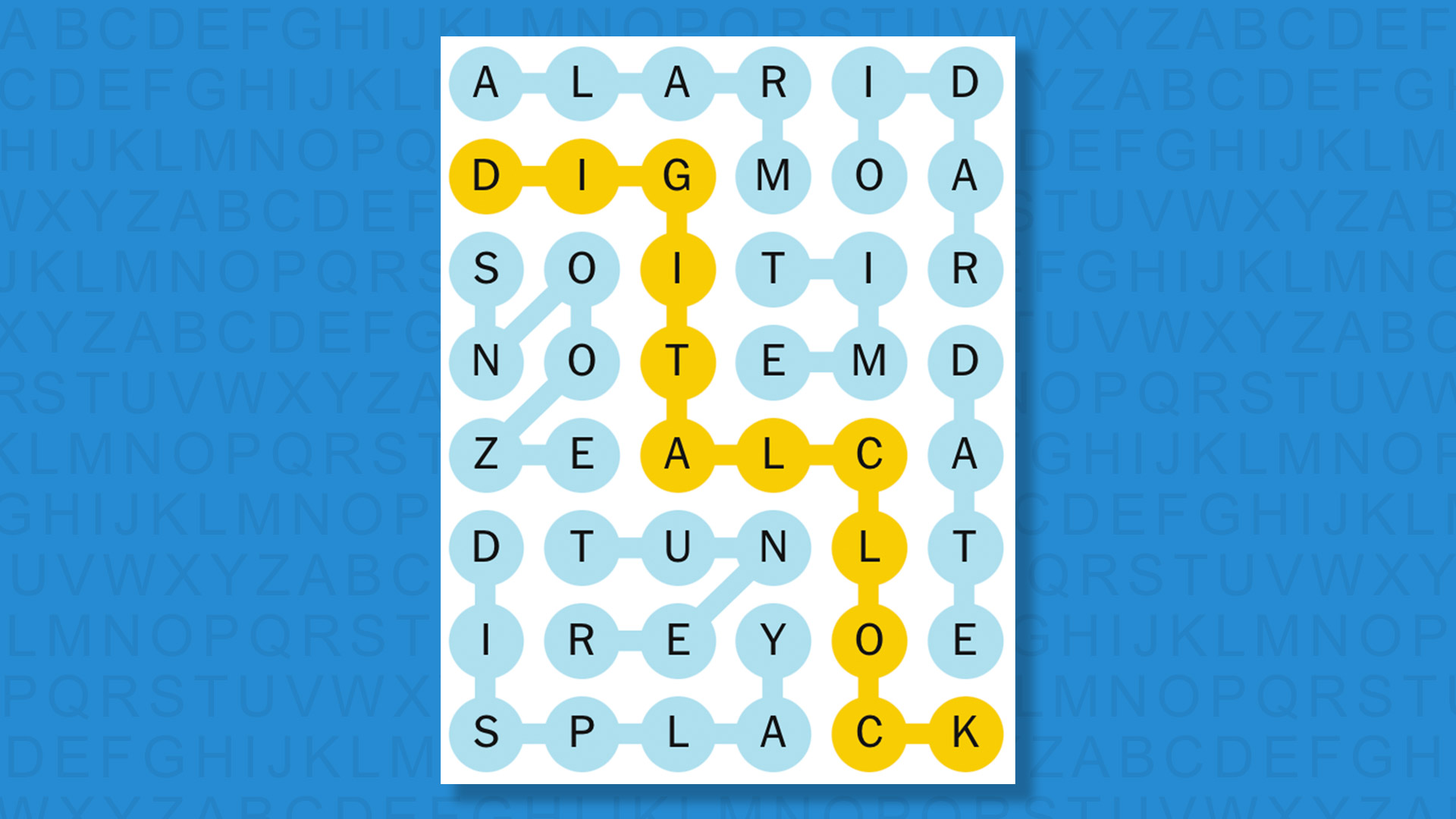
NYT Strands hints and answers for Tuesday, May 5 (game #793)

Published

on

Looking for a different day?

A new NYT Strands puzzle appears at midnight each day for your time zone – which means that some people are always playing ‘today’s game’ while others are playing ‘yesterday’s’. If you’re looking for Monday’s puzzle instead then click here: NYT Strands hints and answers for Monday, May 4 (game #792).

Strands is the NYT’s latest word game after the likes of Wordle, Spelling Bee and Connections – and it’s great fun. It can be difficult, though, so read on for my Strands hints.

Advertisement

Source link

Advertisement
Continue Reading

Tech

Sunlight Powered, Sunlight Readable: Solar Case For Nook Simple Touch

Published

on

When life gives you lemons, you make lemonade. What if life gives you a pile of old e-book readers? Well, when [spiritplumber] got box of old Nook Simple Touch devices, he decided to design solar-powered cases to help boost the old batteries. It makes perfect sense to us: sunlight readable screen, sunlight chargeable battery.

It looks like he’s got a pair of panels built into the 3D printed case. He recommends using any TP4056-based charger, and tying into the battery test points, not the 5 V supply. It won’t hurt anything if you do, apparently, but the device will think it’s plugged in an refuse to turn off the WiFi. That’s no big deal when you’ve got a continental power grid on the other end of the cable, but charging from a small panel on the back of the case doesn’t always give you enough juice to waste on unneeded radio activity. Especially indoors — these panels are apparently big enough to trickle-charge the device under artificial light, which is a nice, if doubtless slow feature.

The design is open source, and includes SketchUp design files as well as the exported .STL, so if you’ve got a hankering to edit this to fit a different e-book reader, you can. He also provides a handy-dandy guide to root this model of Nook, and if you’re on Hackaday we probably don’t need to explain why you might want to.

Advertisement

We’ve seen the Nook Simple Touch go some interesting places — like into the clouds as a glider computer — but solar power is a new hack for this device, at least on this site. We don’t know if [spiritplumber] has a green thumb, but he’s evidently got some environmental bones in his body: his last featured project was about improving quadcopter efficiency with a wing and a prayer.

Source link

Advertisement
Continue Reading

Tech

Inside AMEX’s agentic commerce stack: How intent contracts and single-use tokens enforce AI transactions

Published

on

American Express (Amex) is building a system that lets AI agents shop and pay on behalf of users — but right now it’s only within its own payment network, and still involves a black box that could hinder trust and auditability.

Amex already participates in agentic commerce protocol projects, especially Google’s Agent Pay Protocol (AP2), which focuses on interoperability. Amex’s Agentic Commerce Experiences (ACE) developer kit, on the other hand, touches on something most protocols currently lack: Full transaction control in the payment layer. 

But it still isn’t completely transparent in how it handles validation. ACE uses a closed-loop system — serving as both the card issuer and the payment network — to validate agent-led transactions. 

Luke Gebb, Amex’s EVP and global head of innovation, told VentureBeat that the company believes this model is the missing piece in agentic commerce.  

Advertisement

“Some of what is missing so far is the perspective of a company like ours: We feel that trust and security are critical to advancing this space,” Gebb said. “This is really the first time that an issuer is coming to the table.”

Amex sits in that interesting space: Unlike other financial institutions or card providers like Chase or Bank of America, Amex can route transactions through its American Express Network. Visa and Mastercard are two of the most well-known payment networks, but these companies don’t issue cards themselves and must work with a bank.

The continued black box of agentic commerce 

The ACE kit is just one approach to addressing some of agentic commerce’s biggest problems: trust, control, accountability, validation, and security. 

Consumers generally don’t want rogue agents to run away with their bank accounts and start buying things. Merchants don’t want to be stuck with unpaid items. Banks don’t want to deal with an influx of chargebacks and the potential for fraud. 

Advertisement

Projects like the ACE kit aim to build trust and accountability by verifying an agent’s identity and goals. This can build the trust agentic commerce desperately needs.

Amex claims it offers validation, too, although the process behind that is unclear. It is abstracting how it performs validation, even though it explains at which layer it does it. More traditional systems feature a mix of deterministic checks and a flexible, semantic evaluation that helps match intent and outcome for validation. Amex said agents built with ACE can submit user shopping carts and check them against the agent’s original intent. However, they did not disclose how this works.

Practitioners building to the agentic commerce ecosystem lament that, despite strides in creating a trust layer, many black boxes remain that could hinder widespread adoption.

Raj Ananthanpillai, founder and CEO of identity and verification system provider Trua, told VentureBeat that payment protocols and software kits like Agentic Commerce Suite from Stripe, Google’s Verifiable Intent proof chain, and the ACE developer kit “excel at handling proofs, verifiable authorizations and the mechanics of fund movement, but leave upstream human validation opaque and underdeveloped.”

Advertisement

Ananthanpillai continued: “Without a clear, high-assurance cryptographic link proving that an agent is acting under the explicit authority of a verified human owner, merchants, issuers, and networks face heightened risks of repudiation, massive chargebacks, sanctioned people conducting financial transactions, and fraud.”

The ACE kit

The ACE developer kit solves several running issues with agentic commerce, Gebb said, and gives developers access to integrated services:

  • Agent registration

  • Account enablement

  • Intent intelligence

  • Payment credentials 

  • Cart context

First, it deals with agent registration, establishing identity and trust with both the consumer and company agents. When a transaction begins, the agent acting on behalf of the customer and the merchant’s agent can verify each other’s identities and trust that they are dealing with the correct entity. 

Next comes account enablement, which links the user’s Amex account to their agent and grants the agent permission to act, or, in the case of agentic commerce, buy something.

Advertisement

Intent intelligence creates what Amex calls an intent contract, where the user defines what they want the agent to do. Once the intent is defined, the ACE system generates an Intent ID and a Proof of Intent Token that definitively proves authorization in the event of a dispute.

Amex handles the actual transaction part, where the user pays for the product through a single-use token. ACE establishes payment credentials used for the transaction, bound to intent and constraints. 

“Once the agent has found the item that the customer has asked for, like red shoes, they’ll make a call for the payment credentials, which is a token that has the boundaries that the card member has provided,” Gebb said. “So, for instance, if they said they only wanted to spend $500, that token won’t allow for a purchase of $600 because it has controls built in.”

The last piece is cart context and validation, which Gebb said helps banks and brands compare a user’s cart that their agent submitted to their intent. 

Advertisement

Amex’s approach shows that for agentic commerce to really soar, providers must understand what systems will allow agents to do and who is ultimately accountable if something goes wrong. 

Source link

Continue Reading

Tech

A government used AI to write its AI regulations. It did not go well

Published

on


Cape Town authorities had effectively asked for public comment on a draft AI bill that contained hallucinated sources.
Read Entire Article
Source link

Continue Reading

Tech

Focal Omada Speakers Are Now Up to 35% Off

Published

on

Focal’s Omada speaker line just became a lot more interesting for anyone building a serious stereo or home theater system at a more attainable price. Four models in the series are now on sale for up to 35% off, with the promotion running through June 21, 2026, while supplies last. That last part matters. The best speaker deals rarely hang around long enough for endless spreadsheet therapy.

What Are Focal Omada Speakers?

Focal’s Omada series is an exclusive loudspeaker line for ProSource members that has been available since November 2025. The lineup sits between Focal’s Theva and Vestia series, giving buyers a mid tier option for both two channel listening and home theater systems without jumping into the brand’s more expensive models.

Focal Omada Loudspeaker 35% Off Promotion Until June 21, 2026

What’s on Sale?

  • Omada N1 (Bookshelf Speaker)$1,399 $898/pair at Crutchfield or Amazon (save $500)
  • Omada N3 (Floorstanding Speaker)$3,798 $2,598/pair at Crutchfield or Amazon (save $1,200)
  • Omada N4 (Floorstanding Speaker)$4,598 $2,998/pair at Crutchfield or Amazon (save $1,600)
  • Omada Center (Center Channel Speaker)$699 $499 at Crutchfield or Amazon (save $200)

Focal Omada Core Features:

The Omada series uses Focal’s TAM tweeter and Slatefiber cone technology, both of which first appeared higher up in the company’s lineup. That matters because Omada is not just a pretty cabinet with a familiar badge on the front. The goal is to deliver natural, detailed sound for both two channel listening and home theater systems, using proven Focal driver technology without pushing buyers into the brand’s more expensive loudspeakers.

Design: Omada speakers come in a high gloss black finish with a subtly curved front baffle and a leather like texture on the front panel. It gives the line a cleaner, more refined look without turning the room into a hi-fi showroom crime scene. The finish, cabinet shape, and front panel detail should help the speakers fit into a wide range of rooms, which matters if the system has to share space with actual furniture and people.

TAM Tweeter: Focal’s M-shaped dome TAM tweeter is designed to deliver clean, controlled treble with wide dispersion and low distortion. Originally developed for Focal’s car audio products and later adapted for home loudspeakers, it gives the Omada series a proven high frequency platform that fits neatly into Focal’s broader loudspeaker ecosystem.

Advertisement

Slatefiber Cone: The Omada series also uses Focal’s Slatefiber cone technology, first introduced in the Chora line in 2019. Made from recycled carbon fibers, Slatefiber was developed to deliver a useful mix of rigidity, damping, and tonal balance. Focal has continued to refine the material since its debut, and it has since appeared across other parts of the catalog, including Alpha Evo studio monitors and Slatefiber automotive kits.

Bass Reflex: Every Omada model uses a bass reflex design to improve low frequency extension and output. The N1, N3, and N4 feature a front firing port, while the Center speaker uses two smaller rear ports. The port directs air pressure generated inside the cabinet into the room, reinforcing bass response without requiring more amplifier power. The result is fuller, more impactful low end while helping the Omada lineup maintain useful efficiency across the range.

Focal Omada Speaker Line Comparison

Focal Omada Loudspeaker Line 2026
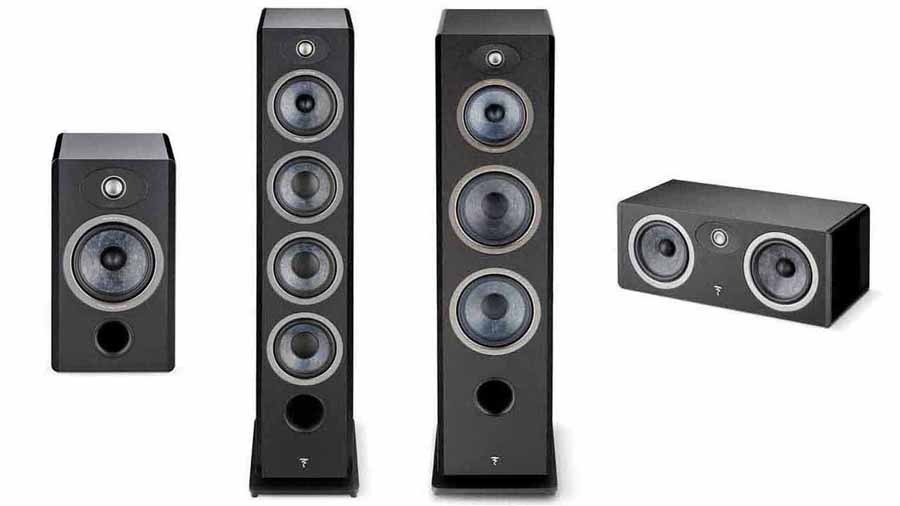
Focal Omada Loudspeakers (not to scale)
Focal Omada Model  N°1 N°3 N°4 Center Channel
Speaker Type  Bookshelf Speaker Floorstanding Speaker Floorstanding Speaker Center Channel Speaker
Sale Price
(2026-06-21)
$898/pair
(save $500)
$2,598/pair
(save $1,200)
$2,998/pair
(save $1,600)
$499
(save $200)
Speaker Configuration 2-way bass-reflex 3-way bass-reflex 3-way bass-reflex 2-way bass-reflex
Speaker Drivers 6 1/2″ (16.5cm) Slatefiber Midbass

1″ (25mm) Al/Mg inverted dome TAM tweeter

3 x 6 1/2″ (16.5cm) Slatefiber Woofer
Advertisement

1 x 6 1/2″ (16.5cm) Slatefiber Midrange

1″ (25mm) Al/Mg inverted dome TAM tweeter

2 x 8 1/4″ (21cm) Slatefiber woofer

1 x  6 1/2″ (16.5cm) Slatefiber Midrange

Advertisement

1″ (25mm) Al/Mg ‘M’-shaped inverted dome TAM tweeter

2 x 6 1/2″ (16.5cm) Slatefiber Midbass

1″ (25mm) Al/Mg inverted dome TAM tweeter

Sensitivity (2.83V/1m) 89.5dB 92dB 92dB 91.5dB
Frequency response (+/-3dB) 56Hz – 30kHz 42Hz – 30kHz 40Hz – 30kHz 58Hz – 30kHz
Low frequency point (-6dB) 48Hz 35Hz 34Hz 50Hz
Nominal Impedance 8 Ω 8 Ω 8 Ω 8 Ω
Minimum impedance 4.5 Ω 2.9 Ω 2.6 Ω 3.6 Ω
Recommended Amplifier Power 25 – 120W 40 – 300W 40 – 350W 40 – 200W
Crossover frequency 2,800Hz 280Hz / 3,100Hz 280Hz / 2,800Hz 2,700Hz
Dimensions (WxDxH) 8 5/8 x 10 1/4 x 15 1/4 in
Advertisement

21.9 x 26 x 38.7 cm

10 1/8 x 14 3/4 x 44 1/8 in
.
25.6 x 37.5 x 112.2 cm
12 x 16 7/8 x 44 3/8 in

30.4 x 43 x 112.6 cm

21 1/8 x 10 1/4 x 8 1/2 in
Advertisement

53.7 x 25.9 x 21.6 cm

Net weight (with grille) 15.4 lbs (7 kg) 58.4 lbs (26.5 kg) 69.45 lbs (31.5 kg 22 lbs (10 kg)

The Bottom Line

The Focal Omada series is for listeners who want proven Focal driver technology, clean styling, and a practical speaker lineup for both music and movies without paying for features they may not need. With the TAM tweeter, Slatefiber cones, and a focused range of models, Omada makes the most sense for buyers building a solid two channel or home theater system who want Focal performance at a more accessible price.

Sale Pricing 

The Focal Omada Speaker sale runs through June 21, 2026. 

  • Omada N1 (Bookshelf Speaker)$1,399 $898/pair at Crutchfield or Amazon (save $500)
  • Omada N3 (Floorstanding Speaker)$3,798 $2,598/pair at Crutchfield or Amazon (save $1,200)
  • Omada N4 (Floorstanding Speaker)$4,598 $2,998/pair at Crutchfield or Amazon (save $1,600)
  • Omada Center (Center Channel Speaker)$699 $499 at Crutchfield or Amazon (save $200)

To round out an Omada system, the speakers can be combined with the SUB 600P subwoofer for deeper and encompassing bass for $1,399 at Amazon. Meanwhile, the speaker stands for the N1, which is available for $269/pair at Crutchfield.

Advertisement. Scroll to continue reading.
Advertisement

Source link

Continue Reading

Tech

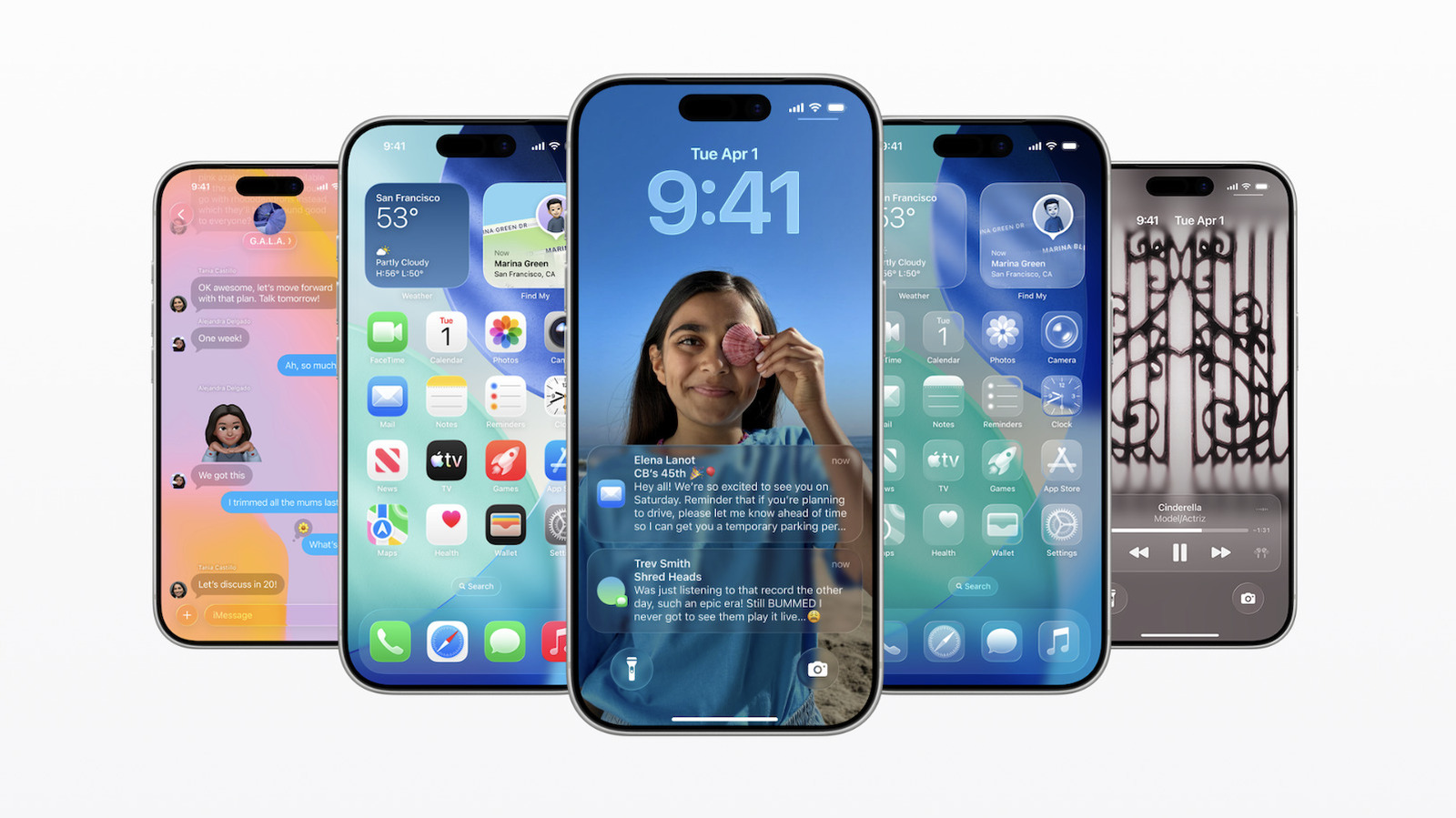
iOS 26.5 Will Add End-To-End Encryption For RCS Messages Between Apple And Android

Published

on


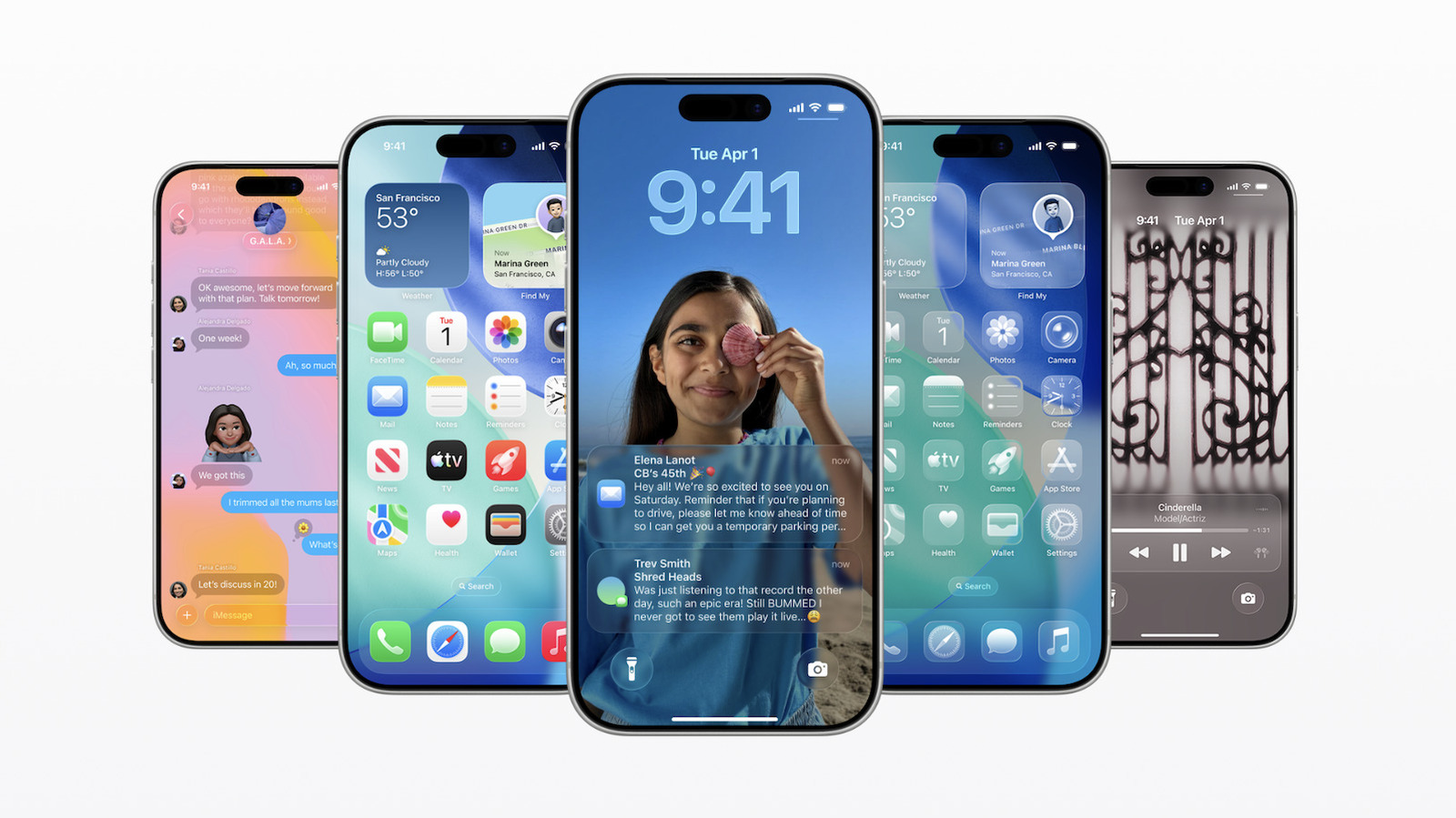
The latest test version of iOS 26.5 includes a changelog about bringing some new protections to texts. The smartphone operating system will be rolling out end-to-end encryption for RCS messages between Apple and Android devices. “End-to-end encrypted RCS messaging (beta) in Messages is available with supported carriers and will roll out over time,” is Apple’s official wording about the addition. The setting will be on by default, but Apple device owners can confirm it in Settings under the RCS Messaging menu of the Messages section once they are running iOS 26.5.

According to 9to5Google, a lock icon will appear in an iPhone user’s Messages app when chats to an Android device are taking advantage of the encryption. On the Android side, the Google Messages chats to iOS devices will look the same way they do when messaging another user (or users) with encrypted RCS.

Advertisement

Apple added the option for RCS messaging as part of iOS 18. The GSM Association, which operates the RCS protocol, added support for E2EE between the operating systems last year. At the time, Apple said it would bring the added security layer “in future software updates” that seem to have finally arrived. The tech company began testing this tech back in February as part of iOS 26.4, although Apple specified that it did not plan to officially roll out the encryption feature with that launch. More protections to keep communications private is pretty much always a good thing to see, so that’s a welcome addition to what might otherwise be a more incremental iOS 26.5 update.


Advertisement

Source link

Continue Reading

Trending

Copyright © 2025