Tech
This is a 3D-Printed Macintosh That Apple Never Built

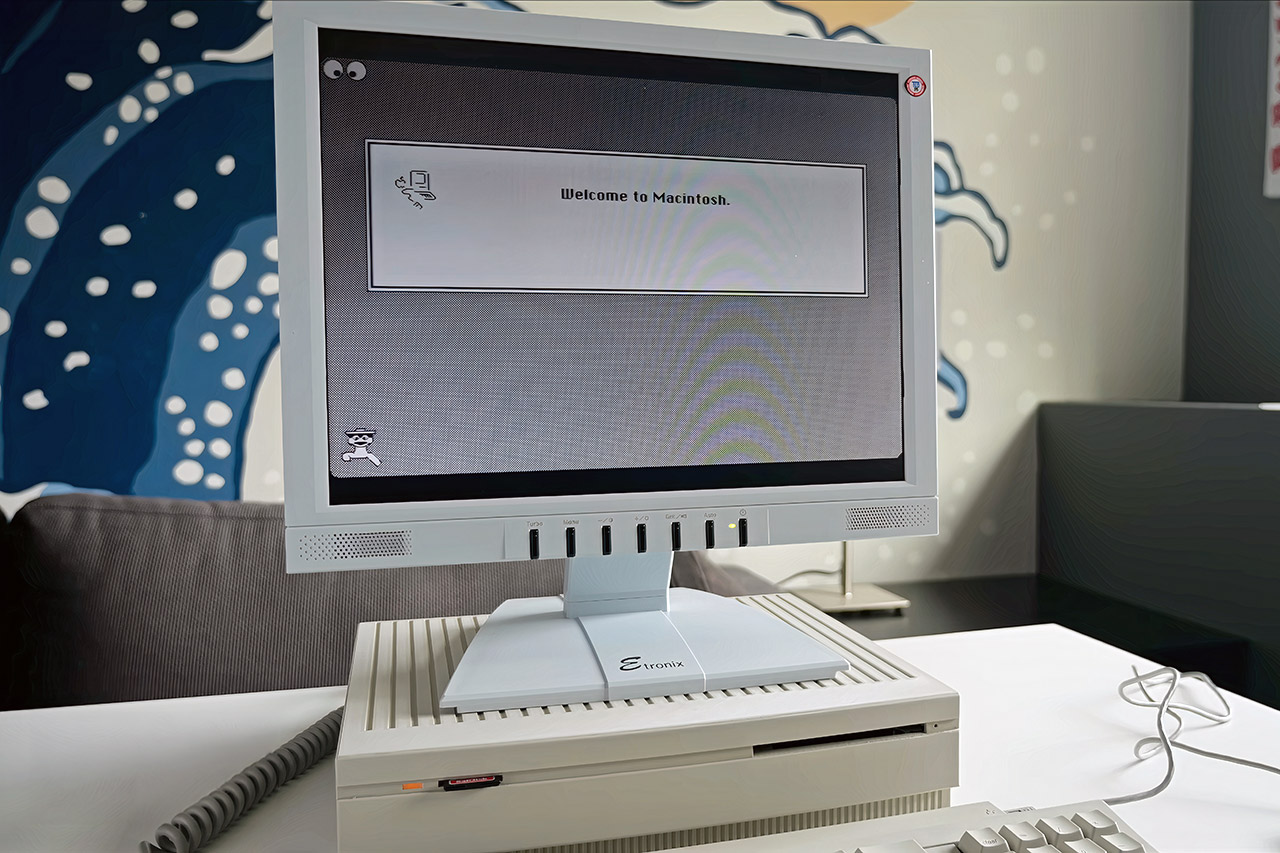
An old Macintosh SE motherboard was sitting in a workshop gathering dust when its owner had a change of heart. Flipping through some early 90s magazines and a book that This Does Not Compute had held onto for decades, he found himself reading about mail order Mac builds that hobbyists had been quietly assembling from catalog parts, earning the nickname Cat Macs for exactly that reason. They offered a way to get into Apple hardware without paying full retail, and the idea stuck with him. This time around he would do something similar, but with a 3D printer doing the heavy lifting.


A community designer named GutBomb had already created a compact case designed to fit the SE motherboard, broken into pieces manageable enough for most printers to handle while still fitting everything neatly inside. The timing worked out well, as a new Prusa Core One L printer arrived just when it was needed, with a bed large enough to print the main top and bottom sections in single runs of around ten hours each. Once assembled, the seams all but disappeared and the lines matched the curves and vents of the original Mac with surprising accuracy.
Sale


FLASHFORGE Adventurer 5M 3D Printer with Fully Auto Leveling, Max 600mm/s High Speed Printing, 280°C…
- One-Click Automatic Printing: Experience hassle-free 3D printing with the Adventurer 5M Series. Enjoy automatic bed leveling for flawless first…
- 12X Ultra Fast Printing: Featuring a CoreXY structure with 600mm/s travel speed and 20000mm/s² acceleration, the AD5M maximizes efficiency, reduces…
- Smart and Efficient Design: Quick 3-second nozzle changes, a high-flow 32mm³/s nozzle, and fast 35-second warm-up to 200°C deliver stable high-speed…
Getting the color correct matters more than you might think. The idea was to replicate the exact beige of the first Macs, rather than the brilliant white or yellowed tone that can detract from a retro design. A unique provider provided exactly what was needed in the form of Retro Platinum PLA, and the printed surfaces were smooth with cleanly removed supports. Heat set inserts were installed with a soldering iron to give firm threaded points for the screws, keeping everything fastened together without placing any strain on the plastic.
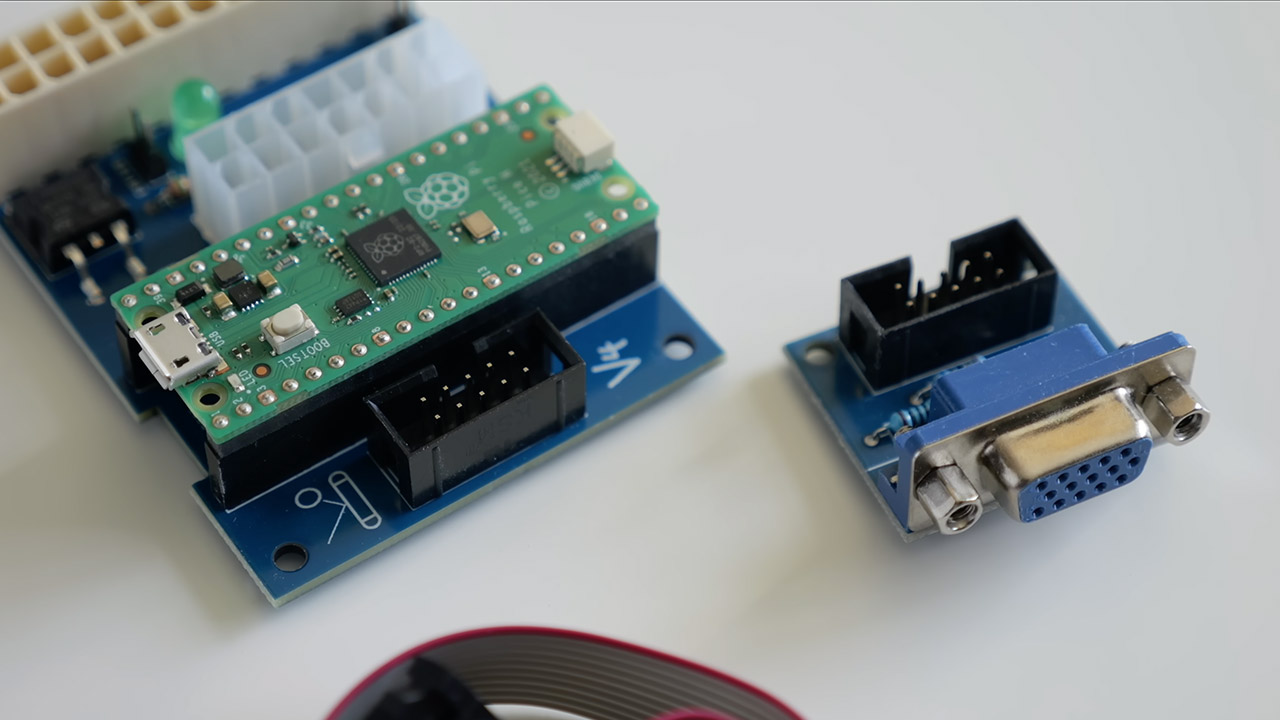
A compact adapter board from Joe’s Computer Museum, built around a Raspberry Pi Pico, handled both power and video in one unit, taking a standard ATX supply and converting the board’s video output to a clean VGA signal without eating up too much internal space. An original floppy drive and a Blue Scuzzy SD card emulator took care of storage, keeping the experience feeling authentic. Everything was cabled neatly behind a custom rear panel with ports for power, video, and the classic reset switch sitting right where you would expect them.

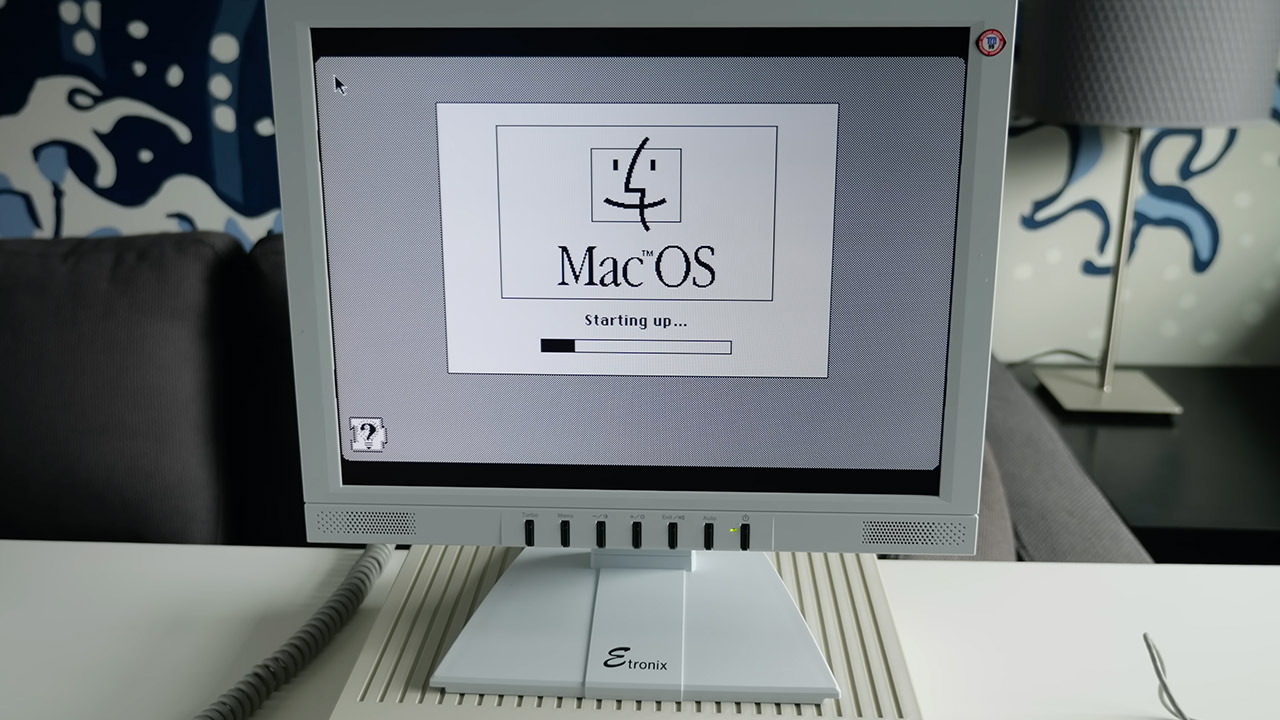
A simple 36-watt adapter provided all of the power required, and the system booted directly into System 7.0.1 after a brief change to the SD card image. Four megabytes of RAM was more than enough to run old games like Shufflepuck Cafe on a 15-inch LCD monitor, and it worked flawlessly. The video output was a pristine 1024 by 768 resolution, double the original Mac’s native output, which kept the interface clear and readable. The beige of the printed shell and the white of the monitor blended in nicely without clashing, which was a relief given how important color balance is on a retro build.
You must be logged in to post a comment Login