The Bugatti W16 Mistral ‘La Perle Rare’, the last of a vanishing breed, marks the end of an era defined by raw mechanical power and an obsessive quest of perfection. There are only 99 of these Mistrals in total, and each starts at over €5 million. ‘La Perle Rare’, on the other hand, is a handmade unique that will cost a little more than $8-9 million.
It all began at the 2023 Pebble Beach Concours d’Elegance, when a client commissioned Bugatti to produce something absolutely special. Over time, the client and Jascha Straub, the guy in charge of Bugatti’s bespoke business, came up with proposals ranging from a silver tint to numerous shades of white before settling on something that seemed to capture the essence of light. The project began in August 2023, and we can safely assume that the designers in Berlin and engineers in Molsheim worked long hours on it.
HIGH SPEED THRILLS – Kids construct an authentic race car with the LEGO Technic Bugatti Chiron Pur Sport Hypercar (42222) building toy for boys and…
REALISTIC FEATURES & FUNCTIONS – Young builders can steer using the knob on top, explore the W16 engine, and open the doors and hood to discover…
VIBRANT BUGATTI DESIGN – This hypercar model features the eye-catching orange bodywork and black design inspired by the real Bugatti Chiron Pur…
The exterior of ‘La Perle Rare’ is a true show-stopper, with a two-tone color scheme that separates the vehicle into two distinct areas. The top area is a warm color tinged with gold and iridescence, as well as a sprinkle of metallic particles that sparkle beautifully. The second part is a sophisticated, warm white color. Getting the separating lines between the colors just right required a lot of precision. Even the wheels received special treatment, resulting in stunning diamond-cut rims painted in the interior color of the vehicle, which is an understatement given that the wheels are coated in a custom paint combination that matches the exact colors of gold and white. The end result is a car that shines like a rare gem while maintaining the original Mistral design.
Rembrandt Bugatti’s famed Dancing Elephant sculpture is featured in a few of the car’s more subtle details, like the gear selector, body panels behind the front wheels, and even the headrests. To add a personal touch, the name ‘La Perle Rare’ is stitched in the center tunnel, stamped on the engine cover, and painted on the active rear wing. These little details return the automobile to Bugatti’s artistic roots.
Inside ‘La Perle Rare,’ the cabin takes on an entirely new level of brightness, a luminous continuation of the outer motif that is difficult to describe. Every visible piece of carbon fibre has been coated white to give it a jewel-like appearance. Door panels feature alternating white and warm gold lines that look lovely on their sculpted, concave surfaces. The ambient lighting has just the right amount of warmth to it, highlighting the interplay between light and material. The steering wheel, center console clocks, and door handles are all machined and polished aluminum, with each meant to catch reflections in a particularly stunning way.
The power comes from the same quad-turbocharged 8.0-litre W16 engine found in all Mistrals. It’s not exactly small in any way, with 1,579 horsepower and 1,600 Nm of torque, it can go from 0 to 62 in 2.4 seconds, 0 to 124 in 5.6 seconds, and 0 to 186 in 12.1 seconds, and all of that power is sent to all four wheels via a seven-speed dual clutch transmission. Top speed? The record for the fastest open-top production car is already in the records, 282 mph and all, thanks to this car, but, for obvious reasons, you won’t be able to get it up to that sort of speed on the road, closer to 236 mph if you want to play it safe. [Source]
In this week’s “Reboot” column, the Apple Experience is a supply chain play, mini versions of old Macs are cute, and Godzilla’s drone show record.
Godzilla in drones and a pair of mini Macs
Reboot is a new weekly column covering some of the lighter stories within the Apple reality distortion field from the past seven days. All to get the next week underway with a good first step. This week, we saw Apple Store closures due to the Iran attacks, regulatory action in Brazil and Spain, Taiwan invasion fears, and more age verification shenanigans. At least next week will distract us with product launches. Continue Reading on AppleInsider | Discuss on our Forums
Prediction market users have made — and profited from — big bets around the bombing of Iran by the U.S. and Israeli military.
On Polymarket, $529 million was traded on contracts tied to the timing of the attack, according to Bloomberg. An analysis by analytics firm Bubblemaps SA found that six newly-created accounts made a profit of $1 million by correctly betting that the U.S. would strike Iran by February 28 — behavior that could indicate insider trading.
The bets might merely reflect broader speculation about U.S. intentions in Iran, but Bubblemaps CEO Nicolas Vaiman said the circulation of information “involving war or conflict,” coupled with Polymarket’s anonymity, “can create incentives for informed participants to act early.”
Back in January, analytics firm Polysights also noted an apparent spike in bets around the likelihood that Iran’s now-deceased Supreme Leader Ali Khamenei would no longer hold that role by the end of March.
Advertisement
Responding to concerns that such bets might essentially place a financial incentive on assassination, Kalshi CEO Tarek Mansour said, “We don’t list markets directly tied to death. When there are markets where potential outcomes involve death, we design the rules to prevent people from profiting from death.” He added that Kalshi would reimburse all fees from these bets.
When it comes to choosing the right power tool brand, pros and DIYers alike typically want reliability as well as versatility. That’s why Ryobi is a go-to brand, thanks to a selection of tools that do more than just one job. But when it comes to Ryobi’s electrostatic sprayers, it can be tricky to figure out what these tools do and whether or not they’re safe. But the truth is that these sprayers are pretty straightforward, as they can be used to both clean and sanitize.
In fact, the Ryobi 18V One+ 1/2 gallon electrostatic sprayer allows you to apply everything from disinfectants to herbicides, insecticides, and other lawn-safe chemicals. The liquid is stored in a tank, and using electrostatic technology, it’s transformed into droplets so you can spray large areas. There’s even an adjustable nozzle so you can control the size of the droplet for even wider coverage from longer distances. To stay safe when using the sprayer, wear proper protective gear like gloves, safety glasses, and a mask if necessary.
Advertisement
When it comes to other types of liquids you can use, Ryobi explicitly warns against flammable substances like gasoline. Bleach, hydrogen peroxide, and alcohol-based or abrasive chemicals shouldn’t be used either. Be sure you check a chemical’s label for any important directions as some liquids can actually damage the sprayer or cause potential injury. When you’re done with the sprayer, empty the tank and don’t leave any chemical residue inside. Be sure it’s cleaned before storing.
Advertisement
Important details about the Ryobi electrostatic sprayer
If you’re wondering whether Ryobi’s electrostatic sprayer is worth buying, beware that while it’s good for several different uses, painting is not one of them. Though the company doesn’t specifically address this in product descriptions, a Ryobi representative confirmed as much in a reply to a user review for the 18V One+ 15oz Tank Handheld Sprayer on Ryobi’s site. Plus, since many paints are flammable or not water-soluble, it’s not a good idea to use them in any Ryobi electrostatic sprayer.
The Ryobi sprayer will come in handy for flipping houses, but it’s important to know that the electrostatic tech alone doesn’t guarantee a full wrap-around on every surface. According to a study from the EPA, maintaining wet contact time is an important factor, especially when disinfecting surfaces. Droplet size and how they’re dispersed directly impacts this. That means Ryobi’s adjustable nozzles give you a better chance of properly coating a surface when spraying.
Pro Tool Reviews put the Ryobi 18V Electrostatic Sprayer to the test and found that it does indeed cover surfaces as advertised. However, in those tests, what came out was more of a wet spray and not the fine mist you might expect. But the sprayer did perform well and was considered to be a better alternative to physically cleaning surfaces by hand. ExitCleanup reviewed the backpack version of the sprayer and determined that the tech was very effective. Though priming time and hose length were both longer than expected, no performance issues were detailed.
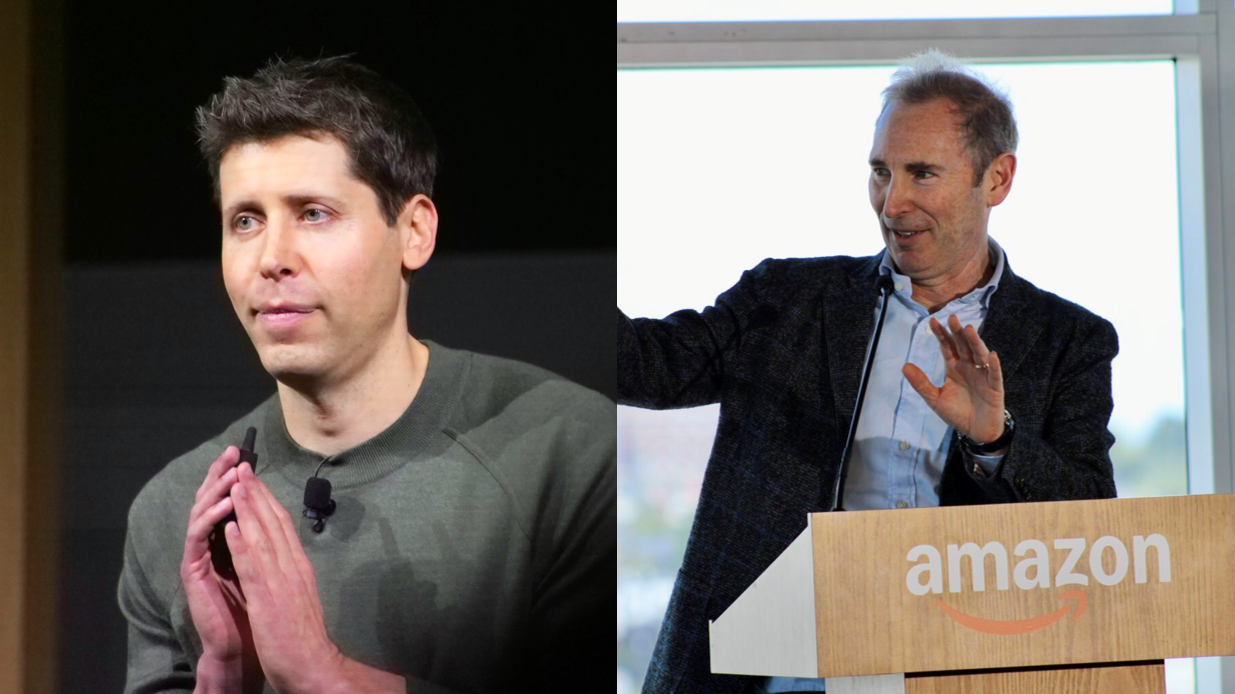
OpenAI CEO Sam Altman, left, and Amazon CEO Andy Jassy announced a multi-year strategic partnership on Friday that includes a $50 billion investment from Amazon into the AI company. (GeekWire File Photos)
Amazon’s OpenAI investment and cloud partnership made big headlines Friday, but the mechanics of the deal — including how the money flows, what triggers the payments, and what happens if things go sideways — are buried in SEC filings that tell a more complicated story.
Here’s how it works, what the filings say, and what they’re still keeping under wraps.
The money: Amazon is investing up to $50 billion in OpenAI, in two stages.
$15 billion in OpenAI Series C Preferred Stock, due March 31.
A $35 billion commitment that comes later, with the timing dependent on a series of triggers. (The filing puts the exact figure at $34,999,999,447.98. The share price didn’t divide evenly into $35 billion, leaving it $552.02 short. Every penny counts!)
It’s part of a larger funding round: OpenAI raised $110 billion total at a $730 billion pre-money valuation, with SoftBank and Nvidia each contributing $30 billion alongside Amazon’s $50 billion. OpenAI said additional financial investors are expected to join as the round progresses.
Microsoft, OpenAI’s largest existing investor, has not yet participated in the round. CNBC reported that Microsoft still has an option to join. Microsoft and OpenAI put out a joint statement saying their partnership remains unchanged. (More on that below.)
Microsoft did, however, invest $5 billion in Anthropic last year, so with the latest deals, both Seattle-area tech giants now have their own stakes in the makers of Claude and ChatGPT.
Advertisement
The triggers: Amazon can buy its remaining shares whenever it wants, at its discretion, according to the filings. But two events can force its hand, requiring the additional investment.
A “Mandatory Funding Event” that requires Amazon to buy all remaining shares within five business days. The filing doesn’t disclose the milestone. The definition is redacted.
An initial public offering by OpenAI. If OpenAI notifies Amazon after filing for an IPO confidentially with the SEC, Amazon must buy every remaining share. It gets four weeks from the notice or five business days after the public S-1, whichever is later.
OpenAI CEO Sam Altman, talking about the deal in a joint appearance with Amazon CEO Andy Jassy on CNBC on Friday, said OpenAI is “open to going public at the right time.”
The form of the investment could also change. If Amazon buys its remaining shares before an IPO, it gets Series C Preferred Stock. If the purchase happens after OpenAI goes public, the filing says Amazon receives common stock instead.
The expiration date: The equity commitment expires Dec. 31, 2028. If the triggers haven’t happened and Amazon hasn’t invested the full amount by then, the obligation ends.
If either side fails to meet its obligations under the equity agreement, monetary damages are capped at the unfunded commitment amount. Each company has the right to seek a court order forcing the other to follow through. Both sides waived their right to a jury trial.
Advertisement
The underlying cloud deal: The equity is only part of the arrangement. On the same day, Amazon and OpenAI signed a Joint Collaboration Agreement (JCA) and a cloud services deal, both of which are referenced but not included in the public filings. OpenAI already had a $38 billion multi-year agreement with AWS. This expands it by $100 billion over eight years.
The cloud services agreement includes a commitment by OpenAI to consume 2 gigawatts of Trainium capacity through AWS. Gigawatts measure power draw, and serve as a proxy for the scale of computing involved. For reference, a large nuclear power plant produces about 1 gigawatt.
Trainium is Amazon’s custom AI chip, designed as a lower-cost alternative to Nvidia’s GPUs. Anthropic is already training its next version of Claude on Trainium, according to Jassy, making OpenAI the second major AI lab to commit to the chip.
Amazon and OpenAI are also co-building a Stateful Runtime Environment, powered by OpenAI models, that will run in Amazon Bedrock, AWS’s AI model platform. This runtime environment will let AI agents maintain context, remember prior work, and act across multiple systems over time. OpenAI says it will launch in the next few months.
Advertisement
The filing doesn’t mention Amazon Alexa specifically, but the press release says OpenAI will develop “customized models available to power Amazon’s customer-facing applications,” supplementing Amazon’s own Nova family of AI models.
The equity investment and cloud partnership deals are contractually linked. If the Joint Collaboration Agreement terminates, the additional $35 billion equity commitment dies with it. But because the JCA isn’t public, we don’t know how it could be terminated.
OpenAI and Amazon have been talking for years: The filing references a mutual nondisclosure agreement dated May 23, 2023. That’s nearly three years before Friday’s announcement, and four months before Amazon’s first $4 billion investment in Anthropic.
One reason they probably didn’t do a deal sooner: Microsoft had a right of first refusal to be OpenAI’s compute provider, and OpenAI couldn’t jointly develop products with third parties.
Advertisement
Those restrictions were loosened in October 2025, when Microsoft and OpenAI announced a restructured partnership agreement that included new provisions allowing OpenAI to jointly develop products with third parties and removing Microsoft’s right of first refusal on compute.
In exchange, OpenAI committed to purchase an additional $250 billion in Azure services.
In their joint interview Friday, Jassy told CNBC that he and Altman had been talking “for a while” and that the OpenAI partnership was already in Amazon’s projections when the company announced plans for $200 billion in capital spending this year.
What’s hidden: The filing is heavily redacted. Key deal terms left out include: the milestone that could require Amazon to invest the remaining $35 billion on five business days’ notice; events that could terminate the $35 billion investment obligation; what constitutes a material breach of the deal; and the conditions to be satisfied before Amazon buys additional shares.
Advertisement
The Verge and others have speculated that the redacted milestones may be tied to OpenAI achieving artificial general intelligence, or AGI, a loosely defined threshold at which AI systems can match or exceed human-level reasoning across a wide range of tasks.
An AGI clause exists in Microsoft’s OpenAI deal. But Altman signaled that’s not the case here. “We’re not doing new deals that stop when AGI gets reached,” he told CNBC.
What about Microsoft? OpenAI and Microsoft put out a joint statement of their own on Friday, coinciding with OpenAI’s funding news, saying that Microsoft Azure remains the exclusive cloud provider for stateless OpenAI application programming interfaces.
Stateless refers to a useful but basic building block, where an application sends a prompt, gets a response, and the connection ends. That’s in contrast with stateful APIs, more sophisticated connections that maintain context and memory across multiple interactions.
Advertisement
Microsoft also keeps its exclusive license to OpenAI’s intellectual property, which powers Copilot, Bing, and the Azure OpenAI Service. Under the existing partnership, Microsoft receives a share of OpenAI’s revenue. That arrangement is unchanged, and it includes revenue from OpenAI’s partnerships with other cloud providers.
The joint Microsoft-OpenAI statement said, “Collaborations like the partnership between OpenAI and Amazon were always contemplated under our agreements and Microsoft is excited to see what they build together.”
OpenAI’s own products, including Frontier, still run on Azure. Frontier is OpenAI’s enterprise platform for building, deploying, and managing teams of AI agents.
AWS becomes the exclusive third-party cloud distributor for Frontier, meaning enterprises that want to access it through a cloud provider other than OpenAI go through Amazon. But the product itself remains hosted on Microsoft’s infrastructure.
Advertisement
Bottom line: The era of exclusive AI relationships is over. Microsoft keeps the core API business, the intellectual property license, and the revenue share. Amazon gets the Stateful Runtime Environment, the Trainium workloads, and third-party Frontier distribution.
Both companies are investing in Anthropic. OpenAI is getting investment from everyone. The biggest players in AI are no longer just picking partners, they’re playing all sides.
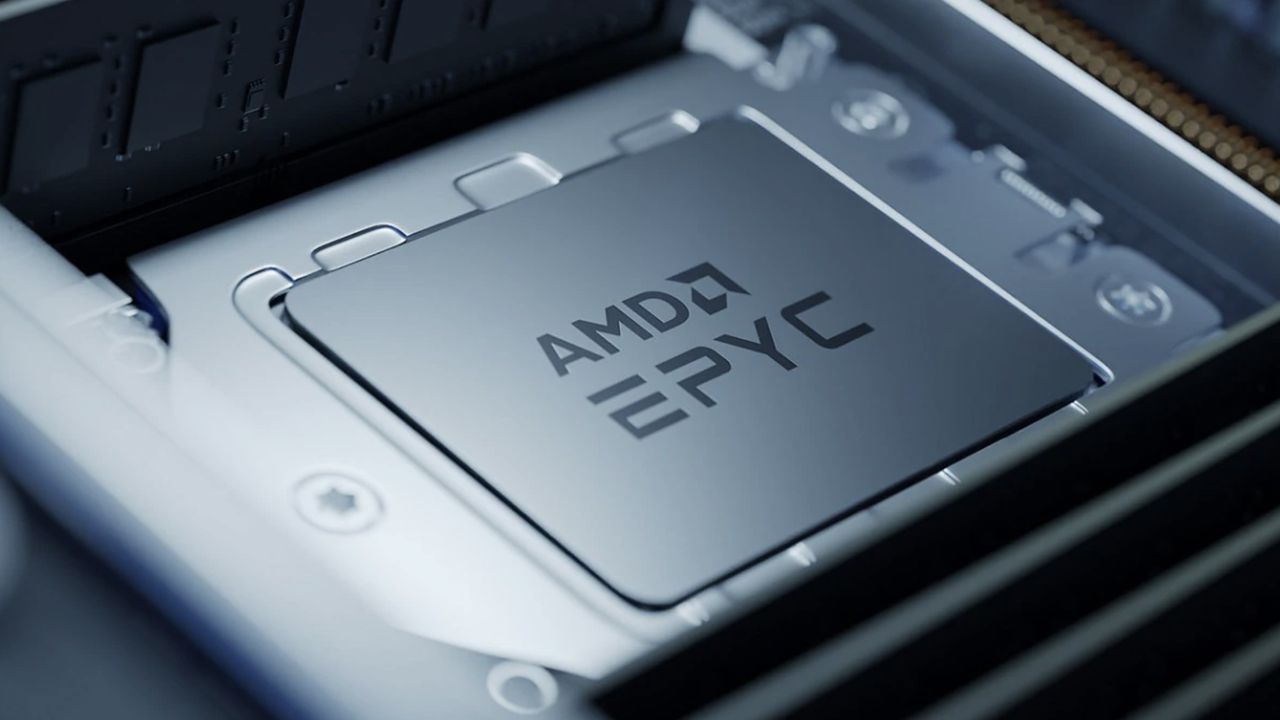
AMD has introduced its latest 8005-series Epyc processors, codenamed Sorano, with a clear focus on telecom and edge infrastructure.
The new chips raise core counts to as many as 84 Zen 5 cores, marking a notable jump from the earlier Siena generation.
Its power consumption is rated at up to 225 watts, while lower thermal envelopes may follow based on previous designs.
Expanding the Zen 5 Epyc lineup for edge workloads
Sorano is built for virtualized radio access network deployments, where operators increasingly rely on standard server hardware instead of proprietary systems.
In this environment, both CPU throughput and predictable latency matter more than peak clock speed.
AMD says the architecture includes a full 512-bit data path for vector instructions, reflecting broader Zen 5 changes already disclosed by the company.
Advertisement
A central claim around Sorano involves improvements to low-density parity check decoding, a core requirement in 5G networks.
Sign up to the TechRadar Pro newsletter to get all the top news, opinion, features and guidance your business needs to succeed!
According to AMD, greater efficiency in LDPC handling allows operators to free compute capacity for additional Layer 1 and Layer 2 processing, which could translate into more network functions running per server inside a data center or edge facility. The company is also emphasizing energy efficiency alongside higher core density.
If Sorano mirrors Siena’s lower power variants, telecom operators may see configurations under 100 watts for specific deployments.
Advertisement
In edge scenarios, where thermal limits and environmental tolerances are stricter, the balance between performance and consumption carries financial implications.
AMD’s latest move does not occur in isolation. Intel continues to develop its own telecom-focused processors, including the Xeon 6E and Xeon 6 SoC lines.
The Xeon 6700E can scale up to 144 efficiency cores, trading advanced instruction features for density and lower power draw.
Advertisement
Meanwhile, the Xeon 6 SoC integrates accelerators aimed at vRAN workloads, alongside high-speed networking and support for AI and media tasks often handled by a GPU in broader deployments.
Companies such as Ericsson and Nokia continue to deploy Intel-based platforms in commercial networks, showing that long-term partnerships still influence procurement decisions.
AMD will need to show measurable gains beyond core counts to shift entrenched vendor relationships.
Sorano may represent the last major Zen 5 Epyc release before the arrival of Venice, AMD’s next-generation server CPU planned for 2026.
Advertisement
Whether this iteration materially changes telecom infrastructure economics remains uncertain — core increases alone rarely determine purchasing cycles in a conservative industry.
Engadget reports:
In a lengthy post on Truth Social on February 27, President Trump ordered all federal agencies to “immediately cease all use of Anthropic’s technology” following strongdisagreements between the Department of Defense and the AI company. A few hours later, the U.S. conducted a major air attack on Iran with the help of Anthropic’s AI tools, according to a report from The Wall Street Journal.
Even Trump’s post noted there would be a six-month phase-out for Anthropic’s technology (adding that Anthropic “better get their act together, and be helpful during this phase out period, or I will use the Full Power of the Presidency to make them comply, with major civil and criminal consequences to follow.”)
Fish are popular animals to keep as pets, and for good reason. They’re relatively low maintenance, relaxing to watch, and have a high aesthetic appeal. But for all their upsides, they aren’t quite as companionable as a dog or a cat. Although some fish can do limited walking or flying, these aren’t generally kept as pets and would still need considerable help navigating the terrestrial world. To that end, [Everything is Hacked] built a fish tank that allows his fish to move around on their own. We presume he’s heard the old joke about two fish in a tank. One says, “Do you know how to drive this thing?”
The first prototype of this “fish tank” is actually built on a tracked vehicle with differential steering, on which the fish tank would sit. But after building a basic, driveable machine, the realities of fish ownership set in. The fish with the smallest tank needs is a betta fish, but even that sort of fish needs much more space than would easily fit on a robotics platform. So [Everything is Hacked] set up a complete ecosystem for his new pet, making the passenger vehicle a secondary tank.
The new fish’s name is [Carrot], named after the carrots that [Everything is Hacked] used to test the computer vision system that would track the fish’s movements and use them to control the mobile fish tank. There was some configuration needed to ensure that when this feisty fish swam in circles, the tank didn’t spin around uncontrollably, but eventually he was able to get it working in an “arena” where [Carrot] could drive towards some favorite items he might like to interact with. Mostly, though, he drove his tank to investigate the other fish in the area.
The ultimate goal was for [Everything is Hacked] to take his fish on a walk, though, so he set about training [Carrot] to respond to visual cues and swim towards them. In theory, this would have allowed him to be followed by his fish tank, but a test at a local grocery did not go as smoothly as hoped. Still, it’s an interesting project that pushes the boundaries of pet ownership much like other fish-driving projects we’ve seen.
The analysis company’s Commodities at Sea monitoring also recorded outbound oil and product flows averaging about 20.4 million barrels per day in February to date, slightly below January levels—evidence that geopolitical tension alone can slow shipments before any physical disruption occurs.
“Hormuz risk is not only about closure but also fleet productivity. If Iran escalates by seizing tankers or using drones to threaten commercial traffic, voyage times and possibly costs for Middle East oil exports would further increase,” S&P Global CERA analysts said.
Multiple shipping companies have already reported that they are avoiding the Strait of Hormuz and expect delays and rescheduling of shipments.
What Would Closing the Strait Mean?
There is no alternative export system at comparable scale. Saudi Arabia and the UAE operate bypass pipelines, but these cover only a portion of Gulf flows, while Iraq, Kuwait, and Qatar lack meaningful alternatives.
Advertisement
If the strait formally closed, most oil exports from the Gulf would be cut off from the world almost immediately. Even if Saudi Arabia and the UAE pushed their alternative pipelines to the limit, analysts say about two-thirds of Gulf exports would still be stuck.
LNG markets would also be hit. Qatar, the world’s largest exporter of liquefied natural gas—a super-cooled form of natural gas shipped by tanker—depends almost entirely on the Strait of Hormuz to export its fuel.
If the route were blocked, Asian buyers could lose their key suppliers within days. Asian economies such as Japan, South Korea, China, and India depend heavily on imported LNG to generate electricity.
Getting oil from elsewhere, like the Atlantic, would mean longer shipping times and higher costs, potentially pushing prices even higher.
If that happens, the effects would likely reach global consumers quickly: higher gas prices, more expensive airline tickets, and rising transport costs that feed into the price of food and goods.
Financial markets typically react even before physical shortages appear, with oil futures rising, transport-sector equities weakening, and currencies of major energy exporters strengthening as traders price in the risk of disruption.
Strategic petroleum reserves could moderate the shock, but releases take time and cannot fully substitute for Gulf crude grades.
Advertisement
Inside the Gulf, stopping exports would quickly strain government finances. Countries such as Iraq, Kuwait, and Qatar rely heavily on oil revenues to fund public spending. If shipments halted, storage facilities could fill rapidly, forcing producers to cut output and lose income.
Shipping effects would extend beyond oil. Tanker rerouting, insurance repricing, and naval risk zones tend to raise freight rates across bulk commodities and container shipping, impacting worldwide logistics.
On a warm fall afternoon at Walt Disney Studios in Burbank, California, a gentle breeze blows through the meticulously landscaped trees lining the walkways. A ray of sunshine hits the famed Team Disney building, where 19-foot-tall stone carvings of the seven dwarfs of Snow White fame hold up the roof.
The renowned sculptural architecture is a nod to the film that helped build the Disney empire. And just across the lot, inside Disney’s Main Street Cinema, the entertainment giant is exploring ways to preserve that legacy with the help of technology, such as artificial intelligence. Four startups are gathered in the theater to present their technology to a crowd of executives and media attendees. One startup, Animaj, is demonstrating how it uses AI to accelerate the animating process.
Brightly colored, blobby figures prance and bound across a wide screen in front of me, characters from a children’s YouTube series called Pocoyo. Animaj — selected by Disney as one of its 2025 cohort of startups to finance, platform and mentor via the Disney Accelerator Program — is now using human artists and AI to produce these shorts, allowing it to bring the series to screens quickly.
Advertisement
“Thanks to this tool, it takes less than five weeks to produce a 5-minute-long episode, whereas it used to take five months,” Animaj CEO and co-founder Sixte de Vauplane tells me, speaking in front of the company’s demo space after the presentation.
CNET
That dramatic acceleration of a traditionally painstaking process flows directly from the rapid advances in generative AI in the past several years, and those advances aren’t just for professionals: AI-powered video-generating tools surged into the mainstream in 2025. Google’s Veo 3 and OpenAI’s Sora 2 now allow anyone to create a cartoon animation from the comfort of their phone, without any sketching experience or even artistic inclination required. The use of generative AI is something that Hollywood is fighting to keep at bay, lest it take jobs away from human artists.
But Animaj says that its technology doesn’t replace animators. It simply makes their jobs less tedious. An animator will still be sketching out each of the main poses, and then AI will be used to fill in all the in-between movements of the character that move them from A to Z. And even then, the company says, an animator is in control of tweaking those AI-generated movements.
It’s an interesting perspective when I think about the building right across from me, which houses hundreds of Disney animators. Will they see AI the same way? Disney confirmed it will soon introduce its partnership with Animaj, with the two companies in discussions around how to potentially use this AI system in animation across Disney Branded Television and Disney Television Studios.
Advertisement
“The plan is to announce something in the coming months,” says David Min, vice president of Disney Innovation.
Keeping artists centered with AI tools
Hand sketches become instant 3D animations.
Animaj
Animators will control the AI feature as another part of their digital toolkit, according to de Vauplane. The storyboarding process will remain the same as it is with more traditional computer-generated imagery, he says. The AI tool will just “bring the idea to life much faster.”
Advertisement
“The artist is in control. For us, it’s super important because we know that AI can be seen as a threat for the artist,” de Vauplane says. “We want to show that there is another way to use AI in a very ethical way.”
I reached out to the Animation Guild for comment and am still awaiting a response. But late last year, after four months of bargaining, the union representing animators was unable to include many AI safety provisions in its contract. They would not be able to avoid using AI tools if required by a job, for instance, or to opt out of having their work used to train those AI tools.
But artistic expression has a long history of evolving with technology.
Animators moved on from watercolor hand sketches — used to animate Snow White and the Seven Dwarfs and Sleeping Beauty in the 1930s and 1950s, respectively — to CGI for movies like The Little Mermaid and Aladdin in the 1980s and 1990s. It transitioned into 3D CGI with the release of Tangled and Frozen in the 2010s. Each technological innovation has sped up the animation process. So is AI simply another tool in the modern CGI toolkit, especially if it preserves the key elements of an animator’s workflow?
Advertisement
To maintain the “creator-first approach” that centers human artists — a hallmark of last century’s Walt and Roy Disney partnership — Min says that Disney looked into “pretty much all of the AI companies.”
“We looked at thousands of companies, all big and small, and what Animaj does well is that the artist is really driving the process,” he says, adding that you don’t really see this in video-generating AI apps like Sora and Veo, which read your text prompts and spit out (usually nonsensical) videos. “This is the artist drawing the key frames from A to Z, and then allowing things to be filled in in between. That’s why we selected Animaj.”
Expediting the animation process
The “motion in-betweening” feature from Animaj lets artists input main character positions, with the AI model filling in the blanks of what gets the character from standing to sitting position.
Advertisement
Animaj
Animaj’s AI tool is used to expedite the animation process. Trained only on images from the show in question, and working within the parameters of an animator’s real-time sketches, the AI tool predicts the character’s next moves — and the animator corrects it when it goes awry. This can save a lot of time: hours, weeks, months, depending on the type of animation and show being worked on.
Min says it takes much longer to make an animated series than many people understand.
“It can be like a year before you can even get a pilot of something to test out. With Animaj, they can do it in 30% of the time,” Min says. We’re standing in front of Disney’s Stage 1 building, amid a throng of Disney cast members, startup reps and other tech execs and enthusiasts. “The future of animation is a big, broad statement, but definitely this is where the future of animation is going and trending.”
Like so many media companies in the age of streaming, Disney needs to produce high-quality content at a faster rate to keep up with audience demand. Animaj also uses AI to collect data to understand what themes are trending or resonating with online audiences, and then animate episodes quickly to meet those interests while they’re current and popular.
Advertisement
Because its animation process moves so rapidly, Min says, Animaj can also test new ideas much faster.
“Not only do they have the content production AI to actually help build the animated shorts faster,” Min says, “but then they’re using AI to also read the analytics on what’s going on with the viewing of the video that can then help inform the storytelling as well.”
How does AI animation work?
Outside, sitting under a tree in the California sunshine, a Pocoyo animator sketches a character on a screen with a 3D model popping up on a screen beside it. I watch as he uses a stylus to make slight adjustments to arm and leg movements generated by the AI.
Advertisement
An animator sketches Pocoyo characters while the AI model instantly generates the sketches into 3D versions.
Corinne Reichert/CNET
“Our proprietary animation tool allows the artist, Joe sitting here, to draw a sketch and to control the animation just based on the sketch,” says Antoine Lhermitte, Animaj’s chief technology officer, as we watch the artist work. It’s a big time-saver, he adds.
Blog posts by Animaj detail how it uses AI to bring sketches to animated life, while still retaining the unique art style of an animation. The company used four seasons of Pocoyo to build a database of more than 300,000 poses, using both sketches and their corresponding 3D poses for each character that the AI model could learn from. Artists were also asked to produce more sketches of the characters to be used in the next season.
Artists can input into a 3D pose-modeling program various positions of the character, for instance, standing and then sitting. The AI model would then fill in the blanks of what gets the character from standing to sitting position, something Animaj calls “motion in-betweening.”
Advertisement
Working with the AI model, the artist makes corrections to any of the AI-generated animations, like shifting an arm or a leg to where it should be. The time savings with not having to hand-draw every single pose that comes with a character’s actions means animators can “concentrate more on refining the style and flow of scenes rather than starting from scratch with each new pose,” Animaj says.
As a result, the artists are freed up from repetitive tasks to spend more time on the creative side. At the same time, it’s enabling those artists to use an AI tool that is matched up with their working style, and not one producing text prompt-based AI slop, like all those horrific animations invading YouTube or social media, where the characters’ features change in every frame or have three tails and 17 fingers.
“We know how frustrating it can be when you use third-party AI models and you prompt something, it creates something so different than what you have in mind,” de Vauplane says. “Here, it creates something, generates something you can easily tweak…something which is fully consistent with the brand DNA.”
Preserving that Disney DNA is critical as the entertainment giant seeks to uphold its 100-year legacy while keeping pace with modern technology. As the seven dwarfs sang in the 1937 classic Snow White, which established Disney as an animation powerhouse, “Heigh ho, heigh ho, it’s off to work we go.” For tomorrow’s animators, it’s off to work with the help of AI.
More recently, Iran has been a regular adversary in cyberspace—and while it hasn’t demonstrated quite the acuity of Russia or China, Iran is “good at finding ways to maximize the impact of their capabilities,” says Jeff Greene, the former executive assistant director of cybersecurity at CISA. Iran, in particular, famously was responsible for a series of distributed-denial-of-service attacks on Wall Street institutions that worried financial markets, and its 2012 attack on Saudi Aramco and Qatar’s Rasgas marked some of the earliest destructive infrastructure cyberattacks.
Today, surely, Iran is weighing which of these tools, networks, and operatives it might press into a response—and where, exactly, that response might come. Given its history of terror campaigns and cyberattacks, there’s no reason to think that Iran’s retaliatory options are limited to missiles alone—or even to the Middle East at all.
Which leads to the biggest known unknown of all:
5. How does this end? There’s an apocryphal story about a 1970s conversation between Henry Kissinger and a Chinese leader—it’s told variously as either Mao-Tse Tung or Zhou Enlai. Asked about the legacy of the French revolution, the Chinese leader quipped, “Too soon to tell.” The story almost surely didn’t happen, but it’s useful in speaking to a larger truth particularly in societies as old as the 2,500-year-old Persian empire: History has a long tail.
Advertisement
As much as Trump (and the world) might hope that democracy breaks out in Iran this spring, the CIA’s official assessment in February was that if Khamenei was killed, he would be likely replaced with hardline figures from the Islamic Revolutionary Guard Corps. And indeed, the fact that Iran’s retaliatory strikes against other targets in the Middle East continued throughout Saturday, even after the death of many senior regime officials—including, purportedly, the defense minister—belied the hope that the government was close to collapse.
The post-World War II history of Iran has surely hinged on three moments and its intersections with American foreign policy—the 1953 CIA coup, the 1979 revolution that removed the shah, and now the 2026 US attacks that have killed its supreme leader. In his recent bestselling book King of Kings, on the fall of the shah, longtime foreign correspondent Scott Anderson writes of 1979, “If one were to make a list of that small handful of revolutions that spurred change on a truly global scale in the modern era, that caused a paradigm shift in the way the world works, to the American, French, and Russian Revolutions might be added the Iranian.”
It is hard not to think today that we are living through a moment equally important in ways that we cannot yet fathom or imagine—and that we should be especially wary of any premature celebration or declarations of success given just how far-reaching Iran’s past turmoils have been.
Defense Secretary Pete Hegseth has repeatedly bragged about how he sees the military and Trump administration’s foreign policy as sending a message to America’s adversaries: “F-A-F-O,” playing off the vulgar colloquialism. Now, though, it’s the US doing the “F-A” portion in the skies over Iran—and the long arc of Iran’s history tells us that we’re a long, long way from the “F-O” part where we understand the consequences.
Advertisement
Let us know what you think about this article. Submit a letter to the editor atmail@wired.com.