


Connect with us

Tech

This might be the first foldable where the crease doesn’t matter

Published

on

From the first foldables to the latest and greatest options in the market, from stalwarts like Samsung and Honor, there’s one consistent issue that manufacturers can’t seem to overcome: the crease.

It makes sense when you think about it; when you fold something, it deforms, and a crease appears. It’s just physics. But for some reason, we’re expecting manufacturers to somehow overcome the most fundamental of things – though, to be fair, they’ve been doing a pretty good job at it.

Compared to the grand canyon of a crease that was present on Samsung’s first Fold back in 2019, the crease on modern phones like the Galaxy Z Fold 7 and Honor’s new Magic V6 is negligible. You can barely see them head-on, and compared to flip-style foldables with a horizontal crease, the vertical crease in the middle of the screen means you rarely actually touch it.

But it’s when you inevitably have to tap or swipe around the area of the crease that it becomes more apparent – as well as trying to look at the screen side-on, thanks to the overly reflective plastic screens foldables employ. 

Advertisement

For phones whose entire schtick is focused around the big internal screen, it’s a compromise that many smartphone fans simply can’t get over – and I get it. It is a compromise on a phone that can cost easily double that of a pretty solid bar-style flagship like the Pixel 10

However, with the upcoming Oppo Find N6, the company has managed the impossible; all but erased the crease. 

Advertisement

Oppo has done the impossible with industry-first techniques

So, how has Oppo seemingly done the impossible? It all starts with the hinge – and an all-new manufacturing process Oppo has cooked up. 

Advertisement
Oppo Find N6 screenOppo Find N6 screen
Image Credit (Trusted Reviews)

Rather than just stamping out parts and calling it a day, Oppo laser-scans every hinge component to build an ultra-precise digital model, then uses a new 3D liquid printing process to smooth out microscopic imperfections. Tiny droplets of photopolymer resin are placed exactly where they’re needed, filling in gaps and irregularities before being instantly hardened with UV light.

The end result is a hinge structure that’s far smoother and more consistent than traditional stamped or machined hardware, which in turn helps the inner display sit flatter when you open it up. In fact, Oppo claims that the dip is just 0.05mm deep – thinner than a human hair – compared to the 0.2mm variation found in foldables from Samsung and Honor. 

Oppo Find N6 screenOppo Find N6 screen
Image Credit (Trusted Reviews)

Advertisement

The hardware itself has had an upgrade too. The hinge and its wing plates are now made from Grade-5 titanium alloy, making them lighter and stronger than the stainless steel used by many rivals, and allowing Oppo to use a wider waterdrop-style fold. 

That wider folding area reduces the pressure on the panel every time you close the phone, which is one of the main reasons creases form in the first place. There’s also an updated carbon fibre support plate beneath the screen to keep everything rigid without adding weight.

The display itself has also had an upgrade, with a new Auto-Smoothing Flex Glass layer that replaces the ultra-thin glass (UTG) used in most other foldables right now. It’s 50% thicker than typical UTG, which gives it greater elasticity and makes it much more eager to spring back to its original shape after being bent. 

Advertisement
Oppo Find N6 screenOppo Find N6 screen
Image Credit (Trusted Reviews)

That’s key for combating what Oppo engineers call “creep” – a slow shifting of internal layers that can deepen a crease over thousands of folds.

According to Oppo, this combination of titanium hinge, carbon fibre support and Auto-Smoothing Flex Glass delivers an 82% reduction in long-term crease depth compared to last year’s Find N5, and says the N6’s display remained essentially flat, with no visible crease, even after more than 600,000 folds, with the ability to survive up to 1 million folds.

Advertisement

More impressively, Oppo claims that after 200k folds, the crease measured just 11μm, compared to 72μm on the Samsung Galaxy Z Fold 7 and 127μm on the Honor Magic V5, proving just how effective it is compared to some of the best foldables around in 2026

Oppo Find N6 screenOppo Find N6 screen
Image Credit (Trusted Reviews)

It’s still there, but you really need to look for it

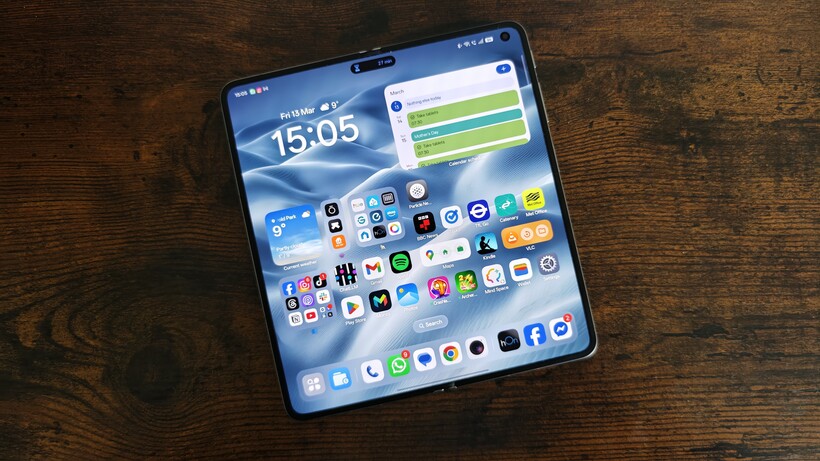
That’s a very fancy way of saying the Find N6’s internal foldable screen has practically no crease – and having used the phone for the past few weeks, I can confirm that’s largely the case.

If you really go hunting for it, the signs are still there. Angle the screen just right towards a light source and you’ll spot a subtle distortion along the middle – though only when the screen’s off – and a finger run across the hinge reveals a slight indentation.

Advertisement
Oppo Find N6 screenOppo Find N6 screen
Image Credit (Trusted Reviews)

Advertisement

But when I say slight, I really do mean slight. It’s almost imperceptible, and in day-to-day use I simply don’t notice it – aside from the odd moment when I’m actively marvelling at its absence. It has massively boosted my enjoyment of the internal panel as a result.

It really is as close to a crease-free experience as we’ve seen from any manufacturer so far, and it makes the usual foldable trade-off feel far less like a compromise. I’d be surprised if Apple’s first foldable, due later in 2026, can meaningfully beat what Oppo has managed here.

Oppo Find N6 screenOppo Find N6 screen
Image Credit (Trusted Reviews)

Much more to come next week

Of course, there’s much more to Oppo’s latest flagship foldable than just its disappearing crease, and you might’ve noticed a distinct lack of specs throughout this article – that’s very much on purpose.

Despite having had it in my pocket for the past couple of weeks, I can’t say much more about the Oppo Find N6 until the phone is officially unveiled at its launch event in China on 17 March, but it’s safe to say it’s shaping up to be one of the most exciting foldable launches of 2026.

Oppo Find N6 screenOppo Find N6 screen
Image Credit (Trusted Reviews)

Advertisement

The big question now is whether the Oppo Find N6 will actually get a global release; the Find N5 was limited to select Asian markets like Singapore, Malaysia and China, after all. If Oppo does go wider this time, it could genuinely threaten the dominance of Samsung and Honor in the foldable space – but for now, we’ll just have to wait and see.

Advertisement

Source link

Continue Reading
Click to comment

Leave a Reply

Your email address will not be published. Required fields are marked *

Tech

The Amazon Echo Dot Max has dropped to its lowest price

Published

on

Smart speakers often promise big sound in small boxes, but few actually manage to fill a room properly, which makes this latest discount on Amazon’s most powerful Echo Dot worth attention.

The Amazon Echo Dot Max is now £69.99, down from its original £99.99 retail price, making the newest generation Alexa speaker significantly more affordable for anyone building or expanding a smart home setup.

For context, the Black Friday discount came in at £89.99. That’s a mere 10% / £10 off, with this new savings dwarfing that past offer.

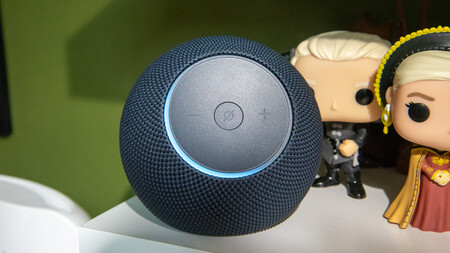
Amazon Echo Dot Max light circleAmazon Echo Dot Max light circle

Amazon Echo Dot Max drops to its lowest price ever

The Amazon Echo Dot Max has hit its lowest price on record, turning this powerful little smart speaker into one of today’s standout bargains.

Advertisement

View Deal

The 4.5-star Amazon Echo Dot Max positions itself as the most capable entry in the Echo Dot family, designed to deliver noticeably fuller audio while still keeping the compact form that fits easily on shelves, desks, or bedside tables.

Unlike smaller Echo models like Echo Dot (5th Gen) that prioritise voice assistant convenience over audio performance, this version adds a dedicated 2.5-inch woofer and a 0.8-inch tweeter, helping it produce deeper bass and clearer vocals during everyday listening.

Advertisement

Advertisement

That hardware works alongside automatic room adaptation, meaning the speaker analyses your environment and adjusts output accordingly so music remains balanced whether it sits against a wall, in a corner, or on an open surface.

Where the Amazon Echo Dot Max becomes particularly useful is in its role as a built-in smart home hub, allowing compatible lights, locks, and other devices to connect directly without needing additional bridges.

The Whatsapp LogoThe Whatsapp Logo

Get Updates Straight to Your WhatsApp

Join Now

Support for Zigbee, Matter, and Thread means the speaker can act as the central control point for many smart home ecosystems, letting users create routines, automate devices, and manage everything through Alexa voice commands.

Advertisement

That practical integration becomes especially helpful in day-to-day routines, whether dimming lights for a film night, setting temperature-based automations, or simply asking Alexa for reminders, weather updates, or quick information.

Amazon has also added its AZ3 processor to keep responses fast, while Omnisense technology enables contextual awareness features such as presence detection and temperature-based routines that can adjust your home automatically.

Advertisement

At £69.99, the Amazon Echo Dot Max makes a strong case for anyone wanting better sound and smarter home control without stepping up to a much larger or significantly more expensive smart speaker.

Advertisement

If you are considering other Alexa speakers before deciding, it is also worth checking out our Best Amazon Echo 2026 guide, where the Echo Dot Max was awarded the best budget smart speaker, and a number of them are on sale today.

Improved bass, better overall audio quality and a Zigbee/Thread smart home hub built in, the Amazon Echo Dot Max might be more expensive than its predecessor but it’s a clear upgrade. If you want the best audio quality then the Echo Studio (2025) is a better choice, while those with the old Echo (4th Generation) will find that they have slightly better audio quality. However, for new users looking for an Alexa smart speaker that’s decent for music, this is the best all-rounder – it would be nice to see Alexa+ in the UK to really maximise its capabilities, though.

Advertisement

  • Decent audio for the size

  • Full smart home hub

  • Ready for Alexa+

  • Doesn’t sound as good as the old standard Echo

SQUIRREL_PLAYLIST_10148964

Advertisement

Source link

Advertisement
Continue Reading

Tech

Brits admit they feel uneasy around robots and local data centers, revealing surprising distrust despite national technology support

Published

on


  • Over half of UK adults feel uneasy interacting with robots daily
  • Limited exposure drives anxiety, with only 30% of Britons ever meeting robots
  • Domestic robots spark the strongest reluctance, especially in home environments

More than half of British adults say they feel uneasy around robots, making the UK the most robot-anxious nation globally.

A survey by Hexagon across nine markets, involving 18,000 participants, found 52% of UK respondents were concerned about potential problems when interacting with robots.

Source link

Advertisement
Continue Reading

Tech

Nvidia GTC 2026 live coverage: All the news and updates as it happens

Published

on

Refresh

Hello from sunny San Jose! I’m here and ready for the start of Nvidia GTC 2026 tomorrow – come back then for all the build-up to the opening keynote and much more.

Please follow our community guidelines.” data-join-the-conversation-text=”Join the Conversation”>

You must confirm your public display name before commenting

Advertisement

Please logout and then login again, you will then be prompted to enter your display name.

Source link

Continue Reading

Tech

Building A Rad Bluetooth Speaker That Didn’t Really Exist

Published

on

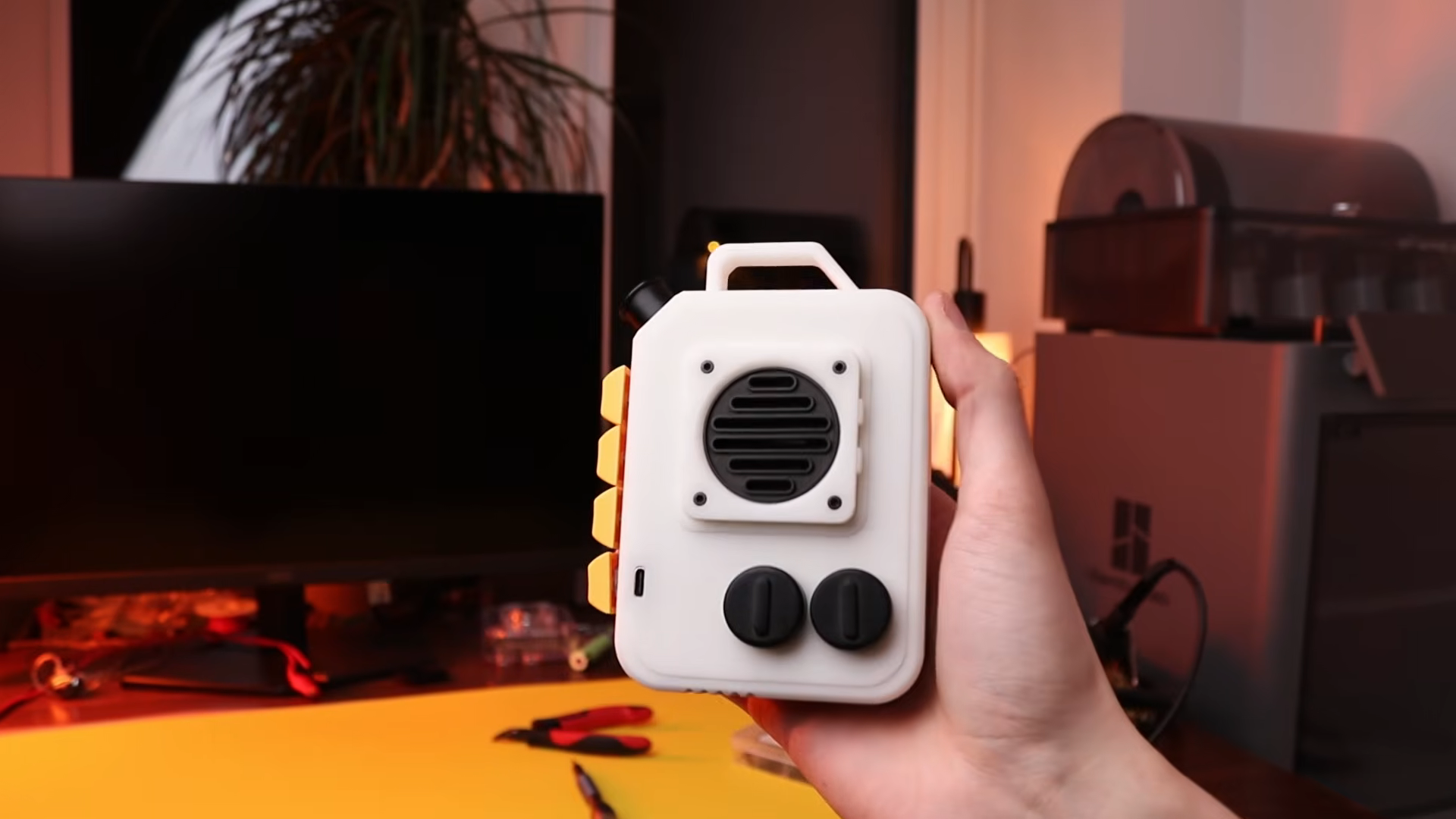
[Nick] came across an awesome Bluetooth speaker online, only, there was a problem. It didn’t really exist—it was just a render of a device that would be nice to have. Of course, there was an obvious solution—[Nick] just had to build the device for real!

The key to the aesthetic of the build is the external case. [Nick] was able to recreate the rough design of the rendered device in SolidWorks, before having the components produced on a resin 3D printer which provided excellent surface finish. Internally, the Bluetooth audio receiver was cribbed from an old pair of wireless headphones. However, a little more oomph was needed to make the speaker really usable, so [Nick] hooked the audio output up to a small MAX98306 amplifier board and a pair of 3 W speakers. The tiny tactile buttons from the headphone PCB wouldn’t do, either. For a nicer feel, [Nick] hacked in a set of four hall effect keyboard switches to control the basic functions.

The result is a Bluetooth speaker that looks as rad as the rendered unit, only you can actually take it outside and bump some tunes! It recalls us of some fine up-cycling work we’ve seen done to vintage 80s radios in a similar vibe.

Advertisement

Source link

Advertisement
Continue Reading

Tech

Like a truffle pig for deals, I’ve sniffed out the top 55+ discounts in Amazon’s new Big Smile Sale

Published

on

Refresh

Hello, Australia! And welcome to TechRadar’s live coverage of Amazon’s first big sale of the year – the Big Smile Sale.

We’ve had a few Big Smile Sales in Australia perviously, so we know a thing or two about it. It’s typically held in March — though this year the start date of Monday, March 16 is a touch earlier than 2025. It’s always been a week-long sale, so nothing new in the fact that you have until Sunday, March 22 to shop till you drop (figuratively speaking, we hope).

Don’t expect record-low prices on Amazon this time round, though — that’s typically reserved for the Amazon Prime Day sale and the Amazon Black Friday sale — but you’ll typically see about 20% to 30% off a range of items. There will be deeper discounts on select items, but it will be the rare offer that comes in at an all-time low.

Advertisement
Please follow our community guidelines.” data-join-the-conversation-text=”Join the Conversation”>

You must confirm your public display name before commenting

Advertisement

Please logout and then login again, you will then be prompted to enter your display name.

Source link

Continue Reading

Tech

Grab Amazon's first material discounts on M5 Pro & M5 Max MacBook Pros

Published

on

After discounting the new M5 MacBook Air, Amazon is back today with deals on the brand-new M5 Pro and M5 Max MacBook Pro.

Open MacBook Pro laptop with colorful glowing background and large white text across the screen reading NEW M5 PRO and M5 MAX DEALS
Save on Apple’s newest M5 Pro and M5 Max MacBook Pros – Image credit: Apple

The discounts can be found below, with units in stock and ready to ship. These are the brand-new configurations that were officially released yesterday, March 11.
While the markdowns aren’t extreme, they do reflect the lowest prices available on the retail models per our M5 Pro and M5 Max 14-inch MacBook Pro Price Guide and M5 Pro and M5 Max 16-inch MacBook Pro Price Guide.
Continue Reading on AppleInsider | Discuss on our Forums

Source link

Continue Reading

Tech

2026’s EV Sales Hit 1.1M – But Europe Surges While North America Slides

Published

on

Europe’s EV sales for January and February spiked 21% from last year, according to new data from Benchmark Mineral Intelligence. Electrek reports that just in those two months over 600,000 EVs were sold in Europe.

And figures for “rest of world” (which excludes Europe, North America, and China) are up a whopping 84% — with 370,000 EVs sold in January and February. (EVs now represent more than 30% of the vehicles sold in South Korea.)

But for the same period China’s sales are down 26% from last year, with 1.1 million vehicles sold. And North America showed an even larger drop of 36% from the January/February figures in 2025, now selling just 170,000 electric vehicles, while Canada’s EV sales were down 23%. EV sales seem heavily influenced by government incentives, with Germany and France leading Europe’s growth:


EV sales in Germany are up 26% so far this year, following the country’s introduction of a new subsidy program at the start of 2026. France’s market is up 30%, supported by its existing incentive program.

Advertisement

Italy is also seeing rapid growth. EV sales there jumped 23% month-over-month in February, making it the country’s strongest month ever for EV sales. The Italian market is now up 98% year to date. That surge follows the Italian government’s October 2025 launch of a new subsidy program, funded by the EU’s Recovery and Resilience Facility, to increase EV adoption. Households can receive up to €11,000 ($12,700) in incentives, while smaller businesses can get up to €20,000 ($23,200)…

[T]he global EV transition isn’t slowing, but it’s becoming much more uneven depending on policy, incentives, and trade rules.

Source link

Advertisement
Continue Reading

Tech

Brompton Electric T-Line Folding Electric Bicycle Review: Pocket-Sized Pedal Power

Published

on

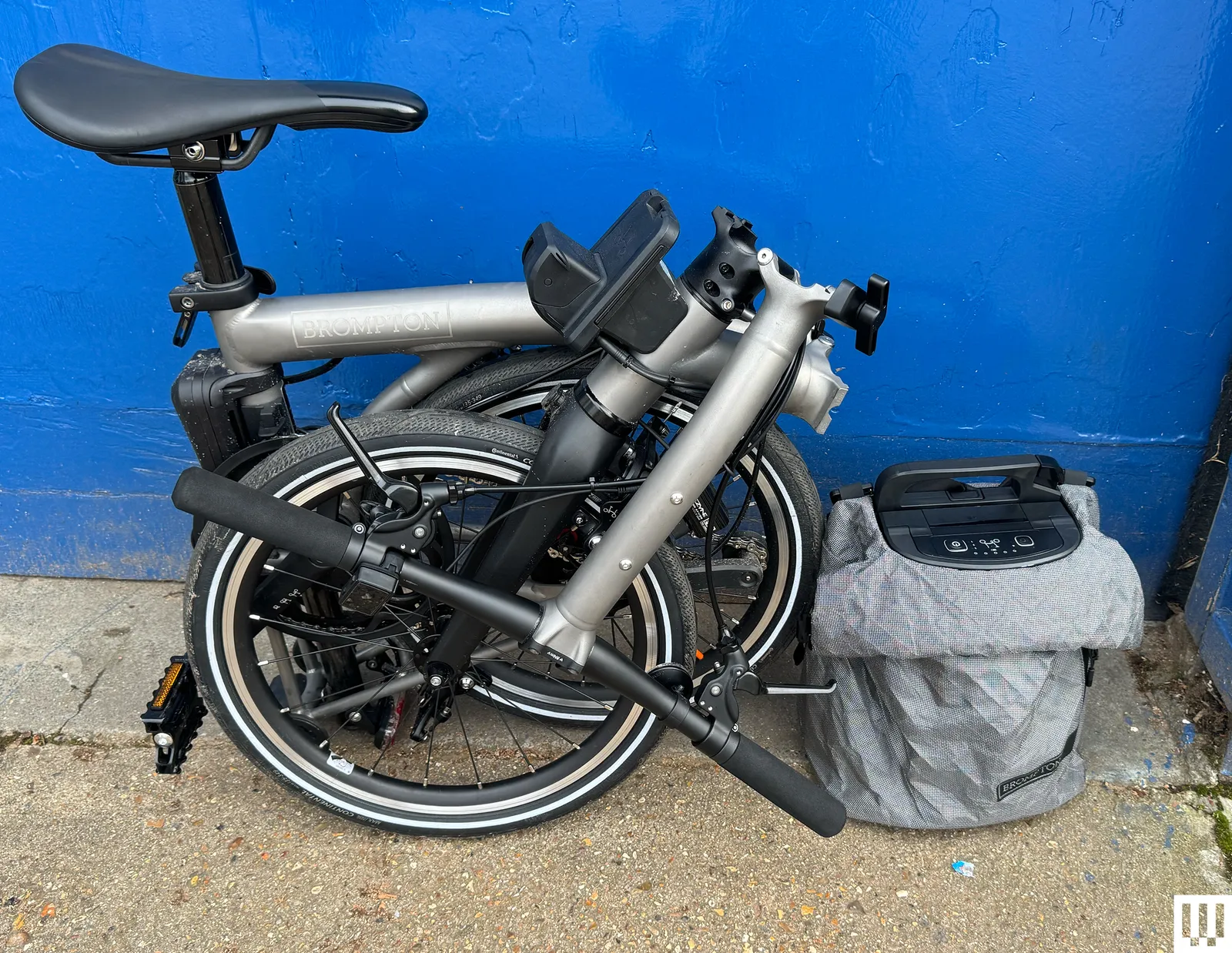
Disappointingly, Brompton hasn’t given the T Line Electric any more speed for US-based riders, so I’m afraid you’re limited to the UK speed limit of 15.5 mph instead of the Class 1 pedal assist maximum of 20 mph.

I first came across the e-Motiq system in 2024, when I tested the larger 20-inch Brompton G Line. This powerful rear-mounted motor, which can hit 20 mph, offered a more stable ride compared to the front-mounted design, and being pushed definitely feels more natural than being pulled along. The redesign also keeps the weight at the rear, so the folding mechanism remains balanced.

There are three power-assist levels available here, plus Push Assist (more on that below), and the e-Motiq system also adjusts based on your own riding style. It monitors pedal force and cadence. How often you stop and start and over your first 62 miles on the bike tweaks how the power is used. This isn’t to eke out out extra mileage, but to make your ride smoother and more natural.

During testing, I barely noticed any changes as I racked up the miles, but I was seriously impressed by how normal the bike felt. Well, normal for a marginally wobbly upright design with tiny 16-inch wheels. Yes, there was a surge of power as I started to pedal, but the initial acceleration was controlled. It felt more like I’d supercharged my legs, rather than strapped a motor to my bike.

Advertisement

My test bike was single-speed, but there is also a four-speed option available. Riding around London, I did not need more than one gear as the motor just takes the effort out of any hills. Endless traffic also means it’s harder to exceed top speed for long, but when the road did open, I was impressed by how easily it was able to transition between assisting and backing off the power to stick to 15.5 mph. I can only speculate, but on America’s bigger roads, I think I’d want four gears. I’d also want a boost in the speed assist limit. It’s a shame Brompton only thought to include one of those things.

I also rode a few miles without the battery pack, and was pleasantly surprised. It weighs less than my old steel Brompton, and feels much nicer to carry, too. I hauled the Electric T Line e-Motiq up countless stairs, onto the London Underground, slung it in the trunk of a taxi at 2 AM, and only left it in a restaurant cloakroom once. It is light and small enough to just carry with you, and it’s also expensive enough that you’ll never lock it up and leave it on the street.

I’ve also been able to ride the nonelectric titanium Brompton T-Line, which at 17.64 pounds, was almost laughably light. If you don’t need electric power, it is the perfect commuter bike.

Control, Extras, and Competition

Image may contain Machine Wheel Escooter Transportation Vehicle Tire and Bicycle

Photograph: Chris Haslam

It’s tiny, but the handlebar-mounted controller does some cool things. There’s a start-assist button, that if you press just before you set off at traffic lights, or hit a hill for instance, will give you a powerful push to get you started. It’s not a throttle—you need to be stationary though for it to kick in.

Advertisement

Source link

Continue Reading

Tech

Google, Accel India accelerator choses 5 startups and none are ‘AI wrappers’

Published

on

Many artificial intelligence startup ideas are still little more than superficial “wrappers” built on top of existing models. But as the AI model makers add more features, investors are wary of startups that could become so easily unnecessary.

Case in point: when reviewing more 4,000 applications for the joint AI accelerator for India startups run by Google and venture firm Accel, “wrapper” ideas dominated. But none of them were among the five startups for the latest cohort, Accel partner Prayank Swaroop told TechCrunch (pictured above).

Announced in November, the AI-focused Atoms program by Google and Accel aims to back early-stage startups building AI products linked to India. Startups selected for the latest cohort will receive up to $2 million in funding from Accel and Google’s AI Futures Fund, along with up to $350,000 in cloud and AI compute credits from Google, the firms said.

Roughly 70% of the rejected applications were “wrappers” — startups that layered AI features such as chatbots on top of existing software but “were not reimagining new workflows using AI,” Swaroop said.

Advertisement

Many of the remaining applications that were denied, Swaroop said, fell into crowded categories such as marketing automation and AI recruitment tools, areas where investors saw little novelty. Startups in those sectors often struggle to differentiate themselves, he said.

This isn’t, perhaps, surprising. This year’s program received nearly four times the applications than previous Accel’s Atoms cohorts — with many first-time founders.

India’s growing AI ecosystem remains largely focused on enterprise applications and Swaroop said the applications reflected that. About 62% of the submissions focused on productivity tools and another 13% on software development and coding, meaning around three-quarters of the applications were enterprise software ideas rather than consumer products. (Swaroop had hoped to see more ideas for healthcare and education.)

Techcrunch event

Advertisement

San Francisco, CA
|
October 13-15, 2026

Jonathan Silber, co-founder and director of Google’s AI Futures Fund, said the five startups selected aligned closely with areas where Google expects AI to see deeper real-world adoption.

Advertisement

The program does not require startups to use Google’s models exclusively, Silber said, noting that many companies combine multiple models depending on the workflow. The goal, he said, is to gather feedback from startups on how Google’s models perform in real-world applications.

Insights from those startups can then be fed back to Google DeepMind teams to help improve future models, creating what Silber described as a “flywheel” between startup experimentation and AI development. “If a company is using an alternative model, that means Google has work to do to build the best model in the market,” he told TechCrunch.

This year’s startups selected are:

  • K-Dense, which is building an AI “co-scientist” to accelerate research in fields such as life sciences and chemistry;
  • Dodge.ai, which develops autonomous agents for enterprise ERP systems;
  • Persistence Labs, which focuses on voice AI for call centre operations;
  • Zingroll, which is building a platform for AI-generated films and shows;
  • Level Plane, which applies AI to industrial automation in automotive and aerospace manufacturing.

Source link

Advertisement
Continue Reading

Tech

OpenAI says ChatGPT ads are not rolling out globally for now

Published

on

OpenAI

OpenAI told BleepingComputer that ChatGPT ads are not yet rolling out outside the US, even though some users noticed references to ads in the updated privacy policy.

On Reddit, some users pointed out that the updated privacy policy mentions ads, which led to speculation that ChatGPT ads were expanding globally, even for users outside the US.

However, the mention in the privacy policy does not mean ads are rolling out more widely.

OpenAI confirmed that ads are currently limited to the United States and said it has nothing new to share about a global rollout.

Advertisement

OpenAI rolled out ads in ChatGPT in the US on February 9, 2026, and has been gradually expanding access there.

Unlike Google ads, ChatGPT ads are more personalized and could influence buying decisions, which raises additional concerns.

In fact, OpenAI admits that it’s taking a deliberate, phased approach to learn from real-world use before expanding globally.

OpenAI promsies ChatGPT ads respect your privacy, and appear below answers only

ChatGPT ads appear below the answers, and they are shown only to logged-in users on Free and Go plans in the US.

Advertisement

You will also not see ads if you are under 18 (based on your behavior), or even if you request ChatGPT to show ads.

ChatGPT ads
Ads in ChatGPT

OpenAI argues that ads do not influence the answers, but it is not denying the fact that ads are indeed personalized around your queries.

“Ads run on separate systems from our chat model, and advertisers have no ability to shape, rank, or alter ChatGPT’s responses,” OpenAI noted in a document.

“Ads are separate and clearly labeled. Ads are paid placements, and seeing an ad doesn’t mean OpenAI endorses or recommends the advertiser or its products or services.”

OpenAI does not share your conversations with ChatGPT with advertisers, which means advertisers do not have access to your chats, chat history, memories, or personal details.

Advertisement

OpenAI had nothing to offer when we asked when ads would roll out more widely.

Malware is getting smarter. The Red Report 2026 reveals how new threats use math to detect sandboxes and hide in plain sight.

Download our analysis of 1.1 million malicious samples to uncover the top 10 techniques and see if your security stack is blinded.

Source link

Advertisement
Continue Reading

Trending

Copyright © 2025