Tech
This Might be the World’s Simplest Motor, Built with Some LEGO Parts

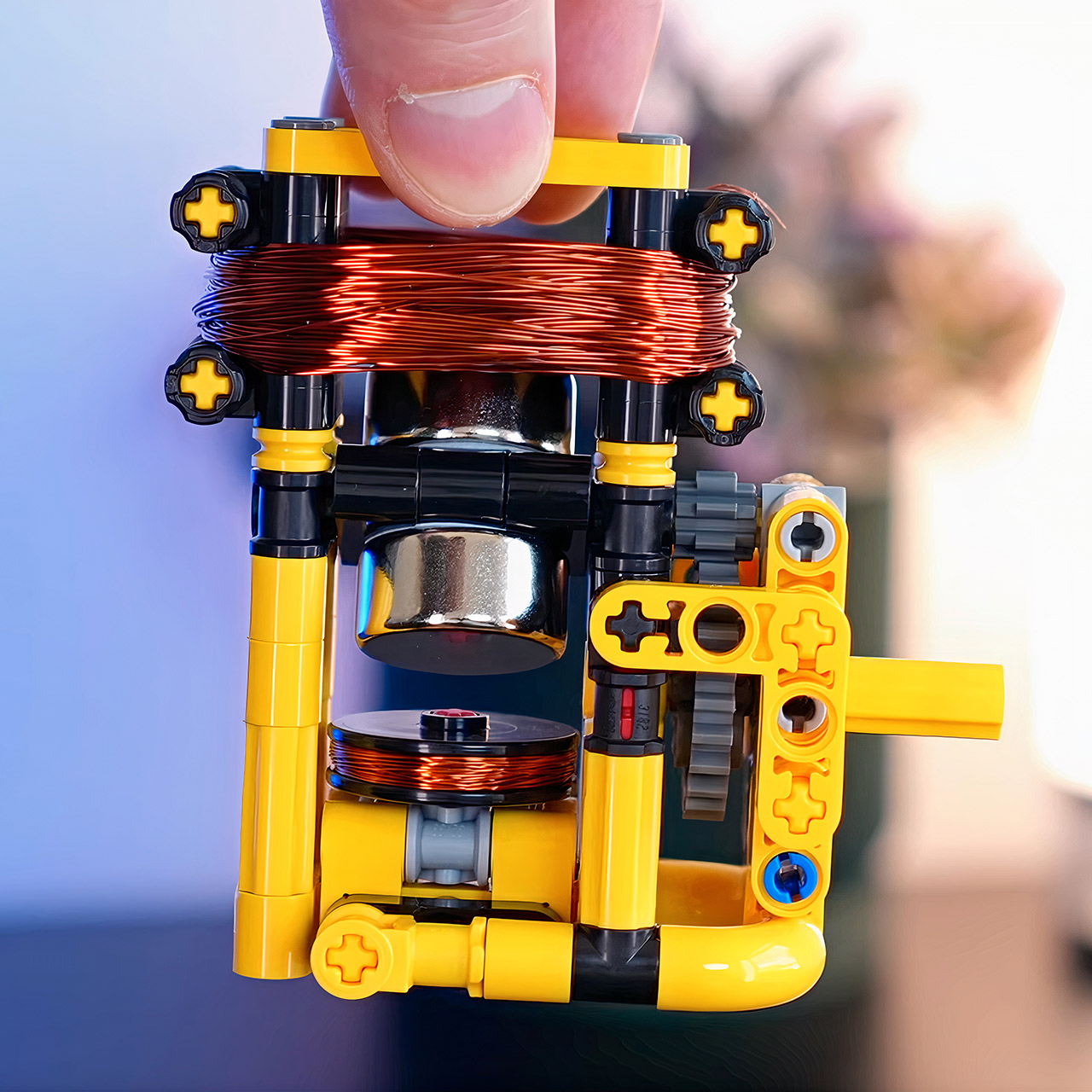
Jamie from Jamie’s Brick Jams chose to get back to basics, thus no fancy motors for him. He’d previously made some sophisticated motors, but for this one, he wanted to go back to simplicity. That’s exactly what he got: simple, easy mechanicals built with basic electromagnetic principles and a few non-LEGO components. Almost all of the pieces can be assembled using regular LEGO pieces.


It’s powered by a rotor consisting of two neodymium magnets attached opposite each other across an axis. These magnets are balanced such that the rotor spins smoothly without wobbling excessively. Next to it is a coil of wire that Jamie hand-wound around a LEGO shape. This is the driving coil, and when a current flows through it, it generates a magnetic field that interacts with the rotor magnets, giving the assembly a slight nudge.
Sale


LEGO Technic Ford Bronco Kids Toy Car – Building Toy for Boys and Girls, Ages 10+ – Car Model Kit – Makes…
- FORD BRONCO MODEL CAR KIT – Builders ages 9+ can create their own off-road adventures with this detailed LEGO Technic SUV featuring authentic…
- AUTHENTIC DETAILS – This car toy building set includes working suspension, opening doors, functional steering, and a detailed V6 engine under the…
- CAR MODEL KIT – Young engineers can explore learn more about their favorite vehicles with this building and learning toy that demonstrates real…

The assembly begins with a single pulse from a 9-volt battery, but momentum alone lasts only a few seconds. To keep things moving, Jamie added a second coil that functions as a sensor. When a magnet passes by, it creates a little current in the sensor coil. That current is then sent to a simple circuit that includes one TIP31C transistor and an optional LED. The transistor only turns on for a moment, sending a brief burst of power to the driver coil. Each burst is simply another nudge to keep the rotor spinning. Every pulse causes the LED to blink, indicating that the timing is correct.


Of course, polarity is important; if the thing is failing to spin smoothly, swapping the connections on one of the coils is generally all that’s required. The transistor is really carrying more current than it should, yet stays dependable and functions properly. The electronic side of things is fairly simple, with one transistor, an LED for feedback, two coils, and a battery.

Jamie wound the motor coil to around 150 turns of 27 gauge wire, and the sensor coil to about 100 turns of finer 32 gauge wire. LEGO bricks, such as the rotor cage and coil mounts, make up the frame that keeps everything together. To keep the magnets steady during testing, a small amount of temporary glue is applied to the rotor. In the demo, the simple two magnet version chugs along at around 1,300 RPM before gearing. Adding a 3:1 gear reduction slows things down but increases torque significantly, and with some extra LEGO gearwork, belt drive, and an outdated steering system from a 90’s set, you can even get a small LEGO car to move across a surface.
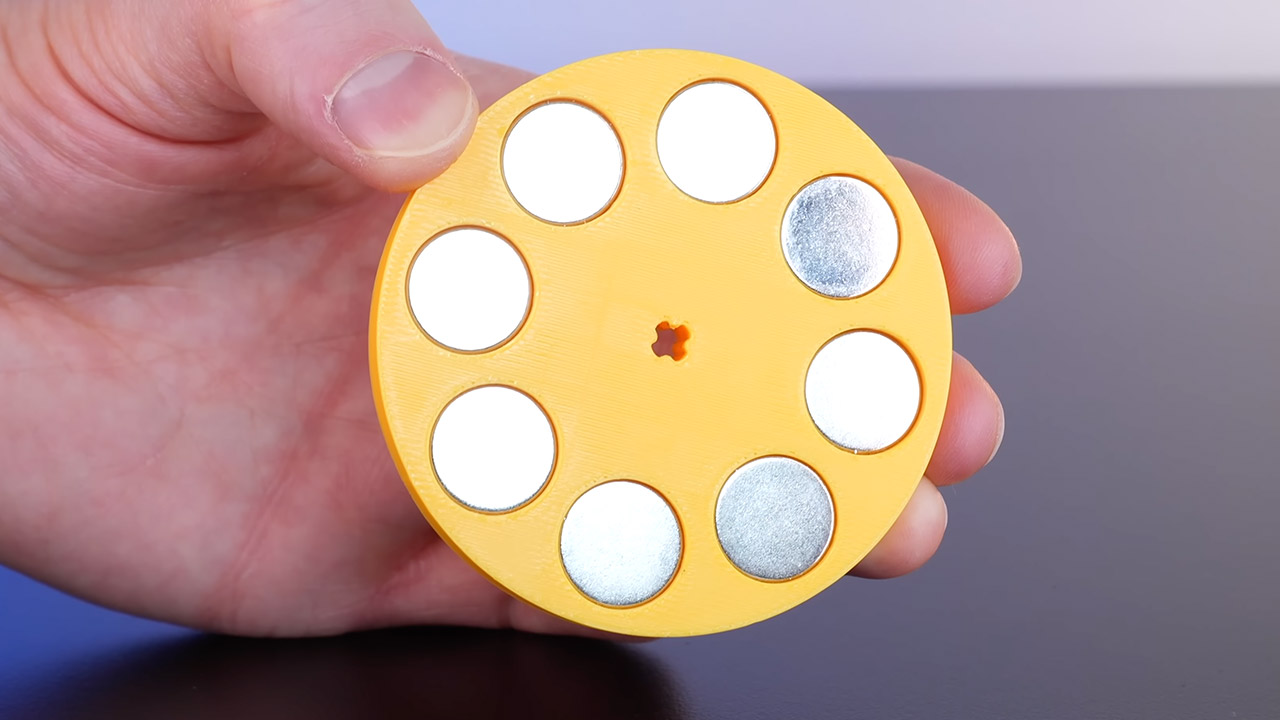
Jamie later experimented with a rotor with eight magnets in a disc. They used the same coils, but this time the speed was slower, around 480 RPM, but the torque was much higher, and the functioning was smoother because the pulses were coming faster. The 8 magnet configuration allows the little vehicle to travel with much greater confidence.
[Source]
You must be logged in to post a comment Login