Tech
This Prototype Engine Is Designed To Power The Next Generation Of US Air Force Drones


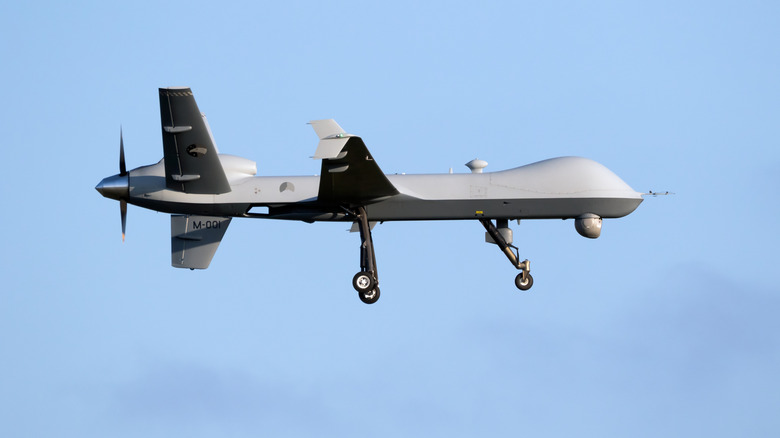
Drone technology has changed the face of combat, especially for missions that require both precision and stealth. In fact, one cutting-edge drone can shoot down an enemy jet without ever seeing it. Drone engine technology may be changing as well, thanks to Honeywell Aerospace. The company won a contract from the U.S. Air Force to build a new propulsion system, which is expected to be more advanced than anything currently in use.
The new engine will take cues from Honeywell’s small-thrust-class SkyShot 1600 engine. The SkyShot is a compact and flexible engine built for unmanned military aircraft. It’s a versatile system, capable of working as either a turbojet or turbofan, while also delivering thrust between 800 and 2,800 pounds. The design can be modified to allow for even higher output if needed. The engine is built to handle high G-forces, giving Air Force drones the ability to track and catch fast-moving targets.
Honeywell plans to use digital modeling for faster design, which also speeds up the performance evaluation stage. Because of this, development and manufacturing timelines are expected to shorten. Honeywell will be able to deliver the new propulsion system in a quicker timeframe. This approach allows for a smoother integration with other aircraft systems and helps improve manufacturing efficiency while making the supply chain stronger.
How Honeywell technology supports unmanned aircraft
Honeywell Aerospace is an established player in the world of military drone technology, and their systems are used in a number of unmanned aircraft. That includes the fast and expensive MQ-9 Reaper, a commonly used combat drone. These systems include avionics and other tech that support flight operations and aircraft capability. The engine Honeywell built for the Reaper is the TPE-331, a turboprop that was initially designed in 1959.
Honeywell also designed and produced onboard systems for the Boeing MQ-25 Stingray, an unmanned aircraft used by U.S. Navy carriers to refuel planes while in flight. The Stingray’s introduction is just one of the big changes to hit the U.S. military’s fleet in 2025. In addition to designing crucial systems, Honeywell specializes in a variety of drone components, from flight controls to mission computers, radar, and more.
Thanks to an agreement with the U.S. government, Honeywell will begin increasing production of military components and related defense systems. The announcement was made in March of 2026 and though drones weren’t specifically mentioned, the technologies referenced are regularly used in modern unmanned aircraft. Those technologies include actuators, navigation systems, and combat-ready electronic devices.
You must be logged in to post a comment Login