Tech
Three Cheap Webcams Build a Color View of Invisible Light

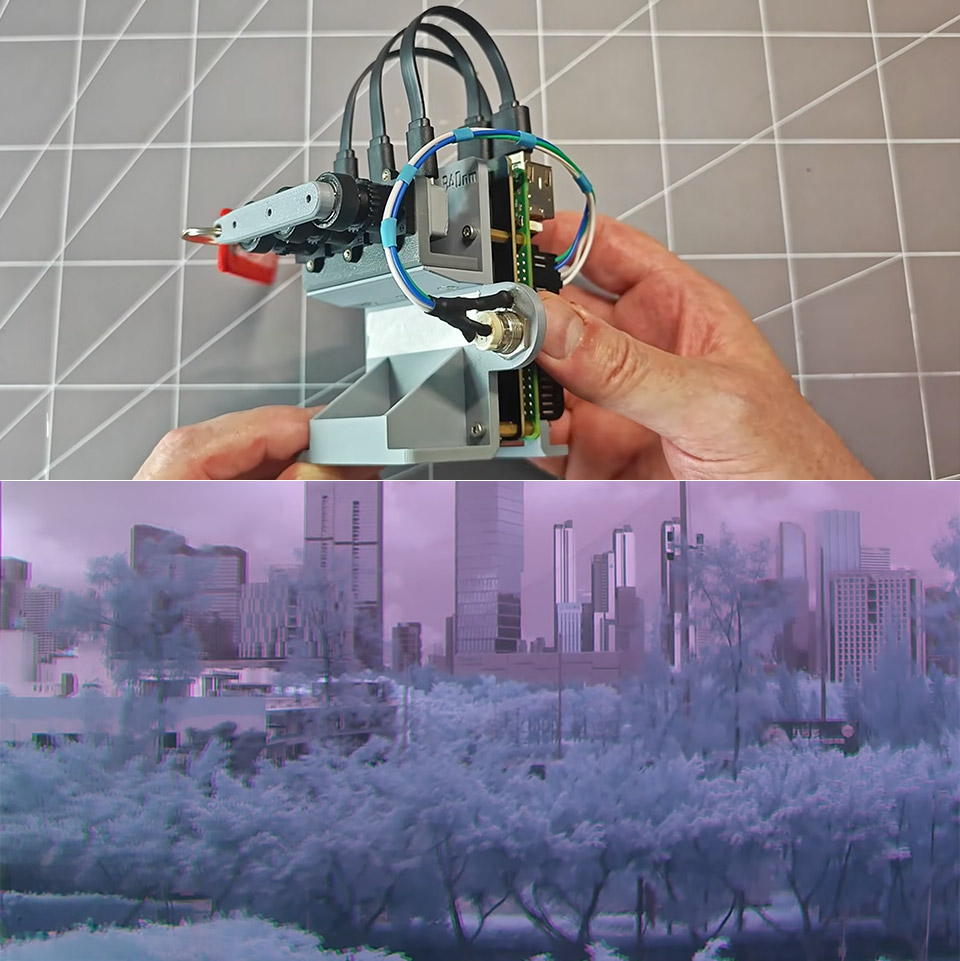
Most cameras ignore a wide stretch of near-infrared light that plants reflect and certain materials absorb in unexpected ways. One maker spent three months turning three ordinary USB webcams into a single system that records that invisible band as full color video. Project 326 started with the same $15 modules many people already own. Each sensor already responds to near-infrared once the factory IR-cut filter is gone.

![Hacking $15 Webcams for True Color Infrared [DIY]](https://i.ytimg.com/vi/N2n_BZ_acCE/hqdefault.jpg)
That filter is placed between the lens and the sensor to prevent typical photographs from becoming foggy. Taking it out is a simple process: open the camera housing, remove the tiny red or green glass or plastic piece, and your sensor will become far more sensitive to anything above 700 nanometers. The catch is that even with a full-spectrum camera, while that infrared-pass filter is in place, you’ll still receive monochrome images since colour requires three different cameras, each locked to a narrow slice of the infrared spectrum.


Insta360 Link 2 – PTZ 4K Webcam for PC/Mac, 1/2″ Sensor, AI Tracking, HDR, AI Noise-Canceling Mic…
- Premium Image Quality: Upgrade to Link 2 4K webcam with a 1/2″ sensor. Captures true-to-life webcam 4K visuals with HDR and low-light performance for…
- Professional Audio: Experience best-in-class audio with advanced AI noise-canceling algorithms. Filter out unwanted background noise for clear…
- True Focus: Insta360 Link 2 streaming camera with Phase Detection Auto Focus (PDAF). No more blurry shots—this web cam ensures instant focusing and…
Dichroic bandpass filters effectively resolved the isolation issue. You only need to put a filter on each camera that is centered around 750 nanometers, another around 850 nanometers, and a third around 940 nanometers; they will pass only a little window of wavelengths while rejecting everything else, including normal visible light. After a few tests with handheld infrared flashlights, you can observe that each one only hits one camera: a 745-nanometer lamp would light up the first camera, an 850-nanometer lamp the second, and a 940-nanometer lamp the third, with no overlap.
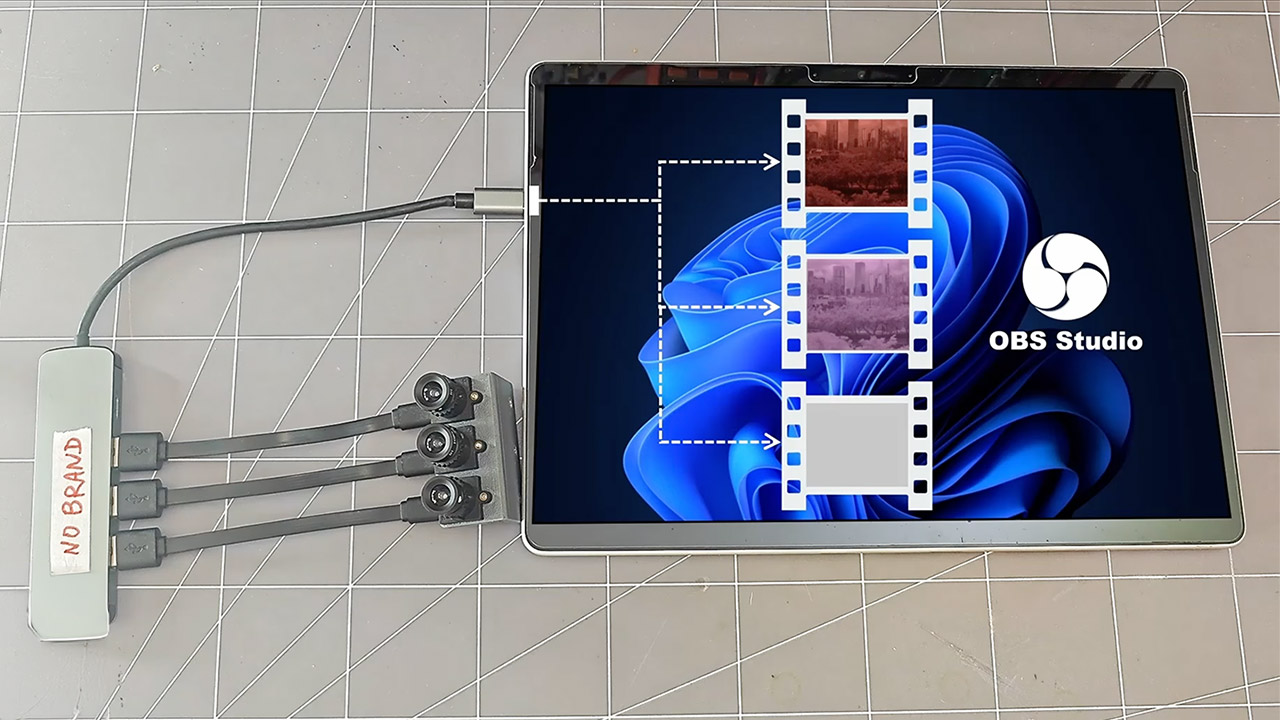
Getting the mechanical alignment correct was far more difficult than the optical filters. He tried utilizing a beam-splitting prism and a single shared lens to ensure that all three sensors saw the same scene, but 3D-printed mounts couldn’t keep the optics stable enough, so the idea was abandoned. In the end, he decided on three different lenses side by side. He removed the sensors from their original boards and remounted them on new printed circuit boards, ensuring that each chip sits squarely and at the same distance from the lens. The new housings maintain everything nice and rigid, as we’re talking a baseline of roughly 17 millimeters between cameras, which is small enough that parallax only interferes with the image at close range.

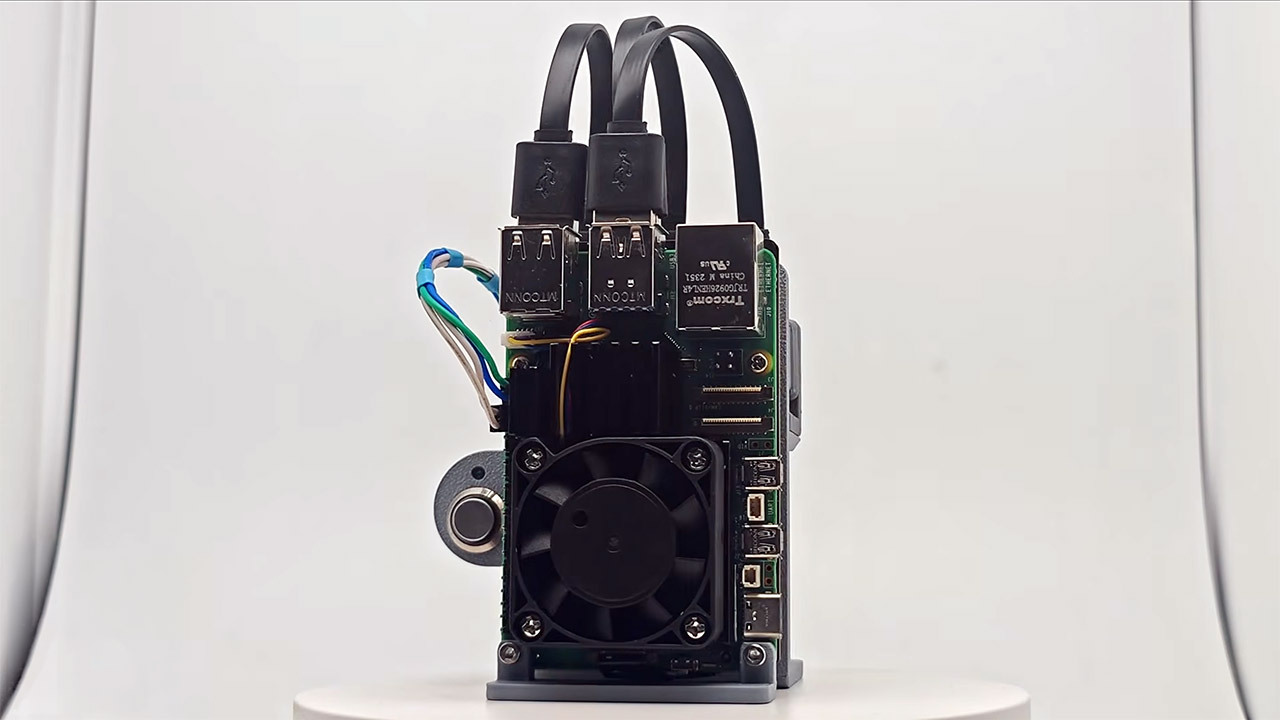
He had to switch the footage to a Raspberry Pi because Windows wouldn’t let him utilize three identical USB cameras at the same time. Python programs are currently pulling simultaneous monochromatic streams and writing them out as independent MKV files; but, because these webcams use free-running RC oscillators, their frame rates are drifting by one or two frames per minute.
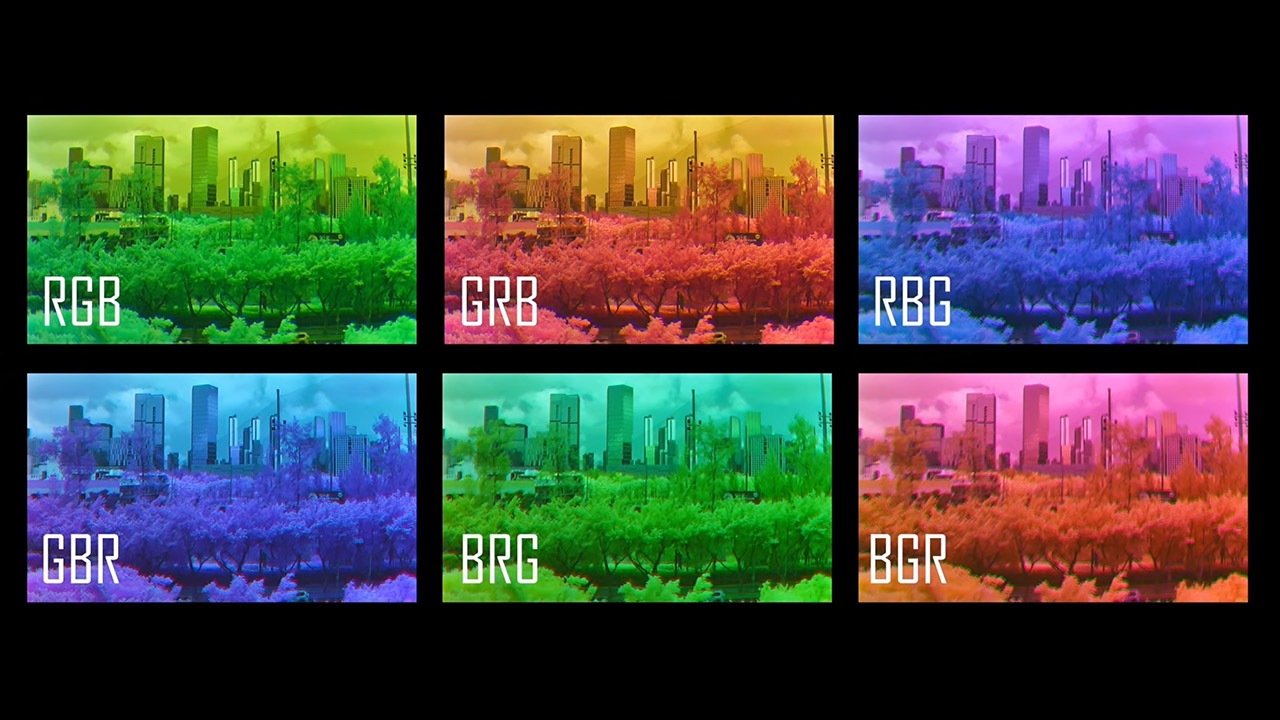
To address this, he set up a post-processing system that also handles the minor geometric offsets. He uses DaVinci Resolve to manually align the first frames of each stream, including translation, scale, and rotation, and then a script applies those fixes to the rest of the sequence. Once he had three grayscale videos layered on top of one another, he simply assigned each to a red, green, or blue channel. There are six different mappings, and selecting the appropriate one can significantly alter the final appearance of elements such as flora, sky, and skin.
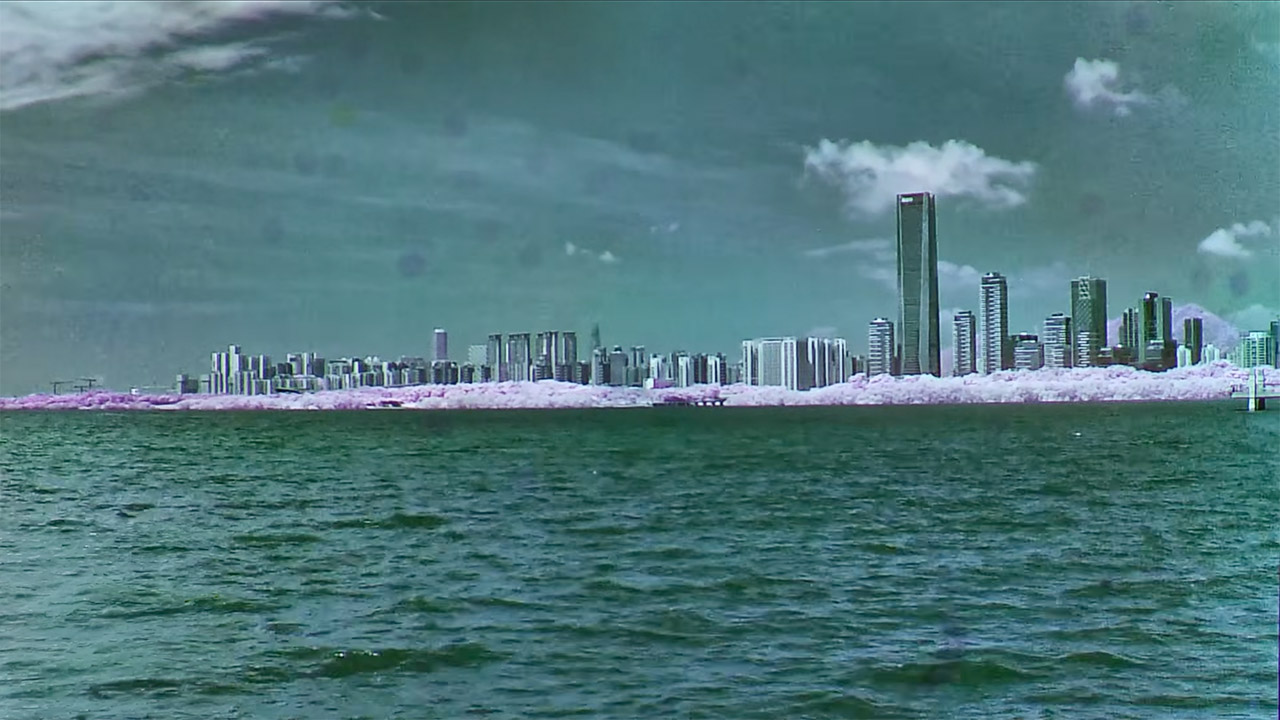
Its first usable color footage resulted from testing conducted outside under the scorching tropical sun. Leaves that appear to be one solid green to our eyes begin to break apart into distinct tones as you use the near-infrared light that reflects off them to add depth to the footage. Atmospheric haze behaves differently when picked up in the three various color bands, giving distant objects a layered appearance that draws the observer in. Now, the system still needs some fine-tuning to get the focus right, and a steady hand is required, since one of the early recording sessions was ruined because the silly lens cap remained on throughout. The Python scripts used to capture the footage, as well as the 3D printed objects, are available on GitHub for anyone interested in following in his footsteps.
[Source]
You must be logged in to post a comment Login