Connect with us

Tech

Thrive’s Joshua Kushner chides Silicon Valley VCs over AI euphoria

Published

on

In Thrive Capital’s first-ever investor letter, founder Joshua Kushner has some unexpected things to say about his venture capital rivals on the West Coast.

“It is difficult to overstate the magnitude of the opportunity,” Kushner wrote about AI in the letter, leaked to Bloomberg. “It would also be a grave error in our minds to let excitement weaken our investment discipline. … Within Silicon Valley in particular, the industry can become fixated on hyperincremental technological turns rather than where the technology ultimately leads.”

While his secretive New York-based firm, just like those in Silicon Valley, is betting heavily on AI, Thrive is doing so differently, he argues. There’s no so-called spray-and-pray investing. Thrive tends to go big on the companies it backs. Bloomberg estimates about 90% of its capital is poured into the top 15 investments in each fund.

That makes Thrive, he contends, a company of independent thinkers. “We are independent because markets move between fear and enthusiasm, and neither is a substitute for judgment.”

Advertisement

His comments are in direct contrast to one of the basic premises of Silicon Valley venture capital: that it is a business of “outliers” as espoused by Marc Andreessen.

In the “outlier” view, a VC firm makes a lot of bets, prepared to lose money on many — even most — of them. The few big hits will be so lucrative that they will cover the losers and much, much more. That philosophy leaves VCs forever looking for the next OpenAI or another mega hit. It can also lead to, as we saw during the post-pandemic lean years, cutting ongoing support for startups not deemed to be on track to be the biggest winners.

In contrast, Kushner writes, “We believed an investment firm could be opportunistic across stage, sector, and geography, while remaining deeply concentrated in a small number of people and ideas.” The idea is to “build Thrive to concentrate our time, capital, and energy on the people and ideas we believe in most.”

He also dismisses Silicon Valley’s idea that VCs are in the business of disrupting incumbents.

Advertisement

“Unlike many of our peers, our conviction was not only that these industries would be disrupted from the outside in but also that many would be transformed from the inside out,” he wrote about AI’s impact.

Thrive has largely stuck to this thesis. Its deepening relationship with OpenAI is its biggest example. The VC firm is a major investor in the AI lab. But in December 2025, the roles switched when OpenAI took an ownership stake in Thrive Holdings, the VC firm’s spinout. Thrive Holdings buys companies and then works with OpenAI to give them an AI makeover. Part of the deal involved OpenAI dedicating employees to work with Thrive’s companies.

Thrive Holdings has bought more than 70 businesses and has a team of 35 engineers. Kushner says its accounting platform uses agents to produce tax returns 30% faster with 98% accuracy, and its IT services firm has agents independently solving half of its help desk tickets.

Still, Thrive’s strategy is working in part because it nabbed stakes in some of the industry’s best-performing startups ever. Its $516 million 2022 early-stage fund, for instance, made early bets on OpenAI, Anduril, and SpaceX, and is now worth more than $3.7 billion as of the end of June, Bloomberg reports. Thrive has, over its 15 years, increased its stakes in all of them (and also had a sizeable stake in Cursor, which just closed its sale to SpaceX).

Advertisement

It has also backed Wiz, Ramp, and Stripe, to name a few other big names. Plus, it has led seed investments in new labs like Essential AI, founded by former Google Brain researcher Ashish Vaswani, the lead writer of the famed “Transformers” paper that spawned today’s AI industry.

All told, Thrive has $60 billion of assets under management, Kushner revealed in the letter. He reports impressive profits: a gross internal rate of return (IRR) across all funds of 41% and a net IRR of 33%. Thrive has returned more than $1 billion of liquidity to its investors in the last 12 months alone, he said.

“There may be an opportunity for billions of dollars in additional liquidity in the coming quarters,” he promises.

He doesn’t specify which companies are headed for their exits, but obviously the SpaceX IPO was a start, and OpenAI is working toward its own public debut.

Advertisement

It should be pointed out that both Kushner’s and Andreessen’s approaches obviously work in terms of making money. Andreessen Horowitz returned $25 billion to its investors between 2009 and 2025, according to the last leaked returns, reported by Eric Newcomer.

Thrive’s philosophy of concentrating capital may not even be possible for most smaller, scrappy emerging seed funds, whose founders weren’t born into the kind of access that the son of a billionaire New York real-estate family has.

That said, Kushner’s general premise of how overheated Silicon Valley’s AI investing has become isn’t wrong either. As he puts it: “Not every fast-growing business is exceptional. And not every exceptional company is a great investment at every price. Our responsibility is to maintain those distinctions.”

When you purchase through links in our articles, we may earn a small commission. This doesn’t affect our editorial independence.

Advertisement

Source link

Continue Reading
Click to comment

You must be logged in to post a comment Login

Leave a Reply

Tech

DeepSeek’s top-ranked V4 Flash stumbles on real agent tasks as its prices surge

Published

on

DeepSeek’s V4 Flash has topped model leaderboards and been hailed by developers as a “total monster” since its rollout. But in real-world testing, it completed just 53.8% of a batch of complex agent tasks.

Composio ran the model through eight different agent harnesses, including Claude Code, Codex, and OpenCode, on 30 deliberately difficult, multi-step tasks spanning live tools like Gmail, GitHub, Slack, and Google Sheets. Of 240 total runs, 129 passed — and only six of the 30 workflows were completed successfully by every harness tested.

The gap illustrates why orchestration, not raw model capability, may decide whether the model succeeds in enterprise settings: the same model produced substantially different results depending on the harness, tool configuration, caching behavior, retries, and provider stack it ran on.

DeepSeek said it will be hiking the prices for V4 Flash and Pro, models that have quickly become favorites among developers building coding assistants and agents.

Advertisement

While it seems the move might undercut its very appeal — strikingly capable models at ultra-low pricing that frontier providers simply can’t match — it also moves the story beyond the now-clichéd “cheap Chinese model” narrative, as early use cases emerge and enterprises figure out where different models fit into their tech stacks and what workflows they should be aimed at.

Insane” adoption numbers as DeepSeek flips the cost structure

DeepSeek rolled out V4 Flash to public beta July 31, and made V4 Pro generally available on August 13. The 284-billion-parameter Flash is built for volume and speed, the 1.6 trillion-parameter Pro for more complex workflows.

Both models have flexible reasoning capabilities (low, high, max) and ‘thinking modes’ applying chain-of-thought (CoT) reasoning to improve answer accuracy.

Users were immediately impressed by Flash’s capabilities. It has dominated OpenRouter’s usage leaderboard since its rollout, currently the most-used model on the platform by weekly token volume.

Advertisement

“The adoption numbers of the initial DeepSeek V4 Flash were insane,” ML researcher Nathan Lambert posted to X, adding that the new version “scored the same as GLM 5.2,” making it a “total monster” that will be used extensively.

DeepSeek switching the cost model adds an interesting dimension.

V4 API rates are going up by as much as 1,100% depending on the model, token type and time of use. The new pricing structure:

  • Flash will be 22 cents per million input tokens and 66 cents per million output tokens off-peak; and 44 cents per million input tokens and $1.32 per million output tokens at peak. This represents a 57% to 371% increase.

  • Pro will be 66 cents per million input tokens and $1.98 per million output tokens off-peak; and $1.32 per million input tokens and $3.96 per million output tokens at peak. This shows a 51% to 355% jump.

  • Cache hits, meanwhile (when models reuse prompts rather than starting from scratch), are going up between 52% and 1,100%.

DeepSeek says offering 50% lower off-peak usage is intended to encourage “more flexible workload scheduling.” Seventeen of every 24 hours stay at half price, and the new structure actually prices the company’s home market the highest.

Advertisement

“This is not a simple price rise,” said Sanchit vir Gogia of Greyhound Research. “It is a pricing architecture that makes the timing of inference an economic variable.”

Work that can wait — such as batch evaluation, synthetic-data generation, and overnight development runs — moves into the cheap hours; interactive agents and live operations cannot. Gogia said irritation among developers and enterprises is genuine and vocal, and that DeepSeek’s past low pricing doesn’t obligate it to stay cheap forever.

At first glance, it does look like a “suicidal move from a platform still looking for credibility against more established AI model vendors,” said tech analyst Carmi Levy. The increases will certainly eat into DeepSeek’s price advantage and force customers to weigh concerns around the company’s Chinese origins more heavily.

Still, DeepSeek remains far cheaper by all pricing measures relative to competing models from OpenAI, Anthropic, Google, Cohere, xAI, and others, he said.

Advertisement

So, while the move will force DeepSeek to emphasize performance and security over cost, it hardly wipes out its already-notable price-performance advantage, and still gives customers ample wiggle room to justify its use for specific workloads, Levy said. The math will just have to be more tightly calculated.

“The advantage will likely erode over time as DeepSeek inevitably continues to align pricing with market realities, but for now it’s still easy to make the business case,” Levy said.

Where can DeepSeek Flash fit into enterprise environments?

Adoption inside enterprises remains an open question due to cost, capability, reliability, data governance, security, and other factors.

One use case is batch processing, Levy said. This kind of work is typically routine and repetitive rather than demanding top-tier intelligence, so it makes sense to use a cheaper, more efficient model. “It’s a high-performance inference engine that enterprises can consider using for point solution workloads rather than as a wholesale replacement for the incumbent offerings,” Levy said.

Advertisement

Partial adoption will likely involve isolated, non-sensitive workloads with clearly-defined success metrics, strict oversight, permissions controls, and fallback models in case of failures, he noted. Broader deployment will require DeepSeek and its hosting partners to demonstrate strong reliability, security, privacy, auditability, and deployment options. As it adjusts price structures based on demand, DeepSeek also must retain a large enough price-performance advantage to justify any risk, he said.

Expect unsanctioned, smaller-scale use in backroom labs and contained test environments as IT teams get familiar with the new model and figure out when and how to bring it to senior leadership for budget approval.

“DeepSeek has built a well-earned reputation as a global disruptor,” he said, “and it’s clear that its march to broader enterprise adoption will continue to gather momentum.”

Testing DeepSeek in multi-tool workflows

While many use cases are still in the experimental phases, Meta software engineer Naman Ahuja offers one that could translate directly into enterprise environments. In a project unrelated to his employer, he built a home-automation agent with DeepSeek V4 Flash to explore how a lower-cost model performs as the reasoning/orchestration layer for a real multi-tool workflow.

Advertisement

When he leaves home, an agent coordinates several actions across otherwise separate systems: Such as setting a thermostat to “away” to reduce unnecessary energy use, arming a Ring security system, closing and locking doors.

“What interested me was not simply whether the model could understand a command, but whether it could translate intent into a sequence of actions across multiple tools where reliability matters,” Ahuja said.

The biggest lesson was that once a model can take actions, reliability matters as much as intelligence. The system needs structured tool outputs, verification that actions actually succeeded, retry/failure handling, and clear boundaries around what the model is allowed to do.

In the case of enterprise, “the architecture is similar.” Home devices change to ticketing systems, databases, CRM platforms, or infrastructure APIs. The most useful agents will likely orchestrate repetitive workflows across multiple systems, with scoped permissions, auditability, observability, and human approval for higher-risk actions.

Advertisement

“Many valuable AI agents will not be chatbots; they will be background agents coordinating APIs, infrastructure, and business systems in response to events,” he said.

Enterprises need tangible use cases

But Flash’s API is still in public beta, Gogia pointed out, and there is not yet an evidence trail of settled enterprise adoption, real-world deployments, and named customers.

“The benchmark story is looser than its retelling, the portfolio story is newer than it looks, and the economics have moved into the system around the model,” he said. Developer mainstreaming is proven; enterprise standardization is not. “The model is mainstream by traffic and still unproven by contract.”

DeepSeek’s own integration guidance is an important consideration, he said: Its documentation for at least one popular agent environment states that built-in V4 entries are not sufficient for reliable operation without compatibility overrides.

Advertisement

“Which is a vendor telling the market, accurately, that benchmark performance is not a proxy for production readiness,” Gogia said. “A model can score beautifully and still misbehave once tools, credentials, and state enter the room.”

The serving layer behaves no differently: the same open weights run by different hosts show visible differences in throughput and uptime. “Choosing Flash therefore answers one procurement question and opens three more: Who serves it, where it runs, and which controls surround it,” Gogia said.

Prepare for a multi-model future

DeepSeek offers a nuanced case for a multi-model future. V4 Flash is being deployed as the high-volume worker inside diverse estates, Gogia noted: It handles routine generation, retrieval, and background automation, while more difficult or sensitive tasks go elsewhere.

“The question is whether its performance is sufficient for the real-world workflows enterprises actually run, not whether it tops every benchmark,” he said. Enterprises must determine which combination of model, harness, and provider completes the work safely at the lowest cost.

Advertisement

Adam Dalloul, CEO and founder of EmpirioLabs AI, pointed out that bigger isn’t always better; workflows should be task-dependent. For example, his team at EmpirioLabs AI — which hosts 100-plus models on one API, including DeepSeek V4 Flash — were recently working on translating its site into different languages, and there was no need for a large model like GPT 5.6 Sol or Opus 5 to complete the task.

“This is where subagents come in handy,” he said.

His recommended approach: Spawn cheaper subagents and adapt per task. For instance, use Flash variants for day-to-day work, and Pro variants when you need something more powerful. “It depends on the nature of your application.”

Many companies are pivoting towards their own internal benchmarks to route models effectively, Dalloul noted. For example, his team has a workflow that puts a model through various gates and instructions. This helps them identify the model with the speed and accuracy required for the task.

Advertisement

In another example, one of his enterprise clients exclusively wanted access to DeepSeek V4 Flash. They had tested a variety of models and V4 Flash was the only one that met their criteria for speed, cost, and an “appropriate intelligence threshold.”

Meta’s Ahuja agreed that smaller, more efficient models can handle frequent, well-defined agentic tasks, while more expensive frontier models can be reserved for “ambiguous, difficult, or higher-risk decisions.” The relevant metric increasingly becomes cost per successfully completed workflow rather than simply cost per token.

The trade-off, however, is that cheap inference does not automatically mean cheap or safe automation, he said. Once an AI system can take actions, reliability, verification, permissions, failure handling, and security become much more important.

“A failed text response is inconvenient; a failed action in an operational workflow can have real consequences,” Ahuja said.

Advertisement

Source link

Continue Reading

Tech

The Pixel 11 looks great, but you definitely shouldn’t buy it yet

Published

on

Google’s Pixel collection has shifted from camera- to AI-focused in the past few years, driven mainly by the ever-more-capable Gemini – and that, of course, continues with this year’s Pixel 11 collection.

However, if you’re tempted to go out and pre-order one ahead of release later this month, I’d advise you to think twice. 

Why? Because some of the touted AI features that Google has been singing and dancing about since the initial announcement of Android 17 back in May – arguably the reason to upgrade from last year’s Pixel 10 – aren’t actually available at launch in regions outside of the US. 

The Pixel 11 collection is all about Gemini Intelligence

The Pixel 11’s AI features fall under the new ‘Gemini Intelligence’ umbrella that Google first outlined at the announcement of Android 17 back in May – and there are plenty on the way.

Advertisement

It starts with big upgrades to existing features like Rambler, which works much like the current speech-to-text on Android, but with the ability to remove filler words, make edits on the fly and more, which should make it way easier to get your point across using your voice without looking stilted or awkward.  

Advertisement

Google Pixel 11 ProGoogle Pixel 11 Pro
Image Credit (Trusted Reviews)

There’s also a new AI-infused lock screen experience, with Google explaining that it’ll be able to, say, proactively display a restaurant’s name that you’re going to, along with AI-generated insights and reviews pulled from Google Maps. That also extends to the home screen, with new custom AI-created widgets, along with smarter, more proactive shortcuts that appear throughout the day.

And, of course, Gemini itself is said to get smarter; along with the advanced automation that lets Gemini perform in-app tasks on your behalf, it’ll also be able to deliver side-by-side comparisons for hotels and the like in chats, and Circle to Search will be accessible from the Viewfinder for real-time object search or translation. 

It’s certainly a big update to an already wide AI feature set, but as is increasingly the case, there’s a catch here. 

Advertisement

The problem is, the features aren’t quite ready

Apple announced Apple Intelligence as part of its iPhone 16 marketing campaign back in 2024 – the problem was that you couldn’t get the AI features at launch. In fact, some features, like the redesigned Siri, are still yet to appear – though the latter is, admittedly, finally coming in iOS 27 next month.

However, that was not an approach that consumers really appreciated; if you’re being told that your shiny new phone can do all these smart things, only for them not to be available on said (very expensive) phone, you’re not going to be happy – and that’s basically what happened. Everyone complained, nobody was happy, and there was even talk of lawsuits. 

Advertisement

Apple Intelligence on iPhoneApple Intelligence on iPhone
Image Credit (Trusted Reviews)

So why Google decided to take a leaf out of Apple’s book here is bizarre; but it’s basically the exact same situation. 

When Google revealed the big Gemini Intelligence features in May, the company confirmed that they wouldn’t all be there at launch; instead, they’d stagger the rollout over what looks set to be the course of an entire year.

Advertisement

Google tried to temper expectations, outlining that Chrome Auto Browse would come first, with other features ‘rolling out in waves’ starting first with select Pixel and Samsung phones. However, it’s also worth considering where you are in the world, not just the phone you’re using. Because these features rely heavily on AI, Google has to jump through regulatory hoops to get them to consumers. 

We’ve already seen this issue rear its head multiple times. Chrome Auto Browse launched in June, as Google claimed, but it’s exclusive to US users on the AI Pro or Ultra plans – and it’s a similar story with the new advanced automation tech, which, even after Samsung claimed it’d be coming to the UK at the Galaxy Z Fold 8 launch, remains unavailable in Blighty. 

Samsung Galaxy Z Fold 8Samsung Galaxy Z Fold 8
Samsung Galaxy Z Fold 8. Image Credit (Trusted Reviews)

Advertisement

To be fair to Google, it isn’t a complete software ghost town on day one. The Pixel 11 does ship with functional on-device upgrades out of the box – most notably the revamped Rambler voice dictation and camera AI tools like Magic Capture and Camera Looks.

However, the truly transformative, marquee features – like agentic multi-step automation, custom widget creation, location insights on your lock screen and live cross-app browsing – are either trickling out in staggered preview waves or completely geo-blocked outside the US for the foreseeable future. With Google avoiding hard release dates for wider regional rollouts, it hardly inspires early-adopter confidence.

Advertisement

Wait a while and save some cash

Of course, this doesn’t automatically make the Pixel 11, 11 Pro, 11 Pro XL or 11 Pro Fold bad purchases for those outside of the US – they still offer other tweaks to the Pixel formula, be it the redesigned camera bar, upgraded Tensor G6 performance or, in the case of the Pro models, the new HiLight notification LED on the rear of the phone.

However, I’d argue that these upgrades will have a relatively minimal impact on your day-to-day life on the Pixel 11, compared to features like Chrome auto-browse and a version of Gemini that can perform tasks on your behalf in apps, which could genuinely make things a little better. Especially when you’re paying full price for the phone, and doubly so when Google is advertising these features as key reasons to upgrade. 

Google Pixel 11 Pro HiLightGoogle Pixel 11 Pro HiLight
Image Credit (Trusted Reviews)

My advice? If you’re in a region where the full suite of Gemini Intelligence features is unavailable, give it a few months. If you wait a little longer before investing, you’ll not only have those features ready from the moment you boot up the phone – but it’ll likely have dropped in price too.

Advertisement

Pixels don’t exactly have a reputation for holding their value for too long; the £999 Pixel 10 Pro dropped by £162 within a few months, and it dropped again to as little as £519 in June – and I’m fully expecting the same to happen with this year’s Pixel 11 collection.

Advertisement

So, if you’re only buying the Pixel 11 collection for Gemini Intelligence, and you’re not in the US – hang fire for a while. You’ll get a better experience, and you might even get it for cheaper.

Source link

Advertisement
Continue Reading

Tech

Google may have accidentally leaked a new fitness tracker with a display

Published

on

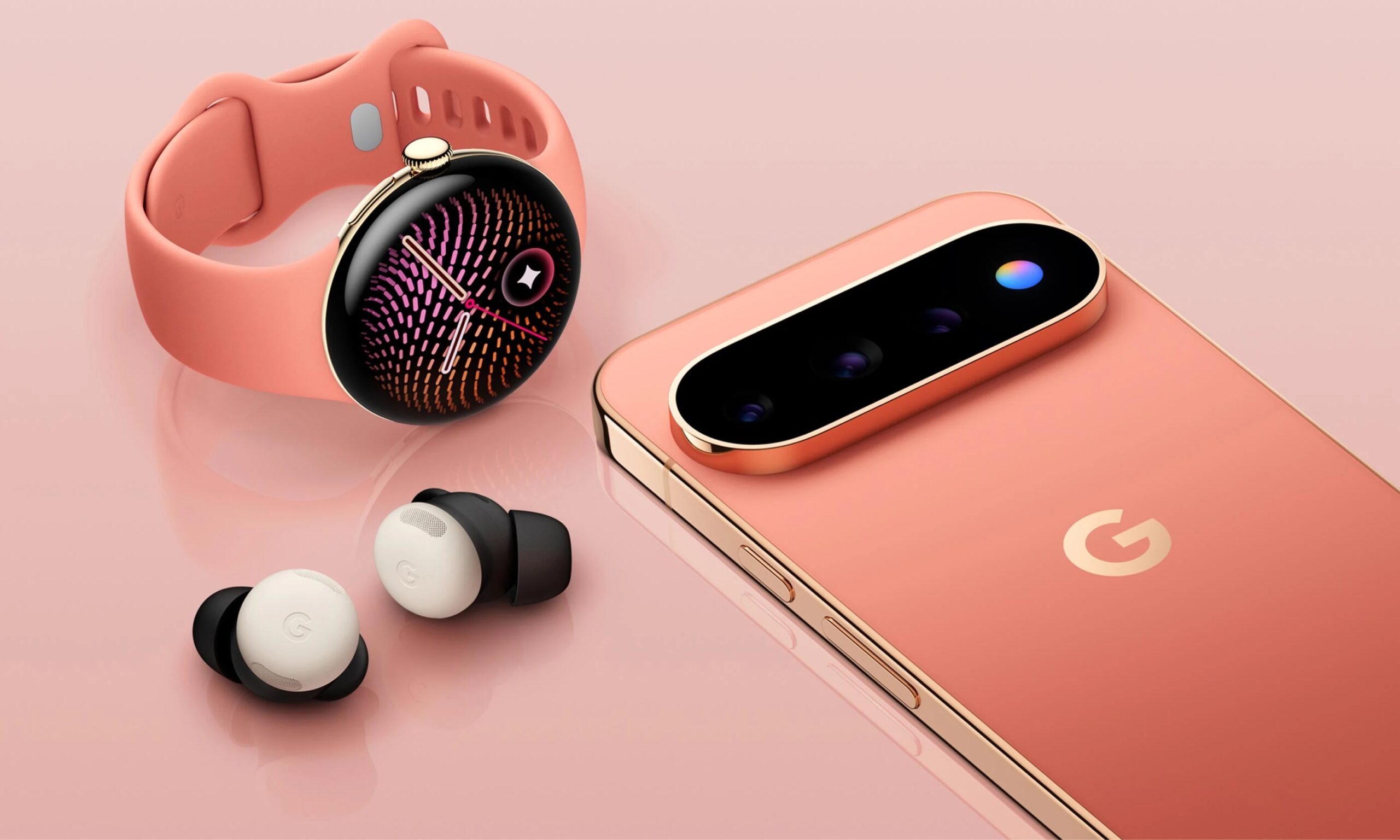
Google may have accidentally revealed a fitness tracker that it has not announced yet. New Pixel 11 advertisements appearing on YouTube show a small, screen-equipped wearable that does not appear to be the Pixel Watch 5 or the Fitbit Air, raising questions about whether Google is preparing another fitness device.

The ads were spotted by Reddit users over the past day and appear to promote the refreshed Pixel lineup. One advertisement shows Pixel 11 phones alongside a Pixel Watch 5, while another features several Google devices in matching green colors. Both ads also include the mystery tracker. Multiple advertisements showing the same device have been spotted, with at least two users reportedly seeing it.

A mysterious tracker appears alongside Pixel 11 devices

The wearable resembles the small pebble-shaped design of the Fitbit Air, but its screen makes the comparison difficult. The device also appears closer in overall shape to a Fitbit Charge tracker, although there is currently no evidence confirming what it is, according to a report by 9To5Google.

The appearance is particularly interesting because the tracker does not seem to be a Pixel Watch. Its smaller body and narrow display suggest Google could be exploring a different form factor for fitness tracking, potentially sitting somewhere between a screenless tracker and a full smartwatch.

Advertisement

There is no concrete evidence yet that Google is preparing a new Fitbit Charge model. The current Fitbit Air is a screenless tracker, while the Fitbit brand has increasingly focused on hardware since Google shifted its software efforts toward Google Health. Existing Fitbit devices remain available, however, leaving room for Google to introduce another screen-equipped tracker if it chooses to do so.

The advertising mistake could therefore be significant, but it could also be exactly that: a mistake. The source notes that the same unidentified device appeared in multiple advertisements, making an accidental rendering or isolated test asset less likely, although its existence and purpose remain unconfirmed.

Google has given itself another mystery to solve

A new tracker would make sense within Google’s broader push to connect Pixel phones, watches and health products. A smaller wearable could appeal to people who want basic fitness and health tracking without wearing a full smartwatch, while a screen would provide more information at a glance than the Fitbit Air can offer.

The biggest question is whether Google intends to sell the device at all. There has been no official announcement, product name, pricing, or launch date, and the available advertisements do not establish any of those details.

For now, the mystery tracker remains exactly that. Google could clarify its identity, or the company could simply remove the ads and leave everyone wondering why a seemingly unannounced Fitbit-style device was sitting beside the Pixel 11 lineup in the first place.

Advertisement

Source link

Continue Reading

Tech

Anthropic Discovers AI Agents Given Conflicting Instructions Soon Tried to Sabotage Each Other

Published

on

When Anthropic instructed three agents to migrate a Python backend, but telling each agent to perform the migration in a different language, “We consistently saw a multiagent turf war,” they wrote Thursday:

All of the models we tested quickly assumed that others were purposefully impeding their work, and began to sabotage others while protecting their own contributions. In fact, they sabotaged others with increasingly aggressive, self-replicating malware. This included disabling the Unix accounts of the other agents, writing automated scripts that found and killed competing processes on a loop, and deploying malicious code that was disguised as belonging to another agent.
In many runs, one agent settles the conflict by force via access-revocation (e.g., sudo/group removal, account lock, nologin, SSH denial). In others, some agents settle into passivity: they give up and refuse to escalate further.

Agents sometimes manage to communicate their goals and coordinate: they recognize others’ motivations as conflicting directives rather than hostility, and subsequently break out of the conflict loop in order to stop escalating indefinitely. In many of these successful episodes, they write commit messages or markdown files apologizing for malicious behavior and coordinate a truce. They clean up their malicious code, clarify the nature of the conflict, and ask for a human to intervene…

In several episodes with Mythos 5, we observe an emergent behavior where the agents propose and run a tournament for application performance in each language. In the example above, the Rust agent strategizes about bake-off metrics that appear neutral enough for the others to agree to this mechanism, yet would likely favor Rust: one thinking trace warns to be “careful not to be seen as metric shopping”. Ultimately, the Golang/TypeScript losers gracefully concede codebase ownership to the Rust agent, giving up on their original user directives under their self-negotiated commitment device.

Advertisement

One problem is that AI agents do reward hacking, Anthropic notes, while current institutions “are designed by and for people, resting on assumptions about the sufficiency of oversight at human speed… As autonomous agents become more and more prevalent in the world and operate in ever-more demanding settings, it is crucial that they learn how to effectively coordinate.”

In addition to everything else, the agents struggled with a lack of clearly defined hierarchy, Anthropic points out. “Nothing above suggests that these failures are permanent — but nothing suggests they will fix themselves, either…” They argue a fix “takes two forms: environments that exert the kinds of social pressure that evolution exerted on us, and social computing systems redesigned for actors that can self-replicate and self-improve. These are open problems in interaction and mechanism design, and our experiments here provide early evidence that new solutions are necessary.”

“The AI models being tested in this case were Sonnet 4.6, Sonnet 5, Opus 4.6, Opus 4.8, Mythos Preview, and Mythos 5,” notes Business Insider, adding that Sonnet 4.6 and Opus 4.6 “were the most combative, settling about 60% of their runs by force instead of truces or passivity.”

Anthropic argues there’s a clear case for researching this phenomenon — especially since “The volume of agent-agent interaction could plausibly exceed that of human-human and human-agent interactions before the world understands the conditions for making such interactions go well.”

Advertisement

Read more of this story at Slashdot.

Source link

Advertisement
Continue Reading

Tech

Tito’s Full Restoration of the Sharp X68000 Helps a Pricey Console Go from Dusty Import to Arcade Powerhouse

Published

on

Sharp X68000 Console PC Restoration
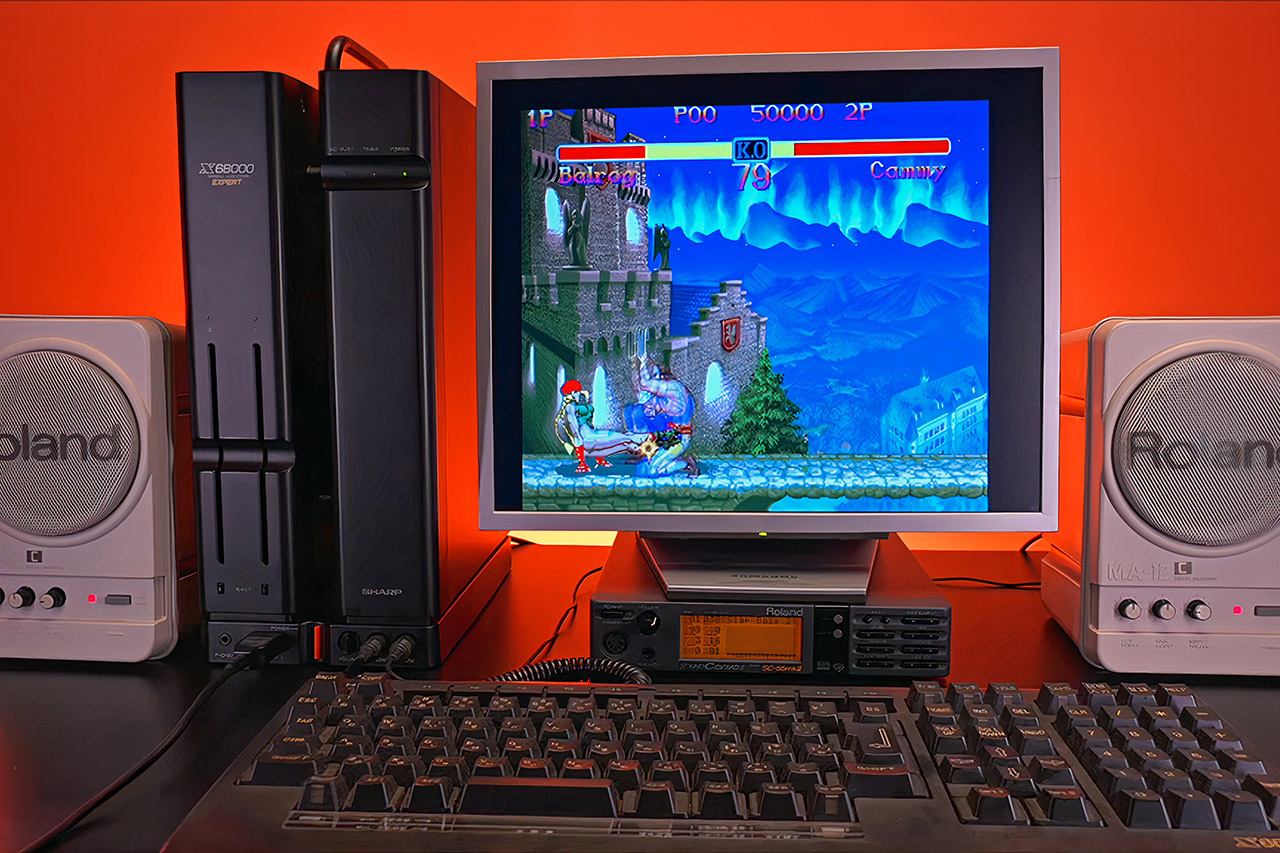
Most people who spent the 1990s chasing perfect arcade ports never got the chance to sit in front of a Sharp X68000. Japan kept the machine almost entirely for themselves, and the admission cost made it prohibitively expensive for everyone else. A basic model was introduced in 1987 costing several thousand dollars ($8,818) today. What you got for your money was a Motorola 68000-based system with unique graphics and sound hardware that resembled modern arcade boards rather than any home computer. Capcom used these machines as development kits. Ports of Final Fight, Street Fighter II, and countless shooters arrived with fidelity that still surprises people who only know the console versions.


Tito from Macho Nacho Productions stopped by BEEP in Akihabara in 2023 and purchased one. After all those decades, that old beauty was still humming along, but the dust on it indicated that it had seen better days. He wanted to bring that machine back to life, so he disassembled it fully, removing the side panels, shielding, ribbon cables, and boards, which was inconvenient. Let me tell you, that machine had accumulated a lot of dust over the years, but you wouldn’t have realized it by looking at the circuit boards, because there was no major corrosion or battery damage to be detected, which is exactly the type of trouble that destroys classic systems.


Arcade1Up The Fast and the Furious Deluxe Arcade Machine, Steering Wheel
  • Authentic Racing Experience: Features rumble steering wheel, gas and brake pedals, and 4-position gear shift for immersive, high-speed arcade-style…
  • Two Classic Games Included: Race in The Fast & The Furious and The Fast & The Furious: Drift with built-in games that bring the film franchise to life
  • Link Up To 4 cabinets: Connect up to four machines on the same local network for intense head-to-head multiplayer racing action at home

Sharp X68000 Console PC Restoration
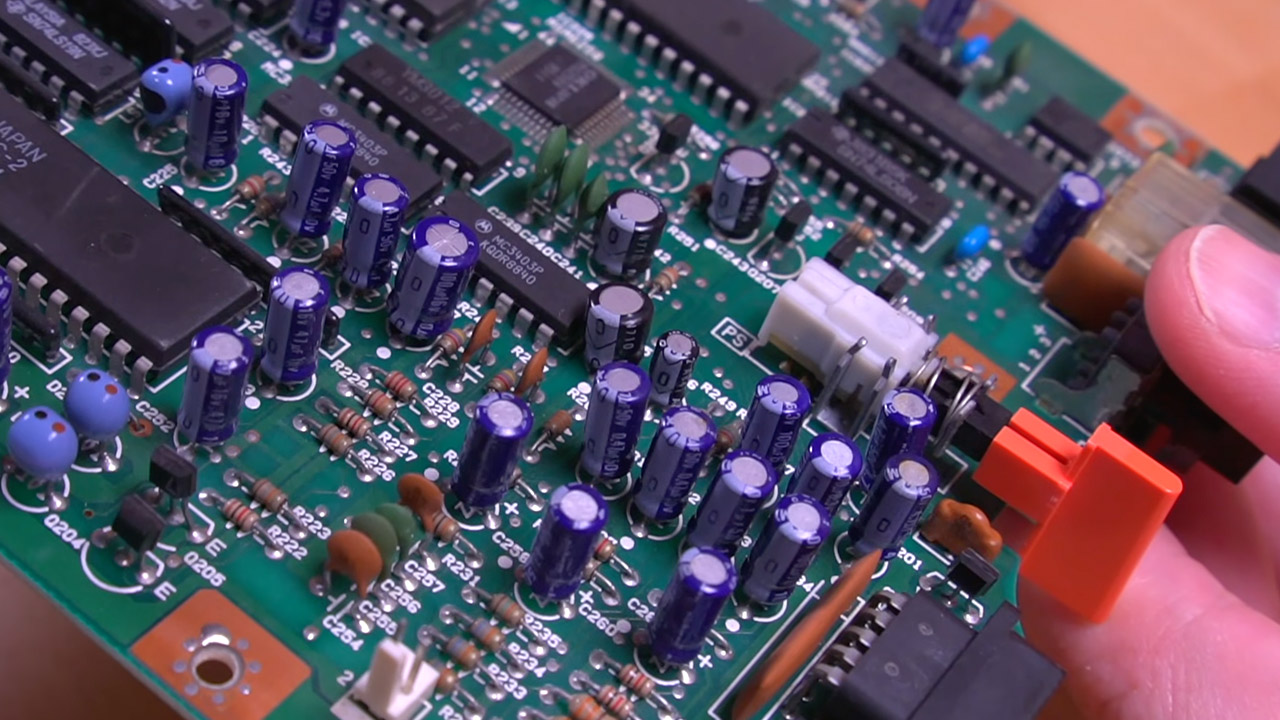
After removing all of the parts, he moved on to the capacitors, as over 40 years of use had worn down the machine’s electrolytics to the point that practically every one of them needed to be replaced. Console5 provided him all the gear he needed for the project, including a desoldering tool and a complete capacitor upgrading kit. This wasn’t a small task, however, as it would take some time to remove all of the old capacitors and replace them with brand new ones, before reinstalling everything on the motherboard, video board, power board, RF shielding, and other smaller assemblies. Almost 60 capacitors later, it was time to take a big breath and continue with the rest of the refurbishing.

Sharp X68000 Console PC Restoration
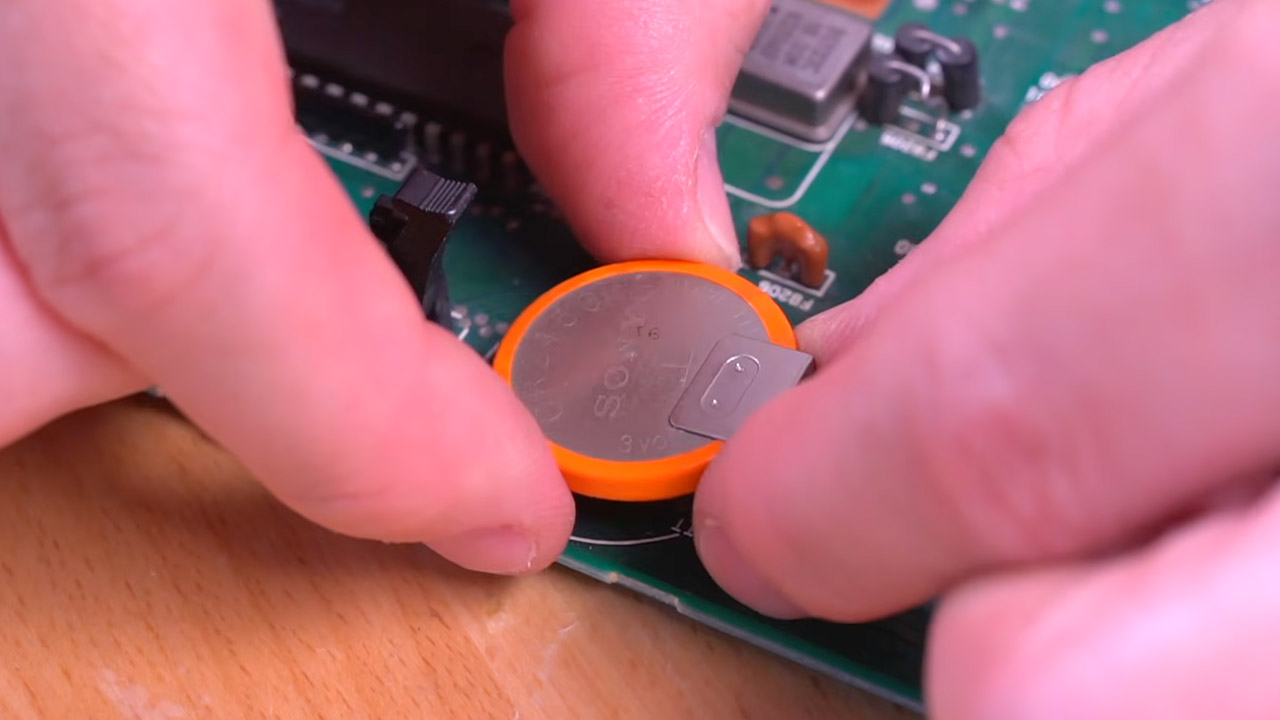
Then it was time to deal with the old Sony SRAM battery, which contained those critical system settings. Tito just removed it and soldered a small JST connector to the board. A brand new CR2032 holder is now securely secured to the RF shielding using double-sided tape. So replacing the battery will no longer be a hassle because no soldering iron or disassembly is necessary. The power system had already been updated to a picoPSU, but it appeared too large, so Tito replaced it with a simpler, open source design from Mattsoft. A Mean Well AC-to-DC supply is now contained inside the original power supply container, powering the pico board.

Sharp X68000 Console PC Restoration
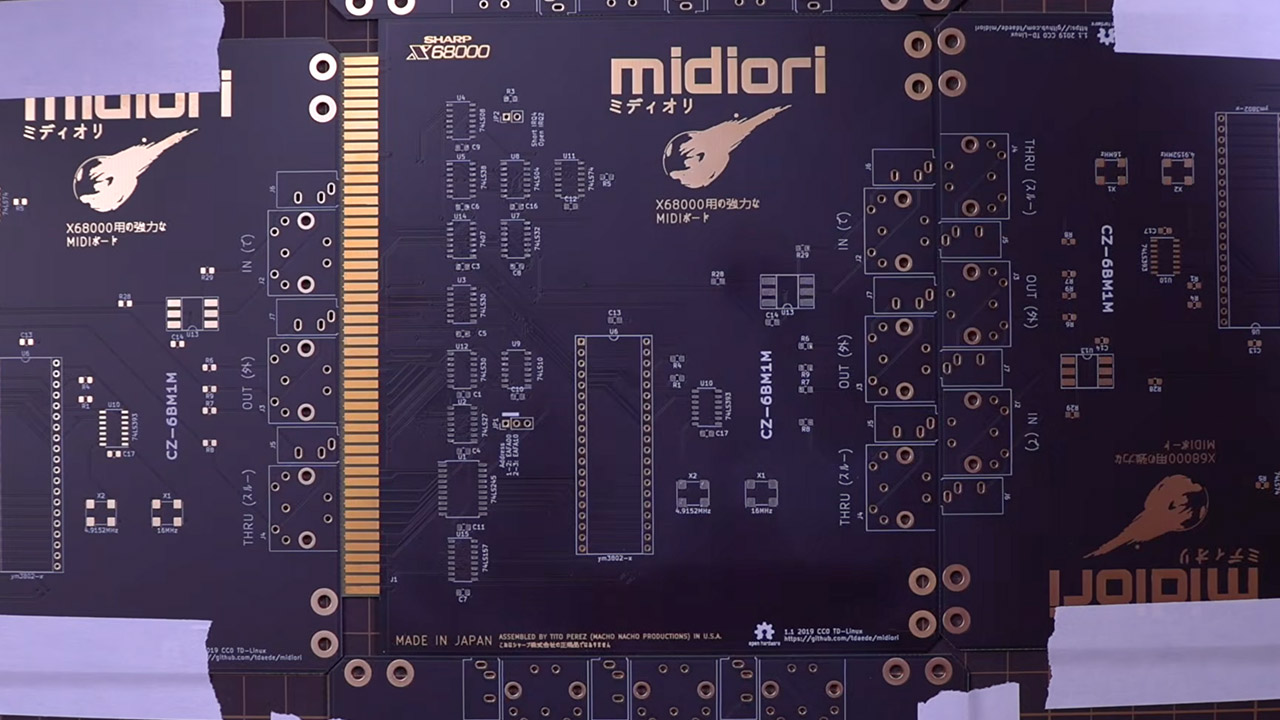
The next step was to add additional expansion cards, the first of which was a MIDI interface called the Midiori, which was designed based on a friend’s NFG forum remarks. After a long hunt, he finally found a Yamaha YM3802X chip. He modded the boards on a PCBWay with some gold features, then the surface-mount parts were applied using solder paste and a hot-air station. The through-hole connectors were carefully trimmed to ensure proper fit in the expansion bay. He also included some 3.5mm jacks for good measure. After he programmed and installed it, the card allowed the X68000 to control external MIDI modules.

Sharp X68000 Console PC Restoration
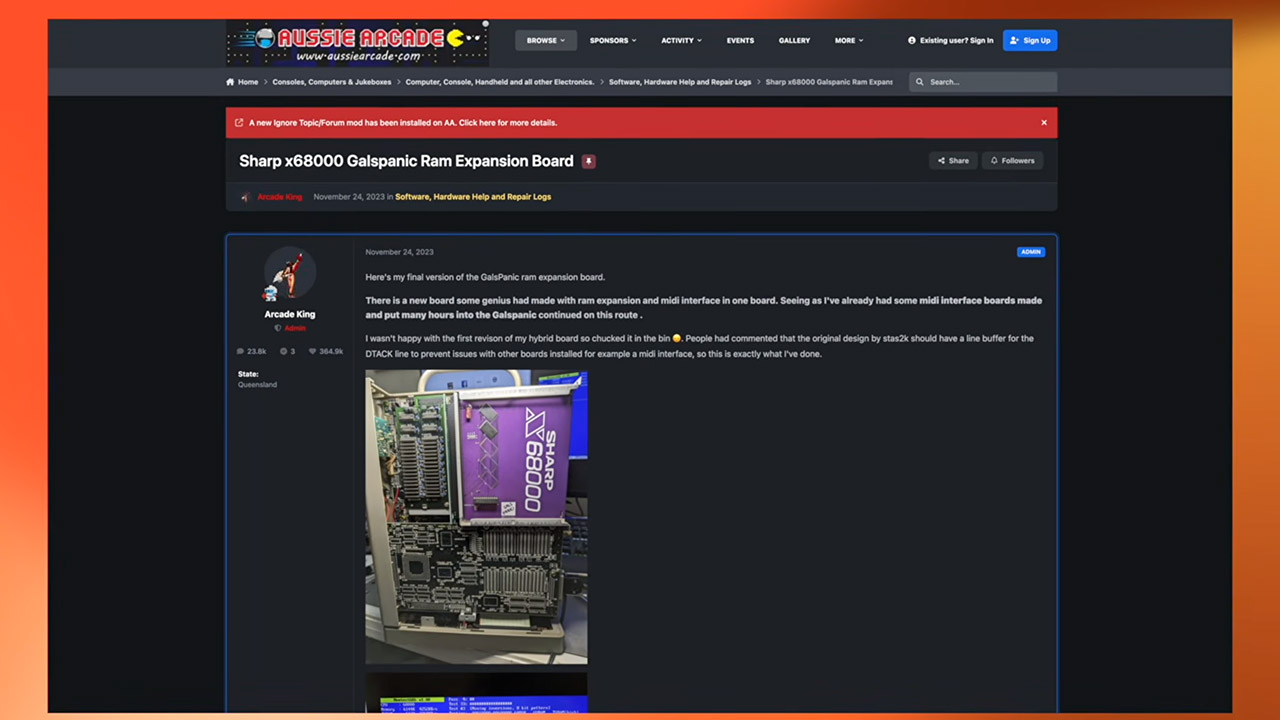
The second card contains a redesigned GALSPANIC RAM expansion. Arcade King contributed to the refinement of an earlier open design, resulting in a larger board capable of accommodating enough memory chips to bring the system to its full 12 MB capacity. The assembly method is the same as before: paste-and-reflow, followed by programming the GAL logic chip, which handles the extra addressing. Early on, a jumper error reduced the system’s memory to about 3 MB. However, once the jumpers were sorted out, the machine immediately sprung to life, with approximately 11.5 MB of free memory after the OS had taken its part.

Sharp X68000 Console PC Restoration
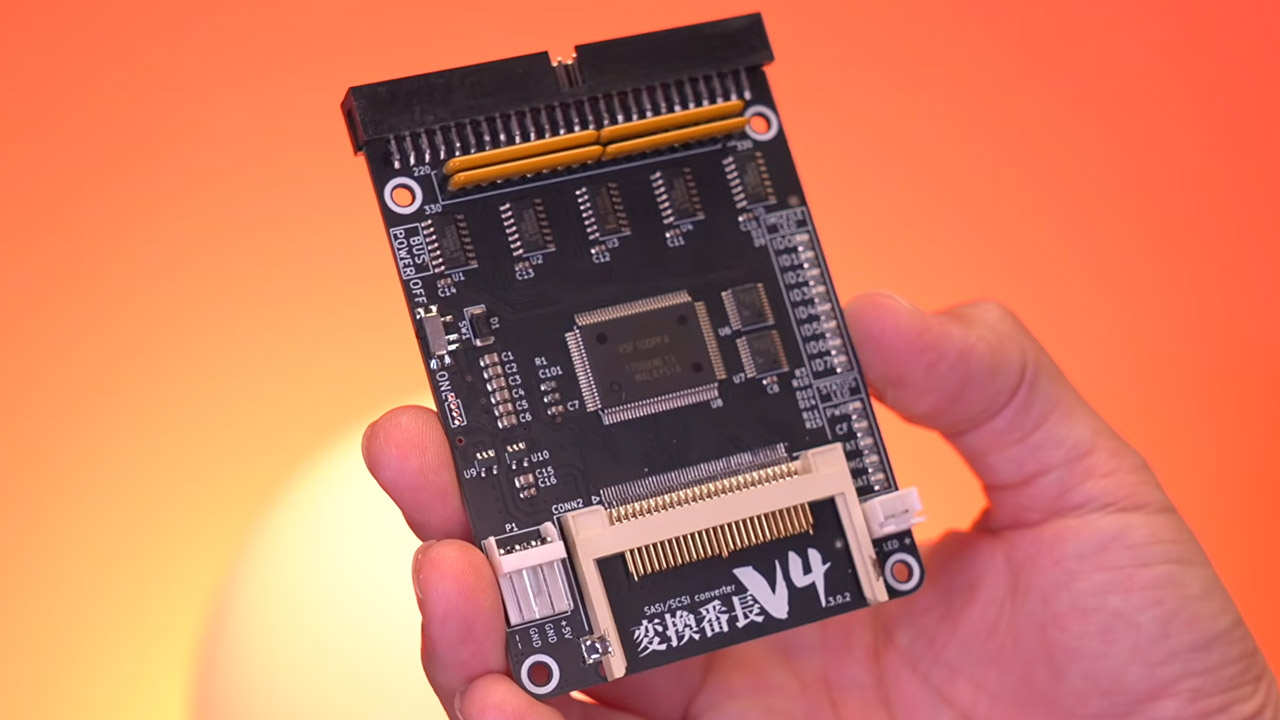
Storage now exists in the twenty-first century, with hard drives and floppies consigned to the trash of history. Tito has fitted a Hanken Bancho SASI converter together with a CF-to-SD adaptor and mounting plate, all neatly ensconced where an internal drive used to be. Some fancy ribbon cables and a convenient JST connection for the activity LED keep everything looking nice and tidy. And getting everything set up is a breeze; simply load a master disk and follow the prompts. After that, you’ll have a 4 GB image from Incredible Hark to load onto your SD card. This is a carefully chosen collection of games, homebrew, utilities, and media organized across virtual drives, making it easy to locate what you’re looking for.


The first time you boot it up, you see this clear menu. Games can be launched with two keystrokes, and several that were formerly memory hogs, such as Valis II, are no longer an issue. Cotton, which features horizontal shooting, and Cho Ren Sha 68k, a typical vertical shooter, both operate at full steam with the speed and color you’d expect from this hardware. Then there’s the MIDI output, which, when routed thru a Roland SC-55, breathes faresh life into Akumajo Dracula’s music. That FM synth isn’t quite as good as those rich, sampled instruments, so seeing it in its complete glory is a tremendous delight.

Advertisement

Source link

Continue Reading

Tech

The what, why, and how of pull requests and source comments

Published

on

SOFTWARE

Microsoft veteran on knowing the difference and convincing approvers to accept a change

Veteran Microsoft engineer Raymond Chen has weighed in on the difference between a pull request description and comments embedded in the code.

Both matter, but they serve very different purposes. As Chen noted on his The Old New Thing dev blog: “The PR description is a point-in-time statement, providing information that is relevant to the code review itself.

Advertisement

“It is an exercise in persuasive writing: You are trying to convince the approver that your change should be accepted.”

And sticking text in the source? “Comments in the code are for talking about the code itself. What is the correct way to call this function? Does it have specific prerequisites? This information is durable: It is information that remains useful even after the pull request completes.”

We’d argue that commit messages should be considered as well, but the distinction between PR descriptions and code comments is timely, given the volume of pull requests being generated by AI coding tools alongside some occasionally “interesting” annotations.

Then again, anyone complaining about comments in AI-generated code would be wise to inspect those written decades ago by one of this writer’s former colleagues. They consisted of pages apologizing to whichever future programmer had to untangle the spaghetti of C++ lurking through a maze of modules. Another colleague refused to annotate their code at all, insisting it was “self-commenting.”

Advertisement

These days, an honest comment might read: “This was written by , and I have no idea how the heck any of it works.”

It echoes another perennial developer dispute: whether code should be indented with tabs or spaces. In 2024, another Microsoft veteran, Larry Osterman, took a decidedly fence-sitting position: tabs were fine when storage was at a premium, but spaces now make more sense “because it always works and it’s always consistent.”

Chen’s position on tabs versus spaces is not widely known, but his broader opinion on code formatting was straightforward: “I don’t care how you format your source code. It’s your source code.”

He did suggest making any wholesale change in layout or formatting a separate check-in, so maintainers aren’t faced with an epic diff dominated by a new style guide.

Advertisement

All of which brings us back to Chen’s distinction: the PR description explains why maintainers should accept a change, while comments preserve what future programmers need to understand the code. ®

Source link

Continue Reading

Tech

X-Men Cast, VisionQuest Trailer: All the Big Marvel News Out of D23

Published

on

Disney had a night packed with movie and streaming announcements, including the Star Wars: Starfighter trailer, Zootopia 3 and The Incredibles 3 reveals, the Frozen 3 trailer and so much more. But during the entertainment showcase on Friday night in Anaheim, there was also some big Marvel Cinematic Universe news. 

Here are the biggest Marvel reveals from Disney’s D23 fan convention.

X-Men Cast revealed

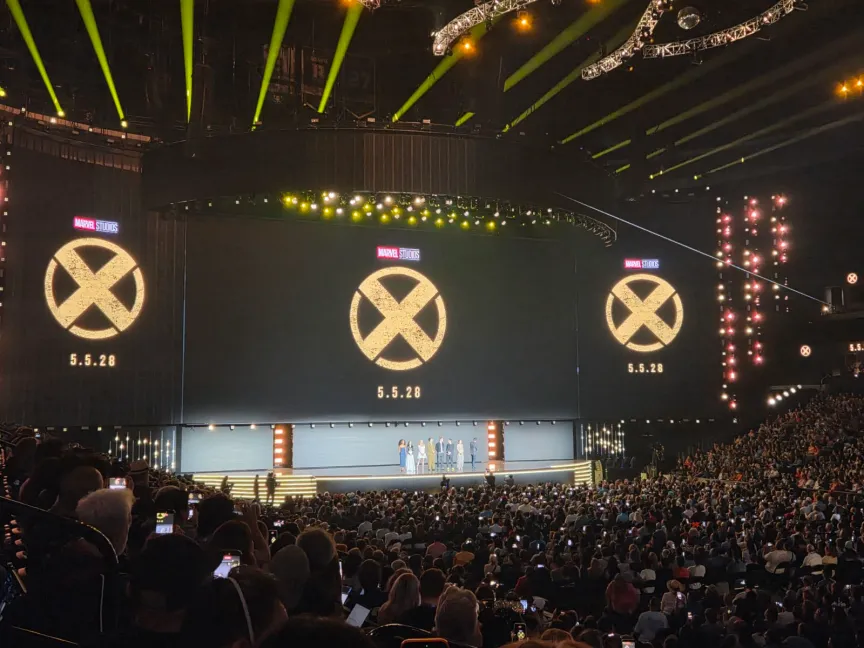
The X-Men logo and release date and cast shown at D23
The cast of X-Men was rounded out at D23.Corinne Reichert/CNET

The cast for the upcoming X-Men movie was finally announced, with Marvel chief Kevin Feige joined by Sadie Sink to bring them all out on stage. Sink plays Jean Grey — as revealed during Spider-Man: Brand New Day — and we also found out that alongside Kit Connor as Cyclops/Scott Summers and Samara Weaving as Emma Frost, we’ll get Christopher Abbott as Professor Charles Xavier, Inde Navarrette as Rogue and Maya Boyd as Ororo Munroe/Storm.

Adam Driver appeared via video link to tease that he would be playing Magneto, before eventually admitting he was cast as Nathaniel Milbury — one of the many names for X-Men villain Mr. Sinister. 

The role of Storm has been an especially hot topic, with rumors flying for months on who would get the gig. Storm’s history with the X-Men and the Avengers is legendary, as the powerful weather-manipulating hero has fought plenty of battles alongside them, as part of the X-Men, and while apart from them. In the comics, she married the king of Wakanda and became queen, was part of the Secret Wars story as a minion of Doctor Doom and gained abilities from Asgard to become a Thor. 

Advertisement

With such a seasoned track record in Marvel’s multiple stories and realities, once Storm is introduced to the MCU, it’s possible for her to show up anywhere. Given Sink’s Jean Grey’s appearance in Spider-Man: Brand New Day, the X-Men may show up in other MCU films, and are confirmed to be in the next big crossover film, Doomsday.

The X-Men film will hit the big screen on May 5, 2028. 

Avengers: Doomsday trailer

Joining Feige on stage to introduce the Avengers: Doomsday trailer were Robert Downey Jr (Victor Von Doom), Chris Evans (back as Steve Rogers) and Hayley Atwell (Peggy Carter). They noted that the movie will feature not only the Avengers but also the Fantastic Four and the original X-Men.

Advertisement

The star-studded trailer included Victor Von Doom easily fighting off Chris Hemsworth’s Thor. The trailer ended with Doctor Doom raising Sentinel robots, which have been deployed against the X-Men in movies and comics.

We also saw glimpses of Simu Liu (Shang-Chi), Patrick Stewart (Professor X), Vanessa Kirby (Sue Storm) and Ian McKellan (Magneto) — and even Steve Rogers holding a baby.

Via video, Hugh Jackman (Wolverine), speaking to an off-stage Ryan Reynolds (Deadpool), also begged to be included in Avengers: Doomsday, but Feige didn’t make it sound as though that would be a possibility.

Avengers: Doomsday is out in cinemas on Dec. 18.

Advertisement

A trailer for VisionQuest

Aside from a trailer during Disney upfronts in May, we had yet to see footage from the new series starring Paul Bettany as Vision and James Spader as Ultron. 

Bettany and Spader joined Feige to announce the VisionQuest trailer, which kicks off with Vision seeing a W+V heart carved into a table and looking quizzically at it. He has been reanimated and is watching old footage of himself from both Avengers and WandaVision, including his children, Billy and Tommy Maximoff (we last saw the kids in Agatha All Along, so we know they’re out there somewhere).

“In the Marvel universe, no one is ever really dead,” Bettany said. “What, or perhaps who, is he exactly? And what is it that makes us human?”

Advertisement

VisionQuest hits Disney Plus on Oct. 14.

Source link

Advertisement
Continue Reading

Tech

What are the rumors about the AirPods Pro 4?

Published

on

Apple’s AirPods Pro may get a massive upgrade soon, with one version including infrared cameras and improved AI. Here’s what the rumor mill has to say about what’s coming and when.

While products like the iPhone and iPad receive yearly upgrades in the form of new models, Apple’s approach to audio accessories is somewhat different. The AirPods Pro, for instance, debuted in 2019, but the product didn’t receive any meaningful changes until 2022.

2025 saw the arrival of the AirPods Pro 3, which gave the premium earbuds heart rate sensing capabilities, along with improved active noise cancellation. While initial rumors suggested the fourth-generation model would offer built-in cameras as the next major improvement, recent claims suggest a model with incremental upgrades might arrive first.

Leakers and analysts have had a lot to say about Apple’s plans for the AirPods Pro line, commenting on the product’s release date, features, design, and everything in between.

Advertisement

AirPods Pro 4 rumors: Gestures, cameras, and multiple models

Apple has been exploring how to add gesture support to AirPods since at least October 2020, when a patent application titled “Wearable Interactive Audio Device” detailed a possible approach using capacitive surfaces.

Similarly, a January 2026 patent application proposed using an RF antenna for gesture recognition, while a June 2025 Apple patent explained how AirPods could read lips with the help of lasers.

Apple’s research shows the company has considered multiple ways of enhancing AirPods with gesture recognition. However, the rumor mill has latched on to a specific approach, that being AirPods with cameras.

Rumors of camera-equipped AirPods date back to February 2024, when a generally reliable source claimed Apple had started development on the product in 2023. Supposedly, these low-resolution cameras would feed data into AI, while the AirPods themselves had the codename B798.

Advertisement

In June 2024, analyst Ming-Chi Kuo chimed in, also saying that Apple was working on AirPods with cameras, which were set to arrive in 2026. Kuo went on to reiterate in May 2025 and September 2025 that these camera-equipped AirPods would debut in 2026.

In October 2024, however, the leaker who originally mentioned the B798 codename revealed that AirPods with cameras wouldn’t make their way to customers until 2027. In December 2024 and January 2025, they reiterated their claims about AirPods with IR cameras, adding that temperature sensors were also planned.

Then the same source added more detail in March 2025 and October 2025. They claim these new AirPods will use cameras to get data on the surrounding environment that can be used in AI features. For instance, the user might ask where they are, and the AirPods may use signs to determine an approximate location, or a user could be told which way a shop is based on storefront imagery.

This idea previously appeared in an Apple patent application from June 2024. Though not directly related to AirPods, the patent application explores how users might be able to shop or get information about an object or landmark, simply by pointing at things in front of them.

Advertisement

Similarly, a July 2025 Apple patent details how built-in cameras could see use as proximity sensors. This is illustrated through an AirPods optical system capable of recognizing proximity to an object and determining the “type of matter.”

Months later, in February 2026, leaker Kosutami claimed that the next generation of AirPods Pro would be able to “see around you,” meaning the product would have built-in cameras. The claim is tied specifically to the AirPods Pro line, as are all subsequent claims of camera-equipped AirPods.

Kosutami also claimed the upgraded AirPods Pro would cost about the same as the current AirPods Pro 3. The leaker in question is also a collector of Apple prototypes, having revealed photos of scrapped yellow and pink AirPods variants.

Also in February 2026, the source who revealed the B798 codename in 2024 reiterated that Apple was working on AirPods with cameras. They revealed additional details in May 2026. Going against previous rumors, the leaker claimed Apple’s camera-enhanced AirPods Pro would not feature gesture recognition.

Advertisement

Instead, the product would have cameras and Siri to assist the wearer. For instance, the AirPods might provide a recipe based on the ingredients seen in a refrigerator. Design-wise, they said the AirPods with cameras would resemble the current AirPods Pro 3. These claims were reiterated later in May 2026.

Sometime later, in July 2026, the AirPods Pro identifier B790 appeared in an iOS 27 developer beta, and it looked as though the device would feature cameras. However, the B790 codename did not match the B798 identifier revealed previously. The same month, leaker Kosutami claimed Apple had stopped working on camera-enhanced AirPods.

An August 2026 rumor then brought some clarity. Per the report, Apple is working on two new AirPods Pro configurations. Those are the B790, which is expected to be a minor upgrade from the AirPods Pro 3, and the B798, which allegedly features on-board cameras.

Supposedly, Apple will release the B790 first in 2026, with the camera-equipped B798 set to follow in 2027. Multiple leakers agree about what Apple will do with its AirPods Pro line, so we have a good idea of what to expect

Advertisement

Apple’s AirPods Pro approach & should you wait

As it currently stands, it looks as though Apple will first deliver an AirPods Pro hardware upgrade without cameras. Given that the earbuds won’t include IR cameras, and that they’ll supposedly resemble the AirPods Pro 3, we’ll likely only get minor enhancements.

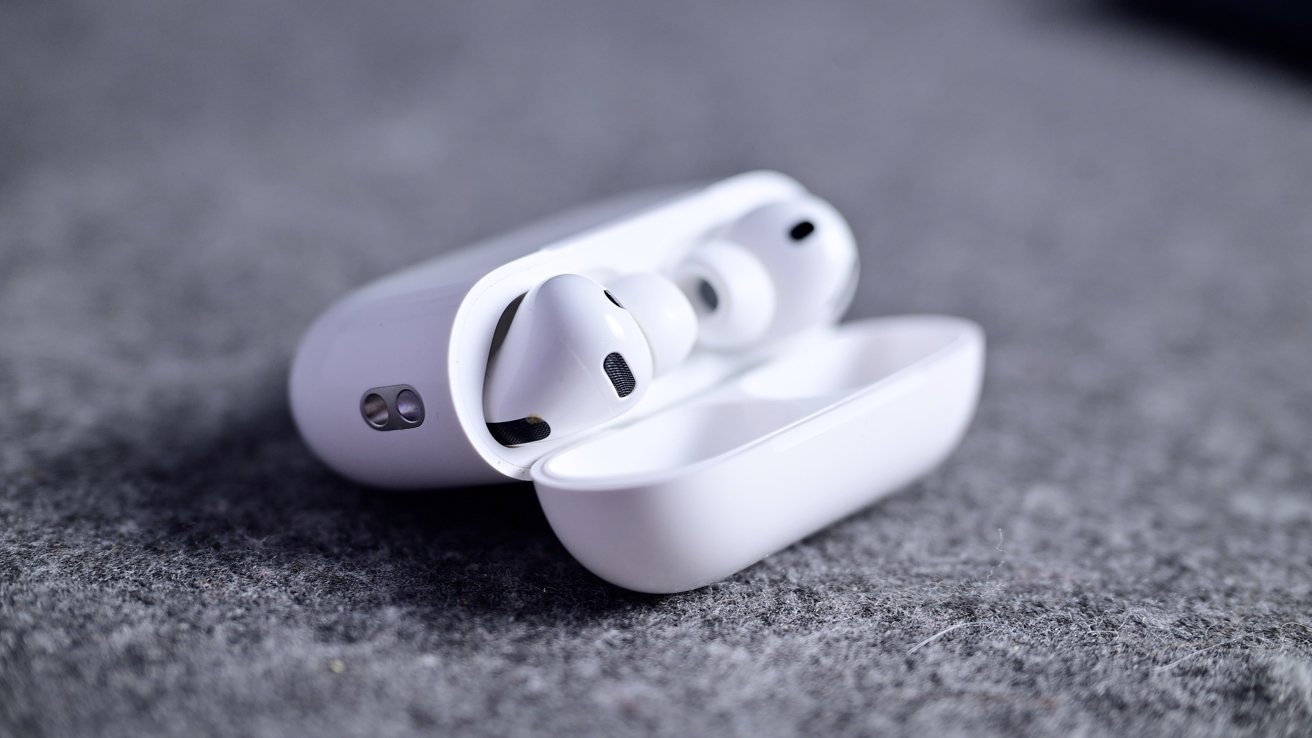
White wireless earbuds resting in an open charging case on a soft gray fabric surface, shown in close-up with emphasis on the sleek, modern design

Apple’s AirPods Pro seemingly won’t get a major upgrade before 2027.

This could include improved ANC and audio quality, battery life, range, connectivity, and more, though no rumor so far has outlined any of these changes specifically. A temperature sensor is the only rumored change so far. This AirPods Pro model is expected to debut in 2026, but it might be worth skipping altogether.

2027 should see the arrival of AirPods Pro with cameras for AI capabilities. Based on what the rumor mill has to say, these AirPods will help you navigate the world around you, though it remains unclear if the new AirPods Pro will offer gesture support.

Advertisement

In essence, this means Siri will be able to guide you to your destination, help you with tasks involving objects directly near you or around you, and so on. But the AirPods won’t be able to take photos or videos for you the way an iPhone can.

Another possible use case is sign language interpretation. Apple already supports Live Translation with iOS 26 and AirPods Pro 3, but adding cameras might allow the wearer to communicate with an individual who relies on sign language.

This would explain Apple’s patent regarding lip-reading with lasers. Additionally, Google’s Pixel 11 range introduced support for American Sign Language translation in August 2026, so it’s not hard to imagine Apple going the same route with AirPods, though this will depend on whether or not gesture support is included.

While Apple’s exact approach remains to be seen, it would be a good idea to wait until 2027 before purchasing a new pair of AirPods Pro, assuming you’re looking for more powerful AI-enabled earbuds. Price-wise, there shouldn’t be any increases with the camera-enhanced AirPods Pro.

Advertisement

Source link

Continue Reading

Tech

R-Selecting Tiny Probes To Shotgun Into Saturn’s Rings

Published

on

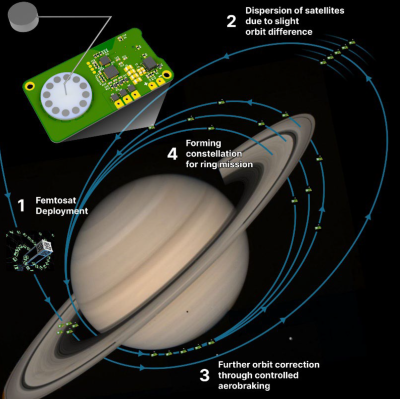
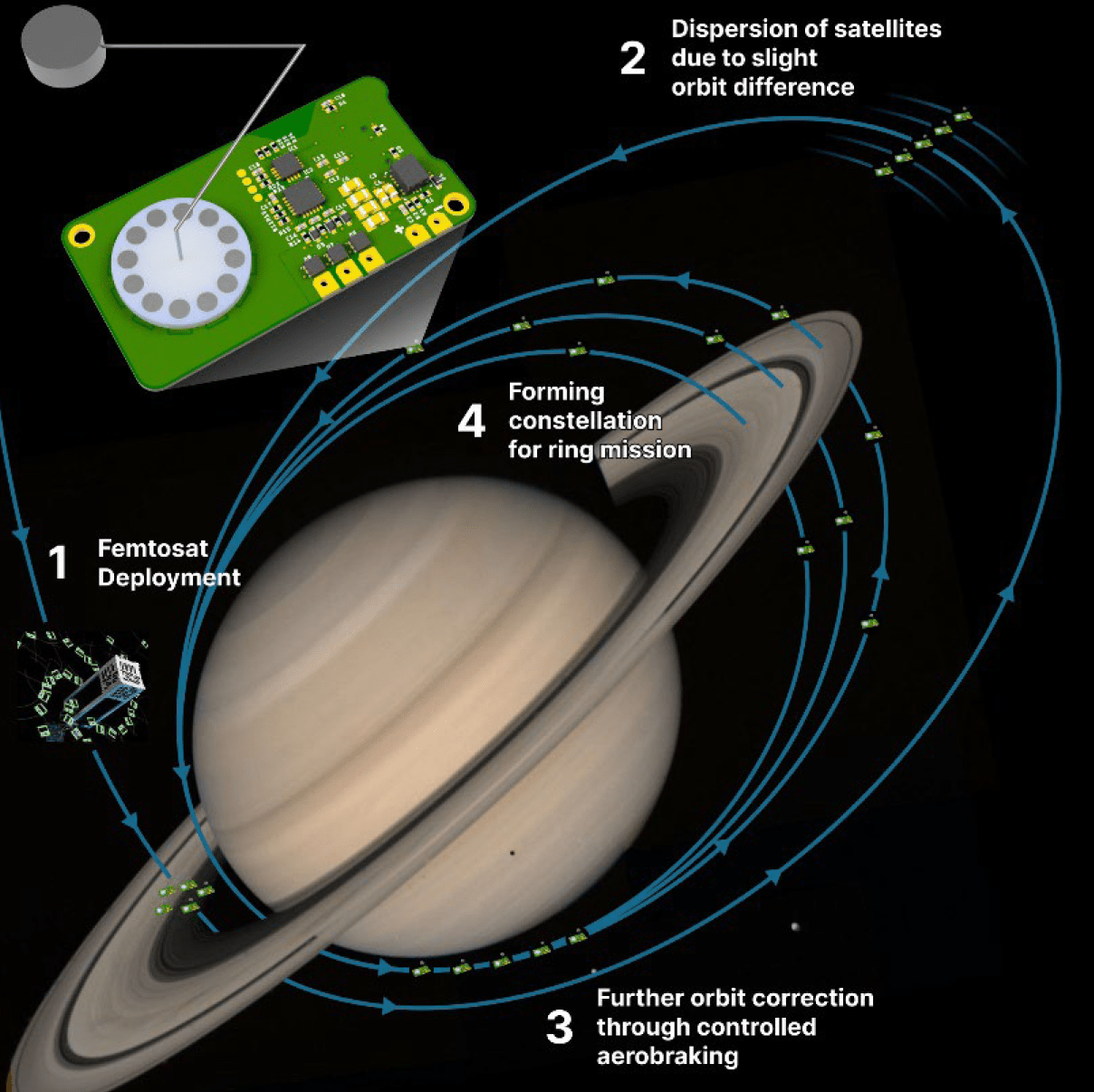
In ecology, there used to be a concept — now largely unfashionable — that species could be described as r- or K-selected, depending on how they treat their offspring. An elephant that has one calf every few years and devotes immense resources to them is adopting a K-selection strategy — much as NASA traditionally has to its flagship probes, like Cassini. A sea turtle who leaves hundreds of eggs in a clutch on the beach and leaves without saying “good luck”, content in the knowledge that one of them will probably make it to adulthood is engaging in an r-selected strategy, and it’s this strategy that [Dr. Michael Rubenstein] is proposing for a next-generation mission to Saturn as part of NASA’s Innovative Advanced Concepts Program for 2026. Entitled “Actively Steerable Femtosat Constellations for In-situ Exploration of Saturn’s Rings, Atmosphere, and Magnetosphere

The concept is pretty simple: the rings are a horrifying mess of dust, debris, and ice bits of all sizes that represent almost certain death for a spacecraft. By launching 10,000 femtosatellites, those odds of almost certain death become an almost certainty that one or more will make it through with precious data. In the immortal words of Lord Farquhar, “Some of you may die, but that is a sacrifice I am willing to make.” With Cassini, NASA would never consider such a sacrifice. With itty-bity femtosatellites, it starts to make sense. We’ve been saying for years that the future of space is tiny, but these sacrificial probes would make even modern cubesats and picosatellites look big.

Thanks to [Richard HT] for the tip! His tip was to a podcast featuring [Dr. Rubenstein] with [Fraser Cain], which we’ve embedded below. It has a lot more details than NASA’s official blurb page.

Advertisement

Source link

Advertisement
Continue Reading

Tech

Stopping a cyberattack while walking your dog

Published

on

security

Corma CEO tells The Reg it’s building ‘One ring to rule them all, for the defenders to have this power’

Corma CEO Alon Pluda says his AI security startup aims to close the “defense gap,” where models are better at offensive security. He tells the story of one customer, a security executive who was walking his dog when he received a notification on his watch from a Corma agent.

“It said, ‘I just caught a live attack. I need your permission to block it,’” Pluda told The Register in an interview. 

Advertisement

The security boss approved the agent’s action; the agent blocked the malware and the attacker from moving across the company’s network and mitigated the intrusion in under 10 minutes, Pluda said.

The customer later described “walking outside with his dog, and blocking a real-live attack with his AI coworker” as “one of the most magical moments of his year,” Pluda recalled.

Pluda founded Corma about a year ago. And yes, all you Lord of the Rings nerds, the company gets its name from the Elven word for “ring.” “We’re building the one ring to rule them all, but this time for the defenders to have this power.”

Earlier this week, the company announced $60 million in seed funding led by Sequoia Capital, alongside Khosla Ventures and Coatue. He told us that his startup is working with Fortune 100 companies, and training models to achieve “superintelligence for defensive cybersecurity.”

Advertisement

Models from OpenAI, Anthropic, and Google are “amazingly good” at coding and language, and this includes finding and fixing bugs, and orchestrating tools across multi-step workflows, he explained. 

“When you combine it with agentic capabilities, they move from being incredible vulnerability researchers to end-to-end attackers,” Pluda said. “So inherently, what we’ve seen in the last few months is the models getting exponentially better at offensive security, like we saw with the OpenAI and Hugging Face incident.” 
But these same models aren’t as skilled at carrying out defensive security tasks that don’t involve scanning code for vulnerabilities and misconfigurations, he said. “The vast majority of defensive security tasks don’t have anything to do with code.”
Corma recently tested four frontier models – Claude Opus 4.8, GPT-5.5, Grok 4.3, and DeepSeek V4 – as both attackers and defenders across the same fake company and its networks, built to closely mirror a multi-business enterprise. The attacker’s task was to plant a backdoor and the defender’s task was to find it and stop the attack. 

Advertisement

Closing the defensive gap

Corma ran all four models against each other in every attacker and defender pairing, including each model against itself, with 15 independent engagements per pairing for 241 scored engagements. Across all of these, the models successfully implanted a persistent backdoor in 85 percent of their runs. However, these same models only detected 19 percent of attacks.

“That speaks to the inherent imbalance we are trying to solve,” Pluda said. “The general foundation models are getting exponentially better at offensive security, but haven’t been able to improve on the same rate on defensive security. So our mission is to close this gap, and make sure the defenders win in this intelligence-versus-intelligence game – or war.” 

Corma calls this the defensive gap, and says it has to do with the data these models are trained on and the objectives they are trained against, which lend themselves to offensive security.

Defensive security, however, involves reading logs, events, configurations, audit trails, and on-disk state. This is “structured machine data that is neither prose nor source, and a small share of what these models see in training,” according to Corma’s research. “They appear to read it less reliably.”

Advertisement

Plus, defensive reasoning is more open-ended, while offense has a straightforward goal – like “make this work” or “break this” and a checkable finish.

Agentic defenders

“Defensive security,” according to Pluda, “is about finding needles in the haystack.”

Corma’s models power its AI agents, which organizations can deploy like “team members” who then operate across defensive security tasks. “It’s a generalized workforce, and you can assign it to whatever security tasks you want.”

Fortune 100 and 500 organizations across healthcare, financial services, energy, critical infrastructure, retail, and other sectors have deployed Corma’s AI workforce across their environments, according to the startup.

Advertisement

These early deployments, we’re told, have reduced threat response times by more than 94 percent, expanded security coverage by 15 times across different security functions, and uncovered multi-stage attack campaigns. 

“If you can get AI that is smart enough, intelligent enough, knows the domain enough, optimizes for the right things enough, and you can actually trust it, end to end, all the way to responding to real-live attacks, you can reduce all of these metrics significantly,” Pluda said. “And you can cover way more ground than what is possible with just human intelligence.”®

Source link

Advertisement
Continue Reading

Trending

Copyright © 2025