Connect with us
DAPA Banner

Tech

Today’s NYT Connections: Sports Edition Hints, Answers for March 3 #526

Published

on

Looking for the most recent regular Connections answers? Click here for today’s Connections hints, as well as our daily answers and hints for The New York Times Mini Crossword, Wordle and Strands puzzles.


Today’s Connections: Sports Edition is a tough one. If you’re struggling with today’s puzzle but still want to solve it, read on for hints and the answers.

Connections: Sports Edition is published by The Athletic, the subscription-based sports journalism site owned by The Times. It doesn’t appear in the NYT Games app, but it does in The Athletic’s own app. Or you can play it for free online.

Advertisement

Read more: NYT Connections: Sports Edition Puzzle Comes Out of Beta

Hints for today’s Connections: Sports Edition groups

Here are four hints for the groupings in today’s Connections: Sports Edition puzzle, ranked from the easiest yellow group to the tough (and sometimes bizarre) purple group.

Yellow group hint: Deal me in.

Advertisement

Green group hint: Football fun.

Blue group hint: GOAAAAAL!

Purple group hint: Name game.

Answers for today’s Connections: Sports Edition groups

Yellow group: Card games.

Advertisement

Green group: NFL teams, on scoreboards.

Blue group: Premier League nicknames, minus the S.

Purple group: Athletes who changed their name.

Read more: Wordle Cheat Sheet: Here Are the Most Popular Letters Used in English Words

Advertisement

What are today’s Connections: Sports Edition answers?

completed NYT Connections: Sports Edition puzzle for March 3, 2026

The completed NYT Connections: Sports Edition puzzle for March 3, 2026.

NYT/Screenshot by CNET

The yellow words in today’s Connections

The theme is card games. The four answers are rummy, Skip-Bo, solitaire and Uno.

The green words in today’s Connections

The theme is NFL teams, on scoreboards. The four answers are CAR, DEN, JAX and TEN.

Advertisement

The blue words in today’s Connections

The theme is Premier League nicknames, minus the S. The four answers are cottager, magpie, seagull and toffee.

The purple words in today’s Connections

The theme is athletes who changed their name. The four answers are Abdul-Jabbar, Ali, Ochocinco and World Peace.

Source link

Advertisement
Continue Reading
Click to comment

You must be logged in to post a comment Login

Leave a Reply

Tech

Dutch Ministry of Finance discloses breach affecting employees

Published

on

Netherlands Dutch Ministry of Finance

The Dutch Ministry of Finance confirmed on Monday that some of its systems were breached in a cyberattack detected last week.

Officials said the ministry was notified by a third party of the breach on March 19, and it’s still investigating the cyberattack. An ongoing investigation found that the incident affects some employees.

“The Ministry of Finance’s ICT security detected unauthorized access to systems for a number of primary processes within the policy department on Thursday, March 19,” an official statement revealed.

“Following the alert, an immediate investigation was launched, and access to these systems has been blocked as of today. This affects the work of a portion of the employees.”

Advertisement

The ministry added that the cyberattack did not impact systems used to manage tax collection, import/export regulations, and income-linked subsidies, which handle over 9.5 million tax returns annually for income tax alone.

“Services to citizens and businesses provided by the Tax and Customs Administration, Customs, and Benefits have not been affected. We will update this message when we can share more information.”

Although the ministry said the breach affected some of its employees, it didn’t disclose how many were affected or whether the attackers stole any sensitive data. Also, no cybercrime group or threat actors have taken responsibility for the attack.

BleepingComputer reached out to a Ministry of Finance spokesperson with questions about the incident, including the total number of impacted employees and how long the attackers had access to the compromised systems, but a response was not immediately available.

Advertisement

In September 2024, the Dutch national police (Politie) was also breached in a cyberattack believed to be orchestrated by a “state actor” that stole work-related contact details of multiple police officers.

More recently, in February, Dutch authorities arrested a 40-year-old man for an extortion attempt after he downloaded confidential documents mistakenly shared by the police and refused to delete them unless he received “something in return.”

Malware is getting smarter. The Red Report 2026 reveals how new threats use math to detect sandboxes and hide in plain sight.

Download our analysis of 1.1 million malicious samples to uncover the top 10 techniques and see if your security stack is blinded.

Source link

Advertisement
Continue Reading

Tech

Direct Pressure Advance Measurement For Fast Calibration

Published

on

Some people love fiddling with their 3D printers, others love printing. Some fiddle so they can spend more time printing, which is probably where this latest project comes in: an automated pressure advance calibration tool by [markniu].

Most of us don’t take enough care with pressure advance (PA). But if you want absolutely perfect prints, its something you should be calibrating for every type filament in your collection. Some would argue, ideally every individual spool. While that sort of dialing in can be fun, it takes away from actually running off prints. Bambu printers automate PA by scanning the usual sort of calibration print, but that’s still a very indirect measurement. Why not, just advance the filament, and measure the pressure at the nozzle directly? That is what PA is meant to account for, after all: the pressure of the plastic in the hotend causing oozing and blobbing at corners.

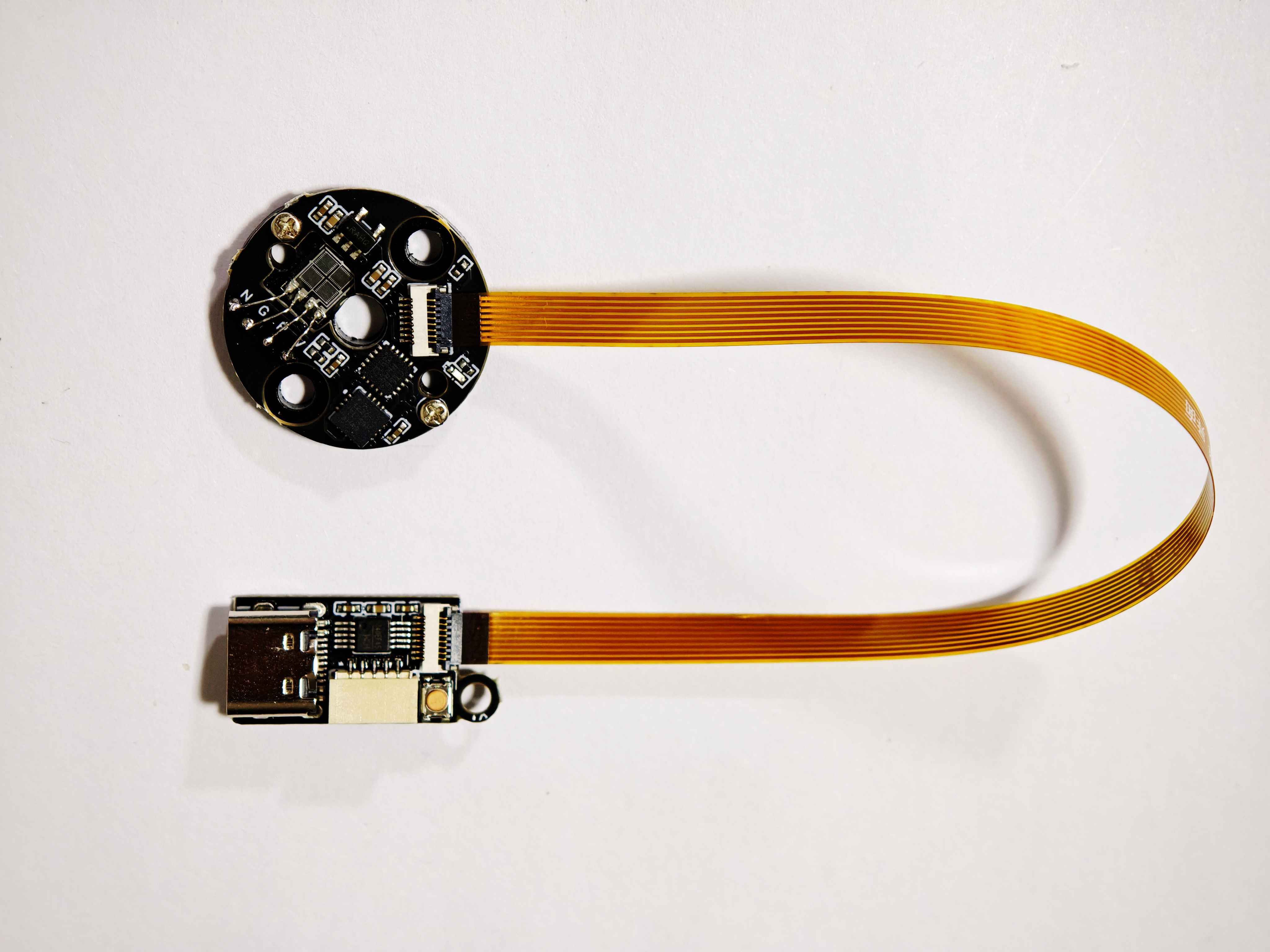
Did we mention it connects via USB-C? That’s helpfully broken out well away from the heat with a ribbon cable.

[mark]’s solution comes very close to a direct measurement. It uses a strain gauge that sits directly on top of the heatbreak, with the sound logic that the strain there experienced will be directly proportional to the pressure inside, at least along the axis of flow. Instead of filling half the bed with lines, the calibration process instead is a ‘printer poop’ style extrusion that doesn’t take nearly as long, and seems to save plastic, too. Since this puts a strain gauge in your hotend, you also get the bonus of being able to use it for bed leveling if you should so desire.

[mark] is claiming sub-90 second calibration — as you can see in the demo video embedded below — versus over seven minutes for the indirect calibration print. The value is plugged directly into Klipper, assuming you configured everything correctly, which should be easy enough looking at the instructions on the GitHub.

Advertisement

Source link

Continue Reading

Tech

Canonical Joins Rust Foundation – Slashdot

Published

on

BrianFagioli writes: Canonical has joined the Rust Foundation as a Gold Member, signaling a deeper investment in the Rust programming language and its role in modern infrastructure. The company already maintains an up-to-date Rust toolchain for Ubuntu and has begun integrating Rust into parts of its stack, citing memory safety and reliability as key drivers. By joining at a higher tier, Canonical is not just adopting Rust but also stepping closer to its governance and long-term direction.

The move also highlights ongoing tensions in Rust’s ecosystem. While Rust can reduce entire classes of bugs, it often depends heavily on external crates, which can introduce complexity and auditing challenges, especially in enterprise environments. Canonical appears aware of that tradeoff and is positioning itself to influence how the ecosystem evolves, as Rust continues to gain traction across Linux and beyond. “As the publisher of Ubuntu, we understand the critical role systems software plays in modern infrastructure, and we see Rust as one of the most important tools for building it securely and reliably. Joining the Rust Foundation at the Gold level allows us to engage more directly in language and ecosystem governance, while continuing to improve the developer experience for Rust on Ubuntu,” said Jon Seager, VP Engineering at Canonical. “Of particular interest to Canonical is the security story behind the Rust package registry, crates.io, and minimizing the number of potentially unknown dependencies required to implement core concerns such as async support, HTTP handling, and cryptography — especially in regulated environments.”

Source link

Continue Reading

Tech

Steve Wozniak says he's "disappointed a lot" by AI and rarely uses it

Published

on


In a CNN interview in which he was asked about Apple’s upcoming 50th anniversary and how the company has shaped the tech industry, Wozniak was asked what excites and scares him about AI.
Read Entire Article
Source link

Continue Reading

Tech

What Does The Viral Afroman Trial Have to Do with Section 230?

Published

on

from the because-i-got-section-230 dept

The internet has been rightfully enjoying videos from the defamation trial against Afroman, a musician known for his humorous songs including “Because I got high.” The lawsuit involves songs he wrote about a 2022 raid police conducted on his house, which was based on flimsy evidence. The songs justifiably mock the officers involved. Mike Masnick wrote a recap of the case here, which is worth reading for many reasons, but the songs and Afroman’s testimony are true highlights. 

After the raid, Afroman released his songs on YouTube and they went viral initially on TikTok, both massive platforms for users to share their speech and that of other users. The officers who raided his home, seeking to silence someone making fun of them, sued Afroman for defamation, emotional distress, and other causes in 2023. 

Spoiler: Afroman won. The songs are not defamatory. But we didn’t know that for sure until a jury told us so this week. For three years, from the moment the lawsuit was filed until the jury issued its verdict, the songs were allegedly defamatory. And their continued “publication” ran the risk of liability.

So why could we still see the songs on YouTube, TikTok, Bluesky, and whatever other online platforms where we first encountered them? One big reason is Section 230 of the Communications Decency Act. 

Advertisement

Section 230 says that interactive computer service providers, like online platforms, cannot be treated as the publisher or speaker of information content provided by other information content providers. That means that YouTube could not be liable for the content of Afroman’s songs, even if they were defamatory. That’s the balance Section 230 strikes. Under 230, there is still accountability for the speaker, but online platforms are not liable for their users’ illegal speech.

By and large this balance has been incredibly beneficial to free expression online, supporting speech about everything from the profoundly consequential (#MeToo and Black Lives Matter) to the somewhat silly (a song about a cop who got distracted from a raid by a delicious looking “Lemon Pound Cake”). But now, members of Congress like Senator Lindsey Graham and Senator Dick Durbin want to repeal or replace Section 230 without much of a plan for what comes next. 

On March 18, Daphne Keller, a professor of law at Stanford and expert in intermediary liability laws around the world, testified before the Senate Commerce Committee. She tried to explain to the Senators that Section 230 may not be perfect, but it’s still better than any of the options she has seen. To understand why Daphne’s right, let’s think about what Afroman’s case might have looked like without Section 230. The moment Afroman was allowed to distribute his songs about the raid on YouTube, the company could have been liable for any potentially illegal speech they contained. That means YouTube probably also would have been a co-defendant in the cops’ suit. At the scale many online platforms operate at, these kinds of accusations of defamation and lawsuits related to user posts would happen hundreds of thousands, if not millions, of times a day.

That’s a lot of litigation.

Advertisement

Staring down the barrel of that many potential lawsuits every day, no reasonable platform would have allowed Afroman’s speech to stay up. The moment an accusation of illegality surfaced, a platform acting reasonably would likely take the speech down. And to be clear, we have evidence that this is how they would react: That’s the incentive structure currently in place under the Digital Millenium Copyright Act (DMCA). The DMCA creates a notice and takedown system for alleged copyright violations and evidence suggests that improper takedown requests are common and, even with the safeguards for speech built into that law, result in over-censorship. Replicating a version of the DMCA for all content on the internet writ large would likely produce the same overcensorship result. At a minimum, the platforms certainly wouldn’t allow their algorithms to recommend posts linking to the defamatory songs, effectively “shadowbanning” them, which is probably one of the main ways many people came across the songs to begin with.

The upshot is: Section 230 created the conditions that allowed us to hear Afroman’s songs, and allowed platforms to recommend them, even while their status was in legal limbo. 

There are millions of similar situations, large and small, every day where Section 230 ensures that online platforms do not have to try to make context-specific legal judgment calls. Section 230 may not be perfect. No law is. But it’s the best and most effective protection for free expression online we have, allowing online services to simply let their users speak. Congress should be very cautious about changing it, let alone eliminating it altogether.

Kate Ruane is the Director of the Free Expression Program and the Center for Democracy & Technology, where she advocates for the protection of free speech and human rights in the digital age.

Advertisement

Filed Under: afroman, defamation, intermiediaries, section 230

Source link

Advertisement
Continue Reading

Tech

Clear Drop Soft Plastic Compactor Review: Eco Experiment

Published

on

Soft plastics are notorious for jamming sorting machines, slipping through processing lines, and wreaking havoc on the environment. They’re also not accepted in most municipal curbside recycling programs.

Facilities for recycling these types of plastic exist, but getting waste to these locations clean and free of what some call “wishful recycling” items (compostable cups, plastic utensils) is such a challenge that the majority of soft plastics, even the bags recycled at the front of grocery stores, end up in the trash. The SPC is what Arbouzov calls a “pre-recycling device,” designed to simplify this stream and deliver plastic that’s contained, traceable, and more likely to make it through the system.

I tried to envision how the blocks would turn into patio furniture, as advertised, but didn’t learn exactly how until months later, when Arbouzov sent me a video of the blocks at their final destination—a facility in Frankfort, Indiana, that specializes in processing polyethylene and polypropylene films. The blocks get shredded into crumbles resembling, at least on video, handfuls of wet newspaper, which are then compressed into composite decking, chairs, garden edging, and more.

Courtesy of Clear Drop

Advertisement

Courtesy of Clear Drop

“The full cycle from mailing a block to it entering recycling processing typically takes a few weeks,” Arbouzov said, “depending on shipping time and batching schedules.” Right now, the Frankfort location is the only facility processing the blocks, but Arbouzov said he hopes this is only temporary.

“Our goal is to shift more of this processing closer to where the material is generated, so blocks can move in bulk through regional recycling infrastructure rather than through mail-based logistics,” he said. “The mail-back system is essentially a bridge that allows the material to be captured today while that larger infrastructure develops.”

Recycling, Rewired

I found that my household of three was able to produce a block every couple of weeks, which quickly outpaced the provided supply of mailers. As the blocks started piling up on the floor of my office, I found myself wishing the SPC made something useful for consumers. Spoons, straws, 3D-printing filament … anything that could be used at home.

Advertisement

However, a 2023 Greenpeace report found that recycling plastic can actually make it even more toxic than it already is—heating it can not only cause existing chemicals to escape into the air and water supply, but even create new ones, like benzene. Would I want this in my house? Does recycled plastic actually belong in a circular economy? I asked Arbouzov what he thought.

Source link

Continue Reading

Tech

A Broken Game Boy Advance Returns Stronger Than Before

Published

on

Game Boy Advance Restoration Upgrade Mods
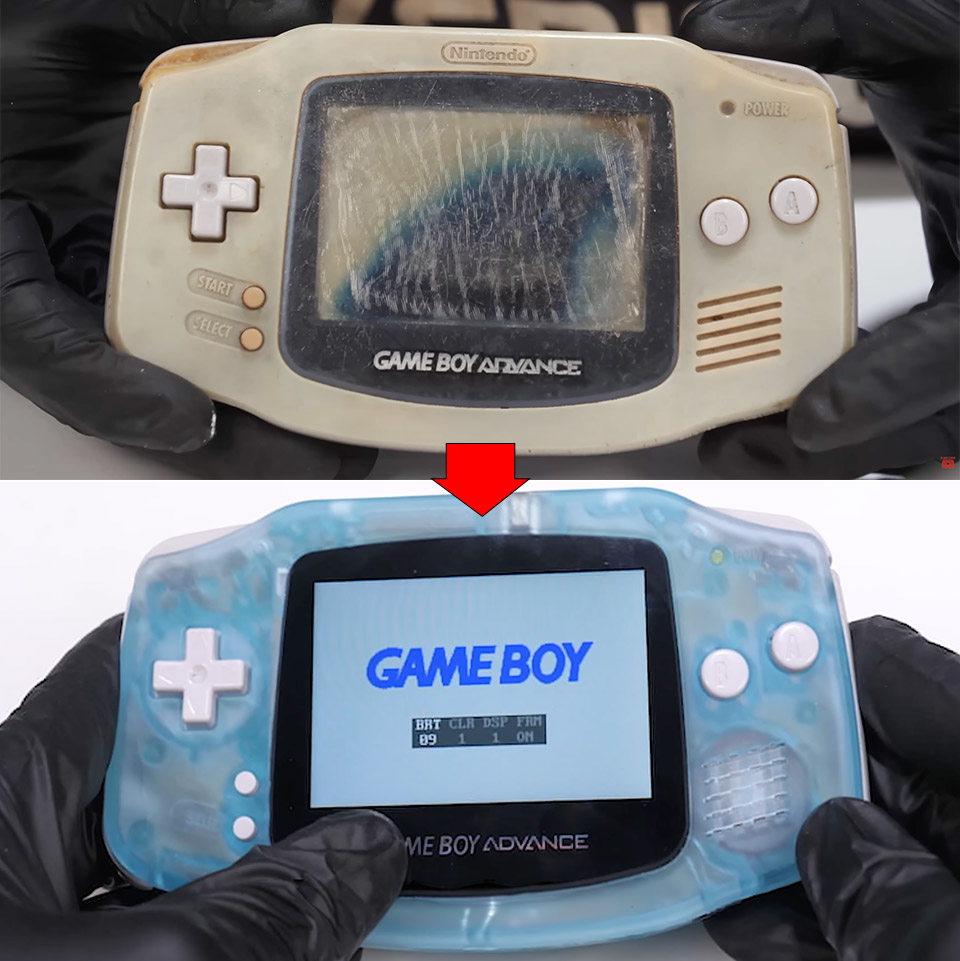
Plenty of old handhelds spend their retirement gathering dust in a box somewhere, and this Game Boy Advance was no exception. Abandoned, completely dead, and sporting a screen that had burned out from years of neglect, it was not an obvious candidate for a comeback. Odd Tinkering took it apart piece by piece anyway, worked through every problem methodically, and brought it back to life with a handful of modern upgrades that breathe new life into the hardware without losing any of what made it special in the first place.


From the start it was completely dead, just a dark screen and no response when you tried to power it on. Some thorough cleaning got the electricity flowing again, and original Game Boy and Game Boy Color titles loaded up without complaint. GBA games were a different story though, refusing to run no matter what. The small mode detection switch inside the cartridge slot got a good wipe, which seemed like it should have done the trick, but the games still wouldn’t cooperate. The real culprit turned out to be oxidation sitting on the pins of the main chip. One more cleaning session and the problem disappeared entirely, with the system reading every cartridge thrown at it without a single issue.

Game Boy Advance Restoration Upgrade Mods
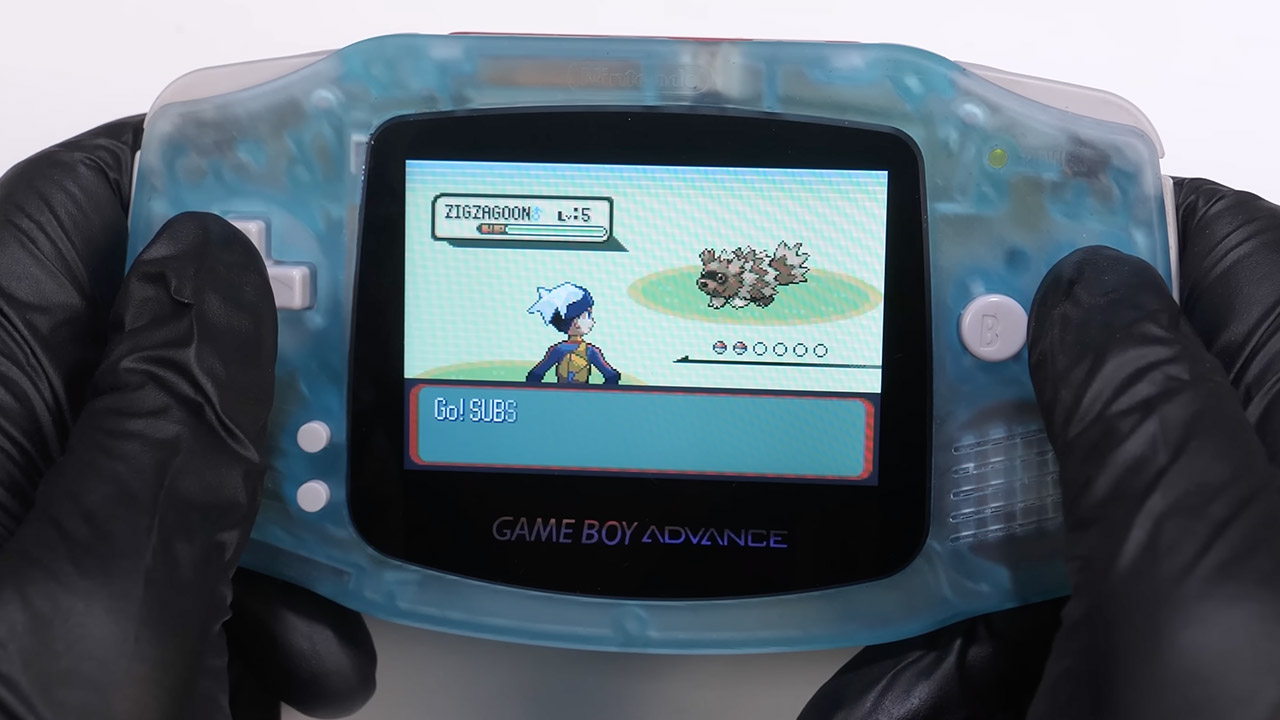
The screen was in rough shape, covered in dark blotches from years of burn in. New polarizing film cleared that up, though the display was still noticeably dim by modern standards, so an IPS panel went in next and solved the brightness issue immediately. Colors are vivid and the viewing angles are excellent, exactly what you want from a handheld you are actually going to use. The upgraded screen meant the original shell no longer fit, so the team scanned it with a 3D scanner and printed a new one in resin, a deep blue that nods to the classic aesthetic while hiding the modern hardware inside. The fit is perfect, with no gaps or wobble anywhere.

Game Boy Advance Restoration Upgrade Mods
The toolkit was refreshingly basic, a set of screwdrivers for disassembly, a soldering iron and desoldering tool for any stubborn connections, and hydrogen peroxide with UV light to lift the yellowing from the plastic. No specialty equipment, no secret techniques, just a clean and methodical process from the first screw to the last.

Source link

Advertisement
Continue Reading

Tech

Tycoon2FA phishing platform returns after recent police disruption

Published

on

Tycoon2FA phishing platforms returns after recent police disruption

The Tycoon2FA phishing-as-a-service (PhaaS) platform that Europol and partners disrupted on March 4 has already returned to previously observed activity levels.

Microsoft led the technical disruption, which involved seizing 330 domains part of Tycoon2FA’s backbone infrastructure that included control panels and phishing pages used in attacks.

However, the disruption caused by the law enforcement was short-lived, as CrowdStrike noticed the cybercrime service return to normal operational volumes within days.

“Falcon Complete observed a short-term decrease in the volume of Tycoon2FA campaign activity following the takedown, with daily volumes on March 4 and March 5, 2026, reducing to 25% of pre-disruption levels,” reads CrowdStrike’s report.

Advertisement

“However, this volume subsequently returned to pre-disruption levels, with daily levels of cloud compromise active remediations returning to early 2026 levels.”

First documented by Sekoia roughly two years ago, Tycoon2FA appeared online as a PhaaS platform dedicated to targeting Microsoft 365 and Gmail accounts, featuring adversary-in-the-middle mechanisms that enable bypassing two-factor authentication (2FA) protections.

A month later, Trustwave reported that Tycoon2FA’s operators were actively improving the platform, adding new, advanced features, and enticing more cybercriminals to purchase access.

Tycoon2FA is a significant actor on the phishing scene, with Microsoft reporting that it generated 30 million phishing emails per month, accounting for 62% of all emails blocked by the tech giant.

Advertisement

According to CrowdStrike, Tycoon2FA is back in business using largely unchanged techniques, tactics, and procedures (TTPs), and supported a diverse set of illegal activities, like business email compromise (BEC), email thread hijacking, cloud account takeovers, and malicious SharePoint links.

After the disruption action, Tycoon2FA has been used in malicious email campaigns that relied on malicious URLs and shortener services, legitimate platforms such as presentation tools, where redirection mechanisms are abused, and also compromised domains.

AI-generated decoy web pages used in Tycoon2FA attacks
Source: CrowdStrike

Interestingly, some of the old infrastructure remained active, indicating that the disruption was incomplete, while new phishing domains and IP addresses were registered quickly following the law enforcement operation.

Regarding the observed post-compromise activity, this includes the creation of inbox rules, hidden folders for fraud emails, and preparation for BEC operations.

Ultimately, CrowdStrike comments that, without arrests or physical seizures, it’s easy for cybercriminals to recover and replace the impacted infrastructure. As long as the demand from the phishing ecosystem is high, the motive for PhaaS platform operators remains unchanged.

Advertisement

Malware is getting smarter. The Red Report 2026 reveals how new threats use math to detect sandboxes and hide in plain sight.

Download our analysis of 1.1 million malicious samples to uncover the top 10 techniques and see if your security stack is blinded.

Source link

Continue Reading

Tech

Traefik becomes the de facto standard for Kubernetes Networking

Published

on

The Kubernetes community retired Ingress NGINX this month after years of under-resourcing. The migration scramble it triggered is now consolidating around one open source beneficiary, and Traefik Labs announced that convergence at KubeCon today.


For years, the kubernetes/ingress-nginx project ran on borrowed time. Maintained largely by one or two volunteers working evenings and weekends, it had accumulated technical debt that the community couldn’t sustainably address.

In November 2025, Kubernetes SIG Network made it official: ingress NGINX would retire in March 2026. No more releases, no more bug fixes, no more security patches. The Kubernetes Steering Committee followed up in January 2026 with language that left little interpretive room: organisations remaining on ingress NGINX after retirement “are vulnerable to attack.”

Ingress NGINX was not a minor component. Depending on the analysis, between 41 and 50 percent of internet-facing Kubernetes clusters used it. It shipped as the default ingress controller in RKE2 (SUSE’s enterprise Kubernetes distribution), IBM Cloud Kubernetes Service, and Alibaba ACK, among others.

Advertisement

The retirement deadline created a near-simultaneous migration event across the industry, and at KubeCon CloudNativeCon Europe in London today, Traefik Labs announced the outcome of that scramble: IBM Cloud, Nutanix, OVHcloud, SUSE, TIBCO, and additional platform vendors have each independently selected Traefik Proxy as their replacement.

The 💜 of EU tech

The latest rumblings from the EU tech scene, a story from our wise ol’ founder Boris, and some questionable AI art. It’s free, every week, in your inbox. Sign up now!

The technical case for Traefik’s selection rests primarily on compatibility. Most ingress controllers require teams to rewrite their Ingress resources when migrating away from ingress NGINX, because each controller interprets annotations differently. Traefik built a specific NGINX Provider that translates ingress NGINX annotations into Traefik configuration at runtime, meaning teams can swap the controller without modifying a single Ingress resource.

Advertisement

The company claims coverage of more than 90 percent of annotations actively used in real migrations, a figure it arrived at by instrumenting migration tooling and analysing actual annotation usage patterns rather than attempting to support every annotation in the specification.

The vendor quotes collected in the announcement reflect the range of use cases these platforms cover. Nutanix’s Dan Ciruli noted that K3s has used Traefik as its default ingress controller for years, and that the retirement “validates the decision we made years ago.”

SUSE’s Peter Smails confirmed that Traefik will become the default in RKE2 starting with v1.36, replacing ingress NGINX as the distribution default. OVHcloud’s Jacques Murez positioned the choice around Gateway API readiness. TIBCO’s Devu Heda described Traefik as already powering ingress for both customer deployments and TIBCO’s own SaaS control plane infrastructure.

This last point matters for how Traefik Labs frames its commercial opportunity. The company’s open source product, Traefik Proxy, is MIT-licensed and accounts for the migration wave being announced today. But Traefik Labs is also selling Traefik Hub, an enterprise platform that adds API Gateway, AI Gateway, MCP Gateway, and API lifecycle management on top of Traefik Proxy, deployable via a single Helm chart upgrade.

Advertisement

The ingress NGINX retirement is, from the company’s perspective, not just a migration event but an entry point: engineering teams that are already updating their networking layer are positioned to evaluate whether to extend that investment into API management.

Traefik Proxy has 3.4 billion Docker Hub downloads and 62,000 GitHub stars, making it one of the most widely deployed open source networking projects in cloud-native infrastructure. Traefik Labs was founded in 2016 by Emile Vauge, who now serves as CTO, with Sudeep Goswami appointed CEO in February 2024.

The company is headquartered in both France and the United States. It has raised $11.1 million across two funding rounds, with Balderton Capital, Kima Ventures, and Elaia among its backers, a relatively modest capital base for a company whose open source software sits in front of a substantial fraction of the world’s containerised production workloads.

Advertisement

Source link

Continue Reading

Tech

Jay Leno Drives the New Tesla Semi Truck with 500-Mile Range

Published

on

Jay Leno Tesla Semi Truck 500-Mile Range
Jay Leno climbed into the cab of a Tesla Semi, settled into the center seat, and eased the truck forward with a fully loaded trailer in tow, right there on the tarmac outside his garage. The 500 mile range variant, and by all accounts it felt planted and composed from the moment it started moving, even with another Semi trailing behind it.


The drive was as smooth as you could ask, with no clunks or pauses during gear changes. Three motors pushing all of that torque straight to the rear axles, and the vehicle performed like a dream, with no difficulty or drama. Leno commented on how normal the center driving position felt after he was settled in, despite the fact that the cab does taper in little as you go up for optimal airflow. He just glided through several easy curves and straight stretches, and the cabin was quiet enough for normal conversation.

Sale


Amphibious Remote Control Car, 1:18 Monster Truck Toys for Boys RC Cars, 2.4 GHz Waterproof RC Trucks…
  • 2.4 GHz Remote Control Car – 1:18 scale cool design, waterproof RC truck toys made of premium material and sturdy, with LED lights, waterproof remote…
  • High Quality & DIY Removable Toys RC Cars – This remote control monster truck structure design quality, flexibility and strength in one. The rc truck…
  • All Terrain Amphibious Monster Truck – 4-wheel drive off-road design rc trucks for kids, with high-quality tires (shock absorption, strong grip…

Jay Leno Tesla Semi Truck 500-Mile Range
Dan Priestley, Director of Semi Truck Engineering at Tesla, rode along and walked Leno through some of the finer details as they drove. The front axle does the heavy lifting during hard pulls and climbs before stepping back at highway speeds to reduce drag and conserve energy, a smart piece of engineering that keeps efficiency high without any unnecessary mechanical overhead. Leno put his foot down more than once and the response was immediate, yet the ride stayed completely composed throughout. Braking on the downhill sections was handled almost entirely by regeneration, keeping the air brakes quiet the whole way down.

Jay Leno Tesla Semi Truck 500-Mile Range
Weight is central to how the Semi stacks up against its diesel competition. The Long Range model comes in at around 23,000 pounds curb weight with a gross rating of 82,000 pounds, helped along by a federal allowance that lets electric Class 8 trucks run up to 2,000 pounds heavier than conventional diesel rigs to account for the battery mass. That gives it enough headroom to hit its advertised 500 mile range with a competitive payload on board, though that payload does fall somewhat short of the 70,000 pound figure that diesel tractors can typically manage once trailer weight is factored in.

Jay Leno Tesla Semi Truck 500-Mile Range
The long range pack covers 500 miles, while the shorter 325 mile variant drops a battery module to shed weight and tighten the turning circle to something closer to a passenger car. Charging peaks at 1.2 megawatts and gets the truck back to 60 percent in around half an hour, which lines up neatly with the rest breaks drivers are already taking. Priestley mentioned a projected million mile battery life built around the same 4680 cells Tesla uses across its lineup, and the Semi has already racked up more than 13 million miles in real world fleet use to back that claim up.

Advertisement

Source link

Continue Reading

Trending

Copyright © 2025