



Connect with us

Tech

Tofu brine could power safer batteries that last decades, researchers say

Published

on


The design replaces the complex, flammable chemistry of lithium-ion batteries with an electrolyte that’s as safe as saltwater. In lab tests, the prototype endured more than 120,000 charge cycles, an endurance record that far exceeds today’s commercial standards. Typical electric-vehicle batteries degrade after just a few thousand cycles – even…
Read Entire Article
Source link

Continue Reading
Click to comment

Leave a Reply

Your email address will not be published. Required fields are marked *

Tech

Temporal CEO Samar Abbas on the ‘massive platform shift’ in AI fueling the startup’s $5B valuation

Published

on

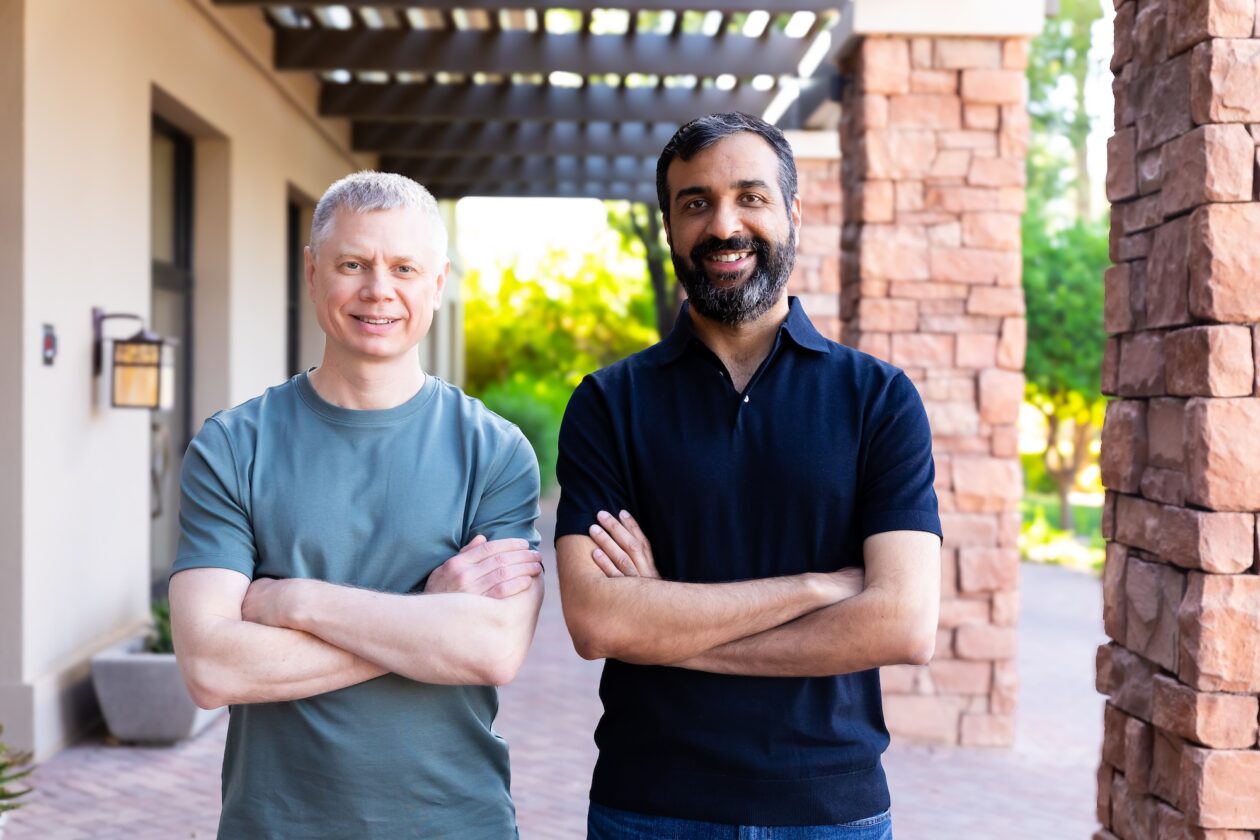
Temporal co-founders Maxim Fateev, CTO (left), and Samar Abbas, CEO. (Temporal Photo)

Temporal co-founders Samar Abbas and Maxim Fateev have been tackling the same distributed systems problem since their days at Amazon, Microsoft, and Uber. But the AI boom has put the problem “on steroids” as agents move to production, according to Abbas — and investors have taken notice.

Temporal last week announced a $300 million Series D round led by Andreessen Horowitz, pushing its valuation to $5 billion — up from $2.5 billion in October.

Temporal’s revenue increased more than 380% year-over-year, reflecting demand for infrastructure services from companies using AI agents that are taking on more responsibilities.

“There is a massive platform shift happening,” Abbas told GeekWire. “And there is a whole layer of infrastructure being developed right now.”

Temporal’s pitch is something it calls “durable execution,” a new category Abbas says is about giving developers a simpler programming model for long-running, distributed workflows. Instead of wiring together queues, databases, retry mechanisms, and timers to handle failures, engineers write their logic as normal code and Temporal makes it durable behind the scenes.

Advertisement

Abbas and Fateev launched Temporal in 2019, after they helped build an open-source orchestration engine called Cadence during their time at Uber. The tool was used by companies including HashiCorp, LinkedIn, Airbnb, Coinbase, and others.

“Both of us have been obsessed about this problem space,” Abbas said, describing Temporal as “literally the fourth or fifth time we are building a similar system.”

During the cloud era, Abbas said, Temporal became a “reliability backbone” for developers building mission-critical applications. Now, as AI models get smarter and agents hit production, the company is seeing huge scale.

“We are kind of becoming the core piece of infrastructure which is powering the AI agentic wave,” Abbas said.

Advertisement

Temporal’s customer base ranges from OpenAI, which uses the platform for image generation, to Replit, which uses Temporal to orchestrate coding agents over extended sessions.

“As long-running agents become a primary driver of enterprise value, the execution layer beneath them becomes indispensable,” investors with Andreessen Horowitz wrote in a blog post. “Temporal wasn’t built in reaction to generative AI; it was built to make complex systems durable. But the agentic era has made that need undeniable.”

Asked about a potential AI bubble and broader hype, Abbas pointed to customers like Abridge in healthcare, where doctors can focus on patients instead of note-taking. He also noted transformation across legal workflows, coding agents, customer support, and research.

“There is real value being delivered to real users,” he said.

Advertisement

He envisions a future where “every human on the planet can be called a software developer” and the cost of building software keeps falling, driving demand for a reliable execution backbone.

Temporal is built as a remote-first company, with around 375 employees and 62 of them in the Seattle area. Abbas and Fateev have been based in the region for decades, and many early employees are here as well.

Abbas, who was previously CTO (he swapped roles with Fateev in 2024) said the software infrastructure expertise in Seattle is a good match for trends that Temporal is riding. “Seattle has the right ingredients of talent,” he said. “We’ll be doubling down and growing in the Seattle area.”

As for advice to other founders riding the AI wave, Abbas said it’s about getting clarity on how you deliver value and avoiding all other distractions. “Just know who your users are — are they able to drive value from the product you are building?” He said Temporal is laser-focused on that strategy — and it seems to be working.

Advertisement

Source link

Continue Reading

Tech

Ring’s Super Bowl Ad Generates So Much Backlash It Has Ended Its Partnership With Flock Safety

Published

on

from the millions-well-spent dept

Eight million ways to die.

According to AdWeek, the price for a 30-second commercial during Super Bowl LX has soared to $8 million, after NBC opened in the summer by offering spots for $7 million. As AdWeek notes, “due to demand, the company has already reached its cap for the number of spots that were available for advertisers to buy during the upfront season.”

$8 million for 30 seconds sometimes means turning a niche product into a national phenomena. The 30 seconds purchased by Ring went the other way. If you want to see how $8 million can be used to promote mass surveillance enabled by consumer products, here you go:

Sure, it looks pretty innocuous. And what could be better than turning Ring and Flock Safety’s network of cameras into a digital proxy for posting “LOST DOG” signs all over the neighborhood? Well, as it turns out, pretty much everyone saw how problematic this offering was, especially considering what’s already known about Ring, Flock Safety, and both companies’ rather cavalier attitude towards privacy and other aspects of the Fourth Amendment.

Advertisement

To begin with, the “Search Party” feature that allows people to access recordings and images captured by other people’s cameras is already on, which likely comes as a surprise to owners of these devices. Here’s what The Verge’s Jennifer Tuohy discovered last October, shortly after Ring announced its partnership with Flock Safety — a company best known for allowing cops to hunt down people seeking abortions and/or allowing federal officers to perform nationwide searches for whoever they might be looking for (which, of course, would be anyone looking kinda like an immigrant).

[I]t turns out that Search Party is enabled by default. In an email to customers this week, Siminoff wrote that the feature is rolling out to Ring outdoor cameras in November and noted, “You can always turn off Search Party.”

I checked my cameras this morning, and they were all automatically set to enable Search Party. And I’m not alone; Ring users on Reddit have also reported that their cameras have been enabled for Search Party

This under-reported “feature” was exposed by Ring’s Super Bowl ad, which resulted in enough backlash that Flock Safety no longer has a Ring to wear. Back to Jennifer Tuohy and The Verge:

In a statement published on Ring’s blog and provided to The Verge ahead of publication, the company said: “Following a comprehensive review, we determined the planned Flock Safety integration would require significantly more time and resources than anticipated. We therefore made the joint decision to cancel the integration and continue with our current partners … The integration never launched, so no Ring customer videos were ever sent to Flock Safety.”

While that last sentence may be true, it appears sharing was on by default when it came to Ring’s own cameras. That Flock Safety never got a chance to participate is good to know, but “Search Party” has apparently been active since its implementation last year, even if it was limited to Ring devices.

Advertisement

And while Ring claims the Search Party feature can’t be used to search for “human biometrics,” that’s hardly comforting when it appears Ring definitely wants to add more of this kind of thing to its existing cameras.

On top of this, the company recently launched a new facial recognition feature, Familiar Faces. Combined with Search Party, the technological leap to using neighborhood cameras to search for people through a mass-surveillance network suddenly seems very small.

Ring insists this is not another mass surveillance tool, but rather something that attempts to recognize who’s at any user’s door when sending alerts, in order to differentiate friends and family members from strangers who might be within camera range. Again, there’s some utility to this offering, but the tech lends itself to surveillance abuses, especially when law enforcement may only be a subpoena away from accessing images and recordings captured by privately-owned devices.

Finally, the statement given by Ring only states that this won’t be happening right now, which is a wise choice considering its unpopularity at the moment. But that doesn’t mean Ring and Flock won’t seek to consummate this marriage of surveillance tech, albeit in a more private fashion that doesn’t involve alarming hundreds of millions of sports viewers simultaneously.

Filed Under: alpr, doorbell cameras, law enforcement, mass surveillance, surveillance abuse

Companies: flock safety, ring

Advertisement

Source link

Continue Reading

Tech

The Data Behind Social Proof: What Marketers Should Measure

Published

on

In today’s world, where more and more lives are online, social proof is very important. Things like likes, shares, reviews, and follower counts show what people think about something. These signs help people feel trust and want to join in. But, many do not read these numbers in the right way. Some feel short-term jumps matter most, but they miss seeing steady growth that can last. To get the best out of this, marketers need a clear plan for checking, giving credit, and trying out new ideas.

Social Proof Metrics

Social proof is not only about numbers that look good. It shows how people see your trust and fame. But the kind of feedback you get is not always the same. Likes and comments of how many followers you have have all given useful clues. Still, you have to look at the whole story to make the best choices.

  • Conversion rate: Tracks if social proof makes people do things we want, like signing up, downloading, or buying.
  • Retention metrics: Shows if the first interest turns into regular use or keeps people coming back over time.
  • Sentiment analysis: It looks as if the social proof shows good or bad feelings from people.

By looking at these numbers, marketers can see the difference between quick jumps in activity and real engagement. Stormlikes help them know what their audience truly cares about.

Attribution Challenges in Social Proof

One of the biggest challenges when using social proof is knowing where to give credit. Many campaigns can give a short burst of attention, but it’s very important to find out if these jumps in attention last over time. A lot of problems with tracking happen when people just look at simple numbers and do not link them to bigger business goals.

  • Last-click bias: Looking only at the last thing people do can make the effect of a social proof tactic appear bigger than it really is.
  • Channel overlap: Organic and paid campaigns often cross over, and this can make it hard to tell the effects apart.
  • Short-term spikes: A boost that happens for a short time, like from paid follower services or viral posts, may not show true growth in the long run.

Marketers need strong analytics systems to know which actions really help people buy and come back again, not just make the numbers look high.

Experimental Approaches to Measure Authentic Uplift

Testing is important when you want to see if your social proof ideas work. The only way to know the real effect of social proof on people is to do controlled experiments. This helps marketers find out what works and make choices using facts and data.

  • A/B testing: Compare content that has social proof and content that does not. This helps you see the differences in how people behave.
  • Time-based experiments: Add social proof slowly over time. Watch for short-term changes and also keep an eye on the bigger trends.
  • Geo or segment tests: Use social proof in certain groups or places. This lets you see the effect on people in one area or segment.

When you use these experiment ideas along with clear KPIs, you can tell the difference between short-term buzz and real growth.

KPIs to Track for True Social Proof

To make social proof work, marketers have to use both numbers and stories as key points. Do not look at just one simple sign, because that can give the wrong idea.

Advertisement
  • Quality of engagement: Not every like means the same thing. Comments, shares, and mentions show more interest.

  • Follower growth rate: A steady increase in followers can say more than a quick jump.
  • Referral traffic: Shows if people come from social proof to take useful actions on your important pages.
  • Customer value over time (CLV): Links social proof campaigns to results that matter for your business in the long run.
  • Influencer amplification: Find out if popular supporters really help their followers trust the brand.
  • These numbers show how social proof works. Marketers can use this to make their campaigns better and get results that last.

Ethical Considerations for Practices

It is important to think about ethics when you try out ways to use social proof. If you use numbers that are not real, or if you show fake likes and shares, people will not trust your brand. Here are the best things you can do:

  • Transparency: Clearly tell people about any paid work or testing.
  • Gradual scaling: Try things out on a small scale to stop fake excitement.

  • Complementary strategy: Use social proof with top content and true messaging.

Ethical testing helps keep growth safe and steady. It makes sure your work fits with what people expect and trust.

Social proof can help your brand, but you cannot judge its effect just by looking at surface numbers. A platform like Stormlikes may help when you test things, but only if you use it in the right way and measure the results well. Knowing how the data behind social proof works helps marketers come up with plans that keep people engaged for a long time and make your brand look good. If you understand what driving action is, you will do better in the long run.

Source link

Continue Reading

Tech

There’s a sneaky way to watch Love Island All Stars final for free

Published

on

  • Stream Love Island All Stars finale free on ITVX
  • Watch ITVX when outside the UK with NordVPN (exclusive free gift)
  • Airs Monday, 23 February

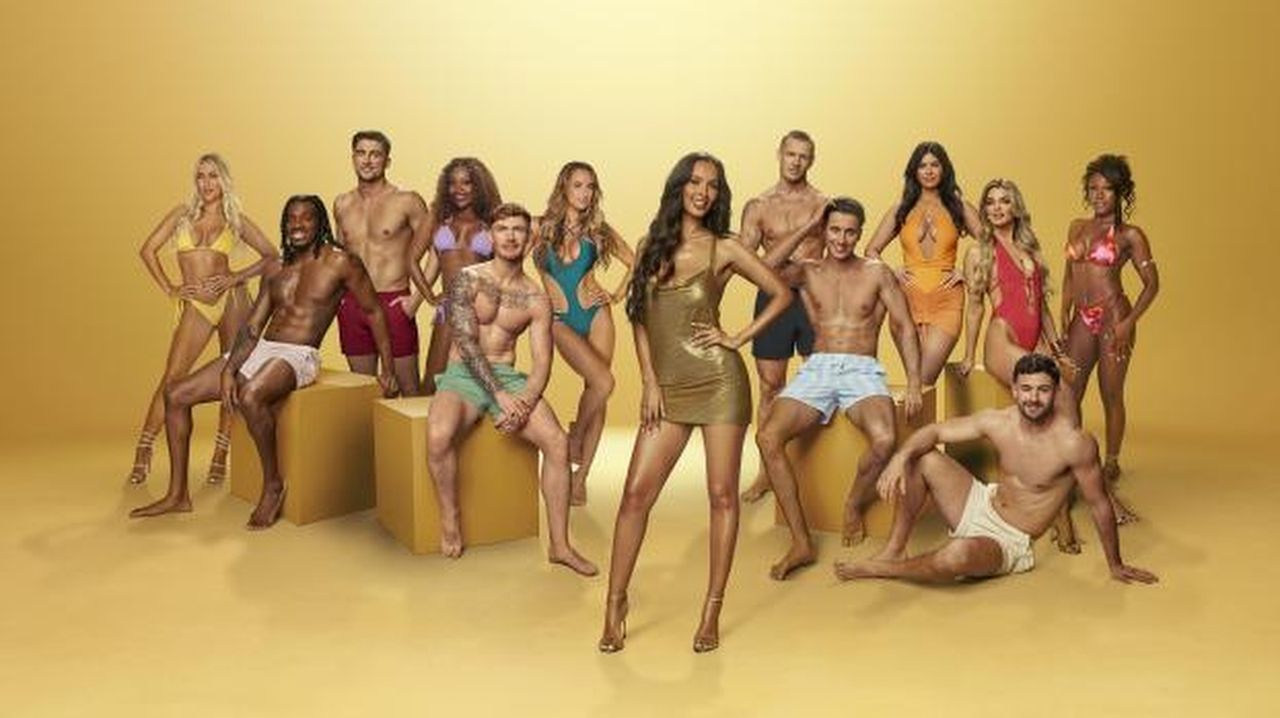
The Love Island All Stars season 3 finale airs on Monday, 23rd February so expect more twists before we find out if frontrunners Sean Stone & Lucinda Strafford will be crowned champions. But did you know that some viewers can watch Love Island for free with this streaming hack…

Source link

Continue Reading

Tech

'How Many AIs Does It Take To Read a PDF?'

Published

on

Despite AI’s progress in building complex software, the ubiquitous PDF remains something of a grand challenge — a format Adobe developed in the early 1990s to preserve the precise visual appearance of documents. PDFs consist of character codes, coordinates, and rendering instructions rather than logically ordered text, and even state-of-the-art models asked to extract information from them will summarize instead, confuse footnotes with body text, or outright hallucinate contents, The Verge writes.

Companies like Reducto are now tackling the problem by segmenting pages into components — headers, tables, charts — before routing each to specialized parsing models, an approach borrowed from computer vision techniques used in self-driving vehicles. Researchers at Hugging Face recently found roughly 1.3 billion PDFs sitting in Common Crawl alone, and the Allen Institute for AI has noted that PDFs could provide trillions of novel, high-quality training tokens from government reports, textbooks, and academic papers — the kind of data AI developers are increasingly desperate for.

Read more of this story at Slashdot.

Advertisement

Source link

Continue Reading

Tech

Help us figure out macOS Tahoe 26.3 external drive mounting issues

Published

on

Some Mac users are discovering they can’t use their external drives with macOS Tahoe 26.3 and it seems Apple knows something’s wrong. Let us know what works for you, and what doesn’t.

An external drive connected to a Mac.

Apple released the update to macOS Tahoe 26.3 on February 11, with the update adding more machine learning performance for M5 users as well as other smaller changes. It seems that one undocumented alteration may have caused problems for some users.
A number of users have taken to online support forums and social media to try and get help with an external drive issue in macOS Tahoe 26.3. Affected users are finding that external drives are not mounting properly, despite previously working fine.
Continue Reading on AppleInsider | Discuss on our Forums

Source link

Continue Reading

Tech

Nothing reveals the Phone 4a ahead of schedule

Published

on

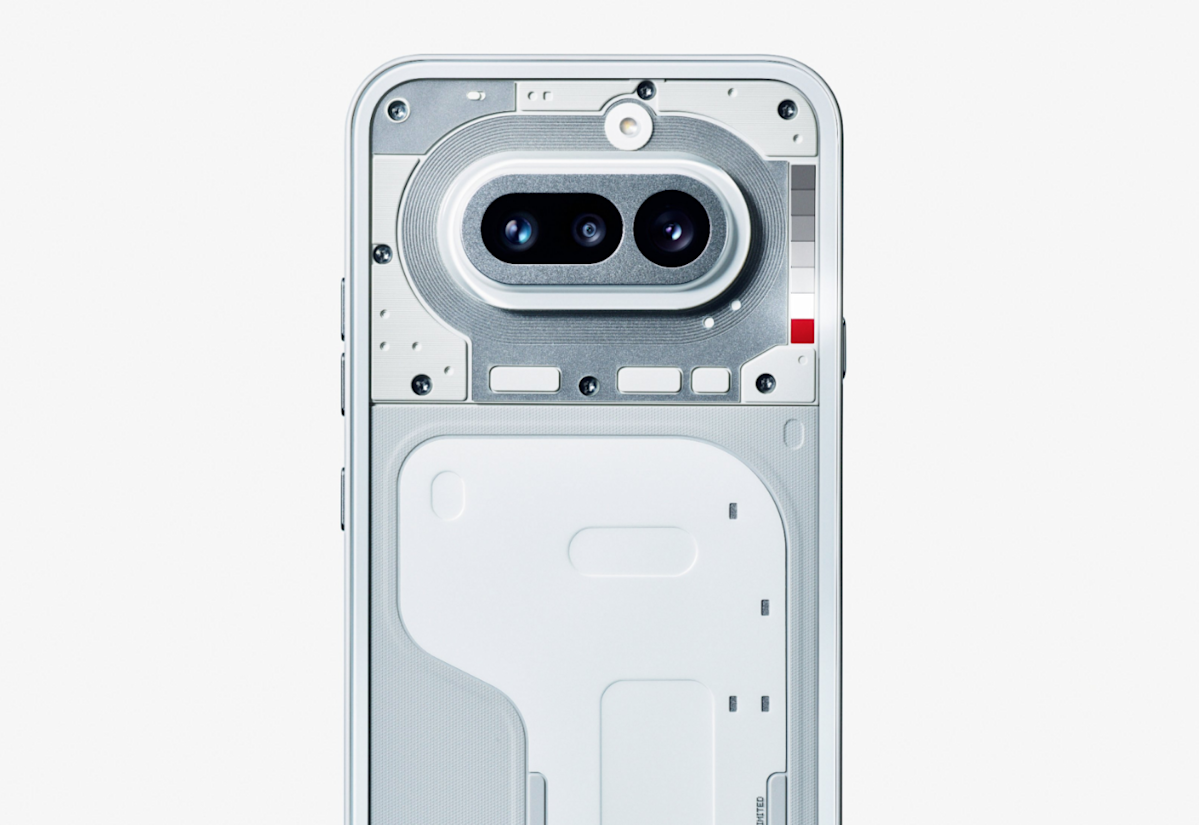
Nothing has been slow-dripping news about the upcoming Phone 4a for a few days now, with a promise to reveal the handset on March 5. However, the company jumped the gun a bit and just posted an . It looks pretty nifty, even if we don’t have any real-deal specs just yet.

The image shows the handset from behind, displaying the company’s trademark transparent design. The picture also features the redesigned Glyph Bar, . This is a light-based notification system that features individually controlled mini-LEDs that light up in various ways to notify the user of missed calls and stuff like that. You can spot it next to the camera bump.

That’s about all we know right now, though there are plenty of industry rumors. It’s been reported that the Nothing Phone 4a will feature a and that the reveal will be accompanied by a Pro model with a more powerful camera. The Nothing Phone 3a was also launched alongside the 3a Pro.

We loved the 3a and 3a Pro, “an easy recommendation.” Let’s hope this carries through for the 4a. Also, you didn’t miss a release of the actual Nothing Phone 4. The company likes to release the a-series handsets . Past as prologue, we’ll likely see that one in early summer.

Advertisement

Source link

Continue Reading

Tech

Microsoft is adding images to Notepad, and users are wondering why

Published

on


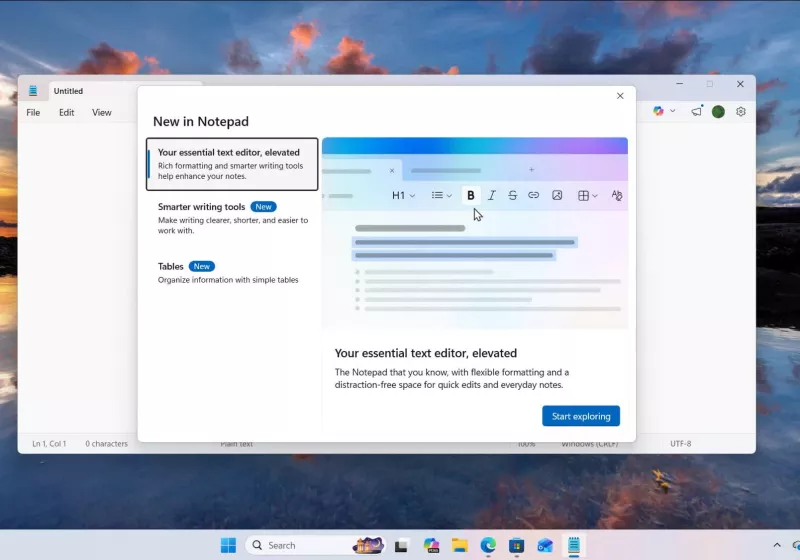
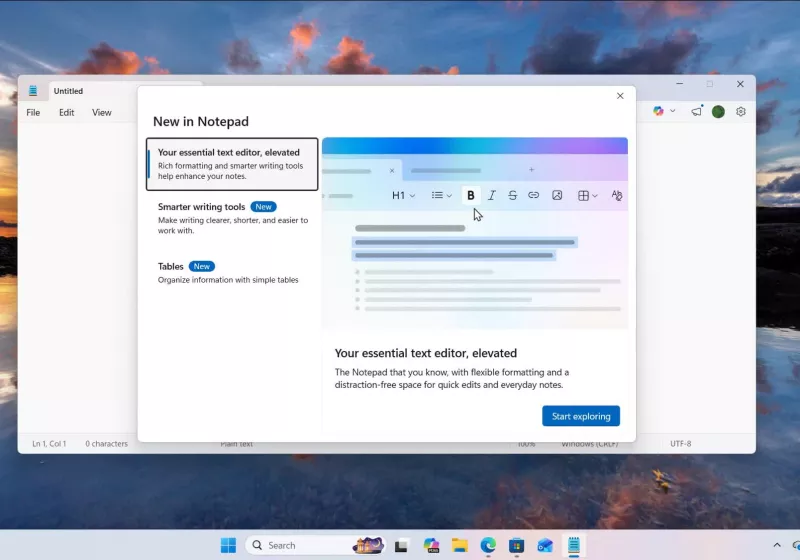
Microsoft is reportedly working on yet another “advanced” Notepad feature that has little to do with basic text editing. According to unnamed sources cited by Windows Latest, the application will soon support inserting images into text-based documents.
Read Entire Article
Source link

Continue Reading

Tech

I watched Sentimental Value at home and it’s not the way to see it

Published

on

I watch a fair few films, though recently I haven’t been going to the cinema as much. That’s more to do with the quality of films available (if there’s anything that will kill cinema, it will be the dearth of quality).

That doesn’t mean I watch more films at home per se, as if I’ve gone in the opposite direction and sided with home releases, but if I do miss out on a cinema release, I’m not as fussed about waiting for the home release.

I missed out on watching Predator: Badlands, which I wanted to see in the cinema, but after a couple of weeks it became increasingly hard to find it at a nearby cinema. I ended up waiting for that to hit Disney+.

But this week, while opening the MUBI app for the first time in a while, I saw that it had Joachim Trier’s Sentimental Value on it. I’d added The Worst Person in the World on the service a while ago and hadn’t got round to watching it yet. So, I thought I’d watch that as a primer since I’d not seen a Trier film before, then watch Sentimental Value afterwards.

Advertisement

Sentimental Value is opening in UK cinemas this week, but I found it rare to be able to see a film on streaming before cinemas. A sign of the changing times? Possibly, but I don’t think it’s a good one.

I did not have a great experience watching Sentimental Value at home. And it’s all my own fault.

Advertisement

Too many distractions

sentimental valuesentimental value

My experience watching The Worst Person in the World should have been a clue.

The amount of times I stopped the film, either to have a look at something on another screen, or looking away from the screen to eat dinner – I was in distraction mode. I still enjoyed the film but I hadn’t noticed my own behaviour at the time – it was just the case of watching a film at home, like everyone else. The film fits into my schedule, not the other way around.

Advertisement

Sentimental Value felt different, at least in my head. “It’s a new release, I should pay more attention to what’s happening”, I thought. I need to find a dedicated time – not be interrupted, focus on what’s happening etc.

The first time I watched it, I got through an hour before I stopped because it was late and I was tired. Silly me.

Advertisement

I reconvened the next night. But it didn’t feel right starting in the middle of the film. What if I missed some important detail, a reference, a cinematic sleight of hand that’s repaid in the second, and obviously more emotional half of the film?

Advertisement

I should start again.

I get through even less this time. “I forgot, there’s the Short Skate events going on at the Winter Olympics. That’s live, I can’t miss that. Real Madrid are playing Benfica, I should watch some of that as well. Can’t miss out on live events when I can always come back to this film”.

Off I close the MUBI app. I’ll come to this film later. The next day, in the afternoon at the office. I’m testing a TV, I think to myself, I’ll give Sentimental Value a look on this Philips OLED910. I restart the film, get drawn into the story – lunch is over, back to work.

I restart it again in the evening. Noticed aspects I hadn’t paid attention to the first time. Stop and start the film because I’m getting notifications from my phone through my smartwatch. I’m too connected. I get through the film – it’s really good by way – but the experience could have been much better. And that is on me.

Advertisement

Advertisement

The reason why we need cinemas

A picture of Dolby cinema Leeds exteriorA picture of Dolby cinema Leeds exterior
Image Credit (Trusted Reviews)

Sure, I could turn this into a prayer for why we need cinemas, but this scattershot, stop-and-start experience I had watching Sentimental Value affected my, well, first multiple viewings.

Being able to sit in the dark, in a sort of silence, with no distractions or interruptions, would have made for a better experience. Perhaps I wouldn’t have understood everything about the film on the first watch, I wouldn’t have been able to restart or rewind, but I think it would have stuck in my mind more.

I would have wanted to revisit the film, maybe in cinemas, but it wouldn’t have been spotlit in the way it was. It would have had my undivided attention, and I would have been more invested in its story, characters and emotions.

Ultimately, I still was, but the clutter in my mind from all the devices I have by my side affected the viewing experience. Just because I can look at my phone or laptop and have a conversation with a friend about investments (it’s a thing I’m doing) doesn’t mean I should.

Advertisement

It’s an obvious thought – there’s nothing new here – but this is probably the first time I’ve watched a film at home before it’s been released in cinemas, and the flip-around is not something I enjoyed.

Advertisement

I will likely go to the cinemas and catch Sentimental Value – to give the attention it deserves. While streaming offers convenience, with a good-quality TV and sound system, it’s a decent approximation of a cinema experience, but it can’t beat it in my mind, for no other reason than we’re all slaves to our devices and to what’s happening elsewhere.

Sometimes, it’s better just to be disconnected from the outside world, and that’s an experience cinema offers better than any other medium.

Advertisement

Source link

Continue Reading

Tech

Nominate the best in Pacific NW tech and help set the stage for the 2026 GeekWire Awards

Published

on

The scene inside the 2025 GeekWire Awards at Showbox SoDo in Seattle on Wednesday. (GeekWire File Photo / Dan DeLong)

Time is running out to get your nominations in for the 2026 GeekWire Awards. If you want to help us recognize the outstanding tech entrepreneurs, innovators, deal makers and nonprofit leaders across the Pacific Northwest, submit a nomination today!

Community nominations will close this Wednesday, Feb. 25, for the annual event, which takes place May 7 in Seattle.

The GeekWire Awards, presented by Astound Business Solutions, will take place at Showbox SoDo and feature a VIP reception, sit-down dinner and fun entertainment mixed in. Tickets go fast, and early-bird pricing is available now on half and full tables, so contact events@geekwire.com to reserve your table.

Nominations are being accepted across 12 categories, and robot trophies will be handed out live on stage to winners for Startup of the Year, Next Tech Titan, CEO of the Year, Young Entrepreneur of the Year, AI Innovation of the Year, and more.

Pacific Northwest-based companies and individuals (Oregon, Washington, and British Columbia) are eligible to be nominated. The nominations can be submitted by GeekWire readers, and self nominations are permitted. One nomination is as good as 20, so no need to flood the ballot box. Past winners are not eligible in the same category. 

A panel of judges will select five finalists per category and community voting will take place March 16 to April 17 on GeekWire.

Advertisement

Here are the nomination categories:

Leadership and Business

  • CEO of the Year
  • Young Entrepreneur of the Year
  • Next Tech Titan
  • Workplace of the Year

Innovation

  • Innovation of the Year
  • AI Innovation of the Year
  • Health Innovation of the Year
  • Sustainable Innovation of the Year
  • Hardware/Robotics/Physical AI of the Year

Impact

  • Startup of the Year
  • Deal of the Year
  • STEM Educator of the Year

Thanks to the 2026 GeekWire Awards sponsors: Presenting sponsor Astound Business Solutions. Gold sponsors: JLLBairdFirst TechAmazon Sustainability, BECU, and Wilson Sonsini

PREVIOUSLY: GeekWire Awards 2025 revealed: Community ‘alive and well’ at annual celebration of best in tech

Source link

Advertisement
Continue Reading

Trending

Copyright © 2025