Connect with us

Tech

Top rated headsets for PlayStation

Published

on

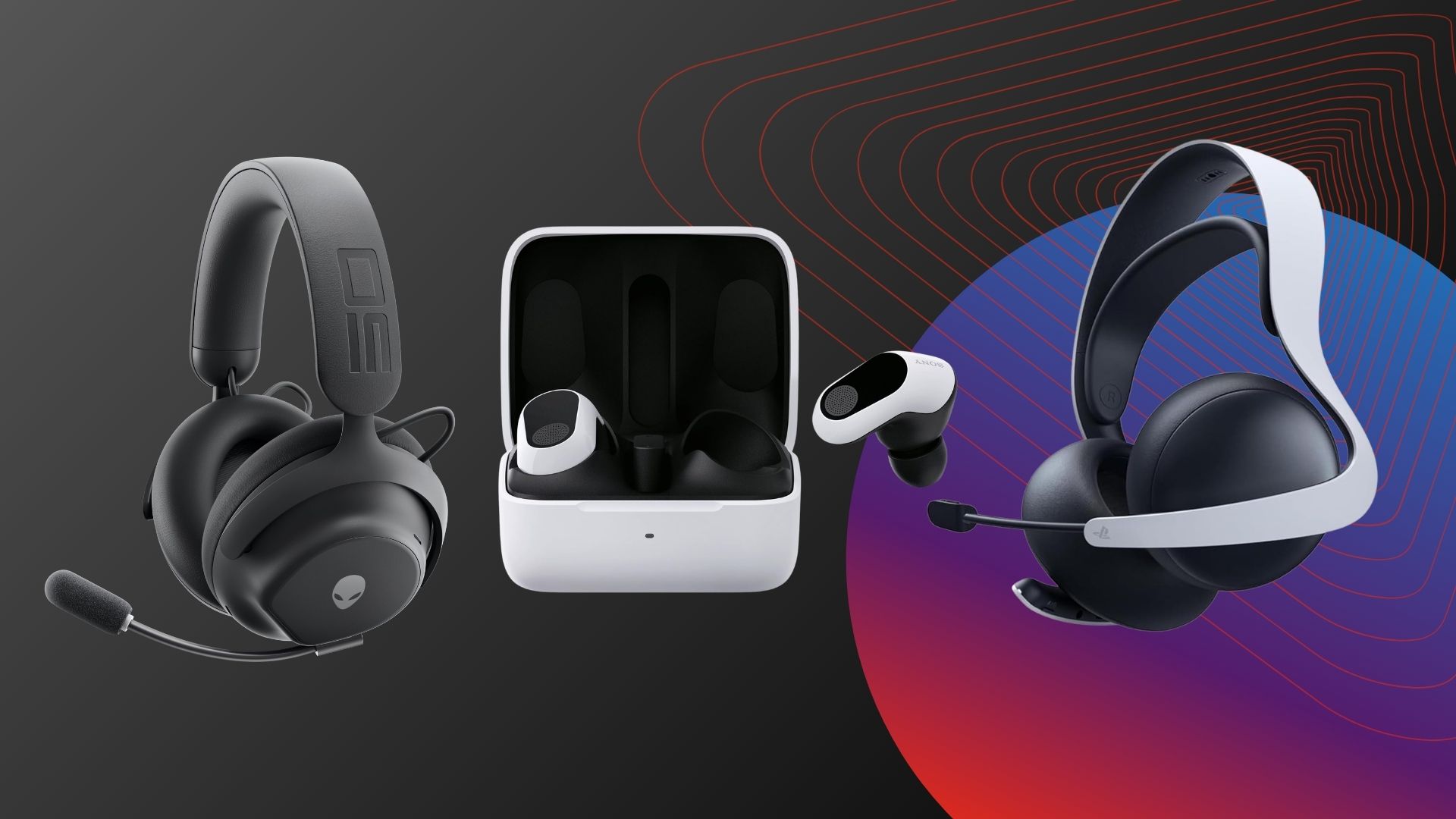
Trying to pick out a new console headset can be tiresome at best and overwhelming at worst, with arguably too many options on the market. That’s why we’re here to show you all the best PS5 headsets currently available.

We have more than enough experience when it comes to gaming headsets as our team has reviewed countless models over the years, from the most premium variations all the way down to the cheap and cheerful options. Putting this experience to good use, we’ve curated this definitive list of all the best headsets we’ve ever tested for the PS5 console. 

Every headset that features on this list has been put through its paces by a member of our team for at least two weeks and has been used with a multitude of games. We ensure to evaluate as many aspects of the headset as possible, including audio quality, microphone performance and battery life, where applicable. 

Moreover, every headset on this list is compatible with the PS5 console through either a wired or wireless connection. Premium features like Active Noise Cancellation, 3D Spatial Audio and Haptic Feedback are also things that we keep an eye on in case you’re looking for a particularly immersive experience. 

Advertisement

Otherwise, if you’re more of an Xbox gamer then you’ll unsurprisingly be better off checking out our best Xbox headset list instead, while for a more general overview then our best gaming headset guide should have you covered.

Not sure if a gaming headset is right for you? Take a look at our list of the best headphones and best wireless headphones for alternative options.

Advertisement

Without further ado, read on to find out our top picks for the best PS5 headsets you can buy.

Advertisement

SQUIRREL_ANCHOR_LIST

Learn more about how we test headsets

We use every headset we test for at least a week. During that time, we’ll check it for ease of use and put it through its paces by using it in a variety of games, as well as playing music in order to get the full experience.

We also check each headset’s software (if applicable) to see how easy it is to customise and set up.

Advertisement

Advertisement


  • Great audio quality and adequate ANC

  • Intuitive usage and sleek looks

  • Stellar battery life

  • No cup swivel or collapsible design

  • Average headset microphone

With up to 70-hours of battery life, a premium design and excellent sound quality, the Alienware Pro headset is a brilliant choice for PS5 gamers. Although it doesn’t sport the same hardcore gamer aesthetic as others, lacking RGB or motifs, we see this as a good thing as it means you can comfortably wear them outside of your gaming room. 

Advertisement

Available in either black or white, the matte finish is non-reflective and barely shows any prints or smudges. Plus, at just 315g, the headphones are lightweight and comfortable enough to wear for prolonged periods – our reviewer even wore them during gym sessions.

Otherwise, the Alienware Pro headset is equipped with large 50nm drivers, ANC and a detachable boom microphone, plus 2.4Ghz wireless and Bluetooth for mobile devices too. That means you can hook them up to your PlayStation 5 wirelessly.

Regardless of whether you opt for 2.4Ghz wireless or Bluetooth, games and entertainment sound warm, detailed and sport plenty of direction separation. We found in certain titles like Overwatch 2 that the headphones allowed us to discern footsteps of incoming enemies, while in Resident Evil 2 the sound of occasional gunfire and nearby shuffles added depth to the overall gaming experience. 

It’s also key to remember that the Alienware Pro headset benefits from ANC too, which we found does exceptionally well when wearing the headphones out in public. That’s a brilliant addition that makes the Alienware Pro a more versatile headset.

Advertisement

If you’re looking for a PS5 headset that can be worn outside of gaming, then the Alienware Pro is our top choice.


  • Lots of connectivity options

  • Clear and crisp microphone on calls

  • Comfortable fit

  • Versatile and luxurious sound

  • High price point

  • Dated design

The AceZone A-Spire may not look as sleek as other options in this chart, but it still does a job, and it does it well.

Advertisement

Weighing in at 270g, the streamlined headset is exceedingly comfortable to wear over long periods – our reviewer used it for multiple 8-hour work days without complaint – with a flexible leather-clad headband and soft ear cushions that make it ideal for long gaming sessions eSports stars are known for.

Moreover, the microphone can be positioned just about anywhere and stay in place, with a green mark on the mic itself to properly align it to your face for optimal communication, and it flips out of the way when not in use. The headset also boasts a range of connectivity options, from USB to Bluetooth and even Aux to allow you to interface with multiple devices to deliver the lowest latency possible.

Importantly, the audio performance is impressive. The 40mm cans aren’t the largest around but they deliver impressive clarity nonetheless, and an accompanying app allows you to tweak the output further. There are even dedicated profiles for FPS games like Apex Legends created in-house at AceZone.

If you’re looking to get into the eSports world, the AceZone A-Spire is a great place to start.

Advertisement

  • Loud, clear audio

  • Decent looks

  • Relatively comfortable

  • Very plasticky

  • Some exposed wires

Great gaming headsets needn’t cost the earth, and the Turtle Beach Recon 70 is a great example of that. Coming in at a fraction of the price of some of the top-end options in this chart, the Recon 70 offers the core of what a gamer needs with the right compromises.

Clad in a sturdy plastic finish available in the signature blue and white colourway of PS5 accessories, the Recon 70 can certainly take a beating with decent flex in the construction and solid-looking wires that won’t snap after a few weeks of use. You’ll find a retractable mic with lift-to-mute tech, a volume wheel on the cups and a wired 3.5mm headphone jack for easy connectivity.

Advertisement

The audio isn’t to be sniffed at either; the cans delivered a solid balance between hectic explosions, ambient noise and dialogue lines in use, with easily distinguishable footsteps in the likes of Overwatch 2. Things could be improved somewhat in the bass department, but it’s not enough to be a cause for concern.

Sure, you won’t get premium features like ANC, customisable audio or wireless connectivity, but for the price, the Turtle Beach Recon 70 does the job.

Advertisement

  • Comfortable, lightweight fit

  • Versatile wireless connectivity

  • Strong battery life

  • Expensive for a mid-range headset

  • Very similar to the Logitech G522

If you’re a streamer then you’ll undoubtedly appreciate the versatility of a headset with a decent microphone. That’s where the Astro A20X Lightspeed Wireless shines.

Logitech uses the same 48KHz/16-bit option as the pricier Astro A50 X, which means the microphone results in crisp and clear capture, with a rich pickup that’s great for both comms and casual content creation work. Sure, one of the best microphones will provide stronger results, but the Astro A20X Lightspeed’s microphone is much more adept than many of the best gaming headsets.

Otherwise, the Astro A20X Lightspeed’s sound quality is generally impressive, with a bit more oomph to its bass compared to the G522. In fact, overall we concluded that its soundstage is decently wide and helps to accentuate details such as footsteps and gunfire with good placement.

The Astro A20Z Lightspeed also comes with a small PlaySync base station that handles 2.4GHz Lightspeed wireless connection. The base station is fitted with two USB-C ports which can be connected to a games console and PC simultaneously, which is pretty useful too. 

Advertisement

Finally, with red accents and the inclusion of customisable RGB lighting, the Astro A20X Lightspeed unmistakably looks the part as a gaming headset.


  • Comfortable fit

  • Warm and wide sound

  • Sublime ANC

  • Excellent battery life

  • Thick charging case

  • Connectivity is inconsistent

  • Mic is rather thin sounding

Gaming headsets are great, but what if you want something a little more compact? Maybe something you could also use on your daily commute to listen to music? Well, that’s where a new category of gaming earbuds comes in, and the Sony Inzone Buds are by far the best we’ve seen for PS5 gamers.

Advertisement

As you might expect, the Inzone Buds are pretty compact, sporting a mix of a matted and glossy finish that looks good – though you won’t find any gamer-esque RGB lighting here.

The key thing here is that the buds are much more comfortable to wear than traditional gaming headsets, with a design not too dissimilar to the AirPods Pro with a range of eartips to choose from. That also helps create a decent seal to maximise the ANC capabilities of the buds, which is some of the best around, gaming headset or not.

Connecting to PS5 via a 2.4GHz Wi-Fi dongle, there’s 0 latency compared to regular Bluetooth-powered TWS buds that’s perfect for gaming – especially compared with the spatial audio tech on offer that seriously widens the soundscape. Bass performance isn’t quite as impressive as over-ear cans, but that’s to be expected from such a small form factor.

Importantly, these can also double up as regular earbuds. And with similar tech to the top-end WF-1000XM5s, they do a pretty good job overall.

Advertisement

  • Big, meaty sound

  • Sturdy construction

  • Simple controls

  • Incredible battery life

  • Expensive

  • Lack of RGB may not please some

  • Lacklustre software

The HyperX Cloud Alpha Wireless headset features 50mm drivers and a purposeful and stylish design, according to our reviewer. We liked how sturdy and comfortable these cans were, with the blend of metal and smooth rubber on the earcups making it feel like a truly premium peripheral.

We also found the audio to be fabulous, offering a big, meaty sound profile, which works great for gaming. It supports DTS Headphone:X spatial audio, which we found provided some additional direction for in-game sounds and attacks.

Advertisement

And of course, the standout feature of this headset has to be the 300-hour battery. Our reviewer mentioned how this was tricky to test, though said how the battery never appeared to drain significantly, and how the headset didn’t need to be charged even after a week of usage.

We did note that the microphone was okay, with a clear but thin performance. This will still work well for most gamers, though it is slightly disappointing for the price.

So, if you are after a headset that offers a ridiculously long battery life and comes with impeccable audio, the HyperX Cloud Alpha Wireless is one of the best PS5 headset options available, even if it is on the expensive side.

Advertisement

  • PlayStation Link is a genuine connectivity upgrade

  • Planar magnetic drivers squeezed into £130 headset

  • Pillow-soft earcups are comfy and block out noise

  • Long battery life

  • Design won’t be for everyone

  • Sub-par Bluetooth audio performance

  • No ANC

There’s a lot to like about the original Pulse 3D headset that launched alongside the PS5, and while it’s definitely worth considering if you’re tied to a strict budget, it absolutely pales in comparison to the far superior PlayStation Pulse Elite.

This newer headset is a far more premium product in almost every way. For starters, it now boasts magnetic drivers which amplify audio quality to a noticeable degree, pairing perfectly with the immersive nature of PlayStation’s 3D audio. It’s surprising too to see magnetic drivers here as they tend to appear on pricier headphones, but to have them on the £129.99/$149.99 Pulse Elite is fantastic.

There’s even a retractable boom mic that allows your vocals to come through clearly to any of your teammates, and it also makes the Pulse Elite brilliantly suited for calls too. Speaking of which, it is possible to connect the headset to your phone although our reviewer noted that it presented a lesser experience in this area, particularly when listening to music. When listening to music on the PS5 however, the Elite did the job perfectly.

Advertisement

Part of the reason why the Elite headset works best with PS5 is because of the PlayStation Link software, which allows for a quick and seamless connection with your console. While it works brilliantly in execution, it does require a USB-A dongle in order to work, but it is included in the box.

There’s also a wall-mounted charger bundled in too, which serves as a handy place to put your Pulse Elite headset when it’s not in use. We found that a quick 10-minute charge could nab you two hours of audio playback in a pinch, but you’re unlikely to need a top-up midgame. Our reviewer was able to get through 10-hours of playtime with more than 50% battery still left in the tank.

Advertisement

Test Data

  Alienware Pro Headset AceZone A-Spire Turtle Beach Recon 70 Astro A20X Lightspeed Wireless Sony Inzone Buds HyperX Cloud Alpha Wireless PlayStation Pulse Elite
Battery discharge after 1 hour of gaming 1 %
1-100% charge time with included charger 120 Minutes
Frequency response 2020000 Hz

Full Specs

  Alienware Pro Headset Review AceZone A-Spire Review Turtle Beach Recon 70 Review Astro A20X Lightspeed Wireless Review Sony Inzone Buds Review HyperX Cloud Alpha Wireless Review PlayStation Pulse Elite Review
UK RRP £299 £30 £169.99 £179.99 £189.99 £129.99
USA RRP $227.99 $319 $179.99 $199.99 $199.99 $149.99
EU RRP €319 €200
Manufacturer Dell Turtle Beach Logitech Sony HyperX Sony
IP rating Not Disclosed No
Battery Hours 75 35 90 00 24 300 30
Fast Charging Yes
Size (Dimensions) 150 x 90.2 x 205 MM x x INCHES x x INCHES 262 x 87.2 x 177.5 MM -2 x x INCHES x x INCHES
Weight 315 G 270 G 244 G 298 G 13 G 335 G 2.44 LB
ASIN B09TRW57WB B0CMDH9M5W
Release Date 2024 2023 2023 2025 2023 2022 2024
First Reviewed Date 30/01/2024 23/10/2025 18/10/2023 22/04/2022 06/03/2024
Model Number CFI-ZHW2
Driver (s) 55mm 40 40mm 40mm Pro-G drivers 50mm Planar Magnetic Drivers
Noise Cancellation? Yes Yes
Connectivity 2.4Hz, Bluetooth 5.3, USB Bluetooth, Wired, 3.5 AUX 3.5mm wired 2.4GHz with PlaySync base, Bluetooth USB-C receiver, Bluetooth LE 2.4GHz PlayStation Link, Bluetooth
Colours White, Black White/blue, White, Black Black/Red black and white
Frequency Range – Hz – Hz 0.02 20 – kHz 20 20000 – Hz 20 20000 – Hz 15 21000 – Hz – Hz
Headphone Type On-ear Over-ear Over-ear True Wireless Over-ear Over-ear
Sensitivity 100 dB
Frequency response 2020000 Hz
Polar patterns Cardioid
Compatibility 3.5mm Xbox, PlayStation, PC, Nintendo Switch

Source link

Continue Reading
Click to comment

Leave a Reply

Your email address will not be published. Required fields are marked *

Tech

Belfast’s SciLeads announces plans to create 60 new remote jobs

Published

on

The organisation intends to create roles in software engineering, product, sales, customer success and marketing.

SciLeads, a market-intelligence solutions provider for the global life sciences sector, intends to create 60 new fully remote jobs over the course of the next three years. The company explained that a strong 2025 has set SciLeads up for “major growth as it approaches its 10-year anniversary”.

To meet increasing demand, SciLeads said, it has already expanded its workforce this year and will be welcoming new hires across multiple departments. Jobs are to be created for professionals in areas such as software engineering, product, sales, customer success and marketing.

Established in 2016 by friends Daniel McRitchie, Laura Haldane and James Campbell, SciLeads is headquartered in Belfast, Northern Ireland. The company aims to make lead generation and market research simpler and more streamlined.

Advertisement

“2025 was a transformational year for SciLeads,” said McRitchie, the company’s CEO. “We’re continuing to invest in our platform and data so we can deliver even greater value to our customers, and we’re looking forward to welcoming new talent, both here in the UK and across the Atlantic, as we scale globally in 2026.”

Haldane, a co-founder, added: “As a remote company, we’ve an excellent advantage in that we can recruit top talent from anywhere, so it means we not only have the best team but also the flexibility of working on our own terms.” 

There have been a number of key announcements from Northern Irish businesses since the beginning of 2026. 

In late January, Belfast health-tech start-up Eolas Medical announced it had raised $12m in Series A funding to further scale its existing AI functionality within the UK’s National Health Service and continue its plans for international expansion.

Advertisement

Also in January, TeamFeePay, a sports technology start-up based out of Belfast, closed a £9m equity funding round to help expand into new markets and fuel a recruitment drive.

The round was led by YFM Equity Partners, which invested £4.5m, and Investment Fund for Northern Ireland, which contributed £3m, with more funding of £800,000 from Techstart and £700,000 from private investors.

Don’t miss out on the knowledge you need to succeed. Sign up for the Daily Brief, Silicon Republic’s digest of need-to-know sci-tech news.

Advertisement

Source link

Continue Reading

Tech

Printing one of the world’s hardest materials just became possible through an unexpected change in how metals are handled

Published

on


  • Tungsten carbide can now be printed without melting or ruining its strength
  • A laser and heated wire soften metal just enough to bond layers
  • Avoiding full melting reduces defects that previously blocked metal additive manufacturing

Most people are familiar with 3D printers making plastic parts, toys, or simple tools, but printing metal is far more difficult.

The reason is that metals require extremely high heat and react badly when heated and cooled too quickly.

Source link

Advertisement
Continue Reading

Tech

xAI lays out interplanetary ambitions in public all-hands

Published

on

On Wednesday, xAI took the rare step of publishing a full 45-minute all-hands meeting video on X, making it publicly accessible. Details of the Tuesday night meeting were previously reported by The New York Times, which may have influenced xAI’s decision to post the video online.

The full video reveals significant new details about Musk’s plans for the AI lab, including its product roadmap and its ongoing ties to the X platform.

The most immediate revelation concerned a string of departing employees, which Musk described as layoffs resulting from a changing organizational structure at the company. While reorganizations are common, the breadth of the departures has caused significant confusion, particularly as it has meant the loss of a significant portion of the founding team.

“As a company grows, especially as quickly as xAI, the structure must evolve,” Musk said on X. “This unfortunately required parting ways with some people. We wish them well in future endeavors.”

Advertisement

The new organizational system splits xAI into four primary teams: one focused on the Grok chatbot (including voice), another for the app’s coding system, another for the Imagine video generator, and finally a team focused on the Macrohard project, which spans from simple computer use simulation to modeling entire corporations.

“[Macrohard] is able to do anything on a computer that a computer is able to do,” Toby Pohlen, who will lead the project under the new organizational structure, told his colleagues. “There should be rocket engines fully designed by AI.”

Screenshot

The all-hands also featured claims about new usage and revenue figures for xAI and X. Nikita Bier, X’s head of product, said X had “just crossed” $1 billion in annual recurring revenue from subscriptions, which he attributed to a marketing push during the holidays.

Techcrunch event

Boston, MA
|
June 23, 2026

Advertisement

Additionally, executives said the xAI’s Imagine tool is generating 50 million videos a day, and more than 6 billion images over the past 30 days, according to their internal metrics.

But it’s difficult to separate those figures from the flood of deepfake pornography that overtook X during that same period. The X platform saw engagement skyrocket as AI-generated explicit images became more prevalent, and with an estimated 1.8 million sexualized images generated over just nine days, the image generation figures likely include substantial amounts of this controversial content.

Advertisement

The most eye-catching part of the presentation came at the end, when Musk reemphasized the importance of space-based data centers despite the technical challenges involved. Musk went still further, envisioning a moon-based factory for AI satellites, including a lunar mass driver — essentially an electromagnetic catapult — to launch them. With such infrastructure, Musk said, one could launch an AI cluster capable of capturing significant portions of the sun’s total energy output or even expanding to other galaxies.

“It’s difficult to imagine what an intelligence of that scale would think about,” Musk said, “but it’s going to be incredibly exciting to see it happen.”

Source link

Advertisement
Continue Reading

Tech

50 years of Apple history is on display at the Computer History Museum

Published

on

Apple’s 50th birthday is coming up on April 1, and to celebrate, the Computer History Museum in Mountain View, California, is holding in-person exhibits and promoting online content about the company’s history.

The iconic photo of a young Steve Jobs standing behind the Macintosh in 1984
Apple’s 50th anniversary is being celebrated at the Computer History Museum

Apple rarely, if ever, looks back on its history — a mentality left behind by Steve Jobs. However, it is difficult to ignore a big number like 50, so even Apple CEO Tim Cook is considering how Apple will celebrate the anniversary.
An event with leaders in the tech space will be held on March 11 alongside an exhibit of Apple products, including the Apple I, Apple IIc, Lisa, Macintosh, Newton, iPod, and iPhone. Those interested will need to buy tickets or register their interest ahead of time.
Continue Reading on AppleInsider | Discuss on our Forums

Source link

Continue Reading

Tech

Bluesky finally gets Drafts – Trusted Reviews

Published

on

Bluesky is rolling out Drafts, one of the most requested features since the social network opened to the public.

It’s a small update, but an important one — and a clear sign the platform is still playing catch-up with more established rivals like X and Threads.

The feature works exactly as you’d expect. When composing a new post, users can now tap the Drafts button in the top-right corner to save unfinished thoughts and return to them later. It’s a basic quality-of-life addition, but one that many users have been asking for since day one.

Drafts arrive at a time when Bluesky is trying to tighten up the fundamentals. The company recently shared its roadmap for the year ahead, promising improvements to the Discover feed, better recommendations for who to follow, and changes aimed at making the platform feel more real-time.

Advertisement

Advertisement

At the same time, Bluesky openly acknowledged that it still needs to nail down core features before pushing too far ahead.

That honesty reflects where the platform is right now. Bluesky has built a loyal community and continues to grow, but it still lacks some baseline tools that users expect from a modern social network — including private accounts and proper support for longer videos.

Even so, momentum is clearly building. Since launching publicly in early 2024, Bluesky has grown to more than 42 million users, according to data pulled directly from its developer API. That growth puts extra pressure on the platform to smooth out everyday annoyances, especially as more users arrive from larger networks.

Advertisement

Drafts won’t radically change how people use Bluesky, but it does remove one more friction point — and signals that the company is finally prioritising the unglamorous features that make a social app easier to live with day to day.

Source link

Advertisement
Continue Reading

Tech

How the careful use of AI can benefit mental health services

Published

on

UL’s Prof Pepijn van de Ven discusses his research, which involves using simple AI models to benefit mental health interventions.

The topic of AI’s use in healthcare has been prevalent in the world of tech recently.

Last month, prominent generative AI companies OpenAI and Anthropic both launched dedicated healthcare-focused services for their respective chatbots.

While both features – ChatGPT Health and Claude for Healthcare – were developed to assist users with tasks such as understanding test results and preparing for appointments, some are looking at the potential of AI in more focused areas of the healthcare umbrella.

Advertisement

One such researcher is Prof Pepijn van de Ven, a professor in the Department of Electronic and Computer Engineering at University of Limerick (UL).

With a background in electronic engineering – and a PhD in artificial intelligence – van de Ven is currently the course leader of Ireland’s National Master’s in AI, delivered by UL in close collaboration with ICT Skillnet, as well as the founding director of UL’s D2iCE research centre, which conducts research into AI development and deployment with ethical, sustainable and trustworthy use of AI in society at its core.

Currently, van de Ven’s research focuses on the use of AI in mental health interventions.

“I’ve been very lucky and have had the opportunity to collaborate with some of the trailblazers in what we call internet interventions, which is any intervention delivered via the web,” he tells SiliconRepublic.com.

Advertisement

“In the last 15 years, I have contributed to research programmes which focused on the use of smart technologies in the delivery of mental health interventions with partners across Europe, Australia, North and South America, and of course also Ireland.”

He explains that the contributions he and his team have made to these projects revolve around using artificial intelligence to improve the delivery of said interventions.

“For example, we have shown that AI can do the time-consuming screening of patients that a clinician would otherwise have to do, thus freeing up that person for contact with patients,” he says. “Such screening interviews tend to use a battery of questionnaires that can be a real burden on patients. We do a lot of work around analysing the questionnaires typically used in mental health during screening to see if these can be shortened.”

‘We’ll need to think very carefully about the use of AI wherever we consider its use to prevent unintended consequences.’

Benefits and caution

Van de Ven considers his research important because of its potential to assist an area of healthcare that has long suffered from a lack of proper attention.

Advertisement

“Unfortunately, there is still a massive stigma on mental health and services tend to be under-resourced.  The well-considered use of AI has the potential to reduce thresholds to access in these services and can also make the provision of these services more efficient.

“As our population ages, the need for healthcare services, including, of course, mental healthcare services, will only increase. I think it’s a simple fact that the only way we can ensure high quality services for everybody is through the use of AI.”

One misconception he says people have about his work is the belief that “AI equates to generative technologies such as ChatGPT”.

“This misconception, given all the remarkable advances with generative AI, has led to a lot of hesitance around the use of AI,” he says. “The models that we use are really simple compared to ChatGPT.”

Advertisement

He explains that by using simple AI models within such a sensitive area, the risk of harm to patients is lessened – adding that he cautions against the use of generative AI and large language models to replace human staff in services such as counselling.

“We should be very careful,” he says. “I am a proponent of the careful use of AI to support healthcare providers in their roles and to allow them to spend more time with patients where possible.

“We’ve all heard the stories of people using generative models such as ChatGPT to discuss their mental health issues and really confiding in these AI models. And unfortunately, this has led to catastrophic outcomes in some cases.”

For instance, in December OpenAI was sued over claims that ChatGPT encouraged a man with mental illness to kill his mother and himself.

Advertisement

“As it stands, we cannot guarantee how a generative model will respond to a prompt and for this reason such use requires further research and careful testing before it can become mainstream.

“Although any AI model can cause harm just like most other technologies, the simple models we develop help with a very narrow task and often do so in a way that can be understood by a clinician,” he says. “As a result, their capability to do harm is limited and well understood.”

Personae

One project that van de Ven and his team is involved with – as the only non-Danish partner, he adds – is the Personae project, which aims to adapt a fully online mental health service already used in the Danish healthcare system to a “so-called stepped care model”, according to van de Ven.

He explains that this model presents support for patients across three different steps, or levels.

Advertisement

At the lowest level, patient engagement is self-directed, while the second level incorporates a blended approach where patients have access to self-directed treatment, while also being able to avail of a therapist in online sessions.

The last step or level is the “traditional approach”, he says, where patients see a therapist for every session, albeit through an online format.

“The expectation is that this stepped-care approach will result in more efficient use of healthcare resources and thus an opportunity to treat more people with the available resources,” he says. “Our role in this project is to create AI models that can predict what type of intervention a patient requires based on assessing the information people provide when they enter the service.

“Down the line, the hope is that our models can also inform what step in the stepped care model a patient should receive.”

Advertisement

In terms of current progress of Personae, van de Ven tells us that his project partners in Denmark have created a new intervention that is suitable for delivery on these three different levels, as well as a brand-new mobile platform to support delivery of the intervention.

“After two years of hard work, the trial was started recently and it’s going well. In the very near future we hope to receive lots of interesting data to improve the performance of our AI models further.”

Speaking of the future, what are van de Ven’s hopes for the long-term impact of his work?

“I’m hopeful that we can do right by mental health patients and their loved ones by improving the services provided to them,” he says. “Internet interventions and AI will play an important role in this process, but AI is very much a double-edged sword.

Advertisement

“We’ll need to think very carefully about the use of AI wherever we consider its use to prevent unintended consequences.”

Don’t miss out on the knowledge you need to succeed. Sign up for the Daily Brief, Silicon Republic’s digest of need-to-know sci-tech news.

Source link

Advertisement
Continue Reading

Tech

Microsoft Store Outlook add-in hijacked to steal 4,000 Microsoft accounts

Published

on

Microsoft Store Outlook add-in hijacked to steal 4,000 Microsoft accounts

The AgreeTo add-in for Outlook has been hijacked and turned into a phishing kit that stole more than 4,000 Microsoft account credentials.

Originally a legitimate meeting scheduling tool for Outlook users, the module was developed by an independent publisher and has been on the Microsoft Office Add-in Store since December 2022.

Office add-ins are just URLs pointing to content loaded into Microsoft products from the developer’s server. In the case of AgreeTo, the developer used a Vercel-hosted URL (outlook-one.vercel.app) but abandoned the project, despite the userbase it formed.

Wiz

However, the add-in continued to be listed on Microsoft’s store, and a threat actor claimed its orphaned URL to plant a phishing kit.

AgreeTo add-in on Microsoft Marketplace
Source: Koi Security

According to researchers at supply-chain security company Koi say that the threat actor taking over the project deployed a fake Microsoft sign-in page, a password collection page, an exfiltration script, and a redirect.

It is worth noting that once an add-in is in the Microsoft store, there is no further verification process. When submitting a module, Microsoft reviews the manifest file and signs it for approval.

Advertisement

AgreeTo had already been reviewed and approved, and loaded all the resources – user interface and everything the user interacts with, from the developer’s server, now under the control of the threat actor.

AgreeTo manifest
AgreeTo manifest
Source: Koi Security

Koi researchers discovered the compromise and accessed the attacker’s exfiltration channel. They found that over 4,000 Microsoft account credentials had been stolen, along with credit card numbers and banking security answers.

The add-in was present in the store until today, when Microsoft removed it. Koi researchers say that the threat actor was actively testing stolen credentials during their examination.

When users opened the  malicious AgreeTo add-in in Outlook, instead of the scheduling interface, they would see a fake Microsoft login page in the program’s sidebar, which can easily be mistaken for a legitimate login prompt.

Any account credentials entered there are exfiltrated via a Telegram bot API to the attackers, while victims are then redirected to the real Microsoft login page to reduce suspicion.

Advertisement
Phishing page (left) and exfiltration logic (right)
Source: Koi Security

It is noted that the add-in retained ReadWriteItem permissions, enabling it to read and modify user emails, though no such activity was confirmed.

Koi Security found that the operator behind this attack runs at least a dozen additional phishing kits targeting internet service providers, banks, and webmail providers.

While malicious add-ins aren’t new, we have previously seen such tools promoted via spam forum comments, phishing emails, and malvertising. The case of AgreeTo stands out, though, as it is likely the first to be hosted on Microsoft’s Marketplace.

Koi Security researcher Oren Yomtov told BleepingComputer that this is the first malware found on the official Microsoft Marketplace and the first malicious Outlook add-in detected in the wild.

If you still have AgreeTo installed on Outlook, you are recommended to remove it immediately and reset your passwords. BleepingComputer has contacted Microsoft for a comment on Koi researchers’ findings, but we are still waiting for a response.

Advertisement

Modern IT infrastructure moves faster than manual workflows can handle.

In this new Tines guide, learn how your team can reduce hidden manual delays, improve reliability through automated response, and build and scale intelligent workflows on top of tools you already use.

Source link

Continue Reading

Tech

Are Ram Prices Slowing Down? Here’s What We Found

Published

on


Building a computer is never cheap, but it can be a particularly frustrating experience when the price of a specific component inflates well beyond what it would typically go for. A few years ago, it was graphics cards that were suffering due to a perfect storm of the microchip shortage, COVID-19-related supply chain issues, and the ever-increasing demand from cryptocurrency miners. Now it’s memory that’s driving up the cost of your build. RAM kits have traditionally been among the more affordable components used in the construction of PCs, but recent market factors have dramatically driven up costs to the point that you might be spending as much on memory as you are on your CPU.

The reason RAM prices are so out of control in the U.S. is connected squarely with the rise of AI. The data centers that power these services require vast amounts of memory. In fact, they require so much of the new memory being manufactured that they have caused a shortage in the consumer market, which has started to outpace supply and drive up prices. Even the older DDR4 RAM kits have gotten more expensive as buyers have been looking backwards for more affordable alternatives, creating a secondary scarcity in that market as well.

Those who’ve seen the skyrocketing cost of RAM in recent months might be wondering if it’s finally reaching a peak, hoping against hope that its rapid escalation is finally starting to slow. Unfortunately, painful as it might be to hear, this doesn’t appear to be the case. In fact, many analysts seem to believe that these prices will continue to rise.

Advertisement

What does the pricing history look like?

In order to get a better idea about where RAM pricing is headed, it helps to take a look at its recent trajectory. There are a few resources we can look at to give us a better picture. Tom’s Hardware tracks the most affordable versions of each kit and compares them to their previous lowest prices, showing the dramatic disparity of the current inflation. CamelCamelCamel tracks individual product pricing on Amazon, and TrendForce tracks the “Spot Price” and “Contract Price” between manufacturers and retailers.

But one of the best resources for evaluating the computer RAM market’s recent history as a whole is PCPartPicker. The company tracks prices on everything you need to build a PC, from cases to CPUs, across multiple major platforms, including Amazon, Newegg, Best Buy, Micro Center, and more. It also shows pricing trends from across the last year based on the average cost of memory kits by generation, size, and number of sticks.

Advertisement

There is some variance in the trajectory of individual kits, but the overall flow looks about the same. Prices were fairly stable from September 2024 through May 2025, but that shifted somewhere around mid-June. The cost of RAM steadily began to rise, ascending even more rapidly starting in October and reaching an all-time high in January, with kits now costing two to three times what they did last year. These charts do show that the trajectory has slowed a little in January, but this isn’t the first short plateau we’ve hit, and analysts don’t believe that it’s going to last.

Advertisement

Analysts believe prices will continue to rise

A recent press announcement from TrendForce claimed that the memory market is on course to earn more than twice the revenue of the foundry industry. The company’s data suggests that there are no signs of the RAM inflation slowing down just yet. “The current AI surge is anticipated to boost both the memory and wafer foundry sectors to record-breaking revenues by 2026, based on TrendForce’s recent data,” the press announcement claimed. “Limited supply and rapidly increasing prices are likely to grow the memory market’s total worth to $551.6 billion.”

Counterpoint seems to have drawn similar conclusions. Its report on the transition from Q4 2025 states that memory prices have spiked 80%-90% since the end of last year and that more increases might be on the way. “The memory profitability is expected to reach unprecedented levels. DRAM operating margins have already reached the 60% range in Q4 2025, marking the first time margins for general-purpose DRAM have surpassed those of HBM,” The company’s senior analyst, Jeongku Choi, stated. “The first quarter of 2026 is set to be the period where DRAM margins exceed their historical peaks for the first time. Having said that, this will either set a new normal or a very high bar which looks solid now but could make the next down cycle (if there is one) look uglier.” It’s difficult to say when this surge will finally stabilize, but it certainly doesn’t seem like consumers should expect prices to return to normal any time soon.


Advertisement

Source link

Continue Reading

Tech

ChatGPT now has ads in both free and paid tiers

Published

on

OpenAI has started testing ads in ChatGPT for US users across both the Free and Go subscription tiers. However, Plus, Pro, Business, Enterprise, and Education tiers remain ad‑free.

Needless to say, it has rattled quite a number of people using the service.

To understand the change, consider OpenAI’s mission: ChatGPT serves hundreds of millions of users for learning, work, and daily decisions. Running Free and Go tiers requires heavy infrastructure and investment. Ads help fund that work, supporting broader access to AI features at lower cost.

However, OpenAI is keen to point out that ads do not influence answers. Responses remain independent and optimised for user needs, with sponsored content appearing clearly labelled and visually separated from organic answers. This design aims to ensure transparency and preserve trust in ChatGPT’s output.

Advertisement

Advertisement

Despite ads running amok, OpenAI stresses that privacy still remains central. Advertisers cannot access chats, histories, memories, or personal details. They only receive aggregate performance data, such as views or clicks. Also, ads will not appear for users under 18 or near sensitive topics like health or politics.

Instead, ad selection matches conversation topics, past chats, and prior ad interactions. For example, recipe searches may trigger ads for meal kits or grocery delivery. Relevance guides placement, but safeguards prevent narrow targeting or harmful ads.

Choice and control also matter. Users can dismiss ads, share feedback, and manage personalisation. They can delete ad data with one tap or opt out of ads in the Free tier by accepting fewer daily messages.

Advertisement

Looking ahead, OpenAI sees ads as a way to connect people with useful products. In a conversational interface, ads can feel more natural and relevant. Businesses may eventually explore new formats, objectives, and buying models within ChatGPT.

It would then seem that OpenAI is emphasising long‑term value. Ads support broader access to advanced features while keeping conversations private. The company will expand responsibly, no doubt, guided by feedback and safeguards. For now, the test marks the first step toward integrating advertising into ChatGPT.

Advertisement

Source link

Advertisement
Continue Reading

Tech

US Had Almost No Job Growth in 2025

Published

on

An anonymous reader shares a report: The U.S. economy experienced almost zero job growth in 2025, according to revised federal data. On a more encouraging note: hiring has picked up in 2026. Preliminary data had indicated that the U.S. economy added 584,000 jobs last year. But the Bureau of Labor Statistics revised that number after it received additional state data, and found that the labor market had added 181,000 jobs in all of 2025. This is far fewer than the 1.46 million jobs that were added in 2024.

One bright spot was last month, when hiring increased by 130,000 roles. This was significantly more than the 55,000 additions that had been expected by economists. “Job gains occurred in health care, social assistance, and construction, while federal government and financial activities lost jobs,” BLS said in a statement.

Source link

Continue Reading

Trending

Copyright © 2025