Connect with us

Tech

Transplanted Pig Kidney Still Working After a Record-Setting 9 Months in a Patient

Published

on

A woman has lived with a pig kidney for more than nine months without needing dialysis, a record-setting achievement.

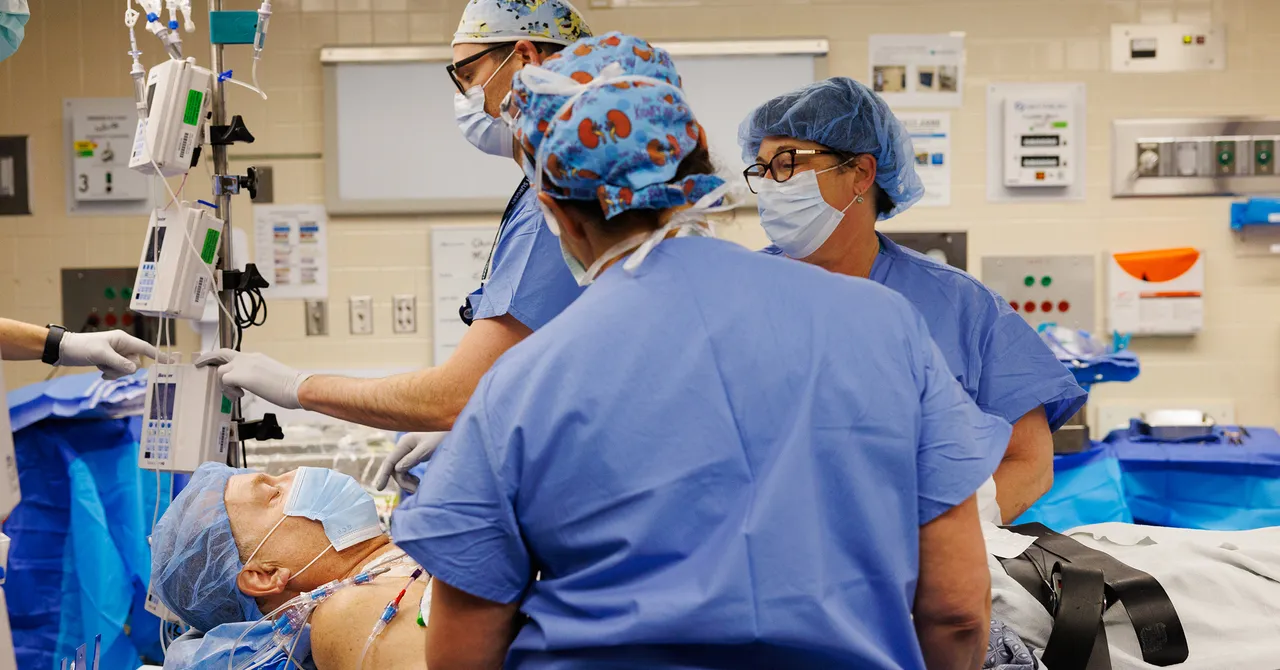
The woman underwent the operation at Massachusetts General Hospital on November 22 last year. As of Thursday, the kidney has been functioning for 285 days, according to Cambridge, Massachusetts-based eGenesis, the biotech company that used Crispr gene editing to make the organ fit for human transplantation. Previously, the record for a person living with a transplanted pig kidney was 271 days, set by Tim Andrews.

Most people in need of a kidney transplant wait three to five years on average to receive one, though it can take longer depending on blood type and other factors. While they wait, patients often need dialysis, in which a person’s blood vessels are hooked up to a machine that removes excess fluid and waste from the bloodstream. Dialysis typically requires four-hour sessions three times a week and can damage blood vessels over time, making the procedure hard on the body.

Pig kidneys could offer an alternative until a human organ is available. Pig organs are similar in size and function to human organs and are being investigated as a way to ease the shortage of human donor organs. To make them more suitable for humans, scientists are genetically editing them to prevent immediate rejection and reduce the risk of pig viruses being passed on to transplant patients.

Advertisement

Patients’ health gets worse the longer they’re on dialysis, “and their odds of getting a human transplant aren’t rising fast enough to meet their declining health,” says Mike Curtis, CEO of eGenesis. The company used Crispr to remove certain pig genes that could cause an immune response and add a handful of human genes.

“What we saw with Mr. Andrews was a radical improvement in his overall health while he was on the pig kidney versus if he had stayed on chronic dialysis,” Curtis says.

The woman who has crossed the nine-month mark is the fifth person to receive an eGenesis kidney through a special regulatory pathway known as expanded access. The Food and Drug Administration allows patients with serious or life-threatening conditions to gain access to experimental treatments when there are no good alternatives.

Andrews’ case shows that pig kidneys may provide a temporary solution. He received a pig kidney in January 2025 and had it removed in October last year after a period of decreasing kidney function. He returned to dialysis but received a human kidney transplant in January this year. A second person has also successfully received a human transplant after having a pig kidney for eight months, according to eGenesis.

Advertisement

Curtis says the company is learning more with each transplant. In a paper published on Thursday in The Lancet medical journal, the surgical team that performed the transplants details Andrews’ experience. They determined that Andrews’ pig kidney eventually failed due to thrombotic microangiopathy, which means tiny blood clots formed in the transplanted organ.

The team is using that information to adjust the immunosuppressant medications that pig kidney recipients receive and how frequently they need to take those drugs. People who receive human organ transplants also need to take immunosuppressive drugs to prevent their body from rejecting the transplanted organ. Organ rejection can happen at any time following a transplant, ranging from minutes after the surgery to many years later.

Kidneys are the most-needed organ, with more than 95,000 people waiting to receive one in the US. But due to a shortage of donor organs, fewer than 28,000 kidney transplants were performed in the US in 2025.

The FDA has given eGenesis the green light to conduct a more formal trial in up to 33 patients with kidney failure who are between 50 and 70 years old and on the wait list for a human kidney. That trial will not happen until 2027, but eGenesis plans to perform additional transplants under the expanded access pathway in the meantime. Their next goal is to get a transplanted pig kidney to function for a year.

Advertisement

Source link

Continue Reading
Click to comment

You must be logged in to post a comment Login

Leave a Reply

Tech

Oura files to go public

Published

on

Oura, the smart ring maker, has filed to go public.

The filing with the Securities and Exchange Commission on Thursday shows that Oura’s revenue has jumped substantially in the past year. The company went from $697 million in revenue during the nine-month period that ended June 30 last year to $1.2 billion during the corresponding period this year.

The company has said previously that it generated $500 million in revenue in 2024, roughly $1 billion in 2025, and that it expected to generate close to $2 billion in revenue this year.

The company says it has sold 3.6 million rings over the past year, and that it currently has approximately 5 million paid members — that is, users who subscribe to its service for broader health metrics. The filing also says that Oura has an approximately 85% weighted-average 12-month membership retention rate, meaning that roughly 85% of members who sign up in a given month are still subscribed a year later.

Advertisement

The company’s rings, which sell in the range of $350 to $400, are, at their most fundamental level, fitness trackers designed to measure a user’s biometrics — everything from metabolism and heart rate to stress levels and sleep patterns. Paired with an app, the ring and that software are marketed by Oura as an “always-on health intelligence platform.”

Late last month, it was reported that Oura was looking to raise $3 billion during its expected public offering. The company, which was founded in Finland in 2013, confidentially filed for an IPO in May. Bloomberg previously reported that the company is expected to seek a $16 billion valuation. In October of last year, it had been valued at around $11 billion.

In its SEC filing, Oura outlines where it believes its audience can widen in the coming years. “We believe our opportunity extends beyond traditional wearable use cases centered on activity and fitness tracking,” it says. “We believe our platform can support significantly larger populations as we continue to expand access, build clinical evidence, and deepen integrations with health plans, employers, and care providers.”

Oura also notes how its trove of data is fueling new AI integrations. “We believe we have amassed one of the largest and highest-quality longitudinal biometric datasets in consumer health, tracking over 50 health and wellness metrics and representing nearly 42 billion hours of physiological data,” it states. “This dataset powers our AI and machine-learning models, which decode complex physiological patterns and improve in accuracy, personalization, and predictive capability as member histories deepen.”

Advertisement

TechCrunch has reached out to Oura for more information.

The company, which now has offices throughout the world, including San Francisco, was recently hit with a proposed class action lawsuit accusing it of misleading users about the accuracy of its sleep tracking capabilities. The suit alleges Oura’s rings can’t actually detect the physiological signals needed to determine sleep stages, and instead rely on AI-generated estimates that the complaint describes as little more reliable than a coin flip. The litigation follows years of online complaints from users who said that Oura consistently rated their sleep as optimal when, in fact, it was not.

The company has disputed the allegations and previously told TechCrunch it will “defend against” the claims in the “appropriate legal forum.”

When you purchase through links in our articles, we may earn a small commission. This doesn’t affect our editorial independence.

Advertisement

Source link

Continue Reading

Tech

Klipsch RP-500PM Debuts at CEDIA 2026 as First Powered Reference Premiere Speaker

Published

on

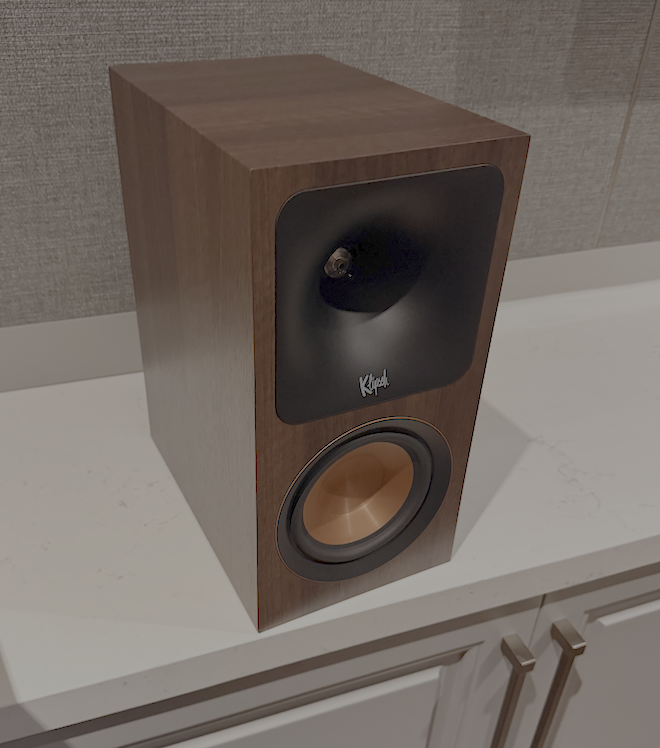
Klipsch is taking its Reference Premiere Series somewhere it has not gone before. The new RP-500PM Powered Monitor is the company’s first powered speaker in the lineup, combining amplification, HDMI ARC, USB-C, Bluetooth 5.3, a phono input and multiple digital and analog connections in a compact stereo system.

Launching at $799.99 per pair, the RP-500PM also introduces a new high-density axial Tractrix horn with upgraded BMC material. Klipsch says the flush-mounted design reduces resonance and wave breakup while improving off-axis response for a wider listening area.

That last part could be especially important. Horn-loaded Klipsch speakers have never exactly suffered from a shortage of personality, but improving dispersion without sacrificing their dynamics could make the RP-500PM better suited to televisions, desktops and shared living spaces.

What Makes the Klipsch RP-500PM Unique?

Reference Premiere has primarily been built around passive loudspeakers that require an amplifier or AV receiver. The RP-500PM puts the electronics inside the system and is designed to work directly with televisions, computers, turntables, gaming systems and mobile devices.

Advertisement

Connectivity includes HDMI ARC, USB-C, optical digital, RCA line-level, phono and 3.5mm analog inputs, along with Bluetooth 5.3. A dedicated subwoofer output provides an upgrade path for listeners who want more low-frequency output than the 5.25-inch Cerametallic woofer can provide on its own.

klipsch-rp-500pm-cedia-expo-2026
Klipsch RP-500PM at CEDIA Expo 2026

Klipsch says the internal amplifiers are matched to the individual drivers, although amplifier power has not yet been disclosed. The supplied launch information also does not specify frequency response, Bluetooth codec support, USB resolution, dimensions or weight.

Those omissions are worth noting because this is not an empty field. Several competitors around $800 already publish extensive amplifier and digital audio specifications.

Klipsch RP-500PM vs RP-600M II

The RP-600M II is the logical passive Reference Premiere model for comparison and follows the highly successful original RP-600M. It uses a larger 6.5-inch Cerametallic woofer and a 1-inch titanium LTS tweeter loaded into Klipsch’s 90 x 90-degree hybrid Tractrix horn.

The RP-500PM uses a smaller 5.25-inch Cerametallic woofer and the new axial Tractrix horn, but its bigger difference is architectural. The amplification and source connectivity are already built in, eliminating the need for an integrated amplifier, receiver, external DAC or separate phono stage for most users.

Advertisement

The RP-600M II remains the more flexible choice for someone assembling a traditional component system or Reference Premiere home theater. The RP-500PM is aimed at listeners who want the Klipsch sound and design language without a stack of electronics and enough cables to qualify as an infrastructure project.

The new horn could also give the RP-500PM a different presentation. Klipsch specifically emphasizes improved off-axis response, which makes sense for a speaker likely to spend as much time beside a television or computer monitor as it does in a dedicated two-channel setup.

Advertisement. Scroll to continue reading.

RP-500PM Features and Specifications:

  • First powered monitor in the Reference Premiere Series
  • New high-density axial Tractrix horn
  • Upgraded BMC horn material
  • Flush-mounted horn design
  • 5.25-inch Cerametallic woofer
  • Built-in driver-matched amplification
  • HDMI ARC
  • Bluetooth 5.3
  • USB-C
  • Optical digital input
  • RCA line-level input
  • Phono input
  • 3.5mm auxiliary input
  • Dedicated subwoofer output
  • IR remote control
  • Floating cloth grille
  • Textured wood-grain cabinet
  • Copper woofer with matching trim ring
  • Compatible with Klipsch KS-28 stands

Klipsch has not yet provided amplifier output, frequency response, dimensions, weight, maximum USB resolution or supported Bluetooth codecs.

Three Main Competitors

Triangle Borea BR03 Connect — $799/pair

The Triangle Borea BR03 Connect combines a similarly broad selection of inputs with a larger 6-inch cellulose midwoofer and 1-inch EFS silk-dome tweeter. Its Class D amplifier delivers 60 watts per channel, while HDMI ARC, USB-B, optical, coaxial, RCA, 3.5mm, MM phono and subwoofer connections cover almost every likely source. Plus its ESS ES9018K2M DAC supports PCM up to 32-bit/384kHz and DSD256 through USB, while Bluetooth 5.0 includes aptX HD. On paper the BR03 Connect checks more boxes for the same price, while the RP-500PM targets a distinctly different sonic philosophy.

Advertisement

ELAC Debut ConneX DCB61 — $899/pair

The ELAC Debut ConneX DCB61 costs $100 more than the Klipsch and offers a larger 6.5-inch long-excursion woofer, waveguide-loaded tweeter and 160 watts RMS of total amplification. Its rear-firing S-shaped port is designed to extend bass response while reducing port noise, with ELAC specifying a frequency response of 48Hz to 22kHz at -3dB.

Connectivity is particularly strong with HDMI eARC, USB audio up to 24-bit/96kHz, optical, Bluetooth LC3+, a switchable line/phono input and subwoofer output. The DCB61 also adds Dolby Digital decoding and iOS/Android app control for EQ, placement optimization, volume and other settings.

That makes the ELAC a formidable alternative for buyers willing to spend another $100. The RP-500PM counters with Klipsch’s new axial Tractrix horn and a more compact design, while the DCB61 brings a larger driver, app control and Dolby Digital to the argument. Copper cones alone are not going to settle this one.

SVS Prime Wireless Pro — $899/pair

The SVS Prime Wireless Pro costs $100 more but shifts the emphasis toward network streaming. It uses a 5.25-inch mid-bass driver and 1-inch aluminum-dome tweeter with 200 watts of total system amplification.

Advertisement

Wi-Fi, AirPlay 2, Chromecast, Spotify Connect and DTS Play-Fi are included, along with high-resolution playback support up to 24-bit/192kHz. HDMI ARC/eARC, optical, analog and Bluetooth connectivity are also provided.

SVS does not include the Klipsch’s built-in phono stage or USB audio input, making the two products appealing to somewhat different users. Klipsch makes more sense for direct connections to turntables and computers, while SVS has the clear advantage for listeners who want network streaming built into the speakers.

The Bottom Line

The RP-500PM fills an obvious gap in the Reference Premiere lineup without merely shrinking an existing passive speaker and stuffing an amplifier inside. The new axial Tractrix horn, broader connectivity and integrated phono stage suggest Klipsch designed it as a standalone stereo system rather than an accessory to another component.

The $799.99 price puts it directly against some excellent powered speakers, so the badge and copper woofer will only carry it so far. Triangle offers formidable connectivity and high-resolution support for less money, while the ELAC DCB61 costs $100 more. SVS also asks another $100 but adds a much stronger streaming platform.

Advertisement

What could separate the Klipsch is its acoustic design. If the new horn really delivers broader off-axis performance while retaining the speed, dynamics and immediacy that have made Reference Premiere successful, the RP-500PM could have a compelling argument beyond convenience.

CEDIA Expo is underway in Denver, so we will get a chance to hear whether Klipsch has pulled that off.

Advertisement. Scroll to continue reading.

Price & Availability

The Klipsch RP-500PM Powered Monitors will be available in North America in December 2026 for $799.99 per pair through Klipsch.com and authorized Klipsch retailers.

Advertisement

For more information: klipsch.com

Source link

Advertisement
Continue Reading

Tech

Huawei just launched 6 new products – here are all the important details

Published

on

Huawei has announced a huge batch of new devices for the European market, including three smartwatch ranges, a new pair of wireless earbuds and a flagship tablet.

The company unveiled the products at its “Chase the Wild” global innovative product launch event in Munich, with the Huawei Watch GT 7 Series taking centre stage. The new range includes the outdoor-focused Watch GT 7 and GT 7 Pro, with features such as wrist-based turn detection, G-Force detection and ski mapping across more than 3000 resorts.

Alongside them, Huawei has also launched the health-focused Watch D3, brought the Watch 6 Series back to Europe after a year away, and introduced the FreeBuds Neo and MatePad Pro 12-inch.

Huawei Watch GT 7 and GT 7 Pro

The Watch GT 7 series is clearly aimed at outdoor and fitness enthusiasts. The standard Watch GT 7 comes in 46mm and 41mm sizes, with eight colour options, while the GT 7 Pro is available in three colourways and uses a nano-tech ceramic bezel with a titanium alloy middle frame.

Advertisement

Both watches introduce what Huawei describes as industry-first wrist-based turn detection and G-Force detection. There’s also a new indoor snow sports mode and outdoor ski mapping covering more than 3,000 resorts worldwide.

Advertisement

HUAWEI WATCH GT7 PROHUAWEI WATCH GT7 PRO

Cyclists get route planning for climbs, slope alerts and sharp-turn warnings, although Huawei notes that its new AI-powered cycling insights aren’t yet available in Europe.

Health tracking has also been upgraded through Health Insights, including Physical Readiness scoring and smarter health recommendations.

The Watch GT 7 starts at £279.99, while the GT 7 Pro starts at £379.99. Both are available to order in the UK from 2 September, with a £50 discount coupon available on purchases made until 13 October.

Advertisement

Huawei Watch D3 focuses on blood pressure

The Watch D3 takes a very different approach, putting medical-grade blood pressure monitoring at the centre of the experience.

watch d3watch d3

Advertisement

Its inflatable airbag cuff technology is designed to provide wrist-based readings, while the watch supports ambulatory blood pressure monitoring (ABPM). Huawei says the blood pressure monitoring has secured European CE-MDR medical certification.

It’s also slimmer and lighter than its predecessor, measuring 11.3mm thick and weighing 40g. Health Glance and Health Insights are included, alongside pre- and post-exercise blood pressure measurements and measurement reminders.

The Watch D3 launches in the UK on 23 September for £399.99. Buyers can also get 10 months of Bupa Well+ services worth £200.

Advertisement

The Watch 6 Series returns to Europe

After a one-year hiatus, Huawei is bringing the Watch 6 Series back to Europe. The range includes the Watch 6 from £399.99 and Watch 6 Pro from £599.99, with both arriving on 23 September.

Huawei highlights AI-powered workout analysis, independent calling, navigation and payment functionality, alongside its Health Glance, Health Insights and Healthy Living features.

watch gtwatch gt

Advertisement

FreeBuds Neo and MatePad Pro 12-inch

The FreeBuds Neo arrive with adaptive noise cancellation of up to 30dB, high-resolution lossless audio and spatial audio. Huawei’s new Turbo driver unit is designed to deliver richer sound, while dual-device connectivity allows users to switch between devices.

The earbuds work with Android, iOS and Windows and cost £119.99 in the UK from 23 September. A £20 saving is available until 26 October.

Advertisement

Finally, the MatePad Pro 12-inch is a particularly thin productivity tablet, measuring just 4.7mm and weighing 454g. It has a 12-inch flexible OLED PaperMatte Display and supports AI speech-to-text, AI handwriting enhancement and stylus air gestures.

Huawei has announced the tablet as part of its new flagship portfolio, although the supplied UK pricing and availability details don’t specify a launch price for the MatePad Pro 12-inch.

Source link

Advertisement
Continue Reading

Tech

I’ve reviewed all the major 360 cameras from Insta360 and DJI, but this $300 GoPro Max 2 Labor Day deal is easily the best value

Published

on

2025 was a major year for new 360 cameras. Insta360 maintained its dominance with the X5 (since upgraded with the X6), DJI entered the picture with the Osmo 360, and GoPro finally upgraded its original Max after years of delays with the Max 2.

In our in-depth review, we said GoPro’s 8K second-gen model was ‘worth the wait’, and it’s now available for a new low price that further sweetens the deal over Labor Day. You can grab the GoPro Max 2 at Amazon for $299 — that’s a full 40% off the original (already reasonable) $499.99 asking price.

Compare that deal to the current prices of rival models available in the US, which include the Osmo 360 and Insta360 X5 and X6, and the Max 2 is easily the best value 360 camera that we’ve tested and recommend. If you’re starting from scratch, the Max 2 Accessory Bundle at Adorama for $369.99 is an even better bet, adding a 1.2m extension rod, memory card and second battery.

Advertisement

Today’s best GoPro Max 2 deal

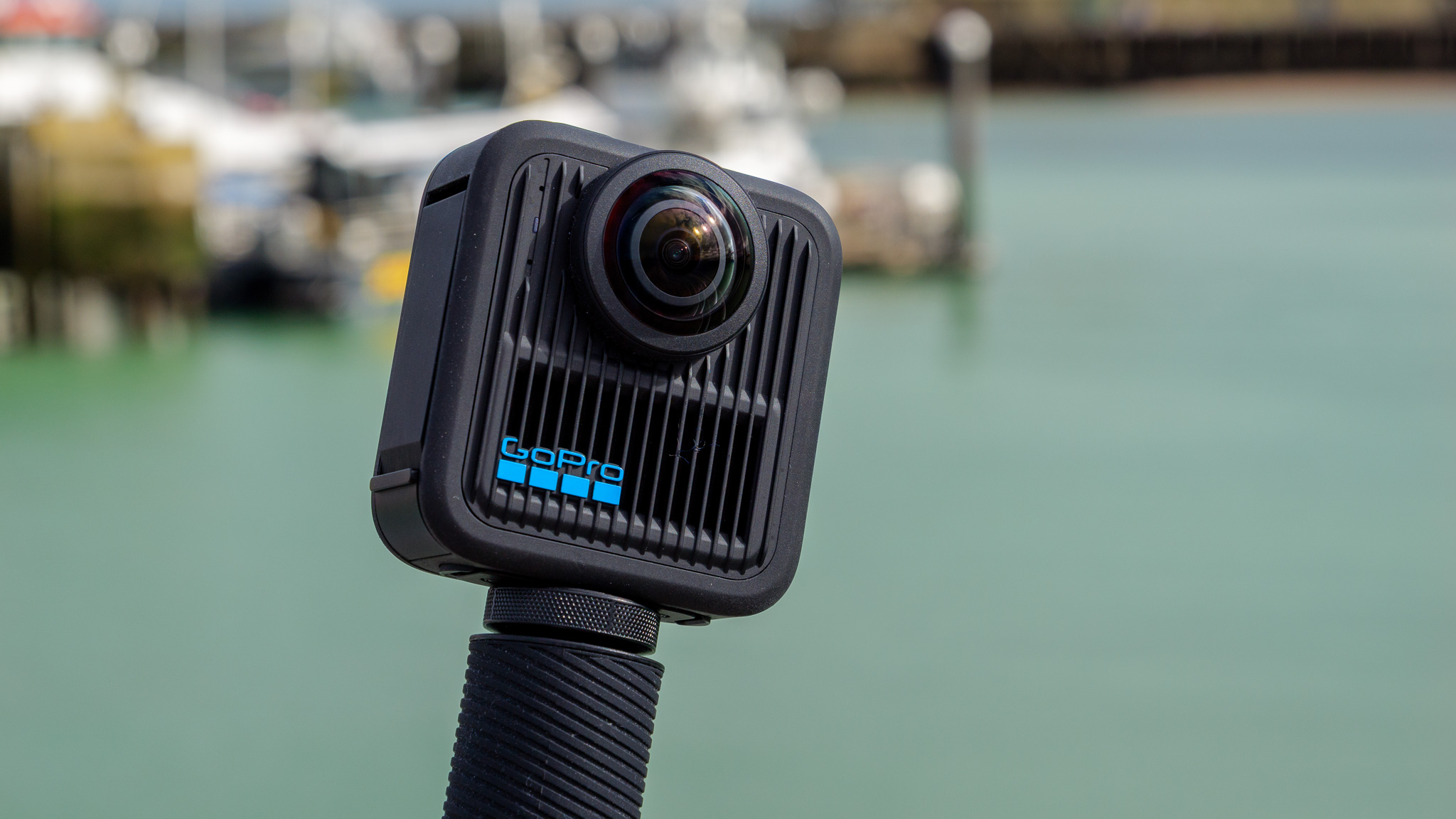
GoPro Max 2 360 camera

(Image credit: Future | Sam Kieldsen)

We’re in turbulent times for 360 cameras; DJI is banned from releasing new models in the US (including this week’s Osmo 360 II), Insta360’s prices keep going up as seen with the recent X6, while GoPro’s financial decline was seemingly arrested this week after it ‘merged’ with an obscure brand that manufactures America’s AI infrastructure — but who knows what’ll happen with the action cam giant next.

A price cut for GoPro’s latest 360 camera is, therefore, some light relief. After all, the Max 2 shoots some of the best-looking 8K 360 footage in daylight, offers versatile mounting options, plus tool-free lens replacements for a cost-effective fix should the bulbous lenses get damaged in the line of action.

Sure, the Max 2 is prone to overheating and its image quality suffers a little in low light, but overall it remains a superb 360 camera, and is now available for an unbeatable price. If you want the best bang for your buck, look no further than the above Max 2 deals.

Advertisement

Not in the US? You can find the best GoPro Max 2 deals via the links below.

Shop more of today’s best Labor Day sales

Source link

Advertisement
Continue Reading

Tech

‘Keeping OT security up to date is more than patching systems’

Published

on

Integrity360’s An Nguyen discusses the cyberthreats affecting industrial environments and what makes an effective OT security plan.

Operational technology (OT) has become a growing priority in the world of cybersecurity in recent years.

Securing OT systems, which operate and control physical processes in industrial environments while maintaining safety, reliability and operational continuity, is more important than ever amid the rising threat of disruption from cybercriminals and state-sponsored bad actors – who increasingly target OT systems in critical infrastructure in particular.

Sectors particularly affected by these types of cyberattacks include the likes of manufacturing, energy, transport, water and healthcare.

Advertisement

In fact, recent data from Statista found that the manufacturing industry was hit by the largest share of cyberattacks in 2025, with companies in this sector experiencing 27.7pc of total attacks for the year.

An Nguyen, OT practice lead at cybersecurity specialist Integrity360, tells SiliconRepublic.com that OT security considerations differ quite considerably from those of traditional IT security.

“Unlike traditional IT environments, where the primary objective is often the protection of information, industrial environments must balance cybersecurity with operational and safety requirements,” says Nguyen. “Effective OT cybersecurity requires not only cyber expertise, but also an understanding of industrial processes, operational dependencies and real-world constraints.”

Here, Nguyen discusses the concerns and complexities of OT security further.

Advertisement
What are some of the biggest threats facing OT environments?

Ransomware remains one of the biggest concerns, especially when attacks start in the corporate IT environments and then pivot to industrial operations. Critical infrastructure operators also face risks from sophisticated threat actors, supply chain compromises and insecure remote access.

However, what we often see is that successful attacks are not always the result of highly sophisticated techniques. They are frequently the result of more basic weaknesses such as poor asset visibility, weak network segmentation, legacy systems or uncontrolled third-party access.

As IT and OT become increasingly interconnected, organisations need to focus not only on external threats, but also to understand how disruptions to digital systems could propagate to critical industrial processes and services.

What are the biggest priorities in an efficient OT security plan?

An effective OT security strategy should start with understanding the business and operational environment. The first step is to identify critical processes, understand how they depend on digital systems and gain visibility over assets, communications and third-party connections.

Advertisement

Organisations also need a clear governance and operating model across IT and OT environments. One of the most common challenges is defining roles and responsibilities between operations, engineering, IT and cybersecurity teams. Without clear ownership, accountability and decision-making processes, even well-designed security programmes will face difficulties to provide sustainable improvements.

From there, organisations can assess their maturity level and build a roadmap based on risk and operational priorities. Typical focus areas include remote access security, network segmentation, change management practices, vulnerability management, third-party vendors assessment, monitoring, incident response and recovery capabilities.

The challenge is not to deploy as many security controls as possible. The challenge is to build a security model that takes into account the operational reality of the organisation and can be maintained over time.

Why is it important to keep OT security up to date?

Keeping OT security up to date is more than patching systems. It requires maintaining visibility of the environment, reassessing risks as the environment evolves and making sure preventive measures, detection and response capabilities remain effective.

Advertisement

This is particularly important because many industrial systems stay in operation for decades. You cannot always patch, upgrade or replace them at the same pace as you would in an IT environment. As connectivity increases and new vulnerabilities are discovered, organisations need to continuously adapt their security posture while managing operational constraints.

In what ways do companies fall short of proper OT security?

Most organisations do not fail because they ignore security completely. Usually, what we see is that security initiatives remain isolated, too much technology-focused or disconnected from operational realities.

Many organisations still struggle with basic visibility of OT assets, clear ownership between operations, engineering and cybersecurity teams, third-party access management and preparation for incidents that could impact production.

Another common challenge is moving from assessment to execution. Organisations often complete audits and assessments, but then struggle to prioritise, fund and implement the improvements that have been identified. Technology is important, but effective OT security also requires governance, operational ownership and long-term commitment.

Advertisement
What does a significant OT cybersecurity breach look like? Do you have any examples of a major incident?

A major OT cyber incident does not necessarily involve attackers taking direct control of industrial systems. In many cases, disrupting connected IT systems or remote access infrastructure is enough to affect industrial operations.

A recent example is the cyberattack that temporarily shut down a small power generation plant in the UK. According to public reporting, the incident is believed to be linked to Iranian actors and resulted in the facility being offline for several days. While there was no impact on the wider UK energy system, the event highlighted how cyberattacks can affect critical infrastructure operations without necessarily targeting industrial control systems directly.

This case illustrates that the challenge is not only to protect individual systems. It is to understand the dependencies between IT, OT and operational processes, and to make sure the organisation can continue operating and recover effectively when disruption occurs.

Is there a contrast between how organisations view IT security versus how they view OT security?

Historically, IT and OT security developed around different priorities. IT security has mainly focused on protecting information systems, while OT environments have traditionally prioritised safety, reliability and operational continuity. Today, the distinction is becoming less clear because IT and OT are increasingly connected, and OT is using progressively more common IT technologies.

Advertisement

The challenge is absolutely not to keep IT and OT security completely separated. It is neither to apply IT security practices to OT without adaptation. In practice, the most mature organisations combine both approaches. They use existing cybersecurity capabilities such as SOC, incident response and access management, while integrating OT expertise and operational context understanding.

Down the line, OT cybersecurity should be treated as a business and operational resilience challenge, not simply as an additional technical cybersecurity topic.

Don’t miss out on the knowledge you need to succeed. Sign up for the Daily Brief, Silicon Republic’s digest of need-to-know sci-tech news.

Advertisement

Source link

Continue Reading

Tech

Audacity audio-editing app no longer looks like it’s from the early 2000s

Published

on

personal tech

The FOSS tool for audio editing has a fresh coat of paint, and new features to boot

Audacity, a beloved open-source audio editing software tool, has just received a massive makeover.

Advertisement

For those unfamiliar with Audacity, it’s a 26-year-old piece of FOSS software that provides incredibly robust audio editing capabilities for the perfect price – $0 – making it ideal for independent musicians, garage bands, vinyl rippers, and college students who want to make a slowly, deliberately spoken foreign-language recording for a group project sound vaguely fluent – not that this vulture would know anything about that.

While an incredibly useful tool, Audacity’s interface has been stuck in the mid-aughts for a couple of decades now. That’s changed with Thursday’s release of Audacity 4.0.0. Not only has the interface been completely overhauled, but there are also a lot of under-the-hood changes as well.

The new UI was rebuilt on Qt and adds a Home screen for recent projects, plus configurable Workspaces. Audacity veterans will notice that the actual editing workflow looks different – much more like a modern piece of software than a relic of the Winamp days

As part of that redesigned interface, a number of new features bring Audacity into the current age: Clips can be moved over one another, with the underlying portion replaced where they overlap, multiple clips can be selected at the same time, and clips can be grouped for moving as a single object. Audacity 4 also retains non-destructive trimming, meaning trimmed portions of a clip can be recovered simply by extending the clip back into the trimmed-out portion.

Advertisement

Audacity users have been crying out for a dedicated splitting tool, parent company Muse Group said in a press release, and that’s been added in version 4. Clip envelopes have also been added, which allow users to adjust the volume and add fades to tracks without altering the original recordings. All of Audacity’s built-in effects have been given an interface redesign as well. 

Advertisement

In short, it’s a substantial rebuild, although Muse has tried not to alienate veterans, noting that “existing keyboard shortcuts remain available, projects created in Audacity 3 open normally, and the familiar layout of tracks and timeline has been preserved.” 

Audacity 4, like all the versions that preceded it in the past 26 years, is remaining open source and free as well. 

“We always like to thank the open source community who help our team make things better,” Muse’s head of communications Jack Sutton told The Register in an email. Sutton also tipped his hat to Martin Keary, former head of product for Muse Group, who was an instrumental part of building Audacity 4 and recently left the company. 

Speaking of Keary, he published a nearly hour-long YouTube video in October defending the early alpha build of Audacity 4 when the FOSS audio editing world maligned the early build for turning Audacity into a full-fledged digital audio workstation (DAW) used to record, edit, and produce audio, instead of the editing tool it had long been. Keary insisted that wasn’t the case, and Sutton reiterated the point to us. 

Advertisement

“DAW features like virtual instruments and MIDI support are not in Audacity 4,” the Muse Group spokesperson explained. “Some of the under-the-hood and structural changes do make it easier for our team to potentially build DAW-like features in future, but our current priority is on … speedy and efficient audio editing.” 

Audacity 4 can be downloaded on GitHub and on MuseHub for those who use Muse’s other tools. ®

Source link

Advertisement
Continue Reading

Tech

Apple’s Face ID technology target of latest lawsuit from BASF

Published

on

Nearly a decade after Face ID debuted in the iPhone X, BASF is bringing a lawsuit against Apple for violating face authentication technology patents it holds.

Many versions of the iPad and nearly every iPhone since the iPhone X has used Face ID. For whatever reason, BASF chose today to pursue a patent infringement lawsuit.

According to a report from Reuters, the German-based BASF company has started a lawsuit against Apple. They allege patent infringement for their patents held on face authentication technology.

The company has a Houston location and has chosen Midland, Texas for the lawsuit. It’s a U.S. District Court known for patent lawsuit speed, given the relatively smaller criminal docket that the court processes as compared to surrounding regions.

Advertisement

Apple hasn’t shared a statement on the matter.

BASF is a corporate giant

It seems Reuters may have been tipped off on this lawsuit, so while we await an official filing, the information we can find doesn’t say much. There doesn’t seem to be any indication that BASF is a patent troll.

BASF is the largest chemical producer in the world. Though it does own many subsidiaries and technologies, some of which belong to smartphones.

TrinamiX is a subsidiary of BASF that was established in 2015. It holds over 370 patents and patent applications, and it has published work in facial recognition technology.

Advertisement

One such technology pertains to under-display facial authentication systems for OLED panels. It was shared in 2022 at a Snapdragon Summit and has shipped in Android smartphones.

The description of the technology certainly aligns with the rumored Apple implementation of under-display Face ID that is expected to debut with iPhone 18 Pro. However, it seems unlikely that the lawsuit could be referencing unreleased technology.

Once AppleInsider is able to review the lawsuit filing in full, more will be shared.

Advertisement

Source link

Continue Reading

Tech

VMware migration reduces Tottenham Hotspur’s licensing fees by 85 percent

Published

on

Tottenham Hotspur, a professional soccer team that’s part of the Premier League, has saved over 85 percent in licensing fees by replacing its stadium’s VMware instance with Hewlett-Packard Enterprise’s (HPE’s) Morpheus VM Essentials (VME) virtualization software.

Tottenham hasn’t disclosed which VMware products it used or how much it previously paid the Broadcom firm.

The soccer organization confirmed this week to The Register that it has moved its stadium’s server, storage, and networking infrastructure to HPE solutions delivered through HPE’s hybrid cloud management platform, GreenLake. That is all “underpinned by” VME and HPE’s OpsRamp software for hybrid and multi-cloud environments, Rob Pickering, Tottenham’s CTO, told the publication, with HPE in charge of the hybrid cloud-managed service.

Tottenham is almost done with a broader redesign of its stadium’s data center and network infrastructure, The Register reported. The stadium has a data center with six aisles that uses HPE’s ProLiant Compute Gen12 server hardware and Alletra Storage MP. In an announcement this week, HPE noted that Tottenham is using “solutions including HPE Morpheus software and HPE OpsRamp software… to manage a complex, multi-site environment more efficiently while modernizing virtualization platforms and reducing operational overhead.”

Advertisement

“We’re at the right time of our replacement cycles to be looking at those decision points,” Pickering told SDxCentral this week.

“For at least as long as my career in technology, hypervisor has been one of those very unsexy things that you bought from one person and you just sort of got on with it. And you know, with VMware, a 400-pound gorilla in that space, they took some decisions that I think run counter to both the system integrator side and the customer side.”

Source link

Advertisement
Continue Reading

Tech

Confused about which VPN is right, US senator asks the NSA for guidance

Published

on

A prominent US senator is asking the National Security Agency to provide guidance to the general public on best practices for using virtual private networks to secure their communications from spying by foreign adversaries.

VPNs funnel all of a user’s Internet traffic through an encrypted connection to a remote server. The design provides strong assurances that no one between the user and the server can read the encrypted contents. VPNs also allow users to hide their IP addresses from the destination servers they communicate with. While US agencies have previously recommended use of VPNs, none have given recommendations on which ones provide adequate protection.

It’s all in the nuances

There are a host of limitations that can undo many of the protections users may think their VPN provides them. For instance, the encrypted tunnel often terminates once a single server decrypts the traffic and sends it on to its final destination. That means the decrypted traffic or the sending and destination IP addresses may be available for snooping by rogue employees or attackers who hack the server. VPNs also don’t encrypt certain types of metadata, such as time stamps, allowing nation-states to build profiles that can be useful in intelligence gathering.

With so many nuances, the existing recommendations to use a VPN don’t provide enough information for people to make informed decisions. Sen. Ron Wyden (D-Ore.) is asking the NSA to provide specific recommendations.

Advertisement

“Americans facing advanced foreign threats—including government personnel, defense contractors, journalists, and human rights defenders—deserve clear, honest advice about how best to protect their communications from surveillance by foreign adversaries,” Wyden wrote in a letter sent Wednesday to Gen. Joshua Rudd, the director of the NSA. “To that end, I request that you update NSA’s existing public guidance on VPN configurations to address this issue.”

Specific questions touch on some fairly technical details, including the general architecture of a VPN service. They include the adequacy of single-hop VPNs, which, as noted earlier, use a single server to decrypt traffic sent by the user and send it to its destination. It also asks about multi-hop architectures, in which the traffic is funneled through two or more servers, allowing the first to see only the IP address of the sender and the terminating server to see only the destination address. The letter also inquires about the use of random delays and cryptographic padding to thwart attacks that detect timing patterns or the size of messages. Wyden further asks about the adequacy of specific services such as Apple Private Relay, Nym, and Tor.

Source link

Advertisement
Continue Reading

Tech

GPT-6 Stole the Show, but Anthropic, Meta and Google Also Had New AI Models This Week

Published

on

While OpenAI’s GPT-6 Astra is making a big splash in the AI world with its debut, it was far from the only one to be announced this week. When there’s a new, updated model seemingly every other day, it’s hard to stay up to date, let alone be excited, but the onslaught of new offerings is something to note. 

It wasn’t just OpenAI: Fellow AI heavy hitters Anthropic, Meta, and Google also announced updates to AI models. While each new model has its own strengths, a focus we’re seeing more and more often is advancements in agentic AI workflows, and each new announcement spotlight on those capabilities. 

Below, we’ll break down all of the latest models from this week and give you the details.

GPT-6 Astra

Of all models released this week, OpenAI’s is the only one that’s not a “.x” update. GPT-6 Astra is said to excel in cybersecurity and software engineering, and OpenAI calls it its most intelligent model yet. The performance benchmarks for Astra have it ahead of its competitors in a lot of ways, making it one of the most advanced models we’ve seen to date.

Advertisement

OpenAI is also touting Astra’s strength in multi-step agentic workflows, scientific discovery and financial modeling. The model is also said to be much better at computer use, which was a focus of its predecessor, ChatGPT 5.6, when it was released in July.

ChatGPT-6 Astra is rolling out to people with Daybreak access, its program for “vetted enterprise customers and cybersecurity practitioners.” OpenAI says that the new model will roll out to Plus, Pro and Business users over the coming days. 

(Disclosure: Ziff Davis, CNET’s parent company, in 2025 filed a lawsuit against OpenAI, alleging it infringed Ziff Davis copyrights in training and operating its AI systems.)

Claude Fable 5.1 and Mythos 5.1

Anthropic announced updates for its Fable and Mythos models — both of which are some of the best available today. Anthropic says that both Fable 5.1 and Mythos 5.1 are the same model, but each has a different set of safeguards. Fable is the model that the average person can use, and Mythos is typically reserved for researchers and cybersecurity experts. 

Advertisement

Anthropic says its latest models have significantly better performance over their predecessors, and the release “sets a new standard” for coding, knowledge work and long-running problem-solving tasks. It also says that Fable 5.1, when set to low or medium effort, has performance similar to Fable 5 but at a much lower cost. 

Fable 5.1 is available to the general public, whereas Mythos is limited to Anthropic’s trusted access programs. 

Muse Spark 1.3

Meta released a model this week that should bring it back up into the conversation about the most capable models around. Muse Spark 1.3 brings more advanced reasoning and better performance in agentic and coding tasks. 

Meta said this model is trained to collaborate with the person using it, and will ask clarifying questions when a prompt is vague and check to confirm the actions it will perform in agentic workflows.

Advertisement

Must Spark 1.3 is available in Muse Code and Meta’s Model API.  

Gemini 3.8 and 3.8 Flash Cyber

Google released two new models in the form of Gemini 3.8 Flash and 3.8 Flash Cyber. This was hot on the heels of the release of Gemini 3.7 Flash on Aug. 13. The latest additions to the family are said to offer “next-generation intelligence” for agentic workflows and cybersecurity. 

Gemini 3.8 Flash is available to enterprise, consumer and developers across Google products, where 3.8 Flash Cyber is currently available in limited access to participants of the Fairwind Program, which was also announced the same day as the new models.

Source link

Continue Reading

Trending

Copyright © 2025