

Tax season starts early this year. Or at least it should for you, because this one is a doozy. Thanks to the One Big Beautiful Bill Act (OBBBA), which Congress passed in 2025, there are some significant and potentially confusing changes coming to your tax return. Don’t be afraid to ask for help, even if you’re asking an artificially intelligent chatbot.
Tech
Trump made tax day more complicated. ChatGPT and Claude can make it easier.


Whenever a friend asks me about using AI, I say the same thing: Treat it like a capable coworker who never gets tired and sometimes gets things wrong. You can ask a chatbot a thousand questions, and with the latest frontier models — ChatGPT 5.2 Thinking and Claude Opus 4.6 — you’re going to get better answers than you might have last year, presumably with fewer hallucinations. They’re even getting better at doing math, which has historically been a weak spot for LLMs. Still, you wouldn’t let your energetic but slightly dishonest coworker file the final draft of an important report.
Treat ChatGPT and Claude the same way, especially when it comes to tax season. These tools aren’t designed to file your taxes for you, and you shouldn’t be uploading your forms for proofreading before submitting to the IRS. Your tax documents — namely your W2 and any 1099s — include sensitive personal information like your social security number and address. It’s generally a good rule not to upload those anywhere, unless you’re sure the site is private and secure. (The consumer versions of ChatGPT and Claude, by default, are not.)
Even if you are using an accountant, ChatGPT and Claude can help you get up to speed on all the tax code changes this year. Think of them as tax prep tools, a way to learn what kinds of questions to ask and which deductions to seek out. (The two big tax filing software companies offer their own chatbots — Turbotax has its Intuit Assist assistant and H&R Block has its AI Tax Assistant — that promise to make navigating the accounting labyrinth easier. In my experience, their functionality is limited and the sites tend to steer you toward paying for other financial products, like loans and banking services.) You can ask ChatGPT and Claude to explain particular rules based on your situation, a task that’s much harder if you’re just Googling or reading FAQs.
Before I go any further, however, I want to make something super clear: There’s a difference between using AI for tax research and using AI for financial advice. The former is a helpful information-gathering exercise. The latter is a great way to lose money. Chatbots sound smart but they are ultimately text generation machines, not certified financial planners or certified public accountants.
You certainly don’t have to use AI on your taxes this year. But much in the same way you might have Googled something like the child tax credit in the past, you might try chatting with the bots, asking them questions, and double-checking all their answers. Here’s how to get the most out of them this tax season.
One Big Beautiful Bucket of Confusion
Regardless of your political leanings, it’s important to know that the changes to the tax code ushered in by the OBBBA are pretty major: There are a lot of them, and they are quite specific. If you’re used to doing your taxes a certain way, you should know that your tax return this year will not just look like an updated version of last year’s tax return. There will be meaningful changes to the types of deductions and credits you can claim, and if you don’t take advantage of them, you could miss out on some free money. Here’s a breakdown, although I very much encourage you to check out the IRS page on the subject as well as the surprisingly helpful guides put together by Turbotax and H&R Block.
Some of the changes from the bill took effect in 2025 and will apply to the tax returns you’re filing now. They include deductions for taxes on tips and taxes on overtime, which don’t actually amount to no taxes on these streams of income as Trump has argued, but will save some people money. If you have kids, you’ll want to note that there’s a slight bump to the Child Tax Credit (from $2,000 to $2,200), and an expansion of 529 plans for education expenses. This year is also when you can claim your Trump Child Savings Accounts, also known as Trump Accounts. If you’re eligible, your tax filing software or account might prompt you to set them up by filling out the proper IRS form, but you can also fill it out here.
One other significant change: The IRS Direct File, which allowed people in 25 states to file their taxes online for free, is now gone. There are still a couple options to file for free through the IRS, but suffice it to say many more people will be using tools like Turbotax and H&R Block this year.
Again, those are just a few of the many changes ushered in the OBBBA. Learning about how new rules apply to your specific situation is difficult, especially if you, like me, feel like you’re allergic to accounting. This is where the chatbots come into play.
ChatGPT: good at chatting, bad at math
When it comes to your taxes, chatbots like ChatGPT and Claude are great for talking through questions and scenarios. If you’re a W-2 employee and your spouse is a freelancer, you’ve got two kids and a house, and your Jeep doubles as a delivery vehicle for your smoked meats side hustle, where you make a killing on tips, there’s a lot ChatGPT can tell you about the tax rules that apply to you — especially the new rules. Think of this less as advice and more as information that can help you get better organized for your actual tax preparation experience, whether that’s on Turbotax or in a conversation with a human accountant.
To be honest, when it comes to saving money, I don’t think you can ask enough questions. Start by telling your chatbot about your family’s situation, your ages, what you do for work, how you invest your money, and even what kind of car you drive, then ask what you should do differently on your taxes this year.
You could also keep a chatbot open in a window while you’re filing your taxes and ask it about the steps you don’t understand. The AI tools from H&R Block and Turbotax are designed to assist here, but in my experience, they don’t tailor the explanation to your situation, which makes them less helpful. If you’re working with an accountant, they’re probably using AI to make their jobs easier and save time. Being at least more familiar with the technology could improve those interactions, too.
Let me put it another way: You could use all the help you can get this year. There are enough new rules and changes to the tax code that not totally understanding how they apply to you could lead to mistakes or, worse, missed opportunities.
Everyone in this process could use all the help ,in fact; the Internal Revenue Service lost 25 percent of its workforce in the months after Trump took office, and it’s apparently chaos there now. Like I said, this year’s a doozy.

Continue Reading


Claude Code has become increasingly popular in the first year since its launch, and especially in recent months, as developers and non-technical users alike flock to AI unicorn Anthropic’s hit coding agent to create full applications and websites in days, on their own, that would’ve taken months and technical teams without. It’s not a stretch to say it helped spur the “vibe coding” boom — using plain English instead of programming languages to write software.
But it’s all been restricted to the desktop Claude Code apps and Terminal command-line interfaces and integrated development environments (IDEs) — until today. Now, Anthropic has added a new mode, Remote Control, that lets users issue commands to Claude Code from their iPhone and Android smartphones — starting with subscribers to Anthropic’s Claude Max ($100-$200 USD monthly) subscription tier.
Anthropic posted on X saying Remote Control will also make its way to Claude Pro ($20 USD monthly) subscribers in the future.
The mobile command center
Announced earlier today by Claude Code Product Manager Noah Zweben, Remote Control is a synchronization layer that bridges local CLI environments with the Claude mobile app and web interface.
The feature allows developers to initiate a complex task in their terminal and maintain full control of it from a phone or tablet, effectively decoupling the AI agent from the physical workstation.
Currently, Remote Control is available as a Research Preview for subscribers on the Claude Max tier. While access for Claude Pro ($20/month) users is expected shortly, the feature remains a high-end tool for power users and is notably absent from Team or Enterprise plans during this initial phase.
To access the feature, users must follow this guide and update to Claude version 2.1.52 and execute the command claude remote-control or use the in-session slash command /rc. Once active, the terminal displays a QR code that, when scanned, opens a responsive, synchronized session in the Claude mobile app.
Less screen time, more IRL time: philosophy of flow
The messaging behind the release centers on the preservation of a developer’s “flow state.”
In his announcement, Zweben framed the update as a lifestyle upgrade rather than just a technical one, encouraging users to “take a walk, see the sun, walk your dog without losing your flow.”
This “Remote Control” is not a cloud-based replacement for local development, but a portal into it. According to official documentation, the core value is that “Claude keeps running on your machine, and you can control the session from the Claude app.”
This ensures that local context—filesystem access, environment variables, and Model Context Protocol (MCP)servers—remains active and reachable even if the user is miles away from their desk.
Architecture, security, and setup
Claude Code Remote Control functions as a secure bridge between your local terminal and Anthropic’s cloud interface, which provides the Anthropic AI models, Opus 4.6 and Sonnet 4.6, that power Claude Code.
When you run the command, your desktop machine initiates an outbound connection to Anthropic’s API for serving the models — meaning you aren’t opening any “inbound” ports or exposing your computer to the open web. Instead, your local machine polls the API for instructions.
When you visit the session URL or use the Claude app, you are essentially using those devices as a “remote window” to view and command the process still running on your computer. Your files and MCP servers never leave your machine; only the chat messages and tool results flow through the encrypted bridge.
To get started, ensure you are on a Pro or Max plan and have authenticated your CLI using the /login command. Simply navigate to your project directory and run claude remote-control to initialize the session. The terminal will then generate a unique session URL and a QR code (toggleable via the spacebar) for your mobile device.
Once you open that link on your phone, tablet, or another browser, the two surfaces stay in perfect sync—allowing you to start a task at your desk and continue it from the couch while maintaining full access to your local filesystem and project configuration.
From brittle community hacks to official solution
Prior to this official release, the developer community went to great lengths to “hack” mobile access into their terminal-based workflows.
Power users frequently relied on a patchwork of third-party tools like Tailscale for secure tunneling, Termius or Termux for mobile SSH access, and Tmux for session persistence.
Some developers even built complex custom WebSocket bridges just to get a responsive mobile UI for their local Claude sessions.
These unofficial solutions, while functional, were often brittle and prone to timeout issues. Remote Control replaces these workarounds with a native streaming connection that requires no port forwarding or complex VPN configurations.
It also includes automatic reconnection logic: if a user’s laptop sleeps or the network drops, the session remains alive in the background and reconnects as soon as the host machine is back online.
The $2.5 billion-dollar agent
The launch of Remote Control serves as an “escalation of force” in what has become a dominant business for Anthropic. As of February 2026, Claude Code has hit a $2.5 billion annualized run rate — a figure that has more than doubled since the start of the year alone.
Claude Code is currently experiencing its “ChatGPT moment,” surging to 29 million daily installs within Visual Studio Code. Its efficiency is no longer theoretical; recent analysis suggests that 4% of all public GitHub commits worldwide are now authored by Claude Code.
By extending this power to mobile, Anthropic is further entrenching its lead in the “agentic” coding space, moving beyond simple autocomplete to a world where the AI acts as an autonomous collaborator.
Future outlook: vibe coding everywhere
The move toward mobile terminal control signals a broader shift in the software market. We are entering an era where AI tools are writing roughly 41% of all code. For developers, this translates to a migration from “line-by-line” typing to “strategic oversight.”
This trend is likely to accelerate as mobile-tethered agents become the norm. The barrier between “idea” and “production” is collapsing, enabling a single developer to manage complex systems that previously required entire DevOps teams. This shift has already rattled the broader tech market; shares of major cybersecurity firms like CrowdStrike and Datadog fell as much as 11% following the launch of Claude Code’s automated security scanning features.
As Claude Code moves from the desk to the pocket, the definition of a “software engineer” is being rewritten. In the coming year, the industry may see a surge in “one-person unicorns”—startups built and maintained almost entirely via mobile agentic commands—marking the end of the manual coding era as we knew it.
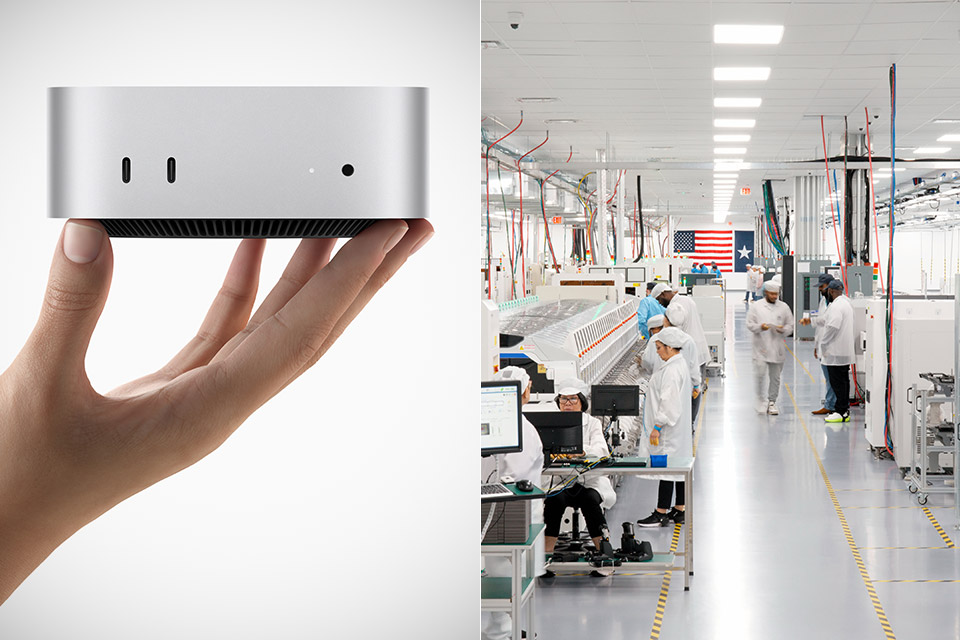
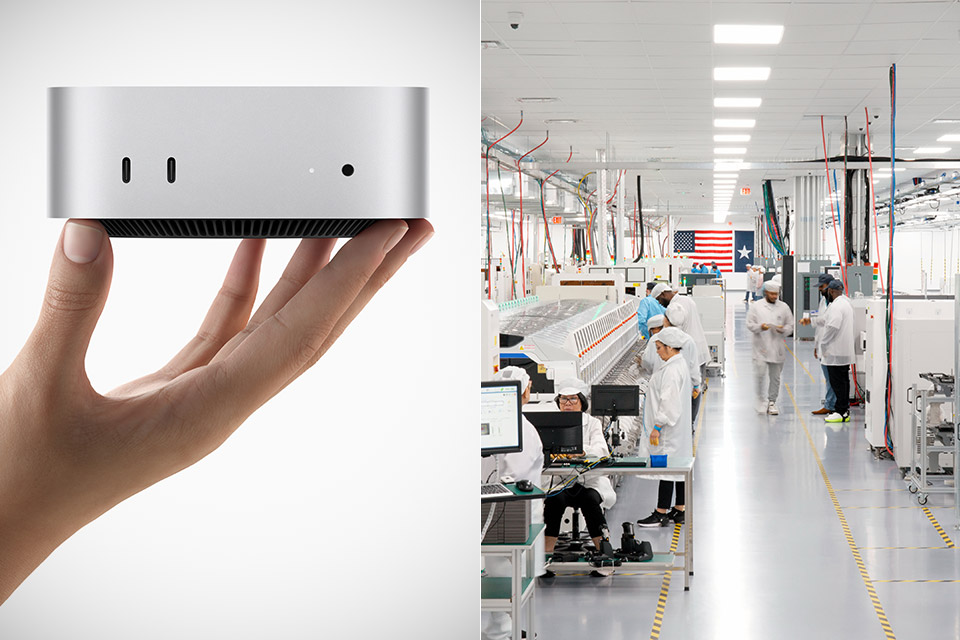
Apple made a huge announcements today by revealing that some Mac Mini computers will roll off the line in Houston, Texas, marking the first time this compact desktop gets built on American soil. This move is a significant extension of an existing site in Houston where they have been building high-end AI servers since 2025.
A brand new plant dedicated to producing Mac Minis will effectively double the size of the campus there. Along with it, a separate 20,000-square-foot Advanced Manufacturing Center will open later in 2026. The idea is that everyone, not just Apple employees, but students, workers from suppliers, and so on, will receive hands-on training in the latest and greatest production methods, thanks to a special curriculum developed by Apple in collaboration with some experts from Michigan State University.
Sale

Apple 2024 Mac mini Desktop Computer with M4 chip with 10‑core CPU and 10‑core GPU: Built for Apple…
- SIZE DOWN. POWER UP — The far mightier, way tinier Mac mini desktop computer is five by five inches of pure power. Built for Apple Intelligence…
- LOOKS SMALL. LIVES LARGE — At just five by five inches, Mac mini is designed to fit perfectly next to a monitor and is easy to place just about…
- CONVENIENT CONNECTIONS — Get connected with Thunderbolt, HDMI, and Gigabit Ethernet ports on the back and, for the first time, front-facing USB-C…
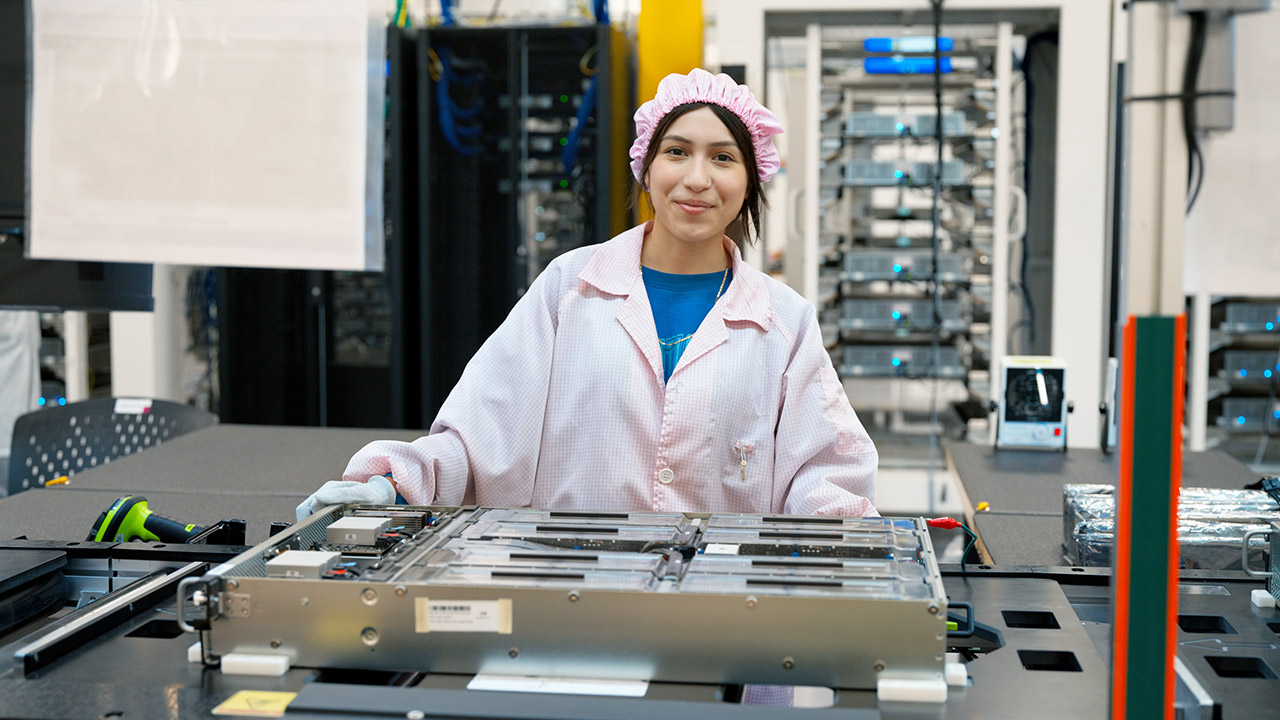
This latest development fits into Apple’s overall ambition to invest $600 billion in the US economy, which they announced last year. We’ve already seen some success on this front; for example, last year Apple sourced over 20 billion chips manufactured right here in the good old United States of America from 24 separate facilities spread over 12 states. In 2026, they will rely even more on TSMC’s expanding factory in Arizona for their high-end chips. And it’s not just the chips; GlobalWafers is building a $4 billion plant in Sherman, Texas to make silicon wafers, Amkor is opening a $7 billion facility in Peoria, Arizona to pack chips, and Corning has fully committed their Kentucky operation to producing cover glass for Apple.

Assuming all proceeds as planned, this should result in thousands of good employment in Houston, both from plant expansion and from the training facility. The Mac Mini is already the most cheap desktop available, priced at $599. The Mac Mini accounts for less than 5% of total Mac sales, according to some estimates, thus this is a small but significant step toward producing more Apple goods in the United States.

It appears that all of Apple’s partners are on board, including Foxconn, which has worked with Apple on products dating back to the early iMac days and is running the North Houston site. So production isn’t halting in Asia; this is more of an addition to their product range than a complete move. All of this comes at a particularly fascinating time for discussions about supply chains, tariffs, and so on. Apple claims that the practical benefits of all of this are obvious: people are learning new skills, local economies are benefiting, and the company is able to continue producing even better goods by manufacturing close to home.

Tim Cook described the expansion clearly. “Apple is deeply committed to the future of American manufacturing, and we’re proud to significantly expand our footprint in Houston with the production of Mac mini starting later this year,” he said. “We began shipping advanced AI servers from Houston ahead of schedule, and we’re excited to accelerate that work even further.”
Word guessing games like Wordle have exploded in popularity recently, simply because they are fun and improve your vocabulary. While these games cater to a wide audience, it’s safe to assume they’re too easy for vocabulary nerds. And if you’ve often found yourself solving Wordle in a couple of guesses, then Contexto could be for you. It’s a word-guessing game where you have unlimited tries to guess a word. Each word you guess gets a ranking from an AI, which helps you understand how close your word was to the real deal. The closer you get, the lower the ranking of the word will be. It’s a game that puts your expertise in contextual awareness and pattern recognition to the test. The game can get pretty difficult, and if you’re stuck, we’ve got your back. This guide will help you with hints and the answer for today’s Contexto puzzle.
Contexto Hints For February 25
If you’d like to figure out today’s Contexto word on your own and need a little nudge in the right direction, here are some hints. Just note that each consecutive hint will make it easier to guess the word.
Contexto Answer For February 25
In case you couldn’t guess the word from the hints we gave, the answer is HONEYDEW.
If you love games like Contexto, check out our hints and answers for today’s Octordle puzzle.
How To Play Contexto?
As mentioned, Contexto is a word-guessing game in which an AI checks how close you are to the actual word. You start by entering any word as your first guess. The game then ranks your word based on how close it is in meaning to the hidden answer. The closer your word is semantically, the lower the ranking number. These rankings are also represented by colors. Green means your word is really close and in the correct context. Orange means the context is close but not specific enough in relation to today’s word. Lastly, red means your answer is nowhere close.
Your goal is to reach Rank #1, which is the correct word. For example, if today’s answer is related to fruit, guessing something like “melon” or “sweet” may rank much higher than something unrelated like “car” or “building.” The key strategy is to think in themes and categories rather than spelling similarities. Since guessing a word out of nowhere can be difficult, there’s a series of words you can start your Contexto hunt with. These will help you understand the context of today’s word:
- Person
- Place
- Thing
- Object
- Food
- Cool
- Snow
- Ice
- Round
- Home
Frequently Asked Questions (FAQs)
Hints for today’s Contexto?
Starts with an H and refers to a type of melon known for its light-green interior and subtle sweetness.
What’s the answer to today’s Contexto?
The answer to today’s Contexto puzzle is Honeydew.
What was yesterday’s Contexto answer?
The answer to yesterday’s Contexto puzzle was Fisherman.


The former head of Trenchant, a specialized U.S. defense contractor unit, was sentenced Tuesday to more than seven years in federal prison for stealing and selling zero-day exploits to a Russian exploit broker whose clients include the Russian government.
39-year-old Australian national Peter Williams served as the general manager of Trenchant, a cybersecurity unit of defense contractor L3Harris that develops surveillance tools and zero-day exploits for the U.S. government and its Five Eyes intelligence partners.
Between 2022 and 2025, Williams stole at least eight protected exploit components intended for the exclusive use of the U.S. government and its allies and sold them to the Matrix Russian exploit broker (doing business as Operation Zero), which advertises itself as a reseller of hacking tools to non-NATO buyers.

Williams used a portable external hard drive to transfer the exploits out of secure networks at Trenchant’s offices in Sydney and Washington, D.C., before sending the stolen tools to the broker via encrypted channels.
Prosecutors said that the theft caused $35 million in losses to L3Harris and that the stolen tools could have enabled access to millions of devices worldwide.
Williams pleaded guilty in October to selling eight stolen zero-day exploits to the Russian cyber-tools broker for $1,300,000 in cryptocurrency.
U.S. District Court Judge Loren AliKhan sentenced Williams to 87 months in prison on Tuesday and ordered him to forfeit $1.3 million, cryptocurrency, a house, and various other luxury goods.
“Williams took trade secrets comprised of national security software and sold them for up to $4 million in crypto currency. These incredibly powerful tools would have allowed Russia to access millions of digital devices,” said U.S. Attorney Jeanine Pirro for the District of Columbia.
“By betraying a position of trust and selling sensitive American technology, Williams’ crime is not only one of theft, it is a crime of national security. Our nation’s defense capabilities are not commodities to be auctioned off.”
The U.S. Treasury Department has also confirmed on Tuesday that the Russian broker was Operation Zero and announced sanctions against the company and its owner.
BleepingComputer reached out to Operation Zero for comment, but we are still waiting for their response.

Modern IT infrastructure moves faster than manual workflows can handle.
In this new Tines guide, learn how your team can reduce hidden manual delays, improve reliability through automated response, and build and scale intelligent workflows on top of tools you already use.

A new report indicates that Meta is poised to introduce a new smartwatch later this year, though it is already apparent that this device will not be positioned as a direct competitor to the Apple Watch.
Rather, the wearable is expected to function primarily as an accessory within Meta’s broader ecosystem, complementing its upcoming smart glasses and thereby expanding the company’s wearable offerings without directly challenging Apple’s dominance in the established mainstream smartwatch sector.
Rumours surrounding Meta’s smartwatch aspirations first surfaced in 2021 following a leaked image within the Ray-Ban Stories application.
While the project was subsequently reported to be on hold, speculation regarding its revival has persisted. Now, information from The Information suggests Meta is targeting a 2026 release date, which, to be honest, feels like quite a wait!
Industry commentators anticipate that the watch will feature deep integration with Meta’s next-generation Ray-Ban Display glasses, which are rumored to incorporate built-in screens.
As CNET points out, the smartwatch’s main gig might be as a companion device, offering input and control for the glasses, particularly those equipped with neural technology.
Andrew Bosworth, Meta’s CTO, previously hinted that the neural band introduced with the Ray-Ban Display glasses last fall could eventually make sense as part of a watch. This year’s speculated launch might just be the moment this vision actually materialises.
Instead of focusing heavily on the usual health tracking, fitness metrics, or standalone smartwatch functions, Meta’s device seems purpose-built to advance its Augmented Reality (AR) and Artificial Intelligence (AI) ambitions.
A neural-equipped watch, when paired with smart glasses, could enable much easier, hands-free control, though this tactic will leave the traditional battlefield of fitness and health to Apple and Google.
If Meta does indeed debut the watch alongside its next-gen Ray-Ban Display glasses, it would represent a strategic move toward establishing a unique wearable ecosystem that seamlessly blends wrist-based devices with AR eyewear.
Nevertheless, the consensus is pretty clear: Meta’s smartwatch isn’t trying to be an Apple Watch killer. It’s designed to play a completely different, and arguably more interesting, role entirely.

A 10-week-old boy named Hugo has become the first baby born in the UK from a womb transplanted from a deceased donor, after his mother Grace Bell — who was born without a viable womb due to a condition called MRKH syndrome, which affects one in every 5,000 women — underwent a 10-hour transplant operation at The Churchill Hospital in Oxford in June 2024.
Hugo was born just before Christmas 2025, weighing nearly 7lbs, at Queen Charlotte’s and Chelsea Hospital in west London, following IVF treatment and embryo transfer at The Lister Fertility Clinic. Bell’s transplant is one of three completed so far as part of a UK clinical research trial that plans to carry out 10 such procedures from deceased donors, and Hugo is the first baby born from any of them.
Earlier in 2025, a separate effort produced baby Amy, the first UK birth from a living womb donation — her mother had received her older sister’s womb in January 2023. Globally, more than 100 womb transplants have been performed, resulting in over 70 healthy births.

The Steam Deck is getting seriously tough to snag right now, with availability basically falling off a cliff in many regions.
What started as just a few hiccups in the US and parts of Asia has totally snowballed into a major, worldwide shortage, hitting Canada, Europe, and Japan hard.
Valve has actually confirmed the culprit: a crunch on memory and storage components. This supply squeeze is a direct fallout from the exploding demand for AI data centres, a huge, ongoing trend.
A quick look at Valve’s official store confirms it: the handheld console is totally out of stock in Germany, Austria, Poland, France, and a bunch of other EU nations, plus Canada and Japan.
Interestingly, as of this moment, you can still find stock in places like Australia, the U.K., Hong Kong, South Korea, and Taiwan.
Valve has offered a brief but necessary explanation, noting that the Steam Deck OLED is facing intermittent stockouts in certain areas due to, you guessed it, memory and storage shortages.
The core issue is the AI infrastructure boom. Tech giants and hyperscalers are pouring billions into massive data centres filled with specialised AI GPUs. These systems demand absolutely enormous quantities of high-bandwidth memory (HBM) and high-density NAND storage.
Because AI companies are willing (and able) to pay top dollar, chipmakers are naturally prioritising those massive orders. This inevitably leaves less production capacity for consumer gadgets like the Steam Deck. Essentially, your favourite gaming handheld is now in a direct, high-stakes competition with powerful AI clusters for the same critical pool of memory and storage chips.
The Steam Deck isn’t the first piece of tech to feel this painful pinch. RAM modules and SSDs were hit much earlier, with prices spiking dramatically, sometimes two to five times, compared to last year. Major laptop makers such as Dell, Lenovo, and Framework have already announced price increases that are directly tied to these component cost jumps.
Even Apple has issued a warning that memory constraints will heavily impact its Q2 earnings as the company scrambles to lock down supply. While the Steam Deck might be the first gaming handheld to be impacted this severely, it’s highly probable it won’t be the last if these global supply pressures continue.
Valve’s East Asian partner, Komodo Station, has suggested that market availability in their region might get back to normal by the end of the month.
However, on a global scale, concrete restocking timelines remain frustratingly unclear, giving buyers in affected regions zero certainty. The simple, harsh reality is this: the Steam Deck shortage has worsened significantly, and there is no definite end in sight.
Tech
The new Shark EveryMess is like a spa for your carpets, and it’s small enough to fit in a kitchen cupboard
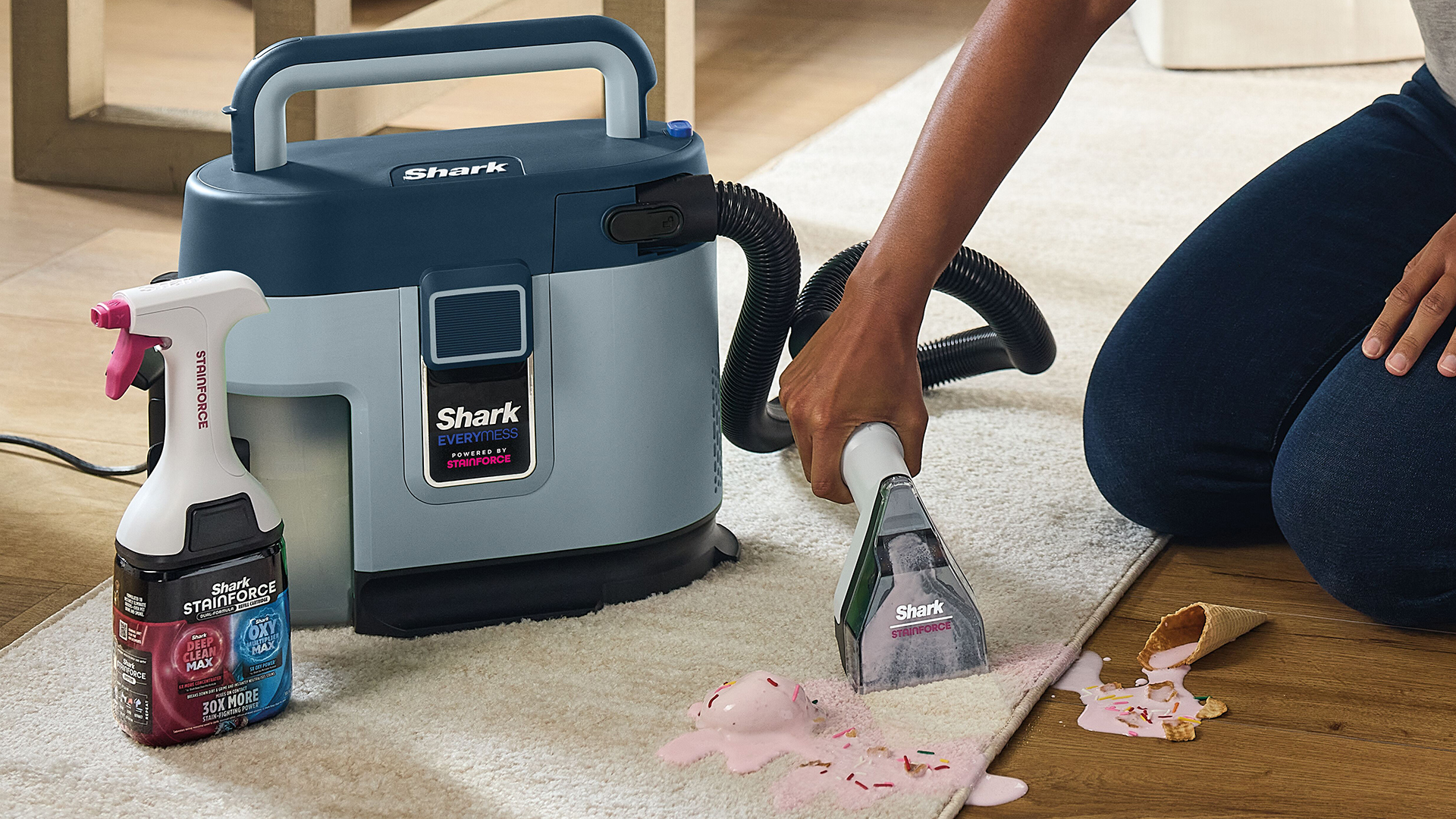
- The Shark EveryMess 3-in-1 can vacuum wet and dry spills, and act like a spot cleaner
- It’s impressively compact and comes with a range of attachments
- Available to buy now for $149.99 / £199
Shark has expanded its spot cleaner lineup with a multitalented new machine. The Shark EveryMess can vacuum liquid and solid messes, or work as a spot cleaner on upholstery. I saw one in action at Shark’s HQ, where it sucked up a Coke spill from a cream carpet with not so much as a trace of sticky soda left behind.
This 3-in-1 combination is pretty unusual — in this corner of the market, you typically get wet-and-dry vacuums or spot cleaners, but it’s rare for an appliance to do both. It’s available to buy now from $149.99 in the US, and £199.99 in the UK (scroll down to check out the best prices at a range of retailers).
What’s more, it’s impressively compact. The US and UK versions have slightly different proportions, but either would fit into an average-sized kitchen/utility room cupboard. (The US version is 10.5 x 16.5 x 13.5in / 26.7 x 41.9 x 34.3cm L x W x H. The UK version is 22.7 x 36.9 x 36.4cm / 8.9 x 14.5 x 14.3in.)

There are multiple compatible attachments for tackling different kinds of messes: an extending Crevice tool for tight corners, a wider Squeegee tool for covering larger spaces, and a dedicated Stain Eliminator attachment for tough, set-in stains.
Although it’s marketed as a 3-in-1, this doesn’t look like a sensible replacement for a full-sized wet floor cleaner, because none of the attachments are especially big. However, for smaller, trickier cleanups of any kind, it seems ideal — Shark lists broken glass and permanent marker as examples of awkward cleanups this appliance can happily tackle.
Another obvious market for such multipurpose cleaners is pet owners. Not only is the EveryMess suitable for cleaning everything from muddy pawprints on your soft furnishings to the occasional toilet-training accident, but Shark says it’s especially good at picking up pet hair at the same time.

Shark boasts about a ‘Rinse & Ready’ self-clean function, but it’s a little more rudimentary than it sounds: to rinse out the tubing, you can simply vacuum up a pitcher of fresh water. For especially disgusting messes, Shark recommends lining the main bin with a 15-50L plastic bag so you don’t need to get your hands dirty when it comes to disposal.
The EveryMess is designed for use with Shark’s ‘StainForce’ two-part cleaning solution, and the brand suggests you’ll only get that kind of extreme, stain-busting performance with that specific formula. The spray nozzle part clips straight onto the cleaner cartridges, replacements of which can be purchased separately at a cost of $24.99 / £24.99 for two, or $14.99 / £14.99 for one.
Follow TechRadar on Google News and add us as a preferred source to get our expert news, reviews, and opinion in your feeds. Make sure to click the Follow button!
And of course, you can also follow TechRadar on YouTube and TikTok for news, reviews, unboxings in video form, and get regular updates from us on WhatsApp too.

The Durobo Krono strips the e-reader down to its pocketable essentials, but a lack of polish and questionable features keep it from challenging more refined rivals.

Durobo Krono e-ink e-reader
Reading on the go is always kind of a pain. Either you’re doing it on a smartphone, which isn’t great for your eyes, or you might try to lug around an iPad or a larger e-paper reader like a Kindle.
That’s why there’s a surprisingly large fanbase for pocket-sized e-eaders. I even consider myself a part of that fanbase, considering how much I’ve enjoyed using one myself.
Continue Reading on AppleInsider | Discuss on our Forums


Amazon plans to exit an office building near its Seattle headquarters, 12 years after taking over the space during the height of its growth in the city.
Amazon is not renewing its lease at 1915 Terry Ave. in the Denny Triangle area of downtown Seattle, the company confirmed to GeekWire on Tuesday. The tech giant, which has occupied the seven-story, 251,000-square-foot space owned by Seattle Children’s since 2014, will move out at the end of May and relocate employees to other offices.
The Puget Sound Business Journal first reported on the planned move.

Kumo, as Amazon calls it, is a 1950s-era building located just a few blocks from Amazon’s main office towers and the Spheres. Amazon did not say how many employees work from the building.
The company employs approximately 50,000 corporate and tech employees in Seattle. More than 1,400 workers in Seattle were impacted by company-wide layoffs of 16,000 people announced at the end of January.
PSBJ reported that since 2020, Amazon has given up more than 1 million square feet of office space in Seattle, most of it in the Denny Triangle.
The company has been growing its footprint across Lake Washington in Bellevue, where it has opened new office buildings and said it plans to employ 25,000 people as part of its regional HQ.

Tech4 seconds ago
Anthropic just released a mobile version of Claude Code called Remote Control

Crypto World53 seconds ago
Solana (SOL) Jumps 7% Daily, Bitcoin (BTC) Rebounds to $65K: Market Watch

Entertainment2 minutes ago
Robert Carradine Went ‘Radio Silent’ From Final Film Project


-

 Video5 days ago
XRP News: XRP Just Entered a New Phase (Almost Nobody Noticed)
-

 Fashion5 days ago
Weekend Open Thread: Boden – Corporette.com
-

 Politics3 days ago
Baftas 2026: Awards Nominations, Presenters And Performers
-

 Entertainment7 days ago
Kunal Nayyar’s Secret Acts Of Kindness Sparks Online Discussion
-

 Sports2 days ago
Women’s college basketball rankings: Iowa reenters top 10, Auriemma makes history
-

 Politics2 days ago
Nick Reiner Enters Plea In Deaths Of Parents Rob And Michele
-

 Tech7 days ago
Retro Rover: LT6502 Laptop Packs 8-Bit Power On The Go
-
 Sports6 days ago
Clearing the boundary, crossing into history: J&K end 67-year wait, enter maiden Ranji Trophy final | Cricket News
-

 Business3 days ago
Mattel’s American Girl brand turns 40, dolls enter a new era
-

 Crypto World1 day ago
XRP price enters “dead zone” as Binance leverage hits lows
-

 Business3 days ago
Law enforcement kills armed man seeking to enter Trump’s Mar-a-Lago resort, officials say
-

 Entertainment6 days ago
Dolores Catania Blasts Rob Rausch For Turning On ‘Housewives’ On ‘Traitors’
-

 Tech3 days ago
Anthropic-Backed Group Enters NY-12 AI PAC Fight
-
 NewsBeat2 days ago
‘Hourly’ method from gastroenterologist ‘helps reduce air travel bloating’
-

 NewsBeat3 days ago
Armed man killed after entering secure perimeter of Mar-a-Lago, Secret Service says
-

 Politics3 days ago
Maine has a long track record of electing moderates. Enter Graham Platner.
-

 Crypto World7 days ago
WLFI Crypto Surges Toward $0.12 as Whale Buys $2.75M Before Trump-Linked Forum
-

 Tech15 hours ago
Unsurprisingly, Apple's board gets what it wants in 2026 shareholder meeting
-
 NewsBeat10 hours ago
Police latest as search for missing woman enters day nine
-

 Crypto World5 days ago
83% of Altcoins Enter Bear Trend as Liquidity Crunch Tightens Grip on Crypto Market