Tech
TXN Ceramic IEM Review: Sound So Clean You Could Eat Off It

You probably haven’t heard of TXN Sound before. Based in Vietnam, TXN builds both universal and custom in-ear monitors. With a focus on excellence through simplicity, the company offers a small, carefully curated selection of IEMs aimed squarely at enthusiasts with substantial budgets.
Today, we’re taking a look at TXN’s entry-level IEM, the Ceramic, which features anodized aluminum shells and a single dynamic driver per side. At nearly $600, however, the Ceramic faces some stiff competition. Does TXN’s engineering go the distance? Let’s get into it.
About My Preferences:
This review is a subjective assessment and is therefore influenced by my personal preferences. While I try to minimize those biases as much as possible during the review process, I’d be lying if I said they could be eliminated entirely. With that in mind, here’s what you should know about my listening preferences:
My ideal sound signature includes capable sub-bass, textured mid-bass, a slightly warm midrange, and extended treble.
I have mild treble sensitivity.
My testing equipment and standards can be found here.
Related Reviews:

TXN Ceramic Specifications
- Weight: 10 grams, excluding cable
- Type: Universal in-ear monitor (IEM)
- Driver: Single Golden Ceramic diaphragm dynamic driver
- Impedance: 16 ohms
- Sensitivity: 105 dB/mW
- Housing: 5-axis CNC-machined aerospace-grade aluminum
- Finish: Anodized aluminum
- Cable: TXN Aegis 2X
- Cable Conductor: 7N OCC copper, sourced from Taiwan
- IEM Connectors: Gold-plated 0.78 mm 2-pin
- Termination: Gold-plated 4.4 mm balanced
Build
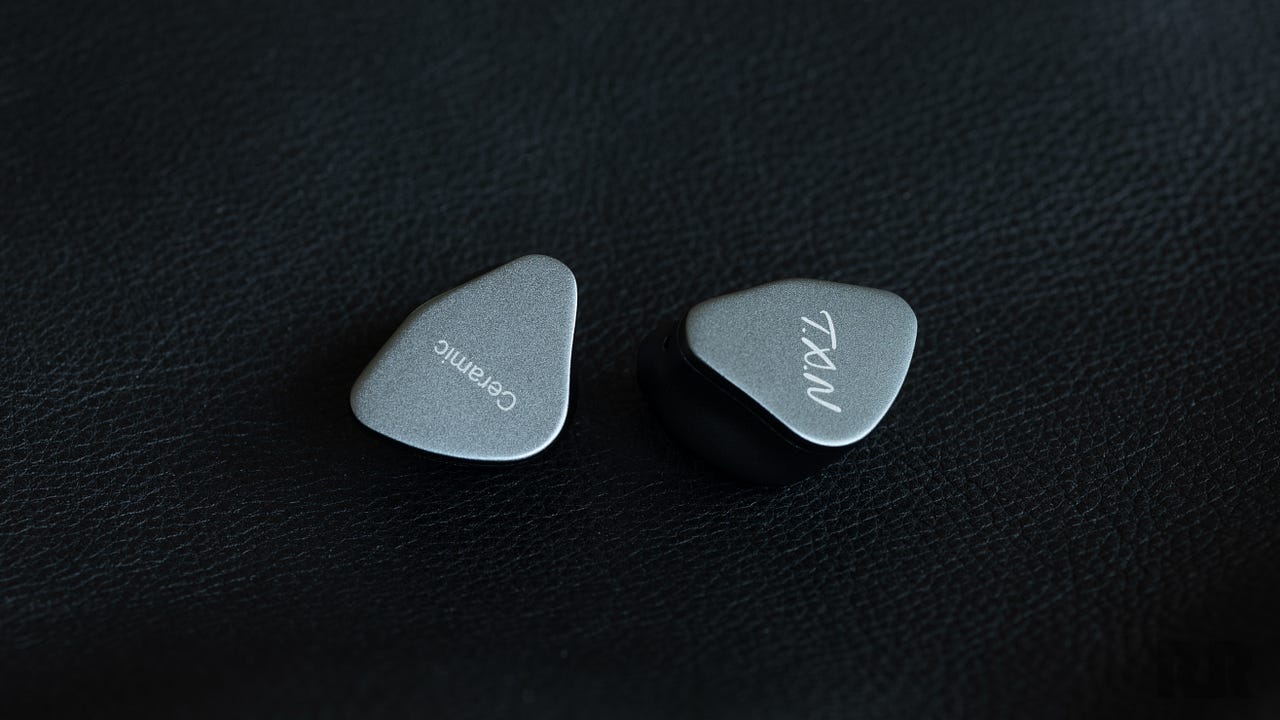
The Ceramic’s shells are made from beautifully anodized aluminum. They’re cleanly machined and exude both class and quality. The aluminum faceplates are mostly unadorned, save for some screen-printed text. I don’t mind printed text, but I find the Ceramic’s mismatched fonts somewhat cheapen its otherwise austere aesthetic.
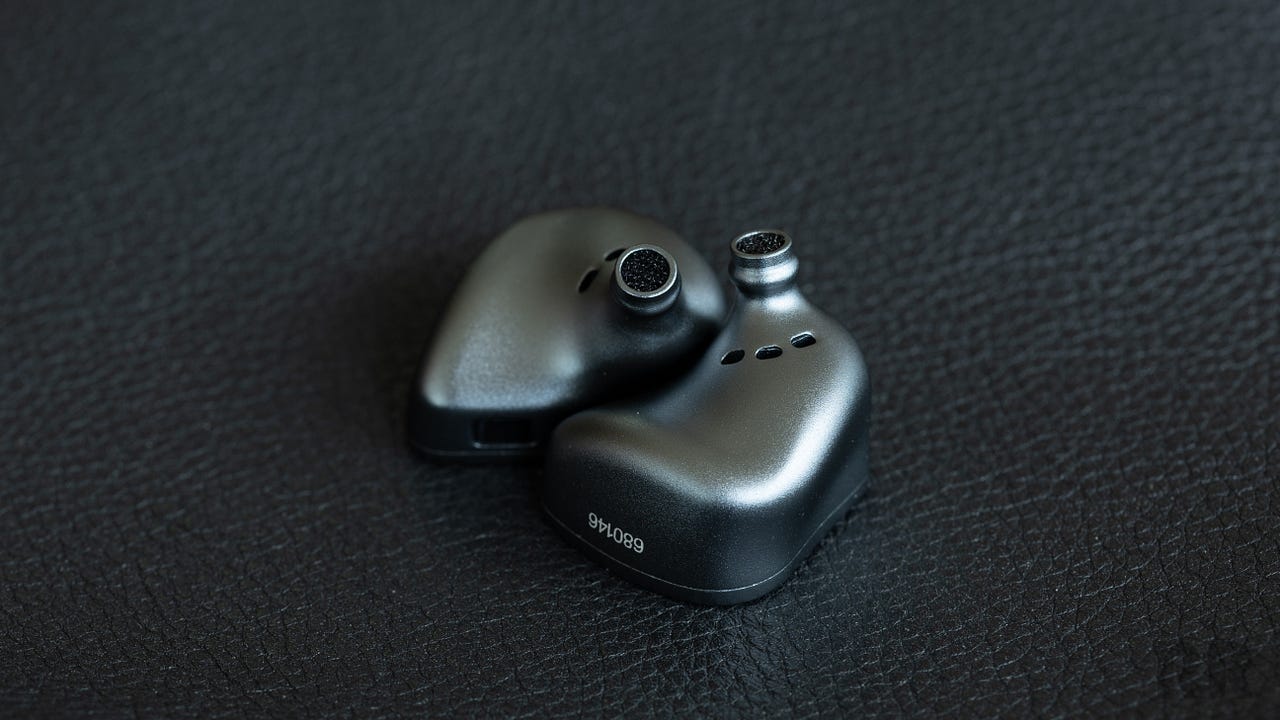
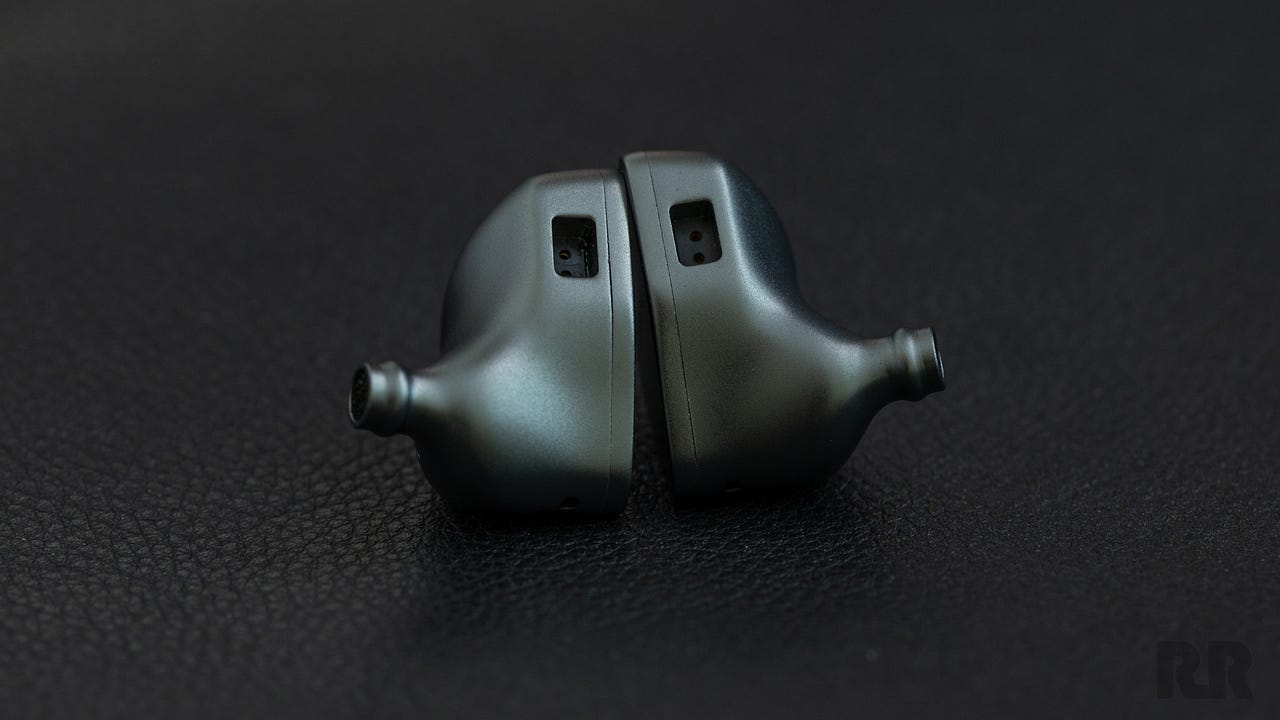
I’m a big fan of the Ceramic’s thoughtful proportions. A lot of brands reuse generic shell designs, but it’s clear that TXN has taken a different approach. The nozzles are metal and integrated directly into the main shell. They’re narrower than most, allowing for deeper insertion and better overall ergonomics.
The top of each Ceramic shell houses a recessed 0.78 mm 2-pin socket that feels firmly seated. Aftermarket cable compatibility is also excellent, and I had no issues using offerings from PlusSound, THIEAUDIO, or NiceHCK with the Ceramic.
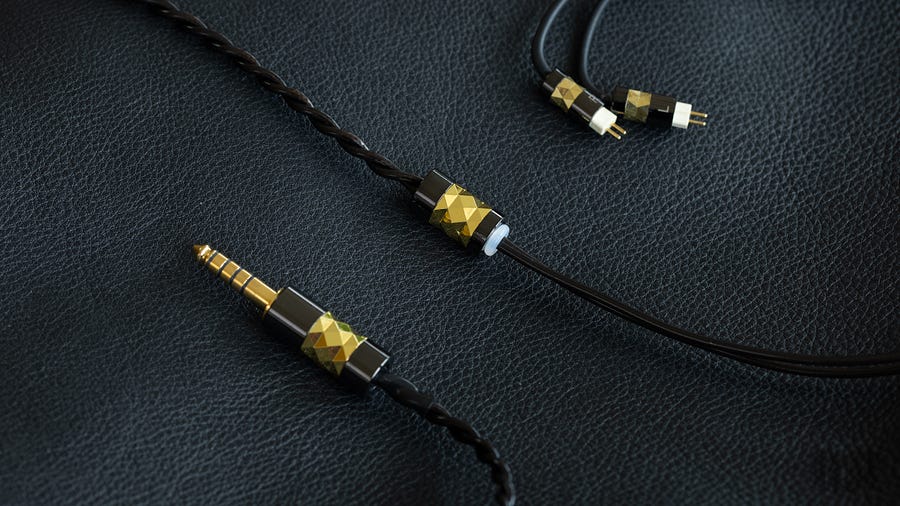
The Ceramic’s cable is reasonably soft and has very little memory or stiffness. Its outer jacket has a somewhat rubbery feel, reminding me more of old-school high-end IEM cables than the smooth, low-friction materials commonly used today.
The cable features polished metal plug housings and a simple rubber chin cinch. There isn’t much strain relief, however, so I’d be careful not to pull or bend it sharply at awkward angles.

Comfort
Comfort is a metric that depends heavily on individual ear anatomy, so your mileage may vary.
The Ceramic is a very comfortable IEM with a clear focus on ergonomics. Its slender nozzles allow for deeper ear tip insertion, resulting in excellent passive isolation. While the Ceramic isn’t particularly light, it never feels overly heavy, and the cable remains comfortable during extended listening sessions.
Overall, TXN has done an excellent job making the Ceramic easy to wear for long periods.
Accessories

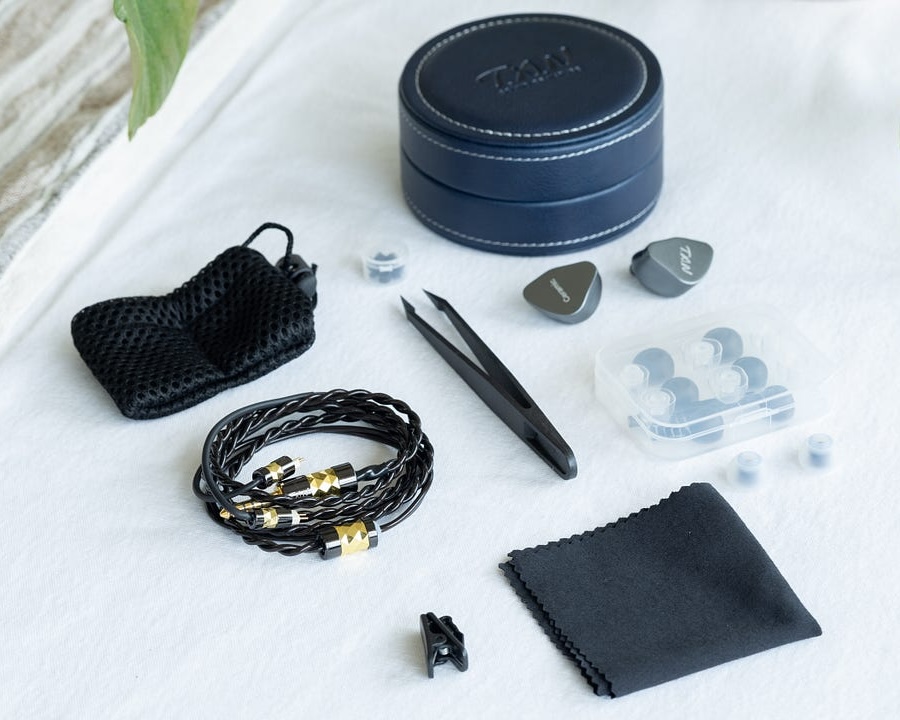
The Ceramic comes with a solid selection of accessories in the box:
- 1 x Semi-hard carrying case
- 1 x Padded IEM pouch
- 1 x Microfiber cleaning cloth
- 1 x Shirt clip
- 1 x 4.4 mm cable
- 7 x Pairs of silicone ear tips
- 1 x Pair of tweezers
- 3 x Pairs of nozzle dampers
I’m glad to see that TXN included a padded IEM pouch, as the Ceramic’s metal shells could potentially damage one another if they collide during transit. That’s a concern with many metal-shelled IEMs, so it’s good to see TXN thinking ahead and providing some extra protection for long-term ownership.
The included carrying case, however, leaves something to be desired. I generally dislike cases that lack a positive locking mechanism, such as a zipper, because they tend to become less secure over time. Wear and tear can loosen components, eventually compromising the closure.
The Ceramic’s case is attractive and feels premium, but the lid is loose enough to separate from the base under its own weight. That isn’t especially secure and could potentially lead to accidental damage if the case opens during handling or transit.
TXN’s choice of ear tips, however, is quite good. The included silicone and liquid-silicone tips are comfortable and provide a solid seal, although foam ear tips are conspicuously absent. That’s unfortunate, as the Ceramic’s slender nozzles and ergonomic design make it especially well suited to the improved isolation that foam tips can provide.
Listening
The Ceramic features a gently V-shaped sound signature. Its bass is moderately elevated above a refined, neutrally toned midrange. The upper mids are lifted enough to give vocals and instruments clarity and separation, but not so much that they take on an artificial sense of forwardness.
Above that sits a mild, transparent, and airy treble response. The Ceramic’s overall presentation is notably free of drama and exceptionally cohesive.
Refinement and Clarity Without Intensity
The beauty of the Ceramic’s treble is how articulate it sounds without the sheen of artificial boosting. Hi-hats and cymbals are clear and distinct, attacking and decaying with impressive speed. The Ceramic grasps the edges of percussive decay greedily, rendering them with depth and texture. In essence, the Ceramic is precisely as bright as it needs to be to resolve music with air and honesty, and no brighter.
This philosophy of organic emphasis not only allows the Ceramic to render an impressive breadth of tones and textures, but also to extract detail without sounding sharp or sibilant. Harshly mastered tracks such as “Satisfy” by Nero pose no threat to even highly sensitive ears. Albums with peaky, aggressive mastering, such as Famous by Puddle of Mudd, are likewise surprisingly pleasant through the Ceramic, as its carefully tuned treble renders the metallic slam of hi-hats without unnecessary drama.
Polished Midrange Tuning
The Ceramic’s midrange is tonally neutral, with a small amount of lower-midrange warmth concentrated in the narrow region adjacent to the mid-bass. Combined with its responsibly elevated upper-midrange response, the Ceramic renders vocals with clarity and focus, but without the cold sterility that often accompanies so-called “reference” IEMs.
The lonesome vocals in “Drag Path” by Twenty One Pilots demonstrate this particularly well as they drift across the track’s wide, windswept soundstage. Lyrical intelligibility is excellent, with the Ceramic properly articulating even filtered or distorted vocals in busy mixes.
TXN nailed the Ceramic’s balance between natural, organic timbre and tonal cleanliness. String instruments and percussion sound harmonically complete without becoming heavy or burdened. As a result, complex and nuanced tracks exhibit strong layering and contrast, especially during busy passages.
The chaotic verses of “Destroya” by My Chemical Romance demonstrate this technical ability nicely, as the Ceramic blends high-strung electric guitars with gritty vocals and feral drum strikes, all without smudging or blurring the presentation.
Audiophile-Grade Bass
The Ceramic is not a mainstream IEM, and its tuning fully acknowledges that. Bass emphasis, while elevated above what I’d consider truly neutral, is still not particularly intense. There’s a noticeable lift through the sub-bass and mid-bass, although emphasis begins to roll off somewhat below 40 Hz.
There’s still plenty of tonal depth, and the Ceramic is capable of producing convincing rumble when a track truly calls for it. The atmospheric bass lines in “Dial Tone” by Catch Your Breath are a great example, as the Ceramic effectively conveys the scale and imposing nature of those elements.
The mid-bass delivers a subtle sense of punch, placing tight, well-controlled bursts of emphasis around drum hits and synthetic bass pulses. The weighty bass guitar and drums in “One Debt Away” by Middle Class Rut reveal plenty of texture and depth, working especially well with the Ceramic’s natural and transparent low-end presentation.
Electronic music sounds full and tonally complete through the Ceramic, but it never becomes especially vibrant or intense. I suspect that’s largely by design, given the Ceramic’s apparent mission: clarity over drama. “Divide” by ODESZA, for example, is rendered with depth and contrast, but it doesn’t shake my head the way a more bass-oriented IEM might.
Similarly, the hectic bass drop in “Trapdoor” by Feed Me reaches deep and offers subtle hints of punch and rumble, but I’m still left wanting more.
Comparisons
Comparisons are selected solely based on what I think will be most interesting and useful. If there’s another IEM you’d like to see compared with the Ceramic, feel free to leave a request in the comments below.
Campfire Audio Cascara
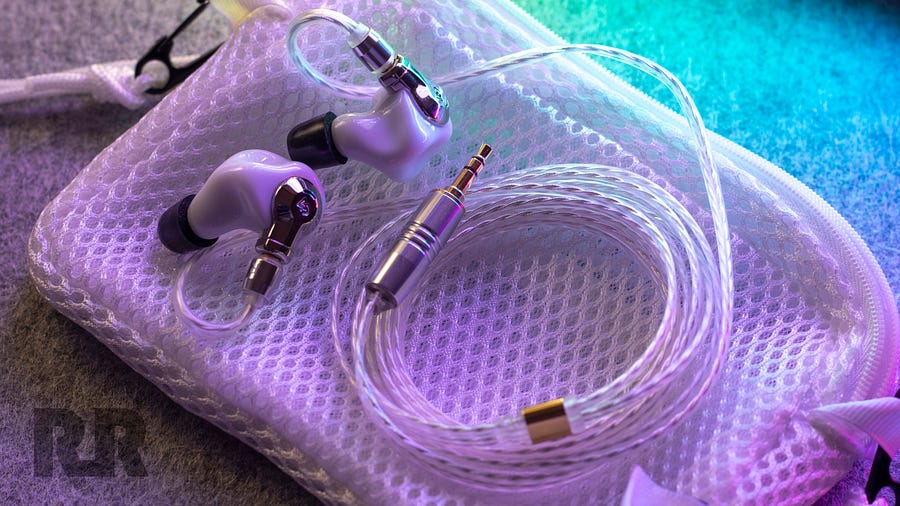
The Cascara is a resin-shelled IEM with metal nozzles and a single dynamic driver per side. Pricing ranges from $499 to $699, depending on the accessory package selected.
Both the Cascara and the Ceramic are ergonomically designed, although the Ceramic’s smaller nozzles allow me to achieve a better seal. The Cascara’s Timestream cable is excellent, and I prefer its aesthetics to those of the Ceramic’s cable. Both are comfortable in use, and neither is particularly microphonic.
While the Cascara and Ceramic have similar driver configurations on paper, they sound entirely different. The Cascara is an unapologetically V-shaped IEM, with boisterous bass that is elevated well beyond the Ceramic’s. Both IEMs sound deep and well extended, although the Cascara’s bass is richer and imparts a greater sense of depth with electronic music.
The more reserved Ceramic trades some of that sense of fun for a more controlled approach, dialing back warmth in the lower registers. Its cooler lower midrange blends nicely with the restrained bass response, creating a more consistent sense of openness and cleanliness.
The Cascara’s upper mids are more forward, adding greater vocal contrast to the mix, but at the expense of some grain that the Ceramic avoids. That difference carries into the treble as well, where the Ceramic’s more refined presentation sounds more natural and less grainy overall.
Both IEMs retrieve a substantial amount of treble detail, although the Ceramic edges out the Cascara when resolving subtle hi-hat and cymbal decay during busy passages.
And while I’d like to call this a clean sweep one way or the other, I can’t. The Cascara and Ceramic excel in areas where the other simply does not.
The Cascara’s deeper V-shaped tuning makes it more immediately engaging with a wide range of music, especially tracks that rely heavily on sub-bass rumble. The Ceramic, however, is more tonally refined and offers some modest technical advantages over the Cascara.
It’s clear that not everyone will appreciate what the Cascara brings to this comparison, but it’s still the IEM I reach for more often when I’m in the mood for casual listening at higher volumes. The Ceramic is certainly entertaining, but it doesn’t quite capture the Cascara’s charisma.
Xenns Mangird Tea Pro SE


The Tea Pro SE is an all-metal hybrid IEM and a limited-edition revision of the venerable Tea Pro. At $449, it costs about $140 less than the Ceramic. Both IEMs come well equipped with accessories, including a wide selection of comfortable ear tips. The Tea Pro SE includes foam tips, while the Ceramic does not. Both also come with soft, comfortable cables, although the Ceramic uses a fixed 4.4 mm termination rather than the modular system found on the Tea Pro SE.
The Tea Pro SE also targets a “balanced” sound signature, but goes about its business in a very different way. The Ceramic features less bass, both mid-bass and sub-bass, along with a cooler lower midrange. Its upper mids are more forward, and its lower treble is slightly brighter, while the Tea Pro SE places more emphasis on the upper treble.
The Tea Pro SE’s smoother, richer lower register gives it an edge with electronic music, as bursts of bass, like those in “Derezzed (The Glitch Mob Remix),” feel weightier and more tactile. That said, the Ceramic’s cleaner, lighter presentation allows it to render densely mastered tracks like “Waste” by Seether with more air. Both IEMs are highly capable, although the Tea Pro SE’s more dramatic treble presentation allows it to surface certain subtle details more easily.
Those details are still present on the Ceramic, but they require closer listening in quieter environments. The Ceramic’s lower register, while less “fun” because of its more restrained emphasis, feels tighter and more textured.
The Tea Pro SE is a clear winner for listeners who prefer a U-shaped sound signature. It clearly appeals to those who enjoy meta-style tuning, and does so for substantially less than the Ceramic. That said, the Ceramic offers an unmistakable improvement in cohesion and a mastery of subtlety that the Tea Pro SE does not.
The Ceramic achieves what it does with a single dynamic driver and, as such, may also prove less susceptible to driver-related failures over time than the more complex Tea Pro SE. I don’t have a strong opinion on which IEM is “better” here, as neither fits cleanly within my personal preferences, and each is clearly aimed at a different audience.
Meze Astru


The Astru is Meze’s new flagship IEM. It features an all-titanium build and a single dynamic driver per side. At $899, the Astru costs a little less than twice as much as the Ceramic. Both IEMs come well equipped with accessories, although the Astru’s case is much more protective and space-efficient. The Ceramic comes with a better selection of ear tips, and Meze still hasn’t quite figured out how to strike the right balance of variety with its IEMs.
I much prefer the Astru’s thicker, sturdier cable and appreciate Meze’s inclusion of a 3.5 mm-to-4.4 mm adapter. The Astru is also much smaller and lighter than the Ceramic, offering better ergonomics and greater comfort during extended listening sessions.
If you’ve heard Meze’s products before, you’ll understand that the company’s house sound is quite different from how I’ve described the Ceramic. “Lean and clean” is pretty far removed from Meze’s unique blend of warmth and richness, and that couldn’t be clearer when A/B testing the Astru and Ceramic. The Astru has more prominent mid-bass and sub-bass, rendering bass elements with greater weight and substance than the Ceramic.
The Ceramic’s lower mids are cooler and more sterile, possessing only a small degree of the Astru’s warmth. The Astru’s upper mids are slightly less forward than the Ceramic’s. The Ceramic has similarly bright lower treble, but the Astru has considerably brighter upper treble, giving it a more V-shaped presentation overall. The Ceramic’s “cleaner” presentation, while lacking the Astru’s honey-like warmth, sounds airier and more open when listening to hectic rock tracks such as “Jars” by Chevelle. That said, the Astru does offer some modest improvements in spatial rendering and upper-treble microtexturing. These subtleties are difficult to perceive outside of critical listening sessions, but they are present nonetheless.
These IEMs aren’t exactly peers, but I found it interesting to compare two modern single-dynamic-driver designs. The Astru is an excellent example of just how far dynamic-driver technology has come in recent years, and the Ceramic isn’t very far behind in technical terms. The Astru is clearly aimed at listeners interested in an exotic, TOTL experience who are willing to pay for it.
As an IEM that fully embraces Meze’s house sound, it should also appeal to listeners who favor warmth and weight. At roughly two-thirds the price, the Ceramic is still a strong performer, but it really belongs in the ears of someone more interested in a “reference-style” or “clean” sound signature.
The Bottom Line
The TXN Ceramic proves that you don’t need a pile of drivers to deliver genuinely high-end IEM performance. Its single dynamic driver produces a remarkably cohesive, clean, and articulate presentation with excellent timbre, controlled bass, an open midrange, and refined treble that extracts detail without becoming aggressive. Build quality and ergonomics are equally impressive, although the carrying case and lack of foam tips feel like strange omissions at nearly $600. Bassheads and listeners chasing a more dramatic V-shaped presentation should look elsewhere, but for those who value tonal balance, clarity, comfort, and single-driver coherence, the Ceramic is a polished and unusually mature performer.
Pros:
- Excellent single-driver cohesion and articulation
- Refined, balanced tuning without harshness or sibilance
- Beautifully machined aluminum construction
- Excellent comfort, isolation, and ergonomics
- Strong technical performance with natural timbre
Cons:
- Fixed 4.4 mm cable termination limits flexibility
- Nearly $600 in a fiercely competitive category
- Bass may be too restrained for some listeners
- Carrying case does not close securely enough
- No foam ear tips included
Our Ratings
★★★★★★★★★★ Sound Quality
★★★★★★★★★★ Build Quality
★★★★★★★★★★ Comfort
★★★★★★★★★★ Value
Where to Buy:
You can find the Ceramic on TXN’s official webstore for $590.
You must be logged in to post a comment Login