Tech
U.S. CD Sales Surge 16% in 2026 as Vinyl Growth Slows to 2.4%

I had to check the decimal point.
According to Luminate’s 2026 Midyear Report, U.S. CD sales increased 16% to 16.3 million units during the first half of the year. Vinyl sales also grew, but by only 2.4%, giving CDs a growth rate nearly seven times higher than records.
K-pop collectibles contributed heavily, but they do not explain the entire increase. Luminate says CD sales would still have grown 6.7% after removing K-pop releases. Mass-market retailers such as Target and Walmart now account for nearly 30% of physical music sales, aided by elaborate album packages, alternate covers, photo cards and fans willing to buy multiple editions.
That does not mean CDs have suddenly overtaken vinyl. Growing faster is not the same as being larger.
Related Reviews:
The RIAA Numbers Provide Some Necessary Context
The RIAA has not yet released its corresponding report for the first half of 2026. Its most recent midyear data covers the first six months of 2025, when the CD market looked considerably less healthy.
During that period, the RIAA reported 11.7 million CD units and $108.1 million in wholesale revenue, declines of 22% and 22.3%, respectively. Vinyl reached 22.1 million units and $456.9 million, with both measurements down 1%.
The RIAA’s complete 2025 report showed vinyl finishing the year at 46.8 million units and $1.043 billion in wholesale revenue, up 7.9% and 9.3%. CDs ended 2025 at 29.5 million units and $312.4 million, down 11.6% and 7.8%. Vinyl therefore sold substantially more copies and generated more than three times as much revenue.


The Luminate and RIAA figures should not be treated as interchangeable. Luminate tracks music consumption and retail sales, while the RIAA now reports wholesale figures net of returns. They measure different parts of the market and cover different periods.
Even with that caveat, the change is difficult to ignore. The RIAA recorded a steep CD decline in 2025. Luminate is now reporting double-digit growth during the first half of 2026.
Streaming Still Owns the Market
Nobody should mistake this for a revolt against streaming.
Global on-demand audio streams increased 9.8% to 2.8 trillion during the first half of 2026. U.S. streams rose 4.8% to 732.7 billion, while Spanish-language music represented 9.4% of combined U.S. on-demand audio and video streams.
CDs and vinyl remain relatively small parts of the overall music business. Their importance comes from ownership, collectibility and the stronger connection physical products create between artists and fans.
Why CDs Suddenly Make Sense Again
The compact disc occupies an increasingly attractive middle ground.
New CDs generally cost far less than new vinyl. They are smaller, easier to store and less vulnerable to warping, scratches, off-center pressings and the other quality-control adventures that now accompany a $40 record. They can also be played directly, ripped to local storage or used as permanent backups when a streaming service removes an album or replaces it with a different master.
The used market is even more compelling. Decades of abandoned collections have left record stores, thrift shops and online sellers with enormous quantities of inexpensive discs. Building a serious CD library can still cost less than assembling one shelf of new audiophile vinyl.
CDs also work as collectibles without requiring the manufacturing expense, shipping weight and retail price of vinyl. That is especially important for younger fans who want a tangible connection to an artist but do not necessarily have $45 available every time an album appears in four colored-vinyl variants.
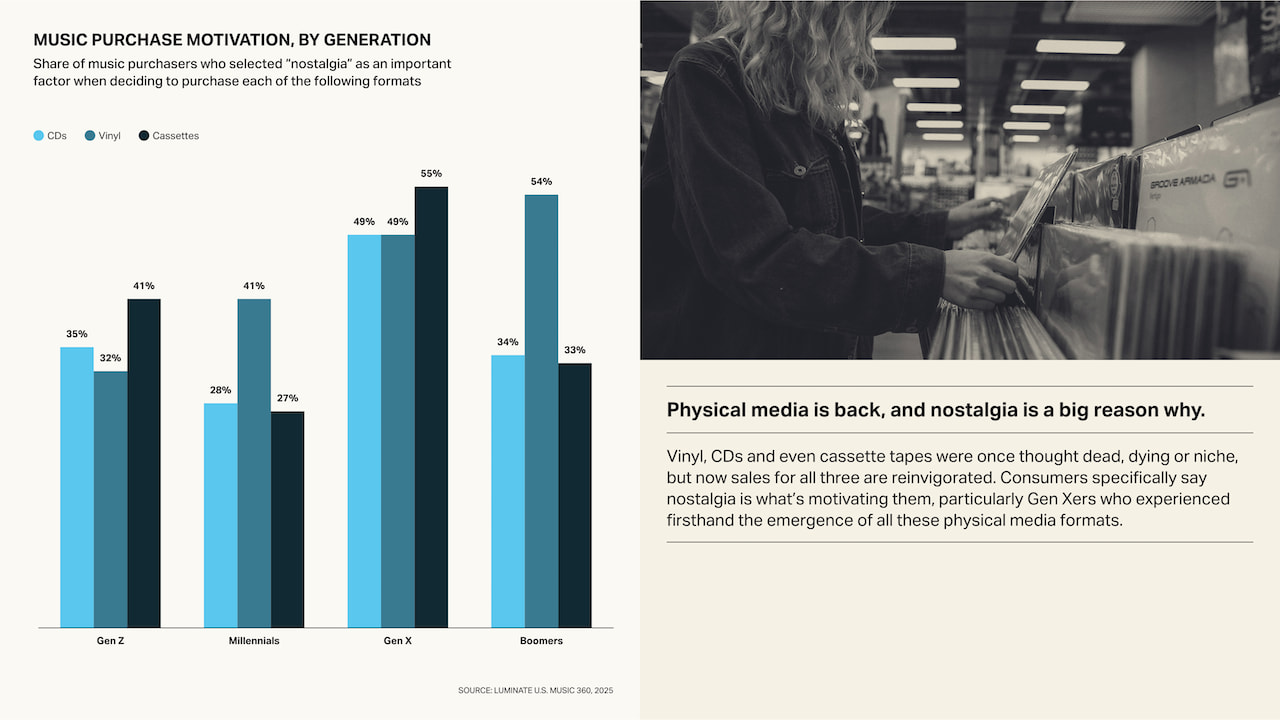
Vinyl made music ownership fashionable again. CDs may now be benefiting from the culture vinyl helped rebuild.
It also means the hardware industry may not have been indulging in collective nostalgia when it began introducing new CD players and transports at almost every price level.
Marantz has just introduced the $750 CD 70, Mission released the affordable 778CDT transport, NAD returned with the $1,399 C 589, and brands including FiiO and Shanling are producing portable CD players with Bluetooth, balanced headphone outputs, USB DAC functionality and disc-ripping capabilities.
Manufacturers do not make these products because three editors and someone’s uncle in Ohio refuse to discard their copies of Brothers in Arms. They see a market.
Record Store Day also deserves some context in vinyl’s defense. The 2026 event took place on April 18 and again delivered hundreds of limited editions through independent retailers. Its commercial impact is not trivial: during Record Store Day week in 2025, U.S. consumers bought 1.2 million albums, including just over one million vinyl records, according to Luminate.
It was the fifth consecutive Record Store Day week to surpass one million album sales. Vinyl is also coming off 19 consecutive years of U.S. revenue growth and passed $1 billion in annual wholesale revenue during 2025.
Against that mature and substantially larger base, another 2.4% increase during the first half of 2026 is hardly evidence of collapse. CDs delivered the more surprising growth rate, but vinyl remains the larger physical format and the economic foundation of the independent record-store revival.
The Bottom Line
CDs have not reclaimed the physical-media crown, and vinyl is not collapsing. The latest complete RIAA figures still show records comfortably ahead in both units and revenue.
The surprise is that the supposedly obsolete compact disc is now growing much faster.
K-pop explains part of the 16% increase, but Luminate’s 6.7% growth figure without K-pop suggests something broader is happening. Listeners are rediscovering that CDs offer inexpensive physical ownership without vinyl’s escalating prices, storage demands and quality-control roulette.
Vinyl still owns the throne. The little silver disc has simply stopped behaving like it is waiting for the undertaker.
Which one do you prefer and why?
You must be logged in to post a comment Login