Security teams log 54% of successful attacks and alert on just 14%. The rest move through your environment unseen.
The Picus whitepaper shows how breach and attack simulation tests your SIEM and EDR rules so threats stop slipping by detection.



Ubiquiti has released security updates to patch seven critical vulnerabilities in UniFi OS, including a maximum-severity flaw tracked as CVE-2026-50746 that can be exploited in command injection attacks.
The CVE-2026-50746 vulnerability affects UniFi Connect Application (versions 3.4.16 and earlier), a management software suite that Ubiquiti customers can use to automate and manage commercial building operations (including smart LED lighting systems and electric vehicle chargers) via a single interface.
“A malicious actor with access to the network could exploit an Improper Access Control vulnerability found in UniFi Connect Application to execute a Command Injection on the host device,” Ubiquiti explained.

The company advised users to update the impacted UniFi Connect app to version 3.4.20 or later to secure their systems against potential attacks.
On Thursday, Ubiquiti patched six more critical-severity security issues (CVE-2026-50747, CVE-2026-50748, CVE-2026-54400, CVE-2026-54402, CVE-2026-55115, CVE-2026-55116) in the UniFi Talk, UniFi Access, and UniFi Protect applications, in the company’s UniFi OS Server, and across a wide range of Ubiquiti routers, gateways, NAS, and surveillance systems.
Ubiquiti has yet to disclose whether any of these vulnerabilities were exploited in the wild before being addressed, but shared that six of them can be exploited in low-complexity attacks that don’t require user interaction.
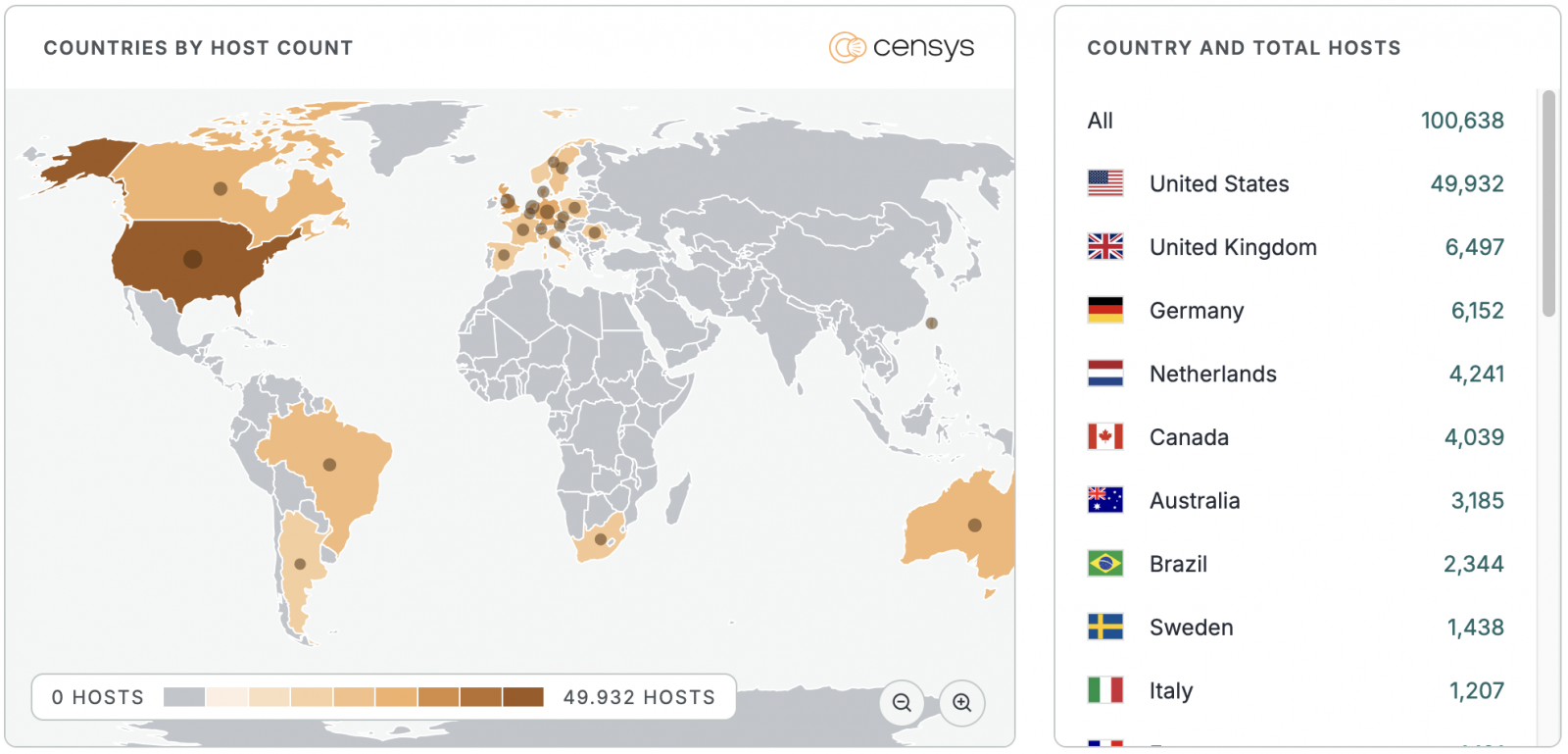
Threat intelligence company Censys now tracks over 100,000 UniFi OS instances exposed online, most of them (nearly 50,000 IP addresses) found in the United States. However, there are no details on how many have already been secured against these security flaws or are honeypots.
State-sponsored threat groups and cybercrime hacking groups have often targeted Ubiquiti products in recent years, hijacking them to build botnets designed to conceal malicious activity.
For instance, in February 2024, the FBI dismantled Moobot, a botnet of Ubiquiti Edge OS routers used by Russia’s Main Intelligence Directorate of the General Staff (GRU) to proxy malicious traffic in cyberespionage attacks.
Four years earlier, in April 2022, the U.S. Cybersecurity and Infrastructure Security Agency (CISA) also added a critical command injection flaw (CVE-2010-5330) in Ubiquiti AirOS to its catalog of actively exploited flaws and ordered government agencies to patch their devices within three weeks.
More recently, in June, CISA warned that hackers were actively exploiting three max-severity UniFi OS flaws that had been patched one month earlier and mandated that agencies secure their systems within three days.
Bishop Fox later demonstrated that the vulnerabilities could be chained to achieve remote code execution with elevated privileges and released a free detection script to help defenders discover vulnerable instances in their environments.

Security teams log 54% of successful attacks and alert on just 14%. The rest move through your environment unseen.
The Picus whitepaper shows how breach and attack simulation tests your SIEM and EDR rules so threats stop slipping by detection.
Civil rights groups like the Southern Environmental Law Center (SELC) have noted how Elon Musk’s Colossus xAI data centers in Memphis disproportionately pollute the air in minority neighborhoods. A joint lawsuit by SELC, Earthjustice, and the NAACP filed last April argued that Musk and friends didn’t bother to get the necessary permits to run the 57 gas turbines powering the system.
As is so often the case, Musk’s “innovation” is quite often just a combination of media manipulation, opportunism, crony capitalism, and openly ignoring public safety. The more you look, the more of a theme it becomes across Musk’s entire post-IPO delusionverse.
Anyway, the lawsuit points out that his Memphis-area data centers are violating the Clean Air Act, funneling all manner of pollutants into minority neighborhoods that already see a disproportionately high number of pollution-caused childhood illnesses:
“xAI’s power plant in Southaven has the potential to emit more than 1,700 tons of smog-forming nitrogen oxides (NOx) each year. The staggering emissions numbers likely make the facility the largest industrial source of NOx in the greater Memphis area, an area already failing to meet national smog standards. The illegal turbines also have the potential to release up to 180 tons of fine particulate matter, 500 tons of carbon monoxide, and 19 tons of formaldehyde—a toxic, cancer-causing chemical—each year.”
Musk also promised to build a next-gen water filtration system so that the xAI data center doesn’t imperil the local water supply, but he simply decided to apparently not do that. Instead, Musk ran crying to the Trump administration, whose DOJ is trying to have the pollution case-dismissed on national security grounds, because the administration sometimes uses Musk’s shoddy fifth-place AI services.
Hoping to quell growing anger in Memphis at the fact he’s openly violating environmental law, Musk is leaning on his other company, Starlink, to try and calm down locals. Starlink announced last week they’d be offering Memphis-area locals half-off the typically expensive Starlink monthly rate for an unspecified amount of time:
“The unique capabilities of the Colossus datacenters could not be accomplished without the partnership and support from the local Memphis community.” SpaceX’s vice president of Starlink engineering, Michael Nicolls, wrote on X on Tuesday.
“Happy to bring affordable and great @SpaceX @Starlink connectivity to our neighbors,” Nicolls added.
I’m sure a temporary (these sorts of discounted rates never last) internet access discount will definitely help the kids with formaldehyde-driven asthma. There are a few other layers of irony: one being that data has repeatedly shown that Starlink is routinely too congested to be of help in more densely populated areas like Memphis. Hidden “congestion” fees also ensure the service isn’t really affordable.
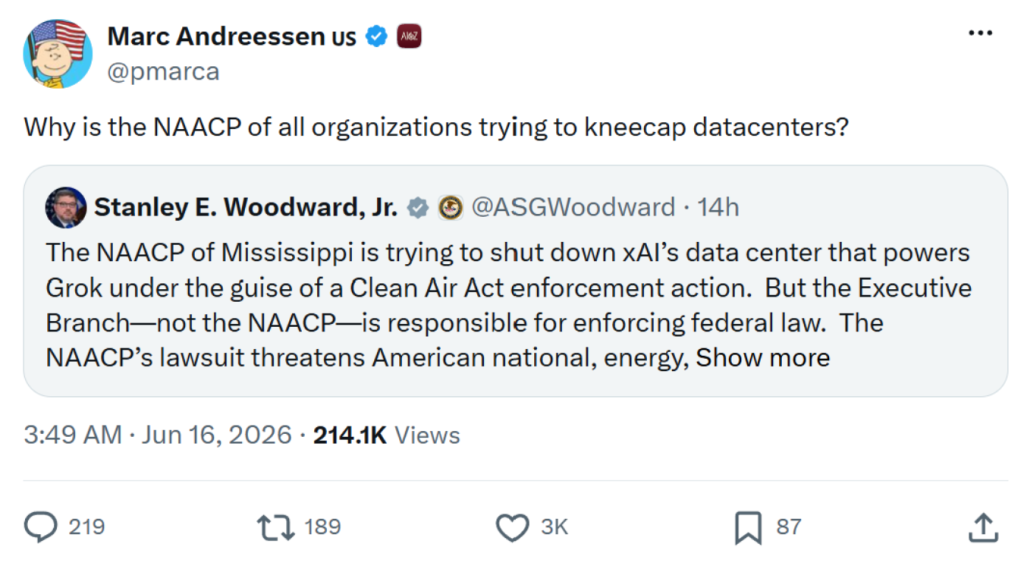
Meanwhile, you have guys like Mark Andreessen pretending to be confused why civil rights groups like the NAACP wouldn’t be big fans of discriminatory environmental pollution. As with all (bipartisan) opposition to AI data centers, the very legitimate complaints going on outside of Memphis are being portrayed as unreasonable attacks on innovation by radicals:

These people are, in case you’ve not been paying attention, just foundationally not good human beings, who simply love to engage in phony surprise at the width and breadth of the public backlash to AI.
Filed Under: ai, ai data centers, automation, broadband, elon musk, memphis, naacp, pollution, southern environmental law center

The $140, 1,252-piece set goes on sale on August 1.

Lego is going back among the stars with a tribute to the Hubble Space Telescope. You’ll be able to construct your own version of the observatory with a new 1,252-piece Lego Icons set. As noted by The Brick Fan, it will be available on August 1 for $140.
It features panels you can remove to peek inside at replicas of Hubble’s instruments, such as gyroscopes and mirrors. You’ll be able to adjust the antennas and solar arrays, and place this version of Hubble on a display stand that features an information plaque. You’ll also get an astronaut minifigure that you can position to give a rough visual representation of the model’s scale. When completed and the aperture door is open, Lego’s take on Hubble will be over 12.5 inches tall, 15 inches long and 15 inches wide.
This isn’t Lego’s first version of Hubble, though. Back in 2021, the company released a Space Shuttle Discovery set that featured the space telescope as a payload.
If you’d like to snap up the latest set before the actual Hubble (which launched in 1990) deorbits, you’ve got plenty of time. The real deal isn’t expected to burn up in our atmosphere until at least the mid-2030s. This Hubble set, however, will outlive all of us because the plastic Lego typically uses is not biodegradable.

Kylian Mbappe, Erling Haaland and Lionel Messi are among the stars aiming to fire their countries one step closer to glory in the FIFA World Cup 2026 quarter-finals — and you can live stream all four games around the world for free.
France face Morocco, Spain play Belgium, Norway take on England and Argentina go up against Switzerland in four days of football action.
So, read on as we show you exactly how to watch the FIFA World Cup 2026 quarter-finals for free from anywhere.
The FIFA World Cup 2026 quarter-finals are available to watch for free in multiple countries, including the UK, Australia, Brazil, Belgium, Canada, Ireland, Italy, Netherlands, Switzerland and Turkey.
Abroad? Can’t access your free stream? Unblock your free World Cup stream with Norton VPN — more on that below.
It’s the World Cup, and if you’re traveling, you might discover your usual FIFA World Cup 2026 quarter-finals stream is suddenly unavailable due to geo-restrictions.
Don’t worry, that’s exactly where a VPN can help. A virtual private network lets you connect to servers around the world so you can securely access your usual World Cup coverage as if you were back home.
We recommend Norton VPN. Here’s why:

US viewers can watch all of the FIFA World Cup 2026 quarter-finals on Fox (English commentary) or Telemundo (Spanish commentary).
Both Fox and Telemundo are available on cord-cutters like YouTube TV (free trial), Hulu+Live TV, Sling (select markets), Fubo or DirecTV.
Those looking for a streaming service instead can watch the games on Fox One (3-day free trial). Telemundo is also available via Peacock ($10.99/month).
Visiting the US from the UK? You can still watch your World Cup stream for free thanks to Norton VPN (try for 60 days).

UK customers are in luck as they can stream all of the FIFA World Cup 2026 quarter-finals for free on BBC and ITV.
ITV is showing France vs Morocco, Norway vs England and Argentina vs Switzerland. Live coverage is on ITV1 and ITVX.
Meanwhile, Spain vs Belgium is on BBC One and BBC iPlayer.
You require a TV license and a valid UK postcode for an account (e.g. SE1 7PB).
Norton VPN can unlock your stream if you’re abroad today.

The FIFA World Cup 2026 quarter-finals will be shown for free in Australia on SBS On Demand.
The streaming platform has every game of the tournament for free, making it the perfect place for your World Cup viewing.
Traveling for work or on holiday? A VPN like Norton VPN can help unlock your free stream.

In Canada, TSN and free-to-air channel CTV will be broadcasting all of the FIFA World Cup 2026 quarter-finals.
You can live stream via the TSN+ streaming platform, which costs CA$8 per month or CA$80 per year.
CTV will require TV provider login details for you to watch for free online.
Outside of Canada? Use Norton VPN whilst you’re traveling away from home to unlock your stream.
A mouth-watering set of fixtures begins with France’s clash with Morocco in Boston, in a repeat of the World Cup 2022 semi-final. Les Bleus have looked almost unstoppable so far this summer, with Mbappe scoring seven goals in just five matches, but the Atlas Lions have already gone toe-to-toe with Brazil and the Netherlands in this tournament and will believe they can spring a shock. That game is followed by Spain’s meeting with Belgium in Los Angeles, in which the Euro 2024 champions will aim to extend a record run of six successive World Cup clean sheets. That streak will be tested by the Red Devils, who have scored 12 goals in their past three matches.
Next up is a tale of two strikers, as Haaland’s Norway face Harry Kane’s England in Miami. The Norwegian hitman has also bagged seven goals this tournament, including a match-winning double against Brazil, but the Three Lions will be buoyed by a thrilling 3-2 victory over co-hosts Mexico at Estadio Azteca in the last 16. The quarter-final line-up is completed by reigning champions Argentina’s clash with Switzerland in Kansas, which will see Messi – who is leading the tournament’s goalscoring charts, with eight – try to breach a defence that is yet to concede in almost four hours of knockout football.
What time do the FIFA World Cup 2026 quarter-finals start?
|
Stage |
France |
Morocco |
Spain |
Belgium |
Norway |
England |
Argentina |
Switzerland |
|
Group stage |
Group I: 1st, 9 points |
Group C: 2nd, 7 points |
Group H: 1st, 7 points |
Group G: 1st, 5 points |
Group I: 2nd, 6 points |
Group L: 1st, 7 points |
Group J: 1st, 9 points |
Group B: 1st, 7 points |
|
Last 32 |
Beat Sweden (3-0) |
Beat Netherlands (1-1 AET; 3-2 on pens) |
Beat Austria (3-0) |
Beat Senegal (3-2 AET) |
Beat Ivory Coast (2-1) |
Beat DR Congo (2-1) |
Beat Cape Verde (3-2 AET) |
Beat Algeria (2-0) |
|
Last 16 |
Beat Paraguay (1-0) |
Beat Canada (3-0) |
Beat Portugal (1-0) |
Beat USA (4-1) |
Beat Brazil (2-1) |
Beat Mexico (3-2) |
Beat Egypt (3-2) |
Beat Colombia (0-0 AET; 4-3 pens) |
Of course, most broadcasters have streaming services that you can access through mobile apps or via your phone’s browser.
You can also stay up-to-date with all of the key World Cup moments on the official social media channels on X/Twitter (@FIFAWorldCup), Instagram (@FIFAWorldCup), TikTok (@FIFAWorldCup) and YouTube (@FIFA).
We test and review VPN services in the context of legal recreational uses. For example: 1. Accessing a service from another country (subject to the terms and conditions of that service). 2. Protecting your online security and strengthening your online privacy when abroad. We do not support or condone the illegal or malicious use of VPN services. Consuming pirated content that is paid-for is neither endorsed nor approved by Future Publishing.


A new phishing-as-a-service (PhaaS) operation called Forg365 focuses on stealing Microsoft 365 accounts by combining adversary-in-the-middle (AiTM) and device code methods with AI-assisted lure generation.
The platform also provides a browser extension for continued access to the Microsoft services linked to the compromised accounts without the need to re-authenticate.
Researchers at ZeroBEC email security company say that many of the features in Forg365 are present in other infamous PhaaS platforms such as Kali365 and Sneaky2FA, although they could not establish a connection.
Their investigation began by analyzing phishing emails that posed as business documents, carefully crafted to mimic a trusted service.
“The observed sender domain used Amazon SES delivery, while the message body included SendGrid-hosted image or tracking resources,” ZeroBEC says in a report today.
This combination of legitimate services and phishing infrastructure indicates a mature PhaaS operation capable of blending its messages into regular email traffic.
The platform features device-code phishing, adversary-in-the-Middle (AiTM) phishing, AI-assisted email content generation, token and cookie management, and post-compromise operations.
Digging deeper, the researchers obtained access to the Forg365 dashboard, which allows creating new phishing campaigns, manage phishing links, configure OAuth apps and SMTP profiles, manage tokens, and generate phishing emails with the help of AI.
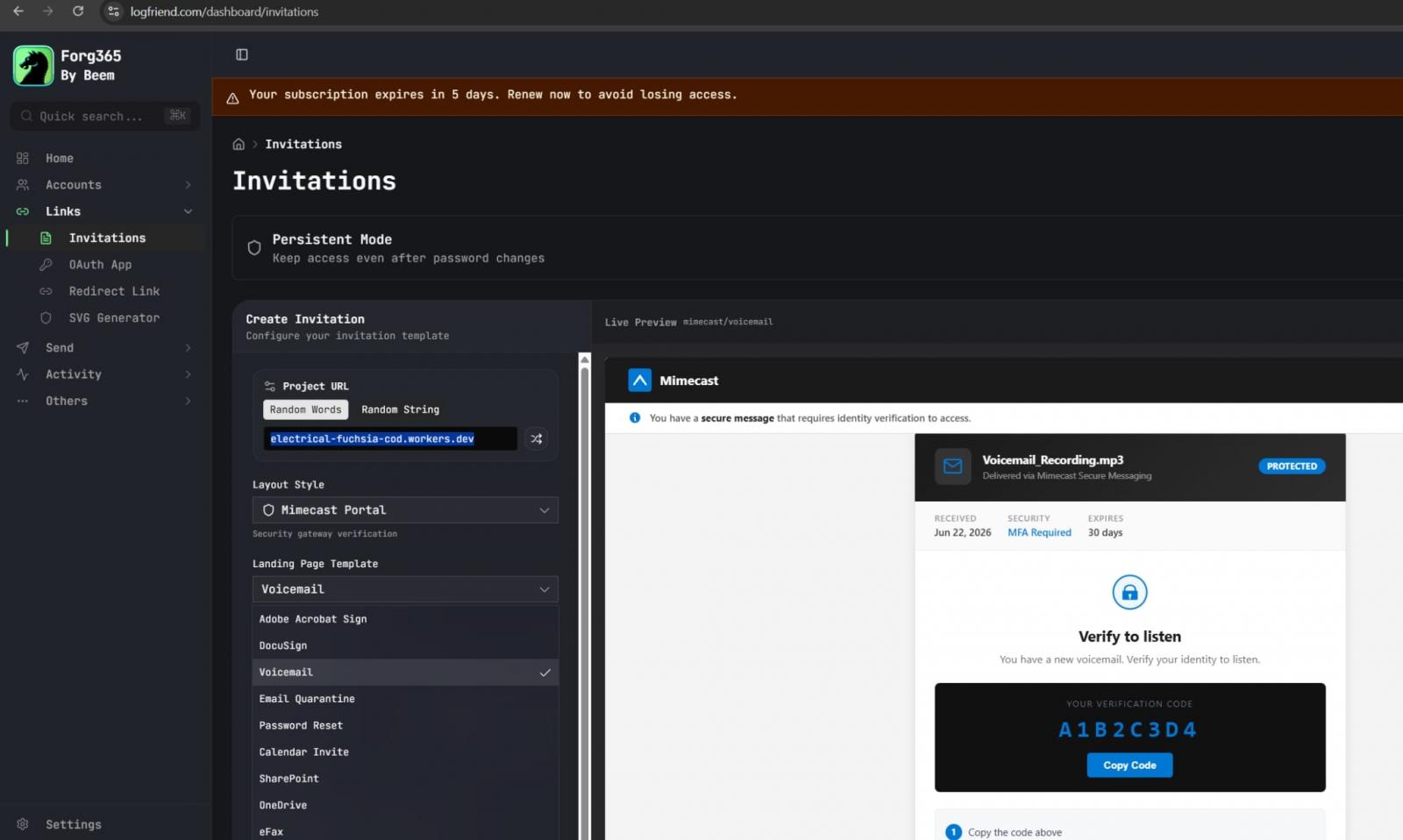
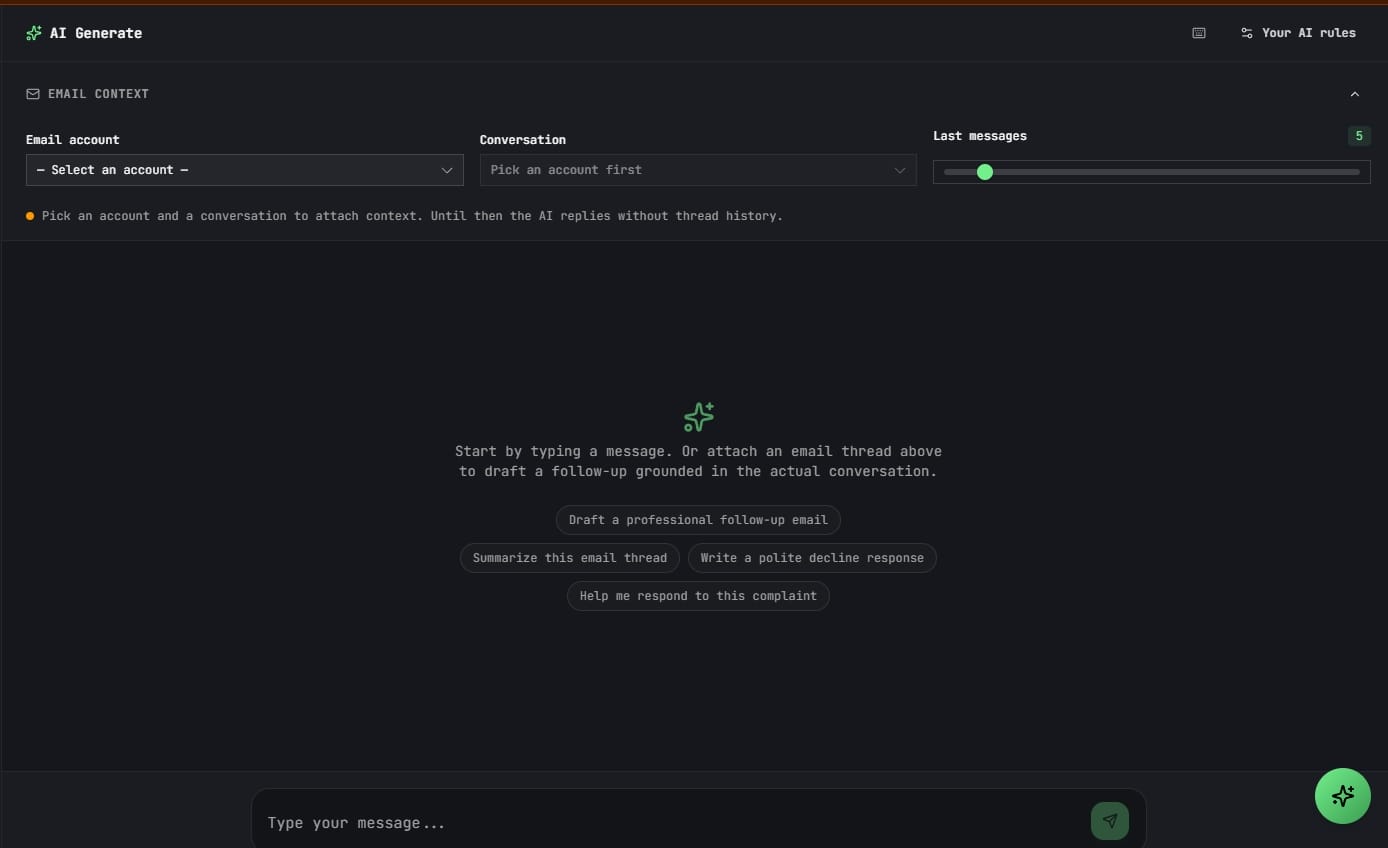
Although the use of AI in crafting custom phishing lures is not new, the researchers highlight that the feature is directly integrated in Forg365’s panel, allowing the operator to create the malicious emails, prepare the text, and refine the messages from the same dashboard used to control the post-compromise activity.
According to the researchers, this integration is strategic, as “AI reduces the cost of developing custom phishing content, but it also reduces the cost of building custom PhaaS platforms.”
The panel also includes an account intelligence dashboard and a keyword monitoring feature that scans compromised mailboxes for predefined terms, alerting operators whenever a match is detected.
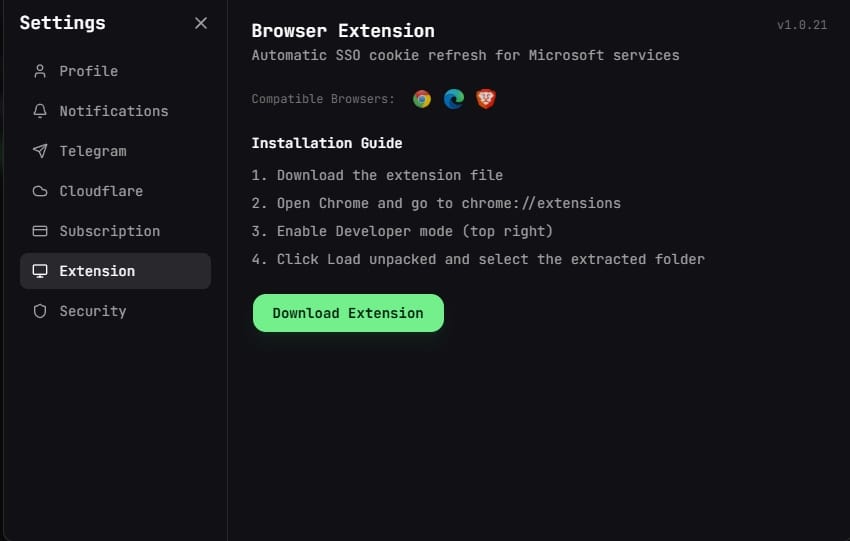
Operators are provided a browser extension called ForgCookie that is compatible with Google Chrome, Microsoft Edge, and Brave, and is specifically designed for automatically refreshing Microsoft SSO cookies.
The extension works by requesting account data from the Forg365 backend, clearing session cookies, and triggering a silent OAuth flow to capture the fresh cookies.
This provides the attacker with persistent access to the Microsoft services associated with the victim’s account.
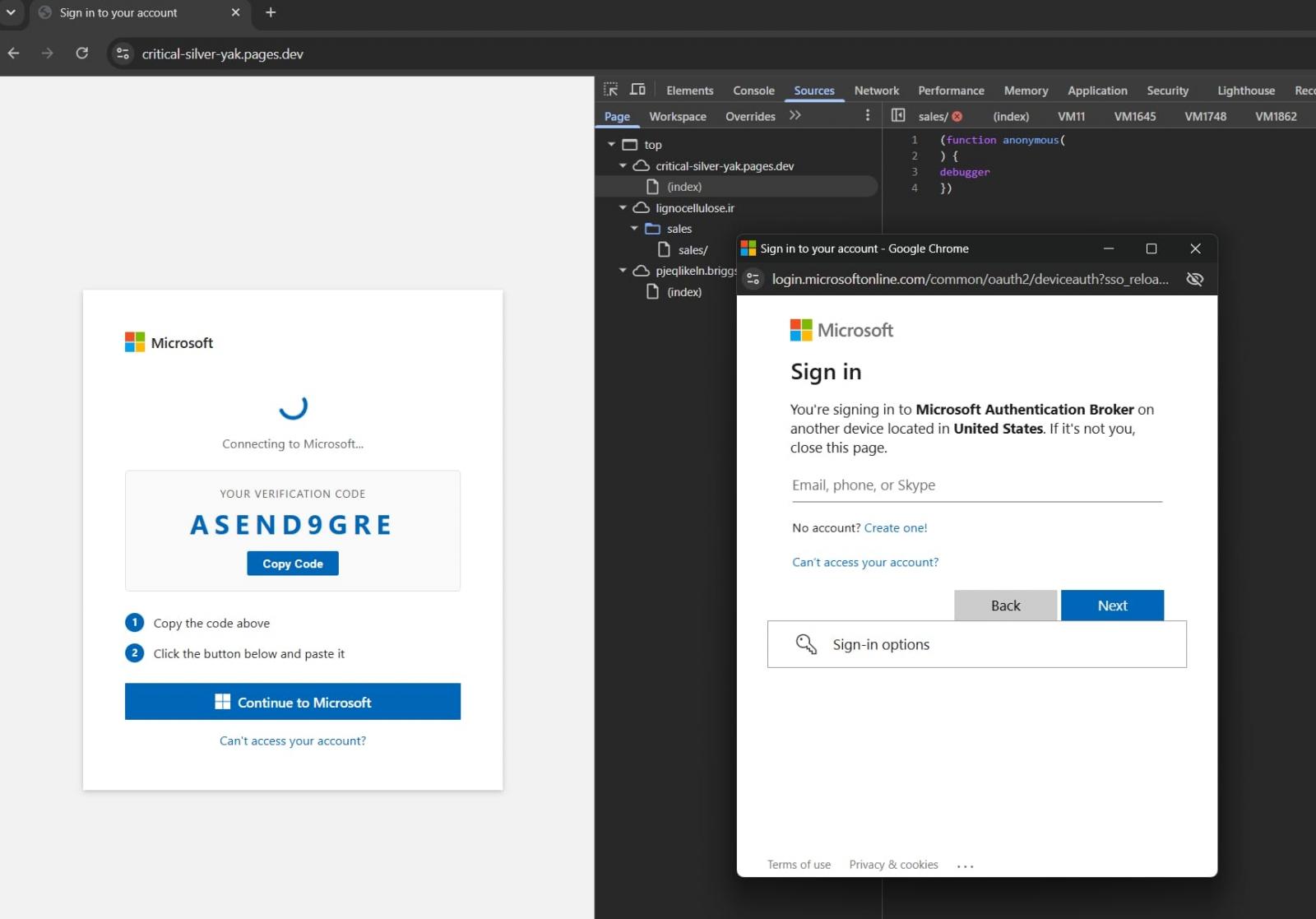
According to ZeroBEC, Forg365 supports two primary attack paths: the trending device-code phishing and the more traditional AiTM phishing.
In the first case, victims are shown a Microsoft-style verification code page and instructed to complete authentication using Microsoft’s device-code flow designed for any endpoint with input constraints (e.g. smartTV, IoT appliances, tools without a browser).
Rather than targeting the victim’s password directly, the victim is tricked into authorizing an attacker-controlled gadget through the legitimate OAuth 2.0 device code flow authentication method.
For AiTM phishing, the platform uses a proxy for the authentication requests and data exchanged between the Microsoft infrastructure and the target account, capturing session cookies in the process.
To prevent researchers from accessing the administration panel, Forg365 has an AntiBot feature that boasts “AES-encrypted redirectors, bot detection, debugger traps, sandbox checks, and polymorphic code.”
Additionally, when a VPN connection is detected, the platform redirects to innocuous content instead of exposing the phishing pages.
ZeroBec reports that the platform leverages Amazon SES for phishing email delivery and Cloudflare Pages for the landing pages. Also, the Gophish infrastructure is used for campaign delivery.
Users are recommended to restrict or disable Microsoft device-code authentication unless required and to monitor Microsoft Entra logs for device-code authentication events.
Mailbox rules, new device sign-ins, Microsoft Authentication Broker activity, and OAuth grants must also be investigated for unexpected entries.
If a compromise is suspected, all tokens and sessions must be revoked and refreshed as soon as possible.
Security teams log 54% of successful attacks and alert on just 14%. The rest move through your environment unseen.
The Picus whitepaper shows how breach and attack simulation tests your SIEM and EDR rules so threats stop slipping by detection.


While investors spent much of the spring concerned that frontier AI models from companies like Anthropic and OpenAI would consume the software industry, Dave Clark was closing a funding round for exactly the kind of enterprise software those models are supposedly going to replace.
Auger, the supply chain technology startup founded in Bellevue, Wash., by the former Amazon executive, has raised $50 million in Series B funding led by Eclipse, with existing investor Oak HC/FT also participating in the new round.
The round brings total funding to $150 million for the company, which has grown to about 130 employees and counts Meta’s virtual and augmented reality division, sports merchandise giant Fanatics, and consumer products maker Kimberly-Clark among its customers.
Clark’s view is that general-purpose AI can generate insights but can’t handle deeply specialized domains like running a supply chain. Making financial and operational decisions and executing them at the scale of big companies requires systems built on strong supply chain expertise — what Auger calls its ontology, essentially a detailed map of how supply chains actually work.
“Many a pure technology company died on the hill of supply chain over the last decade,” said Clark, the company’s CEO, in an interview this week. “You really need to understand the complexity and the contextual requirements.”
Auger sits on top of a company’s existing systems — ERP, warehouse management, transportation management, and demand planning tools — and unifies the data into a single operating layer. Rather than replacing those systems, it connects them, using AI agents and traditional optimization models to make decisions and execute them automatically, as much as possible.
For example, in a recent demo at the company’s Bellevue office, Clark showed how the system would handle a supplier missing a delivery commitment when there isn’t enough product to go around. Auger identifies the shortfall, determines which customers get priority, reallocates inventory, and pushes the updated plan back to the company’s existing systems.
Most supply chain software, Clark said, generates alerts and waits for a person to act. Auger is designed to make routine decisions on its own and flag the exceptions for human review.
“We’re not really a tool,” he said. “We’re really the new employee.”
At Fanatics, the sports merchandise company, Clark said about 85% of decisions in the process Auger manages are happening autonomously, with a goal of reaching the mid-90s soon. In addition to the customers it has named so far, Clark said another eight to 10 companies are in contract negotiations or pilot programs.
Clark spent 23 years at Amazon, rising to lead the company’s worldwide operations and later its worldwide consumer business. He left in 2022 and became CEO of Flexport, the freight forwarding startup, but that tenure lasted less than a year amid a turbulent period for the company.
He launched Auger in 2024 with a team that includes Leigh Anne Clark, his wife, who serves as co-founder and president of the company’s fashion and beauty division, focused on an industry Clark describes as one of the most wasteful supply chains outside of groceries.
Clark moved back to the Seattle area from Texas to tap the region’s talent pool, and raised a $100 million Series A from Oak HC/FT. The company quickly assembled a C-suite drawn heavily from Amazon’s senior ranks, along with leaders from Johnson & Johnson, Microsoft, and Salesforce, spanning supply chain operations, AI, data science, and product development.
In March, Auger was named a premier supply chain partner on Microsoft Fabric, the tech giant’s data platform. Auger’s product is built on Azure, and Microsoft sales reps can earn commission on Auger deals. Clark said the partnership has generated engagement but is still early.
Clark said Auger went out for the Series B early, before the company needed it, to avoid the distraction of fundraising during what he expects to be a busy fall of customer onboarding.
With the investment, Eclipse partner Jiten Behl joined the Auger board, which also includes Clark, president and CFO Alex Ceballos, and Oak HC/FT’s Matt Streisfeld.
Auger hasn’t disclosed revenue or other financial metrics, but Clark said the valuation was roughly double the level set by Auger’s initial round. “We didn’t shoot for the crazy astronomical valuation,” he said. “We sat at a place that we felt really comfortable with.”
That pragmatic approach extends to how Auger operates. In Bellevue, the company works out of an office it subleased after Microsoft vacated the space. Auger kept the desks, monitors, and chairs the tech giant left behind, furnishing its new offices for next to nothing.
But Clark’s ambitions for the company are anything but modest. He said Auger’s goal is to have half of U.S. GDP flowing through its platform by 2030, with revenue exceeding $1 billion.
“That requires a pretty steep curve to get there,” he said. “We’re not playing small.”

I just celebrated a big milestone I hope you never reach: I hit my health insurance plan’s $10,150 out-of-pocket maximum less than five months into 2026, thanks mostly to two major eye surgeries. That means no more co-pays or coinsurance for authorized in-network care this year, as long as I keep paying my monthly premiums.
But earlier this year, as I accumulated what seemed like an eternal fountain of medical expenses, I couldn’t help but wonder whether I was paying bills that contained errors. As a certified financial planner and a longtime personal finance writer and editor, I’m familiar with how many medical bills contain mistakes that make them more expensive.
Occasionally, medical bills contain obvious errors, such as a charge for a treatment you explicitly declined. Otherwise, though, these mistakes are often difficult for a typical patient to spot. Finding billing errors can require clinical knowledge, along with an understanding of medical coding, revenue cycle management and the opaque American health insurance system.
You may also have to sift through huge volumes of information. For example, I discovered that I’d had 87 insurance claims during the first four-and-a-half months of 2026 and that the contract I’d signed during open enrollment was 149 pages long.
I had no desire to get an education on medical coding or meditate over the meaning of 149 pages’ worth of insurance jargon, but I thought perhaps generative artificial intelligence would be up for the task. After all, AI excels at taking in complex information and finding irregularities in huge volumes of data.
Turns out, though, using AI to find errors buried in my stacks of medical bills wasn’t as easy as I’d hoped. Here’s how I did it — and what I learned.
I expected to find a plethora of AI tools to help patients identify billing errors. Wrong.
Most AI tools aimed at improving billing accuracy are designed for providers, not patients, for obvious reasons.
The few patient-facing tools that exist often target a fairly narrow segment of billing issues. For example, Counterforce Health uses AI to analyze medical bills and records to help patients understand why their insurance claims were denied and to draft an appeal. But few AI resources for patients exist that offer a general audit of your medical bills.
So I settled on using generative AI — specifically, my $20 monthly ChatGPT Plus subscription, which had already been hugely helpful to me in crafting scripts to use with my insurer when they attempted to deny care.
My step-by-step process:
Then I used the following ChatGPT prompt:
Act as a medical billing expert and auditor with deep knowledge of the US healthcare system, medical billing codes, surgical billing practices and outpatient billing practices. I will provide my insurance contract, an itemized bill and an explanation of benefits. Look for incorrect charges, unusually expensive or questionable charges, mathematical errors, charges that appear inconsistent with my insurance contract and other potential inaccuracies.
Before I’d even uploaded my itemized bills to ChatGPT, I could see an obvious flaw: How was AI supposed to know whether the bill accurately reflected the care I received?
For example, the first two itemized bills from the surgical center included 31 to 60 minutes of operating room time. But I hadn’t brought a stopwatch into surgery with me.
Maybe ChatGPT would have flagged it if I’d been billed for several hours of surgical time for a procedure that usually takes a few minutes. But how would ChatGPT know if, say, I was only in the OR for 28 minutes? Or whether the 200 or so preop eyedrops I’d received were accurately reflected in the itemized surgical bill?
Instead, ChatGPT kept focusing on things such as the fact that the amount my insurer paid looked ridiculously low compared to what the surgeon, anesthesiologist and facility actually billed. Fair enough, but that’s more an indictment of the opaqueness of the American healthcare system than a sign of a billing error.
AI told me to look into the only claim marked “denied” on the spreadsheet. But the reason for the denial was that my surgeon had voluntarily withdrawn and resubmitted it before my insurer had even processed it. A few pharmacy claims had been reversed, but those also had an easy explanation: The pharmacy had automatically processed a couple of refills I hadn’t needed.
I quickly lost hope that AI would help me find potential billing errors that I hadn’t already identified. So I started asking it point-blank questions about specific claims.
There was one potential error I had already spotted: For one procedure, I had been charged both a $100 specialist co-pay and a $150 co-pay for a physician-administered drug, or $250 total. I talked with a customer service rep online who said I should only have been billed for one. So, I uploaded my live-chat conversation with the rep, asking:
This conversation with an insurance representative says that I will only owe a $100 retina specialist co-pay or a physician-administered drug co-pay of no more than $150 for anti-VEGF injections, but I was charged $250 for the visit and injection. Is this an error?
ChatGPT quickly dashed my hopes on that front, directing me to the section of my 149-page insurance contract stating that I was responsible for both co-pays. The insurance rep had clearly been wrong.
OK, but why had I paid $11,512 in co-pays and co-insurance when my maximum patient responsibility was $10,150?
ChatGPT kept insisting that I’d only paid $10,150. Then it hit me: ChatGPT showed that I’d only paid $10,150 because that was my patient responsibility, according to my EOBs.
Three weeks later, I’d had the exact same surgery on my right eye. Since I’d hit my deductible, I’d had to pay a lesser amount: $1,552, which I assumed represented 50% co-insurance. But my EOB listed my patient responsibility at $999.
Again, I asked ChatGPT about the discrepancy. This time, it pointed out something that seems obvious in retrospect.
The $1,552 I’d paid upfront was the amount I was actually responsible for after the first surgery. Since I was having the same surgery on the other eye, the facility had estimated the amount I’d owe based on the first surgery, without accounting for how my patient responsibility would change after I hit my deductible.
So ChatGPT confirmed that I’d overpaid by $1,512 for that second eye surgery, and it helped me understand why. But it didn’t actually find the $1,512 overpayment on its own. I found that by keeping careful records of every medical expense I incurred.
undefined
| Indicator | Next step |
|---|---|
| Duplicate charges | Compare line items against your EOB to confirm if a service was billed twice. |
| Denial or “not covered” status | Call your insurance provider to understand the reason (coding error, missing info or lack of authorization). |
| Charges for services not received | Review clinical notes or logs and contact the billing department for a detailed explanation. |
| Mathematical errors | Add up individual costs to ensure the final bill total is accurate. |
| Out-of-network charges for in-network care | Check your insurance contract and provider status list; contact the facility to correct the billing class. |
Just supplying ChatGPT with all the information it needed to confirm the error took a huge amount of work. In that respect, it seems as if using ChatGPT to comb through medical bills is a bit like using tax filing software: It’s only as accurate as the data you supply, and gathering all that takes a ton of work.
It’s possible that my itemized medical bills did contain additional errors. If they did, that’s a matter for my providers and my insurer to fight about. As long as I don’t have to pay more than my $10,150 out-of-pocket maximum — and I have no doubt that the amount I’m responsible for as a patient reached that amount — I honestly don’t care if they have to fight between themselves; that’s not my problem.
As of this writing, I’m still waiting for my $1,512 refund.
If you want to use AI to help you audit your own medical bills, keep these prerequisites in mind:

If you’ve ever worried that your phone is quietly making your water dangerous, wellness influencers have a new fix. It’s a curved stainless steel straw that sells for about $50.
Known as an “EMF straw” or “frequency straw,” the accessory is spreading on Instagram and TikTok, according to WIRED. Influencers claim it can shield users from electromagnetic frequencies, with some saying it can boost energy, support immunity, or improve wellness.
The evidence doesn’t stretch that far. Regulators have warned that EMF-shielding products lack scientific support, and similar accessories have failed to show measurable effects. Research into low-frequency electromagnetic fields from normal devices has also found little evidence of serious health risks.
The EMF straw works because it looks strange enough to feel technical, but familiar enough to feel harmless. It isn’t a router or a medical device. It’s a straw, which makes the claim easier to swallow in the dumbest possible way.

The wellness pitch borrows just enough tech language to sound serious. “EMF” is real. Phones and chargers do emit electromagnetic fields. The leap from that fact to a straw that supposedly turns water into protection is where the whole thing starts wobbling like a Bluetooth speaker on a cheap folding table.
A product doesn’t need to prove much when it can be shown in a short video with a vague detector and a promise that your body is being protected.
There is a real distinction between types of radiation. High-frequency radiation, such as X-rays and UV exposure, can damage cells. That isn’t the same as the lower-frequency, non-ionizing radiation associated with consumer devices.
Research into phone exposure is still fair. A $50 straw is a very strange place to put your trust. The practical takeaway is much less viral than the videos. Your phone isn’t turning your smoothie radioactive.

The EMF straw is funny until you remember that products like this are rarely sold as jokes. They are sold into a feed full of health anxiety, distrust, and tech confusion. That makes even a ridiculous-looking straw feel like control.
Spending $50 on a metal straw probably won’t hurt most people. The bigger cost is learning to treat every normal device in your home like a threat, then buying peace of mind every time the feed tells you to.
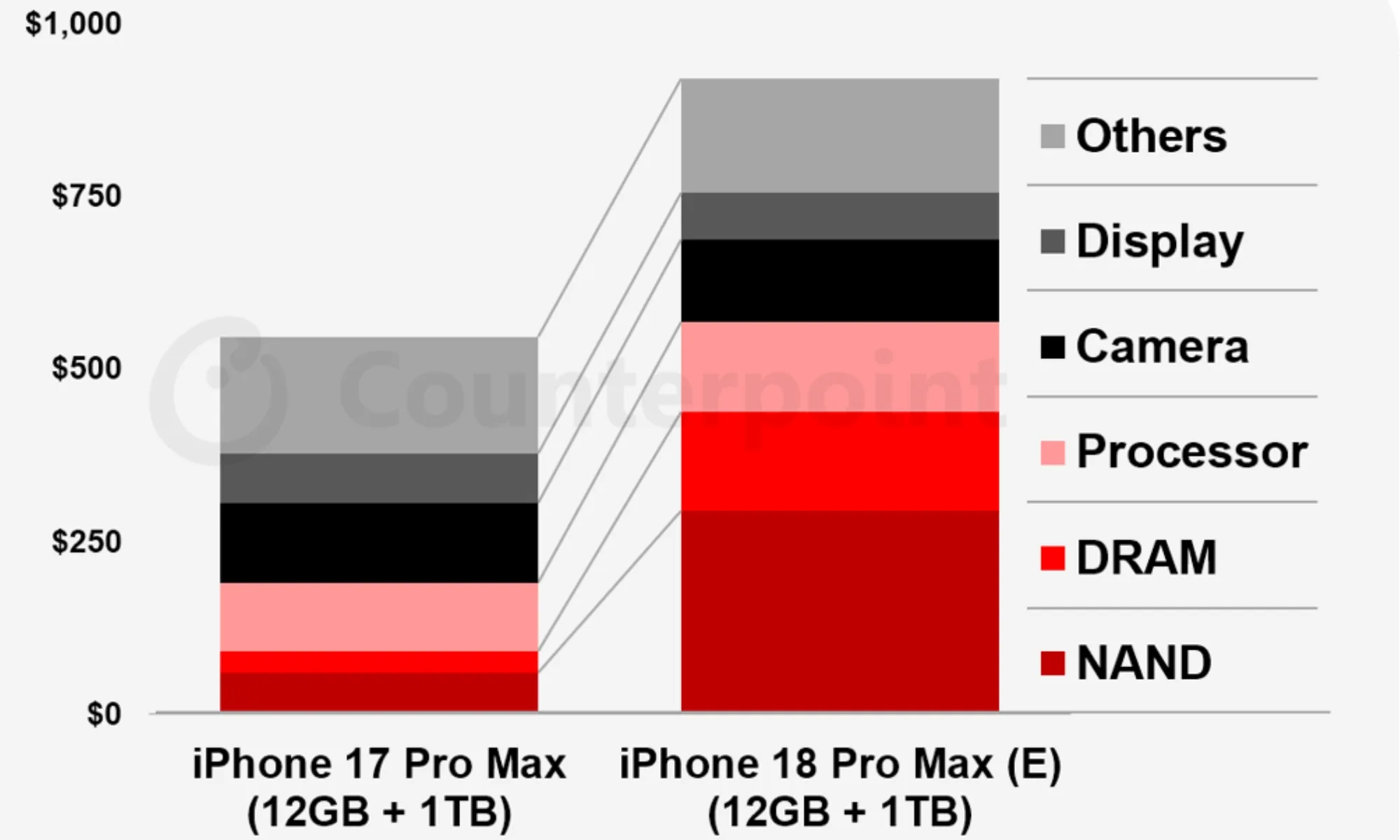
A third independent supply chain analysis is now pointing in the same direction as the previous two: the iPhone 18 Pro Max will be more expensive at launch. In addition, Apple might have to settle for a slightly thinner margin on the device than it usually charges for other products.
Counterpoint Research’s bill-of-materials estimate for the 12GB plus 1TB iPhone 18 Pro Max shows a cost rise of nearly $300 compared to the same configuration in the iPhone 17 Pro Max.
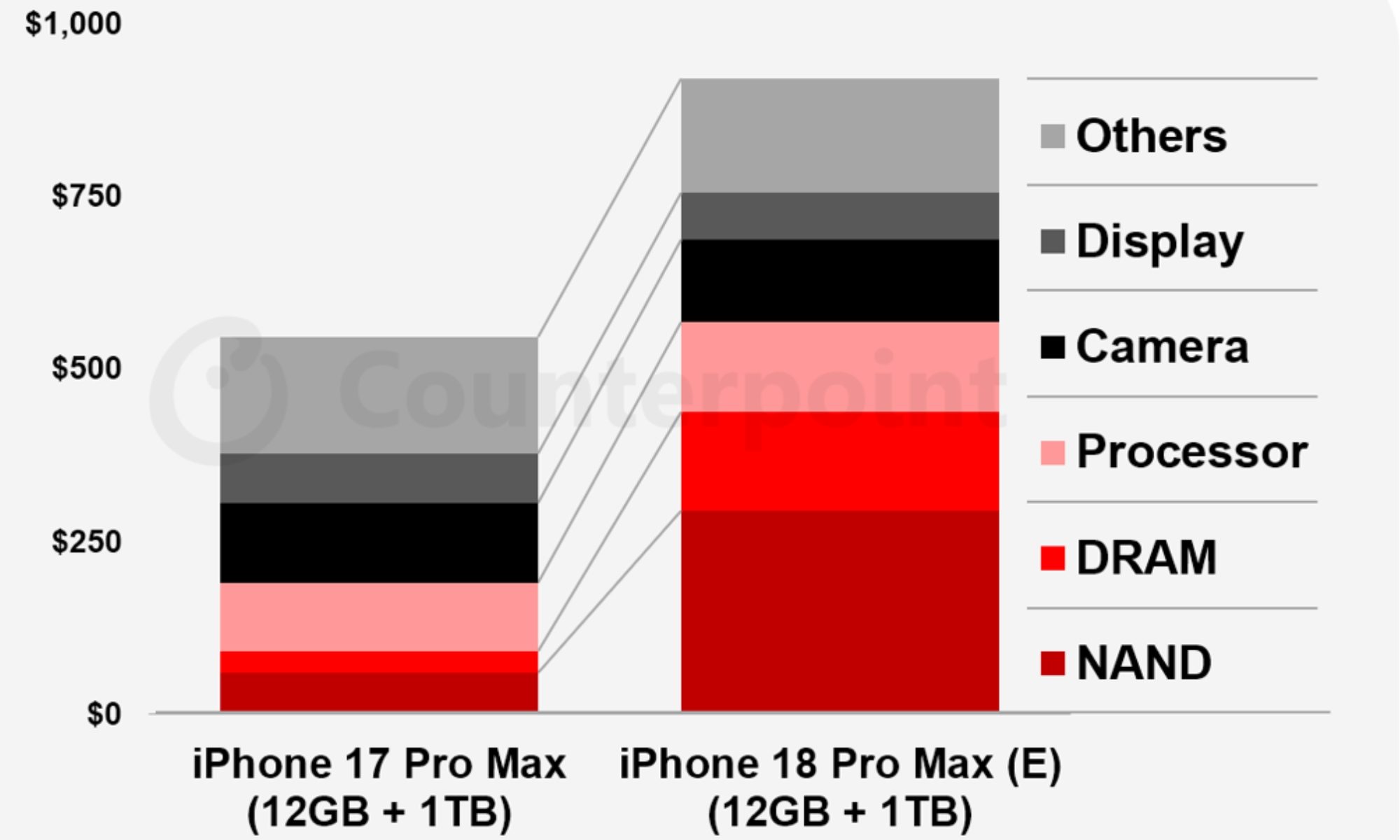
As shown in the infographic, display and other components may actually come in cheaper for Apple. However, the new 2nm chipset and the improved camera setup are also contributing toward the revised bill-of-materials estimate.
However, none of their contribution is as heavy as the memory and storage. The infographic doesn’t provide comparative numbers, but the graph indicates that both the NAND and DRAM costs have increased multifolds.
To give you some context, this is the third time a major analyst firm has flagged a significant iPhone 18 Pro Max price increase: WSJ and TechInsights were first, then IDC’s Nabila Popal.

Almost certainly, yes, but not to everyone. Remember, it’s the top-tier iPhone 18 Pro Max, with 12GB of RAM and 1TB of storage, that is expected to see a $300 price increase at Apple. Hence, for this model, Apple may pass along the rise in component costs to its customers as a $300 price hike, depending on how aggressively it wants to protect the product’s gross margin.
At $1,599 today, a $300 hike on the 1TB iPhone 18 Pro Max would push it to $1,899, which sounds wild to me. For other variants, including those with 256GB and 512GB of storage, the price increase could be $100 to $200.
Even if the exact numbers vary by the time Apple actually releases the iPhone 18 Pro in September this year, one thing seems increasingly sure: you won’t see the iPhone 18 Pro models debut at the same price as the iPhone 17 Pro did in 2025.
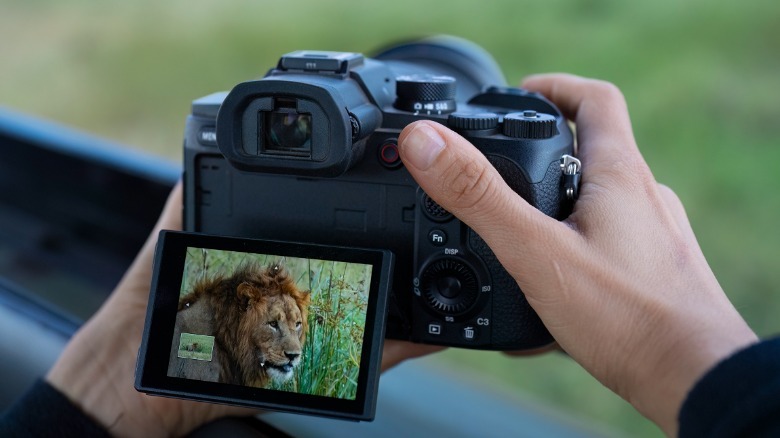
Sony has finally unveiled the RX10 V, a superzoom compact camera that comes with a 24-600mm optical zoom lens and 20.1-megapixel 1-inch sensor. The design has been overhauled compared to the nine-year-old RX10 IV for a more modern look and adds faster speeds, an updated autofocus system and far better video specs. The catch is the $2,300 price, which makes this one of the most expensive compact cameras on the market.
As before, the RX10 V offers tourists, street shooters and others incredible reach thanks to the 9.1-210mm (24-600mm equivalent) f2.4-4.0 lens. The 20.1MP 1-inch stacked sensor appears unchanged and should deliver good-quality images, even in low light, with minimal rolling shutter distortion. It’s disappointing that Sony didn’t upgrade the resolution, though, especially considering the camera’s price. The new model also lacks the RX10 IV’s built-in flash.
The new model does have a new processor that improved burst speeds, though. It can now shoot at 30 fps with no blackout in electronic shutter mode, a nice upgrade over the previous model’s 24 fps shooting speeds. Sony also carried over a feature from its latest mirrorless cameras called “continuous shooting speed boost” that lets you instantly jump to the maximum burst speed to capture decisive moments.
 Sony
Sony
Autofocus also got a big AI makeover to match the new A7 V. Rather than just humans and animals as before, it can detect the face, eye, head and body of humans, birds and animals, along with vehicles (cars, trains and airplanes) and insects (head and whole body). Thanks to a separate deep AI processor, it will keep tracking subjects even if they turn away, look down or move in an erratic fashion. AF and AE speed has also doubled to 60 fps for continuous tracking, and it now offers 575 AF points compared to 315 before, along with 70 percent sensor coverage.
Video gets perhaps the biggest upgrade, with 4K 60 fps 10-bit video (All-Intra, XAVC S, and XAVC HS formats) that uses the entire sensor width with no pixel binning for extra sharpness. That can be boosted to 4K 120 fps for super slow mo, at the cost of a slight crop, or 1080p at 240 fps. It also supports Sony’s S-Log3 for improved dynamic range and lets you import up to 16 LUTs to preview different “looks” ahead of time. Sony also improved the built-in stabilization so that it smooths video even when you’re walking with it.
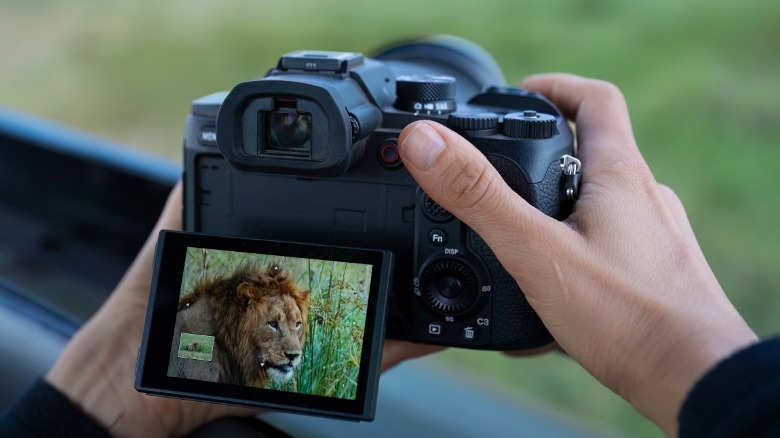
The design was completely revamped compared RX10 IV’s bulbous, stodgy look. It’s now sleeker and more squared off to match the A7 V’s aesthetic and has a much larger grip. It comes with a full complement of manual controls including a joystick, three control dials, a control wheel and a new dual top dial (with a photo, video and S&Q selector), plus an AF-ON button for pro autofocus control.
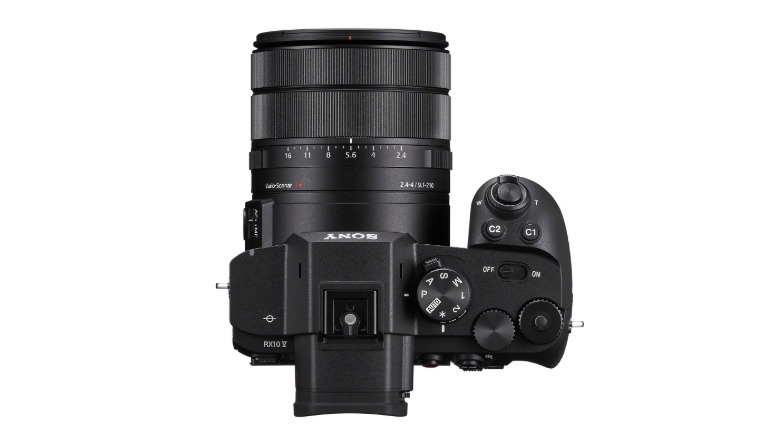 Sony
Sony
Both the electronic viewfinder (EVF) and rear display get resolution upgrades to 3.69 million dots (up from 2.4 million dots) and 1.62 million dots respectively. However, the rear display only tilts and doesn’t flip out, so it’s not great for vlogging or selfies. Again, that’s a rather inexcusable omission considering the camera’s price.
Other features include a single UHS-II SD card slot, full-sized NP-FZ100 battery that delivers up to 630 shots on a charge, a micro HDMI port 3.5mm mic and headphone ports and a new high-speed USB-C port for charging and transfers. The RX10 V now supports live streaming at up to 4K 30 fps as well.
Now for the bad news if you’re interested in this new model. The RX10 V just went on pre-order for $2,300, a relative fortune for a 1-inch compact camera. If that price is in your wheelhouse, though, it does offer incredible zoom reach, shooting speeds and video capabilities.

Microdramas are such a rage these days that nearly every kind of company in the attention economy space — be they dedicated microdrama apps, social media giants (TikTok and Instagram) or streaming services (Peacock, Amazon Prime, and India’s JioHotstar) — is building a product to tap the opportunity.
Character.AI, which lets people chat with customized AI avatars, is also tapping this budding market by producing its own microdramas using AI characters. But there’s an interesting twist that takes advantage of the company’s core product: Users older than 18 can chat with these shows’ characters, ask them questions, and even roleplay different storylines.
The startup is launching three microdramas to start with: a romance series dubbed “Last Summer,” a horror show titled, “The Nighttime Game,” and a Hunger Games-like survival microdrama called “Eden Fall.”
Character.AI says these dramas were created using AI production tools, and in the long term, it aims to help users create their own characters and series.
“Starting with a studio-led model, c.ai Series lets our production team develop the format, refine the workflow, and understand what audiences want from Character-native Microdrama entertainment. Over time, the goal is to turn those learnings and workflows into creator tools, enabling users to make their own series from original Characters and share them with a global audience,” a company spokesperson told TechCrunch.
This is the latest in a slew of recent features from the startup following its shift toward entertainment-focused features last year. In April, it teased a tool called Lorebook that users can employ to create world-building information that characters can reference, and launched another feature called Books that lets users insert themselves into select classic literature titles, or role-play as characters from them.
The company said on Thursday that it is also testing a feature, dubbed c.ai FM, that will let users put together audio series, and another that lets you create fiction, called c.ai Reads. The audio series feature is currently available to select users under its experimental c.ai Labs program, which the company says professional writers are using to create serialized audio dramas.
There’s certainly an audience for this form of entertainment. Users spent more than 950 minutes on Character.AI each month in the first half of 2026, according to Sensor Tower.
When you purchase through links in our articles, we may earn a small commission. This doesn’t affect our editorial independence.




Weekend Open Thread: High Hopes

Taylor Swift and Travis Kelce wedding staffer hilariously struggles to keep her cool while checking in megastars


Standard Chartered Secures MiCA License as ESMA Adds 37 New Crypto Firms


Open Thread: What Great Books Have You Read Recently?


The House | “Reframing the debate from a binary discussion of winners and losers”: Yuan Yang reviews ‘We Are Not Machines’


Loro Piana Fall 2026 Enters Houston’s Art Scene


Whats Hidden Inside This Cash Register? #treasure #reselling #money

Anthropic’s new “J-lens” reveals a silent workspace inside Claude that mirrors a leading theory of consciousness


AXT Shares Jump Nearly 14% as Semiconductor Materials Maker Rebounds on AI-Linked Indium Phosphide Demand


Joshua Pacio ‘more complete’ ahead of ONE rematch vs Malachiev

ESMA Expands Crypto Register by 37 Firms Following MiCA Transition Period
SK hynix (000660.KS) Stock Dips as $28B Nasdaq ADR Offering Drives AI Memory Expansion


South Africa proposes crypto tax guidance under existing rules


Best Time to Enter Small Caps Right Now? Another Bull Run? | Financially Free


Lenovo laptops are now shipping with YMTC SSDs, a sign of Chinese NAND entering the mainstream


What a 10 Percent Drop Means for Buyers, Sellers and Renters
We have punished the disrespect


Binance Re-Enters Philippines As EU MiCA Rules Restrict Access


Avoid entering in FOMO #bitcoin #cryptocurrency #trading #scalping


Alibaba bans Claude Code over alleged backdoor security concerns



![TRIGGERED: Did Bitcoin Bulls Just Confirm A Relief Rally To $69,000? [Double Digit Gains]](https://wordupnews.com/wp-content/uploads/2026/07/1783612388_maxresdefault-80x80.jpg)


You must be logged in to post a comment Login