Tech
Used Denso VS-050 Gets Transformed Into Badminton Robot That Serves Shuttlecocks for Practice
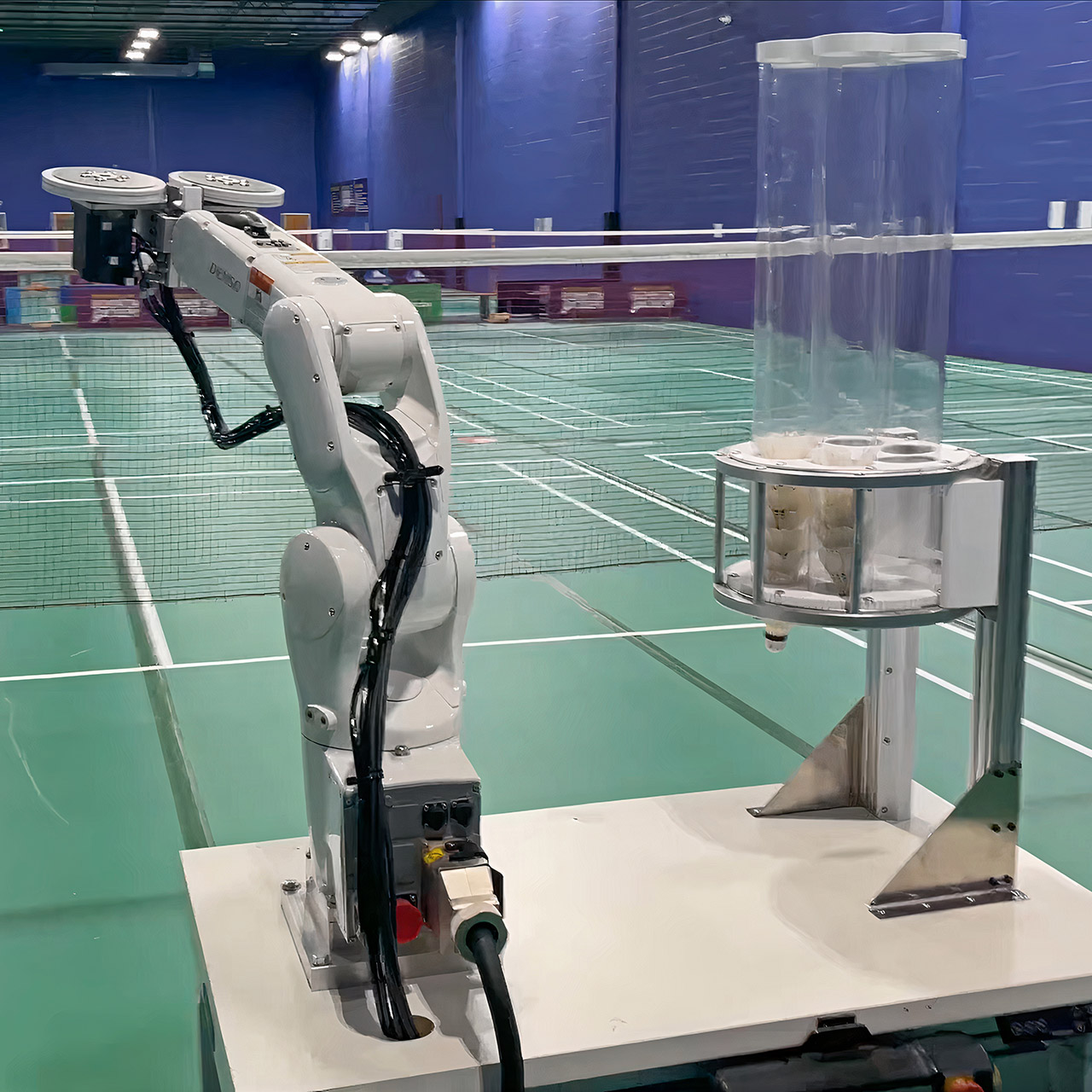
Badminton still needs two people, a net, and a pile of shuttlecocks that never last as long as the rally in your head. Travis Mitchell already played weekly. His kids had just gotten old enough to start learning. His wife once competed in women’s singles for Team USA and now runs a 15-court facility. A decade earlier he had already tried to build a launcher with a CR-10 printer and a cheap CNC router, then life got in the way. This time he wanted the machine itself to be more fun, so he bought a used Denso VS-050 industrial arm on eBay and spent about six months turning it into a court-side feeder.


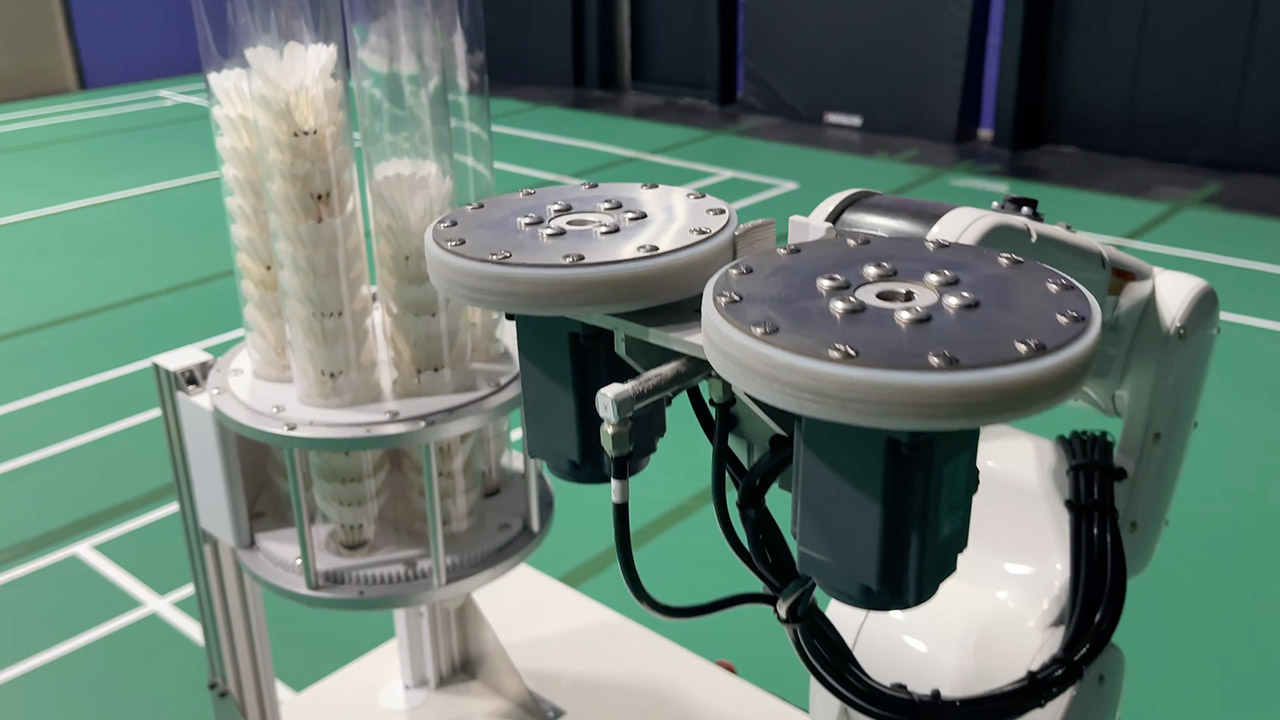
Denso published a 3D model of the arm, which was quickly imported into Fusion, allowing the new wrist gear to be designed accurately around real geometry. On paper, the plan appeared easy enough. Two 400-watt AC servo motors were sufficient to spin a couple of launch wheels. The rest was handled by two pneumatic cylinders: one to grab and hold the shuttlecock, and the other to push it toward the spinning disks. It was all mounted on an aluminum frame fastened to the robot’s wrist. Those gripper fingers are made of stainless steel and came from their own SLM metal printer, which is a great touch. Meanwhile, the fiber and CO2 lasers had been busy cutting plates, foam, and brackets, and the aluminum parts had all been welded and sandblasted. A first attempt using a Raspberry Pi Pico failed due to insufficient I/O, therefore an Arduino Mega took over.
Sale


Bambu Lab A1 mini 3D Printer + LED Lamp Kit, Ready-to-Use for Beginners
- A1 mini + LED Lamp Kit for Creative Light Projects: Bring your ideas to life with the included LED Lamp Kit. Simply print compatible lamp models and…
- The Perfect 3D Printer for Beginners: A1 mini 3D Printer is designed to make 3D printing easy from day one with automatic calibration, simple setup…
- Experience the Bambu Lab Ecosystem: Access MakerWorld’s huge library of ready-to-print models, manage prints through the Bambu Handy app, and enjoy…
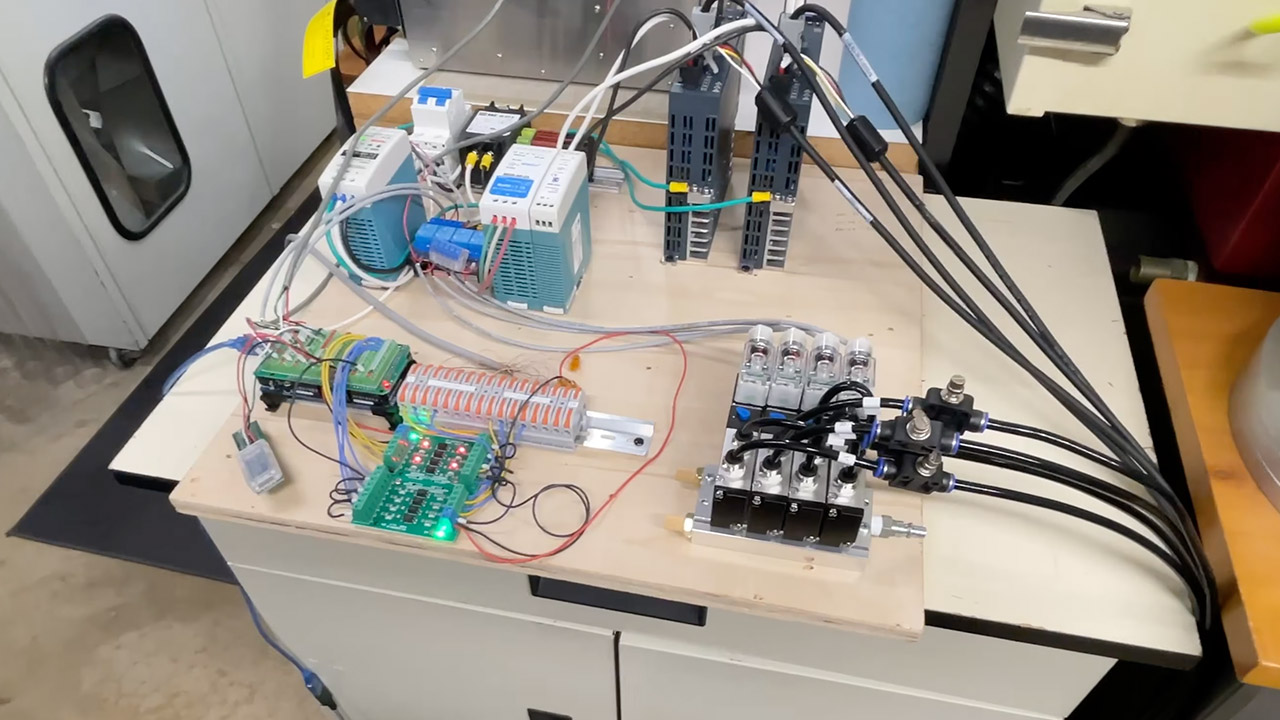
However, the arm developed into its own machine. A motorized carousel includes six tubes, each containing around 20 shuttlecocks, for a total of 120 shots before anyone needs to reload. The time-of-flight sensor determines whether a shuttle is actually seated in the current tube. If it’s empty, spin. If it’s full, simply wait for the arm. USB, RS-232, and Ethernet all proved to be dead ends when it came to communicating with the Denso, so Bluetooth and a bank of I/O pins were used as a fallback. The software allows you to save a variety of stances, grasp, aim, and fire, and then cycle through them repeatedly, up to 127 distinct programd positions in total. The entire setup runs on 240 volts. The base is essentially a motorized standing desk that you can lower to load the tubes and raise to clear the net by a mile. It is mounted on a moving cart with plywood shelves for the compressor and cables, and the wheels used have been converted from M8 to M12.

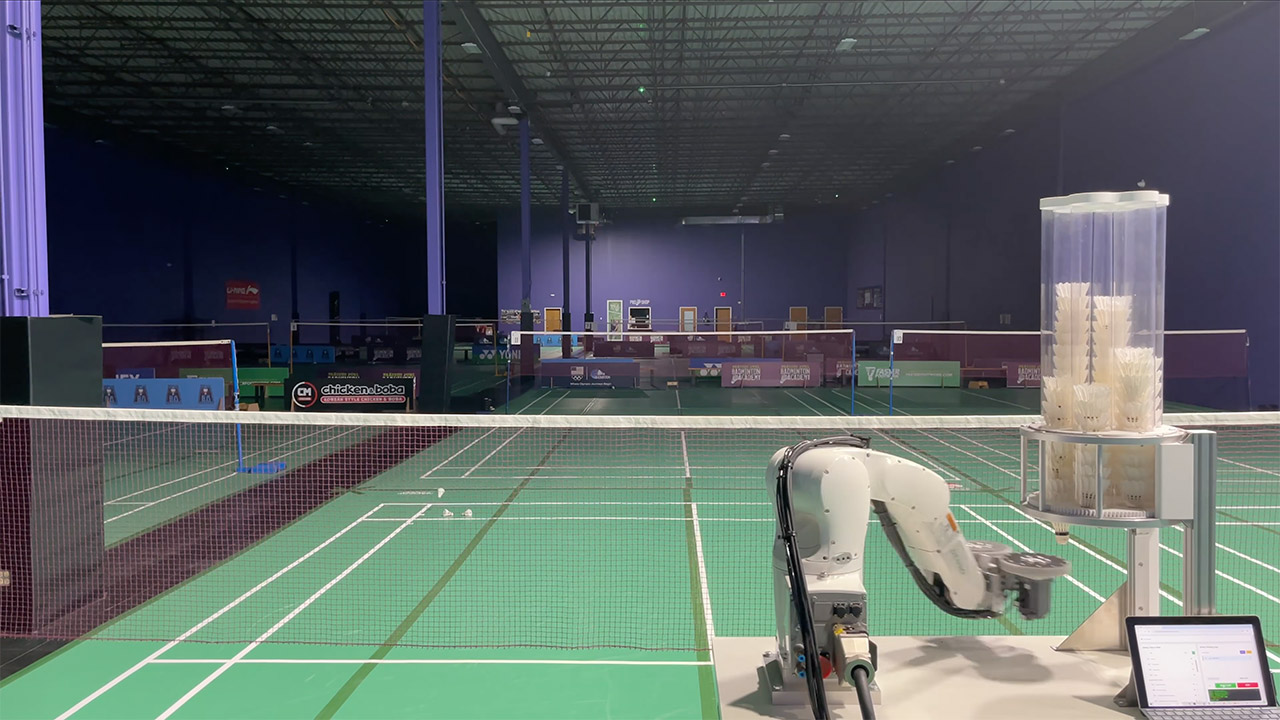
The wheels were the most difficult to get right. They must remain light, properly balanced, and not balloon out at speeds of up to 6,000 rpm while clutching the nylon skirt tightly enough to get the shuttle over the net. They attempted cutting EVA foam with a CO2 laser, but it only marked the shuttlecocks. Gum rubber stretched till it was almost worthless. Printed hubs sprayed with Flex Seal were also ineffective since they would not hold. Then they attempted utilizing complete silicone sheets, but they stretched too much when spun so rapidly. In the end, they chose a printed plastic hub with a narrow strip of silicone attached as the contact face. Still, the pneumatic pusher occasionally stopped short of fully cocking the shuttle, causing launches to deviate until that portion was revised and reprinted, and it eventually performed much better. The first tests were done in the workshop, followed by court tests, but only after they were able to get the entire cart through a gym door.
The ultimate result is a training partner that selects, aims, and fires rounds without the need for someone to stand on the other side and feed it. That means the kids can take turns while the parents can practice clears and drives on a consistent timetable. Of course, commercial feeders already exist, as does this one, which was made with a used six-axis arm, a home metal printer, and six months of spare evenings that happened to be hanging out in the same shop as a family that actually plays. Shuttlecocks and volleyball partners continue to be damaged and fatigued, but this cart is not.
[Source]
You must be logged in to post a comment Login