



Connect with us
DAPA Banner
DAPA Coin
DAPA
COIN PAYMENT ASSET
PRIVACY · BLOCKDAG · HOMOMORPHIC ENCRYPTION · RUST
ElGamal Encrypted MINE DAPA
🚫 GENESIS SOLD OUT
DAPAPAY COMING

Tech

Using AI Companion Apps Gives Many Singles the Ick, Survey Finds

Published

on

Most singles looking for love aren’t interested in building a romantic connection with an AI chatbot

A new study from Match Group, the dating company behind popular dating apps like Tinder and Hinge, found that nearly half (47%) of the roughly 1,000 people ages 18-39 it surveyed “view AI in romantic contexts negatively.” And it’s a hard pass for most singles if you’re interested in AI companion apps, like Kindroid and Replika. Two in five singles aged 18 to 39 refuse to date someone who uses these apps, including over half (51%) of women aged 18 to 24, according to Match Group’s findings.

Finding love with AI can be tricky, whether you’re using AI to keep you from saying the wrong thing to a new connection, spruce up your dating profile or act as your soulmate to help you practice for the big moment (which we don’t advise, more on which below).

Advertisement

Despite all the ways you can use AI on the dating scene, singles have some serious concerns. Most singles in the survey said they use AI for everyday productivity tasks, but when it comes to dating, the bots can’t tag along for the ride. Most want purely human connections. 

Most singles don’t want someone interested in an AI companion

AI is creeping into personal relationships more than in the past. Imagine going to ChatGPT to decide who is right in an argument with your spouse. Or even dating a bot. It’s not far-fetched when there are AI apps that resemble personal relationships. Some even have avatars. 

CNET AI Atlas badge; click to see more

The Match Group survey found that dating an AI bot is a no-go for singles — 4 to 1 opposed. The survey found that only 12% of singles have tried companion apps in the past three months — mainly to try something new, not as a substitute for finding love. Most used them for boredom and entertainment (45%), and roleplay and simulation (43%). Fewer used AI to build a genuine connection (38%) or process emotions (26%). 

Instead of relying on bots, singles are getting advice from friends and family (60% respectively), whereas only 20% are using AI. That’s not surprising, considering a study published in March in the journal Science found AI is more likely to agree with you and less likely to help with things like repairing relationships. The study shows you may depend on AI more instead. 

Advertisement

Michael Salas, a relationship therapist, agrees that seeking advice from family and friends rather than AI is a better move. Salas tested using AI on a complicated situation he was having with a friend, and the bot’s response may surprise you. 

“It told me this friend clearly didn’t care about me. Verbatim, it told me this,” says Salas. “This wasn’t something I was even questioning, and I know it was wrong. When I told it that, it immediately course-corrected, told me I was right, and shifted to a new framework. That’s not wisdom.” 

Salas advises being careful when using AI in dating. “I think you really have to be careful because it will take liberties and give advice that is incorrect or unwarranted. Save that for actual people who know you. Ask them instead.” Instead, Salas recommends using AI for editing and generating ideas, like ways to show someone you care — not as a substitute for humans. 

Using AI for dating has limitations

Match found that most (74%) singles ages 18 to 39 use AI tools, such as ChatGPT, regularly. And 69% use AI for productivity tasks like summaries, problem solving and writing content. Most find their use of AI positive across several use cases. But not when it comes to finding love. 

Advertisement

There are some exceptions. Over half (64%) can see AI helping them find love, like helping keep a conversation going and building a stronger profile (27%), starting a conversation (26%) and planning a date (27%). Some AI features already lean toward those preferences, like Tinder’s AI-powered matching to get connection suggestions based on your interests and camera roll (if you allow it). And there are date-planning apps, like the Date Idea Generator and My Spicy Vanilla. And Hinge debuted Convo Starters to ease the pressure of sending the first message. 

It all still boils down to how comfortable singles feel about using AI to help with matchmaking. Based on Match Group’s survey findings, the percentage using AI assistance remains below half across many use cases, making it clear that most people don’t want bots meddling in their love lives. 

It’ll be interesting to see how Match Group alters or creates AI features for its dating apps in the future based on these findings and how singles respond. Match Group didn’t immediately respond to a request for further comment. 

Advertisement

Source link

Continue Reading
Click to comment

You must be logged in to post a comment Login

Leave a Reply

Tech

Google Has Discontinued The Nest Home Mini And Nest Audio

Published

on

Google just introduced a new smart home speaker yesterday, but the arrival of a new product heralds the end of others. The company has confirmed that it will end production of the Nest Home Mini and Nest Audio. These Nest devices have been on the market for around five years (or longer, if you count 2017’s Google Home Mini) and it seems logical for Google to prioritize the newer generation given the current strategy of putting its Gemini chatbot everywhere it possibly can.

Although the pair of speakers has been discontinued, any of the two smart home products in the wild will remain operational. “Existing Nest Mini and Nest Audio devices will continue to be fully supported with regular software updates, security patches and customer care,” a rep from Google told Engadget. The new Google Home speaker is priced at $100, the same as the outgoing Nest Audio, but significantly more than the Nest Home Mini, which retailed at $50 and could often be found for cheaper.

Source link

Advertisement
Continue Reading

Tech

Circular Ring 2 review: I wanted to love it, but the software got in the way

Published

on

Why you can trust TechRadar


We spend hours testing every product or service we review, so you can be sure you’re buying the best. Find out more about how we test.

Circular Ring 2: One minute review

The Circular Ring 2 is an ambitious smart ring. On paper, it has almost everything you need. Alongside standard health, recovery and sleep tracking, it offers features you won’t find on many rivals, including electrocardiogram (ECG) readings and atrial fibrillation (AFib) detection. Circular is also promising blood pressure and blood glucose trend monitoring in future updates.

At first glance, it feels like a genuine challenger to the likes of Oura, RingConn and Samsung. The ring itself looks good, feels lightweight on the finger and comes with a charging case, which is a welcome upgrade over the previous Circular model. Battery life is solid too, lasting around six days during my testing.

Advertisement

But unfortunately, the day-to-day experience doesn’t live up to that impressive spec sheet.

Latest Videos From

Becca holding the Circular Ring 2 smart ring above a grey surface

(Image credit: Future / Becca Caddy)

The biggest issue is the software. Smart rings don’t have screens, which means the app is incredibly important. That’s where the Circular Ring 2 struggles the most.

Source link

Continue Reading

Tech

This New Van Is Going Very Old-School With Its Design

Published

on


Even as technology continues to push humanity forward in virtually every facet of modern life, it is often still fun to keep at least one eye trained on days of yesteryear. To that end, even some more forward-thinking companies have been known to indulge in a little shameless nostalgia in their product lines. Volkswagen went that route with its retro-inspired re-imagining of its iconic VW Bus.

While the all-electric ID Buzz wasn’t exactly a smashing success for VW, it was nothing if not a stylishly rendered slice of nostalgic automotive Americana. British company Morris Commercial is taking a similar approach with its Morris JE Van. And yes, that van is dramatically outdoing the electric VW retro appeal by taking inspiration from a much older vehicle, the Morris Commercial J-Type Work Van.

Advertisement

That van made its U.K. debut in the late-1940s, and became an instant hit with folks in need of a workhorse type van that still delivered on looks. It soon earned the nickname “The Big Little Van” due in part to its spacious interior and deceptively small exterior. That design also made it a big hit with government offices, as the J-Type was utilized by drivers in the Royal Mail and Post Office Telephone fleets. It would seem that Morris Commercial is not trying to re-invent the wheel with the new version of the J-Type, which it has dubbed the JE. In fact, the new models look almost identical to the old. Looks, however, are where the similarities end. 

Advertisement

What to know about the Morris Commercial JE Van

We should linger at least a minute on the looks of the Morris Commercial JE Van, as it was one of the most distinctively unique vehicles on the road upon its debut, and remains just as unique in its modern form. That being said, much like the SlashGear approved VW ID Buzz, you can probably still file this vehicle firmly under the “niche” section of the automotive market, as some drivers may not be ready to go full retro with their everyday cargo driver.

They might, however, still be tempted if they are looking for what looks to be a spaciously functional van that is fully electric. Yes, the Morris Commercial JE is eschewing the petrol-based engine of J-Type’s past in favor of battery power. It’s doing so without shorting drivers on power, with Morris Commercial claiming it boasts a 1-ton payload capacity. The vehicle also boasts a unique body design, with its fully recycled carbon monocoque body and aluminum skateboard chassis reportedly ranking it among the lightest commercial vehicles in the world.

As a cherry on top, Morris Commercial is also making the JE Van available in a range of unique color designs so you can make the interior and exterior all your own. The interior will also feature more modern fixtures like an infotainment screen. Now for the bad news, which is that the Morris Commercial JE is not yet available for purchase. In fact, it’s not yet in production, with the company claiming it’s eyeing 2028 for full-scale production status.  

Advertisement


Source link

Advertisement
Continue Reading

Tech

A 201-year-old mutual bank just launched an AI Center of Excellence with a startup partner

Published

on

TL;DR

Liberty Bank launched an AI Center of Excellence with Flare AI to deploy secure, compliant AI across personal, commercial, and digital banking operations.

Liberty Bank, a 201-year-old mutual bank headquartered in Middletown, Connecticut, announced the launch of an AI Center of Excellence alongside a strategic partnership with Flare AI. The centre will serve as the hub for AI strategy, governance, and execution across the bank’s personal, commercial, and digital operations.

The partnership is structured around outcomes rather than software licences, according to David Hadd, Liberty Bank’s head of Business Transformation. “Flare’s role is to design, build, and help deploy AI systems on Liberty Bank’s behalf, compressing what has historically been a multi-year technology buildout into weeks, with the security, compliance, and governance controls regulated institutions require,” Hadd said.

Liberty Bank has over $9 billion in assets, 51 retail banking offices across Connecticut and Massachusetts, and more than 900 employees. It is the oldest and among the largest mutual banks in the United States. The bank says the initial focus will be on deploying secure AI systems to enhance productivity and customer experience, automating complex core processes, and building reusable AI capabilities.

Advertisement

The 💜 of EU tech

The latest rumblings from the EU tech scene, a story from our wise ol’ founder Boris, and some questionable AI art. It’s free, every week, in your inbox. Sign up now!

For a bank our size, the challenge has never been ambition. It has been the time it takes to translate strategy into execution,” said David Glidden, President and CEO of Liberty Bank. The bank expects the AI Centre of Excellence to drive measurable impact across customer experience, operational efficiency, and growth. Large banks have warned that scaling AI in production is more expensive and error-prone than pilot programmes suggest, making governance and quality control critical from the start.

Flare AI CEO Scott Killoh said the company takes a different approach from platform vendors. “Most banks have been sold AI platforms and left to figure out the rest,” Killoh said. “We partner with institutions to deliver working AI systems that are secure, compliant, and tailored to their business.” Flare AI’s new President and Chief Strategy Officer, David Mitchell, previously spent six years as an executive at Liberty Bank, giving the partnership an unusual level of institutional familiarity.

Advertisement

The announcement reflects a broader shift in how regulated industries are adopting AI, moving from experimental chatbots toward structured, governed deployments with audit trails and compliance guardrails built in. For community banks competing against institutions with far larger technology budgets, the speed of deployment matters as much as the technology itself.

Source link

Advertisement
Continue Reading

Tech

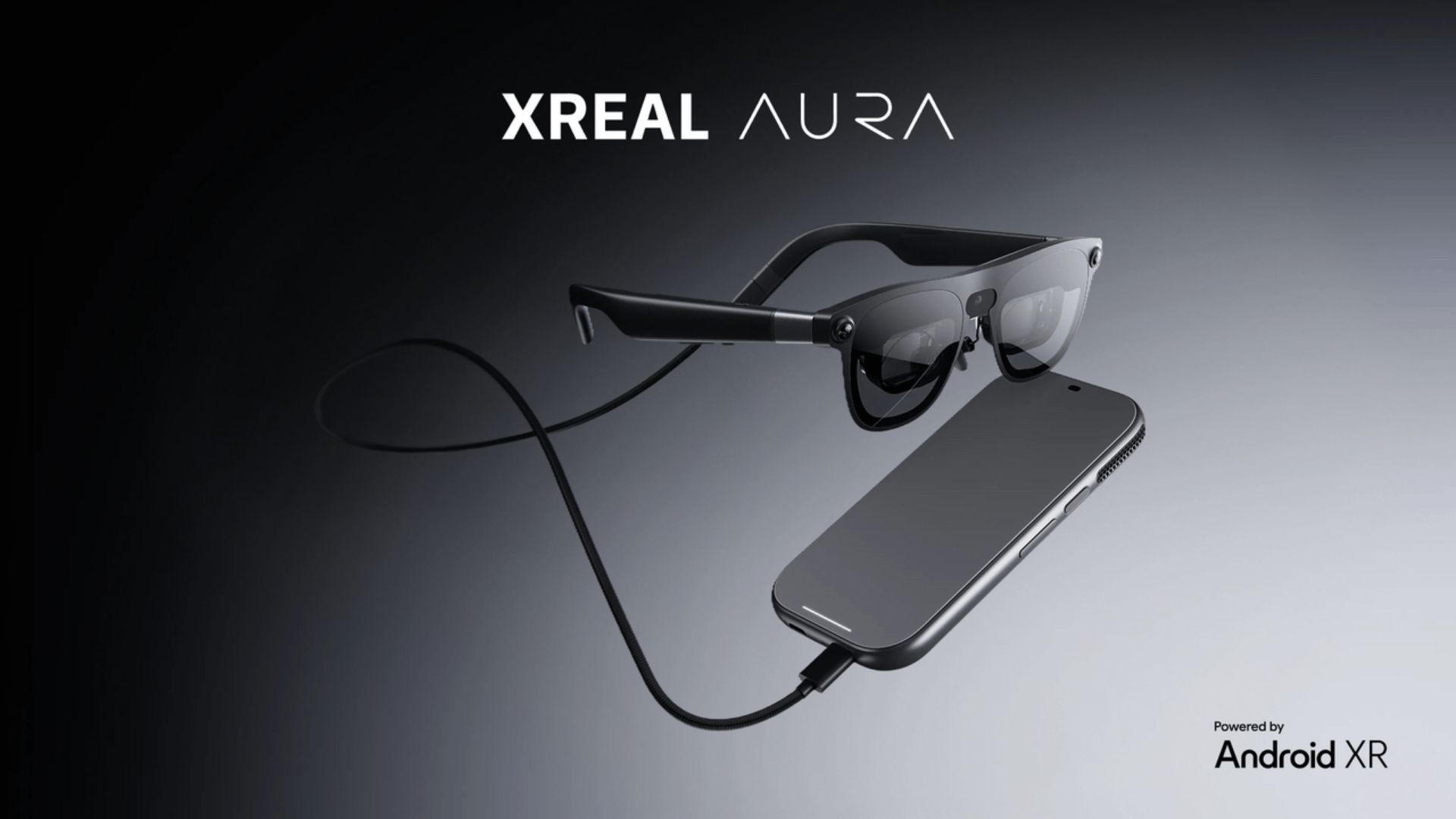
The Xreal Aura looks expensive, just not as expensive as Snap’s Specs

Published

on

Xreal has officially unveiled its new Aura smart glasses. While they certainly won’t be cheap, they’ll still cost considerably less than Snap’s recently announced Specs.

The Aura runs Android XR, Google’s operating system for mixed reality devices, giving users access to a growing ecosystem of apps right out of the box.

Xreal hasn’t revealed exact pricing yet. However, the company says the Aura will launch for under $1,500 before tax when it arrives later this year. That’s a notable contrast to Snap’s Specs, which rely on proprietary software and are currently up for pre-order at $2,195.

The glasses feature an Optical See-Through (OST) display with a 70-degree field of view. They are powered by dual Sony Micro-OLED panels with a resolution of 1,920 x 1,200 per eye and a 120Hz refresh rate. Since the displays are transparent, users can still see their surroundings, though electrochromic dimming is included for moments when greater immersion is needed.

Advertisement

One of the Aura’s biggest selling points is its support for up to five floating app windows at once, with Google’s Gemini AI assistant built directly into the experience.

Advertisement

Rather than placing all of the hardware inside the glasses themselves, Xreal has opted for a split design. Processing is handled by a separate compute puck powered by the newly announced Snapdragon Reality Elite chipset, while an onboard X1S spatial co-processor manages low-latency tracking and display tasks.

The compute puck also houses a 4,455mAh battery, helping reduce the weight carried on the user’s face. Two configurations will be available, offering either 12GB of RAM and 256GB of storage or 16GB of RAM and 512GB of storage.

Advertisement

The Aura supports 6DoF tracking, hand-tracking controls, voice commands through Gemini, and onboard cameras with a visible LED indicator that activates when recording.

Xreal says the Aura will launch this autumn. Those interested can either reserve a standard spot for $100 and receive $200 in launch credit, or secure one of the company’s limited Founder Passes, which include a $300 discount.

Source link

Advertisement
Continue Reading

Tech

Older Macs and iPhones Could Lose Major Office 365 Features in a Few Weeks

Published

on

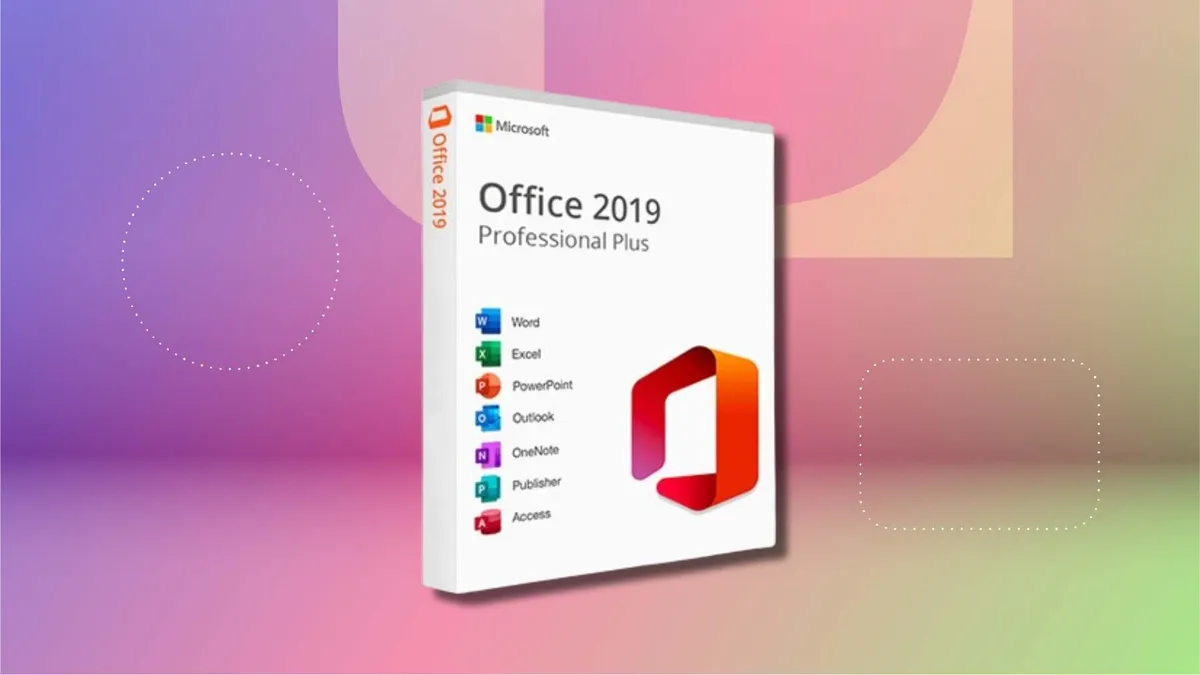
If you want to edit your Microsoft Office 2019 files on your Mac, you’ll only be able to do so until next month.

Starting July 13, Office 2019 apps for Mac — including Word, Excel, PowerPoint, Outlook and OneNote — will enter a “reduced functionality mode” that disables editing, saving or creating new files, while allowing only viewing and printing. This restriction also affects outdated iPhone and iPad applications, according to Microsoft.

That’s because Microsoft Office 2019 stopped being officially supported in October 2023, and the version no longer receives software or security updates. 

Advertisement

Subscribers of Microsoft 365 on newer supported versions of Office on MacOS, as well as customers of the nonsubscription Office 2021, will need to update their software before July to avoid the same fate.

The heart of the issue is an expiring security certificate that validates Office licenses. Microsoft renewed the certificate and updated other versions of Office to properly recognize it, but not the 2019 version for Mac. Microsoft Office versions for Windows aren’t affected by this security certificate.

Pulling the plug on Office 2019

Microsoft’s end-of-support notice for Office 2019 cites a five-year support lifecycle for the software bundle. Office 2019 was released in September 2018, making it nearly 8 years old.

With software updates, that’s not unreasonable. But this certificate issue doesn’t appear to be due to broken code that would pull resources from other newer projects to fix. Office 2019, which was sold as a one-time purchase, still works just fine. 

Advertisement

The problem is that Microsoft won’t provide an update that would activate the renewed certificate. The expiration of security certificates is a standard industry practice designed to limit the risk of compromised cryptographic keys.

But some critics argue Microsoft’s deadline is self-imposed. Compounding the backlash, Microsoft quietly removed a previous online promise that the software would “continue to function.”

When reached for comment via email, a Microsoft spokesperson replied: “Microsoft is not intentionally limiting or changing Office 2019; the product cannot receive the renewed certificate because no update path exists for an out-of-support product.”

Minimum OS Version Requirements

Advertisement

Platform Minimum OS Version Minimum App Version
MacOS MacOS 12 (Monterey) or later 16.83
iOS iOS 17.0 or later 2.93
iPadOS iPadOS 17.0 or later 2.93

The last full-purchase version of Office for Mac is Office 2024, which will continue to be supported. Its predecessor, Office 2021, will also continue to work but will enter end-of-support mode in October 2026.

Office 2019 existed in the not-so-distant past, before Microsoft started bolting artificial intelligence features into all its products. It’s safe to assume that some customers are holding onto their apps because they want the core word processing, spreadsheet and presentation features without today’s distractions.

If you do decide to upgrade to a newer version from Office 2019, you’ll need to download and run a License Removal Tool, open an Office app and then go to Help > Check for Updates to activate it.

Advertisement

As an alternative, you can use Microsoft 365 on the web for free.

Source link

Advertisement
Continue Reading

Tech

Microsoft discovers new lightweight backdoor that steals cryptocurrency

Published

on

Microsoft says it has detected new self-propagating malware that spreads through USB drives in search of cryptocurrency credentials, which it then sends to attacker-controlled servers.

The company named the worm Crypto Clipper because it monitors the contents of device clipboards for patterns consistent with wallet addresses or seed phrases. When found, the malware also takes five screenshots over a 10-second period. Both the credentials and the screenshots are then sent to the attacker through Tor, a network protocol that provides anonymous routing by sending traffic through redundant nodes so logs can’t capture both the sending and receiving IP addresses. Crypto Clipper establishes the Tor connection by using a SOCKS5 proxy, a network protocol that sends traffic through a proxy server, which then forwards it to its final destination.

A lightweight backdoor

“The execution of this clipper is notable because it does not depend on a traditional installer or exposed IP-based C2 infrastructure,” Microsoft said Thursday. “Instead, it deploys a portable Tor client, routes traffic through a local SOCKS5 proxy, and blends data theft with remote code execution, turning a financially motivated stealer into a lightweight backdoor.”

Microsoft said it observed Crypto Clipper spreading through .lnk file on a USB drive. These files store executable code. When an infected USB drive is plugged into a device, the code checks whether it is already installed on the machine. If it isn’t, the malware downloads it through the Tor proxy. To better conceal evidence of the worm, the malware scans the infected USB drive and names the .lnk files with similar names.

Advertisement

Source link

Continue Reading

Tech

California ‘Billionaire Tax’ Makes Ballot Despite Opposition From Tech Moguls

Published

on

California’s proposed “billionaire tax” has gathered enough signatures to qualify for the November ballot, setting up a major fight between labor unions and some of Silicon Valley’s richest figures. From the report: The California Billionaire Tax Act, colloquially known as the billionaire tax, would levy a one-time 5% tax on any California resident worth more than $1bn. The proposal is backed by the Service Employees International Union-United Healthcare Workers West as a means of funding California’s strained healthcare and education programs. The proposal has become one of the state’s biggest political flashpoints as it gained momentum throughout the year, with prominent billionaires, such as the Google co-founder Larry Page, making moves to cut ties with the state and Newsom vowing to block it from going to a vote. Although it has gained enough signatures for the ballot, the groups backing the measure have until June 25 to decide whether to move forward or potentially strike a deal with the state.

While unions backing the group have framed the proposal as a way of getting the ultra-rich to pay their fair share, many of the state’s tech elites have condemned the tax and spent millions attempting to crush it. The Google co-founder Sergey Brin has spent $82m alone on efforts to fight the tax, while joining other Silicon Valley billionaires in declaring he will leave California if it goes through. The Palantir co-founder Peter Thiel, crypto billionaire Chris Larsen and Ring founder James Siminoff are among the other tech moguls who have made huge political donations to groups opposing the tax. California has the most billionaires out of any state, many of whom have increased their wealth in recent years amid the AI boom.

Source link

Continue Reading

Tech

5 reasons Microsoft 365 backup isn’t enough for business data protection

Published

on

Microsoft 365 Logos

Written by Andy Kerr, Senior Manager, Solutions Marketing at Acronis.

Many organizations assume Microsoft 365 automatically provides built-in protection for their business data. It doesn’t, and Microsoft doesn’t claim that it does.

Microsoft 365 operates under a shared responsibility model: Microsoft ensures service availability and infrastructure security, but data protection, including backup and recovery, remains the customer’s responsibility.

That gap becomes critical in real-world scenarios involving ransomware, accidental deletion, insider threats or compliance failures. A third-party solution is essential for data protection. Organizations need dedicated backup, security and recovery capabilities to effectively safeguard Microsoft 365 data.

Advertisement

Need some evidence? Here are five key reasons why Microsoft 365 backup alone isn’t enough for business data protection.

1. Microsoft 365 does not protect against ransomware and malicious data loss

By design, Microsoft 365 does not fully protect against ransomware and malicious data loss, particularly when encrypted or deleted files are synced across accounts. While versioning and recycle bins provide limited recovery, they are not designed to ensure clean, reliable restoration after sophisticated attacks.

To address this gap, organizations need solutions that provide immutable storage, AI-based ransomware detection and clean recovery points to ensure safe data restoration.

Advertisement

Ransomware attacks increasingly target cloud environments, not just endpoints. When files in OneDrive or SharePoint are encrypted, those changes are often synchronized instantly across users and devices. Native version history may help in simple cases, but attackers frequently corrupt multiple versions, or attacks remain undetected long enough to render recovery points unusable.

Additionally, Microsoft’s tools are not about to effectively identify ransomware. They do not know which versions of files are safe and which are compromised. That creates uncertainty during recovery and can significantly delay restoration.

A third-party cybersecurity solution  can address that issue by combining backup with active protection. Features such as immutable storage in Acronis Cyber Platform, for instance, prevent attackers from tampering with backup data while AI-based detection identifies suspicious encryption patterns. As a result, organizations can roll back to clean, verified recovery points without having to make dangerous guesses as to which data is safe.

Protect Microsoft 365 with Acronis, combining secure backups, AI-powered ransomware detection, rapid recovery, and long-term data retention in one platform.

Advertisement

Recover clean data with confidence, simplify management, and strengthen protection across Microsoft 365, endpoints, and workloads from a single console.

Learn how Acronis helps secure Microsoft 365 data

2. Native Microsoft 365 retention policies are not enough for compliance

Microsoft 365 retention policies are not sufficient for many compliance requirements, especially for organizations that need long-term flexible data retention. Retention settings are often limited in granularity and may not meet industry-specific or legal data preservation standards, A third-party solution can provide customizable, compliance-ready backup capabilities.

Compliance requirements vary widely across industries. Healthcare, finance and legal sectors often require years or even decades of data retention along with strict auditability. Microsoft’s retention policies are primarily designed for basic governance, not comprehensive backup.

Advertisement

Limitations include rigid retention structures, lack of independent storage and challenges in demonstrating compliance during audits. Retention policies also do not equal backups since they are not designed for full data restoration scenarios.

Organizations need a third-party option that provides independent long-term storage with flexible retention policies that can be tailored to regulatory requirements. That way, organizations can maintain complete control over their data lifecycle, while ensuring compliance and without sacrificing recoverability.

3. Granular recovery in Microsoft 365 is limited and inefficient

Microsoft 365 is not designed to natively enable efficient andgranular data recovery. As a result, quickly restoring specific files, emails or user data is difficult. Recovery processes can be time-consuming and often lack precision, which increases downtime and operational overhead.

Advertisement

A third-party offering such as Acronis Cyber Platform addresses that challenge by enabling fast granular recovery across Exchange, SharePoint, Teams and OneDrive from a centralized platform.

In practice, organizations rarely need to restore entire environments. They need specific emails, folders or user accounts.

Microsoft’s native tools often require complex workflows or full-site restores to retrieve small pieces of data. That inefficiency leads to longer recovery times and increased IT workload, particularly in large environments with multiple users and services.

A third party solution can simplify this process with centralized management and highly granular recovery options. IT teams can quickly locate and restore individual items, whether it is a single email, a Teams conversation or a SharePoint document, without disrupting the broader environment.

Advertisement

4. Phishing and insider threats expose data beyond Microsoft safeguards

With Microsoft 365, Microsoft does not intend or claim to fully protect against data loss caused by phishing attacks or insider threats. Even when threats are detected, organizations may still need to manually recover compromised or deleted data, which can delay response times.

The right third-party solution, such as Acronis Cyber Platform, combines backup and cybersecurity capabilities so organizations can recover clean data quickly after incidents involving compromised accounts or malicious actions.

Phishing remains one of the most common entry points for attackers. Once an account is compromised, attackers can delete files, exfiltrate data or manipulate content, all within legitimate user sessions.

Advertisement

Similarly, insider threats, whether malicious or accidental, can result in significant data loss. Microsoft 365 performs some limited threat prevention, but recovery after an incident is often manual and fragmented.

A third-party platform that combines cybersecurity with backup enables organizations not only to detect threats but also to recover quickly from their impact. Clean data restoration becomes part of the incident response process.

5. Microsoft 365 backup is not designed for cost-efficient scaling

Microsoft 365 backup is not designed to be cost-efficient at scale, particularly for growing organizations or managed service providers (MSPs) managing multiple tenants. Native options can become expensive and lack the flexibility needed to manage storage and retention efficiently across environments.

Advertisement

A third party such as Acronis Cyber Platform for MSPs offers a scalable per-seat pricing model with predictable costs, making it easier for businesses and MSPs to manage Microsoft 365 backup at scale.

As organizations grow, so does their data footprint. Managing backups across multiple users, departments or tenants can quickly become complex and costly with native tools. Microsoft’s pricing and storage structures are not optimized for large-scale backup strategies, especially for managed service providers who need multi-tenant visibility and control.

A third party can address that issue with a scalable architecture and predictable pricing. A per-seat model simplifies cost management while centralized administration enables efficient backup across multiple environments.

You are responsible for your Microsoft 365 data

Microsoft 365 is a powerful productivity platform, but it is not designed or intended to be a complete data protection solution. The limitations of native Microsoft 365 data protection are significant.

Advertisement

Organizations need secure and flexible third-party backup solutions to ensure their data remains protected and recoverable under any circumstances.

Solutions like Acronis Cyber Platform provide that missing layer in Microsoft 365 data security and protection, combining backup, cybersecurity and recovery into a single platform designed for a threat landscape that continues to prove a dangerous challenge to organizations.

About the writer

Andy Kerr is a cyber resilience and data protection expert with more than a decade of experience helping businesses navigate the evolving world of cybersecurity, backup, and disaster recovery. As Senior Manager, Solutions Marketing at Acronis, he works closely with MSPs and IT leaders across Europe to turn complex cyber protection challenges into practical, business-focused strategies. Known for making technical topics accessible and engaging, Andy regularly speaks on cyber resilience, SaaS protection, ransomware defence, and the future of managed services.


Sponsored and written by Acronis.

Advertisement

Source link

Continue Reading

Tech

Get the Baseus X1 Pro Dual-Lens Solar Security Camera for Just $119

Published

on

Outdoor security cameras can get expensive fast, especially if you want features like AI tracking and solar charging. Fortunately, the Baseus X1 Pro Dual-Tracking Solar Security Camera is currently available at one of its lowest prices yet. As part of a limited-time promotion, the camera has dropped to just $119.99, down from its usual $270 retail price.

Baseus X1 Pro Specifications

One of the biggest selling points of the Baseus X1 Pro is its dual-camera setup. Instead of relying on a single lens, the camera uses two independent 3K sensors to monitor different areas simultaneously. Combined with a 300-degree pan range, this allows the X1 Pro to cover a significantly larger area than many traditional outdoor security cameras. Both cameras can also independently track movement, whether that’s a person walking through the yard, a vehicle entering the driveway, or other activity around the property.

The X1 Pro also packs several AI-powered features designed to make monitoring easier. The camera can identify people, vehicles, faces, and even animals, helping reduce unnecessary alerts. Once motion is detected, the camera can automatically follow the subject and organize recordings into categories, making it easier to find important clips later instead of scrolling through hours of footage.

Baseus X1 Pro

Another standout feature is the built-in solar charging system. According to Baseus, just 20 minutes of sunlight can generate enough power to keep the camera running for an entire day. An adjustable solar panel is included to help maximize charging efficiency, while the built-in battery serves as a backup during cloudy weather or extended periods without sunlight.

Storage and Promotional Offer

Storage is handled locally through a microSD card slot that supports cards up to 512GB, meaning users can save recordings without paying for a cloud subscription. The camera is also IP65 rated, which should help it withstand rain, dust, and changing weather conditions outdoors.

Advertisement

The current promotion runs through June 30. Buyers in the United States can get the Baseus X1 Pro for $119.99 by applying promo code X1PROPRNO1 during checkout. For anyone looking for a feature-packed outdoor security camera with dual-lens monitoring, AI tracking, local storage, and solar charging, it’s one of the better deals currently available.

Source link

Continue Reading

Trending

Copyright © 2025