

Tech
Valerion VisionMaster Max review: Premium projector that's still consumer-friendly

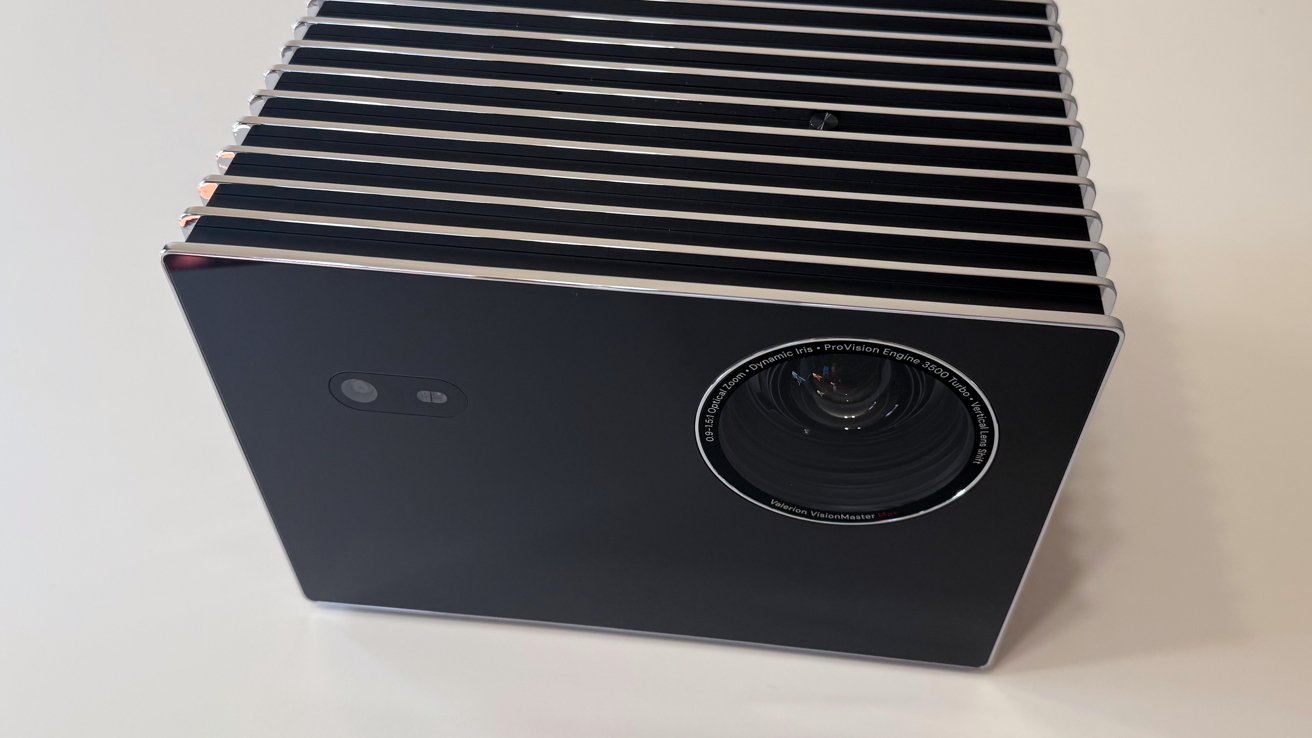
The Valerion VisionMaster Max is a super-premium 4K home theater projector that manages to get extremely close to the professional-grade experience for less than half the cost.
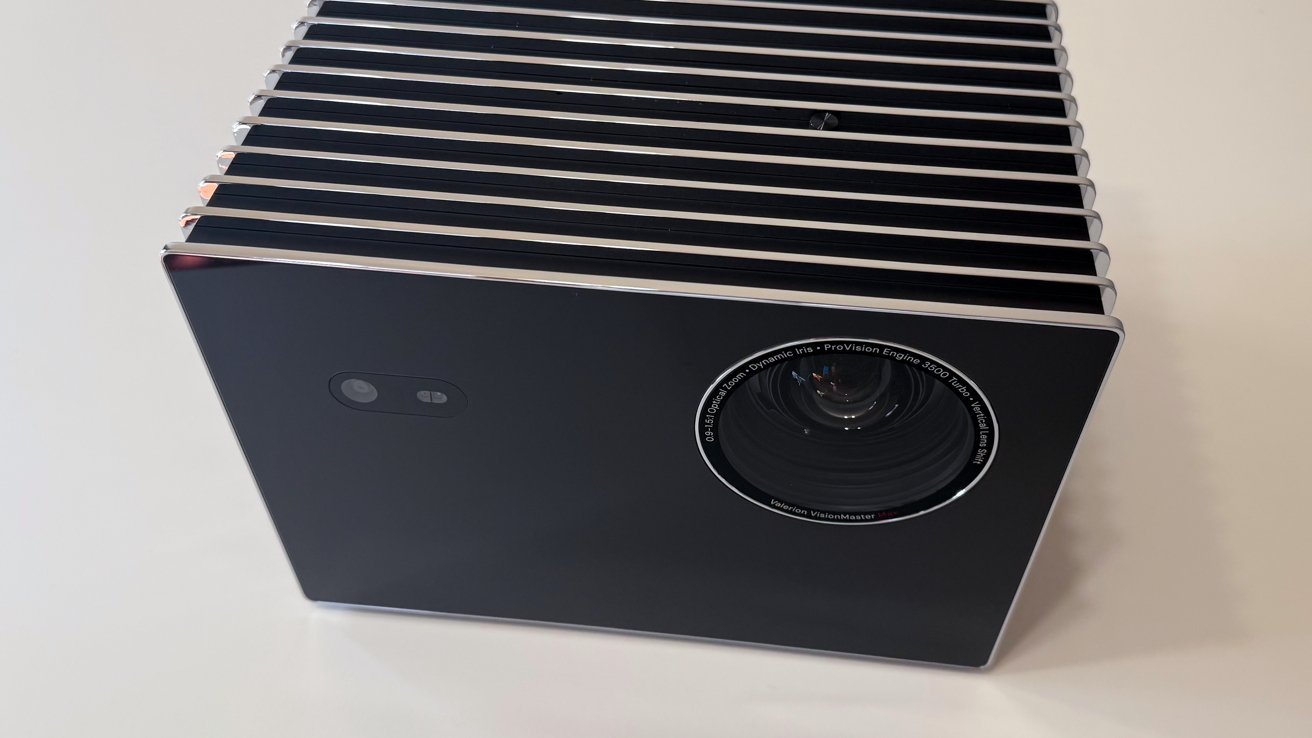
Valerion VisionMaster Max review
For anyone constructing their own home theater, the choice between a projector and a television is frequently determined by budget. A massive TV provides most of the benefits and few of the drawbacks, but you just don’t get the same sort of experience as you would when using a projector.
However, there are other factors that weigh into the home projector experience, not the least of which is managing the light in your theater space to get the ideal image. Your choice of projector also makes a massive difference to what you can eventually see on your wall or projector screen.
Continue Reading on AppleInsider | Discuss on our Forums



Users with high-refresh-rate monitors can participate in an opt-in beta for DLSS 6x multi-frame generation and dynamic mode starting March 31. The date lands slightly ahead of Nvidia’s previously stated April launch, which may be when the two features exit beta.
Read Entire Article
Source link
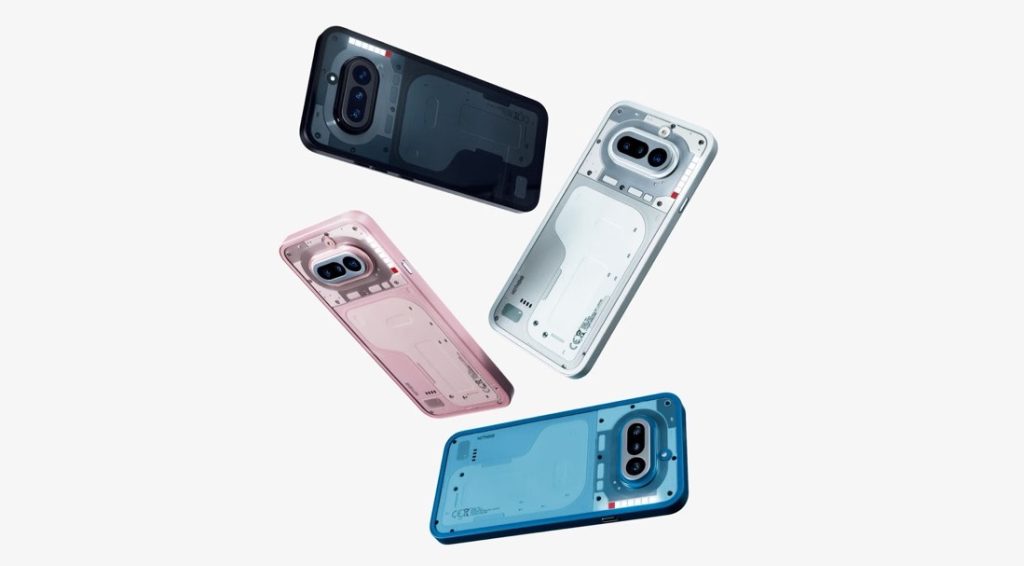
Nothing has announced two new mid-range smartphones, the Nothing Phone (4a) and the Nothing Phone (4a) Pro. The latest devices continue to follow the company’s design language, and the brand continues to shine in the competitive smartphone industry. Although the Pro version is similar to Phone (4a), it offers the following premium features: performance, design, and display. Below is a detailed comparison of the two versions in terms of design, display, camera, performance, and battery.
Price and Availability
The prices of the Nothing Phone (4a) and the Nothing Phone (4a) Pro indicate the level of difference between the two devices in terms of features and upgrades. The standard Nothing Phone (4a) starts at ₹31,999 for the 8GB RAM and 128GB internal storage variant. The device also offers the option to purchase the upgraded 8GB + 256GB and 12GB + 256GB variants.
The Nothing Phone (4a) Pro starts at ₹39,999 and offers the same internal memory options with some premium upgrades. The devices are set to go on sale starting March 13, 2026.
In terms of colours, the Phone (4a) will be available in black, white, blue, and pink, while the Pro model will come in black, silver, and pink.
Design & Display

Nothing continues to focus on its unique design language with both models. The devices feature the brand’s signature transparent back design, which highlights internal elements and gives the phones a distinctive appearance.
In the build department, the Nothing Phone (4a) Pro leads the way with its aluminum unibody design, giving it a premium, robust look and feel. The Nothing Phone (4a), meanwhile, retains its transparent layered back panel so you can see the screws, compartments, and internal metalwork.
When it comes to the display, there are a couple of differences between the two devices. The Nothing Phone (4a) has a 6.78 inches AMOLED screen with 1.5K resolution and a 120Hz refresh rate.
The Nothing Phone (4a) Pro has a slightly larger 6.83-inch AMOLED screen. It also has a higher peak brightness of up to 5,000 nits, compared to the 4,500 nits of the Nothing Phone (4a).
Cameras

The Nothing Phone (4a) and Phone (4a) Pro have a decent camera setup that will surely satisfy photography enthusiasts. Both phones feature a 50MP primary camera with optical stabilization to keep your snaps locked in perfectly.
The Phone (4a) Pro takes it up a notch with its camera, which uses a Sony LYT700C 50MP sensor, along with a 50MP telephoto lens with 3.5x optical zoom and 140x digital zoom. The regular Phone (4a) also comes with telephoto capabilities, but it tops out at 70x digital zoom. Both phones also feature ultra-wide cameras and 32MP front-facing cameras for selfies and video calls.
Processor & Battery

Both Nothing phones get a midrange processor, but a slightly different one. The standard 4a houses the Snapdragon 7s Gen 4 processor, while the bigger brother gets the Snapdragon 7 Gen 4 for faster performance, thanks to higher clock speeds. After a bit of controversy last time, the brand has bundled UFS 3.1 storage.
Both phones have the same battery size: 5,400mAh, a slight increase over the previous generation. Both phones also feature 50W fast charging, which will help reduce charging time when you have access to a compatible charger. However, you should be able to enjoy all-day battery life with regular use, partly due to the battery size and partly to the hardware itself.
Which One Should You Choose?
If you are trying to decide between the two devices, the Nothing Phone (4a) offers great value for money. It delivers most of the key features, including the signature design, capable cameras, and smooth performance, while keeping the price relatively low.
The Phone (4a) Pro, on the other hand, targets users who want extra upgrades. With its premium metal build, improved performance, narrower bezels, and the advanced Glyph Matrix interface, it provides a more polished smartphone experience. Your final choice will largely depend on how much you are willing to spend.

The inspector general’s office of the Social Security Administration is investigating allegations of a security breach by a member of the so-called Department of Government Efficiency operation spearheaded by Elon Musk. A whistleblower has claimed that a former software engineer from DOGE said he possessed two databases from the SSA, “Numident” and the “Master Death File.” The person reportedly asked for help transferring the databases from a thumb drive “to his personal computer so that he could ‘sanitize’ the data before using it at [the company],” an unnamed government contractor where he is currently employed. Those databases include personal information about more than 500 million living and deceased Americans.
The Washington Post reported that the whistleblower complaint was filed with the inspector general in January. “When The Post contacted the agency and the company in January, both said they had not heard of the complaint. Both said they subsequently looked into the allegations and did not find evidence to confirm the claims,” the publication said. It is unclear why the complaint is now being investigated and neither party offered comment this week for The Post‘s article. The SSA watchdog informed both members of Congress and the Government Accountability Office of its investigation.
These allegations follow a different whistleblower complaint filed last August about DOGE access and mishandling of data from the SSA. Charles Borges, former chief data officer at the agency, claimed that a SSA database was stored in an unsecured cloud environment. “This is absolutely the worst-case scenario,” Borges told The Post of the latest claims. “There could be one or a million copies of it, and we will never know now.”
Tech
Microsoft’s return-to-office policy creates a return to slower commutes, traffic analysis shows


Seattle-area Microsoft employees who are showing up in the office three days a week are also showing up on roadways and impacting commuters’ speeds, according to new data from traffic analysis company Inrix.
Inrix measured travel speeds on eastbound and westbound SR 520 and southbound and northbound I-405 during the weeks of Feb. 23 and March 2. Many of Microsoft’s more than 50,000 employees in the region rely on the roadways and bridges connecting Seattle and the Eastside to the company’s headquarters campus in Redmond, Wash.
The data shows speeds on 520 dropped across all days during the first week, with speeds on Tuesday, Wednesday, and Thursday showing the slowest travel speeds over just over 30 mph.
Morning commute speeds between Tukwila and Bellevue fell as much as 35% and as much as 25% between Lynnwood and Bellevue. The evening commute saw speeds drops as much as 27% between Bellevue and Tukwila on Friday while speeds fell 21% northbound between Bellevue and Lynnwood, Inrix reported.
Microsoft isn’t dictating from above which three days people will need to be in the office. Specifics are left to individual teams and managers. Some groups may require more than three days, and certain customer-facing roles like field sales and consultants are exempt.
The region’s roadways could get some relief when Sound Transit’s Crosslake Connection opens March 28, finally linking Seattle and the Eastside by light rail across Lake Washington — connecting downtown Seattle to downtown Bellevue and the Redmond Technology station at Microsoft headquarters.
Previously: Microsoft’s new RTO policy starts Feb. 23, bringing Seattle-area workers back 3 days a week
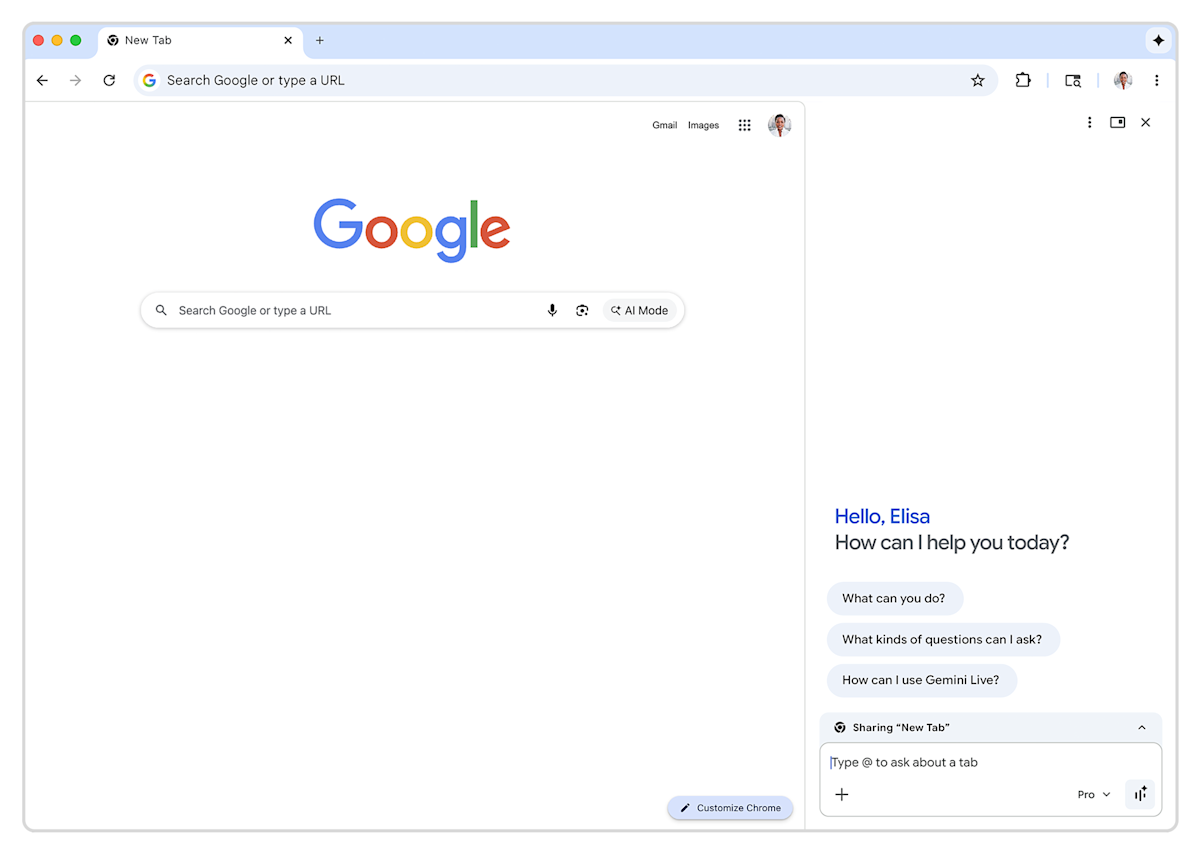
At the start of the year, Google brought a host of new Gemini-powered features, including built-in Nano Banana image generation, to Chrome. After debuting in the United States, those features are now making their way to Chrome users in Canada, India and New Zealand, with support for 50 additional in tow. Among the new languages Gemini in Chrome can now converse in are French, Gujarati, Hindi and Spanish.
To try out Gemini in Chrome, tap the sparkle icon at the top right of the interface. This will open the sidebar interface Google introduced in January. From there, you can chat with the company’s Gemini chatbot without the need to switch tabs. From the sidebar, you can also access Google’s in-house image generator. Additionally, Gemini in Chrome offers integrations with Gmail, Maps, Calendar, YouTube and other Google apps. If you live outside Canada, India or New Zealand, Google says it will make Gemini in Chrome available in more countries and languages throughout the rest of 2026. Oh, and if don’t want to use Gemini in Chrome, you can right click on the sparkle icon and select unpin to never see it again.
Tech
OpenAI upgrades ChatGPT with interactive learning tools as lawsuits and Pentagon backlash mount

The past ten days have been among the most consequential in OpenAI’s history, with developments stacking up across product, politics, personnel, and the courts. Here is what happened — and what it means.
OpenAI on Tuesday launched a set of interactive visual tools inside ChatGPT that let users manipulate mathematical and scientific formulas in real time — a genuinely impressive education feature that landed in the middle of the most turbulent stretch of the company’s corporate life.
The new experience covers more than 70 core math and science concepts, from the Pythagorean theorem to Ohm’s law to compound interest. When a user asks ChatGPT to explain one of these topics, the chatbot now generates a dynamic module with adjustable sliders alongside its written response. Drag a variable, and the equations, graphs, and diagrams update instantly. The feature is available today to all logged-in users worldwide, across every plan, including free.
OpenAI tells VentureBeat that 140 million people already use ChatGPT each week for math and science learning. That is a staggering number. It also means the feature arrives with unusually high stakes: since late February, OpenAI has been sued by the family of a 12-year-old mass shooting victim who alleges the company knew the attacker was planning violence through ChatGPT; lost its head of robotics over a Pentagon deal that triggered a near-300% spike in app uninstalls; watched more than 30 of its own employees file a legal brief supporting rival Anthropic against the U.S. government; and scrapped plans with Oracle to expand a flagship data center in Texas. Its chief competitor’s app, Claude, now sits atop the App Store.
The interactive learning tools are, on their merits, a strong product. They also arrive at a company fighting on every front simultaneously — and burning through an estimated $15 billion in cash this year to do it.

How the new ChatGPT learning tools actually work
The feature is built on a simple pedagogical premise: students understand formulas better when they can see what happens as the inputs change.
Ask ChatGPT “help me understand the Pythagorean theorem,” and the system now responds with a written explanation alongside an interactive panel. On the left, the formula $a^2 + b^2 = c^2$ appears in clean notation with sliders for sides $a$ and $b$. On the right, a geometric visualization — a right triangle with squares drawn on each side — reshapes dynamically as you adjust the values. The computed hypotenuse updates in real time. The same treatment applies across topics: voltage and resistance for Ohm’s law, pressure and temperature for the ideal gas equation, radius and height for cone volume.
OpenAI’s initial roster of more than 70 topics targets high school and introductory college material: binomial squares, Charles’ law, circle equations, Coulomb’s law, cylinder volume, degrees of freedom, exponential decay, Hooke’s law, kinetic energy, the lens equation, linear equations, slope-intercept form, surface area of a sphere, trigonometric angle sum identities, and others.
The company cited research suggesting that “visual, interaction-based learning can lead to stronger conceptual understanding than traditional instruction for many students,” and pointed to a recent Gallup survey in which more than half of U.S. adults said they struggle with math. In early testing, OpenAI said, students reported the modules helped them grasp how variables relate to one another, and parents described using them to work through problems alongside their children.
Anjini Grover, a high school mathematics teacher quoted in OpenAI’s announcement, said the feature stands out for “how strongly this feature emphasizes conceptual understanding.” Raquel Gibson, a high school algebra teacher, called it “a step towards empowering students to independently explore abstract concepts.”
The tools build on ChatGPT’s existing education features — a “study mode” for step-by-step problem solving and a quizzes feature for exam prep — and OpenAI said it plans to expand interactive learning to additional subjects. The company also said it intends to publish research through its NextGenAI initiative and OpenAI Learning Lab to study how AI shapes learning outcomes over time.

A lawsuit alleging OpenAI knew a mass shooter was planning an attack
On the day before OpenAI shipped its education tools, the company faced the most serious legal challenge it has ever faced.
On Monday, the mother of 12-year-old Maya Gebala filed a civil lawsuit against OpenAI in B.C. Supreme Court, alleging the company had “specific knowledge of the shooter’s long-range planning of a mass casualty event” through ChatGPT interactions and “took no steps to act upon this knowledge.” Gebala was shot three times during a mass shooting in Tumbler Ridge, British Columbia on February 10 that killed eight people and the 18-year-old attacker. She suffered what the lawsuit describes as a catastrophic traumatic brain injury with permanent cognitive and physical disabilities.
The claim paints a damning picture of how the shooter used ChatGPT. It alleges the platform functioned as a “counsellor, pseudo-therapist, trusted confidante, friend, and ally” and was “intentionally designed to foster psychological dependency between the user and ChatGPT.” The shooter was under 18 when they began using the service, the suit states, and despite OpenAI’s requirement that minors obtain parental consent, the company “took no steps to implement age verification or consent procedures.”
OpenAI has separately acknowledged that it suspended the shooter’s account months before the attack but did not alert Canadian law enforcement — a decision that provoked sharp political fallout. B.C. Premier David Eby said after a virtual meeting with Altman that the CEO agreed to apologize to the people of Tumbler Ridge and work with the provincial government on AI regulation recommendations.
None of the claims have been proven in court. OpenAI has not publicly commented on the lawsuit. But the case poses a question that transcends any single legal proceeding: when an AI company’s own internal systems identify a user as dangerous enough to ban, what obligation does it have to tell someone?
The Pentagon deal that split OpenAI from the inside
The Tumbler Ridge lawsuit is unfolding against the backdrop of an internal crisis that has already cost OpenAI key talent and millions of users.
On February 28, CEO Sam Altman announced a deal giving the Pentagon access to OpenAI’s AI models inside secure government computing systems. The agreement came days after Anthropic CEO Dario Amodei publicly refused similar terms, saying his company could not proceed without assurances against autonomous weapons and mass domestic surveillance. The Pentagon responded by designating Anthropic a “supply-chain risk” — a classification normally reserved for foreign adversaries — and Defense Secretary Pete Hegseth barred any military contractor from conducting commercial activity with the company.
The reaction inside OpenAI was immediate. Caitlin Kalinowski, who joined from Meta in 2024 to build out the company’s robotics hardware division, resigned on principle. “AI has an important role in national security,” she wrote publicly. “But surveillance of Americans without judicial oversight and lethal autonomy without human authorization are lines that deserved more deliberation than they got.” Research scientist Aidan McLaughlin wrote on social media that he “personally don’t think this deal was worth it.” Another employee told CNN that many OpenAI staffers “really respect” Anthropic for walking away.
The reaction outside the company was even more dramatic. ChatGPT uninstalls spiked more than 295% on the day the deal was announced. Anthropic’s Claude surged to No. 1 among free apps on the U.S. Apple App Store and remained there as of this past weekend. Protesters gathered outside OpenAI’s San Francisco headquarters calling for a “QuitGPT” movement.
And in the most extraordinary development, more than 30 OpenAI and Google DeepMind employees — including DeepMind chief scientist Jeff Dean — filed an amicus brief Monday supporting Anthropic’s lawsuit against the Defense Department. The brief argued that the Pentagon’s actions, “if allowed to proceed,” would “undoubtedly have consequences for the United States’ industrial and scientific competitiveness in the field of artificial intelligence and beyond.” The employees signed in their personal capacity, but the spectacle of OpenAI’s own researchers rallying to a competitor’s legal defense against the same government their company just partnered with has no real precedent in the industry.
Altman, to his credit, has not pretended the situation is fine. In an internal memo later shared publicly, he admitted the deal “was definitely rushed” and “just looked opportunistic and sloppy.” He revised the contract to include explicit prohibitions against mass domestic surveillance and the use of OpenAI technology on commercially acquired data. He also publicly said that enforcing the supply-chain risk designation against Anthropic “would be very bad for our industry and our country.”
Meanwhile, Anthropic warned in court filings that the Pentagon’s blacklisting could cost it up to $5 billion in lost business — roughly equivalent to its total revenue since commercializing its AI technology in 2023. The company is seeking a temporary court order to continue working with military contractors while the case proceeds.
Why OpenAI’s $15 billion cash burn makes every user count
Strip away the lawsuits and the politics, and OpenAI still has a math problem of its own.
The company is expected to burn through approximately $15 billion in cash this year, up from $9 billion in 2025. It has roughly 910 million weekly users. About 95% of them pay nothing. Subscriptions alone cannot bridge that gap, which is why OpenAI is simultaneously building out an internal advertising infrastructure and leaning on partners like Criteo — and reportedly The Trade Desk — to bring advertisers into ChatGPT.
The company is hiring aggressively for this effort: a monetization infrastructure engineer, an engineering manager, a product designer for the ads experience, a senior manager for ad revenue accounting, and a trust and safety specialist dedicated to the ads product, all based at headquarters in San Francisco. The compensation bands run as high as $385,000 — the kind of investment a company makes when it plans to own its ad stack, not rent it.
But advertising inside ChatGPT introduces a trust problem that compounds the ones OpenAI is already managing. Users who abandoned the app over the Pentagon deal demonstrated that loyalty to ChatGPT is thinner than its market share suggests. Adding commercial messages to a product already under fire for its military ties and its handling of a mass shooter’s data will require OpenAI to navigate user sentiment with a precision it has not recently demonstrated.
The infrastructure picture is equally unsettled. Oracle and OpenAI recently scrapped plans to expand a flagship AI data center in Abilene, Texas, after negotiations stalled over financing and OpenAI’s evolving needs. Meta and Nvidia moved quickly to explore the site — a reminder that in the current AI arms race, any gap in execution gets filled by a competitor within days.
Why interactive learning is OpenAI’s strongest remaining argument
Beyond the product itself, the education feature carries strategic significance for OpenAI.
Education has always been ChatGPT’s cleanest use case — the application where the technology most obviously augments human capability rather than surveilling it, weaponizing it, or monetizing the attention of people who came looking for help. It is the use case that resonates across demographics: students prepping for the SAT, parents revisiting algebra at the kitchen table, adults circling back to concepts they never quite understood. And it is the use case where ChatGPT still holds a clear lead. Google’s Gemini, Anthropic’s Claude, and xAI’s Grok are all investing in education, but none has shipped anything comparable to real-time interactive formula visualization embedded in a conversational interface.
OpenAI acknowledged that the “research landscape on how AI affects learning is still taking shape,” but pointed to its own early findings on study mode as showing “promising early signals.” The company said it will continue working with educators and researchers through its NextGenAI initiative and OpenAI Learning Lab, and plans to publish findings and expand into additional subjects.
Somewhere tonight, a ninth-grader will open ChatGPT, drag a slider, and watch a hypotenuse lengthen across her screen. The Pythagorean theorem will make sense for the first time. She will not know about the Pentagon deal, or the Tumbler Ridge lawsuit, or the 295% spike in uninstalls, or the $15 billion cash burn underwriting the server that just rendered her triangle. She will only know that it worked. For OpenAI, that may have to be enough — for now.
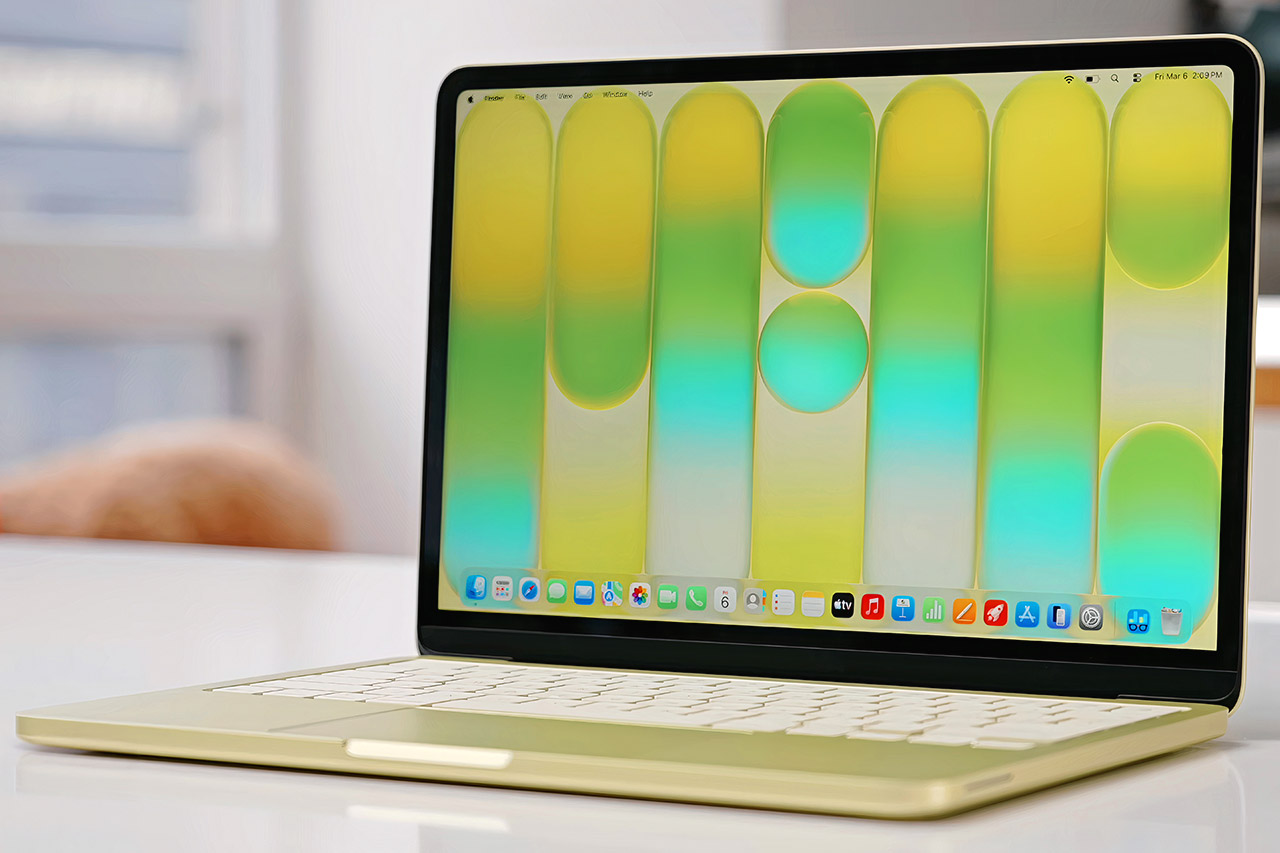

Apple debuted the MacBook Neo on March 4, 2026, and units begin arriving in customers’ hands tomorrow (March 11th). The laptop starts at $599, or a modest $499 for students thanks to educational pricing. That alone has a lot of people sitting up and taking note, and with good reason, given that past entry-level MacBooks were priced at $999 or higher.
Apple based the Neo on the same A18 Pro chip that powers the iPhone 16 Pro. This mobile processor handles everyday activities easily; online browsing is snappy, streaming is smooth, and light creative tasks like photo editing or casual gaming seem extremely responsive. Apple says the Neo can get through everyday tasks 50% faster than recent Intel-based PCs, and its built-in AI features can work up to three times faster in certain situations. On top of that, the chip runs so efficiently that the laptop stays completely silent even during long sessions, with no fans, no noise, and nothing to worry about.

Apple 2026 MacBook Neo 13-inch Laptop with A18 Pro chip: Built for AI and Apple Intelligence, Liquid…
- HELLO, MACBOOK NEO — Ready for whatever your day brings, MacBook Neo flies through everyday tasks and apps. Choose from four stunning colors in a…
- THE MOST COLORFUL MACBOOK LINEUP EVER — Choose from Silver, Blush, Citrus, or Indigo — each with a color-coordinated keyboard to complete the…
- POWER FOR EVERYDAY TASKS — Ready the moment you open it, MacBook Neo with the A18 Pro chip delivers the performance and AI capabilities you need to…
The Neo’s battery life is also decent, with Apple estimating that you can get roughly 16 hours of movie playback or mixed use from a single charge. That’s more than enough to get you through a full day of lectures, emails, video calls, and surfing without having to look for an outlet. The 13-inch Liquid Retina display is definitely no slouch, with a resolution of 2408 x 1506, a brightness of 500 nits, and support for a billion colors.
There are four color choices: silver, pink, citrus, and indigo. Each one includes matching keycaps and software components such as backgrounds and icons. The aluminum body feels robust and quality, weighing approximately 2.7 pounds and measuring 0.50 inches thick. Reviewers say the design is sturdy and compact, and if you look closely, it’s comparable in quality to the MacBook Air, but it feels a lot more approachable.
You’ll find two USB-C ports, one of which supports USB3 speeds and DisplayPort for connecting external monitors up to 4K at 60Hz, as well as a headphone socket. The Magic Keyboard has been updated to make it much more pleasant to type on, however the standard model does not include backlighting. The Multi-Touch trackpad still supports all of your favorite gestures, but with mechanical clicks rather than the fancy haptic version found on more costly versions. A 1080p FaceTime camera is also included, along with beamforming mics and side-firing speakers that have been tuned for Spatial Audio and Dolby Atmos, ensuring clean calls and solid sound for music or videos.

Twelve weeks of battery life from a single charge is the number that separates the Kindle Paperwhite from almost every other device in your bag, and at £134.99 it is now priced where it belongs for anyone serious about reading.
The Kindle Paperwhite drops from £169.99 to £134.99 in its 12th generation form during this Spring Deal Days, the newest version Amazon has released.
Amazon’s Kindle Paperwhite has hit its Black Friday price once again, offering a standout deal.

Amazon Kindle Paperwhite hit Black Friday pricing
It’s flagged in our best Kindle buying guide as the best option for most people, in you’re looking for more backup. We also added the 4.5-star review of the Paperwhite: “The Kindle (2024) is great, but the Paperwhite is just a bit more luxurious. It has a nicer, flush screen and a warm light that’s easier on the eyes.”
The 7-inch Paperwhite display runs at 300ppi with a higher contrast ratio and 25% faster page turns than the previous version, which means text renders crisply and scrolling between pages feels more immediate than older Kindle models managed.
The front light adjusts from white to warm amber, so the Kindle Paperwhite remains comfortable whether you are reading in direct sunlight or a completely dark room without straining your eyes.
IPX8 waterproofing rated to two metres of fresh water for 60 minutes means the Kindle Paperwhite travels to the pool or bath without any anxiety, and the flush-front design keeps the screen protected in a bag.

Get Updates Straight to Your WhatsApp
The Kindle Paperwhite carries 16GB of on-device storage, which holds thousands of titles locally, with free cloud storage for your full Amazon library, without taking up space on the device itself.
Charging takes approximately 2.5 hours via USB-C with a 9W power adaptor, which is a fast enough turnaround that plugging in overnight once every few months is all the maintenance the Kindle Paperwhite realistically demands from a regular reader.
The ad-free version at £134.99 does contain lock-screen promotions, and at a price point that matches Black Friday levels outside of November, the Kindle Paperwhite represents straightforward value for anyone who reads regularly and wants a device built around nothing else.
SQUIRREL_PLAYLIST_10148964
Tech
MAGA Suddenly Quiet About Overseas Influence Now That Larry Ellison’s Warner Bros Bid Has Saudi, Chinese Backing
from the 100%-bad-faith dept
You might recall that during the great mass TikTok hyperventilation of 2021-2025, there was no limit of face fanning by Republicans like Brendan Carr about overseas involvement in social media. Carr was so particular on this subject, he scuttled an FCC program aimed at shoring up “smart” home device security standards because one of the testing labs (unsurprisingly) did business in China where this stuff is made.
Fast forward to this year, and Carr curiously has zero problems with significant Saudi and Chinese investments in Larry Ellison and Paramount’s efforts to acquire Warner Brothers. Though Carr’s actual regulatory oversight of the deal is limited given the lack of public broadcast licenses involved, he took to CNBC anyway to insist the massive $111 billion deal should likely fly through regulatory approval:
“If there’s any FCC role at all, it’ll be a pretty minimal role. And I think this is a good deal, and I think it should get through pretty quickly,” Carr added.
Carr told CNBC that Netflix “would have a very difficult path” getting regulatory approval, adding that Paramount’s was “a lot cleaner, does not raise at all the same types of concerns.”
“I think there’s some real consumer benefits that can emerge from it,” he added.
Carr’s (and Republicans’ more generally) gushing excitement comes despite the fact that significant structural overlap between Paramount and Warner Brothers will mean significantly more layoffs than we would have seen during the originally proposed Netflix Warner Brothers tie up. Layoffs that will likely be much worse than past Warner deals due to the absolutely massive debt involved.
This is before you even get to Larry Ellison’s obvious quest to built autocratic-friendly state television, the likes of which coddles authoritarianism and, in countries like Russia and Hungary, ultimately led to the total decimation of serious truth-to-power journalism.
Then there’s the $24 billion in combined funding for the Paramount deal from Middle Eastern sovereign wealth funds, including Saudi Arabia’s Public Investment Fund (PIF). As well as the recent announcement that Chinese company Tencent is weighing a significant investment. Before his deal was scuttled, Netflix CEO Ted Sarandos was pretty pointed about this being a problem:
“Before pulling out of the deal, Netflix co-CEO Ted Sarandos – speaking to the BBC in London on the morning after the recent BAFTA Film Awards – called the Gulf sovereign funds backing Paramount’s bid a “bad idea,” noting that they are from “a part of the world that is not very big on the First Amendment.”
“It seems very odd to me with the level of investment that we’re talking about that they’d have no influence or editorial control over media in another country,” Sarandos added.
If you recall the multi-year right wing hysteria campaign about TikTok, it was fixated on the idea that having any overseas involvement in U.S. media was a doomsday scenario (they were not subtle or flexible on this point). Of course Trumpism immediately proceeded (with bumbling Democrat help) to “fix” this problem by offloading the company to Trump’s technofascist friends, while still maintaining a significant investment presence by the Chinese.
When Netflix was planning to buy Warner Brothers, Republicans engaged in no limit of face-fanning, featuring threats of “investigations” by Republican Attorneys General, and a phony Trump DOJ “investigation” into the antitrust concerns raised by the deal. But when a technofascist ally oligarch wants to own a major media property, with Saudi and Chinese help, all of that mysteriously disappears.
It’s almost as if Trump Republicans have no coherent ideology beyond their own power and unchecked wealth accumulation, and all of their posturing on issues like antitrust and national security, routinely propped up by a lazy press, is as hollow as a Dollar Store fake chocolate Easter bunny.
Filed Under: brendan carr, china, consolidation, journalism, larry ellison, media, mergers, national security, saudi, saudi arabia, soft power
Companies: netflix, paramount, warner bros. discovery
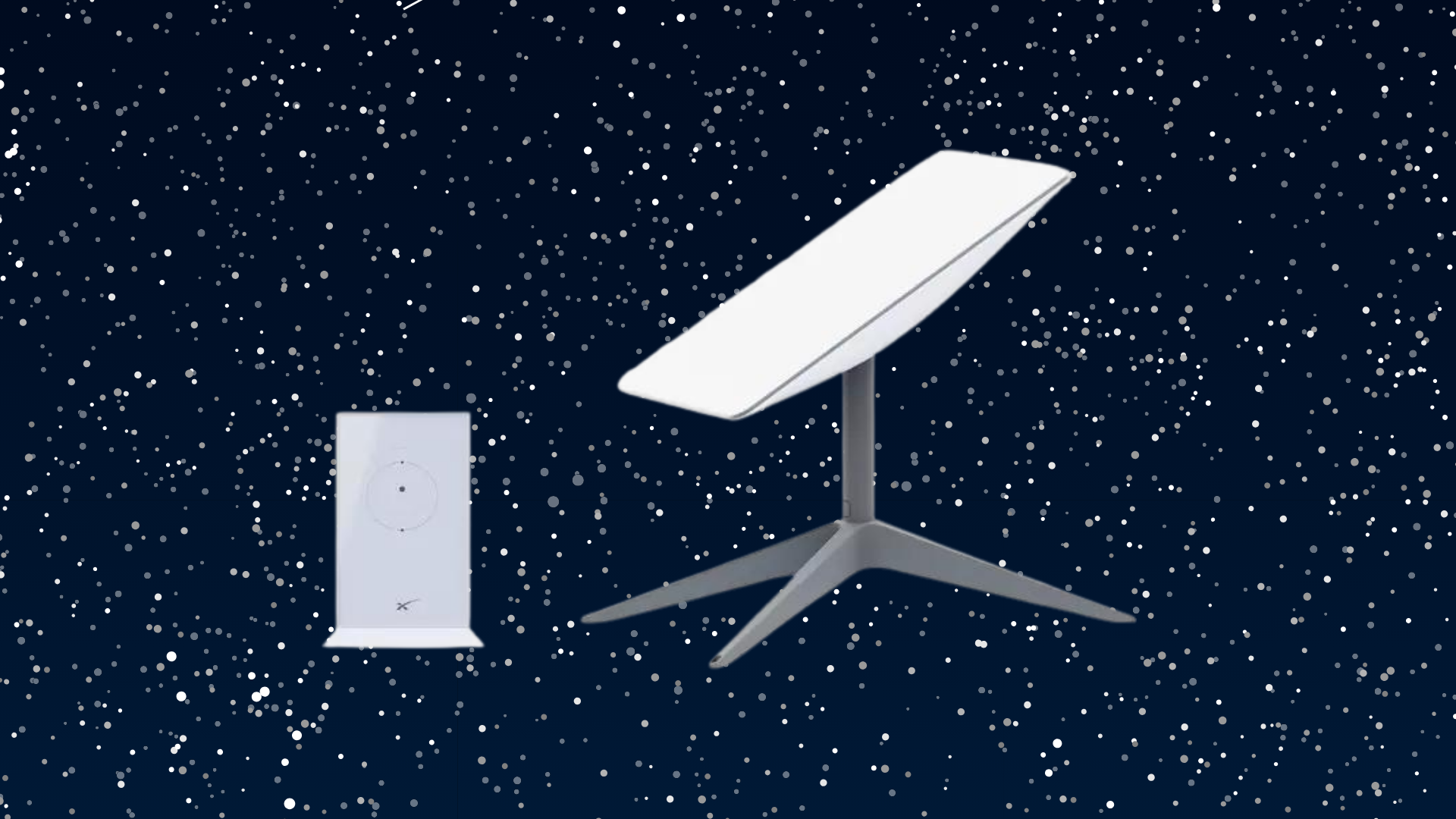
Starlink is preparing a major upgrade to its satellite network, with next-generation V2 satellites promising what the company calls “5G speeds from space.”
According to Starlink, the new satellites will deliver up to 100 times the data density of the current V1 generation. This could potentially transform how satellite connectivity performs on everyday phones.
So far, satellite-to-phone services have focused more on coverage than speed. Current Starlink mobile connectivity is largely limited to basic messaging and light data use, particularly in areas without reliable cellular coverage. However, the V2 upgrade aims to push that much further. This will bring significantly higher bandwidth and faster data speeds.
One of the more notable changes is compatibility. Starlink says the upcoming system will work with hundreds of existing LTE smartphones. This will allow devices to connect directly to satellites without needing special antennas or hardware. In practice, the satellites will act like cell towers in low Earth orbit. Therefore, they will enable phones to maintain a connection even when conventional networks aren’t available.
SpaceX plans to launch up to 15,000 V2 satellites as part of the broader Starlink constellation expansion. Early testing of the upgraded network is expected to begin around early 2027. Although the full performance gains will depend on how quickly the larger constellation can be deployed.
In the meantime, the company has already begun launching V2 Mini satellites. These are designed to bridge the gap between the current generation and the full V2 rollout.
Starlink is also working with mobile operators to make the system more seamless. Partnerships including one with T-Mobile in the US aim to allow phones to switch between satellite and terrestrial networks without noticeable interruptions.
If the network scales as planned, Starlink suggests peak speeds of around 150Mbps per user could eventually be achievable. That would be a major leap for satellite connectivity. Historically, satellite networks have lagged far behind conventional cellular networks in both speed and capacity.
For now, though, much of that promise depends on the pace of satellite launches and how quickly the full V2 constellation becomes operational. Until then, Starlink’s satellite-to-phone service previously known as Direct to Cell and now branded Starlink Mobile will continue offering more basic connectivity where traditional coverage is limited.

Crypto wrench attacks rise as French couple robbed of $1M in Bitcoin at knifepoint

10 Most Perfect Movies of the Last 10 Years, Ranked

Bitcoin To Gold Rotation Starting!! Experts Weigh In


-
Business5 days ago
Form 8K Entergy Mississippi LLC For: 6 March
-

 Tech6 days ago
Bitwarden adds support for passkey login on Windows 11
-

 News Videos2 days ago
10th Algebra | Financial Planning | Question Bank Solution | Board Exam 2026
-

 Fashion4 days ago
Weekend Open Thread: Ann Taylor
-

 Crypto World2 days ago
Paradigm, a16z, Winklevoss Capital, Balaji Srinivasan among investors in ZODL
-
 Sports5 days ago
499 runs and 34 sixes later, India beat England to enter T20 World Cup final | Cricket News
-

 Sports3 days ago
Three share 2-shot lead entering final round in Hong Kong
-

 Sports3 days ago
Braveheart Lakshya downs Lai in epic battle to enter All England Open final | Other Sports News
-

 Politics5 days ago
Top Mamdani aide takes progressive project to the UK
-

 Business14 hours ago
ExxonMobil seeks to move corporate registration from New Jersey to Texas
-

 NewsBeat6 days ago
Piccadilly Circus just unveiled ‘London’s newest tourist attraction’ and it only costs 80p to enter
-

 Entertainment4 days ago
Hailey Bieber Poses For Sexy Selfies In New Luscious Lip Thirst Traps
-

 Business3 days ago
Search for Nancy Guthrie Enters 37th Day as FBI Probes Wi-Fi Jammer Theory
-
 NewsBeat1 day ago
Pagazzi Lighting enters administration as 70 jobs lost and 11 stores close across Scotland
-

 Tech2 days ago
Despite challenges, Ireland sixth in EU for board gender diversity
-
Entertainment6 days ago
Harry Styles Has ‘Struggled’ to Discuss Liam Payne’s Death
-

 Crypto World6 days ago
New Crypto Mutuum Finance (MUTM) Reports V1 Protocol Progress as Roadmap Enters Phase 3
-

 Tech6 days ago
ACIP To Discuss COVID ‘Vaccine Injuries’ Next Month, Despite That Not Being In Its Purview
-

 Business1 day ago
Search Enters 39th Day with FBI Tip Line Developments and No Major Breakthroughs
-
 NewsBeat6 days ago
Good Morning Britain fans delighted as Welsh presenter returns to host ITV show