








Connect with us

Tech

Viral Photo Highlights A Silent Enemy Plaguing The US Navy

Published

on


Rust, or corrosion, is a silent enemy that has been plaguing the United States Navy and its sea-going vessels as long as they’ve been at sea. In the viral photograph below, you can see evidence of the rust caused by an unrelenting barrage of saltwater spray. 

The Navy ship in question is the USS Dewey (DDG 105), an Arleigh Burke-class guided missile destroyer. The photo was captured as it pulled into port at Sembawang, Singapore, on February 18, 2025. With hundreds of shares across various social media platforms, comments surrounding that photograph express concern over the ship’s readiness and the Navy’s apparent lack of concern for its maintenance. However, similar to how you protect your car from rust, the Navy invests considerable time and effort in combating the silent enemy attacking its ships.

The Navy notes that its ships are designed to endure the harsh climate associated with life on and near the ocean, but preventive maintenance to reduce rust damage is never-ending. Over the years, the Navy’s war on rust involved boatswain’s mates and other Sailors assigned to the deck department cleaning, sanding, and painting surfaces inside and out of their assigned ships. However, a new plan of attack rolled out in February 2026 will take the battle to the next level.

Advertisement

The US Navy’s revised war on rust

A video released by the U.S. Defense News YouTube channel reports on a new plan being instituted by the Navy to fight rust on its warships. The multi-pronged plan aims to improve the outward appearance of Navy ships, reduce maintenance costs, and ensure readiness of the fleet after “years of deferred corrosion work.” The Navy’s war on rust is nothing new. It’s been ongoing since the Navy began using ferrous metals on its wooden ships, way before the first steel-hulled Navy ships entered the fleet in 1886. While the U.S. Navy still uses ships with wooden hulls, the majority of its current warship fleet is made primarily of steel.

Advertisement

The Navy’s newly released plan to combat rust on its ships starts with their design. Improved designs, which could be incorporated into the U.S. Navy’s newest battleships, allow seawater to fully drain from the ships’ surfaces to help reduce standing water that can seep into crevices and cause corrosion. At the same time, employing rust-resistant materials, like composites and stainless steel, for fittings and structures reduces maintenance efforts, which can be refocused elsewhere.

A key part of the new plan is ensuring all existing rust is removed before painting. Sailors performing the task at sea are encouraged not to paint over rust on surfaces. They’re also receiving improved tools and cleaners to make the job more effective. When ships are docked at shipyards for maintenance, dedicated teams of contractors employ specialized methods to control corrosion and install new fittings and scuppers with improved water-shedding designs.

Advertisement


Source link

Advertisement
Continue Reading
Click to comment

Leave a Reply

Your email address will not be published. Required fields are marked *

Tech

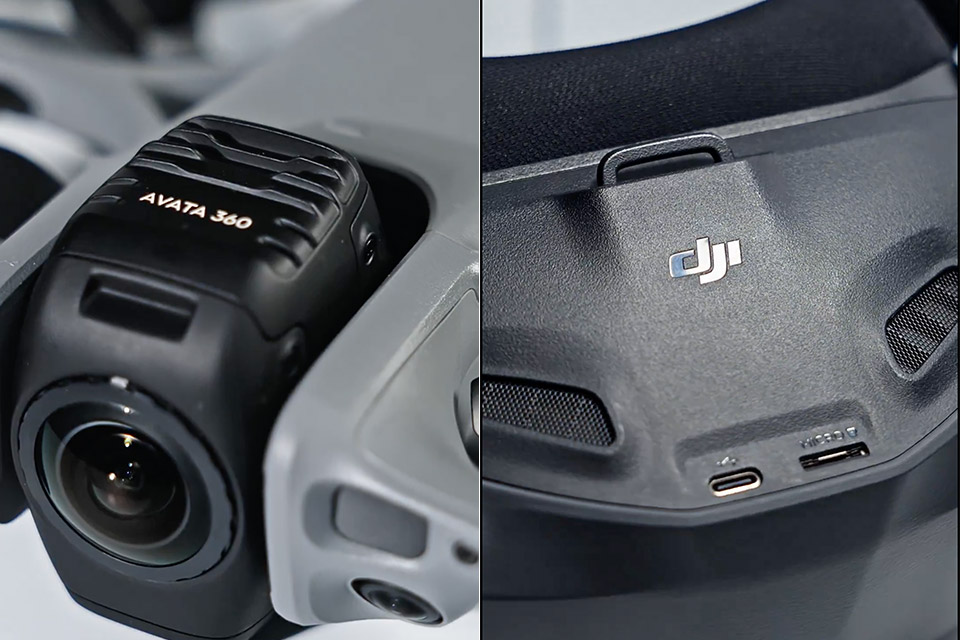
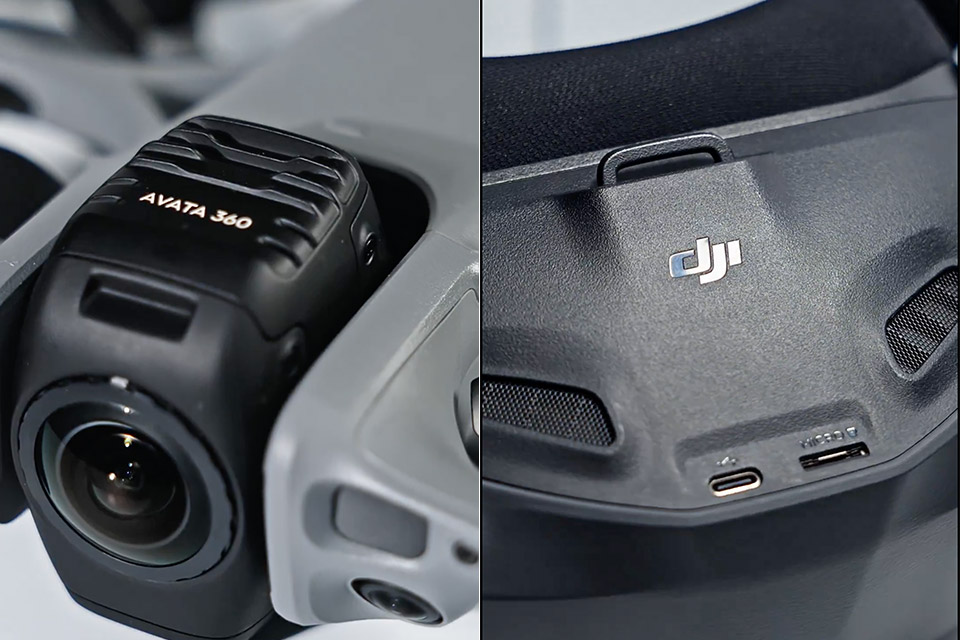
DJI Avata 360 Merges 360 Video with FPV Flight, Officially Launches March 26

Published

on

DJI Avata 360 Drone Leak Launch
Drone pilots looking to capture every aspect of a dynamic flight will have a lot more options according to DJI’s latest release. After months of speculation and rumors, the Avata 360 has finally been shown. What’s truly fascinating is that this new model can effortlessly integrate immersive recording into a traditional FPV experience.

The image quality produced by these huge sensors is rather impressive. Two 1/1.1-inch units work together to produce stunning 8K resolution spherical footage with HDR capability. Pilots can now capture the entire scene in high detail before returning later to edit and selecting the optimal viewing angle to utilize. The camera system is highly adaptable, capable of mechanically tilting across a sixty-degree range in either direction to give you the freedom to capture the shot you need, or you may switch to a dedicated forward FPV mode when you want to keep things simple. Complementing it is a two-hundred-degree field of view, allowing you to capture a wide photo without gaps.


DJI Neo, Mini Drone with 4K UHD Camera for Adults, 135g Self Flying Drone that Follows You, Palm Takeoff…
Advertisement
  • Due to platform compatibility issue, the DJI Fly app has been removed from Google Play. DJI Neo must be activated in the DJI Fly App, to ensure a…
  • Lightweight and Regulation Friendly – At just 135g, this drone with camera for adults 4K may be even lighter than your phone and does not require FAA…
  • Palm Takeoff & Landing, Go Controller-Free [1] – Neo takes off from your hand with just a push of a button. The safe and easy operation of this drone…


DJI has also done an excellent job of shielding the blades on all sides, allowing you to go up close for some intimate footage without issue. Plus, additional sensors are present to help monitor the environment and make flight safer by recognizing impediments. Finally, even when pushing the drone to its maximum across extended distances, the transmission remains rock solid.

The standard units have a battery life of about 23 minutes, but if you upgrade to larger batteries, you’ll have even more endurance for longer sessions. Plus, lens kits make it simple to replace the lenses if you get a scrape. Overall, it’s a great confidence booster while you’re flying in a variety of conditions.


The basic drone starts at roughly $500, which is affordable given the specifications. The bundle, which include goggles, backup batteries, charging hubs, new propellers, and a travel case, make it easier for serious users to participate.

One thing that’s particularly nice is that it integrates seamlessly with your existing goggles and motion controls; simply plug it in and go. The stabilisation systems also do their job, keeping the footage steady even when you’re moving the drone about. Anyone who has watched some of the preview videos will understand what I mean: the results are very amazing, highlighting even more the possibilities for truly innovative undertakings.

Advertisement

Keep a watch out for the official launch on March 26 for all the details and demos; from what we know so far, this drone appears to be a really flexible tool for anyone who enjoys both the thrill of flying and getting the most out of their video clips.
[Source]

Source link

Advertisement
Continue Reading

Tech

Solving Harmonic and Transient Challenges in Transformers Using Integrated’s FARADAY

Published

on

More Information

Power transformers routinely operate under non-ideal conditions including harmonics, inrush currents, and transient disturbances. Accurate electromagnetic simulation is essential for assessing performance, identifying saturation risks, and validating electrical behaviour before prototyping. This Whitepaper presents a step-by-step finite-element methodology covering geometry preparation, material assignment, coil and winding definition, solver configuration, and result interpretation in both frequency and time domains. Simulation results demonstrate accurate magnetic field distributions, validated turns and current ratios, and stable transient waveforms — illustrating FEM as a practical approach for transformer engineering analysis and design verification.


Source link

Advertisement
Continue Reading

Tech

DR-DOS is coming back from the dead, rebuilt from scratch in pure assembly

Published

on


A one-man company named Whitehorn Ltd. Co. recently announced that DR-DOS is coming back. The “new” text-based operating system has a proper website now, and claims to be carrying forward the legacy of Gary Kildall, whose work helped shape early personal computing. Kildall founded Digital Research in 1974, creating the…
Read Entire Article
Source link

Continue Reading

Tech

Google Is Not Ruling Out Ads in Gemini

Published

on

Second is advertiser tools. If you’re a small business, you’re not thinking about all the queries people are going to type in. AI is great at figuring out which keywords to use, what’s the optimal creative, and generating all of that.

The third piece is the most nascent: ads in new experiences. The general philosophy we have is to build a great consumer product, then figure out monetization. Because the business is so strong and healthy, that’s a luxury we have.

What have you learned from experiments around ads in AI Mode?

Ads are always separate from organic results and clearly labeled. If we don’t think any ad is relevant, we don’t show any ads. Probably the biggest principle of all is that ads should be useful.

Advertisement

What [ads in AI Mode] have shown is mostly intuitive things. If it’s relevant, a user will click on it. If not, they won’t.

At Davos, Demis Hassabis said that Google has no plans to bring ads to Gemini. How are you thinking about it now?

The reason we focused on ads in AI Mode and AI Overviews is because we see them as extensions of the Search experience. It’s the most natural place for us to do initial experiments.

I would expect that the learnings that we get from ads in AI Mode would likely carry over to what we might want to do in the Gemini app down the road. We’re able to get all those learnings within a context and a construct that users are already aware of ads. It’s an odd thing to say, but our research shows that users actually like ads within the context of Search. Over time, we’ll figure out what makes sense in the Gemini app.

Advertisement

So you guys aren’t ruling out ads in Gemini completely?

No, we’re not ruling them out. It’s just not where we’ve been focusing.

Gemini is a massive product now—it’s grown quite fast. OpenAI is already trying out ads in ChatGPT. What makes you think Gemini isn’t ready for ads?

We’re super happy with how well it’s growing. I would say it’s more of a prioritization question—what’s the right area to focus right now?

Advertisement

Do you think OpenAI introduced ads too early?

It’s hard for me to say. I think it will really depend on how they do it. What we’ve seen is when we do ads right, it’s accretive to the product experience. But the really critical thing is to do it right, and that means relevance, quality, and not putting ads where users don’t want to see ads.

That’s hard to do. We have over 20 years of experience learning how to do that. It’s less a question of timing and more a question of doing it right, and in a way that’s respectful of users.

Google recently launched Personal Intelligence in Gemini and AI Mode. I imagine advertisers would love to get their hands on that data. How are you thinking about that?

Advertisement

Personal Intelligence is incredibly useful. For example, I was skiing and couldn’t see well through my goggles—it was cloudy out. I asked AI Mode a fairly vague question about what lens I needed for the conditions. From my email, it was able to say which resort I was staying at, which mountain I’d be skiing, and what the weather would be. It also pulled in a receipt my wife had forwarded me for my goggles—turns out she’d bought me an extra lens. It’s like subtle magic.

Source link

Continue Reading

Tech

Atlassian to cut 10pc of its workforce and embrace AI

Published

on

The Australian-founded collaboration software provider wants to become ‘an AI-first company’.

Collaboration software provider Atlassian is to cut around 1,600 roles, amounting to 10pc of its workforce, its CEO and co-founder Mike Cannon-Brookes announced in a written blogpost yesterday (11 March).

Cannon-Brookes said the layoffs were necessary to “self-fund further investment in AI and enterprise sales, while strengthening our financial profile”, with an aim to change the way the Australian-founded company works and reorganise to move faster.

He said that although Atlassian fundamentally believes that people and AI create the best outcomes, and its approach is not for AI to replace people, “it would be disingenuous to pretend AI doesn’t change the mix of skills” needed or “the number of roles required in certain areas”.

Advertisement

“This is primarily about adaptation. We are reshaping our skill mix and changing how we work to build for the future,” he said.

Cannon-Brookes said “a thoughtful and incredibly thorough approach to determining impacted roles” was used to make structural and organisational changes, with a focus on retaining employees with the necessary skills for “an AI-first company” – namely “strong performers, graduates”, and those “with transferable skills”.

All Atlassian employees were due to receive an email update on their individual and regional statuses within 20 minutes of the post going live.

The CEO’s blogpost, which also included a video message to his staff, detailed the compensation arrangements for impacted employees, which are subject to local laws and consultation requirements.

Advertisement

Sydney-headquartered Atlassian was founded in 2002 by Cannon-Brookes and Scott Farquhar, who each have a current net worth of around $7bn, according to Forbes.

Its products include collaboration, communication and project management applications such as Trello, Jira, Confluence and Bamboo, and it has employees across 14 countries.

In a quarterly financial letter to shareholders last month, Cannon-Brookes said Atlassian was “building a bloody great business” and “had a fantastic Q2”, and that he was “convinced AI is great for Atlassian”.

Headline figures from the letter noted that the company has 350,000 customers and revenue of $1.6bn, up 23pc year-on-year.

Advertisement

However, its shares prices have been affected by the software slump brought on by the emerging threat of AI tools, as noted by Forbes.

So far this year, companies such as Amazon and Block have made significant layoffs in tandem with plans to spend more on AI.

Lat September, Atlassian announced plans to acquire productivity tech start-up DX and The Browser Company.

In 2023, the company cut 500 roles in a reorganisation move.

Advertisement

Don’t miss out on the knowledge you need to succeed. Sign up for the Daily Brief, Silicon Republic’s digest of need-to-know sci-tech news.

Source link

Advertisement
Continue Reading

Tech

Apple's App Store in China gets lower 25% commission to appease regulators

Published

on

The controversial 30% App Store commission continues to be attacked by regulators worldwide. China is the latest region with a win, where Apple has pushed the rate down to 25%.

Smartphone screen displaying the WeChat app page in an app store, showing green WeChat logo, description calls, chats, and more, with a blue Get button on a blue background
Apple’s new App Store commissions in China take effect on March 15

Chinese regulators have been back and forth with Apple in recent years over the 30% App Store commission. The latest publicly known pressure occurred after President Trump slammed the country with seemingly random and outrageous tariffs in 2025.
While nothing much else has happened in the public eye in the year since, Apple has announced a new commission rate via its developer blog. The new rates go into effect on March 15.
Continue Reading on AppleInsider | Discuss on our Forums

Source link

Continue Reading

Tech

Truecaller now lets you hang up on scammers — on behalf of your family

Published

on

Caller identity platform Truecaller recently launched a new feature that lets one person become an admin of a family group, get alerts about fraud calls received by other members, and even end a call on their behalf if they suspect a family member might get scammed.

The company, which has over 450 million users, first launched the feature in December in a handful of countries like Sweden, Chile, Malaysia, and Kenya. Truecaller said that after seeing promising results, it decided to roll it out worldwide, including in India, the company’s biggest market. The feature is free, and users can create groups even if they are not on a paid Truecaller plan.

Image Credits: Truecaller

With this feature, the tech-savvy member of a family or friends group can become the admin of an up to five-member group. Once the other members join the group, the admin can get alerts about potentially fraudulent calls those members receive. If the admin believes that the call could harm the member, they can remotely end the call as well. While the admin can get alerts for fraud calls when a member is using iOS or Android, they can only end calls for members on Android.

On Android, members can also grant permission to the admin to detect real-time activity such as walking or driving, battery level, and phone sound settings (to check if the phone is in silent mode). Truecaller said this is helpful for admins to keep tabs on elderly members and to only call them when they are not walking or driving.

Image Credits: Truecaller

The admin can also block certain numbers and international calling codes, and share a blocklist with group members.

Truecaller noted that the admin can’t see the non-spam call history or SMS history of group members.

Advertisement

“I think, unfortunately, all of us know somebody or another in our families or friends who have been impacted by fraud,” Kunal Dua, Chief Product Officer, at Truecaller, told TechCrunch over a call. “In that sense, it’s a fundamental shift for Truecaller in terms of what we’ve been focusing on as a problem,” he added.

Techcrunch event

San Francisco, CA
|
October 13-15, 2026

Advertisement
Image Credits: Truecaller

Last year, Truecaller introduced a voicemail feature for Indian users featuring an AI assistant that listens for calls when a user is unavailable and provides a summary of the transcript. The company is exploring a similar AI approach for family protection to potentially alert the admin about what kind of fraud call a group member is receiving.

The company is also exploring using AI to screen calls and automatically disconnect them when certain words associated with scams are detected, such as “digital arrest” — a tactic in which perpetrators impersonate law enforcement officers to extract information or money from call recipients.

In India, scam calls have risen over time and caused financial losses across the country. Truecaller said that it identified over 7.7 billion fraud calls last year. Indian authorities have launched multiple initiatives, including a controversial policy called SIM binding that could hamper the working of apps like WhatsApp and Telegram.

Truecaller is facing headwinds. Its stock has dwindled by over 80% in the last 12 months. During its Q4 2025 report, the company said that its EBDITA– a measure of operating profitability — dipped 49% year-on-year, with ad revenue declining 31%. The company is also facing challenges from India’s Caller Name Presentation (CNAP) system, which displays the name of the caller as registered with their phone carrier. Truecaller has maintained that just displaying a caller’s name won’t reduce spam calls, arguing that its platform goes further by offering community-based reports.

Advertisement

“In India, there has been much talk about the imminent rollout of CNAP,” Truecaller CEO Rishit Jhunjhunwala said during the Q4 2025 earnings call. “CNAP is partially rolled out, and so far, the impact on our user growth is limited. As we have said in the past, we expect that CNAP might have some impact on user growth, but that remains to be seen as CNAP reaches a full rollout.”

Continued Jhunjhunwala, “Our focus continues to be on delivering a superior product, and as you are aware, the consumer can choose to have CNAP and Truecaller in parallel, where we provide a lot more information and a lot more context and various other solutions, for the consumer.”

Source link

Advertisement
Continue Reading

Tech

X could be breaching US sanctions on Iran, watchdog warns

Published

on

The newly verified X account for Iran’s supreme leader could be putting the company on the wrong side of US sanctions, according to a watchdog group. The Tech Transparency Project, which last month published a report on X granting premium perks to sanctioned officials in Iran, now says that the verified account for the country’s new leader raises fresh questions about the issue.

The TTP notes that the X account for Iran’s new supreme leader, Mojtaba Khamenei, appears to be paying for an X premium subscription despite being on the US government’s list of sanctioned individuals since 2019. As the group points out, the Iran-based account was created this month and currently bears a blue checkmark, which typically indicates the account holder is paying for a subscription.

The account belonging to Mojtaba Khamenei has been boosted by other state-linked accounts in Iran, including the one that previously belonged to Khamenei’s father. That account has had a gray checkmark, which indicates it belongs to a verified government official. Verified accounts on X are rewarded with extra visibility on the platform, along with other perks. The younger Khamenei’s verified account has already gained more than 20,000 new followers in the hours since TTP first posted about it.

“The new Supreme Leader’s account is just the latest account for a sanctioned entity apparently paying X for premium services,” TTP director Katie Paul said in a statement to Engadget. “TTP has identified dozens of accounts, many linked to designated terrorists, that subscribed to X premium over the past three years. What’s more concerning than the blatant disregard for U.S. sanctions law is the fact that Musk’s companies have a contract with the Pentagon while X is actively profiting from U.S. adversaries.”

Advertisement

As Paul notes, this isn’t the first time TTP has raised questions about whether X is running afoul of US sanctions via its premium service. In 2024, the group published a report noting that X was accepting paid verification from more than two dozen sanctioned individuals and groups. The company said at the time that it had a “a robust and secure approach in place for our monetization features.”

X didn’t immediately respond to a request for comment. The company removed blue checks from a handful of Iran-based accounts flagged by TTP last month following reporting from Wired.

Source link

Advertisement
Continue Reading

Tech

Gemini is Coming to Google Maps and Bringing 3D Navigation

Published

on

Gemini Google Maps Update 3D Maps
Google Maps just released the most significant navigation update in over a decade, and Gemini is at the center of it all. Two new features take center stage: a conversational tool called Ask Maps and a revised driving mode dubbed Immersive Navigation, which finally incorporates super-realistic 3D views with turn-by-turn directions.


Ask Maps replaces the old search bar with something far more powerful. Users hit this icon near the top of the app to begin asking actual inquiries in clear language. Gemini handles the rest, gathering data from all of the locations, ratings, and user tips contained in Maps. So, if you live in San Francisco and want to travel to Muir Woods for breakfast along the way, simply ask the question, and the system will be developed. It will provide you with a detailed route with stop-by-stop directions, as well as suggestions based on previous searches or remembered preferences… such as vegetarian options. Just ask follow-up questions, and the plan will be updated on the fly. If you want, recommendations will take you directly to directions or allow you to save places to lists without having to navigate. Ask Maps is available today in the United States and India for Android and iOS users, with desktop support coming soon.


Google Pixel 10a – Unlocked Android Smartphone – 7 Years of Pixel Drops, 30+ Hours Battery, Camera Coach…
  • Google Pixel 10a is a durable, everyday phone with more[1]; snap brilliant photography on a simple, powerful camera, get 30+ hours out of a full…
  • Unlocked Android phone gives you the flexibility to change carriers and choose your own data plan; it works with Google Fi, Verizon, T-Mobile, AT&T…
  • Pixel 10a is sleek and durable, with a super smooth finish, scratch-resistant Corning Gorilla Glass 7i display, and IP68 water and dust protection[4]

Immersive Navigation completely overhauls the way you actually follow directions. You can now see the road you’re traveling in 3D, rather than just lines and icons. Buildings, overpasses, and road landscape seem with realistic depth because Gemini models evaluate Street View images and aerial shots to determine what’s crucial to show. See-through structures protect things from becoming congested, and when it comes down to it, lane markers, crosswalks, traffic signals, stop signs, and other elements are always visible when needed. The map scales up and down to provide a clear glimpse of what’s coming up, avoiding last-minute panics.


Voice instructions keep up with the upgrade and sound much more natural today. So, on the highway, it might instruct you to pass the next exit and then take the following one instead than simply counting down the distance. Alternate routes put out the advantages and cons for you, so you get a longer travel with less traffic or no tolls, and you can decide whether it’s worth the trade-off. As you get closer to your location, Street View shows you entrances and parking areas to help you arrive stress-free.

Advertisement

Google claims that this is the biggest shift in driving direction since the app’s inception, and early feedback suggests that it significantly reduces confusion in congested cities or unfamiliar areas. Both updates, for Immersive Navigation (which will be available on additional devices in the coming months, including CarPlay, Android Auto, and built-in auto systems) and Ask Maps, will be available in the United States and India. Android and iOS phones receive the initial peek, however full coverage will take some time.

Source link

Advertisement
Continue Reading

Tech

Microsoft Backs Anthropic To Halt US DOD’s ‘Supply-Chain Risk’ Designation

Published

on

joshuark shares a report from Reuters: Microsoft has filed an amicus brief on Tuesday in support of Anthropic’s lawsuit asking the court to temporarily block the U.S. Department of Defense designation of the AI startup as a supply-chain risk. In an amicus brief filing in a federal court in San Francisco, Microsoft backed Anthropic’s request for a temporary restraining order against the Pentagon order, arguing that its determination should be paused while the court considers the case. Microsoft, which integrates the AI lab’s products and services into technology it provides to the U.S. military, said that it was directly impacted by the DOD designation.

“Should this action proceed without the entry of a temporary restraining order, Microsoft and other government contractors with expertise in developing solutions to support U.S. government missions will be forced to account for a new risk in their business planning,” the company said. Microsoft’s filing argued the TRO is needed to prevent costly disruptions for suppliers, who would otherwise have to rapidly rebuild offerings that rely on Anthropic’s products. The judge overseeing the case must approve Microsoft’s request to file the brief before it is officially entered, but courts often permit outside parties to weigh in on important cases.

Source link

Continue Reading

Trending

Copyright © 2025